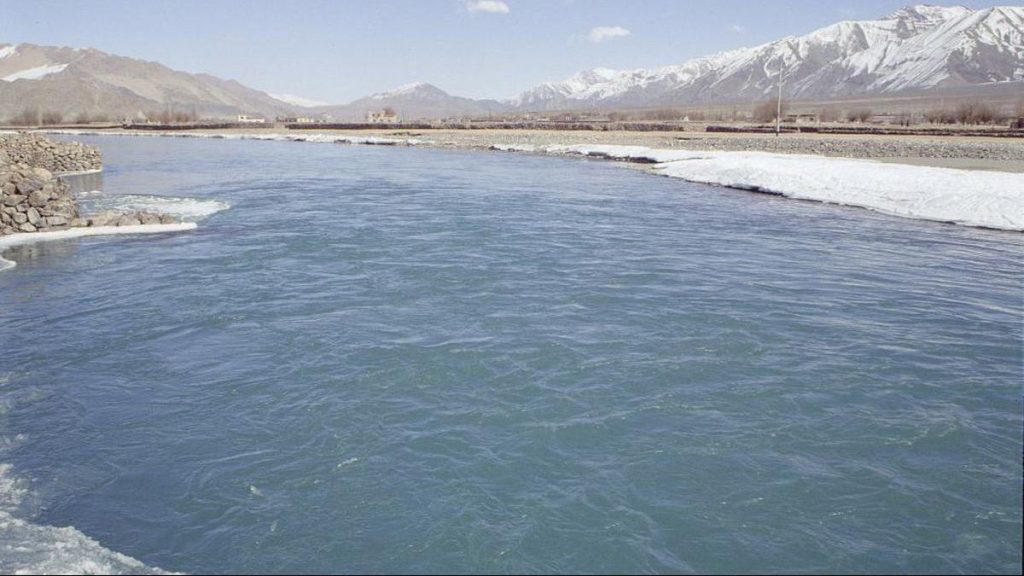
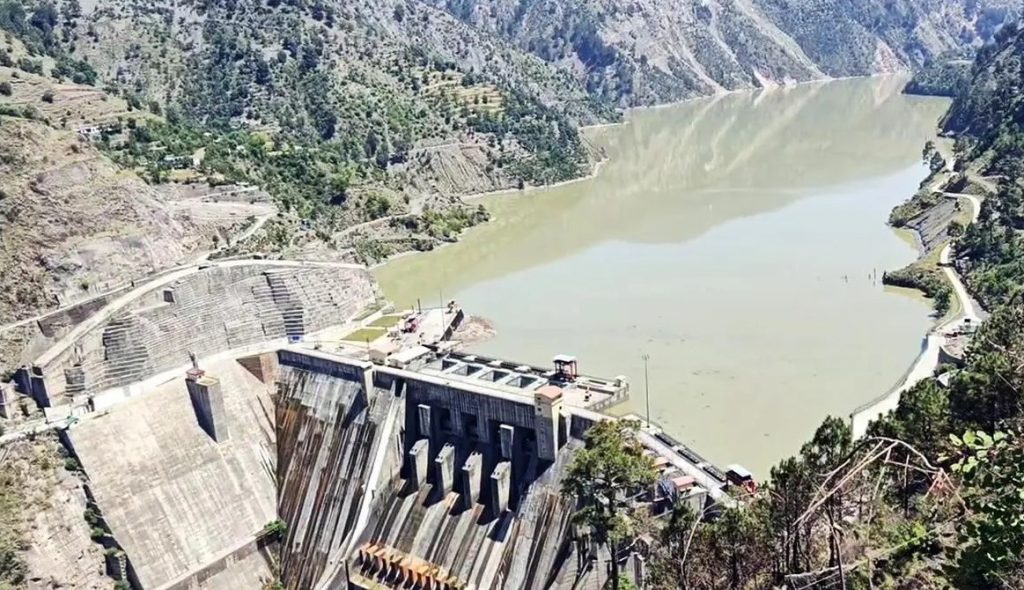
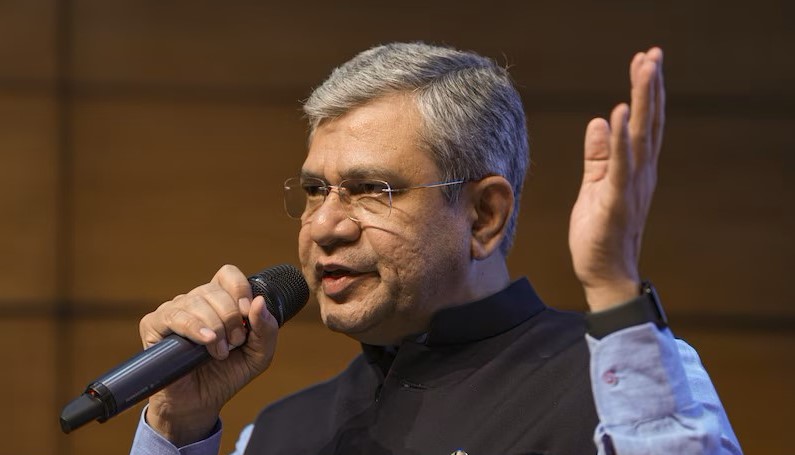
After having weathered wars and decades of hostility, the Indus Waters Treaty has finally been suspended by India. Triggered by Pahalgam terror attack, the move marks a significant escalation with wide-reaching diplomatic and economic consequences. A report by Aayush Goel
Having survived four wars, decades of tension between the two nations, and undeterred cross-border terrorism, the Indus Waters Treaty (IWT) has been suspended for the first time by India. The decision, first mulled over after the Pulwama attack, has been implemented after the Pahalgam terrorist attack, which claimed 26 lives, the majority being tourists. With Pakistan-based terror outfit claiming responsibility, India has finally taken its stand on ‘blood and water don’t flow together’. “The Indus Waters Treaty of 1960 will be in abeyance with immediate effect, until Pakistan credibly and irrevocably abjures its support for cross-border terrorism,” Foreign Secretary Vikram Misri announced while sharing other diplomatic actions against Pakistan.
In its letter to Pakistan on Thursday, India invoked the provision for modification under Article XII (3). “These communications cited fundamental changes in the circumstances that have taken place since the Treaty was executed that require a reassessment of obligations under the various Articles of the Treaty read with its Annexures,” the letter by the Jal Shakti Ministry stated. According to the letter, the “changes” include “significantly altered population demographics”, “the need to accelerate the development of clean energy”, and Pakistan not acting in “good faith”. “The obligation to honour a treaty in good faith is fundamental to a treaty. However, what we have seen instead is sustained cross-border terrorism by Pakistan,” the letter said. Taking a strong stance, India has, in addition to the suspension of the treaty, announced closure of the Attari border post, cancellation of visas, and the expulsion of several Pakistani personnel from India. It is, however, the suspension of the water treaty that has rattled not just Pakistan but the entire world, is expected to have the most far-reaching ramifications.
What is the Indus Water Treaty?
The origins of the IWT are traced to the Partition of India in August 1947, which marked the end of British colonial rule and the emergence of India and Pakistan as two sovereign nations. At that time, the combined population of both nations stood at over 1.6 billion. A large part of Northern India and almost the entire Pakistan are critically dependent on the waters of the rivers flowing from the Himalayas. Given their shared reliance on these Indus River systems for agriculture and irrigation, the treaty became a necessity. It took decades of negotiations for both nations simmering in cross-border tensions to arrive at an agreement mediated by the World Bank. Finally, in September 1960, former Indian Prime Minister Jawaharlal Nehru and former Pakistani President Ayub Khan signed the treaty. The pact rules the division of the water of the Indus River and its tributaries equitably between the two countries. According to the treaty, India gets about 30% of the total water carried by the Indus River System located in India, while Pakistan gets the remaining 70%. The treaty gives India control over the waters of the three “Eastern Rivers” the Beas, Ravi, and Sutlej with a mean annual flow of 41 billion m3 while control over the waters of the three “Western Rivers” Indus, Chenab, and Jhelum located in India with a mean annual flow of 99 billion m³ to Pakistan. The treaty also permits both countries to use the other’s rivers for certain purposes, such as small hydroelectric projects that require little or no water storage. Other than the obvious reasons, a key impact of the suspension is that India will not have to intimate Pakistan while carrying out any work on the three rivers, leaving no scope for objection, feedback, or inclusion.
Economic impact on Pakistan?
The IWT cannot be altered unilaterally. Article XII stipulates that its provisions “may from time to time be modified by a duly ratified treaty concluded for that purpose between the two Governments.” It further clarifies that the treaty can only be terminated through a “duly ratified treaty” agreed upon by both states. India, however, with the suspension, will cease sharing any hydrological data like snow melt, quantity of discharge water flow, etc, with Pakistan. India will now be free to decide on the usage of water of western rivers and may construct new hydropower projects, dams etc, which is expected to hamper water supply to Pakistan. Though there is no major impact currently owing to lack of infrastructure to control the water flow from India, Pakistan is under pressure. More than 80% of Pakistan’s agriculture and around a third of its hydropower generation depend on the waters of the Indus basin. It is vital for agriculture and irrigation in the Pakistani provinces of Punjab and Sindh. And this region produces 85 per cent of the country’s food. Pakistan is an agrarian economy; the agricultural sector contributes nearly 25% to Pakistan’s coffers and is the only source of income for 70% of its rural population.
With Pakistan already facing groundwater depletion and cities like Karachi relying on private water tankers, any interruption to water flow from the Indus rivers will affect crop yields, leading to food shortages and possible economic instability. Also, many of Pakistan’s dams, including the Tarbela and Mangla dams, depend on the Indus River’s flow for hydroelectric power generation. Reduced water flow could exacerbate Pakistan’s existing energy crisis, leading to power shortages and hindering economic activity. The disruption could have a cascading effect on its economy.
But no visible immediate impact!
The silver lining for Pakistan is that there is no immediate visible impact of the suspension as India lacks the massive storage infrastructure and extensive canal systems that is needed to withhold tens of billions of cubic metres of water from the western rivers. At most, India can cut water flows by 5-10%. The treaty restricts India from building reservoir dams on the Indus, Jhelum, and Chenab. India could, however, develop hydroelectric “run-of-the-river” projects. This means that the projects cannot alter the flow of water or obstruct it. Suspending the treaty means India may not adhere to these restrictions and begin constructing reservoir dams to plug the water flow. However, building large reservoirs on these rivers will take years, if not a decade. It would require extensive surveys and funding for such a thing to fructify, considering the ecological impact. Thus, at this point, India’s move is more a pressure tactic on Pakistan to rein in terror groups and stop infiltration.
“The infrastructure India possesses does not have the capacity for large-scale storage. While water flow cannot be altered immediately, it’s the uncertainty that will severely affect Pakistan’s predominantly agrarian economy. If India begins regulating the flow using its existing infrastructure, Pakistan could experience significant disruptions, particularly during the upcoming summer season when water availability is already at its lowest,” says Dr. Happymon Jacob, associate professor at the School of International Studies, Jawaharlal Nehru University.
Every drop of these rivers is ourst: Pak
India’s act of suspension of the treaty has triggered extreme reactions in Pakistan. Rattled by India’s suspension of the treaty, Pakistan’s power minister, Sardar Awais Leghari, said that the water was rightfully theirs and that India was hastily choosing water warfare. “India’s reckless suspension of the Indus Waters Treaty is an act of water warfare; a cowardly, illegal move. Every drop is ours by right, and we will defend it with full force legally, politically, and globally,” he said in a statement issued to Pakistani Media. His other counterparts, like Pakistani Minister Hanif Abbasi, are issuing harsh warnings in the wake of the suspension. Abbasi in a public statement issued to local media said that any attempt to block water would be interpreted as a declaration of war, potentially leading to nuclear conflict.” Islamabad’s stockpile Ghori, Shaheen, and Ghaznavi missiles along with 130 nuclear warheads has been kept “only for India.” If India stops the water supply to Pakistan by suspending the Indus Waters Treaty, it should prepare for a war, as Islamabad is ready to strike if provoked,” said Abbasi.
Similarly, Bilawal Bhutto Zardari of the Pakistan People’s Party (PPP) has aggressively responded to escalating tensions by declaring, “Either water will flow into Sindh, or the blood of Indians will”. Such extreme statements betray the deep anxiety within Pakistan over India’s latest strategic move.
BJP MP Nishikant Dubey’s contentious remarks targeting Chief Justice Sanjiv Khanna have ignited sharp political reaction with Cong leading the charge, legal outrage, and renewed debate over the judiciary’s role as a constitutional check amid rising political tensions. A report by Mudit Mathur
A political storm erupted when BJP MP Nishikant Dubey made an incendiary statement accusing Chief Justice of India (CJI) Sanjiv Khanna of being responsible for “all civil wars in the country.” The explosive remarks came on Saturday, 19 April, at a time of heightened political sensitivity, and it triggered a cascade of reactions from across the political spectrum, criticising him for his outrageous remarks demeaning the majesty of the apex judiciary. The backlash was swift and intense, not only from the Opposition but also from within Dubey’s party, the Bharatiya Janata Party (BJP), which distanced itself from his views.
The timing of Dubey’s latest remarks is politically significant. They coincided with the Congress Party’s launch of its nationwide “Samvidhan Bachao” (Save the Constitution) campaign, aimed at raising public awareness about threats to India’s democratic institutions. Congress leaders viewed Dubey’s comments as evidence of a coordinated campaign by the BJP to undermine the judiciary, especially in light of recent Supreme Court decisions that have questioned the constitutional validity on the grounds of violating the basic structure principle.
Meanwhile, the Supreme Court on 22 April agreed to hear next week a plea flagging BJP MP Nishikant Dubey’s recent criticism of the apex court and Chief Justice of India (CJI) Sanjiv Khanna. The matter was mentioned for urgent listing before a bench of Justices B R Gavai and Augustine George Masih. The counsel told the bench that after the video of Dubey’s remarks went viral, contemptuous, derogatory phrases were being used on social media for the top court as a part of malicious campaign, undermining the majesty of the Court.
The counsel said one of his colleagues wrote to Attorney General R Venkataramani seeking consent to initiate contempt proceedings against Dubey, but no action had been taken to date. “The issue is, at least give directions today to the social media platforms to remove this video,” he said.
The controversy triggered over an interview of BJP MP Nishikant Dubey with media wherein he remarked, “Chief Justice of India, Sanjiv Khanna is responsible for all the civil wars happening in this country.” “Supreme Court is responsible for inciting religious wars in the country. The Supreme Court is going beyond its limits. If one has to go to the Supreme Court for everything, then Parliament and State Assembly should be shut…” he added.
He further contended, “There was an Article 377 in which homosexuality is a big crime. The Trump administration has said that there are only two sexes in this world, either male or female…Whether it is Hindu, Muslim, Buddhist, Jain or Sikh, all believe that homosexuality is a crime. One fine morning, the Supreme Court said that we should abolish this…Article 141 says that the laws we make, the judgments we give, apply from the lower court to the Supreme Court. Article 368 says that Parliament has the right to make all laws and the Supreme Court has the right to interpret the law…”
BJP President J.P. Nadda was quick to issue a public statement distancing the party from Dubey’s comments. He clarified that the statements made by Dubey and BJP Rajya Sabha MP Dinesh Sharma, who had also criticized the judiciary, were personal opinions and did not reflect the BJP’s official stance. Nadda asserted that the BJP “completely rejected” the remarks and warned against making such statements, a move seen as an effort to manage the public perception and internal party discipline.
In a bid to quell the controversy, Dubey responded by stating he was a “disciplined soldier of the party” and that he would “go by what the party says.” Notably, he had earlier claimed he had not consulted the party about his views before making the controversial remarks. This apparent reversal was seen as a tactical retreat in the face of party pressure and public scrutiny.
The Congress Party responded vehemently. Jairam Ramesh, Congress Rajya Sabha MP and head of the party’s communications department, dismissed Nadda’s response as mere damage control. The distancing of the outgoing BJP President from the atrocious remarks made by two BJP MPs on the Chief Justice of India carries little meaning. These MPs are repeat offenders when it comes to hate speech and are very often used by G2 to attack communities, institutions, and individuals. The outgoing BJP President’s clarification is nothing but damage control. It will fool nobody. This is Entire Political Science reflecting itself as Entire Political Hypocrisy.
Specifically, Congress leaders cited the Supreme Court’s objections to the Waqf (Amendment) Act, 2025, and the court’s order mandating a timeline for the President’s assent on pending Bills. These judicial interventions have reportedly irked some within the ruling party, leading to accusations that the BJP is seeking to subvert judicial authority. A senior Congress leader described Dubey’s remarks as a “conspiracy of the BJP to start a narrative against the judiciary,” claiming the issue was “served to them on a platter” for their campaign.
Leading the Congress’s charge were Jairam Ramesh and K.C. Venugopal, AICC General Secretary (Organisation). Ramesh challenged Prime Minister Narendra Modi to clarify whether he tacitly supported these repeated attacks on the Constitution. Venugopal went further, calling Dubey’s statements a “direct attack on the Constitution” and warning of the dangers posed by individuals who become agitated whenever the judiciary upholds constitutional values. He emphasised that such attacks are meant to dismantle the checks and balances fundamental to democratic governance.
“The judiciary stands up for constitutional values, and certain individuals start hyperventilating. Threats, taunts, and tantrums follow because the idea of checks and balances clearly hurts some unchecked egos,” Venugopal posted on social media platform X (formerly Twitter).
In February 2025, Dubey had stepped into spotlight when he launched a scathing attack on the Leader of Opposition Rahul Gandhi after Gandhi’s response to the President’s address. In a formal letter to Lok Sabha Speaker Om Birla, Dubey accused Gandhi of “shamelessly distorting historical and substantive facts” and attempting to “lower the prestige of our Republic.” The incident further solidified Dubey’s role as the BJP’s frontline defender against the Congress’s top leadership.
Dubey, a four-time Member of Parliament, representing Godda in Jharkhand, has had a long political journey deeply intertwined with right-wing ideology. Born in Deoghar, Bihar, and the nephew of a former Jana Sangh leader, Dubey began his political grooming in Rashtriya Swayamsevak Sangh (RSS) Shakhas. He joined the BJP formally in 2009 after working in the corporate sector, and his rise in the party has been rapid. Known for his aggressive oratory, Dubey has consistently been chosen to spearhead key debates in Parliament, including the surprise move by the BJP to have him lead the 2023 debate on the Women’s Reservation Bill in the Lok Sabha.
Despite the BJP’s attempts to contain the damage, including Nadda’s public disavowal, the controversy has bolstered the Opposition’s narrative that the BJP is undermining India’s constitutional framework. The Congress’s ongoing campaign aims to highlight what it sees as a dangerous trend of institutional erosion and authoritarian behaviour by the ruling party.
In conclusion, the episode surrounding Nishikant Dubey’s remarks is emblematic of a broader political struggle over the future of India’s constitutional democracy. As the ruling party seeks to navigate the fallout from internal dissent and external criticism, the Opposition is preparing to leverage these incidents to rally public sentiment and frame the BJP as a threat to judicial independence and democratic norms. With Bihar assembly elections approaching and public scrutiny intensifying, the political ramifications of this controversy are likely to be felt far beyond the parliamentary walls.
The recent arrest of two supporters of pro-Khalistan leader and MP Amritpal Singh – whose detention under NSA has recently been extended for another year – for allegedly planning to attack some top leaders has rung the alarm bells for the security agencies. A report by Rajesh Moudgil
The Punjab police arrested two supporters of Sikh outfit, “Waris Punjab De” (WPD), on April 21, last, and claimed to have busted a plot to attack some top political leaders including Union home minister Amit Shah, Union minister Ravneet Bittu and senior Akali leader Bikramjit Majithia.
The WPD is headed by pro-Khalistan radical Sikh leader and Punjab’s Khadoor Sahib Member of Parliament (MP) Amritpal Singh, 32, who is currently detained in Dibrugarh Jail, Assam, under National Security Act (NSA).
For record, Amritpal Singh has been in jail since April, 2023 after he was booked for leading a large number of his supporters to Amritsar’s Ajnala police station on February 23, 2023, vandalising it and injuring several police personnel for the release of one of his supporters.
He fled the spot on March 18 after being booked under several charges and non-bailable warrants were issued against him. He was nabbed by Punjab police from Moga on April 23, 2023 following a month-long manhunt. He was booked under NSA and sent to Dibrugarh jail along with his aides from where fought and won the Lok Sabha election with a massive margin in 2024.
The alleged recent plot to attack the senior leaders by Amritpal’s supporters came to light after some leaked screenshots of their chat on a WhatsApp group went viral on social media about two weeks ago, ringing alarm across security agencies.
Stating that a case has been registered at the Cyber Crime police station in Moga, the police said that the two accused have been identified as Balkar Singh of Khanna and Pawandeep Singh of Moga, while another accused named in the FIR is Lakhdeep Singh of Bathinda. Police held that the alleged screenshots and audio recordings related to the plot to attack the leaders have been shared with the concerned security agencies.
According to police, the WhatsApp group in which the said plot was allegedly discussed, has 600 members and that the group members discussed plans to avenge the extension of Amritpal Singh detention under NSA. They also discussed details of foreign funding and arms procurement.
In fact, the matter was also brought before the media after senior Shiromani Akali Dal (SAD) leader Bikram Majithia briefed the newspersons in the context and demanded arrest of members of the WhatsApp group.
Majithia, who also released some audio clips in which he alleged Amritpal spoke about his relation with gangsters, also demanded a National Investigation Agency (NIA) probe into the entire matter. He held that he would forward all the evidence in his possession to the Centre as “the Punjab police had become politicised”.
Questioning why chief minister Bhagwant Mann was silent on such a crucial matter, he said: “Are the Punjab police, which have all the evidence in its possession, and the chief minister waiting for some person to die’?
Majithia further alleged that Amritpal was a ‘dhongi’ (impersonator) and not a ‘pracharak’ (preacher), and added that Amritpal and his family had always supported the Congress party and even voted against Panthic candidate Paramjit Kaur Khalra in 2019. He also alleged that gangsters Arsh Dalla, Happy Passia and Harwinder Rinda besides others were closely associated with Amritpal.
The SAD leader also released details of the WhatsApp conversations in the Akali Dal (WPD) Team Moga page in which team members, he alleged, asserted that they were ready to become martyrs besides asking if their families would be look after in case they indulged in political assassinations of leaders including Ravneet Bittu, Bikram Singh Majithia and Amit Shah. He also released an audio clip of group in which a woman can be instigating members to become suicide bombers.
Pertinently, the Punjab government was said to have also decided to extend the detention of Amritpal currently in Dibrugarh Jail, Assam under NSA, for another year. The detention of his aides, who were also jailed under NSA, was not extended and they have recently been brought back to Punjab where they would face trial for other charges. Amritpal and his aides were booked on charges of spreading disharmony among classes, attempt to murder, attack on police personnel and disrupting public servants from carrying out their duty in 2023.
According to the extension order issued on June 3, 2024, his detention continued until April, 2025. According to sources, his detention has been extended as police claimed to have some evidence that he still continued to be a threat to the law and order of the state.
Intro for cover story: A quiet trade in welfare grain distributed under PMGKAY thrives across villages, turning a lifeline for the poor into underground commerce. A report by Tehelka SIT
“The grocery shop owners do not keep the government-supplied free rice openly in their shops; they store it elsewhere to avoid any government raid. If they display the rice in their shops, there’s a risk that someone might tip off the authorities, which would get the shop owner into trouble,” said Afsar Ali, a private broker from Mohanpur village, Bareilly district, Uttar Pradesh, to the Tehelka reporter.
“Either you’re doing a sting on us, or you’re from the police department. We don’t want to lose our ration card, so I’m not going to sell my free rice to you,” said Rihana, a woman beneficiary of the free ration scheme from Sector 81, Noida, Uttar Pradesh.
Rihana
“Right now, I have 7 quintals [700 kg] of ration rice with me, which I’ve collected from beneficiaries. They sell their share of free rice to me every month after receiving it from the ration shops,” said Mohammed Rafi, a private grocery store owner in Mohanpur village, Bareilly district, Uttar Pradesh.
“I’ve already spoken to a ration dealer in my area. Don’t worry—if you need even 50 quintals [5000 kg] of ration rice per month, we’ll provide it,” Rafi told Tehelka.
“We buy the free ration rice from the beneficiaries at the rate of Rs 27-28 per kg, so we can’t sell it to you at Rs 32. We need at least Rs 38 per kg,” Rafi added.
Woman beneficiary 1
“I have a regular supply of free ration rice at my shop. Every month, beneficiaries come with their quota of rice, which they either exchange for money or for better-quality rice. On average, I get 4-5 quintals [400-500 kg] of ration rice every 2-3 months,” said Rafi.
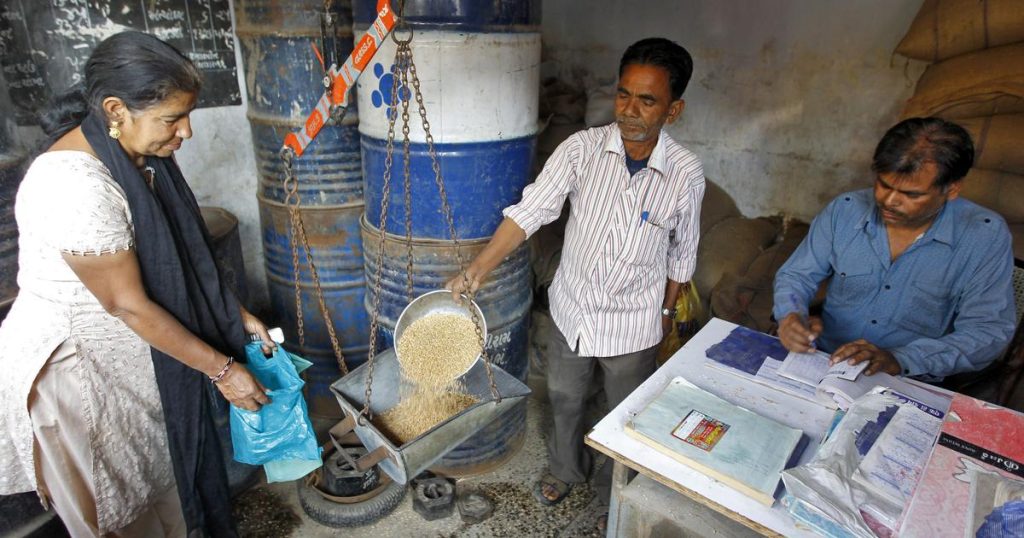
The Free Ration Scheme in India, launched in April 2020 under the Pradhan Mantri Garib Kalyan Anna Yojana (PMGKAY), was initially meant to assist the poor during the COVID-19 pandemic for three months, but was later extended. Through this scheme, over 81 crore families, who do not pay income tax, receive 5 kg of food grains per person each month. The scheme has now been extended by the central government for another five years, until December 2028.
There is no separate registration process to participate in PMGKAY. Beneficiaries under the National Food Security Act (NFSA), including those with Antyodaya Anna Yojana (AAY) or Priority Household (PHH) ration cards, can access PMGKAY benefits using their existing ration cards at local fair-price shops.
Woman beneficiary 2
Since the launch of this scheme, the government has received numerous complaints from various states and districts, alleging that ration dealers and grocery shop owners are selling free ration in the open market, and that ineligible individuals have managed to grab the rations meant for the needy. These include taxpayers, property owners, and car owners who are unfairly taking advantage of the scheme. According to reports, such individuals will soon be excluded from the program. As complaints of fraud continue to emerge, Tehelka decided to launch an investigation into PMGKAY.
Our investigation into the illicit sale of government-provided free rice begins with a conversation with Afsar Ali, a resident of Mohanpur village in Bareilly, Uttar Pradesh. Posing as a buyer, our reporter learns that Afsar, who receives 5 kg of rice under the PMGKAY scheme, has been selling it off for Rs 16-18 per kg. This shocking admission highlights a broader issue where beneficiaries not only exploit the system for personal gain but also fuel the underground market for essential commodities meant for the poor.
Reporter – Kya kya milta hai?
Afsar -Haan..milta hai chawal, gehu aur cheeni.
Reporter – Cheeni kitni milti hai ?
Afsar- 5 kg milti hai har mahine.
Reporter – Ye to free milta hoga.. sarkar ki taraf se milta hai?
Afsar- Haan har mahine milta hai.
Reporter – Is mahine ka mil gaya?
Afsar- Bhateeja hamara le aaya.
Reporter – Kuch log bech bhi to dete hain chawal ko?
Afsar – Haan.
Reporter – Kis rate mein bechte ho?
Afsar-16-18 rupees kilo dukan wale ko dete hain.
Reporter – Kuch bechna chah rahe ho Delhi mein to batao, kis rate mein bechte ho?
Afsar- Chawal to mota wala 17-18 mein bikta hai.
Reporter – Jo sarkar tumhe free mein de rahi hai?
Afsar-Wo to 5 kilo milta hai
Reporter – Wo kitne mein bech dete ho ?
Afsar- Rs 16-17 dukan wala leta hai.
[The conversation exposes a troubling reality: beneficiaries of the government’s welfare schemes often circumvent the system, selling their entitled food grains at discounted rates. This exploitation undermines the very integrity of public welfare programs meant for the poor.]
Afsar Ali now revealed that his family holds two ration cards: a red one, for which they pay for grains, and a yellow one, which provides free rations. The yellow card, in his mother’s name, fetches them a free ration, while the red card, in the names of Afsar and his five brothers, requires payment for the ration. Afsar explained that they receive about 13 kg of food grains through the free ration and 33 kg through the paid card, with a cost of Rs 170 for the latter.
Reporter – Aur kitne log bechte hain gaon mein.
Afsar – Kuch log aapas mein badal lete hain jinka pariwar bada hai.
Reporter – Aapko to free mein mil raha hai sarkar se.. koi paisa nahi dena padta.
Reporter (continues) – Is mahine ka mil gaya.. April ka?
Afsar- Haan 4-5 din pehle.
Reporter – Ration card mein kis kis ka naam hai?
Afsar-Hum 5 bhaiyon ka…Free wala to ek hi card par aata hai chawal baki jo hai…do card hote hain. Ek lal wala hota hai usmein paise dene padte hain aur peele mein nahi dene padte aur jo free anaj milta hai wo peele wale mein milta hai.
Afsar (continues)-Hamare pass ek lal wala hai ek peele wala. Peela wala maa ke naam par hai aur lal wale hum 5 bhaiyon ka naam hai
Reporter – Maa ko milta hoga rashan free wala?
Afsar-Haan.
Reporter – Kya- kya milta hai ?
Afsar- Lagbhag 13 kilo anaj milta hai gehu, chawal, sab milakar 13 kilo, aur lal wale mein 33 kilo magar usmein paise dene padte hain
Reporter – Kitne paise ?
Afsar – Rs 170 jaate hain.
[This exchange underscores how the ration card system can be manipulated, with families exploiting multiple cards to benefit from both free and paid rations.]
Tehelka reporters, posing as clients in search of government-supplied free rice in bulk, approached Afsar Ali with a proposition: supply subsidised food grains to a private buyer in Delhi. Afsar, without hesitation, agreed to act as a middleman. He assured us that he could arrange 8–9 quintals (800–900 kg) of rice every month, sourced directly from his village of Mohanpur in Bareilly, where, according to him, over 300 people receive free rations. Afsar also offered to organise transportation via a pickup van and mentioned that he would speak to local beneficiaries as well as the ration dealer to ensure supply. What unfolds is not merely a casual deal, but a glimpse into an underground network ready to siphon off food meant for the poor.
Reporter – Yahan par kisi ko zarurat hai, wo bahut sara anaj chawal kharidna chahte hai jo sarkar deti hai….aap 16-17 rupees mein bechtey ho na?..mein aapko Delhi mein uske 30 rupees dilwa dunga.
Afsar – Jaise hum pickup bharke lekar aaye to koi dikkat to na aayegi raaste mein..jaise border pe check kare.
Reporter – To aap bata dena aap vyapari ho chawal dene aaye ho.
Afsar- Accha.
Reporter – Wo hamari zimmedari hai uski tension mat lo aap.
Afsar – Aap 30 rupees kilo le loge?
Reporter – Kitna chawal ho jayega aapke gaon se?
Afsar- Phir to mein kotey se hi baat karunga direct.
Reporter – Humko free wala chahiye jo sarkar deti hai, wahi lena hai..paise wala nahi..to gaon se aap log 17-18 mein bech rahe ho…mein 30 dilwa dunga.
Afsar- Accha baat karke batata hoon..
Reporter – Aap bharke le aaoge gaon se?
Afsar- Haan ho to jayega sir.
Reporter – Kitne log hain jinko free mein anaj mil raha hai?
Afsar – 200-250 log honge..300 se zyada hi honge.
Reporter – 300 se zyada honge jinko free anaj mil raha hai 5 kg…kaunsa gaon hai tumhara?
Afsar – Mohanpur tria.
Reporter – Ye Bareilly se kitni door hai ?
Afsar- Lucknow road se left bypass se 6 km door hai…zila Bareilly
Afsar- Batata hoon mein..har mahine kam se kam 6-7 quintal to ho hi jayega chawal .
Reporter – 6-7 quintal..ek gadi mein kitna aa jayega..ek pickup mein?
Afsar- Kam se kam 8-9 quintal to le hi jata hai..
Reporter – Bareilly se Delhi lane ki zimmedari tumhari hogi?
Afsar- Wo kam se kam 4-5 k lega.
Reporter – Wo hum de denge..pickup wale ka kharcha alag hai..aapka kaam hai chawal se pickup bharwa kar Delhi lana.
Afsar- Accha.
Reporter – 8-9 quintal dilwa doge har mahine?
Afsar- Haan
Reporter – Pakka ?
Afsar- Pakka sir..
Reporter- Free wala chahiye ?
Afsar- Mein poori baat karwa dunga…kotey wale se.
[This dialogue shows how easily ration rice, meant for the country’s poorest, can be diverted and sold for profit. It reminds us that welfare leakages often start on the ground, with willing sellers and eager buyers.]
After talking to us, Afsar started arranging government free rice for us, to be supplied in Delhi. He spoke to a grocery store owner in his village who told him that he has several quintals of government free rice with him, which beneficiaries had sold to him. Afsar now reverted back to us saying that grocery shop owner does not keep government free rice at his shop out of fear of being raided by the authorities for the same. Afsar said he would arrange rice from villagers willing to sell and some from a grocery shop owner. He promised to supply a large amount of government rice to us in Delhi.
Afsar – Mein ye keh raha tha dukandaar hai jaise.. jagah jagah dukan hai.. gaon wale jama karte hain chawal, to ye aise ekatha karna padega chawal ..ye dukan mein nahi rakhtey kahin aur rakhte hain chawal.
Reporter – Aisa kyun?
Afsar- Mukhbari kar di kisi ne…. “kahan se aaya kaise aaya.?”
Reporter – Kabhi chaapa pada hai kisi ke yahan..kya hota hai.?
Afsar – Challan kat dete hain 10k ka, 15 k ka.. mukhbari kar dete hai log….chawal walon k bhi licence ban ho rahe hain aajkal…wo kisi bhi variety ka chawal bech sakta hai.
Reporter – Tum apna bhi to chawal bechoge hame..tumahare 2 ration card hain.. ek laal ek peela…Lal mein paise dene padta hain..peela wala muft milta hai chawal.
Afsar- Haan
Afsar- Dukandaar ke pass 2-3 quintal hai chawal.. aur baki maine aur logon se baat ki hai, wo keh rahe hain bechte rahenge yvavastha dekhte rahenge..28 rupees kilo.
[The conversation revealed a hidden network: beneficiaries often sell their subsidised rice, middlemen quietly buy it without records, and shopkeepers stay careful because of the risk of informers and raids. Afsar acts as a fixer, moving easily through this grey market. We are seeing how welfare quietly turns into a business. ]
Now, Afsar claimed to have found a private grocery shopkeeper, Mohammed Rafi, from his village to help us get rice. Rafi told Tehelka he gets 4–5 quintals (400–500 kg) of rice from government beneficiaries over 2–3 months. He said these beneficiaries either sell their free ration or swap it for better-quality rice. Rafi agreed to arrange government rice for us too, and said he had already spoken to a ration dealer for a bigger supply.
Reporter -Hame Rafi saheb wo chawal chahiye jo sarkar de rahi hai free mein rashan mein?
Rafi- Mere pass kote ka hi chawal aata hai..log aate hain mujhse badal ke le jate hain..kuch mota chawal nahi khate wo badal ke le jate hain ya paise le jaate hain.
Reporter -To aise kitne log aa jaate hain aapke pass?
Reporter -Hame to badi tadad mein chawal chahiye.. wo kaise dogey?
Rafi- Aapke liye maine bade dealer se baat kar li hai..abhi to jo mere pass hai mujhse le lo, mein bade dealer se bhi dilwa dunga, ye hai thodi mehnat hum bhi kar lenge..1-2 rupya hamara bhi ban jayega.
[In the conversation, Rafi described a quiet system of barter and resale built around government entitlements. We see how easily the ration system turns into a parallel supply chain. What should feed the poor ends up fuelling trade, and the line between small-time deals and bigger leakages blurs.]
When asked whether the rice Rafi intended to supply to us in Delhi would, in fact, be government-issued free rice, he assured us that it would be—and offered to authenticate it by showing it on video call. He claimed that he currently had about 7 quintals (700 kg) of such rice stored, which he had purchased from ration beneficiaries. Rafi said that when needed, he portions the stock into 50 kg bundles for delivery. He confidently stated that not only could he supply 10–15 quintals per month, but could even arrange 50 quintals daily, if required. Rafi speaks like a man running a legitimate enterprise, not someone trafficking in misappropriated welfare grain—a reflection of just how normalized the practice has become.
Reporter – Nahi mujhe wo hi chawal chahiye jo sarkar deti hai free mein ?
Rafi- Nahi to aapko bharosa kaise dilaya jaye..video call par dekh sakte hain .. bilkul wahi chawal hain kacche lage hue hain hamare pass.. abhi to hamne aise hi rakhe hue hain. Jab kisi ko dena hota hai to 50-50 kilo ke bundle bana dete hain..
Reporter – Accha jo chawal aapko log de jate hain.. wo aap ekatha karte rehte ho..abhi kitna hoga aapke pass ?
Rafi- Arey tum baat kar lo hum mahine k mahine 15 quintal dilwayenge .aisi baat nahi hai 50 quintal bhi dilwayenge .
Reporter-Aap kahan se loge..agar 50 quintal hame doge toh?
Rafi- Ab dilwa denge roz ki gadi aayegi jayegi to.
[Here, Rafi sounds like a man running a legitimate enterprise, not someone trafficking in misappropriated welfare grain. This shows how common and open the siphoning of welfare grain has become and how the leaks have grown steady and large. ]
Now Rafi moved to discuss the pricing of the rice. We offered to buy government rice from him at Rs 32 per kilo, but he turned down the proposal, insisting on a minimum of Rs 38 per kilo. He explained that the rice is procured from beneficiaries or ration dealers at a higher cost, and claimed that he had already roped in a dealer to ensure steady supply for us.
Reporter – Kya rate hoga chawal ka aap jo doge hame?
Rafi- Kya baat tey hui thi aapki ?
Reporter-Ye to keh rahe they 16-17-18 mein bechta hoon.
Rafi- Yahan to 27-28 rupees kharidte hain. Wo dealer le leta hai humse 30-32 ka rate..hum paise nahi lekar aate.. badle mein chawal hi lekar aatey hain.
Reporter-Area kaunsa hai?
Rafi- Teria Mohanpur, Bareilly zila.
Reporter -Humse kitna loge?
Rafi- Bareilly k ander mota chawal ki keemat Rs 40 hai.
Reporter – Hum sarkari chawal ki baat kar rahe hain free wali…?
Rafi- Pauna chawal bhi samajh lo 50 ka rate hain to mota chawal kitne ka hoga..
Reporter – Hamko kitne mein doge chawal?
Rafi- Aap kitna dogey…pehle batao?
Reporter – De do 32 rupees mein per kilo?
Rafi- Nahi itna to nahi ho sakta..kam se kam Rs 38 to ho?
Reporter -Chalo mein sham ko batata hoon.
Rafi- Haan bata do hamne dealer ke bhi kaano mein baat daal di hai..1-2 rupees ki baat hogi to idhar udhar ho jayega ha bharose wale aadmi ho..aap video call karke poora maal dekhiye poori tasalli ho tabhi aage badhna..
[As the dialogue goes on, it’s clear this isn’t casual dealing—it looks like a full trade setup, with sourcing costs, margins, and planning. Rafi talks about prices like a wholesaler, not someone just selling a few extra bags. What’s meant to be free is selling for Rs 38 a kilo in the black market.]
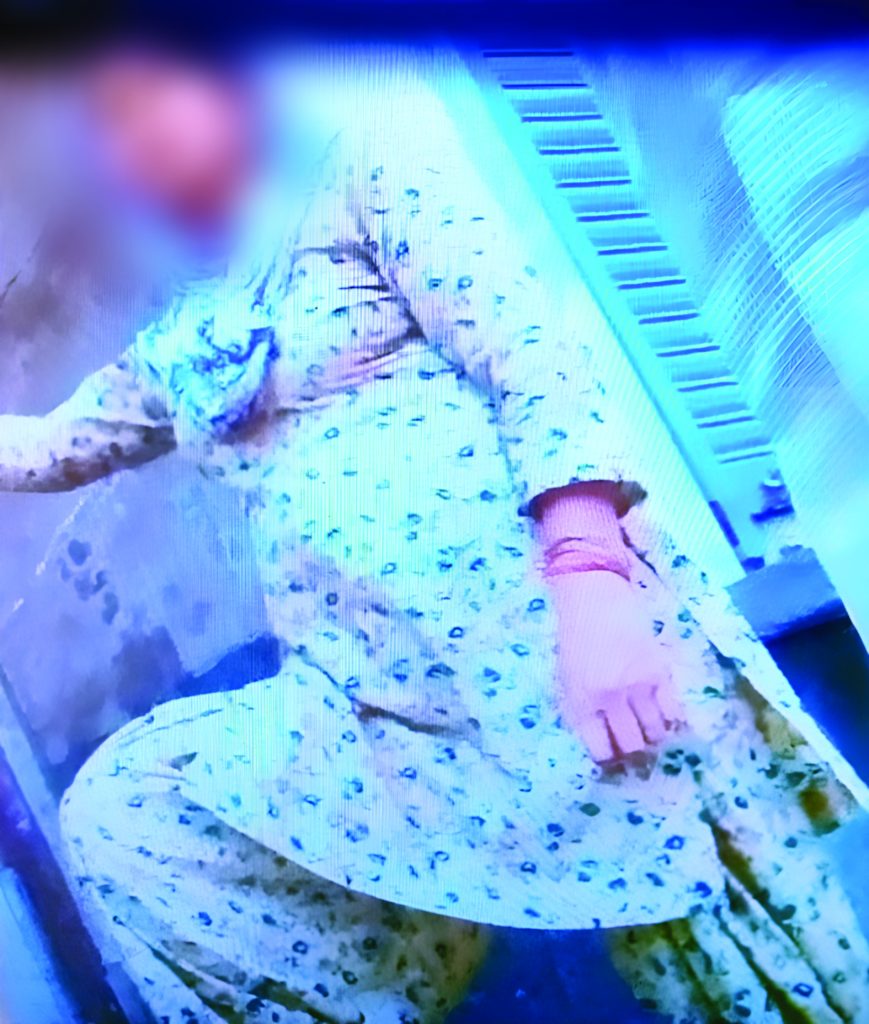
From Bareilly, Tehelka’s investigation into the diversion of free ration moved to Noida, another city in Uttar Pradesh. In Sector 81 of Noida, we met Rihana, a woman who identified herself as a ration scheme beneficiary, along with several others from the area. Our access to them was facilitated by a local broker. Almost immediately upon meeting us, Rihana pegged the price at Rs 35 per kilo for the rice she receives free from the government, justifying it as lower than open market rates. When we mentioned needing monthly supplies, she expressed readiness to provide them.
Rihana- Kis rate mein letey ho?
Reporter- Aap kis rate mein dengi?
Rihana- Rs 35..
Reporter- 35 rupee kilo..zyada nahi hai?
Rihana- Kum hain.. dukan ke rate se to kam hi hain..
Reporter- Chawal kaunse hain dikha dengi aap?
Rihana- Abhi to nahi hain.
Reporter- Ye wahi hain na jo sarkar free mein deti hai?
Rihana- Haan..5 kilo milte hain ek aadmi ko.
Reporter- Mujhe dikha do aap.
Rihana- Chawal kahan hai abhi ?
Reporter- Mile nahi hain?
Rihana- Na…5 tareek tak milte hain is baar mile nahi hain..10 tak milenge.
Reporter- To hame har mahine chaiye?
Rihana- Haan.
Rep[prte- Chawal kitna milta hai?
Rihana- 10 milta hai..
Reporter- Gehu 10 kilo.. kitna log ho aap ghar mein?
Rihana- 25 kilo milta hai, jaise hum chahain to poora chawal bhi le sakte hain.
Reporter- Accha.. chaho poora chawal le lo.. chaho to poora gehu..?
Rihana- Haan.. aur kuch nahi milta.
[In this short but telling exchange, Rihana openly explained how free grain can be sold depending on what her family eats. Her casual tone showed how routine this exchange has become. The system’s leak isn’t accidental; it’s now part of everyday life.]
While the Tehelka reporter was still speaking with Rihana and a group of women in Noida, suspicion suddenly crept into the air. Someone in the group raised an alarm, suggesting that we were from media and conducting a sting. A young boy even accused us of being police. The mood shifted instantly. Rihana, who had just been openly discussing the sale of her government rice, quickly backtracked. She denied having a ration card at all—an assertion that directly contradicted what she had just said moments earlier.
Rihana- Abhi hamare bane nahi hai ration card.
Reporter- Abhi to aap keh rahi ho bana hua hai ?
Rihana- Mere 6 to bacche hain khane wale.. 2 jane hum ho gaye. 8 jane to 25 kilo kyun kamse kam 40 kilo milna chaiye.
Rihana- Yahan to mein le nahi rahi hoon gaon mein milta hai hamara..
Second women- 2 kilo gehu, 3 kilo chawal.. aise milta hai.
Rihana- Media wale hain…mere to bachtey hi na hain.
Rihana (continues)- Waise bhi itne mote chawal dekh lenge to media wale kya karenge..?
Boy- Inke dil mein dhak dhak ho rahai hai..ye police wale to nahi hain ?
Reporter- Arey police wale nahi hain.
Rihana- Nahi- nahi mein aap ko jaanti hoon chacha hai hamare..10 saal se mil raha hai barabar.
[What unfolded here wasn’t just a change of heart; it was the instinctive closing of ranks when the beneficiaries came under scrutiny. The moment the women sensed exposure through media, the narrative reversed itself, and self-preservation took over.]
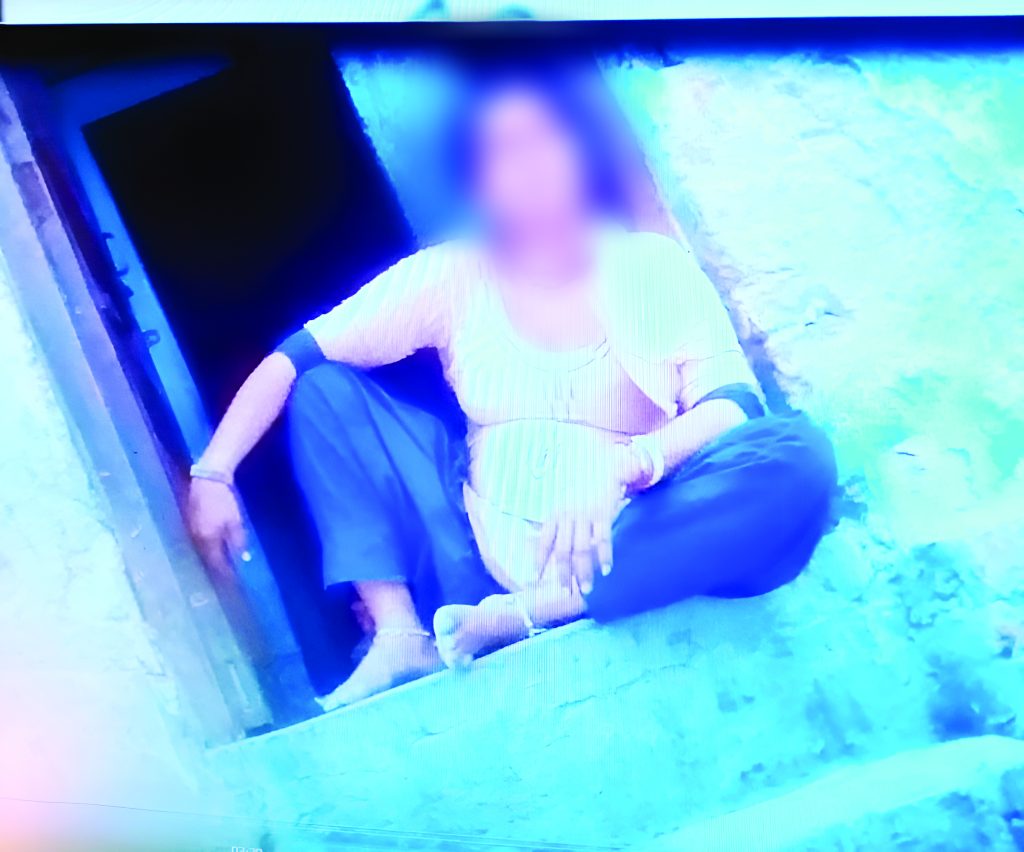
After speaking with Rihana, we met another woman in a different lane of the same Sector 81 locality in Noida. Though she refused to give her name, she identified herself as a beneficiary of the government’s free ration scheme. She openly admitted to selling the rice she receives—at Rs 25 per kilo—in the open market. The woman said she hadn’t received her current month’s quota yet but assured us she would be willing to sell as soon as it arrived.
Woman (unidentified beneficiary) – Abhi nahi mila hai chawal.
Reporter- Kya rate deti ho. Rs 25?
Woman – Haan
Reporter- Jo free ration sarkar de rahi hai humko wo chahiye 5 kilo, wo chahiye humko.
Woman – De to detey aapko par wo abhi mile nahi hain, pichle mahine mile, kabhi 7 ko mile kabhi 8 ko… is baar mila hi nahi.. 9 tareekh ho gayi.
Reporter- April mein abhi nahi mila?
Woman – Abhi nahi mila.
Reporter- Kitna milta hai?
Woman – Ek aadmi par 5 kilo.
Reporter- 2 aadmi par 10 kilo, 2 kg chawal 3 kg gehu.?
Woman – Chawal lo ya anaj lo, humto chawal le letey hain
Reporter- Wo kya rate de dogi aap, hame chaiye kharidna hai hamko?
Woman – Abhi to mile nahi hain.
Reporter- Nahi jab milenge tab?
Woman – Jab milenge tab le lena.
Reporter- Kis rate mein?
Woman – Hum to 20 bhi de deven hai…hum hain Hindu hum to apna khane k liye hi kar letey hain…jaise koi aata hai to de detey hain 2 kg 2.5 kg.. waise koi zaroorat nahi hai..
[The exchange above is casual, with no sense of secrecy. She discussed rates, quantities, and supply gaps with the ease of someone long familiar with this informal marketplace—where welfare grain becomes trade stock depending on timing and need. This quiet admission shows how the public distribution system doubles as a parallel economy.]
In the same lane, Tehelka encountered yet another woman who said she was a recipient of free ration under the government scheme. She declined to share her name but readily admitted to selling her subsidised rice in the open market at Rs 25 per kilo. When we expressed interest in buying, she agreed—though only for rice, not wheat—and settled on a rate of Rs 30 per kilo. What stood out was how seamlessly the negotiation unfolded.
Reporter- Chawal bechte ho 25 kilo..theek hai hamko har mahine chahiye hoga.
Woman – Milega to de denge.
Reporter- Theek hai wahi Rs 25 per kg?
Broker- Zyada de dena gareeb aadmi hai.
Reporter- Chalo theek hai 30 rupees per kg le lenge..
[What stood out in the conversation above was how seamlessly the negotiation unfolded. The ration grain was treated not as sustenance but as tradable stock, with price, availability, and quantity all being freely discussed.]
In the same lane, we met yet another woman who said she was a beneficiary of the government’s free ration scheme. She, too, declined to disclose her name but admitted she regularly sells her allotted rice in the open market at Rs 25 per kilo. She revealed that last month’s supply had already been sold to a local shopkeeper and added that buyers often come directly to their homes. When we proposed a regular deal at Rs 30 per kilo, she agreed without hesitation.
Reporter- Kya rate bechti ho aap? Chawal ?
Woman – Dukandar to 25 hi debey hai.
Reporter- Dukandar 25, lekin hum lagatar lenge aapse?
Woman – Theek hai.
Reporter- Har mahine Rs 30 rate le lena aap humse. Aap kahan bechti ho? dukan par?
Woman – Nahi nahi aap ghar se le jana.
Reporter- Ghar se?
Woman – Ghar se bhi le jawen hai, dukan se bhi.
Woman (continues)–Ab pata lag gaya, ab tumhe de diya karenge .
Reporter- Chawal dekhne ko mil sakta hai.?.. quality kaisi hai ?
Woman – Ab to bech diye.. saath ke saath bech detey hain.
Woman (continues)- Hamare bacche khate nahi hai.. isliye hum haath k haath bech dein choon le lein dukan se.
[The short exchange shows a local trade where ration grain quietly moves from home to home, mixing personal need with small-time selling—quickly and casually. The grain meant for hunger relief is quietly absorbed into a neighbourhood economy.]
Under the Pradhan Mantri Garib Kalyan Anna Yojana (PMGKAY), more than 80 crore people across the country are receiving free ration. The main objective of this scheme is to provide essential food items to the poor and needy families. However, it has come to light that many beneficiaries are selling their free ration in the open market, and a significant number of ineligible individuals are also taking advantage of this welfare scheme. Tehelka‘s investigation into PMGKAY, which captures beneficiaries on camera selling free ration, serves as a shocking eye-opener. This widespread abuse calls for urgent action from the government to ensure that the scheme benefits those who truly need it, and to curb this growing black market trade. The time to act is now.
The term “sharbat jihad” reveals a calculated effort to provoke. By co-opting language often used to describe religious conspiracies and applying it to consumer goods, Ramdev amplifies existing societal fault lines. The strategy to polarise and win customers. A report by Bijoy Patro
In India’s increasingly volatile landscape of politics, religion, and commerce, few figures have mastered the art of staying in the headlines quite like Baba Ramdev. A self-styled yoga guru- turned-business magnate, Ramdev has once again ignited public and legal uproar – this time by dragging a century-old summer drink into the trenches of communal politics.
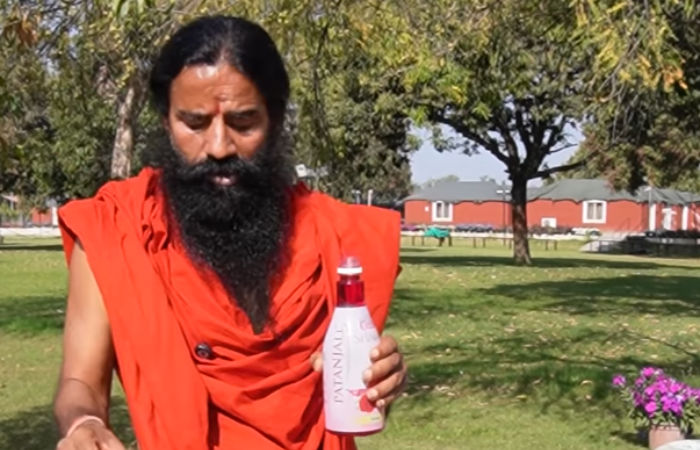
Earlier this month, while promoting Patanjali’s newly launched rose sharbat, Ramdev alleged, without directly naming it, that money from a competing brand, widely inferred to be Hamdard’s Rooh Afza, was being used to build mosques and madrasas. “If you drink that sharbat, madrasas and mosques will be built. But if you drink Patanjali’s rose sharbat, gurukuls will be built, Acharyakulam will expand, Patanjali University will grow,” he said. The controversy only intensified when he likened this supposed phenomenon to “sharbat jihad,” drawing comparisons with “love jihad” and “vote jihad”, terms often associated with conspiracy theories propagated by right-wing groups.
The remarks sparked outrage across civil society and the political spectrum and prompted legal action from Hamdard Laboratories, the 119-year-old manufacturer of Rooh Afza, who called Ramdev’s statement defamatory and communally charged. On April 22, the Delhi High Court, visibly shaken by the content of the video, termed Ramdev’s comments “indefensible” and “shocking to the conscience of the court.” Justice Amit Bansal directed Patanjali to take down all related videos and social media posts immediately.
Not a slip, but a strategy
While Ramdev’s supporters often defend his controversial outbursts as slips of the tongue or products of emotional spontaneity, critics suggest a more calculated motive. “This wasn’t an offhand comment made in jest. It was part of a promotional campaign,” said a media strategist and former ad agency executive who wished anonymity. “When your brand strategy includes communal messaging, you’re not selling a product—you’re selling ideology.”
Indeed, the timing of the remarks, coinciding with the launch of Patanjali’s rose sharbat, suggests that the controversy may have been engineered to create buzz and corner the market, especially during the peak summer beverage season. “Ramdev understands the value of outrage. In the crowded Indian market, visibility is everything. And few things travel faster than controversy,” said the media strategist.
It’s a model Ramdev has returned to repeatedly. From claiming that Patanjali products cure chronic diseases like diabetes and asthma to his infamous declaration that allopathy is “a stupid science,” Ramdev has walked a fine line between influence and illegality. Courts have reprimanded him. Medical associations have protested. Yet, each time, the attention seems to work in his favour, keeping Patanjali relevant in both news cycles and shopping lists.
Courtroom reprimand and legal consequences
The Delhi High Court’s response to Ramdev’s “sharbat jihad” campaign was swift and stern. “I couldn’t believe my eyes and ears,” Justice Bansal said during the hearing. Senior Advocate Mukul Rohatgi, representing Hamdard, argued the video amounted to hate speech under the guise of commercial expression. The senior advocate said this wasn’t just brand defamation, but communal provocation as the issue went beyond disparagement and was “akin to hate speech,” aimed at creating communal discord. “It must be removed!” he asserted.
The court ordered Patanjali to file an affidavit confirming that no such future statements or promotions will be made. Ramdev’s counsel, Rajiv Nayar, assured the bench that all offending content would be taken down and insisted that Patanjali does not endorse any religious bias.
But the court wasn’t satisfied with vague assurances, as Justice Bansal said that Ramdev could hold his opinions in his head, but can’t express them, reiterating that freedom of expression does not extend to speech designed to incite religious tensions.
Justice Bansal said that Ramdev’s remark “shocks the conscience of the court, this is indefensible”. The court also instructed Patanjali to file a compliance affidavit and scheduled the next hearing for 1 May.
Hamdard, meanwhile, is seeking a permanent injunction, damages of ₹2 crore, and a formal apology from Ramdev and Patanjali.
Congress leader, Digivijaya Singh sought FIR against Ramdev
Earlier, senior Congress leader Digvijaya Singh approached police for registration of an FIR against Ramdev, accusing him of spreading religious hatred through his purported statement on “sharbat jihad”.
The politics of the personal brand
Baba Ramdev’s journey from an ashram in Haridwar to the boardrooms of India Inc. is remarkable not just for its scale but for its savvy blending of cultural identity with commercial enterprise. Patanjali Ayurved, which began in 2006, now spans FMCG goods, health supplements, personal care, and even apparel and education. Its appeal is rooted in a promise to revive Indian traditions and challenge Western dominance.
But Ramdev’s politics have always been entangled with his business goals. His public image – a mix of swadeshi fervour and spiritual authority – has granted him an unusual latitude in public discourse. “There’s a reason why Ramdev feels emboldened to say such things,” said a sociologist at JNU. “He speaks to an audience that sees nationalism and consumer choices as intertwined. It’s not just about what you buy, but who you support when you buy it.”
Yet, this blending of faith, nationalism, and commerce has also made Ramdev a lightning rod for controversy. In 2021, his promotion of a COVID-19 drug called ‘Coronil’ claimed it was certified by the WHO – an assertion quickly debunked and condemned by the Indian Medical Association. The incident led to legal proceedings and eventually, a forced public apology.
Ramdev’s controversy playbook
This isn’t an isolated case. Ramdev’s history of clashes with regulatory bodies and courts is extensive. From misleading health advertisements to labour law violations at his Haridwar manufacturing plant, Patanjali has repeatedly run afoul of India’s legal system. In February 2024, the Supreme Court issued a contempt notice after Ramdev continued to promote false health claims despite previous court warnings.
Consumer rights activists say that the cycle of controversy, condemnation, and capitulation has become the Baba’s standard practice. “He makes a wild claim, gets slapped with a notice, offers an apology, and moves on. Meanwhile, his product will have gone viral. It is marketing disguised as martyrdom.” In other words, ambush marketing.
Even the term “sharbat jihad” reveals a calculated effort to provoke. By co-opting language often used to describe religious conspiracies and applying it to consumer goods, Ramdev amplifies existing societal fault lines. The strategy isn’t just to win customers, but to polarise them and win their allegiance.
The bigger picture
As India navigates a tense socio-political climate, controversies like these are no longer isolated incidents. They reflect a deeper trend where brand wars now come cloaked in ideological battles. What is sold is not just soap or sharbat, but identity, allegiance, and belonging.
Baba Ramdev is not just selling beverages. He is selling a worldview, one where buying Patanjali isn’t just about health or taste, but about standing up for a particular version of Indian culture. And as long as that strategy pays dividends, the controversies may well continue.
It remains to be seen whether the courts will draw a firm line, or whether the market will reward the provocation.
As India continues to grapple with a fraught communal climate, voices like Ramdev’s – cloaked in spiritual authority yet driven by market ambition, pose serious questions about accountability and ethics. When business leaders act as provocateurs, using identity politics as a sales strategy, the cost is borne not just by their competitors, but by the social fabric of the nation.
For whatever be Modi’s faults as a leader, his hands-on approach in the times of crisis needs to be commended. After Pahalgam attack, as PM, he has emerged as one who is top of one’s game so to speak. by KUMKUM CHADHA
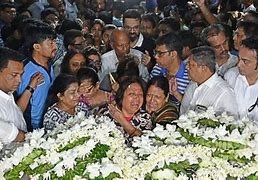
“I love you nanna”: a son’s parting words, as he hugged his father’s coffin. Madhusudan, an information technology professional from Andhra Pradesh, was among those shot dead in the terror attack in Pahalgam in the state of Jammu and Kashmir on April 22. The attack took place in Baisaran, a mountain top meadow, some five kilometres off Pahalgam.
Manjunath Rao was shot in the neck. He dropped dead in less than a minute. When his wife, Pallavi, confronted the terrorists with a “shoot me too”, they spared her saying: “Go tell Modi…”.
“Kalima, kalima” the assailant was telling Ramachandran, who in turn asked: “Woh kya hai”, what is that? Within seconds, he was shot dead in the presence of his wife, daughter and grandchildren.
For the uninitiated, Kalma is a sacred Islamic expression of faith. The core of Islamic belief, it is essential for Muslims to know the Kalma and recite it regularly.
Debasish Bhattacharyya, an associate professor from Assam, was spared because he started reciting the Kalma loudly as he saw a terrorist approach him: “He asked me, “what are you saying? I kept repeating La,ilahaillallah…”. It was on an instinct that he joined a group of people reciting the Kalma under a tree, as the terror attack unfolded. Bhattacharyya was on a holiday with his wife and son at the picturesque tourist spot.
That the terror attack was religion-specific is also substantiated by the fact that trousers of victims were pulled down to ascertain their faith before they were killed. The investigating team have confirmed that they found 20 of the 26 killed with their pant zippers undone exposing their private parts. This was to check for circumcision, which is done for religious reasons.
Pitch this against Karnataka minister R.B. Timmapur’s allegation of a “conspiracy” to paint the attack as a religious issue: “A man who is shooting, will he ask caste or religion? He will just shoot and go…He will not stand there, ask and then shoot”, the minister had told the media.
But this is not only about a minister of a state ruled by the Congress. Party MP, Priyanka Gandhi’s husband, Robert Vadra, said that “non-Muslims were attacked and messages were given to the Prime Minister” because “Muslims are being mistreated in our country”.
To term Vadra’s remarks, to quote the BJP, as being “the language that terrorists use to justify terrorism”, is playing down the issue. There is only one word for such statements: anti-national.
It is at this point that the self-styled peaceniks need to be called out: both in politics and those relentlessly pursuing track two diplomacy for years on end; those who don’t tire of the rant: “There is no difference between us, read Pakistani and Indian people, they are just like us, our food is the same, our culture is the same and we speak the same language” and so on and so forth. Actually, none of this is true: there is a difference between the people of Pakistan and India; they are not like us, neither is their food nor their culture. More importantly, to the Pakistanis, it is religion first; for Indians, it is country first, our respective mindsets, diametrically opposite to each other.
Therefore, when the likes of Karnataka Chief Minister Siddaramaiah talk of “no need for war”, nationalists bay for his blood. Or when PDP’s Mehbooba Mufti asks the Centre to be “cautious” and distinguish between “terrorists and ordinary people” and Member of Parliament Ruhullah Mehdi writes about “Kashmir and Kashmiris being given collective punishment”, right-minded Indians squirm.
Mufti and Ruhullah’s statements were made amid reports of extensive operations by security forces wherein raids were carried out, arrests made and homes of suspected rebel supporters demolished. Ditto Jammu and Kashmir Chief Minister Omar Abdullah and Hurriyat Chairman Mirwaiz Umar Farooq.
It is a given that successful terror operations are usually aided by locals who, because they identify with the cause, willingly shelter terrorists and allow their homes to be their temporary hide-outs. Back in the nineties, militancy in the strife torn state of Punjab grew because of local support. Villagers thought nothing of opening their doors to those who had taken up arms to avenge the then Prime Minister Indira Gandhi sending troops inside the Golden Temple complex. Or those who were championing the cause of Khalistan. So also, in Kashmir where the promise of “azadi” has many takers including the locals who shield and help terrorists with the logistics. The fact that investigating agencies have rounded up local overground workers as facilitators in the recent attack substantiates this.
It is against this backdrop that Prime Minister Narendra Modi’s war cry, if one may term it so, of India will “punish every terrorist and their backers” and “pursue them to the ends of the Earth” has majority support. His resolve of “Our enemies have dared to attack the country’s soul…they will get a punishment bigger than they can imagine”, finds resonance among those who stand united in the sentiment that Pakistan must be taught a lesson and if this means going to war so be it. Equally they reject voices of caution, Mufti’s or any others aimed at soft pedaling a heinous attack which needs to be avenged at all costs.
For whatever be Modi’s faults as a leader, his hands-on approach in the times of crisis needs to be commended. As Prime Minister, he has emerged as one who is top of one’s game so to speak.
For starters, he cut short his foreign visit and rushed back home.
Within hours, his government took tough measures against Pakistan. It suspended the 60-year-old Indus water treaty, which allowed for sharing of water between India and Pakistan; it shut the borders between the two countries; cancelled visas of Pakistani nationals and ordered that they leave the country within 48 hours; officials in the Pakistan High Commission in India were given the marching orders among other retaliatory measures.
Almost overnight Modi reaffirmed his position as a strong leader: one who would do what it takes to protect the country and its people. His statement that “attackers will be punished beyond imagination” or “the will power of 1.4 billion Indians will break their backbone” underscores his earlier threat of “ghar mein ghus kar marenge”.
For context, it was in 2019 that Modi had said that principally his government believed in killing perpetrators to avenge the Pulwama attacks when terrorists had killed as many as 40 CRPF personnel.
Originally in Hindi, the tone and tenor of ghar mein..phrase is lost in translation but the import is that no one will be spared.
Interestingly, Modi’s ghar mein ghus karmarenge statement has gone viral post Pahalgam clearly encapsulating the rage every right minded Indian is, at this point, experiencing. Under the circumstances, talk of “peace not war”, exercising restraint and suggestion of a “cautious approach” are misplaced. If anything they fit into, and rightly so, the rhetoric of anti-nationalism or the ghar mein ghus ke marenge.. sentiment.
Former Army commanders have described the recent terrorist attack in Pahalgam as a colossal failure of intelligence and preparedness. While Pakistan-sponsored terror in Jammu and Kashmir follows a troublingly familiar pattern, the assault in Baisaran represents a dangerous escalation. It raises critical questions: Why were no troops stationed in such a vulnerable region? What were the intelligence agencies doing? How did militants manage to breach the security apparatus so easily?
The Modi government has abrogated Article 370 and sought to reshape the narrative in Kashmir. But this attack, responsibility for which has been claimed by The Resistance Front, a proxy of the banned Lashkar-e-Taiba, underscores a bitter truth. It is no coincidence that the massacre occurred shortly after the U.S. approved the extradition of 26/11 accused Tahawwur Rana, amid escalating unrest in Pakistan, where the Baloch insurgency is intensifying and Army Chief Gen. Asim Munir continues with his anti-India rhetoric.
The brazenness of the Pahalgam attack — in an area considered relatively secure, with no prior intelligence warnings — has reignited public anger. Prime Minister Narendra Modi’s decision to cut short his foreign visit and Home Minister Amit Shah’s visit to meet the injured underscore the gravity of the situation. Meanwhile, Pakistan’s Prime Minister Shehbaz Sharif has proposed a “neutral, transparent, and credible” investigation into the attack — a hollow offer, given Islamabad’s consistent refusal to cooperate with India on past probes, including those related to Uri and Pulwama. There is a clear line between diplomacy and deceit. China’s silence in the wake of this tragedy, particularly as India and the U.S. draw closer, is telling. Beijing has yet to condemn the attack.
While India often responds to major terror attacks with diplomatic and security measures, a full-scale military retaliation is rarely pursued. Pakistan’s state complicity in terrorism demands unified international pressure on Islamabad.
Yet, despite the horror, the message from Baisaran may signal the beginning of a new chapter. As Tehelka’s Special Correspondent Riyaz Wani observed in his cover story “Kashmir at a Crossroads Again,” amid the gloom, there are glimmers of resilience and hope. Just a week after the attack, tourists — including foreigners — are once again enjoying Shikara rides on Srinagar’s Dal Lake, sharing peaceful scenes on social media. This swift return to normalcy highlights Kashmir’s deep yearning for peace and stability.
Kashmiris have united in condemning the atrocity, from political leaders like Omar Abdullah to the family of Syed Adil Hussain Shah, the brave pony-rider who heroically tried to disarm a terrorist and was shot dead. Their message to Pakistan is unequivocal: Stay out. Let Kashmir heal and chart its path forward.
One of the most poignant consequences of this unending conflict remains the plight of children born of cross-border marriages — caught in a no-man’s land, stranded between identities, politics, and pain. The people of Kashmir are mourning, but they are also speaking out — with clarity, courage, and compassion. That, perhaps, is the real message from Pahalgam.
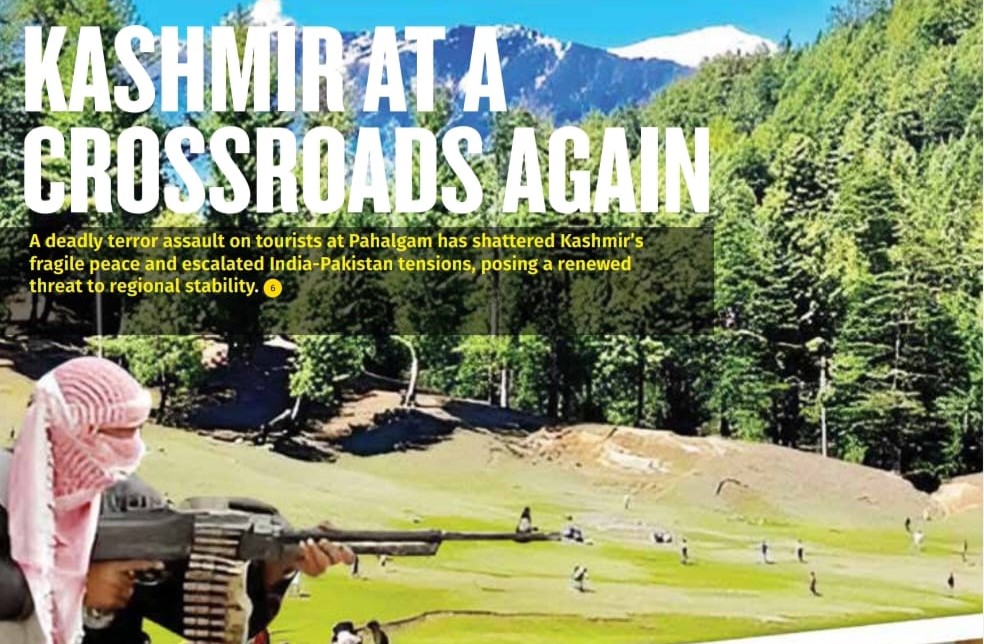
Intro for cover story: The tragic killing of 26 tourists at Pahalgam by terrorists has shattered Kashmir’s fragile peace and escalated India-Pakistan tensions, posing a renewed threat to regional stability. A report by Riyaz Wani
A record number of tourists visited Kashmir in recent years. Statistics reveal a steep rising curve. In 2024, 2.95 million tourists visited Kashmir, up from 2.71 million in 2023 and 2.67 million in 2022. What is more, last year, the number included 43,000 foreign tourists.
According to the Economic Survey Report tabled by Chief Minister Omar Abdullah recently, this surge was a strong sign of the region’s return to peace and normalcy. Places like Gulmarg continued to charm visitors with its famous Gondola ride pulling in over 7.6 lakh tourists and earning more than Rs100 crore in revenue. Ditto for the summer capital Srinagar, which too had its moment in the spotlight, hosting its first international marathon in October last year. Events like the G20 Tourism Working Group meeting and the first F4 car show in Srinagar played a huge role in weaving a new narrative about Kashmir.
Pahalgam was the place that rivalled Gulmarg and Srinagar in drawing most of the tourists. And during June and August, it hosted thousands of pilgrims to Amarnath cave shrine. Last year alone, over five lakh pilgrims visited the shrine, a major chunk took the route through Pahalgam.
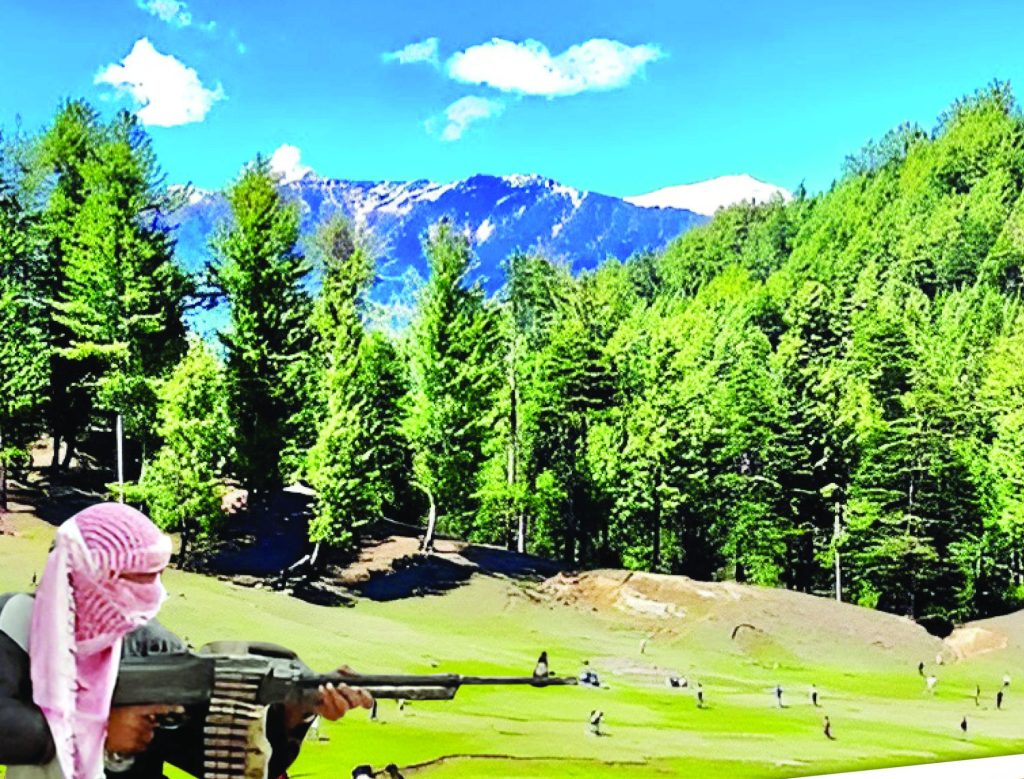
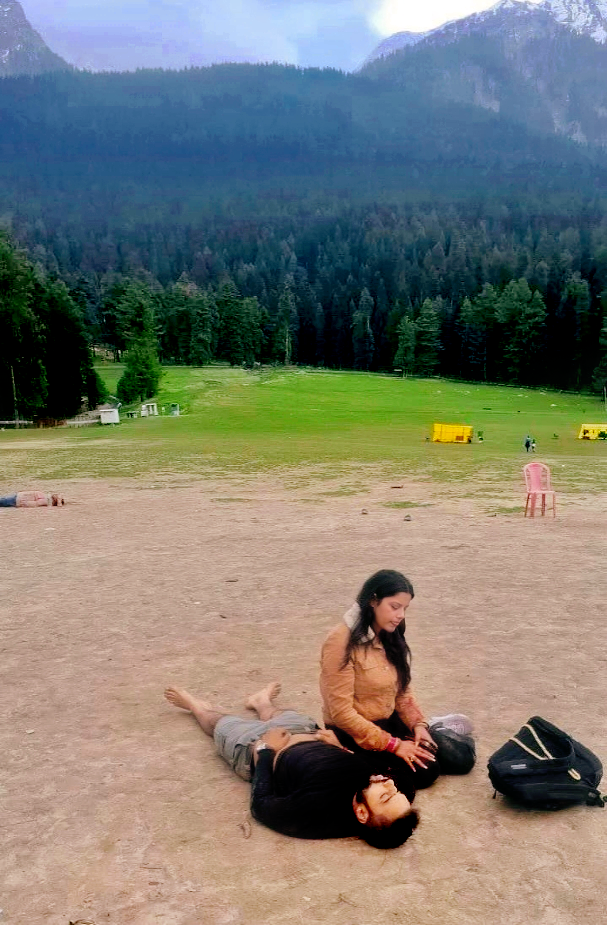
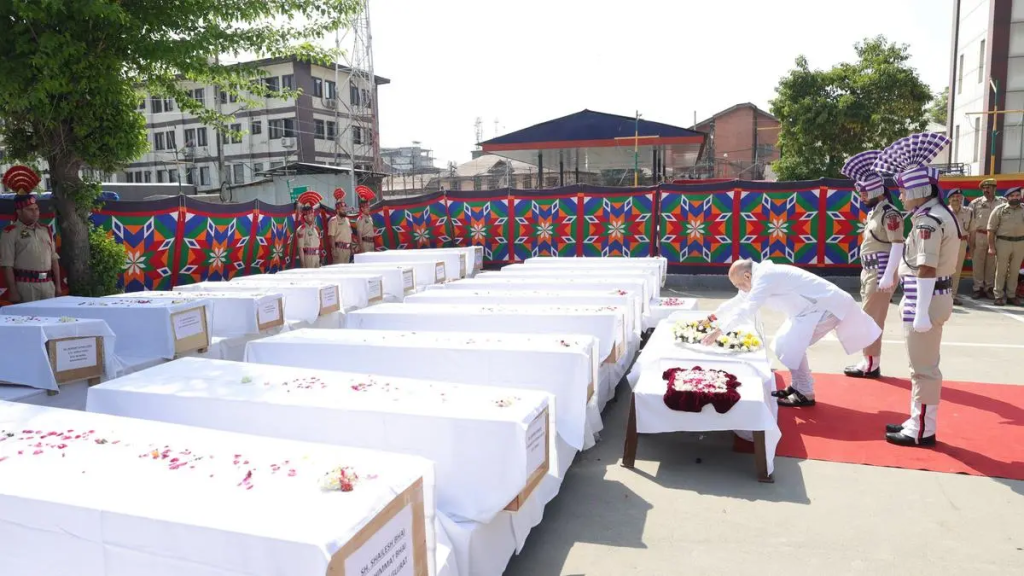
However, the terror attack at the South Kashmir resort, which resulted in the tragic loss of 26 tourists’ lives, has profoundly altered the situation. The tourists were at Baisaran, a bowl-shaped Valley close to hills when the attackers in camouflages are reported to have suddenly emerged and shot the tourists dead from a point-blank range. The news created panic, confusion and shock in the Valley. Over the past 35 years of the trouble in the Valley, it is rarely that the tourists have been targeted. This didn’t happen even in the nineties when the Valley was awash with guns. So, the deliberate killing of visitors has left people baffled.
However, the fallout of the atrocity was quick. The Valley was soon empty of the tourists. And the thousands who had made the bookings for the coming weeks and months cancelled them. There is little hope that the tourists will return to the Valley in the near term- or at least, in the numbers they have in recent years. Suddenly, the situation in the Valley is back to square one. From a place that was widely believed to have been on the path towards a sustainable normalcy, Kashmir has regained the tag of a deeply troubled place. The ghost of the past has returned to haunt the present.
Many see Pahalgam attack as yet another Pulwama-like incident, in which 41 security personnel lost their lives in a suicide bombing on their vehicle in 2019 – in fact, a notch above than that since those killed here are civilians. The aftermath is also shaping up in a similar fashion. Prime Minister Narendra Modi cut short his trip to Saudi Arabia and signaled a major shift in how India plans to deal with Pakistan going forward.
Five key measures were announced: the Indus Waters Treaty, long seen as a symbol of cross-border cooperation, was put on hold; the Attari land crossing was shut; Pakistanis will no longer get visa exemptions under SAARC; and diplomatic presence in both countries was scaled back significantly. These steps go beyond the symbolic: they reflect a deep rethink of India’s approach to its western neighbour.
The prime minister’s televised address struck a noticeably firmer tone than in the past. Switching to English midway through his speech in Bihar, he appeared to speak directly to the international community, declaring that India would not tolerate safe havens for terrorists or those who support them.
“I want to say in very clear words, those terrorists who have carried out this attack and those who conspired for this attack will get a punishment bigger than they could have ever imagined. Now the time has come to destroy the remaining ground of the terrorists. The will power of 140 crore Indians will now break the back of the masters of terror,” the PM said.
Suspension of the Indus Waters Treaty has further scaled up the tension between the neighbours. The treaty has so far survived multiple wars and diplomatic flare-ups since it was signed in 1960.
Pakistan, in response, has threatened to withdraw from all bilateral agreements with India, including the 1972 Simla Agreement. The Simla Agreement, a landmark peace deal between the two nations, was signed shortly after the creation of Bangladesh in 1971.
In a statement issued after a meeting of Pakistan’s National Security Committee (NSC) – the country’s top civil-military leadership forum – Islamabad warned that any attempt to disrupt its water supply would be viewed as “an act of war.” The statement further said Pakistan was prepared to respond “with full force across the complete spectrum of national power.”
However, from hereon, the situation is expected to go down the path traversed following the Pulwama attack. Or the two countries can choose to pull back from the brink. But it won’t be easy. The Pahalgam attack has flared up the situation in India, with the media demanding revenge for the killings. But then the challenge for the Modi government would be to control the escalation, as things could easily get out of hand and lead to a full blown war between two nuclear armed neighbours, alarming the world.
Fallout for Kashmir
Would Kashmir be the same again? If anything, the Pahalgam killings have revived the old unpredictability of the situation in Kashmir. Over the past five years, and this goes to the credit of the Modi government, the situation had largely remained peaceful, so much so that its continuance was now taken for granted. On March 25, Home Minister Amit Shah told Rajya Sabha that separatism in Kashmir had become history. Shah also highlighted some data to underline the redeeming change in ground situation. While in 2004, 1,587 incidents of violence were reported in J&K, the number in 2024 dropped to just 85. Similarly, civilian deaths, according to home ministry figures, have fallen from 733 to 26, and security personnel casualties have declined from 331 to 31 over the same period. It is also obvious that the stone-pelting is now virtually non-existent. Strikes, once a routine method of expressing dissent, have also disappeared. Separatist politics has truly become extinct.
This was never the case over the preceding three decades. But, no longer. However, the Pahalgam attack has made the path to lasting peace uncertain. It will be difficult to bring the sense of certainty about the peace in the Valley back. The truth is that the violence has lingered on the fringes, in the hills, and has never been quelled completely, largely because the infiltration has continued to replenish the depleted cadre. It has already lasted for over 35 years, going through its rise and fall, and may persist in the near future in some form.
This is not to downplay the gains made on the security front in the valley in recent years. Terrorism has by and large shrunk into insignificance in the region. Jammu division, on the other hand, has been in the news in recent years mainly for security reasons. Militancy in the region has revived after over a decade of absence. Recurring attacks have brought Jammu to the edge.
It is believed that the militants mounting these attacks – both in Jammu and now also in Kashmir – have infiltrated from across the border, although their exact number is not known. The dense forests of the region have made it difficult for security forces to track them.
The situation is made even more concerning by the fact that the forest area where the militants are hiding extends to hills of South Kashmir, the district that until 2020 was a hotbed of militancy. But up until now the militants have largely chosen to stay in Jammu only, possibly because the region has a lower concentration of security forces than the Valley and also a warmer climate throughout the year. Now this seems to be changing as the frequent attacks in the Valley since the last year seem to suggest.
Kashmiris unite against the carnage
One positive takeaway for New Delhi is that this time round, Kashmiris have taken an unambiguous position against the killings. They have observed a shutdown and publicly protested against the killings, something that has never happened before. The Srinagar-based Federation of Chambers of Industries Kashmir (FCIK) extended its support to the “Kashmir Bandh” call, which was jointly issued by several social, trade, and religious organizations, including the influential United Association of Scholars (Muttahida Majlis-e-Ulema or MMU), led by Kashmir’s chief cleric and moderate Hurriyat leader Mirwaiz Umar Farooq.
“The killings have pierced our hearts. We heard that these people were first asked about their religious identities and then murdered in front of their families. This is an act beyond belief,” Mirwaiz said in his address to the congregation at Srinagar’s Grand Mosque. He said the people of Jammu and Kashmir, irrespective of their religion, strongly condemn the killings.
“Who understands the pain of losing their own better than the people of Kashmir? Who can feel the pain of the loved ones of those killed more than us? The incident has made our hearts bleed. We pray to God to give them patience. We also pray for the speedy recovery of those injured,” he added.
But at the same time, there’s an understanding of the fact that the situation can’t be normal anytime soon. More so, if the hostilities break out between India and Pakistan, which could lead to a bigger confrontation.
Fluidity of Kashmir situation
What the Pahalgam attack has done is that it has once again brought home the inherent fragility of the situation in Kashmir. While normalcy can be managed and prolonged as it was in recent years, one incident can set the situation back again, as the Pahalgam attack has done. And as has been the recurring phenomenon in Kashmir, the new outrages tend to obscure the past ones. For example, the attack on tourists on such a massive scale is first of its kind. Last year in October, the attack on Z-Morh tunnel linking Kashmir Valley with Ladakh killed seven people. Days after the tunnel attack, the militants struck again, this time at the Valley’s prominent tourist hub Gulmarg, killing three soldiers and two porters. In over three decades of the turmoil in the Valley, even when militancy was at its peak in the nineties, it is rarely that Gulmarg witnessed a militancy-related incident. As things stand, Kashmir is likely to always remain prone to sensational terror incidents, with sometimes major losses of life, bringing India and Pakistan again to the brink of war.
The only way the militancy could be credibly brought to an end is by sealing off the Line of Control. Although, the centre has fenced much of the border over the past two decades. Infiltration has continued in small numbers. To address this, the home minister Amit Shah during his April 6-9 visit had outlined his vision for tech-fortified borders. He unveiled technology-driven 26 initiatives including anti-drone technology, tunnel identification and electronic surveillance to plug the Line of Control with Pakistan. The home minister said that the results of some of these tech-driven initiatives would be available by next March, facilitating BSF personnel in performing their arduous duties with ease.
Referring to two models of electronic surveillance systems developed for deployment on the border, Shah said that they (e-surveillance models) would simplify and expedite information about intrusion or intel reception, and response to enemy actions.
“Technology is being used to identify infiltration; detect and destroy tunnels. Such experiments are underway. In the next three to four years, the entire India-Pakistan border will be enabled by e-surveillance and later this special tech-driven project will be extended to the India-Bangladesh border as well,” the Union Home Minister had shared with the soldiers.
Statehood issue pushed further down the line
When home minister Amit Shah visited Kashmir during early April, he directed security forces to ensure “zero infiltration and complete eradication of terrorism.” What he didn’t talk about was the restoration of statehood to J&K. After the Pahalgam attack, the prospect of reinstatement of statehood looks more distant than ever. The attack has again tipped Kashmir into turmoil, giving the centre a stronger reason to further delay it, if not rule it out.
Both the prime minister Narendra Modi and the home minister Amit Shah have time and again promised the restoration of statehood at an appropriate time. What they have not given so far is the timeline. This is because the existing arrangement is seen as ideal from the centre’s standpoint and the union government might be loath to alter this favourable arrangement by granting an early statehood to J&K. More so, when there also are far bigger reasons to withhold it.
The centre, it is believed, is unlikely to let go of control on the security agencies and the allied security related matters, lest it unravel the gains made in recent years. The recent rise in militancy-related violence, more so the Pahalgam attack, is likely to further dissuade the central government from handing over complete control over the region to an elected government.
Will the centre eventually settle for a truncated statehood for J&K, one where the union government directly controls the security affairs? This may or may not happen. Although this applies to no other state in the country, J&K could be made an exception for its troubled situation. But this could effectively mean no change in the existing state of affairs, except for the name-change from a union territory to a state: the current hybrid arrangement where real powers are vested in the LG does the very same thing. However, contrary to the expectations, both the LG-led senior bureaucracy and the elected government have by and large struck a good rapport so far. Chief Minister Omar Abdullah also shares a good relationship with the centre.
“It is unnecessary to pick a fight with the Bharatiya Janata Party (BJP)-led NDA government at the Centre when there is not the need for one,” Omar had told the media recently. “I believe that having pragmatic relations with the Centre is key to ensure progress and development in Jammu & Kashmir.”
But, for now, it seems, the statehood is off the table as the centre would now focus to get a handle back on the situation. India-Pak ties hit dead end
After PM Modi’s few unsuccessful attempts to reach out to Pakistan during the first two years of him being in power, the NDA government has been resolute about not engaging Pakistan unless the latter stops fomenting violence in J&K and elsewhere. But since the abrogation of Article 370 in August 2019 and ever since the largely successful pacification of Kashmir, the centre doesn’t now even feel the need to reach out to Pakistan, except on its terms.
The Pahalgam attack is certain to further set the two countries apart. The differences between them are now too entrenched and irreconcilable to immediately lead to any engagement. More so since the abrogation of Article 370, which has sunk the relations between the two neighbours to their lowest. Ever since, Pakistan has sought reversal of the move which India has rejected. India, on the other hand, has asked Pakistan to end support to terrorism in Kashmir, with the latter denying it has any role in. The mutual stance ensures that nothing changes on the ground. India’s approach now is that Pakistan is no longer a factor in Kashmir.
The Pahalgam attack has not just shattered the fragile calm in Kashmir but has also pushed the region — and the India-Pakistan equation — back into a familiar, fraught uncertainty. While efforts to restore normalcy may continue, the deep scars left by the killings will take a long time to heal. For now, Kashmir stands at a crossroads once again, its future clouded by a mix of fear, fragile hope, and the daunting reality that peace in the Valley remains as elusive as ever.
In a dramatic move that has raised diplomatic temperatures in South Asia, India has announced the suspension of the historic Indus Waters Treaty (IWT), a water-sharing agreement that has withstood wars and decades of hostilities between India and Pakistan. The decision follows a brutal terror attack on Indian tourists in Pahalgam, Kashmir, which New Delhi has linked to Pakistan-based extremist groups.
Signed in 1960 under the auspices of the World Bank, the Indus Waters Treaty is one of the world’s most successful water-sharing pacts. It governs the distribution of six rivers of the Indus River system — with India receiving exclusive control over the eastern rivers (Ravi, Beas, and Sutlej) and Pakistan gaining rights over the western rivers (Indus, Jhelum, and Chenab).
The central government’s decision to suspend the treaty marks a sharp escalation in India’s response to cross-border terrorism, and is part of a broader package of punitive measures announced against Pakistan. These include diplomatic downgrades and economic reviews. But it seems that the treaty’s suspension is largely symbolic at this stage, with more long-term implications than immediate effects.
Despite the strong messaging, India’s ability to drastically impact Pakistan’s water supply is currently limited. The treaty, while allowing India “non-consumptive” uses such as hydroelectric power generation on the western rivers, prohibits storage or diversion of water flow that could impair Pakistan’s access.
India could potentially reduce the water flow to Pakistan by five to ten percent in the near term — a move that would mostly involve optimizing the use of eastern rivers and expediting run-of-the-river projects on western rivers. However, India lacks the necessary infrastructure to completely divert or block river flows into Pakistan. Building large storage dams or diversion structures would require several years of planning, environmental clearances, and massive investment.
Nonetheless, by suspending the treaty, India has effectively freed itself from its own previous constraints — possibly setting the stage for more assertive water policy in the future.
The announcement has triggered alarm in Islamabad. Pakistan’s energy minister, Awais Leghari, called the suspension an act of “water warfare” and vowed to challenge the move in international forums. “India’s reckless suspension of the Indus Waters Treaty is a cowardly, illegal move. Every drop is ours by right, and we will defend it with full force — legally, politically, and globally,” Leghari posted on X (formerly Twitter).
Pakistani authorities argue that India cannot unilaterally exit the treaty, which was brokered by the World Bank and includes clauses for dispute resolution and arbitration involving neutral experts. Legal experts suggest that while India can suspend implementation, a formal withdrawal would be far more complex and would likely face international pushback.
For Pakistan, the Indus River system is more than just a water source — it is the backbone of its agricultural economy, especially in the provinces of Punjab and Sindh. Over 80 per cent of Pakistan’s water needs are met by the western rivers allocated under the treaty. Meanwhile, the country is already grappling with a worsening water crisis, particularly in urban areas like Karachi, where groundwater levels are plummeting and reliance on water tankers is growing.
India, too, faces its own water challenges — especially in northwestern states where overuse and climate change are straining river systems. As climate pressures intensify, the Indus system’s strategic importance for both countries will only grow.
India’s suspension of the treaty may mark a turning point in how the two nuclear-armed neighbours approach their shared resources. While actual water flow changes may not be immediate, the political message is loud and clear: cross-border terrorism will no longer be met with restraint in the realm of bilateral agreements.
But any long-term shift would depend not just on political will, but on India’s capacity to build infrastructure and withstand international scrutiny. Meanwhile, Pakistan is preparing for a legal battle, one that could bring the world’s attention back to a treaty often lauded as a rare symbol of cooperation in an otherwise fractious relationship.
As the standoff unfolds, one thing is certain: water — the most fundamental of resources — is now firmly on the geopolitical chessboard.
In a landmark decision with far-reaching social and political implications, Prime Minister Narendra Modi-led government has approved the inclusion of caste enumeration in the upcoming national Census. The announcement, made by Union Minister Ashwini Vaishnaw following a meeting of the Cabinet Committee on Political Affairs (CCPA) on Wednesday, comes amid growing political momentum around caste data and its role in public policy.
Vaishnaw, addressing the media, termed the decision as both a corrective measure and a governance reform, stating that while some states had already conducted caste surveys, many executed in politically motivated and non-transparent ways, leading to confusion and mistrust in society. “To preserve the integrity of our social fabric and ensure that caste enumeration is not misused for narrow political gains, it is essential to include it transparently within the formal Census process, ” he said.
The Union Minister came heavily down on the Congress and its INDIA bloc allies, accusing them of exploiting the demand for a caste census purely for political leverage. He underscored that no caste enumeration has been included in any population census since India’s Independence, despite repeated demands.
Tracing the history, Vaishnaw reminded that in 2010, then Prime Minister Dr. Manmohan Singh assured the Lok Sabha that the Cabinet would consider the inclusion of caste data in the Census. A Group of Ministers was subsequently formed, and several parties recommended proceeding with caste enumeration.
However, despite this consensus, the UPA government did not carry out a caste census. Instead, it conducted a socio-economic survey, widely known as the SECC (Socio-Economic and Caste Census), which did not yield credible or usable caste data due to its flawed design and lack of official recognition.
This decision comes at a time when opposition parties, especially Rahul Gandhi and the Congress, have made the caste census a central electoral demand.
Rahul Gandhi, in particular, has used it as a consistent political weapon, frequently attacking the BJP for allegedly remaining silent on the issue. The inclusion of caste enumeration in the official Census effectively neutralises that political advantage, taking the wind out of Rahul’s sails just as Bihar gears up for Assembly elections, say observers.
In Bihar, where caste plays a defining role in electoral politics, the RJD-Congress alliance was preparing to make caste census a major campaign issue. However, with PM Modi-led government now taking ownership of the process at the national level, the opposition’s pitch risks being blunted. Political analysts suggest that this move could lead to internal churning within the INDIA bloc.
This move is more than a bureaucratic update — it is a calculated political and social repositioning. It reshapes the caste discourse, undercuts opposition narratives, and sets the stage for future policy changes rooted in real demographic data. As the Census process begins, all eyes will be on how the government handles the rollout, release, and response to caste-based findings.
But for now, the Modi government has seized the initiative on an issue that once formed the core of its opponents’ agenda — and in doing so, may have fundamentally changed the tone of the electoral debates leading up to 2025 and beyond.
The government also pointed to a precedent that reassures social stability: when the Modi government implemented 10 per cent reservation for the economically weaker sections (EWS) in the general category, it did not lead to social unrest. This, Vaishnaw argued, demonstrated the government’s ability to introduce socially sensitive reforms without disrupting the harmony of society.
By taking this politically sensitive yet constitutionally sound step, the Modi government not only positions itself as responsive and inclusive but also sends a clear message that it is willing to act on complex issues with strategic clarity rather than electoral opportunism.