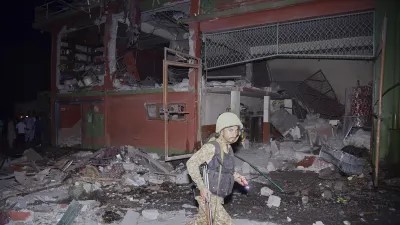
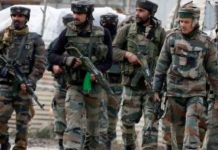
The Indian armed forces carried out targeted military strikes early Wednesday on terrorist infrastructure in Pakistan and Pakistan-Occupied Kashmir (PoK) in retaliation for the Pahalgam terror attack that killed 26 civilians last month. The operation, named ‘Operation Sindoor,’ hit nine key sites, including headquarters of Jaish-e-Mohammad (JeM) and Lashkar-e-Taiba (LeT).
‘Operation Sindoor’ Targets Nine Sites
In a statement released around 1:45 am, the Indian Army said:
“A little while ago, the Indian armed forces launched ‘Operation Sindoor,’ striking terrorist infrastructure in Pakistan and PoK from where attacks against India have been planned and directed.”
The Army emphasized that the strikes were “focused, measured, and non-escalatory,” clarifying that no Pakistani military installations were targeted. The action comes two weeks after the Pahalgam massacre, in which 25 Indian tourists and one Nepali citizen were killed.
Prime Minister Narendra Modi, in a high-level meeting on April 29, had granted the armed forces full operational freedom to decide the mode, targets, and timing of their response.
Pakistani Shelling Along LoC Injures Civilians
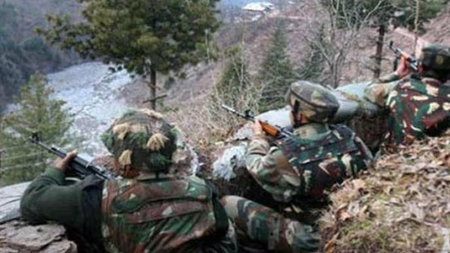
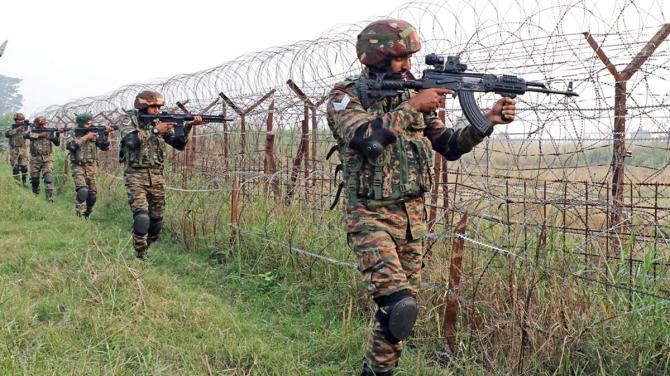
Shortly after India’s strikes, Pakistani forces resorted to heavy mortar shelling along the Line of Control (LoC) in Jammu and Kashmir. Officials reported intense shelling in Poonch and Rajouri districts, and in the Karnah sector of north Kashmir’s Kupwara district.
In Mankote village, a woman and her daughter were injured when their house was struck by mortar shells. One of them is critically injured and both are being evacuated to hospital. The shelling forced residents to take shelter in underground bunkers, officials said.
Indian troops retaliated, and cross-border shelling continued at several points.
9 Civilians, Including 3 Children, Injured in Uri Shelling
At least nine civilians, including three children, were injured and several houses damaged after Pakistani forces allegedly carried out heavy shelling along the Line of Control (LoC) in the Uri sector during the intervening night of Tuesday and Wednesday, officials and locals said.
Schools, Colleges Closed in Two Kashmir Districts
As a precautionary measure, authorities announced the closure of all schools and colleges in Baramulla, Kupwara, and Gurez for the day. Divisional Commissioner Kashmir Vijay Kumar Bidhuri urged residents to remain alert but calm, and to follow official advisories.
Tensions Remain High
This latest escalation follows weeks of heightened tensions after India suspended the Indus Waters Treaty post-Pahalgam attack. Pakistani troops have since violated the ceasefire multiple times along the LoC, extending from Kupwara and Baramulla in north Kashmir to Poonch and Rajouri in Jammu region.
The ceasefire violations come despite recent hotline talks between the Directors General of Military Operations (DGMOs) of both countries.
A powerful explosion was also reported in Ramban’s Panthiyal sub-division, though its cause remains unclear.
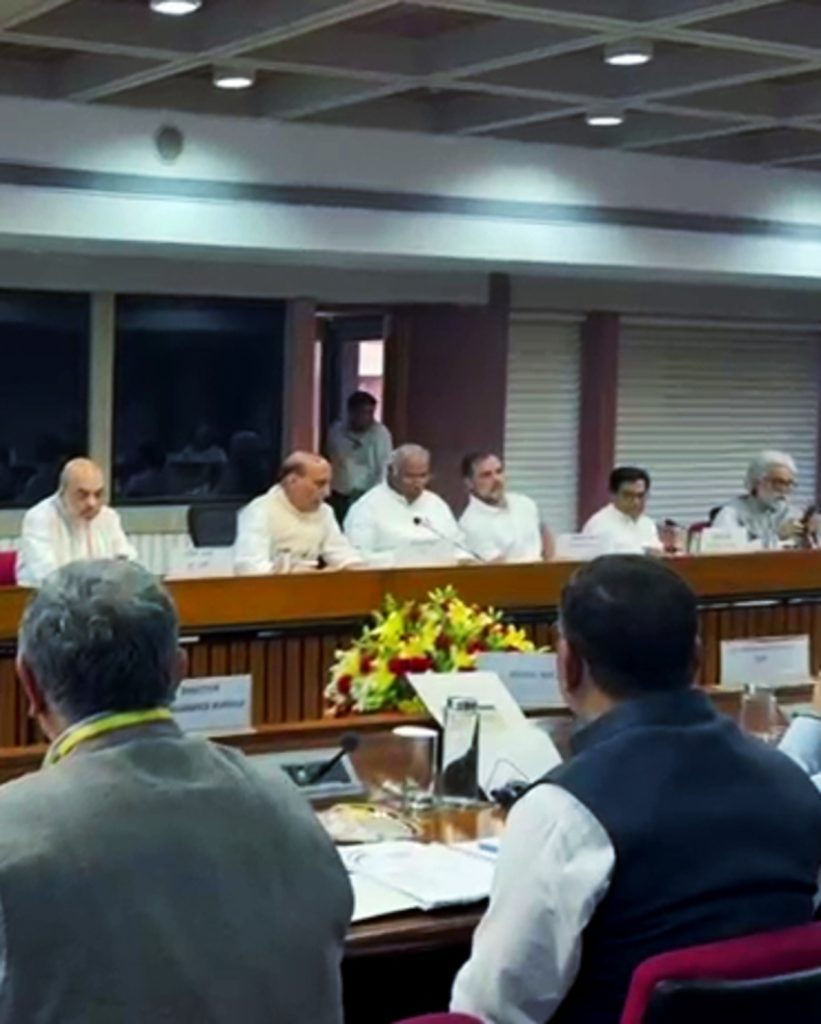
New Delhi, Apr 24 (ANI): Union Ministers Kiren Rijiju, Nirmala Sitaraman, JP Nadda, Amit Shah, Rajnath Singh and others attend the All-party meeting called by the Central Government to honour the innocent lives lost in the Pahalgam terror attack, in New Delhi on Thursday. (ANI Photo)
In the wake of Operation Sindoor, a tri-service military action targeting nine high-value terror sites in Pakistan and Pakistan-occupied Kashmir (PoK), the Centre has convened an all-party meeting on Thursday at 11 a.m. to brief the nation’s political leadership on the strategic strikes.
Union Minister Kiren Rijiju made the announcement on Wednesday and wrote on X, “Govt has called an All Party leaders meeting at 11 am on 8th May, 2025 at Committee Room: G-074, in the Parliament Library Building, Parliament Complex in New Delhi.”
Earlier in the day, Prime Minister Narendra Modi met President Droupadi Murmu at Rashtrapati Bhavan and formally briefed her on the operation.
The precision strikes were launched in the early hours of Wednesday and lasted just 25 minutes. Between 1.05 a.m. and 1.30 a.m., 24 missiles were deployed to strike nine terrorist facilities, including Lashkar-e-Taiba’s headquarters in Muridke and major terror training sites in Bahawalpur — long considered breeding grounds for extremist operations.
India emphasised that the action was not escalatory but a calculated and proportionate response to the April 22 terror attack in Pahalgam, Jammu and Kashmir, where 26 civilians, including a Nepali national, were killed.
“Our actions have been focused, measured and non-escalatory in nature. No Pakistani military facilities have been targeted. India has demonstrated considerable restraint in the selection of targets and method of execution, ” the government said in a statement.
Foreign Secretary Vikram Misri reiterated that India’s goal was to dismantle terror infrastructure while avoiding civilian casualties and preventing broader conflict.
“Operation Sindoor was a proportionate and responsible response to Pakistan’s ongoing support for terrorism, ” he stated, adding that Pakistan had continued its pattern of denial and deflection instead of taking action against the perpetrators of the Pahalgam massacre.
“This government has kept its promise — those responsible will be held accountable, ” the statement added, underscoring India’s determination to retaliate against any future cross-border terrorism.
Political leaders across party lines have expressed strong support for the Indian armed forces following the successful execution of the operation.
Leader of Opposition in the Lok Sabha, Rahul Gandhi, praised the military’s precision and courage, posting on X, “Proud of our Armed Forces. Jai Hind!”
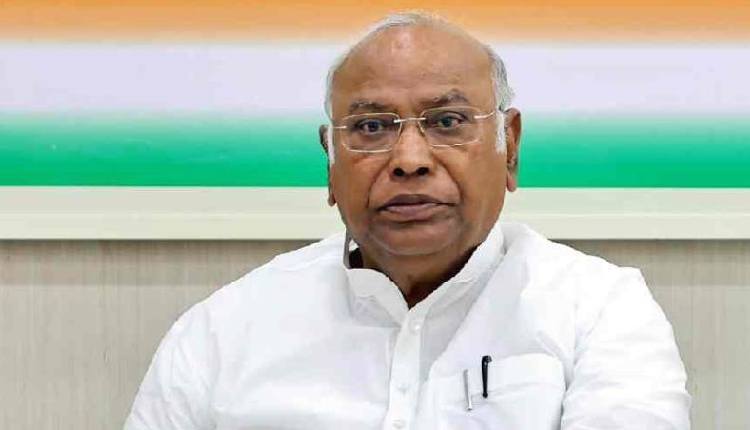
Congress President Mallikarjun Kharge echoed similar sentiments, writing, “India has an unflinching National Policy against all forms of terrorism emanating from Pakistan and PoK. We are extremely proud of our Indian Armed Forces, who have struck terror camps in Pakistan and PoK. We applaud their resolute resolve and courage.”
Kharge stressed that the Congress party has stood united with the government since the April 22 terror attack.
“Since the day of the Pahalgam Terror Attack, the Indian National Congress has categorically stood with the Armed Forces and the Government to take any decisive action against cross-border terror, ” he wrote.
Calling for national unity, he concluded, “National Unity and solidarity is the need of the hour and the Indian National Congress stands with our Armed Forces. Our leaders have shown the path in past, and National Interest is supreme for us.”
The MSME Sampark, in association with several industry partners and policy think tanks, on Tuesday organised the MSME Bharat Summit 2025 in Delhi’s Mayur Vihar areas.
The day-long event brought together a diverse panel of speakers including policymakers, startup founders, financial experts, and business leaders, focusing on empowering India’s Micro, Small and Medium Enterprises (MSMEs) through innovation, technology, and collaborative support systems.
Speaking on the occasion, Dr (H.S) CS Adv Mamta Binani said that the world is full of MSMEs, it constitutes MSMEs, and its core is MSMEs.
“Today we are very happy to tell you that we have organised this MSMEs Bharat Summit 2025 in Delhi itself which is a hub of a lot of MSMEs. You are now aware that the definition of MSMEs has brought under its fold so many companies. So, today we tried to bring together a lot of speakers from across the country to share their thoughts on various topics that benefit the sector,” she added.
Divulging further, she said that a total of 30 percent of the companies are MSMEs who contribute to the export of the country.
“If we look at the numbers today, 99.7% of the companies and entities are coming under MSME definition. So the change in the definition of MSME will be seen in that 99.7% of the companies and entities are coming in the direction of MSME,” she said.
“If we look at some other things, then we will understand that the total 30% of the companies that export are MSMEs who contribute to the country’s GDP. It’s a very different thing that we are talking about,” she added.
The event was graced by the chief guest Neeraj Shekhar who gave an address and lauded the efforts of the organization to empower MSMEs in the country.
There were several session including Revolutionizing MSME Manufacturing in India, Influencer Marketing for MSMEs, and Expanding Global Markets for Indian MSMEs where the speakers highlighted new-age solutions for manufacturing transformation, emphasized the critical role of fintech in MSME growth, exploring how digital branding and social media can drive visibility and sales, and detailed discussion on how government platforms like GeM and MSME Samadhan are supporting small businesses.
Meanwhile legal and compliance experts such as Dinesh Jotwani and CA Rajev Harlalka added valuable perspectives on formalisation and regulatory frameworks.
The summit was powered by a strong network of knowledge, compliance, hiring, and restructuring partners, with participation from thought leaders like Sidhharrth S Kumaar (NumroVani), Nitin Bajaj (EasyLeadz), and Kewal Kishan (Automate Business).
With sessions spanning manufacturing, finance, hiring, digital marketing, automation, trade, legal infrastructure, and IPO planning, the MSME Bharat Summit 2025 established itself as a pivotal platform for aligning government policy, industry expertise, and digital innovation to scale India’s MSME sector.
New Delhi: Congress chief Mallikarjun Kharge has written a letter to Prime Minister Narendra Modi requesting him to have a dialogue with all political parties soon on the issue of the caste census.
Kharge shared the letter on his X handle on Tuesday.
In the May 5 letter, Kharge has put forth his three suggestions for the PM’s consideration on the issue of caste census.
The first point says the design of the census questionnaire is crucial. “The Union Home Ministry must draw upon the Telangana model – both the methodology adopted for finalizing the questionnaire, as well the final set of questions asked.”
The second point says, “Whatever the results of the caste census will be, it is abundantly clear that the arbitrarily imposed 50% ceiling on reservations for scheduled castes, scheduled tribes and OBCs must be removed by a Constitutional amendment.”
The third point says, “Article 15(5) was introduced in the Constitution of India with effect from 20th January 2006. This was subsequently challenged in the Supreme Court. Finally, it was upheld by the Supreme Court after prolonged deliberations on 29th January 2014, very shortly before the model code of conduct for the 2014 Lok Sabha elections went into effect.”
Kharge said the Article “provides for reservations for scheduled castes, scheduled tribes and OBCs in private educational institutions as well. This should be implemented.”
He said conducting any exercise, such as the caste census, which gives the backward, the oppressed and the marginalised sections of our society their rights, cannot and should not be considered divisive in any way.
“Our great nation and our large-hearted people have always come together as one whenever needed, just as we have done after the recent cowardly terrorist attacks in Pahalgam, ” he wrote in the letter.
Kharge said Congress believes that conducting the caste census in a comprehensive manner suggested above, is necessary to ensure social and economic justice and equality of status and opportunity as pledged in the Preamble of our Constitution.
“I trust my suggestions will receive your serious consideration. In fact, I would request you to have a dialogue with all political parties soon on the issue of the caste census, ” wrote Kharge in the letter.
The Congress president also complained in the letter that he had written to the PM earlier, but got no response so far.
“I had written to you on April 16, 2023, putting forward the Indian National Congress’s demand for an up-to-date caste census. Regrettably, I never received any reply to this letter. Unfortunately, your party leaders and yourself went on to attack the INC and its leadership for raising this legitimate demand, which you today acknowledge is in the interests of deeper social justice and empowerment, ” Kharge said.
He also said that the caste census has been announced, “without providing any details, that the next Census (that was actually due in 2021) will include caste as a separate category as well”.
Jammu– The Pakistan Army is continuing unprovoked small-arms fire across six sectors along the Line of Control (LoC) in Jammu — including Poonch, Rajouri, Mendhar, Nowshera, Sunderbani, and Akhnoor. The Indian Army responded “promptly and proportionately,” according to Defence PRO Lt Col Suneel Bartwal.
The Akhnoor sector has now seen ceasefire violations for seven consecutive days, while exchanges in Poonch and Nowshera resumed after a brief lull. Over the past two weeks, cross-border firing has also been reported in Sunderbani, Mendhar, and the International Border’s Pargwal sector.
Amid rising tensions, border villages are preparing for emergencies. Residents are cleaning and repairing bunkers, and schools are conducting mock drills to train students on how to respond during shelling or attacks. Teachers are instructing children on how to hide under desks, help younger students, and run to bunkers when safe.
Meanwhile, local villagers, especially in Arnia and R S Pura, have raised concerns about inadequate medical facilities and the lack of protection for their cattle during cross-border firing. They are calling for better-equipped hospitals and improved civil defence arrangements to protect both people and livestock in vulnerable border areas.
The Ministry of Home Affairs has also directed states to conduct nationwide civil defence mock drills on May 7, including training for civilians and students to handle emergency situations.
Recently the Confederation of All India Traders (CAIT) demanded a luxury tax on purchases made through e-commerce and quick commerce platforms. Seconding with CAIT, experts said that a balanced approach is needed to tackle the issue.
Speaking to Tehelka, Mukul Goyal, Co-Founder of Stratefix Consulting said, “CAIT’s concerns about e-commerce and quick commerce platforms undercutting small traders are valid, given that 10 lakh shops reportedly closed in two years. However, these platforms also enable 30 per cent of D2C brands to reach urban consumers.”
“A balanced approach is needed: enforce existing FDI policies to prevent predatory pricing while recognising the digital platform’s role in modernising retail. Over 70 per cent of metro retailers operate from rented shops, indicating structural challenges beyond e-commerce,” he added.
He said that policy should protect traders without stifling innovation that benefits India’s $9.95 billion quick commerce sector.
While CAIT has also demanded a regulatory body to control pricing and ensure transparency, Goyal suggests that over-regulation risks stifling growth in India’s USD 1.2 trillion digital economy.
Speaking on the luxury tax that has been demanded, he said a 28 per cent GST would raise platform costs, potentially increasing consumer prices by 10-15 per cent.
“Quick commerce, operating on 5-7 per cent margins, might reduce discounts or delivery incentives. While CAIT argues convenience is a “luxury”, urban consumers may absorb costs for 10-minute deliveries. However, SMEs relying on these platforms could face margin pressures, risking the 30 per cent revenue share D2C brands derive from quick commerce,” he said.
It’s essential to assess the broader economic implications and ensure that such fiscal measures do not stifle innovation or growth in the digital commerce sector, he added.
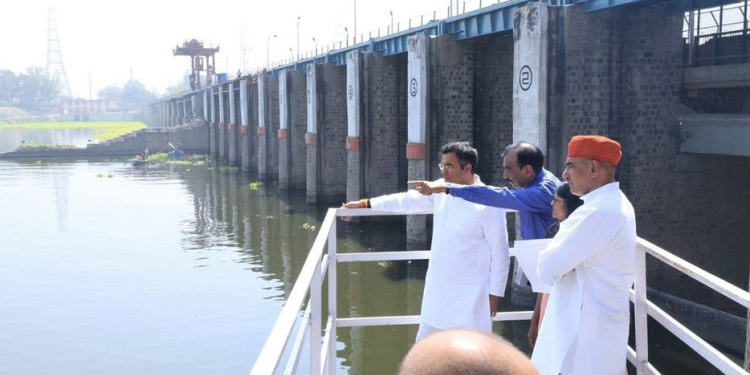
New Delhi: Delhi Water Minister Parvesh Verma on Tuesday accused the ruling Aam Aadmi Party (AAP) in Punjab of indulging in ‘dirty politics’ by restricting water supply to the national capital.
He claimed the conspiracy was aimed at punishing city voters for voting out former Chief Minister Arvind Kejriwal in the Assembly elections in February.
Talking to mediapersons, Verma said, “For the last one week, Delhi has been receiving less raw water due to the dirty politics of the Punjab government, the AAP and Arvind Kejriwal.”
Kejriwal is angry with Delhi voters who have brought the BJP to power, and to teach them a lesson, his party has cut water supply to the city, he said.
“The Punjab government has refused to follow the instructions of Bhakra Beas Management Board (BBMB) and went against it by reducing the supply of water to Haryana,” he said, after visiting the Tughlakabad area.
As part of the conspiracy hatched by Kejriwal, Punjab Chief Minister Bhagwant Singh Mann has reduced the water supply to Haryana, which has indirectly led to a cut in supply to Delhi, he said.
Verma said, on average, Delhi receives from Haryana around 980 cusec of water daily. “But on May 1 we got 88 cusec water less, on May 2 we got 119 cusec water less, on May 3 we got 71 cusec water less, on May 4 we got 55 cusec water less, and on May 5 we got 130 cusec water less,” he said.
“Our daily quota of water has been reduced by 15 per cent because the Punjab government and Delhi’s former Chief Minister Kejriwal want to vent his anger and settle scores with voters here,” he said.
“After losing Delhi elections, Arvind Kejriwal has moved to Punjab, from where he is now punishing people of Delhi by cutting off their water supply,” he said.
The anger of the AAP against Delhi voters is getting reflected in dirty politics, and the conspiracy is to leave Delhiites thirsty, he said.
“We will not let this dirty politics succeed. The Union Home Ministry has written to the Punjab Police to withdraw security from dams and give access to officials,” he said.
Following the Pahalgam massacre that killed 28 tourists, tensions between India and Pakistan have surged, prompting the United Nations to call for restraint and peaceful dialogue amid tit-for-tat diplomacy and escalating war rhetoricby Gopal Misra
The United Nations has urged to show “maximum restraint” as the two nuclear-armed rivals impose tit-for-tat diplomatic measures over a deadly shooting on April 23 at Pahalgam in Kashmir that killed 28 people, mainly Indian tourists. Relations between the estranged neighbours have plunged to their lowest level in years, with India accusing Pakistan of supporting “cross-border terrorism” after gunmen carried out a dastardly act.
Meanwhile, UN spokesperson, Stephane Dujarric, has told the media that “We very much appeal to both the governments … to exercise maximum restraint, and to ensure that the situation and the developments we’ve seen do not deteriorate any further.” “Any issues between Pakistan and India, we believe, can be and should be resolved peacefully through meaningful mutual engagement,” she further stated.
Indian Prime Minister Narednra Modi has vowed to hunt down the gunmen responsible for the killings and assured that “I say to the whole world: India will identify, track and punish every terrorist and their backer,” “We will pursue them to the ends of the Earth,” he has promised.
It may be noted that these terrorists call themselves the Kashmir Resistance, but Delhi considers it a front for the Pakistan-based terror outfit, Lashkar-e-Taiba.
Pakistan has stated that India’s announcement that “it is suspending a 65-year-old bilateral Indus water treaty, signed by the two rival nations in 1960, is an act of war.”
Pakistan’s media campaign
It goes to the credit of the Pakistani military establishment; it has unleashed anti-India agenda propaganda through its media immediately following the Pahalgam massacre accusing an “invisible” Indian conspiring for the terrorists’ attack on the innocent tourists. It has successfully deployed some of its leading journalists and media personalities, including Nazam Sethi, editor of the Friday Times, for supporting this cock-bull story. Sethi has also claimed that India could not enlist support of the visiting US Vice-President J,D. Vance that the Pahalgam attack was engineered by the Pakistani deep state.
He has also ruled out a full-scale Indian attack on Pakistan, because it might trigger “all-out war” between the two nuclear-armed neighbours. Similar sentiments have also been expressed by Khawaja Asif, who told an American news channel that “If there is an all-out attack or something like that, then obviously there will be an all-out war,” adding that the world should be “worried” by the prospect of a full-scale military conflict in the region. Also, any attempt to divert the waters of the Indus River will be an “act of war”.
A definite pattern noticed
It is natural for New Delhi to notice that the Pahalgam attack took place soon after the April 17 speech of the army chief, Asim Munir, who had claimed that Hindu and Muslims have irreconcilable ideological differences; and successive generations of Pakistanis should be taught about it.
It also appears that the massacre was pre-planned just a few days before the scheduled visit of Pakistan’s Deputy Prime Minister and Foreign Minister Ishaq Dar’s scheduled visit to Bangladesh. The visit, however, has been postponed following India’s stern warnings. Interestingly, it was also quite a piquant situation for Pakistan’s three-times prime minister and presently the president of the ruling party, Pakistan Muslim League (Noon), Nawaz Sharif, who has rushed back to Pakistan following the Pahalagam massacre. He has avoided any comment on this issue.
It may be recalled that like the elected government of the Bangladesh PM Sheikh Hasina, which was toppled by the army on August 5, 2024, Nawaz Sharif too had suffered similar humiliations in Pakistan. It is yet to known whether Dar’s visit to Dhaka was benig planned under the instructions of the GHQ or on the advice of Nawaz Sharif.
Apart from reinventing ties with Dhaka, Dar was expected to justify Pakistan’s refusal to tender an apology for the genocide by its army during the 1971 uprising in the then East Pakistan. The other demands are that Pakistan must return its 4.5 billion USD, the share of East Pakistan pending for more than half-a-century, and the return of the Pakistani citizens of Bihar origin to Pakistan. It may be noted that these Bihari refugees have had a past in India. A village in the Singhia Panchayat of the Purnia district, Bihar, is even named Pakistan to retain their umbilical ties with the soil. Unfortunately, these Bihari Muslims, estimated to be nearly half-a million, being abandoned by Pakistan, live in tattered tents. They are being forced to live in subhuman conditions.
Dragon finally condemns terror
It is not surprising, the Chinese foreign ministry spokesman, Guo Jiakun, has stated that “China has taken note of relevant reports and strongly condemns this attack. We resolutely oppose all forms of terrorism, extend our condolences to the victims, and express sincere sympathy to the bereaved families and the injured.” But New Delhi wants to facilitate the extradition of the Pakistani terrorists to India instead using its UN veto power to protect the terrorists.
Earlier, China had blocked the extradition of Sajid Mir of Laskher-e-Taiba, and Masood Azhar of Jaish-e-Mohammed to the UN. It is yet to be ascertained that whether learning from the US, China would abandon its ‘amicable’ approach towards radical Islamists. The US has finally handed over Tahawwur Rana, who is believed to have masterminded the 26-11 attack on Mumbai. It is difficult to state whether Beijing would really revise its policy of supporting Pakistani terrorists’ outfits.
Younus and the Islamic Agenda
It is yet to be ascertained whether the civilian face of the military government of Bangladesh, the talkative or boastful Mohammad Younus, would oppose the terrorists’ Pahalgam attack. After returning from Beijing, where he had been during March 26-29, he was expected to promote his Islamic agenda during Dar’s visit this month. Unfortunately for him, after the Pahalgam massacre, Dar’s Dhaka visit has been postponed. It also means that he has to go for the elections, which would be disastrous for his fragile government.
During his visit to Beijing, he had even boasted that Bangladesh would help the land-locked states of India’s northeastern region, if the Chinese help his country in expanding its trade in the region that “Dhaka was the only guardian of the ocean for all this region”. Further, he had also claimed that his country’s high growth under Sheikh Hasina was “fake” and faulted the world for not questioning what he said was her corruption. The truth, however, is that under the advice of Dr. Manmohan Singh, Hasina had cautiously used Indian financial support and was credited with turning around the economy and the country’s massive garments industry during her 15 years in power.
Immediately, after these boastful statements, India has quietly terminated the trans-shipment facility for Bangladesh’s export cargo from Indian ports and air-terminals. The Indian government has justified the decision that the trans-shipment facility extended to Bangladesh had over a period of time resulted in significant congestion at our airports and ports. “Logistical delays and higher costs were hindering our own exports and creating backlogs,” the statement said.
Meanwhile, the Trump Administration has imposed high tariffs on the Chinese cargo ships irrespective of the country they have been hired for the shipments. The new levies on Chinese-made ships arriving at U.S. ports have been proposed, up to as much as $1.5 million USD.
The political crisis in Bangladesh had triggered following the sacking of an elected PM Sheikh Hasina on August 5, 2024. With the visit of Dar postponed, New Delhi’s post-Pahalgam policy would also include a tougher stance against Bangladesh.
The Pahalgam massacre has triggered a new political process in the region. It is alarming as well as challenging.
Jammu: Pakistani troops targeted multiple forward areas along the Line of Control (LoC) in Jammu and Kashmir on Sunday, triggering strong retaliation from the Indian Army, officials said.
The sectors hit by unprovoked small arms fire included Poonch, Rajouri, Mendhar, Nowshera, Sunderbani, and Akhnoor. This marked the sixth consecutive day of ceasefire violations in the Akhnoor sector. Notably, Mendhar reported its first such incident since April 25, while Nowshera and Sunderbani were also struck after a 24-hour lull.
“Indian troops responded promptly and proportionately to the firing.” Previous incidents were reported on the nights of April 27–28, April 29, April 30–May 1, and May 3–4, including firing across the International Border in Jammu’s Pargwal sector,” Indian Army spokesperson Lt Col Suneel Bartwal told media.
Meanwhile, residents of border villages in Arnia and R S Pura expressed concerns over inadequate arrangements for emergencies. They pointed out the lack of facilities for protecting livestock, insufficient medical infrastructure, and poor preparedness for children’s education in case of escalations.
Remote sensing and drone mapping are transforming forest protection at Udanti Sitanadi Tiger Reserve in Chhattisgarh, enabling faster detection of encroachments, monitoring of plantation drives, and improved response to rising forest fire incidents. A report by Deepanwita Gita Niyogi
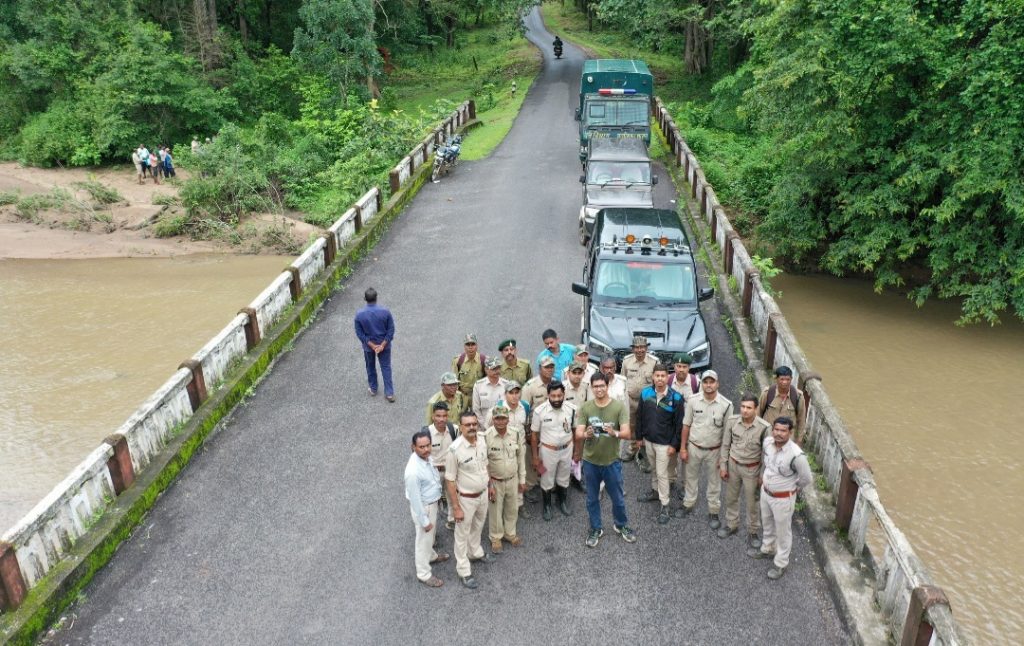
A combination of remote sensing and drone mapping portals in the Udanti-Sitanadi Tiger Reserve of Chhattisgarh has given rise to multiple benefits in forest protection and management. The reserve, spread over 1842.54 square km, has a mixed deciduous forest dominated by Sal (Shorea robusta) trees. Udanti-Sitanadi reserve, which has 51 villages in the critical habitat area and 77 in the buffer, is an important corridor for tigers from Maharashtra’s Gadchiroli district.
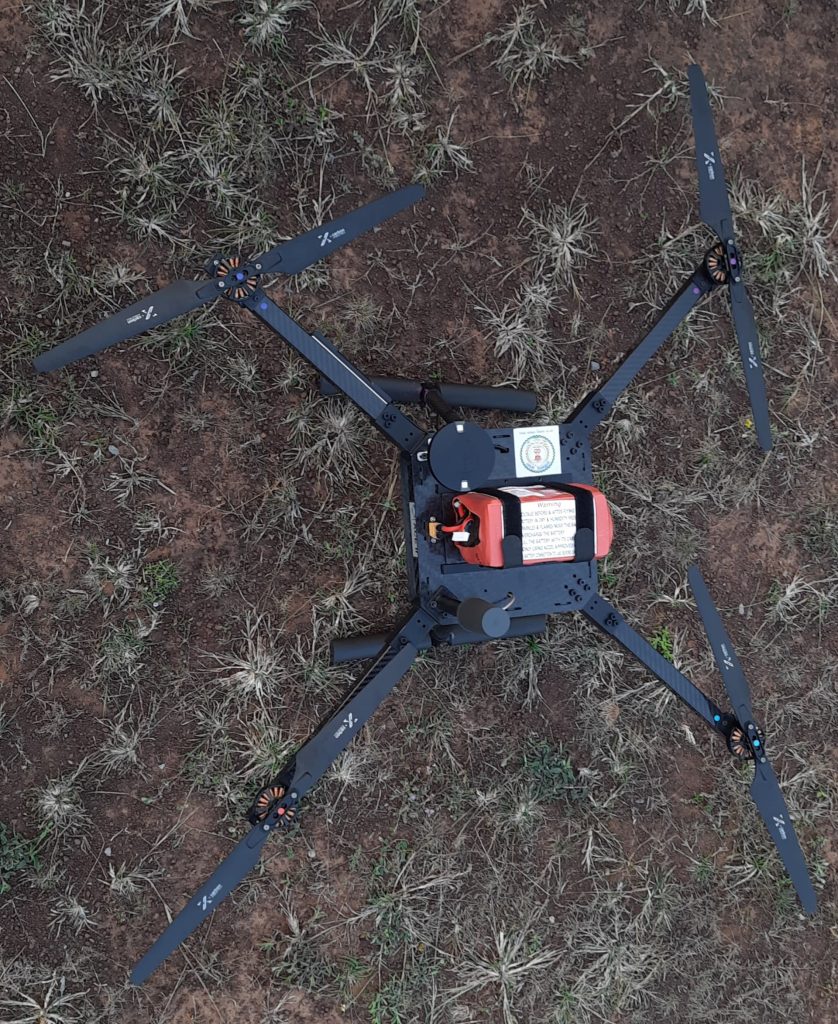
According to the reserve’s deputy director, Varun Jain, who has been posted here for three years, it is easy to inspect plantation sites and observe encroachments with the help of drones. Currently, three drones are in use. As Udanti-Sitanadi has many villages inside, encroachment on forest land remains a serious issue.
Plantation is an annual activity under CAMPA (Compensatory Afforestation Fund Management and Planning Authority) and state government schemes. There are occasions when the field staff fails to dig all the required pits for plantation work. If there is a site on 50 hectares of land which needs 55,000 saplings, sometimes the pits created for the purpose fall short in number.
“The tiger reserve, which falls in Gariaband and Dhamtari districts of Chhattisgarh, is surveyed with grade drones. The drones are GPS (global positioning system) and DGPS enabled. The latter is an improved version of GPS. So, in this way, the machines can inspect the plantation work and improve transparency. These fly and collect over 50,000 images. The geo-tagged images are then processed and stitched together to form a single high-resolution image of an area,” Jain said.
In Udanti-Sitanadi, the forest department has removed encroachments. After this, comparative assessment was made on forest density over the years. It is easy to see changes in the forest layer as well as growth with the help of drones.
Apart from checking the status of plantation work and viewing the status of encroachments inside the forest, drones can also be used to view the extent of watershed development and the level of surface water availability. There is a dam called Sikasar on the reserve’s border. Its catchment area falls inside the reserve.
Use of technology
Apart from the drone portal specific to Udanti-Sitanadi, state-wide remote sensing is used to check the status of deforestation and canopy loss. Deforested areas are marked in red dots. Forest loss can be due to new settlements, fires, illegal felling and the use of land for agricultural purposes.
Jain explained that the portal indicates hotspot areas which need monitoring. “Without always moving, I can identify these hotspots. The portal can be used by the agriculture and the water resources departments also. It is difficult to patrol a vast area. So, drones and remote sensing save time and labour.”
Jain shared that it was he who developed the remote sensing portal for the state during his tenure in the information and technology cell of the forest department in 2021-22. The portal was upgraded in 2023 to include the tiger corridors of Maharashtra and Odisha with which Chhattisgarh shares a border. A total of 10 km of buffer area shared between these states have been included.
Forest management and fire control
When asked about drone usage in Uanti-Sitanadi, Benipuri Goswami admitted that a few people have received training in drone usage and they fly it at times. The social worker, who runs non-profit Khoj Evam Janjagriti Samiti based in Gariaband, feels that gram sabhas should be imparted training on drone operation. This will prove beneficial in the fire season which lasts from mid-February to almost June.
With a changing climate, forest fires are rising. According to data shared by Jain, there were about 450 fire incidents in 2024. This year, it has jumped to 900 already till March-April. The figure is high this year for the entire state. Last year in Chhattisgarh, there were about 14,000 fire points. This year it has crossed 18,000 till now. “The year 2025 is proving to be hotter. Temperatures soared right in February. Higher temperatures increase the risk of forest fires,” the officer added.
On his part, Goswami interacts with fire workers who are engaged in the creation of fire lines inside the forest to stop the spread of fires. Under community forest resource rights (CFRR) under the Forest Rights Act, communities are tasked with the prevention and mitigation of forest fires. The Act passed in 2006 allows tribals and forest dwellers rights over forest resources. “Though people have received about 3,200 hectares as CFRR, issues have cropped up pertaining to management. Sometimes, conflicts break out. Joint forest management committees which work with the department should be disbanded.”
From 2008 till 2013, Goswami worked on the distribution of individual forest rights under the Forest Rights Act in the tiger reserve. Now, he focuses on CFRR which involves protection and management of vast forested areas handed over to communities as a whole rather than to individuals.
From time to time, experimentation is carried out to control fires. As dry leaf piles easily catch fire, bamboo brooms were distributed by the forest department for their removal in 2022. Solar lamps and water filters were distributed to people who helped in fire prevention.
However, the partial hilly terrain of Udanti-Sitanadi aggravates the problem as fires spread fast. With so many fire incidents, Udanti-Sitanadi is undergoing change. As forest fires lead to land degradation and soil moisture loss, weeds come up. These reduce the extent of grass availability on which herbivores depend for survival.