In a rare instance of accuracy, exit polls for the recently concluded Delhi Assembly elections have proven correct, with the Bharatiya Janata Party (BJP) emerging as the winner. After a contentious and fiercely fought election, the final results confirmed what several exit polls had predicted — a significant victory for the BJP, which will now form the next government in the national capital.
Exit polls, which have often drawn criticism for their inaccuracies in past elections, gained credibility this time as they accurately forecasted the BJP’s success in Delhi. Early trends of vote counting indicated that the party had secured a strong lead, surpassing the Aam Aadmi Party (AAP), which had hoped to retain power for a third consecutive term under the leadership of former chief minister Arvind Kejriwal.
The BJP’s victory is attributed to a number of factors, including a robust campaign focusing on local issues such as security, infrastructure, and economic development. The party also capitalized on growing discontent among certain sections of Delhi’s electorate with the AAP government’s performance over the past few years. Analysts point to the BJP’s stronghold in areas affected by anti-incumbency sentiments as key to their victory.
While Kejriwal and AAP campaigned vigorously, presenting their achievements in governance, it was clear that the public mood had shifted, as predicted by the exit polls. The BJP’s messaging around issues like national security and governance resonated with voters.
The results of the Delhi elections are significant not only for the capital but also for the larger national political scenario.
For once, exit polls, which often come under scrutiny for their reliability, have demonstrated a level of accuracy that has been welcomed by political observers. The party’s victory in Delhi, along with the validation of exit poll predictions, may provide renewed confidence in these surveys moving forward.
The BJP is leading in 46 of Delhi’s 70 assembly seats while AAP was ahead in 24, according to the trends released by the Election Commission.
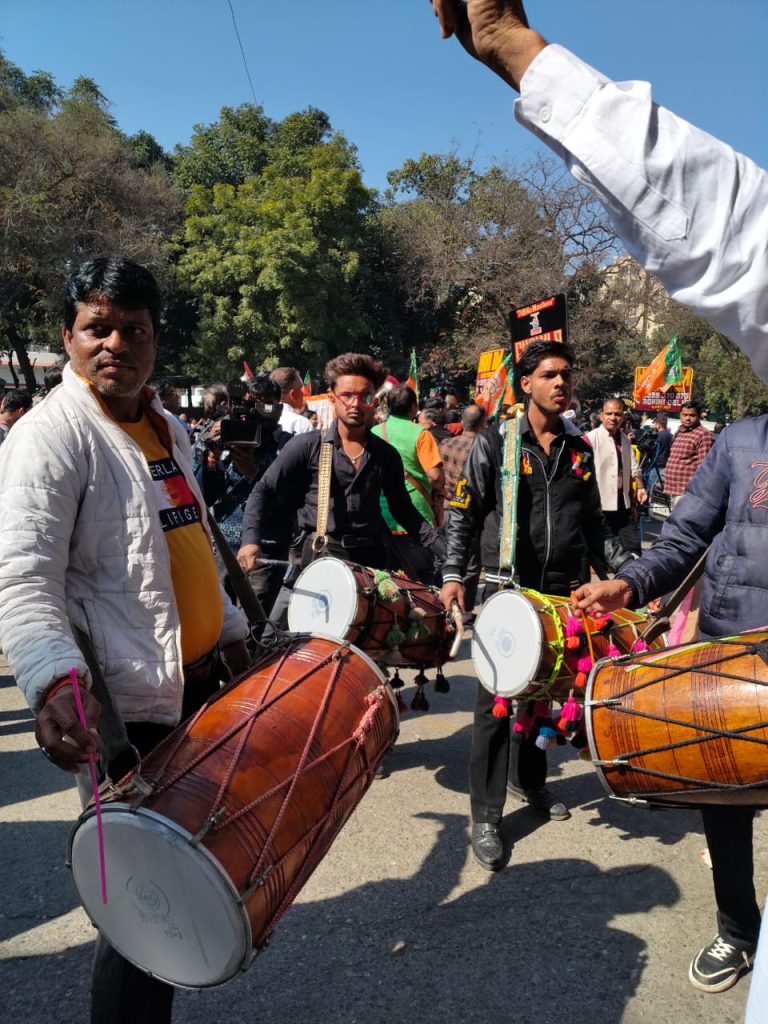
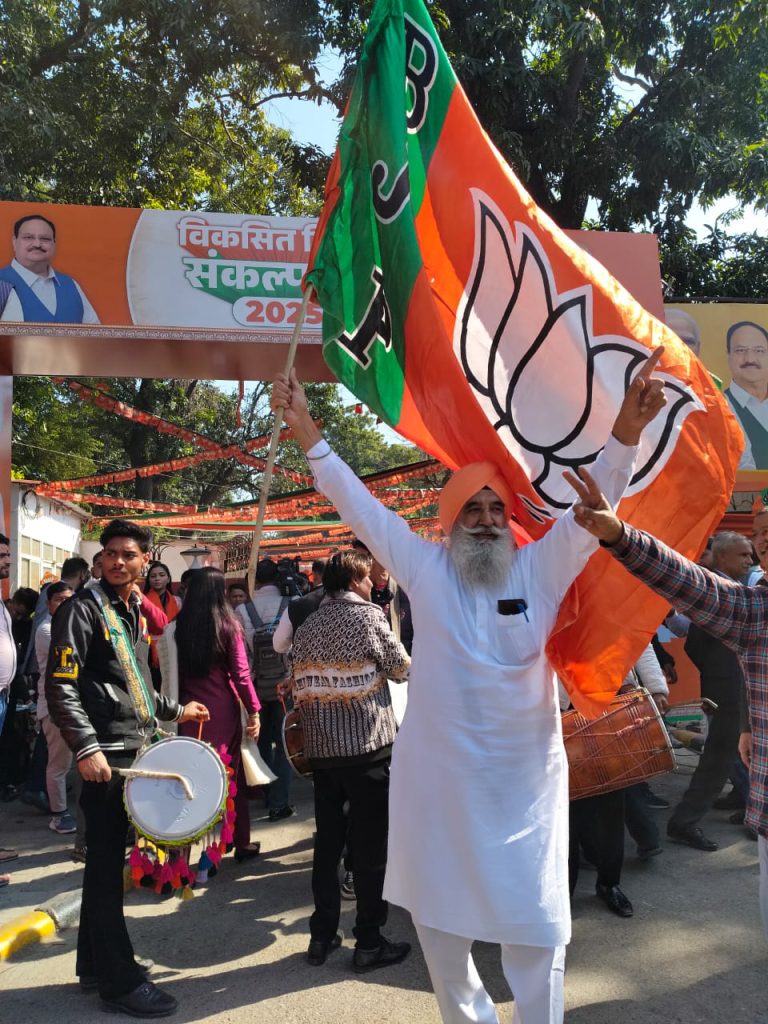
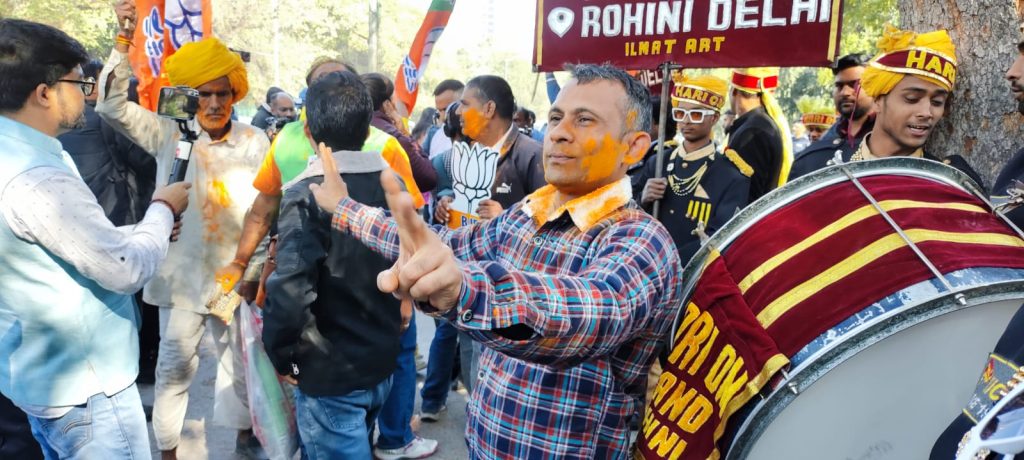
Bharatiya Janata Party supporters erupted in celebration at its Pandit Pant Marg office as the latest counting trends showing the party returning to power in the national capital after almost three decades with a decisive mandate.
Prime Minister Narendra Modi expected to join the celebrations later this evening and address the party workerd.
Party workers danced to the beats of dhol and waved party flags, creating festive atmosphere. With the saffron flag waving high and the victory chants echoing in the air, BJP workers expressed elation over what they saw as the reaffirmation of their party’s dominance in the national capital.
The BJP is leading on clear majority of Delhi’s 70 assembly seats, according to the trends released by the Election Commission.
The BJP’s confidence comes in the wake of securing a larger share of the vote and leading key constituencies that had once been AAP strongholds, which is a blow to the latter’s aspirations to expand its foothold in Delhi.
Photo by Naveen Bansal
On leading in the Kalkaji assembly constituency, BJP candidate Ramesh Bidhuri said, “I thank the people of Kalkaji. This lead is of the people of Kalkaji. In the last 10 years, the people of Kalkaji wept tears of blood because no development work was done in the constituency…”
On the other hand, the AAP office in central Delhi was quiet as the results continued to pour in. There was no sign of any celebration or anticipation.
The party leadership had hoped for a better outcome, expecting to retain control over Delhi with a majority mandate. However, the results reflected a shift in voter sentiment, especially among certain key demographic groups.
The big guns for the AAP including party convenor Arvind Kejriwal and incumbent Chief Minister Atishi are trailing. From the early leads, Kejriwal is behind BJP’s Parvesh Sahib Singh , while Atishi is trailing in Kalkaji while former Deputy CM Manish Sisodia has been defeated.
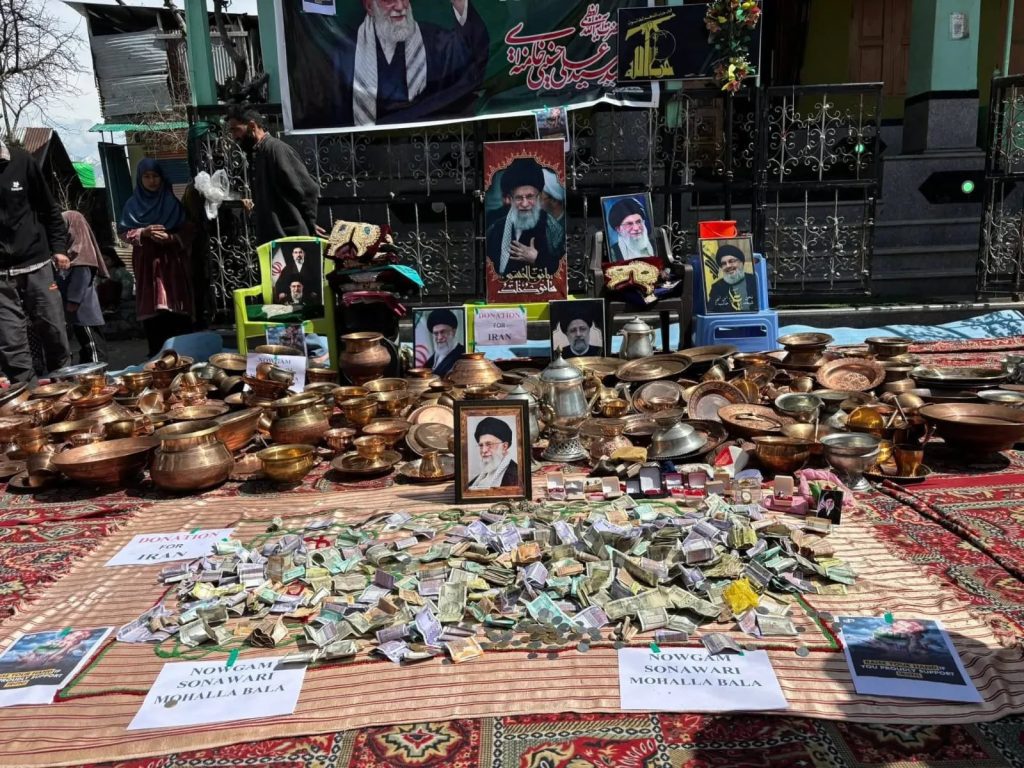
As residents in parts of the Valley mobilise donations for people affected by the ongoing conflict in Iran, historians say the response is also rooted in centuries of cultural, religious and intellectual connections between Kashmir and the Persian world.
In recent days, residents in districts such as Budgam and Baramulla have organised door-to-door campaigns to collect cash, gold, silver jewellery, livestock and traditional copper utensils as humanitarian aid for those affected by military strikes in Iran.
The Embassy of Iran in India acknowledged the effort publicly, sharing images and messages of gratitude on social media.
“With hearts full of gratitude, we sincerely thank the kind people of Kashmir for standing with the people of Iran through their humanitarian support and heartfelt solidarity; this kindness will never be forgotten. Thank you, India,” the embassy wrote.
According to reports, the campaign drew participation from all sections of society, including men, women and children. Many women donated personal jewellery and household valuables, reflecting the emotional resonance of the appeal.
“A respected sister from Kashmir donated the gold kept as a memento of her husband, who passed away 28 years ago, with a heart full of love and solidarity for the people of Iran. Your tears and pure emotions are the greatest source of comfort for the people of Iran and will never be forgotten,” another embassy message said.
Children also contributed their savings and Eid money, while local political representatives joined the effort. Budgam MLA Muntazir Mehdi pledged one month’s salary toward relief efforts.
The donations began shortly after the Iranian embassy shared bank account details to facilitate humanitarian contributions. Officials indicated the relief would be routed through formal channels to reach affected communities.
While the current humanitarian response is tied to the present crisis, scholars argue it also reflects a much deeper historical connection between Kashmir and Iran that dates back centuries.
Geographically, Kashmir historically sat at a crossroads linking Central Asia, Persia and the Indian subcontinent through trade and scholarly networks. Long before the arrival of Islam, cultural influences from the Persian civilizational sphere travelled through these routes, bringing artistic traditions, ideas and administrative practices.
Historian Prof. M. Ashraf Wani notes that these interactions left early imprints on Kashmiri society.
“From the double burial tradition to the Zoroastrian traditions, Kashmir has historically remained hugely impacted by Iran,” he observed, adding that even early political consolidation in the region may have been influenced by contacts with the ancient Persian world.
These connections deepened significantly during the medieval period, particularly through the spread of Islam via Sufi networks rather than maritime trade, as seen in other parts of India.
Among the most influential figures were the Persian Sufi saints Mir Sayyid Ali Hamadani, popularly known as Amir-i-Kabir, and Bulbul Shah, whose missions helped shape Kashmir’s religious and social landscape. Later, Mir Shams-ud-Din Araqi played a key role in strengthening Shia traditions in parts of the Valley.
Persian gradually became the language of administration, scholarship and literature in Kashmir, particularly during the rule of the Shahmiri dynasty and later under the Mughal Empire. Over time, it replaced Sanskrit in official use and shaped Kashmir’s literary culture for centuries.
Architectural influences also followed. Landmarks such as the Khanqah-e-Moula and the Jamia Masjid Srinagar display clear Persian design elements, including courtyard planning and spatial concepts derived from Iranian traditions.
The exchange was not limited to religion and architecture. Trade also reinforced the relationship. Kashmiri shawls were highly valued in Iranian courts, where they symbolised prestige and political authority. Historical accounts suggest hundreds of Iranian traders were present in Srinagar during the 19th century to procure the prized textiles.
Even in modern times, educational links have continued the connection. Iranian universities, particularly medical institutions, have attracted large numbers of Kashmiri students due to relatively affordable tuition and cultural familiarity.
Recent tensions in the region have again brought these ties into focus, with families of Kashmiri students in Iran closely monitoring the security situation.
The recent donation drives, therefore, are being seen not merely as acts of charity but as expressions of a long-standing civilizational connection.
Kashmir’s tourism sector, one of the main pillars of the region’s economy, is showing early signs of recovery after the shock caused by the Pahalgam terror attack in 2025. While fresh government outreach initiatives, onset of spring and renewed stakeholder engagement are helping restore confidence, data suggests the recovery remains gradual and fragile rather than dramatic.
The Jammu and Kashmir government is now attempting to rebuild momentum through targeted interventions such as the Kashmir Travel Mart 2026, scheduled for April 14–15, which is expected to bring together around 250 tourism stakeholders from more than 20 Indian states. Officials see the event as part of a broader strategy to rebuild industry confidence and reposition Kashmir in the national tourism market after a difficult year.
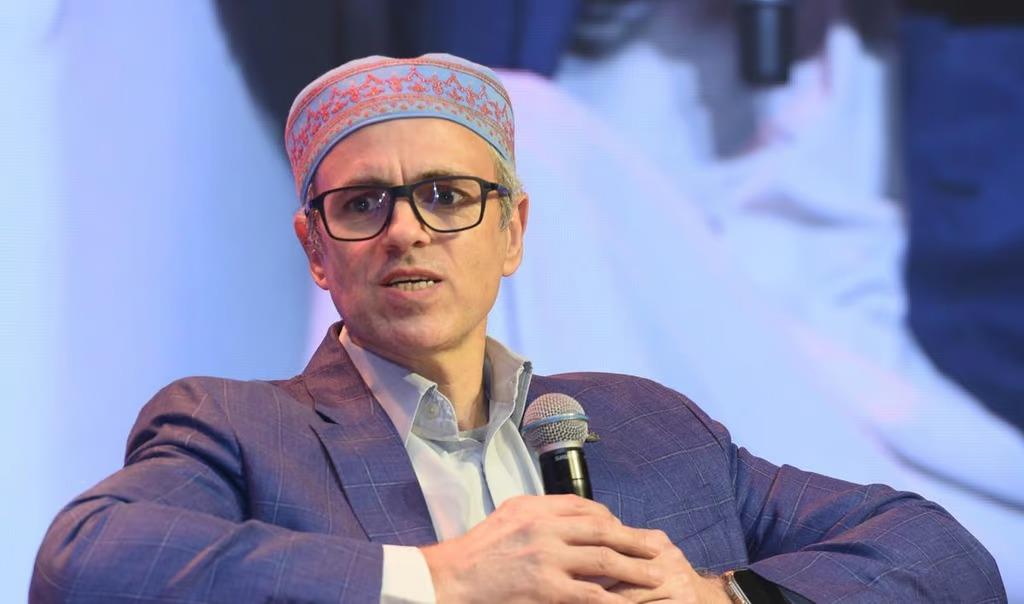
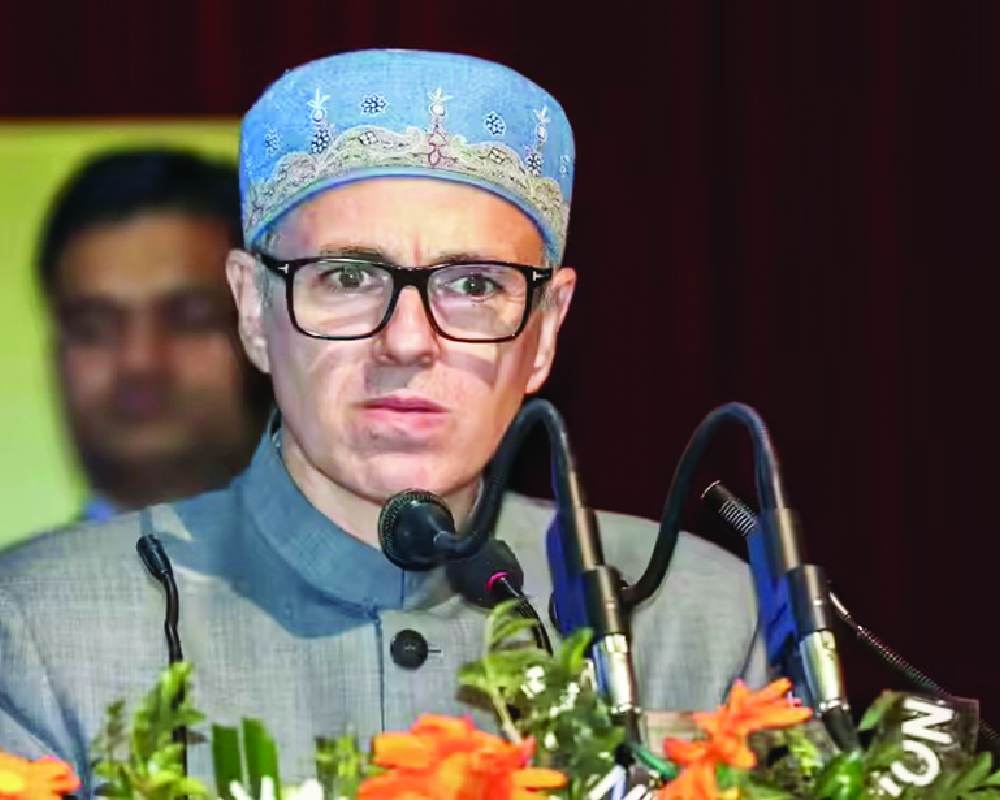
Chief Minister Omar Abdullah has described the initiative as an important step towards strengthening tourism linkages and reinforcing Kashmir’s position as a premier travel destination. The event will include business-to-business meetings, destination tours and cultural experiences aimed at reconnecting tour operators, hoteliers and travel planners with the Valley.
“The event will highlight the region’s immense tourism potential through craft safaris, curated destination tours, and B2B engagements, offering stakeholders a rich and immersive experience of Kashmir’s culture, heritage, and warm hospitality,” the Chief Minister’s Office said on X.
A sector recovering from disruption
Tourism in Kashmir had witnessed consistent growth between 2021 and 2024, making the decline in 2025 particularly significant. Official figures show that about 11.16 lakh tourists visited the Valley in 2025, including roughly 10.93 lakh domestic tourists and nearly 23,000 foreign visitors.
This represented a clear drop compared to previous years. In 2024, Kashmir had recorded approximately 34.98 lakh visitors, while 2023 saw more than 31.55 lakh tourists. The sector had also shown strong recovery after the pandemic years, with tourist arrivals rising sharply from around 6.65 lakh visitors in 2021 to more than 26.73 lakh in 2022.
Industry observers attribute the decline in 2025 largely to the Pahalgam attack, which disrupted travel sentiment during the peak season and led to widespread cancellations. Security concerns, even when temporary, tend to have an outsized psychological impact on tourism, which depends heavily on perception and traveller confidence.
Despite the setback, the broader picture shows resilience. According to the Economic Survey 2025–26, Jammu and Kashmir still recorded around 1.78 crore tourist visits overall in 2025 across the Union Territory, compared to 2.36 crore in 2024. The figures indicate that while Kashmir Valley saw a dip, the wider tourism ecosystem remained active.
Tourism contributes nearly 7 percent to Jammu and Kashmir’s Gross State Domestic Product and supports the livelihoods of around five lakh people directly and indirectly, making its recovery economically critical.
Winter as a boon
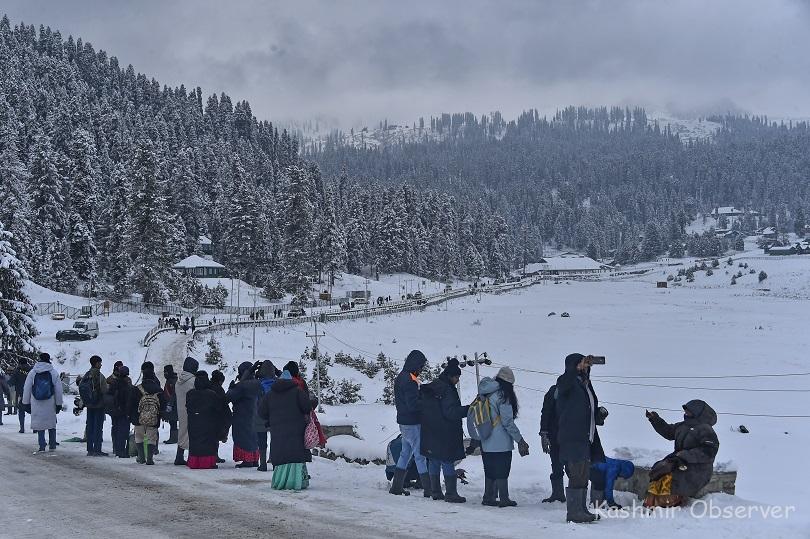
Recurring winter snowfall in higher reaches such as Gulmarg and Pahalgam provided a timely boost to tourism, offering some optimism to stakeholders. A wet January followed by an unusually dry February, and fresh snowfall in March improved skiing conditions and extended the winter sports season beyond its usual timeframe.
Gulmarg, widely regarded as India’s premier skiing destination, received several inches of fresh snow in March, attracting tourists interested in skiing, snowboarding and mountain tourism. Tourism operators say the late snowfall helped partially compensate for earlier weather deficits.
Hoteliers and tour operators remain cautiously optimistic that improved snow conditions could help extend the tourist season and improve revenues after a difficult year.
Gulmarg continues to dominate Kashmir’s tourism landscape. Assembly data shows the resort attracted about 11.07 lakh tourists in 2025, maintaining its position as the Valley’s most visited destination despite a decline from its 2024 peak of 13.64 lakh visitors.
Pahalgam, which was directly affected by the attack, recorded around 10.04 lakh tourists in 2025, down from 12.60 lakh in 2024. Other destinations also experienced declines. Sonamarg saw numbers fall to about 4.87 lakh visitors from 8.89 lakh the previous year, while Kokernag and Achabal also reported reduced footfall.
These figures reflect how security incidents can reshape travel patterns, often pushing tourists toward destinations perceived as safer or better established.
Changing tourism geography
Even as traditional destinations saw fluctuations, newer locations such as Gurez Valley, Daksum and Tosamaidan have begun attracting smaller but steady streams of visitors. This suggests that Kashmir’s tourism map is gradually diversifying beyond its traditional circuit of Gulmarg, Pahalgam and Sonamarg.
Experts say this diversification could make the tourism economy more resilient in the long run by reducing dependence on a few heavily visited destinations.
At the same time, Gulmarg’s advantage continues to rest on its infrastructure and all-season appeal. The Gulmarg Gondola, one of the world’s highest cable car systems, remains a flagship attraction that draws visitors throughout the year. Winter sports, summer trekking, golfing and scenic tourism together give the destination a unique year-round profile.
Climate uncertainty emerges as a new challenge
Even as the sector deals with recovery from security shocks, another structural concern is emerging: climate variability.
The Chief Minister has publicly acknowledged that unpredictable snowfall patterns are becoming a concern for winter tourism planning. Delayed or insufficient snowfall can significantly shorten the ski season, directly affecting hotels, ski instructors, guides and equipment operators.
The government is now exploring the possibility of artificial snow generation systems to ensure the continuity of winter sports events such as the Khelo India Winter Games. Such measures are increasingly being seen as necessary to reduce dependence on natural snowfall.
However, artificial snowmaking also raises questions about environmental sustainability, water use and costs. Policymakers will have to balance economic needs with ecological concerns, particularly in a fragile mountain environment.
Tulip season and experiential tourism
Meanwhile, spring tourism is providing another opportunity for revival. The Indira Gandhi Memorial Tulip Garden in Srinagar, one of Asia’s largest tulip gardens, has once again emerged as a major attraction.
The garden, which opened recently for the season, features around 1.8 million tulips across more than 70 varieties, along with nearly one lakh other flowering plants such as daffodils, hyacinths and narcissus. The annual tulip bloom has become an important seasonal draw, helping extend tourism beyond traditional summer months.
Officials increasingly see such experiential attractions, including cultural festivals, craft tourism and nature-based experiences, as essential to creating a more diversified tourism calendar.
The long road to full recovery
Despite encouraging signs, analysts say the sector’s recovery should be viewed as gradual rather than complete. Tourism economies typically recover in phases: first through the return of domestic travellers, then group travel, and finally international tourists.
Foreign tourist arrivals in Kashmir remain relatively modest compared to domestic tourism, suggesting there is still work to be done in rebuilding global confidence.
Experts also point out that sustained recovery will depend on multiple factors including security stability, infrastructure development, climate adaptation and consistent destination marketing.
For now, the trajectory of Kashmir tourism reflects both optimism and caution. The return of tourists to Gulmarg, strong interest in seasonal attractions like the tulip garden, and government outreach initiatives all point toward recovery momentum.
At the same time, the decline in visitor numbers after the Pahalgam attack demonstrates how vulnerable the sector remains to disruptions. Climate uncertainty is also emerging as a parallel challenge that could shape the future of winter tourism.
The coming year may therefore prove crucial in determining whether Kashmir tourism merely stabilises or returns to its earlier growth trajectory.
What remains beyond doubt is tourism’s importance to the region’s economy. Hundreds of thousands of livelihoods, from taxi drivers and hotel workers to artisans and guides, depend on the sector’s stability.
For many in Kashmir, tourism is not just an industry but a critical economic lifeline.
The Valley’s tourism story in 2026 is therefore not simply about visitor numbers. It is about the ability of a conflict-affected but globally admired destination to rebuild trust in a competitive and uncertain travel environment.
If current trends continue and stability holds, stakeholders believe Kashmir could gradually regain its tourism momentum. But the experience of 2025 has also reinforced a hard lesson: recovery in tourism is rarely instant, and sustaining it requires constant effort.
Jammu and Kashmir Chief Minister Omar Abdullah on Thursday said he would raise the issue of the Shahpur Kandi dam project with his Punjab counterpart, urging the neighbouring state to honour the commitments made under the 1979 agreement between the two governments.
Addressing the Legislative Assembly, the Chief Minister described the pact as a binding government-to-government commitment and stressed that it must be implemented in letter and spirit.
“I will take up the issue at my own level with my counterpart from Punjab about the commitments and remind him. It is not an individual commitment but a sovereign commitment between the Government of Punjab and the Government of J&K,” he said.
Abdullah underlined that the agreement cannot be rolled back and expressed confidence that the matter would be resolved through dialogue.
“There is no question of backtracking from the pact. I will remind and convince him to fulfill the agreement,” he added, according to a local news agency KNO.
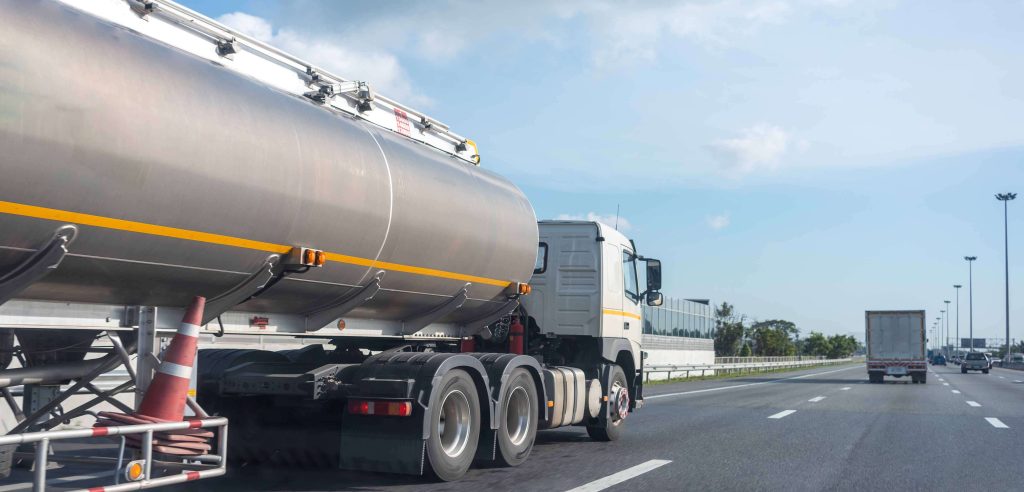
A Tehelka SIT report exposes an organised petrol-diesel racket along highways in Haryana’s Mewat, where fuel is siphoned from tankers, stockpiled and sold for profit, as operators allege police complicity and eye windfall gains amid prevailing global tensions.
It was around 10 am on February 12, 2026, when we left Delhi by road for Jaisalmer, Rajasthan, in pursuit of an investigative story. The journey typically takes 13–15 hours. Given the long distance, we decided to halt overnight in Jodhpur before proceeding to Jaisalmer the next morning.
Jaisalmer lies roughly 770–800 km from Delhi, and most travellers prefer a train or a flight to cover such a stretch. We, however, chose the road deliberately, hoping to pick up stories along the way—something not possible by air or rail. We took the Delhi–Mumbai Expressway from Kalindi Kunj, maintaining a steady speed of 100 km per hour.
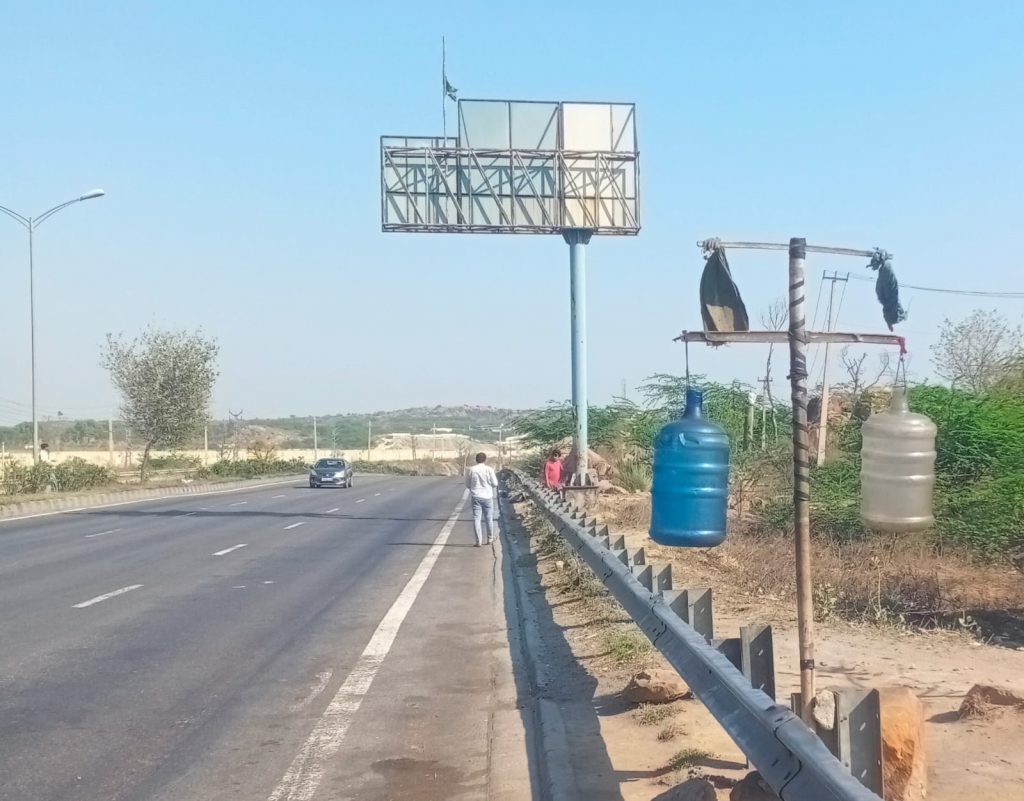
Within an hour, we reached Nuh district in Haryana’s Mewat region. As the Aravalli hills came into view, something unusual caught my eye—rows of 20-litre water bottles hanging in pairs on both sides of the road, stretching for nearly five kilometres.
Curious, I asked our driver about them. His answer was unsettling. The bottles, he said, were used to siphon diesel from trucks plying on the highway. Our decision to travel by road had already paid off—we had stumbled upon our first story. The driver added that this practice had been going on for long, with stolen diesel sold cheaply in the open market.
The ongoing war involving the US, Israel and Iran has raised fears of a serious global oil crisis. But for the highway operators we spoke to, it is a windfall opportunity—one they plan to exploit by siphoning, hoarding and selling fuel at even higher prices.
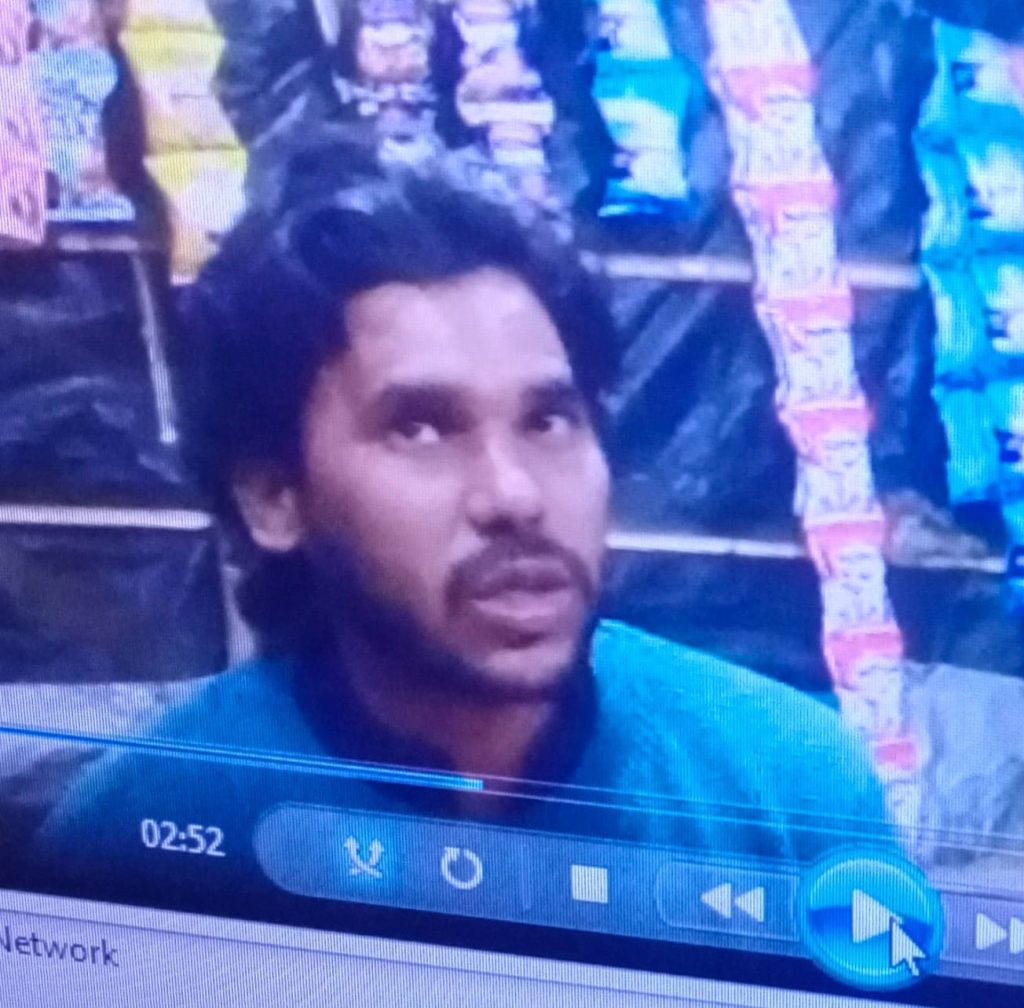
“We are pilfering oil from tankers carrying fuel from depots to petrol pumps. But they give us only 200–300 litres in one trip. We need 1,500 litres at one go. The tanker drivers themselves bring their vehicles to us for oil extraction. How they manage the deficit in their tanks, I don’t know,” said Aarif, a member of the highway fuel racket, to Tehelka’s undercover reporter.
“The 20-litre water bottles you see hanging along the highway are used to siphon diesel from trucks and tankers through pipes. The fuel is then stored in large containers and sold in the open market,” Aarif added.
“Truck drivers themselves are coming and selling diesel to us from their trucks. There is no fixed time when they come, but they sell diesel to us at the rate of Rs 75 per litre. From one truck, we draw 25–30 litres of diesel,” added Aarif.
“You don’t have to worry about the police. We stay close by on the highway while diesel is extracted from the truck by inserting a pipe into the tank. We are paying money to the local police to ensure they look the other way,” Aarif told us.
“If you can provide us 1,000 litres of diesel from your truck, we will give you Rs 5 per litre as commission. So, on 1,000 litres, your commission would be Rs 5,000,” said Ram, Aarif’s partner, to Tehelka’s reporter posing as a transporter.
“Today is Holi, and we have collected around 500 litres of diesel so far. Sometimes, truck drivers sell more diesel during festivals. We take it at Rs 80 per litre,” said Taufiq, part of the illicit fuel racket, to Tehelka’s undercover reporter.
“If you want to buy diesel from us, you can. The cost will be Rs 80 per litre, and it will be pure. Whatever we steal from the trucks will be sold to you,” offered Taufiq.
“We are now storing diesel, not selling it, in anticipation of an oil crisis arising from the ongoing war between Israel-America and Iran. If diesel becomes scarce, we will then sell it at higher prices,” said Taufiq.
“Three to four months ago, I was also pilfering diesel from trucks at the rate of Rs 82 per litre. But I have stopped now because the police came and destroyed all the shops on both sides of the highway involved in this trade and selling the fuel in the open market,” said Shakir, another operator involved in fuel pilferage.
“Tanker drivers are illegally selling diesel to these operators, who then sell it to local consumers. Those paying high prices at petrol pumps are getting it cheaper here,” said Mubarak, a highway tea stall owner and a witness to these activities.
Amid the ongoing war involving America, Israel and Iran, these highway operators are hoarding diesel on a large scale so that, in case of any oil crisis, they can sell it in the open market at higher prices and earn big profits. These unscrupulous operators are operating along the Delhi–Mumbai Expressway near Nuh district in Haryana’s Mewat region. As one crosses Nuh near the Aravalli hills, rows of 20-litre water bottles can be seen hanging continuously on both sides of the road for nearly five kilometres.
On approaching these spots, one finds small tea shops selling items like pan masala, but these shops serve as a cover. Behind them, oil is siphoned from trucks and sold to interested buyers. Pipes hang around, and large containers used to store the stolen fuel are kept at these outlets.
This shocking fuel siphoning racket has come to light in Haryana, where organised gangs have been siphoning thousands of litres of petrol and diesel from tankers and trucks for years, allegedly without attracting the attention of the authorities—or perhaps with their tacit complicity.
To investigate further in the present war scenario, Tehelka carried out a probe into the organised network of fuel siphoning along highways. While returning from Rajasthan, we adopted a cover identity, claiming to own multiple trucks and be in the business of transporting fuel, and expressed our willingness to sell diesel and petrol to those involved in the racket.
We first approached Aarif in Mewat, who was sitting at his shop with oil pipes hanging around and large containers placed nearby. We asked him about the 20-litre water bottles hanging along the highway. Aarif told us they were his, hung along the roadside to signal that he was ‘buying’ diesel from trucks willing to ’sell’.
He further told us that truck drivers themselves come and sell diesel to him. In a nutshell, he admitted to procuring fuel from trucks in connivance with truck and tanker drivers.
In the brief exchange below, Aarif casually acknowledges ownership of the bottles hanging along the highway. The chat reveals a routine, almost open arrangement between drivers and local operators. What stands out is the ease with which the activity is described, suggesting it is neither hidden nor uncommon.
Reporter- Ye bottles to tumahare latak rahe hain?
Aarif- Haan, par ab na hai, truck wale hi detey hain.
Reporter- Accha truck wale de jaate hain tumhe diesel-petrol?
Aarif- Haan, truck wale de bhi debey.
[The chat points to a system where truck drivers willingly offload fuel to local illicit fuel operators. It emerges that this is not forced but mutually understood. Such ease raises questions about oversight.]
Aarif told the reporter that the water bottles hanging along the highway belonged to him and were used to draw diesel from trucks by inserting pipes into their fuel tanks. He said the collected diesel was then transferred into larger containers. Aarif added that the activity continues without fear, with trucks arriving even in broad daylight to supply fuel to those involved in the racket.
Reporter- Ye to cans chote padte honge tumhare, jo sadak par latka rakhe hain?
Aarif- Inme to nikale.
Reporter- To apni tanki se nikalte honge, to chote to nahi padte?
Aarif- Wo cans haigi; cans mein dal dein.
Reporter-Accha ismein nikal letey ho…kabhi bhi de jaaye.. din ho ya raat ho?
Aarif- Haan.
[Here, Aarif explains how fuel is drawn and stored using the cans hanging along the roadside. He indicates that the fuel is transferred into these containers without much difficulty. It emerges that timing is no barrier to this activity. The ease of operation points to routine practice. Such normalcy is a pointer to weak checks.]
We then offered Aarif a deal, saying we wanted to sell fuel to him from our trucks. He agreed and told us he buys diesel at Rs 75–80 per litre. Aarif added that, on a regular basis, he procures around 25–30 litres of fuel from a single truck each day.
Reporter- Accha hamare pass truck hain; agar hum tel dena chahe tumhe?
Aarif- Truck hain, koi dikkat na hain, aap de diyo…
Reporter- Diesel-petrol le letey ho, kya rate letey ho?
Aarif- Hum to diesel to aisey letey hain — 75-80.
Reporter- To tumhe kab de jaatey hain?
Aarif- Truck wale kabhi bhi de jayein.
Reporter- Kitna?
Aarif- 20-30-40 litres.
Reporter- Roz?
Aarif- Haan.
Reporter- 25-30 litre daily aa jaata hai tumhare pass?
Aarif- Haan.
Reporter- Ek truck se?
Aarif- Haan.
Reporter- To kitne trucks se le letey ho?
Aarif- Ye to gadiwale per hai, jis par bach jaaye wo de jaate hain, koi fix na hai, jinpe diesel ho, wo ger jaate hain.
Reporter- Raat mein, din mein, kabhi bhi?
Aarif- Haan.
[Here, Aarif explains that there is no fixed source, as drivers bring whatever excess fuel they have. The chat points to a loose but regular supply chain based on driver discretion. It emerges that small amounts from many trucks keep the flow going. This makes the activity harder to track.]
In the segment below, Aarif shows readiness to handle a much larger quantity of fuel. Aarif told us to supply him with 1,000 litres of diesel daily, which he said he could easily purchase. He added that he would buy it at Rs 75 per litre, amounting to Rs 75,000 a day, with payment made in cash.
Reporter- Wo kitna le jaate hain roz?
Aarif- Diesel ke opper hai, aap to hame de do …1000 litres.
Reporter- 1000 litres le logey roz?
Aarif- Haan.
Reporter- 1000 litres kitne ka ho jayega?
Aarif- 1 litre 80 ka bhi hua, 75 -80 lebein hum.
Reporter- 75 hazar rupaiya daily?
Aarif- Aap diesel dogey to mein paise dunga.
Reporter- Mein wahin to keh raha hoon, 75000 rupaye daily dogey tum hame?
Aarif- Haan.
Reporter- Theek hai phir.
[The exchange indicates the operator’s capacity to absorb large volumes on a daily basis as Aarif agrees to take up to 1,000 litres a day and discusses the rate he would pay. The exchange suggests an operation that can scale up without hesitation.]
We then asked Aarif what our benefit would be if we supplied him fuel regularly, mentioning that “our trucks”—as part of our transporter cover—ran 10–15 trips daily between Delhi and Jaipur. Aarif said he would take good care of us. He assures a margin if fuel is supplied to him regularly. He further revealed that he supplies diesel to farmers in Uttar Pradesh and Rajasthan, who obtain it at lower rates. He added that some trucks also use the fuel sourced from him. Such spread shows how the network quietly expands across areas.
Reporter- Tel dilwa diya karenge, hamara kya fayda hoga usmein?
Aarif- Wo tum lekar aaoge, tumhara fayda kar denge.
Reporter- Kitna le saktey ho.. 100-200 litre? 10-15 gadi daily jaati hai, Jaipur up down karti hain…
Aarif- Koi dikkat na hai, hamara to dekho Shamli mein hai, kheti badi de debey hum jo hamare Rajasthan wale hain na, wahan tel mehnga hai, wo tel le jaave 2-4 rupay ka unko fayda ho jaata hai…
Aarif- Haan, kuch gaon mein truck mein bhi daal dein.
Reporter- Wo le jaate honge kisan tumse Rajasthan wale?
Aarif- Haan.
[The chat highlights how profit is used to draw in suppliers. It emerges that volume is key to earnings. Besides, it points to a chain that goes beyond local sale as Aarif reveals that the fuel is moved further to Rajasthan, where prices are higher. This creates steady demand. The exchange shows a wider network, linking local operators with buyers across regions, including farmers.]
We almost finalised the deal with Aarif. Under the arrangement, we would supply him with 1,000 litres of diesel daily at Rs 75 per litre. Our truck would park along the highway, from where Aarif and his colleagues would insert a pipe and draw the fuel. He added that the process could be carried out at any time of the day.
Reporter- Diesel kya upper se logey aap — highway se, ya neeche aana padega?
Aarif- Hum to highway se nikalengey jahan aapki gadi khadi hai na — pipe daalo tel nikalo.
Reporter- Theek hai. Din mein, raat mein, kabhi bhi nikalo, koi dikkat to nahi hain?
Aarif- Nahi.
Reporter- Koi bhasodi to nahi hai, pata chale kabhi dikkat ho jaaye?
Aarif- Nahi nahi, aap baat kara do, koi baat nahi, aapki commission de denge.
Reporter- Tumhara number le liya hai, mera chala gaya hoga tumhare pass.
[Here, Aarif explains that fuel can be drawn directly from trucks parked along the highway using a pipe. It emerges that access and timing pose no hurdle. He also downplays any risk and offers commission for facilitating the deal. The offer of commission points to organised roles. Such ease suggests weak monitoring on busy highways.]
Aarif then assured us there would be no trouble with the police. He said he himself would stay close by on the highway while diesel is extracted from our truck, emphasising that the police would turn a blind eye, as they are paid to do so.
Reporter- Koi tension to nahi hai, police wale aa jaayein?
Aarif- Koi dikkat na hai…
Reporter- Police wale aa gaye to setting aap karogey na?
Aarif- Wo hamari hai na, tel nikaltey waqt khade ho jayenge hum, kuch na bolengey.
Reporter- Policewale bhi to le hi rahe hongey tumse?
Aarif- Haan.
[As our reporter raises concerns about police interference, Aarif dismisses any such risk and indicates that arrangements are in place during the process. The chat points to clear assurance of protection. It emerges that enforcement is compromised at some level]
While we were speaking to Aarif, his partner Ram, who runs a liquor shop next to Aarif’s shop, joined us and offered a deal. Ram proposed a commission of Rs 5 per litre. He said that if we sold them 1,000 litres in a day, our commission would be Rs 5,000 per day.
In the below exchange, Aarif and Ram explain the commission structure for supplying fuel. They offer a fixed margin per litre and assure that payments will be smooth and direct. They also indicate that the arrangement does not depend on a single person, as anyone in the network can handle it. The exchange further shows how fuel is collected using cans and bottles of varying sizes.
Aarif- Jaise aapki gaadi tel degi hame, 40 litre tel degi hame, to uspe aapko hum 100-200.
Ram (interjects)- 5 rupiye apka commission milao, jaise 75-80 hai to 5 rupiya aapka.
Reporter- Jaise?
Ram- Jaise aapse baat ho gayi hamari Rs 75 ki, aap 5 rupaye commission rakho.
Ram- Aap phone karke bata dena hamari gaadi hai, aap nikal lo, aapke 5 rupaye se paise pahuch jayenge, baat khatam.
Reporter (pointing towards cans placed nearby)- Ismein letey hogey tum?
Aarif- Ismein bhi le letey hain, bottle bhi hain, jaise 25 litres ki.
[The chat explains how suppliers benefit from the arrangement, which, it emerges, does not depend on any single individual, as anyone in the network can handle it. It also shows how fuel is collected using cans and bottles of varying sizes.]
Aarif also told us that he procures fuel from oil tankers transporting it from depots to petrol pumps, in connivance with tanker drivers. According to him, tankers en route often stop by to offload fuel, supplying him with around 200–300 litres in a single trip. How these drivers manage the resulting deficit in their tanks, he said, is not known to him. Aarif added that he requires at least 1,500 litres from a single tanker and asked us to connect him with any tanker operators willing to sell fuel.
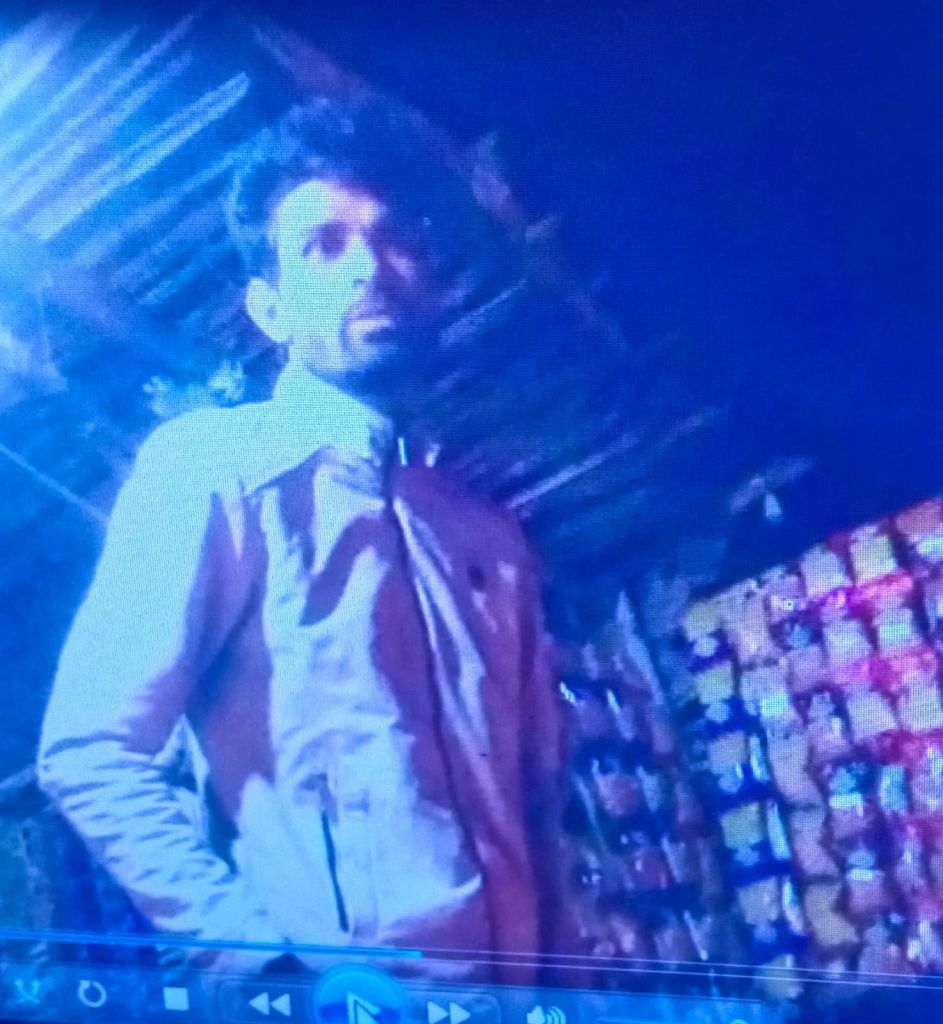
We had first spoken to Aarif before the conflict between America–Israel and Iran broke out. After hostilities escalated, on March 4, 2026, coinciding with Holi, we returned to Mewat via the Delhi–Mumbai Expressway to assess the situation amid fears of fuel shortages due to disrupted Gulf supplies. As before, our car stopped near the Aravalli hills, where several operators were seen with 20-litre bottles hanging nearby. We met with one such operator, Taufiq, who told us they were currently stockpiling diesel rather than selling it, anticipating supply disruptions and higher prices. He said that on that day alone, he had procured around 500 litres since morning.
We also offered Taufiq a deal, saying we wanted to sell diesel to him. He told us he was buying at Rs 80 per litre and expressed readiness to purchase up to 1,000 litres from us.
In the following chat, Taufiq shares the quantity of fuel he has received during the day, noting that volumes can vary even during festivals. He explains that supply depends on trucks arriving intermittently. He also states the rate at which he is willing to buy diesel. The exchange ends with his readiness to take in large quantities without hesitation.
Reporter- Tum yahan highway par kitne de detey ho, kitne trucks se tel le letey ho roz?
Taufiq- Ab aaj kareeban aa gaya hoga 500 litres tel.
Reporter- Aaj 500 litre aa gaya?
Taufiq- Zyada aa gaya hoga.
Reporter- Tum to keh rahe they tyohar hai, Holi hai, kahan se aayega?
Taufiq- Koi koi gadi aa jati hai, kuch tyohar ke mare zyada bechtey hain, ab kal nahi.. parson aayega.
Reporter- Kaise logey kaise humse?
Taufiq- 80 rupaye (per) litre lenge.
Reporter- Zyada lo yaar.
Taufiq- Zyada, bottle se lenge to 80 rupaye litre lengey.
Reporter- 1 bottle 20 litre ki hai tumhari.
Reporter (continues) – 1000 litre de dein tumhe roz?
Taufiq- 1000 kya, kitna bhi de do…
[The chat shows that supply continues even during festivals. It also shows that demand remains steady and prices are fixed. Their readiness to take any quantity suggests the network can quickly scale up.]
Taufiq also agreed to sell diesel to us at a rate of Rs 80 per litre. In the excerpts below, Taufiq discusses both buying and selling rates of diesel, showing a gap in pricing at different points. He explains how containers are used in a way that increases the apparent volume. He also makes it clear that payments are strictly in cash, with no credit. The exchange reflects a mix of pricing tactics and handling methods.
Reporter- Tumhara kya fayda ho raha hai ismein, zyada mein le rahe ho kam mein bech rahe ho ?
Taufiq-Ye cans hai 20 litres ki, ismein aa raha 40 litres hai.
Reporter- Aisa kyun?
Taufiq- Aisa hi hota hai, ek can 20 ki hai, usmein 25 aa raha hai.
Reporter- Paise sath-ke-sath, udhar nahi hoga.
Taufiq- Hmmm, udhar nahi hoga?
Reporter- Hame dogey kitna?
Taufiq- Rs 80 per litre.
Reporter- Diesel pure hoga?
Taufiq- Jo gaadi se niklega, wo hoga.
[The chat points to margins built through both price gaps and volume play. It emerges that basic methods help increase returns. Cash dealings keep it simple. Such practices show how profit is quietly built into the system.]
In the following dialogue, Taufiq explains how trucks stop on their own when they have fuel to offer. He says the time taken to draw diesel depends on the quantity available. He also assured us that we could sell our fuel to him without any fear.
Reporter (after seeing a truck approaching the shop) – Ye aa gaya tumhe dene ke liye?
Taufiq- Na, apne aap se rukta hai koi hota hai to, isko diesel dena hota to ruk jata.
Reporter- Kitni der mein nikal lete ho pipe daalkar aap?
Taufiq- Diesel ke hisab se hota hai.
Reporter- Koi dikkat to nahi hogi?
Taufiq- Na.
[The exchange presents a smooth and routine method of operation. Taufiq also assures that the process is carried out smoothly as he tries to allay our fears. The chat shows that supply is voluntary and time-efficient. Such ease suggests a system that runs with little disruption.]
In this chat, the reporter raises concerns about possible police action during the activity. Taufiq dismisses these fears and says there would be no problem. He suggests that the police focus on routine checks and not on such dealings. He also takes responsibility, assuring that everything would be managed.
Reporter- Koi dikkat to nahi hogi?
Taufiq- Na.
Reporter- Police ki?
Taufiq- Na, wo to challan dekhtey hai.
Reporter- Policewale kahin hame pakad lein, tumhe pakad lein? Koi dikkat to nahi hogi?
Taufiq- Na.
Reporter- Tumhari zimmedari hai.
Taufiq- Haan, bilkul.
[The chat shows a clear lack of fear of enforcement on the part of operators. It emerges that routine checks are seen as no barrier. The exchange reflects a strong sense of confidence. Such assurance points to gaps in monitoring.]
Tehelka met another operator, Shakir, on the same highway in Nuh, Mewat. We saw oil-extraction pipes and 20-litre water bottles hanging at his tea stall, but he said he had stopped taking fuel from trucks 3–4 months ago. When asked why, he told us that the police had dismantled such setups along the highway that were involved in this activity. The exchange also touches on earlier rates and how the practice once ran along the highway.
Reporter- Bottle to tang rakhi hai tumne, pipe bhi tange hain?
Shakir- Letey nahi hain ji.
Reporter- Band kar diya? Kyun?
Shakir- Nahi letey, bas.
Reporter- Lafda ho gaya koi?
Shakir- Lafda koi nahi hai.
Reporter- Pehle diesel le rahe they aap?
Shakir- Haan pehle le rahe they, 3-4 mahine pehle.
Reporter- Kya rate?
Shakir- 82.
Reporter- Police walon ne band kara di tumhari?
Shakir- Sab band kara di, todh di.
Reporter- Is highway ki sari band?
Shakir- Pehle bottle tangi rehti thi, chori ki wajah se tudwaye hai.
Reporter- Policewalon ne kyun band kara di?
Shakir- Truck wale badtameezi karen, lafda, chori, phone cheeno. Dhande ke naam par goonda gardi utha rakhi hai…
[In the above chat points to a recent halt in such activity at this spot. It emerges that enforcement and local issues played a role. This shows the network can face disruption. Such breaks, however, may only be temporary.]
On the same highway, we met a tea vendor, Mubarak, who said he had witnessed such activities. When asked about the 20-litre water bottles hanging along the highway in Mewat, he told us they were used to draw fuel from trucks. According to him, the fuel is then sold in the open market for profit. He added that truck drivers themselves supply fuel to these operators.
Reporter- Ye maine highway par dekhe hain bahut sare bottles tange rehtey hain?
Reporter- Maine bahut dekhey hain dono side tange hue.
Mubarak- Hamare yahan nahi rakhtey ji, wo palli side mein rakhtey hain.
Reporter- Mewat mein?
Mubarak- Haan.
Reporter- Truck khade hue they udhar.
Mubarak- Wo karwa letey hain, jaise diesel bacha hua hai kisi gadi mein.
Reporter- Ya truck walon ko zaroorat padh gayi paison ki?
Mubarak- Haan.
[Here, Mubarak explains the purpose of bottles seen hanging along the highway. The chat highlights a simple buy-and-sell chain driven by small margins. It emerges that drivers offload excess fuel for quick cash. This keeps the flow steady. Such practices show how easily the network sustains itself.]
When asked whether the police take action against such operators, Mubarak said that no one has been arrested so far. He added that fuel is openly sold along the highway. He notes that neither the sellers nor the buyers seem to fear being caught. He confirms that truck drivers and local operators carry out these dealings in plain sight.
Reporter- Ye pakde nahi jaate? Police wale pakad lein diesel bechtey hue?
[The exchange highlights how visible and routine this illegal activity has become and points to a complete lack of deterrence. It emerges that both sides act without fear. This normalises the practice. Such openness reflects weak enforcement on the ground.]
When asked why people buy petrol and diesel from these operators instead of petrol pumps, Mubarak said they get fuel at lower prices compared to the pumps. The exchange highlights the reasons behind this local demand.
Reporter- Ye gaon wale jo inse diesel kharidtey hain, ye petrol pumps se nahi la saktey?
Mubarak- Wahan manda nahi milta inko.
Reporter- Mehnga milta hoga?
Mubarak- Mehnga milta hai.
Reporter- Ye sasta de rahe honge?
[The chat points to access and price as key factors. It emerges that higher costs push buyers towards cheaper sources. This keeps demand alive. Such gaps in supply make the illicit fuel network sustainable.]
Petrol and diesel cannot be sold from ordinary shops, kiosks or general stores in India. It is illegal to sell, store or transport fuel without a valid licence, which requires a minimum net worth of Rs 250 crore. Selling fuel in loose form (bottles or cans) is prohibited due to serious safety risks. However, Tehelka’s investigation on the Mewat highway exposed several operators who, in connivance with truck and tanker drivers, siphon off fuel from trucks and tankers en route from depots to petrol pumps, store it and later sell it at cheaper rates for profit. One operator also admitted to hoarding diesel to capitalise on a possible crisis arising from the ongoing conflict between America–Israel and Iran.
According to sources, this highway-level activity has been continuing for years without effective intervention by authorities. Thousands of litres of petrol and diesel have reportedly been siphoned off by organised groups, causing losses running into thousands of crores. These groups extract fuel within 15–20 minutes, often in broad daylight on busy highways. The scale and ease of these operations raise serious concerns about enforcement gaps. Left unchecked, such practices risk deepening into a parallel, unregulated fuel market.
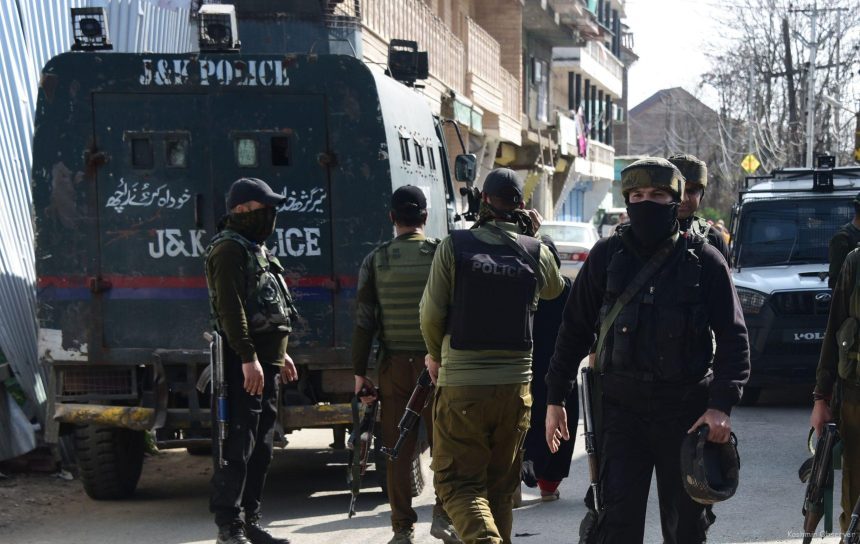
One terrorist has been killed in an ongoing anti-terror operation in the Arahama area of central Kashmir’s Ganderbal district, officials said on Tuesday, adding that the operation is still in progress.
A senior police officer confirmed the development, while the Indian Army also confirmed the killing in a post on the official X handle of the Chinar Corps.
In a post, the Army said, “OP ARAHAMA: Update – During the night of March 31, the cordon was tactically reorganised amid intermittent firing. Our troops responded effectively with a calibrated approach, resulting in one terrorist being eliminated. Operation is in progress.”
Reports said security forces are proceeding cautiously as the operation continues in the dense forest area, where the possibility of more militants cannot be ruled out.
The joint operation was launched late Monday evening after the Jammu and Kashmir Police received specific intelligence inputs about the movement of terrorists in the upper reaches of the Arahama forests. Following the inputs, a coordinated search operation was launched by the police, the Army and the CRPF.
During the initial phase of the operation, an exchange of fire took place between the terrorists and the security forces. The gunfight lasted for several minutes before the firing stopped, after which forces began a detailed search of the area.
A senior police official said that although the body of a terrorist and a weapon have been spotted, the thick forest terrain is making the operation difficult. He added that the forces are advancing carefully to prevent any casualties.
According to preliminary intelligence inputs, two to three terrorists were believed to be present in the area. While one has been neutralised, officials said it is possible that others may have escaped under the cover of darkness. However, this has not been officially confirmed and search operations are continuing.
Officials said this is the first encounter reported in the Kashmir Valley this year after a gap of nearly four months.
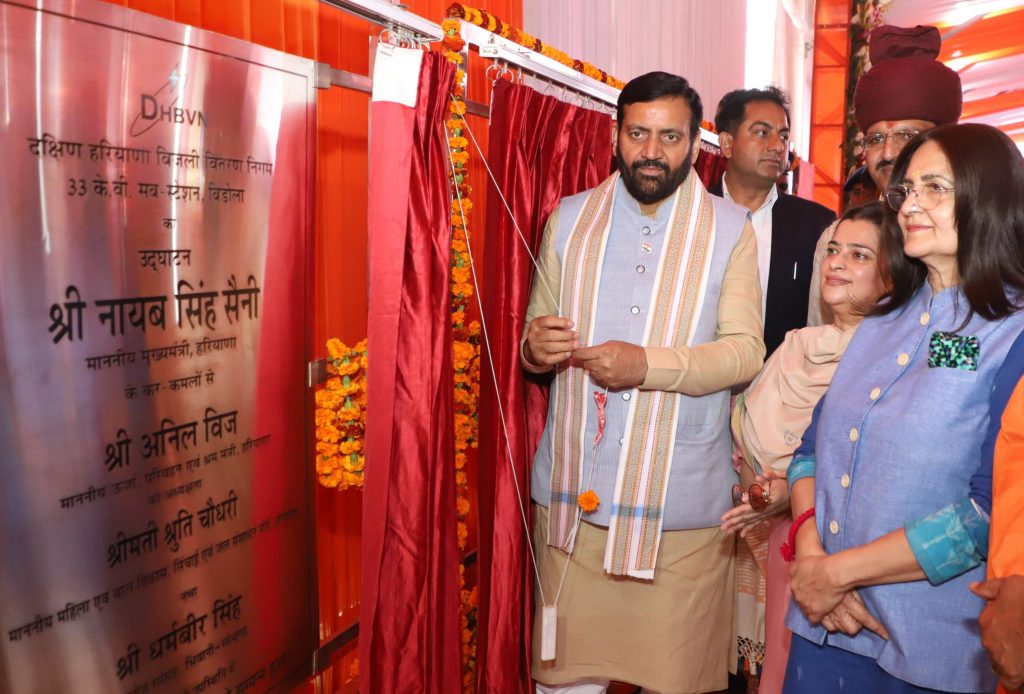
Haryana Chief Minister Nayab Singh Saini on Tuesday said that unlike previous regimes, his government is focused on delivering on promises rather than merely making announcements, asserting that the state’s “double-engine government” has ensured time-bound implementation of welfare and development schemes.
Addressing the Unnat Sinchai Utsav 2026 held in Tosham in Bhiwani district, the Chief Minister said that announcements made during the Congress era were often “thrown into the dustbin,” while the present dispensation has taken concrete steps since 2014 to fulfil its commitments. “Our government is not limited to announcements; we are working to fulfil every promise promptly,” he said.
Before attending the event, Saini paid tribute to former Chief Ministers Chaudhary Bansi Lal and Chaudhary Surendra Singh. He highlighted their contribution in building a lift irrigation canal system in the Tosham-Loharu region, which brought canal water to sandy areas for the first time, transforming agriculture and livelihoods.
Emphasising his government’s performance, Saini said that out of 217 promises made in the party’s election manifesto, 60 have already been fulfilled within one-and-a-half years, while work is underway on the remaining 157. He termed the government’s third consecutive term as both an honour and a responsibility, adding that it reinforces their commitment to work with greater dedication.
The Chief Minister said that the state has implemented numerous welfare schemes with transparency, ensuring benefits reach every section of society. He claimed that in the Tosham constituency alone, 283 announcements have been made over the past 11.5 years, with 258 already completed.
Addressing concerns over fuel and essential supplies, Saini dismissed opposition claims of shortages, stating that adequate stocks of petrol, diesel, and cooking gas are available across Haryana. He urged people not to pay attention to rumours and said strict action has been taken against black marketing, including the registration of FIRs.
Highlighting farmer-centric initiatives, the Chief Minister said that all 24 crops are being procured at Minimum Support Price, with Rs. 1.64 lakh crore already transferred to over 12 lakh farmers. He added that mustard procurement has begun and wheat procurement will start from April 1. Over the past 11 years, Rs. 16,160 crore has been provided to farmers under the crop insurance scheme.
He also announced steps to expand gas pipeline infrastructure, reduce lease rent, and ensure uninterrupted supply. Plans to establish an Industrial Model Township (IMT) in Tosham were also unveiled, with an appeal to farmers to voluntarily register land on the e-Bhoomi portal.
On the development front, Saini inaugurated and laid the foundation stone of projects worth over Rs. 107 crore, including power substations, school infrastructure, and an aqua park. He said these initiatives would strengthen the electricity supply, improve education facilities, and boost rural infrastructure.
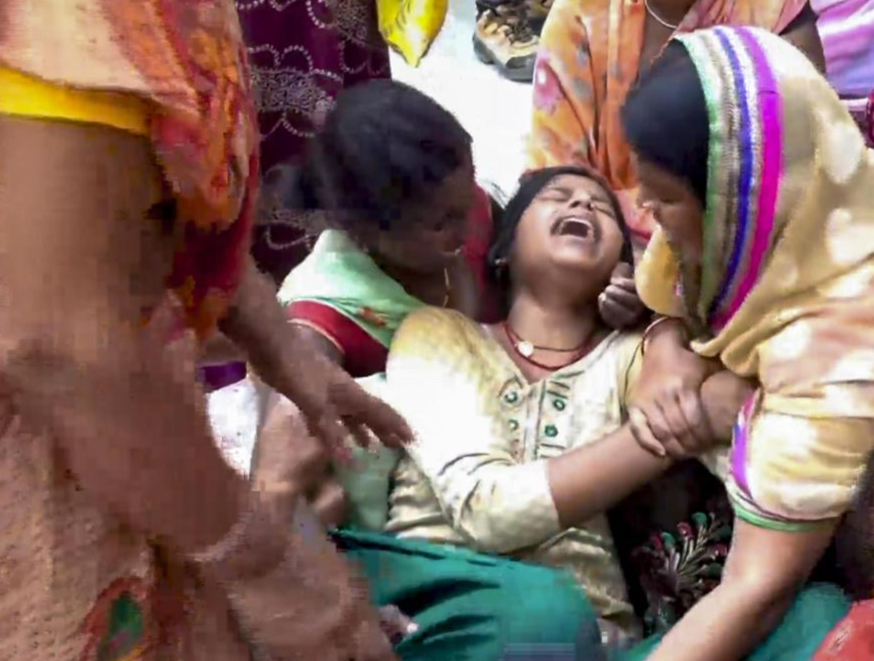
At least eight women lost their lives in a tragic stampede at the Shitala Mata temple in Bihar’s Nalanda district on Tuesday morning, police officials confirmed. The incident occurred amid a heavy rush of devotees who had gathered at the temple, reportedly leading to chaos and overcrowding.
Authorities indicated that the exact cause of the stampede is yet to be determined. However, initial reports suggest that an unusually large number of devotees had assembled at the temple premises early in the day, possibly overwhelming the available space and crowd management arrangements.
Bihar Sharif Assistant Superintendent of Police Noorul Haque stated that the victims were all women and that several others are feared injured. “At least eight women died in the stampede at Shitala Mata temple on Tuesday morning. Police personnel and officials of the district administration have reached the spot, and the rescue work is on,” he said.
Emergency response teams were rushed to the scene shortly after the incident. Local police, along with district administration officials, have been engaged in rescue and relief operations, assisting the injured and shifting them to nearby medical facilities. Efforts are also underway to identify the deceased and inform their families.
Eyewitnesses described scenes of panic as the crowd surged within the temple complex. Many devotees reportedly struggled to find safe exits as the situation escalated rapidly.
The district administration is expected to launch an inquiry into the incident to ascertain the sequence of events and identify any lapses in crowd control measures. Additional security arrangements are likely to be reviewed for upcoming religious gatherings to prevent such tragedies.
Stampedes at crowded religious sites have been a recurring concern in India, often highlighting gaps in planning and crowd management during peak pilgrimage periods.
Further details are awaited as authorities continue their investigation.
The appeal comes after a lower court in Delhi had acquitted Kejriwal earlier this year in complaints filed by the ED that he failed to comply with summonses served to him as part of the probe into the controversial excise policy matter. The Rouse Avenue trial court had dismissed the cases on procedural grounds, finding insufficient basis for prosecution over the non‑appearance allegations.
According to ED’s petition, the acquittal order was legally unsound as it overlooked crucial aspects of the agency’s complaints. The federal probe agency has argued that Kejriwal deliberately ignored summonses that were key to the investigation, hampering its ability to examine the matter fully. The appeal by the ED seeks to set aside the trial court’s judgment and reinstate the complaints for judicial consideration.
While the matter is now pending before the High Court, a bench is expected to take up arguments on the validity of the acquittal and ED’s grounds for appeal. Legal experts say the case hinges on whether the lower court erred in interpreting the scope of non‑appearance as a standalone offence in the context of summons issued during a money‑laundering investigation.
The current legal dispute is part of broader proceedings linked to the now‑scrapped Delhi excise policy, which has been under investigation for several years amid allegations of irregularities and money‑laundering. Kejriwal, the former Chief Minister of Delhi and national convener of the Aam Aadmi Party (AAP), was named in supplementary complaints by the ED during the federal probe.
In relation to the excise policy matters, Kejriwal has previously faced significant legal challenges, including arrest by the ED in March 2024 after skipping multiple summons from the agency—a development that marked a rare moment in Indian politics. He was later granted interim bail by the Supreme Court of India during the ongoing proceedings.
While the trial court has already acquitted Kejriwal in these specific complaints over non‑appearance, separate legal proceedings related to the excise policy and associated alleged financial irregularities continue in various courts. Some involve questions over evidence, procedural compliance and the broader investigative approach taken by enforcement agencies.
Political & Legal Implications The ED’s move to challenge the acquittal underscores its continued resolve to pursue legal remedies in complex and politically charged cases. The High Court appeal could have implications not just for Kejriwal’s personal legal standing but also for how enforcement agencies frame and pursue cases involving summons compliance in high‑profile financial probes. Experts note that the court’s interpretation of procedural norms in this appeal could set a precedent for future enforcement actions.
AAP leaders have in the past described legal actions against Kejriwal as politically motivated, asserting that procedural disputes over summons should not overshadow substantive investigation outcomes. However, the ED maintains that compliance with procedural directions is fundamental to any criminal investigation.
As the Delhi High Court prepares to hear the matter, both legal and political observers will closely watch developments, with arguments expected to engage deeply with procedural law and enforcement powers in complex anti‑money‑laundering cases.
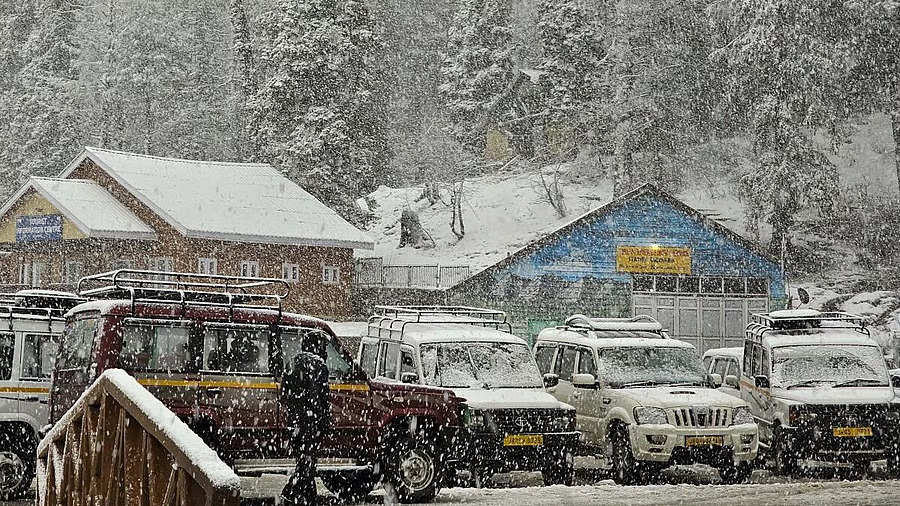
Fresh snowfall in the higher reaches of Kashmir and widespread rainfall across the plains disrupted normal life on Sunday, forcing the closure of key roads, officials from the Meteorological Department said.
The higher altitude tourist and mountain areas including Gulmarg, Pahalgam, Yousmarg, Gurez, Razdan Top and the Sonamarg-Zojila axis received light to moderate snowfall during the night due to the impact of a western disturbance.
Following the snowfall, authorities closed the Srinagar-Leh National Highway and the Bandipora-Gurez road as a precautionary measure to ensure commuter safety.
Meanwhile, the plains of the Kashmir Valley, including Srinagar, witnessed moderate and intermittent rainfall at many places.
The MeT department said the cloud cover contributed to a rise in minimum temperatures across the Valley. Srinagar recorded a minimum temperature of 10.3°C, which is 3.8°C above the seasonal average. Night temperatures across most parts of the Valley were reported to be three to five degrees above normal.
The weather department has forecast more rain and snowfall accompanied by gusty winds till Monday night, with intermittent wet weather likely to continue into early April.
Farmers have been advised to temporarily suspend agricultural operations until the weather improves.
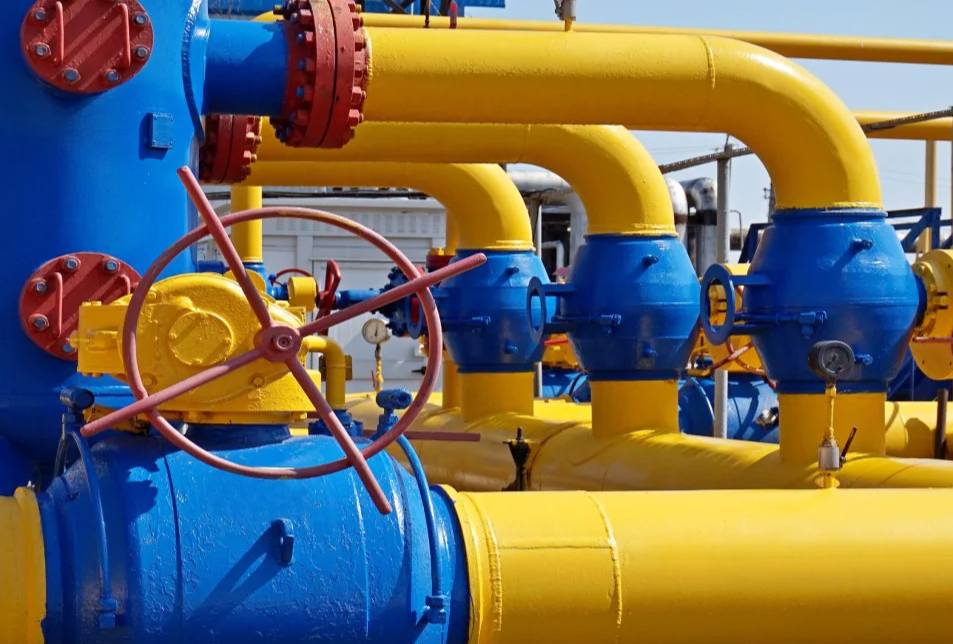
India’s Petroleum Ministry has issued a directive that could reshape how millions of households and businesses access cooking and fuel gas. Areas already connected to Piped Natural Gas (PNG) networks have been asked to transition fully to PNG or shift to LPG usage within a stipulated three-month window, failing which supply arrangements may be discontinued.
The move is being seen as part of a broader push toward rationalizing gas distribution and improving efficiency in the country’s energy ecosystem. Over the past decade, India has significantly expanded its City Gas Distribution (CGD) network, laying pipelines across urban and semi-urban regions to deliver PNG directly to homes and industries.
However, overlapping supply systems—where consumers maintain both LPG cylinders and PNG connections—have created inefficiencies in subsidy allocation, infrastructure usage, and demand forecasting. The latest directive aims to streamline consumption patterns and reduce duplication.
What is PNG?
Piped Natural Gas (PNG) is natural gas supplied to homes and commercial establishments through an underground pipeline network. It is primarily composed of methane (CH₄), a clean-burning fossil fuel.
PNG is not “manufactured” in the traditional sense. It is extracted from natural gas fields—either standalone gas reservoirs or associated with crude oil production. After extraction, it is processed to remove impurities like water, carbon dioxide, and sulfur compounds, making it safe for domestic and industrial use.
PNG vs LNG: What’s the Difference?
PNG (Piped Natural Gas): Delivered through pipelines in gaseous form directly to consumers.
LNG (Liquefied Natural Gas): Natural gas cooled to -162°C to convert it into liquid form for easier storage and transport.
LNG is typically imported via ships and then regasified at terminals before being fed into pipeline networks, eventually becoming PNG for end users.
Sources of PNG
India sources its natural gas from both domestic production and imports:
Domestic fields like those operated by Oil and Natural Gas Corporation (ONGC) and private players
Imported LNG from countries such as Qatar, Australia, and the United States
After regasification, LNG enters the national gas grid and is distributed as PNG.
PNG Connections
India has seen rapid growth in PNG adoption:
Over 1.2 crore (12 million) PNG household connections have been established across the country
The CGD network now spans hundreds of districts, with expansion ongoing
Then there is Pradhan Mantri Ujjwala Yojana (PMUY) which primarily focuses on providing subsidized LPG connections to economically weaker households.
More than 9.5 crore LPG connections have been distributed under PMUY
PNG connections are not directly subsidized under PMUY, as the scheme is LPG-focused
PNG Less Affected
PNG tends to be more stable compared to LPG during global oil shocks due to:
Diverse sourcing of natural gas
Long-term LNG import contracts
Lower direct linkage to crude oil prices
In contrast, LPG prices are more directly influenced by international crude oil markets.
India is heavily reliant on LNG imports to meet its growing gas demand:
Around 50–55% of consumption is met through LNG imports
The country imports roughly 30–35 billion cubic meters (BCM) annually
Major import infrastructure is operated by companies like Petronet LNG.
Implications
For Consumers
Households in PNG areas may need to choose between PNG and LPG
PNG offers continuous supply without cylinder refills
For Government
Better targeting of LPG subsidies
Reduced duplication in welfare benefits
For Energy Sector
Improved utilization of gas pipeline infrastructure