Anatomy of India’s Aviation Crisis

India’s aviation industry has long been a story of rapid growth and connectivity. Among its players, IndiGo, operated by InterGlobe Aviation, has stood out as a model of efficiency. Dominating around 60–65% of domestic air travel, it has earned a reputation for punctuality, affordable fares, and a lean operational model. For nearly two decades, this approach delivered profitability and market dominance. Yet, even the most streamlined systems can face unexpected shocks — and IndiGo’s late-2025 crisis was a vivid example.

Trigger

 The immediate trigger was regulatory. The Directorate General of Civil Aviation (DGCA) introduced updated Flight Duty Time Limitations (FDTL) in 2025 to reduce pilot fatigue and improve safety. Fully enforced from November 1, 2025, these rules mandated:

       Longer weekly rest for pilots (48 hours vs 36)

       Fewer night landings per week (2 vs 6)

       Tighter night duty limits

While safety advocates welcomed the move, the changes collided with IndiGo’s hyper-lean staffing model, exposing operational vulnerabilities.

IndiGo, operated by InterGlobe Aviation, is India’s largest carrier by market share — handling over 60–65% of domestic traffic. It has built its reputation on punctuality, low fares, and a tightly optimized fleet and crew roster. For nearly two decades, this model delivered profitability and dominance.

However, the industry — and IndiGo in particular —faced a regulatory shift: new pilot duty and rest regulations introduced by India’s aviation regulator, the Directorate General of Civil Aviation (DGCA), aimed at reducing pilot fatigue and improving flight safety.  

The intentions were widely supported. Long-haul carriers and safety advocates welcomed the changes as aligning India with international best practices. But as the changes took effect, unexpected consequences rippled through operating schedules — especially at IndiGo.

Pilot Shortages and Roster Chaos

IndiGo’s pilot strength fell from roughly 5,463 in March 2025 to 5,085 by December, a nearly 7% decline, even as fleet size and flight numbers expanded. With new rest rules, pilot availability dropped sharply, creating gaps in schedules.

In principle, all airlines had a two-year window to prepare for these new norms. But in reality, IndiGo’s preparation was widely seen as inadequate.  Reports say that instead of increasing pilot strength, IndiGo’s pilot count fellfrom about 5,463 in March 2025 to around 5,085 by early December — adrop of around 7% even as fleet size and flight numbers expanded.

This created a structural gap as new rules demanded more rest — reducing the number of hours pilots were legally available to fly each week.

Pilots’ representatives, particularly the Federation of Indian Pilots (FIP), said the crisis was not simply about the new rules, but about IndiGo’s long-term lean manpower strategy. They argue:

       The airline maintained a hiring freeze

       Entered non-poaching arrangements

       Kept a pilot pay freeze

       It did not buffer its crew sufficiently despite knowing the new rules were coming

Industry insiders point out that other carriers — which also faced the same regulatory requirements — managed to adjust without falling into crisis.

Scheduling and Crew Planning Failures

With a small buffer of crew and no extra pilots to share the load, even minor scheduling changes or duty adjustments cascaded into larger problems. Tight operation planning left no room for:

       Unscheduled leave

       Reassignments without breaching duty hours

       Weather delays or airport congestion

       And longer rest times

The result: pilots were legally unable to cover flights even when physically present — a fact highlighted in firsthand accounts saying pilots “were ready to fly but were not assigned any duty.”

Peak Travel Season and Infrastructure Strain

To complicate matters, the crisis struck during India’s peak winter travel season, when demand spikes and airports already operate near capacity.

India’s busiest airports — Delhi, Mumbai, Bangalore, and Hyderabad — felt the brunt of this overload. Planes queued for gates, ground staff were overwhelmed, and routine flight operations slid into chaos.

Unions argued that long-term staffing decisions, as listed below, contributed heavily:

       Hiring freeze

       Non-poaching agreements with competitors

       Pay freeze

       Minimal crew buffers

Other airlines adjusted to the new rules without major disruption, highlighting IndiGo’s fragility.

Scheduling Failures

Even minor disruptions — sick leave, weather delays, or gate congestion — snowballed. Pilots reported being ready but unable to fly due to legal duty-hour limits.

Peak Travel Season Adds Pressure

The crisis hit during winter, India’s busiest travel period. Airports in Delhi, Mumbai, Bengaluru, and Hyderabad were pushed beyond capacity, exacerbating delays.

Flight Cancellations

·       2,000–4,000 flights cancelled nationwide

·       Over 1,000 flights grounded in a single day at peak

·       Bengaluru saw 60–73 daily cancellations

·       Delhi and Chennai experienced hours-long flight suspensions

Hundreds of thousands of passengers were affected, facing missed connections, long waits, and logistical headaches.

Airports in Disarray

Terminals overflowed, communication failed, and boarding areas became sites of protests and confrontations. Congested gates and delayed aircraft created cascading delays across India’s network, impacting even smaller regional airports.

With the latest crisis spinning out of control, the DGCA and civil aviation ministry intervened:

·       It suspended some of the new night duty and rest rules specifically for IndiGo until early 2026

·       Additional temporary exemptions were granted to allow training captains and inspectors to fly to fill pilot gaps

These moves were intended to stabilize operations but stirred debate about regulatory flexibility versus safety standards.

The DGCA deployed oversight teams to monitor IndiGo’s operations and crew rostering in real time.

The regulator also issued show-cause notices, warning of possible penalties and sanctions, and demanded a mitigation plan covering crew recruitment and scheduling projections.

In an unusual move, the DGCA terminated multiple inspectors responsible for oversight of IndiGo’s operations, signaling internal accountability for the regulatory lapse.

IndiGo’s CEO, Pieter Elbers, was also summoned to appear before the regulator to explain the crisis and management decisions.

The aviation minister publicly called for structural reforms in India’s aviation sector — including the need for at least five airlines operating 100+ aircraft each to avoid system overload and reduce dependence on a single carrier. Measures in a nut shell were:

·       Training captains allowed to operate commercial flights

·       DGCA oversight teams deployed, show-cause notices issued

·       Dismissal of inspectors responsible for oversight, CEO Pieter Elbers summoned

·       Aviation minister called for structural reforms to reduce dependence on a single airline

·       Temporary easing of some FDTL rules for IndiGo

Pilots’ Perspective

Pilot associations — including the FIP and ALPA India — argued the crisis was avoidable. They emphasized:

·       The need for comprehensive pilot hiring and buffer staffing

·       Better rostering practices

·       Respect for fatigue management norms

·       And fair compensation to attract and retain crew

They rejected claims that pilots were unwilling to work, pointing instead to systemic mis-assignment and scheduling failures that left legal crews unable to cover flights.

Unions stressed that the crisis was avoidable with proper staffing and scheduling. They demanded:

·       Expanded pilot rosters and buffers

·       Modernized rostering tools

·       Fatigue compliance

·       Competitive pay to retain talent

They rejected claims that pilots refused to work, pointing instead to legal duty-hour constraints.

Passenger Frustration & Digital Failures

Passengers faced opaque apps and websites, hidden fees, and confusing rebooking processes. These digital hurdles compounded physical disruption.

Recovery and Lessons Learned

IndiGo expects full normalization by February 2026 via:

·       Accelerated pilot hiring

·       Expanded training

·       Enhanced rostering

·       Gradual restoration of flights

The crisis has prompted discussions on mandatory pilot buffers, improved scheduling software, stronger passenger rights, and diversification of airline market share.

Timeline of the IndiGo Crisis

DateEvent
Early 2025DGCA introduces FDTL revisions with a two-year implementation window. IndiGo’s pilot strength begins to decline amid a hiring freeze.
March 2025IndiGo has 5,463 pilots. Fleet expansion continues without proportional crew growth.
July–October 2025Pilot unions warn of potential scheduling issues under new FDTL. Peak winter travel planning begins.
November 1, 2025New FDTL rules fully enforced. Immediate gaps appear in pilot availability. Flight schedules begin to unravel.
Nov 2–15, 2025Daily cancellations increase; over 1,000 flights cancelled on some days. Bengaluru, Delhi, and Chennai hardest hit. Airports experience overcrowding, passenger frustration.
Nov 10, 2025DGCA grants temporary relaxation of night-duty rules for IndiGo; training captains allowed to fly.
Nov 12, 2025DGCA deploys oversight teams; show-cause notices issued. Multiple inspectors terminated for oversight lapses. CEO Pieter Elbers summoned.
Nov 16–30, 2025IndiGo implements emergency measures: accelerated training, rostering changes, pilot hiring begins. Passenger complaints peak on social media.
December 2025Airlines and regulators begin phased recovery. Discussions on long-term reforms and crew buffer requirements intensify.
February 2026 (Projected)IndiGo aims to restore full schedules, with enhanced staffing and new operational safeguards.

Lessons from the Crisis

The IndiGo meltdown is a case study in how structural weaknesses collide with regulatory change:

·       Hyper-lean staffing can fail under new safety rules

·       Efficiency without flexibility is brittle

·       Dominance of a single carrier increases systemic risk

·       Balanced planning, digital readiness, and crew buffers are essential

Ultimately, the incident will shape future airline strategies, regulatory policies, and passenger protection frameworks in India.

India grounded

The sudden aviation collapse triggered by IndiGo in December 2025 is not just an airline failure—it is a national governance crisis that has shaken public confidence in one of India’s most celebrated sectors. What began as “operational disruption” soon became one of the most humiliating mass experiences ordinary Indians have faced in a decade. Thousands of flights were suddenly cancelled, passengers were stranded for days, elderly people slept on cold airport floors, patients missed medical procedures, and families could not attend funerals or weddings. Students missed examinations, professionals missed job interviews, and NRIs returning home for family emergencies were left helpless or forced to take trains after paying airfare.

For a country that proudly calls itself the world’s fastest-growing aviation market, this complete collapse exposed how dangerously unprepared India remains in terms of passenger safety, coordination, accountability and consumer protection.

IndiGo’s official argument was that the implementation of Flight Duty Time Limit rules—which were designed to prevent pilot fatigue—created scheduling pressure. These rules were introduced in phases and required longer rest periods for pilots, especially during night operations. The truth however is that these rules were announced well in advance. A responsible airline, especially one that controls more than sixty percent of domestic aviation, should have recruited additional pilots, created reserve manpower and prepared new rosters in time. Instead, IndiGo continued to operate on thin staffing to maximise profits during peak seasons. When the rule finally tightened and weather issues added pressure, the system collapsed like a house of cards.

What was worse was the way India reacted. In mature aviation markets, even when large disruptions take place, airlines immediately activate standby crew, emergency aircraft, passenger support desks, transparent communication, hotel accommodation and rerouting arrangements. Most importantly, they are legally bound to compensate passengers fairly and automatically. India, by contrast, witnessed a collapse without warning, without preparation and without any meaningful emergency plan.

Passengers were left without communication, without emergency support desks, without hotel options and without any meaningful assistance for senior citizens. Instead, fares shot up brutally across sectors. Flights costing ₹7,000 suddenly became ₹25,000 or even more. Airlines practically gouged passengers during a crisis, turning national mobility into a financial trap.

This entire episode has revealed a deeper structural danger—India depends excessively on one dominant carrier. When a single airline handles more than half the national aviation load, its failure automatically becomes a national calamity. Unlike the United States or Europe where competition distributes risk, India has allowed a monopoly-like situation to emerge without building equal strength among other carriers. One mistake by IndiGo became a national breakdown.

And make no mistake, this was a created crisis—not a natural one. It was the result of excessive commercial greed, extreme cost-cutting and ruthless manpower planning. In aviation, minimum staffing and zero redundancy are not efficiency—they are negligence. Running an essential national mobility service like a budget experiment is dangerous.

The human suffering involved cannot be described in technical language. A funeral missed is an emotional trauma, not a travel inconvenience. A hospital appointment missed could be life threatening. A competitive exam lost may shape someone’s future forever. Yet our aviation rules treat everything like a ticket cancellation, to be solved by a symbolic refund and a meaningless email.

Unlike countries where passengers receive automatic compensation, hotel accommodation and alternative travel during aviation failures, Indian passengers were effectively abandoned and told to “apply for refunds later.” Families buying air tickets ended up travelling in overcrowded trains. Elderly people slept on cold tiles. Children cried in terminals after waiting ten hours without information.

 Aviation in India has become an emotionally blind sector where public suffering has no legal meaning.

This crisis must become the turning point.

India now needs a complete aviation protection law—one that recognises emotional trauma, lost family events, missed medical procedures and social emergencies as compensable harm. We need legislation that requires airlines to pay compensation automatically, within fixed timelines, and under independent monitoring.

The government fare caps during the crisis may have prevented extreme exploitation, but fare caps alone are cosmetic solutions. Unless India imposes strict pricing transparency rules, airlines will continue to charge whatever they like during demand peaks and emergencies. The government must legally restrict fare hikes during crisis periods and enforce automatic anti-gouging mechanisms.

Most importantly, aviation needs an administrator system.

Just as banks can be placed under administrators when they threaten systemic stability, airlines that mishandle national mobility must come under a temporary aviation administrator. This administrator should have powers to reorganise flight schedules, force emergency staffing, coordinate alternate travel, ensure compensation, and restructure airline operations until stability is restored.

Without this, every major airline will continue believing that no matter what happens, the government will bail it out while passengers pay the real price.

 Going forward, India must adopt the following reforms:

• A Passenger Rights & Compensation Law

• Automatic compensation for cancellations

• Emotional and mental harm recognised legally

• Crisis price-control rules

• Real-time passenger assistance desks

• Aviation ombudsman with enforcement powers

• Annual aviation stress tests

• Diversification of air carriers

• Strict manpower and safety requirements

• Transparent fare reporting and penalties

India claims it wants to become an aviation hub for Asia. But no hub can be built on chaos, helpless passengers and absent accountability. Dreams of aviation hub status cannot fly on exhausted pilots, abandoned travellers and monopoly-driven crises.

People deserve reliable skies. Passengers deserve justice. Aviation must treat citizens not as revenue but as human beings with dignity.

The IndiGo collapse should be remembered not as a temporary inconvenience but as the national moment when we understood that aviation is not merely a business—it is a public responsibility, a national service and a matter of human rights.

Unless India acts now with strong laws, independent regulation, and real administrative intervention, this crisis will repeat—and next time, the damage may be even worse.

 (The Author is Editor, STAR Views & Editorial Advisor, Top Story)

Coping with SIR

“If my son had not been there, I would have died due to the stress caused by Special Intensive Revision (SIR) of electoral rolls. He helped me throughout this exercise. I am a 59-year-old government school teacher, a heart patient with two stents. I cannot eat sugar, oil or salt, my body has gone weak, and I am thinking of taking premature retirement,” said Devender Pal Singh, a Booth-Level Officer (BLO) from Aligarh, Uttar Pradesh.

 “I told my senior officers that since I am a heart patient, they should relieve me from SIR duty. They refused, saying that I am attached to Election Commission work. I don’t like the government’s system of distributing SIR forms door to door. They should have made a system where voters visit BLOs instead. Even six months are less for proper SIR work,” added Devender.

“SIR is a government conspiracy to remove Muslim and Dalit votes from the voters’ list. However, none of my superiors has ever asked me to strike off Muslim votes,” said Saqib Mansoor, a BLO from Agra, Uttar Pradesh, to Tehelka.

“At least 10–15 percent of voters’ names are missing in my area. My father was a government school teacher and worked as a booth officer in the 2002–03 elections. But from the 2003 voter list, my father and mother’s names were missing. My father died in 2014,” Mansoor added.

 “People who are getting 5 kg of free ration from the government are afraid that because of SIR they will lose their ration and their money will be withdrawn from their bank accounts. Due to this fear, they are not submitting back the filled SIR forms,” said Virendra Singh, another BLO from Agra.

“If we have to do more work in less time, there is a possibility that we will commit mistakes. One month for SIR is very little. We are facing pressure. The District Magistrate of Agra often gives us video calls, asking us about our whereabouts,” said Sanjay Babu, another BLO from Agra.

“The government has pushed us to the brink. Instead of passing orders for voters, they are passing orders for BLOs. Even well-off people are not returning the forms after filling them. The government should have made it compulsory for voters to return the forms. Or they should have linked it to bank accounts, and voters should have been warned that if they don’t return SIR forms, they willhave trouble with their bank accounts,” said Renu Chauhan, a BLO from Noida, Uttar Pradesh.

 “We are sleeping for only 3–4 hours a day. We are not just updating forms but also doing mapping, which takes around 15 minutes per voter. And for all this, we are not getting any extra money. Getting our salary on time is enough — we only want that we should not be abused,” Renu added.

 “People in my area are not submitting back the filled SIR forms out of fear that their free 5 kg ration will stop if their vote is deleted. When we scan SIR forms in front of voters, they suspect that their vote will “directly go to Modi.” A total of 25 voters’ names are missing from the voters’ list in my area, which is mostly dominated by Dalits and Valmikis, followed by Muslims,” said Ataullah Azhar Hussain, another BLO from Agra.

BLOs have become a household name in India after the SIR of electoral rolls was announced in Bihar first, and then in nine states and three Union Territories across the country by the Election Commission of India. The idea of SIR is to ‘purify’ the voters’ list. BLOs — drawn from various government or semi-government services — were appointed to manage electoral rolls at the local level. They are not full-time electoral officials; the role is an additional duty assigned to existing public servants. They serve as the crucial link between the community and the Election Commission of India (ECI).

Ever since SIR was announced, opposition political parties have called it a conspiracy by the BJP-led NDA government at the Centre to chip away at opposition votes. On the other hand, unfortunate reports of BLOs allegedly dying by suicide due to SIR-related work pressure have been pouring in from states where SIR is underway. Action against erring BLOs has also made headlines, including FIRs, suspensions and show-cause notices. The one question widely asked in the present SIR drive is about the narrow window of one month given for submission of forms. It is a near-unanimous view that one month for such a lengthy process is far too little, putting immense pressure on BLOs and leaving many in distress.

To check the ground reality, Tehelka decided to carry out a reality check on BLOs involved in the current SIR. BLOs in Noida, Agra and Aligarh were approached to understand the difficulties they are facing, which have allegedly resulted in death of some BLOs. We spoke to Devender Pal Singh, 59, a government school teacher and a BLO from Gular Road, Aligarh, assigned to booth number 201. His story is deeply moving.

 “My son was recently selected as a sub-inspector in the CISF, and his joining, scheduled for November 24 in Hyderabad, was postponed. So he helped me with the SIR work and did all the uploading work of forms on the Election Commission website. Without him, I would not have been able to complete my work,” said Devender, while disclosing that he was a heart patient and that, had it not been for his son’s help, he would have died from SIR-related work stress.

He disclosed that citing health reasons, he had approached his officers to relieve him from the SIR duty. But all his pleas were rejected. He described how his senior officials continue to pressure him despite knowing his medical condition. He said he is working 12 hours a day and added that for a proper SIR, even six months would not be enough.

The following exchange lays bare the strain under which Devender is working, pushing through twelve-hour days despite serious health problems. He describes officials insisting on hurried submissions, asking for OTPs and making him sit and feed data on the spot. His pleas for relief from duty, despite citing serious health issues, are brushed aside.

Devender- Poore din kaam kar rahe hain subah 9 baje se raat ke 9 baje tak.

Reporter- Uper se sarkari karmchari aap par pressure bana rahe hain?

Devender – Pressure to bahut ban raha hai. Pressure hamne kam kar liya — “kaam jaldi se jaldi kariye.” Ek baar tehsil mein form mangwa liye mujhse. Ab OTP mang rahe they; woh main kaise de doon? Uspe fraud call bhi aa rahi hain. Aur wahan par mujhe bitha liya — “yahan feed kijiye.” Ab main hoon heart patient, meri dawai chal rahi hai. Main apne ladke ki help le raha hoon. Mere do stent pade hain pichle saal, sharir kamzor ho raha hai. Lekin kaam mehnat se kar rahe hain.

Devender (continues)- Hamne apne khand prabhari ko bola, “Hamari duty katwa do. Hum heart patient hain. Hamse chala-phira bhi nahi jaata. Dawai 3–4 time ki chal rahi hai.” To bole, “Aap Nirvachan Aayog ke adhin hain.”

Reporter- Aapko lagta hai ke ek mahine SIR ke liye kam hai?

Devender- Haan, kam to hai. Agar ye dhang se SIR karwaye to chhe mahine bhi kam pad jayenge.

[Devender above emerges as a picture of a man stretched beyond his limits, yet still trying to finish the task. This account shows how a BLO is forced to cope with punishing working hours and mounting official pressure despite fragile health. It seems the entire burden is being pushed downward.]

The following interaction reveals how Devender is stuck with a large backlog of forms that voters are simply not returning. He said that his area has 984 voters, of whom 150–200 are not returning their filled forms, for reasons unknown to him.  He explains that despite distributing forms across his entire area, barely two-thirds have come back. People are unavailable, have shifted, or have moved after family changes.

Reporter -Aap BLO bankar jo kaam kar rahe hain Election Commission ka usmein kya dikkat-pareshani aa rahi hai?

Devender – Jo parchi (forms) hain kareeb 150-200 wo lautakar nahi de rahe, kuch parchiyan wapis hi nahi aa rahi.

Reporter -Aisa kyun?

Devender -72 percent kaam ho gaya hamara.

Reporter -Aapka kaunsa chetra hai Aligarh mein?

Devender -201, Gular road, hamare 984 voter hain, sabko form bat gaye, ye 72 percent kaam hua hai, form aa nahi rahe bhar ke.

Reporter -Aisa kyun?

Devender- Log de nahi rahe, ek to mil nahi rahe log. Shehar mein kabhi rehte they, chodkar chale gaye, ladkiyon ki shaadi ho gayi. Mein Aligarh mein teacher hoon sarkari school mein. 

[The picture which emerges from above exchange is of a task slowed down not by Devender’s lack of effort, but by the public’s non-response. This account shows that even after diligent distribution, many forms remain unreturned, leaving BLOs with incomplete work. What we also learn is that voter inaccessibility is a significant hurdle in SIR drive.]

According to Devender, with the help of his son, he is completing the SIR work and his efforts are also being recognised by his seniors.

Virendra Singh, another BLO from Agra, said that people receiving 5 kg of free ration from the government fear that SIR will cut their ration supply or lead to withdrawal of money from their bank accounts. Because of this unfounded fear, they are not returning their filled SIR forms. The following exchange shows Virendra struggling to collect filled forms despite repeated visits.

Virendra – Form le liye hain public ne magar wapis nahi kar rahe hain. Hum baar-baar chakkar laga rahe hain. Kehte hain “Aadhar card nahi hai”, bahane bana rahe hain. Kareeb 200-250 voter hain. Total 965 voter hain hamare chetra mein, booth no 403.

Virendra (continues)- Wajah kya hai sir? Samajhdar nahi hain, jaankar nahi hai. (Unko dar hai) paise khaatey se na chale jaye.

Reporter -Matlab?

Virendra- Matlab (vo sochte hain) koi gadbadi na ho jaaye; hamara vote na cut jaye.

Reporter- Ye wo log honge jinhe ration mil raha hai 5 kg?

Virendra- Haan- haan!

[This dialogue shows Virendra struggling to collect filled forms despite repeated visits. People take the forms but refuse to return them, offering excuses about missing Aadhaar cards or other worries. What surfaces is a picture of deep apprehension and mistrust among voters, especially those dependent on government rations.]

Renu Chauhan, another Noida-based BLO, told Tehelka she is getting no more than three to four hours of sleep a day. According to her, neither officials nor the public understand the pressures they face. She said they are not receiving any extra pay for this work; getting their salary on time is sufficient. Above all, she added, BLOs should not be abused.

Renu- Na to Adhikariyon ko pata hai, na public ko. Humein hi pata hai kyonki humarey oopar beet rahi hai. So bhi nahi paatey raat bhar. Ye kaam karte rehte hai…lage rehte hain.

Reporter- Kitney ghantey kaam kar rahi hai mam?

Renu- Raat ko teen baje hum ye upload karte hai. Teen se char ghante ki neend le rahe hai.

Reporter- Bas? Uska kuch extra pay karegi government?

Renu- Kuch bhi nahin hai, bas apni pay aani chahiye kum se kum. Par gaaliyan to mat dilwao!

[This exchange reveals how Renu feels the burden of the entire process falling squarely on BLOs’ shoulders, while neither officials nor the public seem fully aware of what it takes. She describes nights spent uploading forms and surviving on barely three to four hours of sleep. It also reminds us that overwork without support breeds resentment as much as fatigue.]

Renu Chauhan has been tasked to oversee a high-rise residential society in Sector 134, Noida, where educated people live. Yet, even here, residents are not returning their filled SIR forms. According to Renu, even well-known individuals are also withholding forms. She said she is exhausted from going door to door and added that the government has pushed them to brink. She said that rather than burdening BLOs with more rules, the government should have linked SIR to people’s bank accounts, asking them to return the forms or risk banking hurdles.

Reporter- Log nahin aa rahe?

Renu- Bahut kum aa rahe hai. Society se log hi nahin aa rahe; form lekar baith gaye hai.

Reporter- Matlab society se bhi log form lekar baithey hai?

Renu- Haan, well known persons.

Reporter- Accha?

Renu- Ye bhi nahin jinhey jaantey na ho, well known person?

Reporter- Matlab form bharkar apko wapas nahin kar rahe?

Renu- Haan. Pata nahin kya chaah raha hai?

Renu (continues)- Waisey keh rahe hai ghar-ghar jao. Kitna ghar-ghar jaye bhai!

Reporter- Ek mahiney mein kaisey chala jayega aadmi?

Renu- Government ne pagal bana rakha hai. Balki government ko isko apke bank account se connect karna chahiye aur bolna chahiye: “Ki apko waha pareshani hogi agar aap ye (SIR form) nahin karengey.” Ulta humarey liye ultey seedhey aadesh de diye. Unke (logon ke) liye koi aadesh nahin hai. Adesh sahi se dalo na tabhi to log nikal kar ayengey. Tabhi to log ayengey na, compulsory karo ki apko dena hi dena hai.

[This exchange captures Renu’s struggle to get even educated residents to return their forms. People take the forms but simply sit on them, leaving her to knock on doors again and again. It also hints at how poorly designed rules can sap morale of the staff engaged in SIR work.]

Renu Chauhan further said that she is not only uploading files but also doing mapping, which takes 15 minutes per voter. She stresses that the verification process is slow and demanding. By her estimate, a month is nowhere near enough to complete the SIR work — even a full year would fall short.

Reporter- Upload karney main bhi dikkat aa rahi hogi?

Renu- Upload hi nahin uske baad mapping bhi karni hai. Ek mapping karne mein 15 minute jaata hai, ek bandey key liye.

Reporter- Mapping kya hoti hai mam?

Renu- Jo aap details bhar kar de rahe hai humein?

Reporter- Ha-ha.

Renu- Wo saari ki saari check karni hai, cross check karni hai, ki wo banda vastav mein waha se belong kar raha hai ki nahin kar raha.

Reporter- Apke hisaab se kitney mahiney ka kaam hai ye. Ek mahiney ka to hai nahin, kitna hona chahiye apke hisaab se?

Renu- Iske liye to poora saal bhi kum hai!

[This account shows that the technical and verification tasks are far heavier than they appear on paper. What we learn is that the timeline is wildly unrealistic. It highlights how bureaucracy often underestimates the labour and the time required to fulfill its own instructions.]

Sanjay Babu, another BLO from Agra Cantt constituency with booth number 341, admitted that BLOs are not going door to door as directed by the government. He said he is also under pressure, with the DM of Agra frequently calling via video to check their whereabouts. Sanjay added that when more work is expected in less time, mistakes are bound to happen.

Reporter- Aap to phir bhi ghar aa gaye; bahut BLOs to ghar bhi nahi ja rahe.

Sanjay- Haan, nahi ja rahe.

Reporter – Dikkat kya aa rahi hai ismein?

Sanjay Babu – Pressure to hamare uper bhi hai, magar hum kaam kar rahe hain, parivar hai, pressure to sabke uper hai. Daily DM meeting le rahe hain…online video call kar dete hain, meeting lete hain: “Kahan hain aap apna status dijiye.”

Reporter- Aapko nahi lagta samay kam hai ek mahine ka?

Sanjay -Samay kam hai kaam zyada hai. Jab samay kam hota hai to gadbadi hoti hai.

[This conversation shows that BLOs are being supervised in an intrusive, almost relentless manner. Sanjay Babu’s key concern is that too much work and too little time are a recipe for errors. It subtly underlines how pressure-heavy systems can end up hurting their own objectives.]

Aakash Nagar, another BLO from Agra, highlights the practical hurdles he faces while carrying out SIR duties. He speaks of voters who have shifted, buildings that no longer match old records and dozens of people who cannot be traced. He said that he gets up at three in the morning to upload SIR forms on the Election Commission website, as the server often remains down in the evening. He said the time allotted for SIR is too short, and tracing unavailable voters in his area is very challenging. According to Aakash, people also ask questions that are difficult to answer.

Reporter- Problem kya kya aayi aapko?

Akash- Main problem kya hai kuch vyakti chodh kar chale gaye; rent par zyada they wo ja chuke hain. Hamare 831 voters hain, 40-50 untraceable hain, bahut makaan ke to pata hi nahi chal rahe hain, building ban gayi hain — jaise Kashmiri bazaar constituency.

Akash (continues)- Aur samasya hai site ki, server down ho jata hai. Subah teen baje uthta hoon, kyonki subah network accha hota hai. Mein irrigation department mein hoon.

Akash (continues) – Jo current list hai voters ki, SIR form unhi ke diye gaye hain. 

Akash (continues)- Ji sir. Time to kam hai, hum log to guidelines ke according hi kaam karenge. Uper se guidelines hai, public ko samjhana padta hai; aise aise questions poochte hain jinka jawab nahi banta hai.


[Akash’s account shows that both outdated records and network glitches are a drag on the SIR work. What we learn is that a one-month deadline cannot accommodate these ground-level complications. It gently reminds us that efficient systems demand realistic timelines.]

Netrapal Singh Chahar, another BLO from Agra, who is an employee of the Irrigation Department, is battling with an unusually large area and the longest list in his zone. He told Tehelka that in his area, people are not returning their filled SIR forms for fear that if their votes are deleted, their free 5kg ration will also stop. Also, according to him, many residents of his area have multiple votes. He added that his area is the largest in the Cantt constituency, with a huge number of voters and many multi-storey buildings of 14-15 floors. Visiting each flat to collect forms would take up his entire day.

Netrapal – Bahut zyada lamba chetra kar diya. Sabse badi list meri hai 1362 ki, poori chaavni (cantonement) mein. Maine 1070 form baant diye.

Reporter- Co-operate kar rahe hain log?

Netrapal -Co-operate to kar raha hai, form to le ja rahe hain, magar wapis nahi kar rahe hain. Kai logon ke 2 jagah vote hain. Gaon mein bhi hai, yahan bhi.

Reporter- Logon ko ye bhi lag raha hai hamara 5 kg ration na kat jaye?

Netrapal -Haan ye hai sabse badi baat. Meri samasya ye hai ke yahan jo flat hain 10-12 manzil ke, mein agar form lene jaunga to ek din to mujhe usi mein lag jayega. Ghar ghar to ja hi raha hoon, 14-15 maale ki jo bhi building hai ab usme mera possible to hai nahi ek ek ghar jaaun. Kyunki ek building mein ek hai phir koi doosri building mein hai, mera poora din to isi kaam mein lag jayega.

[What stands out here is Netrapal’s difficulty in collecting forms from high-rise buildings where reaching each flat would consume entire days. This account shows how scale, scattered homes and public anxieties slow down the work. BLOs seem to be finding it difficult to cover such vast stretches within tight deadlines.]

Netrapal Singh Chahar told Tehelka that he informed the DM of Agra that uploading SIR forms on the Election Commission website is slow due to the size of his area, which has multiple multi-storey buildings. He said the DM contacted the presidents of the respective societies, asking residents to submit their SIR forms promptly. Despite this, residents are still not returning their forms, even after several visits.

Another BLO, Saqib Mansoor, from Muslim-dominated booth number 334 in Agra and a teacher at Ahmedia Hanafia Inter College, told Tehelka that 10-15 percent of voters’ names are missing in his area. He added that name of his father, a government school teacher and a booth officer in the 2002-03 elections, is missing from the voter list since 2003. His father passed away in 2014.

Reporter- 10-15 logon ke vote kate hain ya 10-15 percent.?

Mansoor- 10-15 percent. Bahut saro ke vote kate hue hain pehle se. Aab mere valid-valida dono ke vote kate hue hain, ab mein yahi to manuga.Vaalid mere government job mein they, headmaster they, 2002-03 mein booth officer adhikari bhi they. Aaur jab abki list aayi, usme naam nahi hai. 2014 mein death hui hai papa ki. Dono ka naam nahi hai aur aise bahut sare log hain.

Reporter- Aapne poocha nahi kisi se?

Mansoor- Kis se pooche?

Reporter- Apne higher se?

Mansoor- Hai hi nahi upar. Kehte rehte hain jo tha wo aapko provide karwa diya.

Reporter- Kitne ghante kaam kar rahe hain aap?

Mansoor- Kam se kam 18-20 ghante kaam kar rahe hain hum. Maine soochi di, ab wo karenge online, unse ho hi nahi raha hai.

[This brief exchange reveals how ordinary citizens struggle when their names disappear from voters’ list with no one there to offer explanation. We learn that there is little recourse and even less accountability. It is a small window into a larger pattern of quiet disenfranchisement.]

The following conversation highlights a growing fear among local Muslims whose names have been removed from voter lists. When asked whether Muslim voters whose names are missing from the voters’ list are questioning the authorities, Mansoor replied that Muslims today are scared and largely illiterate. Whenever they go to the Tehsil to ask about their votes, they are told that the officials are helpless. Mansoor also mentioned a Muslim businessman in Agra whose name is missing from the 2025 voters’ list.

Reporter- Jin Muslims ke vote kate, wo hungama nahi kar rahe?

Mansoor- Muslim jo hai aajkal dara hua hai. Usko raasta nahi maloom, he is illiterate. Wo tehsil jaata hai, wo kehtey hum kya karen.

Reporter- Aur pehle tha?

Mansoor- Khoob dal rahe they.

Reporter- Kab tak dale un logo ne?

Mansoor- Arey ek banda to aisa hai, har 3 mahine mein check karta hai. Abki list mein uska naam kat gaya…25 mein. GM footwears company se…sab jaante hain unko. Unka naam kat gaya.

Reporter- Accha kaun, wo maalik hain?

Mansoor- Maalik nahi hain one of the partners hain, Saleem Pasha naam hai.

Reporter- To naya ban jayega, usmein kya dikkat hai?

Mansoor- Naya to ban jayega, par naam kyun hataya?

[What unfolds here is a snapshot of rising insecurity and unanswered questions around voter deletions. This brief exchange shows how fear and confusion are keeping people from pursuing their deleted voter entries. We learn that even diligent voters are being removed without reason. The concern is that when citizens lose faith in basic processes, democratic participation quietly erodes.]

Mansoor told Tehelka that the Election Commission website often malfunctions, forcing BLOs like him to upload SIR forms late at night.

Reporter- Digitise karne mein koi dikkat?

Mansoor- App kaam nahi karta; raat ko lekar bethte hain hum, site disturb hoti hai.

[This small exchange shows how poor digital systems are straining field staff. It reveals how even basic digitisation work is slowed by technical glitches.]

Mansoor told our reporter that over 100 voters at his booth have multiple entries in the voters’ lists. This shows how widespread duplicate entries are, with Mansoor pointing to well over a hundred such cases.

Reporter- Kitne voters hain jinke do jagah naam hai?

Mansoor- Bahut hain, more than 100.

Reporter- Kaata aapne unka naam?

Mansoor- Hamne to 30 ke kaate hain, dono rakh diye unke saamne, maine kaha batao kaunsa kaatna hai?

[This brief account shows how frontline staff are left to resolve mistakes in the voters’ lists. It underlines how flawed lists push workers into awkward, time-consuming choices.]

Now, Mansoor levelled serious charges on the government. According to him, SIR is a government conspiracy to remove Muslim and Dalit votes from the voters’ list. But at the same time, he said that he faced no pressure from his superiors to strike off the Muslims votes.

Reporter- Aapko lag raha hai sajish hai govt ki, vote kaatne ki Musalmanon ke aur dalits ke?

Mansoor- Kyu nahi hai, aur jagah bhi kat rahe hain.

Reporter- Kat rahe hain? Confirmed?

Mansoor- Hmm.

Reporter- Yahan ka jo Dalit area hai, unke BLO ka kya kehna hai?

Mansoor- Ye they to saheb Ataullah, inke pass dalit hain, aur Shujauddin ke pass baniye hai zyada, unme ek ka bhi nahi kata.

Reporter- Baniyo mein ek ka bhi nahi kata?

Mansoor- Nahi.

Reporter- Muslims mein kitne logon ke vote kat gaye honge aapke area mein?

Mansoor- 150-200 ke.

Reporter- Aapke upper koi pressure hai ke Musalmano ke vote kaatne hain?

Mansoor- Nahi, bilkul nahi.

[From this brief account, it emerges that workers observe sharp disparities even without explicit instructions. While acknowledging that voter names have been removed across several areas, Mansoor points to stark differences in how various communities have been affected by this malaise.]

Mansoor further echoed the general refrain that the time allotted for SIR is far too short, adding that he found the SIR training extremely confusing. Mansoor compares the workload to smaller states and says the deadlines given in a big state like Uttar Pradesh are unrealistic. He recalls how even the initial training left officials puzzled, with supervisors unable to answer basic queries.

Reporter- Aapko kya lagta hai ye time jo mila hai, theek hai?

Mansoor- Bahut kam, Bihar jaise chote rajya mein 4 mahine mein hua, ye (UP) Bihar se 3 guna aabaadi hai.

Mansoor (continues)- Starting mein hui thi training, training dene wala bahut confusing tha.

Reporter- Wo kaise?

Mansoor- Bata kuch raha hai, hai kuch. Baad mein keh raha hai, aise nahi aise. Kehne ka matlab ye hai logon ke pass answer nahi tha jo bathe hue they, SDM they, par unke pass answer nahi tha.

Mansoor (continues)- Aap apna kaam karenge, best karenge aap. Mein chaar aadmiyon ka kaam kar raha hoon.


[This exchange exposes the sheer mismatch between the scale of the task and the time given to complete it. What we gather here is a system pushed far beyond its capacity, where field staff are left to cope without clear guidance. It hints at an avoidable strain created by poor planning.]

Now, Mansoor blamed the hectic SIR process for his falling sick, saying he suffered from cold, fever, vomiting, and extreme fatigue because of lack of proper sleep as he slept for only a couple of hours a day. He added that his area had 4,500 voters with four BLOs deployed. By December 1, 2025, he had distributed 3,900 forms, with the rest still pending, Mansoor told Tehelka.

Mansoor- Kal bhi tabeeyat kharab ho gayi hamari, bukhar, nazla, ulti aur cold.. zabardast.

Reporter-Isi BLO ke kaam ki wajah se?

Manzoor- Aji raat din 2-2.30 ghanta so rahe hain hum log. Thakaan aise lag raha hai jaise kisi ne peeth par boore lad diye ho. Subah se hum wahi they; jab aapka phone aaya tab aaye hum nibta ke.

Reporter- Kitne voters hain aapke area mein?

Mansoor- Honge koi 4500 ke aas pass, 4 BLO lage hain usi booth par

Reporter- Aapka boot number kya hai?

Manssor- 324.

Reporter- Kitne forms bat gaye honge 4500 mein se?

Manssor- Maan lijiye ke 3900 bat chuke, aur kuch to hai.

[This exchange reveals the physical strain the on-ground staff bear as they push through seemingly impossible schedules. It shows a process running on human endurance rather than planning, a pattern that keeps recurring across these accounts.]

After Mansoor, Tehelka met another BLO, Ataullah Azhar Hussain, in Agra on the same day. Ataullah handles booth number 291 with 1,214 voters, mostly Dalits, Valmikis, and Muslims. He told the reporter that voters in his area are not only upset but also scared of the SIR exercise, fearing they might lose their 5kg free ration if their vote is struck off. Ataullah added that illiterate voters often struggle to preserve their documents compared to literate ones.

Reporter- Dikkat kya aa rahi hai?

Ataullah- Forms submit karne mein aa rahi hai, janta form dena nahi chah rahi hai; ye sabse badi dikkat hai.

Reporter- Wajah?

Ataullah- Wajah laparwahi; kisi kisi ke dil mein khurafat bhi chalti hai “…kyun hame pareshan kiya ja raha hai”…hum kehte hai ye chunav prakriya hai. Hum kisi se rabta nahi rakhte na keechar uchalte hain. Ab hum BLO hain, unko samjhate hain. Kuch logon ko ye bhi shikayat rehti hai agar hum unka vote katwa denge to unka rashan band ho jayega sarkar se. To isliye batana nahi chahte, ki hamara vote kat jayega.

Ataullah (continues)- Public kya hai ye sab karwana nahi chahti; kaagazi taur par apne aap ko mazboot nahi rakhti. Jo padhe likhe hain, wo rakhtey hain, lekin jo padhe likhe nahi hai usmein dikkat hai.

Reporter- Aapka area kaunsa hai?

Ataullah- 291 hai, aur area thoda bada hai. Aur dikkat ka kya hai pahuchane jaate hain hum, log milte nahi hain. Lekin aam taur se jo mil rahe hain, form unke bhar rahe hain.

Reporter- Kitne voters hain aapke area mein?

Ataullah- 1214.

Reporter- Kis type ke log zyada hain?

Ataullah- Jatav, Valmiki samaj se hain, aur phir Muslim

[This exchange highlights Ataullah’s struggle to get voters to submit their forms. He points to public reluctance, fears of losing ration, and general carelessness as key obstacles. While educated residents cooperate, less literate fall short.]

Ataullah said some voters in his area are missing from the 2025 voters’ list, even though they voted in the 2024 Lok Sabha elections. He added that some residents received only one form, while others got two—one for themselves and one for the Election Commission. Ataullah said he works from 9 a.m. to midnight. By December 1st, 2025, when Tehelka reporter met him, around 40% of the forms in his area had been digitized.

Reporter- 2024 mein logon ne vote daala aur 2025 mein unka naam nahi hai?

Ataullah- Haan aise bhi hain..lekin jab ander se khangalo to kuch na kuch jhol nikalta hai. Jaise 10 saal se unka pehchan patra nahi hai, purana pehchan patra hai do saal se vote nahi daal rahe they. Ye bhi aayi hai shikayat ki pichla vote hamne nahi daala to is baar hamare pass form nahi aaya. Ab jaise ki 2 forms diye hain aur ek hame apne pass rakhna hai, ek unko dena hai. Kuch ke pass sirf ek form aaya hai; to hum unko samajhtae hain ki aap ek form ki photocopy apne pass rakh lena. Taki aap mere ko ilzaam na laga sake ki inhone hamko form nahi diya tha, na aap sarkar ko ilzaam laga sakte hai ki mere pass form nahi aaya. Aur agar photocopy nahi karwana hai, to aap bhare hue form ki photo kheech kar apne pass rakh lein.

Reporter- Aap kitne ghante kaam kar rahe ho?

Ataullah- Mein subah 9 baje se raat 12 baje tak.

Reporter- Kitne form digitise ho gaye?

Ataullah- Mere 584, lagbhag 40 percent.

[This exchange highlights the logistical confusion faced by Ataullah.  Voters who participated in 2024 often find their names missing, prompting complex tracking and verification. Ataullah’s account shows how procedural gaps create extra burdens for the staff on the ground.]

Ataullah said that during training he did not fully understand everything that was explained. He added that he truly learned the process only when he started working in the field. He reports around 25 complaints about missing votes in a mixed area dominated by Dalit voters, with a smaller Muslim population.

Reporter- Training aapki theek hui?

Ataullah- Haan theek hui. Chaar-paanch baar bulaya hamko lekin hame kuch samajh mein aaya, kuch nahi bhi aaya. Samajh mein aaya jab hum kaam karne lage.

Reporter- Kitne vote kat gaye honge?

Ataullah- Lagbhag 25 mere pass shikayat aayi hain.

Reporter- Aapke area Dalit dominated hain?

Ataullah- Hain Muslim aur Dalit. Lagbhag 300 vote Muslims ke honge, 900 se upper Dalit vote honge.

[This exchange highlights Ataullah’s experience with training, which he found largely confusing. He said he actually learnt the process when he did the hard yards in the field.]

Ataullah now reveals that the SIR forms carry a QR code. When he scanned the forms in front of voters, people assumed their votes were “going to PM Modi” and bolstering his party, the BJP. As a result, he has now stopped scanning the forms in front of voters. To manage fears, he now scans forms discreetly before handing them back, balancing transparency with reassurance.

Ataullah-Forms do aaye hain, ya nahi aaye hain, kuch ki shaikayat ye hamare saath dhokha hai, kuch ki ye bhi aayi hum unka form scan kar rahe hain, wo ye samajh rahe they ye Modi ko jaa raha hai, scan kiya hamne kuch logon ko ye bhi laga guarantee wala vote Modi ko jar aha hai.

Reporter- Jab aap scan kar rahe ho form to logon ko lagta hai ye Modi ke pass ja raha hai ?

Ataullah- Haan lagta hai aisa.

Reporter- Matlab Modi ko vote padega?

Ataullah- Haan, magar aisa nahi hai. Scan sirf isliye hota hai ki hamne form aapko de diya, form ke ander QR code hai. Pehle mein form deta tha phir scan karta tha. Lekin ab mein scan karke fir form deta hoon. Unke saamne nahi karta, kyonke phir hame bhi ghertey hain wo log.

[This exchange reveals the mistrust and misconceptions voters have about the scanning process. Ataullah explains how some people mistakenly believe scanned forms directly influence votes in favour of PM Modi and his party, the BJP. Ataullah’s account shows how misinformation can complicate even routine procedures.]

Again, Ataullah says that one month for the SIR is too short and it should have been at least two months. He also revealed that some voters in his booth did not find their names in the 2003 voters’ list, despite having voted in 2002.

Ataullah- Kuch log aise bhi hain jinhone 2003 mein vote dala tha, magar list mein naam nahi hai.

Reporter- Aapke hisab se ek mahine ka time sahi hai?

Ataullah- Kam hai. Do mahine hona chaiye tha kam se kam.

[Ataullah highlights gaps in the voter lists, noting that some who voted as far back as 2003 are now missing. This brief exchange shows how tight deadlines strain officials. It also indicates that rushed processes risk both errors and public dissatisfaction.]

Ataullah said he was once warned of action by his superior for not completing the work within the given time. He said that he told the officer that if he thought he had not done his duty properly, he was free to proceed with action. Ataullah describes the pressure from supervisors who sometimes snapped at him for not completing digitization work. He stresses that understanding and addressing public concerns is as important as technical completion. Despite suggestions to hand over responsibility, he insists on managing the work himself.

Ataullah- Mujhse bahut jagah kaha gaya, “Aapka digitise hua ki nahin?” Hamne kaha “Janta ki baatein samajhne mein dikkat ho rahi hai hamko. Aur janta ke beech rahna hai, hum janta ki aashaon ko dhayan mein rakhkar kaam karenge aur form denge bhi.” To bole ke “ek aad aap par karrawahi kare.” Maine kaha, “Aapko lagta hai karrawahi ka kaam kiya hai to aap karrawahi kar dein.” Maine kaha “Agar aapko lag raha hai mein kaam nahi kar pa raha hoon to aap karrawahi kar dein..”

[This account shows that frontline staff often bear both technical and human responsibilities, highlighting the personal accountability required to sustain trust in electoral processes.]

After much hue and cry over distressed BLOs, the Supreme Court on December 4, 2025, placed the onus squarely on state governments to replace employees unable to bear the pressures of BLO work. The court added that states could also depute additional staff to bolster BLO ranks and ease their workload.

On December 9, during the winter session, the government agreed to the opposition’s unanimous demand for a parliamentary debate on SIR, albeit under the broader ambit of election reforms. All the BLOs Tehelka spoke to flagged multiple challenges, but three stood out: insufficient time for the SIR, reluctance among voters to return filled forms for fear of losing their free 5kg ration, and widespread misconceptions that the scanning of QR codes on SIR forms would strengthen Prime Minister Modi’s hands and benefit his party, the BJP. These recurring issues underline how procedural gaps and public misinformation are compounding the strain on frontline officials tasked with a crucial democratic function.

Massive search operation launched in Rajouri villages following inputs

Security forces on Thursday launched an extensive search operation in several villages of Rajouri district in Jammu and Kashmir following reports of suspicious movements, according to reports from Jammu.

According to reports, joint teams of the Indian Army’s 49 Rashtriya Rifles and the Special Operations Group (SOG) of Jammu and Kashmir Police have carried out cordon-and-search operations in multiple villages falling between the Thanamandi and Manjkote subdivisions of the district.

The searches were initiated after inputs about suspicious activity in the area. Sources said the operation is being conducted aggressively, with security personnel also carrying out searches in the Behrote Gali area.

Cop killed as anti-terror op continues in Udhampur: IGP

A Jammu and Kashmir Police (JKP) personnel was killed during an encounter with terrorists in the Majalta area of Udhampur district of J&K, Inspector General of Police (IGP) Jammu Bhim Sen Tuti said on Tuesday, according to a report from Jammu.

The deceased was identified as Amjad Ali Khan Pathan, son of Basharat Khan, a resident of Salvah village in Mendhar area of Poonch district. He was part of the Special Operations Group (SOG) of the JKP.

Addressing media persons after the wreath-laying ceremony at District Police Lines (DPL), Udhampur, the IGP said the search operation was continuing to neutralise the terrorists, who were holed up in a difficult forested terrain.

“It is a treacherous hilly area, and as per our initial input, there were three terrorists. And the information was absolutely correct, as when the contact was established, they were three in number. The operation is still continuing, and the terrorists, after the initial firefight, have fled towards the forest stretch. A strict cordon has been put in place around the forests,” IGP Tuti said.

He said that the operation was launched on Monday evening following a confirmed intelligence input about the presence of terrorists in Soan village under Majalta police station limits.

“Intelligence input proved to be authentic, and the security forces established contact with the terrorists, thus ensuing exchange of gunfire. A very small party of the Special Operations Group (SOG of Jammu and Kashmir Police) engaged the terrorists,” the IGP said.

During the exchange of fire, the SOG personnel sustained critical injuries.

The JKP also paid tribute to the fallen officer in a post on its official ‘X’ handle.
“Heroes never die! Nalin Prabhat, DGP, and all ranks of J&K Police, salute the martyrdom of Ct Amjad Ali Khan, who made the supreme sacrifice, while combating Pakistani terrorists, in the forest of Soan, district Udhampur. We share the pain and the grief of the martyr’s family,” the post read.

In five years, road mishaps kill over four thousand in J-K

Jammu and Kashmir recorded 28,510 road accidents and 4,031 deaths over the last five years, official data presented in Parliament has revealed, highlighting a persistent road safety crisis across the Union Territory, according to a report from Srinagar.

The figures show that road accidents in J&K rose steadily from 4,860 in 2020 to 5,452 in 2021 and 6,092 in 2022, before peaking at 6,298 in 2023. The number of crashes declined slightly to 5,808 in 2024.

Fatalities followed a similar trend, increasing from 728 deaths in 2020 to 774 in 2021 and 805 in 2022, and reaching a five-year high of 893 in 2023. In 2024, the death toll dipped marginally to 831.

Over-speeding emerged as the single largest cause of both accidents and fatalities during the period. The Union Territory recorded 27,195 accidents and 3,956 deaths linked to over-speeding between 2020 and 2024, accounting for the overwhelming majority of road fatalities.

Over-speeding-related crashes rose from 4,821 in 2020 to 5,351 in 2021 and 5,990 in 2022, before declining to 5,666 in 2023 and 5,367 in 2024.

Accidents caused by overloading and vehicle-hanging, though fewer in number, saw a sharp rise in 2024. Such incidents increased from 207 in 2020 to 361 in 2024, while fatalities in this category jumped significantly from 58 in 2023 to 195 in 2024. Over five years, these crashes claimed 382 lives.

The data also points to continued non-compliance with basic safety norms. Failure to wear helmets resulted in 290 deaths over five years, while non-use of seat belts led to 804 fatalities between 2020 and 2024.

Unlicensed driving remains a concern, with 460 accidents recorded over the period involving drivers without valid licences. Cases peaked at 126 in 2022.

Responding to the trends, the government told Parliament that it is enforcing provisions of the Motor Vehicles (Amendment) Act, 2019, including enhanced penalties, computerised issuance of driving licences and vehicle fitness certificates, and stricter monitoring to curb violations such as juvenile driving.

Kashmir’s higher reaches receive fresh snowfall

Fresh snowfall was recorded in several high-altitude areas of Kashmir on Sunday as a severe cold wave continued to grip the Valley, officials said.

Snowfall occurred at Zojila Pass, Minamarg and Baltal in Ganderbal district, while parts of north Kashmir’s Tulail Valley received around an inch of snow. The fresh snowfall was followed by a sharp drop in night temperatures across most parts of the Valley.

Srinagar recorded a minimum temperature of minus 2.9 degrees Celsius, down from 2.0 degrees a day earlier, while the temperature at Srinagar airport dipped to minus 4.0 degrees from 0.6 degrees. Pulwama logged a low of minus 4.2 degrees Celsius compared to minus 2.7 degrees the previous night.

Shopian and Budgam also witnessed a marked fall in temperatures, recording minus 3.7 degrees Celsius and minus 3.1 degrees, respectively. Other areas, including Baramulla, Pampore, Anantnag and Bandipora, remained below the freezing point.

Zojila Pass was among the coldest locations, with the mercury plunging to minus 17.0 degrees Celsius, indicating severe cold conditions in the higher reaches.

In the Jammu region, the drop in night temperatures was comparatively mild. Jammu city recorded a minimum of 10.3 degrees Celsius against 11.4 degrees a day earlier, while Banihal and Bhaderwah registered lows of 3.8 degrees and 3.6 degrees, respectively.

Ladakh continued to reel under sub-zero temperatures, with Leh recording minus 5.6 degrees Celsius, Kargil minus 5.2 degrees and Nubra Valley minus 5.7 degrees, officials said.

Pulwama shivers at -5.5°C as cold wave intensifies across Valley

A severe cold wave continued to grip Jammu and Kashmir on Friday as night temperatures plunged across the Valley and Ladakh, pushing several areas well below the freezing point.

According to data compiled by Kashmir Weather, Pulwama emerged as the coldest inhabited place in Kashmir, recording a low of minus 5.5 degrees Celsius. Shopian followed closely at minus 5 degrees Celsius.

Srinagar city recorded a minimum temperature of minus 3.6 degrees Celsius, while the outskirts were colder, with the airport area dipping to minus 4 degrees Celsius. Qazigund registered minus 2.8 degrees Celsius and Kokernag minus 0.7 degrees Celsius.

Popular tourist destinations also witnessed intense cold. Pahalgam and Anantnag recorded minus 4.6 degrees Celsius each, while Gulmarg settled at the freezing point.

In north Kashmir, Kupwara touched minus 3.6 degrees Celsius, Baramulla plunged to minus 4.7 degrees Celsius, and Zethan Rafiabad recorded minus 4.8 degrees Celsius. The Zojila Pass remained among the coldest locations, freezing at minus 18 degrees Celsius.

Elsewhere in the Valley, Budgam recorded minus 4.3 degrees Celsius, Pampore minus 3.5 degrees Celsius, Awantipora minus 4.2 degrees Celsius, and Bandipora minus 3.6 degrees Celsius. Sonamarg recorded minus 1.3 degrees Celsius, while Kulgam remained relatively milder at minus 0.6 degrees Celsius.

In the Jammu region, minimum temperatures were comparatively higher. Jammu city recorded 8.5 degrees Celsius and Katra 9.4 degrees Celsius. However, the upper reaches remained cold, with Udhampur at 2.8 degrees Celsius, Bhaderwah at 1.9 degrees Celsius, and Rajouri at 1.6 degrees Celsius. Ramban recorded 4.2 degrees Celsius, Samba 3.2 degrees Celsius, and Kathua 7.6 degrees Celsius.

Ladakh continued to reel under severe cold conditions, with Leh recording minus 7.8 degrees Celsius, Kargil minus 7 degrees Celsius, and the Nubra Valley minus 6.3 degrees Celsius.

Meteorologists said the cold wave is likely to persist in the coming days. While dry weather is expected to continue across most parts of the region, higher reaches may receive light snowfall, they said.

Haryana Registers the Highest 21% Growth in Net SGST Collection Nationwide

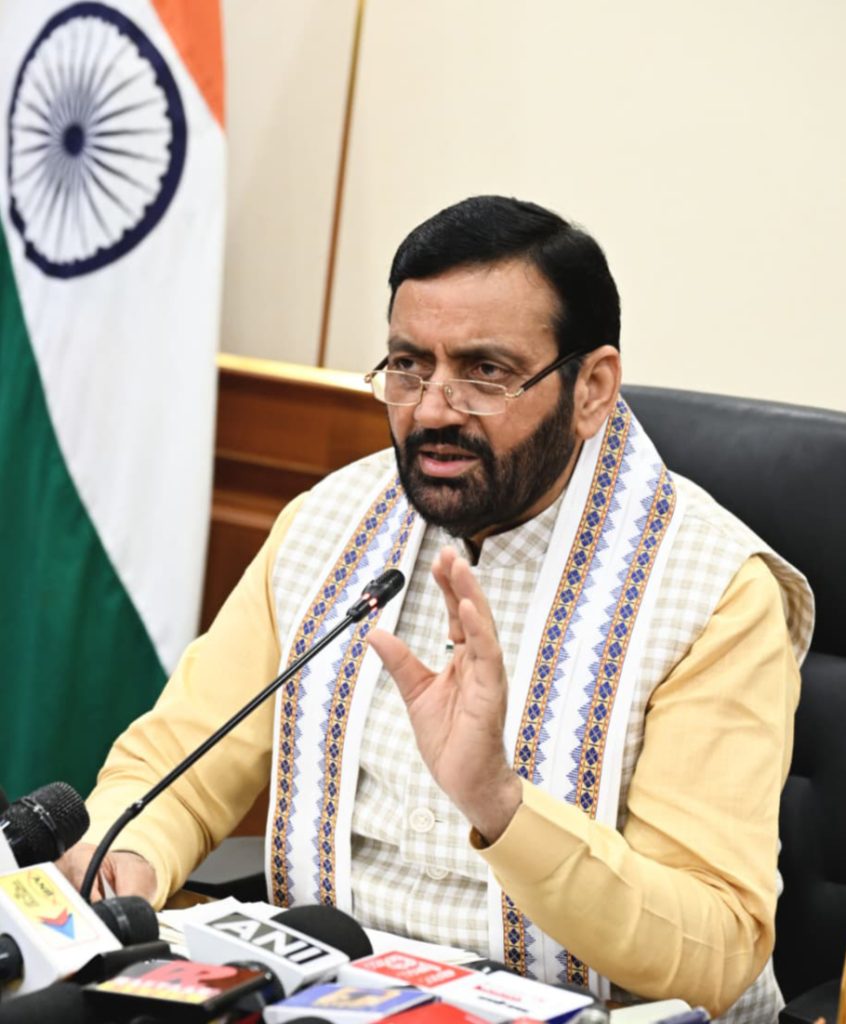
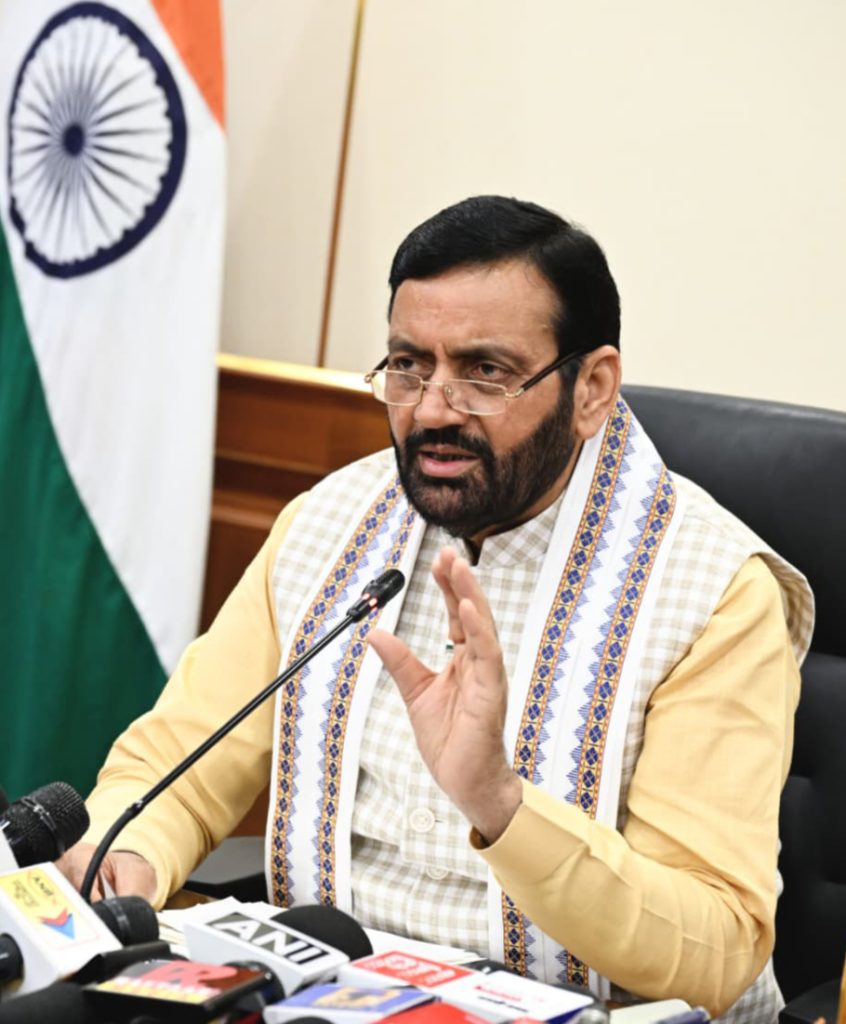
Haryana’s Chief Minister, Nayab Singh Saini, today launched two major digital initiatives by the Excise and Taxation Department, accelerating transparency, efficiency, and ease in governance and administration. The goal of these digital initiatives is to fully tech-enable departmental processes, deliver services to the public in a timely manner, and strengthen revenue management.

The Chief Minister launched the “Kar Hitaishi” mobile application developed by the department. This app provides a simple and confidential way for citizens to report GST evasion. Citizens can upload information regarding irregularities such as fake billing, incorrect input tax credit, unregistered businesses, non-issuance of bills, or hiding transactions, along with photos, videos, or documents. The app ensures that the identity of the informant is not visible to the relevant field officers. Upon receiving the information, departmental officers will carry out necessary investigations and actions.

The Chief Minister appreciated this initiative, stating that it would encourage voluntary reporting and strengthen transparency in GST administration.

Additionally, Nayab Singh Saini inaugurated six new online excise services. These services have been developed for permits related to ethanol, extra neutral alcohol (ENA), and denatured spirits. Now, businesses will be able to apply online for permits regarding the import and export of ethanol, ENA, and denatured spirits. In this system, applicants can track the status of their applications and download digitally signed permit letters.

It was informed during the meeting that, through the real-time dashboard, the movement of goods, the timeline of permits, and compliance will be monitored. This system will reduce paperwork, prevent misuse, and provide faster and more transparent services to industries.

The Chief Minister directed that other excise services, such as brand label registration and licensing modules, be made available online soon to further tech-enable departmental processes.

The Chief Minister also reviewed the functioning of the Excise and Taxation Department. The meeting included a detailed evaluation of the department’s revenue performance, enforcement actions, pending recoveries, and the progress of ongoing digital reforms in the GST, VAT, and excise sectors.

It was reported that Haryana recorded the highest growth in net SGST collection nationwide with a 21% increase, while the national average stands at 6%. In November 2025, the state’s net SGST collection reached ₹3,835 crore, marking a 17% increase compared to November of the previous year. For the current financial year, by November, the total GST collection stood at ₹83,606 crore, 7% more than the previous year, surpassing the national average of 5.8%. Based on increasing revenue, Haryana’s ranking has improved to the fourth position. Officials reported that there are 6,03,389 GST-registered taxpayers in the state, with an annual growth rate of 6.11% between 2018 and 2025.

During the meeting, the Chief Minister also reviewed the value-added tax (VAT) and CST. The Chief Minister was informed that VAT is applicable on six items in Haryana: petrol, diesel, liquor, PAG, CNG, and CST items. There has been a notable increase in VAT collection up to November 2025-26, largely due to the One-Time Settlement (OTS) Scheme-2025. The scheme led to a 60.99% increase in CST collection. After the scheme ended on September 27, 2025, the department launched a special recovery campaign, recovering ₹48.12 crore in October-November 2025.

Officials also reported that the department has developed a VAT monitoring dashboard, which tracks VAT payments in real time. The system automatically alerts field officers in case of delays, helping them take timely action. The Chief Minister instructed that all districts regularly use this dashboard to ensure greater efficiency in the department’s functioning.

It was reported that by November 30, 2025, excise revenue for the financial year 2025-26 had reached ₹9,370.28 crore, compared to ₹8,629.46 crore for the same period last year. The department presented details of district-wise and item-wise license fees, excise fees, bottling fees, permit fees, import duties, and VAT on indigenous liquor. The Chief Minister directed that districts with lower collections should increase monitoring, speed up inspections, and take timely corrective actions.

Additionally, assets worth ₹125 crore were seized, ₹46.66 crore was recovered during the current policy year, and an automatic interest calculation system for delayed license fee payments led to a mandatory recovery of ₹16.46 crore. The department also reported progress in the QR-based track-and-trace system, hologram certification, ANPR cameras and boom barriers at manufacturing units, telemetry-based real-time monitoring in distilleries, and the online licensing module.

The Chief Minister directed that these digital reforms be implemented swiftly, and their impact be regularly reviewed to ensure visible improvements in transparency, compliance, and service delivery. Appreciating the department’s revenue performance and digital reforms, the Chief Minister emphasized the state’s commitment to establishing a transparent, tech-driven, and citizen-friendly tax and excise administration, which will contribute significantly to the state’s economic growth.

The meeting was attended by the Chief Minister’s Principal Secretary Rajesh Khullar, the Commissioner and Secretary of the Excise and Taxation Department Ashima Barad, Commissioner of Excise and Taxation Vinay Pratap Singh, and other officials.

ETS to launch TOEFL iBT in January 2026

 
Sidnei Rodrigues de Souza, interacting with media

ETS, the global leader in educational assessment and creator of the TOEFL iBT test, offered educators and advisors a sneak peek into the enhanced TOEFL iBT, set to launch on January 21, 2026, during its TOEFL Experience Days event in Chandigarh. The event brought together leading educators, advisors, and partners for an immersive session highlighting the upcoming changes and the evolving role of the test in supporting globally mobile students.

Sidnei Rodrigues de Souza, Executive Director, Global Partnerships & Sales Management, ETS, explained the motivation behind the update. “We are updating both the content and the overall flow of the TOEFL,” he said. “The enhancements strengthen its connection to real-world communication, expand our test-prep portfolio for educators, and introduce adaptability by tailoring questions to each test taker’s proficiency level. The introduction of AI-powered scoring is expected to make evaluation even more precise.”

The enhanced test reflects ETS’s commitment to fairness, precision, and learner-centered assessment, enabling educators and advisors to better support students in a competitive global admissions landscape.

Chandigarh: A Strategic Launch Location

Punjab, and Chandigarh in particular, was chosen as one of the few regions worldwide for the early reveal. “We recognize the region’s importance, especially with growing interest among students in studying abroad,” Rodrigues de Souza added. ETS India currently operates three active test centers in Chandigarh, collectively managing a high candidate footfall and reinforcing ETS’s strong presence in northern India.

Participants at the event had hands-on exposure to the updated TOEFL iBT format, exploring improvements across each section. They attended focused sessions on the principles behind test design, fairness, scoring, and preparation strategies. Attendees also engaged directly with ETS experts to discuss institution-specific concerns and learn how the redesigned test supports students’ academic ambitions.

Omar Chihane, Global General Manager, TOEFL, ETS, highlighted the region’s significance for study-abroad aspirants. “Chandigarh continues to show strong growth in outbound student mobility, with many relying on TOEFL iBT scores to access top universities in the United States, Canada, the United Kingdom, Australia, and New Zealand,” he said. “The redesigned TOEFL iBT offers a fairer, more intuitive, and tailored experience, empowering our partners to support the next generation of globally mobile students.”

Teachers and partners also received classroom-ready resources, official preparation guidance through Study.com, and information on the TOEFL Practice Test and Official TOEFL Prep Course. The event created a collaborative space for Chandigarh’s education community to exchange insights, address evolving student needs, and strengthen regional partnerships to improve test-taker readiness across Punjab and Haryana.

MOST POPULAR

HOT NEWS