The revision of electoral rolls in West Bengal has sparked a controversy that had reached the Supreme Court of India, prompting the court to step in with an unusual remedy. Invoking its extraordinary powers, the court ordered the creation of special tribunals to hear appeals from voters whose names were excluded during the Special Intensive Revision (SIR) of electoral rolls.
What is the SIR?
The Special Intensive Revision (SIR) is a process carried out by the Election Commission of India to update and verify electoral rolls before elections. Electoral rolls — the official list of registered voters — must be periodically revised to ensure accuracy and prevent fraudulent voting.
During an SIR exercise, election authorities typically undertake several steps: removing duplicate entries, deleting the names of deceased voters, correcting errors in personal details, and verifying whether individuals listed on the rolls are still eligible to vote in a particular constituency.
In West Bengal, the recent SIR process assumed unusually large proportions. Officials identified nearly 60 lakh voters whose records required further scrutiny, placing them in what was described as an “unmapped” or disputed category. These voters were asked to submit documentary proof to establish their eligibility.
Given the scale of the exercise, the authorities deployed judicial officers to examine documents and determine whether individuals should remain on the electoral rolls.
Why it became controversial?
The revision process quickly became politically contentious. Opposition parties and several civil-society groups alleged that the verification exercise could lead to the removal of genuine voters from the electoral rolls, potentially affecting the democratic process in the state.
The government of West Bengal, led by Chief Minister Mamata Banerjee, also raised concerns about the manner in which the revision was being carried out. Banerjee accused election authorities of conducting the process without adequate transparency and safeguards.
As the controversy intensified, Banerjee launched a protest against the alleged deletion of voter names, arguing that the exercise risked disenfranchising large numbers of people.
The Election Commission of India, however, maintained that the revision was a routine administrative exercise aimed at ensuring that the voter list remained accurate and free of irregularities.
What was the legal problem?
The central issue before the court concerned the appeal mechanism available to voters whose claims were rejected during the verification process.
Judicial officers had been assigned the task of examining documents and deciding whether individuals qualified to remain on the electoral rolls. However, if a person’s claim was rejected, the existing framework allowed the appeal to be handled by Electoral Registration Officers (EROs)— administrative officials within the election machinery.
Petitioners argued that this arrangement was problematic because bureaucrats would effectively be sitting in appeal over decisions taken by judicial officers. Critics contended that such a system blurred the distinction between judicial and administrative authority and could undermine confidence in the process.
Given that millions of voters were affected by the SIR exercise, the absence of an independent appellate mechanism became a serious legal concern.
What did the Supreme Court say?
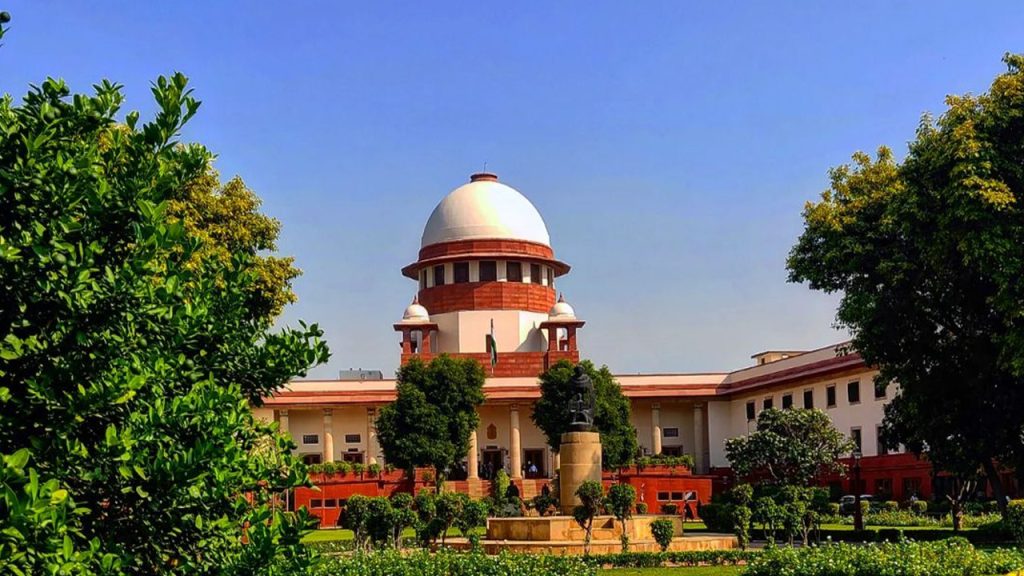
A Bench of the Supreme Court of India led by Chief Justice Surya Kant, along with Justices R Mahadevan and Joymalya Bagchi, decided to intervene.
Invoking its powers under Article 142 of the Constitution of India, which allows the court to pass orders necessary to ensure “complete justice,” the Bench directed that special appellate tribunals be set up to hear disputes arising from the SIR exercise.
These tribunals will consist of retired Chief Justices and former judges of the Calcutta High Courtand neighbouring High Courts. They will examine appeals from individuals whose claims for inclusion in the voter list were rejected.
What happens next?
Following the Supreme Court’s order, the Chief Justice of the Calcutta High Court is expected to recommend names of retired judges who will serve on the newly created tribunals.
Once notified, these tribunals will begin hearing appeals from voters who were excluded from the electoral rolls during the SIR process. Their decisions could determine whether thousands — and potentially millions — of voters are reinstated on the electoral rolls before future elections.
The ruling also had immediate political consequences. After the court’s intervention, Mamata Banerjee called off her protest, describing the decision as a “people’s victory.”
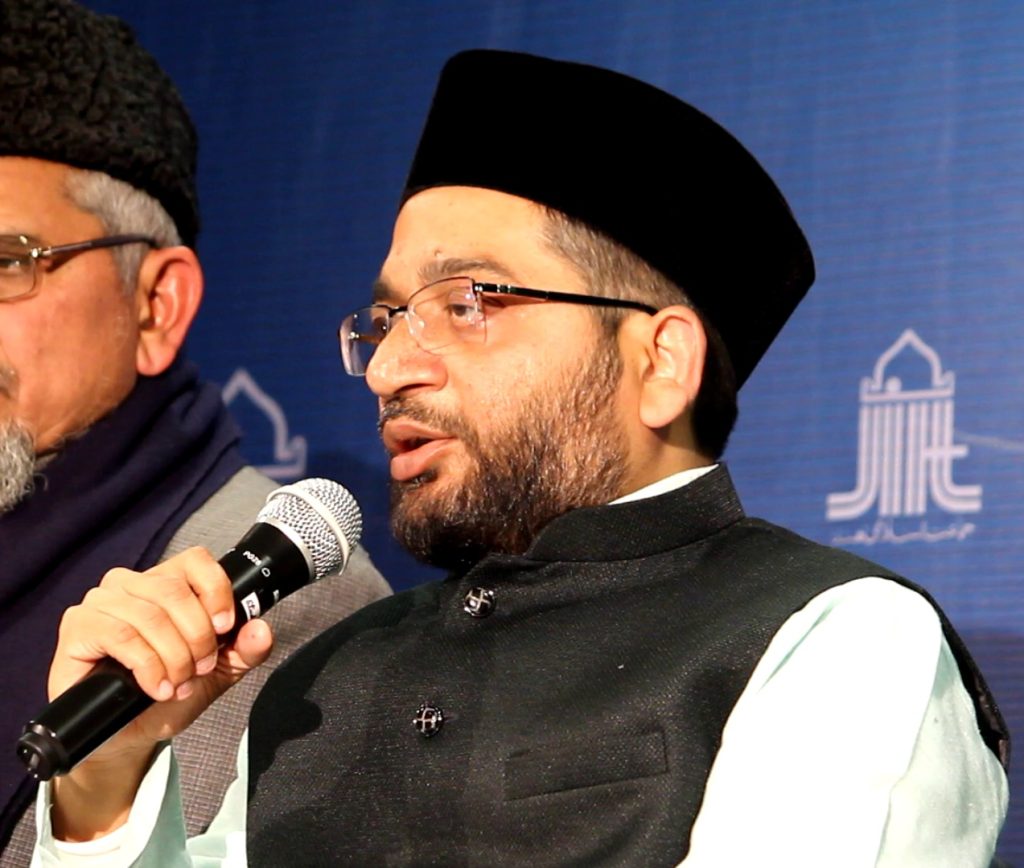
The President of Jamaat-e-Islami Hind (JIH), Syed Sadatullah Hussaini has strongly condemned the reported Pakistani airstrike on a hospital in Kabul, Afghanistan, which resulted in the loss of hundreds of innocent lives and left many others injured.
In a statement to the media, Syed Sadatullah Hussaini said, “We strongly condemn the alleged airstrike by Pakistan on a drug rehabilitation hospital in Kabul, killing more than 400 people and injuring over 250. We express our deep condolences to the families of the victims and solidarity with the people of Afghanistan during this tragic time. The attack reportedly took place at night and caused extensive destruction to a facility that housed a large number of vulnerable patients. Hospitals are places of care and protection, and any attack on such institutions constitutes a grave violation of international humanitarian principles. The loss of life in such circumstances, especially of those who were already in distress and under treatment, shows the devastating human cost of armed conflict.”
Syed Sadatullah Hussaini stated, “This tragic incident comes amid rapidly escalating tensions between Pakistan and Afghanistan, with repeated cross-border strikes and accusations further worsening the situation. The ongoing conflict between the two neighbouring countries, which share a long and sensitive border, risks pushing the region into deeper instability. The destruction of civilian infrastructure and the rising number of casualties underline the need for immediate restraint and de-escalation by all parties involved.”
The JIH President further emphasized, “War between these two neighbouring countries must be avoided at all costs and should not be allowed to ignite under any circumstances. Maintaining regional stability is of utmost importance and any escalation would have serious consequences for the wider region. All issues and differences must be resolved through dialogue and negotiation, and not through the use of force or military confrontation. We call upon both Pakistan and Afghanistan to exercise maximum restraint and avoid any actions that may lead to further loss of innocent lives. We urge the international community to take immediate steps to ensure an impartial investigation into the incident so that the truth is established and accountability is ensured. There is an urgent need for renewed diplomatic efforts to de-escalate tensions and restore peace in the region. Lasting peace can only be achieved through justice, respect for human dignity, and adherence to international law, not through war and armed conflict.”
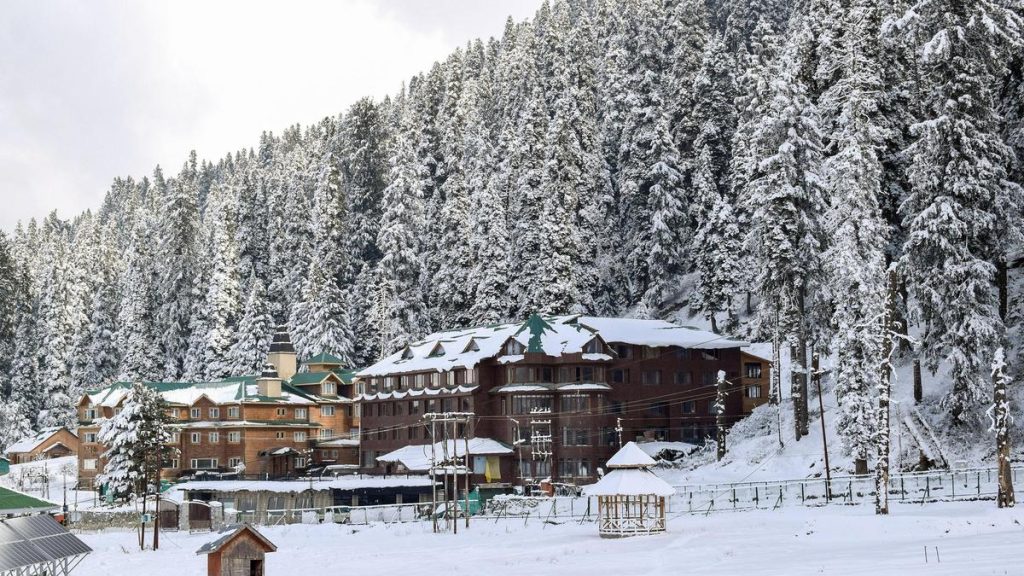
Fresh snowfall in the higher reaches and rainfall across the plains marked the return of erratic weather in Jammu and Kashmir on Wednesday following the impact of another Western disturbance.
According to the Meteorological Department (MeT), the change in weather has led to a significant drop in temperatures, with more rain and snow expected over the next two days.
Light snowfall was reported from several high-altitude areas, while rainfall in the plains caused minor disruptions to vehicular movement in some areas.
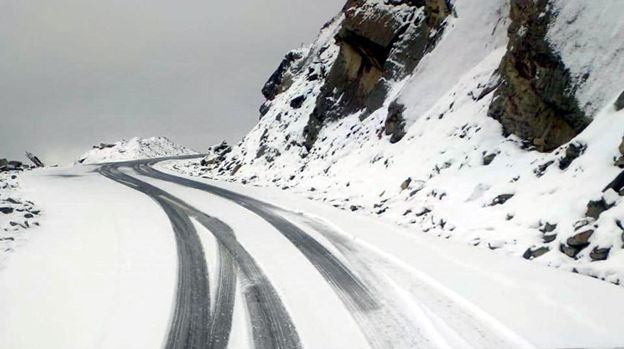
Tourist destinations including Gulmarg and Sonamarg received light snowfall. Snow was also reported from Pir Ki Gali along the Mughal Road, Zojila Pass, Razdan Top, Gurez, Sinthan Top, Sadhna Top and Margan Top, officials said.
Due to snow accumulation, several key roads remained closed. The Gurez–Bandipora road, Sinthan–Kishtwar road and Margan Top–Warwan road have remained shut for the past four days, officials said.
However, the Mughal Road was reopened around noon after snow clearance operations, including at Pir Ki Gali. Snow clearance work is continuing on other high-altitude routes.
Traffic on the Srinagar–Leh National Highway also remained suspended due to snowfall at Zojila Pass.
Meanwhile, intermittent rainfall was recorded across many parts of the Union Territory. Srinagar recorded 5 mm of rainfall in the past 24 hours, while Pahalgam received 5.4 mm, Kupwara 3.5 mm, Kokernag 0.5 mm and Qazigund 1.8 mm, officials said.
In the Jammu region, Jammu city recorded 4.6 mm of rainfall, Banihal 3.5 mm, Batote 7.6 mm, Katra 13 mm and Bhaderwah 0.8 mm. Higher reaches of Kishtwar also experienced light snowfall.
The Ladakh region also witnessed fresh precipitation, with snowfall reported in higher areas of Leh, Kargil, Drass and Nubra.
The wet weather conditions have led to a noticeable drop in temperatures across Jammu and Kashmir and Ladakh. Srinagar recorded a maximum temperature of 8.4°C, which is 7.6°C below normal, while the minimum temperature settled at 6.7°C, about 1.7°C above normal.
The MeT department has forecast that the unsettled weather conditions are likely to continue, with light to moderate rain or snowfall expected at several places in Jammu and Kashmir till March 20.
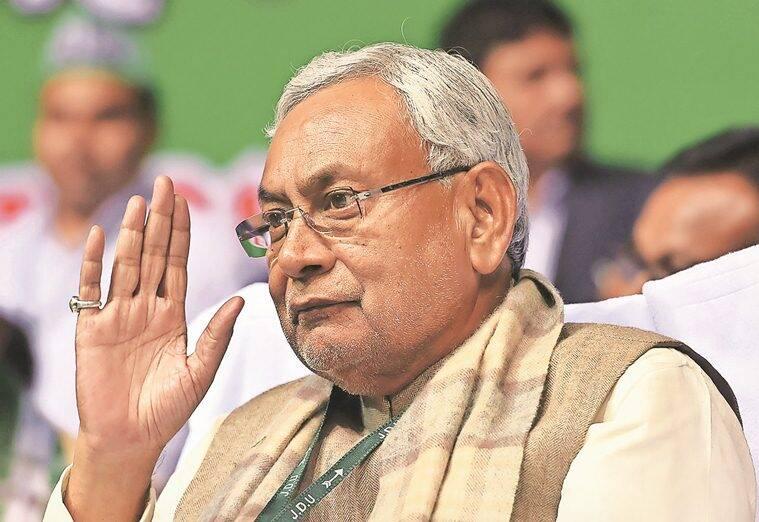
The decision of Nitish Kumar to file nomination papers for the Rajya Sabha appears to mark the closing chapter of one of the most consequential political careers in modern Bihar. For nearly two decades, Kumar shaped the state’s politics as chief minister—holding the office a remarkable ten times through shifting alliances, political recalibrations, and strategic adaptability.
His move to Parliament now signals a major transition not only for his party but for the political balance in Bihar. Behind the decision lies a combination of electoral arithmetic, health concerns, and the growing dominance of the Bharatiya Janata Party within the state’s ruling alliance.
The changing power equation within the National Democratic Alliance in Bihar has been evident for some time. In the 2020 Bihar Legislative Assembly election, the BJP secured 74 seats while Kumar’s Janata Dal (United) managed only 43. That result marked a turning point. For the first time in years, the BJP emerged as the larger partner in the alliance, fundamentally altering the internal dynamics of governance in the state.
The shift became even more pronounced in the 2025 Bihar Legislative Assembly election, when the BJP increased its tally to 89 seats while the JD(U) improved to 85 but still remained marginally behind its ally. Though the numbers suggested a closer contest, the broader trend was unmistakable: the BJP had consolidated its position as the principal political force in Bihar.
Within this evolving landscape, Kumar’s role increasingly resembled that of a senior statesman rather than the undisputed center of power. Another factor shaping the transition is the personal dimension. In recent months, concerns about Nitish Kumar’s health and stamina have surfaced repeatedly in political circles.
At 74, after decades of active politics and repeated stints in the chief minister’s office, the demands of daily governance in a complex state like Bihar are immense. Moving to the Rajya Sabha allows Kumar to remain politically relevant while stepping back from the intense pressures of state administration.
The development also reflects the broader political strategy of Narendra Modi and Amit Shah, who have systematically expanded the BJP’s footprint across states where it once depended heavily on regional allies.
In Bihar, the party has steadily strengthened its organizational base, leadership bench, and electoral machinery. With stronger seat tallies in consecutive elections, the BJP now finds itself well positioned to take command of the state’s political direction.
Nitish Kumar’s move to the Rajya Sabha therefore clears the way for a leadership transition that could see the BJP assert a more direct role in governing Bihar. Regardless of how the transition unfolds, Nitish Kumar’s legacy in Bihar remains significant.
When he first assumed office in 2005, the state faced deep governance challenges—poor infrastructure, weak law and order, and limited development indicators. Kumar’s early years in power were marked by efforts to improve roads, expand education initiatives, and strengthen administrative functioning.
His political journey, however, was equally notable for its fluid alliances. Over the years he partnered with and later opposed the BJP, aligned with the Rashtriya Janata Dal, and eventually returned to the National Democratic Alliance. These shifts reflected both ideological positioning and tactical survival in Bihar’s intensely competitive politics.
For supporters, this adaptability demonstrated political pragmatism; critics saw it as opportunism. Yet few dispute that Kumar remained one of the most influential figures in the state’s political landscape for nearly two decades. Nitish Kumar’s transition to the Rajya Sabha marks more than the end of a personal innings—it signals a generational and political shift in Bihar.
The BJP now appears poised to exercise greater authority within the alliance, potentially reshaping governance priorities and leadership structures. At the same time, opposition forces will seek to recalibrate their strategies in a post-Nitish political environment.
For Bihar’s electorate, the moment represents a turning point. The state is moving from an era defined largely by one leader’s political maneuvering to a new phase where party strength—particularly that of the BJP—may play a more decisive role.
In many ways, Nitish Kumar’s move to Delhi closes one of the most enduring chapters of Bihar politics while opening another whose contours are only beginning to take shape.
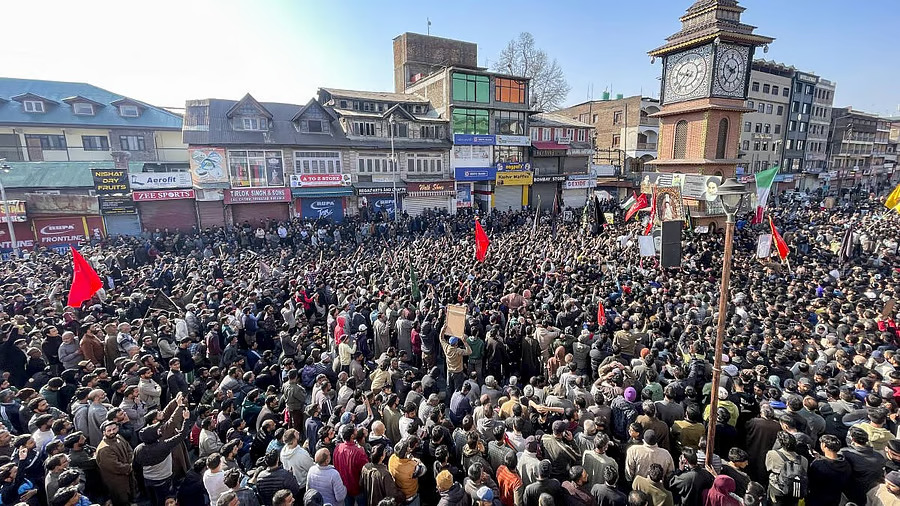
The killing of Iran’s supreme leader Ali Khamenei triggered a sensitive wave of protests in Kashmir, the first such large-scale demonstrations in the Valley since the revocation of Article 370 in 2019.
Authorities imposed curfew-like restrictions and suspended internet services in parts of Srinagar after demonstrations erupted across the city and nearby districts including Budgam. Protesters condemned the joint United States–Israel attack on Iran, while security forces responded with tear gas and baton charges to disperse crowds. At least 14 people, including security personnel, were injured during the clashes, according to officials.
The protests were particularly intense in several Shia-majority localities of Srinagar, where strict curbs on movement were imposed and communication services were disrupted. Schools were temporarily shut and large deployments of police and paramilitary forces were seen across the city. Lal Chowk, Srinagar’s historic commercial centre, was sealed with barricades and concertina wire as authorities attempted to prevent further gatherings.
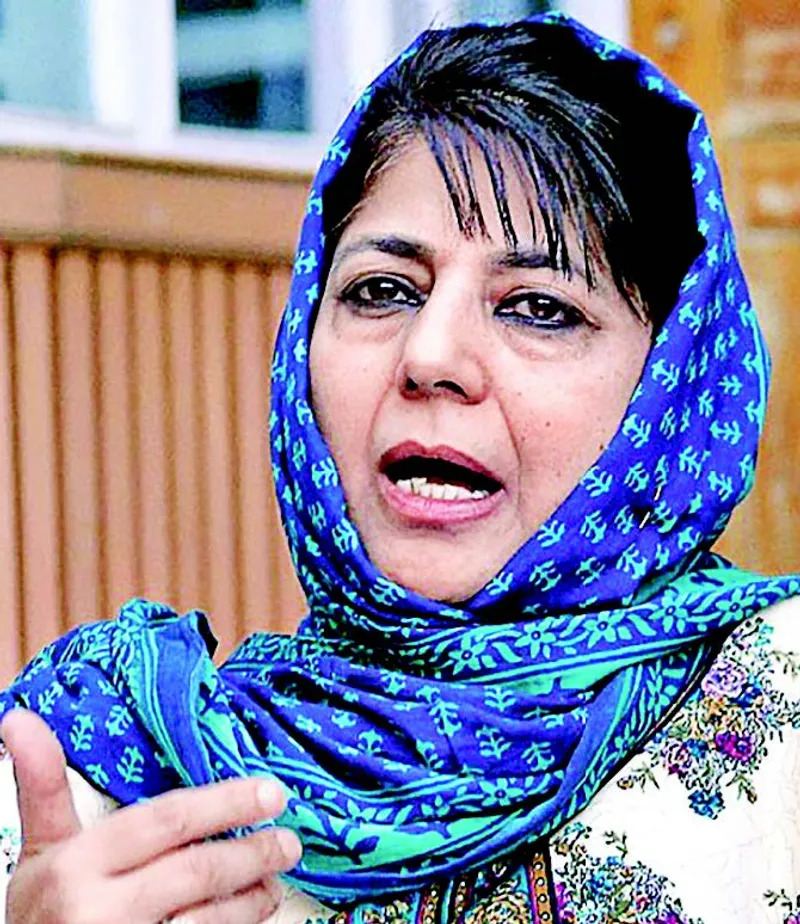
The shutdown call was supported by several political leaders, including the Valley’s chief cleric Mirwaiz Umar Farooq and the president of the People’s Democratic Party, Mehbooba Mufti.
Addressing reporters at her party office in Srinagar, Mufti publicly burnt portraits of Donald Trump and Benjamin Netanyahu while criticising New Delhi’s silence over the attack on Iran.
But Mufti’s remarks went beyond immediate politics. She reminded reporters that Iran had once stood by India on the Kashmir issue at a critical moment in international diplomacy.
“We had very strong ties with Iran,” she said. “When every Muslim country sided with Pakistan on Kashmir, Iran understood the Indian stand and supported it.”
Her comment refers to a little-remembered but important episode in 1994 when Iran played a decisive role in preventing a United Nations resolution against India on Kashmir.
The Geneva crisis of 1994
In early 1994, Pakistan launched a major diplomatic campaign against India at the United Nations Commission on Human Rights in Geneva.
At the time, Pakistan, led by Prime Minister Benazir Bhutto, sought to push through a resolution accusing India of human rights violations in Kashmir. The initiative was backed by members of the Organisation of Islamic Cooperation and had the potential to significantly internationalise the Kashmir dispute.
If the resolution had passed, it could have triggered international investigations into India’s conduct in the region and possibly opened the door for sanctions or further diplomatic pressure.
The government of P.V. Narasimha Rao responded with an intense diplomatic campaign to prevent the move.
In a rare display of political unity, Rao asked opposition leader Atal Bihari Vajpayee to lead the Indian delegation in Geneva. The delegation also included senior political figures such as Farooq Abdullah and Salman Khurshid.
The message India wanted to send to the world was clear: on Kashmir, the country spoke with one voice across party lines.
Yet the most decisive diplomatic manoeuvre was happening quietly behind the scenes.
The Tehran mission
At the time, Iran was widely expected to support Pakistan’s resolution through the OIC bloc.
Recognising the importance of Tehran’s position, Rao decided to open a backchannel with Iran. He dispatched India’s external affairs minister Dinesh Singh, who was seriously ill and hospitalised, on a secret mission to Tehran.
The journey was extraordinary even by diplomatic standards. Singh reportedly left his hospital bed in New Delhi to carry a personal message from Rao to Iranian president Akbar Hashemi Rafsanjani.
Upon arriving in Tehran, Singh held a series of meetings with senior Iranian leaders including foreign minister Ali Akbar Velayati and other top officials. During these discussions, he briefed them extensively on India’s position regarding Kashmir and warned that allowing the issue to be internationalized at the United Nations would set a precedent for Western intervention in regional disputes.
India’s argument appeared to resonate with Tehran.
Iran had its own reasons to be wary of Western-led human rights pressure mechanisms and preferred that disputes in the region be resolved bilaterally rather than through international intervention.
Before Singh left Tehran, Iranian leaders conveyed a message to New Delhi that they would take steps to ensure India was not diplomatically harmed.
The resolution collapses
When the Kashmir resolution was taken up in Geneva, Pakistan expected strong support from Islamic countries within the OIC.
But events unfolded differently.
Iran declined to support the move to table the resolution. Because many OIC positions rely on consensus among member states, Tehran’s refusal disrupted Pakistan’s diplomatic calculations.
Several other countries, including Indonesia and Libya, also backed away from supporting the initiative. With Iran and China unwilling to support the proposal, Pakistan realised that the resolution would likely fail if put to a vote.
On 9 March 1994, just before the vote was scheduled, Pakistan withdrew the resolution.
The outcome was widely viewed as a major diplomatic victory for India. Pakistan’s most serious attempt to internationalise the Kashmir dispute at the UN forum had collapsed.
Many observers later concluded that Iran’s shift in position was one of the key factors behind the outcome.
Strategic consequences
The Geneva episode had wider geopolitical implications.
Iran’s decision to block the move strained relations between Tehran and Islamabad at the time. In the years that followed, Iran and Pakistan increasingly diverged on regional issues, particularly in Afghanistan.
India and Iran, meanwhile, found common ground in supporting the anti-Taliban Northern Alliance during the late 1990s.
Energy ties also deepened between the two countries. For years, Iran remained a significant supplier of crude oil to India, often offering favourable payment terms even during periods when Tehran faced international sanctions.
It is this period of cooperation that Mehbooba Mufti referred to when she said Iran had once supported India on Kashmir and even supplied oil “on loan”.
A complex relationship
Despite that diplomatic episode, relations between India and Iran have not always been smooth.
Iranian leaders, including Khamenei himself, have occasionally criticised India over the situation of Muslims in Kashmir. Such remarks have sometimes prompted diplomatic protests from New Delhi.
At the same time, India has often tried to maintain a careful balance in its ties with Iran, particularly given Tehran’s tense relations with the United States and Israel.
In recent years, however, India’s strategic alignment has increasingly tilted toward Washington and its partners in the Middle East.
A changing geopolitical equation
The latest crisis in Iran could further reshape regional dynamics.
If political change in Tehran eventually produces a government more closely aligned with the United States, it could alter Iran’s diplomatic posture across several regional issues, including relations with India.
For New Delhi, such a shift could potentially remove one of the key constraints in its Middle East diplomacy, the need to balance relations between Iran on one side and partners such as the United States and Israel on the other.
Some analysts believe that a pro-Western leadership in Tehran might also adopt a more pragmatic approach toward India, particularly given New Delhi’s growing economic and strategic influence.
In that sense, the protests in Kashmir over Khamenei’s killing are unfolding against a much larger geopolitical backdrop.
They have also revived memories of a largely forgotten moment in diplomatic history, when Iran, at a critical moment in 1994, quietly helped India prevent the Kashmir dispute from being internationalised at the United Nations.
Three decades later, the region’s strategic alignments may once again be shifting. Whether the next phase of Iran’s politics strengthens or weakens its relationship with India remains uncertain. Much depends on the outcome of the war on the US and Israel.
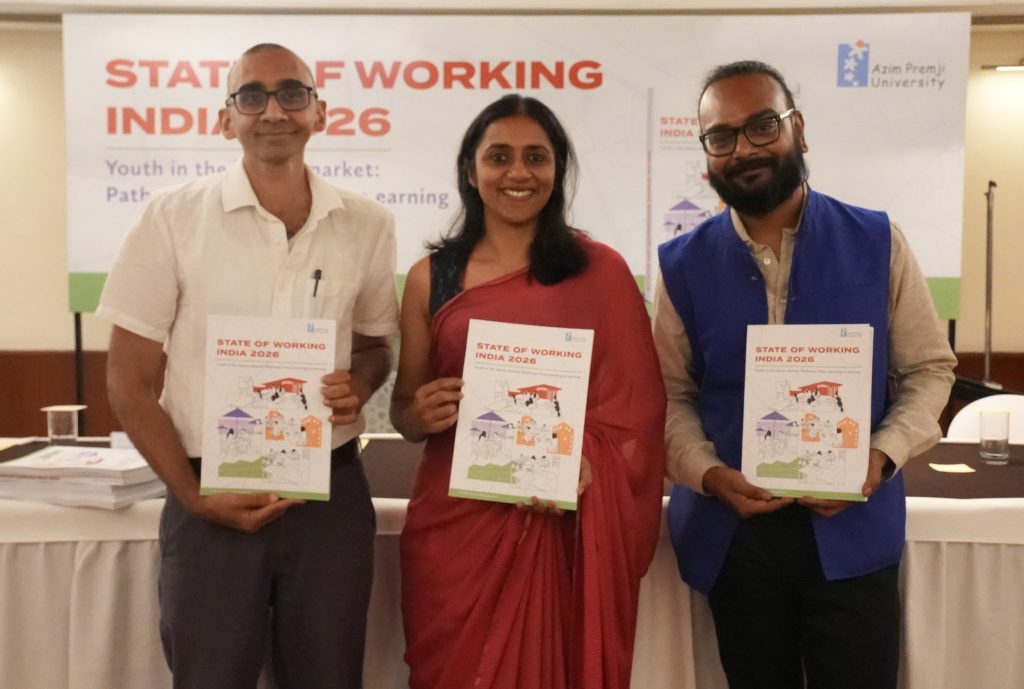
India has made substantial progress in expanding access to higher education for its young (15- to 29-year-olds) population, ensuring a movement out of agriculture into industry and services, and reducing gender and caste-based disparities, according to the ‘State of Working India 2026’ report.
However, challenges remain and the extent to which the large, increasingly educated, and aspirational cohort is absorbed into the labour market will determine whether India’s demographic dividend translates into an economic dividend.
“More young people today are educated, informed, and ambitious than ever before. These are real achievements of which we can be proud,” noted Indu Prasad, President, Azim Premji Universities.
The report draws on official databases dating back four decades to examine how youth participation in education and employment has changed, how effectively we have leveraged this demographic dividend, and the challenges and opportunities of integrating them into the workforce.
Rosa Abraham, lead author of the report and Associate Professor of Economics at Azim Premji University, said, “The report traces the journey of a young worker – from education to job search and employment, and how this transition has evolved over the last forty years. We hope the report will lay out some of the foundational work that will contribute to a better understanding of the challenges in this transition and enable coordinated policymaking.”
Key Findings
• Demographic dividend nearing peak: India’s working-age population share will begin declining after 2030. The pace of job creation in the coming decades is critical to ensure that the demographic dividend translates into an economic one. • Rising educational attainment: Youth education levels have increased significantly over four decades, especially among women. India’s tertiary enrolment rate (28%) is comparable to that of countries with similar per capita incomes. • Drop in male tertiary enrolment: The share of young men in education fell from 38% in 2017 to 34% in late 2024, with a large share citing the need to support household incomes as a reason for their withdrawal. • Expansion of higher education institutions: College availability increased from 29 per lakh youth (2010) to 45 (2021), mainly driven by private institutions. However, regional disparities remain large. • Teacher shortages: Faculty growth has not matched rising student numbers. Against AICTE norms of 15–20 students per teacher, private colleges average 28 and public colleges 47. Hiring and filling vacancies remain crucial to ensure that learning outcomes are not compromised by resource constraints. • Rapid expansion of vocational institutes: The number of Industrial Training Institutes (ITIs) has grown by nearly 300% since the 2010s, largely due to private providers. But, institutional quality, especially among private ITIs, has fallen. • Higher education has become increasingly democratized, but financial barriers remain: Between 2007 and 2017, the share of students in tertiary education who belong to the poorest households increased from 8 percent to 15 percent. • Financial barriers in accessing professional courses: Students from richer households are far more likely to pursue engineering and medicine, as the cost of these degrees often exceeds the annual per capita expenditure of poorer households. • Difficult education-to-employment transition: Graduate unemployment among the 15- to 29-year-olds remains high – nearly 40% among the 15- to 25-year-olds, and 20% among the 25- to 29-year-olds; and, only a small share secure stable salaried jobs within a year of graduation. • Strong graduate wage premium: Graduates earn roughly twice as much as non-graduates at entry, and the earnings gap widens over their careers. • Stagnating male graduate earnings: Entry-level salaries for young male graduates have slowed in growth since 2011, while gender gaps in graduate earnings have narrowed. • Declining caste and gender occupational segregation: Younger cohorts are less concentrated in occupations traditionally linked to their caste or gender. • Migration as a labour market response: Youth migration helps balance regional disparities – poorer states and those with a younger population remain major labour sources, while richer states with a predominantly older population rely increasingly on migrant youth.
A Tehelka SIT report reveals how illegal drugs are readily available in Rajasthan’s towns, with local peddlers, resort staff and tour operators facilitating access as narcotics from across the Pakistan border find their way into the desert state.
The opening scene of hit Bollywood film Udta Punjab shows drugs from Pakistan being tossed into the fields of Punjab. The film captured the scale of the drug menace in the border state. But today, the problem is no longer confined to Punjab. In neighbouring Rajasthan too, drugs have quietly spread across the state’s towns and districts.
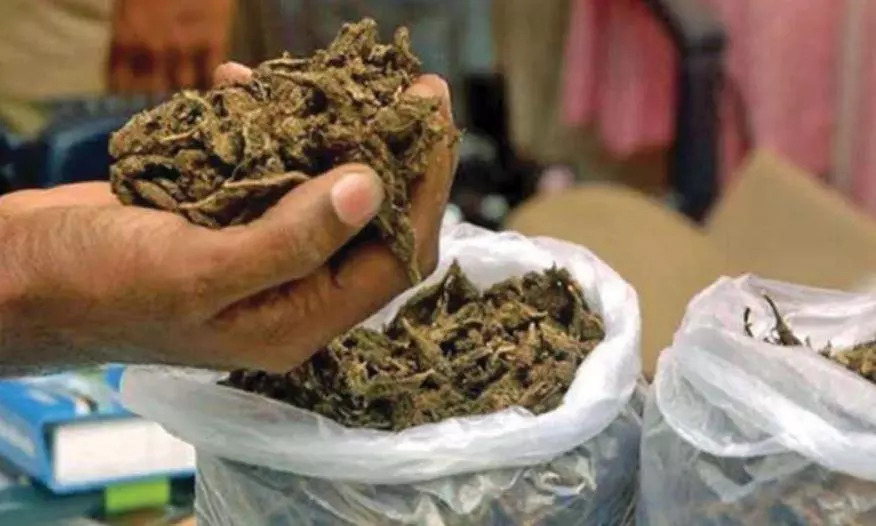
In the towns of Ajeetgarh and Mandawa in Jhunjhunu district, Tehelka found how easily drugs are available. During its investigation, our reporter discovered that ganja and other narcotics are sold openly, with suppliers, middlemen and even locals aware of the thriving trade.
“I consume ganja [marijuana or weed] daily, three-four times a day. I purchase ganja from a local lad once every twenty days or in a month. I buy 250 grams of ganja from the supplier, who claims that the ganja is from Manipur,” said Gopal Saini, a drug peddler, to Tehelka’s undercover reporter in Rajasthan.
“I will supply you both ganja and afeem [opium] for your party of 250 people in Rajasthan. If you take 2 kg ganja and 2 kg opium, the total cost will be Rs 5 lakh. For that, you have to pay me at least Rs 4 lakh in advance,” Gopal told Tehelka.
““The afeem I will give you is from Pakistan. It comes to Jaisalmer and Jodhpur after being smuggled from Pakistan into India,” said Gopal speaking to Tehelka.
“While talking to me over the phone, use code words, like wood for ganja and tea leaves for afeem. And please see that I should not get into any trouble,” Gopal told Tehelka’s reporter.
“I can bring ganja for you from the drug peddler. But I cannot take you there with me; otherwise the peddler will get suspicious, and may not give ganja to me,” said Mohit Kumar, a resort employee in Rajasthan, to Tehelka’s reporter.
“Some guests coming to my resort, and drivers carrying foreigners in their cabs and staying at our resort, ask for ganja. The staff of the resort ask me to bring ganja for them. It takes half an hour for me to bring ganja to the resort. Several times, on the demand of the guests, I have brought ganja for them. The cost is Rs 450 for 25 grams,” Mohit told Tehelka.
“Had you asked me for ganja in the afternoon today, I would have arranged it for you by now. Now, the issue is that the person who brings ganja has gone to attend a wedding. Next time when you come, inform me in advance, and I will arrange ganja for you,” said Pooran Singh, a bar manager at a resort in Rajasthan, to Tehelka’s reporter.
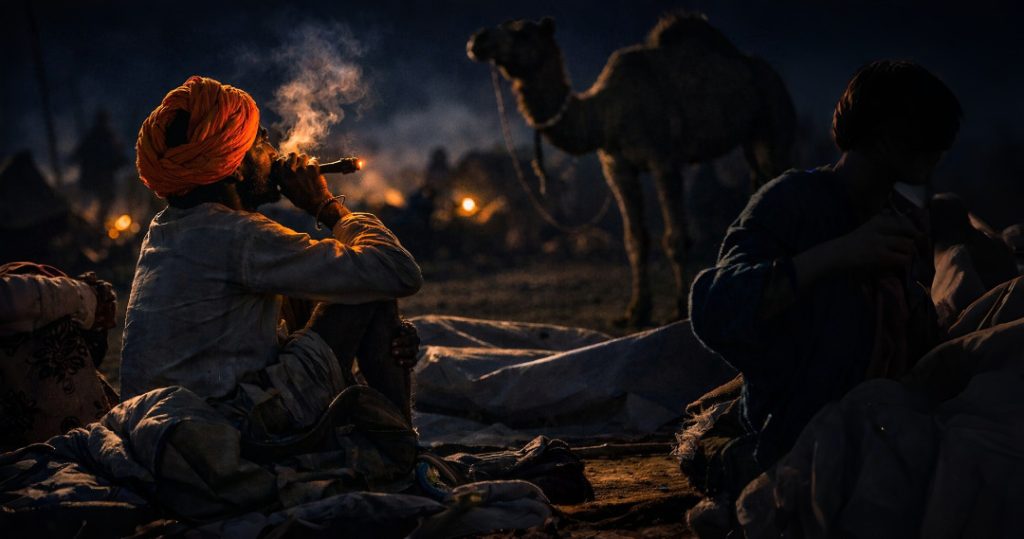
“You will get as much ganja as you want. Ganja is easily available in this town in Rajasthan. Just go and you will see people sitting on the roadside enjoying ganja. If you ask them, they will give it to you,” said Gopal Singh, a camel cart owner in a town in Rajasthan.
“Film stars ask for drugs when they come for shooting in this Rajasthan town. But they don’t ask directly; their staff members ask on their behalf. Since we arrange other things for them, we arrange drugs for them as well,” said Sandeep Singh, a senior tour guide in a town in Rajasthan, to Tehelka.
How easily illegal drugs are available in Rajasthan’s towns of Ajeetgarh and Mandawa can be judged from the above excerpts. What to talk about Ajeetgarh and Mandawa, towns like Jaisalmer, Jodhpur, Sri Ganganagar, Barmer and Bikaner have been witnessing a growing drug menace. It is said that more than 20 percent of the entire population of Rajasthan is involved in substance abuse. With the result that the term “Udta Rajasthan” [Flying High Rajasthan] has emerged in recent years, drawing parallels with the drug crisis depicted in the film Udta Punjab.
Rajasthan, the desert state, has replaced Punjab as the main entry point for narcotics supplied by Pakistani gangs, who use drones to send consignments across the border. Pakistani narco gangs send multiple drones along the long border every night. The drones are cheap—Rs 10,000 to Rs 15,000 each. Drugs fetch huge returns. Losing a few drones is just a small operational expense for the smugglers.
The film Udta Punjab, starring Shahid Kapoor, opens with a scene that shows drugs from Pakistan making their way into the fields of Punjab. The state is also used as a transit route for supplies to other states, such as Rajasthan and Haryana. Presently, drugs coming from Pakistan into Rajasthan through its border towns are supplied across the entire state.
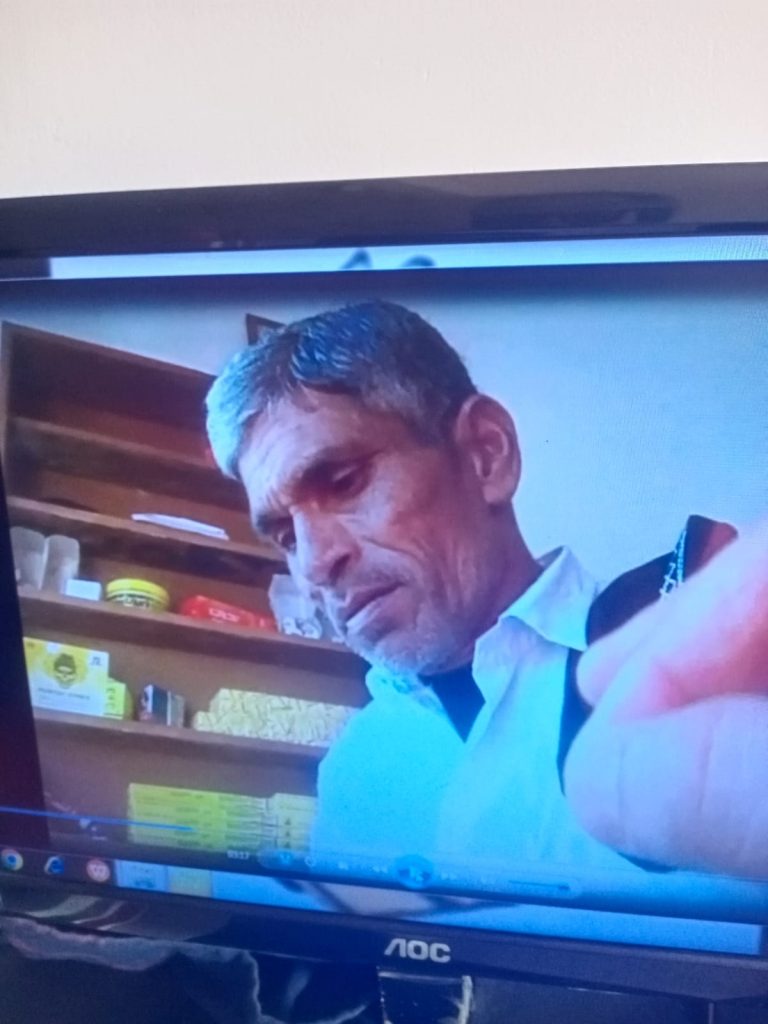
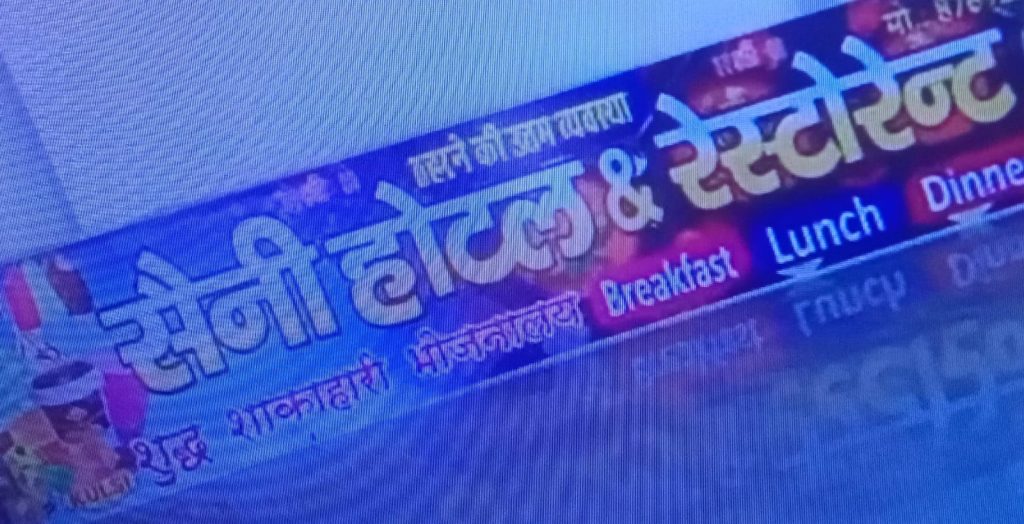
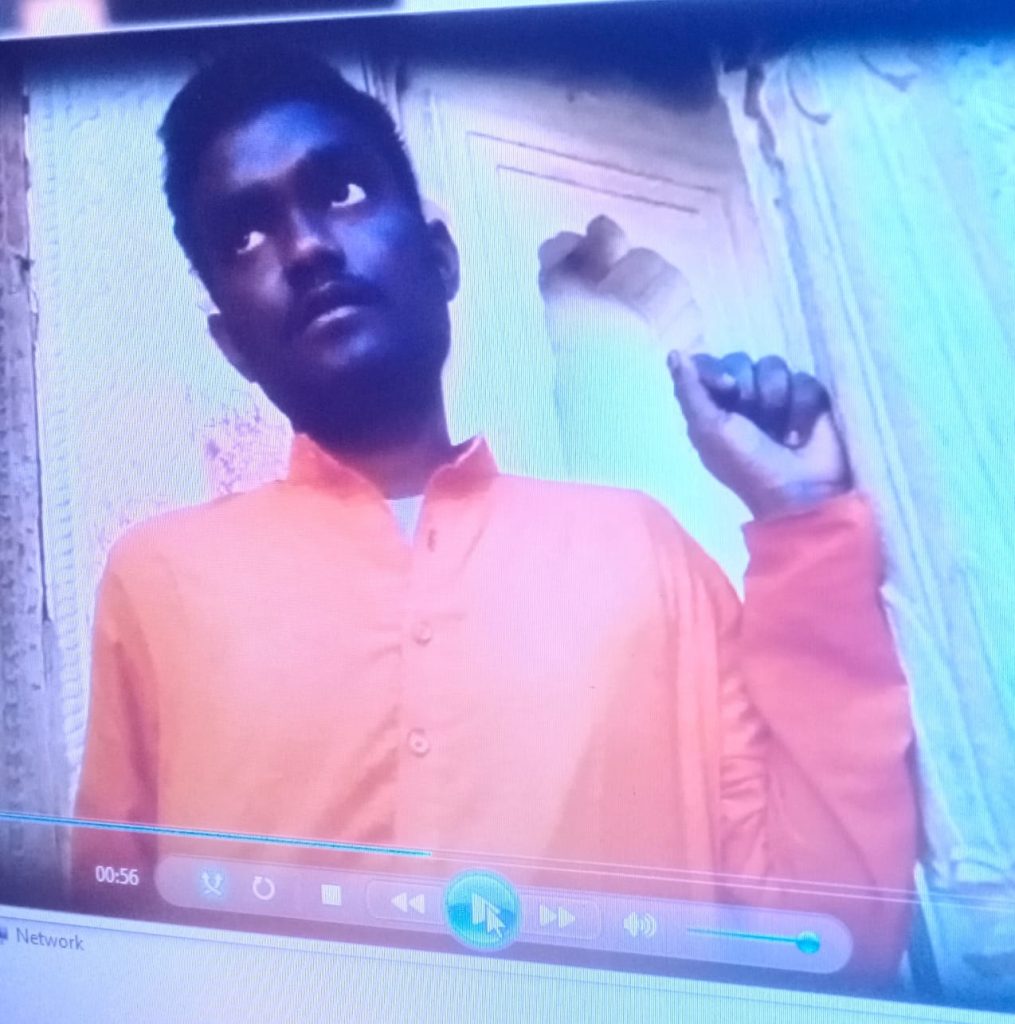
Tehelka’s reporter witnessed how drugs are sold openly on the streets of Ajeetgarh and Mandawa in Jhunjhunu district, in the Shekhawati region of Rajasthan. During the investigation, Tehelka’s reporter met Gopal Saini in Mandawa, who runs a restaurant in his name, Saini Hotel & Restaurant. As instructed by the source, Tehelka approached Gopal Saini and asked for illegal drugs.
Gopal, after an initial hesitation, as we were strangers to him, confessed that he sells ganja from his restaurant. He said he himself consumes ganja three-four times a day after purchasing it from a local supplier. Saini said he buys 250 grams of ganja for himself every twenty days or once a month. According to Saini, the supplier sells him ganja from Manipur.
In the following chat with Tehelka’s reporter, Gopal Saini speaks openly about his use of ganja.
[This exchange shows how casually the drug trade is discussed. A local user talks freely about supply sources and regular use. It emerges that ganja from distant states reaches small Rajasthan towns without much difficulty.]
In the chat below, the reporter, posing as a customer, tells Gopal about a purported party in Mandawa where 200–250 people are expected to assemble and asks if ganja can be arranged in large quantities. Gopal replies without hesitation. He says he has a supplier and can arrange as much as required. Even 4–5 kg, he says, can be procured if informed in advance. He also mentions the price of ganja available with him.
Reporter- Accha suno meri baat, hamari ek party hai 26-27 tareekh mein yahin Mandawa Rajasthan mein; to hame chahiye ganja badi maatra mein.
Gopal- Kitna chahiye?
Reporter- Kitna dilwa saktey ho?
Gopal- Kitna, phir bhi?
Reporter- 200-250 log hain.
Gopal- Bata dena, dilwa denge
Reporter- Hai aapke paas banda? Supplier hai?
Gopal- Hai.
Reporter- Kitne ka mil jayega, 200-250 logon ke liye, kitna hona chahiye aapke hisab se?
Gopal- Jitna aap kahao.. 1 kg, 2kg, 5 kg?
Reporter-1 kg, 2kg, 3kg!?
Gopal- Jitna aapko chahiye utna bata dena, usi hisab se mangwa dunga.
Reporter- 4-5 kilo bhi mil jayega?
Gopal- Mil jayega.
Reporter- Kya rate hoga?
Gopal- Dekho, ye hai mere pass 250 rupees ka 10 gram.
[This dialogue shows how easily large quantities of ganja can be arranged through local contacts. A simple request for a party turns into a ready offer of several kilograms. It emerges that supply networks operate quite openly. Such casual ease for procuring drugs should worry authorities.]
When asked for his phone number, Gopal was initially reluctant to share it with us. Later, however, he yielded and gave us his number, reassured that we were customers seeking illicit drugs for an upcoming party at a resort in Mandawa. Gopal also told us that a similar party had recently been organised in Mandawa.
Reporter- To aap mujhe apna number de do… mujhe chahiye 200-250 logon k liye.
Gopal- Hum number nahi de saktey. Ye meri dukaan hai, yahan mujhse baat karo.
Reporter- Lekin hum to chale jaayenge, hum to 26-27 ko aayenge, to mein pata kaise karunga aapse?
Gopal- Nahi bhaiyya darr lagta hai.
Reporter- Whatsapp par baat kar lenge kisi aur tareeke se?
Gopal- Chalo theek hai.
Reporter- Hame chaiye 200-250 logon ke liye, party hai.
Gopal- Accha peeche ber bhi party hokar gayi thi.
Reporter- Kahan?
Gopal- Dessert mein. Aapki kahan hai, mere ko maloom nahi hai?
Reporter- Hamari bhi wahin hai dessert mein.
Gopal- 5-7 din pehle bhi hokar gayi thi yahan se, 15 din pehle maan lo aap.
Reporter- Accha, 1-2 Feburary ko?
Gopal- Haan.
[The chat shows the caution used by small suppliers while dealing with unknown buyers. Yet it also reveals how drugs are quietly arranged for large gatherings. It emerges that such supplies are not unusual in the area.]
As we probed further, Gopal confessed that apart from ganja he could also supply afeem [opium] to us for our party. He further said that the afeem comes from the Jodhpur–Jaisalmer side after being smuggled into India from Pakistan. Gopal also told us the opium rate, which is Rs 2,500 for 10 grams.
Reporter- Sirf ganja hai, aur kuch nahi hai.. jaise heroine, charas?
Gopal- Nahi wo nahi hai afeem mil jayegi..
Reporter- Afeem kahan se aati hai?
Gopal- Afeem aati hai ye Jodhpur side se.
Reporter- Pakistan border se aati hogi Jaisalmer, Jodhpur mein?
Gopal- Haan.
Reporter- Afeem ka kya rate hai?
Gopal- 10 gram ka Rs 2500 hai.
Reporter- Pure hogi, milawat to nahi?
Gopal- Badiya cheez aayegi.
[The dialogue offers a glimpse into how different drugs circulate through local networks. A small supplier speaks casually about the source and price of opium. It emerges that border routes remain crucial for such supplies.]
After Gopal told us that he could supply afeem as well, we gave him a fake order for our fictitious party. We asked Gopal to provide 2 kg of ganja and 2 kg of afeem for a party of 200–250 guests in Mandawa. Gopal agreed and told us the combined rate of both the substances. According to him, we would have to pay Rs 5.50 lakh for the two.
Reporter- Aap ek kaam karo, hame 2-2 kilo karwa do, 2 kilo ganja aur 2 kilo afeem.
Gopal- 2 kilo afeem… paise bahut ho jayenge?
Reporter- Wo to de denge hum. paise kitne ho jayenge?
Gopal- 10 gram ke 2500 ho gaye, to lakh rupees ho jayenge.
Reporter- Haan wo de denge.
Gopal- Dono ke milakar Rs 5.50 lakh ho jayenge.
Reporter- Afeem aur ganja dono ke?
Gopal- Haan. 2 kilo ganja aa jayega aur 2 kilo afeem.
Reporter- Theek hai, aap karwa do.
[The chat shows how quickly a deal for large quantities of drugs can take shape. Prices are calculated and supply is assured with little hesitation. It emerges that such transactions are treated almost like routine trade. The alacrity with which such deals are discussed is unsettling.]
Gopal then gave us two code words for the deal to be used while talking over the phone. As a professional, he was taking precautions to ensure that he did not get into any trouble for supplying illegal drugs. He asked us to use the code word “lakdi” (wood) for ganja and “chai patti” (tea leaves) for afeem. Gopal also told us that we should inform him about the delivery one hour in advance, and his man would deliver the substance. We also told Gopal not to arrange the substance before we asked him to do so.
Gopal- Aap ‘lakdi’ ke naam se bol dena.. iske liye to ‘lakdi’.
Reporter- Ganja ke liye?
Gopal- Aur uske liye ‘chai’ bol dena.
Reporter- Afeem ke liye chai?
Gopal- ‘Chai patti’ bol dena.
Reporter- Ye batao dono lene hame aana padega ya aap resort par pahucha dogey?
Gopal- Pahucha denge.
Reporter- Desert wale main.
Gopal- Aap aa jana desert mein, kya dikkat hai, aap jabhi bologey tabhi ladka 1 ghanta aadha ghanta pehle dekar jayega, 1 ghante mein aap aakar le jaana.
Reporter- Mein jab phone karun tab hi mangwana, uske pehle mat mangwana.
[In the exchange above, Gopal advises the reporter to use code words to avoid suspicion during phone calls. The chat reveals the small precautions used by those involved in the trade. It emerges that deliveries are planned quietly and quickly. Such practices show how organised the network is.]
Gopal initially demanded the full Rs 5 lakh in advance from us for the illicit drugs. But we refused to pay the entire amount beforehand, saying we also needed a guarantee for our money. Gopal then reduced the advance to Rs 4 lakh, but insisted that this amount too had to be paid in advance He says there is no need to worry as he runs a shop there and will not disappear with the money. Gopal also asked us to ensure that he did not get into any trouble for supplying drugs to us.
Gopal- Payment pehle karna padega aapko?
Reporter- Payment kitna karna padega?
Gopal- Rs 5 lakh to karna padega.
Reporter- Poorey 5 lakh.. advance?
Gopal- 4 kar dena.
Reporter- 4 lakh cash, paise ka nuksan na ho jaye?
Gopal- Mein betha hoon na yahan pe, tension kyun le rahe ho? Ye meri dukaan hai.
Reporter- Aisa na ho hum paise dein, wo chale jaayen?
Gopal- Aap paise ki koi tension mat lo, bas aap uska dhyan rakhna wo kahin gadbad ho jaye.
Reporter-Kaunsi gadbad?
Gopal- Waise to ye meri property hai, paise ki tension mat lena.
[In the exchange above, Gopal talks about the payment for the drugs asked by the reporter. The chat shows how such deals are pushed forward once price and quantity are settled. Advance payment is demanded to secure the supply. It emerges that trust is built through local presence.]
After we returned from Rajasthan, Gopal Saini continuously called us, asking when our party was going to take place in Mandawa so that he could supply the drugs. We told him that it had been postponed indefinitely. Since our party was fake, we did not take any drugs from Gopal Saini. The deal was meant only to expose him.
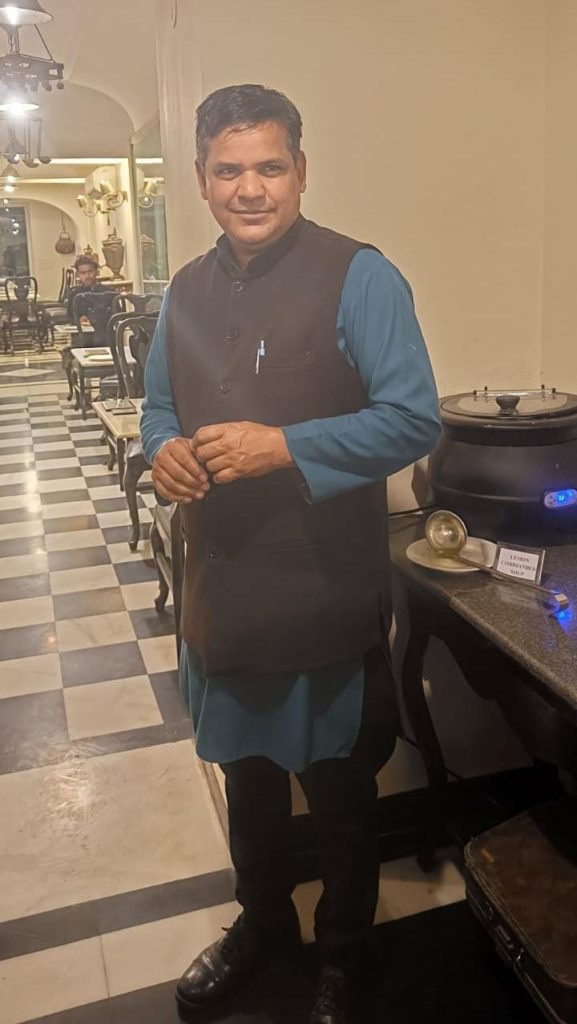
Gopal Saini is a drug peddler whom Tehelka met in Mandawa, allegedly selling illegal drugs from his restaurant. We were also shocked to learn that even a staff member of a resort in Ajeetgarh, where Tehelka’s reporter was staying, was involved in selling drugs. Mohit Kumar, a heritage hotel staffer from Bihar, told our reporter that ganja is easily available on the streets of Mandawa and that he knows the place where it is sold. According to him, one only has to place the order and he will fetch it from a nearby village.
In the chat below, the reporter asks Mohit about the availability of drugs in the area. Mohit says that only ganja is easily available. When asked how it can be obtained, he explains that it has to be brought from a nearby village. Mohit also says that he knows the place where it can be sourced. He indicates that he has seen the location himself.
Reporter- Kya- kya milta hai?
Mohit- Ganja milti hai.
Reporter- Ganja milta hai, aur?
Mohit -Bas ganja milta hai.
Reporter- To kaise milega kisi ko chahiye ho to?
Mohit- Laana padega jakar bahar gaon mein.
Reporter- Dekhi hai tune jagah?
Mohit- Haan.
[In the exchange above, Mohit says that he knows the place where ganja can be sourced. It seems that nearby villages act as supply points. Such openness reflects the spread of the trade.]
When we insisted that we would go with Mohit to fetch ganja from the drug peddler, he refused. Mohit said the peddler knew only him and would give ganja to him only if he went alone. He added that if he took us along, the peddler would become suspicious and would refuse to give the drug.
Reporter (continues)- Accha tu lekar nahi jayega, hame laa dega?
Mohit- Shaq karega na sir, ye doosre type ka area hai, isliye shaq karega.
Reporter- Hum doosre type ke dikh rahe hain?
Mohit- Haan isliye dega hi nahi aapko.
Reporter- Tere ko de dega?
Mohit- Haan.
[The chat shows the caution used in such small drug networks. According to Mohit, the supplier would deal only with people he already knows. So, sellers prefer dealing only with familiar faces and avoid strangers. It emerges that middlemen often handle such requests. That quiet layer of trust helps the trade survive.]
Mohit then revealed that this would not be the first time he had brought ganja to the hotel. On many previous occasions, he said, he had brought ganja for hotel guests and for drivers accompanying foreign visitors. Mohit also indicates that other people, including some guests, make similar requests. He then mentions the price of ganja available in the area. According to Mohit, the cost of ganja is Rs 450 for 25 grams.
Reporter- Tu laya hai pehle ?
Mohit -Haan drivers ko laya hoon.
Reporter- Kaunse drivers?
Mohit- Ye jo aate hain angrez ka, koi-koi mangta hai, to hum dila detey hain.
Reporter- Drivers mangtey hain, ya aur log bhi?
Mohit- Haan aur bhi mangtey hain.
Reporter- Guest log bhi?
Reporter (continues)- Kya rate hai yahan par?
Mohit- 450 rupees ka 25 gram.
Reporter- Kitna hota hai?
Mohit- 25 gram itna hota hai.
[The chat suggests that such arrangements are not unusual in the area. Requests for ganja come not only from drivers but also from others around the hotel. It emerges that small local contacts help keep the supply going.]
We spoke to Mohit on the first day but did not place an order for ganja. The next day he called us, saying he would go to the drug peddler in half an hour. If we needed ganja, we would have to pay him Rs 450. When asked about the quality, Mohit said it would be good and assured us that nothing would happen to him while bringing the ganja from the peddler to the hotel where we were staying.
Reporter- Tu kab free hoga?
Mohit – Chale jayenge aadhe ghante mein.
Reporter- Mujhe kitne paise dene hain tujhe?
Mohit- Rs 450 ka 25 gram.
Reporter- Theek hai aur kuch nahi milega?
Mohit- Nahi.
Reporter- Tu la dega, Ganja theek hoga?
Mohit –Haan.
Reporter- Pehle laya hai.,.accha to hoga?
Mohit- Haan, peene mein bhi accha hai.
Reporter- Nasha hai?
Mohit -Haan
Reporter- Tujhe lane mein dikkat to nahi hogi?
Mohit- Aadha ghanta lagega.. mein laakar de dunga.
Reporter- Kitne paise de doon?
Mohit- Rs 450.
[The chat shows how casually the deal is discussed. Mohit speaks with confidence about the price, quality and quick delivery. When Mohit says there will be no difficulty in bringing the ganja, it becomes clear that arranging the contraband is treated as a routine task rather than something fraught with risk.]
We asked Mohit not to tell anyone in the hotel that we were asking for ganja. In response, Mohit said that everyone in the hotel already knows that he is the one who brings ganja for guests on demand and that he knows the peddler. He says that whenever someone asks, he brings it for him.
Reporter- Yahan batana nahi kisi ko …kisi ko pata hai?
Mohit- Staff ko pata hai.
Reporter- Kya?
Mohit – Staff ko pata hai mein lakar deta hoon,
Reporter- Accha koi mangta hai to tu laakar de deta hai?
Mohit- Hmm.
Reporter- Tu kitne baar la chukka hai?
Mohit- 4-5 baar la diye hain.
Reporter- Koi dikkat to nahi hui hotel mein lane mein?
Mohit- Na na.
[Mohit admits that he has done this four to five times earlier, adding that he has never faced any difficulty bringing it into the hotel. This chat suggests that such activity is not hidden within the hotel. It becomes clear that the practice is treated casually, raising questions about how easily such supply chains operate.]
We left the hotel without ordering ganja, as our purpose was to investigate the racket rather than buy the substance. Mohit kept asking for Rs 450 for 25 grams of ganja. We gave him Rs 450, not for the ganja, but as a tip.
In the same hotel in Ajeetgarh, before meeting Mohit, we asked Pooran Singh, the bar manager, to arrange ganja for us. We made the request at around 9:30 pm. Pooran said ganja was available in a nearby village, but since we had asked late at night, it would be difficult to arrange. He added that had we asked during the day, he could have arranged it. Even then, Pooran said he would try and let us know. He also admitted that he consumes ganja after finishing his day’s work.
Reporter- Yahan kaise milega Mandawa mein?
Pooran- Aap din mein boltey… chalo abhi bhi poochta hoon.
Reporter- Din mein kahan se mangwate?
Pooran- Kahin se bhi.
Reporter- Yahan Mandawa mein hai?
Pooran- Haan, isi gaon mein hai.
Reporter- Ajeetgarh mein?
Pooran-Haan.
Reporter- Mangwaya hai pehle kabhi?
Pooran- Peetey hain hum kaam khatam karne ke baad.
[This chat shows how easily such substances can be accessed locally. Pooran speaks about their availability in the village without hesitation. It becomes clear that the supply is known to locals, revealing how normalised the practice has quietly become.]
After some time, Pooran informed us that the man who brings ganja to the hotel was out of town for a wedding and would return in two or three days. He said that the next time we come to stay at the hotel in Ajeetgarh, he would arrange ganja for us. Pooran even shares a phone number and asks the reporter to call in advance the next time. He assures that the arrangement can then be made.
Reporter- Accha ye bata kab mil jayegi wo, kab aa jayega tera banda laut ke?
Pooran- Wo gaya hai shaadi mein, maine usko phone kiya hai.
Reporter- Raat ko aa jayega?
Pooran- Na na.. uske nanihaal mein shaadi hai.. wo aayega 2-3 din mein lautkar.
Reporter- Aage kabhi aaon to mil jayegi, Mein bhang ki baat kar raha hoon?
Pooran- Haan haan.
Reporter- Aage mil jayegi agar aaon to? Kya rate hai ?
Pooran- Wo to poochna padega.
Reporter- Kya number hai.
Pooran-772XXXXX………………
Reporter- Haan, bhang nahi, ganja mangwana hai.
Pooran- Haan.
Reporter- Agli baar mein aaun to Delhi se phone kar dunga, manga diyo.
Pooran- Haan haan.
Reporter- Theek hai.
[This chat shows that the supply depends on a small local network. Even when the usual supplier is away, Pooran remains ready to arrange it later. It becomes clear that such access works through informal contacts.]
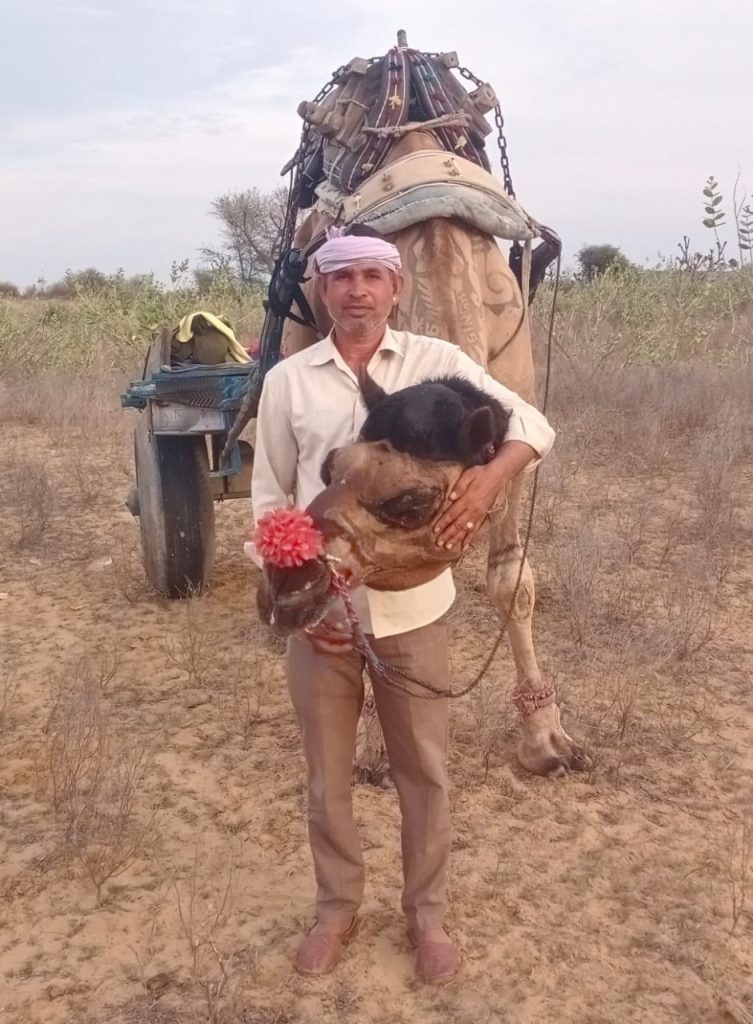
How easily ganja is available in Mandawa and Ajeetgarh can be judged from the fact that we asked about it from a camel cart owner, Gopal Singh, he told us that ganja is available in Mandawa in any quantity. He also said that recently a driver who had come to attend a wedding managed to fetch ganja from there. Gopal even guided us to the place where people sit and consume ganja and said we could get it from them.
Reporter- Ganja kahan milega?
Gopal- -Ganja Mandawa mein.
Reporter- Pakka?
Gopal- Arey khoob, jitna chaho.
Reporter-Itni guarantee se kaise keh rahe ho?
Gopal- Log peetey hain. Mein to nahi peeta, mein bata dunga. Wahi, wahin jo jagah log peetey hain, aap chale jaana.
Reporter- Wo to apne peeney ke liye log laatey hain, bechne ke liye thodi hi?
Gopal- Kal yahan shaadi mein ek driver yahan se gaya, bola mein Jaipur se aaya hoon, wo gaya aur 500 mein lekar aa gaya.
Reporter- Usi se?
Reporter- To aaram se mil jayega, koi dikkat nahi hai?
Gopal- Haan, aap wahan kisi aadmi se bhi pochogey, wo bata dega ‘bhai yahan milti hai.’
Reporter- Hum to bahar ke hain, hame kaise dega?
Gopal- Aap pooch to saktey ho, ‘bhai, daru kahan milegi?’
Reporter- Par ganja koi khule aam thodi bechta hai?
Gopal- Bechne wala bechte hain.
[This chat suggests that the availability of ganja in the area is widely known. Gopal speaks openly about how easily it can be found. It emerges that local knowledge often acts as the first link in such supply chains.]
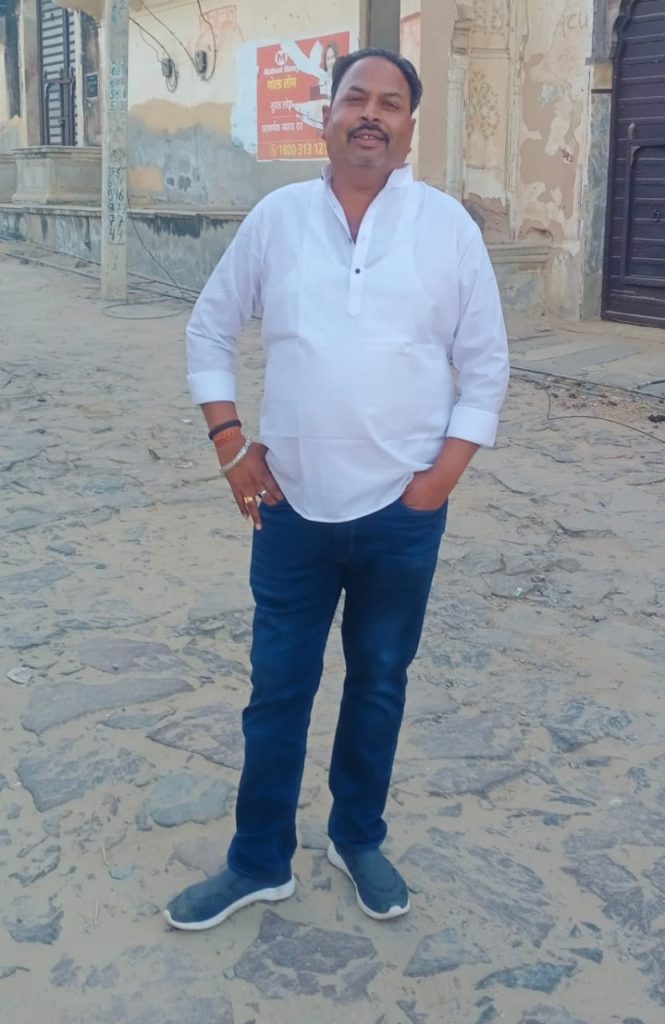
Now we met a senior tour guide in Mandawa who claimed that even film stars who come there for shooting sometimes ask for illegal drugs. According to Sandeep, they do not ask directly; their staff make the request on their behalf. Since Sandeep handles the arrangements for film shoots in Mandawa, he said he ends up arranging the drugs as well.
Reporter- Mein dekh raha tha yahan Ganja bhi bik raha tha, Ajeetgarh-Mandawa mein?
Sandeep- Haan peene wale hain wo sab jagah hotey hain, chori chori se milta hai, illegal hai sab jagah, milta hai par kheti nahi hoti yahan.
Reporter- Film stars to letey honge?
Sandeep- Haan.
Reporter- Kya…ganja ya afeem?
Sandeep- Ganja peene waaley ganja peetey hain, depend karta hai pocket kitna afford karti hai.
Reporter- Film stars ki to pocket afford karti hogi?
Sandeep- Film stars direct nahi maangtey, unke neeche wale hotey hain wo kartey hain sab arrange. Bombay se log aate hain, sabki alag alag demand hoti hai.
Reporter- To aapa kaise provide karte ho?
Sandeep- Hamara to kaam hi hai batana, sab cheezein karteyhi hain hum log.
[In the exchange above, the reporter asks Sandeep about the availability of ganja in Mandawa and Ajeetgarh. The chat suggests that the demand is not limited to local users. Even visiting film stars sometimes seek such substances through intermediaries. It becomes clear that informal facilitators quietly keep these arrangements moving in the background.]
Tehelka’s investigation was carried out in Ajeetgarh and Mandawa, where illegal drugs are easily available. The idea of the investigation is to expose the drug syndicates operating in the region. Rajasthan has also emerged as a significant centre for manufacturing synthetic drugs, particularly Mephedrone [MD], with multiple clandestine labs busted in districts like Sirohi, Barmer, Jalore and Sriganganagar. Drones are also utilised by drug smugglers to bring narcotics from Pakistan.
Rajasthan, which shares borders with both Punjab and Pakistan, has been witnessing a steady rise in the drug menace. The desert state is increasingly emerging as a key entry point for narcotics supplied by Pakistan-based gangs, replacing Punjab, with drones being used to send consignments across the border. Our findings from small tourist towns suggest that the problem is quietly spreading beyond border districts and big cities.
After a prolonged dry spell through February, several higher reaches of Kashmir received fresh snowfall on Sunday, bringing cheer to tourists and locals alike.
The famous ski resort of Gulmarg was among the prominent places to witness snowfall. Other districts that recorded snowfall include Ganderbal, Kupwara, Shopian and Bandipora.
Snow was also reported from the higher reaches of Gurez Valley, while areas such as Pir Ki Gali and the Zoji La axis also experienced fresh snowfall.
Visuals from Gulmarg showed tourists enjoying the snow-covered slopes, with many taking photographs and playing in the fresh snow. Visitors described the snowfall as a pleasant surprise. A tourist from Bihar said she was overjoyed to witness snowfall during her visit.
Videos from Shopian showed pine trees covered in snow, adding to the scenic beauty of the area and attracting visitors.
Meanwhile, rainfall was recorded in the plains, including Srinagar, leading to a drop in day temperatures across the Valley.
Snowfall also affected traffic movement in some areas. At Sinthan Top, traffic movement was disrupted due to accumulation of snow on the road.
The India Meteorological Department (IMD) attributed the sudden change in weather to a fresh western disturbance affecting the western Himalayan region.
According to the weather department, intermittent light to moderate rain in the plains and snowfall in higher reaches is likely to continue till March 20. Isolated places may also receive brief spells of rain or snow over the next few days.
Snowfall in March is considered off-season for the western Himalayas, as the region typically receives most of its snowfall between December and February.
The Election Commission of India on Sunday announced the schedule for Assembly elections in five states and Union Territories — Assam, Kerala, Tamil Nadu, West Bengal and the Union Territory of Puducherry — setting the stage for a crucial electoral contest across key regions of the country.
While polling in most of the poll-bound regions will take place in a single phase, elections in West Bengal will be conducted in two phases. In West Bengal, the election will be conducted in two phases — the first phase on April 23, 2026, and the second phase on April 29, 2026.
According to the schedule announced by the poll body, voting in Assam, Kerala and Puducherry will take place on April 9, 2026. In Tamil Nadu, polling will be held on April 23, 2026. The counting of votes for all five elections will be held on May 4, 2026, the Commission said.
With the announcement of the election schedule, the Model Code of Conduct has come into immediate effect in all the poll-bound states and the Union Territory, placing restrictions on new policy announcements, government advertisements and transfers of officials until the completion of the electoral process.
The announcement was made at a press conference addressed by Gyanesh Kumar, Chief Election Commissioner, along with Election Commissioners Sukhbir Singh Sandhu and Vivek Joshi. Addressing the media, Kumar said that the Special Intensive Revision (SIR) of electoral rolls had been conducted in accordance with Article 326 of the Constitution of India to ensure that electoral lists remain accurate and inclusive.
He emphasised that the objective of the exercise was to ensure that no eligible voter is left out of the electoral rolls and no ineligible voter is included. “Pure electoral rolls are the bedrock of democracy,” the Chief Election Commissioner said, stressing that maintaining accurate voter lists is essential for ensuring free and fair elections.
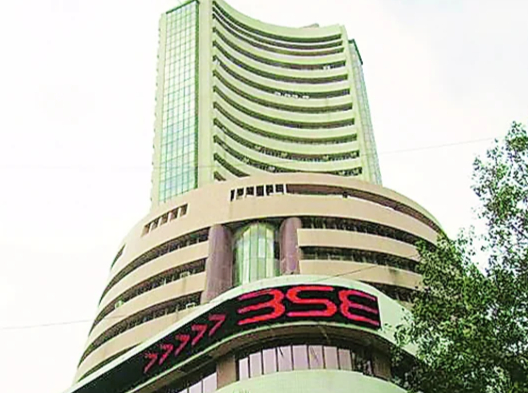
March 13 began like any other trading day, but by the afternoon the mood on Dalal Street had turned tense. Screens flashed red as panic selling gripped the markets. Investors watched anxiously as benchmark indices tumbled sharply, reflecting growing uncertainty across global financial markets.
The benchmark BSE Sensex and Nifty 50 ended the day deep in the red, dragged down by escalating tensions in West Asia and a sharp surge in global oil prices. Weak cues from international markets, continuous foreign fund outflows, and the weakening Indian rupee further dented investor sentiment.
The sell-off marked the third consecutive day of decline for the markets. During intra-day trade, the 30-share Sensex plunged 1,579.82 points, or about 2 per cent, to 74,454.60. Although it recovered slightly towards the close, the index finally settled at 74,563.92, down 1,470.50 points or 1.93 per cent.
Market analysts said that geopolitical tensions and rising crude oil prices have created uncertainty across global financial markets. The conflict in West Asia has pushed oil prices higher, raising fears of inflation and slowing economic growth, which in turn has pressured equities worldwide.
Precious Metals Market
While equity markets struggled, investors kept a close watch on the precious metals segment. Traditionally considered safe-haven assets during uncertain times, gold and silver prices have also been fluctuating amid global developments.
In India, 24-carat gold is currently trading around Rs. 1.59–Rs.1.60 lakh per 10 grams, while 22-carat gold is around Rs.1.47–Rs.1.48 lakh per 10 grams in major cities.
Silver prices also witnessed volatility, falling by about Rs.2,000 during the day, with rates hovering close to Rs.2.8–Rs.2.9 lakh per kilogram in many markets.
Experts say that rising crude oil prices and uncertainty over global interest rates are influencing the movement of precious metals. Although gold usually benefits during geopolitical crises, the surge in energy prices and inflation concerns have limited its upside for now.