Saturday, December 27, 2025

Nepal plane crash : Yeti Airlines ATR-72 aircraft was piloted by Senior Captain Kamal KC & Manju was the co-pilot

She lost her pilot husband in a 2006 plane crash and now she has also met the same fate. This tragic coincidence happened to Manju Khatiwada, 44, the co-pilot of the ill-fated Yeti Airlines plane, who died on Sunday when the plane crashed in Pokhara, Nepal.

He husband Dipak Pokharel died in 2006 in a plane crash in the Jumla district. Seventeen years after the death of her husband, Manju also lost her life in a plane crash on Sunday. According to the Kantipur national daily, after the death of her pilot husband, her father Govinda was planning to send her to India to study nursing but she refused and went to the US to do a pilot training course to fulfil the dream of her first husband. She was supposed to be promoted to pilot after some more flights, according to the news report. In order to become a pilot, one needs at least 100 hours of flying experience. Manju had successfully landed in almost all the airports of Nepal.

She had one daughter from her late pilot husband. Sixteen years ago, a 9N AEQ aircraft of Yeti Airlines was en route from Nepalgunj to Jumla via Surkhet, when it crashed killing six passengers and four crew members. Manju’s husband was among those killed.

In Sunday’s crash, the Yeti Airlines ATR-72 aircraft was piloted by Senior Captain Kamal KC and Manju was the co-pilot. According to the airline, 68 passengers including 4 crew were on board the aircraft. There were also six children. The airline said in a statement that the plane contained 53 Nepalis, 5 Indians, 4 Russians, 2 Koreans, 1 Argentinean and one each from Ireland, Australia and France.

From her first husband Dipak, Manju had one daughter who is studying in Canada. Now she was married to another man and had one son with him.

How will entry of foreign Universities help Indian students?

The entry of foreign universities will also introduce an element of competition in the higher education sector, motivating Indian universities to raise their own standards.

It’s no more a dream but a reality now.  Foreign universities setting up campuses in India is a step closer to actual realisation with the University Grants Commission (UGC) giving its approval. What would be the offshoot of this paradigm shift in the aftermath of the new National Educational Policy?

A likely off-shoot would be a slowdown in the flight of capital and precious human resources. A fewer number of students might opt to go abroad for higher studies.

The number of Indian students opting for higher education abroad rose from 4.4 lakh in 2016 to 7.7 lakh in 2019; it is set to grow further to roughly 18 lakh by 2024, resulting in higher overseas expenditure on higher education.

The entry of foreign universities will also introduce an element of competition in the higher education sector, motivating Indian universities to raise their own standards. India can emerge as a global hub of higher education, attracting students from different parts of the world. Foreign universities will provide further impetus to the government’s ‘Study in India’ programme that seeks to attract foreign students.

The Central Government had announced its commitment to the entry of foreign universities in the National Education Policy document in July 2020. Now, the University Grants Commission has also given its approval.  Courses that have gained a global reputation, new methods of teaching and evaluation, the high standards expected of the faculty and students, the focus on research and innovation, all these aspects augur well for the aspiring young Indians.

UGC chairperson M Jagadesh Kumar said foreign universities offering full-time, offline programmes will be granted 10-year-long approvals, the freedom to devise admission processes, fee structures and faculty recruitment, subject to transparency and quality benchmarks. The draft rules also made it contingent on the institution to ensure students are not affected if a particular programme is discontinued, faculty stay in the Indian campus for a reasonable period of time and no programme jeopardises national interest, the sovereignty and integrity of India, security, foreign relations, public order, decency, or morality. Kumar said along with Indian students, foreign students will also be able to study on those campuses. He clarified that universities can opt for their own admission processes.

He said only institutions among the world’s top 500 universities will be allowed to open campuses here. “As they will conduct regular courses, their faculty will also be regular. Teachers will not be able to leave in the middle of a semester. Apart from this, the state and UGC guidelines will have to be followed regarding women’s safety and ragging on campus. They have to implement Indian laws only,” he said.
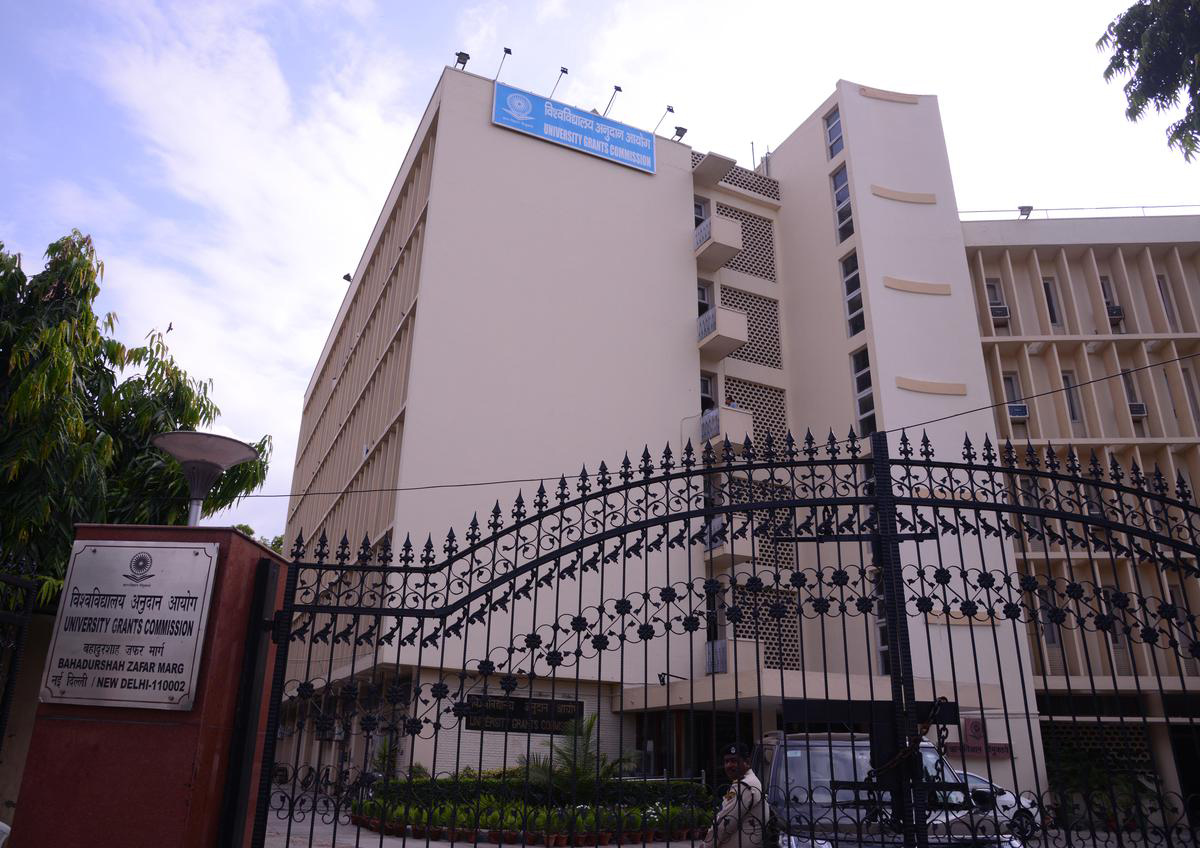
The UGC chief reiterated that the top foreign universities that will provide education in India, have to ensure that the quality of their education remains the same as that of their main campus. “Students will benefit from this,” he said, adding that the move will boost the New Education Policy, 2020 (NEP). These institutions shall not offer any such study programme which jeopardises the national interest of India or the standards of higher education here. The final norms will be notified by the end of the month after considering feedback from all stakeholders. While these universities will have the freedom to decide their admission criteria and fee structure, the commission has advised keeping the fees “reasonable and transparent”.

The regulatory framework allowing the entry of higher-ranked foreign varsities will provide an international dimension to higher education, enable Indian students to obtain foreign qualifications at affordable cost, and make India an attractive global study destination. On matters related to funds and funding, the cross-border movement of funds will be according to the Foreign Exchange Management Act. “Cross-border movement of funds and maintenance of Foreign Currency Accounts, mode of payments, remittance, repatriation, and sale of proceeds, if any, shall be as per FEMA, 1999. An audit report shall be submitted annually to the commission certifying that the operations of the FHEIs in India are in compliance with the Act and related rules.”

There will be two categories of foreign institutions eligible to apply for setting up their campuses in India—the universities that have secured a position within the top 500 of overall or subject-wise global ranking or a reputed institution in its home jurisdiction.

The UGC shall constitute a standing committee to examine matters related to the setting up and operation of campuses in India.   The Foreign Higher Educational Institutions shall have the autonomy to recruit faculty and staff from India and abroad as per its recruitment norms. It may decide the qualifications, salary structure, and other conditions of service for appointing faculty and staff. However, the FHEI shall ensure that the qualifications of the faculty appointed shall be at par with the main campus of the country of origin.

The Foreign Higher Educational Institution shall not discontinue any course or programme or close the campus without the Commission’s prior approval.  The Commission shall have the right to inspect the campus and its operations at all times to ascertain the infrastructure, academic programmes and overall quality and suitability.

It is learnt that several countries in Europe have expressed interest in setting up their campuses in India.  According to a survey by the National Institute of Education Planning and Administration (NIEPA), eight foreign universities have expressed interest in setting up their international campuses in India. Five of these are US universities and one each from the UK, Australia and Canada. The UGC will write to embassies of all countries and reputed foreign universities to submit their feedback on the draft regulations.

The draft regulations of the UGC on Setting up and Operation of Campuses of Foreign Higher Educational Institutions in India 2023 pave the way for the entry of foreign universities into the groves of higher education in the country. There is also a significant change. In NEP-2020, only the top-100 QS ranking universities could establish their branch campuses in India to provide quality higher education to Indian students who aspire to gain foreign degrees. The UGC draft regulations-2023 have “top 500 foreign universities” and the ranking will be decided by the UGC “from time to time”.

The draft University Grants Commission (Setting up and Operation of Campuses of Foreign Higher Educational Institutions in India) Regulations, 2023 promises to foster academic collaboration between Indian Higher Educational Institutions (HEIs) and Foreign Higher Educational Institutions to offer Twinning, Joint Degree and Dual Degree Programmes.

A regulatory framework allowing the entry of higher-ranked foreign Universities, as envisaged in NEP, 2020, will provide an international dimension to higher education, enable Indian students to obtain foreign qualifications at affordable cost, and make India an attractive  The Foreign Higher Educational Institutions shall make available the prospectus on its website at least 60 days before the commencement of admissions, including fee structure, refund policy, number of seats in a programme, eligibility qualifications, and admission process.



Meeting of BJP officer-bearers has got underway at the party headquarter: BJP

New Delhi : A meeting of BJP officer-bearers has got underway at the party headquarters here.
Chaired by party’s National President J.P. Nadda, the meeting has party Punjab and Chandigarh in charge Vijay Rupani, Tamil Nadu president Annamalai, Gujarat president C.R. Patil, General Secretary Vinod tawde, Tarun Chugh, C.T. Ravi, Kailash Vijayvargiya, Vice President vasundhra raje, Raman Singh, Radha Mohan Singh, Saudan Singh, National general secretary organisation B.L. Santosh in attendance.
National General secretaries Arun Singh and Dushyant Gautam are also among the participants besides party state President and morcha president.
During the meeting, the reports on ongoing submitted by state General secretaries, prabharis will be reviewed. Preparations for the upcoming state Assembly elections in nine states and 2024 Lok Sabha elections will also be deliberated in detail.
Two-day BJP National Executive meeting is also slated to begin at 4 p.m.
Ahead of the executive, the party has organised a road show for Prime Minister Narendra Modi from Patel Chowk to the NDMC convention centre, the meeting venue.
The meeting is also likely to endorse an extension of tenure for party national president Nadda.

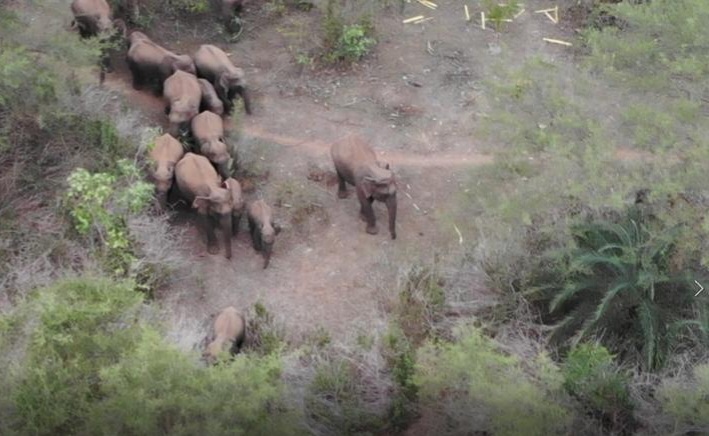
Odisha banks on drones in elephant conflict management

The state forest department is using drones of the Mavic 2 Enterprise series to track elephants. Many forest divisions of Odisha see acute human-elephant conflict, writes Deepanwita Gita Niyogi

Developmental activities, expansion of agricultural lands and mining are exacerbating the human-elephant conflict in India day by day. States affected by this problem are trying to find solutions to minimise damage as well as loss of lives.

While early warning systems and the deployment of Hathi Mitras (friends of elephants to track their movement) are working wonders in some parts of the country, Odisha has found the use of drones effective in conflict management.

Though conflict occurs throughout the year, the paddy harvest season is a particularly tense time. In Angul district, the presence of elephants is high during this crucial period, especially from November to February. The animals enter from Dhenkanal and Sambalpur districts. Vivek Kumar, divisional forest officer (DFO), Angul, said in such a situation drones prove to be effective.

“Drones are extensively used in agricultural fields which are open lands. There is clear visibility which helps in counting the number of animals, see the direction they are moving towards and to know if there are hindrances in their path in the form of physical barriers.”

In Angul, where there are about 200 elephants present during the harvest season, paddy cultivation has been intensified thanks to borewells. In this sensitive area, the department has been relying on three drones for the past few years. Drones with thermal imaging capabilities are useful in capturing images at night.

The drones are used once in about five days. They have 20-minutes battery back-up but even then can cover long distances. The department tries to use thermal cameras when the animals move inside forest areas. Crop damage can also be assessed with the help of drones.

Use of technology

Though the department is using drones in elephant conflict management, there is a need to train more people for frequent usage. The department is using Mavic 2 Enterprise series drones. In Dhenkanal division, three departmental staff have been trained in handling drones.

There are two parts in a drone. One is the operation part and an expert has to be in touch with the machine after flying it. The second part is analysis of the inputs of the drone. If field staff are unable to reach a particular area, drones help in observation.

Dhenkanal has resident as well as migratory elephants. The conflict here is acute. The average count is over 300 elephants throughout the year. It varies from 250 and can go up to 380 also.

There are areas devoid of forests in the district and many elephants actually don’t move inside forests. For food, they depend on crop lands, seasonal fruits of palmyra palm which ripen in June-July, cashew and mango orchards. “They have adopted the area as their habitat. There are 120 elephants in particular who depend on the ready food they always get,” said DFO Dhenkanal Prakash Chand Gogineni.

The officer explained that drones are helpful when there is no direct sighting. For instance, the Brahmani river flood plains is filled with tall grasses. If elephants are present inside, they cannot be directly sighted. But sometimes the department likes to know the situation on the ground and drones are of great help.

Are drones the answer?

Though drones are effective, they come in handy only in open areas and not closed ones. “When forest is dense there are signal issues,” said Anand S, DFO, Athamallik division in Angul district, which is not far from the SatkosiaTiger Reserve. In this division, there has always been elephant movement. But thanks to horticultural initiatives, the problem has become acute since 2000.

Angry farmers are hard to deal with in case of crop loss. From 2019 to 2022, the forest department has paid Rs 12,94,25,024 for crop damage on 12114 acres of land.

Apart from too much paddy and horticultural crops, mining is another major problem leading to conflicts. DFO, Keonjhar Dhamdhere, Dhanraj Hanumant said in his division there are iron ore and manganese mines. “Though mitigation measures are being taken, conflict has increased. In the daytime, there is patrolling but after 5 pm watching elephant movement is an issue. But drones help us see which way the animals are moving. It helps mobilise staff to locate poachers too.”

At present the major problem with drones is that the battery lasts for a limited period of time. Another thing is that if drones are brought close to elephants they get annoyed and try to move away from the sound.

Jharkhand-based DS Srivastava, who has a long experience in dealing with elephant conflict and management, said drones have become easy and sometimes now replace forest staff and Hathi Mitras. But he questioned the efficacy of drone usage even if a herd has been tracked near a village. “Fore warning is the main thing and the animals should never be chased in the wrong direction. Ground awareness about elephant behaviour still works best.”

Mining and highways are the main causes of concern when it comes to human-elephant conflict in Odisha. In the past three years, there have been 167 human deaths in just three divisions. Elephants from Jharkhand enter the state in search of habitat.

Rudra Mahapatra, project head of Wildlife Trust of India in Odisha, said drones once helped in tracking an elephant which was sleeping inside a thicket. Before that it was thought to be dead. Initially Odisha was sceptical about usage of drones but it was promoted during a project in Similipal National Park and found favour later.

Essays laced with facts and factors to the political build-ups

‘Freedom Struggle and  Beyond’  contains  essays and  features which stress on the work of the freedom fighters and actual  builders of  our  nation. Yes, the stalwarts and ‘architects’ who worked endlessly and tirelessly to build a nation with strong secular values and commitment for the welfare and well being of all communities and groups.A book review by Humra Quraishi

I  had  been meeting  Captain  Praveen Davar on several occasions and he’d come across as an  intense  person, talking earnestly about today’s  grave political situation engulfing us, and how the situation  ought to be not  just  focused on but saved from any further setbacks and looming disasters.

In this recently published  book, ‘Freedom Struggle and  Beyond’,  Captain  Davar’s  essays and  features which he’d  been writing over the  years for the  various  publications, stress on the work of the freedom fighters and actual  builders of  our  nation. Yes, the stalwarts and ‘architects’ who worked endlessly and tirelessly to build a nation with strong secular values and commitment for the welfare and well being of all communities and groups.

Reading this book, I was reminded of our glorious past. Holding sway were those powerful personalities who played  such a vital  role in our  freedom struggle and also in building modern India. Stalwarts  like Mahatma Gandhi, Motilal Nehru,  Jawaharlal  Nehru, Maulana  Azad, Subhas  Chandra  Bose…the  list  is  long  of those earnest- sincere- genuine leaders.

This book could be of great significance, not just for students and researchers but also for us all, the citizens of this country. After all, the Davar’s essays are laced with facts and factors to the political build-ups and also to the leaders of the years passed by.  Several essays also focus on wars and warfare. Not to be overlooked the fact that Captain Davar is an alumnus of the National Defence  Academy, Khadakvasala,  and  Indian  Military  Academy,  Dehradun.  He was Commissioned in the Deccan  Horse in  1971. But he resigned from the Army in 1980 to join the  Indian National  Congress.

Leaving you to introspect on with these lines of Dadabhai Naoroji, from Captain Davar’s essay on him, tucked  in this  book: “Let us always remember that we are all children of our  Mother country. Indeed, I have never worked in any other spirit than that  I am  an Indian, and  owe duty to  my country and all my  countrymen. Whether I am a Hindu, a Muslim, a Parsi, a Christian, or any other creed, I am above all an Indian. Our country is India, our nationality is Indian.”

Book-Review

Title of the Book – Freedom Struggle and Beyond

Author- Praveen Davar

Publishers –  Aakar Books

Pages –322

Price-  Rs 995


Budget 2023 : IDSA recommends exemption under section 194R

New Delhi : The Government of India in the Budget for 2022 introduced a new section 194R –“Deduction of tax or perquisite in respect of business or profession.” Which became applicable from July 01, 2022.
In accordance with the provisions of this new section, a person (or corporate entity) who is responsible for providing any benefit or perquisite to a resident, should deduct tax at source @ 10% of the value or aggregate of value of such benefit or perquisite before providing such benefit or perquisite in cash or in kind.
One of the business activities that get impacted due to these new provisions is the national and international trips or events that are organised by business entities to motivate or felicitate their employees or associates.
While we appreciate the rationale behind introducing this new provision however, we would like to request the following amendment in the same – As per the newly inserted provision, all events where the recipients or the beneficiaries are provided free participation or where their trips are sponsored, shall now come under the purview of TDS deduction.
In our opinion, considering the fact that Covid-19 pandemic created havoc on the Indian hospitality sector, the Government of India should encourage organizing of domestic events and trips. This would result in increase in revenue of our domestic players and to the revival of the hospitality sector.
In order to achieve the same, one initiative could be to provide an exemption under Section 194R only to those events or trips that are organized within India. In the present scenario where both national and international events or trips are being brought under the purview of Section 194R at the same rate, corporate entities shall not find any merit in organizing such events of trips within India as organizing the same in a foreign country adds aspirational value to it.
If an exemption is provided for events and trips within India, the corporate entities shall feel encouraged to organise the same within India which’ll add to the revenue of the domestic hospitality players thereby increasing the tax contribution by the sector.
We sincerely believe that the above suggestion shall be given due consideration by the officials and we look forward to discussing the same in detail, if required.

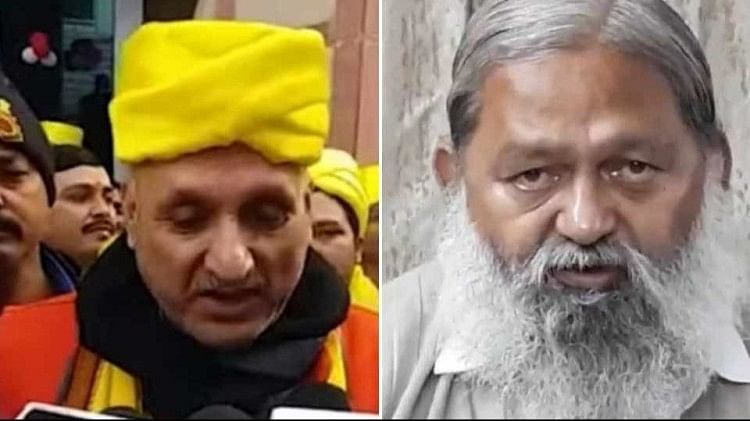
Bihar education minister does not have enough intelligence to understand Ramcharit Manas”- Anil Vij

Ambala:  Haryana Home and Health Minister Anil Vij, while reacting to Bihar Education Minister Chandrashekhar’s controversial statement on Ramcharitmanas, said that “YEH DESH RAM KA HAI, Jo NAHI RAM KA, WO NAHI KISI KAAM KA”. He was addressing a press conference at his Ambala camp office and  took a dig at the Education Minister of Bihar and said that “I do not think that the minister has read Ramcharit Manas and if he has read it, it seems from his statement that he does not have that much intelligence that can understand. While giving advice,Vij said that “YEH DESH RAM KA HAI, Jo NAHI RAM KA, WO NAHI KISI KAAM KA”, do not spread disharmony in the country by talking like this.  Home Minister said that the people of this country do Ram-Ram as soon as they wake up in the morning, do Ram-Ram in the evening, do Ram-Ram in the villages and cities. Ram is living in every where and no question mark will be tolerated on that, he added.

Home Minister retorted on the statement of AIMIM Chief Asaduddin Owaisi and said that who is forbidding anyone from living in India, everyone should live together, why do you jump.  Vij said that Mohan Bhagwat said that everyone has the right to live in India, that’s why we say that common civil code should be brought soon and he will ask them to support common civil code because everyone should be equal and no one should have any special rights. Significantly, Owaisi had said in a statement recently that Muslims do not need to take a certificate from Mohan Bhagwat to live in India.
Responding to the question asked on sex ratio in Haryana by a media persons, State Health Minister Anil Vij said that shops are open in the neighboring states of Haryana, the danger is coming from there and our districts are also affected from the same places, which are located around NCR or other states. He said that their details have been asked to be made, and the Chief Ministers of these states will be written that why ten ultrasounds are opened in a street. Vij said that a meeting has been held regarding the sex ratio and strict cognizance has also been taken on it. He said an action plan has been chalked out in consultation with all the officers and CMOs. Vij said that strict action will be taken on this and checking will be carried out at all the ultrasound centers of the state.

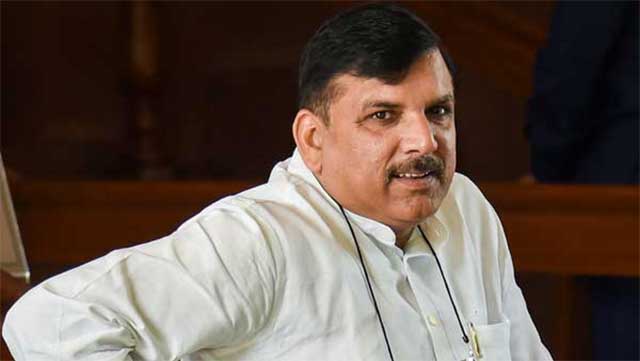
AAP MP Sanjay Singh sentenced to 3-month jail

A Sultanpur court has sentenced Aam Aadmi Party MP Sanjay Singh and five others, including former Samajwadi Party MLA Anoop Sanda to three months in prison.

The court also slapped a fine of Rs 1, 500 each on them.

The MP-MLA court pronounced the judgment in a 21-year-old case that was registered on June 19, 2001.

According to the police, people had blocked the road and staged a massive protest against the then BJP government in Uttar Pradesh led by Rajnath Singh.

The protest was against regular power cuts and improper water supply in Sultanpur city.

The police had filed a case against Sanjay Singh, Anoop Sanda, supporters Vijay Kumar, Kamal Srivastava, Santosh Kumar and Subhash for blocking the road and demonstrating, said government counsel Vaibhav Pandey.

Singh, who was present in the court while the judgment was being pronounced, blamed the then BJP government for mismanagement in the otherwise peaceful protest. He said he will appeal against the sentence in the high court.

Gear Up For Assembly Polls: BJP leader to J&K unit

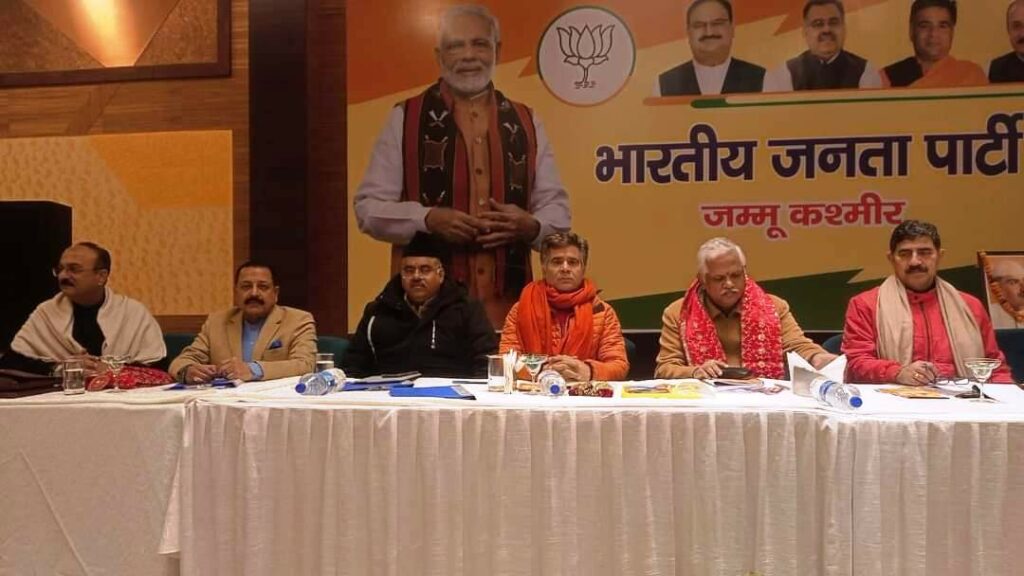
In an indication that Assembly elections in Jammu and Kashmir could be around the corner, BJP national general secretary B L Santhosh on Wednesday asked the party’s J&K to be ready for assembly polls.

The meeting was also attended by Union minister Jitendra Singh, BJP national general secretary and J&K in-charge Tarun Chugh and J&K BJP president Ravinder Raina.

Santhosh made the statement days after senior party leader and Union Home Minister Amit Shah held deliberations with party functionaries from Jammu and Kashmir in Delhi.

This has raised the hopes that the assembly elections in the union territory might be held this year. Government has, however, has stayed short of making an official announcement yet.

“A leader is born when he selflessly works for the win of others and the organisation,” In his address to party leaders, Santhosh said. “So you all must devote yourselves to organisational duties.”

Union minister Singh said this was the first major election campaign after historic changes in J&K.  “We need to contest these elections all together,” Singh said adding that the BJP is the only party which has truly cared for the rights of the residents of Jammu and Kashmir.


Joshimath crisis: Demolition drive halted, locals angry over less compensation

Joshimath:  While the cracks that have appeared in the buildings of Joshimath are widening, the administration has been facing the opposition of the affected people in the demolition drive.

In a meeting between the administration and the locals, it was announced that a compensation of Rs 1.5 lakh would be provided to the affected families, which was refused by the locals.

Hotel Mount View and Malari Inn were scheduled to be demolished on Tuesday.

T Singh Rana, the owner of Malari Inn and his family have been sitting outside the premises and raising demands for compensation.

As soon as the officials reached the spot, the hotel owners started opposing the action and alleged that the economic evaluation of their structures had not been done.

They added that no notice had been given to them by the administration.

In view of the escalating protests, the administration had to step back and postpone the drive to Wednesday.

Disaster Management Secretary Dr Ranjit Sinha said that cranes were needed to demolish tall buildings which could not be arranged in the area.

He informed that a crane had been sent from Dehradun, which would arrive on Wednesday.

Secretary to CM, Meenakshi Sundaram said that the drive could not start on the scheduled day since the CBRI team got delayed in reaching the spot.

Chief Secretary Dr S.S. Sandhu, in a meeting on Tuesday, instructed that the affected buildings which may pose a threat to life should be demolished on a priority basis.

723 buildings declared unsafe, 86 marked with red crosses:

The number of unsafe buildings in the holy city has reached 723, with 45 identified as unsafe on Tuesday. Out of these, 86 buildings have been declared completely unsafe and marked with red crosses.

Their demolition process is said to start soon.

The district administration has so far temporarily moved out 462 families. On Tuesday, 381 people were shifted to safer places while 81 families had been shifted earlier.

A total of 344 rooms have been acquired by the administration in various institutions and buildings to accommodate 1, 425 people.

The Home Ministry team headed by the Border Management Secretary reached the city on Tuesday to assess the situation.

Apart from this, teams of central agencies including the National Geophysical Research Institute, National Institutes of Health, Central Building Research Institute and the National Institute of Disaster Management have been camping in the area.

Chamoli District Magistrate Himanshu Khurana said that the decision to demolish the hotels immediately had been taken under the Disaster Act, failing which the surrounding residential buildings, highway and the drinking water and electricity lines might get damaged.

In areas vulnerable to landslides, the administration has instructed the Energy Corporation to remove power lines, under which connections of 20 unsafe buildings were disconnected on Tuesday.

In view of the crisis , Chief Minister Pushkar Singh Dhami has donated a month’s salary to the CM Relief Fund, which will be used to help the affected people.

MOST POPULAR

HOT NEWS