Saturday, December 27, 2025

‘It might take 5 yrs to complete trial’, judge tells SC in Lakhimpur Kheri case

New Delhi:  A trial court in Uttar Pradesh, which is hearing the Lakhimpur Kheri violence case, has informed the Supreme Court that it might take five years to complete the trial in normal course. The cases involve Ashish Mishra as the prime accused, who is son of Union minister Ajay Kumar Mishra.

A bench comprising Justices Surya Kant and V. Ramasubramanian noted that the sessions judge says that in normal course, it may take five years. The sessions judge, in a letter sent to the apex court, said there are 208 prosecution witnesses, 171 documents, and 27 forensic science laboratory (FSL) reports in the case.

The top court was hearing a bail plea filed by Ashish Mishra. During the hearing, the top court asked the Uttar Pradesh government counsel to confirm whether four accused in a separate case lodged over the killing of three occupants of the car, which allegedly mowed down farmers, are still in custody. The bench scheduled the matter for further hearing on January 19.

Last month, the apex court had asked the sessions court how much time in normal course would it take to complete the trial in the case.

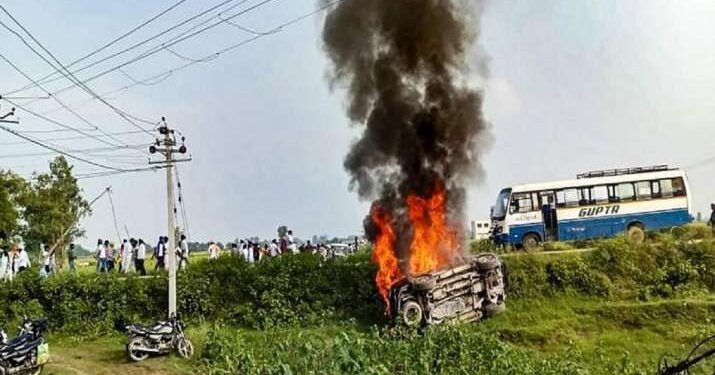
On October 3, 2021, eight people, including four farmers, were killed in Lakhimpur Kheri in clashes during a farmers’ protest. Mishra was arrested in the case.

The family members of the farmers, mowed down by a car belonging to Mishra in Lakhimpur Kheri, have been opposing Mishra’s bail plea.

The trial court, last month, had framed charges against Ashish Mishra and 12 others for alleged offences of murder, criminal conspiracy and others in the case.

Heroin smuggled from Pakistan seized at Indo-Pak border village Naushera Dhalla

Amritsar, January 10 -Border Security Force (BSF)  have seized  around above 2 kilogram heroin (drug) which was smuggled to India from the Pakistan side through Indo-Pak border village  Naushera Dhalla  which has stone throw distance to Pakistan from the Indian side.

Naushera Dhalla  border village falls in the Tarn Taran district.

In a statement issued here, BSF official said that on 10th Jan’ 2022 during morning hours, amidst dense foggy conditions, BSF  troops deployed on border observed movement of smugglers ahead of border fence and also heard dropping sound of something thrown over on towards own side of fencing in the area falling near Village – Naushera Dhalla, District – Tarn Taran.

In prompt action, BSF troops fired towards the smugglers, but the smugglers managed to escape taking advantage of dense fog.

Further, during search of the area, BSF troops recovered 04 packets of narcotics ( Heroin) (Gross wt – 2.110 Kgs) wrapped in yellow adhesive tape.

There was no arrest so far as investigation is still underway, said the official.

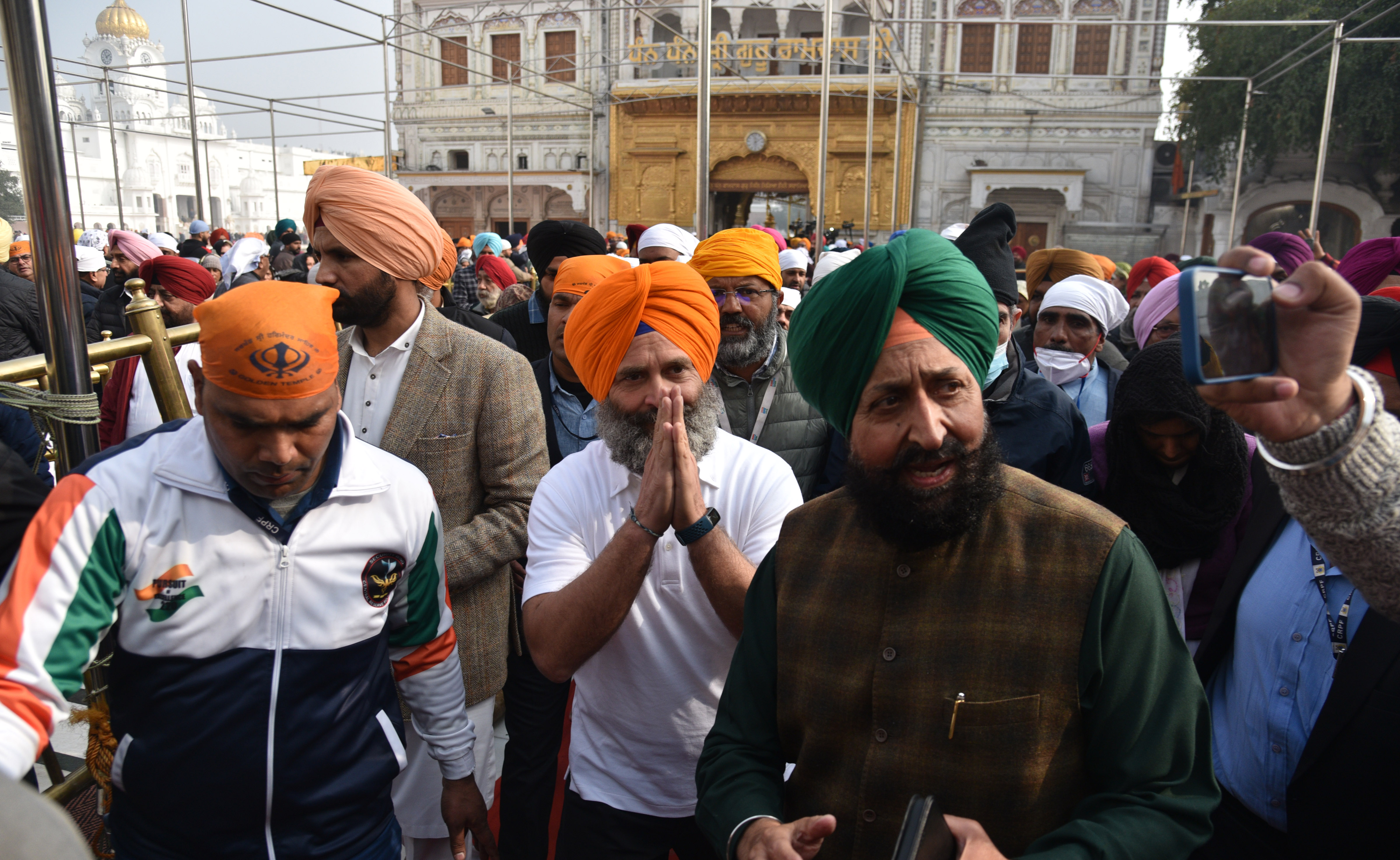
Rahul Gandhi visits Sri Harmandir Sahib before BJY enters Punjab

10 January 2023 Amritsar
Rahul Gandhi, leader of India’s opposition Congress party,offer prayers at the Golden Temple, Sikh’s holiest shrine during the party’s ‘Bharat Jodo Yatra’, in Amritsar on Tuesday.
PHOTO-PRABHJOT GILL AMRITSAR

Congress leader Rahul Gandhi visited the  Sri Harmandir Sahib (Golden Temple) in Amritsar on Tuesday before the Bharat Jodo Yatra (BJY) enters Punjab on Wednesday.

Taking to Twitter, Jairam Ramesh, the party’s General Secretary said: “Day 116  Bharat Jodo Yatra finishes Haryana leg in Ambala now. On January 11 morning is Punjab leg. There can be no better way to begin that than with a pilgrimage to holiest Sri Harmandir Sahib in Amritsar. There’ll be no padyatra this afternoon so that Rahul Gandhi can pay his respects there.”

After Punjab, the mega walkathon is scheduled to enter Jammu and Kashmir on January 20 after a brief halt for a day in Himachal Pradesh. The yatra will end on January 30 in Srinagar with hoisting of the Tricolour.

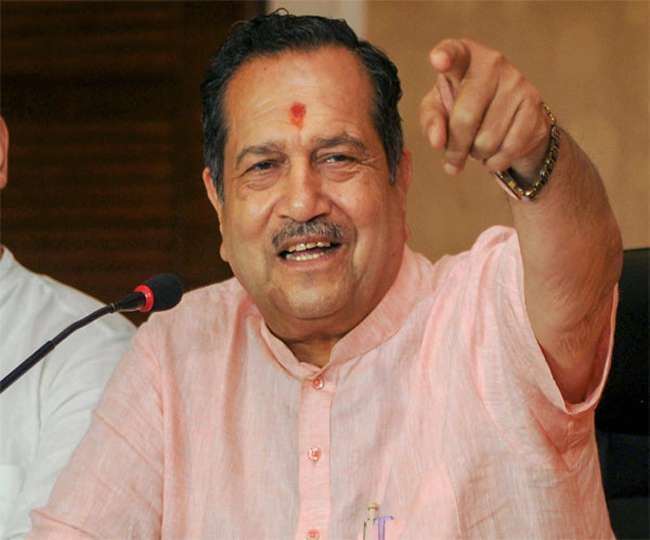
Rahul Gandhi ‘fake Hindu’, says RSS leader

New Delhi: RSS leader and Muslim Rashtriya Manch patron Indresh Kumar on Tuesday termed Congress Rahul Gandhi a “fake Hindu”, claiming that he “doesn’t have any knowledge and knowledge of civilisation”.

He alleged it has become Rahul Gandhi’s behaviour to speak profusely and urged him against such behaviour, which, he said, had led the people of the country to reject him.

Speaking at a mega blanket distribution programme organised by the Manch in Motia Khan here, he also criticised Gandhi’s Bharat Jodo Yatra.

On film “The Kashmir Files”, the Sangh leader said that it had been “shortlisted” for for the Oscars, the world’s biggest film awards and said it was a “true story”. He claimed that he was a witness to those incidents at that time and he always raised these things but the Congress and “secular parties” never accepted it.

He said that the Manch will distribute blankets to about 2.5 lakh people, including 10, 000 blankets in Delhi, of which 4, 500 blankets have been distributed so far.

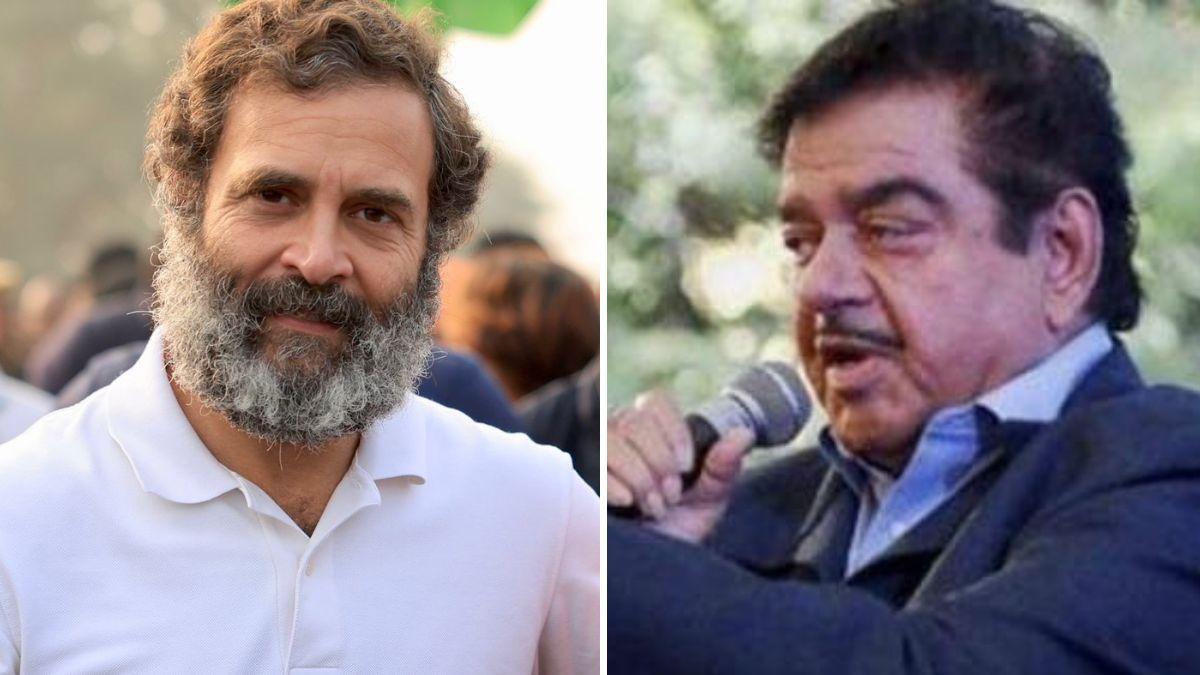
Bharat Jodo Yatra : Shatrughan Sinha’s praise of Rahul makes Trinamool uncomfortable

Kolkata:  Actor-turned-politician and Trinamool Congress Lok Sabha member from Asansol, Shatrughan Sinha’s overwhelming praise of Rahul Gandhi’s Bharat Jodo Yatra (BJY) seemed to have posed major discomfort for the leadership of West Bengal’s ruling party.

The party has started to downplay Sinha’s comments as personal and not a reflection of the Trinamool’s outlook.

According to Trinamool Congress’s Rajya Sabha member, Dr Santanu Sen, Sinha’s comments were just his personal observations and have nothing to do with the party’s view in any case.

“I have nothing to say about a political programme of Congress. But all I can say is that one who is trying to connect India through the Bharat Jodo Yatra should first attempt to keep his own party united. The way the oldest political party of the country is now broken by groups by factionalism, Rahul Gandhi should seriously look into the matter, ” Sen said.

On Sunday, while praising the Bharat Jodo Yatra Sinha said that Rahul Gandhi has emerged as a youth icon and a serious leader and has been able to destroy the image of him that his opposition tried to project.

Although Trinamool Congress was requested to participate in the Bharat Jodo Yatra, the party leadership refused that.

Political observers feel that Sinha’s praises about Bharat Jodo Yatra have posed discomfort for the Trinamool Congress leadership.

AAP accuses Delhi L-G of illegally nominating MCD Advisor

New Delhi: The Aam Aadmi Party (AAP) on Monday accused Delhi Lt. Governor (L-G) V.K. Saxena of illegally nominating BJP workers as advisors to the Municipal Corporation of Delhi (MCD).

AAP leader Saurabh Bhardwaj said the members nominated as advisors should have special knowledge and expertise in matters related to the Municipal Corporation, as per Article 243R and S of the Indian Constitution.

The party has been seen constantly levelling allegations against Saxena, ever since he appointed BJP leader Satya Sharma as the presiding officer.

Bhardwaj added that the names suggested by the AAP for the Animal Welfare Board were returned by the L-G, citing that the leaders did not have any special knowledge regarding the welfare of animals.

He raised questions on the capability of those allegedly nominated illegally as Alderman Councillor.

11 Money-Saving Tips to Survive a Recession

If you’ve watched the news lately, you may have seen that the global economy has been in a recession since mid-2020. If you haven’t been able to secure a steady job yet, it can be hard to keep up with your expenses. It’s more important now than ever to learn and practice money-saving tips so that you can make ends meet during these tough times. In this article, we’ll explore 11 of the best ways to save money and whether this recession with ease. From reducing unnecessary costs to cutting back on impulse purchases and more, let’s jump right in!

Live within your means.

One way to do this is to create a budget and stick to It. A budget will help you track your spending and ensure that you are not overspending. It is also important to save money each month, even if it is just a little bit. Having a savings cushion will help you in case of an emergency or unexpected expense.

Finally, be sure to plan for the future by investing in yourself and your career. Investing in your education and skills will pay off in the long run, even during tough economic times.

Make a budget and stick to it.

To save money, it is important to first create a budget. Determine what your regular expenses are and track where your money is going. Once you have a clear understanding of your spending patterns, you can adjust ensure that your spending aligns with your goals and values.

Once you have created a budget, it is important to stick to it. This may require making some tough choices and sacrifices, but it will be worth it in the long run. Try setting up a system that makes it easy to track your spending and stay on track. Automating bill payments and setting up alerts can help you stay organized and avoid overspending.

Invest in yourself – learn new skills and get a better education.

It’s important to remember that during a recession, your biggest asset is yourself. Invest in yourself by learning new skills and getting a better education. Not only will this make you more valuable to employers, but it will also give you the confidence to weather any economic storm.

Getting a higher education is also a great way to invest in yourself during tough economic times. If you’re not sure whether going back to school is the right choice for you, consider taking just one or two classes to start.

Search for offers and coupons

In a recession, every penny counts. To make your money go further, search for offers and coupons before making any purchase.

One great way to save money is to use coupons from GrabOn. You can find a range of coupons for just about anything these days, from groceries to clothes to travel, you name it, it has it covered. Couponing can help you get the best deals on the things you need and want. Another great way to save money is to compare stores.

There are many ways to find coupons and discounts. Check relevant couponing websites to find your favorite stores offering deals and see if they have any current promotions or coupons available.

Invest in quality, not quantity.

It’s tempting to save money by buying cheap, off-brand items, but this is often a false economy. Cheap products are often lower quality and don’t last as long, which means you’ll have to replace them more frequently. In the long run, it’s better to invest in a few high-quality items that will stand the test of time.

Importance of An Emergency Fund

An emergency fund is important for several reasons. First, it provides a cushion in the event of an unexpected financial setback, such as a job loss or medical emergency. Second, it can help you avoid going into debt to cover unexpected expenses. Third, it can give you peace of mind knowing that you have a safety net in place in case of an emergency.

Building up an emergency fund takes time and discipline, but it is worth the effort. Start by setting aside a small amount each month, even if it is only 7000 or 11000. As your savings grow, you can increase the amount you contribute. The key is to make sure your emergency fund is easily accessible so you can use it when needed. If you don’t have an emergency fund yet, start building one today. It could be the difference between weathering a financial hardship and falling into debt.

Get rid of debt.

Debt is one of the biggest financial burdens that can keep you from saving money and surviving a recession. If you’re in debt, now is the time to start getting rid of it.

Save for retirement now.

The most important money-saving tip during a recession is to save for retirement now. It may seem counterintuitive to save money when you’re struggling to make ends meet, but it’s important to remember that retirement is a long-term goal. By contributing to a retirement account, you’ll ensure that you have money saved when you need it most.

There are a few different ways to save for retirement. One option is to contribute to a 401(k) or 403(b) plan through your employer.

Get creative with your living situation

Living cheaply doesn’t have to mean living poorly. There are plenty of ways to cut costs without cutting corners. For example, if you’re currently renting an apartment, consider moving in with roommates to split the cost of rent and utilities. If you own a home, think about taking in a renter to help with the mortgage payments.

Other creative ways to save money on your living expenses include:

·   Carpooling or taking public transportation instead of driving your car

·   Downsizing to a smaller home or apartment

·   Cutting back on your cable and internet service

·   Eating out less often and cooking more meals at home

·   Shopping at thrift stores and garage sales for furniture and household items

Use cash only for purchases – no credit cards!

To save money, it is important to use cash only for purchases and avoid using credit cards. This will help you stay within your budget and avoid any unnecessary debt. Additionally, you should make sure to keep track of your spending so that you can see where your money is going. By following these tips, you will be able to survive a recession and save money in the process.

Make extra money – get a part-time job or start a home business

In today’s economy, many people are looking for ways to make extra money. A part-time job or starting a home business are two great options.

A part-time job can give you the extra income you need to make ends meet. It can also help you build your resume and gain new skills. Starting a home business is another great way to make extra money. It can be a great way to supplement your income or even replace your full-time job if it’s not working out.

Conclusion

In conclusion, there are many ways to save money and survive a recession. By following these tips, you can make sure that you and your family are financially secure during tough economic times. Hope you enjoyed reading through this blog post.

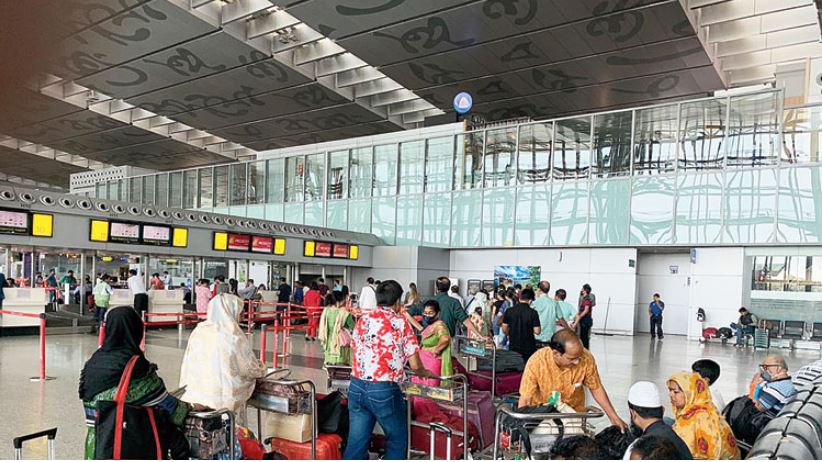
Centenary of Kolkata Airport – Going down the memory lane!

About 100 years ago, someone thought of building an airport in Kolkata.  As we enter 2023, we also need to prepare for an important centenary. For it was in 1923 that ‘Calcutta Aerodrome’ was conceived, with the first flights landing here the following year.

Sadly, the more important centenary actually passed by fairly quietly in 2010, when we ought to have commemorated 100 years of the first recorded aircraft flight in Calcutta, a mere seven years after the world’s first successful testing of a motor-operated aeroplane by the Wright brothers Orville and Wilbur.

So this is as good an opportunity as any to remind ourselves that the first time an aircraft took off from Calcutta was on December 28, 1910. Well not an aircraft, but two aircraft, a Blériot monoplane flown by the Belgian Jules Tyck and a Farman biplane flown by fellow Belgian aviator Baron Pierre de Caters. Both took off from the Tollygunge Club golf course in the presence of at least 15,000 people, as recounted in detail in an article dated November 10, 1912 by the event’s organiser Ernest Esdaile in Flight, the Royal Aero Club’s newsletter.

Incidentally, India’s first recorded aircraft flight dates back to 1911, which would make Tolly Club the host of India’s first unofficial aircraft flight, which nobody seems to talk about much, strangely.   To return to Calcutta Aerodrome, the first British Royal Air Force round-the-world flight landed here in 1924, and the same year, KLM (official airline of the Netherlands) became the first commercial airline to start operations in Calcutta with its Amsterdam-Calcutta-Jakarta flight. In those initial years, Calcutta Aerodrome served primarily as a stopover from Europe and North America to Batavia (as Jakarta was then known) and Australia.

Having begun life as an open field next to the Royal Artillery Armoury in Dum Dum, the aerodrome gradually gained in importance as Sir Stanley Jackson, Governor of Bengal, opened the Bengal Flying Club at the aerodrome in February 1929. In 1930, the airfield was made fit for use throughout the year, and other airlines began coming in. For example, Air Orient began scheduled stops in Calcutta on its Paris-Saigon route, and Imperial Airways began flights from London to Australia via Calcutta in 1933.

As it changed from aerodrome to airport, Calcutta began to draw many more pioneering flights, but the most notable was probably a stopover by the legendary Amelia Earhart on June 17, 1937 during her attempt to become the first woman pilot to circumnavigate the globe. Tragically, Earhart and her navigator Fred Noonan disappeared over the central Pacific Ocean near Howland Island just about a fortnight later on July 2, their bodies never to be recovered.

On June 17, a contemporary report stated: “Amelia Earhart landed her round-the-world plane at DumDum airdrome here today after a 1,350 mile hop across India from Karachi. Miss Earhart took off from Karachi at 7:25 a.m. Karachi time (on June 16). The flyer, who is making a leisurely flight around the world ‘just for fun’, said she intended to take off shortly after dawn Friday (June 18) for Bangkok, capital of Siam. If she adheres to her planned itinerary, she will go from Bangkok to Darwin, Australia by way of Singapore, then Batavia, Dutch East Indies, and Surabaya, Java, before starting across the Pacific.” During World War II (1939-45), Allied troops and the US Army Air Force set up headquarters in Calcutta and its airport. It was also used as a communications centre for the US Tenth Bombardment Group.

Passenger services grew after World War II, and in 1952, the British Overseas Airways Corporation used the de Havilland Comet, the world’s first jet powered aircraft, on their London-Calcutta route. In 1964, the first domestic Indian jet service was started by Indian Airlines from Delhi to Calcutta.

Between the 1940s and 1960s, Calcutta Airport was served by major airlines such as Aeroflot, Air France, Alitalia, Cathay Pacific, Japan Airlines, Philippine Airlines, KLM, Lufthansa, Pan Am, Qantas, Swissair, and SAS. However, the rapid evolution of aviation technology meant that flights were becoming longer, with fewer stopovers, which meant Calcutta gradually became less important on the global aviation map.  That, coupled with the political and refugee crises of the 1960s and 70s, resulted in fewer and fewer landings until the 1990s, when the airport received a new lease of life and a facelift, thanks largely to the arrival of private Indian carriers such as Jet Airways and Sahara. A new domestic Terminal 2 was opened in 1995, making Terminal 1 the international terminal, and the airport was renamed Netaji Subhas Chandra Bose. In 2000, a new international arrival hall was opened.

On January 20, 2013, the new terminal at Netaji Subhas Chandra Bose International Airport was officially inaugurated by President Pranab Mukherjee, and on March 16, 2013, the old international and domestic terminals were officially shut down once all operations were shifted to the new integrated terminal.

That, in a nutshell, is a history of one of India’s oldest airports. Doubtless, we will see official celebrations launched later in the year, but no harm in launching our own private little celebrations and revisiting this extremely important chapter in India’s aviation history.

*Courtesy: Ms. Ruma Sikdar* 

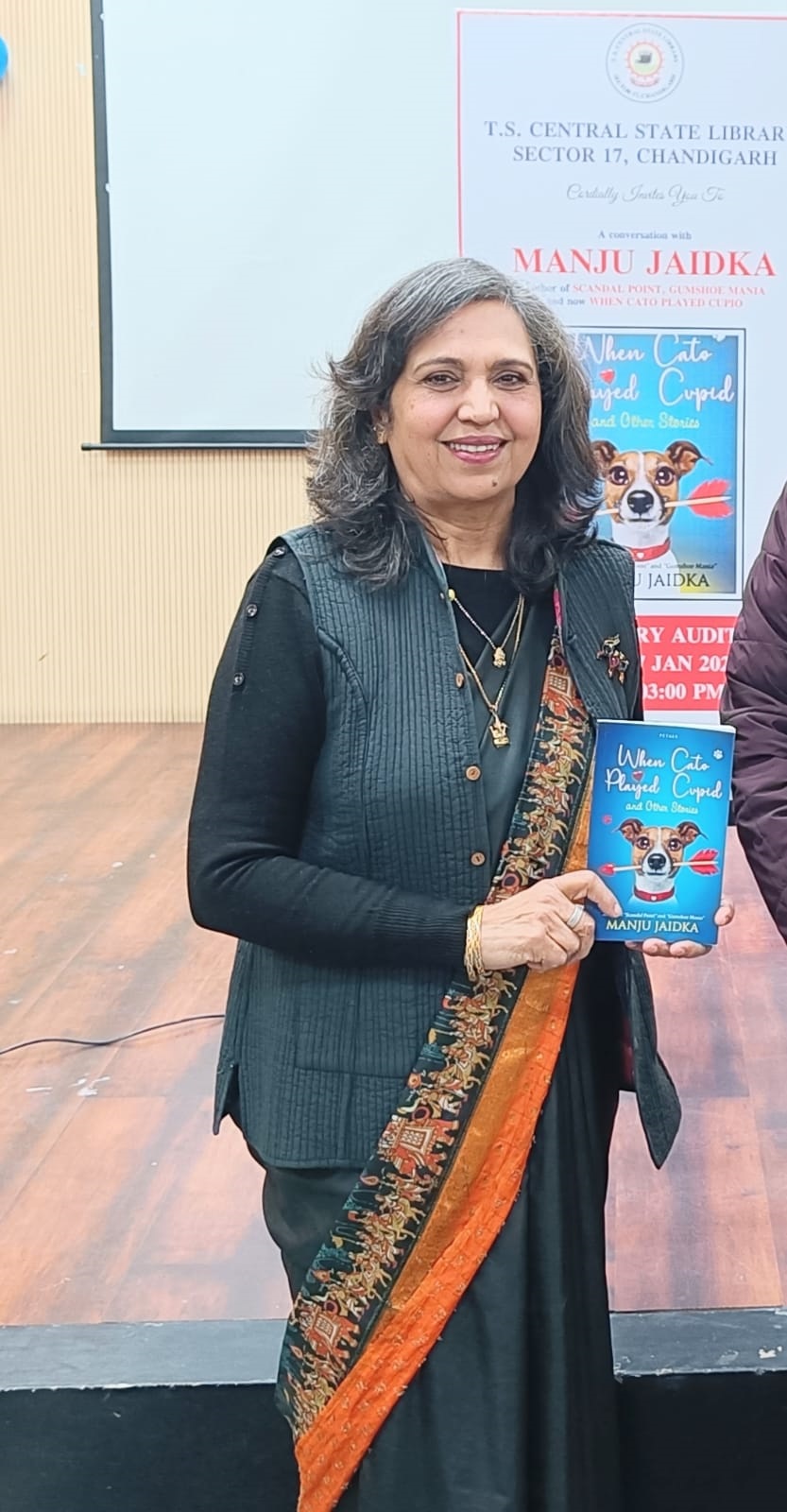
Dr. Manju Jaidka’s book, “When Cato Played Cupid” released

Chandigarh: The prolific writer, educator, Fulbright scholar, and internationally acclaimed author of nearly two dozen academic and fiction books, Dr. Manju Jaidka’s latest collection of short stories was released here at the Central State Library.

Dr. Manju Jaidka, now a Senior Professor and Dean at Shoolini University, Solan, HP, is a former Professor and Chairperson of the Department of English, Panjab University. She is the recipient of several national and international fellowships, including a Fulbright, and two Rockefeller awards. She is the author of more than twenty-five books and more than sixty research papers published in reputed national and international journals. As a creative writer she has authored two collections of poems, a play, and four novels, including Scandal Point (2011), Amaltas Avenue, (2014), and Gumshoe Mania (2021). Her non-fiction publication titled The Next Milestone (2017), was commissioned by the WHO, on the management of disability.  As the Chairperson of Chandigarh Sahitya Akademi from 2008 to 2015, Jaidka curated and held annual Literature Festivals, an exercise that she continues at Shoolini University.  She also serves on the advisory board of several international organizations and organizes international academic conferences annually.

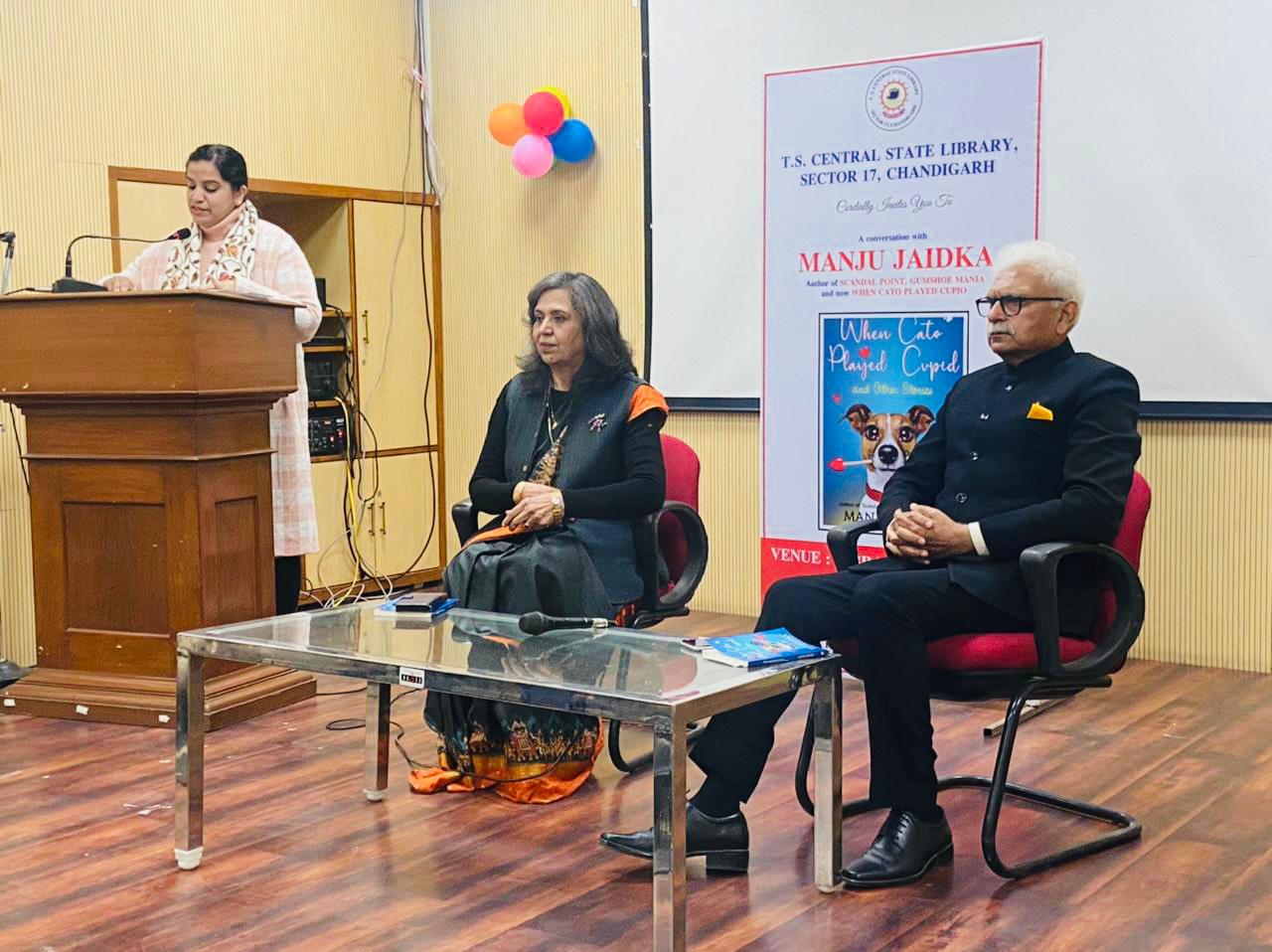
Chancellor and Vice Chancellor of Shoolini University, Dr P.K. Khosla and Prof. Atul Khosla, noted author and ex-IAS officer Vivek Atray, Col. D.S.Cheema, Librarian of State Library Dr. Neeza Singh, along  with many noted writers and lovers of literature were present on the occasion.

Dr. Manju Jaidka in conversation with senior journalist, columnist, political analyst and former Resident Editor of Indian Express Vipin Pubby brought out the inspirations and the triggers that made her right such engaging and human interest stories with most of them inspired by true life events. The anthology contains twelve short stories that capture shades of human emotions and life’s realities that led her to pen down into engaging narratives.

Vipin Pubby brought to the fore the story of a senior police officer who molested a young girl and did his best to bury the crime through pressure tactics and harassment of girl’s family and got away with a mere six months imprisonment.

These are the moments of catharsis for a writer, Manju said, when you find yourself helpless in the face of social injustice, the writer has the responsibility to unveil such stories of human deprivation and injustice.  There are stories inspired by real-life incidents like that of 12 migrant labourers losing their lives just a few distances away from their home village, as also some light-hearted ones like the title story of a dog named Cato, “When Cato Played Cupid”.

Dr. Jaidka shared that her next book is a novel on the Shoolini University campus, where she heads the Department of Liberal Arts.  “I have lots of stories simmering within me that emerge from my daily busy work schedules and interactions, and at some stage, they precipitate into a poem, play, a short story, or a novel,” she remarked.

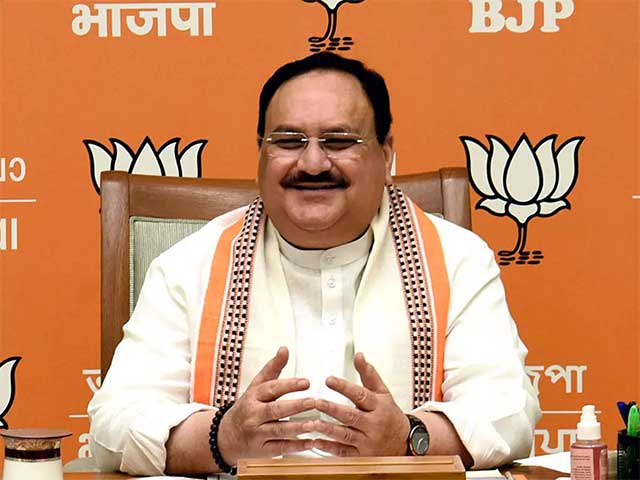
Bengal Panchayat Polls : Nadda to kickstart BJP’s campaign from Nandigram

New Delhi: The BJP is all set to deploy its central leaders in West Bengal to campaign for the panchayat polls as well as the 2024 Lok Sabha elections in the state.
Prime Minister Narendra Modi, Home Minister Amit Shah, National President J.P. Nadda and other central leaders will campaign in the state for the panchayat elections, a source said.
According to the source, the party will hold 40 big rallies across Bengal. Nadda will kick off the campaign from Nandigram in January. Later, Prime Minister Modi, Shah and other leaders will hold meetings across the state.
The panchayat polls will be crucial as it is being seen as a “litmus test” for both – the TMC and the Opposition BJP – ahead of the 2024 Lok Sabha elections.
In 2019 general elections, the BJP managed to win 18 out of the 42 Lok Sabha seats in West Bengal. In 2021, the Mamata Banerjee-led Trinamool Congress registered its third consecutive victory with a sweeping majority in the state Assembly polls.

MOST POPULAR

HOT NEWS