Saturday, December 27, 2025

Each life matters! Don’t hit and drag accident victims, help them

A major factor that prevents most drivers from helping someone they have hit is the fear of mob fury. If the public doesn’t take the law into its hands and let the police do its duty, a lot more lives will be saved

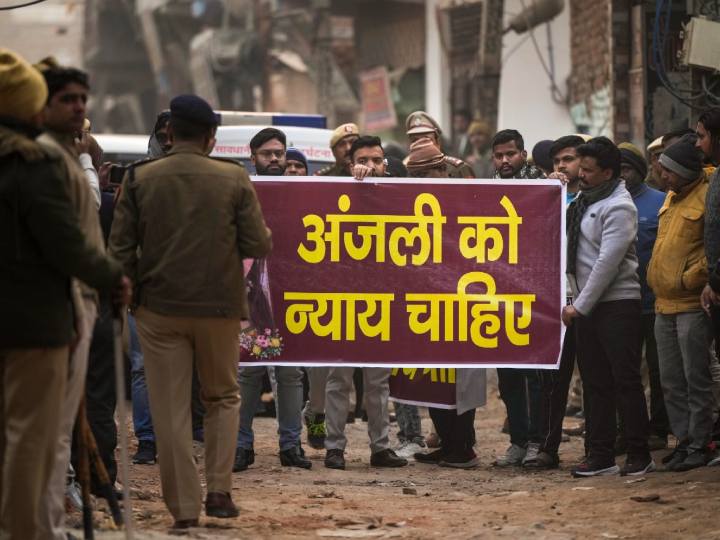
The autopsy report of Anjali Singh reads like a macabre scene from a particularly gory horror film. In the wee hours of New Year’s day, the 20-year-old died a horrific death after her scooty was hit by a Baleno car, resulting in her getting trapped under the vehicle and then being dragged for more than 12 kilometres over the potholed roads of Sultanpuri by a group of heartless young men who knew that she was under the car but did nothing to help her.

Anjali suffered grievous injuries and her brain matter was missing as her skull had got fractured. As per the post-mortem report her ribs were exposed from her back as clothes and skin peeled away from being dragged. Her lungs had popped out and both the legs were separated from her body. Anjali, who was the sole breadwinner of her family, died of shock and hemorrhage after being dragged under the car till her lifeless body got dislodged and was found lying on the road in Kanjhawala.

Imagine being Anjali’s mother and receiving the body of a beloved child in such a horrific state. How do you ever live with that?

The tragedy is that this was a needless death. According to automobile and accident experts, Anjali went head first under the car after being hit by the Baleno. Her leg got caught in the axel so she couldn’t get out on her own. If only the driver and the occupants of the car had shown a little humanity, a little respect for a human’s life and extricated her or called the police for help instead of dragging her screaming and crying under their car for two hours. If only… then that ambitious and lively young girl would have been alive today. It was a needless, senseless death. It could have been prevented if only the men in the car had valued human life.

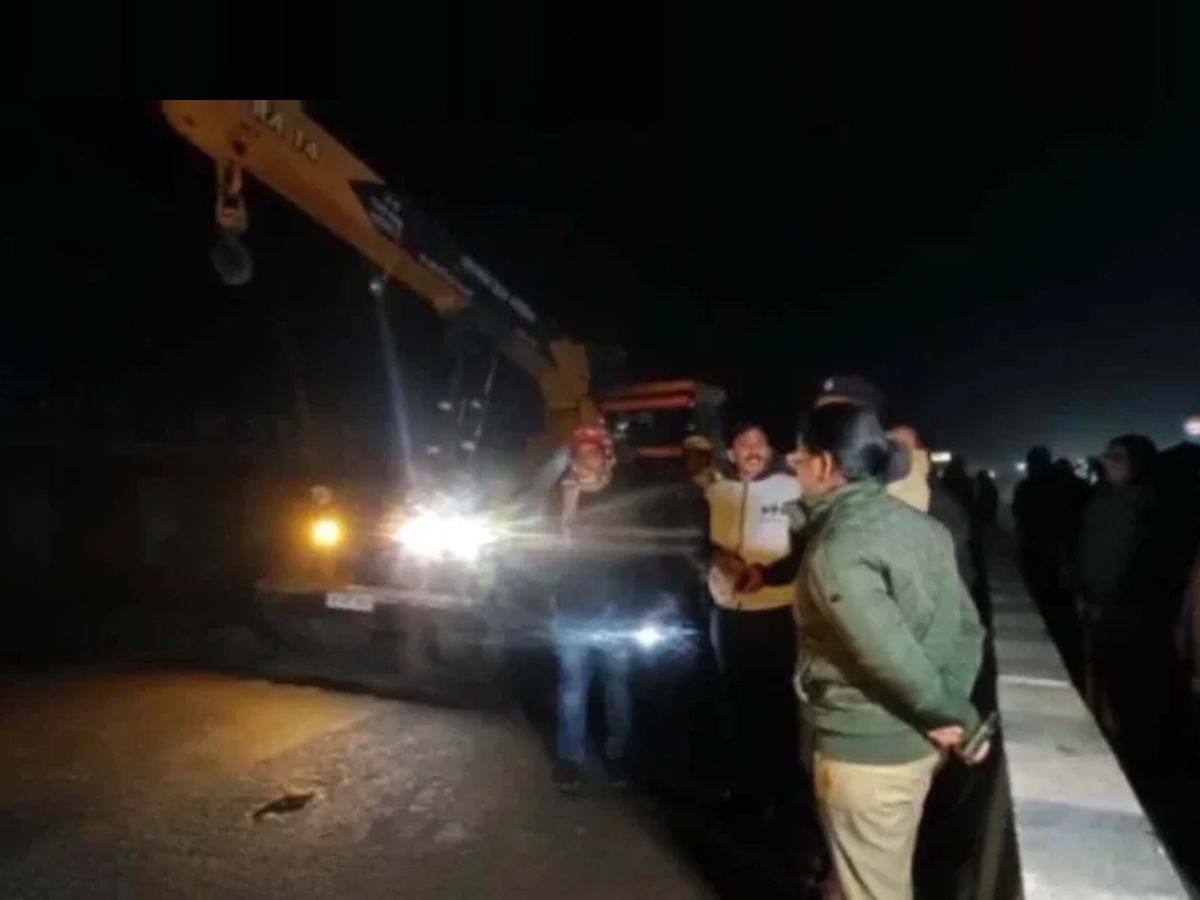
On the same day, a 24-year-old Swiggy delivery executive was killed after a car hit his bike and dragged him for 1 km in Noida. Kaushal Yadav was on the Sector 14 flyover around 1 a.m. on New Year’s night when his bike was struck by a car which proceeded to drag him, before the driver stopped near a temple and fled. The young man was found dead by the side of the road by his family after a passerby picked up Kaushal’s phone and called them up. If the driver had shown the humanity and decency to stop the car after hitting Kaushal, he might have lived.

Similarly, the life of 32-year-old Pushpa Devi, a mother of two small children who recently lost their father to Covid, could also have been saved if only the truck driver who hit her scooty from behind had shown some decency and hit the brakes. In a freakish rerun of the Anjali case, Pushpa and her scooty got trapped under the truck and were dragged by the vehicle for 3 kms! The driver actually sped up till the scooty and the truck caught fire. The truck driver and cleaner jumped out of the burning vehicle to save their precious skin while the only thing that remained of the mother of two was a bit of flesh. Another very precious life, needlessly lost in a hit and drag case.

These and a few other cases have come to light of late because of the Sultanpuri horror. Countless others across the country go unreported. But the cases that do grab the headlines make one wonder why is it that we don’t stop and help a person we have knocked down accidently.

Is it the fear of the law?

That hardly seems likely, especially since the punishment and fines in accident cases are minimal. Even the most stringent of them, Section 304A, which provides for the provisions for death by negligence, says, “Whoever causes the death of any person by doing any rash or negligent act not amounting to culpable homicide, shall be punished with imprisonment of either description for a term which may extend to two years, or with a fine, or with both.” Bailable, cognisable, and non-compoundable are the three classifications of Section 304A of the code. Also, conviction numbers are low and most of the time police are more interested in getting an out of court settlement done because it’s easier for everyone. In the few cases where there is conviction, most people walk free after a nominal fine or a few days in prison.

Or is it that we don’t care for human life anymore and have become desensitized and selfish?

What else can explain the behaviour of the accused in the Anjali case? They knew she was under the car and according to the eyewitness they moved the car back and forth two-three times in a bid to dislodge her from under the vehicle. Then they took off, not caring about the fact that there was a live human under the car screaming and writhing in pain.

Hitting Anjali was not something they did deliberately. It was an accident. They should have just called the police who in turn would have safely got her extricated from under the car. She would have been injured for sure, but at least her life would have been spared. They would have been punished by law for drunk driving sans a licence at the most. But they compounded the error by dragging a human being over 12 kms of potholed roads, resulting in her excruciatingly painful death.

That said, I would like to highlight a major factor that prevents most drivers from helping someone they have hit. It’s the fear of mob fury where the janata janardhan decides to mete out “instant justice.”  Irrespective of whose fault it was, it is the driver of the bigger vehicle who has to bear the brunt of the public’s anger, which is mostly expressed in a violent manner.

The public has no business taking the law in their hands and beating up a driver. Let the police come and the guilty driver be punished according to the law of the land. A lot more lives will be saved because most hit and run and hit and drag cases occur because of this fear of mob fury. Fear of the law in such cases is secondary. The first instinct is flight out of fear. This is something that came to the fore in the Anjali case too. The accused men told the police that they knew that she was under the car but they did not extricate her because they were afraid that someone might see them!

So, in a way, our own behavior is also to be blamed for what happens after an accident. And we need to change that to save more lives because today, India ranks first in the world when it comes to traffic deaths. If the figures released by the Ministry of Road Transport and Highways (MoRTH) are anything to go by, in 2021, a whopping 69,635 two-wheeler drivers died, which is 45.1% of total road accident deaths. MoRTH data revealed 13,716 pillion fatalities and 29,124 pedestrian deaths in 2021, which is up by 17.1% from 25,858 in 2019.

As a nation, we also need to become more disciplined on the roads and learn to follow traffic rules, because MoRTH lists overspeeding, careless lane changing, wrong-side driving, mobile phone use, drunk driving and jumping traffic signals as some of the reasons behind fatal accidents.

In fact, in some countries abroad when you join a driving school they show you videos on how not to drive, and to the embarrassment of red-faced Indians the footage is of the roads in our country!
Cyclists and two-wheeler riders need to ask themselves how many times have I changed a lane without bothering to check if there was a vehicle coming from behind. How many times have I turned without giving an indicator or showing a hand? How many times do I weave in and out of traffic and scrape past vehicles without caring for the consequences? How many of our cyclists actually bother to put life-saving reflectors on their bicycles? And what about those life-saving helmets that are required to be worn, both by the rider and pillion rider of a two-wheeler? According to MoRTH, out of the 69,635 riders killed in 2021, a whopping 47,000 were not wearing helmets!

Also, who among us has not been forced to slam the brakes in order to avoid hitting that ubiquitous auto rickshaw that came in front of us, literally out of nowhere! And E-rickshaw drivers are unlicenced menaces let loose on the roads of the country in the name of protecting the environment. They are “unlicenced to kill” while the bus and truck drivers of the country have a “licence to kill.”

Car drivers, too, need to learn disciplined driving. Just because you are secure in your car with a seat belt and an air bag to protect you in case of a crash doesn’t mean that the roads are yours to do as you please. It’s not OK to overspeed. It’s not OK to turn without an indicator. It’s definitely not OK to change lanes recklessly and it’s certainly not fine to drink and drive, talk on the phone, eat, apply make-up or be distracted in any way.

That said, various Government bodies cannot be let off the hook too. We need better roads and not unlit ones with huge potholes like the ones through which Anjali was dragged. We need better policing to ensure the safety of citizens. Anjali’s horrific death took place on a night when there was heavy police bandobast. The accused men, one of them a BJP convenor, passed through four police stations even as an eyewitness followed the car for an hour reportedly alerting the PCRs and 112 helpline 22 times, but to no avail.

Also, it is time for legislators to re-examine the sentencing policy under the provisions of the Indian Penal Code dealing with accidents to stop the growing number of deaths and make Indian roads safer for the public. Maybe it’s time those causing deaths willfully, like in hit and drag cases should be charged with homicide.  And in order to make sure that the case is watertight we should consider making dashboard cameras legally binding so that the circumstances of the accident can be determined and if need be, used as evidence. To this end, we can make use of existing technology that can record vehicle speed, acceleration, deceleration etc, by making it legally admissible, much like the Black Box in an airplane.

It is our collective responsibility to make our roads a safer place for all: Men, women, children, the elderly, pedestrians and drivers alike. Because each life matters!


All eyes on Apex Court as Punjab, Haryana dig their heels on SYL

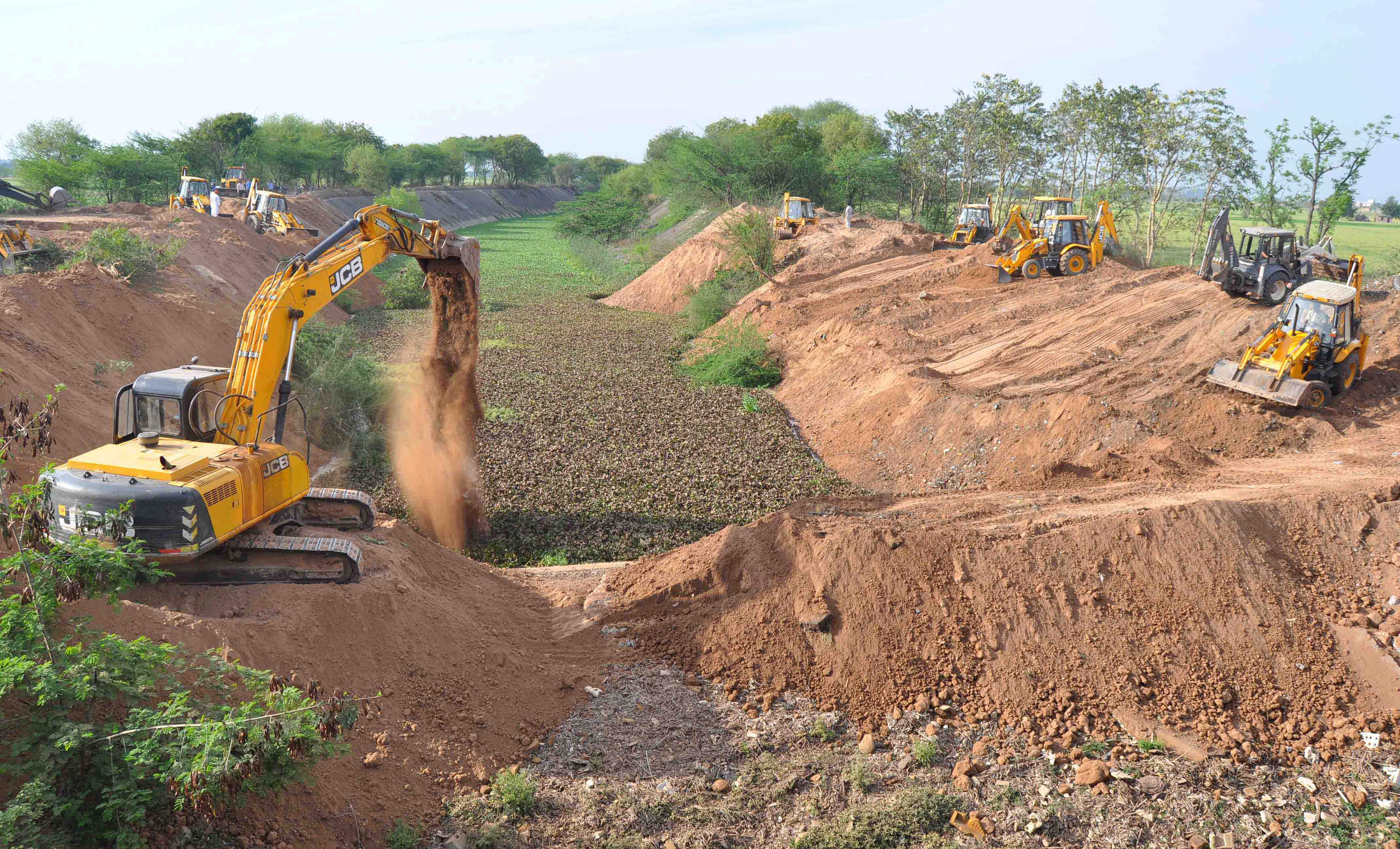
With Punjab and Haryana once again sticking to their stand on the vexed issue of now-defunct Sutlej-Yamuna Link canal – through which the water of Ravi and Beas rivers was to be shared between the two states – the stalemate over the issue has deepened,, writes Rajesh Moudgil

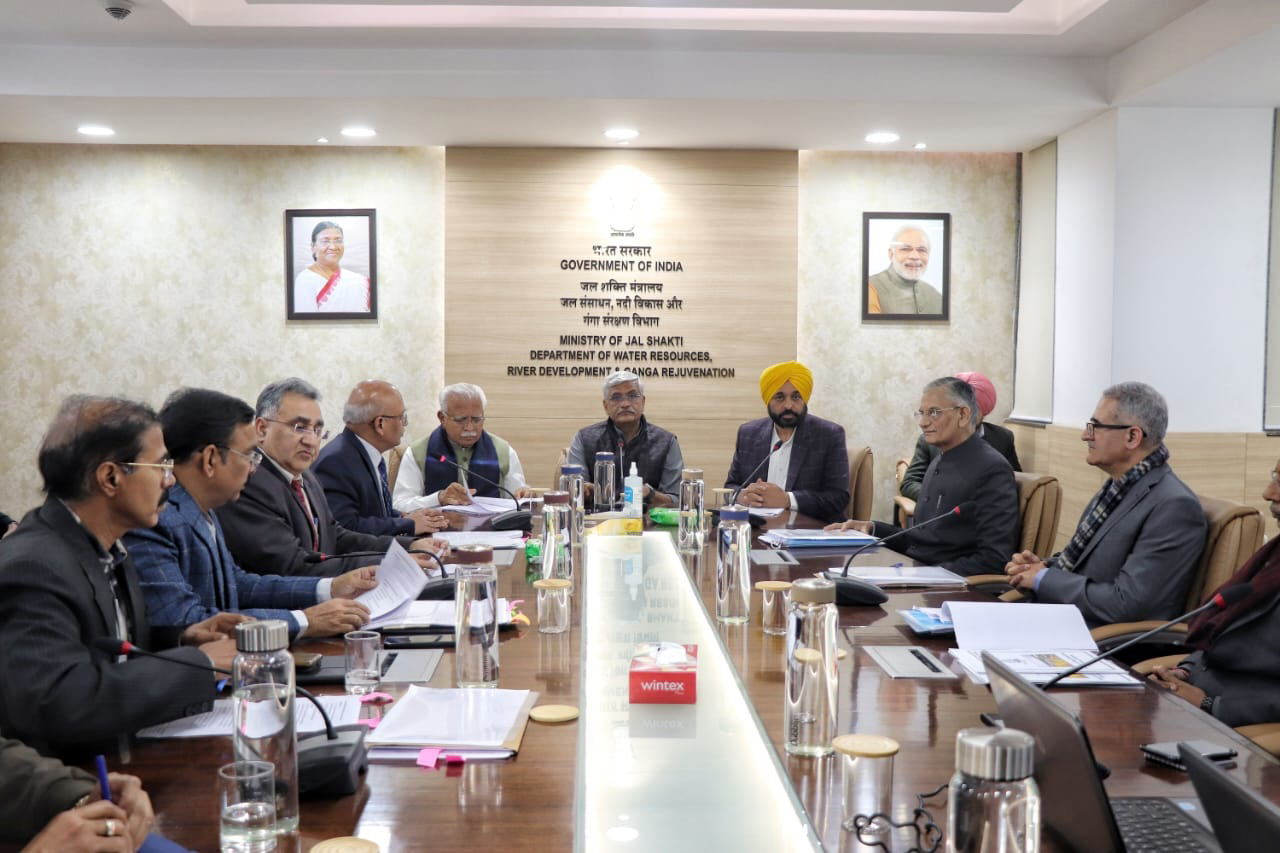
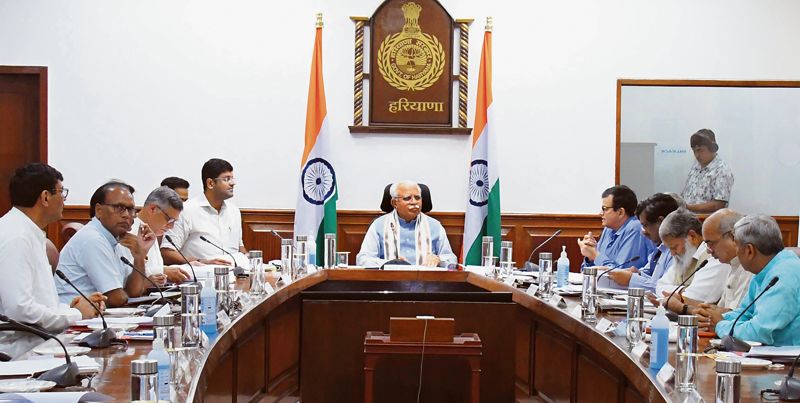
The recent meeting chaired by Union Jal Shakti minister Gajendra Singh Shekhawat with the chief ministers of Punjab and Haryana – third meeting since the Aam Aadmi Party (AAP) formed its government in Punjab last year – on the 26-year old vexed issue of SYL, fell flat, once again.

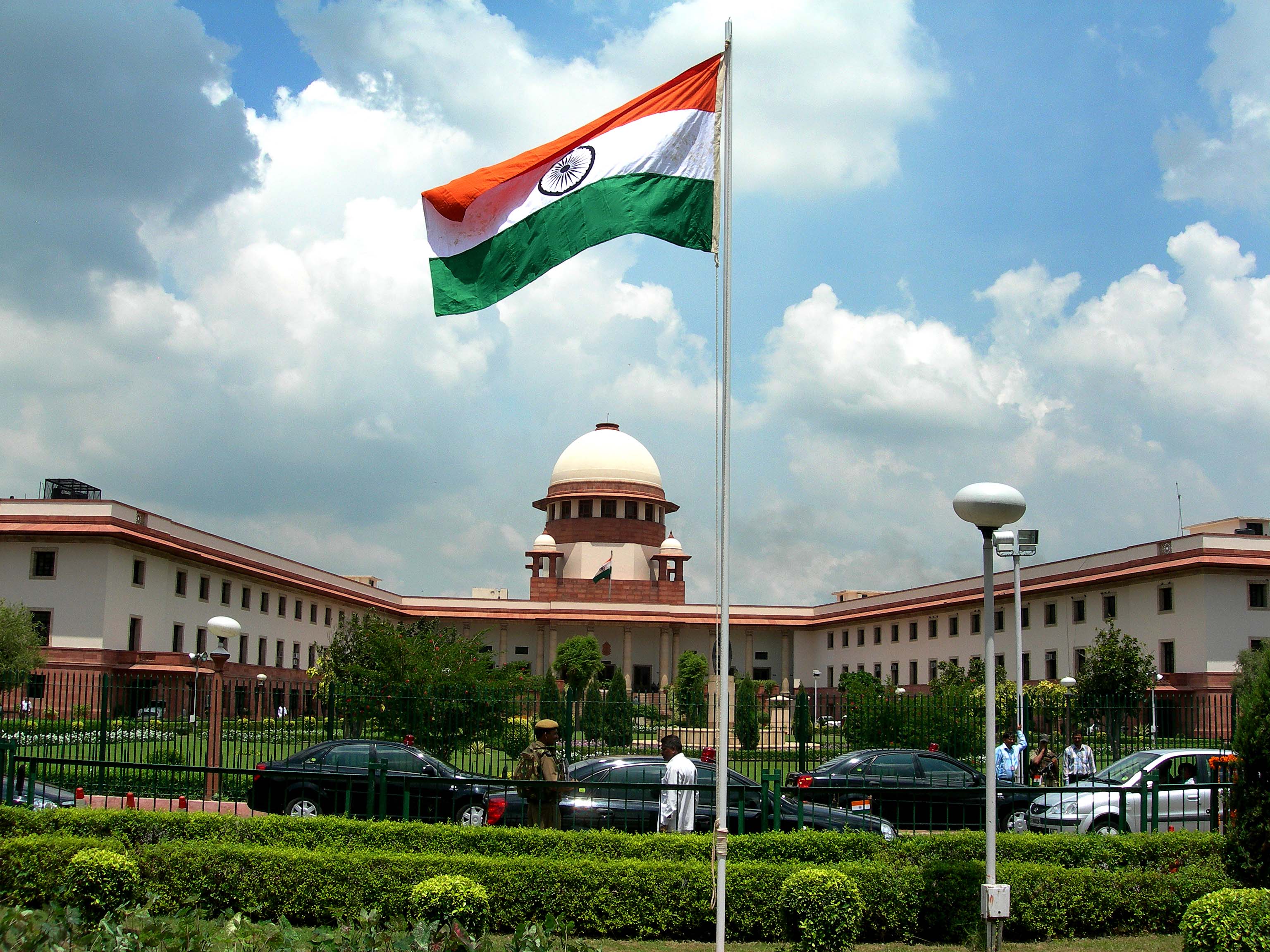
While the riparian state Punjab chief minister Bhagwant Mann held that the state did not have even a single drop of spare water, his Haryana counterpart Manohar Lal Khattar held that getting water through the said canal was Haryana’s right. He rued Punjab’s refusal to accept the directions of the Supreme Court of India which had come in Hayana’s favour.

However, Mann maintained that more than 78% of our 150 blocks were in extreme dark-zone due to depletion of ground water-table in Punjab over the years, therefore the state could not afford to share its water with any other state.

Elaborating upon state’s latest statistics, he further held that when the agreement on water sharing between the two states was signed decades ago, Punjab was getting 18.56 million acre feet (MAF) while Punjab now got 12.63 MAF, and Haryana was getting 14.10 MAF water from Sutlej, Yamuna and other rivulets.

Khattar, on the other hand, pointed out that Mann was avoiding to discuss the key issue – SYL canal – and was instead bringing up the issue of water sharing for which a separate tribunal had been set up upon recommendations of which, the water sharing would be done He further complained that Punjab was not accepting the SC’s decision which was in favour of Haryana.

No SYL, talk about YSL: Mann

Bringing up a new standpoint, Mann, this time, fought for changing the nomenclature and proposal of the project. He held that instead of the SYL canal, the project should now be conceived as Yamuna-Satluj-Link (YSL) canal.

Stating that Satluj river had already dried up, hence no question of sharing even a single drop of water from it, he said that rather, the water from Ganga and Yamuna should be supplied to Punjab through Satluj river.


Stating that the state had a centuries old canal system due to which even the districts at the center of the state fell on the tail end of canal water, Mann bemoaned that the Union government had not given even a penny for the rejuvenation of the canal system, due to which farmers were suffering. He said that there were 14 lakh tube wells in the state which were pumping water regularly to fulfill the irrigation needs of the state and make the country self-sufficient in food production.

He also pointed out that due to availability of surplus water, Haryana was encouraging the sowing of paddy, while Punjab had been appealing to the farmers to adopt less water-guzzling crops. Moreover, in all the water agreements across the globe, a clause was mentioned that the agreement would be reviewed after 25 years in wake of climate changes, he further held.

SYL is Haryana’s right: Khattar

Haryana chief minister Khattar, however, held that in spite of two Supreme Court judgments in favour of Haryana, Punjab had not completed the construction of SYL canal and instead, had tried to obstruct their implementation by enacting the Cancellation of Agreements Act in 2004.

Referring to the provision of Punjab Reorganization Act, 1966, he said that according to the order of the Government of India dated March 24, 1976, 3.5 MAF of water was allocated to Haryana out of the surplus water of Ravi-Beas. However, due to non-completion of SYL canal, Haryana was using only 1.62 MAF of water and Punjab was illegally using about 1.9 MAF of water from Haryana’s share.

Khattar added that it was due to this, Haryana had not been able to take its 1.88 MAF share of water while Punjab and Rajasthan were using about 2600 cusecs of water from Haryana every year.

If this water had reached Haryana, it would have been used to irrigate 10.08 lakh acres of land, Khattar said adding that due to non-availability of this water, the groundwater level in South-Haryana was also going down considerably and farmers of Haryana irrigated by using expensive diesel and running tubewells with electricity, which incurred an additional burden of Rs 100 crore to Rs 150 crore.

Political overtones

The Punjab chief minister further took on the then Congress and Shiromani Akali Dal governments, accusing them of conniving with each other to hatch conspiracy against the state in the context. He went on to allege that the scion of Patiala royal family and former chief minister, Capt Amarinder Singh, who was Member of Parliament at that time, had also welcomed the then prime minister for ground breaking of this. Mann took a dig at the two parties saying that it was ironic that those people who had hailed this decision were now offering unsolicited advice to him.

SYL Stalemate Timeline

Haryana was carved out of Punjab in 1966 and the said water-sharing agreement was inked in 1981 for the effective distribution of water according to which a 211-km long SYL canal was to be constructed by Punjab (121 km) and Haryana (90 km) in their respective territories.

Subsequently, while Haryana constructed its portion around June 1980, Punjab suspended the SYL canal work, leading to multiple cases and agitations.

The Supreme Court in a decree issued in 2002 ruled in favour of Haryana and directed Punjab to construct the SYL canal within a year. This decree came on a suit filed by Haryana in the year 1996.

In June 2004, the SC reiterated its earlier decision while dismissing a suit filed by Punjab seeking discharge from its obligation to construct the SYL Canal. However, in 2004 only, the Punjab assembly passed a law by which it cancelled the agreement with Haryana over SYL. This law went to the SC by way of a Presidential reference and got decided in November 2016.

Holding the Act as unconstitutional, it said that a state, which is a party to the litigation or an agreement, could not unilaterally terminate the agreement or nullify the decree of the highest court of the country. In July 2019, the SC while dealing with the 1996 suit filed by Haryana against Punjab noted with anguish that its January 2002 decree remained unexecuted till date and that while the court had been passing several orders since 2017 (after the Presidential reference judgment) to work out some amicable settlement between the states, the same had failed to yield any results.


Politics not reaching anywhere, nor does the SYL issue

The Congress and SAD are unrelenting in pinning down the AAP government on every issue. But on SYL, CM Mann loses no opportunity in accusing both parties for ‘anti-Punjab’ role they played during their respective rule in creating and complicating the issue, writes Raju William

Not a drop of water has flown through Satluj-Yamuna Link (SYL) canal, a stillborn water channel between the states of Punjab and Haryana, yet the politics over more than four-decade-old vexed issue is still alive. It originated during the Congress rule at the Centre. Shiromani Akali Dal (SAD) and its political ally for long, Bharatiya Janata Party (BJP) too cannot escape the blame of failing to find a political way out. The Aam Aadmi Party (AAP) is a new  player on the political chessboard.

While Haryana has stuck to its stand that the construction of SYL must be completed by Punjab in compliance with the Supreme Court order, the AAP government led by Chief Minister Bhagwant Singh Mann has categorically said “the state does not have even a single drop of water to share with Haryana.” Its construction was suspended in 1990 during the wave of terrorism. Two top officials of the project and some workers had lost their lives.

“More than 78% of our 150 blocks are in extreme dark zone due to depletion of ground water table, so Punjab can’t afford to share its water with any other state,” said Mann while briefing the media about January 4, 2023 meeting with his Haryana counterpart Manohar Lal mediated by Union Jal Shakti Minister Gajendra Singh Shekhawat. This was the third inconclusive meeting between the chief ministers of both states in the wake of the Supreme Court (SC) decision on the construction of the SYL.

Even as the SAD, with its traditional farmers vote bank, has been making it an election issue comparatively more forcefully than its political competitors, this grand old Punjab-centric party faced the worst defeat in the Assembly elections in February 2022. It could win only three out of the total 117 seats. And the Congress fared no better. It could retain only 18 seats out of 77 it held in 2017 Assembly elections.

Punjab’s political equations have since 2022 changed from being historically bipolar with the AAP becoming a dominant third force with formation of its government with a thumping majority. With an eye on the next available electoral opportunity, be it Municipal Corporation elections due early this year or 2024 parliamentary elections, the Congress and the SAD are unrelenting in pinning down the AAP on every issue arising from its actions. The SYL issue is the prominent one. In this political slugfest, the AAP is not expected to take things lying down. It reacts with equal force, if not more, in condemning the alleged anti-Punjab role both parties have played during years of their rule in creating and complicating the issue.

“Former Chief Minister Parkash Singh Badal had allowed survey of the canal to appease his friend and Haryana leader Devi Lal. Former Congress Chief Minister Captain Amarinder Singh, who was Member of Parliament at that time, had welcomed the then Prime Minister (late Mrs. Indira Gandhi) for ground breaking of this sinister move,” commented Mann after a recent meeting of both chief ministers. Captain Amarinder Singh is now a BJP leader.

Continuing his scathing political attack, Mann alleged, “These leaders have sown thorns before Punjab and its younger generations by indulging in this unpardonable crime. For the sake of their vested interests these selfish political leaders have prepared distress for the state.” In the same breath, he asserted the state government led by him would defend the interests of the state well before the apex court too.

Meanwhile, desperate to regain the lost political ground, the SAD is seen being more critical of the AAP leaders Mann and Arvind Kejriwal than the BJP-led Centre on the issue.  “As leader of the party (SAD) that has led historic Morchas to protect Punjab’s lifeline,  I warn you not to enter into any negotiations aimed at giving our river waters to any state in violation of the nationally and internationally accepted Riparian Principle,” said Sukhbir Singh Badal, former Deputy CM and president of his party.

Countering Mann’s argument of Punjab having no surplus water to share, Badal further commented, “Availability is of course an issue, but only if Punjab concedes that other states have a right over our river waters. This will be a dangerous concession   …by shifting the focus from Punjab’s rights on its river waters to its availability factor, the AAP government is deliberately confusing the issue to destroy the very foundations of Punjab’s case. All river water disputes across the country and even globally have been solved only as per the Riparian Principle. Why should an exception be made in Punjab’s case?”

For the Congress, it has become a political necessity to sound different from the AAP, the SAD and the BJP to maintain its identity as the main opposition party. For the purpose, it has to add political value, different from others, to what it says. The party wanted Prime Minister Narendra Modi to tell Haryana CM “to drop SYL demand at once.” Seeking the PM’s intervention, its Leader of Opposition, Partap Singh Bajwa said, “The PM had the golden opportunity to right many wrongs done against Punjab to deny the state its bonafide rights over its river waters.”

He lashed out at Mann for his way of handling the issue. “Instead of making absurd statements on SYL, Mann must present Punjab’s case with legal arguments.” His comment is being seen with reference to Mann having suggested Yamuna-Satluj-Link (YSL) as an alternative to SYL in the chief ministers’ meeting.

The ongoing controversy has had repercussions in Delhi too where the AAP national chief Kejriwal is the chief minister. Reacting to his statement, Haryana CM said that if Kejriwal has any formula to resolve the SYL issue, he should share the same with Mann who should share the same with Haryana whenever the next meeting is held. Also, if not with us, then Kejriwal can also share the same formula with the SC. Notably, incharge of the AAP in Haryana too had batted for SYL in his state’s interest in much the same way incumbent Punjab BJP president did in the favour of his state.

The Congress or the SAD with its ally, the BJP, have been in power in Punjab, the Centre and simultaneously in Haryana too at different points of time. Still, an amicable solution remained elusive. In 1976 during the Emergency period, the Congress government at the Centre allegedly misused powers under section 78 of the States Re-organisation Act, 1966. A notification was issued giving 3.50 MAF water to Haryana and 0.20 MAF water to Delhi from the Punjab’s share of 7.20 MAF. “A careful study of the notification shows that this arbitrary decision was taken in complete disregard to law, justice, facts and Riparian principles,” commented Kahan Singh Pannu, former IAS officer who has served as Secretary, Agriculture Department, Punjab.

Parkash Singh Badal government had, in 1977, challenged this notification in the SC but his government fell in 1980. Surprisingly, the subsequent Congress government in Punjab headed by the chief minister Darbara Singh withdrew this case at the behest of the then Congress government at the Centre. After this, decision to dig 214 kilometre long SYL was taken and its foundation laid by Mrs. Gandhi in 1982 at village Kapoori in Patiala district.


Playing with colour and verse

While Sadhvi Pragya tore into Hindi film industry over besharam rang song, a headmaster in Pilibhit in UP got into trouble with the VHP for asking children to recite a poem penned by poet Iqbal. Where are we headed?

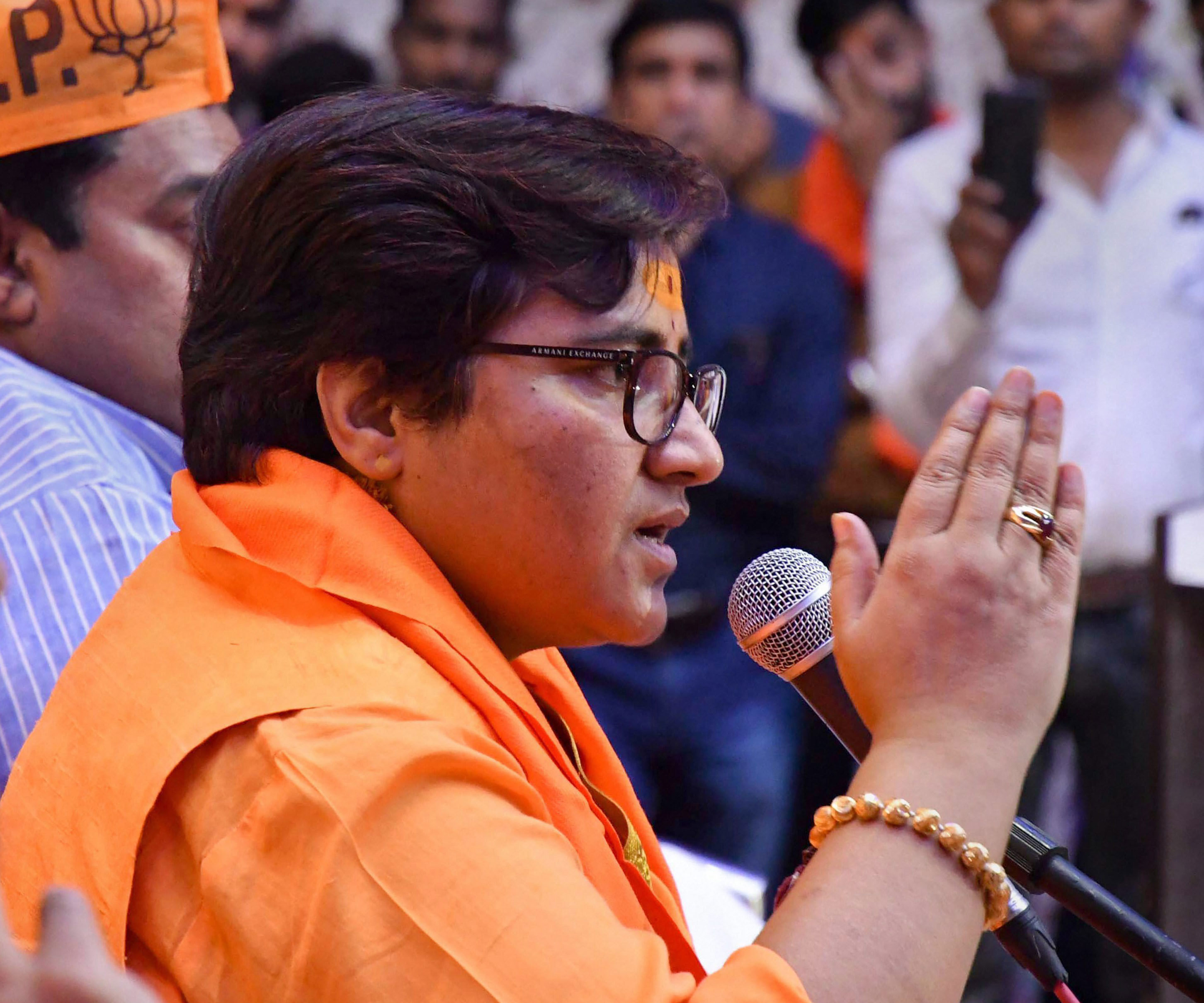
“Kick them in the stomach, destroy their businesses and never watch any of their films” : the latest from Sadhvi Pragya as she lashed out at the Hindi film industry and its self-styled Kings .

But when it comes to Sadhvi Pragya, it is always a no-holds barred situation.

Remember her asking Hindus to keep knives sharpened at homes ready to use them against those who attacked them? Read Muslims or as she said “those who do love jihad”.

Sadhvi Pragya, as Pragya Singh Thakur is better known, is a BJP MP who has a penchant for controversy. Therefore when she jumped into besharam rang, a shameless colour one, with her kick them in the stomach remark, it fit in.

Gerua or the saffron colour is synonymous with the BJP.

Finding its roots in religion, the saffron flag adorns many Hindu temples across India. The Rashtriya Swayamsevak Sangh, the parent organisation of the BJP, embraced it as its own calling it the bhagwa dhwaj or the saffron flag.

Even though religion has no colour, saffron willy-nilly came to be associated with sanctity and in turn Hinduism. Conservative households, till date, considered it auspicious. Huge idols of God Hanuman, for instance, are painted saffron.

Politically, colours play a huge role and are deftly used for electoral gain, particularly with the BJP gaining a foothold.

The saffron Party, as the ruling Bharatiya Party is commonly known, has exploited this symbolism to the hilt.

Apart from flagging its religious connotation, the BJP has associated bhagwa with nationalism and in one stroke made Hinduism and nationalism synonymous if not interchangeable.

However, till BJP’s saffron drive, red was associated with the Left parties, it being the colour of revolution.

Again, when Mayawati steered the Bahujan Samaj Party to power in Uttar Pradesh, she painted the state blue at least notionally. Even the grey elephant, her election symbol, were washed in a blue hue.

The Samajwadi Party, again a regional outfit like Mayawati’s BSP, uses green as its colour.

But green has wider ramifications and that too religious, given that it is the colour of Islam and in that sense one that the Muslims rightfully claim as their own.

On a larger scale, the conflict is between the saffron and the green or as hardliners would say: Hindus versus Muslims.

Traditionally at loggerheads, the divide has sharpened since the BJP’s ascent to power. It is this divide the BJP, Pragya Thakur, included, is exploiting for political gain.

In the eye of a storm is Bollywood and its interpretation of the saffron colour.

The current controversy relates to a song from a Shah Rukh-Deepika Padukone starrer Pathan.  

Padukone, allegedly clad in a saffron-coloured bikini, is dancing to the song Besharam rang,  which the BJP chooses to interpret as being derogatory.

Literally translated, Besharam Rang means shameless colour. The BJP’s nuance: saffron is being degraded and decried as a shameless colour by Bollywood.

However, what BJP wilfully chose to ignore is that the colour is not the focus of the song given that it is one of the many bikinis Padukone adorns in different colours of which saffron, rather orange, just happens to be one. Hence its rant about saffron being a shameless colour is unfounded.

Had the BJP not raised the colour controversy, the saffron rather orange bikini would have escaped attention. Or the bhagwa ka apmaan, insult to saffron, spiel: “Bhagwa rang pehan kar badan ki numaish”.

However one must concede that there is substance to the badan ki numaish: exhibiting one’s body, bit.

Politics apart, the number that is being traded off as scintillating is plain vulgar to say the least. And for an artist of Padukone’s calibre to go for moves as she has in the song does display artistic bankruptcy. And about the so-called King Khan, the less said the better.

But then to expect the BJP to be rational is asking for the moon.

Panning out alongside is yet another set of lyrics and herein it is neither about colour nor verse: it is about the poet himself and worse still, his being a Muslim to put it bluntly.  Enough ground for the BJP to rake up an issue.

This time around it was no one as glamorous as Padukone nor as reigning as Khan but a nondescript headmaster of a school in Pilibhit in the state of Uttar Pradesh.

Taking up cudgels against him was a Hindu right wing Vishwa Hindu Parishad leader.

His grouse: the headmaster asked the children to recite a poem penned by poet Mohammad Iqbal instead of the national anthem in the morning assembly.

Following the complaint, the headmaster was suspended.

His plea that the poem, Lab pe aati hai dua, was part of the Urdu syllabus and had been recited in the past, cut no ice. Or the fact that the practice of kids singing Lab pe aati hai dua, and Itni shakti hamen de na data along with the national anthem has been in place since 2011.

It is pertinent to point out that in the government school in question, majorly has Muslim students on its roll.

What is glaring is that the VHP protagonist termed the poem as a “madrassa prayer”, one that is recited in religious schools run by Muslims.

In the process, the fanatics forgot that verse knows no religion and cuts across narrow boundaries.

Muhammad Iqbal, better known as Allama Iqbal, is one such poet who penned “Sare Jahan se achcha hindustan hamara… hindi hain hum…” 

And how can one overlook the fact that it was Iqbal who translated the Gayatri Mantra from Sanskrit to Urdu Or the fact that he was of Hindu lineage, his grandfather being a Kashmiri Pandit?

Having said that one cannot ignore the criticism that Iqbal propagated the two-nation theory and also wrote Tarana-o-Milli some six years later where instead of Hindi hai hum it was Muslim hai hum…

And it is at this point that several questions come up.

Should writers, poets and thinkers subscribe to only one point of view? Don’t they have a right to look at the other? Will India now subscribe to only those who think Hindustan and reject those who have a worldview?

Iqbal sure propagated the creation of Pakistan but isn’t he well within his rights to articulate what he thinks is in the “best interests of the Muslims of India and Islam”, as he said at the Muslim League’s annual session? Or change his mind about a view he may have held in the past?

Going by the RSS-VHP-BJP conglomerate, he or anyone else does not have that right.

Ostensibly, the objection and subsequent suspension of the headmaster was because the national anthem was replaced but the real reason lies somewhere else: that perhaps being that Allama Iqbal took precedence; the school has a substantial Muslim presence and more so the headmaster is a Muslim. So it seems to be solely a target Muslims agenda playing out.

Irrespective, the questions that stare hard in our face are: Where are we headed? Will this end or will the situation worsen by the minute even as the BJP continues increasing its number-tally?

If Allama Iqbal is being held for advocating an Islamic state then how does one absolve those who are converting India into a Hindu monolith bit by bit and brick by brick?

The answers are there for everyone to see, the writing on the wall clear except those who wish not to see or read will always rake up frivolous issues of colour and verse


Pak’s Ukraine role may help it rake in liberal US aid

The Pakistani collaboration with Ukraine has coincided with the permission to the USA to use drones to fly to Kabul for eliminating the al-Qaida leader, Ayman al-Zawahiri, a successor of Osama bin-Laden, writes Gopal Misra

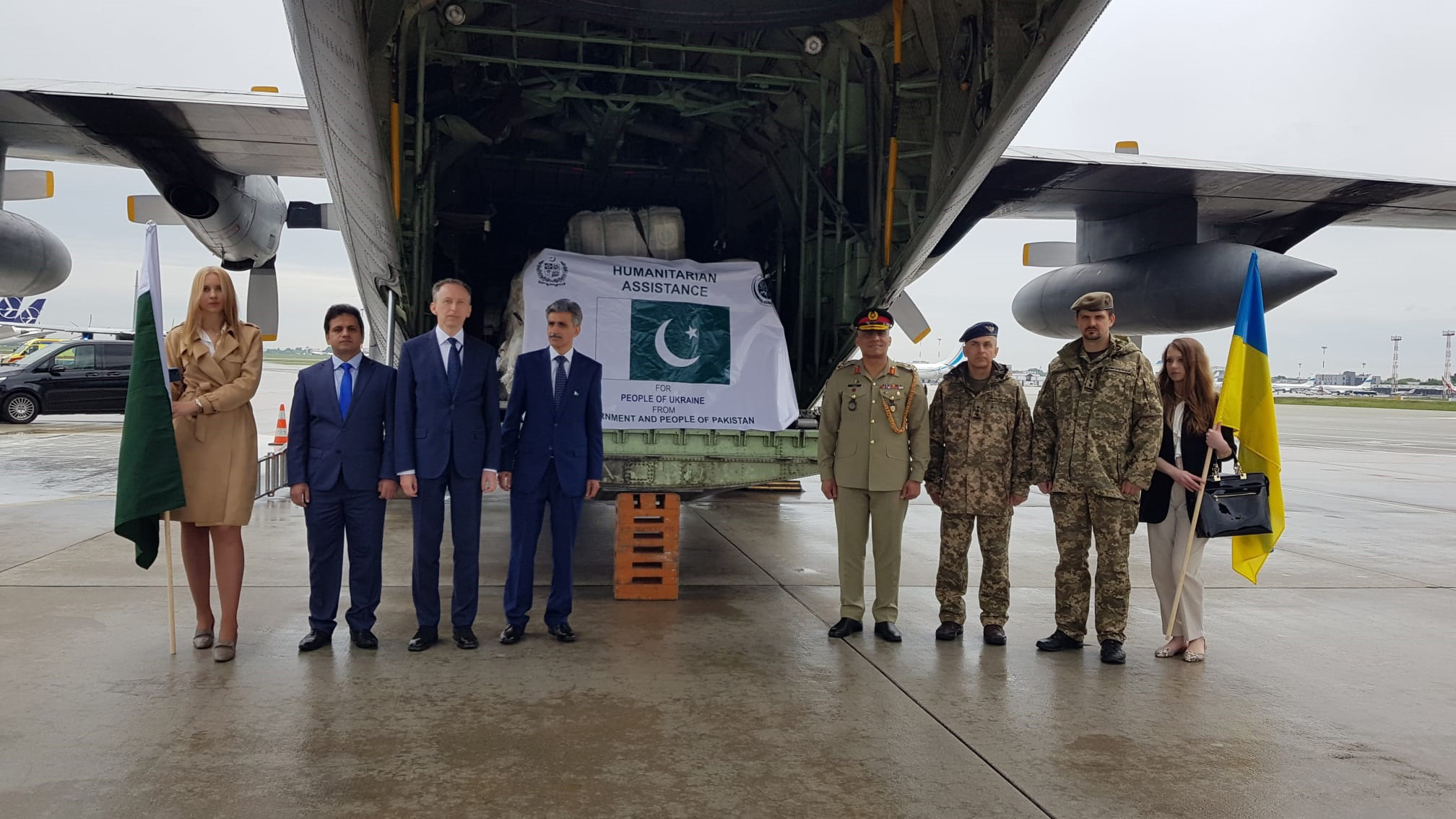
For Pakistan, New Year 2023 ushers in with a renewed optimism that ‘Happy Days’ with bags of American dollars pouring in anytime. It is hoped that the country’s clandestine participation in the ongoing Ukraine-Russia War would soon be rewarded by the estranged US-led western powers.

It is yet to be ascertained that the numbers of sorties, the British Royal Air Force transport carrier, Globe-master, has so far taken from Pakistani airfields since August 2022. The scanty media reports available in the public domain indicate Pakistan has been loading high-tech weapons accompanied by explosives to Ukraine. These transport carriers also carry about two hundreds paratroopers in each flight.

The Pakistani collaboration with Ukraine has coincided with the permission to the USA to use drones to fly to Kabul for eliminating the al-Qaida leader, Ayman al-Zawahiri, a successor of Osama bin-Laden. It may be recalled that PM Imran Khan, a protégé of the army, had described the Al-Qaeda leader, Osama bin-Laden, a martyr, and the exodus of the US forces from Afghanistan as the symbol of freedom for the Muslims of the region. However, the Tehreek-i-TalibanPakistan (TTP), an ally of the ruling Afghan Taliban, became so piqued by the drone attack that it has not only ended the ceasefire, it has initiated military operations against the army in various parts of the country.

Bajwa’s Initiative

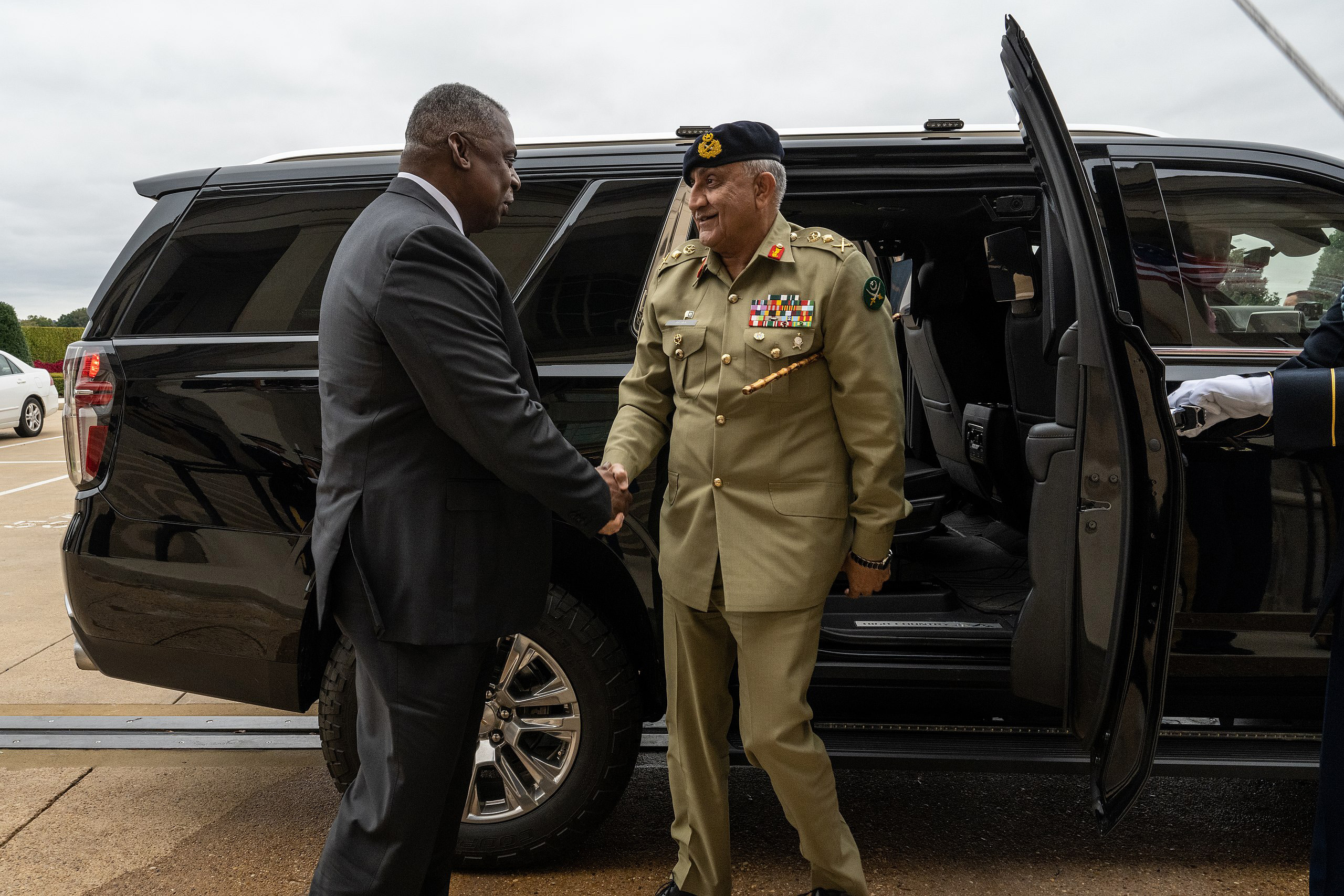
The credit of Pakistan’s new thaw with the western powers, especially with the USA, goes to the erstwhile army chief, Qamar Jawed Bajwa. Before demitting his office in November, he travelled to Washington for restoring the old alliance. Due to Pakistan’s policy of ‘running with the hare and hunting with the hound’, had irritated the successive American administrations, which repeatedly asked its ally to  “do more” in Afghanistan in tacking the Islamic terror groups. Irritated by this non-compliance, the liberal assistance from the US-led westerner powers had been reduced. It is hoped that with the renewal of closer ties with the USA, the current financial crisis will ease in coming months.

Unfortunately, Bajwa is admitted to the military hospital following the collapse of his closer ties with Khan, but is being widely appreciated in the Pakistani media that his diplomatic offensive just on the eve of his superannuation has saved his resource-starved country; thus with the American dollars, hitting new heights, the optimism in Pakistan of renewed liberal funding from the US is going up even in this January.

Indian Concerns Ignored

India has repeatedly been protesting to His Majesty’s PM, Rishi Sunak, a British prime minister of an Indian origin, in London, but has so far has not got any encouraging reply. The policy makers of the South Block, the headquarters of the foreign office in New Delhi, appear to have reconciled that the Sunak Government would continue and be following the Pentagon’s advice, perhaps, more sincerely than other NATO allies, France and Germany. He had recently been to Ukraine to meet its president, Volodymyr Oleksandrovych Zelenskyy, a 43-year old comedian-turned politician, holding the high office since 2019. He reportedly reviewed the military supplies to the country and promised more assistance in 2023.

Meanwhile, the State Department in Washington has assured Pakistan of more financial and defence assistance to tackle the TTP.  With these assurances from the USA, the visit of the Pakistani army chief, Asim Munir, to Saudi Arabia in this January becomes quite significant. It is not just for ensuring uninterrupted oil and gas supplies on a deferred payment or on no payments, but to remind the world’s major oil producing country that how Pakistan had been serving its strategic and financial interests by sending Sunni Islamic terrorists to Iran, a Shia country. It is an opportunity to reciprocate for the services of Pakistan, which is in need of the crucial support of its allies. .

He may also be assuring the USA that Pakistan had no intention to obtain cheaper oil from Iran or Russia; however, it might get the Russian oil through the Saudi companies buying Russian oil.

Meanwhile, it may be noted that in his bid to prove his loyalty to the GHQ, the present Shehbaz Government has recently allowed the luxury cars to be imported for the army generals despite the millions of Pakistani, the flood victims, facing the bitter January cold being exposed in open even without tents. It is also being alleged that the relief material donated by the western powers has been siphoned off by the corrupt officials.

No Tough Action against Taliban

It is being stated that initially the army’s reluctance to effectively tackle the TTP could be that the situation should be allowed to be aggravated for drawing the American attention. It could be the new ‘key’ for accessing the American treasury. With the America economy booming due to the country’s exports of oil and gas to its allies in Europe on exorbitant rates, the USA does not need any financial contribution from its NATO partners for giving financial assistance to Pakistan.

It means that Pakistan may now again be enjoying the financial benefits accrued to it during its Afghanistan operations against the USSR in 1979, but this time its jihadists and military officers are being made active in a far off region, Eastern Europe. Even if they are not fighting, Pak army officers have been assisting the Ukrainian army in using the new weapons supplied through the big transport planes, globe-master.

India is rightly apprehensive of these new developments, because the spin offs of the European war might also hit the Asian region. However, the Pakistan generals have to realize that this time, instead of the USSR; they would be challenging Russia, a close ally of Iran. It may also be noted that the Iranian drones supplied to Russia have been making the Ukrainian forces suffer much more than was expected. If Russia could stalemate the USA in the Middle East, it might help Iran and the Afghan Taliban to aggravate the situation for Pakistan on its close borders.

Pakistan on a Razor’s Edge  

It is yet to be known whether the present army leadership in Pakistan can repeat the old policy i.e. supporting the terrorists as well serving as a key player in the American War against terrorism. It had supported the terrorists in ousting the USSR from Afghanistan, thus was able to enjoy unprecedented financial benefits from its patrons. However, this time, Pakistan’s military offensive against Russia under Putin could cause much more harm to it than what it had faced during its operations against the USSR. It had been enjoying financial bonanza from America, especially during the post 9-11 attacks on New York; but Pakistan allying against Russia in Ukraine and against the TTP, its own creation, might aggravate the discontent in the sensitive areas of Khyber Pakhtunkhwa,  Balochistan and even in Sindh. The possibility of a full scale rebellion in these provinces cannot be ruled out.

Pakistanis and their patrons in Washington are depending upon the possibility of Russians influence further declining the Central Asian region following the eruption of the Russia-Ukraine War in February 2022. They foresee growing alienation of the region with Russia. The focus is increasingly now on non-Russian alliances such as the Organization of Turkic States, a 13-year old outfit. But despite these observations, Russia remains the main player in the region.

For India’s policy makers, Pakistan’s renewed zeal for allying with the western powers might become their nightmare with the rise of terrorism knocking at her doors.


National capital Delhi minimum temperature 1.4 degree, season’s lowest : IMD

Amid a fresh cold wave, the minimum temperature in the national capital on Monday plunged to 1.4 degree Celsius, the season’s lowest so far, according to India Meteorological Department (IMD).

While the Safdarjung Observatory recorded 1.4 degrees, the minimum temperature around the Palam area was recorded at 5.3 degree Celsius.

The IMD has predicted a fresh spell of dense to very dense fog and cold wave conditions very likely over northwest India till January 18.

“The minimum temperatures are in the range of 7-10 degrees over many parts of Punjab, Haryana, Chandigarh, Delhi, Uttar Pradesh and Bihar; in some parts over East Rajasthan and West Madhya Pradesh. They are in the range of 3-7 degrees over many parts of West Rajasthan. The lowest minimum temperature of -0.7 degrees observed over Churu (West Rajasthan), ” said the IMD.

The IMD has also issued a warning of dense to very dense fog very in isolated or some parts during night and morning hours over Punjab, Haryana and Delhi and Uttar Pradesh for the next five days.

“Dense fog very likely in isolated pockets during night & morning hours over Bihar during next five days; Jammu & Kashmir, Himachal Pradesh, Uttarakhand during next 4 days and Gangetic West Bengal, Odisha, north Madhya Pradesh, Assam & Meghalaya and Tripura during next 2 days.

“Cold day conditions very likely in isolated pockets over Punjab and Haryana-Chandigarh during next five days; Uttarakhand and Rajasthan during next 2-3 days and Uttar Pradesh during January 16-18, ” the Department added.

Khattar govt in a spot over sexual misconduct slur on Minister

Though CM Khattar has thrown his weight behind Minister Sandeep Singh after a junior woman coach accused him of molesting her, the incident has sullied the image of the BJP-JJP government in Haryana besides giving a handle to the opposition, writes Rajendra Khatry

The alleged molestation of a junior woman coach  by Haryana Sports minister Sandeep Singh has tarnished the image of the BJP-JJP  government in Haryana that professes protection of women and girl child and promotes `Beti Bachao, Beti Padhao’ scheme in the state.

With serious allegations levelled against him, protecting Sandeep Singh at this stage may cost BJP dear in future. The Congress, INLD and AAP are sure to raise the matter aggressively. The Bharat Jodo Yatra of Rahul Gandhi has strengthened the Haryana Congress and any negative impression now against the government will damage BJP’s prospects in future elections.

The opposition parties too have got a new stick to beat the coalition government. Haryana Khap panchayats opened a front against Sandeep Singh and demanded his arrest and sacking from the cabinet. The decision taken in the Dhankhar-12 khap was also supported in the Sarv Khap Mahapanchayat held in Jharoda village of Delhi later.

Haryana is a powerhouse of sports and the Haryana government takes credit for promoting a sports culture. But in this embarrassing incident, a sports minister is pitted against a talented woman coach.

What is worse is that the BJP-JJP government has given the impression of protecting Sandeep Singh even before the probe report is out. Chief Minister Manohar Lal gave him a clean chit. He said a person is not guilty till his crime is established. “An investigation in the case is going on. Mere allegation cannot make a person guilty’’, he told the media. Despite pressures from the opposition, khaps and supporters of the coach, the CM said he will wait for the probe report before taking any decision in the case. The CM said for a fair probe he had already taken away the sports department from Sandeep  Singh.

On his part Sandeep Singh also did everything to thwart all moves to get trapped despite serious allegations, but later under tremendous pressure for his ouster and arrest, he did step down from the sports department after he was named in the sexual harassment case by a junior coach, but not as a minister. He retained the department of Youth Affairs to remain a minister in the Haryana cabinet. Now his Sports portfolio has been taken over by the Chief Minister.

The coach gave a complaint to the Chandigarh police. The statement recorded by the junior coach was very disturbing. According to her, “he (Sandeep Singh) touched my thighs and said he liked me. He also asked me not to run here and there and said that he would get me sponsored and also help me get my Instagram account verified if I made him `happy.’ He also tried to kiss me forcefully but I pushed him away. He also told me that other girls (players) never said no to him.”

Chandigarh SIT later identified the person who offered a bribe of Rs 1 crore to the victim to keep her mouth shut and it has sent notice to the person to join the investigation. SIT  questioned Sandeep Singh for 7 hours at the Sector 26-police station. It also took into custody two mobile phones of Singh to check the deleted chats with the coach.

The coach had alleged that former Olympian, Sandeep Singh, a minister in the Haryana coalition government had harassed her from February to November 2022. He had allegedly sent repeated messages on social media to her and had touched her inappropriately. She kept quiet for a long time, but finally came out in the open.

Once the allegations came out, Sandeep Singh, a first time MLA and minister from Pehowa in Kurukshetra gave up his sports portfolio on “moral grounds”, according to him. He also termed the allegations against him as an attempt to spoil his image. He expressed hope that there will be a thorough investigation into the matter.

Later on the complaint of the coach, the Chandigarh Police booked Singh under sections 354 (assault or use of criminal force against a woman with intent to outrage her modesty), 354 A (sexual harassment), 354 B (compelling her to be naked), 342 (wrongful confinement) and 506 (criminal intimidation) of the Indian Penal Code (IPC).

Sandeep Singh has had a brilliant career as a hockey player of repute. Earlier in the year 2004 in Athens, Singh created a record by becoming the youngest Indian hockey player to represent the country in the Olympics. Then In 2005, he made headlines when he became the highest scorer in the Junior World Cup. He scored as many as 10 goals. This earned him the nickname of ‘Flicker Singh’. Singh was later included in the senior hockey team for the 2006 Hockey World Cup.

But a freak accident changed his life. On 22 August 2006, Singh was travelling from Chandigarh to New Delhi, by the Kalka Shatabdi Express, to join his teammates when a Railway Police Force (RPF) officer who was seated behind his compartment accidentally pulled the trigger while cleaning his rifle. The bullet hit Singh in his spine.

Sandeep Singh was later admitted to PGIMER in Chandigarh. The doctors expressed fear that he could be paralysed for life from the waist down which may destroy his career. The courageous Singh survived the accident though. The worst did not happen. He did not lose hope. He recovered slowly.

With the help of physical rehabilitation and a strong will he got back to the field again and also found his place back in the national hockey team. In the 2008 Sultan Azlan Shah Cup he emerged as the top scorer. Then next year under his captaincy, India won the prestigious Sultan Azlan Shah Cup. India also made its way to the Olympics. He played for some more years and then retired in the year 2016.

In the year 2019 Sandeep Singh joined the BJP and contested the elections from the Pehowa assembly segment. He was successful in his maiden attempt and defeated Mandeep Singh Chatha who was the son of Congress leader and former Haryana Speaker HS Chatha. Despite being a first timer, he was inducted into the BJP-JJP coalition government’s Cabinet as the sports minister and Minister of Printing and Stationery (MoS) (Independent Charge).

A biographical movie `Soorma’ was made on Sandeep’s life in 2016. It starred  Diljit Dosanjh and Tapsee Pannu in lead roles. He also participated in a reality show later.

Meanwhile a Sarvajatiya Mahapanchayat was recently organised at Shaheed Udham Singh Memorial in Haryana in support of former captain of the Indian hockey team and Sports Minister Sandeep Singh where hundreds of people demanded from the Haryana government and the police administration that until the allegations levelled against the sports minister by the women coach are not proved, no person or caste should use social media or any other means against Sandeep Singh.

Sandeep has had a brilliant career as a hockey player. He was a prolific scorer. Before his political foray, Sandeep Singh had earned world acclaim as ‘Flicker Singh’ for his abilities on the hockey turf. He also remained the captain of the national hockey team in 2009 and 2010.

Singh’s drag flicks were world famous. His drag-flick speed was measured at phenomenal speeds above 145 km per hour, one of the best in the world. Sandeep’s lightning moves, dribbling abilities and skills with the hockey stick were very much evident in the games he played. But all his memorable achievements may come to nought if he is found guilty and arrested.


Graft glare sends babus into a tizzy in Punjab, Haryana

Taking a cue from their Haryana’counterpart, Punjab bureaucracy seems to be taking a shelter under Section 17A of the Prevention of Corruption Act (Amended), while defending their colleagues booked by the state VB in alleged corruption casess, writes Pawan Kumar Bansal

As per the current inputs, Vigilance Bureaus from both Punjab and Haryana have suddenly started competing with each other as they swing into action for nailing corrupt public servants including senior officers and politicians who by their actions have caused tremendous loss to the State Exchequer and usurped public money.  As on date, Punjab seems to have taken an edge over its younger sibling because of its roping in some former ministers and a couple of IAS officers whereas Haryana SVB, despite its lot of efforts has been lagging behind in this field. While Haryana has earned kudos for catching some HCS officers, who are known to enjoy powerful connections, it has not shown its grit by putting on mat any of the serving or retired IAS officers, most of whom have been enjoying unbridled powers in the regime of Manohar Lal Khattar, who seems hesitant to flex his muscles and upset the IAS Lobby.

No wonder, the Punjab bureaucracy akin to its Haryana counterpart, is making an all-out effort to use Section 17-A of The Prevention of Corruption Act (Amended) as a protective shield. When Punjab SVB booked  Neelima, a 2008 batch IAS officer, the bureaucracy reportedly questioned the action on the ground that prior permission under the above section had not been taken. The SVB action has set the cat among pigeons. Panic has reportedly struck the state bureaucracy after registration of the case and the topic is in hot discussion in informal meetings. The Punjab IAS Officers Association has conveyed its resentment to Chief Minister Bhagwant Mann over the registration of a case against their colleague Neelima in the industrial plot scam.

The Punjab Vigilance Bureau has booked former Industries Minister Sunder Sham Arora, IAS officer Neelima and 10 other government officers for transferring a prime industrial plot to a real estate company for allowing it to establish a township by carving out plots.

The Punjab Civil Services Officers Association has gone on mass casual leave for a week against the move of vigilance bureau for not taking any sanctions before arresting Narender Singh Dhaliwal, Regional Transport Authority, Ludhiana. The association has described the action of vigilance bureau as “Illegal, wrongful and arbitrarily” as it had been taken on the basis of a mere statement of a private individual and without adopting a due procedure”.

They have also taken the plea that vigilance bureau has not taken permission from the government u/s 17-A of the prevention of corruption act, which says that no police officer shall conduct an investigation or inquiry in any offence alleged to have been committed by a public servant under this act without the prior approval of competent authority which is the chief secretary. Interestingly, section 17-A prohibits investigation without prior permission in case the officer is in discharge of his official duties. The vigilance bureau sources point out that indulging in corruption is not covered under this act.

Section 17-A of the Prevention of Corruption Act says, “No police officer shall conduct any inquiry or investigation into any offence alleged to have been committed by a public servant under this Act, where the alleged offence  is relatable to any recommendation  made or decision taken  by such public servant in discharge  of his official duties, without the previous approval of the  government.”

A similar stand was taken by the  Haryana bureaucracy while denying sanction for prosecution in the case of an HCS officer, Amrinder Singh, who during his posting as a DTO, was booked for allegedly charging money for allowing safe passage to overloaded trucks. The Haryana Chief Secretary office while denying grant of sanction for prosecution of the suspended HCS officer, the Chief  Secretary directed the Director General of Vigilance Bureau, Haryana to fix responsibility of those who were involved in arresting the officer without seeking prior  permission  and for “apparent wilful violations” of the provisions of the Prevention of Corruption Act.

However,  the Haryana CM after seeking legal opinion from the Advocate General, Baldev Mahajan, took a strong stand and gave  sanction for prosecution of the HCS officer. It is reliably learnt that some Punjab IAS officers are regularly in touch with their Haryana counterparts for consultations as the developments have thrown  a challenge to the supremacy of the hitherto “privileged class “.

Some bureaucrats admit that IAS officers are given numerous ‘tips” during their training at Lal Bahadur Shastri Academy, Mussoorie, to cover up their various acts of omissions and commissions e.g. loopholes in taking sanction under the above section of the P.C Act.
In a related development, the Haryana government has given sanction for prosecution in a case related to allotment of a school site in Gurugram against rules. The role of a senior IAS officer, who was heading Haryana Shahari Vikas Pradhikaran at that time, has been highlighted in the FIR, registered by SVB Gurugram. An alleged  tout of the officer has already been arrested and investigations are underway. Chander Mohan, SP, SVB, Gurugram refused to share details of the case but “Tehelka“ is in possession of the copy of the FIR.

The Role of another IAS officer who was holding a key post in the CMO, is also under cloud in case of allotment of showroom sites in Gurugram in the year 2018 at prices of 1996. One HCS officer, who was the  Estate Officer of H.S.V.P.Gurugram , besides a top businessman who was allotted the site, have also  been booked by the SVB .

The  businessman in question has been arrested and a massive hunt is going on for the arrest of the HCS officer who has reportedly filed a petition in the Punjab and Punjab Haryana High Court for quashing the FIR registered against him. It is intriguing that three years ago, when this scam was exposed in the media, this  HCS officer was suspended but was shortly  not only reinstated but also given the additional charge of the post of Joint Commissioner of MCG, Gurugram, a lucrative post.

The influential officer had left no stone unturned to ensure that sanction for prosecution was not granted. But the Haryana CM has given him a shock of his life by giving permission for registration of the criminal case.


Cong doesn’t want to let go of momentum provided by yatra

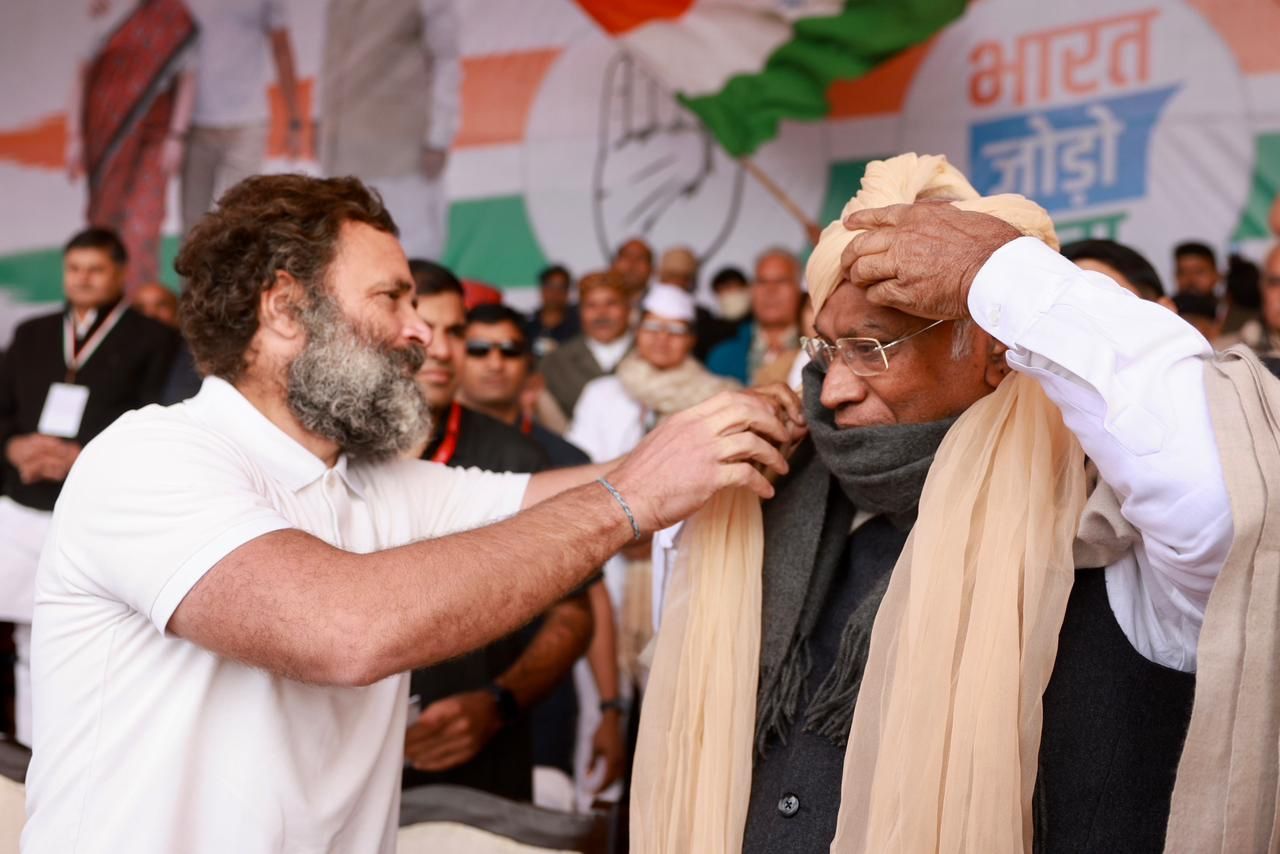
Days before the Bharat Jodo Yatra will culminate in Srinagar, the Congress party will start a two-month long mass contact program called “Hath se Hath Jodo” from January 26 to further spread the message of the 3,500 km-long foot march, writes Amit Agnihotri

Buoyed over huge public response to its nation-wide yatra that will end on Jan 30, the Congress is preparing for its next campaign to sustain the momentum generated by the 3,500 km foot march.

The yatra, which started on Sep 7, 2022 from Kanyakumari in Tamil Nadu, will culminate in Srinagar, UT Jammu and Kashmir with Rahul Gandhi hoisting the Indian flag.

Days before that, the party will start a two-month long mass contact program called “Hath se hath jodo” from Jan 26 to further spread the message of the foot march.

All through the yatra, which aimed to counter the BJP’s alleged divisive politics through the “Bharat Jodo” slogan, former Congress president Rahul Gandhi flagged issues like growing economic disparity, social disharmony and political centralization, besides unemployment and price rise to target the Central government.

“The central message – to unite the people of India – has already been achieved. The yatra now represents the voice of all the Indians,” AICC general secretary organization KC Venugopal said as the New Year began.

The leader noted that the unity factor behind the 3,500 km foot march cannot be measured in terms of either the distance covered or the number of people who joined the yatra.

“The unity factor cannot be measured through how many kilometers covered or how many lakhs of people joined but by the tears of the people whom Rahul Gandhi hugged,” said Venugopal.

The Congress leaders also claimed that the yatra had demolished Rahul Gandhi’s distorted image projected by the BJP and brought out the real person, who braved heat, rain and biting cold while walking, before the masses.

Rahul himself claimed the response of the people got better as the yatra moved from south to north India, passing through BJP-ruled states like Karnataka, Maharashtra, Madhya Pradesh, Haryana and Uttar Pradesh.

As the yatra entered Delhi, the Congress complained to Union Home Minister Amit Shah over alleged lapses in the security of Rahul Gandhi.

“There have been several breaches in the security of Rahul Gandhi. We reported the one in Delhi on Dec 24 to the Union home minister Amit Shah but he has not even bothered to reply. This is against parliamentary norms. When a national party writes to the home minister he should at least reply or ask his junior to do the needful. But in this case, a DIG of the CRPF against whom we had filed a complaint to the minister, replied,” said Venugopal.

The Congress general secretary further said the BJP had tried hard to defame Rahul Gandhi and derail the yatra over various issues, including Covid protocols, but the opposition party was determined to complete the entire stretch.

“The yatra has been a listening exercise for us. We have listened to the people and understood their problems through a large number of meetings. The spirit of the yatra has been achieved through several visits to religious and spiritual centers, interactions and performances by numerous artists and two concerts,” said Venugopal.

“Through these mass contact efforts, the yatra is a significant milestone in the Congress party’s rich tradition of representing the voice of all Indians,” he said.

So elated were the Congress veterans with the yatra, that MP unit chief Kamal Nath and Chhattisgarh chief minister Bhupesh Baghel suggested that Rahul should be projected as the party’s prime ministerial candidate in the 2024 national elections. Congress communications in charge Jairam Ramesh soon countered them saying the aim of the yatra was social mobilization and not winning elections.

New campaign

Besides the yatra which started in 2022, the Congress was upbeat over the successful election of a new party president Mallikarjun Kharge, who took charge on Oct 26, 2022 and is now driving change in the grand old party.

Kharge was not the president when the yatra was launched in Sep but has all along urged that Rahul’s effort should be supported by everyone in the party.

As soon as the yatra ends, the party will start a two-month long mass contact program called “Hath se hath jodo” to further spread the message of the foot march.

“The nation-wide yatra will not end on Jan 30. We will take its spirit forward through the ‘hath se hath jodo’ campaign where we will try to reach every doorstep and carry Rahul Gandhi’s message across the country,” said Venugopal.

Kharge has asked workers to distribute a letter from Rahul Gandhi to all the households and gather information about the family members, which will be useful for the party in future, during the new campaign.

The Karnataka unit, which will face assembly polls in April 2023, has started the ‘hath se hath jodo’ campaign from January 1 and it would serve as a pilot for the other states, which will start the new campaign from Jan 26.

The Congress will also present a charge sheet of the central government and distribute it among the masses. There will also be women’s marches at the end of the new campaign and the plan would be led by Priyanka Gandhi Vadra.

Later in the year, a west to east version of the Bharat Jodo yatra is likely.

Plenary Session

In the middle of the “hath se hath jodo” campaign, the grand old party will hold its 85th Plenary Session at Raipur, Chhattisgarh from Feb 24-26, where elections to the Congress Working Committee will be held and Kharge’s election will be endorsed.

Elections to the CWC were a key promise of new Congress president Mallikarjun Kharge when he sought votes for the top party post. Apart from that, revamping the party organization to prepare for the future challenges is also on the cards and will include having half of all office bearers at 50 years of age.

Kharge had dissolved the CWC, which had no elections for the past 20 years, the day he had joined office of party chief and replaced it with a steering committee to discharge regular functions till the plenary.

Kharge wants accountability and performance measurement of leaders at all levels. He has asked the party functionaries that organizational appointments should not become a mere ritual which does not benefit the Congress. The Congress chief has asked the functionaries to ensure that proper representation to all segments of society is given during appointment of office bearers and all the persons should feel related to the party.

During the session, the party leaders will debate six major subjects like politics, economy, farmers, security, social harmony, education and youth and come out with resolutions over the same.

Opposition Jodo

In some ways, Rahul Gandhi’s Bharat Jodo Yatra has become an ‘opposition jodo’ march as several regional parties supported the former Congress chief’s effort.

Tamil Nadu chief minister MK Stalin of the DMK participated in the yatra’s launch in Kanyakumari while NCP leader Supriya Sule and Shiv Sena Uddhav Thackeray faction leader Aditya Thackeray joined the yatra in Maharashtra.

Bihar chief minister and JD-U leader Nitish Kumar appreciated the former Congress chief while Sena’s Sanjay Raut too expressed similar views.

Actor and NMM leader Kamal Hasan joined the yatra in Delhi besides NC leader Farooq Abdullah and Sena’s Rajya Sabha member Priyanka Chaturvedi. Before the yatra entered Delhi, DMK MP Kanimozhi walked beside Rahul in neighbouring Haryana.

In UP, former chief ministers Mayawati and Akhilesh Yadav skipped the yatra but wished Rahul and thanked him for inviting them. RLD chief Jayant Chaudhary also did not attend but sent party workers to the yatra.

In UT Jammu and Kashmir, both Farooq Abdullah and PDP leader Mehbooba Mufti will join the yatra, which has also been welcomed by TMC MP Shatrughan Sinha.

Though the Congress has not started working on the larger anti-BJP opposition platform ahead of the 2024 national polls, Rahul has said the Congress is prepared to play the anchor role.

At what cost the so-called development!

Haldwani was rescued by the Supreme Court when it stayed the Nainital HC order to demolish 4300 homes in Banbhoolpura area that runs 2 km parallel to the railway line. The railway version is that they require land for railway expansion

I rather too vividly recall visiting Haldwani on numerous occasions. That was  many years back. In the company of my parents and grandparents, my siblings and I would be travelling to Nainital and Ranikhet around summer and then again during autumn.  And Haldwani was our mid-way stop.  We’d buy fruit from the roadside fruit carts and then settle down for lunch and snacks, before undertaking the last leg of the journey.

It was all too blissful and just too beautiful. Not to be overlooked is the fact that the then political climate was healthy and vibrant. Not like today’s rather too rattling scenario!

Why I have been thinking of Haldwani is because of the uncertainty and anxiety  holding out for  thousands of Haldwani residents and  their families. In fact, last week, Professor V.  K. Tripathi,the New Delhi based academic-activist who taught Physics at IIT Delhi, undertook this journey to Haldwani and he has come forth with these observations.

To quote Professor Tripathi, “ My Haldwani visit: Haldwani has been saved of a major catastrophe by a Supreme Court order on January 5, 2023, staying the Nainital High Court verdict of December 20, 2022 ordering demolition of 4300 homes in Banbhoolpura area that runs 2 km parallel to (but 150 – 200 feet away from) the railway line. The High Court acted on the PIL filed by Ravi Joshi (not the Railways). The state government decided to begin a demolition drive from January 8. Thousands of girls, women and men, filled with deep anxiety, thronged on roads…I felt relieved by the SC judgment, yet I wanted to see the ground situation and share the worries and respite of the people over there. I boarded the Ranikhet Express (sleeper coach) from Delhi on December 5, 2023 at 10 PM and reached Haldwani at 4:30 AM next morning. For two hours I stayed in the waiting room. At 7 AM I walked to Ghafoor Basti and Dholak Basti. I met working class women (mostly Muslim, engaged in daily wage labor, domestic work, rag picking). Mukesh, a wage worker, and a few others joined. They showed their jhuggis (huts) with polyethene cover inhabited by 5 to 10 people, barely managing to survive in extremely hard conditions. Some ladies were waiting at common water taps. Some people were engaged in making dholaks (drums), some were sitting around a fire. They felt relieved by the SC order.

In Banbhoolpura as I was talking to a shopkeeper (playing bhajans) came Irfan, a 40-year-old worker working on loading and unloading heavy stuff. He took me around the Basti, mostly made of brick homes, and spoke by heart. He took me to the Gola River on the other side of the rail line. The river bed is 60 feet deep and one kilometer wide but there is no water in it. In the rainy season it becomes menacing. It has a bridge for road traffic. Few years ago, the bridge broke down.

Mr. Joshi filed a PIL complaining that the residents of Banbhoolpura were carrying unlawful mining in the river that caused the damage to the bridge, a baseless allegation. Later the case was made that these homes were encroachment on Railway land. The court did not bother to call the residents or check their ownership papers…I met a wide cross section of people sitting around fires, shopkeepers, masons, teachers, old ladies, old men. Every one complained of blatant unreasonableness of the HC and insensitivity of the government. They showed me the sewer line, schools, Ara Machine shop, and hospital in the area. How could the government allow their establishment/construction if the lands were illegal?

I met the administrator and clerk in Govt Girls High School where 1100 girls study. I met the station Master. He gave only the Railways version and said that the railway expansion requires land. I met Mr. Matin Ahmad who had filed the PIL in the Supreme Court. I also went to meet Congress MLA, Sumit Hradayesh but he was away to Delhi.

At Govt. PG College I gave a talk on Science and Freedom to 150 students. At 3:20 p.m., I boarded Shatabdi for Delhi. I was happy that many Sikhs and Hindus came in support of the residents of the troubled area comprising 90% Muslims.”

*****

Unfortunately, worry is spreading further, towards other locales in Uttarakhand. To the great historic township, Joshimath. Where homes are developing cracks.  Wide-big- gaping cracks. Many residents are already in the process of being made to shift out from their ancestral and traditional homes to elsewhere. Many more helpless residents could be getting re-located

And amidst this grave tragedy, there is not just bewilderment but also sorrow and  pain. Looming large uncertainty. Queries and laments do come up: At what cost all the development talks, when our very homes are no longer safe! Useless are the political promises when our age old historic townships together with their residents, are sitting rattled! What’s the end result of this so-called development! Were we not better off in those good old days!

And before one could recover from these dismal situations in Uttarakhand,  comes this news report focusing on several  homes in  Uttar Pradesh’s  Aligarh  developing wide cracks. The affected residents of the Kanwariganj locality of  Aligarh where cracks and  fissures appeared in buildings and home structures  have  alleged that these cracks appeared  after the establishment laid a  pipeline  under the Smart  City Scheme. The news reports quoted the residents stating that the pipeline has been leaking, resulting in cracks, fissures and leaks!

Leaving you to introspect on this vital:  Weren’t we better off then, than now!


MOST POPULAR

HOT NEWS