Saturday, December 27, 2025

Army recovers arms and ammunition from hideout in Jammu & Kashmir’s Poonch

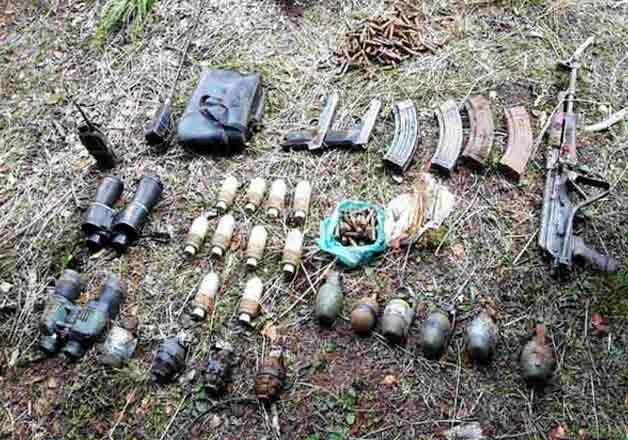
Security forces recovered a cache of arms and ammunition in Poonch district of Jammu and Kashmir on Sunday.

“Romeo Force of Indian Army and police in a joint operation busted a hideout in Surankot Sector near Sindara village in Poonch district and recovered 3 AK 47 rifles, 28 rounds, magazines, and Under Barrell Grenade Launcher (UBGL),” police said in a statement.

Poonch district is adjacent to Rajouri district where on the very first day of 2023, six civilians were killed and six others injured when militants barged into and opened fire in at least three houses of a minority community in a border village in the district.

Although a week later, the Army killed two unidentified militants in the district, the situation is far from being under control.

In Baramulla district of Kashmir Valley, Army during a joint search operation with police had recovered a huge cache of arms and ammunition on December 24.


Aam Aadmi Party MLA’s march towards Lt. Governor office

New Delhi: After the Delhi Assembly adjourned for the day, Aam Aadmi Party (AAP) MLA’s on Monday marched towards Lt. Governor (L-G) V.K. Saxena’s office alleging that the latter was creating hurdles in the city government’s works.
The AAP members, including Delhi Chief Minister Arvind Kejriwal, were carrying placards that said ‘Let the teacher go to Finland’ during the protest march.
The AAP and L-G Saxena are at loggerheads over a training visit to Finland by Delhi government school teachers.
The party alleged that the L-G had sent back the files pertaining to sending the teachers to Finland twice, citing different grounds.
“We had to send 30 teachers to Finland in March, but the L-G sent its file back with objections. Again, we submitted our reply to the objections but the L-G has again sent it back with a remark that a cost benefit analysis should be done, ” Delhi Deputy Chief Minister Manish Sisodia said.
The AAP had also alleged that both L-G and the BJP were “conspiring against” the education system of the national capital.

Tax Evasion: ‘Actor’ Sachin Tendulkar?

Tehelka SIT investigative report reveals how cricket legend Tendulkar played ‘actor’ to wangle a substantial tax relief; and how Indian cricketers have an uncanny knack of getting on the wrong side of the tax law

It all started in 2011, when the ‘Master Blaster’ locked horns with the then Assistant Commissioner of the Income Tax Appellate Tribunal. When details of the case entered the public domain, people were left wondering whether Sachin Tendulkar was only a cricketer or an actor as well? The controversy had erupted after Sachin Tendulkar claimed a tax deduction on Rs 5.92 crores he had received in convertible foreign exchange from different companies. The deduction was claimed under Section 80RR of the Income Tax Act, 1961. Section 80RR provides that if a person is a select professional, i.e an author, playwright, artist, musician, actor, or a sportsman, and he receives income from foreign sources, then authorities won’t tax the entire money he earned while exercising his profession.

However the assessing officer rejected Tendulkar’s claim. The grounds for rejection were that Sachin was a professional cricketer. Next, he did not draw income from modelling and advertising from the exercise of his profession. By merely endorsing any product in advertisement, Sachin could not claim to be an actor, the assessing officer reasoned. Tendulkar however appealed against this order in the Income Tax Appellate Tribunal.

His counsel submitted that Tendulkar had drawn income from salary, income from other sources as a cricketer and income from modelling/sponsorships shown as “Income from business/profession”. He submitted that Sachin was not a professional cricketer. And his only profession was that of an actor. Moreover, under section 80RR, a person can have more than one profession. In their final decision, ITAT agreed to the Master Blaster’s appeal and allowed him to avail deductions without issues. Further, ITAT found Sachin Tendulkar’s argument correct as it reiterated that he can be an artist as well as a cricketer. Moreover, when the little master, as he is fondly called, comes on the screen, he does not use his cricketing skills, but only his acting skills. And as the occupation of endorsing brands or products requires skills that are not cricket-related, the deductions are fair, the ITAT ruled.

Tendulkar was levied an income tax of Rs 2,08,59,707 on the income of Rs 5,92,31,211 that he earned from ESPN-Star Sports, PepsiCo and Visa in foreign currency during 2001-02 and 2004-05. With the Tribunal ruling going in his favour, Sachin saved around Rs 2 crore on income made through TV commercials.

But this was not the first time that Sachin Tendulkar had fallen foul of the income tax authorities. Earlier also, he had found himself among nearly 75000 people, including many celebrities and businessmen, who had earned their displeasure after failing to pay the tax on cars. The authority had issued notices to all the offenders for non-payment of cess on cars registered by them in Navi Mumbai. Amongst them were Sachin Tendulkar, singer and composer Shankar Mahadevan and Anil Dhirubhai Ambani Group. Sachin owns a BMW M5 luxury car. According to Navi Mumbai Municipal Corporation, the total outstanding dues because of the non-payment of vehicle tax stood at Rs 50 crore. The amount due was related to 1.5 lakh vehicles.

Before Sachin Tendulkar, cricket commentator Harsha Bhogle had tried to wear  his actor’s hat to avail tax rebate. But Bhogle’s googly was apparently hit for a six by the taxmen. The cricket commentator’s attempt to seek special exemption extended to artistes who earn from foreign organisations for their work, was rebuffed by an IT tribunal. The IT department had claimed that for seeking tax sops, Bhogle cannot compare himself with authors, playwrights, musicians, sportsmen and actors who earn from foreign organisations as he did not do any creative work. The tribunal in 2002 said that what Bhogle did was not a creative work and anybody with good English and some knowledge of cricket could commentate.

The sport of cricket nowadays is full of glamour and wealth, the factors which fuel the youth’s ambition to become a cricketer in India.

Meanwhile, Sachin Tendulkar is not the only Indian cricketer who got into the tax wrangle with authorities. There are many others who got into trouble with the government because of taxes and the issues were resolved through the court. The Board of Control for Cricket in India [BCCI] gives salaries to cricketers based on their performance in matches which encourages them to play better and bring glory to the country. Even post their services to the nation, most of them continue to live a life of a celebrity having made substantial wealth during playing days. As we all know, the more the wealth, the more it attracts taxes. Just like it is for every other tax payer, paying taxes doesn’t bring joy. Here is a list of famous Indian cricketers who got into duels with tax authorities.

Saurav Ganguly
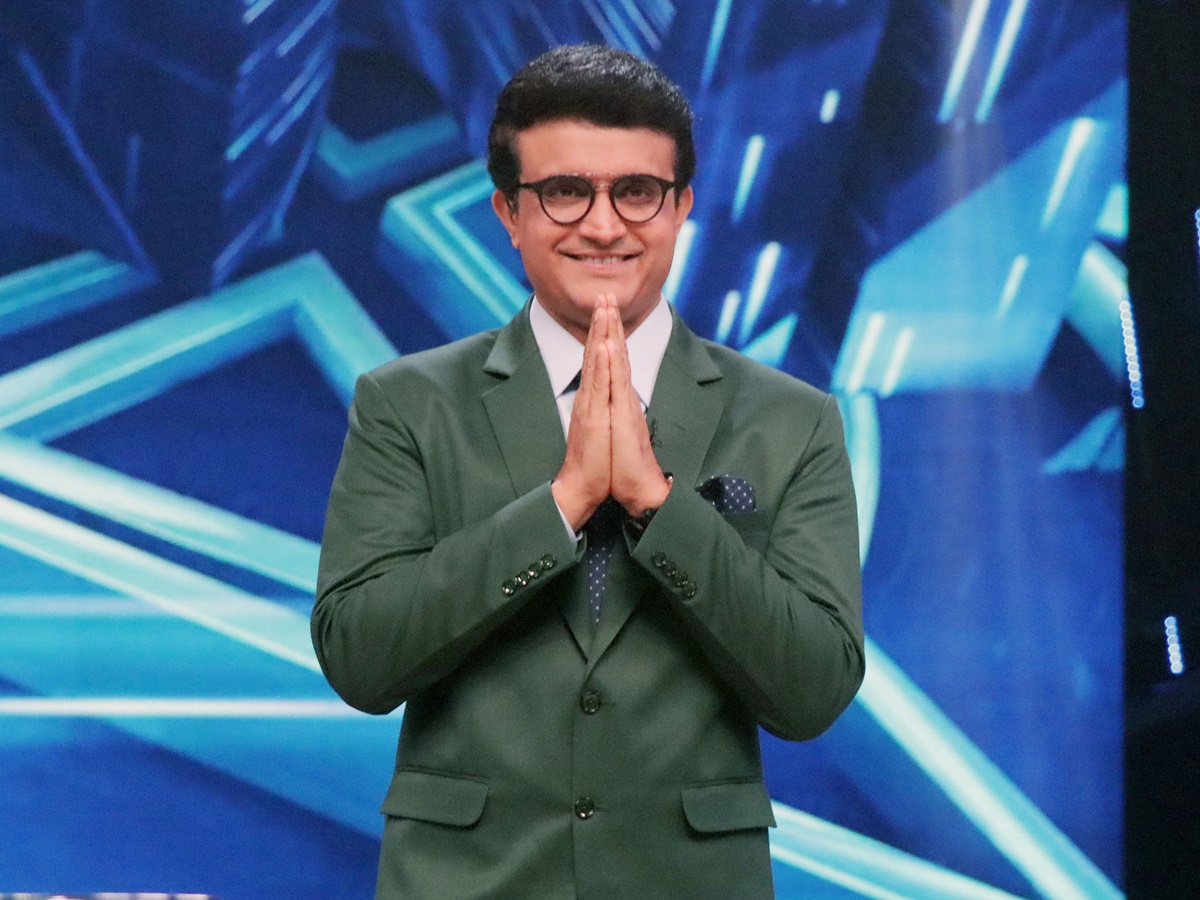
Former Indian cricket team captain Saurav Ganguly had a service tax demand notice against him quashed by the Calcutta High Court. He had received remuneration for writing articles, anchoring TV shows, etc which the authority initially determined attracted service tax. A single judge bench of Calcutta High court however nullified a show cause notice issued against him. While invalidating, it was held that remuneration received for writing articles, anchoring TV shows, and playing IPL would not attract service tax under the head of Business Auxiliary Service.

Sachin Tendulkar
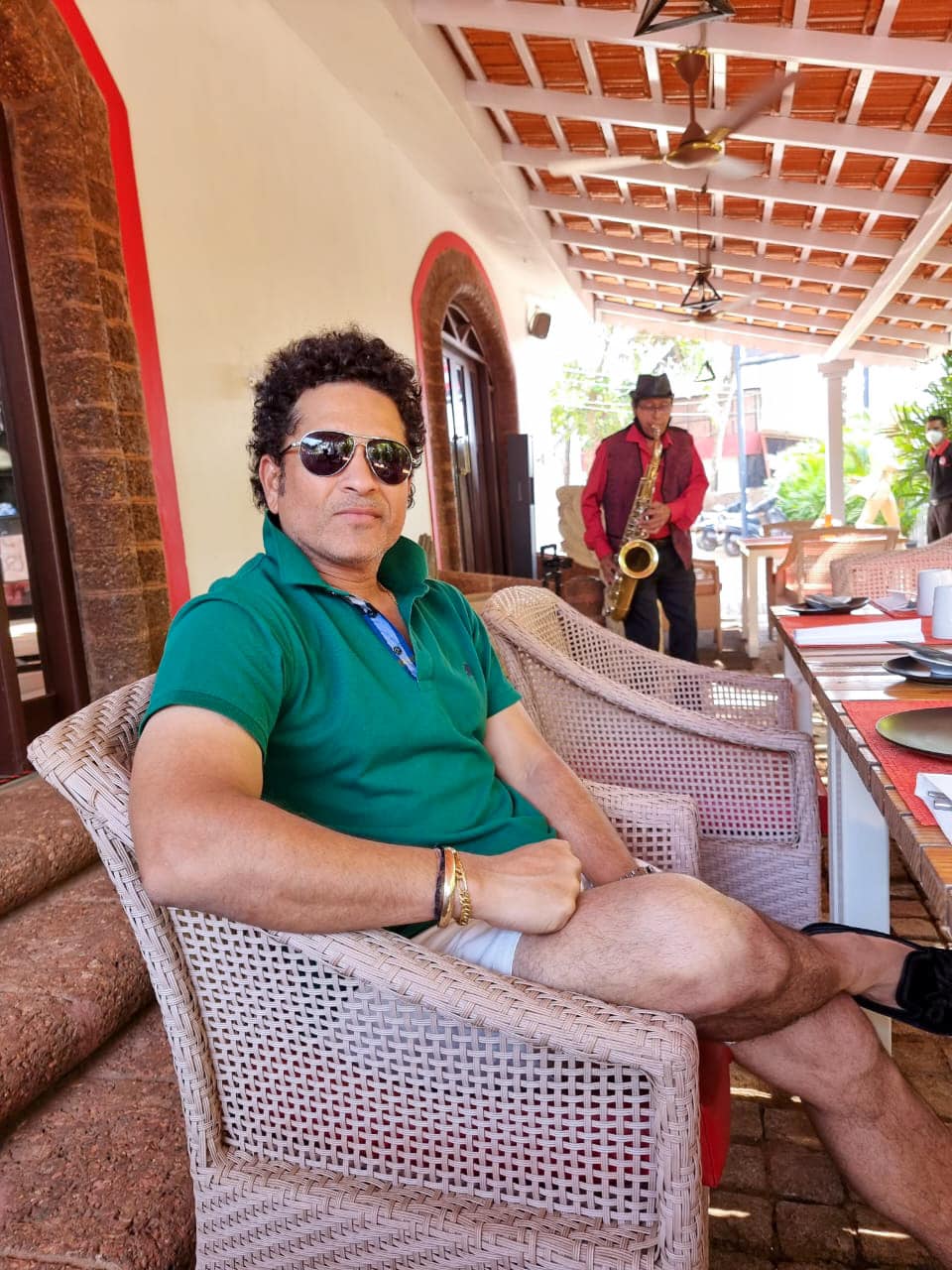
Undoubtedly, the most famous Indian cricket player in the world was also not immune to tax disputes either as he had to seek relief from the authorities more than once. In 2017, the Mumbai bench of Income Tax Appellate Tribunal [ITAT] dismissed the department’s appeal against the former cricketer Sachin Tendulkar and held that income from sale-purchase of shares cannot be treated as “business income” merely because the assessee has availed the service of portfolio manager.


Krishnamachari Srikanth
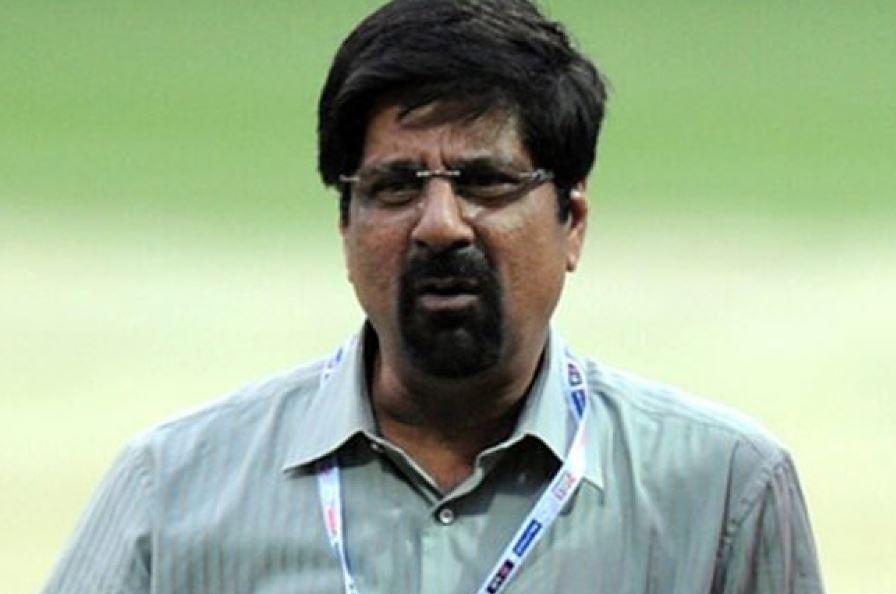
The former Indian captain who is now engaged in the business of modelling, cricket commentating, journalism and consulting & BPCL dealership, once had re-assessment proceedings upheld by the ITAT. Once the authorities had noticed that he had sold shares held in his name, minor children, and wife, and had not offered Rs 4.25 crores, from the sale proceeds of the shares claiming it to be payment towards overriding garnishee attachment on the shares by Indian Bank. Finally the Income Tax Appellate Tribunal upheld the assessment by observing that the assessee entered into a non-compete agreement with the Pentamedia Group of concerns, of the entire shareholding of the said company ‘Kris Srikanth Sports’ Entertainment Private Limited, agreeing not to compete for a period of six years with the said company ‘Kris Srikanth Sports Entertainment Private Limited’ for a non-compete fee of Rs 7.50 crores which were exempt from the tax being capital receipt. Concluding the 85-page order, the Tribunal upheld the re-assessment proceedings and held that the payment made to Indian bank by the assessee to the tune of Rs 4.25 crores was merely an application of income.

Swapnil Asnodkar
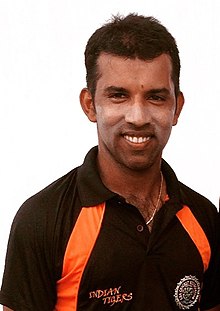
The Mumbai CESTAT had once allowed relief to former Rajasthan Royal’s player Swapnil Asnodkar, by holding that no service tax is leviable on the Brand Promotion fee. For the period 2008-2012, he had received a sum of Rs 1.12 crores under an agreement entered into with the franchise owners.


14 players from 2019 IPL

The Customs, Excise and Service Tax Appellate Tribunal [CESTAT], Chennai bench had once granted relief to cricket players L Balaji, Ashwin R, Murali Karthik, Dinesh Karthik, S Badrinath, Vidyut Sivaramakrishnan, Aniruda Srikkanth, Suresh Kumar, Yo Mahesh, Hemang Badani, C Ganapathy, Arun Karthik, K B, Kaushik Gandhi and Palani Amarnath. The Tribunal held that these players are not liable to pay service tax on the amount received from the franchise.

Sameer Dighe
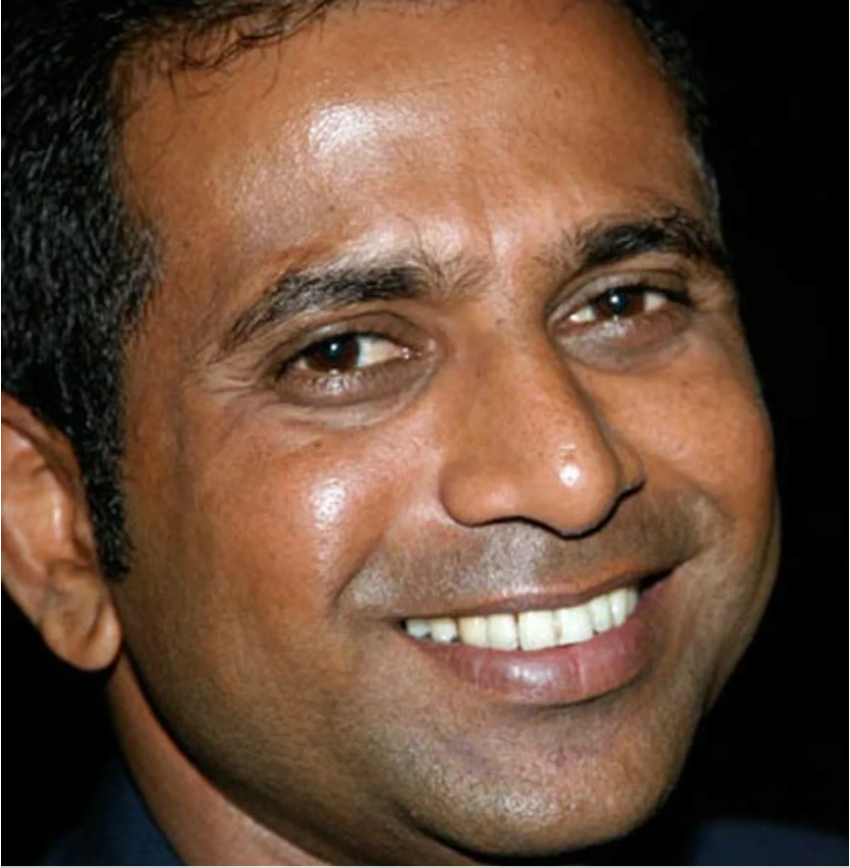
In 2018, the Mumbai bench of the Income Tax Appellate Tribunal [ITAT] granted tax relief to India’s former wicket-keeper, Sameer Dighe by holding that proceeds from a benefit match of around Rs 50 lakh cannot be taxed in the hands of the cricketer.


Cheteshwar Pujara
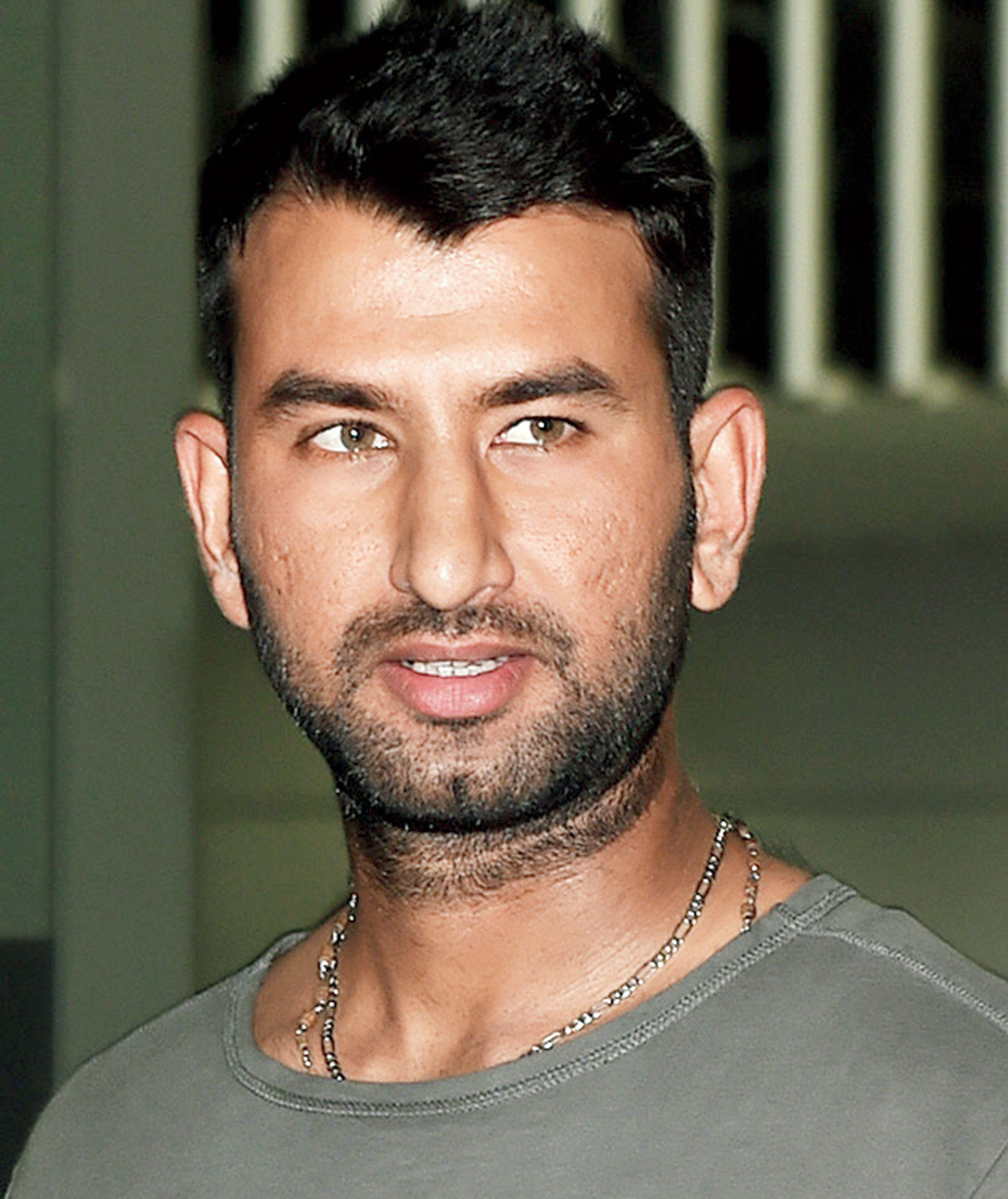
Cheteshwar Pujara received a major relief from the Bombay High Court in 2018 when it quashed an order relating to service tax collection against him.


Karn Sharma
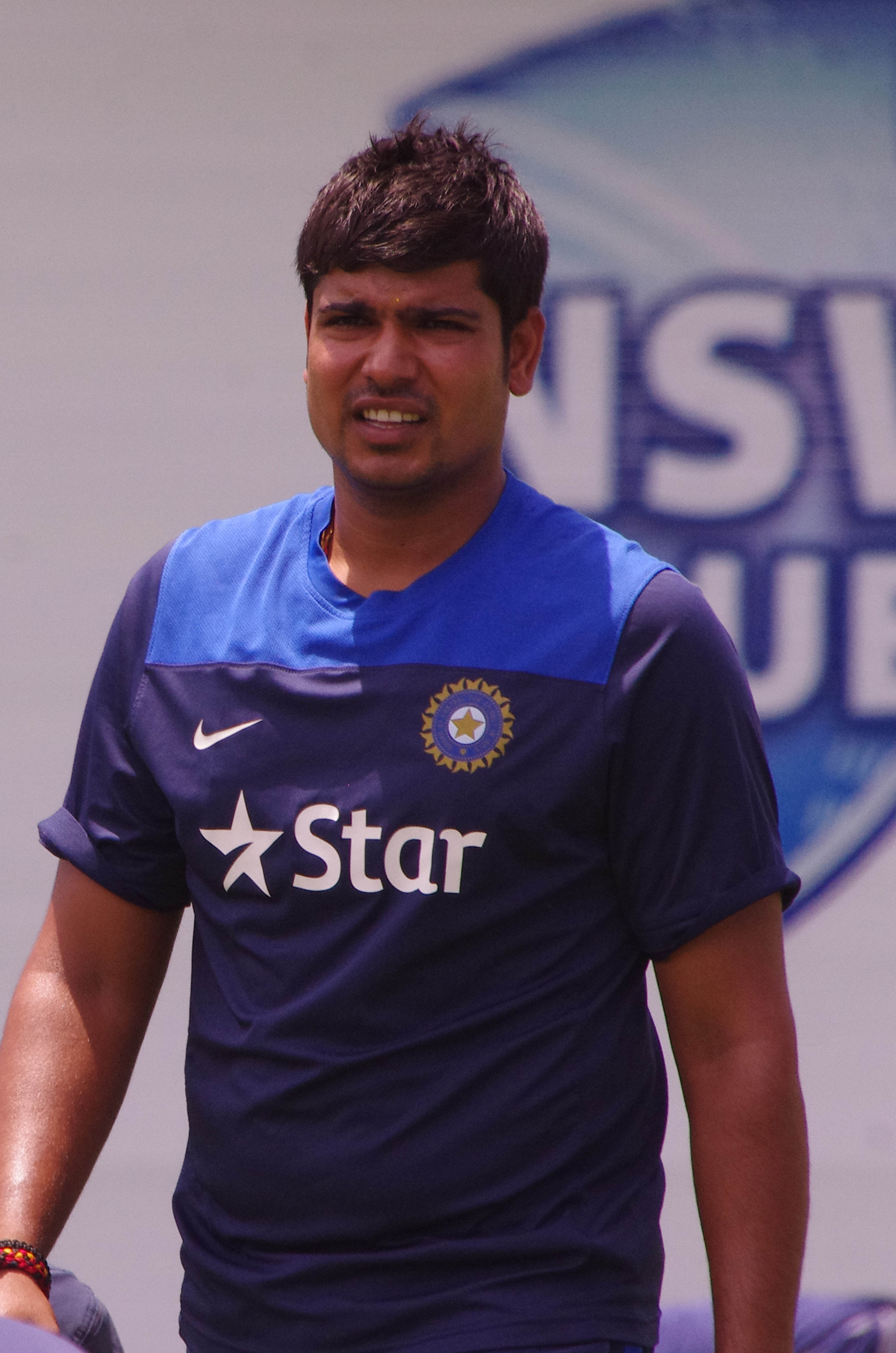
In 2018, the Ahmedabad bench of the CESTAT held that no service tax liability can be attributed to the cricket players for promotional activities provided by them during the Indian Premier league [IPL] prior to July 1, 2010 while granting relief to cricket player Karn Sharma. Karn was playing for Royal Challengers Bangalore when he received Rs 20 lakh from the franchise.


Parthiv Patel
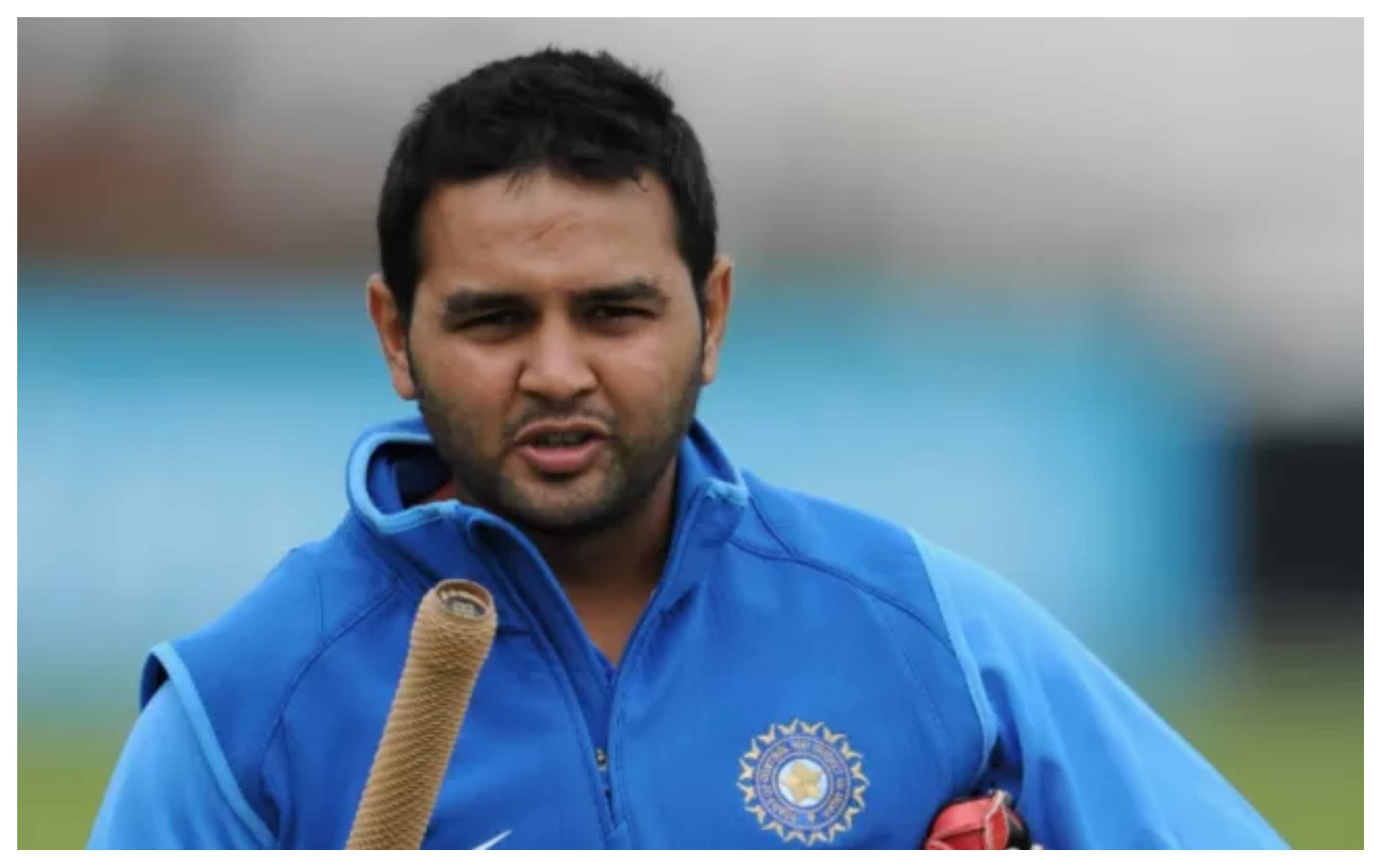
ITAT Ahmedabad had once directed the authorities to reconsider allowability of expenditure claimed by cricketer Parthiv Patel and ruled cricket to be a profession for the purpose of taxation.

Forget Indian cricketers, even The Board of Control for Cricket in India [BCCI], who runs the cricket in India has been slapped with a huge tax evasion case by the Department of Revenue, according to the Sports Lounge. After the recovery of Rs 462 crore, the Department of Revenue has asked the BCCI to pay another outstanding income tax worth Rs 1, 303 crore, according to details submitted by the Finance Ministry in Parliament.

What to talk about Indian cricketers, even Pakistan cricketers are no strangers to the tax controversies with many of them hitting the headlines for getting on the wrong side of the tax law. In 2012, Pakistan’s Income tax department served notice to 21 international cricketers for evading taxes to the tune of Rs 100 million over the last two years. According to Pakistan newspaper Dawn, notices was served on Umar Akmal, Misbah-ul-Haq, Kamran Akmal, Abdul Razzak, Mohammad Hafeez, Shahid Afridi, Younus Khan, Abdul Rahman, Asad Shafiq, Tanvir Ahmad, Azhar Ali, Imran Farhat, Rana Naveed, Saeed Ajmal, Umar Gul, Shoaib Akhtar, Sohail Tanveer and Yasir Arafat. The daily reported that this was the first instance when the income tax department had served notices to the cricketers, who enjoy celebrity status in the country. The cricketers did not file tax returns and found ways to pay lesser tax by fitting themselves in the category of lesser tax liability.

England players are also not far behind as far as attracting tax controversies is concerned. Long ago, Daily Mail reported that members of the England cricket team could face an investigation by the taxmen amid allegations that they had tried to exploit a loophole to mitigate their tax liabilities. According to Daily Mail, Andrew Strauss and Kevin Petersen, the then members of the England squad were facing the heat of an inquiry. England’s World Cup winning star cricketer Adil Rashid has been ‘named and shamed’ by the Inland Revenue as a tax evader. The ace bowler, who helped England lift the World Cup at Lords in 2019, was identified by tax officials as a ‘deliberate defaulter’ who failed to pay more than 100000 pounds in taxes. The Yorkshire cricketer, who has a ‘central’ contract with the England team where stars are paid around 1 million pound a year, defaulted on his tax returns for over four years from 2013-2017.

Cricketers have always been on the radar of the Income Tax department. In 2000, when the Central Bureau of Investigation [CBI]  was probing match-fixing allegations, the Income Tax department searched 90 premises and 29 lockers, seizing Rs 3.84 crore in cash, jewellery and other assets. This was told in the Rajya Sabha by the then Finance Minister, Yashwant Sinha and his deputy, minister of state for revenue, Dhananjay Kumar.  There were seven players whose premises, residential and otherwise, were searched.  They were: Mohammed Azharuddin, Kapil Dev, Ajay Jadeja, Manoj Prabhakar, Navjot Sidhu, Ajay Sharma and Nikhil Chopra.

According to a news report, in 2018, former Sri Lanka captain Sanath Jayasuriya, along with two other cricketers had been accused of smuggling in rotten betel nuts in India. Two other cricketers were also said to be involved in the alleged tax-evasion fraudulent deal but their names are yet to be revealed. The Directorate of Revenue intelligence seized betel nuts worth millions of rupees in Nagpur. After his name cropped up during the investigation, Jayasuriya was also called to Mumbai for questioning by the authorities. After the probe, a letter was sent to the Sri Lanka government for further inquiry.

But tax evasion is not done only by cricketers around the world. Even online betting platforms are evading taxes, thus hurting the Indian economy. In the recently concluded T20 World Cup in Australia, the cricketing fans were seen glued to their TV sets. On the TV, punctuating the overs were advertisements of various betting and online gaming apps, with most of them  endorsed by our favourite cricketers and TV/movie actors. Such advertisements are all over the digital platforms, social media etc in present times but there’s a red flag.

These applications are mostly operated from outside the country and are therefore involved in tax evasion. The revenue department of India is in talks with the Ministry of Electronics and Information Technology to ban these offshore betting apps. Recently, they shared a list of such apps including 1XBET, Pari Match, Dafabet etc.

India is reportedly losing over $ 10.3 billion, equivalent to over Rs 70,000 crore, annually, owing to international corporate tax abuse and private tax evasion. Globally, countries lose $427 billion across continents due to such tax evasion. The study further said that India suffers $10.3 billion tax loss annually, of which, a major chunk is corporate tax evasion and $202.15 million is offshore private tax evasion.

While tax evasion by those involved in cricket round the globe kept hitting the headlines, it is match fixing which has brought bad name for the cricket round the globe over a period of time. Tehelka investigation revealed that diehard lovers of cricket don’t feel match-fixing is just a misconduct. For them, cricket died in 2000. That was the year when the biggest match-fixing scandal in cricket broke. Hansie Cronje, the highly respected and very successful captain of South Africa, was caught on tape discussing fixing matches with a bookie.

India was again shaken when Manoj Prabhakar alleged that former India captain Kapil Dev, then the National coach had offered him money to ‘under-perform’ in a match in Sri Lanka in 1994. More shocks followed when Cronje alleged former captain Mohammad Azharuddin had introduced him to a bookie who offered him money to throw a test match in 1996.

After an investigation by the CBI, the BCCI banned Azharuddin along with Ajay Sharma for life, while Ajay Jadeja, team physio Dr Ali Irani, and Prabhakar were suspended for five years after the BCCI found their involvement with the bookies. But the ban on Jadeja was overturned by the Delhi High Court in 2003 and Azharuddin’s ban was revoked by the Andhra Pradesh High court in 2012. Two years later, a district court in Delhi cleared Sharma, and the life ban imposed on him was lifted. It is obvious that the BCCI’s method of investigation and punishment does not meet the highest judicial standards.

The absence of match-fixing laws in India hinders prosecution. The west has laws dealing specifically with match-fixing. In 2019, Sri Lanka became the first South Asian country to criminalise match-fixing. In June 2000, Steve Richardson, a key official in the anti-corruption unit of the International Cricket Council, advocated for a law on match-fixing in India, noting that a majority of cases under investigation had links to “corruptors” in India.

Leona Helmsley, the famous American businesswoman once said, “We don’t pay taxes, only the little people pay taxes”. This seems correct as the rich often seem to be evading taxes and flying to tax-haven countries. As far as the income tax is concerned, the just man will pay more and the unjust less on the same amount of income. Only the smart find their way around the law for paying less by cutting-edge solutions for subsidizing their share of taxes. In this story, we discussed Sachin Ramesh Tendulkar’s tax saving methods which left one wondering:  how could the “God of Cricket” do that?



That sinking feeling, Joshimath crisis: How Uttarakhand ignored the warning signals

Residents of Joshimath stare at an uncertain future after the ancient town suddenly developed cracks affecting households and streets in 40 pc of its area. Multiple governments’ failure to pay heed to the repeated expert warnings has brought the town to this pass, writes Mudit Mathur

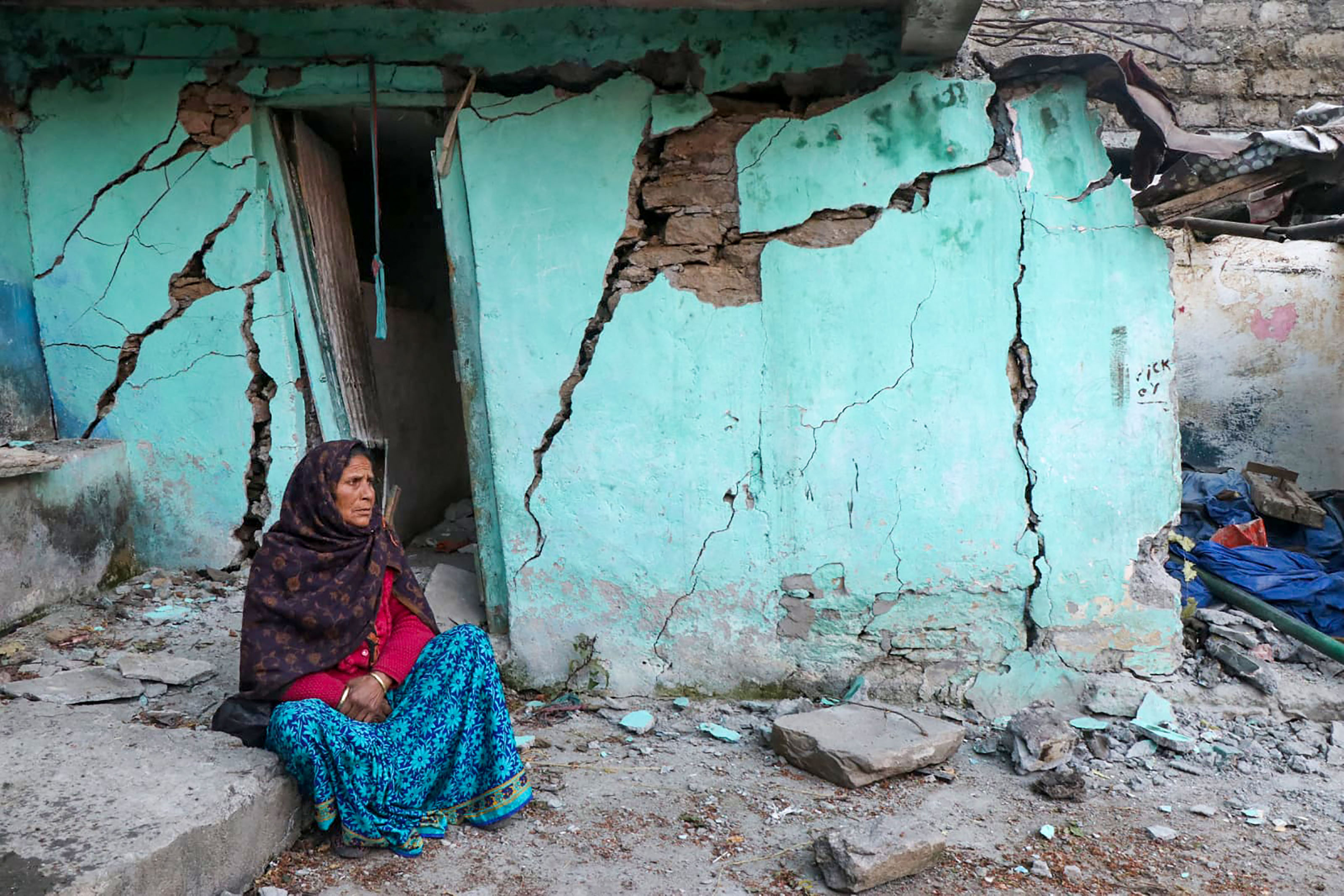
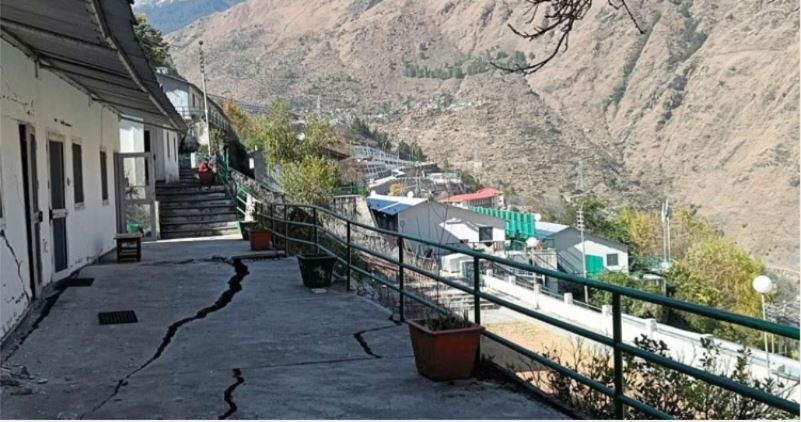
The ancient township of Joshimath – inhabited on the dip slopes of Alaknanda River at the confluence of Dhauliganga river (at an altitude of over 6,107 feet) has suddenly redeveloped cracks in the households, streets and retaining walls affecting around 40 percent of the area. In view of unforeseen mishap due to the unstoppable deteriorating situation on grounds, more than 725 residential houses, many hotels and public utilities are being evacuated that developed dangerous cracks in the walls, floors and roofs affecting thousands of the town’s residents. The administration ordered demolition of two hotels which have dangerously dislocated after developing major cracks besides declaring around hundred houses uninhabitable.

The National Crisis Management Committee (NCMC) in New Delhi reviewed the situation of Joshimath and stressed that the immediate priority should be to ensure complete and safe evacuation of all residents in the affected zone. At a meeting of the NCMC, Cabinet Secretary Rajiv Gauba stressed that priority should also be accorded to the demolition of vulnerable structures where cracks have appeared in a safe manner. Local residents are resisting demolition attempts by disaster management groups deployed there and demanding compensation of their investments in hotels and households that have been declared unsafe.

Similar reports of cracks and land sinking are pouring in from Karnaprayag and adjoining areas, indicating an impending disaster in our strategic Hindu-Kush Himalayan range ––connecting international borders –– as these are just man-made crisis  resulting from over exploitation of nature against the scientific warnings in these seismic zone areas. Cracks appeared in around 50 houses and various minor landslides have also taken place in  Bahuguna Nagar of Karnprayag. The local municipality has requested Chief Minister Pushkar Singh Dhami for immediate government help. This comes amid the issue of land subsidence in Joshimath.

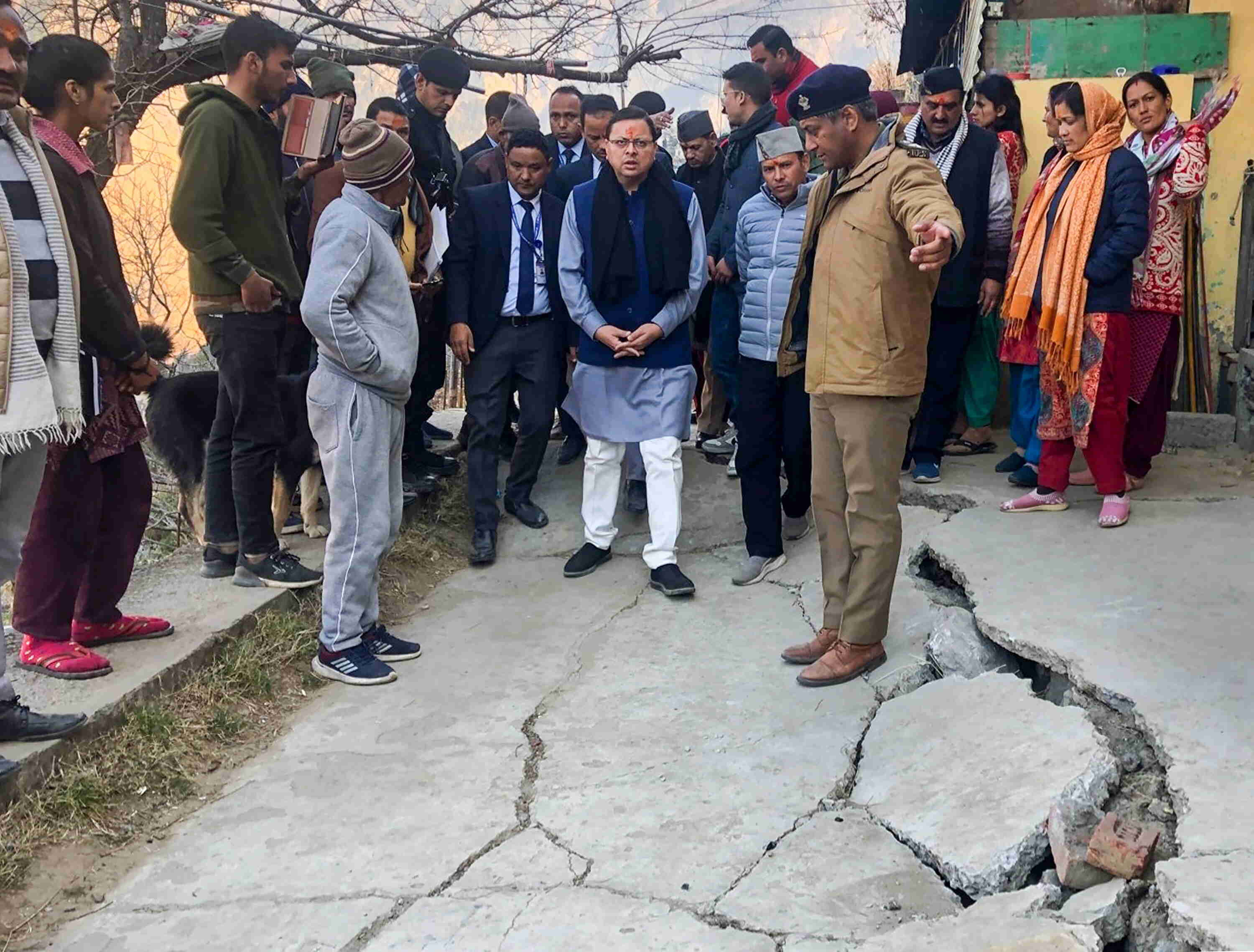
The Uttarakhand Chief Minister Pushkar Singh Dhami on January 11 air dashed to Joshimath for a night stay and met grief-stricken people assuring them all help and support of his government. He promised to rehabilitate homeless people who lost all their belongings due to severe damage to their properties. He asserted that his policy would be to have a balance between ecology and economy.  An amount of Rs 1.5 lakh is being given as interim assistance to each affected family.

“Our government is taking full care of the interests of the local people. The local people who have been affected by the landslide will be compensated at the market rate. The market rate will be decided after taking the suggestions of the stakeholders and will be in public interest only,” Dhami announced.

The Uttraakhand government after due assessment of the ground situation declared all the nine municipal wards of this ancient pilgrimage town of Hindu religion, known as Jyotirpeeth, where Aadi Sankaracharya underwent austerity, as “landslide-subsidence zone” (ground sinking) under the Disaster Management Act.

Despite freezing cold conditions, thousands of homeless people are on the streets to protest against the government’s policies and over uncertainty of their rehabilitation and future livelihood. The tragedy-hit people demand compensation and aid from state and district authorities to help mitigate the losses and find solution to the major problem of them having been rendered homeless.

Joshimath in Chamoli district of Uttarakhand is the gateway to famous pilgrimage sites like Badrinath Dham, Tung Nath, Hemkund Sahib, Chopta, Valley of Flowers and international skiing destination of Auli for winter sports. The place became strategically important after the 1962 Indo-China war with many of its territories bordering China and Tibet. Since then, it has been a strong base of the Indian Army and Indo-Tibetan Border Police (ITBP). Therefore, the need to cater logistics at Joshimath was quite natural but successive governments failed to develop the structural township in accordance with an eco-sensitive well-planned master plan providing quality infrastructure of drainage, sewage and water supply system.

In October 2021, residents of the town’s Gandhinagar and Sunil wards started noticing cracks in their houses. By mid-2022, cracks also appeared in the Ravigram ward. The situation came to this pass because the successive governments ignored warnings of numerous committees of experts constituted for assessment of environmental impact in the wake of commissioning of various hydro-power and road development projects including flagship all-weather road project of the BJP government that uprooted thousands of trees after apex court allowed the project.

One of the Hindu monasteries, the Shankaracharya Math in Joshimath area, has also developed cracks in many places over the past 15 days, triggering a scare in the religious institute. Perturbed over the government’s inaction and panic in local people, Swami Avimukteshwaran Saraswati of the Math has approached the Supreme Court of India through a Public Interest Litigation over the recent land sinking incidents in Joshimath. The PIL urged to declare Joshimath land sinking as a National Disaster and direct the NDMA to actively support the residents of Joshimath. Chief Justice of India Dr DY Chandrachud did not grant early hearing and will hear the matter on 16th January.

The high-powered committee on the all-weather Char Dham Road headed by Ravi Chopra, which was formed in August 2019,  had red-flagged construction of a Helang bypass in its report. However, after the matter went to court, the Supreme Court in May 2022 gave permission to go ahead with this stretch. Chopra, while reacting to the latest decision on stopping these crucial works, said, “This was necessary. Before any work is started on this stretch connecting Badrinath Dham, the BRO must conduct detailed and careful geological, geophysical and geotechnical analysis as recommended earlier by the high-powered committee. So far, that detailed investigation has not been done,” he remarked in conversation with media persons.

Overlooking geo-scientific reports and the threat of increasing global warming on glaciers, the successive governments have  played havoc on the poor people of the town with  their properties acquired by spending their lifelong savings facing a grave danger now. Hundreds of houses, hospitals, Army establishments, temples, roads are under a continuous threat of sinking which is aggravating with each passing day.

Initial studies about fragile slopes of Joshimath were done after Heim and Gansserway way back in 1939 noticed that Joshimath town is situated on an old landslide deposit. According to them, the slopes dominated by massive boulders between Joshimath and Tapovan were triggered by a landslide in the geological past from a mountain crest located at 4000 m in the east of Kuari pass.

These slopes were subsequently inhabited in the historical period as they provided required soil cover for agriculture, vegetation for fuel and fodder. Most importantly, the multiple streams and natural springs having the recharge area in the upper alpine catchment provided much needed water for irrigation and domestic consumption. Instead of accepting the geological fragility, the town began to grow rapidly after 1962 due to various urgent strategic requirements.

The threat of sinking had always been there. The incidences of landslide-subsidence drew serious concerns of the Uttar Pradesh government too which constituted a committee to investigate the causes of land subsidence under the then Commissioner of Garhwal region, Mahesh Chandra Mishra on 8th April 1976. The Mishra committee held a detailed deliberation with all the stakeholders including famous environmentalist of Chipko movement, Chandi Prasad Bhatt, Purshottam Billangwal, President, Zila Panchayat, Govind Singh Rawat, Puran Singh Mehta of Badrinath temple, District Magistrate Bhure Lal, Army, ITBP, Forest, PWD and conducted extensive survey  of the areas. The Mishra Committee gave detailed recommendations to the government of UP but most of them remained on paper until the problem took a serious turn.

The major recommendations of the Mishra Committee included (i) Further construction in the area should be made only after examining the stability of the site and restriction should be placed on excavation on slopes. (ii) No boulders should be removed either by digging or blasting and no tree should be cut in the landslide zone. Extensive plantation work should be launched in the area particularly between Marwari and Joshimath and the cracks, which have developed on the slopes, should be sealed. (iii) Most importantly, on the foot hill hanging boulders should be provided with appropriate support and anti-scour or river training measures should be adopted. It was also emphasized that there should be a blanket ban on collecting construction material from a radius of 5 km of the Joshimath town.

The Mishra committee precisely pointed out in its report that the major threats posed to the fragile slopes of Joshimath is the unregulated disposal of waste water (without proper drainage), removal of landslide boulders for construction purposes (building and roads), lack of anti-scour or river training measures etc. The report also pointed out that undercutting by the currents of the Alaknanda River makes the area even more prone to disasters. These suggestions still hold good for the safety, security and longevity of Joshimath and surrounding villages but unfortunately the recommendations have yet not caught the attention of the government.

However, in the process, the stability of the surface on which the town was emerging was totally ignored. It was only during the late 60s that the concern about the safety and stability of the town became an issue. This led to the timely intervention by the then government and a scientific committee was constituted to provide suggestions about the stability of the town.

Undoubtedly, Joshimath is a victim of government apathy that resulted in unplanned growth of real estate activities without taking due care of ecology with regard to its stability and load bearing capacity, sewage and drainage system and rainwater disposal system that further intensified dip slopes related issues. These are built on land that is either unstable or could be easily washed away in the event of a flash flood. The area also failed to grow extensive tree plantations as recommended by the Mishra Committee. Rather, deforestation due to unbridled construction activities resulting in depletion of its green cover multiplied its problem.

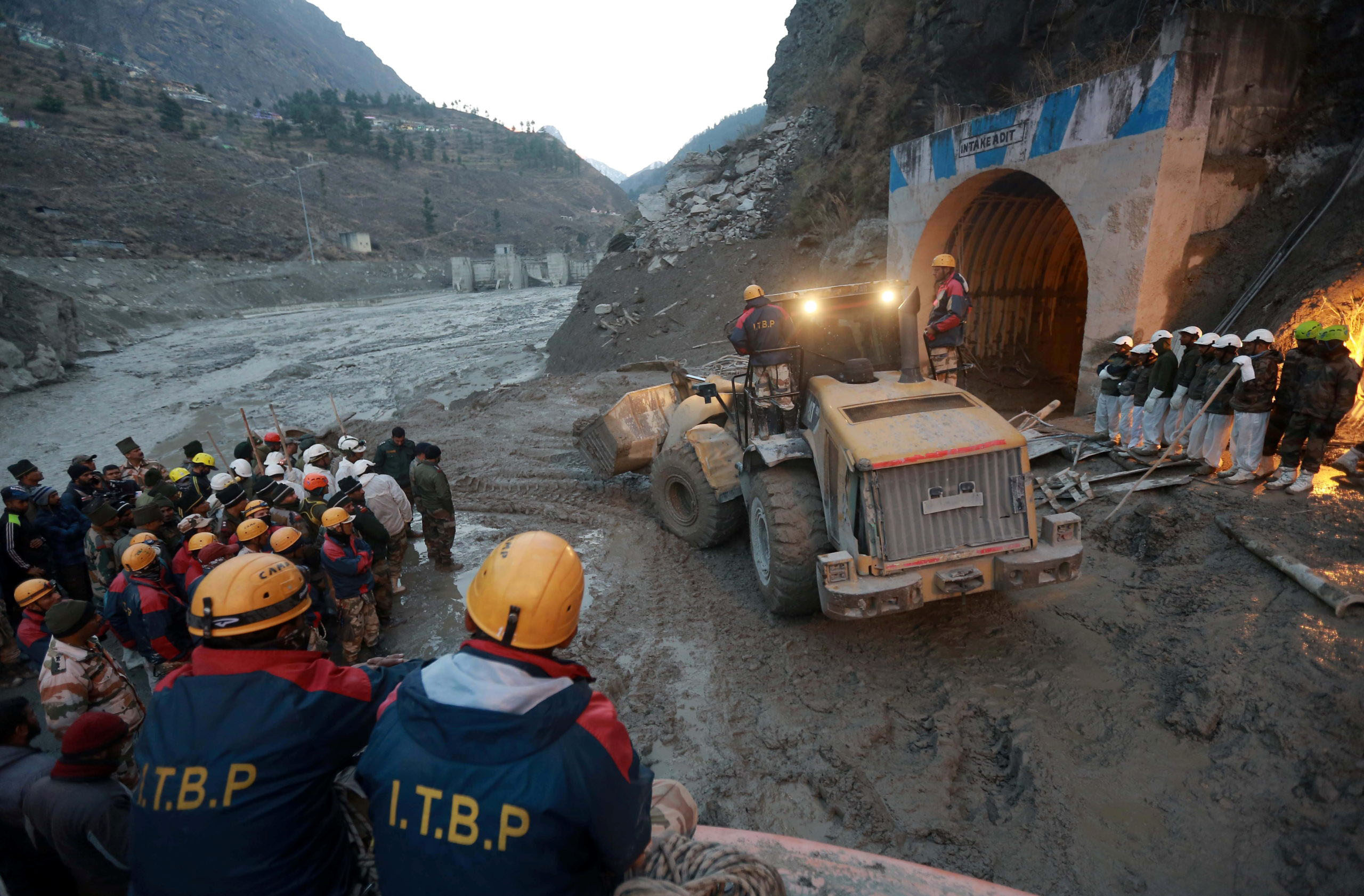
Local residents blame that repercussion being experienced even now after the last year’s tragedy when a major disaster happened killing more than two hundred people due to glacier burst happened in Nanda Devi Mountain range resulting in unprecedented deluges in Tapovan region, just at the base of Joshimath where NTPC is executing 520 MW Tapovan–Vishnugad Hydro-Power Project by making four-km long stretch of tunnels.

Environmentalists allege that the NTPC project had hollowed and damaged the underground layers of earth devastating its age-old natural drainage, ecology and water supply system. The project being constructed on the Dhauliganga river required a tunnel to be built that cut right through the mountain upon which Joshimath is located. Meanwhile, the  Helang bypass road under flagship all-weather Char Dham Road project to cut short the distance of Badrinath Dham directly from its base has also become counter-productive for the holy township.

The Tapovan region event is feared to have triggered the current “sinking and cracking,” according to experts. In October that year, Joshimath experienced an unusual torrential downpour of over 190 mm. After the rains, residents noticed a movement in the cracks and more frighteningly, the appearance of new cracks as well, with several cropping up inside homes.

The noted geologist, Navin Juyal warned, in a webinar held early this month: “The historic town of Joshimath in Uttarakhand will be washed out if the under-construction Tapovan-Vishnugad Hydropower Project of National Thermal Power Corporation (NTPC) as well as the Helang Bypass project are not shelved.” Juyal’s warning sounds ominous amid continuing panic which has gripped the Joshimath town of Chamoli district, where cracks have appeared in over 725 houses as the town sinks due to land subsidence.

“Two tunnels are being dug as part of the Tapovan-Vishnugad Hydroelectric Project. One is being dug from Tapovan and the other from Selang. For this, tunnelling is being done from one side by blasting and on the other with a Tunnel Boring Machine (TBM) from Selang. The TBM is still stuck in Selang. This work is being done by a private company due to which the situation has worsened,” Juyal opined. “The NTPC has argued that the tunneling has been done only up to four kilometers from Tapovan. But when it comes to studying the activity, independent scientists have been kept away,” he contended.

“Despite the warnings from experts and geoscientists, no heed was paid while undertaking works of road and dam construction in and around Joshimath,” said convenor of Joshimath Bachao Sangharsh Samiti, Atul Sati, who, along with other residents, has been continuously protesting the construction of NTPC’s 520 MW Tapovan Vishnugad hydropower project since 2004. “The project,” he said, “is the root cause behind land sinking in Joshimath, where construction activities were recommended to be banned.”

“We have been drawing the attention of authorities for the past 14 months but the government did not pay any attention. Now when the situation is getting out of hand, they are sending expert teams to assess things,” Sati remarked. “If attention was paid in time to what we were saying, things would not have been so alarming in Joshimath today,” he added.

In May 2010, two researchers from Garhwal University and Disaster Mitigation Management Centre, MPS Bisht and Piyoosh Rautela, wrote a commentary in the journal Current Science highlighting the risks that the town is facing. They reported that the government should not have overburdened the town through the tunnel alignment which was part of the hydropower project. It further recorded finding that the tunnelling process punctures the water-bearing strata and causes harm with water gushing out and flooding the area.

Dr Piyoosh Rautela has now become the executive director of Uttarakhand Disaster Mitigation and Management Centre of the Uttarakhand government, and interestingly, with his changed role, there is some shift in his stance regarding the present crisis.  “The sinking of Joshimath is likely to have been caused by aquifer (a water-bearing stratum of permeable rock, sand, or gravel) breaches as we see muddy waters pouring out,” he said. However, he remained non-committal to his earlier findings saying, “There is no evidence yet to link or delink it with the hydro project tunnel.”

The NTPC issued a press release denying any role of its tunnel in triggering the sinking of land. But local residents and few independent experts firmly believe the water that has continued to be released through the puncture may have added to land subsidence.

Geologist Yaspal Sundriyal from Hemvati Nandan Bahuguna (HNB) Garhwal University said, “The road is impacting the very foundations on which Joshimath is built, and may worsen the town’s proneness to landslides.”

Earlier reports suggest that the tunnel boring machine (TBM) being used in Tapovan Vishnugad project punctured an aquifer (a water-bearing stratum of permeable rock, sand, or gravel) over 3 km from Selang village, resulting in water discharge at the rate of about 700-800 litres per second which is enough to sustain 2-3 million (20-30 lakh) people. “Soon after the incident, groundwater sources in Joshimath started drying up. Sunil Kund, which was a major freshwater source here, suddenly went dry.” While the discharge reduced over time, it never stopped completely,” said Joshimath-based advocate and journalist, Puran Billangwal.

While the alarm bells have been ringing for a long time, there is still some hope for saving Joshimath if the proper measures are implemented. The residents need to be relocated to a safer place and the administration would have to re-plan the town in a geo-scientific manner factoring in the on-going climate change in Himalayan range. The developmental and hydroelectric projects also need to be shelved by accepting the recommendations to save hills.


Joshimath : Ignore nature’s warnings at your own peril

The preliminary report of the National Remote Sensing Centre of the Indian Space Research Organisation tells that the entire Joshimath town which is considered a gateway to shrines in the Himalayas and is of strategic significance since the Army Cantonment here is close to the China border,  may sink. The satellite images released by ISRO show that the Joshimath-Auli road is going to collapse due to the land subsidence.

As Dehradun-based staffer with the Indian Express, I extensively wrote how alarm raised by scientists and geologists for decades had been disregarded.  The early alarm bells were sounded by the Mishra Commission which warned that the eco-fragile region cannot support a high rate of building activity but just the opposite happened over the years. Hydroelectric projects and haphazard construction continued with impunity as it has become a hub of tourists headed to Badrinath, Hemkund Sahib and Shankaracharya temple.

The Dehradun-based Wadia Institute of Himalayan Geology has observed, “Today’s situation is a result of a variety of reasons, both natural and man-made, because soil here is weak, consisting mostly of debris brought about by landslides and the area is also a highly seismic zone”.  The area was once under glaciers and water percolating down into the porous crystalline rocks beneath the surface has softened the rocks further.

In recent months, land subsidence has spread panic among the 10,000-odd residents in Chamoli to Josjimath who saw cracks appearing in their homes. Satellite images by the ISRO show that the Himalayan town sank 5.4 cm in just a fortnight triggered by a possible subsidence event on January 2. Between April and November 2022, Joshimath had sunk by 8.9 cm. The unfolding crisis speaks of the failure to respect the demands of the fragile Himalayan mountain system while planning and executing developmental projects.  How to save the town after the evacuation of people in the affected areas is the big question. Because lives are involved, this adds to the urgency of taking remedial sustainable solutions. This calls for mapping all other hill towns facing a similar situation.

The current issue of Tehelka carries an investigative story “Tax Evasion: ‘Actor Sachin Tendulkar’.  Tehelka SIT investigative report reveals how cricket legend Tendulkar allegedly played ‘actor’ to wangle a substantial tax relief; and how many cricketers have an uncanny knack of getting on the wrong side of the tax law.  Forget Indian cricketers, even the BCCI that runs the cricket in India has allegedly been mired in a tax evasion case – the Department of Revenue after the recovery of Rs 462 crore has asked the BCCI to pay another outstanding income tax worth Rs 1, 303 crore, according to details submitted by the Finance Ministry in Parliament. A serious issue to ponder over!


After a long hiatus, is militancy again returning to Jammu?

The resurfacing of militancy-related violence in Jammu has caught the security forces off guard. Some attribute the violence to the militants’ attempt to extend the armed campaign to Jammu to stretch the security forces who are now concentrated in valley, writes Riyaz Wani

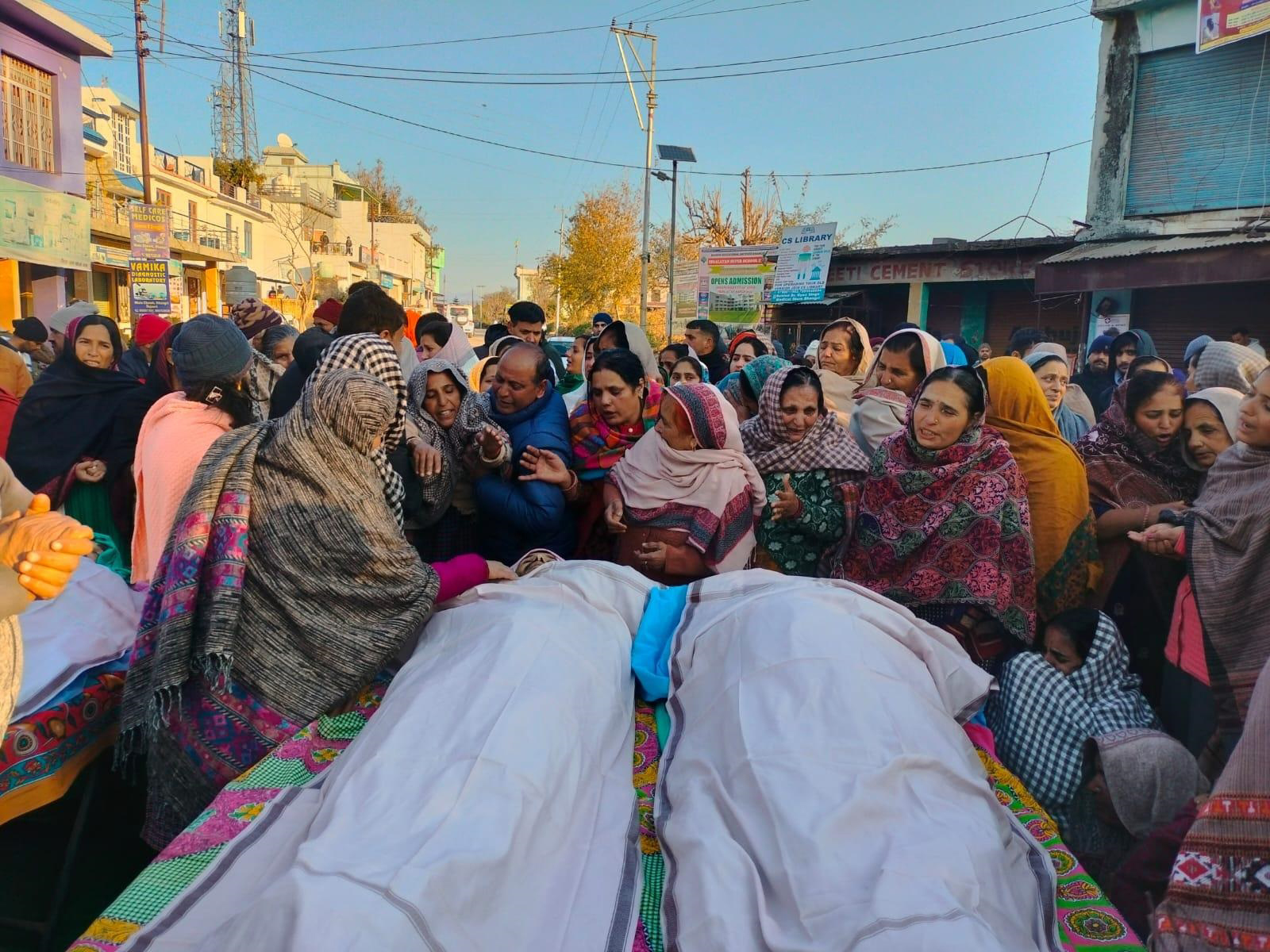
Rajouri in Jammu division is once again on the radar due to the recent uptick in militancy-related violence. On the very first day of 2023, four civilians were killed and six others injured when militants barged into and opened fire in at least three houses of a minority community in a border village in the district. Within hours after the killings, a blast at one of the houses that were the militants’ targets killed a child and injured four others. Since then two more civilians have died raising the toll to seven. Although a week later, the Army killed two unidentified militants in the district, the situation is far from under control.

Successive incidents have momentarily shifted the attention away from the lingering turmoil in the Kashmir Valley to Jammu which has otherwise been free of militancy over the last two decades – the sporadic incidents of violence notwithstanding. But the last two years have witnessed some revival of militancy in the twin districts of Rajouri and Poonch.

In August last year, four soldiers and two militants were killed during a fidayeen attack on an Army camp in Rajouri.

Poonch and Rajouri districts were sites of several attacks during summer of 2021 that killed fourteen soldiers, eight militants, including one in custody. The districts were, however, largely calm through 2022.

New militant stronghold?

But if the situation of the last fortnight is anything to go by, the areas in Jammu are once again threatening to become a militancy hotbed. And the recent civilian fatalities underline the enormity of the challenge. Though the number of militants is not known, they are believed to have infiltrated from across the border.

The densely forested area has made it difficult for the security forces to track them down.

The return of militancy-related violence to Jammu has surprised Kashmir observers even while it has caught the security forces off guard. What makes the situation more worrisome is that the forest area where the militants are apparently sheltered extends up to Shopian in South Kashmir. The infiltrating militants are believed to have been using this route to reach South Kashmir. But now they have decided to stay in Jammu itself, and in the process, they seem to have eluded capture – although six militants have been killed so far over the last month.

There are two principal explanations proffered by Kashmir observers for the militants choosing to linger in Jammu: one, there is an attempt to once again extend the armed campaign to Jammu to stretch the security forces who are now excessively concentrated in the Kashmir Valley. Second, to exploit the void created in the area by the redeployment of the Rashtriya Rifles, the main counter-insurgency force in J&K, to the Line of Actual Control in Ladakh since China’s incursions along the border.

While militancy seems to be rearing its head in Jammu division, the ceasefire along the Line of Control has held. In early 2021, India and Pakistan agreed to renew their 2003 ceasefire along the Line of Control that brought an end to frequent cross-border skirmishes. This also made it possible for India to redeploy troops to Ladakh. The thinning of the troops along the border in Jammu is now believed to have facilitated the sporadic infiltration of militants who are currently engaging the security forces.

In Kashmir Valley, on the other hand, the militancy has largely been brought under control, and the estimated number of militants has dwindled to 150 or thereabouts.  Ever since the withdrawal of J&K autonomy in August 2019, around 500 militants have been killed in the UT, most of them local youth. Though this has reduced the number of militants, the violence has lingered. And over the last year, the militants have chosen to attack soft targets – civilians, panchayat workers, J&K police personnel visiting home, outsiders and minorities – instead of engaging security personnel. Security forces, as a result, now not only have to combat militancy but also protect a large section of population including many from among their own ranks.

The resurgence in violence hasn’t, however, dented the larger drift of normalcy in the Union territory yet. While the violence has become more conspicuous in recent months, it is still on the margins in so far as its impact on daily life. Tourism is at an all time high after many years. Last year, over one crore people visited J&K. Most hotels, according to UT’s tourism department, are booked through the winter. And as things stand, tourism will continue.

This is why the surge in violence in Jammu assumes significance. It detracts from the semblance of peace in the Valley and revives a now long-pacified theatre of war in J&K. But if we go by a similar short-lived escalation in Poonch-Rajouri in 2021, there is hope that the current violence may not last long.

Village Defence Groups

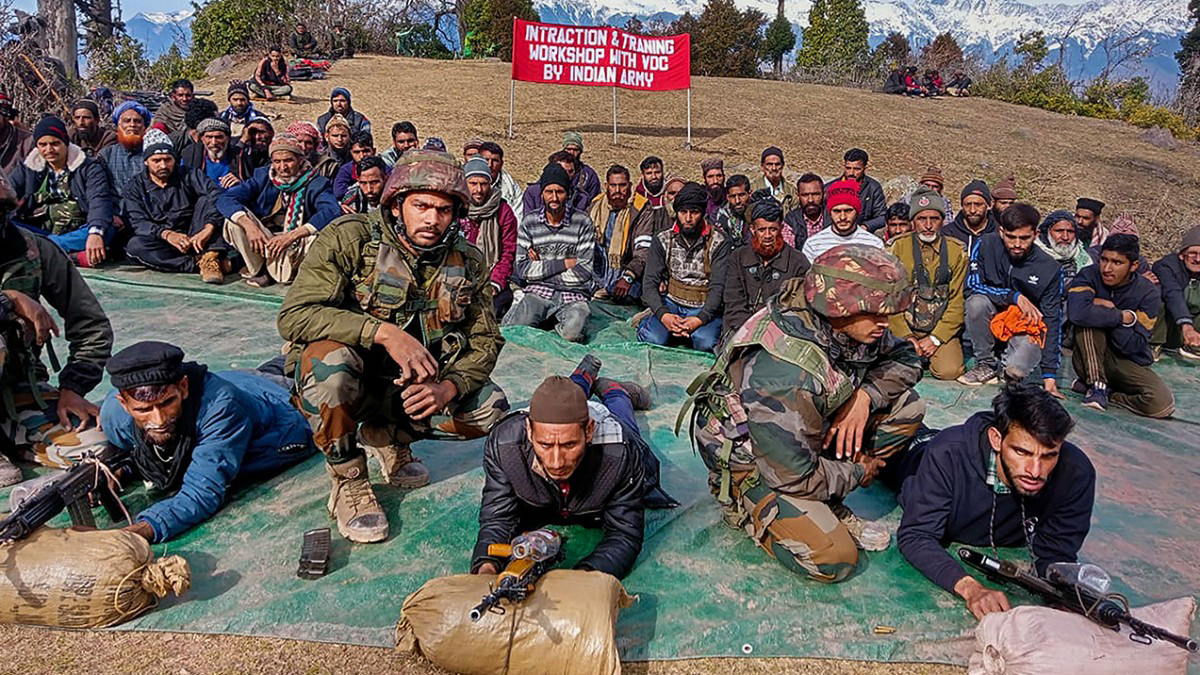
Meanwhile, the government is trying to combat resurgence in militancy by reviving the defunct Village Defence Committees in Jammu division. As part of the programme, the government trains and arms the villagers so that they can defend themselves against the militants. There are already 5,000 armed members in the district, and more villagers are registering to get weapons. Earlier the members were equipped with a .303 rifle and 100 rounds of ammunition. Now the government is also planning to equip them with SLR rifles.

“We are giving them new arms and ammunition, rejuvenating them, organising firing practice sessions for them,” the Senior Superintendent of Police Mohammad Aslam told the media. “Operations to track down terrorists are underway too,”  he said

The committees were set up almost 30 years ago when militancy was rampant in Jammu and local people had joined militant ranks in large numbers. When they were constituted in the mid-nineties, there were 26,567 VDC members fighting militancy in 10 districts of Jammu province and Leh district of Ladakh and around 96 percent of them were Hindus.

But after militancy dwindled in the late 2000s and was eventually wiped out, the VDCs became redundant. But they continued to remain in existence for a while. But later when many cases of human rights violations were attributed to them  – which included the killing of a National Conference (NC) youth leader, Ishtyaq Choudhary, by Kewal Kumar Sharma, a VDC member, in Rajouri’s Kalakote area – the successive government moved to gradually disband them.

The government is now seeking to revive them to meet the fresh threat of militancy in the region. But are the new signs of militancy in Jammu for real? Many analysts don’t think so. The coming weeks and months, however, will make things more clear.


Centre in a fix as clamour for statehood grows in Ladakh

KDA and LAB, parties representing Kargil and Leh, have refused to meet a 17-member panel constituted by the Centre insisting they would discuss nothing short of statehood for Ladakh. But, with a population of just 3 lakh, Ladakh hardly qualifies for statehood. A report by Riyaz Wani

In the 1990s, Ladakh, which was formerly part of the J&K state, sought the status of a union territory. The demand was miraculously fulfilled on August 5, 2019, when J&K’s autonomous status under India’s constitution was withdrawn. Now that the region has been a union territory for over three years, it has launched an agitation for statehood.

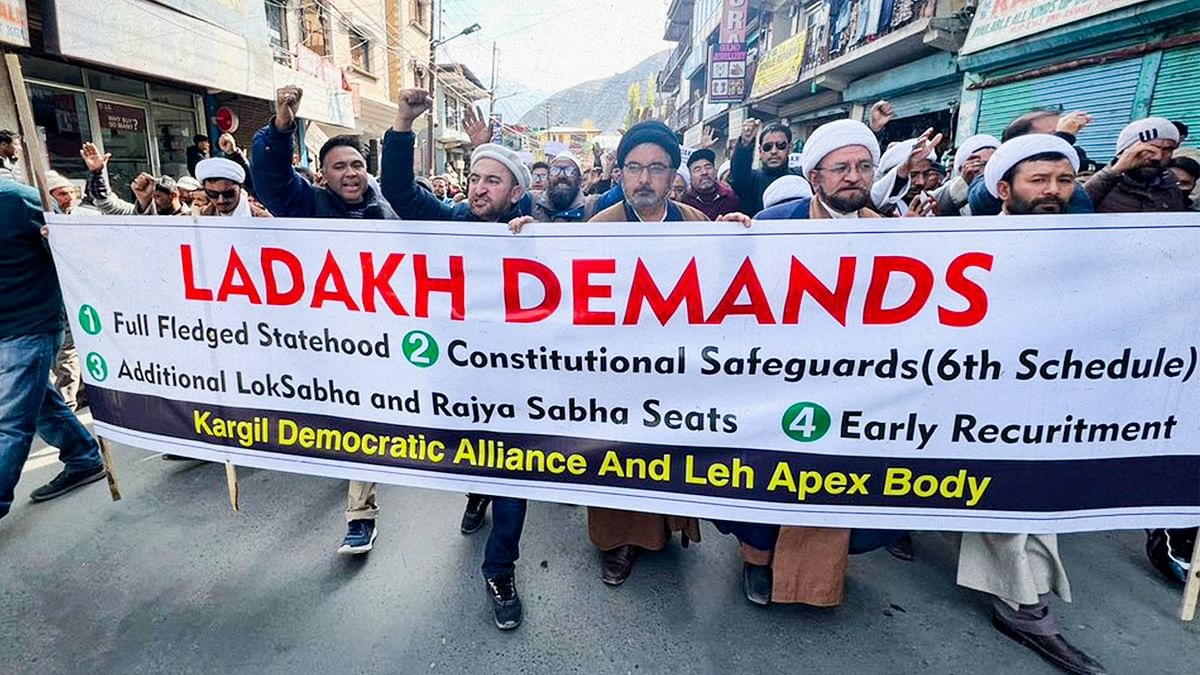
On January 7, Kargil Democratic Alliance (KDA) and Leh Apex Body (LAB), an amalgam of political parties from Kargil and Leh – two Ladakh districts – made a formal demand for statehood apart from asking for constitutional safeguards for the region’s unique culture and demographic composition.

Significantly, the meeting came days after the Ministry of Home Affairs (MHA) constituted a 17-member high-powered committee headed by Minister of State Nityanand Rai to “ensure the protection of land and employment” for the people of Ladakh.   According to the MHA order, the committee will “discuss measures to protect the region’s unique culture and language, taking into consideration its geographical location and its strategic importance.”

Ladakh Lieutenant Governor RK Mathur and chairpersons of Leh and Kargil Hill councils are among members of the panel.

But the KDA and the LAB have now refused to meet the committee,  asking the centre to meet their four conditions before they do so: They want the committee to discuss statehood for Ladakh, a constitutional safeguard under the Sixth Schedule of the Constitution of India to protect the interests of the tribal people of Ladakh, formation of Public Service Commission and the reservation of jobs for the youth of the region, and the creation of two separate parliamentary constituencies for Leh and Kargil.

“The meeting further strongly objected to the composition of members of the High-Powered Committee representing Leh APEX Body and KDA as the government has arbitrarily excluded and included members without consultation with the APEX Body and the KDA,” the joint statement read. “It was further resolved that the government should include all the names as proposed by Leh APEX and KDA body in the year 2021 as per Home Ministry’s instruction.”

The demand for statehood, made unanimously by Leh and Kargil districts has become a source of concern for the centre. On the other hand, the demand is borne out of a deepening anxiety among Ladakhis about their identity in a governance system directly controlled by New Delhi.

This is an ironic turn of events considering that the people in the Buddhist majority district of Leh celebrated when Article 370 was withdrawn in August 2019, more so, when the region was granted a union territory (UT) status which was a longstanding demand among its Buddhist population. But with the UT demand granted, Ladakhis have suddenly become conscious of the drawbacks of the move, which they think has disempowered them and also made them vulnerable to demographic change. Hence the demand for constitutional safeguards under 6th Schedule.

In the new scheme of things, the democratically elected LAHDCs,  both of Leh and Kargil, which acted autonomously in undivided J&K,  have become redundant. The region is now directly ruled by the centre through a Lieutenant Governor. So,  LAHDCs effectively mean little for regional empowerment.

The total population of Ladakh, according to the 2011 census is 2.74 lakh.  While Leh with a population of  1,33,487 is Buddhist majority,  Kargil with a population of 1,40,802 is Muslim majority.  Overall, Ladakh has a slim Muslim majority.

It is for the first time in decades that the two Ladakh districts have been on the same page in pressing the government on their demands for statehood and protection of rights. The demand for a full-fledged statehood has made things very complicated. Ladakh hardly qualifies for statehood with a population of just three lakh. This has created a quandary for the union government. More so, at a time when  it has no immediate plans to even restore statehood to Jammu and Kashmir.

“We will continue our protests. We believe people of Ladakh should get their democratic rights in the true sense. Our rights have been usurped,” said Sajad Hussain, a leader  of Kargil Democratic Alliance. “The centre should not treat us like Gilgit Baltistan is treated by Pakistan.”


Centre, Apex Court locked in a battle of attrition

As the Centre sits on the recommendations for appointment of judges reiterated by the Collegium resulting in a huge backlog of cases in courts, the Supreme Court has pulled up the government for not following the timeline fixed by the court in the matter, writes Mudit Mathur

What will happen to judicial independence and fairness if the government, which is a vital litigant before constitutional courts, wants to play a significant role in the appointment of judges? The judicial fraternity is not in favour of compromising judicial independence, but persistent efforts are on to undermine the landmark judgement of Kesavananda Bharati that put a check on the unbridled misuse of legislative powers.

Vice President Jagdeep Dhankhar reignited ongoing controversy over doctrine of separation of powers evolved by Supreme Court in its landmark judgement of Kesavananda Bharati that ruled,“Parliament had the authority to amend the Constitution but not its basic structure,” and remarked, “It will be difficult to answer the question: are we a democratic nation?”

In his inaugural address of 83rd All India Conference of Presiding Officers in Jaipur, Dhankhar described India as the ‘Mother of Democracy’ and stressed that the essence of democracy lies in the prevalence of the mandate of the people and securing their welfare. Stating that in a democratic society, ‘the basic’ of any ‘basic structure’ is the prevalence of supremacy of the mandate of people. He further highlighted that the legislative sovereignty of Parliament is inviolable and will writ large as provided by our constitution.

Dhankhar again raised the issue of the powers of the judiciary in relation to the legislature, highlighting the 2015 decision of the Supreme Court to strike down the National Judicial Appointments Commission Act (NJAC). Earlier in Rajya Sabha  Dhankhar termed the striking down of the NJAC Act a “severe compromise” of parliamentary sovereignty and disregard of the “mandate of the people”.

“It was in 1973, in the Kesavananda Bharati case, the Supreme Court evolved for the first time, the right of the courts to strike down constitutional amendments that violated what it called the “Basic Structure”, or the fundamental architecture of the Constitution. In subsequent years, the highest court delivered significant rulings on matters that it held pivotal to this “Basic Structure” and in the process parliamentary sovereignty was compromised,” he remarked.

And what exactly was the NJAC?

The Constitution (99th Amendment) Act, which established the NJAC and the NJAC Act, was passed by Parliament in 2014 to set up a commission for appointing judges, replacing the Collegium system. This would essentially increase the government’s role in the appointment of judges.

The NJAC was to comprise the Chief Justice of India as the ex officio Chairperson, two senior-most Supreme Court Judges as ex officio members, the Union Minister of Law and Justice as ex officio member, and two eminent persons from civil society — one of whom would be nominated by a committee consisting of the CJI, Prime Minister and the Leader of Opposition in the Lok Sabha, and the other would be nominated from the SC/ST/OBC/minority communities or women. The laws were repealed in October 2015 after the Supreme Court struck them down.

What is collegium system?

The Supreme Court of India has evolved the principle of judicial independence and led to a collegium system for recommending appointments of judges in accordance with three judgements SP Gupta vs Union of India (1981), the Supreme Court Advocates-on Record Association vs Union of India (Second Judges case) (1993) and Article 143(1) … vs Unknown (Third Judges Opinion) (1998).

Presently, the Centre can accept or reject recommendations made by the collegium system but, if a recommendation is reiterated, the government is bound to accept it. More recently, this consensus has given way to a stalemate, as the Centre stalls recommendations reiterated by the Collegium resulting in a huge backlog of cases in High Courts and Supreme Court due to vacancies of judges.

The tussle between executive and judiciary over delay in appointment irked the  Supreme Court and it pulled up the government for not following the timeline laid down in the Second Judges Case. A three-judge bench, presided over by Justice S K Kaul, also asked Attorney General R Venkataramani to advise Union ministers who are criticising the Collegium system to control themselves.“You must advise them to exercise some control,” observed Justice Vikram Nath.

Meanwhile, the Supreme Court collegium on 10th January recommended names for appointment as judges in Bombay, Karnataka, Andhra Pradesh, Gauhati and Manipur High Courts. The collegium headed by Chief Justice of India D.Y. Chandrachud, also resolved to reiterate its earlier recommendation to elevate advocate Nagendra Ramachandra Naik as a judge of the Karnataka High Court.

These collegium resolutions have come within days of Attorney General R. Venkatramani informing the Supreme Court that the government would adhere to timelines fixed by the court to process recommendations for judicial appointments in High Courts. However, the war of supremacy between executive and judiciary is not going to rest calmly.


Will 2024 be a smooth sailing for BJP?

Slim electoral prospects in Bihar and Maharashtra coupled with strong anti-incumbency in Karnataka, misgovernance in MP and factional feud in Rajasthan are a cause of deep concern for BJP brass notwithstanding the calm exterior it is maintaining

Recently-held elections to the state assemblies of Gujarat and Himachal Pradesh and Municipal Corporation of Delhi (MCD) along with some by-elections to certain assembly seats in some states have been described by some experts as ‘please-all’ outcomes because there is something for the BJP, Congress and Aam Adami Party (AAP) as well as some regional parties to gloat over the victory registered by it or them. The BJP’s landslide electoral victory in Gujarat, with Congress wresting Himachal Pradesh from the BJP and AAP’s triumph in the MCD along with the BJP winning two assembly by-elections, one each in Bihar and UP, Congress winning two by-elections one each in Chhattisgarh and Rajasthan, RLD winning one by-election in UP, BJD winning a by-election in Odisha, and Samajwadi Party winning Lok Sabha by-election by a resounding margin, have seemingly proved instrumental in spurring almost all political parties to prepare for 2024 Lok Sabha polls. Nevertheless, a clear picture can be had in the aftermath of the ensuing state assembly elections scheduled in March 2023, May 2023, and January 2024.

The BJP’s Prospects

Enthused by its spectacular victory in Gujarat, the BJP’s top brass is seemingly burning mid-night oil to raise the morale of its cadres to galvanise them for the ensuing state assembly elections in eight states as a stepping stone to the forthcoming 2024 Lok Sabha polls. Prime Minister Narendra Modi’s larger-than-life and larger-than-party image has devolved upon him the onus of saddling the BJP in power at the helm in 2024. Undoubtedly, stakes in the Gujarat assembly polls were high for the BJP and Modi since losing Gujarat could have been a loss of face for Modi; nonetheless, the landslide victory added to his prestige. Nevertheless, in the run-up to 2024, Modi faces the challenge of a resurgent Congress, especially in the wake of the ongoing Bharat Jodo Yatra (BJY) led by the former Congress president Rahul Gandhi and the overwhelming public response the BJY is engendering. Besides, the BJP also faces the challenge of regional satraps.

Undeniably, the electoral loss of Himachal has been disappointing for the BJP, especially as Modi had campaigned here heavily and the BJP’s calculations went awry; nevertheless, the BJP cannot be expected to be bogged down by a single defeat because the party treats even panchayat elections as important as a Parliament poll. The flurry of hectic activity in the BJP camp makes it discernible that the party is gearing up for the 2023 assembly elections and for the 2024 Lok Sabha polls. Media reports indicate that the BJP is eying 350 plus seats in 2024 to improve its 2019 tally.

Many experts have summed up BJP’s advantage over other political parties in terms of 4Ms – Money, Manpower, Machinery, and Media – which denotes that the BJP has immense financial resources garnered through electoral bonds relative to other political parties, manpower in terms of well-knit workforce and committed cadre, machinery in terms of official machinery at its command to get the things done through ED, CBI, Income Tax, etc., and the committed media which dances to the tunes of the BJP and denies any space to the Opposition. Besides, the BJP has also the advantage of the unflinching support from the RSS and the rest of the Sangh Parivar that work for the BJP to mobilise votes.

Keeping in view the past electoral behaviour and performance of the BJP in the 2014 and 2019 Lok Sabha polls in tandem with state assembly polls whereby it recorded an impressive victory, some experts have predicted the likelihood of the BJP winning the 2024 Lok Sabha election by manipulating the electronic voting machines (EVMs); however, in the wake of many Opposition parties have raised the issue of the vulnerability of EVMs, the mass manipulation of the EVMs may be unlikely. Nevertheless, selective manipulation of the EVMs on crucial seats to the advantage of the BJP in view of a subservient Election Commission is not ruled out by some experts.

Certain extraneous factors like triggering stage-managed communal violence to misinform the electorate, emphasis on anti-Pakistan and anti-Muslim rhetoric by the BJP leaders before the election to hoodwink the gullible voters to win elections deceptively, making tall pre-poll promises to the innocent voters, which have been successfully tested by the BJP in past elections, are likely to be deployed by the party more enthusiastically in the ensuing polls. Besides, some experts who have over the years closely watched the electoral strategy of the BJP do not rule out the use of tactics such as bribes to voters, fake and illusive advertisements, corrupt media manipulation, communal hate campaigns, etc., by the BJP in the ensuing assembly polls as well as 2024 Lok Sabha election.

Congress’s Dilemma

Undoubtedly, the victory of Congress in Himachal Pradesh and enjoying power in two states of Chhattisgarh and Rajasthan has enabled the party to disapprove of Modi’s prediction of a Congress-Mukt Bharat; nonetheless, the party is still not in a position to challenge BJP’s supremacy on pan-India basis irrespective of the overwhelming response it is garnering through Bharat Jodo Yatra, and it has a long way to go. While referring to the political impact of the BJY for Congress in the states like Karnataka, Madhya Pradesh, and Rajasthan where Congress and the BJP are pitted against each other, some experts have opined that the party is likely to give a tough run to the BJP for its money.

Despite its electoral drubbing in Gujarat and Delhi MCD polls, Congress victory in Himachal Pradesh and two assembly by-elections has boosted the party’s morale to some extent. Many experts point to the lack of a well-concerted policy or strategic design in Congress to win elections. With just a little over one year left for the 2024 Lok Sabha election and very little time for the 2023 assembly polls, some experts feel that Congress has to put its house in order, especially the internal tussle for power in the Congress-ruled states of Himachal Pradesh, Chhattisgarh,and Rajasthan, focus on its organisational infrastructure, especially in states like UP, Bihar, Odisha, Andhra Pradesh, Telangana and other states where its presence is minimal.

While sanguine about the positive outcomes of the ongoing Bharat Jodo Yatra led by Rahul Gandhi in the states it has already covered and is yet to be covered in coming days, some analysts opine that this Yatra has galvanised the Congress workers to some extent and emphasise that the follow-up action on organisational aspects and boosting the morale of Congress workers needs to be worked out on regular basis, especially in view of the ensuing 2023 assembly polls. Calling upon the Congress leadership to keep its flock together, some experts stress on projecting the younger leaders while retaining the seniors with an eye on developing second-rung leadership.

Way Ahead

The way ahead for the BJP is going to be very topsy-turvy where its electoral traverse is not going to be easy in 2024 because its traditional allies like Shiv Sena, Akali Dal, and JD (U) have already parted company and it is expected to plough a lonely furrow and consequently may not be in a position to harvest a bumper crop of seats of its own in Bihar and Maharashtra. Lean electoral prospects in Bihar and Maharashtra, strong anti-incumbency and inter-party feud in Karnataka, and misgovernance and anti-incumbency in Madhya Pradesh along with internal dissensions within the state unit of the BJP in Rajasthan, etc., have given rise to deep concern and discomfort to the BJP top brass which is seemingly putting up an exterior calm.

The top brass of the BJP has held two closely guarded meetings in Patna on December 21 and another in Hyderabad on December 28 where the prime focus of deliberations, as per media reports, has been on BJP’s ‘vulnerable’ Lok Sabha seats, from 144 in the mid-2022 to 160 by the end of December, based on the BJP’s internal survey. Some experts basing their surmise on recent media reports put the number of ‘vulnerable’ Lok Sabha seats at 204. Against this backdrop, it would be a herculean task for the BJP to win a clear mandate in the forthcoming 2024 Lok Sabha.

A divided Opposition has been the secret of Modi’s success until now. While contending that a unified Opposition is an answer to BJP’s hegemony, some analysts lament that at least half dozen powerful regional satraps firmly holding on to their electorates, are seemingly inclined to the idea of keeping the option of the prime ministerial candidate open, and these satraps include TMC (West Bengal), TRS, now BRS (Telangana), DMK (Tamil Nadu), JD (U) (Bihar) and AAP (Delhi & Punjab). The fact that previous efforts at Opposition unity have proved futile should not mean that non-BJP Opposition parties cannot and should not be brought on one platform. While not falling prey to the Hamletian dilemma of to be or not to be, the non-BJP Opposition parties ought to re-strategise and re-assess their political and electoral plans to forge unity. Nevertheless, 2023assembly polls may prove a harbinger.

Lax rules blamed as unruly fliers tarnish air travel image

The aviation industry saw its reputation take a nosedive when in a horrific incident, a man urinated on an elderly female co-passenger on board an Air India flight from New York to Delhi. Can stricter rules help in reining in unruly passengers mid-air? A report by  Aayush Goel

“The truth is that Indians are the world’s worst passengers. We shove, we push, we treat staff badly, we refuse to obey rules and we treat our fellow passengers with a total lack of respect” opines leading columnist Vir Sanghvi. Sanghvi’s statement has drawn attention towards recent instances of unruly passengers and Airlines failure to deal aptly with them. Instances of inappropriate conduct on flights have gone up in the recent past and all thanks to social media being viral tarnishing not just the image of air travel but also Indian passengers. Ridicule over how people behave mid-air and how airlines try to cover up such incidents due to their commercial interests has made the Directorate General of Civil Aviation (DGCA) to pull up airlines reminding them of their responsibilities and duty to act.

The hall of shame

The aviation industry woke up to a shock with reports of a man allegedly urinating on an elderly female co-passenger on board an Air India flight from New York to Delhi on November 26, 2022 .The incident happened when flight was on its way from John F Kennedy International airport in New York to Delhi.

The traumatised flier in her letter to the chairman of the Board of Tata Sons, N Chandrasekaran expressed deep disappointment over the incident in the business class section of the flight and the way it was handled. She highlighted that post lunch when lights were dimmed within minutes, an inebriated male walked to her seat and unzipped his pants, urinated and continued to expose his private parts until another passenger asked him to return to his seat.

The woman passenger, in the letter, also highlighted that when asked for a change of seat, “the airline refused and informed us there were no seats available”. She also complained of being allotted a small seat used by the airline staff, by one of the senior stewardesses. She also pointed out that the perpetrator did not face any consequence and walked out the Delhi airport without any worry. Following an uproar, airlines moved to police which registered an FIR in the matter under sections 354, 509, 510 of the Indian Penal Code and section 23 of the Indian Aircraft Act. The accused, a senior Vice-President in an American multinational financial services company, was sacked by his employers.

People had hardly recovered from this shocking incident when another mid-air urination incident came to the fore. On December 6, a drunk man allegedly urinated on the blanket of a female passenger on a Paris-Delhi Air India flight. No action was taken as the male passenger gave a written apology, according to officials. The male passenger was apprehended though, but was left off after mutual compromise. On the same flight, another inebriated passenger was found smoking in the lavatory and disobeying crew members, the DGCA said. Air India went ahead filing complaint against the accused and has banned the passenger for 30 days and initiated an internal enquiry.

The airline CEO, Campbell Wilson, in an internal mail sent to its staff asked them to report such incidents even if it is mutually settled. “Clear on the standard of behaviour that is expected on our aircraft and take firm, decisive and timely action against those who do not comply,” added the CEO.

In another instance a video went viral that showed a passenger, who called a cabin crew “servant”. The incident came to light when a video went viral on December 16 last year after which the DGCA launched an investigation that happened on IndiGo 6E 12 Istanbul-Delhi and showed a passenger calling a cabin crew member his “servant” amidst a high-pitched argument. “The issue was related to meals chosen by certain passengers traveling via a codeshare connection,” said IndiGo.

“Majority of passengers boarding flights are unruly. Fights over seats, food and proper use of lavatory is common. Many even gawk and misbehave with on board female crew and we are forced to take it in the name of hospitality. As there are norms for our conduct, so should be for people” says Sunaina Bakshi (name changed on request), an airhostess with Indigo.

Similarly in another such incident which went viral on social media  a fight broke out that escalated into a brawl on the Bangkok India flight reportedly on December 27.The altercation happened aboard a Thai Smile Airways flight. The clip shows two men arguing and a flight attendant trying to defuse the situation. The man on the receiving end of the blows just tries to shield himself from the assault. Flight attendants are heard telling the men to stop fighting and they also try to intervene and break the scuffle.

Act as per rules: DGCA

The DGCA issued an advisory to heads of operations of all airlines directing them to act as per rules in such cases and even use restraining devices. These devices look like handcuffs and are to be kept in aircraft cabins to be used to restrain unruly passengers of level 3 type — abusive, physically violent category. Some airlines in India like AirAsia are (already) keeping it in the aircraft cabin. The authority asked the ‘post holders’ to act and take action. “It is observed that post holders, pilots and cabin crew members have failed to take appropriate actions. Non-action/ inappropriate action/ omission by the airlines towards such untoward incidents has tarnished the image of air travel in different segments of society,” the advisory says. The watch dog has sought strict Implementation of Civil Aviation Rules 2017 (CAR).

CAR 2017

The rules grade offences into three categories and once the internal committee decides the level of offence and imposes a ban on the passenger, the decision has to be communicated to the DGCA/other airlines and the person should be put on the no-fly list. Such a passenger can be banned for a minimum of three months in case of a level 1 offence and a maximum of two years for a level 3 offence. The rules necessitate lodging an FIR only in extreme cases of aggressive behaviour by a passenger which may cause the aircraft to make an emergency landing.

The experts in wake of recent incidents seek amendment in the rules. “The present norms say that an unruly passenger will be banned from flying for 30 days till the internal committee of that particular airline decides his/her case. Meanwhile, he can fly with other airlines. It should be made more deterrent by banning him from flying with any airline. To maintain discipline and dignity of air travel, DGCA and airlines have to step up along with passengers. VIP treatments, accommodating behaviours for commercial gains have to be set aside. People dare to misbehave in Indian airline carriers because they know it’s easy to get away with while airlines like Emirates have strict punishments. It is the responsibility of the government and the industry to impose and implement strict rules against such offenders. Crew members should be better trained to handle such situations,” Retd. Capt Mohan Ranganathan, an aviation expert and former member of Civil Aviation Safety Advisory Council, told Tehelka.


MOST POPULAR

HOT NEWS