Saturday, December 27, 2025

Army court indicts officer in fake encounter case. Will action follow?

A military court has recommended life imprisonment for the Army captain involved in a fake encounter at Amshipora in 2020, in which three youths from the Rajouri were killed. But there are doubts over Army brass’s intent to implement the punishment, writes Riaz Wani

A military court has recommended life imprisonment for the Army captain, who was involved in the fake encounter at Amshipora in South Kashmir, in which three youth from the Rajouri district of Jammu and Kashmir were killed on July 18, 2020, and passed off as militants. The decision which came as a pleasant surprise to people has been hailed by the political and civil society groups in the union territory.  

The court found that Captain Bhoopendra Singh, of the Army’s 62 Rashtriya Rifles, then stationed in South Kashmir’s Shopian district, “exceeded powers vested under the Armed Forces (Special Powers) Act” during the encounter. The life sentence for Captain Singh is “subject to confirmation by higher Army officials” and the process involved in such cases is still on, according to army sources.

After the encounter took place in 2020, the police had accused Singh  and two associates of planting weapons on the bodies of three labourers – Imtiyaz Ahmed, Abrar Ahmed and Mohd Ibrar. The Army had claimed to have killed three unidentified militants in the said encounter. But once their pictures were splashed in newspapers and circulated on social media, three families in Rajouri claimed they were their children and insisted they had had no terror links.  According to the families, the trio had gone to Shopian to work as labourers. 

The Army at the time was quick to order a high-level Court of Inquiry into the encounter and soon indicted Captain Singh. The Army also confirmed that the three youth killed in the encounter were civilians from Rajouri.     

But there are still doubts about the Army’s sincerity to take the probe to its logical conclusion.

Demanding that the victim families of the fake encounter be given government jobs, former Jammu and Kashmir chief minister Mehbooba Mufti expressed hope that the Army court’s recommendation for life imprisonment for the accused  is followed up with the implementation of the punishment.

“We have seen, be it in Pathribal or Machhil, action in fake encounters was promised but ultimately, nothing happened,” Mufti said while talking to reporters.

Machil, Pathribal

The past record of the Army in such probes also doesn’t give much confidence. In 2015, in a first such decision of its nature over the last three decades, the army’s northern command endorsed life imprisonment for six army personnel, including a colonel-rank officer, by a General Court Martial in the infamous 2010 Machil fake encounter case.

Those convicted included the then Commanding Officer of the 4 Rajput regiment Col DK Pathania, Captain Upendra Singh, Havildar Devendra Kumar, Lance Naik Lakhmi, Lance Naik Arun Kumar and Rifleman Abbas Hussain Shah of Territorial Army.

The personnel were held guilty of luring three Kashmiri youth – Shehzad Ahmad, Riyaz Ahmad and Mohammad Shafi – to Kalaroos in Kupwara on the promise of job and money and were later shot dead dubbing them as the terrorists infiltrating from Pakistan.

For years, Machil encounter had become one among the major cases of the human rights violations in J&K, that symbolized everything that had gone wrong with the security management of erstwhile state beginning with early nineties massacres through Pathribal and Ganderbal fake encounters to the curbs on everyday life.

In an encounter at Pathribal in South Kashmir in March 2000, five innocent Kashmiris were killed in cold blood and passed off as the terrorists. They were blamed for the massacre of 36 Sikhs at Chittisinghpura. Though the CBI that probed the case termed the Pathribal encounter as fake, the Army subsequently gave itself a clean chit.

Would the trial of the Amshipora encounter set the record straight? It seems to have done so. It remains to be seen whether the sentence recommended by the military court is confirmed by higher Army officials. 
Adani-Hindenburg row: SC steps in to shield investors’ interest

The Bench has constituted an expert committee to review the regulatory mechanism in light of the fact that Adani stock crash was precipitated by a report published by Hindenburg Research exposing alleged murky affairs of Adani group of companies, reports Mudit Mathur

In order to protect Indian investors against volatility of the kind which has been witnessed in the recent past after publication of Hindenburg Research report on 24 January exposing alleged murky affairs of Adani Group of companies, the Supreme Court of India appointed six-member expert committee headed by former judge of the apex court, Justice Abhay Manohar Sapre, and enlarged the ambit of ongoing investigations by directing SEBI (Securities and Exchange Board of India) to include other pointedly referred issues agitated in various petitions before it.

While entertaining a batch of civil and criminal petitions concerning the loss of investors’ wealth in the securities market over the last few weeks because of a steep decline in the share prices of the Adani Group of companies, Chief Justice of India, Dr Dhananjaya Y Chandrachud,  pronounced the reportable order of the Bench comprising Justice Pamidighantam Sri Narasimha and Justice JB Pardiwala. The bench constituted an expert committee to review the regulatory mechanism in the light of the Adani-Hindenburg issue. The decline in the share price was precipitated by a report published by Hindenburg Research.

Hindenburg Research inter alia alleged that the Adani Group of companies have manipulated its share prices; failed to disclose transactions with related parties and other relevant information concerning related parties in contravention of the regulations framed by SEBI; and violated other provisions of securities laws. The report also revealed that Hindenburg Research has taken a short position in the Adani Group companies through US traded bonds and non-Indian traded derivative instruments. It is against this background that a number of civil and criminal writ petitions came before the court for consideration.

The civil writ petition filed Vishal Tiwari expressed concern that public money amounting to thousands of crores is at risk because public institutions like the State Bank of India and the Life Insurance Corporation of India are exposed to the Adani Group. It urged the issuance of directions to the Union of India and the Union Ministry of Home Affairs to constitute a committee headed by a retired judge of the Supreme Court to investigate the contents of the report published by Hindenburg Research.

Supreme Court advocate Manohar Lal Sharma preferred a criminal writ petition urging the issuance of directions to the Union Ministry of Home Affairs to register an FIR against Nathan Anderson (founder of Hindenburg Research) and his associates for short selling, and for directions to recover the profits yielded by the short selling to compensate investors.

Anamika Jaiswal filed a civil writ petition stating that “the Adani Group has been in flagrant violation of… Rule 19A of the Securities Contracts (Regulation) Rules by surreptitiously controlling more than 75% of the shares of  publicized Adani group companies, thereby manipulating the price of its shares in the market.” It further sought a court-monitored investigation by a Special Investigation Team or by the Central Bureau of Investigation into the allegations of fraud and the role played by top officials of leading public sector banks and other lender institutions.

Congress leader Dr Jaya Thakur filed a writ petition (criminal) seeking directions to any investigative authority to: (i) investigate the Adani Group companies under the supervision of a sitting judge of the Supreme Court; and (ii) investigate the role of LIC and SBI in these transactions.

During the initial stage of hearing in early February, the Court indicated that there was a need to review existing regulatory mechanisms in the financial sector to ensure that they are strengthened with a view to protect Indian investors from volatilities in the market. The court suggested to the Solicitor General that he may seek instructions from the Union of India on the constitution and remit of an expert committee.

On behalf of SEBI, it was submitted before the Court that “on the subject matter of these petitions it is already enquiring into both, the allegations made in Hindenburg report as well as the market activity immediately preceding and after the publication of report, to identify violations of SEBI regulations including but not limited to SEBI (Prohibition of Fraudulent and Unfair Trade Practices relating to Securities Market) Regulations 2003, SEBI (Prohibition of Insider Trading) Regulations 2015, SEBI (Foreign Portfolio Investors) Regulations 2019, Offshore Derivative Instruments (ODI) norms, short selling norms, if any. As the matter is in early stages of examination, it may not be appropriate to list details about the ongoing proceedings at this stage.”

The court felt in its detailed orders that “SEBI has not expressly referred to an investigation into the alleged violation of the Securities Contracts (Regulation) Rules 1957 which provide for the maintenance of minimum public shareholding in a public limited company. Similarly, there may be various other allegations that SEBI must include in its investigation.” Thus, enlarging the ambit of its ongoing investigation, the Court directed, “SEBI shall also investigate the following aspects of the issues raised in the present batch of petitions.”

The directions framed pointed issues to include in its ongoing investigations:  “(a) Whether there has been a violation of Rule 19A of the Securities Contracts (Regulation) Rules 1957; (b) whether there has been a failure to disclose transactions with related parties and other relevant information which concerns related parties to SEBI, in accordance with law; and (c) whether there was any manipulation of stock prices in contravention of existing laws.” “The above directions shall not be construed to limit the contours of the ongoing investigation. SEBI shall expeditiously conclude the investigation within two months and file a status report,” it added.

Constituting an Expert Committee for the assessment of the extant regulatory framework and for making recommendations to strengthen it, the Court specified that the constitution of the expert committee does not divest SEBI of its powers or responsibilities in continuing with its investigation into the recent volatility in the securities market. It further directed, “SEBI shall apprise the expert committee of the action that it has taken in furtherance of the directions of the Court as well as the steps that it has taken in furtherance of its ongoing investigation.”

The Court also constituted an expert committee to review the regulatory mechanism in the light of the Adani-Hindenburg issue. The members of the committee include OP Bhat – former Chairman of SBI, retired Justice JP Devadhar – former judge of the Bombay high Court and former Presiding Officer of the Securities Appellate Tribunal, KV Kamath–former chief of the New Development Bank of BRICS countries and former the Chairman of Infosys Limited, Nandan Nilakeni – co-founder of Infosys, former Chairman of UIDAI and Somasekharan Sundaresan – Supreme Court Collegium recently reiterated his name for elevation as a Judge of Bombay High Court, overruling Centre’s objections. The Committee will be headed by former Supreme Court judge Justice AM Sapre.

The remit of the Committee shall be as follows: (a) To provide an overall assessment of the situation including the relevant causal factors which have led to the volatility in the securities market in the recent past; (b) To suggest measures to strengthen investor awareness; (c) To investigate whether there has been regulatory failure in dealing with the alleged contravention of laws pertaining to the securities market in relation to the Adani Group or other companies; and (d) To suggest measures to (i) strengthen the statutory and/or regulatory framework; and (ii) secure compliance with the existing framework for the protection of investors.

The court further directed the Chairperson of the Securities and Exchange Board to ensure that all requisite information is provided to the Committee. All agencies of the Union Government including agencies connected with financial regulation, fiscal agencies and law enforcement agencies shall cooperate with the Committee. The Committee is at liberty to seek recourse to external experts in its work.

Chairman of Adani Group Gautam, Adani tweeted, “The Adani Group welcomes the order of the Hon’ble Supreme Court. It will bring finality in a time bound manner. Truth will prevail.”

It is worth mentioning that the US-based Hindenburg published its report accusing Adani group of widespread manipulations and malpractices to inflate its stock prices. Adani Group denied the allegations by publishing a 413-page reply and termed it as an attack against India. Hindenburg retaliated with a rejoinder, stating that “fraud cannot be obfuscated by nationalism” and it stood by its report. After the publishing of the Hindenburg report, Adani shares crashed and the tormented group was also forced to recall its fully subscribed FPO because its share value came down in the open market.

SC rules: Panel of PM, LoP, CJI to appoint CEC, ECs now

The court delivered the landmark ruling with an aim to insulate the poll panel from the executive pressure and to ensure that elections are held in a free and fair manner. The Bench held that this norm will continue to hold good till a law is made by Parliament, writes Mudit Mathur

With an objective to ensure that the poll panel is really insulated from political pressure and elections held in a free and fair manner, the Constitution Bench of the Supreme Court unanimously ruled that henceforth the Chief Election Commissioner (CEC) and Election Commissioners (ECs) shall be appointed by the President of India on the advice tendered by a committee consisting of the Prime Minister, the Leader of Opposition in the Lok Sabha (or leader of largest opposition party), and the Chief Justice of India.

“This norm will continue to hold good till a law is made by the Parliament,” said Justice KM Joseph, who pronounced the judgement of the bench, comprising Ajay Rastogi, Aniruddha Bose, Hrishikesh Roy and CT Ravi Kumar, deciding a batch of petitions recommending reform in the process of appointment of members of the Election commission of India. The Court, thus, altered the present mode of selection, where the CEC and ECs are appointed by the President, acting on the advice of the Prime Minister. The reasoning of Justice Joseph (writing for the majority) and Justice Rastogi (concurring) broadly on the same footings.

The Bench also noted that there is an urgent need to provide for a permanent Secretariat (for ECI) and also to provide that the expenditure be charged on the Consolidated Fund of India. However, the Court said that it is a matter of policy and refrained from passing any categorical directions in that regard.

“We would only make an appeal on the basis that there is an urgent need to provide for a permanent Secretariat and also to provide that the expenditure be charged on the Consolidated Fund of India and it is for the Union of India to seriously consider bringing in the much-needed changes.”

A batch of petitions had challenged the way the appointment of members for the ECI was being made on the many grounds including that the executive enjoys the unbridled power to make appointments in violation of Article 324(2), Article 14 and basic structure of the Constitution. It also urged to provide financial autonomy to it as most of the time ECI has to face bureaucratic hurdles to secure funds from the executive to run its independent functions.

Earlier, a bench headed by the then chief justice with justice Sanjay Kishan Kaul had referred the matter to a Constitution Bench under Article 145(3) for an authoritative pronouncement as the issue has not been debated and answered by apex court and ‘a close look and interpretation of the provision of Article 324’, which states superintendence, direction and control of elections to be vested in the Election Commission, may be required.

The Constitution bench took note of the fact that several political parties came to power, however, none of them framed a law/process for appointment of Election Commission. It said that this is a “lacuna” in law and that making of law under Article 324 is an unavoidable necessity.

“Article 324 has a unique background. Several decades have passed by. Political parties of varying hues have not introduced a law. A law cannot be perpetuation of what is existing, of the executive having the absolute say in appointments. There is a lacuna as the petitioners have pointed out. Political parties would have a reason to not seek a law, which is clear to see. A party in power will have an insatiable quest to remain in power through a servile Commission.”

“Democracy is inexplicably intertwined with power to the people…Democracy facilitates the peaceful revolution in the hands of a common man if held in a free and fair manner.”

The Court said the Election Commission has to remain “aloof” from all forms of subjugation by the executive.

“One of the ways it can interfere is cutting off financial support. A vulnerable Election Commission would result in an insidious situation and detract from its efficient functioning.”

The judgement points out that democracy can succeed only if all stakeholders work on it to maintain the purity of the election process, so as to reflect the will of people. Though, it expressed regret at the “unrelenting abuse” of the electoral process over a period of time. It also commented on the role of the media in the present times. “A large section of the media has abdicated its role and become partisan,” it held.

“The means to gain power in a democracy must remain pure and abide by the Constitution and the laws. EC cannot claim to be independent then act in an unfair way. A person in a state of obligation to the state cannot have an independent frame of mind. An independent person will not be servile to those in power.”

The bench said that power often becomes the goal of political parties to an end. However, the conduct of the government has to be fair and, in a democracy, the end cannot justify the means. Thus, it said that EC has to be independent. The bench had observed that its concern was to ensure that the persons appointed are “above politics”.

The court opined that majoritarian forces must be counterbalanced by protection accorded to minority: –

“The founding fathers have contemplated that not only must India aspire for a democratic form of government and life but it is their unambiguous aim that India must be a Democratic Republic”. … “A brute majority generated by a democratic process must conform to constitutional safeguards and the demands of constitutional morality. A Democratic Republic contemplates that majoritarian forces which may be compatible with a democracy, must be counterbalanced by protection accorded to those not in the majority. When we speak about the minority, the expression is not to be conflated with or limited to linguistic or religious minorities. These are aspects which again underlie the need for an independent election commission.”

The petitioners argued that presently, the appointment of Chief Election Commissioner and Election Commissioner is done solely by the executive. The impugned practice is incompatible with Article 324 (2) and is manifestly arbitrary because, “Article 324(2) mandates Parliament to make a just, fair, and reasonable law.”

Drawing the reference of constitutional debates before adopting the Constitution wherein Dr B.R. Ambedkar introduced an amendment that the appointment of the Chief Election Commissioner and the Election Commissioner shall be made by the President “subject to any law made in that behalf by Parliament,” with the hope that in due course of time the Government will take an initiative to make just, fair and reasonable law for the appointment of the members of Election Commission so as to ensure its independence and integrity.

It was also argued that the Law Commission of India also recommended Electoral Reforms that all the Election Commissioners shall be appointed by the President in consultation with a three-member collegium or selection committee, consisting of the Prime Minister, the Leader of the Opposition of the Lok Sabha and the Chief Justice of India.

Petitioners pleaded that democracy is a facet of the basic structure of the Constitution and in order to ensure free and fair elections and to maintain healthy democracy in our country, the Election Commission should be insulated from political and/or executive interference.

Advocates Gopal Sankarnarayanan, Prashant Bhushan, Jaya Thakur, Kaleeswaram Raj, appeared for the petitioners and Attorney General R.Venkataramani, Solicitor General Tushar Mehta and Balbir Singh, Additional Solicitor General, argued for the respondents.

Ladakh longs for safeguards it once enjoyed under Article 370

Ladakhis rue that abrogation of Article 370 has made New Delhi a direct ruler of the region with little role in the governance for its people. They also fear that sans constitutional safeguards, their small population will be overrun by the influx of people from other parts of India, writes Riyaz Wani

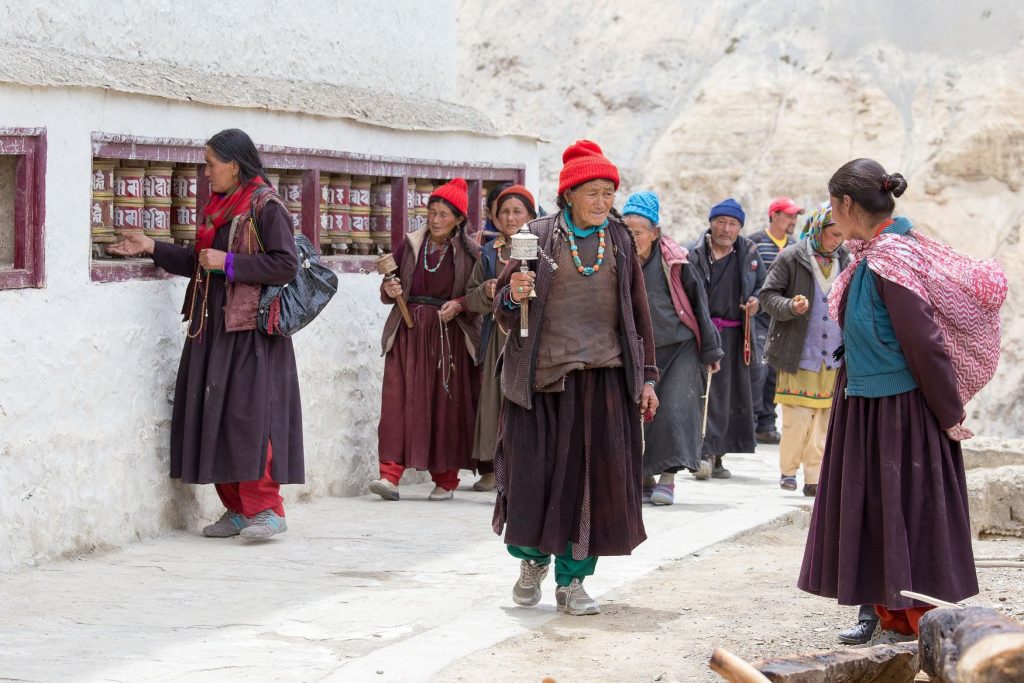
Ladakh is tense. People in the union territory are not happy with the state of affairs obtaining since the withdrawal of the semi-autonomous status of Jammu and Kashmir.  The refrain goes that this has made New Delhi a direct ruler of the region with little role in the governance for its people. What is more, Ladakhis fear their small population will be overrun by the influx of people from other parts of India without constitutional safeguards that forbid outsiders from settling in the region. 

But while the resentment is brewing, and also being politically expressed, there is little effort afoot to address the deepening concerns. In a resolution passed in November, the Ladakh Hill Development Council demanded (LAHDC) statehood, extension of the sixth schedule, separate Lok Sabha seats for Leh and Kargil – the region’s two districts – and Public Service Commission. 

According to the resolution, the public resentment in Ladakh has grown since the state of Jammu and Kashmir was reorganized into two union territories. The resolution noted “the  apprehensions among the public with regards to safeguarding of land, jobs, culture, and ecology.”  

Ladakh has only one seat in Parliament. Before the re-organization of the erstwhile state of J&K, Ladakh had four MLAs and two MLCs in the Assembly. Ladakhis are sore that the region has now only one elected representative in the form of a Member Parliament, election for whom polarises its two districts – Leh and Kargil.   

In the new scheme of things, the democratically elected LAHDCs, both of Leh and Kargil, which acted autonomously in undivided J&K have become redundant. The region is now directly ruled by the centre through a Lieutenant Governor. So, LAHDCs effectively mean little for regional empowerment. 

Incidentally, the common fear of losing land and jobs to outsiders has brought together Leh and Kargil which have traditionally worked at cross-purposes. Though Ladakh as a whole has a slim Muslim majority, Leh is predominantly Buddhist and Kargil is largely Muslim.     

The total population of Ladakh, according to the 2011 census is 2.74 lakh. While Leh with a population of  1,33,487 is Buddhist majority,  Kargil with a population of 1,40,802 is Muslim majority.  

The Apex Body Leh (ABL) and the Kargil Democratic Alliance (KDA), Ladakh have forged a rare political unity. They protest together and also organize strikes jointly. It is for the first time in decades that the two Ladakh districts have been on the same page in pressing the government on their demands.  

In February, with protests showing no signs of abating, the Centre appointed a new Lieutenant Governor for the union territory amid an ongoing agitation by Ladakhi people demanding statehood and special status under the sixth schedule of the constitution. BD Mishra, a former brigadier of the Indian Army, and present Governor of Arunachal Pradesh, was appointed as the LG replacing Radha Krishna Mathur. 

Mathur, a former defence secretary, was appointed as the first Lt Governor of Ladakh after it was made UT following the revocation of Article 370 in August 2019 and downgrading of J&K into two UTs, Ladakh being one of them. 

Centre has so far refused to engage with Ladakhis in any dialogue, making them even more suspicious and longing for the constitutional safeguards they had when they were part of Jammu and Kashmir. In January, however, the Ministry of Home Affairs (MHA) constituted a 17-member high-powered committee headed by Minister of State Nityanand Rai to “ensure the protection of land and employment” for the people of Ladakh.   According to the MHA order, the committee will “discuss measures to protect the region’s unique culture and language, taking into consideration its geographical location and its strategic importance.” 

But Ladakhis refused to meet the committee, wanting its remit to include discussion of statehood, and the Sixth Schedule of the Constitution of India. 

The matter has since been hanging fire. Meanwhile, the disaffection with the state of affairs has spread to Ladakhi civil society also. And the noted educationist and Magsaysay award winning activist Sonam Wangchuk has become its face. In January, Wangchuk observed a five-day climate fast to demand the UT’s inclusion in Sixth Schedule  and to protest what he apprehends is the assault on the region’s fragile climate. Over the last three years, the centre has approved several major projects in the UT some of which are seen as detrimental to the region’s climate: One of them is an agreement with the government-owned Oil and Natural Gas Corporation to set up India’s first geothermal power plant in Puga Valley. Another agreement is with the National Thermal Power Corporation to set up India’s first green hydrogen unit.  

Seven hydropower projects are also proposed to be built on the Indus river and its tributaries and bids have been invited for solar projects. Already, the Ladakh Power Development Department has sought permission to clear 157 hectares of forest land to build electricity transmission lines. 

“When compared with the rights we have under the Union Territory, we were better off with Jammu and Kashmir,” Wangchuk said in a recent statement. 

“It took time to understand how it’s impacting us after Ladakh was made a Union Territory. I feel unsafe and unshielded when there are no safeguards for the region,” he added. 

Wangchuk also warned that by not listening to the people of Ladakh, the centre was pushing the alienated youth towards militancy. “The fear is not that people will turn against India, the fear is that love for India will subside and it is dangerous for a country that is facing the Chinese,” he said. 

Before he went for fast, Wangchuk also made a 13.49 minute video shot against the picturesque backdrop of the region where he articulates the sense of betrayal among Ladakhis and urges Prime Minister Narendra Modi to reach out to the region. He reminded the prime minister of the BJP’s recurrent promise during elections to give Ladakh the sixth schedule.  

Phunchok Stobdan, one of the top strategic analysts of India, thinks Ladakh’s current tension is the result of shortcomings in New Delhi’s existing policy towards the region. In his statements he has said that the UT status for Ladakh didn’t follow a “certain political evolutionary process” as it happened suddenly because of the August 5, 2019 decision abrogating Article 370.  

“It fell from the sky, as it were,” he said. 

However, the centre has so far given little indication that it is interested in conceding to any of the demands. Ladakh hardly qualifies for statehood with a population of just three lakh. But the continuing Ladakhi agitation has created a quandary for the union government. More so, at a time when it has no immediate plans to even restore statehood to Jammu and Kashmir or hold elections there.  

G-20: Voices for Ukraine peace echo, but Western powers queer the pitch

India has betrayed both maturity and sagacity by stonewalling the demand of the West to formally blame Russia for the Ukraine conflict at G-20

It is 2023, not the year 1945. The erstwhile European colonial powers, now being re-branded as the epitome of democracy and human rights under the US-leadership, appear to be clinging to the 78-year old colonial narrative. In a bid to retain their pre-World War-II hegemony, they refused to sign a joint communiqué at the G-20 meet of foreign and finance ministers, unless Russia is condemned for the Ukraine War.

India being the rotational head of the G-20 forum for 2023 had been trying for the past several months through backdoor diplomacy as well as sometimes openly, that if the West was so keen to rake up the conflicts erupting in various part of the world on this forum of economic cooperation, why it did not raise the Iraq, Libya and Yugoslavia issues during the past decades at G-20 conferences.

There was little surprise during the recently concluded G-20’s high profile meeting in Bangalore and New Delhi, about the American and European media’s bias against India on this issue, but there was dismay in the South Block, the headquarters of the External Affairs Ministry (EAM), that Indian media presented the ‘refusal of India and China’ as a symbol of cooperation between the two Asian giants. They did not care to explain why the West did not invoke the peace process at various international forums for ending the one-year old avoidable Russia-Ukraine War. 

Instead of the noisy Indian news channels or print media known for their ‘press-note ‘ journalism, the Russian Foreign Minister, Sergey Lavrov, meticulously dismantled West’s ‘illogical stubbornness’ at the Raisina Dialogue (March 2-4), held on the sidelines of the G-20 meetings.

The high-profile Raisina Dialogue symbolises the seat of Indian establishment, as the most of the key ministries are housed on the hilly terrain of the Raisina Hills. The two-day interactive dialogue was a joint venture of India’s think tank, Observer Research Foundation (ORF), a Reliance Industry outfit, having support of India’s Ministry of External Affairs (EAM), and some American and Chinese foundations.

Lavrov appeared to be in his best of humour, when the ORF chairman, Sanjay Joshi, a former joint secretary in the Petroleum Ministry, asked him, “Could we be meeting in next year’s Raisina Dialogue.” He quipped with his usual smile in affirmative asking him to get a few more searching questions to be asked from the Americans. It was quite devastating for Joshi, a career civil servant who could have mastered the art of seeking or manipulating cushy assignments but possessed little experience of geo-politics or foreign affairs. He looked pathetic at the high table with the Russian FM.

Joshi alone cannot be blamed for his inability to comprehend the key issues of geo-politics. He was pampered by Ambanis, perhaps for his ‘good conduct’ during his tenure in the petroleum ministry, and in recent years by a section of the mandarins in the EAM. He also got himself anointed with academic credentials by some American think tanks and universities, but his mentors both in the corporate, EAM and American academia could not substitute the hard experience needed for such tasks in diplomacy.

The Wolf Warrior Diplomacy

With the emergence of China in world politics as an important power in recent years, the Chinese have been pursuing ‘wolf warrior diplomacy’, a departure from the traditional concept of evolving relationships with other countries wrapped in sophisticated elegance. It is confrontational and combative. Maybe Lavrov’s frank observations at the dialogue were like the Wolf Warrior. A seasoned Indian diplomat has quietly confided that Lavrov’s was not only ‘undiplomatic’, and thus overwhelming Joshi, a gentleman.

The West’s urge to retain its supremacy in the world geo-strategic and geo-economic affairs is reflected in the refusal to endorse the G-20 document. The West got a fresh lease of its hegemony during the 1990s with the collapse of the USSR. It was natural for NATO to be dismantled following the end of the Cold War, but the American industrial-military complex prevailed upon the successive administration not to end the military alliance, and thus pre-Cold War rivalries have resurfaced, perhaps, much more intensely .

These days, the national media is abuzz with observations that India does not want to undermine her past association with the USSR or she is scared of a large-scale Chinese invasion on her northern borders, but both electronic and print media ignore the key element of the issue; that G-20 is not a forum for settling borders and conflicts. Indian PM Narendra Modi’s efforts of reinvigorating North-South cooperation is rooted in the original concept of G-20.  However, the refusal of these erstwhile colonial powers to sign joint communiqué negates the efforts of decades of sincere efforts of economic cooperation. 

The weakening of the G-20 might become a catalyst for reinvigorating BRICS (Brazil, Russia, India, China and South Africa). It means that the vast business opportunity awaiting the war-torn Europe is being lost. The saner elements comprising civil societies across the continents have bemoaned that yet another opportunity for peace was lost, but China’s strongman, Xi Jinping, as usual smiled. “The buffoons in the Whitehouse have given his country the resource-starved countries, including the vast lands of Eurasia on a platter,” confides a former Indian diplomat to this writer.

China’s Double-speak 

Being aware of the double-speak of Beijing, whether it was ‘Panchsheel’ or its leaders talking about peace, India and China were seen together in refusing to condemn Russia in the ongoing European conflict. It is believed that Russians are aware that the new dose of the Chinese financial assistance estimated to be more than a billion USD to Pakistan is being promptly used by Pakistan to speed up loading of explosives to the Ukraine-bound ships via German ports.

Amidst the Chinese policy of holding with the hare while running with the hounds, India has betrayed both maturity and sagacity by resisting the demand of the Western powers to formally blame Russia for the conflict at G-20. She has also been ‘cool’ to the US suggestion that India should float a new peace plan in response to China’s proposed ceasefire plan already with Ukraine.

There are discussions among foreign affairs experts, whether PM Narendra Modi has invoked the 68-year old concepts of the ‘Panchsheel’ or non-aligned movement, which was initiated in April 1955. The representatives of as many as 29 governments of Asian and African nations had gathered in Bandung, Indonesia to discuss peace and the role of the Third World in the Cold War, economic development, and decolonization. The process of giving recognition to these impoverished countries has again begun from the soil of Indonesia. The venue this time was Bali, about nine hundred kilometres from Bandung, when India assumed the presidency of G-20.

Modi’s stress on the economic developments of the Global South reminds veteran Indian diplomats about the non-alignment movements. Interestingly, during the fifties, the USA was opposed to this idea and now it feels that Modi is not behaving like a leader of a satellite state. The recently released American documents, which were archived, reveal that the then PM Jawharlal Nehru’s initiative for peace at the Bandung Conference was taken as a Communist tilt of the countries of Asia and Africa, now again Modi might face the American wrath. Earlier, President Trump was heard expressing his disquiet that “India does not abide by us”. 

The Chinese peace proposals, which are yet to be made public, are believed to be rooted in the Five Principles of Peaceful Co-existence. It is also incorporated in the preamble to the Chinese constitution. They are mutual respect for each other’s territorial integrity and sovereignty, mutual non-aggression, mutual non-interference in each other’s internal affairs, equality and co-operation for mutual benefit, and peaceful co-existence. It was a part of the Sino-Indian Accord, but it did not prevent China from invading India in 1962 or quietly funding and training insurgents in her north-eastern states.

The mankind, thus, continues to be facing unprecedented ‘trust-deficit’ among nation states and even within alliances. The G-20 could have ushered in a peace process, but the opportunity was lost.

BJP, Congress trade barbs over Rahul’s remarks during UK visit

The BJP blamed Rahul Gandhi for defaming India on foreign soil while the former Congress president hit back saying it was actually Prime Minister Narendra Modi who did that years ago by discrediting the country’s achievements since Independence, writes Amit Agnihotri

A war of words erupted between the BJP and the Congress over Rahul Gandhi’s recent visit to London where he interacted with various academics and lawmakers.

The BJP blamed Rahul for defaming India on foreign soil while the former Congress chief hit back saying it was actually PM Modi who did that years ago when he said nothing had been done in India since Independence.

More trouble erupted when Rahul slammed the BJP and described its ideological mentor RSS as a fascist organization while alleging that they had captured most of India’s institutions and were choking the voice of the opposition.

“RSS is…you can call it a secret society. It is built along the lines of the Muslim Brotherhood and the idea is to use the democratic contest to come to power and then subvert the democratic contest afterwards. And it shocked me at how successful they have been at capturing the different institutions of our country… the press, the judiciary, Parliament, Election Commission — all the institutions are under pressure, under threat and controlled in one way or the other,” he said during an interaction at Chatham House.

 The former Congress chief also questioned the government’s China policy and charged PM Modi of being in ‘denial mode’ over the Chinese incursion along the border in eastern Ladakh.

The BJP in turn used parts of Rahul’s interactions to allege that he had sought America and Europe to intervene in India saying that democracy was under threat back home.

The Congress countered this by saying that Rahul had actually spoken about the strength of the Indian democracy and how the world would be impacted if the Indian democracy crumbled.

“He never asked the western powers to intervene in domestic issues. He clearly said that solutions to India’s problems would emerge from within,” Congress spokesperson Supriya Shrinate said.

The Congress spokesperson further said that while Rahul had been invited to deliver a talk by his alma mater, the Cambridge University, the honour had made the BJP leaders feel jealous.

Shrinate also targeted Union Law Minister Kiren Rijiju who criticised Rahul’s utterances in London and described him as a “Pappu”. The Congress spokesperson countered the law minister for the kind of language a cabinet member was using against a political rival saying it was a new low in India.

The Congress spokesperson said, “I wonder while they keep saying that Rahul should not be taken seriously. Yet, whenever he speaks, the entire cabinet and BJP leaders come out to attack the former party chief and defend the Government.”

“If the government is confident why does not it debate the issues flagged by Rahul Gandhi in Parliament,” said Shrinate.

The Rahul vs BJP tussle did not end here and flared up again as Vice President Jagdeep Dhankar, who is also the chairman of the Rajya Sabha, criticised the Lok Sabha MP for telling UK lawmakers that microphones of the opposition leaders were put off in Indian Parliament.

“The Chairman is an umpire, a referee, a friend, philosopher and guide to all. He cannot be a cheerleader for any ruling dispensation. History measures leaders not on the zealousness with which they defended their party, but the dignity with which they performed their roles in the service of the people,” Congress veteran Jairam Ramesh said as he slammed the Chair’s observations during a book launch event.

Ramesh alleged that “the Hon’ble Vice President’s statement on Rahul Gandhi, therefore, was surprising to say the least. He rushed to the defence of a government from which he is constitutionally required to be at arm’s-length and in a manner that was both confusing as well as disappointing. Rahul Gandhi has not said anything abroad that he has not said several times here. And unlike certain other individuals, his stand does not vary depending on where he sits.”

Where have all the men gone?

It’s time to get back to all those traditional definitions of manliness, and to all those tales of  valour and wisdom of the men of the years gone by. For actual manliness is all in the head!

Now that the hype gets over from the Women’s Day, one wants to know what’s been happening on the men’s scenario. Where are the men? The real men, that is!

Today we seem to be getting it all wrong: After all, manliness is not about the physical. It has a lot to do with emotions and the connected takeoffs …a combination of trust and convictions and of those promises to be kept at any given cost! 

Where are such men? Maybe the smog swallowed them? Maybe they still do exist but sitting somewhere like recluses. Upset and angry with the changing times. Uncomfortable and unsure of today’s settings where nothing seems going along the sane pattern.

Today new lopsided definitions of manliness have crept in. On the big and small screens, with pelvic thrusting creatures calling themselves men! Really! To me they come across as circus creatures….caged in  there  for a  certain  purpose to be used and  misused  not  just  by  commercial lobbies at work but also by the political and social mafia at play! 

The mafia is playing havoc with lives. And when situations go overboard, with limbs going towards the ‘out-of- control’ limits, no apprehensions are sounded. ‘Experts’ pronounce  nothing really much  is required to be done  than host  television discussions on why there is  rise in rape and  molestation cases in the country. That’s about it! Those discussions are said to be adequate to halt any further intrusive moves of any of the limbs around!

It’s time to get back all those traditional definitions of manliness and to all those tales of  valour and wisdom of the men of the years gone by. For actual manliness is all in the head!

Look around you and there seems a dearth, if not a famine of real men. Today aren’t we drought-hit on every possible front, including on the real men front! Call it modern day bankruptcy! For today, which man risks his life-livelihood to protect a damsel in distress or raises his voice loud enough to be heard against the upheavals in the making or even fights cum crusades for a cause without keeping in mind the political benefits?

Looking back, we were better off in those earlier decades, for there did exist our men in dhotis and achkans who’d fought the battle for independence. With no other motive but to free this land from foreign occupation, they had continued putting up a remarkable resistance against the firangis right till the very end. Going far beyond the parameters of caste and creed, religion or region, these men went marching ahead with stark selflessness, trying their  best to pave way for better times. Sadly, somewhere in the following years much more than dilutions have trickled in. And in all possible spheres.

*****

One of the real men..

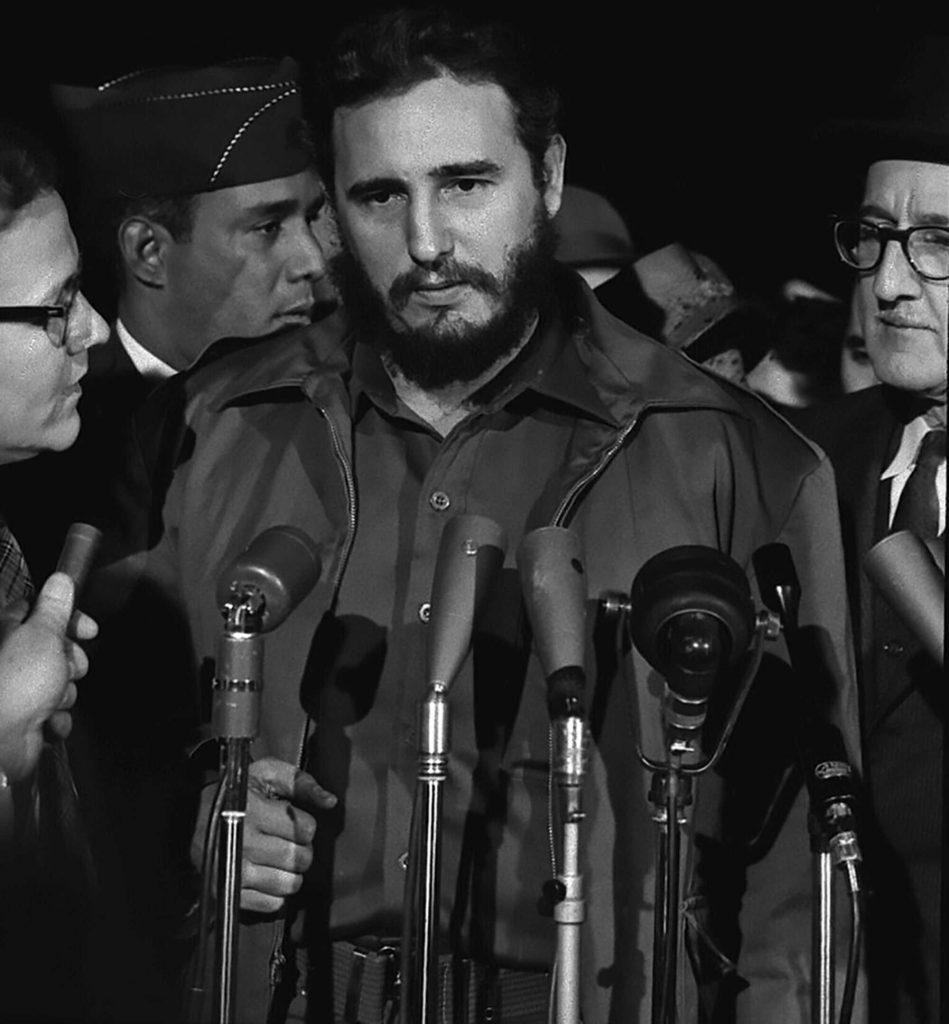
Nostalgia tightening its  hold, I recall around the autumn of 2016, as soon as news had reached of the passing away of the Cuban revolutionary leader Fidel Castro, what hit me was the fact that we’d lost a real man! No, not that I knew him or had ever met him. Yes, I’d been reading about his rebellious defiance. Not once sounding unsure or dilly dallying. Nor succumbing to all possible political threats, he built a communist state ‘on the very doorstep’ of the so-called  super power of the world –  the  United  States of  America. Not just that but he’d continued  to defy US dictates for five long decades. His determination came through not just in every word he’d uttered but it seemed spread out all across his expressive face. That bravado rebel look had remained clung on to him right till the very end. Yes, he looked like a tough leader who could lead his people with that undying spirit to him… so heroic that at times he came across as one of those magical characters tucked in the pages of a fairy tale if  not a dreamy romantic read.

What mattered to him was to stand by his convictions. I do realize that many would argue with that typical one liner –“Fidel Castro was nothing but a top ranking dictator!” But which ruler isn’t a dictator?  Some rule with democratic camouflages on, whilst others without those facades! I’d  rather  have a man  proclaiming loud and clear that he’s a  dictator, than any of those who coo something  but indulge in something  quite the  opposite. Do not overlook the underlying basic fact that even in the so-called democratic setups, rulers make sure that the rivals are side-lined if not silenced all too completely.

I wonder why we don’t get to see or meet real men? Where are the real men with such remarkable personalities, whom one can adore and admire? Why isn’t the Creator making them anymore? Have all possible pollutants wrecked hell on this front too – no more making of genuine two-legged creatures called real men. No, don’t get me amiss. Don’t mean ‘Alexander The Great’ type conquerors of empires but of hearts and souls. After all, if hearts and souls can be won over what more is required to be conquered! Nothing more!

Kejriwal has a battle on his hands as Delhi excise ‘plot’ thickens

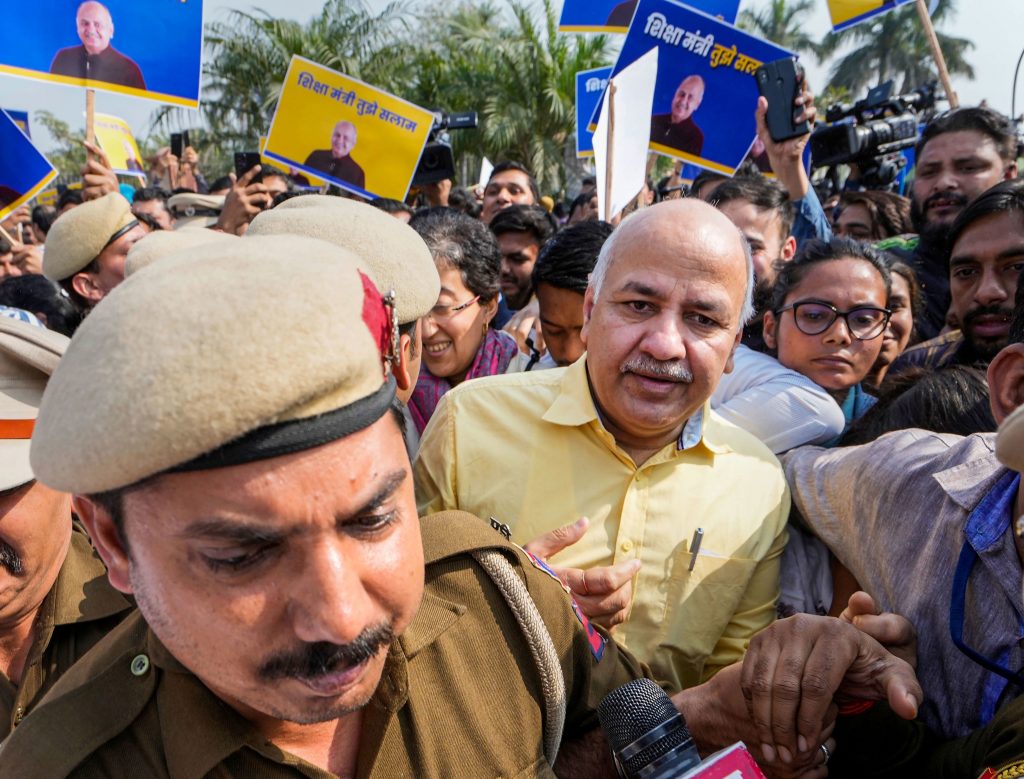
With former deputy CM Manish Sisodia put behind bars, the AAP supremo and Delhi CM Arvind Kejriwal has a huge task ahead to undo the damage thus caused even as the central agencies shift gears in their probes into the Delhi’s now-scrapped excise policy, reports Rajesh Moudgil

Till recently, the revamped health centres called Mohalla clinics and the government schools education in Delhi continued to be Aam Aadmi Party (AAP) government’s much lauded models. While these gave AAP a huge political mileage across the country, the former Delhi health minister Satyendar Jain and former deputy chief minister Manish Sisodia, who held 18 portfolios including education and excise departments were seen as Kejriwal’s confidants.

But it was only till the Central investigation agencies took up both these ministers for their probe. While Jain who was arrested by Enforcement Directorate (ED), is in judicial custody for alleged money laundering and Hawala transactions from Kolkata-based shell firms since May 30, last year, Sisodia is also in judicial custody in the alleged liquor policy scam since February 26, 2023.

The ‘murky’ case

Sisodia has been arrested in connection with the alleged corruption in the implementation of the now-scrapped Delhi excise policy for 2021-2022 after he reportedly failed to defend himself on the charges of destroying evidence related to the case by the Central Bureau of Investigation (CBI) and by ED for alleged money laundering linked with the said policy.

The CBI which grilled the former excise minister extensively booked him under Sections 12-B (criminal conspiracy), 477 A (intent to defraud) of IPC and Section 7 of prevention of corruption Act, held that Sisodia was not cooperating and his replies to its questions were not satisfactory when confronted with some documentary and digital evidences.

For record, the AAP government implemented its 2021-2022 excise policy from November 17, 2021 under which 849 liquor vends, divided into 32 zones, were awarded to private companies through open bidding for which it held bidding zone-by-zone instead of individual licences. The new policy also marked the exit of the government from the liquor business in an attempt to jack up its revenue as well as to end the black marketing and liquor mafia.

However, the policy saw opposition by civil society, religious fora and educational institutions against opening up of liquor vends near their close proximity, and subsequently by the opposition parties.

Even as the AAP government rolled back its policy and reverted back to old policy last year, another controversy got whipped up with allegations that undue favours were extended to the liquor licensees much after tenders were awarded thus causing huge losses to the government exchequer.

And with a report by the Delhi chief secretary suggesting irregularities in the policy, the Delhi Lieutenant Governor (LG) V K Saxena recommended a probe by CBI into it on July 22, 2022. The CBI registered an FIR against Sisodia and 14 others flagging alleged payments of crores of rupees to close associates of Sisodia by Sameer Mahendru, one of the liquor traders.

Meanwhile, the ED which had also begun grilling Sisodia in Tihar Jail arrested him on March 9, 2023. The ED officials have reportedly asked him about his association with Vijay Nair (AAP communication in-charge) and Dinesh Arora (alleged to be close to Sisodia), co-accused in the case. He was also quizzed about the decision to change profit margin from 5% to 12% for the wholesalers and about the kickbacks allegedly paid by “South Group’’ which reportedly comprises some politicians and businessmen from Telangana and Andhra Pradesh allegedly in lieu of giving nine out of the total 32 zones to the said lobby.

Meanwhile, according to reports, the ED has also arrested Arun Ramachandra Pillai, an accused who allegedly represented the South Group and particularly the interests of K Kavitha, daughter of Telangana chief minister K Chandrasekhar Rao. Pillai was also alleged to have been involved in the formation of the liquor cartel as well as allegedly passing on the Rs 100 crore kickbacks from South Group to the AAP minister.

The minister’s former secretary C Arvind, now a key witness in the case, has also reportedly told investigating agencies that Sisodia had called him to the residence of chief minister Kejriwal where he was given the changed draft of group of ministers’ (GoM) report mentioning the profit margin for wholesalers as 12% which was earlier 5%.

 Opposition divided

Meanwhile, even though as many as nine opposition leaders took on the ruling BJP government at the Centre against what they termed as blatant misuse of Central agencies against the members of Opposition, the Congress, DMK and Left were not among them.

 The letter flaying Sisodia’s arrest and alleging blatant misuse of Central agencies which was sent to prime minister Narendra Modi was jointly signed by Kejriwal, his Punjab counterpart Bhagwant Mann, West Bengal CM Mamata Banerjee of Trinamool Congress (TMC), Telangana CM K Chandrasekhar Rao of Bharat Rashtra Samiti (BRS), Bihar deputy CM Tejashwi Yadav of the Rashtriya Janata Dal (RJD), besides former Jammu and Kashmir CM and National Conference (NC) leader Farooq Abdullah, Nationalist Congress Party (NCP) leader Sharad Pawar, former Maharashtra CM Uddhav Thackeray and the former UP CM and Samajwadi Party leader Akhilesh Yadav.

 However, the absence of said three parties showed the rifts in the anti-BJP camp which, otherwise, have had plans to have a united Opposition to take on BJP in the 2024 polls. The three parties have strained ties with different signatory parties.

So much so, while the Congress top leadership had maintained a cautious silence and only rapped the Central government for using Central agencies for “harassment’’, without taking any names, the Delhi Congress president Anil Chaudhary and senior party leader Sandeep Dikshit welcomed Sisodia’s arrest.

Another senior party leader Ajay Maken went a step ahead and attacked AAP for what he alleged was “corruption money’’. He went on to further say that those sympathising with Sisodia should know that the money earned by unfair means was being used by AAP to weaken Congress. He further alleged that it had now been established that AAP had got about Rs 100 crore which was used by it in Goa polls against the Congress.

However, reacting to Congress’ absence in the letter, AAP’s chief spokesperson Saurabh Bharadwaj told media that the Congress had never stood by the Opposition and whenever it came to raising the national issues, it had gone missing.

N-E poll results give BJP a leg up, Cong slide continues

The BJP in alliance with its partners has managed to retain power in Tripura, Meghalaya and Nagaland. While playing down the N-E results, the Congress claims that its three by-poll wins in Maharashtra, WB and TN are actually the harbinger of things to come, writes Amit Agnihotri

The recently-concluded assembly elections in Tripura, Meghalaya and Nagaland gave a boost to the BJP and its allies but offered little hope to the Congress in the north-eastern region.

In Tripura, the BJP’s alliance with the Indigenous Progressive Front of Tripura managed to retain power by winning 33 of the 60 assembly seats.

In Meghalaya, the BJP won just 2 seats but supported Chief Minister Conrad Sangma’s National People’s Party to give him a second term in office.

In Nagaland, the BJP and its ally Nationalist Democratic Progressive Party managed to win 37 of the 60 seats allowing Chief Minister Neiphiu Rio to get a fifth term in office. Rio surpassed SC Jamir’s record, who was the chief minister from 1980, 1982-86, 1989-90 and two consecutive terms from 1993-2003.

Other political parties like NCP, NPP, Naga People’s Front, RPI (A), LJP (Ram Vilas Paswan), JD-U and Independent MLAs also extended support to the NDPP-BJP alliance paving the way for an opposition-less government in Nagaland.

An upbeat BJP top brass represented by Prime Minister Narendra Modi, Union Home Minister Amit Shah, party president JP Nadda and Assam Chief Minister and NEDA convenor Himanta Biswa Sarma, attended the swearing in of both Conrad Sangma and Neiphiu Rio to express solidarity with the regional leaders.

An advantage in Nagaland would now require the Centre and the state government to find a solution towards lasting peace in the north-eastern state, deputy chief minister Yanthungo said.

For the Congress, which once ruled the north-eastern states, the results meant five more years of struggle. The party could win just five seats in Meghalaya, down from 21 seats in 2018. The opposition party could not open its account in Nagaland and got just 3 seats in Tripura. The grand old party played down the results in the north-east and claimed that its three by-poll wins in Maharashtra, West Bengal and Tamil Nadu were encouraging signs.

Congress communications in charge Jairam Ramesh said, “The results in the bye-elections are encouraging. We managed to open our account in West Bengal. We also managed to win in Maharashtra’s Kasba Peth after a gap of over 30 years, which is considered a bastion of the RSS and the BJP. In Tamil Nadu’s Erode, our senior party leader EVKS Elangovan won with a huge margin of 66,233 votes.”

Interestingly, Congress chief Mallikarjun Kharge and former party chief Rahul Gandhi had campaigned in Nagaland and Meghalaya but skipped Tripura, leaving the state unit to fend for itself. Ramesh explained the absence of top leadership in Tripura saying they could not have tilted the election one way. Moreover, he said, the polls were more about the strength of the state unit and the candidates put up by the party and less about the central leaders.

The BJP, which had wrested Tripura from the Left parties in 2018, was able to retain power in the state after five years of being in power against the Congress-CPI-M coalition and the entry of Tipra Motha, a party founded by ex-royal Pradyot Kishore Manikya Debbarma, which won 13 seats. Later, Pradyot refuted reports that he was going to have an alliance with the BJP but did note that Union Home Minister Amit Shah had agreed to depute an interlocutor to address the concerns raised by the tribals in the state.  

Cong vs TMC

The BJP projected the assembly results as the saffron party’s growing popularity in the north-eastern region and claimed that the Centre’s policies had played a role behind the win.

However, both the Congress and the CPI-M had accused the BJP of indulging in political violence in Tripura over the past year, and had even complained over the issue to the Election Commission. The BJP had also come under pressure due to infighting and had to replace Tripura chief minister Biplab Deb last year with Manik Saha to beat the anti-incumbency. After some initial doubts, Saha was given a second chance to head the state.

Congress spokesperson Supriya Shrinate countered the BJP’s views by saying that the saffron party’s vote share had actually dropped in Tripura where it got less seats than 2018. She further said that in Meghalaya, the saffron party contested more seats but won less seats this time.

“The reality of these elections is that we won Kasba Peth, a BJP stronghold for 33 years in Maharashtra at a time when the Centre has unleashed agencies after the opposition. In West Bengal, we won the Sagardighi seat, a TMC stronghold after 51 years on the basis of our politics,” said Shrinate.

Congress leader in the Lok Sabha and West Bengal unit chief Adhir Ranjan Chowdhury targeted Chief Minister Mamata Banerjee over the Sagardighi by-poll win where theLeft-backed Congress candidate Bayron Biswas won by a margin of over 22,000 votes.

The Sagardighi by poll result has amply proved that a leader like Mamata Banerjee is not invincible. She can be vanquished. The support of the common people should not be taken for granted. The opinion of the common people is not the patent of any political leader, however high and mighty that person may be,” he said.

Chowdhury’s comments invited a sharp reaction from Mamata Banerjee who said that the by-poll loss for TMC took place due to an unholy nexus between the Congress-Left alliance and the BJP.

The West Bengal chief minister declared that she would go it alone in the 2024 Lok Sabha elections, throwing any chances of aligning with the Congress out of the window.

“There was an immoral alliance (between the BJP, the Communist Party of India (Marxist) and the Congress). The BJP transferred a portion of their votes to the Congress. If there is an immoral alliance and they want to fight Mamata Banerjee, how will the Congress or Left fight the BJP? The TMC will fight this alliance alone,” Banerjee said.

 “It is a lesson for all of us that we shouldn’t listen to the Congress or the Left. We cannot go with those who are with the BJP. There would be an alliance between the TMC and the people (in the 2024 Lok Sabha poll). We will not go with anyone. We will fight alone with the help of people’s support,” she said.

 The Congress and the CPI-M had fought the 2021 West Bengal assembly polls together to counter both TMC and BJP but the alliance failed miserably and could not even win a single seat.

Meghalaya

Congress Meghalaya unit chief and party MP Vincent Pala targeted the BJP for showing double standards over the issue of corruption.

“For the BJP and its allies, NPP and other parties, it is a marriage of convenience. They had said that the NPP was the most corrupt party in India. They said the same about other parties also. The Prime Minister, the Home Minister and the President of BJP had come to Meghalaya and all of them accused the NPP of being corrupt but after the results when the BJP got only two seats out of 60, they joined the NPP,” said Pala.

“This is what the BJP is…they fooled the people of India, and they fooled the people of Meghalaya. That’s why, I think, what they had said in their manifesto and what they preached and what they said during the campaign…shows they betrayed the people. These were false promises and today BJP is behind the NPP. They had threatened the regional party so that it would come with them. The BJP never had more than 9.5 percent vote share in the state,” he added.

Good news for obese as scientists stumble upon a weight-loss drug!

If careful monitoring finds no major side-effect, the drugs could help humanity win its long and futile fight against flab. The new drug is generating excitement among the rich and the beautiful.

A sudden surge in deaths due to heart attack post Covid pandemic has baffled clinicians, policymakers and the common men equally with experts still not sure if and how these deaths are correlated with Covid. Most recently, actress, model and the first winner of the Miss Universe pageant, Sushmita Sen, speaking on her Instagram page during a live chat session announced that she had a “massive heart attack” with 95% blockage in one of her main arteries.

Amidst so much bad news around with celebrities making a beeline to gyms to shed weight to maintain a zero figure, there is some good news about scientists stumbling upon a weight-loss drug that actually seems to work. Or rather, a class of drugs called GLP-1 receptor agonists, sold under brand names such as Wegovy and Ozempic. TikTok influencers and celebrities are obsessed with the injections for weight. Eventually, the beneficiaries will be billions of people whose excess weight has made them unhealthy.

Obesity the culprit

Obesity is no longer just a rich-country problem. By 2035 more than half the people on the planet will be overweight or obese, by one estimate. For now, the drugs are expensive, and their long-term effects are unknown. But competition—and bulk purchases by governments—will make them cheaper. And if careful monitoring finds no major side-effects, the drugs could help humanity win its long and hitherto futile fight against flab. 

The new type of drug is generating excitement among the rich and the beautiful. Just a jab a week, and the weight falls off! Celebrities swears by it; influencers sing its praises on TikTok; suddenly slimmer celebrities deny they have taken it. But the latest weight-loss drugs are no mere cosmetic enhancements. Their biggest beneficiaries will be not celebrities alone but billions of ordinary people around the world whose weight has made them unhealthy.

People, fed up with lugging huge frames around, have a history of heart diseases. As a result of Covid-19, many have become painfully aware of the risks the obesity entails. However, many find that efforts to lose weight through dieting and exercise had led them to nowhere.  Doctors suggest use of the injectable drug from Novo Nordisk, a Danish drug-maker, that is approved for type-2 diabetes but, as a fringe benefit, helps with weight loss, too. To start off, the price is heavy on pocket — about $1,000 a month — but may come down with increase in usage.

The news comes at a time when new studies have revealed that Covid infection has severely raised the risk of heart disease, especially among the younger age groups. A study based on the US Department of Veterans’ Affairs data, people who had contracted Covid face a substantially high risk of cardiovascular issues, including heart attack and stroke. These problems may also happen in people who had relatively mild Covid and have fully recovered from it.

In a recent study published in a journal, Nature, it was reported that people who recovered from severe Covid had extremely high risk of developing cardiac issues till a year later, including heart swelling and lung thromboembolism, which were up to 20-time higher than those uninfected.  A study at Yale University reported the presence of an excessive number of auto-antibodies in the people hospitalised with severe Covid. Most of these antibodies are against one’s own tissues and cells and can inadvertently attack the body tissues, including the heart, and weaken their architecture. The coronavirus enters through the ACE2 receptor found in organs and tissues such as the lungs, neurons, liver, kidney, intestine and also the heart and blood vessels. The clots may block the blood supply to vital organs like the heart or brain and cause heart attack or stroke, respectively.

Key findings

  • In the year before the pandemic, there were 143,787 heart attack deaths; within the first year of the pandemic, this number had increased by 14% to 164,096.
  • The excess in acute myocardial infarction-associated mortality has persisted throughout the pandemic, even during the most recent period marked by a surge of the presumed less-virulent Omicron variant.
  • Researchers found that although acute myocardial infarction deaths during the pandemic increased across all age groups, the relative rise was most significant for the youngest group, ages 25 to 44.
  • By the second year of the pandemic, the “observed” compared to “predicted” rates of heart attack death had increased by 29.9% for adults ages 25-44, by 19.6% for adults ages 45-64, and by 13.7% for adults age 65 and older.

What experts say

Dr Viveka Kumar, Principal Director & Chief of Cath Labs (Pan Max) – Cardiac Sciences says, “Recently, we have seen a lot of young people dying of acute heart attack and cardiac arrest in particular while doing physical activity like dancing, driving, at wedding ceremonies and all. Waves spurred by Omicron are lighter but they have got their own effect,” “Vaccine is not a complete answer yet because vaccines also led to certain side effects and caused cardiac events. There are people who have had only vaccines and within a week or a month’s time, we saw that a patient came down with a heart attack. Side effects of the vaccine are of lesser intensity but Covid infection is causing increased cardiovascular events especially cardiac arrest,” adds Dr Kumar.

Dr Mukesh Goel, Senior Consultant, Cardiothoracic and Heart and Lung Transplant Surgery, Indraprastha Apollo Hospitals, says, “It’s now known that Covid causes widespread blood clots in small vessels of various body organs including the heart. It also causes inflammation of heart muscle called myocarditis”.

After Independence, India was struggling with drought, famine, and starvation which lead to malnutrition but in the past few decades, due to economic growth, an abundance of crops and a change in lifestyle, the country has developed another nutritional problem that is obesity.

According to the National Family Health Survey in the past 10 years, the number of obese people has doubled in the country. As per the survey, people having Body Mass Index (BMI) more than 25 kilograms per metre square have been considered obese. The prevalence of obesity is 12.6% in women and 9.3% in men. In other words, more than 100 million individuals are obese in India leading to high triglycerides and low high-density lipoprotein (HDL) cholesterol, type 2 diabetes, high blood pressure, osteoarthritis, heart disease, stroke and even cancer.

MOST POPULAR

HOT NEWS