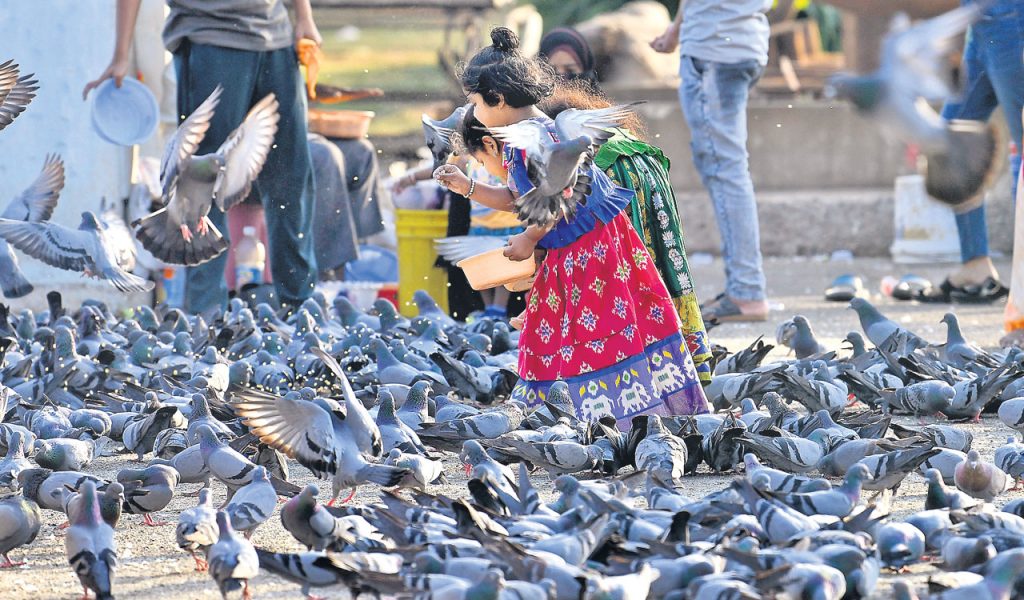
Pigeon feeding is one of the most prevalent practices in India. But are people aware of the health problems being caused by exposure to pigeons. Pigeon Droppings have been reported as most hazardous to human health. Studies show that around 60 different diseases occur due these droppings. According to various reports, people suffer most from Asthma, and breathing difficulty. Pigeons carry most of the fungus, and microbes of various diseases which get transferred from one place to another. These microbes are present in the air and inhaling it causes various health issues.
According to International Union for Conservation of Nature, there are approximately 26 Crore pigeons in India. In India the cases of Asthmatic patients have increased due to the active exposure to pigeons. Hyderabad ranks the top most city to have the most populated pigeons. Pigeons are the carriers of these microbes. Dr Pratit Samdani, physician, Breach Candy Hospital, says that exposure to pigeon dropping is the cause for developing pneumonia. “Some patient even land up on ventilator support because of pneumonia which is caused by the exposure to such droppings,” said Dr Samdani. The diseases mainly caused by them are Histoplasmosis, Acute Respiratory Distress Syndrome, Cryptococcus, Psittacosis, Salmonella etc.
Various measures have been suggested by doctors to avoid the exposure to these pigeons and to decrease the risk of these diseases;
Avoid pigeon feeding at public places.
Avoid areas where pigeon feeding happens.
Make pigeon net at your homes to avoid pigeons at home balcony.
Avoid doing pigeon feeding as pigeon feeding increases the population of pigeons. The best way to save oneself from these diseases is to use mask, wear gloves while cleaning their droppings, the people living in high rise apartments are facing this threat a lot, the balconies are filled with pigeons droppings, so it is better for them to moisten the droppings with water before cleaning. The droppings should be preserved in disposable bags when thrown.
New Delhi: The opposition will on Friday press for the demand of a JPC in the Adani-Hindenburg row while the BJP is demanding an apology from the former Congress President Rahul Gandhi on his remarks in London.
The opposition MPs have moved suspension of business notices in the Rajya Sabha under rule 267 and adjournment notice in the Lok Sabha. The Congress-led opposition is trying to corner the government.
The BJP is also not letting the issue to die down, and the treasury benches have been questioning Rahul Gandhi over his London speech and demanding an apology.
Jairam Ramesh, the Congress General In-charge said, “opposition is united on the demand of JPC and anything contrary to this is incorrect.”
Rahul Gandhi on Thursday said that he went to Parliament and four Ministers have raised allegations against him in the Parliament House. Sources in the Congress said that the first priority is to see Gandhi speak in Parliament. He will try daily and also meet the Speaker till the session lasts. However, if not allowed then he will address the media to put forth his views, the sources added.
“It is my right to be allowed to speak on the floor of the House. I requested the Speaker today. I went to his chamber and I requested him. I said – look, I would very much like to speak. I told him that people from the BJP have made allegations against me and as a Member of Parliament, it is my right to speak, ” Gandhi said.
Delhi : Intensifying the attack on Congress leader Rahul Gandhi for his statement at Cambridge University about India, BJP National President J.P. Nadda said that Rahul Gandhi has become “a permanent part of this anti-nationalist toolkit.”
Addressing media this morning, Nadda said: “It’s unfortunate that the Congress party is indulging in anti-national activities. After being repeatedly rejected by the nation, Rahul Gandhi has now become a permanent part of this anti-nationalist toolkit.”
He further said: “At a time when India is becoming the 5th largest economy in the world and G20 meetings are being held here, Rahul Gandhi on foreign soil is insulting the nation and the Parliament.”
He also called out on Rahul Gandhi for insulting the government of majority and 130 crore people of India. He said: “Rahul Gandhi is also insulting the elected majority government and 130 crore Indians. What is this if not strengthening the traitors? Rahul Gandhi on foreign soil said that democracy is finished in India and Europe and US should intervene. What could be more shameful than this?”
Seeking Rahul’s apology, Nadda said: “Rahul Gandhi must apologise…In India’s history since Independence, even in most difficult times, none of India’s leaders ever appealed to foreign powers to act against the Indian government. This is a very serious matter in independent India’s history.”
BJP has been targeting Rahul Gandhi ever since he made statements in London about India and its democracy. BJP is also demanding his apology and warned that if Rahul doesn’t apologie, BJP will run a nationwide campaign against him.
Congress leader Rahul Gandhi, while giving a lecture at Cambridge University in the U.K. recently, said: “Everybody knows and it’s been in the news a lot that Indian democracy is under pressure and under attack. I am an Opposition leader in India, we are navigating that (Opposition) space. The institutional framework which is required for a democratic Parliament, free press, the judiciary, just the idea of mobilisation, moving around all are getting constrained. So, we are facing an attack on the basic structure of Indian democracy.”
15 March 2023 Amritsar
Delegates attend the second G20 Education Working Group meeting at Khalsa college in Amritsar on Wednesday.
PHOTO-PRABHJOT GILL AMRITSAR
Amritsar: The three days the G20 EdWG meeting which held its deliberations in Amritsar, Punjab from 15th March-17th March, focussed on ‘Strengthening research and promoting innovation through richer collaborations’ along with exhaustive discussions on the other 3 priority areas of ‘Building Capacities, Promoting Life-long learning in context of Future of work’, ‘Ensuring Foundational Literacy and Numeracy especially in the context of blended learning’ and ‘Making Tech-enabled learning more inclusive, qualitative and collaborative at every level’.
The Indian Chair of the G20 Education Working Group (EdWG) and Union Secretary, Higher Education, K. Sanjay Murthy during closing remarks highlighted the importance of community’s involvement in student education and urgency of greater collaboration and partnership. G20 platform must create new relations beyond bilateral and think multilaterally. He said “India aims to take the documentation of this Education Working Group Meetings to all Higher Education Institutions to ensure that best practices are implemented at the administrative level and the final compendium brings a great impact on all institutions”.
Talking to Media after the conclusion of the three day 2nd EdWG meeting in which 58 delegates from 28 member & invitee countries and international organizations participated, K. Sanjay Murthy said “We have high hopes for faster collaboration across higher education institutions to create workable solutions to meet the Sustainable Development Goals.”
Alternate India Chair, Sanjay Kumar, Secretary, School Education said that “Every participating nation in the discussion forum is on the same page for leveraging technology and joyful approach for achieving Foundational learning and Numeracy.” He further highlighted the Ministry of Education’s new initiative ‘Jaadui Pitara’ and NCERT stall at the exhibition held on the side-lines of the working group meeting.
At the end of the media briefing, Secretaries thanked the Punjab Government for their hospitality and support in organising the Education working Group Meeting in Amritsar. Sanjay Kumar further added “Yahan se Punjab ki khushboo poore vishwa main jayegi”
(This will help to permeate the fragrance of Punjab in the entire world.)
Delegates also visited the Golden Temple as part of the excursion component of the EdWG meetings on the concluding day of the three day event.
A mini exhibition was also set-up showcasing handicrafts and cultural elements of Punjab at the meeting venue for the delegates. Ministry of Tribal Affairs, designer Paramjit Kaur, Woodwork artist Amritpal Singh, artist. Manohar Lal and Ajeevika Self Help Group were some of the participants. As a token of appreciation, delegates were also gifted a handcrafted phulkaari shawl from Punjab and authentic teas.
The event included a seminar and a multimedia exhibition at the historic venue of Khalsa College on the 15th March. The seminar highlighted India’s opportunity to establish itself as a leader in research and innovation globally. It also discussed the role of various stakeholders in promoting research on emerging innovations, their impact on education systems, and society. The exhibition witnessed a footfall of approx. 2500 students from 10 schools in and around Amritsar on the 16th and the 17th of March.
New Delhi: A Delhi Court on Friday extended Aam Aadmi Party (AAP) leader and former Deputy Chief Minister’s Enforcement Directorate (ED) custody for further five days in connection with the now-scrapped excise policy case.
After the Central Bureau of Investigation (CBI) on February 26 arrested him, the ED, on March 9, also arrested Sisodia in the same case.
Special judge M.K. Nagpal of the Rouse Avenue Court was told by the ED that important details have come up during Sisodia’s custody and he had to be confronted with other accused persons.
The probe agency informed the court that voluminous data from Sisodia’s email and mobile, etc. is also being forensically analysed.
Sisodia’s counsel, however, opposed the central agency’s remand plea saying that there is not a whisper from the agency regarding the proceeds of the crime, which is fundamental to the case.
His lawyer further contended that there was no justification in seeking extension of custody and that Sisodia was confronted only with four people during his earlier custody of seven days.
On March 10, the court had sent Sisodia to ED custody, which ended on Friday.
The court had deferred hearing in Sisodia’s bail application for March 21, in the same case being probed by the CBI.
During the hearing, the ED had sought his 10-day custody saying that they need to unearth the modus operandi, the entire scam and confront Sisodia with some other people.
ED’s counsel Zoheb Hossain, while claiming that Sisodia was part of the “money laundering nexus” had said that the movement of tainted money through hawala channels was also being probed.
Hossain had submitted that the policy was formulated to ensure that certain private entities got huge benefits and that one of the biggest cartels was made to operate 30 per cent of liquor business in Delhi.
Referring to the meetings between restaurants association and Sisodia, ED alleged that relaxations were afforded to the restaurants in excise policy like reducing the legal age of drinking and other things.
The central agency had argued that Sisodia had destroyed the evidence.
“Within a span of one year, 14 phones have been destroyed and changed, ” the agency had claimed.
“Sisodia has used phones purchased by others and SIM cards that are not in his name so that he can use it as a defence later. Even the phone used by him is not in his name, ” the ED counsel had submitted.
He (Sisodia) has been evasive from the start, the ED had alleged.
There was a conspiracy behind framing the excise policy. The conspiracy was coordinated by Vijay Nair, along with others and the excise policy was brought out for extraordinary profit margin for wholesalers, the ED had argued in the court.
On March 6, Judge Nagpal sent Sisodia to 14-day judicial custody in the CBI case, and he was lodged in the national capital’s Tihar jail.
The CBI was given his remand for seven days before the judge sent him to judicial custody till March 20.
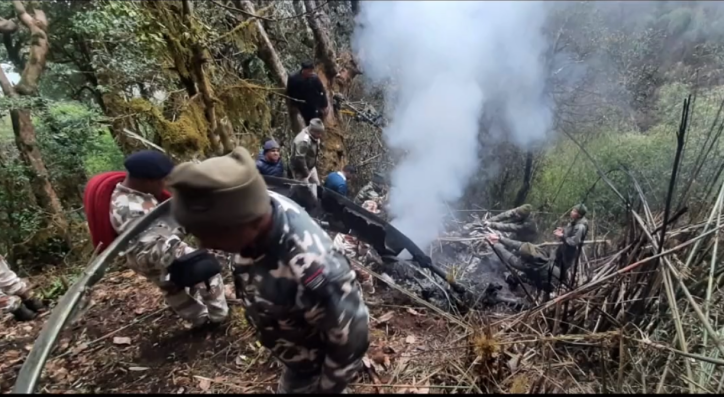
Itanagar : Two pilots on board a Cheetah helicopter of the Army were killed when it crashed near Mandala in West Kameng district of Arunachal Pradesh on Thursday morning, a defence spokesperson said.
The deceased officers have been identified as Lt Colonel VVB Reddy and his co-pilot Major Jayanth A, he said.
Defence spokesperson Lt Colonel Mahendra Rawat said in Guwahati that the helicopter was on an operational sortie from Missamari in Assam’s Sonitpur district to Tawang in Arunachal Pradesh.
The flight encountered “inconducive weather” and was returning to Missamari when it crashed, he said.
“The helicopter lost contact with Air Traffic Control (ATC) around 9.15 am. Five search parties of the Indian Army, SSB and ITBP were immediately launched. The wreckage of the aircraft was found near Banglajaap east village of Mandala,” Rawat said.
“A Court of Inquiry is ordered to ascertain the cause of the accident,” he added.
Rohit Rajbir Singh, the superintendent of police, Special Investigation Cell (SIC), said villagers had found the crashed chopper ablaze in Dirang, and informed district officials.
“Villagers from Bangjalep at Dirang located the chopper around 12.30 pm,” Singh said. The area has no mobile connectivity and the weather is extremely foggy with visibility as low as five meters, he said to media.
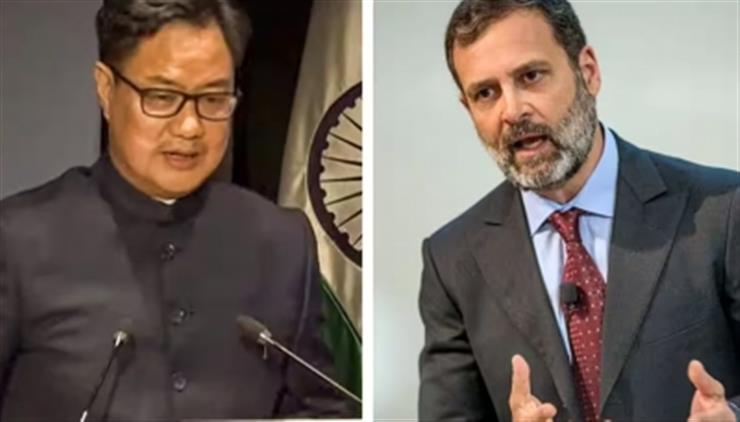
Delhi : Union Law minister Kiren Rijiju on Thursday attacked Congress leader Rahul Gandhi for his London speech, and said that people must raise their voice against those who defame India.
Speaking to the media, Rijiju said, “Rahul Gandhi must apologise for what he said in his London seminar. He has insulted our democracy, judiciary & nation. We must raise our voice against those who speak against our nation.”
He further said, “If Rahul Gandhi says something and Congress gets into trouble because of that, we have nothing to do with it. But if he defames our country, then as the citizens of this country, we can’t be quiet.”
Congress leader Rahul Gandhi, while addressing a lecture at Cambridge University in London recently, said, “Everybody knows and it’s been in the news a lot that Indian democracy is under pressure and under attack. I am an Opposition leader in India, we are navigating that (Opposition) space. The institutional framework which is required for a democratic Parliament, free press, the judiciary, just the idea of mobilisation, moving around all are getting constrained. So, we are facing an attack on the basic structure of Indian democracy.” Amid the controversy, Congress leader Rahul Gandhi will attend Parliament on Thursday and is likely to address the controversy over his comments in London. The Congress has rejected the ruling BJP’s call for an apology by Rahul Gandhi.
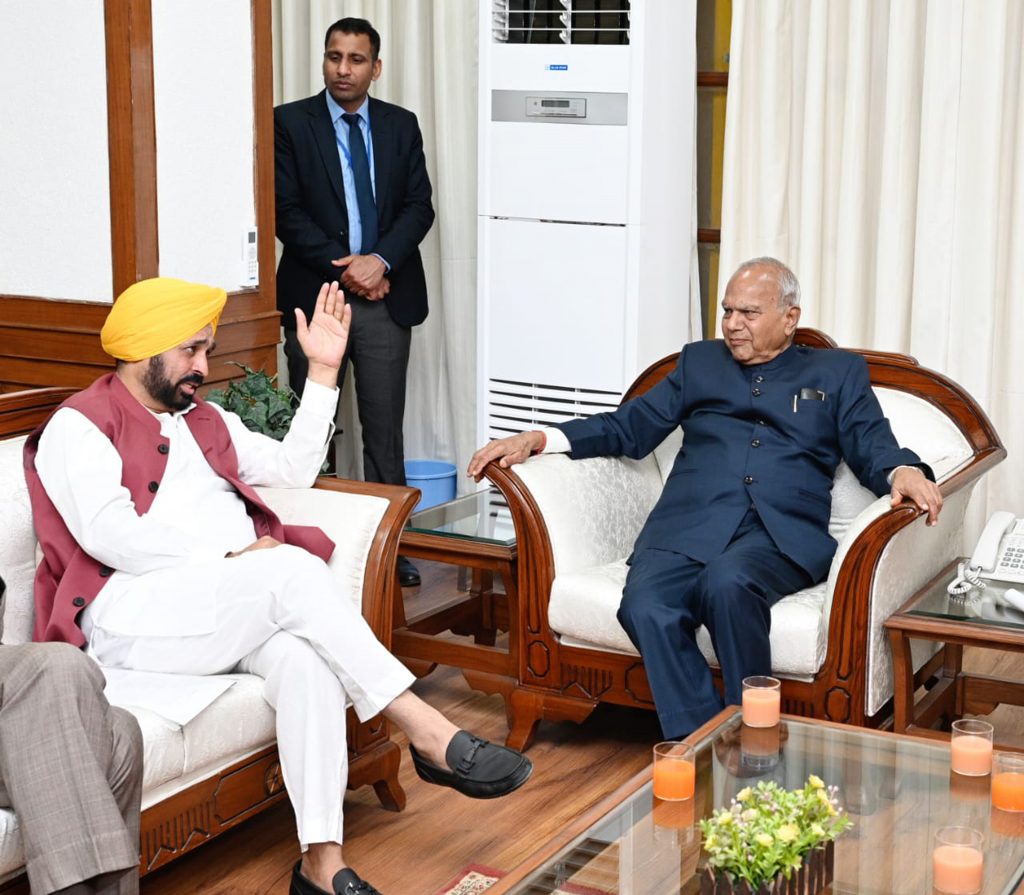
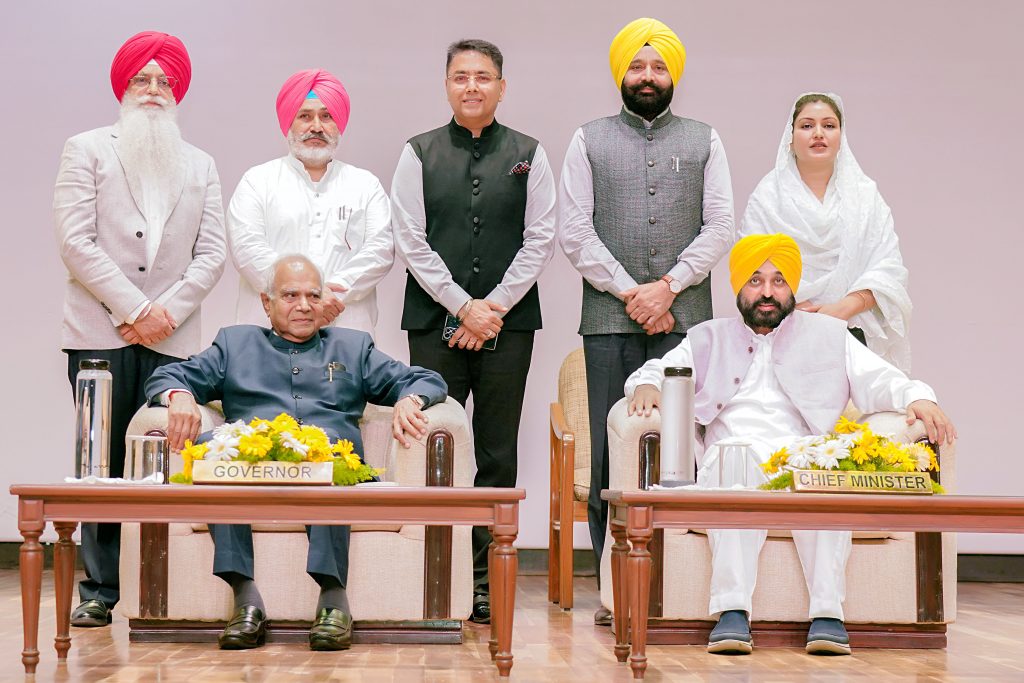
The ugly spat between Punjab CM Mann and Governor Banwarilal Purohit has once again exposed the fragile fault lines between the two constitutional entities, writes Kumkum Chadha
When the apex court cautioned policy makers not to let the level of discourse degenerate into a “race to the bottom”, it was a reflection on the dismal state of affairs in the country.
The Supreme Court was adjudicating a confrontation between a Chief Minister and a Governor over summoning the Budget session of a state Assembly.
The state in question: Punjab
Punjab chief minister Bhagwant Mann and Punjab Governor Banwarilal Purohit
The dramatis personae: Governor Banwarilal Purohit and Chief Minister Bhagwant Singh Mann.
The Court was hearing Punjab Government’s petition against Purohit’s refusal to summon the Assembly for the Budget session from March 3.
Amid a slew of arguments, what however, stood out were the observations by the Court on the need for “mature statesmanship” and “decorum” in communications between Chief Ministers and Governors: “Political differences in a democratic polity are acceptable and have to be worked out with a sense of sobriety and maturity without allowing the discourse to degenerate to become a race to the bottom. Unless these principles were to be born in mind, the effective implementation of the constitutional values is liable to be placed in jeopardy,” the Bench said.
While doing so, the Court criticised the role of both Mann and Purohit while observing that they were both “derelict” in discharging their duties. If Mann was rapped for his failure to furnish information to the Governor on certain issues, equally it disapproved of Purohit’s refusal to summon the Assembly session.
Reminding the Governor that he was “duty bound” to summon the House, this power not being discretionary, the Court did record that the “the tone and tenor of the tweet and the letter by the chief minister left much to be desired”.
Mann had earlier refused to answer the Governor’s queries and tweeted that he was not accountable to the Governor: “According to the Constitution, I and my government are accountable to 3 crore Punjabis and not any governor appointed by the central government. Treat this as my reply,” the Chief Minister had tweeted in Punjabi.
“Intemperate” is the word the apex Court had used while referring to the language Mann had used both in his letter to the Governor and his tweet.
Courts apart, a political slugfest between the Governor and the Chief Minister had played out in the Assembly too.
It was the first day of the Budget session wherein there were heated exchanges between legislators and the Governor.
And this time around it was not the Chief Minister or his Party but the Leader of Opposition, Partap Singh Bajwa, who objected to the Governor referring to the state government as “my government”.
The ground: “The AAP government has not accepted you as one of them and not responded to the issues raised by you”.
Once the Governor refrained from using “my government”, Mann insisted that he must use the word.
Irrespective, acrimony is the order of the day, as it were. And this is not limited to Punjab, Mann or Purohit. There are umpteen instances where governors are at loggerheads with elected chief ministers.
As for AAP, it governs two states and in both it is at odds with the Governor.
Though Punjab is the latest in this unsavory CM versus Governor tussle, the stage was set by AAP chief Arvind Kejriwal who as Delhi Chief Minister crossed swords with Delhi’s Lieutenant Governor.
The occupants of Raj Bhawan have changed but the situation hasn’t.
Be it Najeeb Jung, Anil Baijal or Vinai Kumar Saxena, allegations and counter-allegations go on.
If the Lieutenant Governor’s office has questioned the AAP’s initiatives including mohalla clinics, AAP has accused the Lieutenant Governor’s office of corruption and encouraging insubordination among bureaucrats and non-cooperating with the government.
Rewind to Najeeb Jung wherein Kejriwal during his second stint as Chief Minister alleged that the Lieutenant Governor was following the “mandate of his political masters”, read the BJP.
Kejriwal spared no opportunity to deride Jung over his perceived closeness to Prime Minister Narendra Modi.
If Kejriwal had then questioned the appointment of Acting Chief Secretary calling it “unconstitutional” or went to the extent of locking the office of the Principal Secretary to appoint another, Jung declared the order null and void. Kejriwal and his deputy, Manish Sisodia complained to the then President, Pranab Mukherjee and accused the Lieutenant Governor of running the government as his fiefdom, so to say.
Not much changed after Jung resigned and Anil Baijal took over.
The turf-war continued, be it over the selection of special prosecutors for cases following the farmers’ protests including the January 26 violence or decisions taken by Baijal bypassing ministers.
Even after Vinai Kumar Saxena succeeded Baijal, nothing changed: “The Lt Governor,” said Kejriwal, “is not our headmaster to check our homework. He has to say yes or no to our proposals,” adding that an elected government cannot function if it has no power to make decisions. AAP alleged “illegal and unwanted obstructions and interferences” by Saxena.
AAP is not alone in this battle against governors. There are other chief ministers too who are engaged in a verbal duel with governors in their respective states.
Down south, the states of Kerala, Tamil Nadu and Telangana are also in the eye of a storm.
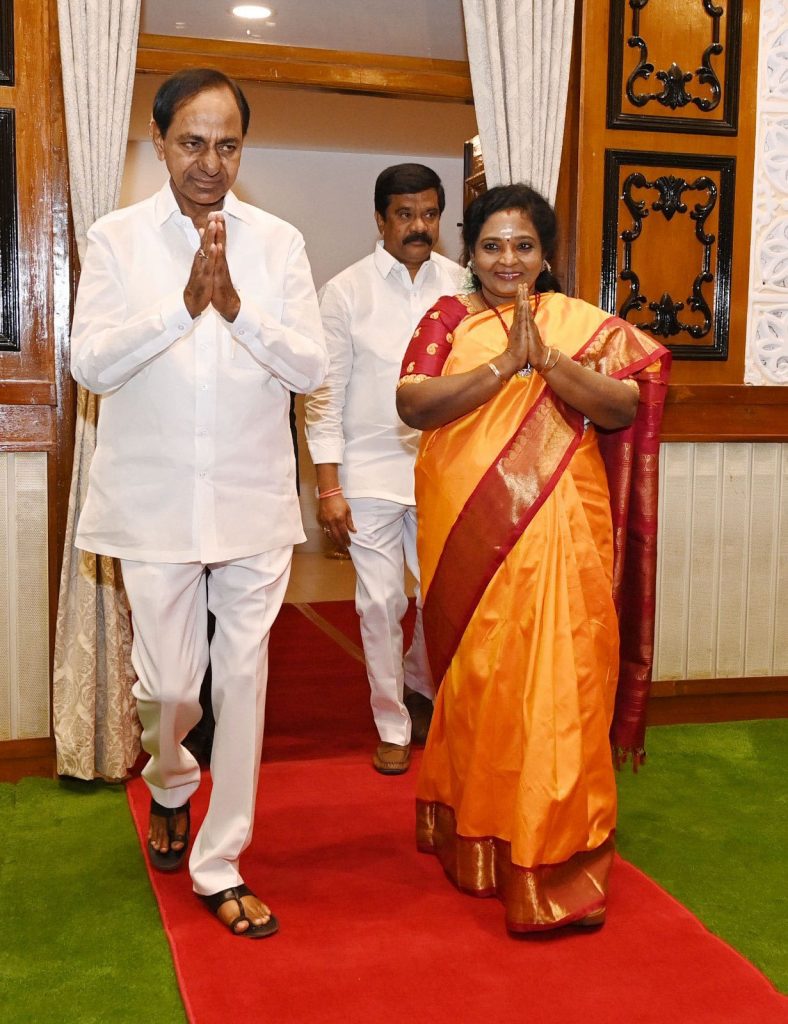
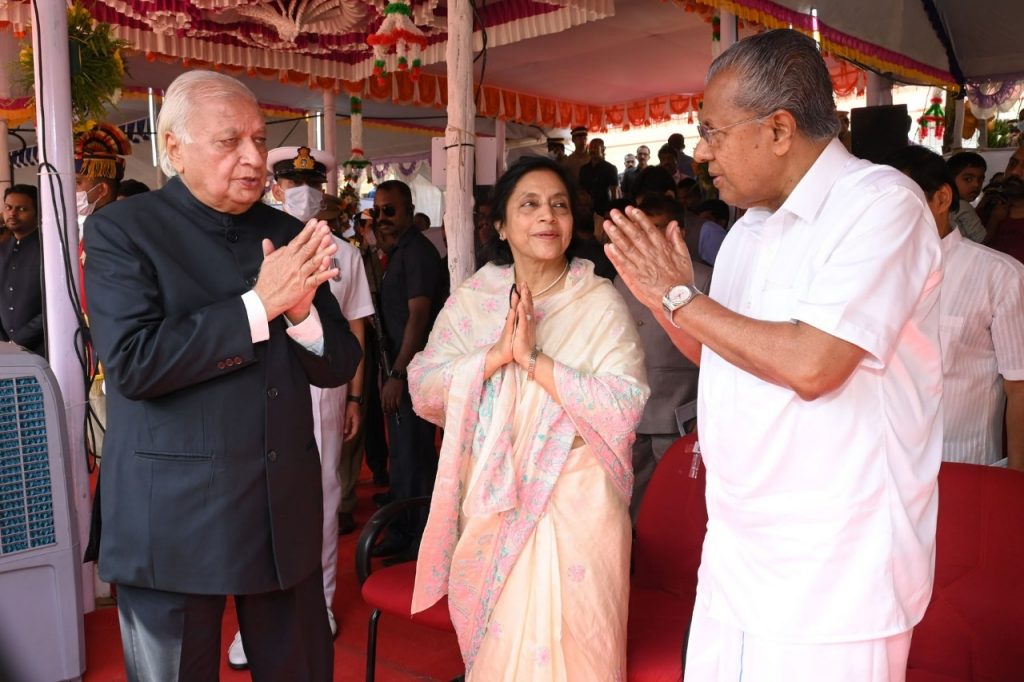
The respective Chief Ministers in question are Pinarayi Vijayan, M.K.Stalin and K.Chandrasekhar Rao who have locked horns with Governors Arif Mohammed Khan, R.N.Ravi and Tamilisai Soundararajan, respectively.
Beginning with Kerala, Khan is accused of delaying key legislation.
Governed by CPI(M), the state government is up in arms over the Governor’s order demanding the resignation of nine Vice-Chancellors. Even as the battle reached the Courts, the Chief Minister resorted to name-calling and said that the Governor is the “tool of the RSS”.
Not the one to let go, Khan accused the Chief Minister of “double standards”. He also sought the dismissal of the state Finance Minister for his remark that those who were familiar with universities in North India, did not understand the ways of those in the South.
In Tamil Nadu, Governor R.N. Ravi walked out of the Assembly after a resolution of Chief Minister M.K. Stalin was accepted. The Governor had skipped certain portions of the speech particularly the words ‘Dravidian model of governance’ which invited the ire of the ruling Party. The Chief Minister interrupted the Governor and subsequently moved a resolution.
The DMK and its allies have clashed on several issues including the Governor refusing to approve several bills. Accusing the Governor of propagating BJP’s Hindutva ideology, the Party has accused him of interfering in state politics and “instigating communal hatred”.
Telangana Governor Tamilisai Soundararajan has complained of the state government denying her the necessary protocol during her official visits. She has also alleged her phones being tapped at the behest of the state government.
If the ruling DMK and its allies have knocked at the door of President Droupadi Murmu and sought Ravi’s sacking, Kerala proposed the ordinance route to replace Arif Mohammed Khan as Chancellor of state universities.
Look East and there is our very own Mamata Bannerji who is a never saydie kind of a politician. She is one who spontaneously takes to the streets and is ever ready to strike even when not hit.
Till Jagdeep Dhankhar was Governor of West Bengal, Banerji’s relationship with the Governor was snappy, to put it mildly. She went as far as calling him a “stooge of the Centre”. Not the one to let go, Dhankhar charged the state government for collapse of law and order, violence and demeaning the office of the Governor.
And who can forget the spat between Puducherry Chief Minister V. Narayanasamy and Lieutenant Governor Kiran Bedi?.
Accusing Bedi of returning all the files being sent to the Governor’s office, Narayanasamy said that Puducherry’s development was being hampered by Bedi. He said Bedi’s “negative stand” against the state government’s move to secure funds from the Centre had caused loss of revenue to the state’s exchequer.
Bedi was also accused of running a parallel government and “doing the job of a Chief Minister”. Not stopping at this, Narayanasamy charged the Centre of posting a “demon” who was obstructing implementation of schemes.
Unlike the present incumbents, be it Ravi, Khan or Soundararajan, Bedi was removed from her post. Dhankhar, meanwhile, was elevated from being Governor to the Vice President of India.
What does this say about the present dispensation? Is it encouraging Governors to stoke the fires and make it difficult for non-BJP governments to run the state? Are these impediments adversely affecting the development of the respective state and thus causing hardship to the people? Is the politics which is playing out below accepted levels or to quote the Supreme Court a “race to the bottom”? Is the discourse deafening? Or unsavoury? Is name calling the new normal? Are Governors agenda driven? Are they pliable to the masters in Delhi? Or to borrow stalwart L.K.Advani’s phrase “willing to crawl when asked to bend?”.
While the jury is out on this, it would be unfair to single out the BJP-headed Government at the Centre for all ills; the spat between Governors and Chief Ministers; or the fact that they handpick incumbents exclusively to carry forward a political agenda?
While politics is at play and the BJP is more aggressive and brazen than others to ensure that its minions toe the line, it would be unfair to presume that there is actually a diktat to every Governor not to let state governments function.
As is the BJP’s style, there are unsaid messages which their nominees, governors or any other, are expected to decode or interpret according to their “wisdom” and understanding.
To say that the spat between Governors and non-BJP Chief Ministers is part of a strategy may be jumping the gun but to peg it as a coincidence may be underplaying BJP’s politics.
That the saffron Party would like to oust every non-BJP government through fair and foul means is a given hence governors toeing the line should not come as a surprise. If some have hopped, skipped and jumped, it is music to the ears of the ruling dispensation in Delhi.
Having said that, there is enough evidence to substantiate that Congress-led Governments also used their nominees to tick the boxes and follow the diktat of the powers in Delhi. There are many instances of replacing the non-pliable with favourites or showing the door to those who were not in sync with the Party in power.
Under the mild-mannered Dr Manmohan Singh, four Governors were sacked after he took the prime minister’s office way back in 2004. Appointed by the Atal Behari Vajpayee government, the Governors of Uttar Pradesh, Haryana, Gujarat and Goa were shown the door.
They were replaced by loyalists who had faced a rout in the elections including Buta Singh who was sent to Bihar, R.L.Bhatia to Kerala and Balram Jakhar made Governor of Madhya Pradesh among others.
Taking a head-count, the Congress-led United Progressive Alliance or the UPA juggled governors in over a dozen states wherein they rewarded and rehabilitated loyalists.
Led by L.K. Advani, a discussion had been initiated in the Lok Sabha when the BJP had castigated the Government of the day, to remove these governors on grounds that “they espoused different political ideology during the course of their active political career than the political ideology of the party in power”.
Little did they know that under Prime Minister Narendra Modi, the BJP would be doing in 2014 what Advani had rapped the Congress for, in 2004: then the Governors of Uttar Pradesh and Chattisgarh “quit” while Maharashtra Governor said he would respond only to a written order.
Quite contrary to 2004, when Advani decried the removal of Governors, ten years down the line his counterpart Union Home Minister Rajnath Singh said that the Government wanted the Congress nominees to go: “If I had been in their place, I would have stepped down” to quote him.
When it comes to handpicking Governors, loyalty is only one of the “qualifications”, though the basic one.
The other is the ability to manipulate the situation to the advantage of the ruling dispensation.
One without the other is kind of incomplete. So the package deal is: having stuck with us, do our bidding and help us to continue swimming.
When it comes to toppling governments, Governors come in handy. As they do when it comes to “juggling governments” so to say.
Back in 2015, the BJP had tried to use Governor J.P. Rajkhowa in Arunachal Pradesh to advance the Assembly session and dismiss a duly elected Congress Government and install one which was headed by a dissident. It was, to quote critics, an attempt to install a “puppet regime” backed by the BJP.
Rajkhowa, it may be recalled, had used the rebellion in the Congress to install a government of rebels with outside support of the BJP and others.
Rajkhowa also arbitrarily advanced the Assembly session by a month following a demand to impeach the Speaker. When MLAs went to the Assembly, they found it locked. In an unprecedented move, the Assembly was convened in a hotel in Itanagar. Once the Courts stepped in, the Governor was indicted and the decision was overturned.
Ditto Uttarakhand where the Governor followed a political diktat instead of the Constitution, resulting in the Court stepping in to save the day.
Two women Governors, Najma Heptullah and Mridula Sinha, of Manipur and Goa respectively, also carried forward the BJP’s agenda.
Slammed for working as “agents” of the Centre, they paved the way for installing a BJP government giving a complete go-by to the Congress which had emerged as the single largest Party in the Assembly elections.
Both Heptullah and Sinha wilfully ignored the widely accepted formula of inviting the single largest party. Instead, they gave priority to post-election alliances which clearly benefited the BJP.
Incidentally, Manipur has been under President’s rule for ten times: the highest in the country for a state. Beginning 1967, the state has seen defections and instability.
In Bihar too, the Governor ignored the single largest party formula to install the JD(U)-BJP government despite the fact that the RJD was the single largest Party.
Ditto Meghalaya when a year later, the Congress emerged as the single largest party but the Governor invited Conrad Sangma’s NPP to prove his majority. Sangma’s party forged an alliance with the BJP and others and formed the government in the north-eastern state.
However, in Karnataka, the Governor chose to invite the BJP to form the government on grounds that it was the single largest party. The Congress had then demanded that either the same criteria be adopted as in the previous cases, read Manipur, Goa and Meghalaya, or the governments thus formed should be dismissed.
But to peg all ills at the doorstep of the BJP would be being subjective.
There are enough instances to substantiate that during the pre-BJP regimes, the role of several Governors has been dubious, if one may use the term.
In 2005, the Governor sworn in Jharkhand Mukti Morcha Chief Shibhu Soren as Chief Minister ignoring NDA’s claim of 41 MLAs in the 80 member Assembly.
It was only after the Courts ordered a floor test and Soren was unable to prove his majority that the BJP’s Arjun Munda succeeded him as Chief Minister.
The same year, Bihar Governor Buta Singh recommended dissolution of the Assembly giving a go-by to the JD(U) and BJP claim of having a support of maximum number of MLAs.
Cut to a decade earlier, or even two, and the story is not very different.
In 1996 when BJP MLAs in Gujarat rebelled against Chief Minister Suresh Mehta, the then Governor ordered that he prove his majority on the floor of the House. He did, but the Governor went ahead and recommended President’s rule in the state.
Eight years earlier, Karnataka’s Governor did not let Chief Minister S.R. Bommai of the Janata Dal to test his strength in the Assembly.
In the eighties, if the then Governor of Andhra Pradesh supported the state Finance Minister in his rebellion against Chief Minister N.T. Rama Rao, then the Haryana Governor dismissed the Lok Dal and BJP coalition and invited the Congress to form the government in the state.
Giving the devil its due, one must concede that politicisation of the office of Governor is not a creation of the BJP.
The Modi government may be in the eye of a storm but can one absolve the erstwhile Congress governments at the Centre for its foolhardiness along similar lines?
Therefore, when Prime Minister Modi said in the Rajya Sabha that Congress governments at the Centre had dismissed 90 state governments by “misusing” Article 356 of the Constitution, he was not off the mark.
In a scathing attack on former Prime Minister Indira Gandhi, Modi said she had dismissed state governments at will thus undermining regional leaders: “They say we trouble states but they have toppled elected state governments 90 times. One Congress PM used Article 356 fifty times to dismiss elected state governments. That was Indira Gandhi,” Modi said amid deafening applause from the Treasury Benches. She had, Modi said, “scored half century” in dismissing state governments.
Continuing his tirade, Modi recounted how the Left Front government in Kerala, NTR’s in Andhra Pradesh, Sharad Pawar’s in Maharashtra and M.G. Ramachandran’s in Tamil Nadu were dismissed by Indira Gandhi’s regime: “I want to expose them today”, Modi told a full House in Parliament.
Modi did not stop at Gandhi but dragged her father Jawaharlal Nehru into the controversy too.
Nehru had dislodged the first ever elected Communist government in Kerala. Till 1959, he used the Article six times; in the sixties it was used 11 times.
Following Indira Gandhi’s ascent to power, between 1967 to 1969, she used Article 356 seven times; between 1970 and 1974 President’s rule was imposed 19 times.
Once the Janata Party came to power, it too used this tool liberally and dismissed nine state governments.
Post 1980, under Indira Gandhi’s regime, nine state Assemblies were dissolved including Uttar Pradesh, Madhya Pradesh, Rajasthan, Punjab, Orissa and Bihar among others. Reportedly, the decision to cut short the life of these Assemblies was taken by her Cabinet.
In 1992-93 Prime Minister Narasimha Rao dismissed three BJP governments. Post Babri Masjid demolition, Kalyan Singh’s government in Uttar Pradesh was also dismissed.
“The Congress,” continued Modi, “is misleading the nation, but people of this nation know their reality. The party is concerned more about its politics.”
It would, therefore, not be wrong to say that all regimes are in this together. Constitutional offices have been misused for political gain and there has been an erosion of institutional sanctity under all regimes. So it is just a case of the pot calling the kettle black.
But why only Governors? What about the office of the President wherein favourites and the pliable are often chosen?
Public memory may be short but History is witness to V.V. Giri’s election as President of India where politics was at full play.
Following President Zakir Husain’s death in May 1969, the election for the post of President was to be held.
The Congress had fielded Neelam Sanjiva Reddy but the country’s Vice President V.V. Giri threw his hat in the ring announcing his candidature as an independent. Many interpreted this move as one backed by Indira Gandhi.
Credence to this is lent by the fact that Gandhi refused to issue a whip even though she had signed Reddy’s nomination papers. Rather, she asked the Congress members to exercise a conscience-vote, even while keeping away from campaigning for Reddy.
Once Giri won the election, he hit back at those who had opposed him on grounds of his 75 plus age: “Those who say I am too old, let them have the benefit of my fist,” Giri is reported to have said.
That apart, Giri’s victory helped Indira Gandhi emerge as the undisputed leader of the Congress Party. She went full steam to implement her socialist and political agenda.
Giri, meanwhile, did Indira Gandhi’s bidding and was widely referred to as the “Prime Minister’s President”.
In this context, one cannot forget India’s seventh President Giani Zail Singh and his subservience to Indira Gandhi. Many recall his infamous quote that he was prepared to sweep the floor if Indira Gandhi asked him to.
Therefore when the Opposition charges the current dispensation of “destroying institutions,” it must pause and look within.
However, this in no way justifies the acts of commission and omission by the Modi government or its bid to ride roughshod and dismantle what the fathers of the Constitution painstakingly built brick by brick.
The custodians of governance are duty bound to protect the Constitution that they swear by. To misinterpret it towards a political end would be doing a disservice to the office they hold, particularly the constitutional positions.
Equally, it would be unjust to single out the incumbent Modi government and crucify it for doing what others have done in the past. One could paint Modi as the villain of the piece as it were but he is not in this alone. His knives may be sharper but his predecessors were not saints. Their hands too are dipped in blood.
Over the last seven decades, many states have witnessed tensions over the role of governors who have reportedly been blamed for not maintaining independence in their decision-making powers. Recently, the Supreme Court while hearing a case where the governor of Punjab did not summon the Assembly even after the cabinet’s recommendation, told both the governor and the chief minister that while the state government is duty-bound to furnish information sought by the Governor, the governor has to accept the recommendations of the CM-led Cabinet on convening the Assembly session.
Then came the news that the Tamil Nadu governor R N Ravi had returned a Bill that prohibits online gambling for reconsideration. Of course he has the powers to return the Bill. The Governor walked out of the Assembly after Chief Minister MK Stalin moved a resolution which stated that only the customary speech by the government would go on record for the first day of the House’s winter session. The row ensued after the governor skipped a few words including the ‘Dravidian model of governance’. In the recent past, roles of governors across Delhi, Punjab, Puducherry, Maharashtra, Tamil Nadu, Kerala and West Bengal have been questioned.
In the recent past, Tamil Nadu had sought a recall of the governor, in Kerala, the government had proposed an ordinance route to replace Arif Mohammed Khan as chancellor of state universities, in Telangana, Governor Tamilisai Soundararajan had expressed doubts about her phone being tapped. In West Bengal, Chief Minister and TMC leader Mamata Banerjee and the then Governor, Jagdeep Dhankhar had far from cordial relations and the State Assembly had even passed a Bill seeking the appointment of the CM as the chancellor of 17 state universities replacing the governor. In Delhi, which is not a full state, the ruling AAP and the L-Gs had been fighting ever since 2014 when the party first came to power in the national capital. In Puducherry, a former Lieutenant Governor was criticised by the state government for her alleged ‘interventions’. These incidents speak volumes about relations going sour and on the role of governors as per Article 163 of the Constitution.
Awards winning journalist and author, Kumkum Chadha who is known for her no holds barred writings, has done the Tehelka Cover Story ‘Racing to the Bottom’ after the apex court cautioned policy makers not to let the level of discourse degenerate into a “race to the bottom”. Deliberate procrastination on the part of governors in the matter of important Bills is often used as a ploy to raise anxiety among duly elected governments. The ruling parties in states allege that the dispensation at the Centre was trying to rule by proxy through governors allegedly using the latter as the ‘party’s extension’. A cordial relationship between the governors and the chief ministers is vital for any state’s progress. The Supreme Court has already set the tone by advising that the constitutional discourse must be conducted with decorum and statesmanship.
The failures of Signature Bank and Silicon Valley Bank in the U.S may have a minor impact on the Indian economy as the Indian banking system has no direct exposure of sub-prime mortgage assets or failed institutions. A report by Tehelka Bureau
When US President Joe Biden declared that the US banking system was “safe” and vowed stiffer bank regulation, after U.S. regulators were forced to step in with a series of measures after Silicon Valley Bank and Signature Bank collapse, threatening to trigger a broader crisis, the message was clear that it was a desperate bid to boast about the stability and credibility of the American banking system.
Experts say that the crisis is a glaring example of the limitless pursuit of greed and overindulgence at the expense of caution and due diligence. US banks reportedly flouted financial rules and a huge crisis was generated by overheating of the markets, excessive leveraging of debt, credit booms, miscalculation of risks, off-balance sheet operations by the banks. Not following the regulation, risk-prone monetary policy to mitigate taming inflation were the culprits. Biden has said, “Americans can have confidence that the banking system is safe. Your deposits will be there when you need them.”
Biden has stated that he is ‘firmly committed to holding those responsible for this mess fully accountable and to continuing our efforts to strengthen oversight of larger banks so that we are not in this position again.’ “I’m going to ask the banking regulators to strengthen the rules for banks to make it less likely this kind of bank failure will happen again, and to protect American jobs as a small business,” he said.
Now it is for other countries like India to assess how it will impact them. Silicon Valley Bank was among the top 20 American commercial banks till last year. It is the largest bank to be shut down in the US since the 2008 financial crisis that crippled economy.
Impact on India
According to Moody’s Investor Service, the failures of Signature Bank and Silicon Valley Bank in the U.S. which were major lenders to the crypto sector, was likely to have a limited impact on India and Asia-Pacific because of structural factors. However, in an increasingly interdependent financial world, the global financial crisis may have a cascading effect on economies and finances across the nations. With the advent of globalisation and the Indian corporate sector’s access to external funding, it may be hit by the crisis.
The crisis may have a minor impact on the Indian economy when compared to the US and other developed nations. The Indian banking system has no direct exposure of sub-prime mortgage assets or failed institutions. It has very limited off balance sheet exposure. India’s growth is driven predominantly by domestic consumption and investments. The Indian financial system might largely escape unhurt with the intervention of the Reserve Bank of India. Banking system is safe and resilient, thanks to higher capitalisation and shrinking inter-bank linkages, but the only cause of worry is the non-performing assets (NPA).
Overall, the Indian banking and non-banking financial sectors have displayed resilience to several shocks, facilitated effective delivery of post-pandemic public policy measures to targeted sectors of the economy, and preserved financial soundness while supporting a broad-based recovery of the Indian economy. The RBI in its report has observed that the current wave of technological innovations in the field of finance and new growth opportunities arising from global rebalancing of supply chains and domestic support to 14 industries under the production linked incentive (PLI) scheme opens new business avenues, it is important to be mindful of emerging risks from tech-led complex networks, alternative finance options and geopolitical developments.
The financial sector also needs to remain alert to risks and uncertainties associated with climate change. The regulatory and supervisory policies of the Reserve Bank will endeavour to promote a dynamic, robust, resilient, and competitive financial system, while preserving financial stability. However, the key takeaway for India is that no one can afford to ignore the warning signals despite a robust regulatory system in place.