Saturday, December 27, 2025

Govt-governor ties hit a new low in Punjab as Mann, Purohit spar

Adjudicating the issue, the Supreme Court has criticised both Mann and Purohit and observed that they were both “derelict” in discharging their duties under the Constitution. The court held that political differences have to be worked out with a sense of sobriety, writes Rajendra Khatry

Punjab recently witnessed an ugly spat between the Chief Minister Bhagwant Mann and the Governor Banwari Lal Purohit of late. A constitutional crisis arose when the Governor refused to give assent to the CM’s plea to convene the assembly session till he answered the queries sought by him.

In turn CM  Bhagwant Mann questioned the very basis of the Governor’s appointment. In a written communication to the Governor, the chief minister questioned the Governor’s authority to question him. Mann reasoned that he was an elected representative of the people, while the Governor was a central government appointee.

As the unfortunate war of words and imbroglio continued, a hapless Chief Minister approached the Supreme Court. The bench led by Chief Justice of India (CJI) Dhananjaya Y Chandrachud agreed to grant an urgent hearing to the Punjab government’s petition against Purohit’s refusal to summon the assembly for the Budget session from March 3. After the Supreme Court’s intervention, the Governor released a letter summoning the session from March 3.

While deciding the controversial matter, the Supreme Court criticised the role of both Mann and Purohit and observed that they were both “derelict” in discharging their duties under the Constitution. Not only this, but the  SC also pointed out that Mann failed in performing his duty under Article 167 of the Constitution.

According to the SC, the Aam Aadmi Party (AAP) leader declined to furnish information to the governor regarding his queries on certain issues, which included some appointments, and the scholarship scheme as well as the  selection of school principals for sending them to Singapore for training.

The SC also observed that the political differences in a democratic polity are acceptable. These differences have to be worked out with a sense of sobriety and maturity without allowing the discourse to degenerate to become a race to the bottom.

Earlier Banwarilal Purohit questioned the selection of school principals for a foreign trip. This led to a sharp response from Chief Minister Mann, who said that  his government is only answerable to Punjabis and not a Centre-appointed governor. Obviously the row erupted after Purohit wrote a letter to Mann asking for details on the selection of government school principals sent to Singapore for a training seminar, saying he has received complaints of “malpractices and illegalities” and needed clarification.

Taking umbrage at the CM’s stance , the Governor claimed that Mann never cared to reply to his letters in the past. Purohit told the chief minister that people did not elect him to run the state according to his `whims and fancies. Under the Constitution, the CM was bound to furnish any information sought by the Raj Bhavan.

According to his letter, the governor had earlier also written to Mann on the alleged “illegal” appointment of Punjab Agricultural University vice-chancellor and promotion of an IPS officer who was moved for alleged misconduct, among other issues. In a threatening mode, the Governor asked the chief minister to reply to his letter within a fortnight or else he would seek legal advice for further action against him.

The governor was also reported to be upset over the appointment of Gurinderjit Singh Jawanda as Chairman of Punjab Information and Communication and Technology Corporation Ltd. the governor writer to the Chief Minister that as per complaint, he came to know that you (CM) appointed Gurinderjit Singh Jawanda as Chairman of Punjab Information and Communication and Technology Corporation Ltd., which is a very important and prestigious Corporation of Punjab. 

The Governor felt concerned that the name of Gurinderjit Singh Jawanda had appeared in a kidnapping and property grabbing case. In this regard Purohit sought the full details of that case. This reportedly also irked the Chief Minister who looked at it as some kind of interference in discharging his official duties. 

On an earlier date the Punjab government had sent 36 government school principals to a professional teacher training seminar in Singapore from February 6 to 10. This matter also became a bone  of contention between the governor and the Chief Minister. 

The Governor wrote to the CM that “I have received complaints in respect to the selection of principals for sending them to Singapore for training. The complainants point out certain malpractices and illegalities in the selection of these principals. The allegation is that there is no transparency,” Purohit said in his letter.

“I, therefore, request you to send me the criteria and details of the entire selection process. Please also give detail if it was widely published throughout Punjab. As per news reports… The first batch has come back. Please let me have details of total expenditure incurred on traveling and boarding lodging and expenses towards training,” he had said.
Imran’s arrest imminent, Pakistan teetering on the edge

Despite being mired in a number of controversies, former PM Imran Khan has emerged as a political icon in Pakistan. It is feared that his arrest, which could take place any moment, can trigger countrywide agitation against the government and the army, writes Gopal Misra

Imran Khan, a former cricketer-turned politician, who had served as the country’s PM for more than three years, could be arrested any moment, but he has his shown rare grit in passion and perseverance, while seeking for long-term and meaningful political goals in the deeply divided Pakistan. 

For the past several days, Khan’s supporters are resisting Khan’s arrest in Lahore on the pleas that that their leader is being implicated in false cases; and he has augmented their logic by stating that the conspiracy regarding his arrest was being hatched in London, thus implicating Nawaz Sharif, a former PM exiled in London. 

Khan, who is credited for winning the cricket World Club for Pakistan in 1992 under his captaincy,  is expected to repeat this time his political victory in the country’s murky political cesspool. In spite of being mired in a number of controversies, including being accused of selling the gifts received from foreign dignitaries, he has emerged as the most popular political icon in Pakistan.

He was once a favourite of the GHQ, Rawalpindi, and was groomed for the country’s top civilian position of a PM for a prolonged 10 years till he was elevated. He, however, lost the favour of the then army chief, Qamar Jawed Bajwa, and was thus finally ousted in the by passing the no-confidence resolution with the help of the GHQ in the National Assembly. An irate Khan has never forgiven Bajwa for ‘hatching conspiracy’ against him, and he has successfully enlisted a large number of his supporters among the higher echelons of army and its intelligence wing, ISI or Inter-Services Intelligence as well as from the retired army generals.

The ouster of the Khan government during March-April 2022 was quite dramatic and full of intrigues. The new incumbent, Shahbaz Sharif, who assumed power in spite of the adverse advice from his brother, Nawaz Sharif, has been in a state of decision paralysis and is struggling to find his feet, while Khan has been leading rallies across the country attacking the government’s legitimacy and calling for fresh elections. His rallies have been adversely affecting the country’s fragile economy too.

It is apprehended that with his arrest, which could take place any moment, Khan migh usher in a countrywide agitation against the present government and even its army. He, however, is expected to further gain popularity among youths. The presence of a large number of youths and the support of former senior army officers makes Khan much more assertive before the law enforcing agencies as well as the higher judiciary.

The Indian Apprehension

The ongoing internal economic and political crisis, according to Indian experts on strategic affairs, is that the millions of starving people across western borders has caused concerns in India, and it is considered worst than the 1971 East Pakistan turmoil, which had led to the birth of Bangladesh. Bangladesh was conceived as a nation, rejecting the two-nation theory that Hindus and Muslims are separate nations.

Pakistan’s  political leadership irrespective of their political affiliations,  seek India’s all possible help for reviving its economy, but do not hesitate to boast that once they regain financial health, they would take on India later, cautions Sushant Sareen, a well-known commentator on strategic affairs.

It is being discussed in New Delhi’s various forums that it will be a fatal mistake to consider the Pakistani crisis like that of Bangladesh. On the other hand, GHQ at Rawalpindi, may use it as a new opportunity to conspire against India under the garb of starving refugees. It can push thousands of radicalized Muslim youth at its choice, who are just ready cross the borders to invade India, if the situation on the food front continues to be grim. 

Notice to Pakistan

India has issued a 90-day notice on Janaury 27, 2023, to Islamabad seeking modification of the more than six-decade-old Indus Water Treaty (IWT) that governs the sharing of waters of six rivers in the Indus system between the two countries. New Delhi has stated that the notice follows Pakistan’s continued “intransigence” in implementing the treaty, by raising repeated objections to the construction of hydro-electric projects on the Indian side. However, the ongoing political crisis has eclipsed this issue for a while.

There are many reasons being assigned for the rift between Khan and the military. They had been previously functioning on a much-touted “same page.” Apart from the biggest controversy regarding an impasse over the transfer of the director general of the Inter Services Intelligence (ISI) in October 2021, the Khan government could not get the constitutional provision removed depriving the provincial share in the federal revenue collections. The army wanted that the provincial funds should be made available to it before the provinces get the substantial funds for education and health.

Another ‘unpardonable’ act of Khan wa refusal to sign off on the ISI’s director general’s transfer, already approved by the military, for weeks. The then-ISI chief, Faize Hamid,  was a Khan loyalist, and it was speculated that Khan wanted him to be around for the next election (or perhaps even to appoint him the next army chief).

Once Khan lost the military’s support, it enabled the opposition to make their moves. Two small parties allied with Khan in the ruling coalition switched to the opposition, enough to deprive him of his razor-thin majority in the National Assembly.

THE Unstable Coalition

Since its inception in 2022, the new government, led by the PML-N’s Shahbaz Sharif, has been facing formidable challenges — and not just from Khan, but other economic and religious challenges. Shahbaz’s brother, Nawaz Sharif, who was deposed in 2017 on corruption charges and now lives in London, still exercises control over the party, and indeed the government.

It cannot be stated that the general elections would resolve the ongoing political crisis amidst the economic woes. While Khan appears to be ready to trounce his political rivals, the Shahbaz-led coalition is just like a sitting lamb to be chopped off by a butcher anytime. Khan had tried to hold polls before being ousted, but the Supreme Court foiled his attempt and allowed the Shabaz –led coalition to replace his government.

With the army’s decision to keep off from active politics, the situation in the country remains fragile. Meanwhile, there are reports that one of the major coalition partners, Asif Ali Zardari of Pakistan’ Peoples’ Party, is not keen for early polls. Meanwhile, he has reportedly asked his young son, Bliawal, country’s foreign minister at present, to win the confidence of the GHQ at Rawalpindi to be considered as a future PM. It means, that the coalition partners will be fighting separately in the polls, thus improving the chances of Khan and his party.

Presently, Pakistan’s ongoing political upheaval is just an opportunistic struggle for power. The people continue to watch the country’s plight helplessly. The three main players in the country’s power struggle are the ruling coalition, the opposition party, PTI, and the army. The ordinary Pakistanis are just at the receiving end. Its leaders and security forces are decamping with their precious wealth to foreign shores with a vengeance.

Just like all men are not rapists, all dogs are not rabid, killers

We, as a society, need to do some introspection and ask ourselves many soul-searching questions. Why is it that when a dog attack happens we feel justified in beating and poisoning other dogs in our vicinity?

Of late, quite a few incidents of dogs biting people or mauling children to death have been reported in the media. Each time heartbreaking and horrifying incidents like the ones in Noida, Rajasthan or Hyderabad take place; I am shocked and filled with grief. I can feel the heart-rending pain of the parents whose children have died horrific deaths and empathise with those who have been hurt by stray dogs. At the same time, being a human and an animal lover, I am mortified by the outpouring of hate for animals that comes through in social circles and via social media.

Don’t get me wrong. I am in no way trying to trivialize the deaths of our children mauled by strays. There is no way anyone can do that and be called a human. However, just like all men are not rapists, all dogs are not rabid, killers. This article is a humble and honest attempt to try and create some level of understanding in the minds of those who don’t have a natural affinity to animals, particularly dogs, so that the cruelty and conflict can be mitigated.

First off, we humans have to realize that animals have as much a right to life as we do. And one gets sickened by the cruelty that humans feel morally justified to mete out to the strays in their locality. Of late, after the unfortunate maulings, there have been many incidents of stray dogs being beaten to death by vigilante groups who have taken it upon themselves to “protect” their colonies. Innocent dogs that would never have bitten a single human being are paying the price for the misdeeds of a few others of their ilk.

We, as a society, need to do some introspection and ask ourselves many soul-searching questions. Why is it that when a dog attack happens we feel justified in beating and poisoning other dogs in our vicinity?

Humans kill and hurt each other all the time! If the National Crime Records Bureau (NCRB) figures are to be believed, India recorded an average of 80 murders and 77 rape cases daily in 2020! There were 105 cases of acid attacks and 6,966 recorded cases of dowry deaths.

When we talk about our children, look at what we do to them! The NCRB data revealed a disturbing picture as 140 children were raped and murdered in 2021, while another 1,402 were killed. There were 121 registered cases of foeticide and 49,535 children were abducted and 53,874 cases were registered in 2021 alone under the Protection of Children from Sexual Offences Act.

Not a pretty picture at all. But, where is the public outcry? Where are the demands for justice or capital punishment to the rapists and killers? Why is there such a deafening silence on the vicious attacks on women, children and the elderly, by the same society that spews hate and gives blood-curdling cries of “kill the dogs” when it comes to any violence and misdemeanors by animals? Maybe we have become desensitized and immune to crimes by humans due to their frequency!

Also, why are we so silent when it comes to raising our voices against animal abuse? Recently, in the news there were reports of beastiality where female strays were raped. Why was there no public outrage over this? Don’t animals have any rights to a cruelty and abuse-free life? Just because laws meant for animal protection are not so stringent, we don’t think twice before killing, hurting or raping them. Why does it not shake our collective conscience when things like this happen?   

Why is it that we are so tolerant of inhumanity by humans and not so tolerant of any beastly behaviour by animals who don’t know any better? The bludgeoning to death of some dogs in Noida and elsewhere in the country is a case in point. The poisoning of dogs in Kerala last year after a rash of animal bites, is another.

Ask any person who works for the welfare of animals and they will tell you horrific tales of the beastly behaviour that animals suffer at the hands of humans on a daily basis. Old dogs and puppies that can’t get out of the way of an oncoming vehicle are regularly run over, some vehicle drivers deliberately target the animals for fun or because they hate dogs. Some poison them, burn them, tie them up and throw them in the water or off buildings just for fun or with the intent of going viral. Some pour acid, hot water or chemicals on them.

All because the animals don’t have a voice and form protest groups and raise their collective voices for the right to life, food and a cruelty-free existence. Imagine, if animals could speak what tales of deprivation, hardship and cruelty would they relate?

They would tell us that Earth does not belong to humans alone. The space and resources of this planet are meant to be shared and shared alike. That the human population has grown beyond its fair share and pushed everyone into a corner; that humans are destroying habitats; they are taking over vast spaces and making it tough for the other species that inhabit this planet to survive.

They would say that animals are fighting for their survival with their backs to the wall as the most invasive and dangerous species on this planet greedily gobbles up all its resources and pushes the Earth and millions of plants, insects, animals and marine life into extinction.   

The same is the case with dogs. A friendly species that has co-existed with humans for centuries is now at the receiving end of the humanity-triggered man-animal conflict. The courts of the country have been trying to ensure the welfare of the voiceless by trying to come up with solutions and animal-friendly rulings. But, unless society as a whole does not come on board, nothing will improve.

So, as a first step, we will have to see animals in a more sympathetic light. We will have to acknowledge the fact that they are a part of our universe and we have to live in harmony with them and not in conflict, especially in increasingly shrinking urban spaces.

We must also remember that dogs in the wild will hunt or forage for food and if you don’t provide food to the neighbourhood dogs they will be forced to hunt or forage.  Also, stray dogs get into a fight among themselves for food. If food is in plenty they will not fight for it. Hence the aggressive behaviour triggered by the hunger pangs will be missing and the chances of a human getting caught in the middle of it are slim.

According to Charu Dev, Founder, Cleo Foundation, “Dogs that live in an area where the residents are kind to them, where they are fed, watered, loved, spayed, neutered and are medically taken care of, will become a happy part of the community and not a threat to it. This is the rule, rather than an exception. Hence, people should work with the animal lovers and feeders in their area, rather than against them.”

Most cases where dogs have attacked humans have been in places where the strays are looked upon as adversaries rather than a part of the community. If they are constantly ill-treated, beaten, shooed away, are not provided with food, water and cared for, they start viewing humans as the enemy. We have to remember that this is an animal we are dealing with at the end of the day. When survival is at stake the animal instinct kicks in and they get aggressive.

This cruelty towards strays could well be the reason for the increasing attacks on children. In the jungles, animals that are usually preyed upon, like wild buffalos and bisons, have been documented killing lion cubs when the lionesses are away. The idea is to destroy the predator while it is still young and helpless. In places where strays are not treated well, the predators are humans, hence the attacks on children and the elderly. It’s all about survival.

Another major factor to blame is our poor disposal of bio-waste by hospitals i.e. dressings, bandages and cotton swabs with body fluids, blood bags, human anatomical waste, body parts etc. Bio Waste disposal has to be done carefully so that they don’t get used to the taste of human flesh. Recently in the Hyderabad case, Minister Rama Rao made a very vital point when he brought up the issue of proper disposal of bio-waste. While offering condolences to the family of the child mauled by strays, Rama Rao said, “We will ensure our best is done so that these incidents do not recur. Biological waste disposal also needs to be increased. We will do everything in my capacity so that it does not repeat again.”

Animals also get aggressive when they are protecting their young. So the first thing to do is to get the local SPCA or NGO to neuter and spay the dogs in your area which reduces the chances of having puppies and keeps their population in check.

And in case there are puppies in your area, don’t go near them or threaten them. Remember, if a mother feels that her babies are threatened, she will defend them, just like a human mother would. Also, be kind to the puppies as they are growing up. Once they are weaned from the mother, get the puppies neutered and spayed too. Build a bond with them and earn friends instead of foes. Dogs are territorial animals so the chances of them leaving their place of birth are slim, so befriending a pup and earning a good guard dog for the area in return is way better than being in a confrontational relationship with your neighbourhood dogs.

The other area of concern is rabies and other diseases. This is where your neighbourhood animal lovers play a vital role. More often than not they would be in touch with animal welfare organizations that will help in getting the pups/dogs their rabies shots and jabs for other diseases. They can be your first point of contact in case a dog falls sick or meets with an accident. An injured dog left unattended and in pain can be a threat. So helping the stray out is a better option.

We as a society also need to teach our children well where animals are concerned. We have to educate them to be kind to animals and raise them to be animal lovers instead of haters. Plus, we have to understand the problem and work with animal activists rather than against them so that man and animal can co-exist in harmony like they should.

IWD 2023 takes up missions to help forge a gender equal world

International Women’s Day 2023 will explore the digital gender gap on widening economic and social inequalities. IWD has EmbraceEquity campaign theme and is a global day to mark the social, economic, cultural and political achievements of women.  A report by MY Siddiqui

This year the theme for the UN International Women’s Day (IWD) 2023 is ‘DigitAll: Innovation and technology for gender equality’. This theme is aligned with the priority theme for the 67th Session of the Commission on the Status of Women (CSW-67) Innovation and technological change, and education in the digital age for achieving gender equality and the empowerment of all women and girls. IWD 2023 will explore the digital gender gap on widening economic and social inequalities. IWD 2023, being celebrated on March 8 every year, has EmbraceEquity campaign theme and is a global day to mark the social, economic, cultural and political achievements of women. The day also marks a call for accelerating women’s equality. IWD has occurred for well over a century, with the first IWD gathering in 1911 supported by over a million people. Today IWD belongs to all groups collectively everywhere. IWD is not country, group or organization specific.

IWD 2023 endeavours to achieve every woman’s right to live free from violence, slavery and discrimination; to be educated; to vote; and to earn a fair and equal wage. Besides, every woman has the right to live in dignity, free of fear, coercion, violence and discrimination. The story of women’s struggle for equality belongs to no single feminist, or to any one organization but to the collective efforts of all who care for human rights. Issues in 2023 are: Women and Sustainability, Women and Wealth, Women at Work, Women in Tech, and Women’s Health. IWD is powered by collective efforts of all. Collective action and shared ownership for driving gender parity is what makes IWD impactful.

IWD has taken up a number of Missions to help forge a gender equal world, celebrating women’s achievements and increasing visibility, while calling out inequality.  Let’s imagine a gender equal world, a world free of bias, stereotypes, and discrimination, a world that’s diverse, equitable and inclusive, a world where difference is valued and celebrated. Together we can forge women’s equality. Collectively, we can all embrace Equity. The campaign theme aims at celebrating women’s achievements, raising awareness about discrimination, and taking action to drive gender parity with a focus on gender equity as part of every society’s DNA.

As for India, its Constitution provides for equality between the sexes without discrimination in all walks of life with a provison for the government to intervene for gender justice from time to time. As a result, women have progressed, though slowly, in all walks of human activities and endeavours. However, prevailing patriarchy, misogyny and stereotyping in the society in the country and globally have come in the way. Equality has eluded women of India so far.

Crimes against women have been rising. Successive union governments have taken steps to gender sensitization in education curricula, public administration, judiciary, law enforcing agencies of police, security forces, armed forces, government and corporate offices, and from cradle to graves. More than 39 central laws have been enacted over the last two hundred years to bring about gender equality and for empowerment of women. Successive union governments have even earmarked separate budgets for all round development of women. However, budgetary allocations for women’s uplift are insufficient and with a lot of leakages in the expenditure of the budgeted allocations, progress of women and girls is slow and stunted.

The foregoing calls on each one of us to actively support and embrace equity within our own sphere of influence. We can all challenge gender stereotypes, call out discrimination, draw attention to bias, and seek out inclusion. After all, collective activism is what drives change. From grassroots action to wide-scale momentum, we can all embrace equity. Forging gender equality is not limited to women solely.

All of us, everyone everywhere can play a part. Collectively, we can all forge positive change being included, and a sense of belonging, feel right. When we embrace equity, we embrace diversity and we embrace inclusion. We embrace equity to forge harmony and unity to help drive success for all. Equality is the goal, and equity is the means to get there. Through the process of equity we can reach equality. Let’s embrace equity in all its forms. Let’s make IWD our Day and Do what we can to make truly a positive difference for women!

Global leaders stand up for Nobel laureate Muhammad Yunus

Bangladesh PM Sheikh Hasina Wajed has somehow developed uneasiness with the man who created the world famous Grameen Bank. Around 40 global leaders have shot off a letter to her over the ill treatment meted out to him by her government, writes Nava Thakuria

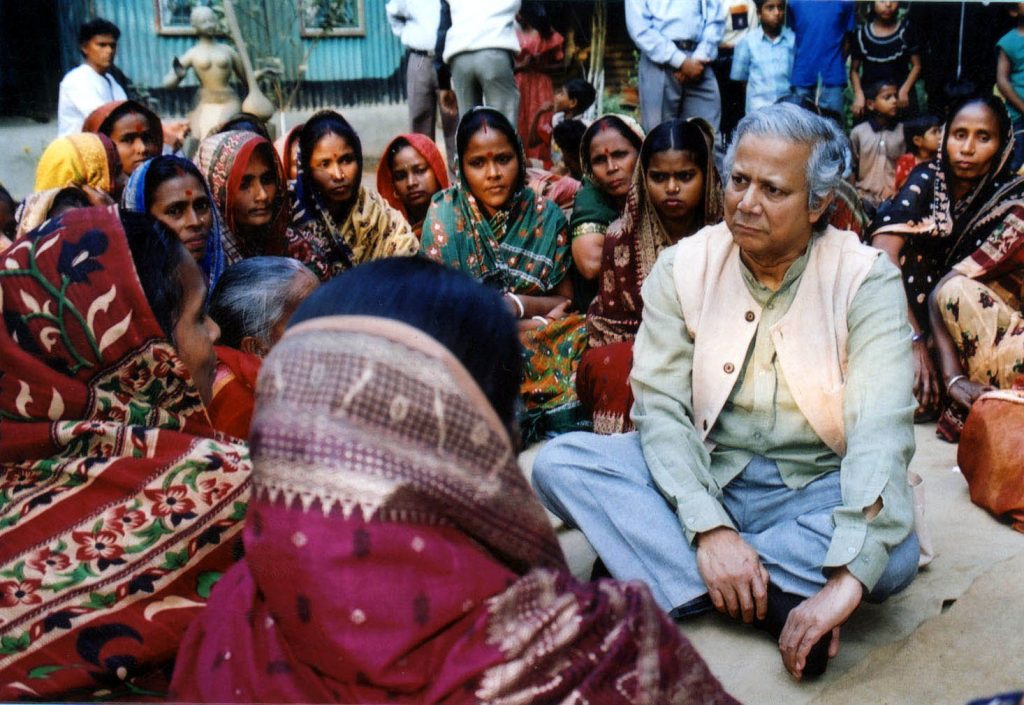
Once a senior media columnist in Dhaka exclaimed that if one wants to witness how a lone Nobel laureate can be abused in his/her own country come to Bangladesh. He referred to brilliant university teacher of economics-turned revolutionary banker-turned social thinker Professor Muhammad Yunus, who was facing a series of verbal attacks from Bangladesh Prime Minister Sheikh Hasina Wajed. The daughter of  Bangabandhu Sheikh Mujibur Rahman, who leads the ruling political party Awami League, has somehow developed uneasiness with the man with impeccable integrity, who created the world famous Grameen Bank of Bangladesh in 1983.

The issue came alive as 40 global leaders from the fields of politics, diplomacy, business, arts, and academia recently sent a letter to Bangladesh Premier Hasina regarding her government’s treatment of Nobel peace laureate Prof Yunus. The open letter, even published as a full-page advertisement in Washington Post (7 March 2023), where it is claimed that Prof Yunus has never benefited financially from his involvement in any of Grameen avenues, rather he has devoted himself to the poverty-fighting missions of many organizations and lives modestly in Dhaka.

Expressing deep concerns for the octogenarian’s well-being and his ability to contribute to humanitarian advancement in Bangladesh and around the world, the global personalities urged the PM Hasina to take positive steps to support and recognize the great contributions of one of the most notable citizens of the south Asian nation. They also stated that Prof Yunus is among a few people in history who have received the Nobel peace prize, the US Presidential medal of freedom, and the US Congressional gold medal (others being Nelson Mandela, Martin Luther King-Jr, Mother Teresa, Elie Wiesel, etc).

Prof Yunus pioneered the concept of microcredit and microfinance and founded a commercial bank with a number of differences which challenged many conventional banking policies. Dedicated to the poor, mostly women, Grameen Bank offers loans with no collateral and even enjoys a nearly 100% recovery rate. The unique bank directs their employees to go to the people and unlike other banks, it encourages the women borrowers to own shares. Prof Yunus treated borrowers as the real owners of the bank and himself as an employee. The new-found bank and its creator were jointly awarded the Nobel prize in 2006.

The negative development started with a number of unauthenticated news stories surfaced in some Dhaka-based media outlets terming Prof Yunus as an individual beneficiary out of his many Grameen initiatives. The source of those stories was quoted as a documentary telecast by Norwegian television network in November 2010. Titled ‘Caught in Micro Debt’, the documentary framed several accusations against Prof Yunus.

Even it alleged that funds received from a Norwegian aid agency (NORAD) were improperly transferred between Grameen Bank and its non-profit sister organization Grameen Kalyan.

Muhammad Yunus has devoted himself to the poverty-fighting missions of many organizations

Even though the matter was resolved between NORAD and Grameen Bank in 1998, the documentary repeated the allegation. Later, the Norway authorities re-investigated the transaction and affirmed that there was no improper use of funds. The said documentary also claimed that Grameen Bank charged an unusually high percentage of interest from the borrowers. But it was found that it maintained the lowest interest rates of any microfinance institution in Bangladesh. In fact, Grameen Bank charges lower rates on housing, student and beggar’s loans. Those allegations were also denied by Prof Yunus (through his official organ Yunus Centre), but a section of Bangla media organisations continued circulating the same contents, probably to justify it with repeated ventures. Even PM Hasina publicly alleged that Prof Yunus blocked the World Bank approval of a loan for building of a massive bridge over river Padma. She assumed that Prof Yunus may do it as he was removed from the post of managing director of Grameen Bank citing his overage by the Awami League government in Dhaka. (In reality, the World Bank cancelled the loan in June 2012 citing corruption in the government and engaged contractors.)

She even insisted on investigating the matter so that the enemy of the nation (read Prof Yunus) can be identified and brought to justice. On some occasions, she indirectly termed Prof Yunus as a blood sucker of the poor in the name of poverty alleviation with micro finance initiatives. Many of her statements (along with her hardcore supporters) reflected organised hatred against Prof Yunus. Repeated scolding of a citizen by the government head indicates the enmity and jealousy generated by the individual’s success (seemingly for PM Hasina’s personal ambition to receive the Nobel prize).

The political observers believe that PM Hasina has harboured the political rivalry against Prof Yunus since 2007, the year he tried to form a political party named Nagarik Shakti. However, Prof Yunus soon abandoned the idea and maintained that he would not join politics. But PM Hasina, who is the world’s longest-serving female government head, apprehends that Prof Yunus may influence the voters against her party in the forthcoming national elections due in December 2023 or January 2024. The ground reports reveal that the incumbent Hasina government is losing the elections, if it is organised in a free and fair manner.

“We believe one of the most important roles of government is to create an environment where traditional and social entrepreneurs can flourish,” said the letter signed by Ban Ki-moon (former UN Secretary General), Hillary Rodham Clinton (former US Secretary of State), Vicente Fox (former Mexico President), Mary Robinson (former Ireland President), Al Gore (former USA vice president), John Hewko (CEO of Rotary International), Sir Richard Branson (founder of Virgin Group), Kul Gautam (UN assistant secretary general), etc.

It also expressed hope that ‘Bangladesh will return to its role as a model for other developing nations of how a vibrant civil society can be nurtured to ensure sustainable progress’. A good first step would be to recognize Prof Yunus’ achievements and allow him to focus his energy on doing more good for the country and for the world, rather than on defending himself, said the letter, also endorsed by Pamela Gillies (former vice chancellor of Glasgow Caledonian University), Baroness Helena Kennedy (UK lawmaker), Narayana Murthy (founder of Infosys), etc.

“We, and tens of millions of people around the world, hope that you will embrace this vision,” concluded the letter with more signatures of those of Peter C Goldmark-Jr (former CEO of International Herald Tribune), Kerry Kennedy (Robert F. Kennedy Human Rights president), Ted Kennedy-Jr, Vinod Khosla (venture capitalist), Ron Garan (former NASA astronaut), Bono (musician, activist), Peter Gabriel (musician), Mo Ibrahim (entrepreneur and philanthropist), Sharon Stone (mother), Jimmy Wales (founder of Wikipedia), Robert Post (professor of Yale Law School), etc.

Fake videos of attack on migrant workers rattle Tamil Nadu

Well aware of the crucial role the migrants play in various industry sectors in the state, the TN administration swung into action after the videos stoked safety fears among them. CM Stalin personally met with some of the guest workers to boost their confidence, writes Aayush Goel

Yet another fake video hit headlines recently. This video shared by an enthusiastic You Tuber showed migrant labourers being beaten up brutally in Tamil Nadu and even triggered rumours that the two had lost their lives. Shared by a channel named ‘BNR News Reporter Honey’, this video was rolled out with a description that it was “imaginary“. After being forwarded multiple times and going viral it not only created a buzz on social media but also brought the two states of Tamil Nadu and Bihar on their toes.

The video snowballed into a major controversy as the Bihar CM Nitish Kumar tweeted expressing his concern over an incident in Tamil Nadu where two Bihar labourers “lost” their lives. Videos of migrant workers rushing to railway stations to flee the state too started going viral. The Tamil Nadu government realised this could spin out of control, and reached out to the migrants and acted against those spreading the rumours. 

Tamil Nadu Chief minister MK Stalin who was initially on back foot, accused BJP members from north Indian states of spreading ‘fake news’ – about the alleged assault on Bihari migrant workers. He alleged that the fake video came a day after he called on the opposition to unite against the ruling BJP before the 2024 general elections. So an alleged attempt by some to gain popularity and viewers not just rattled the two states but has yet again drawn attention to dynamics of migration for states like Tamil Nadu.

The video in question

In this viral video, a man was reportedly seen abusing and assaulting three migrant workers on a moving train in Tamil Nadu. Shortly after the video went viral, the Tamil Nadu railway police registered a case under sections 153 A, 323, and 294 (B) of the IPC in relation to the episode and are on the lookout for the alleged assaulter. The two-minute-long video showed the man asking one of the travellers if he was ‘Tamil or Hindi’, following which he lashed out at him and a couple of other co-passengers. He continued assaulting his fellow passengers, accusing the migrant workers of stealing away local people’s jobs in Tamil Nadu despite repeated calls to stop.

Tamil Nadu in action mode

The local police swung into action after the video went viral and have so far registered 11 cases and arrested three persons for spreading rumours on the safety of migrant workers in Tamil Nadu. “This issue created unrest and is being dealt with top priority. Special teams of the Tamil Nadu police were also camping in places including Delhi, Bhopal, Bihar and Patna to arrest people who circulated fake news in the state,” said Director General of Police C. Sylendra Babu. Amongst those booked are Tamil Nadu BJP chief K Annamalai, two journalists of a Hindi daily and Bihar BJP spokesperson Prashant Patel Umrao. Annamalai retaliated and in a series of tweets he shared a video. He dubbed the case against him as ‘false’ and dared the police to arrest him. Reaching out to the migrant workers community in Tamil Nadu, Chief Minister MK Stalin interacted with a group of labourers to enquire about their well-being. Acting swiftly, the  Tamil Nadu government took steps to guarantee the safety of migrant workers in the state. According to a notification issued by the government, a new website (www.labour.tn.gov.in/ism/) has been created to protect migrant workers. Additionally, the government held meetings for workers in all districts, including rural areas.

Fake videos affecting industry

While authorities and leaders are out saying all is well in state, the industrialists are a worried lot. Though the fake videos did not trigger any large-scale exodus of migrant workers in the construction sector, the percentage of workers who left for their native states this Holi was high as compared to last year, said the realtors. Even the Bihar and Tamil Nadu authorities insist they are on annual Holi break but industrialists are keeping their fingers crossed till they return. K Baskaran, secretary of the Kakkalur Industrial Estate Manufacturers Association (KIEMA) said, “They have left and every single industry is in fear till they return. We know videos are fake but they did create panic in them”. 

M. Ravi, President, Chennai Hotels Association, said, “Some of my workers have also left for their hometowns after getting calls from their families. We are in touch with them. The migrant workers have played a crucial role in the restaurant and hospitality sector in the state. They learn our language and recipes quickly,” he said. Builders and developer associations in Tamil Nadu have taken real videos to counter the fake video campaign against guest workers in the state. As part of the confidence building measures among the guest workers, construction sites have been restricted to unauthorised entry of outsiders. Further, the workers are being briefed about the ground reality by developers and officials from the labour and police departments.

Builders Association of India’s state municipal and DTCP committee chairman S Ramaprabhu said construction guest workers are facilitated with video calls to their peer groups. “In fact, we have urged them to contact anyone of their choice from the guest workers community to get first-hand information on their own”, he said.

Tamil Nadu: From migrant source to destination

Chennai is a destination for four percent of the inter-state migrants in this country. Historically, Tamil Nadu used to be the source of migrant workers, mainly to Karnataka and Kerala, and Andhra Pradesh. However, with increased industrialisation and urbanisation, the state evolved from migrant source to destination. According to CREDAI, Tamil Nadu, the migrant community oversees 85% of the work in big projects and 70% in medium-scale projects in the state. It also has a visible presence in manufacturing, textiles, construction, and hospitality. A Tamil Nadu Labour Department survey in 2015 estimated that the State had around 11.5 lakh migrant workers.

Migrants vulnerable but have no choice

The fake video episode aside, the situation of migrants in Tamil Nadu has become a topic of discussion. Hundreds of thousands of these migrant workers are concentrated in low-paying jobs without any social safety net in the manufacturing and service sectors. Nevertheless, such informal employment is comparatively attractive to workers who have very little access to most forms of livelihood in their home states. “Who wants to leave one’s home but Bihar still has nothing for us. We are not educated and can only work as labourers. In Chennai, we are paid Rs 400 to Rs 800 per day as compared merely Rs 100 in Bihar. We keep our heads down and work. Yes, we are not treated equal to a Tamil worker but we have to adjust for our families,” says Santosh Kumar, a labourer from Chennai. 

These migrant labourers have still not been able to organise themselves to press demand for hike in wages, social security or adequate working conditions. While things are not great and Bihar seems to have changed over years, one wonders what forces lakhs of these workers to leave Bihar for Tamil Nadu in search of livelihood. The enormity of the issue was highlighted when over 15 lakh workers ran helter-skelter to get home during the 2020 Covid-19 pandemic.

Bihar, despite all the big promises by the state leaders, is still among the states most severely affected by unemployment in the country. According to data from the Centre for Monitoring Indian Economy (CMIE), Bihar’s unemployment rate in February 2023 rose to 12.3 per cent, while the national figure was 7.5 per cent.

However, states such as Haryana, Rajasthan and Jharkhand fared worse than Bihar. In 2005, the poverty rate in Bihar was 54.5 per cent. It was the poorest state in the country and maintains the status quo till date. The poverty rate is 51.9 per cent at present. As per a NITI Aayog report, over half of Bihar’s population is multidimensionally poor.

Do elephant reserves fulfil any purpose?

There are 33 elephant reserves across 14 Indian states, but these mainly serve administrative purposes and lack the importance of tiger reserves. This is worrying as deaths and injuries due to human-elephant conflicts have increased over the years, writes Deepanwita Gita Niyogi

 The Singhbhum Elephant Reserve created in 2001 is the first reserve for the management and conservation of India’s heritage animal. Covering an area of 13,440 sq km, it is spread over West Singhbhum, East Singhbhum and Seraikala-Kharsawan districts of Jharkhand. The reserve was set up as part of Project Elephant started in 1992 by the Centre.

India has 27,000 elephants. The species has been accorded the highest level of protection under the Wildlife Protection Act, 1972. There are 33 elephant reserves across 14 Indian states. But elephant reserves mainly serve administrative purposes and lack the importance of tiger reserves. The investment in elephant conservation is also minimal compared to tiger protection. This is worrying as deaths and injuries due to human-elephant conflicts have increased over the years.

Elephant habitats are often surrounded by human habitations, tea gardens, mines, roads and railways. This gives rise to conflicts. In the paddy-growing states, farmers experience crop loss during the harvest season. To ward off elephant raids and avert crisis, communities have taken innovative steps in various parts of the country. In a few places, farmers are growing lemongrass and chilli not favoured by elephants. Some are also experimenting with bee-hive fencing in their farms. These have been successful to an extent.

Apart from these measures, elephant-proof trenches, installation of boards at strategic points for warning people about chance encounters after dusk and the deployment of trackers to minimise encounters are on. But there is a need to create suitable elephant habitats for a permanent solution.

Rudra Prasanna Mahapatra, who works in the Wildlife Trust of India, said it is difficult to protect elephants by just creating reserves. They are long-ranging animals and their territory is extended as compared to that of tigers. “As the animals travel for almost 60-100 km, it is difficult to confine elephants to a single place. That is why corridors creating movements between two patches of forests are vital,” he said. He added that the Singhbhum area is neglected because of the presence of mines and insurgency issues.

Singhbhum also comprises the Saranda forest division which is losing its ecological value due to mining. The Sal-dominated Saranda forest is home to elephants. But as a result of broken corridors and forest fragmentation, elephants from Jharkhand are moving towards neighbouring states, resulting in human-elephant conflict.

From 2020-21 to 2022-23, 10 deaths and 19 injuries were reported while crop damage cases amounted to 1092 in the Chaibasa Forest division of Singhbhum region. Compensation paid for injuries stands at Rs 6,55,000 and the amount paid for deaths amounts to Rs 37,73,617.

Are elephant reserves adequate?

Right from its inception, Project Elephant has not been much in focus. Jharkhand-based conservationist and wildlife historian Raza Kazmi said nothing much has been achieved from the Singhbhum Elephant Reserve because of its irrational size (13, 440 sq km which includes non-forest areas to the tune of 8,910 sq km) and the fact that elephant reserves as entities are weak in nature. 

“Elephant Reserves are artificial administrative categories created under Project Elephant to get funds and have no statutory backing. These are not protected areas. The funding provided under Project Elephant is inadequate compared to the geographical extent of elephant reserves and the resources needed to manage them. Project Elephant offices in states are either non-existent or understaffed,” he added.

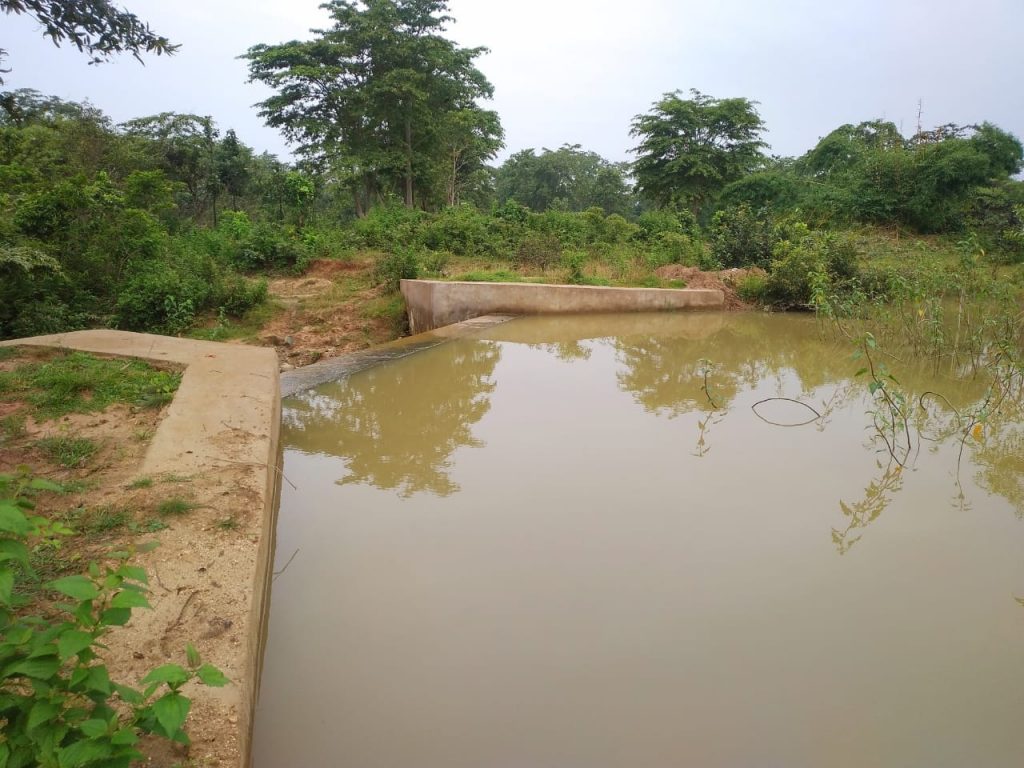
There are six divisions in the Singhbhum area, Chaibasa being one of them. The famed Dalma Wildlife Sanctuary is also part of the Singhbhum elephant reserve. Chaibasa DFO Satyam Kumar said the entire Singhbhum area is a notified elephant reserve. As part of the management plan, the forest department is thinking of greening elephant corridors after consultation with communities to reduce human-animal conflict. Kumar stated that in every herd, calves have been spotted in recent years and ruled out the paucity of funds. As part of Project Elephant in the Chaibasa forest division, from 2019-20 to 2021-22, fund allotment has been Rs 47.57 lakh. Four water harvesting structures have been created. Silviculture and plantation activity have also been carried out.

Suitable habitats for elephants

A water harvesting structure created in the Chaibasa forest division with funds from Project Elephant. Photo by Chaibasa forest department.

A WWF report, The Critical Need for Elephant Reserves, highlights how discussion about the management of elephant reserves can reconcile conservation with development, a key issue in present times. It cites the instance of the Shivalik Elephant Reserve in Uttarakhand to demonstrate the importance of protection offered by elephant reserves in a country which is undergoing rapid infrastructure development.

There was a proposal for the de-notification of the Shivalik elephant reserve for airport expansion which was later dropped. The reserve was identified in 1991-92 under Project Elephant to not only reduce human-animal conflict but also to rehabilitate elephants formerly held captive. The WWF report states that elephant reserves do offer “a thin added layer of de facto protections”.

As a solution so that the Singhbhum Elephant Reserve can work better, Kazmi said elephant movement in areas like Singbhum needs regulation of the mining industry, protection of existing corridors, focus on conflict management by increasing the number of forest staff, utilisation of technological interventions to prevent the ingress of elephants in human settlements and awareness generation among communities to allow safe passage to the animals.

Jharkhand-based wildlife expert DS Srivastava pointed out the lack of an elephant management plan in the state. “Elephant projects are a non-priority. When it comes to the Singhbhum Elephant Reserve, care is only in Dalma, which is a sanctuary, and nowhere else. As there is frequent elephant movement across Bihar, Odisha, West Bengal, Chhattisgarh and Jharkhand, there should be a consolidated effort among these states. Bengal has built trenches to prevent elephants from entering, but the animals are using new routes to reach old places in their memory, thus giving rise to conflict.”

With twin Oscar wins, Indian cinema eying bigger laurels

Naatu Naatu song from movie RRR has become the first Indian film track to win Oscar  in the Best Original Song category while The Elephant Whisperers became the maiden Indian production to win in the Documentary Short Subject category.

March has brought surreal moment for India and double Oscar cheer with Naatu Naatu from the movie RRR becoming the first Indian film track to win the Academy award in the Best Original Song category and the documentary The Elephant Whisperers creating history at the 95th Academy Awards by becoming the maiden Indian production to win in the Documentary Short Subject category.

Guneet Monga, Producer of ‘The Elephant Whispers’ observed, “I can say, the future for Indian cinema is audacious, the future is here and not to forget the future is truly female!” “The Elephant Whisperers”, by Kartiki Gonsalves and Guneet Monga, which explores the bond between humans and an abandoned elephant calf in a Tamil Nadu sanctuary, is India’s first win in the Documentary Short category. “Smile Pinki” and “Period. End of Sentence”, both set in India, had also won in the same category but they were foreign productions.

Shot in the Theppakadu Elephant Camp inside the Mudumalai Tiger Reserve in the southern state of Tamil Nadu, The Elephant Whisperers follows tribals – Bomman and Bellie as they care for Raghu, an injured baby elephant who gets separated from his herd.  When Raghu reaches adolescence, the state’s forest department takes him away and places him with another caretaker. The couple are heartbroken and miss Raghu deeply. In one scene, the baby elephant wipes away Bellie’s tears when she breaks down over Raghu’s separation.

India has never won an Oscar in the International Film category or the Best Foreign Film as it was known earlier. Bhanu Athaiya was the first Indian to win the Oscars after she was conferred the Academy Award for Best Costume Design in Richard Attenborough’s “Gandhi”, which bagged eight trophies in 1983. Directing legend Satyajit Ray was conferred an honorary Oscar in 1992.

MM Keeravaani, Naatu Naatu Composer quipped, “There was only one wish on my mind, so was Rajamouli’s and our families’ — RRR has to win…. Pride of every Indian…This is just the beginning.” The win for Naatu Naatu, composed by MM Keeravaani and penned by Chandrabose in SS Rajamouli’s blockbuster film, is the fourth non-English song to win an Oscar in the category. Jai Ho bagged this prize in 2009. To add to the Indian pride, actor Deepika Padukone, introduced Naatu Naatu to the audience.

The win for Naatu Naatu, composed by MM Keeravaani and penned by Chandrabose in SS Rajamouli’s blockbuster film, is the fourth non-English song to win an Oscar in the category. Jai Ho bagged this prize in 2009. “RRR” (Rise Roar Revolt), a pre-independence fictional story, follows two real-life Indian revolutionaries – Alluri Sitarama Raju (Ram Charan) and Komaram Bheem (Jr NTR) – in the 1920s. It was released in Telugu, Tamil, Hindi and Malayalam. Rajamouli film, featuring Ram Charan and Jr NTR had this energetic song, composed by M.M. Keeravani and written by lyricist Chandrabose. It  beat three other nominations, including ‘This Is A Life’ from ‘Everything, Everywhere, All at Once,’ ‘Applause’ from ‘Tell It Like a Woman,’ and ‘Raise Me Up’ from ‘Black Panther: Wakanda Forever.

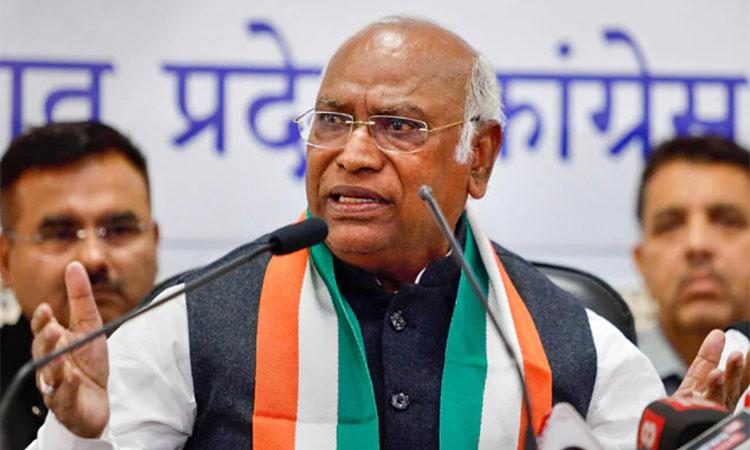
No question of apology: Kharge defends Rahul

New Delhi : Congress president Mallikarjun Kharge on Wednesday defended Rahul Gandhi and said there was no question of apology for his UK statement.

Kharge said that Gandhi did not say anything wrong and only spoke about democracy, “whereas the Prime Minister spoke at many places in foreign lands and insulted the country”.

Amid the uproar over Rahul Gandhi’s statement has tried to make it clear that the party is not going to yield on the subject and will be offensive on the issue and press its demand of JPC in Hindenburg-Adani row.

Hitting out at PM Modi, Congress chief and Leader of Opposition Mallikarjun Kharge had tweeted: “I want to remind you of your statement made in China. You said – “Earlier, you felt ashamed of being born Indian. Now you feel proud to represent the country” Was this not an insult to India and Indians? Tell your Ministers to refresh their memories!

“In South Korea, you had said – “There was a time when people used to feel that what sin they committed in their past life which resulted in taking birth in India, is this what you call a country…” First see the ‘Mirror of Truth’, before lecturing the Congress party!” The Congress is blaming the government for the disruption in Parliament by saying that as Rahul Gandhi’s UK statement made outside the House are non issues

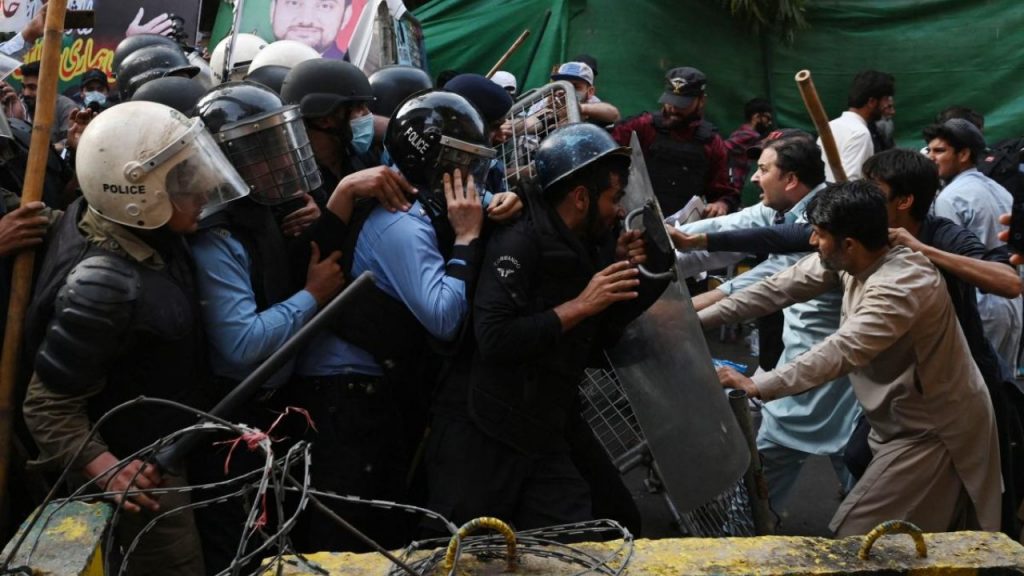
Lahore’s Zaman Park under siege after clashes between police and Imran Khan’s supporters

Lahore:  Tear gas shells, burnt tyres and vehicles litter the roads in Lahore’s Zaman Park area which has turned into a battleground after supporters of Imran Khan engaged in pitched battles lasting over 11 hours with police personnel to stop them from arresting the ousted Pakistan premier, resulting in injuries to dozens to policemen.

Pakistan Tehreek-e-Insaf (PTI) workers and police clashed on Tuesday in Lahore’s Zaman Park area after a contingent of the Islamabad police, along with armoured vehicles, reached party chief Khan’s Lahore home to arrest him after a non-bailable warrant was issued in the ongoing Toshakhana (gift depository) case against him.

“Clearly ‘arrest’ claim was mere drama because real intent is to abduct & assassinate. From tear gas & water cannons, they have now resorted to live firing. I signed a surety bond last evening, but the DIG refused to even entertain it. There is no doubt of their mala fide intent,” Khan tweeted on Wednesday.

MOST POPULAR

HOT NEWS