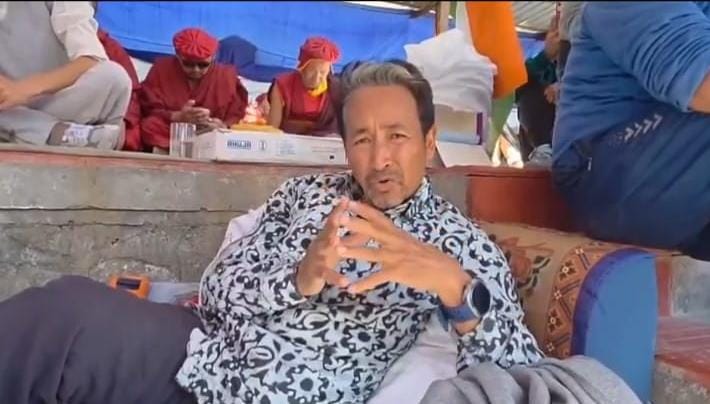
Sonam Wangchuk held: Opposition slams BJP, Congress calls it attempt to divert attention from ‘failure’, Kejriwal says ‘dictatorship’   

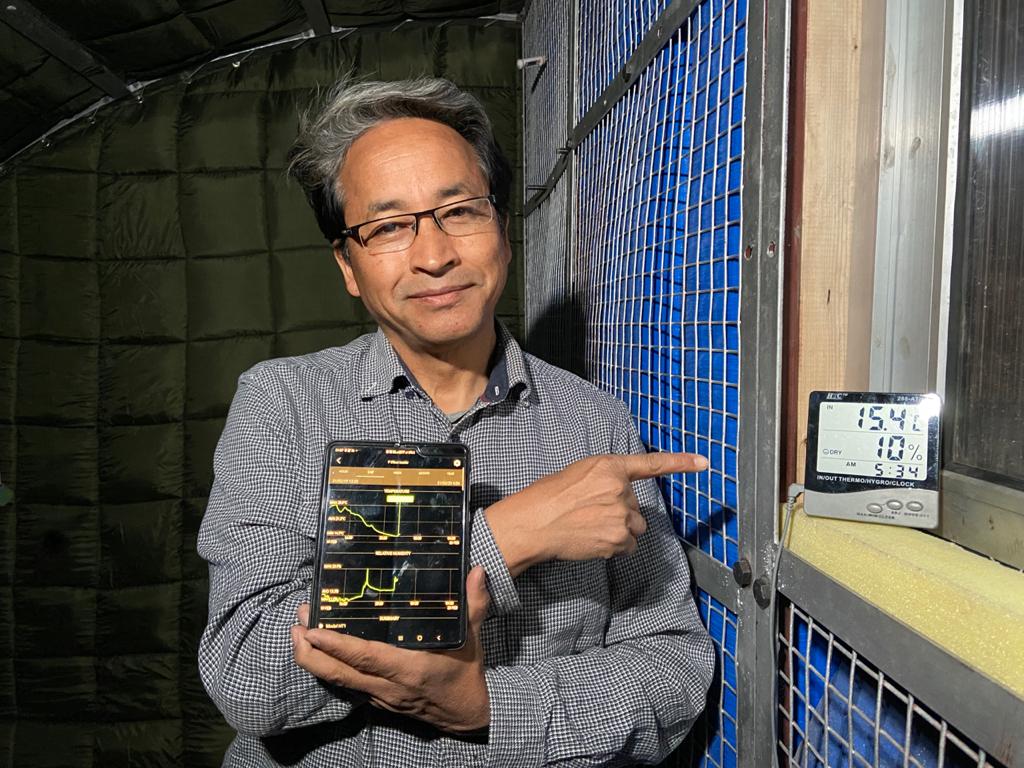
Photo: Sonam Wangchuk social media

Two days after four protesters were killed in a violent demonstration in Leh district of Ladakh, climate activist Sonam Wangchuk was arrested on Friday under the National Security Act. According to reports, Chering Dorjey Lakrook, a member of Leh Apex Body (LAB), confirmed the arrest, calling it unfortunate. The arrest occurred on Friday afternoon, just as LAB representatives, who have been demanding Sixth Schedule and statehood for nearly four years, were about to hold a press conference. According to reports, he has been moved out and mobile internet services snapped in the area.

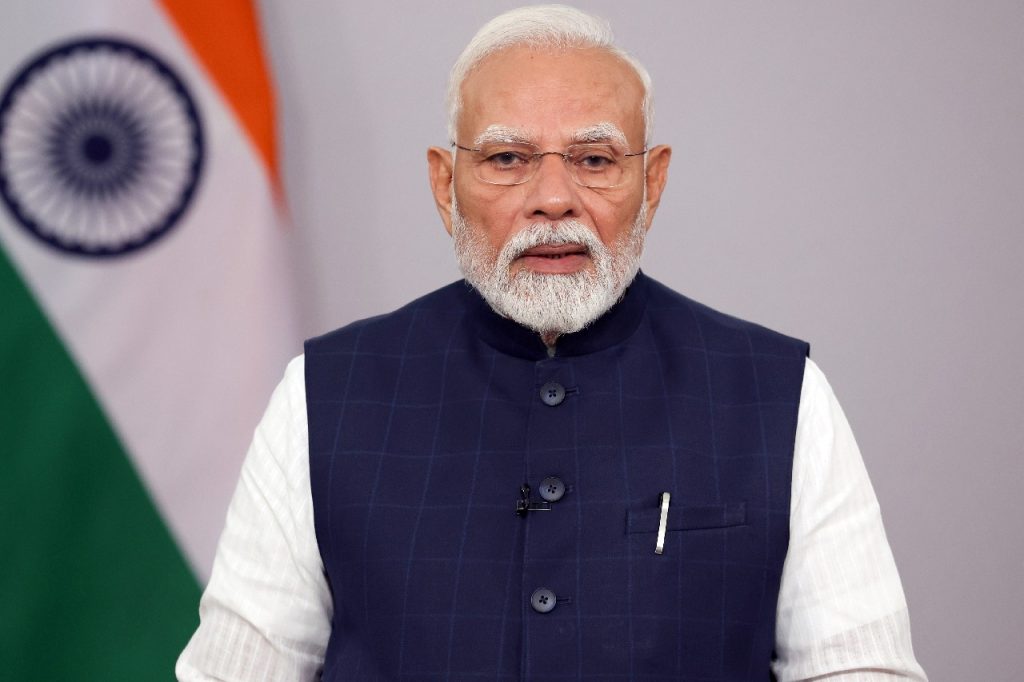
Opposition leaders, including Jammu and Kashmir chief minister Omar Abdullah and Aam Aadmi Party (AAP) chief Arvind Kejriwal, launched scathing attacks on the Prime Minister Narendra Modi-led Centre. The Congress party condemned the Wangchuk’s arrest, terming it an attempt to “divert attention and responsibility from the BJP’s abysmal failure to maintain law and order and ensure security of life and property in the Union Territory of Ladakh.”

“The crux of the issue is that the BJP has deceived the people of Ladakh for years. It promised the region Sixth Schedule status in the 2020 Leh Hill Council Elections and has gone back on that promise with a vengeance. It claimed that it gave Ladakh autonomy from the larger Jammu and Kashmir but has really ended all semblance of democracy in the Union Territory. The Modi Government cannot brush these issues away or suppress them by arresting Mr. Wangchuk. It needs to engage with the people of Ladakh in sincerity and with alacrity,” said Congress’ Jairam Ramesh

Kejriwal called Sonam Wanchuck’s arrest “dictatorship”, drawing parallels from mythology and history. “Raavan’s end also came. Kansa’s end also came. Hitler’s and Mussolini’s ends also came. And today, people hate all those individuals. Today in our country, dictatorship is at its peak. The end of those who practice dictatorship and arrogance is very bad,” the former Delhi chief minister wrote on X in Hindi.

Omar Abdullah accused the Centre of “backtracking” on the promises made to Ladakh.

Ladakh on Wednesday witnessed its worst unrest in decades, with demands for statehood and constitutional safeguards erupting into violent clashes. At the centre was education reformist and climate activist Sonam Wangchuk, whose leadership in the agitation has drawn sharp government scrutiny. On Thursday, the Union Home Ministry cancelled the Foreign Contribution (Regulation) Act (FCRA) licence of his NGO, Students’ Educational and Cultural Movement of Ladakh (SECMOL). The CBI has launched probes into his initiatives, sparking allegations of a political witch-hunt from Wangchuk and supporters.

The ministry on Thursday cited multiple violations, including improper deposits into SECMOL’s FCRA account, discrepancies in returns, and receipt of Rs 4.93 lakh from Swedish organisation Framtidsjorden, partly linked to a “study on sovereignty” prohibited under Section 12(4). Authorities also flagged Rs 3.35 lakh from a bus sale in 2021-22 and Rs 54,600 in local donations wrongly credited to the FCRA account. Declaring SECMOL’s explanations “untenable,” the ministry cancelled its registration with immediate effect.

Wangchuk dismissed the charges as part of a broader “witch-hunt,” asserting that his organisations only received legitimate fees for knowledge-sharing projects with UN bodies and European groups. “We are being hounded with tax summons and CBI notices,” he said.
‘Incorrect, baseless, unacceptable’: Decoding India’s strong rebuttal on NATO chief’s claim on Modi–Putin call 

Analysts say that Rutte wasn’t actually reporting a real phone call, he was making a rhetorical point about how Trump’s tariff policy could pressure Russia indirectly but the way he phrased it—almost as if a conversation had actually taken place—made it sound factual, which is why India called it “baseless and unacceptable,” and reacted so sharply.

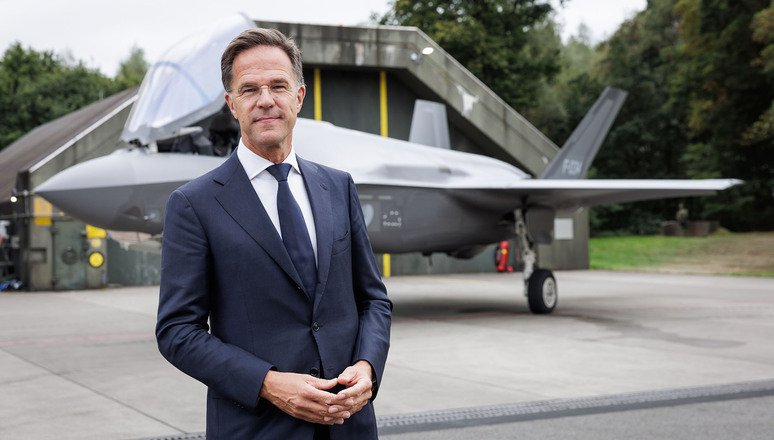
NATO Secretary General Mark Rutte. Photo courtesy NATO website

The Ministry of External Affairs (MEA) on Friday strongly rejected NATO Secretary-General Mark Rutte’s remarks suggesting that Prime Minister Narendra Modi had spoken to Russian President Vladimir Putin over a Ukraine-related plan. The MEA called the claim “incorrect, baseless and unacceptable.”

Rutte had stated that PM Modi asked Putin to explain his Ukraine strategy “because India is being hit with tariffs.” In a sharp rebuttal, the MEA clarified that no such conversation ever took place.

“The statement is factually incorrect and entirely baseless. At no point has Prime Minister Modi spoken with President Putin in the manner suggested. No such conversation has taken place,” the MEA said.

India warns

The MEA underscored that the leadership of an institution as significant as NATO was expected to exercise greater care in public statements. “Speculative or careless remarks that misrepresent the Prime Minister’s engagements or suggest conversations that never occurred are unacceptable,” the ministry added.

Energy security priority

Reiterating India’s stance on energy imports, the MEA said New Delhi’s decisions are driven by the need to ensure affordability and predictability for its citizens. “India will continue taking all necessary measures to safeguard its national interests and economic security,” it stressed.

What Rutte said

In an interview on the sidelines of the UN General Assembly, Rutte reportedly said: “Trump’s tariffs on India are having a big impact on Russia. Delhi is on the phone with Putin, and Narendra Modi is asking him to explain his strategy on Ukraine because India is being hit with tariffs.”

Analysts say Rutte wasn’t actually reporting a real phone call, he was making a rhetorical point about how Trump’s tariff policy could pressure Russia indirectly but the way he phrased it—almost as if a conversation had actually taken place—made it sound factual, which is why India called it “baseless and unacceptable,” and reacted so sharply.

MiG-21—IAF’s ‘bird of all seasons’ retires, legacy lives to inspire  

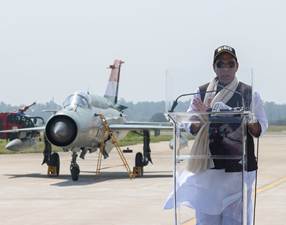
More than 11,500 MiG-21s built worldwide, approximately 850 served with the IAF, testifying its popularity, credibility and multi-dimensional capabilities. MiG-21 taught us never to fear change, but to embrace it with confidence. Today, India’s defence ecosystem is working in unison to take this legacy forward,” Rajnath Singh

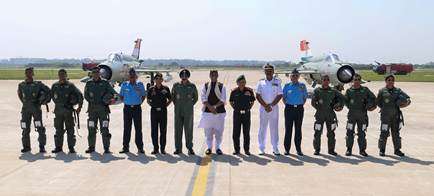
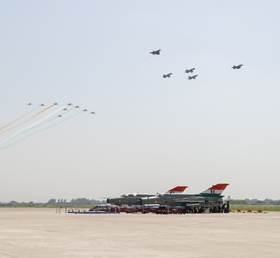
Photos: courtesy Ministry of defence

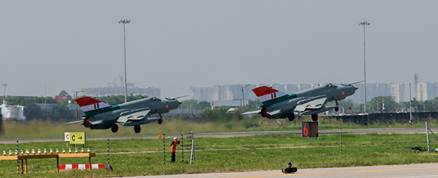
The Indian Air Force on Friday bid goodbye to its iconic MiG-21—the fighter jet that defined an era and carried India into the supersonic age.  The Decommissioning Ceremony of the Indian Air Force in Chandigarh on September 26, 2025, marked the final operational sortie of the MiG-21, bringing to a close an illustrious chapter of more than six decades in the history of the IAF.

MIG-21 symbolises continuity of courage, discipline and patriotism that will inspire development of indigenous LCA-Tejas and upcoming Advanced Medium Combat Aircraft (AMCA),” Defence Minister Rajnath Singh said at a farewell ceremony in Chandigarh to mark the end of its service.

Air Chief Marshal AP Singh himself took to the skies, flying the final sortie in honour of the legendary jet.

First inducted in 1963, the Russian-origin MiG-21 transformed the IAF, becoming its backbone and strengthening combat capabilities during some of India’s most challenging decades.  Singh said “the legacy of the MiG-21 will live on in India’s pursuit of Aatmanirbharta in defence. The aircraft symbolises the continuity of courage, discipline and patriotism that will inspire the development of indigenous platforms such as LCA-Tejas and the upcoming Advanced Medium Combat Aircraft (AMCA)”

When the world looks at India tomorrow, it should see a nation that began with the MiG-21 and now leads with futuristic defence technologies. From its decisive role in 1971 war to its presence in the Kargil conflict, the Balakot airstrike and Operation Sindoor the MiG-21 proved its mettle in multiple theatres of conflict, Singh said, adding that the aircraft “excelled as an interceptor, ground-attack platform, frontline Air Defence & trainer aircraft. MiG-21 was a Bird of all seasons”


“More than 11,500 MiG-21s built worldwide, approximately 850 served with the IAF, testifying its popularity, credibility and multi-dimensional capabilities. MiG-21 taught us never to fear change, but to embrace it with confidence. Today, India’s defence ecosystem is working in unison to take this legacy forward,” he said

Bihar: BJP banks on women voters, PM Modi transfers Rs10,000 each to 75 lakh women

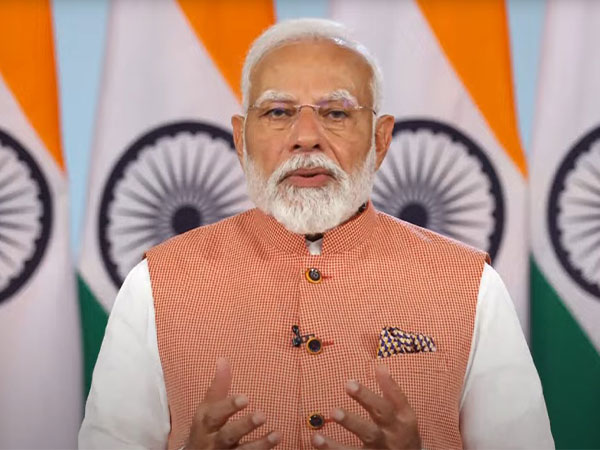
The PM said a brother finds true happiness when his sister is healthy, prosperous, and her family is economically strong and does whatever he can to ensure this wellbeing. Today two brothers—himself and Chief Minister Nitish Kumar—are working together for the service, prosperity, and dignity of the women of Bihar, he said, calling the programme a testament to this commitment  

Prime Minister Narendra Modi today launched the Mukhyamantri Mahila Rojgar Yojana in Bihar, transferring Rs 10,000 directly to 75 lakh women across the state—a massive Rs 7,500 crore disbursement aimed at promoting women’s self-employment and economic independence. Additionally, the grant could be topped up to Rs 2 lakh per woman per household if the recipients demonstrate success in enterprise using the seed money.

Addressing the launch, the Prime Minister emphasised that a brother finds true happiness when his sister is healthy, prosperous and her family economically strong and does whatever he can to ensure her wellbeing and today, two brothers—himself and Bihar Chief Minister Nitish Kumar—are working together for the service, prosperity, and dignity of Bihar’s women, calling the programme a testament to this commitment.

The scheme, implemented by the Bihar government, builds upon reforms like Jan Dhan Yojana, Aadhaar, and mobile connectivity, which have enabled seamless and direct fund transfers. Modi also praised Bihar’s extensive network of 11 lakh self-help groups and linked the initiative to the Centre’s broader Lakhpati Didi campaign, which targets 3 crore women across India.

Bihar Chief Minister Nitish Kumar and Union Minister Rajiv Ranjan Singh joined the launch event, which was witnessed by over one crore women in the state, according to official statements. The initiative combines financial aid, training, and market development support to boost women-led microenterprises in sectors such as livestock, handicrafts, and retail.

Cash incentives for women have previously helped the BJP secure decisive victories in states like Madhya Pradesh, Maharashtra, Chhattisgarh, Haryana, and Delhi—successes the party hopes to replicate in poll-bound Bihar.

Analysts, however, view this massive disbursal of freebies as a sign of potential challenges facing the BJP-JD (U) alliance ahead of the elections. Bihar’s complex caste dynamics—featuring OBCs, EBCs, SCs, and STs—appear to be leaning towards regional parties like the RJD and the Congress-led Mahagathbandhan, according to ground reports

The NDA alliance in Bihar is facing multiple electoral hurdles, including growing anti-incumbency sentiments, leadership issues within the alliance, and tensions between supporters of Nitish Kumar and Chirag Paswan. Recent controversies over voter list updates have sparked allegations of bias, with the opposition claiming many legitimate voters’ names have been unfairly removed. Alongside health concerns faced by Nitish Kumar, the Mahagathbandhan and leader Tejashwi Yadav have launched a vigorous campaign focusing on unemployment, inflation, and social welfare—issues that challenge the NDA’s appeal, especially among youth and lower-income voters.

Adding to the political drama, Jan Suraaj Party founder and former political strategist Prashant Kishor has recently accused senior BJP and JD(U) leaders within the NDA of being “more corrupt than Lalu Prasad,” stirring further debate ahead of Bihar’s crucial elections.

Trump imposes 100% tariff on branded drug imports, concerns for Indian Pharma

Although the tariff currently targets only branded drugs, it signals a broader shift toward protectionist trade policies that could have far-reaching implications

U.S. President Donald Trump has announced a sweeping 100% tariff on imported branded and patented pharmaceutical drugs—unless the producing companies have active manufacturing facilities within the United States. The measure, aimed at boosting domestic production and reducing dependency on foreign imports, will take effect from October 1, 2025.

“Starting October 1st, 2025, we will be imposing a 100% Tariff on any branded or patented Pharmaceutical Product, unless a Company IS BUILDING their Pharmaceutical Manufacturing Plant in America. ‘IS BUILDING’ will be defined as ‘breaking ground’ and/or ‘under construction.’ There will, therefore, be no Tariff on these Pharmaceutical Products if construction has started. Thank you for your attention to this matter!” Trump posted on Truth Social.

The directive applies strictly to branded and patented drugs. However, it has sparked global concern—especially in India, one of the world’s largest pharmaceutical exporters and a key supplier to the U.S. market. India accounts for over one-third of pharmaceutical drugs consumed in the U.S., primarily in the form of generic medications, which are currently exempt from the new tariff.

Despite this exemption, market reaction was swift: the Nifty Pharma index declined amid investor concerns over potential long-term impacts. Analysts cautioned that while generics remain unaffected for now, the policy could evolve, potentially targeting complex generics or specialty medications, which are essential components of India’s export portfolio.

Impact on Indian Pharma

Although the tariff currently targets only branded drugs, it signals a broader shift toward protectionist trade policies that could have far-reaching implications. The ambiguity surrounding complex generics and high-value specialty drugs has heightened uncertainty within the industry.

India remains the largest supplier of generic medicines to the U.S., accounting for more than 35% of all imports. Experts warn that if U.S. policy expands to cover more categories—particularly high-margin or essential medications—it could significantly affect India’s export revenues.

To mitigate such risks, Indian pharmaceutical companies may increasingly consider investing in U.S.-based manufacturing to secure long-term access to the market. The announcement also highlights the urgency for India to diversify export markets and pursue strategic trade agreements with key partners, including the U.S. and EU.

Needed urgently—a swift solution for beautiful Ladakh

So far Sonam Wangchuk-linked NGO’s FCRA licence cancelled, Wangchuk cries witch hunt; tight security amid curfew-like curbs in Leh, many detained; Cong councillor booked; experts recommend structured engagement ; Official sources indicate a resolution may emerge in upcoming meetings. 

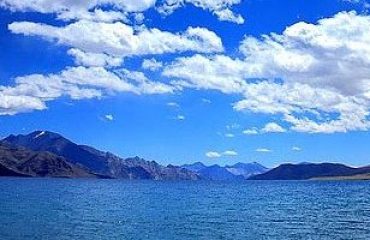
Photo: courtesy government website

Ladakh on Wednesday witnessed its worst unrest in decades, with demands for statehood and constitutional safeguards erupting into violent clashes. At the centre was education reformist and climate activist Sonam Wangchuk, whose leadership in the agitation has drawn sharp government scrutiny. On Thursday, the Union Home Ministry cancelled the Foreign Contribution (Regulation) Act (FCRA) licence of his NGO, Students’ Educational and Cultural Movement of Ladakh (SECMOL). The CBI has launched probes into his initiatives, sparking allegations of a political witch-hunt from Wangchuk and supporters.

The ministry on Thursday cited multiple violations, including improper deposits into SECMOL’s FCRA account, discrepancies in returns, and receipt of Rs 4.93 lakh from Swedish organisation Framtidsjorden, partly linked to a “study on sovereignty” prohibited under Section 12(4). Authorities also flagged Rs 3.35 lakh from a bus sale in 2021-22 and Rs 54,600 in local donations wrongly credited to the FCRA account. Declaring SECMOL’s explanations “untenable,” the ministry cancelled its registration with immediate effect.

Wangchuk dismissed the charges as part of a broader “witch-hunt,” asserting that his organisations only received legitimate fees for knowledge-sharing projects with UN bodies and European groups. “We are being hounded with tax summons and CBI notices,” he said.
Positing on X a 2007 notice to Sonam Wangchuk’s NGO, BJP IT cell in charge Amit Malviya said “finally had its FCRA license cancelled — a step that should have been taken long ago. Even back in 2007, when BJP was not in power at the Centre or in J&K, the government had flagged several violations by him and made sharp observations. The record speaks for itself”.

The Deputy Commissioner office notice also cited serious allegations against him and his NGO, SECMOL, including demoralizing government staff by bypassing administrative offices, illegally occupying 200 kanals of government land, and misusing the FCRA by misappropriating foreign funds. Wangchuk was asked to explain why his FCRA license should not be cancelled.

Wangchuk dismissed the charges as part of a broader “witch-hunt,” asserting that his organisations only received legitimate fees for knowledge-sharing projects with UN bodies and European groups. “We are being hounded with tax summons and CBI notices,” he said.
Incidentally, Wangchuk inspired Aamir Khan’s character “Phunsukh Wangdu” in 3 Idiots, reflecting his innovative work in Ladakh’s education and sustainable development through SECMOL’s hands-on learning initiatives.

“A day after the Leh protests, the government named and blamed me,” Wangchuk was quoted as saying, adding that authorities were preparing to jail him under the Public Safety Act, but “Sonam Wangchuk in jail may cause them more problems than free Sonam Wangchuk.” He told media that blaming him or the Congress was finding a scapegoat rather than addressing the core problem. All that is needed now is wisdom, as youths are already frustrated, he said

According to the Centre, the demands Wangchuk raised during his hunger strike are being discussed in a High-Powered Committee scheduled for October 6. The Ministry of Home Affairs, led by Amit Shah, stated that Wangchuk continued his strike despite requests to call it off, allegedly misleading the public with references to Arab Spring-style protests and Gen Z demonstrations in Nepal. He later broke his fast and left for his village in an ambulance. The government affirmed its commitment to Ladakhis’ aspirations through constitutional safeguards.

The crackdown follows violent protests in Leh on September 24, where four people died as demonstrators demanding statehood and Sixth Schedule protections stormed the BJP office and Hill Council premises, clashing with security forces. Wangchuk has been held responsible by the government, a charge rejected by his supporters.

Observers warn the actions against Wangchuk may backfire, hardening local resentment and drawing global attention due to his international stature. Experts suggest immediate de-escalation through easing curbs and ordering a fair probe; structured engagement via a high-level committee including Leh Apex Body, Kargil Democratic Alliance, and youth groups with clear timelines and a safeguards roadmap providing interim Sixth Schedule protections while enhancing local council powers, with statehood as a longer-term goal. Sources indicate a resolution may emerge in upcoming meetin

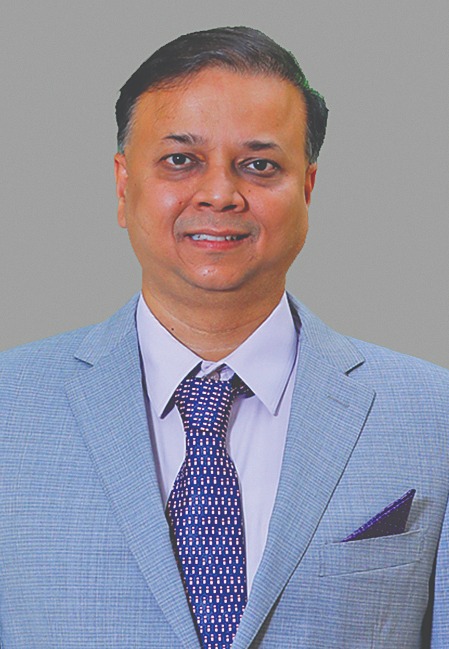
Vivek Gupta elected President of Indian Newspaper Society

Mr. Vivek Gupta of Sanmarg was on Thursday elected President of the Indian Newspaper Society (INS)—the apex body representing publishers of newspapers, magazines, and periodicals in India—for 2025-26 at the 86th Annual General Meeting of the society

Mr Gupta succeeds Mr M V Shreyams Kumar of Mathrubhumi.

A stalwart of the media industry, Mr Gupta is the Chairman and Managing Director of the Sanmarg Group, one of India’s premier Hindi dailies. Having previously served as INS Vice President in 2024–25 and Honorary Treasurer, his elevation marks a historic milestone—he is the first president from eastern India to helm INS in 32 years, underscoring the region’s growing prominence in the national media.

The newly constituted leadership team includes Mr. Karan Rajendra Darda of Lokmat as Deputy President, Mr. Tanmay Maheshwari of Amar Ujala as Vice President, and Mr. Anant Nath of Grihshobhika as Honorary Treasurer. Ms. Mary Paul continues her distinguished tenure as Secretary General.

The incoming leadership is poised to steer the Society through a transformative media landscape, championing press freedom, strategic policy advocacy, and digital metamorphosis.

In his presidential address, Mr. Kumar lauded the indomitable resilience of the Indian newspaper industry amidst global adversities, particularly in Tier 2 and Tier 3 cities.

Other members of the Executive Committee of the Indian Newspaper Society (INS) for the year 2025-26 are:

1.         Mr. S. Balasubramanian Adityan                   (Daily Thanthi)

2.         Mr. Girish Agarwal                                           (Dainik Bhaskar, Bhopal)

3.         Mr. Samahit Bal                                                (Pragativadi)

4.         Mr. Samudra Bhattacharya                            (Hindustan Times, Patna)

5.         Mr. Hormusji N. Cama                                    (Bombay Samachar)

6.         Mr. Gaurav Chopra                                           (Filmi Duniya)

7.         Mr. Vijay Kumar Chopra                                  (Punjab Kesari, Jalandhar)

8.         Dr. Vijay Jawaharlal Darda                             (Lokmat, Nagpur)

9.         Mr. Jagjit Singh Dardi                                     (Charhdikala Daily)

10.     Ms. Pallavi S. Dempo                                      (The Navhind Times)

11.     Mr. Viveck Goenka                                           (The Indian Express, Mumbai)

12.     Mr. Mahendra Mohan Gupta                          (Dainik Jagran)

13.     Mr. Pradeep Gupta                                           (Dataquest)

14.     Mr. Sanjay Gupta                                              (Dainik Jagran, Varanasi)

15.     Mr. Shailesh Gupta                                           (Mid-Day)

16.     Mr. Shivendra Gupta                                         (Business Standard)

17.     Mr. Yogesh P. Jadhav                                       (Pudhari)

18.     Mr. Rajesh Jain                                                (New India Herald)

19.     Ms. Sarvinder Kaur                                           (Ajit)

20.     Mr. Vilas A. Marathe                                         (Dainik Hindusthan, Amravati)

21.     Mr. Harsha Mathew                                          (Vanitha)

22.     Mr. Dhruba Mukherjee                                      (Anandabazar Patrika)

23.     Mr. P. V. Nidhish                                                (Balabhumi)

24.     Mr. Pratap G. Pawar                                         (Sakal)

25.     Mr. Rahul Rajkhewa                                          (The Sentinel)

26.     Mr. R.M. R. Ramesh                                          (Dinakaran)

27.     Mr. Atideb Sarkar                                              (The Telegraph)

28.     Mr. Amam S. Shah                                            (Gujarat Samachar, Baroda & Surat)

29.     Dr. Kiran D. Thakur                                            (Tarun Bharat, Belgaum)

30.     Ms. Sowbhagyalakshmi Kanekal Tilak          (Mayura)

31.     Mr. Biju Varghese                                              (Mangalam Plus)

32.     Mr. I. Venkat                                                       (Eenadu)

33.     Mr. Kundan R. Vyas                                           (Vyapar – Janmabhoomi)

34.     Mr. Kiran B. Vadodaria                                      (Western Times)

35.     Mr. Somesh Sharma                                         (Rashtradoot Saptahik)

36.     Mr. Jayant Mammen Mathew                         (Malayala Manorama)

37.     Mr. L. Adimoolam                                              (Health & The Antiseptic)

38.     Mr. Mohit Jain                                                    (Economic Times)

39.     Mr. K. R. P. Reddy                                               (Sakshi)

40.     Mr. Rakesh Sharma                                           (Aaj Samaj)

41.     Mr. M. V. Shreyams Kumar                               (Mathrubhumi)

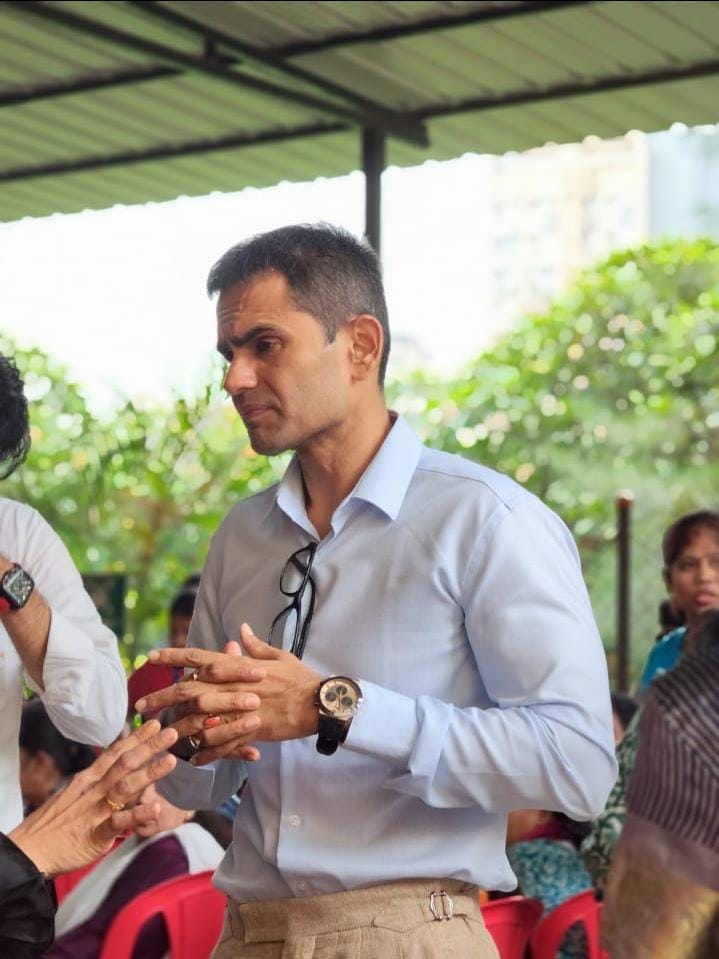
Sameer Wankhede vs Aryan Khan saga returns: IRS officer sues Netflix, Shah Rukh Khan, Red Chillies

Photo: Sameer Wankhede social media

IRS officer and former NCB zonal director Sameer Wankhede has filed a defamation suit in the Delhi High Court against Netflix and Shah Rukh Khan and Gauri Khan-owned Red Chillies Entertainment, alleging their series The Ba****ds of Bollywood is tarnishing his reputation. Wankhede has demanded Rs 2 crore in damages, which he intends to donate to Tata Memorial Cancer Hospital.

Wankhede’s plea argues that the series spreads false, derogatory content targeting him amid ongoing judicial proceedings related to the Aryan Khan drug case, still under review by the Bombay High Court and NDPS Special Court. He claims the portrayal undermines public trust in drug enforcement agencies and was deliberately scripted to damage his image.

A controversial scene where a character raises a middle finger after reciting “Satyamev Jayate” is cited as violating the Prevention of Insults to National Honour Act, 1971, in addition to alleged breaches under the Information Technology Act and Bharatiya Nyaya Sanhita (BNS). His legal team contends the show carries obscene, offensive content designed to provoke outrage and manipulate perception. The court has yet to decide on admitting the petition for hearing.

Who is Sameer Wankhede?

An IRS officer from the 2008 batch, Wankhede gained prominence as NCB’s Zonal Director for leading high-profile drug probes in Mumbai and Bollywood. Known for his tough stance, he has investigated multiple celebrities.

However, his role in the Aryan Khan case attracted controversy. He faced allegations of extortion, procedural lapses, and misuse of power, including claims he tried to extract money from Shah Rukh Khan’s team for Aryan’s release. He was also accused of falsifying caste and travel records, leading to inquiries and his eventual transfer from the NCB. Wankhede has consistently denied wrongdoing, insisting he was targeted for “doing his duty.”

Aryan Khan case recap

Aryan Khan, son of Shah Rukh Khan, was arrested on October 2, 2021, in an NCB raid aboard the Cordelia Cruise off Mumbai. While no drugs were found on him, he spent nearly a month in custody before the Bombay High Court granted bail, ruling no evidence linked him to conspiracy or trafficking. The arrest became a global headline, fueling debates on media trials and the fairness of India’s criminal justice system

India joins elite club, fires Agni Prime missile from rail-based mobile launcher

The first-of-its-kind launch was carried out from a specially designed rail based mobile launcher having the capability to move on rail network without any pre-conditions: Defence Minister Rajnath Singh

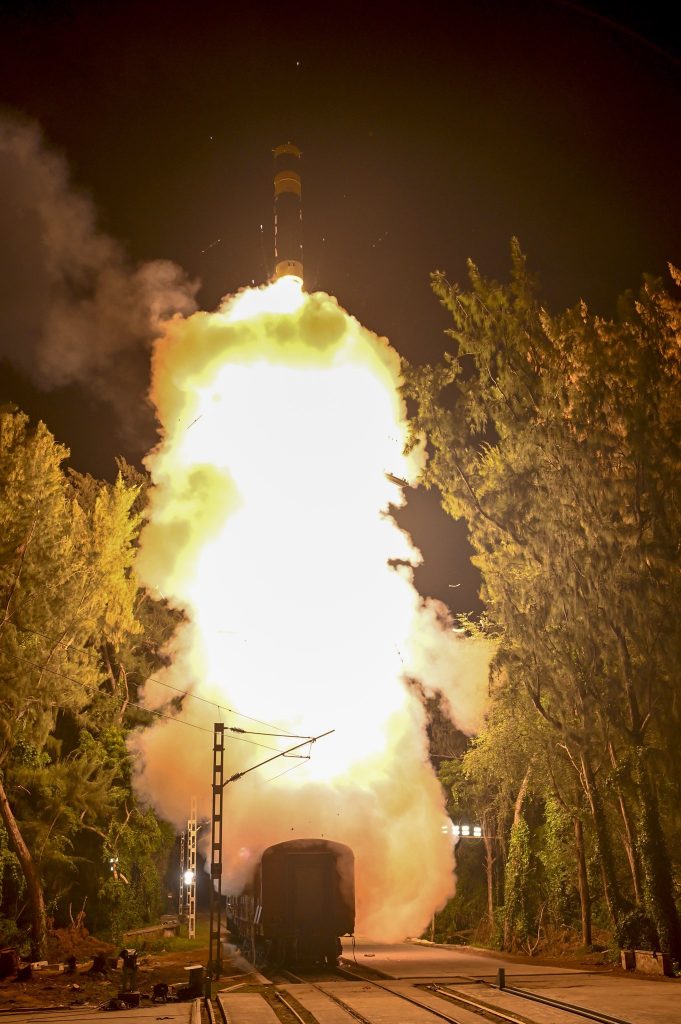
Photo: Defence Minister’ social media account

India has successfully test-fired the next-generation Agni-Prime intermediate-range ballistic missile from a rail-based mobile launcher, marking a major milestone in its strategic capabilities. The test, conducted on Wednesday, was the first of its kind and places India among a select group of nations with the ability to launch canisterised missiles from rail platforms.

Defence Minister Rajnath Singh announced the achievement on Thursday, highlighting the breakthrough in India’s missile mobility and launch-readiness. “The first-of-its-kind launch carried out from specially designed Rail based Mobile Launcher, has the capability to move on Rail network without any pre-conditions that allows User to have a cross country mobility and launch within a short reaction time with reduced visibility.

Strategic Forces Command (SFC) and the Armed Forces on successful test of Intermediate Range Agni-Prime missile. This successful flight test has put India in the group of select nations having capabilities that have developed canisterised launch system from on the move rail network,” he said.

The launch was conducted jointly by the Defence Research and Development Organisation (DRDO) and the Strategic Forces Command (SFC) under a fully operational scenario. Officials confirmed the missile’s trajectory was “textbook perfect,” meeting all mission objectives.

Rail-based launcher: A strategic game-changer

The rail-based mobile launcher represents a significant evolution in India’s second-strike capabilities. It is self-sustained, featuring independent launch mechanisms, state-of-the-art communication systems, and robust protection features.

The Agni-Prime (Agni-P) is capable of striking targets up to 2,000 kilometers away and comes with several advanced features designed for rapid deployment and minimal detection.

From road to rail: Expanding mobility

While the road-mobile Agni-P has already been inducted into service after multiple successful trials, this rail-based version adds another layer of flexibility and survivability to India’s deterrence strategy. “This successful test paves the way for the induction of futuristic rail-based missile systems,” say officials. The test was witnessed by top DRDO scientists and SFC officers. Singh congratulated DRDO, SFC, and the Armed Forces on this landmark achievement, saying it firmly positions India among a select few nations that have mastered rail-based, canisterised missile launch systems.

A canisterised missile is stored and launched from a sealed container, enabling faster response, better mobility, and reduced maintenance. This system allows missiles to be transported discreetly across the country and launched at short notice, enhancing survivability and operational readiness. The rail-based platform adds another layer of mobility, making detection harder for adversaries.

‘Make in India’ turns 11: PM Modi showcases progress, global influence

Prime Minister Narendra Modi today commemorated the 11th anniversary of the Make in India initiative, highlighting its transformative impact on India’s economy and entrepreneurial ecosystem. Taking to X, the Prime Minister responded to a post by MyGovIndia, emphasising the initiative’s role in driving growth and fostering self-reliance.

“Eleven years ago today, the Make in India initiative was launched with a vision to add momentum to India’s growth and tap into our nation’s entrepreneurial potential,” PM Modi wrote. He noted that the initiative has significantly contributed to enhancing India’s economic strength and laying the foundation for Aatmanirbharta (self-reliance). “It is gladdening to see how #11YearsOfMakeInIndia has encouraged innovation and job creation across sectors,” he added.

PM Modi further stated, “Make in India has given an impetus to India’s entrepreneurs, thus creating a global impact.”

The hashtag #11YearsOfMakeInIndia trended on social media as supporters and stakeholders reflected on the initiative’s achievements over the past decade.

Launched in 2014, Make in India was designed to transform India into a global manufacturing hub by encouraging domestic and foreign investment, fostering innovation, and building best-in-class infrastructure. Over the years, the initiative has attracted significant FDI inflows—over $500 billion since its launch—while promoting industrial growth in key sectors such as electronics, automobiles, defence, and renewable energy.

The Production-Linked Incentive (PLI) schemes introduced under the initiative have further bolstered manufacturing output, particularly in mobile phones, semiconductors, and pharmaceuticals. India has also climbed in global indices, such as the Ease of Doing Business and Innovation rankings, showcasing its growing appeal as a manufacturing destination.

MOST POPULAR

HOT NEWS