Wangchuk ‘mislead’ people with references to ‘Arab Spring-style’, ‘Nepal Gen Z protests’: Centre

“Certain politically motivated individuals were not happy with the progress made under HPC has been trying to sabotage the dialogue process. The next meeting of High-Powered Committee has been scheduled on October 6 while meetings are also planned on September 25 and September 26 with the leaders from Ladakh”: Ministry of Home Affairs
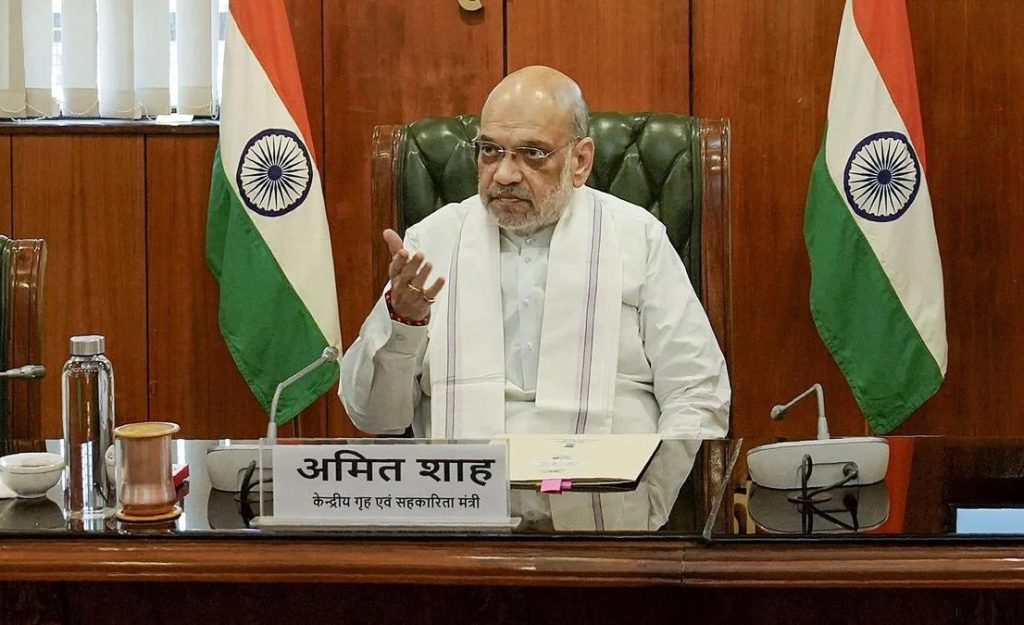
File Photo

The demands on which Sonam Wangchuk was on hunger strike are integral part of the discussion in High-Powered Committee has been scheduled on October 6, the Centre said after the violence in Leh, directly blaming the climate activist for “provoking and misleading” and “references to Gen Z protests in Nepal”    

“In spite of many leaders urging to call off the hunger strike he continued with the hunger strike and misleading the people through provocative mention of Arab Spring-style protest and references to Gen Z protests in Nepal,” Amit Shah led Ministry of Home Affairs said in a statement posted last Wednesday. Amidst these violent developments, he broke his fast and left for his village in an ambulance without making serious efforts to control the situation, it also said, assuring committed to the aspiration of people of Ladakh by providing adequate constitutional safeguards.

According to the official statement the hunger strike was started by Sonam Wangchuk on September 10 stating the demand of sixth schedule and statehood for Ladakh even though the Government of India has been actively engaged with Apex Body Leh and Kargil Democratic Alliance on same issues. Series of meetings were held with them through formal channel of High-Powered Committee as well as Sub-committee and multiple informal meetings with leaders.

“The process of dialogue through this mechanism has yielded phenomenal results by increasing reservations for Ladakh scheduled tribe from 45% to 84%, providing 1/3 women reservations in the councils and declaring Bhoti and Purgi as official languages. With this process for recruitment of 1800 posts was also commenced.

“However, certain politically motivated individuals were not happy with the progress made under HPC has been trying to sabotage the dialogue process. The next meeting of High-Powered Committee has been scheduled on October 6 while meetings are also planned on September 25 and September 26 with the leaders from Ladakh”

The ministry said that demands on which Wangchuk was on hunger strike are integral part of the discussion in HPC. In spite of many leaders urging to call off the hunger strike he continued with the hunger strike and misleading the people through provocative mention of Arab Spring-style protest and references to Gen Z protests in Nepal.

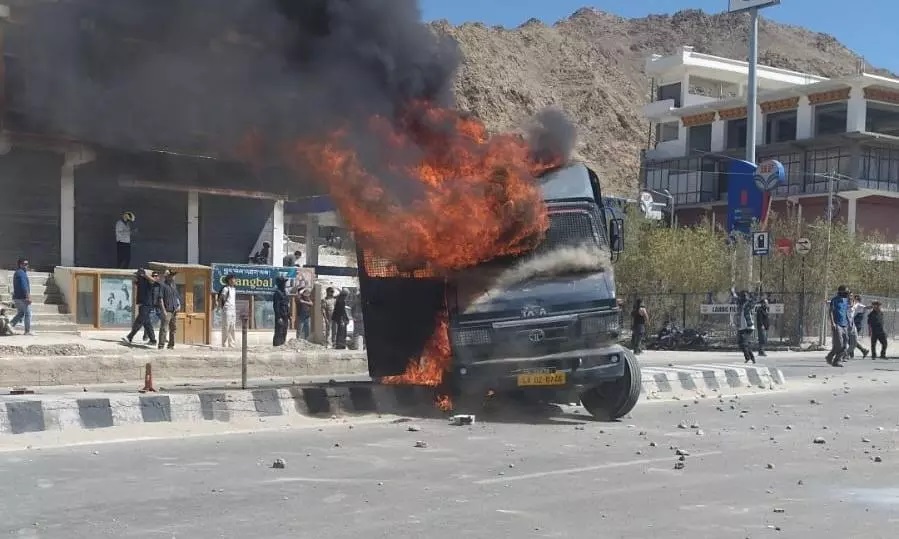
“On September 24, at around 11.30 am, a mob instigated by his provocative speeches left the venue of the hunger strike and attacked a political party office as well as Government office of the CEC Leh. They also put these offices on fire, attacked the security personnel, and torched police vehicle. The unruly mob attacked the police personnel in which more than 30 police/CRPF personnel were injured. The mob continued to destroy the public property and attack the police personnel. In self-defence, police had to resort to firing in which unfortunately some casualties are reported,” it added.

Barring unfortunate incidents that happened early in the day, the situation is brought under control by 4PM It is clear that the mob was incited by Shri Sonam Wangchuk through his provocative statements.

Cold desert Ladakh on Wednesday witnessed its worst violence in years, with the statehood agitation spiralling into arson and clashes, leaving four dead and at least 45 injured, including 22 policemen. The violence coincided with Wangchuk ending his fortnight-long hunger strike for statehood and Sixth Schedule protections.

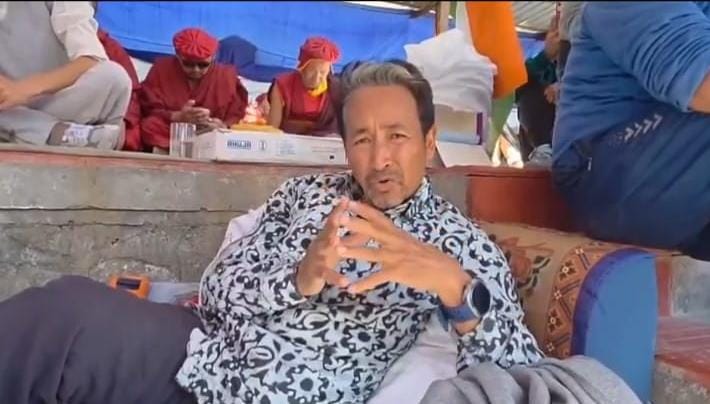
“VERY SAD EVENTS IN LEH. My message of peaceful path failed today. I appeal to youth to please stop this nonsense. This only damages our cause,” Wangchuk posted along with a video in which he blamed Central government’s actions for the “Gen Z revolution” in Ladakh. Wangchuk said violence took place after the health conditions of two people on hunger strike turned serious and had to be hospitalised, triggering a wave of anger among the youth as the wanted to express their frustration. “This was a type of Gen Z revolution that brought people on the streets,” he said, blaming BJP-led Centre for not fulfilling promises to people  
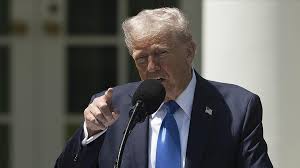
WHO trashes Trump’ theory on paracetamol, says no link on use in pregnancy and autism   

Even while US President Donald Trump is embroiled in tariff’ wars with the rest of the World, he stirred another global controversy by diving into the debate around medications. Citing an investigation by his health department, Trump said in a press conference at the White House that there is a link between the use of paracetamol during pregnancy and autism, therefore, pregnant women should avoid taking it.

Trump further announced that the Food and Drug Administration (FDA) would soon issue a warning regarding this drug.

In the US, paracetamol is known as acetaminophen and is sold under the brand name Tylenol. Following Trump’s statement, panic spread not only across the U.S. but around the world.

Dr. Soumya Swaminathan, former Chief Scientist of the World Health Organization and a renowned pediatrician, dismissed Trump’s claims as baseless. She stated that this medicine is thoroughly proven to be safe. In a media statement, Dr. Swaminathan emphasised that many studies have been conducted on paracetamol, suggesting that pregnant women can take it under a doctor’s supervision. She also noted that the International Federation of Gynecology and Obstetrics considers paracetamol completely safe and permits its use.

Some pharmaceutical experts believe Trump’s statement is a result of internal conflicts within the American pharmaceutical lobby. The company that manufactures Tylenol, McNeil Consumer Healthcare, has faced multiple lawsuits over time. However, the company maintains that its product meets all safety standards. This company is a subsidiary of the world-renowned Johnson & Johnson.

WHO spokesperson Tarik Jašarević also told a press briefing in Geneva that, “The evidence remains inconsistent.”

“We know that vaccines do not cause autism. Vaccines, as I said, save countless lives. So this is something that science has proven, and these things should not really be questioned,” he was quoted as saying.  The European Medicines Agency (EMA) also clarified that there is no new evidence requiring changes to current recommendations regarding the use of paracetamol during pregnancy.

Four killed, 70 injured as Ladakh protest turns violent

Srinagar: At least four people were killed and 59 others injured on Wednesday after a protest in Leh demanding statehood for Ladakh and inclusion under the Sixth Schedule turned violent.

The demonstration, led largely by youth, escalated into clashes with police. Protesters hurled stones and attempted to storm key government offices, while several vehicles were set ablaze. Police responded with cane charges and tear gas, bringing the town to a standstill.

Officials confirmed that among the injured were dozens of police personnel.

The protest comes days ahead of a fresh round of talks scheduled for early October between the Union government and Ladakhi representatives over long-pending demands, including statehood, constitutional safeguards, and separate parliamentary seats for Leh and Kargil.

Protesters called for shutdowns and vowed to intensify their agitation until their four-point agenda was met.

In Kargil, Kargil Democratic Alliance announced a complete shutdown on Thursday to express solidarity and press for inclusion of Ladakh under the Sixth Schedule.

The violence marks one of the sharpest escalations in Ladakh since it was carved out as a Union Territory in 2019.

Why is Poonam Pandey not playing Mandodari in Ramleela

Controversial actress Poonam Pandey will no longer be playing the role of Mandodari in the Ramleela. The Luv Kush Ramleela Committee—one of Delhi’s biggest and most renowned Ramleela organisations—made the announcement after a public outcry.

Poonam was supposed to portray Mandodari—the wife of Ravana.

However, the Vishwa Hindu Parishad (VHP), the Bharatiya Janata Party (BJP), and various religious leaders and saints strongly opposed her inclusion in the performance. They urged the organisers to reconsider their decision, stating that casting a controversial actress like Poonam Pandey in a religious and cultural portrayal would send a wrong message to society.

The VHP welcomed the committee’s decision with Surendra Gupta calling the decision a commendable step toward preserving cultural values and religious traditions.

Poonam Pandey has been in the spotlight since 2010 due to her nude and semi-nude photos. A model-turned-actress, she made headlines in 2011 when she declared that she would strip completely if India won the Cricket World Cup. However, the BCCI did not grant her permission for this act. In 2012, she posed nude for Kolkata Knight Riders.

In 2017, she launched her own mobile app, which was later removed from the Play Store due to objectionable content. Similarly, she started a sex-tape series on Instagram, which was also taken down by the platform.

Poonam Pandey herself had announced her role as Mandodari in a video, sparking strong backlash from the public, religious organisations, spiritual leaders, and political parties. Initially, the committee defended their decision to retain her but due to mounting pressure and protest they were ultimately compelled to withdraw her from the role.

Controversial Track Record

Her film career has largely revolved around low-budget erotica, with movies like Nasha (2013) receiving critical backlash for explicit content.

In 2020, she faced legal trouble after violating COVID-19 lockdown rules in Goa, which led to a police case. In another instance, she filed a complaint of domestic abuse against her then-husband, only to later withdraw it — again drawing media attention. In 2023, Poonam sparked another controversy by faking her own death from cervical cancer as part of a misguided “awareness campaign.” The stunt backfired massively, drawing public condemnation for trivializing a serious disease and emotionally misleading fans and followers.

Centre responsible for ‘Gen Z revolution’ in Ladakh, says Sonam Wangchuk

Unrest reflects a deep sense of political, social discontent in Ladakh; Shift from peaceful demonstrations to violent confrontations highlights a trust deficit. Despite assurances of dialogue, locals see little progress. The violence has forced authorities to impose restrictions on gatherings, even as fresh rounds of talks are planned with the Leh Apex Body and youth groups.

Photo: courtesy Sonam Wangchuk social media

Cold desert Ladakh on Wednesday witnessed its worst violence in years, with the statehood agitation spiralling into arson and clashes, leaving four dead and at least 45 injured, including 22 policemen. The violence coincided with climate activist Sonam Wangchuk ending his fortnight-long hunger strike for statehood and Sixth Schedule protections.

“VERY SAD EVENTS IN LEH. My message of peaceful path failed today. I appeal to youth to please stop this nonsense. This only damages our cause,” Wangchuk posted along with a video in which he blamed the Central government’s actions for the “Gen Z revolution” in Ladakh. 

Wangchuk said violence took place after the health conditions of two people on hunger strike turned serious and had to be hospitalised, triggering a wave of anger among the youth as they wanted to express their frustration. “This was a type of Gen Z revolution that brought people on the streets,” he said, accusing the ruling BJP of “not acting on promises”

The unrest began with a shutdown in Leh, where protesters vandalised and torched the BJP office, vehicles, and furniture. As the day progressed, flames and dark smoke clouds could be seen from afar. Police responded with firing and teargas as groups of youths hurled stones and set ablaze security vehicles. Authorities imposed prohibitory orders under Section 163 of the BNSS, while Congress councillor Phuntsog Stanzin Tsepag was booked for a provocative speech, according to reports.

The Ladakh Apex Body (LAB) youth wing had called for protests after two hunger strikers were hospitalised Tuesday. Their 35-day fast pressed four demands—statehood, Sixth Schedule extension, separate Lok Sabha seats for Leh and Kargil, and job reservation.

Wangchuk said the hospitalisation of elderly strikers was the immediate trigger for the escalation. Appealing for calm, Wangchuk urged youth to shun violence. “The path we pursued for five years was peaceful… but today we see our message of peace failing,” he said, cutting short his fast. He blamed frustration among Ladakh’s youth over unemployment and the unfulfilled Sixth Schedule promise for fueling anger.

The Sixth Schedule grants special governance and financial autonomy to tribal populations, currently in four northeastern states. Its extension to Ladakh has been a core demand since the region became a Union Territory in 2019.

Talks between the Centre, LAB, and the Kargil Democratic Alliance (KDA) are scheduled for October 6. Both groups have spearheaded the four-year agitation, holding multiple rounds of discussions with little breakthrough. Former MP Thupstan Chhewang has returned to lead the delegation, while Congress has opted out ahead of the upcoming Hill Council polls.

According to analysts, the unrest in Ladakh reflects a deep sense of political and social discontent that has been building since the region was carved out as a Union Territory in 2019. At the heart of the agitation is the demand for statehood and inclusion under the Sixth Schedule of the Constitution, which would grant Ladakh constitutional safeguards to protect its tribal identity, land, and fragile ecosystem.

“Wangchuk’s 15-day hunger strike symbolized the growing impatience of the younger generation, who feel that promises made after the abrogation of Article 370 have not been delivered. Protesters argue that Ladakh’s unique geography, culture, and environment are threatened by unchecked industrial projects and lack of local control over governance. They fear becoming politically marginalized and environmentally vulnerable without constitutional protections,” say those in the know of developments in the region.

Battlefield Bihar: Congress hints at Tejashwi as CM face; BJP claims rift in INDIA Bloc; Kharge calls Nitish ‘liability’

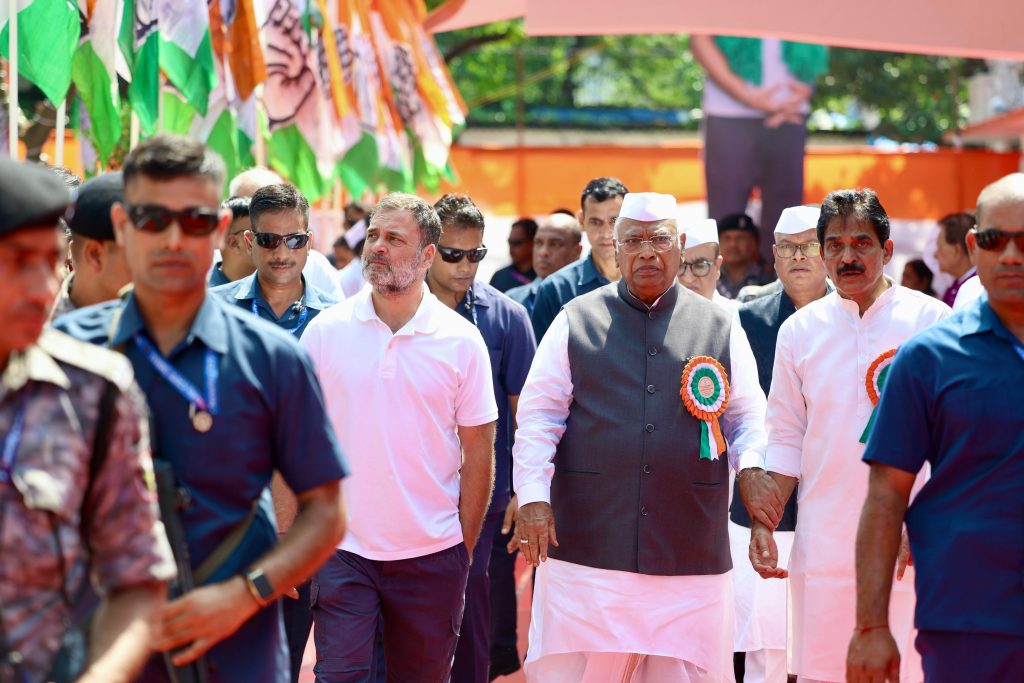
On a day of multiple political developments in poll-bound Bihar, Congress president Mallikarjun Kharge on Wednesday claimed that the BJP has “mentally retired” Chief Minister Nitish Kumar and now considers him a “liability.” He added that the upcoming Assembly elections would mark the beginning of the end of the Narendra Modi government’s “corrupt rule” at the Centre.

While BJP leaders alleged a rift in the Congress-RJD ‘mahagathbandhan’ over seat-sharing and the chief ministerial face, Congress leader Pawan Khera dropped a strong hint that RJD leader Tejashwi Yadav could be projected as the alliance’s CM candidate. At the CWC meeting in Patna, Khera said: “We are contesting on issues. Faces are in front of you. All is known to everyone. You are asking a question, to which the answer is already known… When the Sun is shining bright in the sky, you do not need to declare it.”

Khera dismissed claims by NDA leaders that holding the CWC meeting in Patna was a “show of strength” in a state where Congress is perceived as a declining force. “There is no show of strength among brothers,” he said.

On the decision to host the CWC in Bihar for the first time since Independence, Khera remarked: “Even vote theft has taken place for the first time. The CWC in Bihar is not just about state elections but about strengthening the foundations of democracy.” He further confirmed that details of seat-sharing within the INDIA alliance — comprising CPI(ML) Liberation, CPI(M), CPI, and Mukesh Sahni’s Vikassheel Insan Party — would be announced soon.

However, reports suggest tensions between the Congress and RJD over seat distribution. Buoyed by the response to Rahul Gandhi’s Voter Adhikar Yatra, the Congress is demanding 70 seats — the same number it contested in the 2020 polls, when it won only 19. The RJD is reportedly willing to concede around 50 seats, RJD supremo Lalu Prasad Yadav has asked Congress to submit its list of candidates, according to reports

At the CWC, the Congress passed multiple resolutions addressing both domestic and global issues. Focusing on Bihar, Kharge targeted the NDA government formed in January 2024 when the BJP extended support to Nitish Kumar again. “The Nitish government promised development, but Bihar’s economy continues to lag. The ‘double engine’ claim proved hollow, with no special package from the Centre,” Kharge said.

“Internal strife within the NDA alliance is now openly visible. Nitish Kumar has been mentally retired by the BJP, which considers him a liability,” he added. Projecting the upcoming polls as a turning point, Kharge declared: “The 2025 Assembly elections will be a milestone not only for Bihar but for the entire country. This will mark the countdown to the end of the Modi government’s corrupt rule.”

Trump Backs Full Ukrainian Victory as Kremlin Dismisses “Paper Tiger” Remark

US President Donald Trump has shifted sharply in tone on the war in Ukraine, declaring that Kyiv, with NATO and European support, can reclaim all land seized by Russia since the 2022 invasion. The comments, delivered around the United Nations General Assembly after his meeting with Ukrainian President Volodymyr Zelenskyy, represent one of Trump’s strongest endorsements of Ukraine’s war aims to date.

Calling Russia a “paper tiger,” Trump argued that Moscow is weakened economically and unable to sustain long-term gains on the battlefield. He urged NATO allies to take a tougher line, even suggesting the alliance should be prepared to shoot down Russian aircraft violating its airspace.

The remarks stand in stark contrast to Trump’s previous suggestions that Ukraine might need to accept territorial losses as part of a negotiated settlement. Zelenskyy, who has lobbied world leaders for firmer commitments, welcomed Trump’s comments and praised him as “well informed” following their talks.

Moscow reacted with open disdain. Kremlin spokesperson Dmitry Peskov rejected Trump’s description of Russia as fragile, countering that “Russia is not a tiger … there is no such thing as a paper bear.” He also downplayed Trump’s rhetoric, suggesting his remarks were influenced by Zelenskyy’s appeals at the UN.

Other Russian officials and media figures took a more mocking tone. Former president Dmitry Medvedev derided Trump as inconsistent, while state broadcaster RT’s editor-in-chief Margarita Simonyan likened his statements to a psychic giving false promises.

Despite the sharp rebuttals, Russian officials left the door open to continued communication, hinting that they still expect Trump to favor negotiations in the future.

Trump’s sudden pivot injects new uncertainty into Western policy debates. European leaders, while welcoming a firmer American stance, remain cautious given Trump’s record of shifting positions. For Ukraine, the endorsement offers a boost in morale, but analysts warn it remains unclear whether the rhetoric will translate into additional U.S. military aid or direct strategic commitments.

Russia, meanwhile, is determined to counter any perception of weakness. Its insistence on the “bear” metaphor underscores how central strength and resilience remain to the Kremlin’s messaging.

For now, Trump’s declaration signals a more confrontational tone toward Moscow, even as the realities on the battlefield continue to test whether Ukraine can achieve the total victory he now envisions.

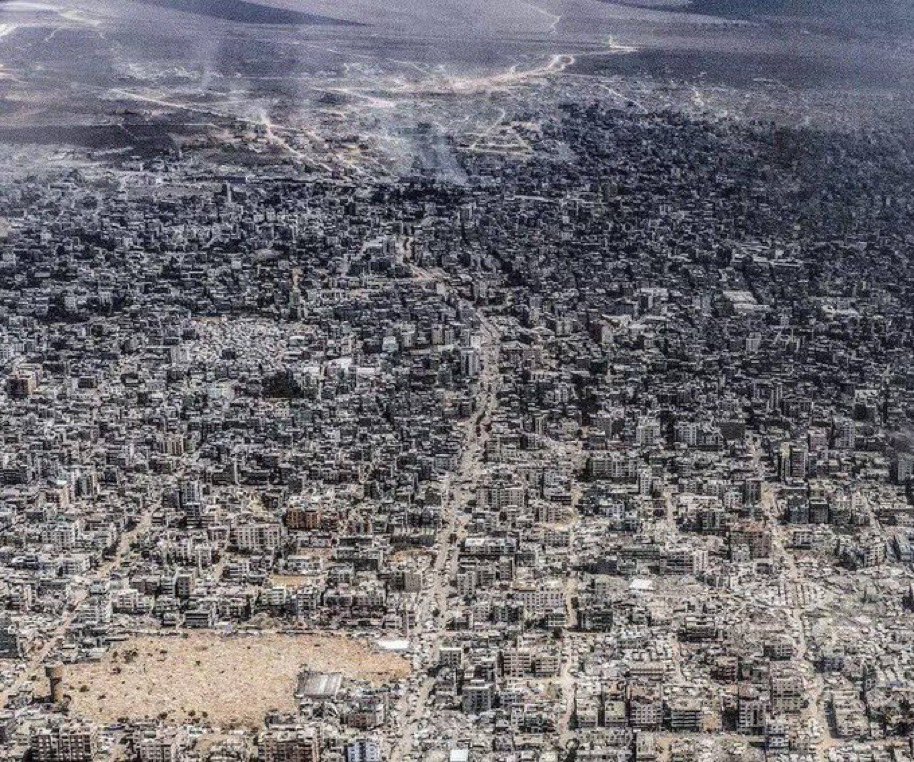
Over 150 countries recognize the state of Palestine

At the 80th United Nations General Assembly, France, Luxembourg, Malta, Monaco, Andorra and Belgium officially recognised the State of Palestine, joining Canada, Australia, Portugal and the United Kingdom.

London’s announcement, delivered on September 21, 2025, marked a historic shift more than a century after the Balfour Declaration and 77 years after Israel’s creation in the former British Mandate of Palestine.

UK Prime Minister Keir Starmer said the decision was intended to “keep alive the possibility of peace and of a two-state solution” amid Israel’s intensifying settlement expansion in the occupied West Bank and its ongoing military campaign in Gaza, which has killed more than 65,000 Palestinians.

The endorsements from Western powers traditionally aligned with Israel highlight its mounting diplomatic isolation. In total, 157 of the UN’s 193 member states—along with the Holy See, which holds observer status—now recognise Palestine, representing about 81 percent of the global community.

While recognition does not immediately alter realities on the ground, it strengthens Palestine’s international legitimacy, expands its ability to pursue accountability for Israel’s occupation and increases pressure on other Western governments to commit to a two-state solution.

Martin Griffiths, director of Mediation Group International, described recognition as only “the entry point.” He urged states such as the UK to follow through by ensuring humanitarian access, halting arms transfers to Israel and easing restrictions on Gaza. He also pointed to the need for reforms within the Palestinian Authority, with initiatives already under discussion by France, Saudi Arabia, Norway and Spain.

 “This moment brings hope,” Griffiths said, “but it doesn’t necessarily secure the future.”

Including Mexico, eleven states have formally recognised Palestine in 2025 alone—twenty since the outbreak of Israel’s war on Gaza in October 2023—underscoring the growing momentum behind Palestinian statehood.

CWC’s Patna resolution: A political manifesto against NDA rule

The Congress Working Committee (CWC) convened in Patna on Wednesday, marking a critical moment in the party’s positioning ahead of the Bihar elections. The resolution adopted at the meeting was not merely a critique of the ruling Bharatiya Janata Party (BJP) and its allies but a sweeping political indictment, connecting issues of governance, economy, social justice, and foreign policy under a single narrative of democratic erosion.

At its core, the resolution frames the Narendra Modi government as an authoritarian regime undermining India’s constitutional ethos.

The CWC accused the BJP-RSS of dismantling democratic institutions brick by brick, from weakening the Election Commission to weaponising investigative agencies. By terming the alleged manipulation of electoral rolls as “Vote Chori,” Congress sought to sharpen its attack on the government’s legitimacy, framing elections not as contests of policy but as battles for the survival of democracy itself.

Economic concerns formed a central pillar of the resolution. High unemployment, collapsing MSMEs, and persistent exam paper leaks were cited as symptoms of a system that privileges “crony friends” of the ruling elite while leaving the middle class, workers, and farmers adrift. The slashing of MGNREGA allocations and delayed GST compensation were held up as evidence of a government indifferent to India’s poorest citizens. In linking structural economic distress with the government’s alleged stepmotherly treatment of opposition-ruled states, the Congress attempted to fuse economic critique with federal anxieties.

On social cohesion, the resolution painted a grim picture of communal polarisation, systemic violence against Dalits and Adivasis, and the “mainstreaming” of the RSS. By invoking the prolonged crisis in Manipur and the Centre’s “complicity,” the party positioned itself as a voice for communities failed by the Union government’s silence.

Foreign policy was another sharp fault line. The CWC alleged that India’s strategic autonomy has been squandered—caught between US coercion under Donald Trump and Beijing’s assertiveness. References to Chinese territorial encroachments and rising import dependence dovetailed with concerns over India’s diplomatic isolation in the neighbourhood.

Beyond critique, the resolution carried emotional appeals: solidarity with victims of floods, grief over the passing of singer Zubeen Garg, and anguish over violence in Gaza. These insertions broadened the scope from partisan politics to moral positioning.

Ultimately, the Patna resolution reads as both an election document for Bihar and a national manifesto of resistance. By conflating constitutional defense with electoral urgency, Congress signaled its strategy: to portray 2025 not as another electoral cycle, but as a referendum on the Republic itself.

Delhi institute director booked for sexually assaulting 17 students

The national capital on Wednesday woke up to yet another shocker, tarnishing the name of New Delhi where a director of a well-known ashram in its posh area of Vasant Kunj has been accused of sexually harassing over a dozen female students.

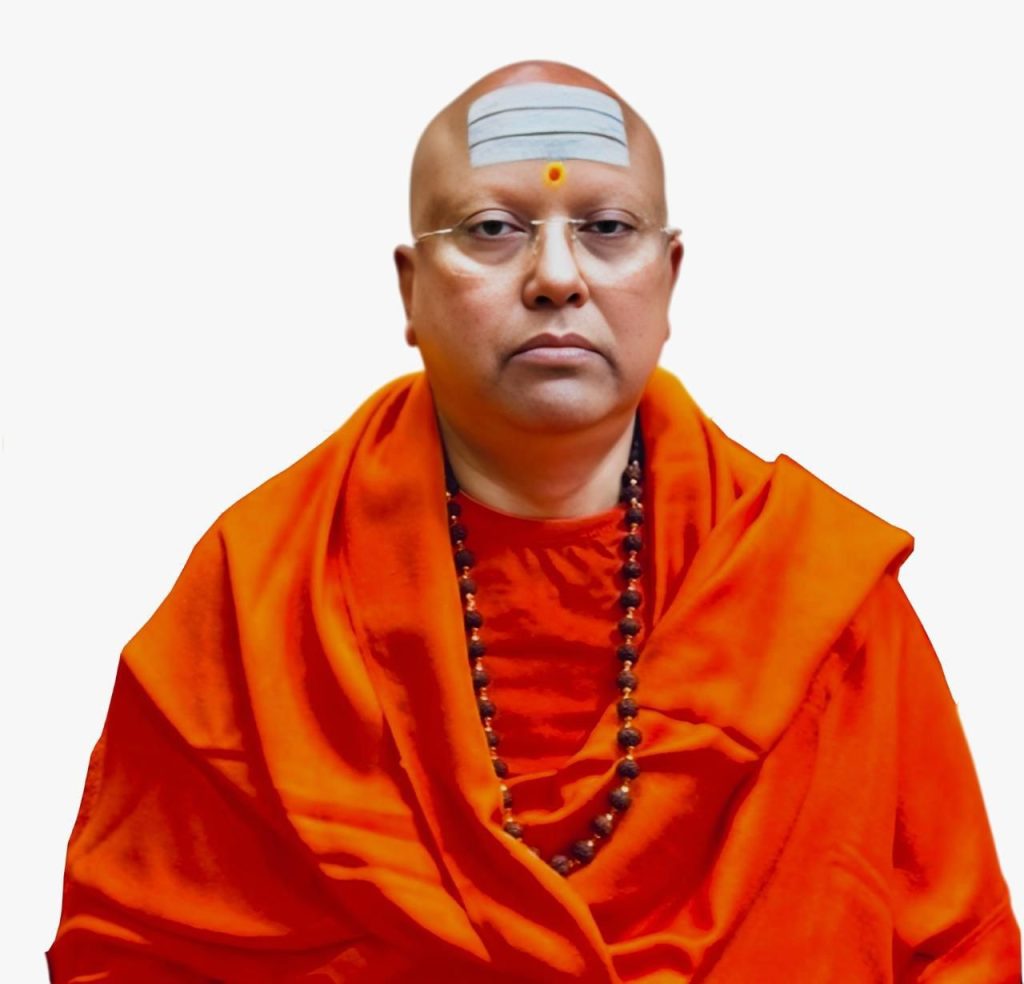
A self-styled godman Swami Chaitanyananda Saraswati also known as Partha Sarathy of Sri Sharda Institute of Indian Management has been booked for harassing students pursuing post-graduate management diploma courses under Economically Weaker Sections (EWS) category.

According to police, as many as 17 students out of 32 have recorded their statements and accused Saraswati of using abusive language, sending lewd text messages, and unwarranted physical touch.

Women faculty and administrative staff allegedly pressured the students to comply with the demands of the accused. The students claimed that some wardens working at the ashram had introduced them to the accused.

The police have also analysed CCTV footage and carried out raids at the place of the crime as well as the accused’s address. However, the accused is still at large.

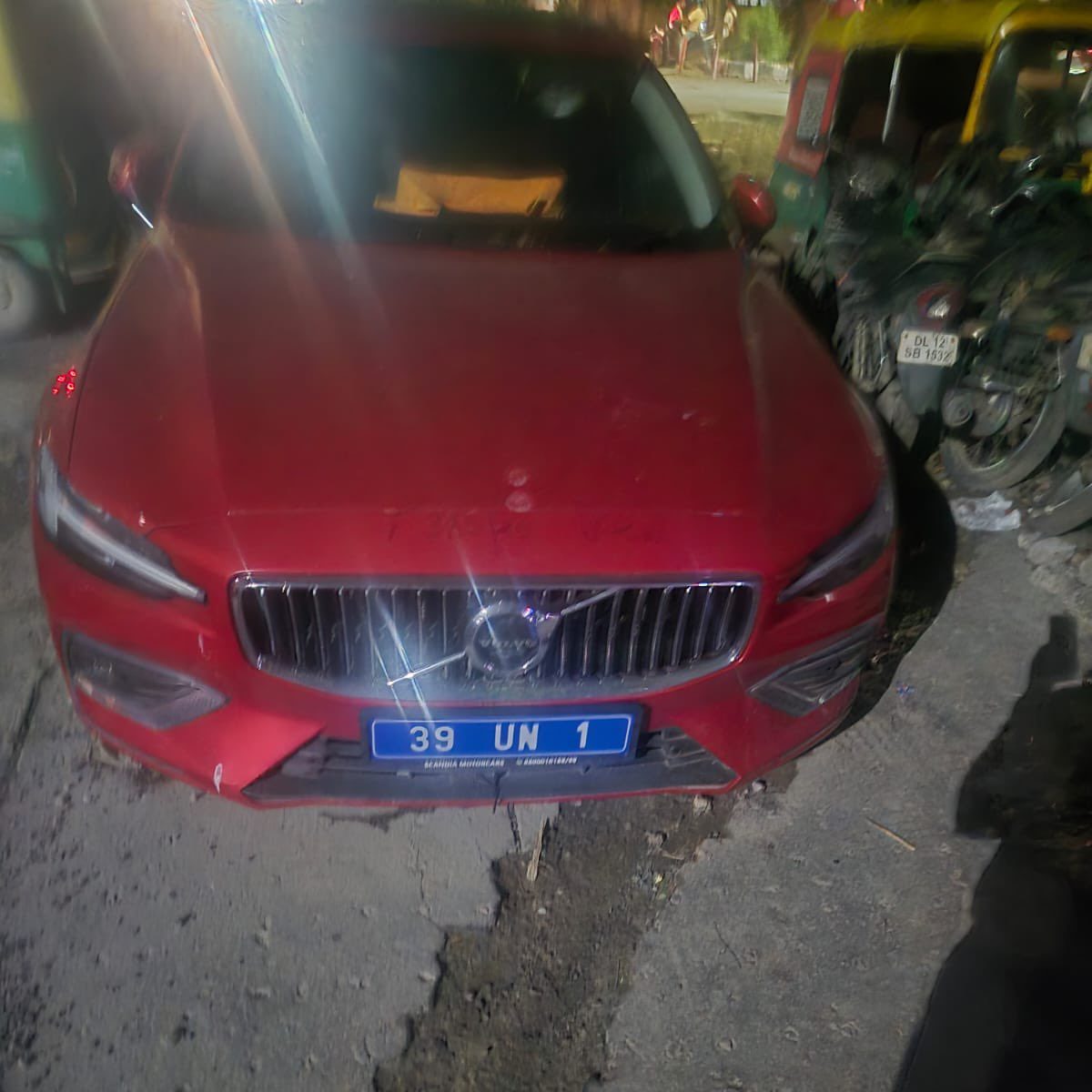
During the investigation, the police found a Volvo car in the institute’s basement that was used by Saraswati. It was found that the car used a forged diplomatic number plate (39 UN 1) and has been seized.

After the accusations surfaced, the ashram administration removed him from his post and expelled him.

The Dakshinamnaya Sri Sharada Peetha, Sringeri, which runs the Delhi facility, has issued a statement stating that Swami Chaityananda’s conduct and activities have been illegal, inappropriate, and against the Peetha’s interests.

Consequently, it has severed all ties with the accused.

The Peetham has also lodged complaints with the relevant authorities regarding illegal acts committed by Saraswati.

MOST POPULAR

HOT NEWS