Country going through difficult time due to diplomatic shortcomings of PM: Kharge

India is passing through deeply challenging and worrying phase both nationally and internationally due to the failures and diplomatic shortcomings of Prime Minister Narendra Modi and his government, Congress Chief Mallikarjun Kharge said on Wednesday.

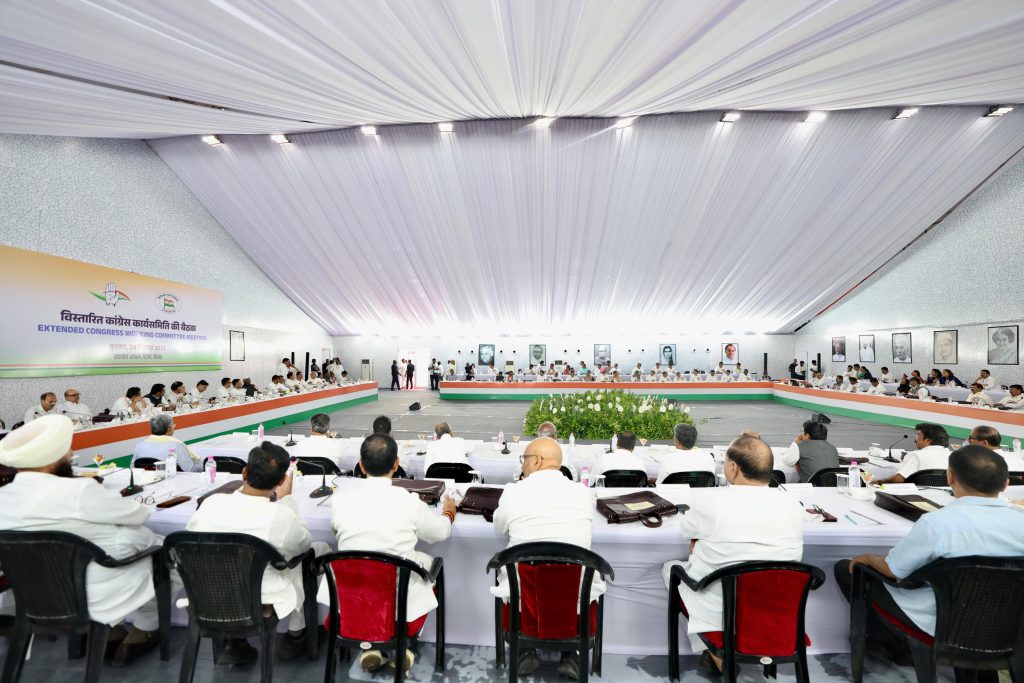
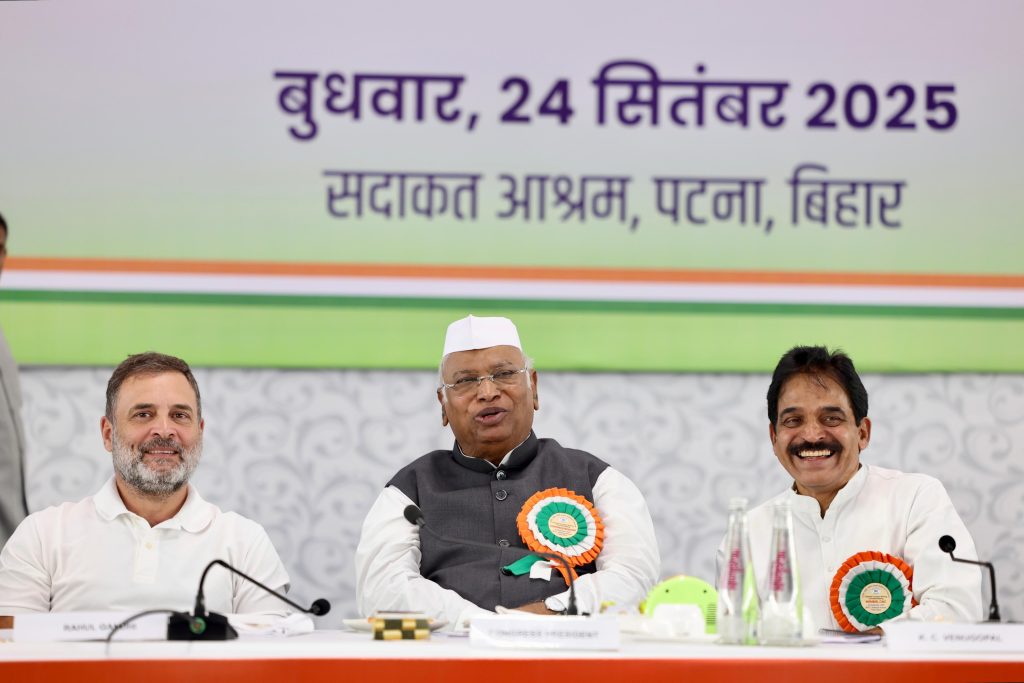
Addressing the CWC meeting in Patna at Sadaqat Ashram, he said, “at the international level, our troubles are a result of the failures and diplomatic shortcomings of Narendra Modi and his government. The very “friends” that the Prime Minister boasts about are today pushing India into multiple crises.”

The meeting is focused on the strategy for upcoming Bihar elections and intensifying its attack on BJP for “Vote Chori”

He said that at a time when even our voter list is being officially manipulated, it is necessary that we convene our Extended CWC meeting in Bihar—the motherland of democracy—so that we may reaffirm our pledge to safeguard this country’s democracy and Constitution.

“Exactly 85 years ago, at the Ramgarh AICC Session, the proposal for a Constituent Assembly was made for the first time. Mahatma Gandhi, Pt. Nehru, Sardar Patel, Dr. Ambedkar and the members of the Constituent Assembly together gave the citizens of this country the right to “one person, one vote,” he said.

“Today, our country is struggling with multiple problems—economic slowdown, unemployment, social polarization, and systematic weakening of autonomous constitutional institutions,” he added.

The meeting began around 10.30 am with Congress leaders emphasising that this is the first time since Independence that the party has convened its top decision-making body in Bihar.

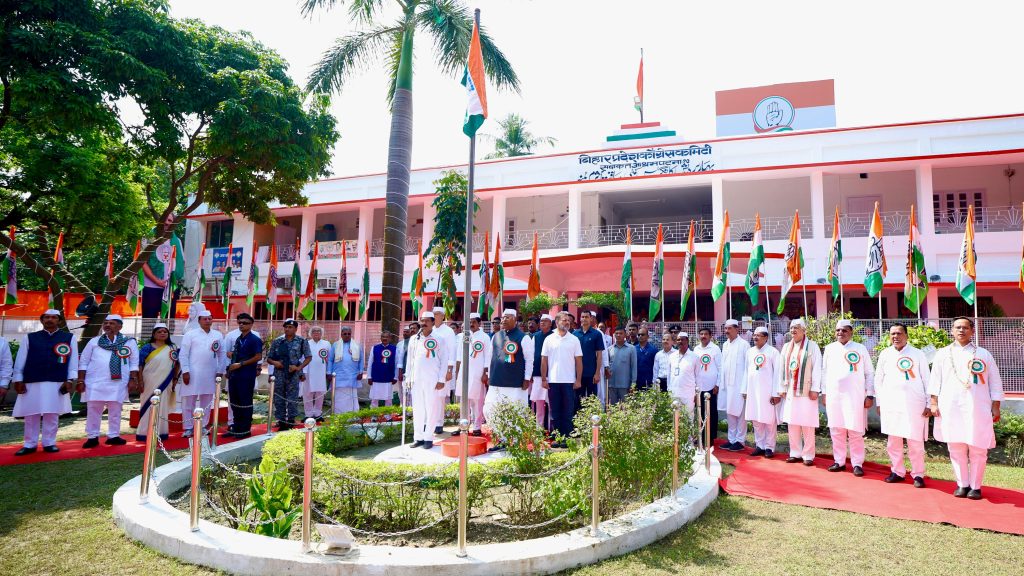
Ahead of the discussions, party president Mallikarjun Kharge unfurled the Congress flag at the state headquarters.

Among those present are Kharge, Leader of Opposition in the Lok Sabha, Rahul Gandhi, treasurer Ajay Maken, general secretaries KC Venugopal, Jairam Ramesh, and Sachin Pilot, and Bihar Congress chief Rajesh Kumar.

Kharge alleged that a conspiracy is being hatched to delete millions of names from voter rolls across the country. Voter theft means theft of the ration, pensions, medicines, scholarships, and examinations of Dalits, Adivasis, OBCs, EBCs, minorities, the weak and the poor. Due to the ‘Voter Rights Yatra,’ awareness spread among the people of Bihar, and they came out openly in support of Rahul Gandhi ji.

He pointed out BJP’s unfulfilled promises regarding 2 crore jobs and said, “The promise of “2 crore jobs” has remained unfulfilled. Youth are wandering without employment. Demonetization and a faulty GST derailed the economy. After 8 years, the Prime Minister realized his mistake. Now, reforms are being made in GST—the same reforms Congress had been demanding since day one.”

He said that Prime Minister Narendra Modi believes that the people of the country should spend more; but when incomes have not risen in the past 10 years, and only inflation has risen, how will people spend more?

“Rural consumption is at its lowest level in 50 years. Inequality is at its peak. The rich are getting richer, while the poor are becoming poorer. The Prime Minister has failed to double farmers’ income as promised. The three black laws of 2020–21 led to a massive movement, in which more than 750 farmers were martyred,” he added.
Another weather system on the way but it may spare Bengal during Durga Puja  

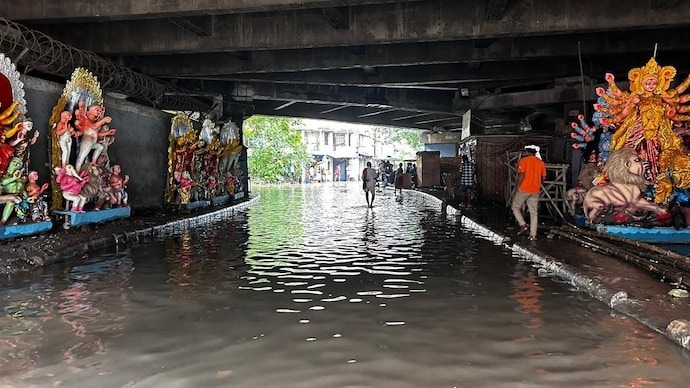
A day after heavy overnight rain left Kolkata waterlogged ahead of the Durga Puja celebrations, life in the city remains disrupted. At least 10 people have died in rain-related incidents, and the City of Joy is bracing for more showers in the coming days. A relentless downpour between midnight on Monday and early Tuesday morning dumped 252 mm of rainfall—nearly 20% of Kolkata’s annual average of 1,345.5 mm—in just six to seven hours. The deluge left large parts of the city submerged and disrupted rail, road, and air connectivity.

While the system responsible for Tuesday’s heavy rain—a low-pressure area—is now gradually becoming “less marked” another system is forming in the Bay of Bengal and heading westwards. According to the India Meteorological Department (IMD), an upper air cyclonic circulation has developed over the coastal areas of central Myanmar and the adjoining east-central Bay of Bengal.

Forecasts indicate that the new system is likely to move towards Odisha and Andhra Pradesh, meaning it may not directly impact West Bengal. However, light rain in parts of south Bengal is  possible. Durga Puja celebrations will begin on September 28 and conclude on October 2. The auspicious Hindu festival is observed with great fervour across the country, especially in West Bengal, Odisha, Assam, Tripura, Bihar, and Jharkhand.

Due to the recent heavy rains, the West Bengal Education Department announced on Tuesday that the month-long Durga Puja holidays in government-run and aided schools, colleges, and other educational institutions will begin on Wednesday, two days ahead of schedule.

Course of next system

The developing weather system is likely to move westwards gradually.

Under its influence, a low-pressure area is expected to form over the north and adjoining central Bay of Bengal on September 25 (Thursday). It is likely to move nearly westwards and intensify into a depression over the northwest and adjoining west-central Bay of Bengal on September 26, and is expected to cross the South Odisha–North Andhra Pradesh coasts around September 27.

Due to this, squally wind speeds reaching 40–50 kmph, gusting to 60 kmph, along with rough to very rough sea conditions, are expected to prevail over the North and Central Bay of Bengal and along and off the coasts of Andhra Pradesh, Odisha, West Bengal, Bangladesh, and Myanmar on September 25. The IMD added: “It would gradually increase, becoming squally winds reaching 45–55 kmph, gusting to 65 kmph, with rough to very rough sea conditions over the North and Central Bay of Bengal and along and off Andhra Pradesh–Odisha–West Bengal coasts during September 26 and 27.”

Fishermen are advised not to venture into the North and Central Bay of Bengal and along and off the coasts of Andhra Pradesh, Odisha, West Bengal, Bangladesh, and Myanmar between September 25 and 27.

Nitish ‘liability’, Yogi’s decision ‘bizarre’: Why Kharge targeted UP CM in Patna

While targeting Nitish Kumar in Patna seems politically logical given that the state is soon going to elections, the question is—why Adityanath? Using the UP case, Kharge hopes to undermine the BJP’s credibility in Bihar — a state where caste equations are more central to politics than in most other Indian states.

Photo: courtesy AICC

Congress president Mallikarjun Kharge on Wednesday launched a sharp political attack on two prominent BJP-aligned Chief Ministers — Bihar’s Nitish Kumar and Uttar Pradesh’s Yogi Adityanath — at the Congress Working Committee (CWC) meeting in Patna.

Kharge described Nitish Kumar as a “liability,” claiming he had been “mentally retired by the BJP.” He also criticised the Nitish-led NDA government in Bihar as being “on hiatus for a long time,” predicting that the upcoming Assembly elections would mark a turning point — not just for the state but for the entire country. According to Kharge, this would begin the “countdown” to the end of the Modi government’s corrupt rule.

He also did not spare Uttar Pradesh. Calling Adityanath’s recent ban on caste-based political rallies “bizarre,” Kharge pointed out the contradiction in the BJP’s approach. “On one hand, we are discussing a caste census, and on the other, your CM is threatening jail for those protesting against injustice. How can both exist?” he asked, directly challenging Prime Minister Narendra Modi.

The Yogi government’s decision came after a recent Allahabad High Court directive to curb caste glorification. On September 21, 2025, the UP government issued a notification prohibiting caste-based political rallies, as well as the mention of caste in police reports, signage, and vehicle branding — except in cases involving the SC/ST (Prevention of Atrocities) Act.

While targeting Nitish Kumar in Patna seems politically logical given that the state is soon going to elections, the question is—why Adityanath?

Kharge’s remarks against Nitish are a calculated political strategy. By labelling him a “liability,” he seems to be pointing at his health issues while also suggesting that he is being sidelined by the BJP. Overall, Kharge is seeking to portray the JD(U)-BJP alliance as both unstable and weakened. Once seen as a key figure in national politics, Nitish has changed political allegiances several times and is now reportedly battling health issues — further fuelling the Congress narrative of his decline.

Kharge’s criticism of Yogi Adityanath is aimed at highlighting contradictions within the BJP, say analysts. While the party champions a caste census at the national level to appeal to backward communities, it is simultaneously cracking down on caste mobilisation in states like UP. Kharge hopes to undermine the BJP’s credibility in Bihar — a state where caste equations are central to politics more than in most other Indian states. The state’s political landscape is shaped by deep-rooted caste identities, historical movements for social justice, and the mobilisation of both backward and marginalised communities.

Targeting two of the NDA’s most prominent chief ministers — in two of India’s most electorally significant states — is part of a broader Congress strategy to reassert itself in the Hindi heartland, where the party has seen dwindling influence in recent years

Climate change ‘con job’, immigration sending Europe to ‘hell’—a fact check on Trump’s claims  

Rhetoric was classic Trump—direct, combative, and resonating with his base at home while rattling allies abroad but was it also true, read on.

Trump on Truth Social

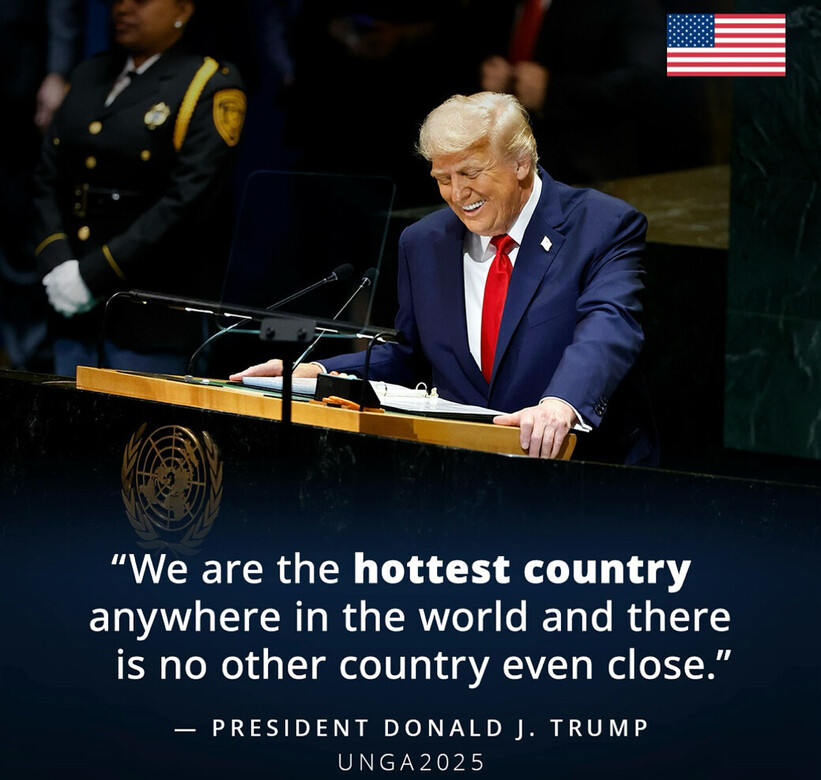
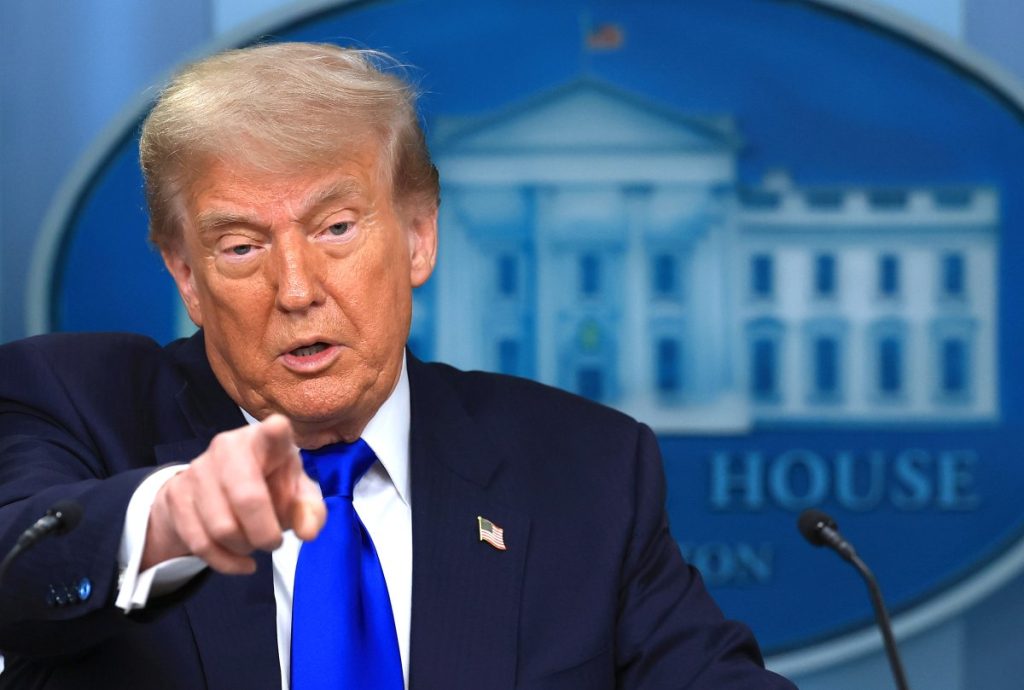
US President Donald Trump’s address at the 2025 UN General Assembly was vintage, classic Trump—direct, combative, and calculated to energise supporters at home while unsettling allies abroad. His remarks, filled with exaggerations and misleading claims, reflected a deliberate political strategy more than an engagement with facts.

Dismissing climate change as a “con job” and portraying immigration as an existential threat, Trump leaned heavily on themes central to his political brand—sovereignty, cultural preservation, and economic protectionism. The rhetoric was aimed at presenting him as a truth-teller battling global elites and multilateral institutions, even when his claims were contradicted by evidence.

In his first UNGA address of his second term, Trump targeted India and China and castigated the UN where he was speaking. “China and India are funding the war in Ukraine. Some NATO nations are also doing this. Some European nations are purchasing oil from Russia and fighting it. It’s embarrassing,” he declared. Casting himself as a global peacemaker, he claimed credit for ending “seven unendable wars” in just seven months of his new term—including the India–Pakistan conflict.

Climate change, immigration

Then there were two signature issues: climate change and immigration. Trump dismissed climate science as “the greatest con job ever perpetrated on the world,” accusing the UN and other bodies of making failed predictions. He ridiculed renewable energy—calling wind and solar “a joke” and “pathetic”—arguing that green policies were crippling economies and boosting major polluters.

“Immigration and the high cost of so-called green renewable energy is destroying a large part of the free world,” he warned, linking climate action with demographic shifts.

 On immigration, Trump urged nations to seal their borders and expel foreigners, insisting that open-border policies would trigger cultural collapse. “Your countries are going to hell … your countries are being ruined,” he said, casting migration as a civilizational threat.

He accused the UN of “funding an assault on Western countries and their borders,” arguing the body enabled, rather than prevented, mass migration. Citing his own record, he boasted that under his leadership “the number of illegal aliens admitted … has been zero,” claiming those who entered unlawfully were jailed or deported immediately.

Fact Check

Trump’s claims at UNGA were largely misleading, say analysts

Climate change is real and human-driven, with evidence from the UN’s IPCC, NASA, and global meteorological agencies showing rising temperatures and extreme weather. Renewable energy like wind and solar reduces emissions and creates jobs.

European migration, while challenging, has also contributed economically and socially

His assertion of ending “seven unendable wars,” including India–Pakistan, is false, as no peace settlements occurred and India has time and again trashed his claims. Finally, the UN does not fund migration, it provides humanitarian aid and manages refugee protections under international law.

The bottom line—did he win any new friends with his speech, unlikely.   

Trump again: Targets India, claims stopped 7 wars, including India-Pakistan, slams UN at UNGA

With PM skipping UNGA and S Jaishankar representing India, the spotlight is on how New Delhi responds to Trump’s sharp rhetoric as ties strain further over trade tariffs, BRICS dynamics, and visa issues

US President Donald Trump used his first United Nations General Assembly (UNGA) address of his second term to target India and launch a scathing attack on the UN. “China and India are funding the war in Ukraine. Some NATO nations are also doing this. Some European nations are purchasing oil from Russia and fighting it. It’s embarrassing,” Trump declared.

Casting himself as a global peacemaker, Trump claimed he has ended “seven unendable wars” in just seven months of his second term. “People told me these conflicts could never be solved,” he said, listing disputes he claimed to have settled: Cambodia–Thailand, DR Congo–Rwanda, Pakistan–India, Israel–Iran, Egypt–Ethiopia, and Armenia–Azerbaijan.

“I ended seven wars, dealt directly with the leaders of each country, and never even received a call from the UN offering to help finalize the deals,” Trump said. “What is the purpose of the UN? All they seem to do is write strongly worded letters and never follow up. Empty words don’t solve wars.”

The White House had earlier billed Trump’s UNGA speech as “major,” with Press Secretary Karoline Leavitt saying the president would highlight the “renewal of American strength around the world” and tout “historic accomplishments in just eight months.” She added that Trump would outline a “straightforward and constructive vision” for global peace, while criticizing “globalist institutions that have decayed the world order.”

On the sidelines of the UNGA, Trump is scheduled to hold high-profile bilateral meetings with UN Secretary-General António Guterres, Ukrainian President Volodymyr Zelenskyy, Argentina’s leadership, and top EU officials. According to reports, Zelenskyy is expected to push Trump for tougher sanctions on Russia.

This marks Trump’s fifth address to the UNGA, and his first since returning to the White House for a second term.

He is also expected to meet Pakistan Prime Minister Shehbaz Sharif, raising concerns in New Delhi over Washington’s growing closeness to Islamabad. With Prime Minister Narendra Modi skipping the UNGA and External Affairs Minister S. Jaishankar representing India, the spotlight is on how New Delhi responds to Trump’s sharp rhetoric as ties strain further over trade tariffs, BRICS dynamics, and visa issues

Dadasaheb Phalke Award—Malayalam superstar Mohanlal youngest actor to receive the honour

The oldest person to have received the Dadasaheb Phalke Award is reportedly Manna Dey at the age of 90

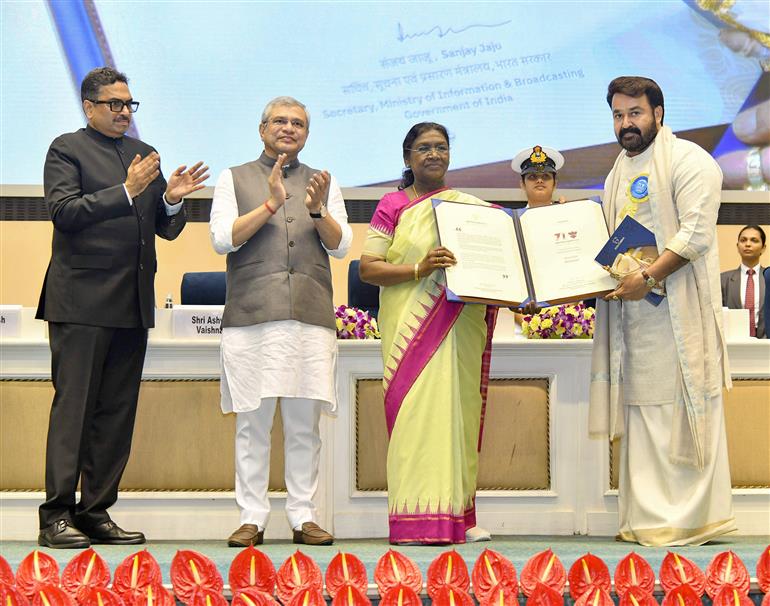
Malayalam superstar Mohanlal was on Tuesday honoured with the prestigious Dadasaheb Phalke Award— India’s highest recognition in cinema—at the 71st National Film Awards. At 65, Mohanlal became the youngest recipient of the award and only the second person from Kerala to receive the honour, after acclaimed filmmaker Adoor Gopalakrishnan, who was honoured in 2004.

Mohanlal’s award is seen as a milestone for him and the Malayalam cinema

With a career spanning over 40 years, more than 350 films, and performances that range from mass entertainers to critically acclaimed roles, he continues to be a towering figure in Indian cinema. His recognition with the Dadasaheb Phalke Award cements his status as a superstar and a national icon whose influence transcends language and region.

Incidentally, the oldest person to have received the Dadasaheb Phalke Award was Manna Dey at the age of 90.

As of 2025, around 55 actors have received the Dadasaheb Phalke Award.

To celebrate the occasion, a specially curated short film was presented, chronicling Mohanlal’s illustrious career. The tribute showcased his versatility across genres, iconic performances, and his contributions to Indian cinema over more than four decades. Already a recipient of the Padma Shri (2001) and Padma Bhushan (2019), Mohanlal’s career encompasses a diverse array of roles, highlighting his extraordinary versatility.

Dadasaheb Phalke Award

Born Dhundiraj Govind Phalke (1870–1944), Dadasaheb Phalke is celebrated as the Father of Indian Cinema. In 1913, he directed Raja Harishchandra—India’s first full-length feature film, marking the birth of Indian cinema. Phalke’s pioneering spirit, despite limited resources, established film as a powerful medium of storytelling in India. He made around 95 movies and 26 short films, laying the foundation for Hindi cinema, Bollywood as it is popularly known, and regional cinema

India’s highest film award, the Dadasaheb Phalke Award, was instituted in 1969 in his honour.

The recipients include some of Indian cinema’s greatest legends.

The first recipient was Devika Rani, followed by icons like Satyajit Ray (1985), Lata Mangeshkar (1989), Raj Kapoor (1987), Dilip Kumar (1994), and Amitabh Bachchan (2019). From the South, veterans like K. Balachander, Rajinikanth (2021), and Adoor Gopalakrishnan have also been recipients. In 2023, Waheeda Rehman was celebrated for her remarkable legacy. Prithviraj Kapoor (1971) and Vinod Khanna (2017) are the only posthumous recipients.  The progression of these annual awards highlights the evolving landscape of Indian cinema, with increasing representation from diverse regional industries.

Delhi Govt launches DTC inter-state buses

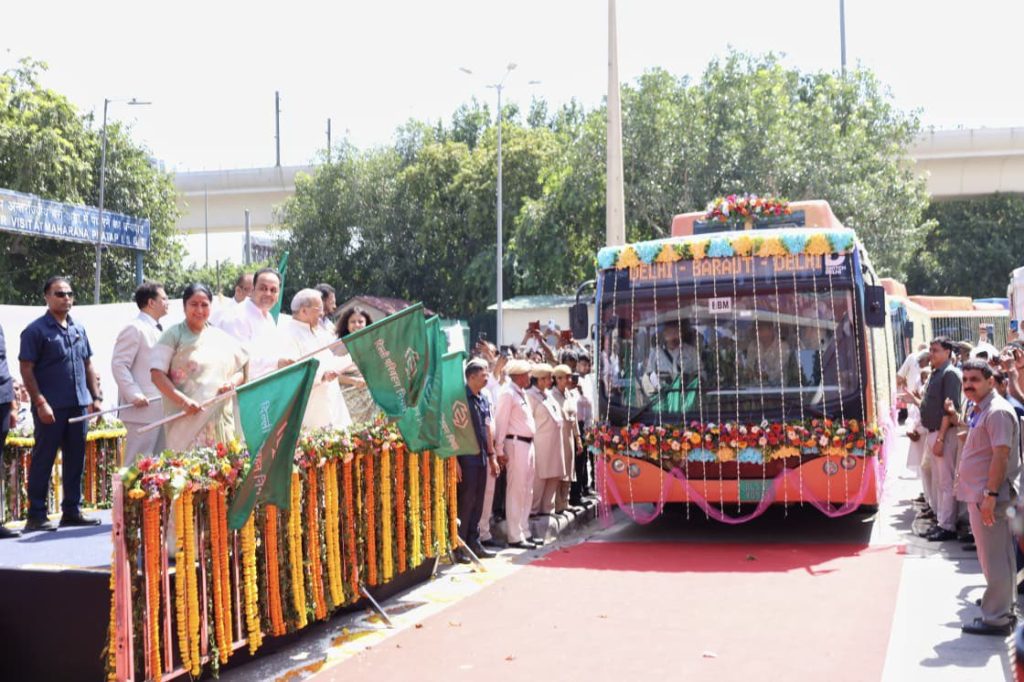
Delhi chief minister Rekha Gupta on Tuesday launched DTC inter-state buses between Delhi and Baraut in UP and said more such buses will be launched in the coming months.

Speaking at the launch, she said, “Our government officials are like Lord Hanuman. You set their tails afire, and they will work really hard. Since the time our government has come to power, officials are getting an ideal atmosphere of working and are coming up with ideas.”

Gupta asked Transport Minister Pankaj Kumar Singh and department officials to ensure that every month, buses to a new state are launched henceforth. 
“When I became the chief minister, I would always wonder why Uttarakhand buses are plying here, and buses from Uttar Pradesh are also seen. But where are the buses from Delhi that are plying in other states? The previous government had stopped them. They did not do anything to ensure that revenue is generated,” added. 

Highlighting the other initiatives of the government, she said they are also carrying out a route rationalisation study of bus routes. 
“On some routes, there were 15 buses plying, while on some, there were none. We are carrying out route rationalisation so that every route has an optimal number of buses,” she added. 

She alleged that under the previous government, if a bus broke down in Mehrauli, the workers to repair it would arrive from Narela, leading to unnecessary delays. 

“We have put in place a system where the vehicles would arrive from the nearest depot. This will save time, money and also lead to less traffic congestion,” she added. 

The new interstate air-conditioned bus service connects Delhi’s Maharana Pratap ISBT with Uttar Pradesh’s Baraut, significantly improving daily travel options for commuters and students.     

The total route length is about 60 kilometres, and the fares are reasonable. The minimum fare is fixed at Rs 32, while the maximum fare is capped at Rs 125 for the entire stretch between Maharana Pratap ISBT and Baraut.

Meanwhile she informed that to reduce pollution, the introduction of electric buses in private schools is also being started.

Key Sikh separatist figure Inderjit Singh Gosal arrested in Canada

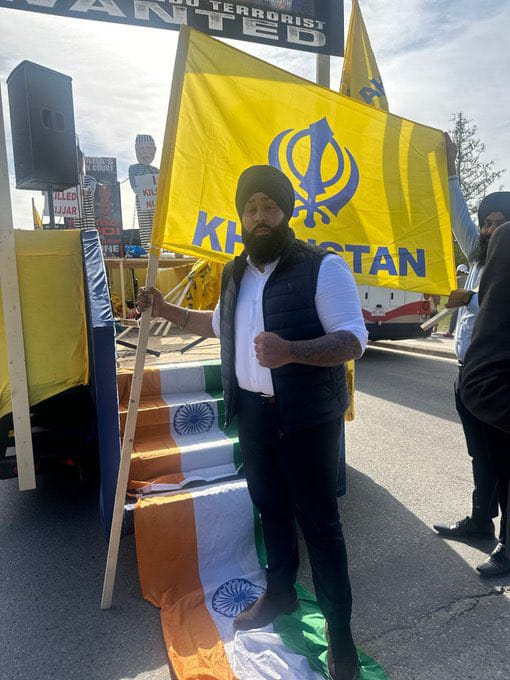
Canadian police have arrested a prominent figure in the Khalistani movement and a central organizer for the US-based group Sikhs for Justice (SFJ), Inderjit Singh Gosal.

Gosal, 36, emerged as a key player in SFJ’s Canadian operations following the killing of Hardeep Singh Nijjar in British Columbia in June 2023. Nijjar had previously led the group’s activities in Canada before his assassination.

Gosal first came under police scrutiny in November 2023 after a violent incident at a Hindu temple in the Greater Toronto Area. He was accused of attacking Hindu-Canadian worshippers during a consular event but was released on conditions by Peel Regional Police.

Considered a close ally of SFJ’s general counsel, Gurpatwant Singh Pannun — designated a terrorist by India — Gosal has been described as one of the organisation’s leading operatives in Canada. He was also among 13 Canadian nationals warned by law enforcement of threats linked to Khalistan-related violence.

Following the Brampton temple attack, SFJ claimed Gosal had been a victim rather than an aggressor. Reports indicated that Indian officials, including consular staff, were present during the protest, further straining already tense relations between New Delhi and Ottawa.

In a recent interview, Gosal reiterated his commitment to the separatist cause, declaring that he was prepared to die in pursuit of an independent Sikh state. The Khalistan movement, rooted in grievances that intensified after the 1984 anti-Sikh violence, continues to cast a shadow over India-Canada relations.

Delhi braces for rising air pollution as winter nears

File Photo

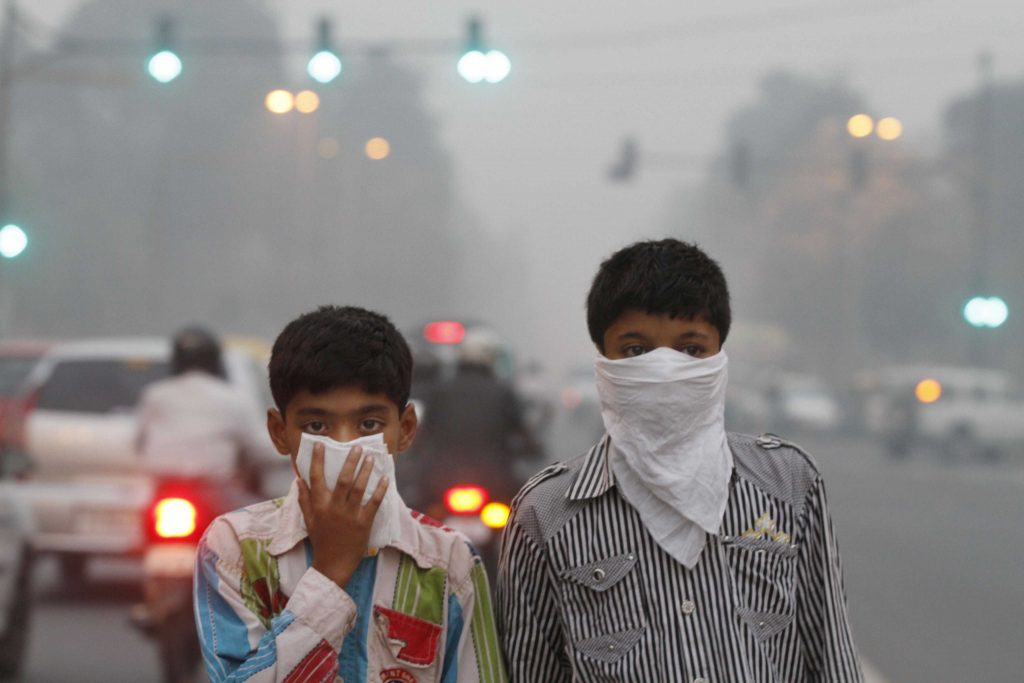
With the onset of cooler weather, Delhi is once again preparing for the seasonal surge in air pollution that has become a recurring public health crisis. Capital’s air quality could deteriorate sharply in the coming weeks as emissions from vehicles, industry, and stubble burning combine with stagnant weather conditions.

Data from the Central Pollution Control Board (CPCB) shows that pollution levels begin climbing in late September, peaking between October and January when low wind speeds and temperature inversion trap pollutants close to the ground.

Last year, Delhi recorded “severe” air quality on multiple days, forcing school closures, flight disruptions, and restrictions on construction and traffic.

One of the biggest contributors remains vehicular emission. According to Kalyani Tembhe, Deputy Programme Manager, Centre for Science and Environment, Delhi’s own pollution is very high and within that around 50 per cent pollution is getting contributed through vehicular emission.

Despite repeated crackdowns and subsidies for alternative methods, crop residue burning in neighbouring Punjab and Haryana add to the toxic mix.

Meanwhile, environment minister Manjinder Singh Sirsa said that the government will conduct a study on titanium oxide-based ‘smog-eating’ coatings that can be applied to roads to curb the air pollution in the city.

He said that if the study confirms that the technology is effective and cost efficient, the department will move the proposal for implementation.

Health experts caution that even short exposure to polluted air can aggravate respiratory illnesses. With hospitals already stretched, the coming months are expected to test the city’s resilience once again.

“You should try to avoid outdoor activities as much as possible. Even when somebody is moving out, they should use a mask. A face mask is a must. In case of any respiratory ailment or such problem, it should not be taken lightly, ” Dr. Ajay Swaroop, ENT Surgeon, Sir Ganga Ram Hospital had told Tehelka earlier.  

The minimum temperature in the city was recorded at 23.8 degrees Celsius on Tuesday, with the weather office predicting a mainly clear sky. The maximum temperature is expected to settle around 35 degrees Celsius, the India Meteorological Department (IMD) said.

Retired Delhi banker Loses Rs23 crore in ‘Digital Arrest’ scam

Representative Image

A retired banker from Delhi was allegedly duped of nearly Rs23 crore after falling prey to an elaborate “digital arrest” scam, police officials confirmed this week.

The victim, 78-year-old Naresh Malhotra, had worked for decades in the banking sector before retiring. His ordeal began on August 1, when he received a call from a woman claiming to represent a telecom company. She alleged that his phone number was being misused to open bank accounts in Mumbai linked to terror funding.

Over the following days, Malhotra was contacted by fraudsters posing as officers of Mumbai Police, the Enforcement Directorate, and even the CBI. They convinced him that he was under investigation and prohibited from informing family members. On video calls, the scammers warned that he faced arrest and seizure of his assets if he failed to cooperate. Fake legal documents and threats of imprisonment added to the pressure.

Between August 4 and September 4, Malhotra was coerced into transferring funds through more than 20 transactions, liquidating investments and moving money into accounts specified by the criminals. By the time he realized he had been duped, nearly Rs23 crore was gone.

An FIR was registered on September 19 with the Intelligence Fusion & Strategic Operations unit of Delhi Police.

Police warn that “digital arrest” scams are on the rise, targeting senior citizens by exploiting fear and impersonating authorities. The case has raised alarms about the vulnerabilities even seasoned professionals face in the era of cyber-enabled crime.

MOST POPULAR

HOT NEWS