Ahead of Durga Puja, heavy rains hit Bengal, another system brewing in the Bay

Kolkata experienced a deluge early Tuesday morning as parts of the city recorded over 300 mm of rainfall between 12 AM and 6 AM
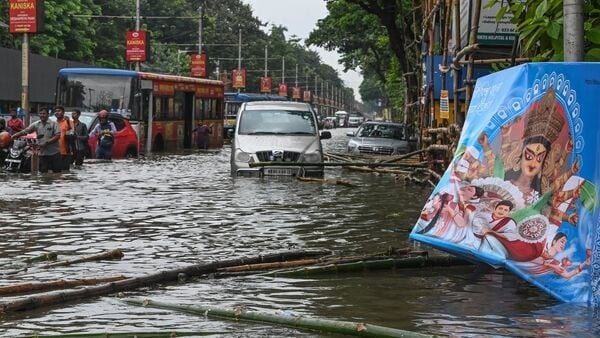
Kolkata experienced a deluge early Tuesday morning as parts of the city recorded over 300 mm of rainfall between 12 AM and 6 AM, according to reports. The timing of this extreme weather could not be worse—just ahead of Durga Puja, one of West Bengal’s most important and widely celebrated festivals.

The overnight downpour brought much of Kolkata and its surrounding areas to a standstill. Traffic came to a halt, public transport was severely disrupted, and normal life was thrown into chaos. Roads in several parts of the city were inundated, causing major delays and diversions. The India Meteorological Department (IMD) has now warned of more trouble ahead, with another potent weather system developing over the Bay of Bengal that could trigger further heavy rains and thunderstorms in the coming days.

According to the IMD, the current low-pressure area that formed over the Northeast Bay of Bengal on Monday has moved west-northwestward and now lies over the coastal areas of Gangetic West Bengal, North Odisha, and the adjoining northwest Bay of Bengal. This system is expected to remain active for another 24 hours before weakening.

However, meteorologists are closely watching another low-pressure system likely to develop over the northwest and adjoining central Bay of Bengal around September 25. This system is expected to intensify into a depression by September 26 and could cross the South Odisha–North Andhra Pradesh coasts around September 27.

Meanwhile, squally winds ranging from 40–50 km/h, gusting up to 60 km/h, along with rough to very rough sea conditions, are forecast along the Andhra Pradesh, Odisha, and West Bengal coasts between September 25 and 27. Similar conditions—with wind speeds of 35–45 km/h gusting to 55 km/h—are expected over the northeast and northwest Bay of Bengal and adjoining coastal areas, including West Bengal, Bangladesh, Myanmar, and the North Andaman Sea, until September 24. Fishermen have been strongly advised not to venture into these areas during this period.

The adverse forecasts have raised significant concerns across West Bengal, especially as Durga Puja preparations reach their peak. The threat of intense rainfall during key festival days could lead to widespread waterlogging, particularly in low-lying areas and underpasses, as well as poor visibility during downpours. Authorities have issued advisories urging residents to take shelter during heavy rain, stay indoors, and avoid contact with electrical poles or exposed wires due to the risk of electrocution.

On Tuesday, Kolkata faced major traffic disruptions as heavy waterlogging crippled large parts of the city. Key areas were submerged, leading to slow-moving traffic and transport bottlenecks. Buses, taxis, and trams were diverted from flooded stretches, and commuters reported long delays.
Afghan teen survives flight in landing gear, deported from Delhi

A 13-year-old boy from Afghanistan was found hiding in the landing gear compartment of a Kabul–Delhi flight on Sunday, in a case that has raised serious concerns over aviation security. The teenager, identified as a resident of Kunduz city, managed to survive the nearly two-hour journey at an altitude of more than 36,000 feet before being apprehended at Delhi’s Indira Gandhi International (IGI) Airport.

According to officials, the boy had boarded KAM Air’s flight RQ-4401 by sneaking into its rear central landing gear at Kabul airport. The flight landed in Delhi around 11 a.m., and after touchdown, airline staff spotted the boy roaming near the aircraft. The incident was immediately reported to airport security, and the child was taken into custody.

He was first detained by KAM Air personnel and later handed over to the Central Industrial Security Force (CISF) at Terminal 3 for questioning. During interrogation, the teenager reportedly said his act was driven by “curiosity.” He explained that he had found a way into the airport in Kabul and concealed himself inside the landing gear compartment before departure.

Despite the life-threatening conditions of extreme cold, lack of oxygen, and high altitude, the boy miraculously survived the journey. Security officials later recovered a small red speaker, believed to belong to him, from the aircraft compartment.

After a brief investigation, authorities decided to deport him immediately. The boy was sent back to Kabul on the same KAM Air flight, which departed from Delhi around 12:30 p.m.

Following the incident, KAM Air security personnel conducted a thorough inspection of the aircraft, including anti-sabotage checks, before declaring it safe for operations.

The episode has prompted questions about airport security in Kabul, particularly how a minor was able to access a restricted area and hide in such a dangerous part of the aircraft. Stowaway cases, though rare, have been reported in different parts of the world, with many resulting in fatalities due to the harsh conditions inside landing gear compartments. In this case, officials noted, the Afghan teenager was extremely fortunate to have survived.

Keeping trade talks alive, top Modi ministers in US

Confusion on H1-B: While Washington has clarified that the fee targets only first-time applicants, doubts remain over travel, re-entry rules, and timing, fueling anxiety among professionals and businesses that depend on skilled Indian talent.

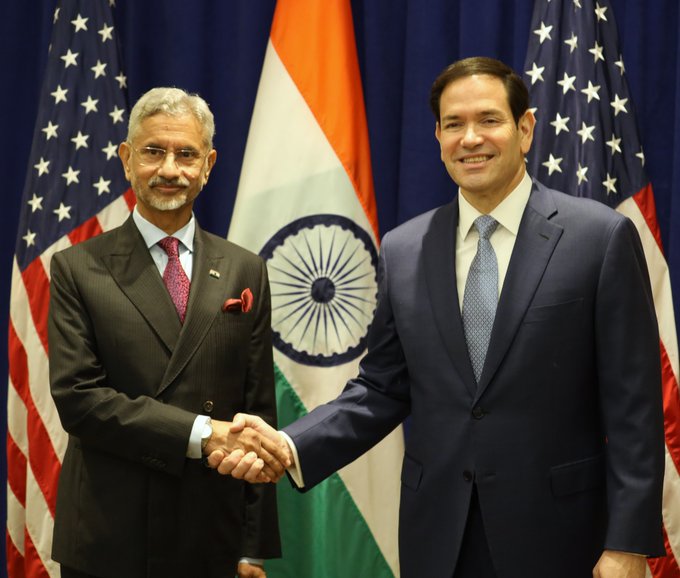
Photo: courtesy S Jaishankar social media

External Affairs Minister S. Jaishankar on Monday met US Secretary of State Marco Rubio in New York on the sidelines of the 80th UN General Assembly—their first interaction since Washington slapped steep tariffs on Indian exports last month.  After the meeting he posted on X “Good to meet Secretary Rubio this morning in New York. Our conversation covered a range of bilateral and international issues of current concern Agreed on the importance of sustained engagement to progress on priority areas,” Both leaders committed to remaining in touch.

Both leaders committed to staying in touch.

Commerce and Industry Minister Piyush Goyal is also in the US, leading a business delegation and meeting senior officials, including the U.S. Trade Representative. His visit signals New Delhi’s urgency in defusing the dispute and reviving negotiations on a long-pending trade agreement. Both sides are seeking greater market access and a way to prevent a deeper rupture in economic ties. Just last week, a USTR team held talks in New Delhi, reflecting recognition on both sides that trade frictions must not derail the broader strategic convergence.

Jaishankar also held an informal meeting with EU Foreign Ministers, describing it as an “opportunity to have an open exchange of views on multilateralism, the India-EU partnership, the Ukraine conflict, Gaza, energy, and trade.”

While no breakthrough was announced, Monday’s dialogue underscored both governments’ commitment to maintain active engagement on trade and strategic issues. The talks come at a delicate time, with domestic political pressures mounting.

The Trump administration has toughened its stance on trade and there is utter confusion on the H-1B visa fees. The US recently imposed a 50% duty on key Indian products, citing New Delhi’s energy ties with Moscow and hiked H-1B visa fees to $1,00,000. Domestic benchmark indices witnessed significant fall on Monday, primarily due to drop in IT stocks and overall negative sentiments despite the US clarification on H-1B visa fee and the GST 2.0 boost. Experts attributed it to Donald Trump’s decision to increase the H-1B visa fee to $100,000—a move that raised concerns about higher operational costs for Indian IT companies reliant on these visas.

Amid widespread panic, confusion and concern that gripped Indians in the US on H-1B visas after Trump signed the proclamation there was a clarification by the White House that the $100,000 fee was a “one-time” payment applicable only on new applicants. However, there is confusion on several aspects.

While the move was framed as a protectionist measure to safeguard American jobs in the tech sector, critics warned that it could disrupt global talent mobility and hit India’s IT industry hard. American lawmakers and leaders also termed the move “reckless”. Immigration attorneys and companies sounded the alarm for H-1B visa holders or their family members currently outside the US for work or vacation. Many H-1B visa holders cancelled travel plans at the last minute while waiting to board flights to the homeland and several others already in India scrambling to return. While Washington has clarified that the fee targets only first-time applicants, doubts remain over travel, re-entry rules, and timing, fueling anxiety among professionals and businesses that depend on skilled Indian talent.

India responded saying that the move is likely to have “humanitarian consequences by way of the disruption caused for families.” “This measure is likely to have humanitarian consequences by way of the disruption caused for families. Government hopes that these disruptions can be addressed suitably by the US authorities,” the MEA said, taking note of various reports and developments surrounding the issue.

‘Only way Pakistan can win against India is if PCB and Army chief open batting,’ says Imran Khan

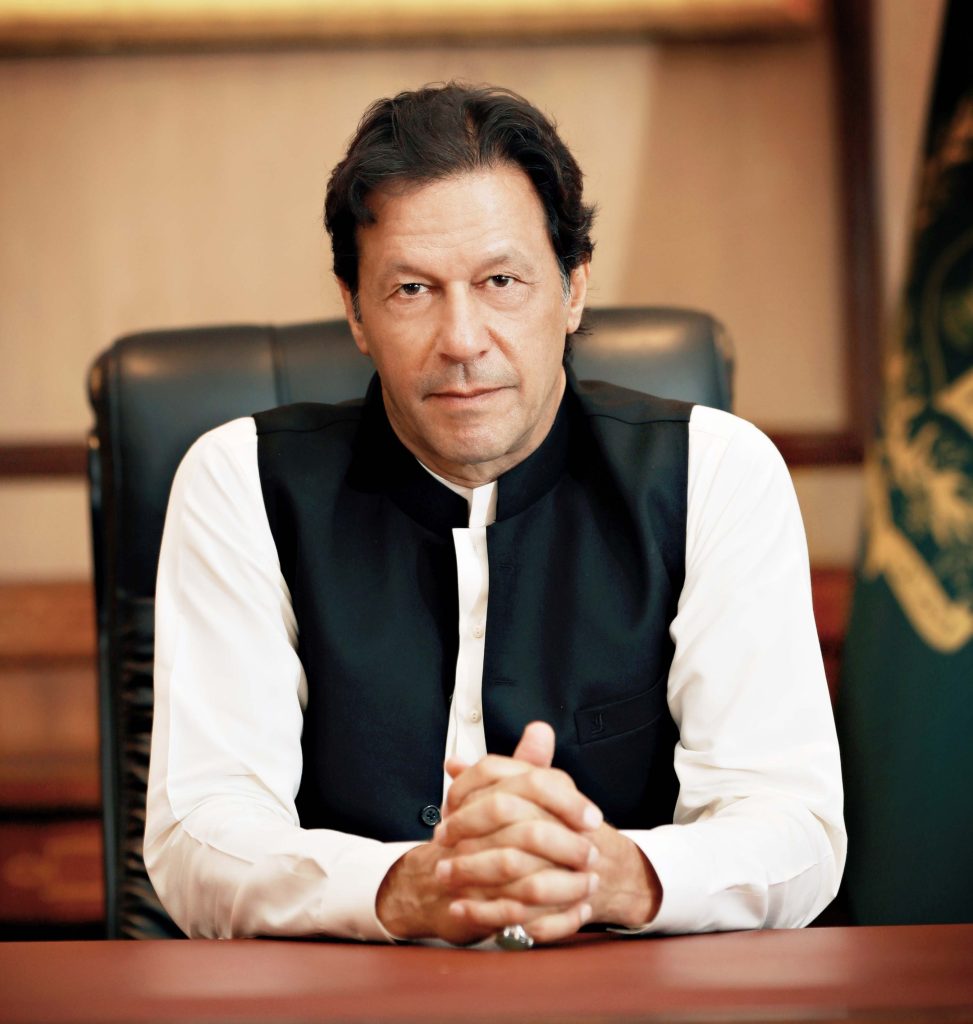
The ongoing Asia Cup will be remembered more for politics and other-than-cricket drama. Jailed former Pakistan Prime Minister Imran Khan has taken a sarcastic dig at Pakistan Cricket Board (PCB) Chairman Mohsin Naqvi, saying the only way Pakistan could win a cricket match against India is if Naqvi, along with Army Chief General Asim Munir, opened the batting.

Speaking to reporters on Monday, Imran Khan’s sister, Aleema Khan, was heard relaying the comments by her brother, the celebrated former Pakistan cricket captain.

Aleema said she had informed her brother about Pakistan’s back-to-back defeats to India and Imran said the only way Pakistan can beat India is if Army Chief Gen. Munir and PCB Chairman Naqvi bat as openers. The umpires should be former Chief Justice of Pakistan Qazi Faez Isa and Chief Election Commissioner Sikandar Sultan Raja, with Islamabad High Court Chief Justice Sarfaraz Dogar can serve as the third umpire, she added, quoting Imran’s sarcastic jibe at the state of cricket and political situation in Pakistan.

Incidentally, several Pakistani ex-cricketers have heaped praise on the Suryakumar Yadav-led Indian team after their decisive six-wicket victory in the Asia Cup Super 4s meeting.

This ongoing Asia Cup will be known more for politics and other-than-cricket drama. Incidentally, Pakistan refused to take the field against the UAE on Tuesday, demanding the removal of match referee Andy Pycroft. The protest followed tensions from the India–Pakistan match on September 14, where Indian players avoided handshakes with their Pakistani counterparts.

On the Sunday clash between the two countries in the Asia Cup, Pakistani players reportedly displayed visible frustration through a series of dramatic on-field gestures. Most prominently, they repeatedly performed the “aircraft going down” gesture, extending one arm forward and angling the other downward, symbolizing the team’s declining performance

Imran Khan, who led Pakistan to its only ODI World Cup victory in 1992, has long blamed Naqvi for the “destruction” of Pakistani cricket through “incompetence” and “nepotism.” The 72-year-old former prime minister also accused Gen. Munir of manipulating the mandate of his party, Pakistan Tehreek-e-Insaf (PTI), in the February 2024 general elections, allegedly with the help of then Chief Justice Isa and Chief Election Commissioner Raja.

One of Pakistan’s most iconic cricketers, Imran Khan made his international debut in 1971 and quickly rose to prominence as a fast bowler and hard-hitting all-rounder. Renowned for his leadership skills, Khan was known for his aggressive yet strategic approach. Beyond statistics, his charisma and determination on the field made him a national hero, and his cricketing legacy continues to influence Pakistan’s cricket culture and aspiring players. Khan has been in jail for over two years in connection with multiple legal cases. He is currently held in Adiala Jail, Rawalpindi. His wife Bushra Bibi was also sent to the same prison after the couple was convicted in the Al-Qadir Trust cases earlier this year.

Tirumala theft—faith, politics, mismanagement, decoding the larger pattern

From hundi cash and laddus at Tirumala to missing ornaments in Padmanabhaswamy and idol smuggling in Tamil Nadu, temple thefts reveal a recurring crisis of faith, money, mismanagement.

Photo: courtesy social media

The sacred Tirumala temple, which was earlier embroiled in a controversy over alleged irregularities in the sale of its famed laddus, is once again in the spotlight—this time for what the BJP describes as a Rs 100 crore theft from the ‘Parakamani ‘—the donation box. The party has accused the previous YS Jagan Mohan Reddy-led YSR Congress Party (YSRCP) government of presiding over a scam that not only shook the temple’s financial sanctity but also betrayed the faith of millions of devotees.

According to Andhra Pradesh’s ruling Telugu Desam Party leader Nara Lokesh, over Rs 100 crore was stolen from the temple during Reddy’s regime. Lokesh had also shared purported CCTV footage on X, large scale misappropriation of Lord Venkateswara’s offerings. “Thieves infiltrated Tirumala during Jagan’s five-year rule…corruption reigned supreme…Jagan turned Andhra Pradesh into a haven for thieves, looters, and mafia dons. The Jagan gang plundered mines, lands, forests, and all resources, along with exploiting the people… and in the end, they did not even spare the sacred property of Lord Venkateswara in Tirumala,” he claimed.

The scandal surfaced when an official was caught red-handed stealing foreign currency from the hundi in 2023, the question is why is BJP and its ally TDP raising the issue now. According to the ruling alliance, instead of a transparent probe, a compromise was engineered through a Lok Adalat, properties worth crores were donated back to the Tirumala Tirupati Devasthanams (TTD) and the case was dismissed, giving the impression of a quiet settlement rather than justice. BJP leaders claim that the stolen money was invested in real estate and even diverted to the then CMs.

The YSRCP, however, rejects the allegations as politically motivated. Insisting that assets worth about Rs 14 crore were recovered and handed over to the TTD, it accused BJP and TDP of exaggerating figures to inflame religious sentiments and gain political mileage.

Beyond Tirumala, these allegations underscore a larger pattern of temple thefts across India. In Kerala, the Padmanabhaswamy Temple, regarded as the richest in the world, faced questions in 2017 when an audit revealed missing gold ornaments. In Mumbai, staff at the Siddhivinayak Temple were caught misappropriating hundi collections. Varanasi’s Kashi Vishwanath Temple reported jewellery thefts in 2019, while Odisha’s Jagannath Temple saw silver plates worth lakhs stolen from its kitchen in 2015. Tirumala itself had earlier seen allegations of a missing diamond-studded crown in 2009.

The widespread theft of ancient idols in Tamil Nadu and Karnataka over the years saw countless rare idols smuggled abroad, some ending up in international auctions and museums. While some have been recovered, many remain lost—a reminder of how vulnerable India’s temple heritage remains. According to those aware of functioning of such managements, whether it is hundi cash, temple ornaments, or priceless idols, temples remain persistently vulnerable to theft, often aided by insider complicity.

SC raps leak of preliminary Air India crash report, seeks Centre, DGCA response on plea for independent probe

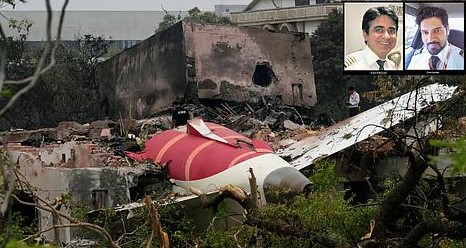
The Supreme Court on Monday expressed displeasure over selective leaks from preliminary inquiry reports into the Air India crash earlier this year, saying it was “unfortunate” that information pointing to pilot error was made public before the probe was complete.

A bench comprising Justices Surya Kant and N Kotiswar Singh was hearing a petition filed by aviation safety group Safety Matters Foundation, which has sought an independent investigation into the June 12 accident that killed 265 people.

Advocate Prashant Bhushan, appearing for the foundation, argued that the inquiry panel included three officials from the Directorate General of Civil Aviation (DGCA), raising doubts about impartiality. “How can officers from the very body whose conduct is under scrutiny be part of the probe?” he questioned.

Bhushan also submitted that the pilot’s family was distressed by reports attributing the tragedy to a fuel cut-off and pilot error, claims which were widely circulated by both Indian and international media.

Justice Kant remarked that the leaks were “very irresponsible,” adding: “Instead of piecemeal leaking of information, somebody should maintain confidentiality till a regular inquiry is taken to logical conclusion.”

The petition further sought disclosure of the aircraft’s flight data recorder, while alleging that the preliminary report withheld crucial material such as the full Digital Flight Data Recorder (DFDR) output, complete Cockpit Voice Recorder (CVR) transcripts with timestamps, and Electronic Aircraft Fault Recording (EAFR) data.

The bench, however, noted that questions of confidentiality, privacy, and dignity were involved, and emphasized the importance of awaiting the final report. Justice Kant also observed that in such tragedies, airlines tend to bear the brunt of public blame, while manufacturers like Boeing or Airbus often escape scrutiny.

Issuing notices to the Centre and the DGCA, the court sought their response on the demand for an independent investigation.

The crash involved Air India flight AI171, a Boeing 787-8 bound for London, which went down shortly after taking off from Ahmedabad airport, striking a hostel building.

GST Revamp: Essentials cheaper, industry calls for clear guidelines

The new reforms in Goods and Services Tax (GST) have kicked in today, making kitchen essentials, electronics and other usual daily supplies cheaper than earlier, giving much needed relief to the consumers.

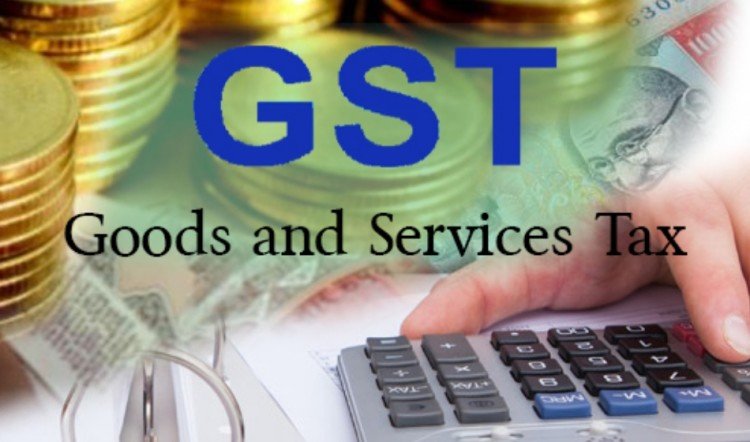
The changes, the biggest overhaul since GST was introduced in 2017, will see the current 5 per cent, 12 per cent, 18 per cent and 28 per cent structure replaced with just two rates including 5 per cent and 18 per cent.

Under the new reforms, daily food and essentials, life and health insurance policies, automobiles and transport, electronics, appliances, stationery, beauty services, lifestyle services, and machinery have become cheaper.

The ultra-luxury items will be taxed at 40 per cent, while tobacco and related products will stay in the 28 per cent plus cess bracket.

Finance Minister Nirmala Sitharaman had earlier said that the new GST structure has reduced the tax burden on people.

Speaking to Tehelka Monarch Goyal, CEO of Electrowaves Electronics said that the reforms will help to rationalise tax systems and reduce procedural burden, thereby empowering businesses – especially Small and Medium Enterprises (SMEs) – to operate, grow and contribute to a progressive and sustainable economy.

“Recent GST reforms constitute another step towards ease of compliance and ease of doing business. The reforms will help to rationalise tax systems and reduce procedural burden, thereby empowering businesses – especially small and medium enterprises (SMEs) – to operate, grow and contribute to a progressive and sustainable economy. The reforms are intended to lessen the compliance burden while increasing transparency and accountability in the system,” Goyal stated.

Prof. Anirban Ghatak, Economist, Assistant Professor at Indian Institute of Management, Kozhikode said that while GST on coal has moved from 5% to 18%, the removal of the ₹400/tonne cess means coal-based electricity is not costlier, and may even become slightly cheaper if the benefits are passed on to the consumer.

“This keeps EV running costs stable, possibly improving their relative attractiveness against ICE vehicles. On the household side, cheaper white goods could expand energy use, nudging behaviour towards higher consumption unless efficiency norms counterbalance it. Evolutionary dynamics here matter. Repeated consumer choices will either reinforce carbon-intensive paths or create pressure for greener supply. On compliance, unchanged thresholds mean much of the informal sector remains outside the net, but simpler slabs and reduced evasion gaps can gradually shift norms towards disclosure, especially if coupled with incentives for digital payments. In the short run, the reform is more about coordination, but it creates a possibility of long-term equilibrium changes,” Ghatak said.

Preeti Bajaj, MD & CEO, Luminous Power Technologies said that with our reliable, affordable, and sustainable energy solutions, we remain committed to powering India’s progress and lighting up lives.

Meanwhile, the GST reforms have also given breathing space for gym goers as the sector will attract 5 per cent GST under the new regime.

Avinash Deshmukh, Chief Operating Officer, iThrive Essentials told Tehelka, “GST council has taken a very welcome step in reducing GST from 18 per cent to 5 per cent on nutraceuticals and vitamins. This will definitely spur demand and more people will be able to afford these healthy essential products.

“We look forward to a similar reduction in lifesaving nutrition consulting services which is still taxed at 18 per cent,” he added.

Amid the excitement and joy in the market due to news rates of GST, Shashi Bhushan, Chairman of the Board at Stellar Innovations voiced concern and said that as GST reforms evolve, it becomes essential for the government to ensure that businesses fairly transmit savings and benefits to customers.

“Merely announcing rate cuts will not suffice; there should be clear accountability and digital tracking of pricing patterns at different stages in the supply chain. Integrating AI-driven analytics across invoices and retail pricing can help flag anomalies. Building a grievance redressal system specifically for GST-related irregularities is equally vital to protect consumer interests. It is only when tax rationalization truly reflects in reduced costs of goods and services that the spirit of GST is realized. By holding companies accountable and enabling consumer transparency, policymakers can ensure equitable distribution of benefits and a stronger economic lifecycle,” he added.

Echoing the same, Zafeer Ahmed, Managing Director of XRE Consultants said that the real challenge is making sure consumers actually see the benefits. The government really needs to keep a close eye on things to confirm businesses are passing on tax cuts in their prices.

“Setting up clear ways to report, doing surprise checks, and having tough penalties for not following the rules could stop businesses from making unfair profits. We also need awareness campaigns to help customers speak up when something doesn’t look right. Passing on GST savings isn’t just about following rules. It builds trust and can really boost spending. When businesses do the right thing and the government watches carefully, we’ll likely see better feelings from consumers and steady growth in the formal economy,” he added.  

Global hydrogen market grows; low-emissions production still faces major hurdles

Despite the uptick in demand, the transition to low-emissions hydrogen continues to lag behind. In 2024, hydrogen supply remained dominated by fossil fuels, consuming 290 billion cubic metres of natural gas and 90 Mt of coal equivalent.

Although, low-emissions hydrogen production grew by 10 per cent and is on track to reach 1 Mt in 2025, it still comprises less than 1 per cent of global production.

According to the International Energy Agency, Global Hydrogen demand climbed to nearly 100 million tonnes (Mt) in 2024, marking a 2 per cent increase from the previous year, in line with the overall rise in global energy consumption.

The growth was primarily fuelled by traditional uses in oil refining and industrial processes, while demand from emerging applications – such as biofuels – accounted for less than 1 per cent of the total usage.

The sector has been hampered by high costs, uncertain demand, regulatory complexity, and infrastructure delays. A wave of project cancellations and postponements in 2024 — particularly for electrolysis-based projects — has reduced the projected low-emissions hydrogen output for 2030 from 49 Mtpa to 37 Mtpa.

Nonetheless, the number of projects reaching final investment decision (FID) increased by 20 per cent over the past year, with more than 200 projects receiving FID since 2020.

China continues to dominate the electrolyser market, with 65 per cent of global installed capacity and nearly 60 per cent of global manufacturing. However, global uptake of Chinese-made electrolysers remains constrained by concerns over efficiency, local compatibility, and lifetime maintenance — although Chinese firms are increasingly adapting their products for international markets.

Meanwhile, the cost gap between low-emissions hydrogen and conventional fossil-based hydrogen remains a critical barrier. In 2024, electrolysis projects outside China cost between USD 2,000–2,600/kW, compared to USD 600–1,200/kW in China. However, transportation, installation, and regulatory factors narrow this disparity when Chinese products are used abroad.

Ports are emerging as crucial hubs for hydrogen-based fuels, particularly for shipping. Locations like Singapore, Rotterdam, and Ain Sokhna have been identified as key sites for early infrastructure development, given their proximity to supply and existing industrial demand.

In Southeast Asia, hydrogen demand reached 4 Mtpa in 2024, dominated by the chemical sector and largely reliant on natural gas. While low-emissions hydrogen projects in the region show promise, only 6 per cent have reached FID.

H-1B: US clarification calms tech’ nerves, but not market sentiments

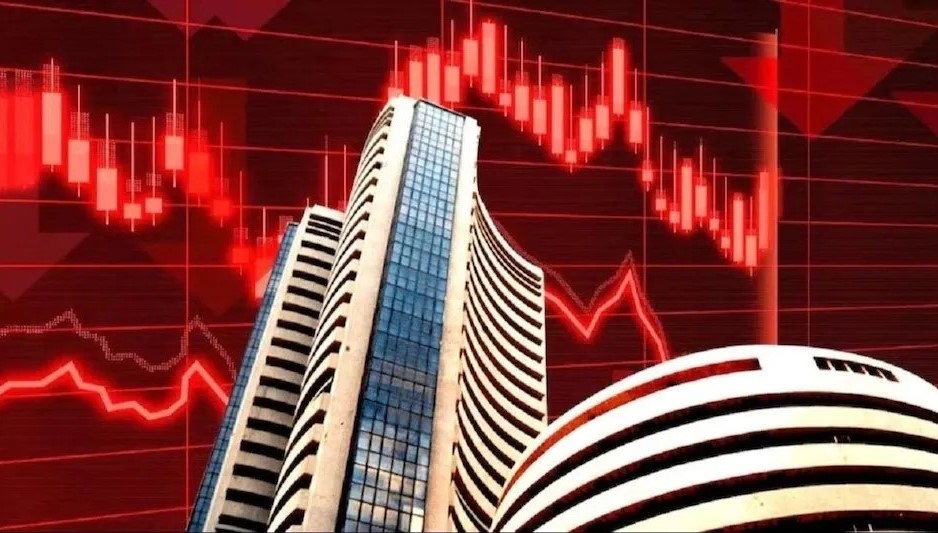
Domestic benchmark indices witnessed significant fall on Monday, primarily due to drop in IT stocks and overall negative sentiments despite the US clarification on H-1B visa fee and the GST 2.0 boost. Experts attributed it to Donald Trump’s decision to increase the H-1B visa fee to $100,000—a move that raised concerns about higher operational costs for Indian IT companies reliant on these visas.

Amid widespread panic, confusion and concern that gripped Indians in the US on H-1B visas after Trump signed the proclamation there was a clarification by the White House that the $100,000 fee was a “one-time” payment applicable only on new applicants. Notably, prior to the clarification by White House Press Secretary Karoline Leavitt, US Commerce Secretary Howard Lutnick said it would be paid annually and would apply to people seeking a new visa as well as renewals. 

While the move was framed as a protectionist measure to safeguard American jobs in the tech sector, critics warned that it could disrupt global talent mobility and hit India’s IT industry hard. American lawmakers and leaders also termed the move “reckless”. Immigration attorneys and companies sounded the alarm for H-1B visa holders or their family members currently outside the US for work or vacation. Many H-1B visa holders cancelled travel plans at the last minute while waiting to board flights to the homeland and several others already in India scrambling to return, according to reports

India also warned of “humanitarian consequences by way of the disruption caused for families.” “This measure is likely to have humanitarian consequences by way of the disruption caused for families. Government hopes that these disruptions can be addressed suitably by the US authorities,” the MEA said, after the initial declaration.

“Skilled talent mobility and exchanges have contributed enormously to technology development, innovation, economic growth, competitiveness and wealth creation in the United States and India. Policy makers will therefore assess recent steps taking into account mutual benefits, which include strong people-to-people ties between the two countries,” it added.

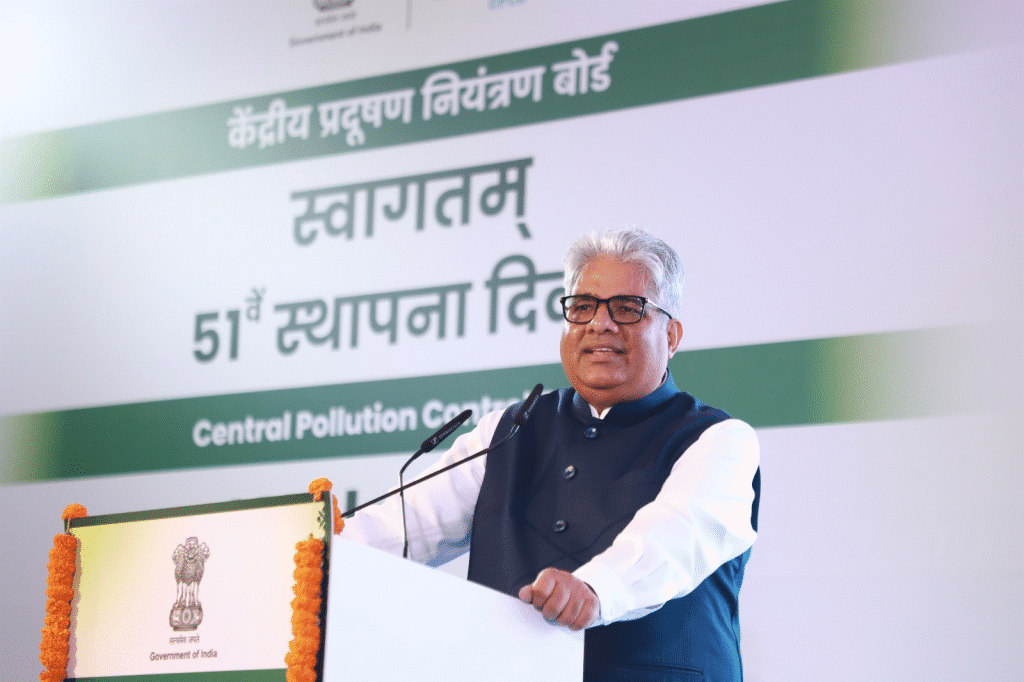
Need to evolve environmental norms: Bhupender Yadav

Union Minister for Environment, Forest and Climate Change Bhupender Yadav on Monday said that there is a need to evolve environmental regulations and norms so that economy and ecology go hand-in-hand.

Addressing a gathering at the Central Pollution Control Board’s (CPCB) 51st foundation day, the minister said that collaboration with IITs, reputed academic institutes and leading research bodies is required for development of new technologies and expanding environmental laboratories in the country.

“We need to come out with new low-polluting alternatives and cleaner technologies for strengthening Make-In-India, along with ensuring wider availability of these technologies,” he added.

Underlining the importance of capacity building, Yadav stated that CPCB has a major role to play in capacity building of State Boards and agencies. CPCB should be the umbrella organisation for capacity building in environmental matters of the country, and should become a mentor.

During the event, he also laid the foundation stone of CPCB’s new building and two new laboratories at CPCB’s Regional Directorates in Pune and Shillong were inaugurated.

These facilities are equipped to monitor up to 70 and 62 environmental parameters respectively, and would respectively serve Maharashtra and the North-Eastern States of Manipur, Assam, Meghalaya, Nagaland, Arunachal Pradesh, Mizoram, Tripura and Sikkim.

The updated SAMEER App was also launched, featuring a user-friendly interface, personalized alerts, location-based services, and improved citizen engagement. The Minister also distributed offer letters to 13 new recruits to various posts during the occasion as part of CPCB’s efforts to strengthen its workforce.

MOST POPULAR

HOT NEWS