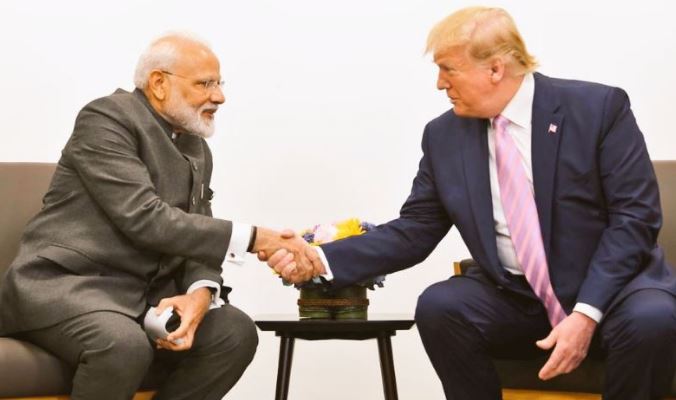
India on Saturday welcomed the leadership of President Donald Trump as peace efforts in Gaza make decisive progress. Prime Minister Narendra Modi said that the indications of the release of hostages represent a significant step forward in the ongoing humanitarian and diplomatic efforts and reaffirmed India’s steadfast commitment to supporting all initiatives that contribute to a durable and just peace in the region.
In a post on X, PM Modi wrote: “We welcome President Trump’s leadership as peace efforts in Gaza make decisive progress. Indications of the release of hostages mark a significant step forward. India will continue to strongly support all efforts towards a durable and just peace.”
Trump ordered Israel to stop bombing the Gaza Strip after Hamas said it had accepted some elements of his plan to end the nearly two-year war and return all the remaining hostages taken in the October 7, 2023, attack. Hamas on Friday said it was ready to start immediate talks on freeing the Israeli hostages it holds and the end of the Gaza war, welcoming rump’s call for Israel to stop bombing the Palestinian territory. “President Trump’s statements on the immediate cessation of Israeli bombings in the Gaza Strip are encouraging,” Hamas spokesman Taher al-Nunu was quoted as saying
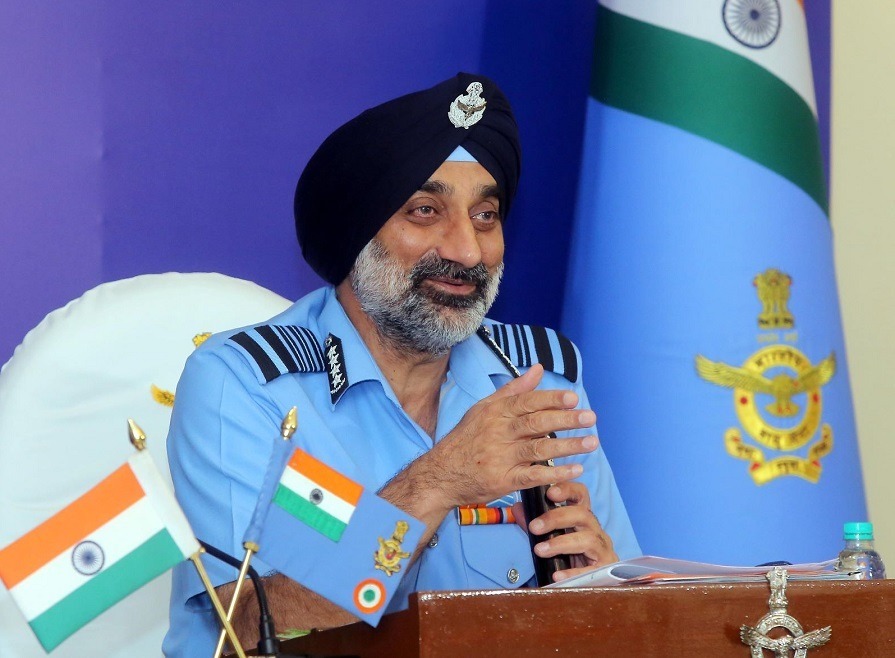
No evidence to support Pakistan’s claims, while India shared images of the damage caused to Pakistani targets, says Air Chief Marshal Amar Preet Singh
Indian Air Force chief Air Chief Marshal Amar Preet Singh on Friday dismissed Pakistan’s claims of shooting down Indian fighter jets during Operation Sindoor as ‘manohar kahaniyan’—basically describing them as imaginary or concocted stories or plain humbug. The IAF chief said there was no evidence to support Pakistan’s claims, while India had shared images of the damage caused to Pakistani targets, and that such statements are made only to save face and mislead the Pakistani public.
Addressing the media ahead of the Air Force Day on October 8, Singh was quoted as saying: “If they think they shot down 15 of my jets, let them think so. I hope they’re convinced about it, and they will cater for 15 less aircraft in my inventory when they come to fight again. So why should I talk about it? Even today, I won’t say anything about what happened, how much damage was done, how it happened, because let them find out.
“Have you seen a single picture where something fell on any of our airbases, something hit us, a hangar was destroyed, or anything like that? We showed so many pictures of their places. However, they couldn’t show us even a single picture. So their narrative is ‘manohar kahaniyan’. Let them be happy; after all, they also have to show something to their public to save face. That doesn’t matter to me.”
Rather, Pakistan’s F-16 and JF-17 fighter jets were destroyed in Operation Sindoor, describing the operation as a lesson for the world to learn from India and a reflection of tri-services synergy.
Asked about Pakistan’s losses, he said IAF destroyed or damaged at least a dozen planes of Pakistan during operation Sindoor.
The IAF Chief said during the airstrikes on Pakistan Air Force (PAF) bases, one C130-J type plane, one airborne early warning plane and 4-5 of the US-made F-16 jets were hit on ground. The F-16 were there at a base for maintenance. Counting the IAF strikes in air, he said “we have clear evidence of a long range hit was almost 300 kms away, it happened to be a PAF signal intelligence plane along with that five hi-tech fighters between the F-16 and the J-17 ( Chinese) class, is what our system tells us”.
The strikes in air were done using the Russian S-400 air defence system, he also hinted calling it the newly inducted long-range surface to air missile.
“We have clear evidence of one long-range strike, more than 300 km, which happened to be either an AEW&C or a SIGINT aircraft. Along with that, five high-tech fighters between F-16 and JF-17 class,” the Air Chief Marshal said, calling the 300 km strike inside Pakistani territory the “longest kill” ever achieved by the Air Force.
Apart from the jets, the targets blown to smithereens on the ground include radars at four places, command and control centres at two locations, two runways, three hangars, and one Surface-to-Air Missile (SAM) system.
The IAF chief said all three services have started working on the ‘Sudarshan Chakra’ air defence system, and the force has drawn up a Roadmap 2047 to enhance its combat capabilities. “We will move forward towards self-reliance, but where required, we will seek strategic technology to fill critical gaps quickly,” Singh said.
‘Atmanirbharta’ (self-reliance) remains central to the IAF’s roadmap, and orders have been placed for the LCA Mk1A, while the LCA Mk2 and Indian Multi-Role Helicopter (IMRH) projects are in the pipeline. Various radars, systems, and indigenous innovations are under development.
The IAF chief also pointed to successful multilateral and bilateral exercises with countries such as the UAE, Egypt, France, and Singapore, noting that foreign commanders had expressed eagerness to continue joint drills.
Responding to a question on tech billionaire Elon Musk’s assertion on the future of warfare, Singh said the importance of manned missions is not going to fade away. Earlier this year, Musk claimed that the future of warfare will be dominated by artificial intelligence and drones, insisting that manned missions would soon fade away. However, according to Singh, while more and more automation and AI are coming in and there will be unmanned systems available, they would have to work in collaboration with the manned system or have to be controlled by a man. .
There is bad news for the Indian subcontinent as well. According to the report, rising temperatures in the Himalayas are forcing cold-adapted species like musk deer, pheasants and snow trout to migrate higher up mountains, into smaller and more fragmented habitats. Small mammals in Uttarakhand could lose over half of their range.
Migratory species across the globe are under increasing pressure from climate change, according to a new report released by the Convention on the Conservation of Migratory Species of Wild Animals (CMS). The findings stem from the Migratory Species & Climate Change Expert Workshop held in February 2025 in Edinburgh and present a grim warning—that a fifth of migratory species are threatened with extinction, rising to 97% for migratory fish
There is bad news for the Indian subcontinent as well. According to the report, rising temperatures in the Himalayas are forcing cold-adapted species like musk deer, pheasants and snow trout to migrate higher up mountains, into smaller and more fragmented habitats. Small mammals in Uttarakhand could lose over half of their range.
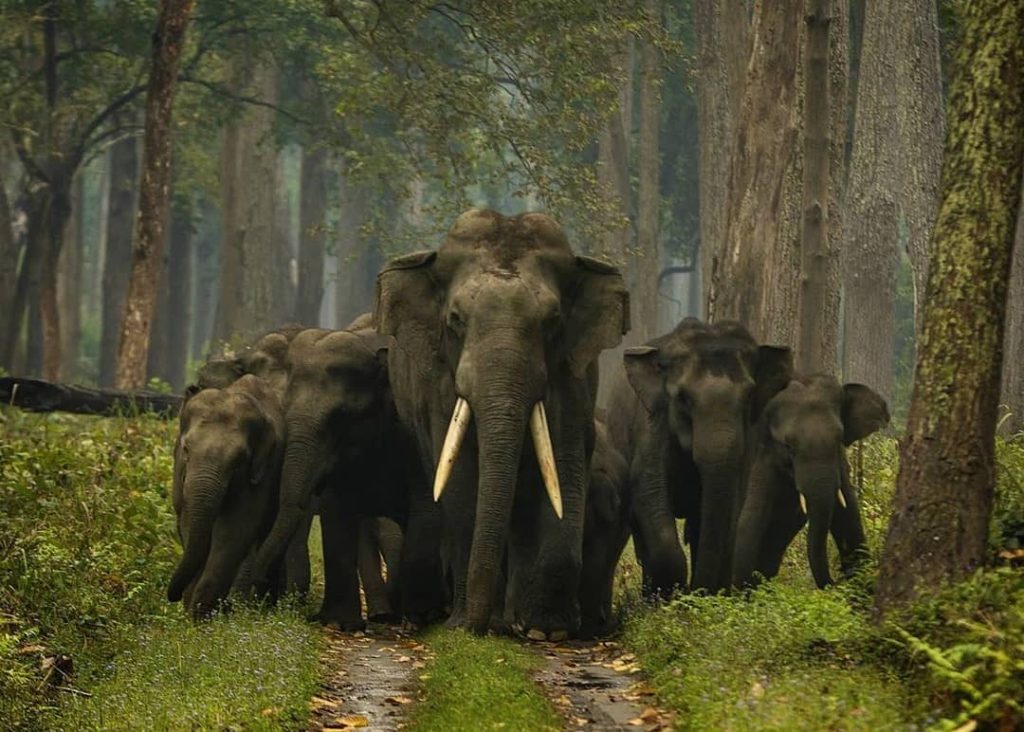
Climate change and habitat destruction are also likely to shift suitable elephant habitats from South to Southeast Asia. Most elephant populations in India and Sri Lanka cannot follow these habitat shifts due to a lack of connecting habitat, and there may be conflict as climate change forces elephants into new areas with high human populations.
In fact, all migratory species groups are being affected by rising temperatures, extreme weather, and changing water systems, thus altering migration routes, shrinking habitats and threatening the ecosystems that both wildlife and humans depend on.
Heatwaves are hitting waters from river to sea and among the most concerning impacts are mismatches in timing. Shorebirds in Alaska and the Arctic are nesting out of sync with insect emergence, reducing chick survival. In western Alaska, every 1°C shift in temperature affects nesting by 1–2 days. Over the past decade, unexpected cooling has delayed nesting by up to five days—leading to fewer and smaller eggs, it says
Meanwhile, whale species like the endangered North Atlantic right whale are facing altered migration routes, declining prey availability, and reproductive stress due to warming seas. “Whales support carbon-absorbing seagrass ecosystems, and themselves store vast amounts of carbon. Each elephant in the Congo contributes $2.6 million worth of carbon storage services over their lifetime,” it says
Heatwaves are devastating aquatic environments. In 2023, the Amazon River saw temperatures hit 41 °C, killing river dolphins and depleting prey species. In the Mediterranean, marine heat extremes could cut fin whale habitat by 70% by mid-century. Seagrass meadows—vital carbon sinks and habitats for species like dugongs and sea turtles—are being degraded by marine heatwaves, cyclones, and sea-level rise.
The CMS report highlights available solutions—ecological corridors and dynamic management approaches can bolster species’ resilience. “Migratory animals are the planet’s early‐warning system and they are in trouble,” said Amy Fraenkel, CMS Executive Secretary. “From monarch butterflies vanishing from our gardens to whales veering off course in warming seas, these travellers are sending us a clear signal. Climate change is having impacts now, and without urgent action, the survival of such species is in jeopardy.”
Central Consumer Protection Authority (CCPA) has fined ‘repeat’ offender Drishti IAS Rs 5 lakh for misleading UPSC 2022 result advertisements; So far, the CCPA has issued 54 notices to various coaching institutes for misleading advertisements and unfair trade practices.
The Central Consumer Protection Authority (CCPA) has imposed a penalty of Rs 5 lakh on Drishti IAS (VDK Eduventures Pvt. Ltd.) for publishing misleading advertisements regarding the results of the UPSC Civil Services Examination (CSE) 2022, according to a statement issued by the Ministry of Consumer Affairs, Food & Public Distribution
According to officials, Drishti IAS in its advertisement prominently claimed “216+ selections in UPSC CSE 2022” along with names and photographs of successful candidates. However, upon examination, CCPA found that the claim was misleading and concealed crucial information regarding the type and duration of courses opted by these candidates.
The investigation revealed that out of the 216 candidates claimed by Drishti IAS, as many as 162 candidates (75%) had only taken the free Interview Guidance Programme (IGP) of the Institute, after independently clearing the Preliminary and Mains stages of UPSC CSE. Only 54 students were enrolled in IGP+ other courses.
“This deliberate concealment of important information misled aspirants and parents into believing that Drishti IAS was responsible for their success in all stages of UPSC examination, which is a misleading advertisement under Section 2(28) of the Consumer Protection Act, 2019,” they said.
‘Repeat violation’ by Drishti IAS
The CCPA also noted that this is the second penalty imposed on Drishti IAS for similar conduct. Earlier, in September 2024, the Authority had passed a final order against Drishti IAS for its misleading claim of “150+ selections in UPSC CSE 2021”.
“The Institute submitted the details of 161 candidates against its claim of 150+ selection in UPSC CSE 2021. In that case too, it was found that out of these 161 candidates, 148 were enrolled in IGP, 7 were enrolled in Mains Mentorship Program, 4 were enrolled in GS Foundation Program, 1 in Optional course and details of remaining 1 candidate was not mentioned. CCPA imposed penalty of Rs 3 lakh and directed to discontinue the misleading advertisement.
“Despite being penalized and cautioned earlier, Drishti IAS once again indulged in the same practice for the 2022 examination results by enhancing its claim to “216+ selections”, thereby showing repeated non-compliance and disregard of consumer protection norms.
“The concealment of such crucial information deprived prospective students and parents of their right to make an informed choice under Section 2(9) of the Consumer Protection Act, 2019. Such advertisements create false expectations and unfairly influence consumer decisions, particularly when large claims are made without transparent disclosure of facts.
“So far, the CCPA has issued 54 notices to various coaching institutes for misleading advertisements and unfair trade practices. Penalties amounting to over Rs 90.6 lakh have been imposed on 26 coaching institutes, along with directions to discontinue such misleading claims. CCPA noted that all such institutes concealed important information regarding courses opted by successful candidates in its advertisement which amounts to misleading advertisement under Consumer Protection Act, 2019.
“The Authority has emphasized that all coaching institutes must strictly ensure truthful disclosure of information in their advertisements so that students can make fair and informed decisions regarding their academic choices,” according to the official statement
‘Is India really free’, Wangchuk’s wife Gitanjali had questioned yesterday, slamming the BJP-led Centre
Photo: Gitanjali J. Angmo social media account
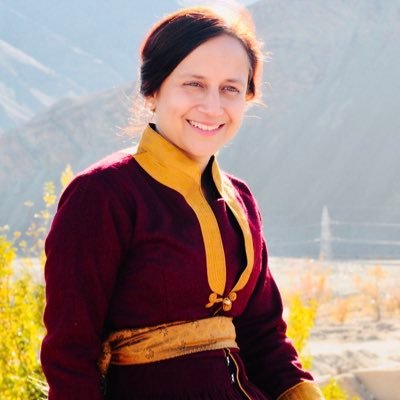
After reaching out to President Droupadi Murmu to seek her intervention for the release of her husband—climate activist Sonam Wangchuk—lodged in Jodhpur jail after being taken into custody following the September 24 violent clashes in Ladakh, his wife Gitanjali J Angmo on Friday moved the Supreme Court on Friday seeking his release. Meanwhile, the Ministry of Home Affairs (MHA) is understood to have granted Wangchuk’s family permission to meet him in jail in Jodhpur. “His wife, brother, and Leh Apex Body (LAB) legal adviser are in Delhi and are on their way to meet Wangchuk in jail,” Tsering Dorjey, Co-Chairman of LAB, was quoted as saying
The LAB and Kargil Democratic Alliance (KDA) represent political, religious, and social bodies of Leh and Kargil.
Wangchuk emerged as the face of the campaign for statehood and the Sixth Schedule for Ladakh after the region was granted Union Territory status after its separation from Jammu and Kashmir under the Article 370. The noted climate activist and educator was accused by police of inciting violence, referring to his statements, especially reference to the “Arab Spring and Gez Z” protest.
‘Is India really free’, questioned Wangchuk’s wife Gitanjali
Gitanjali J Angmo, who is also the CEO of the Himalayan Institute of Alternatives, on Thursday sharply criticised the BJP-led Centre, drawing parallels to colonial-era oppression and accused the Union Home Ministry of misusing the Ladakh Police to suppress public dissent. “Is India really free?” she questioned in a post on X, alleging that 2,400 Ladakhi police officers were deployed to control just 3 lakh civilians under the MHA’s direction.
Wangchuk is currently detained under the National Security Act (NSA) at Jodhpur Central Jail. He is accused of inciting protests that led to four deaths in Leh. However, supporters claim his arrest is politically motivated, linked to his advocacy for the implementation of the 6th Schedule in Ladakh and his broader environmental and social activism.
Angmo strongly refuted allegations linking Wangchuk to Pakistani intelligence, calling them “baseless” and “agenda-driven.” Highlighting his stand against Chinese imports, she said, “When the UT government bought Chinese tablets, he urged people to fight China with our wallets, not bullets. How can such a man be anti-national?” She also defended their presence at a UN climate conference, arguing, “If India can play cricket with China, are the players anti-national? Attending a glacier conference doesn’t make someone an ISI agent.”
Ladakh’s Lieutenant Governor Kavinder Gupta stated that the Centre remains committed to resolving the region’s concerns through dialogue. “Talks with local leaders are ongoing, and dialogue will resume in a peaceful atmosphere,” he said.
Wangchuk’s arrest has sparked widespread backlash, with civil society and opposition leaders accusing the government of cracking down on dissent. Activists argue that invoking the NSA in this case is legally and morally flawed. Senior advocate Prashant Bhushan noted that the NSA allows detention only if there is a real apprehension of harm to peace or national security. “In Wangchuk’s case, it’s the detention itself that is disturbing peace. The arrest is malafide, unfair, and without justification,” Bhushan said.
Activist and political commentator Yogendra Yadav called the move “petty,” likening Wangchuk to “the Gandhi of Ladakh.” He emphasized that detaining such a figure only strengthens his message and national support. “If the government thinks it can diminish him by jail, they’re mistaken,” Yadav asserted. He noted that civil society groups nationwide are ready to stand with Wangchuk, even traveling to Ladakh if needed. “This is the man who led calls to boycott Chinese goods. Now, even ex-soldiers protesting are being labeled anti-national,” he added.
Meanwhile, dialogue between the Centre and Ladakh representatives has stalled. Both the Leh Apex Body (LAB) and Kargil Democratic Alliance (KDA) suspended talks, citing an untenable atmosphere. LAB chairman Thupstan Chhewang and co-chairman Chering Dorjay said a “conducive environment” is essential for dialogue. KDA further demanded Wangchuk’s release and a judicial inquiry into the police firing in Leh as preconditions to resume negotiations.
The Union Home Ministry reiterated, “the government has always been open for dialogues on Ladakh matters with the Apex Body Leh (LAB) and the Kargil Democratic Alliance (KDA) at any time. We would continue to welcome discussions with ABL and KDA through the HPC on Ladakh or any other suitable platform”
“At the beginning of the series, just 15 days ago, he (Yadav) shook hands with Pakistani minister Mohsin Naqvi and even posed for a photo. But when the match was met with protests in India, the players were handed a new script to spread propaganda in the country”: AAP
Photo: courtesy social media
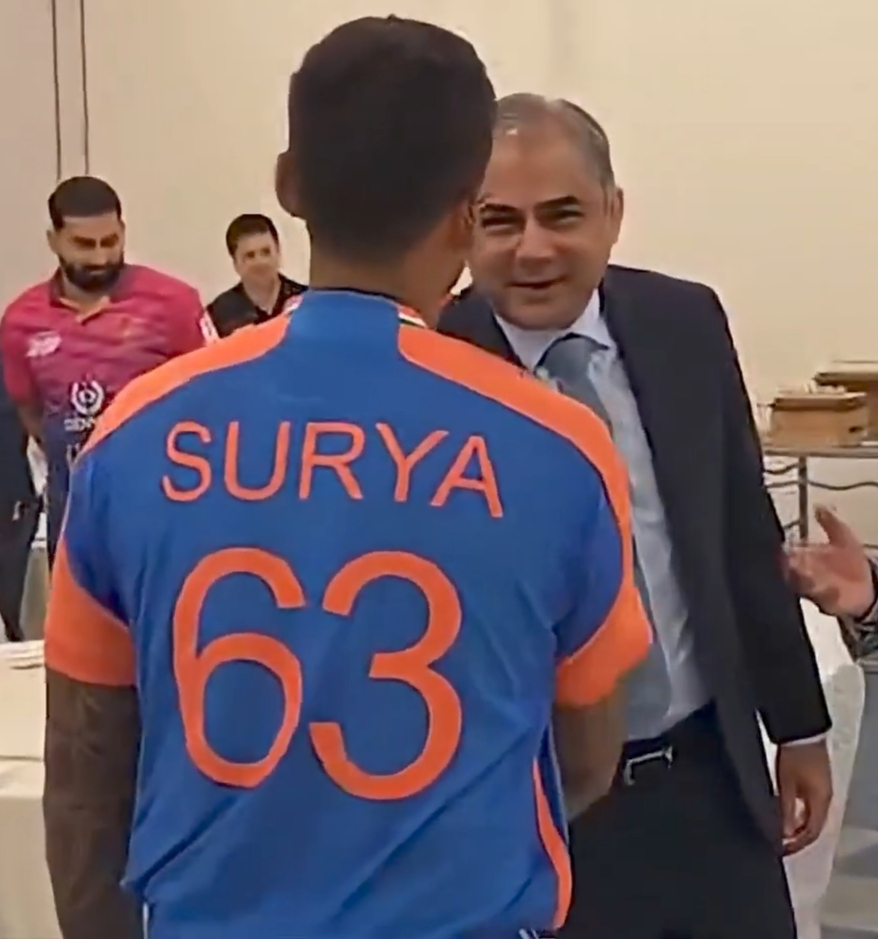
Team India’s refusal to accept the Asia Cup trophy from Pakistan Cricket Board (PCB) chief Mohsin Naqvi after winning the series has sparked a political slugfest back home, with AAP and Shiv Sena (UBT) posting videos on social media showing Indian captain Suryakumar Yadav shaking hands with the Pakistani minister.
The BJP praised the Indian team for “putting Pakistan’s chief propagandist in his place,” while AAP accused the BJP-led Centre of handing the players a “new script to spread propaganda in the country.”
India’s victory over Pakistan in the Asia Cup final also drew praise from Prime Minister Narendra Modi, who termed the win as “Operation Sindoor” on the games field. “Operation Sindoor on the games field. Outcome is the same – India wins! Congrats to our cricketers,” PM Modi wrote on X. BJP’s IT cell chief Amit Malviya and other BJP leaders also lauded the Indian players for their decision and said this was a reflection of “New India.”
According to reports, while the Indian team refused to receive the award from Naqvi—who also serves as the Asian Cricket Council chairman and Pakistan’s Interior Minister—Naqvi insisted on presenting it. “We not only slammed Pakistan on the field but also put Naqvi in his place—a chief propagandist for the terror state that Pakistan is,” Malviya posted on X.
Malviya also shared an earlier video of AAP leader Saurabh Bharadwaj, in which he challenges Suryakumar Yadav to donate his match earnings to the families of those killed in the April 22 Pahalgam terror attack. The video then cuts to Yadav announcing, on Sunday night, that he would indeed donate his entire match fees to the families and the armed forces. “The two-penny AAP MLA, clown of Arvind Kejriwal, had the audacity to challenge Team India’s captain to donate his match fee to the Armed Forces in support of the Pahalgam terror attack victims. Our captain responded in style,” Malviya wrote.
Photo: courtesy social media
In response, Bharadwaj shared a video on social media showing Yadav shaking hands with Naqvi. “At the beginning of the series, just 15 days ago, he (Yadav) shook hands with Pakistani minister Mohsin Naqvi and even posed for a photo. But when the match was met with protests in India, the players were handed a new script to spread propaganda in the country,” he wrote.
Shiv Sena (UBT) MP Sanjay Raut also mocked Yadav, accusing him of hypocrisy before and after the tournament. He shared the same video showing Yadav greeting and posing for a picture with Naqvi before the Asia Cup. “At the start of the series, 15 days ago, he shook hands and clicked photos with Pakistan’s minister. Now they are putting on a drama of patriotism. If nationalism truly flowed in their blood, they shouldn’t have stepped onto the field against Pakistan,” Raut posted in Hindi on X.
A day before the final, Raut had also voiced strong objections to India playing cricket against Pakistan, citing terrorism and past attacks. “This is not the biggest match. It is very bad for India and Pakistan to play in such an environment. When citizens do not want connections with Pakistan, why play cricket? Nationalism is missing when money takes over. Even if rivers of blood flow, we will play cricket. But this time, people don’t even want to watch the match on TV,” he had said.
On Monday, Suryakumar Yadav announced he would donate his entire match fee from the Asia Cup to the victims of the Pahalgam terror attack and the Indian Armed Forces. “I have decided to donate my match fees from this tournament to support our Armed Forces and the families of the victims who suffered in the Pahalgam terror attack. You always remain in my thoughts. Jai Hind,” Yadav posted on X.
After Yadav’s announcement, Bharadwaj’s earlier challenge went viral on social media. In the video, Bharadwaj is seen saying: “Suryakumar Yadav, if you have the ability, we challenge you to give the money you have earned… to the widows of the Pahalgam victims.”
The 2025 Asia Cup was more than just cricket matches between India and Pakistan, it became a mirror of strained political ties between the two nations, off the field and on the field. The post-match presentation at the Dubai International Cricket Stadium also saw dramatic turn of events
Photo: courtesy BCCI social media account
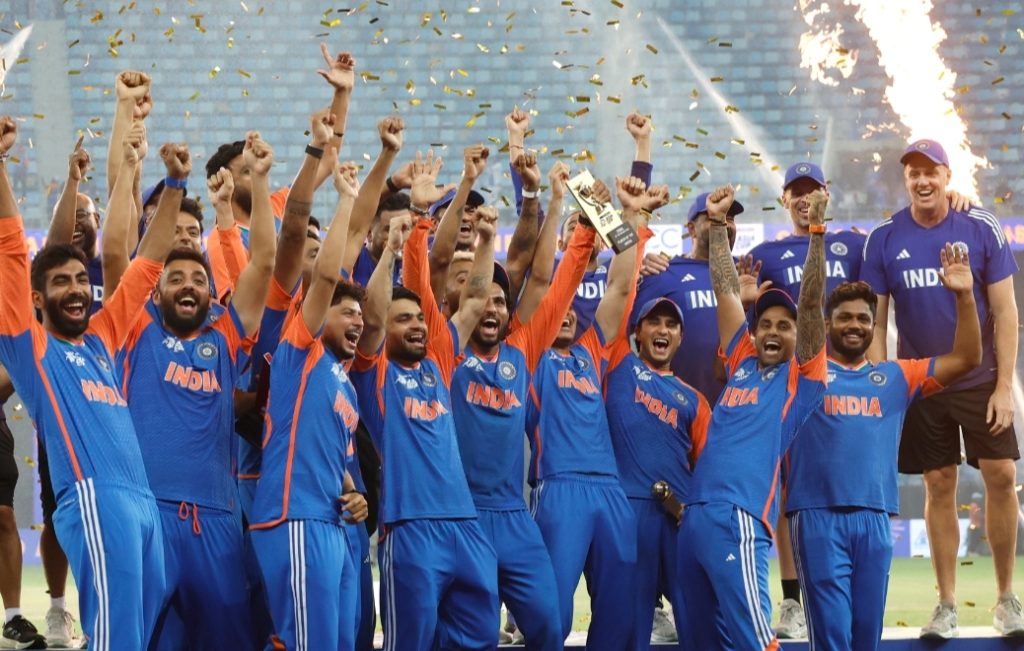
The Asia Cup 2025 final between India and Pakistan ended in high drama—both on the field and off it. India held its nerve in a tense finish to clinch the Asia Cup for a record ninth time, defeating arch-rival Pakistan by five wickets in Sunday’s final with two balls to spare. But the dramatic on-field triumph was followed by another controversy off the field—the Indian team declined to accept the trophy and winners’ medals from Mohsin Naqvi, who heads both the Pakistan Cricket Board and the Asian Cricket Council and also serves as Pakistan’s Interior Minister.
As a result, the tournament concluded without the traditional trophy presentation.
Led by captain Salman Agha, Pakistan’s team arrived late. Further delays followed after India refused to take the trophy from Naqvi. The presentation ceremony, normally a moment of pride and joy, turned chaotic when the Indian players declined to accept the trophy and medals from Mohsin Naqvi, the Chairman of the Pakistan Cricket Board, head of the Asian Cricket Council, and Pakistan’s Interior Minister.
Naqvi then reportedly walked away from the stage carrying the trophy and medals, leaving the Indian team without any presentations to mark their triumph. This unusual act drew sharp criticism from India’s cricket board, which called it unacceptable and disrespectful to the players who had fought hard for the win.
For captain Suryakumar Yadav and his team, the night’s true glory lay not in the missing trophy but in the unity and spirit they carried back into the dressing room.
India’s Twenty20 captain Yadav later voiced his disappointment, claiming that his side was denied the chance to lift the 2025 Asia Cup trophy despite their hard-fought win. “This is something I have never witnessed in all my years of playing and following cricket – a champion team being denied its trophy, and one that was so hard-earned,” Yadav said at the press conference. “We truly deserved it. I can’t say anything more.”
On a reflective note, he added: “For me, the real trophies are sitting in the dressing room – all 14 players and the support staff who stood together throughout this Asia Cup journey.”
Board of Control for Cricket in India (BCCI) secretary Devajit Saikia slammed Naqvi for leaving the stadium with the trophy and the medals, explaining why India refused to accept the trophy from the Pakistan Cricket Board head. “India is fighting a war with a country and a leader belonging to that country was supposed to hand over the trophy to us. We cannot accept a trophy from someone who represents a country that is waging a war against our country. It does not mean that the gentleman will take the trophy and the medals, which are to be given to our country, to his own hotel room,” he was quoted as saying
Some reports pegged it as “Naqvi running away” with the trophy meant for India
Sadly, this is not an isolated event. Stampedes in India have become tragically routine—caused by overcrowding, mismanagement, and a lack of emergency planning—proving again that human life is cheap by those who matter
Photo: courtesy social media
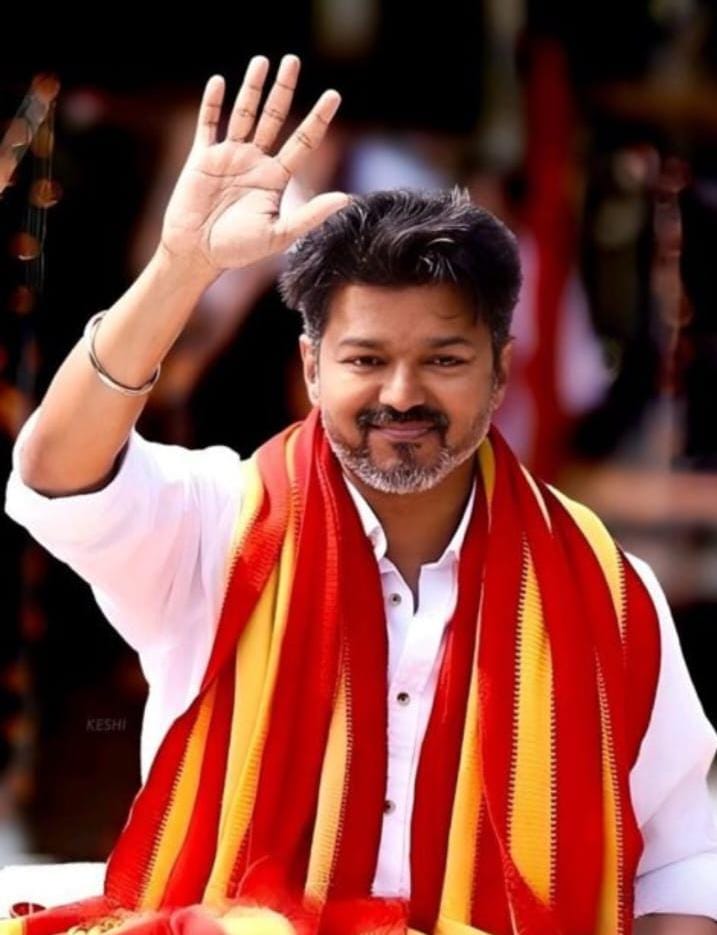
The tragic stampede at actor-politician Vijay’s Tamilaga Vettri Kazhagam (TVK) rally in Karur, Tamil Nadu has left at least 39 people dead, including 10 children, and more than 80 injured, according to official reports. The disaster, rooted in crowd mismanagement, poor planning, the absence of basic facilities and complete lack of apathy on the part of high and mighty for fellow humans, is yet another reminder of how preventable tragedies continue to claim lives at large public gatherings in India.
Organizers had sought permission for 10,000 attendees, but more than 50,000 people turned up, many waiting for hours under the scorching sun with little access to food or water. The surge began after TVK’s social media handles announced Vijay’s arrival at 12 pm. In reality, he arrived only at 7:40 pm, by which time chaos had already built up since thousands began crowding the venue from late morning. Vijay is facing criticism, and rightly so
The venue itself was problematic. Authorities allocated a 1.2 lakh sq. ft ground—previously used for a major AIADMK rally—despite TVK requesting smaller venues. When the crowd swelled, Vijay was forced to cut his speech short as people, including children, collapsed from exhaustion.
Security arrangements were also glaringly inadequate. Only about 500 police personnel were deployed, since assigning more would have reduced available space. Officials had earlier cautioned organizers about possible risks, but their warnings went unheeded. The choice of a public road further complicated crowd control. With Tamil Nadu heading to polls next year, a political blame game has already begun.
But beyond rhetoric, the Karur stampede underscores the chronic negligence of political leaders and event managers who repeatedly gamble with public safety at mass gatherings.
Sadly, this is not an isolated event. Stampedes in India have become tragically routine—caused by overcrowding, mismanagement, and a lack of emergency planning, proving time and again that human life is cheap for those who matter.
Just months earlier, Bengaluru saw a horrific crush during RCB’s IPL victory parade at M. Chinnaswamy Stadium. Eleven fans died when a temporary slab over a drain collapsed under crowd pressure. FIRs were filed against organizers, but the outrage quickly faded, as it often does.
A deadly stampede at the New Delhi Railway Station on February 15 night claimed at least 18 lives, including three children. Many others were injured in the unexpected rush of passengers trying to board trains for the Maha Kumbh Mela in Prayagraj, Uttar Pradesh.
India’s history is scarred with such disasters: over 140 devotees killed at Himachal’s Naina Devi temple in 2008, more than 110 lives lost in Madhya Pradesh’s Ratangarh during a 2013 Dussehra festival, and countless others across decades.
Despite repeated tragedies, authorities continue to underestimate crowd sizes, cut corners on safety, and ignore lessons from past disasters. Whether political, religious, or celebratory, mass events in India too often end in death—a systemic failure that turns gatherings of joy or hope into sites of mourning.
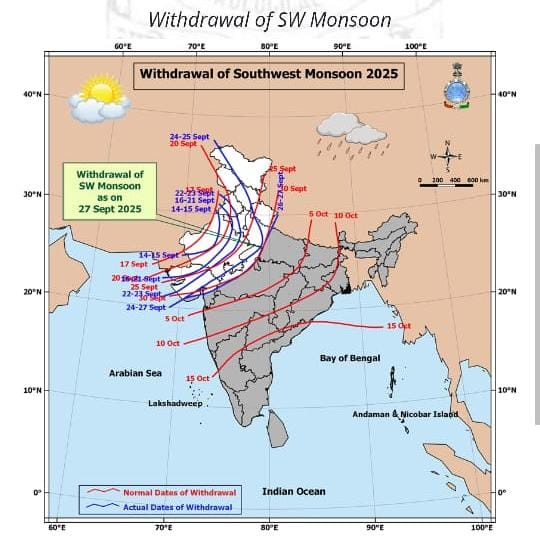
Leaving behind unprecedented inflows in crucial dams and causing devastating floods across Northwest hills and plains, the southwest monsoon may have withdrawn completely from the region but according to the weather office—the IMD—the overall, rainfall activity is likely to be above normal over plains of northwest India, central, east and northeast India during the week between October 2 and 8.
“Under the influence of a low pressure area, fairly widespread to widespread rainfall with isolated heavy to very heavy falls likely over most parts of northeast India, Maharashtra, Madhya Pradesh, Telangana mainly during the first half of the week (October 2 to 8). Isolated extremely heavy rainfall is also likely over Assam and Meghalaya during one or two days of the week. Overall, rainfall activity is likely to be above normal over plains of northwest India, central, east and northeast India and near normal over many parts of south Peninsular India during the week,” the IMD said in its weather status and extended range forecast for the next two weeks (September25 to October 8, 2025)
According to the IMD, currently, neutral El Niño–Southern Oscillation (ENSO) conditions are prevailing over the equatorial Pacific region. Forecasts suggest that these conditions will persist throughout the monsoon season however there is an increased likelihood of La Niña conditions developing during the post-monsoon season.
How will La Niña impact India?
La Niña is a climatic phenomenon characterised by cooler-than-average sea surface temperatures in the central and eastern Pacific Ocean. While it originates far away from India, its influence on the Indian subcontinent’s weather is significant.
Typically, La Niña events are associated with stronger-than-usual monsoon seasons in India. In the post-monsoon season (October to December), La Niña may also contribute to increased rainfall in parts of southern India, particularly Tamil Nadu and Andhra Pradesh, due to a more active northeast monsoon. Besides, temperatures generally tend to be slightly lower than average, especially during winter months.
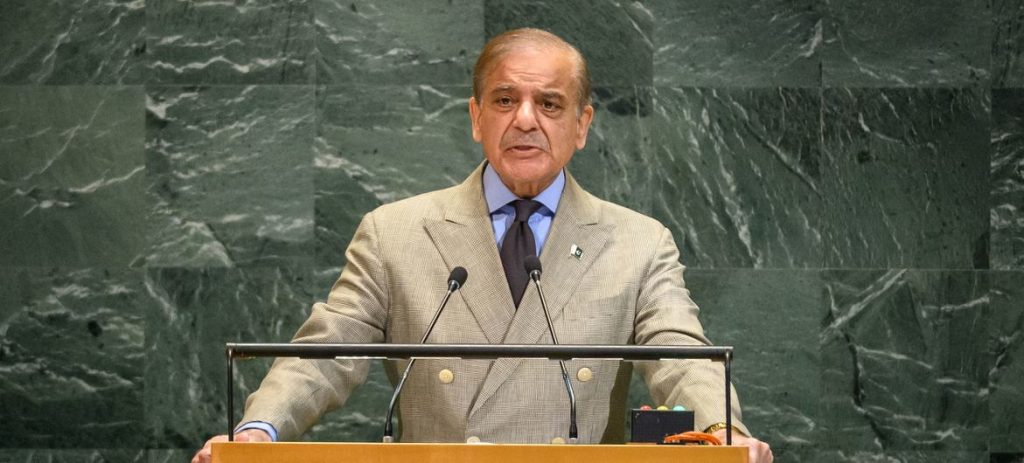
India on Friday said that Pakistan’s military “pleaded” with it for a cessation of fighting during Operation Sindoor and that there is no room for any third party to intervene in any issue between New Delhi and Islamabad. Delivering India’s Right of Reply at the UNGA, First Secretary in India’s Permanent Mission to the UN Petal Gahlot referred to Pakistan Prime Minister Shehbaz Sharif’s address in the UN General Assembly saying that “this Assembly witnessed absurd theatrics in the morning from the prime minister of Pakistan, who once again glorified terrorism that is so central to their foreign policy”
“Mr President, this assembly witnessed absurd theatrics in the morning from the Prime Minister of Pakistan, who once again glorified terrorism that is so central to their foreign policy,” Gahlot said, adding that “no degree of drama” and “no level of lies” would conceal the truth.
The remarks by Gahlot on Friday after Sharif, in his address to the General Debate of the 80th session of the UN General Assembly (UNGA), claims regarding Operation Sindoor and the credit to US President Donald Trump with averting a war between the two nuclear-armed neighbours. assume importance in light of India’s consistent stance on the issue
In his address Sharif claimed his country faced “unprovoked aggression” by India earlier this year. Pakistan’s armed forces had repelled the attack with “stunning professionalism, bravery and acumen,” shooting down several Indian aircraft, he claimed while praising US President Donald Trump for helping secure a ceasefire.
Trump’s “efforts for peace helped avert a … war in South Asia”, he said. “In recognition of President Trump’s wonderful and outstanding contribution to promote peace in our part of the world, Pakistan nominated him for the Nobel Peace Prize. This is the least we could do … I think he truly is a man of peace,” he was quoted as saying
India has consistently maintained that the understanding on cessation of hostilities with Pakistan was reached following direct talks between the Directors General of Military Operations of the two militaries. Highlighting the terrorist bases targeted by the Indian Army in Bahawalpur and Muridke during Operation Sindoor, Gahlot said senior military and civilian officials of Pakistan had paid homages to the terrorists killed in these attacks. “Can there be any doubt about the proclivities of this regime?” Gahlot questioned, while adding that Sharif had provided “a bizarre account” of the military conflict between India and Pakistan.
Setting the record straight, Gahlot said, “Till 9th May, Pakistan was threatening more attacks on India. But on 10th May, the military pleaded with us directly for a cessation to the fighting.”