For decades, the H-1B visa symbolised upward mobility for Indian professionals. A sudden proclamation of $100,000 visa fee by President Trump has jolted the aspirants, sparking debate on whether India can reform, retain talent, and seize opportunity. A report by Vibha Sharma
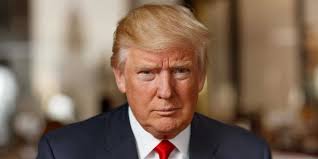
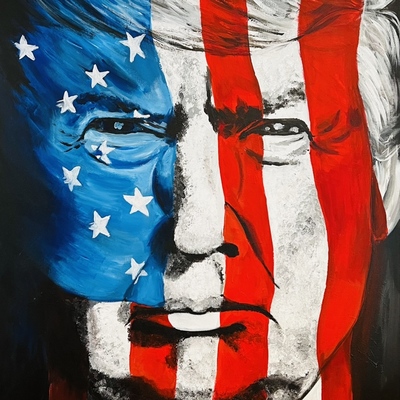
In India, the H-1B visa has long been seen as a U.S.’ gateway to high-paying jobs and upward mobility, particularly for IT professionals, engineers, developers, doctors, and scientists—the educated class aspiring for a better life, living the big American dream. So, when U.S. President Donald Trump signed a proclamation imposing a $100,000 supplemental fee on new H-1B visa petitions, it sent shockwaves through not only aspirants but also Indian stock markets.
Championed by Trump as a protectionist measure to safeguard American jobs, the move was criticised by business groups and political rivals alike. Combined with U.S. tariffs on Indian goods and higher duties on Russian crude imports, the visa fee announcement spooked foreign institutional investors (FIIs). Overall, it was a situation not many had catered for or envisioned.
There are hopefuls who now argue that the difficulties—tariffs, H-IB etc—will push India to retain talent and accelerate Prime Minister Narendra Modi’s “Make in India” dream and plan. While it is good to be optimistic, the fact is these developments are neither an automatic game-changer nor a death knell, what they can be is a turning point that will test India’s preparedness to seize the moment— a true carpe diem test.
Visa hike move a protectionist idea?
The fact is the new fee is not an isolated measure but part of Trump’s broader strategy to prioritise domestic employment and curb foreign worker inflows. By attaching a prohibitive cost to H-1B petitions, the administration seeks to discourage employers from hiring abroad unless utterly necessary, thereby boosting opportunities for U.S. workers. Immigration lawyers, tech companies, and advocacy groups in the U.S. have called the move “reckless,” warning of unintended consequences for families already in the middle of the visa process and disruption for firms heavily dependent on foreign talent., but many Americans believe this step was long overdue.
It is true that every country has the right to recalibrate visa and immigration rules but the upheaval is also real—there are reports of families cancelling travel plans, firms recalculating costs, and young professionals distraught at their American dream slipping away. While the White House has clarified that the levy applies only to new applicants, not renewals or existing holders, the signal is unmistakable—the H-1B route will no longer be as easy or affordable.
Is there a silver lining?
An optimistic argument can be that the move will strengthen India’s domestic economy.
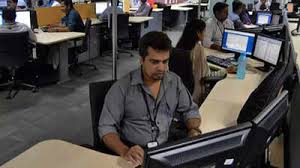
If U.S. firms hesitate to bring foreign talent stateside, they may expand operations in India instead, aligning with PM Modi’s “Make in India” vision. Already, multinationals from Apple to JPMorgan and Wells Fargo have expanded Global Capability Centers (GCCs) here, creating jobs and boosting R&D investments. A couple of days back, US-based HCA Healthcare inaugurated its GCC with plans to invest $ 75 million by the end of 2025 and employ 3,000 professionals by 2026.
A GCC is a strategic unit of an MNC that supports its global operations through technology, talent, and innovation. According to some experts, increasing uncertainty about US immigration policy can accelerate India’s rapid move towards GCCs and lift its share as total services exports. Emerging as a global hub for GCCs, projections indicate that by 2030, the number of GCCs in India will rise to between 2,100 and 2,200, with employment figures reaching up to 2.8 million.
Another possible upside is a slowdown in brain drain. For decades, India’s brightest minds have sought lucrative careers in the U.S. A $100,000 fee may now nudge them to build businesses, join start-ups, or pursue sunrise sectors such as AI, biotech, renewable energy, and space tech at home. But the narrative risks oversimplification—retaining talent requires providing better domestic opportunities, not just closing a door abroad.
Red tape and other issues
A few weeks ago, after Union Minister Piyush Goyal urged start-ups to pivot from food delivery and fantasy sports to sectors like semiconductors and AI, a semiconductor founder publicly criticised the government’s systemic inefficiencies. A former Intel engineer, he argued that India’s real bottlenecks lie in bureaucratic red tape, slow approvals, and unpredictable regulations—factors that push talent abroad in the first place.
The point is without fixing these systemic barriers, India may retain its skilled professionals only to under-utilise them. Yes, GCCs are booming but according to some analysts much of their work remains support-oriented. In other words, unless growth is channeled into core R&D, IP creation, and advanced manufacturing, India risks remaining an outsourcing hub rather than a global innovation leader.
Framing the $100,000 H-1B fee as an “opportunity in disguise” assumes that gains will flow automatically from restrictions, but it is a supposition not a guarantee. If fewer professionals migrate, India must also create high-quality jobs. U.S. firms may find India attractive today, but tomorrow they may become bullish on some other country because of favourable conditions being offered there—Vietnam, the Philippines or somewhere else. The fact is silver linings may also bring blind spots, for now only wealthy professionals and large corporations can afford the $100,000 route, which means that disparity will remain.
Another challenge may be the skills’ issue. Every year, India produces lakhs of engineering graduates but only some of them are truly job-ready in cutting-edge fields like robotics, biotech and AI. U.S. firms prize Indian workers not only for cost but also for quality.
‘Make in India’ pitch will be put to test
The only way forward is through domestic reforms—simplifying regulations, upgrading infrastructure, investing in reskilling, easing access to capital, and normalising entrepreneurial risk.
One must understand that the $100,000 H-1B fee is not designed to empower India, it is rooted in U.S.’ domestic politics, therefore the consequences—whether it is trade tariff or visa fee or anything else Trump chooses to do in the future—will depend on India’s response. If India seizes the moment—coupling reforms with infrastructure upgrades and workforce development—it could turn adversity into opportunity, a true “aapda mein avsar.”
Coming years will test “Make in India”, whether momentum accelerates beyond metros to cities like Jaipur, Kochi, and Chandigarh with talent retention as a by-product, whether Indian professionals who might once have left for the U.S turn to start-ups at home, join deep-tech ventures, or explore sunrise sectors—AI, renewable energy, and space tech, fingers are crossed.
Amid voter roll revision controversy, the state gears up for a crucial assembly election where CM Nitish Kumar and challenger Tejashwi Yadav square off, with Prashant Kishor looming as a wildcard. A report by Tehelka Bureau
The political temperature in Bihar is rising rapidly as the state braces for another high-stakes assembly election. The Election Commission of India (ECI)has announced it will visit Bihar on October 4 and 5 to assess preparations for the upcoming polls. With the tenure of the current Bihar Legislative Assembly set to expire on November 22, the Commission will need to conduct the election before that date to ensure a seamless transition of power and formation of a new government.
A high-powered delegation of the Election Commission, led by Chief Election Commissioner Gyanesh Kumar, will be touring the state shortly. The visit is not merely a formality—it signals the beginning of the electoral countdown. Political parties, administrative machinery, and voters alike are bracing themselves for a battle that could reshape Bihar’s political landscape for the next five years.
In a significant move, Bihar became the first state in India to implement the Special Intensive Revision (SIR) of electoral rolls, ordered by the Election Commission as a nationwide exercise on June 24. While the ECI intended this as a broader reform across India, Bihar—being an election-bound state—was the first to put the directive into practice. This decision has not only brought attention to the voter roll revision process but has also triggered a fresh political debate about voter rights, data integrity, and transparency.
Unlike routine revisions that involve minor corrections, the SIR process required all registered voters in Bihar to submit fresh forms to remain on the draft list. This exercise, essentially a complete re-verification of the electorate, involved all 78.9 million existing voters. After completion, the draft list published on August 1 showed only 72.4 million voters, leading to the removal of nearly 6.5 million names. These deletions were attributed to voters who had died, relocated, were registered in other constituencies, or failed to verify their details. This marked the most thorough overhaul of electoral rolls in Bihar since 2003, when voters were last required to submit complete documentation to confirm eligibility and citizenship.
The last assembly elections in Bihar, held in 2020, occurred in the shadow of the COVID-19 pandemic. This time, while public health may no longer be a pressing concern, the election process is being shaped by new standards of verification and digitisation. The implementation of SIR has introduced a new paradigm of electoral scrutiny, making Bihar the first testing ground for what could become a national standard in future elections.
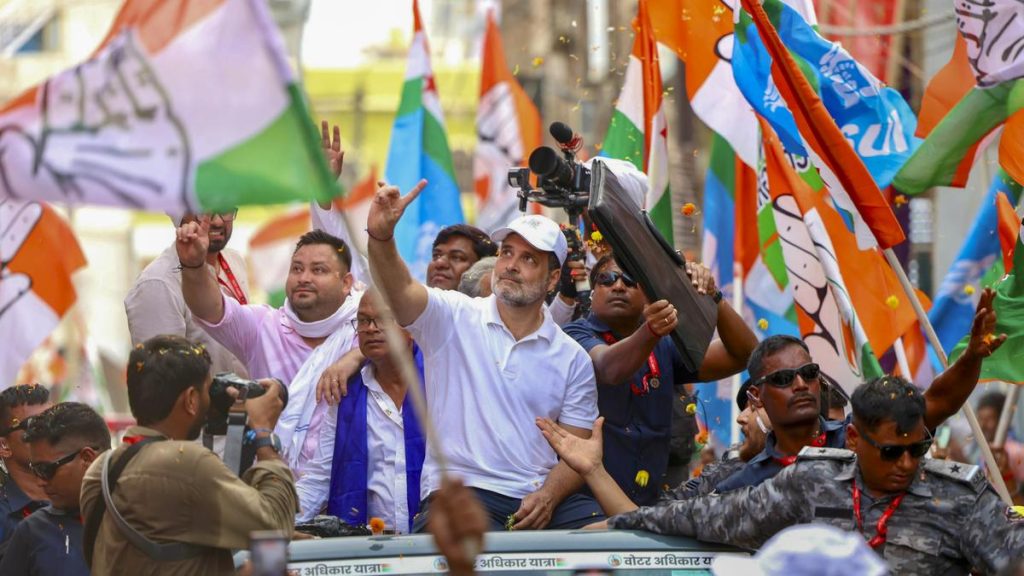
In the Bihar election campaign, Prime Minister Narendra Modi turned the spotlight on an emotional narrative, accusing the Congress of humiliating his mother and making it a central issue to sway public sentiment. However, the Leader of Opposition Rahul Gandhi complicated the battle by forcefully opposing the SIR policy and energizing his base through a high-profile padyatra across key constituencies. As both leaders sharpened their contrasting appeals—Modi with a personal, emotive touch and Gandhi with direct, street-level mobilization—the ultimate question of whose strategy resonates more deeply with voters will only be answered on polling day.
As the poll season begins in earnest, political temperatures are rising. The 2025 Bihar Assembly Electionsare shaping up to be a crucial contest that will determine who governs the state for the next five years. Two recent surveys—Lok PollandS India—have added further fuel to the political fire by releasing projections that hint at a close and unpredictable contest.
According to the Lok Poll survey, the Grand Alliance—led by the Rashtriya Janata Dal (RJD)and supported by the Congress and Left parties—is projected to win between 118 and 126 seats. The NDA, comprising the BJP, JD(U), and other allies, is projected to secure 105 to 114 seats. With the halfway mark set at 122 seats in the 243-member Bihar Assembly, the Grand Alliance appears to be within striking distance of a majority. The survey also estimates the Grand Alliance’s vote share to be between 39% and 42%, while the NDA is expected to garner 38% to 41%. The difference may seem slim, but in Bihar’s fragmented electoral terrain, even a 1–2% swing can have outsized effects on seat tallies.
Meanwhile, the S India Survey provides a regional breakdown that paints a more nuanced picture. In Purnia, where Muslim voters influence 24 key seats, the Grand Alliance is seen gaining ground. In Magadh, the NDA is expected to improve its previous performance across 26 seats, while the Grand Alliance may face resistance. Bhojpur appears to remain a stronghold for the NDA, with the party likely to hold its 22 seats. In Bhagalpur, both alliances seem evenly poised, but there are early signs of Jan Suraj’s growing influence—a factor that could disrupt established equations.
The Jan Suraj Party, led by political strategist-turned-activist Prashant Kishor, is emerging as a wildcard in this election. Though it may not win a large number of seats, its presence could impact outcomes in tightly contested constituencies. Kishor’s movement, which has focused on grassroots outreach and governance reform, is being watched closely. Even a modest increase in vote share for Jan Suraj could affect the calculations of both major alliances, particularly in seats where margins are traditionally narrow. While the Lok Poll indicates a lead for the Grand Alliance and the S India survey highlights areas of NDA strength, both agree on one thing—the 2025 Bihar elections will be a tight and closely fought contest. With alliances delicately balanced and smaller parties poised to play a spoiler role, every single seat will matter.
Amid all this, controversy surrounding the Special Intensive Revision refuses to die down. What was intended as a transparency-enhancing exercise has now turned into a political flashpoint. The mass deletion of names from the voter rolls—just months before the election—has raised serious concerns about disenfranchisement, especially among marginalised communities.
The issue reached the Supreme Court, where petitioners alleged that lakhs of voters have been wrongfully removed. The Court, while refusing to stay the process, acknowledged the seriousness of the concerns. It observed that the ECI had listed 11 acceptable documents for voter verification, and recommended that essential IDs such as Aadhaar cards, EPIC cards, and ration cards be included in the list. However, the Court left it to the Commission to decide how to proceed. The key takeaway from the proceedings was this: the ECI must act to allay fears of large-scale deletion of genuine voters and must work transparently to restore faith in the system.
This controversy has cast a shadow on the ECI’s role. While the Commission is constitutionally mandated to remain neutral and independent, it now finds itself embroiled in defensive posturing, legal disputes, and public criticism. In recent times, the ECI has been more visible in the news for issuing rebuttals and demanding affidavits from political parties than for quietly ensuring free and fair elections. As the credibility of the institution comes under scrutiny, many observers are reminded of a timeless warning: an institution’s strength lies in its integrity, not its authority.
The former Deputy Prime Minister Devi Lal once said, “Lok raj, lok laj se chalta hai”—meaning, democracy functions not only through power but through public respect. That sentiment seems particularly relevant now. Institutions like the Election Commission must command trust, not demand it. It must be open to scrutiny, especially when its decisions affect the fundamental right to vote.
What was initially described as a “cleansing” of the electoral rolls has now become a storm over voter rights, legality, and fairness. The debate has already reached the national stage, and depending on how it evolves, it could have long-term implications for electoral reforms across India.
With the official campaign season just around the corner, Bihar is preparing for a politically charged few weeks. Nitish Kumar, seeking to extend his long political innings, faces a resurgent Tejashwi Yadav, who is aiming to convert youth energy and anti-incumbency into a winning mandate. Prashant Kishor, still an unknown electoral quantity, is working hard to break the binary and establish a third way in Bihar’s traditional two-coalition model.
The stakes are high. The mandate of the people will not only determine who forms the next government but will also reflect how Bihar’s citizens view questions of trust, transparency, and governance. As the Election Commission finalises the dates and the campaign machinery begins to roar to life, one thing is clear: this will be one of the most consequential elections Bihar has witnessed in decades.
While Hamas is open to trading hostages for Palestinian prisoners and transferring governance to an independent Palestinian body, it remains silent on disarmament—a non-negotiable for Israel
Photo: social media
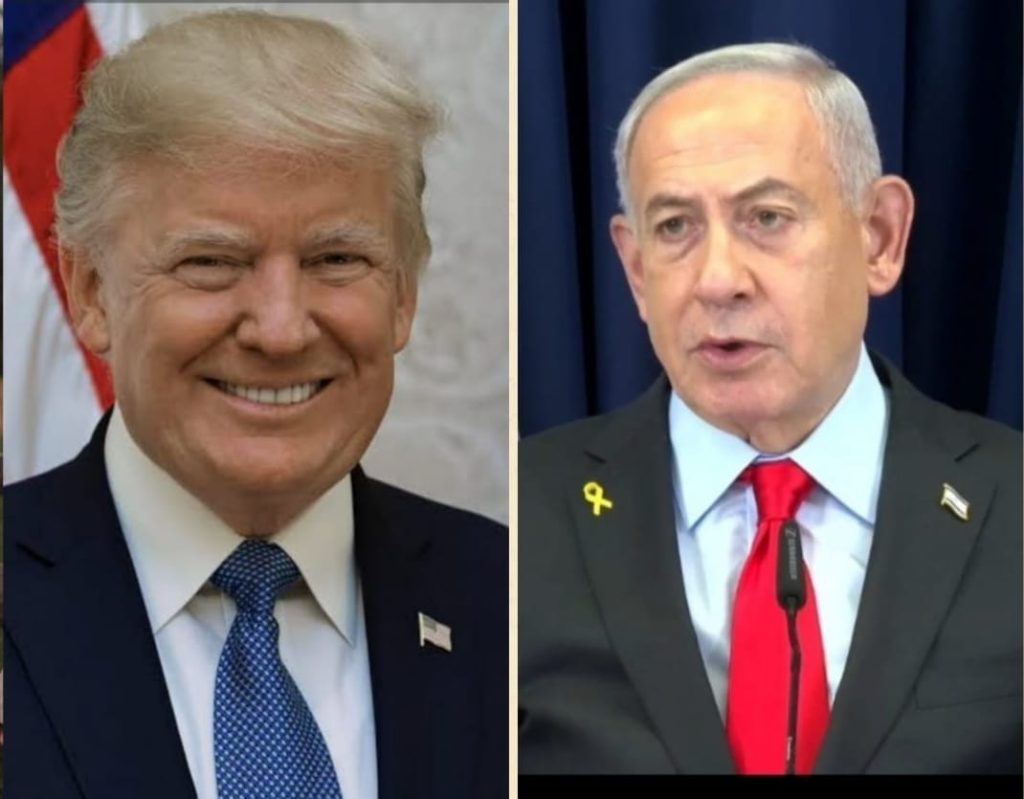
Ahead of much-awaited talks in Egypt and hopes of a possible ceasefire, U.S. President Donald Trump on Monday urged Israel and Hamas to “move fast” on the Gaza peace plan, warning that failure to do so may lead to “massive bloodshed”. Trump also wrote on his Truth Social platform that there have been “positive discussions” with Hamas and other countries over the Gaza peace plan.
“There have been very positive discussions with Hamas, and Countries from all over the World (Arab, Muslim, and everyone else) this weekend, to release the Hostages, end the War in Gaza but, more importantly, finally have long sought PEACE in the Middle East. These talks have been very successful, and proceeding rapidly. The technical teams will again meet Monday, in Egypt, to work through and clarify the final details. I am told that the first phase should be completed this week, and I am asking everyone to MOVE FAST. I will continue to monitor this Centuries old “conflict.” TIME IS OF THE ESSENCE OR, MASSIVE BLOODSHED WILL FOLLOW — SOMETHING THAT NOBODY WANTS TO SEE!” he wrote
Delegations from the U.S., Israel, Hamas and Middle Eastern countries are meeting in Egypt for talks that could pave the way for a ceasefire in Gaza and the release of hostages but there seem to be many a many a slip between the cup and the lip. Trump’s plan has sparked cautious optimism but also faces major hurdles.
Israel’s agreement to begin implementing the first stage signals willingness under U.S. pressure. Hamas’s partial acceptance—offering to release hostages and transfer power—suggests negotiations are possible. However, core issues remain unresolved. Hamas has not agreed to disarm, and several aspects of the deal require broader Palestinian consensus, risking delays. Palestinians may also view the plan as favouring Israel and failing to offer a path to statehood or Gaza–West Bank reunification.
“Benjamin Netanyahu’s agreement to implement the first stage shows Israel is open to the plan, likely under U.S. pressure but Hamas’s refusal to disarm and the lack of unified Palestinian leadership complicate implementation. Years of broken ceasefires have eroded trust. A simultaneous hostage release and troop withdrawal would require tight coordination—logistically and politically challenging,” say analysts.
The Ladakh Administration also rejected allegations of a “witch-hunt” against Wangchuk
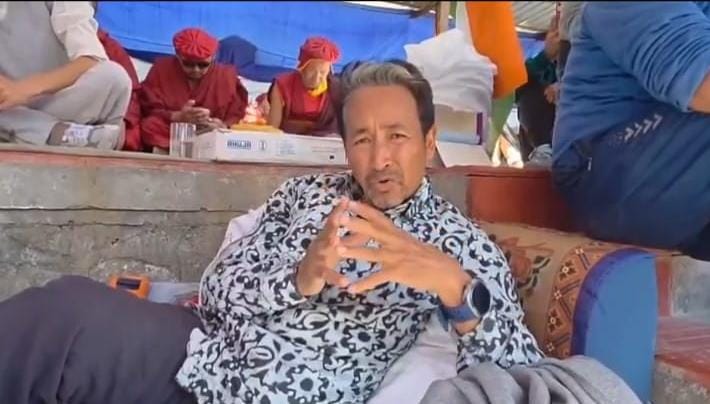
The Supreme Court on Monday issued notices to the BJP-led Centre, the Ladakh Administration and others on climate activist Sonam Wangchuk’s wife Gitanjali Angmo’s petition, challenging his detention under the National Security Act (NSA). A bench comprising Justice Aravind Kumar and Justice NV Anjaria stated that the matter will be heard on next Tuesday—October 14. Meanwhile, the Centre and Union Territory of Ladakh told the apex court that the plea was aimed at “creating hype” around Wangchuk’s detention, according to reports.
Detained two days after the September-24 violent clashes between protesters demanding statehood and Sixth Schedule status for Ladakh and the police, Wangchuk is currently lodged in Jodhpur jail in Rajasthan. Four people died while 90 were injured in the clashes.
Terming it “illegal, arbitrary, and unconstitutional”, Angmo has contended that the detention order violated her husband’s fundamental rights under the Constitution. Appearing on behalf of Angmo, senior advocate Kapil Sibal demanded the grounds of detention should be served on her. “According to the judgment of this court, family members are also to be given the grounds of detention. We have not been supplied with the grounds, and the wife is not being allowed to meet him,” he was quoted as saying.
Solicitor General Tushar Mehta said the grounds of detention had already been served on Wangchuk and that there was no legal requirement for them to be communicated to his wife, however, he agreed to examine the feasibility of serving the grounds to Angimo, according to reports. Mehta also accused Angimo of trying to create a“hype” and making it an “emotive issue” by alleging that her husband was denied medical aid and meetings with his wife. On the issue of medical aid, Mehta said that on being produced for medical examination, Wangchuk said he was not on any medication. He, however, assured the Bench that if any medical supplies were needed, they would be ensured.
The Ladakh Administration also rejected allegations of a “witch-hunt” against Wangchuk.
After reaching out to President Droupadi Murmu to seek her intervention for the release of her husband, Angmo last week moved the Supreme Court, seeking his release. In her habeas corpus petition, Angmo sought a direction to the Ladakh Union Territory Administration to “produce Sonam Wangchuk before this Hon’ble Court forthwith.” Demanding immediate access to her husband, Angmo also urged the top court to quash the preventive detention order.
Wangchuk emerged as the face of the campaign for statehood and the Sixth Schedule for Ladakh after the region was granted Union Territory status after its separation from Jammu and Kashmir under the Article 370. The noted climate activist and educator was accused by police of inciting violence, referring to his statements, especially reference to the “Arab Spring and Gez Z” protest.
Angmo, who is also the CEO of the Himalayan Institute of Alternatives, on Thursday sharply criticised the BJP-led Centre, drawing parallels to colonial-era oppression and accused the Union Home Ministry of misusing the Ladakh Police to suppress public dissent. “Is India really free?” she questioned in a post on X, alleging that 2,400 Ladakhi police officers were deployed to control just 3 lakh civilians under the MHA’s direction.
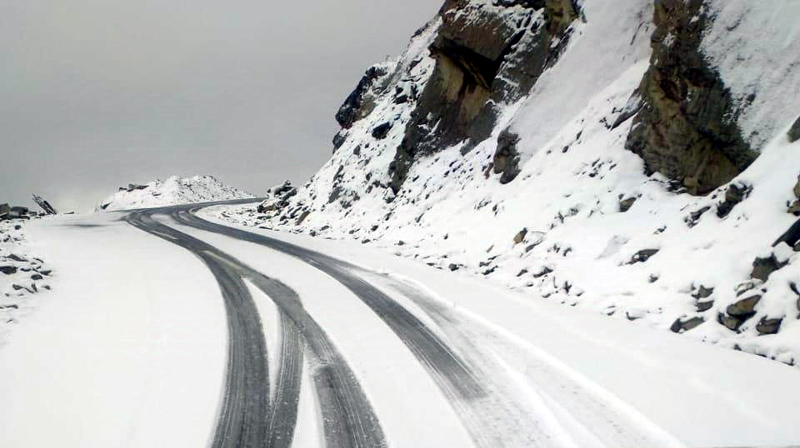
SRINAGAR: The higher reaches of Kashmir, including Gulmarg, Gurez, and other mountainous areas, received the season’s first snowfall this week, signaling an early onset of winter in the Valley.
Fresh snow blanketed several high-altitude regions such as Affarwat in Gulmarg, Sinthan Top in Anantnag, Zojila Pass, Gumri, Minimarg, and Razdan Top — the gateway to the Gurez Valley in Bandipora district. Light snowfall began at Razdan Top early Monday morning, leading to a dip in temperatures across the upper regions.
Despite the change in weather, officials confirmed that traffic on the Bandipora–Gurez road remains open.
According to the Meteorological Department, parts of Jammu and Kashmir are likely to experience more rain and snow from October 5 to 7 due to a western disturbance. Light rainfall was reported in Srinagar and adjoining areas, with intermittent showers recorded in parts of North and South Kashmir.
The snowfall has brought cheer to locals and tourists alike, who see it as the first sign of the approaching winter. Authorities, however, have urged travelers to exercise caution, especially in higher reaches, as temperatures continue to fall and roads turn slippery.
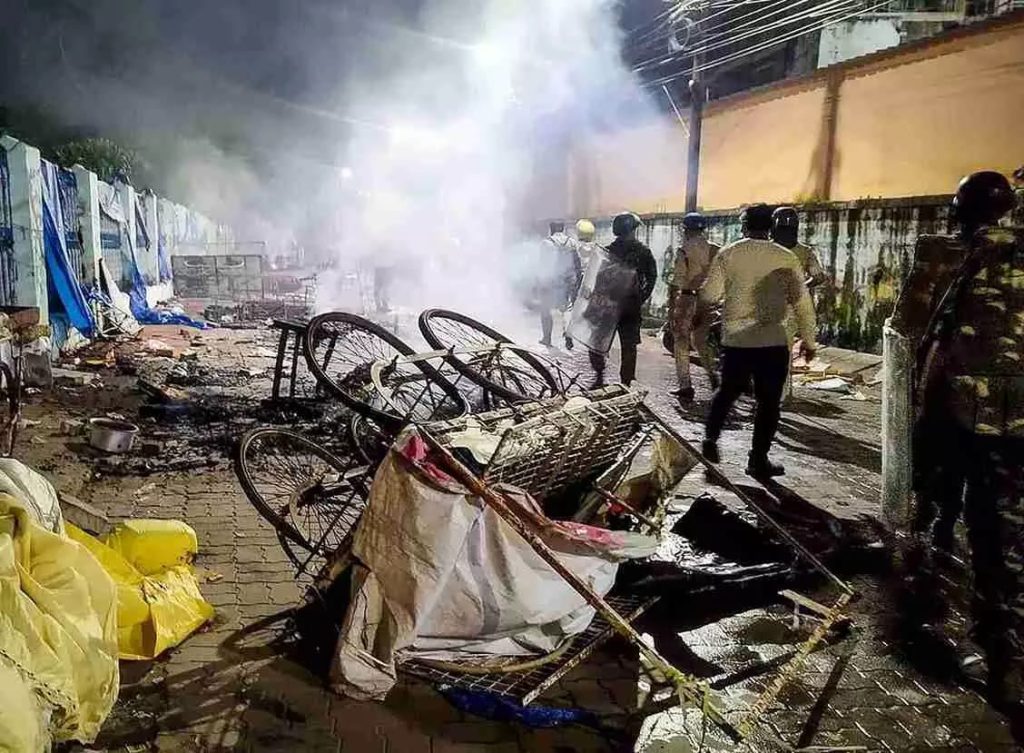
Communal tensions simmered in Bareilly in Uttar Pradesh and Cuttack in Odisha over the weekend with clashes during religious processions and subsequent crackdowns again highlighting the growing volatility around festival gatherings. According to reports, fresh violence erupted in Cuttack, Odisha, on Sunday night during a Durga idol immersion procession, leaving at least 25 people injured. In response, the state government imposed prohibitory orders and suspended internet services for 24 hours across 13 police station areas to prevent the spread of misinformation and restore order.
A government circular announced that access to social media platforms such as WhatsApp, Facebook, and X would remain restricted until 7 PM on Monday. Former Chief Minister and Leader of the Opposition Naveen Patnaik urged residents to maintain peace and communal harmony, expressing concern over the city’s deteriorating law and order. Heavy police deployment continues across sensitive areas to prevent further escalation. Meanwhile, the Vishwa Hindu Parishad called for a 12-hour Cuittuck bandh on Monday, according to reports.
In Bareilly the authorities have demolished several structures linked to those arrested, citing building violations. Two men with criminal records were injured in a police encounter, and over 80 people have been detained. Political parties have accused authorities of bias, while officials insist the situation is under control. Across India, sporadic communal flare-ups have become increasingly frequent, often triggered by processions, social media posts, or local disputes that quickly spiral into violence. Small incidents—whether over banners, loudspeakers, or social media messages—can escalate rapidly, amplified by rumours and provocative online content.
In UP, the police action, however, provoked strong reactions from the Muslim community with “I Love Muhammad” posters appearing nationwide and as profile pictures on social media. Many described the developments as criminalisation of religious expression and alleged attempts to politicise the matter along Hindu-Muslim lines.
All India Majlis-e-Ittehadul Muslimeen (AIMIM) chief Asaduddin Owaisi questioned “If we carry around a poster saying ‘I love Mohammad,’ what is illegal about it? What is there in it that incites anyone to violence, aggression, or violence?” “If someone uses the same slogan for any of their religious leaders, as our Hindu brothers did, ‘I love Mahadev,’ we have no objection, this is their belief,” he was quoted as saying.
States like Uttar Pradesh, Madhya Pradesh, Bihar, Maharashtra, and West Bengal have witnessed recurrent communal disturbances in recent years. Authorities often respond with internet shutdowns and demolition drives, which critics say raise questions about due process. Civil society groups argue that poor policing, lack of dialogue between communities, and political rhetoric have eroded traditional mechanisms of conflict resolution.
Despite repeated warnings from climate experts about the increasing volatility of weather systems, preparedness and early-warning mechanisms remain limited in many regions
Photo: courtesy social media
After battering northern India — including Punjab, Himachal Pradesh, and Jammu & Kashmir — the fury of rain and snow has now shifted eastward, devastating parts of Nepal, Tibet, Bhutan, and India’s Darjeeling hills. From the Tibetan slopes of Mount Everest to Nepal’s mountain towns and India’s tea-growing highlands, landslides and flash floods have killed dozens and stranded hundreds over the weekend.
In Nepal, landslides, lightning strikes, and floods triggered by relentless rain killed at least 44 people with five others reported missing, according to reports. Most of the casualties were reported from the eastern mountain district of Illam, where entire villages were swept away by landslides, said the National Disaster Risk Reduction and Management Authority of Nepal. Days of torrential rainfall triggered flash floods, causing rivers to overflow, submerging low-lying areas.
Across the border in Tibet, hundreds were left stranded on the eastern slopes of Mount Everest after a massive blizzard blocked all routes. The “rare” early winter storm struck during peak trekking season, burying roads and passes under thick ice since Friday evening. Local media said many mountaineers have been guided to safety, while several others are still awaiting rescue, as per local media reports.
October is typically the busiest time for treks to the Tibetan side of Everest.
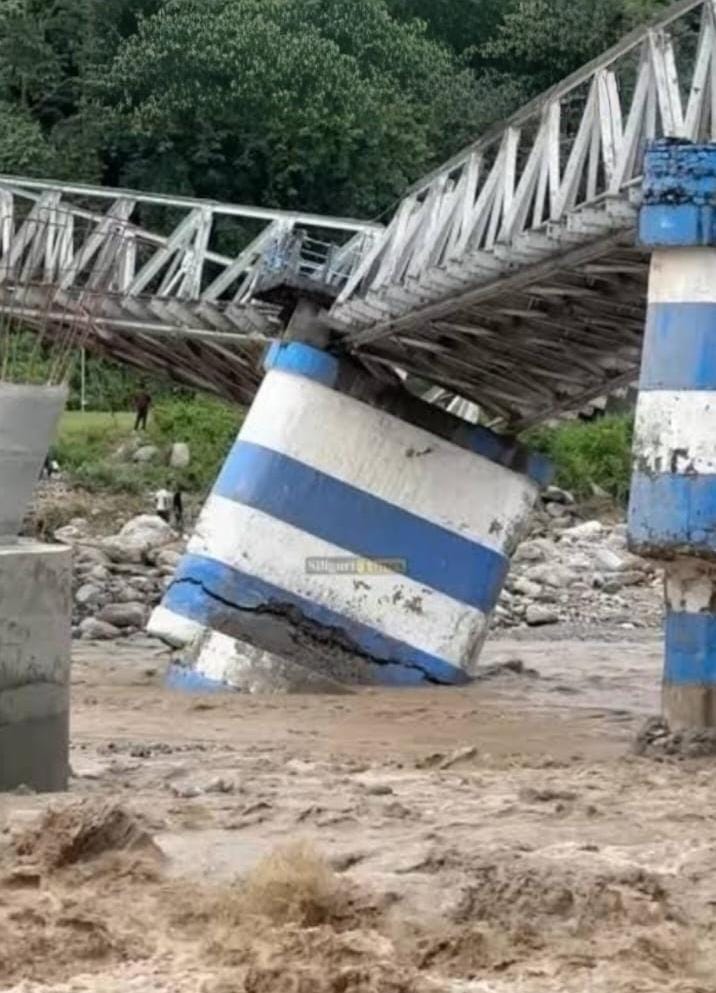
The deluge also battered India’s eastern Himalayas — West Bengal’s Darjeeling hills were among the worst hit, with several deaths reported. Over 300 mm of rainfall in just 12 hours caused flash floods that swept away two iron bridges and damaged roads, power lines, and farmland across Darjeeling, Kalimpong, Jalpaiguri, and Alipurduar. The situation was worsened by heavy inflows from Bhutan and Sikkim, reviving memories of recent floods in Punjab.
Bhutan too faced the brunt, as sudden flooding in the Amochu River stranded several families and workers in temporary camps. A coordinated rescue effort by Bhutanese authorities and the Indian Army helped evacuate them to safety.
The events are a grim reminder from scientists that such extreme weather events are becoming alarmingly frequent across the Himalayas—a region highly vulnerable to climate change. Rising global temperatures are accelerating glacial melt, disrupting rainfall patterns, and intensifying the frequency of cloudbursts and flash floods. Despite repeated warnings from climate experts about the increasing volatility of weather systems, preparedness and early-warning mechanisms remain limited in many regions. The latest disaster serves as another grim reminder that the Himalayas — often called the “third pole” — are on the frontlines of the climate crisis.
A Tehelka SIT report reveals how banks and NBFCs discriminate against Muslim-majority localities in extending access to credit, exposing bias, corruption and coercive recovery practices.
On March 9, 2005, the then Prime Minister of India, Dr Manmohan Singh, issued a notification for the constitution of a High-Level Committee to prepare a report on the social, economic and educational status of the Muslim community in India.
The seven-member High-Level Committee, chaired by former Chief Justice of the Delhi High Court, Justice Rajinder Sachar, submitted its first report to the Prime Minister on November 17, 2006. The government tabled the Justice Rajinder Sachar Committee Report in Parliament on November 30.
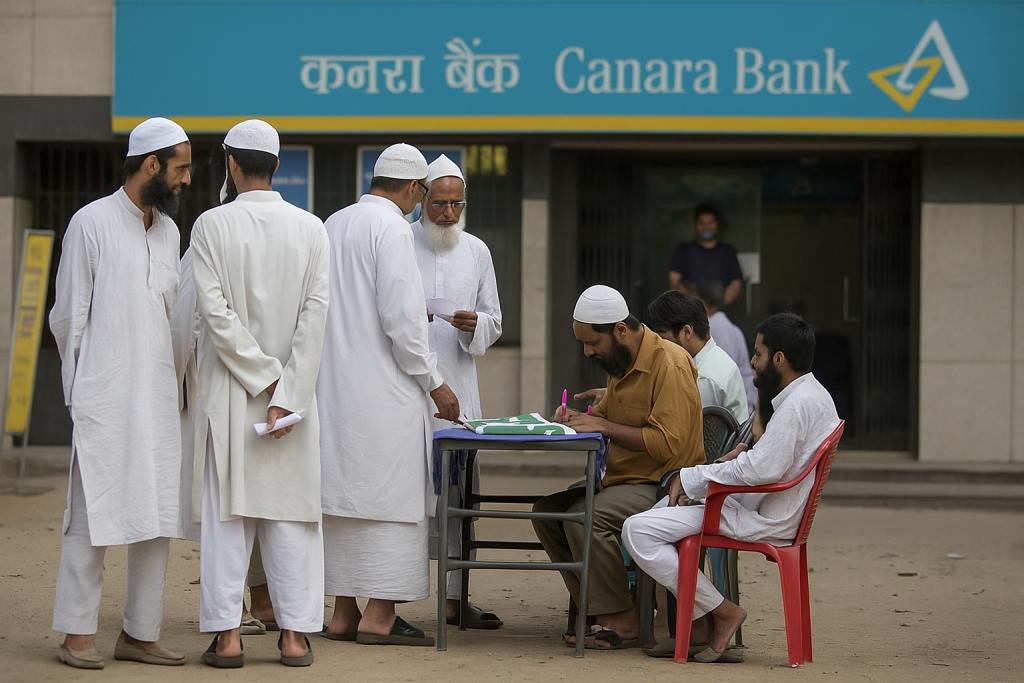
Among its many recommendations, the Sachar Committee observed that several Muslim-concentrated areas were marked by banks as “negative” or “red” zones, where they perceived a higher risk of repayment default and were therefore reluctant to extend credit. Worryingly, nineteen years after the report was tabled, little has changed. Even today, banks and Non-Banking Financial Companies (NBFCs) remain hesitant to lend to Muslims living in Muslim-dominated areas.
In fact, many believe the nation’s narrative has shifted since the NDA came to power in 2014. Financial institutions, like so many arms of the government, appear apathetic to Muslim issues and often toe the Hindutva line of “no more Muslim appeasement.” However, according to some, there has been no real difference in access to loans for Muslims in Muslim-dominated areas under the present Modi government compared to the UPA years when the Sachar Committee submitted its report.
To unearth the truth, Tehelka carried out an investigation into banks, NBFCs and Direct Selling Agents (DSAs), who act as intermediaries between these institutions and customers.
“After the Modi government came to power, the refusal rate of banks and NBFCs for Muslims living in areas like Shaheen Bagh, Okhla Vihar, Jaffrabad, Mustafabad and other Muslim-dominated parts of Delhi has gone up to 100 percent. Earlier, under the previous government, it was 25 percent. The same banks and NBFCs have no problem giving loans to Hindus in Hindu-dominated areas of Delhi,” said Shahrukh Malik, a manager in a top finance consultancy company (DSA), to Tehelka’s undercover reporter.
“If someone wants to purchase a house in front of a mosque and a mandir, banks and NBFCs will not finance the house near the mosque, but they will finance the one near the mandir. No matter whether the house is a registered property or not, if it is in a Muslim-majority area, no loan will be given. The reason cited is EMI. If a Muslim fails to pay EMI and the bank’s recovery team goes for recovery, there is a possibility the team will be chased away from the Muslim-dominated area,” added Shahrukh.
“If you are not paying GST but filing your returns, I can still get the loan amount sanctioned for you. Don’t file GST, just give me two years’ ITR. I will arrange a loan of between Rs 1.5–2 crore for you from the bank or NBFC,” Shahrukh told Tehelka.
“It is difficult to get a loan in Muslim-concentrated areas because if the applicant fails to pay EMI, recovery becomes difficult. People come together and fight with the recovery team. They are not afraid of what society will say. On the other hand, in Hindu-dominated areas loans are easily available, because recovery is easier from a person from Hindu community if he becomes defaulters,” said Anuj Pandey, direct sales manager of a top NBFC.
“Banks will not directly tell Muslim customers that they don’t provide loans in Muslim-majority areas. Instead, they give excuses like technical or legal issues. But the truth is, they simply don’t want to lend in areas dominated by Muslims,” Anuj told Tehelka.
“No loan will be given on a house right in front of a mosque, because if tomorrow the applicant gives that house to the mosque, recovery of the loan amount will become difficult. On the other hand, such issues do not exist with mandirs. That is why banks issue loans on houses in front of temples,” added Anuj.
“There is no written rule by the banks that they will not give loans in Muslim-dominated regions. But they declare such areas as negative because of many loan default cases in that area, where recovery is difficult. Banks and NBFCs will finance properties near mandirs and gurdwaras, but not near mosques,” said Ayush Chauhan to the Tehelka reporter.
“I paid a bribe to the DSA to get my loan sanctioned because the house I purchased was very close to a mosque. Banks and NBFCs don’t give loans on properties situated within 500 metres of a mosque. The same is the case with mandirs and gurdwaras. Like Muslims, even Hindus in their dominated areas find banks unwilling to give loans,” said Liyakat Ali, a relationship manager at a top private bank in the country.
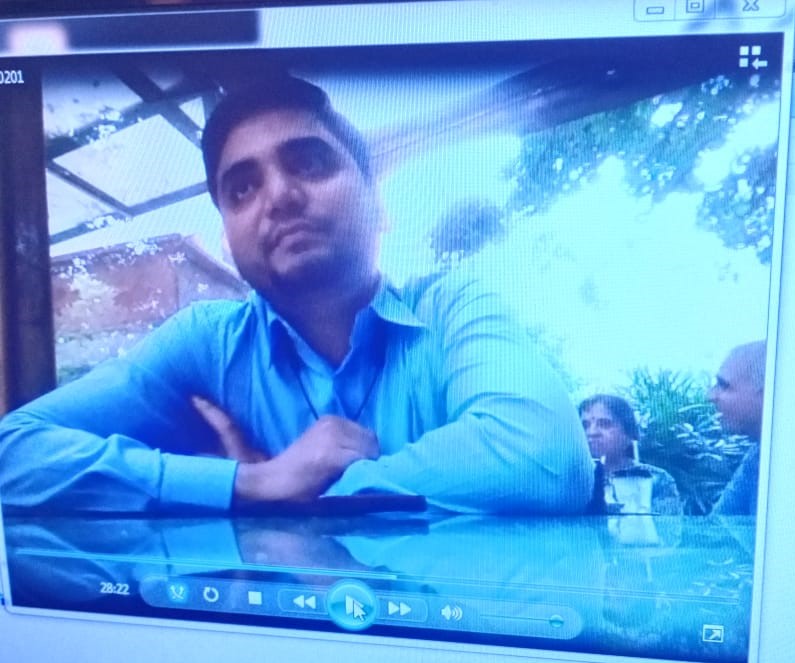
Tehelka met Shahrukh Malik in his office at Rajendra Place, Delhi. Shahrukh works in a top financial consultancy firm based in South India, with multiple offices across the country, advising people and arranging loans for them from banks and NBFCs. He told the reporter, who approached him as a fictitious customer seeking a home loan, that getting a loan in Muslim-dominated areas of Delhi is impossible because recovery becomes difficult if a borrower defaults.
According to Shahrukh, even properties with proper registry are denied loans simply because they are located in Muslim-dominated areas. Hindu-dominated areas, however, face no such hurdles and loans are sanctioned without difficulty, he claimed. He added that the rate of refusal by banks for loans in Muslim-dominated areas has jumped to 100 percent under the Modi government, from 25 percent during the previous Congress government.
In the following exchange, Shahrukh bluntly lays bare how banks and NBFCs flatly refuse loans in Muslim-dominated areas of Delhi, despite properties having valid registry. He stresses that such denials are now absolute, unlike in the past. What comes through is the perception that Muslims are seen as risky borrowers, even when many do repay, while Hindus face no such blanket discrimination. The remarks also tie the escalation of rejections directly to the Modi government tenure.
Shahrukh-Total Muslim hotey hain na jahan, wahan (loan) dete hi nahi.
Reporter- Koi bank nahi deta…private, sarkari… koi nahi?
Shahrukh- Okhla mein tum registry chalu karwa do….denge hi nahi.
Shahrukh- Magar denge nahi na. Agar kabhi EMI nahi di, aur koi paise lene gaya to usko nasht kar diya…
Reporter- Ye Hindu ke elakey mein nahi hota kya… Hindu-dominated..?
Shahrukh- Na.
Reporter- Wahan kar detey hain loan?
Shahrukh- Haan.
Reporter- Itna bura mahaul ho gaya hai…. ye abhi hua hai… Modi (government) ke aane ke baad?
Shahrukh- Pehle 20-25 percent tha…ab 100 percent ho gaya hai.
[What comes through from the above dialogue is the perception that Muslims are seen as risky borrowers, even when many of them do repay. On the other hand, Hindus face no such blanket discrimination. What is concerning is that the denial is based not on individual credibility but on collective identity. The remarks also link the escalation of rejections directly to the duration the Modi government has been in power.]
In this exchange, Shahrukh advised us not to buy a house near a mosque, saying it would make it difficult to get a loan. On the other hand, if the house was near a temple, securing a loan would be much easier. He underlines how banks and NBFCs treat properties differently depending on whether they are located near a mosque or a mandir. Loans, he says, are readily given near temples but denied near mosques.
Reporter-Accha ye batao Masjid ke pass loan nahi hai kya? Masjid aur Mandir ke pass?
Shahrukh- Mandir ke pass hoga; Masjid ke pass nahi hoga.
Reporter- Mandir ke pass ho jayega?
Shahrukh- Haan.
Reporter- Masjid ke pass nahi kyun?
Shahrukh- Muslim issue..
Reporter- Ye pehle se tha ya abhi hua?
Shahrukh- Ab zyada craze ho gaya hai…Modi (government) ke baad zyada ho gaya hai.
[Shahrukh insists this bias has intensified in recent years, especially after the Modi-led government came to power, suggesting a clear communal tilt in lending practices. So we see here is how prejudice quietly seeps into the system, deciding even where a house can qualify for a loan. Such discrimination undermines the very fairness banking is meant to uphold.]
Shahrukh then told us about a customer for whom he managed to arrange a loan from an NBFC, even though the house he had purchased was very close to a mosque. He added that banks and NBFCs have no written rule against funding Muslims living in Muslim-dominated areas or near mosques. He points out that properties too close to a mosque—sometimes even within 50 metres—face automatic denial, while loans near temples face no such restrictions.
Shahrukh- Ramesh park mein bhi to hai inka, bas ek choti si baat hai, Masjid ke pass kar liya to issey badi kya cheez hogi, Masjid se kam se kam 200-300 metre door hona chahiye ghar; aur uska 50 m bhi nahi hai.
Reporter- Par aapne loan karwa diya?
Shahrukh- Haan.
Reporter- Tabhi to aapke pass bheja hai… acha ye bank ka written rule hai, ya koi rule nahi hai?
Shahrukh- Nahi writing mein nahi hai, mooh zubani…magar aap kuch kar bhi nahi saktey, ye unki policy hai, de ya na dein aapko . OK to nahi kiya na unhone, wo to keh dega maine check kiya tha mil hi nahi raha, paise dene chaiye nahi diye.
Reporter- Aur mandir ke pass de denge…
[Shahrukh explains the unwritten rules banks follow when approving loans near religious sites. Although not codified, these rules are strictly enforced, leaving borrowers with little recourse.]
In this exchange, Shahrukh assured us that he could arrange a loan for us even if we were not paying GST. He reveals how loans can be arranged even without formal GST filings. He explains that with just two years of ITR, amounts of Rs 1.5–2 crore can be sanctioned.
Reporter- Matkab bina GST ke, bina ITR ke aap kara dogey?
Shahrukh- Haan.
Reporter- Bina GST ke kitna ho jayega amount?
Shahrukh- ITR de dena 2 saal ki…
Reporter- Aapne alag alag cheezein batai hain, bina GST, bina ITR.
Shahrukh- Agar ITR hai to GST nahi chahiye…phir to aap le lo 1.5-2 crore.
Reporter- Bina GST file kare to aap lele 2 crore. Karwa dogey? ITR ke saath? Theek hai.
[The discussion shows the flexibility—and opacity—of the system, where rules are bent based on paperwork rather than financial credibility. It exposes how informal practices can override formal regulations, often benefiting those who know the loopholes.]
Shahrukh demanded a 2 percent commission as a bribe to arrange a loan for us in an unauthorised area of Delhi to purchase a house. He said no regular bank would give us a loan in such areas; they would make us visit the bank several times but, in the end, say ‘No.’ According to Shahrukh, it is he, as a DSA, who can arrange a loan anywhere—for a price.
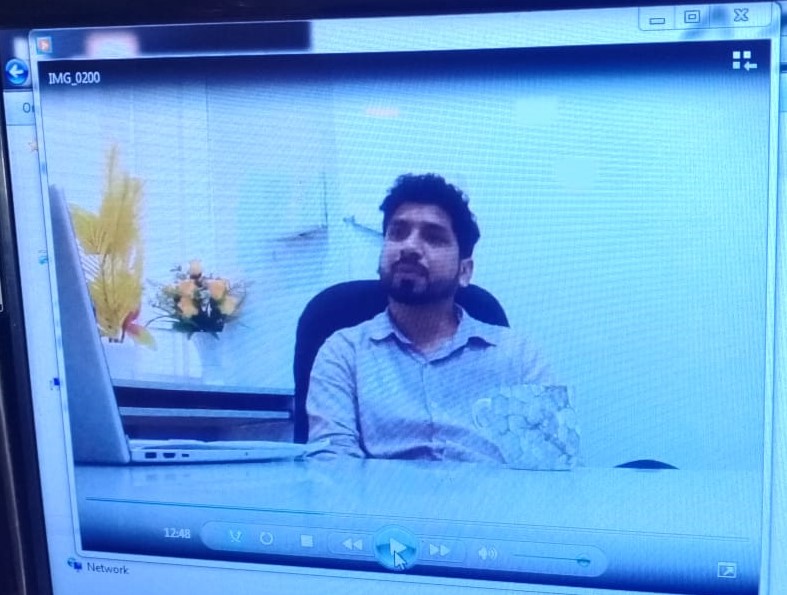
After Shahrukh, Tehelka met Anuj Pandey, a direct sales manager at a top NBFC in Noida, Uttar Pradesh. To Anuj, we also presented a fake deal, saying we needed a home loan to buy a house in Delhi. Anuj told the reporter that no bank or NBFC would give a loan in a Muslim-dominated area because recovery there is difficult. He added that if someone defaults on a loan, the entire community often comes to his support, without considering how it affects society. This, he said, is not the case with Hindus, which is why loans are more easily available to them.
Reporter- Accha doosra ye bataiye, Muslim area mein ho jayega loan?
Anuj- Poora Muslim area nahi chalega, thoda Hindu bhi hona chahiye.
Reporter- Jaise Jama Masjid ho gaya, Jamia, Shaheen bagh ho gaya.
Anuj- Bahut mushkil hai.
Reporter- Koi nahi karega, NBFC?
Anuj- NBFC mein hain bahut jo kar saktey hain.
Reporter- Aisa kyun?
Anuj- Recovery nahi ho pati…check bounce ho jaata hai…wahan ladai jhagda ka mahaul zyada ho jaata hai.
Reporter- Accha, ho chukka hai pehle?
Anuj- Haan ab maan lo jahhan zyada jansankhya mein hain, wahan recovery wale 4-5 jayenge na…hamare mein kya hai…chalo dena hai, thoda samaj ke dar se, izzat se kuch na kuch daba padh jaata hai, aadmi de hi deta hai paisa. Unmein kya hai ladai jhagda kar lenge.
Reporter- Unko samaj ka darr nahi hai?
Anuj- Tension free hain.
Reporter- Agar Hindu dominated area ho, usmein ho jayega?
Anuj- Haan. Hindu mein to kar denge hum usmein koi dikkat nahi hai.
[In the above exchange, Anuj explains how loans in fully Muslim-dominated areas are extremely difficult to secure. He says a small Hindu presence makes lending slightly easier. This discussion shows how lending decisions are shaped less by financial credibility and more by communal composition.]
Like Shahrukh, Anuj also told us that no home loan would be available for a house near a mosque, because if the house were sold to a mosque in the future, it would be difficult for the bank to recover its loan. He said home loans are available for houses near a temple but not near a mosque. Similarly, Muslim-dominated areas are unlikely to get loans, while Hindu-majority areas face no such problem. According to Anuj, giving loans in Hindu-majority areas is not an issue for the bank.
Reporter- Maine ye bhi suna hai Mandir ke Masjid ke pass loan nahi hota ?
Anuj- Nahi Masjid ke pass to maximum loan nahi hota, Mandir ke pass ek baar ko ho jata hai..Masjid mein dikkat thodi zyada aa jati hai, kal ko Masjid bada diye…aap loan bharna band kar dogey to hum kuch kar bhi nahi saktey..
Anuj-Kal ko Masjid badi kar rahe ho, kahenga bhai ye de do apna paisa le lo…aap paisa lekar alag ho gaye, usne Masjid bada kar diya…Masjid pehle choti thi ab badi ho gayi..phir kya hoga isliye hum log nahi kartey, Mandir ka kya hai hum log zameen de dein tab bhi paisa dene wala koi nahi hai..
Reporter- Matlab Mandir ke pass ghar par loan kar dogey Masjid par nahi karoge ?
Anuj- Haan nahi karenge
Reporter- Aur Muslim dominated mein bhi nahi hoga, Hindu mein ho jayega ?
Anuj-Hindu mein ho jayega…
Anuj- Hindu jahan zyada hai wahan dikkat nahin hai.
[The exchange highlights how banks and NBFCs treat properties near mosques and temples differently. Loans for houses near mosques face extra hurdles, as any expansion or change in property use could make recovery difficult. By contrast, loans for houses near temples are easier to get, and Hindu-majority areas also face no such restrictions. The discussion underscores how communal composition directly influences lending decisions.]
Anuj explained that banks do not have a problem with Muslims as such; the issue is with Muslim-dominated areas. If a Muslim buys a house in a mixed-population area, they can easily get a loan. But in Muslim-majority areas, banks create false legal or technical obstacles to avoid giving loans, rather than saying “No” point blank.
Anuj- Muslim bahumat mein dikkat hai, wahi customer agar Shakarpur mein kharid raha hai to de denge.
Reporter- Haan to pehle hi experience kharab raha hoga na aapka?
Anuj- Haan, isliye pehle hi reject maar detey hain, bol detey hain nahi ho payega, kuch bhi bata denge, legal mein dikkat hai, technical wajah se nahi ho payega…
Repoter- Matlab bahana laga denge?
Anuj- Haan, bahana laga denge.
[The exchange reveals how loans are routinely denied in Muslim-majority areas, even when the same customer could get approval in Hindu-majority localities. The discussion highlights a pattern of preemptive rejection based on location rather than financial credibility.]
After Anuj, Tehelka met Ayush Chauhan, a DSA in Noida, presenting the same fake deal that we needed a home loan in Delhi. Ayush also told us that it is difficult to get a loan in Muslim-dominated areas, while mixed-population areas present a better profile for loans. He said that in Muslim-majority areas, banks find it hard to recover their loans and usually grant only a small loan amount.
Reporter- Thodey bahut main kya-kya jaisey?
Ayush- Thodey bahut dominated main jaisey apki community hai, humari community hai, ya kisi ki bhi community hai, usme kya hota hai 100 percent hotey hai.
Reporter- Matlab Hindu–Muslim mix hoga…usmein ho jayega?
Ayush- Mix thoda bahut.
Reporter- Total Muslim hoga to loan nahin hoga, aisa kyon?
Ayush- Hota hai loan, magar kum hota hai. Thoda bahut amount par ho jaata hai zyada bade amount par nahin hota.
Reporter- Aisa kyon? Reason? Wajah?
Ayush- Reason ye hota hai ki recovery nahin ho paati.
[It emerges how community composition shapes the possibility of access to loans. Ayush admits that owing to recovery concerns, mixed localities find loans easier, while areas with a single community—especially Muslim-dominated—struggle to secure bigger amounts. The candid remarks hint at the undercurrents of bias in financial dealings.]
According to Ayush Chauhan, there is no written rule stating that banks will not give loans in Muslim-dominated areas. However, they have marked these regions as “negative” due to numerous cases of loan defaults, where recovery is difficult. Banks and NBFCs provide loans for properties near temples and gurdwaras, but not near mosques, Ayush added.
In the following conversation, Ayush demanded a 2 percent commission as a bribe from us to get our home loan sanctioned in an unauthorised area of Delhi, where most major banks refuse to lend. He explains that this covers the role of the bank’s representative who manages all the formalities. The discussion exposes how extra costs are built into the loan system.
Reporter- Mujhey kitna dena hoga Ayush bhai apko?
Ayush- Mota-mota 2 percent ka kharcha hai. Yahan se banda waha jayega saari cheezein karega.
Reporter- Loan wala, bank ka hi banda hoga?
Ayush- Haan.
Repoter- Matlab jo total loan hoga jaisey 20 lakh, uska 2 percent 40k ho gaya?
Ayush –Haan.
[In the above exchange, as our reporter seeks clarity on the charges involved in processing a loan, Ayush spells it out plainly—about 2 percent of the loan amount is taken as expenses. Such charges, though presented as routine, reveal how the system quietly extracts more from those already in need of credit.]
After meeting with an NBFC representative, a financial consultant, and a DSA, the Tehelka reporter met Liyakat Ali, a relationship manager at India’s top private bank in Delhi. Liyakat confessed to Tehelka that he himself had paid a 5 percent commission as a bribe to a DSA to get his home loan sanctioned through the NBFC. According to him, he was forced to pay the bribe because the house he purchased was close to a mosque, and no banks or NBFCs provide loans for properties located so near a mosque.
Liyakat- Sir wo diya to tha… bahut badiya hai… mera usney karaya tha. Masjid ki wajah se mujhey 5 percent dena pad gaya tha. Mera ho nahin raha tha.
Reporter- Masjid kya?
Liyakat- Masjid just saamney hai mere. 500 meter main agar Masjid hoga to NBFC loan nahin dega.
Reporter- Kaun sa bank loan nahin deta?
Liyakat- NBFC. Bank to waisey hi nahin karta.
Reporter –Kyon?
Liyakat- Kehtey hai recovery main dikkat aati hai.
Reporter- Mandir-Masjid paas main ho agar, 500 meter par?
Liyakat- Mandir–Masjid ya wo kya boltey hai gurdwara jahan par 90 percent jaisey minority hoti hai na. Hindu hai ye.. Muslim hai ya Sikh hai.. wahan loan nahin kartey.
Reporter- Kis bank se kara diya loan?
Liyakat- Bank se nahi sir, NBFC se hua tha, XXXX Housing karke hai ek.
Reporter- Kitna paisa liya isney?
Liyakat – 5 percent liya tha.
Reporter- Total ka?
Liyakat- 5 bola tha sir, lekin diya mainey 4.
[When the reporter asks Liyakat about alternative ways of getting a loan, Liyakat recalls how his own attempt faced hurdles because a mosque stood close to his house. What comes through here is the bias built into lending—religious landmarks can decide financial access. We learn how such attitude deepens exclusion, while agents profit by charging hefty fees.]
In this exchange, the reporter raises the question of whether Muslims face hurdles in getting loans. When asked why Muslims are not getting loans in their concentrated areas, Liyakat said that Muslims are known for increasing banks’ non-performing assets (NPA). In some Muslim areas of Delhi, even personal loans have become difficult to obtain. He added that banks provide loans more easily to Hindus in Hindu-majority areas compared to Muslims, though in some areas, Hindus are also facing difficulties in securing loans.
Reporter-Accha, Muslims ko loan nahi ho raha?
Liyakat- Thoda to dikkat ho jaati hai.
Reporter- Modi sarkar mein?
Liyakat- Nahi aisi baat nahi hai.
Reporter- Wo to keh raha tha….Shahrukh.
Liyakat- Sir wo NBFC ki baat kar raha tha, bank ye cheez nahi sochega, NBFC kar raha hai.
Reporter- NBFC loan nahi de raha.
Liyakat- Haan. NBFC loan nahi de raha Muslims ko, wo NPA zyada kartey hain…
Liyakatt (continues)- Ye Zakir Nagar mein loan lena zyada mushkil ho jata hai..
Reporter- Aisi to bahut sari jagah hai?
Liyakat- Jamia Okhla mein personal loan dena mushkil ho jata hai…NPA ho jata hai.
Reporter- Aur Hindu area mein ho jaata hai?
Liyakat- Haan mil jata hai.. kuch negative area Hindu area mein bhi nahi milta, jaise Buradi.
Reporter- Wo ye keh raha tha pehle 25 percent tha, ab 75 percent loan nahi milta, aisa kyun?
Liyakat- Sir, NPA zyada kartey hain hum log.
[Liyakat clarifies that the issue of Muslims facing difficulty in accessing credit is not government policy but blames it on NBFC practices, which treat Muslim-dominated areas as risky. The dialogue lays bare how lending decisions are coloured by perceptions of default.]
When asked how he could claim that Muslims are known for NPAs, Liyakat recounted an incident. He said he met a Muslim man who had taken a loan. The man admitted to Liyakat that he had defaulted, and when the bank’s recovery team came to collect the money, they were chased out of the area, Liyakat said. When asked if those teams use musclemen, he nodded in affirmative.
Reporter- Tumhe kaise pata Muslim zyada default kartey hain?
Liyakat- Arey sir hum milte rehte hain…hum jaate rehtey hain, visit kartey rehtey hain. Ek bande ne bataya tha humne bhaga diya jab recovery team aayi thi; isliye to dikkat ho gayi.
Reporter- Recovery team mein to gundey hotey hain?
Liyakat- Haan.
[When asked why Muslims are seen as defaulting more often, Liyakat explains that such views come from regular visits and stories of borrowers chasing away recovery teams. The dialogue hints at both fear and mistrust between the lender and the borrower sides shaping the lending landscape.]
Now Liyakat admitted to Tehelka about the role of bank recovery agents. He said they are goons and musclemen who use abusive tactics — that can push customers into depression— in order to recover loans. This, he noted, goes against Supreme Court guidelines, which clearly state that bank loan recovery must follow the rule of law and fair conduct, strictly forbidding the use of muscle power or aggressive tactics by recovery agents. On one occasion in 2024, the Supreme Court even referred to bank recovery agents as “gangs of gundas.”
Liyakat- Ek aaya tha recovery wala banda, wo retired tha police se, wo keh raha tha bhai koi paise na de to hum bejhijhak ghar mein ghus jaate hain, agar koi paise nahi de raha hai, ladai mein aa gaya hai to hum bina lade peeche nahi hat tey..
Reporter- Wo kya kartey hain jakar?
Liyakat- Gali galoj, ghar mein jakar kehna, aas paros mein kehna, force karenge itna… depression mein daal denge.
Reporter- Accha ji?
[In this exchange, Liyakat recounts the behaviour of a recovery agent, a retired policeman, who described how he forces repayment by barging into homes, hurling abuses, and publicly shaming defaulters. Such strong arm tactics, intended to solve defaults, crush dignity and worsen anxiety.]
In Tehelka’s investigation, bank officials, NBFC representatives, financial consultants, and DSAs admitted that securing loans in Muslim-concentrated areas of Delhi has been extremely difficult—often impossible—since the UPA government, and that this trend continues under the Modi government, now in its third term. These areas have been declared “negative” by the government, private banks, and NBFCs because of rising defaults and poor recovery prospects.
At the same time, they said financial institutions face no problem in lending to Muslims living in mixed localities or in areas not dominated by their community. They also confessed that while properties near temples or gurdwaras easily attract loans, those near mosques face stiff resistance from lending institutions. One bank representative even admitted that banks and NBFCs avoid lending to Hindus in certain Hindu-dominated areas.
Corruption in sanctioning loans also featured during the investigations. A relationship manager [RM] revealed that he had to pay a bribe to get his own loan cleared from an NBFC for a house located near a mosque. Two other representatives openly demanded commissions from the reporter as bribes for approving a home loan in unauthorised parts of Delhi, where major Indian banks do not operate.
Violations of Supreme Court guidelines were also exposed, with an RM disclosing that recovery teams often act like goons, barging into homes, intimidating borrowers, and pushing families into depression. Such revelations highlight not only discrimination but also the rot of corruption and coercion that continues to plague the lending ecosystem.
As demand for things like lithium, cobalt, and rare earth elements grows with the push toward electric vehicles and renewable energy many countries around the world have started or are ramping up recycling of critical minerals
The Ministry of Mines on Saturday opened applications for the Rs 1,500 crore Critical Mineral Recycling Incentive Scheme, marking the formal launch of the initiative under the National Critical Mineral Mission. Recycling critical minerals is becoming a global priority, with many countries investing in new tech and infrastructure to close the loop on valuable resources.
The scheme is designed to boost India’s recycling capacity by promoting the extraction of critical minerals from secondary sources such as e-waste, spent lithium-ion batteries, and other industrial scrap. Incentives will be offered to both established recyclers and emerging players, including start-ups, for setting up new units or expanding and modernizing existing facilities. If executed well, the scheme could really help India reduce its reliance on imports and move toward a greener, more sustainable economy, but it will take ongoing effort and cooperation between the government, industry, and tech innovators, say experts
Recycling of critical metals is essential due to their limited availability, high import dependency, and increasing demand driven by the growth of electric vehicles, renewable energy, and digital technologies. Recovering these minerals from waste helps conserve natural resources, reduces environmental impact from mining, and supports a sustainable circular economy. Importantly, the scheme targets the entire recycling value chain involved in the actual extraction of critical minerals, excluding operations limited to black mass production.
This initiative is expected to reduce import dependency, create jobs, and support India’s green energy and digital economy goals. Whether this ₹1,500 crore scheme will really make a big impact depends on a few things. On the positive side, the government is putting serious money behind a crucial area—recycling critical minerals—which is a good move. The guidelines are detailed and seem to be designed with input from industry experts, so it’s not just a half-baked plan. Plus, by supporting both established companies and new startups, the scheme could spark innovation and growth across the board.
But there are some challenges too. Recycling things like lithium-ion batteries is pretty complex and needs advanced tech and infrastructure that India is still building up. Also, the scheme’s success will depend on how well the market responds and whether incentives are enough to encourage investment. On top of that, the government will have to make sure the process runs smoothly—like quickly giving out incentives and keeping an eye on progress. And it’ll be important to get lots of players, especially smaller ones, involved.
Countries ahead in the game
As demand for things like lithium, cobalt, and rare earth elements grows with the push toward electric vehicles and renewable energy many countries around the world have started or are ramping up recycling of critical minerals
For instance, China is by far the biggest recycler of critical minerals, especially rare earths and lithium-ion batteries. They have advanced recycling technologies and a large domestic supply chain, which helps them dominate this space. The U.S. too is investing heavily in critical mineral recycling through government programs and private sector partnerships, aiming to reduce dependence on imports, especially from China. Several pilot projects and recycling plants are underway.
According to reports the EU has ambitious plans to boost critical mineral recycling as part of its Green Deal and Circular Economy Action Plan. Countries like Germany, Finland, and Belgium are actively developing recycling infrastructure, particularly for lithium and rare earth metals. Japan is known for its advanced recycling technologies and has been recycling rare earths and lithium for years, focusing on efficient recovery from electronics and batteries and South Korea too is also ramping up recycling efforts, driven by its strong electronics and battery manufacturing industries.
The first stage—hostage release and temporary ceasefire—is achievable under international pressure, but full implementation—disarmament, power transfer, and long-term peace—requires deeper negotiations, trust-building, and concessions on both sides.
Israeli Prime Minister Benjamin Netanyahu has announced that Israel is preparing to implement the first phase of U.S. President Donald Trump’s peace plan to end the nearly two-year war in Gaza. A statement from Netanyahu’s office confirmed full cooperation with the U.S. initiative, which seeks to halt hostilities and secure the release of remaining hostages taken in the October 7, 2023, Hamas-led attack, according to reports.
Trump, on Friday, ordered Israel to immediately cease bombing Gaza, citing Hamas’s partial acceptance of the proposal. Hamas has agreed to key elements, including releasing hostages and ceding power to other Palestinian factions, but emphasised that some provisions require internal Palestinian dialogue and consensus. While Trump praised Hamas’s statement as a sign they are “ready for a lasting peace,” major Israeli demands—most notably Hamas’s disarmament—remain unresolved. Trump’s involvement comes amid a U.S. election cycle, raising questions about political motivations.
“Hamas must agree to this deal by Sunday evening,” Trump warned, threatening a devastating military response if talks collapse. He emphasised that halting airstrikes is critical to ensuring safe hostage releases. “There will be peace in the Middle East one way or another,” he added.
Trump’s plan proposes that Hamas release the remaining 48 hostages—around 20 believed to be alive—within three days, surrender control of Gaza, and disarm. In return, Israel would suspend its military offensive, withdraw from most of Gaza, and release hundreds of Palestinian prisoners. Humanitarian aid would be allowed in, and reconstruction efforts would begin. Notably, previously discussed relocation plans for Gaza residents would be scrapped.
The proposal envisions Gaza under international governance, jointly overseen by Trump and former British Prime Minister Tony Blair. However, it lacks a roadmap for unifying Gaza with the West Bank under a future Palestinian state—a core Palestinian demand. Hamas insists any lasting solution must reflect a collective Palestinian stance and comply with international law.
The Israeli Hostage Families Forum welcomed Trump’s intervention, calling a ceasefire essential for the captives’ safe return and urging Netanyahu to start negotiations immediately.
Still, skepticism remains. Hamas official Mousa Abu Marzouk stated the plan cannot proceed without comprehensive talks. While Hamas is open to trading hostages for Palestinian prisoners and transferring governance to an independent Palestinian body, it remains silent on disarmament—a non-negotiable for Israel.
Since the conflict began with Hamas’s 2023 attack, over 66,000 Palestinians have been killed in Israel’s retaliation, according to Gaza’s Health Ministry. Around 90% of Gaza’s population has been displaced, leaving the region largely uninhabitable.
Optimism and scepticism
Trump’s plan has sparked cautious optimism but faces major hurdles. Israel’s agreement to begin implementing the first stage signals willingness under U.S. pressure. Hamas’s partial acceptance—offering to release hostages and transfer power—suggests negotiations are possible.
However, core issues remain unresolved. Hamas has not agreed to disarm, and several aspects of the deal require broader Palestinian consensus, risking delays. Palestinians may also view the plan as favoring Israel and failing to offer a path to statehood or Gaza–West Bank reunification.
“Netanyahu’s agreement to implement the first stage shows Israel is open to the plan, likely under U.S. pressure,” says an analyst, following the developments. “But Hamas’s refusal to disarm and the lack of unified Palestinian leadership complicate implementation. Years of broken ceasefires have eroded trust. A simultaneous hostage release and troop withdrawal would require tight coordination—logistically and politically challenging.”