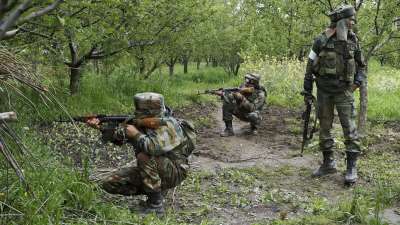
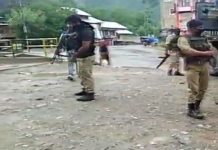
Srinagar: A gunfight broke out between terrorists and security forces in Jammu and Kashmir’s Rajouri district on Tuesday evening, with four terrorists believed to be trapped, officials said.
The encounter began around 7:20 pm in the snow-covered Beeranthub area of Kandi when terrorists opened fire on a team of the Jammu and Kashmir Police’s Special Operations Group (SOG), prompting retaliatory fire.
“Exchange of fire took place between terrorists and SOG team in Beeranthub area, PS Kandi, Rajouri. Joint parties of Police, Army and CRPF have rushed to the spot and cordoned off the area,” the Inspector General of Police (IGP), Jammu Zone, said in a post on X.
Additional reinforcements have been sent to the area, which is manned by the Army’s 43 Rashtriya Rifles.
There were no immediate reports of injuries or casualties.
Even after the announcement of the election schedule, both the National Democratic Alliance (NDA) and the Mahagathbandhan are locked in tough negotiations over the most contentious issue: seat-sharing.
According to sources, the two key NDA constituents in Bihar—the BJP and the JD(U)—are likely to contest around 100–103 seats each. As per the evolving formula, the JD(U) may field candidates in 103 constituencies, a drop from 115 in the 2020 Assembly elections. The BJP is expected to contest 102 seats, down from 110 last time.
Chirag Paswan’s Lok Janshakti Party (Ram Vilas) is expected to be allotted 20–25 seats, mainly in regions where it currently holds influence, particularly its five Lok Sabha seats. Jitan Ram Manjhi’s Hindustani Awam Morcha (HAM) could contest around eight seats, up from seven in 2020, when it won four. Upendra Kushwaha’s RLSP, despite its limited presence, might be allocated five to six seats.
However, buoyed by his party’s clean sweep in the recent Lok Sabha elections (five out of five seats), Chirag is said to be pushing hard for “winnable” constituencies. He has repeatedly touted his party’s “100 percent strike rate” as leverage—not just for better seat bargains but also as a bid to emerge as a chief ministerial contender. With Chief Minister Nitish Kumar reportedly in poor health and murmurs of a leadership transition within the JD(U), the LJP leader sees a strategic opportunity.
Meanwhile, the RJD-led Mahagathbandhan is also grappling with complex negotiations. Sources indicate that the RJD is poised to contest the lion’s share of seats—around 130. The Congress may be allotted 50, while the Vikassheel Insaan Party (VIP), led by Mukesh Sahani, could get around 20.
The Left parties—CPI, CPI(ML), and CPI(M)—are collectively being offered 35 seats. However, all is not well in the INDIA bloc as the CPI(ML) has reportedly rejected an offer of 19 seats, calling it “an attack on its dignity.” In 2020, the CPI(ML) contested 19 seats and won 12, giving it one of the best strike rates in the alliance. Citing its performance, it has demanded at least 40 seats this time.
Meanwhile, the Congress, which contested 70 seats in 2020 but won only 19, initially demanded a similar number for 2025. Its leaders have accused the RJD of monopolising the “winnable” constituencies and relegating Congress to weaker regions. In the last Assembly election, the RJD contested 144 seats and won 75, emerging as the single-largest party. The Congress’s modest 19-seat win did little to help the alliance, which ultimately fell short as the NDA clinched 125 of the 243 seats.
By Tuesday, gold prices had soared to unprecedented levels, nearing $4,000 per ounce. Reports confirmed that prices reached $3,948 before climbing even higher to close at $4,007.90. Analysts believe the rally could continue if certain market conditions align—particularly if investors shift capital from the U.S. Treasuries into gold. Goldman Sachs suggests such a move could push gold to even greater heights.
This dramatic surge reflects more than mere market speculation. Many experts see it as a sign of gold’s renewed role as a safe-haven asset amid rising global instability. Geopolitical tensions, especially the ongoing Russia-Ukraine war and the Israel-Gaza conflict, have been major drivers of increased demand.
Additional factors fuelling the rally include fears of a U.S. government shutdown, expectations of Federal Reserve rate cuts, and a weakening dollar. Concerns over the Fed’s independence and ballooning global debt have further enhanced gold’s appeal. According to the World Gold Council, gold demand rose 3% in Q2, largely driven by central bank buying and robust ETF inflows, however, high prices have dampened demand for gold jewellery, including in India
In India, gold is at record highs. On the Multi Commodity Exchange (MCX), gold futures recently surpassed Rs 1,20,900 per 10 grams. In several cities, spot prices of 24-carat gold breached historic levels, however, data shows India’s overall gold consumption dropped around 10% in Q2 2025 compared to the previous year. Soaring prices discouraged jewellery purchases but investment demand remains strong, particularly through gold bars, coins, and exchange-traded funds.
The rupee is also under pressure, with increased gold imports—driven by festive and wedding season demand—weighing on the currency. Despite the bullish sentiment, some analysts warn of a growing risk that a gold price bubble may be forming. While gold is traditionally seen as a stable store of value, its rapid ascent has raised concerns about sustainability. Bubbles typically emerge when prices far exceed intrinsic value, driven more by emotion and speculation than by fundamentals.
If core drivers such as rate cuts, geopolitical risks, or central bank buying lose momentum, gold could face a sharp correction. A sudden shift can trigger a 10–25% pullback—not a collapse but a drop reflecting volatility typical of overbought markets. And as history shows, even gold is not immune to corrections.
A delay in officially naming Tejashwi reflects deep political calculations rather than indecision. Congress seems to be doing some last-minute bargaining on seat-sharing. However, a prolonged delay also carries political risks, say observers
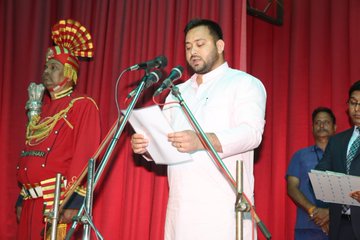
As Bihar heads toward the high-stakes 2025 assembly elections, the question dominating political discourse is when RJD’s Tejashwi Yadav will be the officially declared Chief Ministerial face of the Mahagathbandhan (Grand Alliance). While the atmosphere suggests overwhelming support within the alliance for his leadership, a formal announcement remains elusive — and somewhat contentious.
Tejashwi, the leader of the Rashtriya Janata Dal (RJD) and former Deputy CM of Bihar, has emerged as the clear frontrunner within the opposition camp. Leaders of left parties like CPI-ML have already thrown their weight behind him, many within the RJD also speak with certainty. Adding to this momentum, some reports declaring that Tejashwi has officially been named the CM candidate by the Mahagathbandhan.
According to a report, the alliance has not only finalised seat-sharing arrangements but also confirmed Tejashwi’s leadership role in the campaign, however, others present a more nuanced status. Senior Congress leaders have openly countered the claim of a finalised decision, insisting that announcement of a CM face must come from collective consensus among all alliance partners, thus reflecting issues regarding seat-sharing within the Mahagathbandhan.
Notably Congress leader Kanhaiya Kumar, while trying to present a united front, recently said there was “no confusion or dispute” over Tejashwi’s leadership. Yet his carefully worded support fell short of an outright declaration, again hinting at behind-the-scenes disagreements or at least ongoing negotiations.
Tejashwi himself has kept a diplomatic tone. Speaking to reporters, he said the CM face will be revealed at the “right time”, emphasising that the people of Bihar want change and that the Mahagathbandhan will respond accordingly. For now, Tejashwi Yadav remains the de facto face of the opposition in Bihar — heavily favoured, widely supported within key alliance factions, but not yet officially declared as the Chief Ministerial candidate by the full Mahagathbandhan.
Whether that declaration is just a formality or a sticking point that could reshape alliance dynamics remains to be seen. According to analysts, the delay in officially naming Tejashwi reflects deep political calculations rather than indecision. Despite its weak ground presence in Bihar, Congress wants to retain bargaining power on seat-sharing and leadership decisions. Declaring Tejashwi too early could cement RJD’s dominance, sidelining Congress further.
The alliance also fears repeating its 2020 mistake, where Tejashwi led the campaign but the Mahagathbandhan fell short. Leaders worry a premature CM face may polarise voters or lead to complacency. Strategically, the alliance may be waiting for the NDA’s moves, especially on whether Nitish Kumar will run again.
As the second international airport for the Mumbai Metropolitan Region, NMIA will work in tandem with Chhatrapati Shivaji Maharaj International Airport (CSMIA) to ease congestion and elevate Mumbai into the league of global multi-airport systems
Photo: courtesy NMIA website
Mumbai is set to welcome its second international airport — the Navi Mumbai International Airport (NMIA) — which will ease congestion at Chhatrapati Shivaji Maharaj International Airport (CSMIA) and position Mumbai among global multi-airport systems. Prime Minister Narendra Modi will inaugurate the new airport on Wednesday, along with several other major infrastructure projects in the city. On Thursday, he will host UK Prime Minister Keir Starmer—his first official visit to India.
Developed under a Public–Private Partnership (PPP) model at a cost of Rs 19,650 crore, NMIA is India’s largest greenfield airport project. Spread over 1160 hectares, the airport is designed to handle 90 million passengers annually and 3.25 million metric tonnes of cargo. It features an Automated People Mover (APM) to connect its four terminals and the landside infrastructure, dedicated storage for Sustainable Aviation Fuel (SAF), solar power generation of about 47 MW, and EV bus services. NMIA will also be the first airport in India connected by Water Taxi.
In addition to the airport, the Prime Minister will inaugurate Phase 2B of Mumbai Metro Line-3, which runs from Acharya Atre Chowk to Cuffe Parade. This marks the full launch of the 33.5-km Aqua Line, Mumbai’s first fully underground metro corridor, built at a total cost of over Rs 37,270 crore. The line is expected to transform commuting in the Mumbai Metropolitan Region, offering a faster and more efficient transit system.
PM Modi will also launch “Mumbai One,” an Integrated Common Mobility App covering 11 public transport operators including Metro, Monorail, Suburban Railways, and various municipal bus services. The app provides integrated mobile ticketing, real-time updates, digital payments, route information, and an SOS feature for safety. It aims to streamline multimodal transport and enhance urban mobility across the city.
During the visit, PM Modi and UK PM Keir Starmer will review the progress of the India-UK Comprehensive Strategic Partnership, aligned with ‘Vision 2035’ — a 10-year roadmap covering trade, innovation, defence, climate, energy, health, education, and people-to-people ties. Discussions will focus on the India–UK Comprehensive Economic and Trade Agreement (CETA), viewed as central to future economic cooperation between the two nations.
The leaders will also participate in the 6th edition of the Global Fintech Fest 2025, which brings together global innovators, policymakers, regulators, and business leaders to explore advancements in financial technology and economic collaboration.
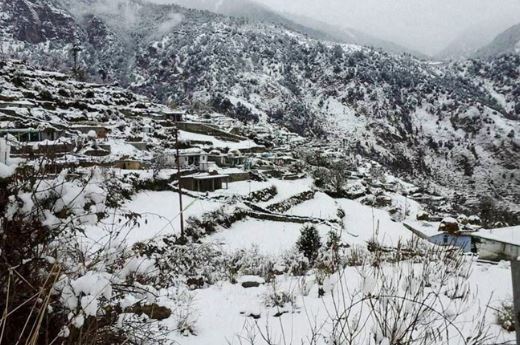
Srinagar: The higher reaches of Kashmir, including Gulmarg, Gurez, and other mountainous regions, witnessed the season’s first snowfall this week, signaling the early onset of winter in the Valley.
Fresh layers of snow covered high-altitude areas such as Affarwat in Gulmarg, Sinthan Top in Anantnag, Zojila Pass, Gumri, Minimarg, and Razdan Top – the gateway to Gurez Valley in Bandipora district.
Light snowfall was reported at Razdan Top early Monday morning, bringing down temperatures across the upper regions. Officials said traffic on the Bandipora–Gurez road, however, remained open.
According to the Meteorological Department, more rain and snow are likely in parts of Jammu and Kashmir between October 5 and 7 due to a western disturbance. Light rainfall was also recorded in Srinagar and nearby areas, while intermittent showers occurred across the plains of north and south Kashmir.
The change in weather has delighted locals and tourists alike, marking the Valley’s transition toward winter. Authorities have advised travelers to remain cautious in higher altitudes as roads may turn slippery and temperatures are expected to drop further.
Several wild animals feared displaced in north Bengal floods
The sad part is, innocent wildlife and domestic animals are having to bear the brunt of humanity’s environmental mistakes, with climate change and intense weather events increasingly threatening them, especially the most vulnerable.
The devastating floods in Punjab not only wreaked havoc on human settlements but also caused immense suffering to animals—both domestic and wild—and more recently the floods in North Bengal caused devastating consequences for species like rhinos, leopards, Indian bison (gaurs), and elephants. According to reports, heavy rainfall, exceeding 300 mm in a single day, led to swollen rivers like the Mahananda, Jaldhaka, and Teesta, submerging forests, displacing animals and forcing them to flee into human settlements.
Fatalities reportedly include a rhino, and some other animals, including leopards, Indian bison (gaurs) and sambar deer, primarily from the Gorumara and Jaldapara areas. The floods also caused significant damage to forest infrastructure, including the collapse of bridges and roads, hindering rescue operations and trapping wildlife.
This crisis underscores the urgent need for comprehensive disaster management plans that include provisions for wildlife protection and habitat preservation. The loss of biodiversity in these regions highlights the broader environmental challenges posed by climate change and the importance of coordinated conservation efforts, experts say.
Particularly in the east, at risk are ecologically sensitive areas like Kaziranga National Park, Manas, and the Sundarbans. The floodwaters destroy grasslands—the main food source for herbivores—creating long-term challenges for wildlife recovery.
In the Sundarbans region, the floods, intensified by high tides and breached embankments, inundate mangrove forests, displacing tigers, crocodiles, and other species. Saltwater intrusion destroys freshwater sources, forcing animals to move deeper into human settlements, leading to a spike in man-animal conflicts. Many smaller species—reptiles, birds, and amphibians—are washed away or trapped in rising waters.
The fragile mangrove ecosystem suffered severe erosion, threatening breeding grounds and food chains and conservationists warn that repeated flooding events, driven by climate change, are endangering biodiversity in the region.
The recent floods in Punjab, which submerged vast stretches of farmland and villages, also left thousands of cattle, buffaloes, goats, and poultry being swept away or stranded without food and shelter. Many dairy farmers reported losing their livestock, which represent both livelihood and family for them. With grazing lands underwater and fodder supplies destroyed, surviving animals suffered from hunger and disease.
In wildlife areas like Harike Wetland and Beas Conservation Reserve, rising water levels reportedly forced deer, nilgai, and smaller mammals to flee to higher ground, often ending up near human habitation. Birds lost nesting sites, and fish populations suffered as silt and pollutants choked water bodies with floods again exposing the lack of preparedness for animal rescue in disaster management plans.
But this is not the first instance of a shoe being used as a form of protest in India
Photo: courtesy Supreme Court website
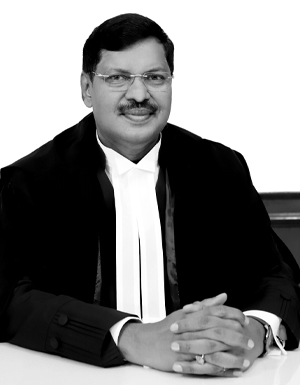
A dramatic scene unfolded in the Supreme Court on Monday when a 71-year-old man, identified as advocate Rakesh Kishore, attempted to hurl a shoe at Chief Justice of India (CJI) B.R. Gavai. The shoe fell short, and security personnel swiftly detained Kishore, who was later escorted out. The incident triggered widespread outrage across political and legal circles.
According to reports, Kishore was protesting against the CJI’s recent remark on Lord Vishnu, made during a hearing on September 16. At that time, Justice Gavai had told a petitioner seeking the replacement of a damaged idol in Khajuraho to “go and ask the deity himself.” Kishore, declaring, “We will not tolerate any insult to Sanatan Dharma,” disrupted proceedings during the morning mentioning session before attempting the attack.
Despite the commotion, CJI Gavai remained composed and advised lawyers not to be distracted. The Bar Council of India immediately suspended Kishore and initiated disciplinary action, although the CJI reportedly requested that no punitive measures be taken and that the thrown shoe be returned.
Prime Minister Narendra Modi condemned the incident, calling it “utterly reprehensible” and praising Justice Gavai’s calm response. “Spoke to the Chief Justice of India, Justice B.R. Gavai Ji. The attack on him earlier today in the Supreme Court premises has angered every Indian. There is no place for such reprehensible acts in our society. It is utterly condemnable. “I appreciated the calm displayed by Justice Gavai in the face of such a situation. It highlights his commitment to the values of justice and strengthening the spirit of our Constitution.”
Congress leaders Rahul and Sonia Gandhi termed the act an “assault on the dignity of the judiciary and the Constitution.” The CPI(M) politburo described it as a reflection of “communal venom” in society. Bar associations, including the Supreme Court Bar Association and the All India Lawyers Union, also strongly denounced the attack, urging respect for judicial institutions.
The incident reignited debate over the rise of intolerance and growing aggression in public discourse. Legal experts and civil society members expressed concern that anger over religious or ideological differences is increasingly taking violent or disruptive forms. Many warned that attacks on institutions of justice erode democratic values and the rule of law. Commentators said that dissent and belief must coexist within the framework of respect but the judiciary should remain insulated from ideological or religious passions to safeguard the spirit of India’s pluralism and constitutional morality.
However, this is not the first instance of a shoe being used as a form of protest in India. Over the years, politicians and public figures — including former Prime Minister Manmohan Singh, Congress leader P. Chidambaram, and BJP’s L.K. Advani — have faced similar acts from protesters seeking attention or expressing anger. Such incidents, though symbolic, have often reflected growing frustration and the erosion of civil dialogue in the country’s political and public life. The number of international shoe-throwing incidents involving prominent figures is also many.
With the number of freebies for women and youth being offered by the ruling side, will the voters lap them up or opt for a change?
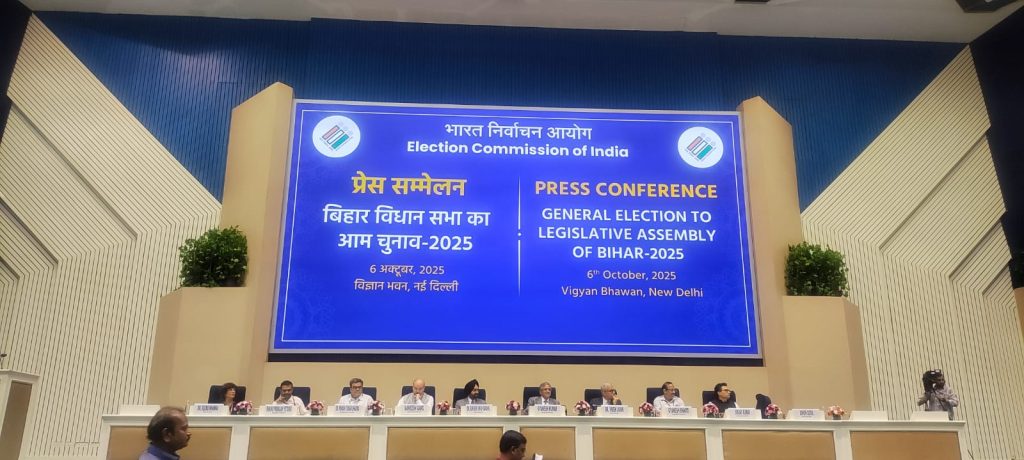
The Election Commission of India on Monday declared the schedule for the Bihar Assembly elections — a high-stakes contest featuring the ruling alliance of the Bharatiya Janata Party (BJP) and Chief Minister Nitish Kumar’s Janata Dal (United), facing off against the opposition coalition Mahagathbandhan, led by the Rashtriya Janata Dal (RJD) and the Indian National Congress and a third player in the fray — the Jan Suraj Party, founded by political strategist-turned-politician Prashant Kishor, which is positioning itself as a credible alternative. Other prominent parties in the mix include the All India Majlis-e-Ittehadul Muslimeen (AIMIM) and the Bahujan Samaj Party (BSP).
The election will be held in two phases, on November 6 and 11, with the counting of votes set for November 14. The final date for submitting nominations is October 17 for the first phase and October 20 for the second phase. Eligible voters can still enroll until the last date of nomination.
The term of the current 243-member Bihar Assembly is scheduled to end in November.
Last month, the Election Commission published the final electoral roll for the upcoming election. As of September 30, the total number of eligible voters in the state stands at around 7.42 crore, which includes 14 lakh first-time voters. Of the total electorate, 3.92 crore are male and 3.5 crore are female. The list also records 1,725 transgender voters, around 7 lakh individuals with disabilities, and 4 lakh senior citizens aged above 85.
In the 2020 Assembly elections, the National Democratic Alliance (NDA) secured a majority with 125 seats, while the Mahagathbandhan won 110. The RJD emerged as the single largest party, winning 75 seats. As it stands, the NDA controls 131 seats in the 243-member Assembly, while the opposition INDIA bloc holds 111 — with the RJD having 77, the Congress 19, and CPI(ML) 15.
Interesting possibilities
This year’s elections open up several intriguing possibilities. With the number of freebies for women and youth being offered by the ruling side, will the voters lap them up or opt for a change? Is RJD’s Tejashwi Yadav the option people of Bihar are looking for or will Prashant Kishor prove to be the dark horse in the race to the Bihar Assembly.
The entry of the Jan Suraj Party adds another layer of unpredictability, particularly in constituencies where voter dissatisfaction with both major alliances is growing. Prashant Kishor’s campaign, emphasising governance reform and grassroots engagement, may appeal to younger and first-time voters — a group that has expanded significantly since the last polls.
There are other issues — jobs, migration, shifting caste dynamics, and the fragmentation of traditional vote banks — that may lead to surprises in key regions, especially in areas like Seemanchal and Mithilanchal, where smaller parties like AIMIM and BSP have been gradually expanding their presence.
The INDIA bloc’s strategy will be tested, especially its ability to maintain unity and effectively transfer votes among allies. Meanwhile, the BJP-JD(U) alliance will have to counter anti-incumbency and manage voter perception amid leadership fatigue and concerns over development versus social justice.
Another key factor is voter turnout, particularly among women and youth, which could swing close contests. With rising political awareness, social media influence, and increasing engagement by civil society, Bihar’s electorate is more informed and vocal than ever. These elements together make the 2025 Bihar Assembly elections one of the most closely watched and potentially transformative in recent memory.
Amid a storm of allegations, counterclaims, and political drama, India’s electoral system finds itself under intense scrutiny. The recent controversy surrounding alleged voter roll manipulation has exposed potential cracks in the foundation of India’s electoral democracy—raising questions not just about technical safeguards, but about trust in the Election Commission itself.
It began when opposition leaders accused the Election Commission of India (ECI) of facilitating or ignoring attempts to delete thousands of voter names. The slogan “vote theft” quickly became a central rallying cry for the Opposition, sparking a wider debate about electoral fairness.
Although the ECI has dismissed the accusations as baseless, demanding evidence via affidavit, it has since introduced new digital verification mechanisms, including a mandatory OTP (one-time password) system linked to Aadhaar-verified mobile numbers. The new e-signature feature on the ECINet portal and app—rolled out shortly after the Aland controversy—requires identity verification for those seeking to add or delete names from the voter list.
The ECI insists this upgrade was not a reactive measure, but critics aren’t buying it, charging that the Commission is “being clever by half,” indicating a serious vulnerability.
The controversy deepens as the Karnataka CID alleges that the ECI has failed to provide critical data—IP logs and phone records—that could aid the investigation into who attempted the mass deletion. There is a question: if no wrongdoing occurred, why was an FIR filed?
Former Chief Election Commissioners agree that the ECI’s response has been inadequate. S.Y. Quraishi criticized the Commission for its aggressive dismissal of the Opposition’s concerns. Another former CEC, O.P. Rawat, argued the Commission broke with long-standing tradition by not immediately launching a credible and transparent inquiry into the complaints.
While the ECI maintains that votes cannot be deleted online without physical verification, the debate isn’t about procedural safeguards—it’s about public perception and institutional accountability. The introduction of tech features like Aadhaar-linked verification may close one loophole, but without transparency, scepticism will persist.
With assembly elections around the corner, the fallout from this controversy could be significant. As “vote theft” becomes more than just a slogan, the ECI must reckon with the deeper issue: restoring trust in the very process it was meant to protect.
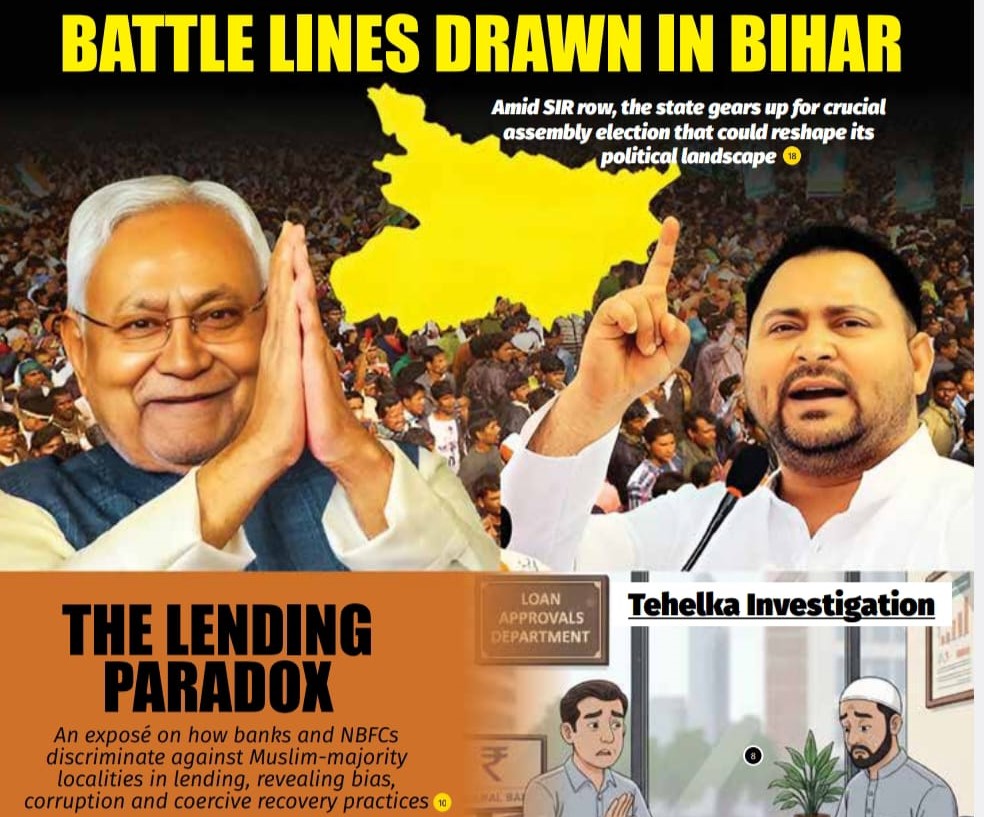
Meanwhile, Tehelka’s cover story ‘Battle lines drawn in Bihar’ is about how, amidst the SIR row, the state is gearing up for the crucial assembly election that could reshape its political landscape, where CM Nitish Kumar and challenger Tejashwi Yadav square off, with Prashant Kishor looming as a wildcard.
Also, our Special Investigation Team (SIT), in its latest probe, has unearthed how banks and NBFCs discriminate against Muslim-majority localities in extending credit. The investigative story ‘The lending paradox’ is an exposé on how banks and NBFCs discriminate against Muslim-majority localities in lending, revealing bias, corruption, and coercive recovery practices.