Agra’s bear centre located inside the Soor Sarovar Bird Sanctuary takes care of rescued animals. A report by Deepanwita Gita Niyogi
As the vehicle entered the Soor Sarovar Bird Sanctuary situated in Agra, the Keetham lake, a huge man-made water reservoir, came into view. The sanctuary spread over a total of 403 hectares of land attracts a variety of migratory birds in the winter. The place is home to over 165 species of migratory as well as resident birds. Soor Sarovar was declared a bird sanctuary in 1991.
Inside this serene place, dotted with numerous trees, about six hectares of land is especially dedicated to the rescue and rehabilitation of sloth bears. In 1999, the Uttar Pradesh forest department handed over this particular area to non-profit Wildlife SOS. There are at present close to 90 bears here. The bear facility was the organisation’s maiden project.
At present, the bear facility inside the sanctuary takes care of dancing sloth bears which have been rescued. The animals are housed in enclosures where they receive long-term care and medical treatment. They are not fit for a life in the wild. When they were initially used for street dance performances, many of them suffered mutilation and underwent physical as well as psychological trauma. Some of them have been diagnosed with chronic medical issues like joint pain.
At the bear centre, the rescued animals undergo a 90-day quarantine period. During this period, they undergo health check-up and are treated for injuries, wounds and diseases. The animals are also vaccinated against rabies, leptospirosis and canine hepatitis. After the quarantine is over, the bears are looked after by dedicated caregivers. There is also a bear hospital equipped with a path lab and other essential equipment needed to provide the required care to the bears.
A history of torture
The Agra bear rescue facility is on the highway connecting Mathura in Uttar Pradesh to Delhi. In India, four species of bears are found. Apart from the sloth bear, there are the Asiatic black bear, sun bear and the Himalayan brown bear. Globally, there are eight recognised species of bears.
Sloth bears are found in plain areas and tropical forests, inhabiting mainly lowlands. They have been used by the Kalandar community for entertaining the public for almost 400 years. The community came to India at the time of the Mughals. Initially, the performances were limited to palaces, and later reached the streets for mass entertainment.
According to Harendra Singh, who is the head coordinator for the visitor and volunteer programme at Wildlife SOS, when in confinement, sloth bears undergo harsh treatment at the age of about three to four months. Their teeth and claws are broken and muzzles pierced to pass ropes in order to make them dance. In this way, their muzzles get infected. The community members also castrate the bears and poke them with hot metal rods.
In 1972, India passed the Wildlife Protection Act. With that, bears were entitled to the same amount of protection as tigers as Schedule I animals. In 1999, wildlife SOS spread awareness about the cruel practice of using sloth bears for street dances. The non-profit also sent a report on bear cub smuggling.
“Legal aid, designated land for the bear rescue facility and government involvement were sought so that the police did not think that the traditional livelihood of the Kalandars was being snatched. As sloth bears are easily available, cubs are stolen from the wild. Enforcement of the law wasn’t that good for many years, and thus, the bears continued to be used in street performances,” Singh said.
Along with the rehabilitation of the sloth bears, the marginalised Kalandars were also trained in other vocations. They suffered economic loss when their bears were handed over as part of the rescue and rehabilitation mission.
Care for the bears
Apart from Agra, there are three other centres in India for rescued bears. These are located in Purulia (West Bengal), Bengaluru and Bhopal. When bears are handed over, Rs 50,000 is paid as compensation to a Kalandar community member. Some of the Kalandars have started working with the non-profit whereas others make handicraft items and sell them through shops. This is part of the livelihood shift. Some 11,000 Kalandar children also receive education for a better future.
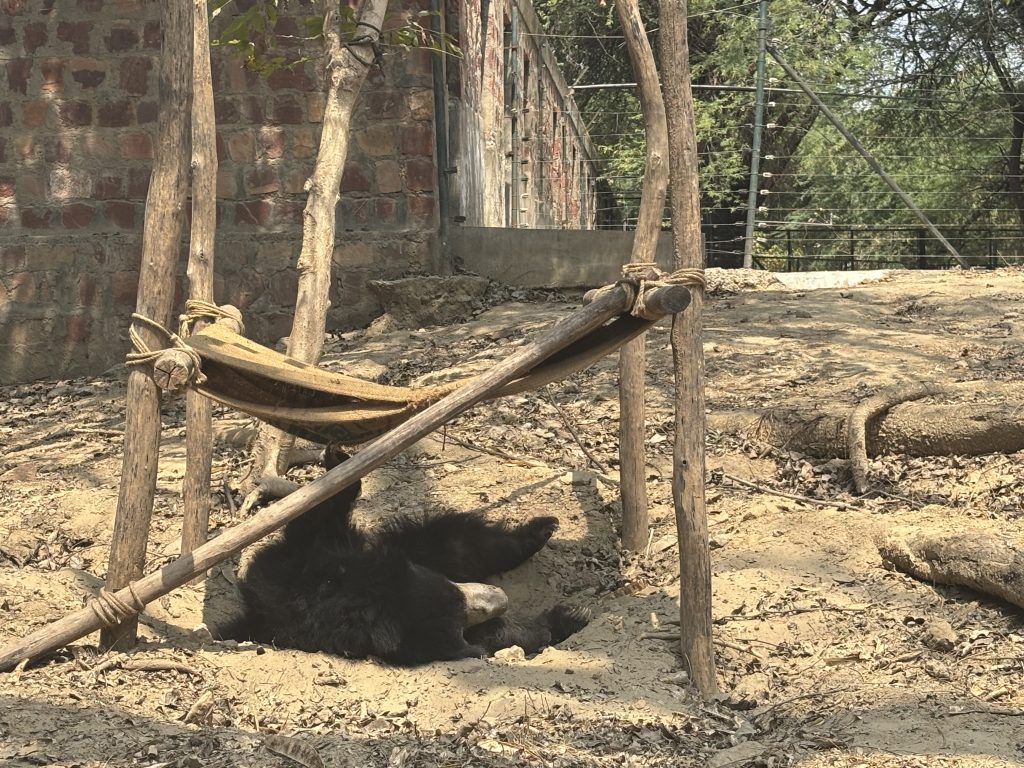
During the visit, a bear was seen enjoying a siesta outside an enclosure. Bears have jaggery and dates as part of their special enrichment diet here. In the wild, the animals feed on termite and mahua flowers because of their sugary taste. Bears generally rest during the day. Though nocturnal animals, dancing bears are used for performances during the day and are tied up with ropes at night.
Though there are enclosures at the facility, the bears can freely move about. Care is needed as some animals become stressed when they see human beings. Caregivers are there to look after the animals and provide them with food. “Social adjustment is tried with the bears. But some bears want to be alone,” Singh added.
A walkway inside the sanctuary offered the sighting of a spotted deer on the way to the bear facility. In 2013, the forest department opened up the area for public education. Though people can visit other parts of the sanctuary, a visit to the rehab centre needs special permission. Due to space shortage, expansion was needed. Keeping this in mind, the Agra Bear Rescue Facility Extension was set up on an additional 26 hectares. However, this area does not fall under the sanctuary and is in Mathura.
After weeks of negotiations and ideological adjustments, Germany’s conservative and centre-left parties have sealed a power-sharing deal, setting the stage for Friedrich Merz to take over as chancellor and lead a new coalition government in May. A report by Amit Prakash Singh
After about six and a half weeks of regular deliberations between the two political parties, an agreement to form a new government in Germany has been reached. The talks between the conservatives (CDU/CSU) and the outgoing alliance of the centre-left Social Democrats (SPD) were not smooth at all times but continued steadily across various issues.
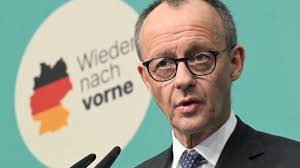
On April 9, 2025, the leader of the CDU/CSU, Friedrich Merz, announced the agreement between both parties to secure the required majority in the Bundestag (German Parliament). He expressed confidence that the coalition would complete its full term in office. The new government is expected to take charge in the first week of May.
While the talks were underway, the new alliance demonstrated its camaraderie by pushing forward a plan to increase defence spending and establish a major infrastructure fund to boost the state’s economy. The incoming Chancellor, Merz, is confident that the far-right party in the house will not pose any disruption. He stated, “Germany is getting a government that is capable of acting decisively. We will move the European Union forward.”
Merz, a 69-year-old leader, remained the frontrunner during the election. Known as a man of principles, he had stepped down from a party post in 2021 following differences with then-Chancellor Angela Merkel. He was later elected as the leader of the Christian Democratic Union (CDU).
In the Bundestag, this time, the Alternative for Germany (AfD) has secured a strong presence with a significant number of elected representatives. The party’s leader, Alice Weidel—only 44 years old—is making her debut as an elected representative of a far-right party. A staunch anti-immigration activist, Weidel enjoys the backing of American conservatives such as Donald Trump and J.D. Vance. She has expressed doubts about whether the new government will be able to survive.
For the first time, this far-right party has managed to garner such widespread support within Germany, including gaining a notable foothold among the youth. Its electoral performance surprised many, as it mesmerised citizens with its impressive victory. Yet, despite this surge, the leaders of other parties did not involve Alice Weidel in the formation of the new government, largely due to the party’s controversial past.
During the election campaign, J.D. Vance visited Munich to attend the Security Conference, which was also attended by top leadership from European Union nations. In a hard-hitting speech, Vance lambasted European leaders and accused Germany’s mainstream parties of creating a “firewall” against the far-right AfD. He charged them with straying from fundamental values—values, he claimed, that are shared with the United States. Later, Vance also visited Alice Weidel.
German Chancellor Olaf Scholz publicly denounced Vance’s remarks, saying it was not for others to dictate what Germany or Europe should do. He firmly rejected any cooperation with the AfD, citing its Nazi legacy. “Never again fascism, never again racism, never again aggressive war,” Scholz declared.
Few believed the outcome when the German election results were announced. AfD emerged as the largest opposition bloc, winning 152 seats in the Bundestag. Yet, despite these numbers, no other party or leader found it appropriate to engage or align with the AfD. However, there now appear to be chances of the party gaining even greater ground in the next term.
Next month, the new government under the leadership of Friedrich Merz will be sworn in. The incoming administration faces numerous challenges—both on the national front and in the international arena. At present, the European Union is in urgent need of a new security framework in the wake of Russia’s invasion of Ukraine. France and Britain have offered their support in the event of mounting strategic pressures.
It has become increasingly evident that NATO is no longer reliable, having failed to respond decisively to Ukraine’s repeated appeals to the United States for help. This growing uncertainty has compelled European nations to initiate fresh debates on continental security and to consider the development of their own nuclear deterrent, as the broader security order appears to have shifted.
Germany’s new government will have to shoulder greater security responsibilities, especially given NATO’s structure under U.S. command. Hoping for outside intervention now seems unrealistic. In anticipation of this, the incoming coalition had earlier approved a substantial fund to bolster its defence forces.
Known for its robust industrial base and strong economy, Germany will now have to assume a broader role within the European Union. Merz—an economist by training who once worked at the World Bank, later became a seasoned advocate, and is now taking the reins as a statesman—appears aware of the scale of the challenge ahead.
Though some have questioned his administrative experience, his party includes several capable administrators who served in earlier coalitions under Chancellor Angela Merkel, as well as among the ranks of the centre-left Social Democrats. With their support, Merz is expected to navigate the complexities of governance effectively.
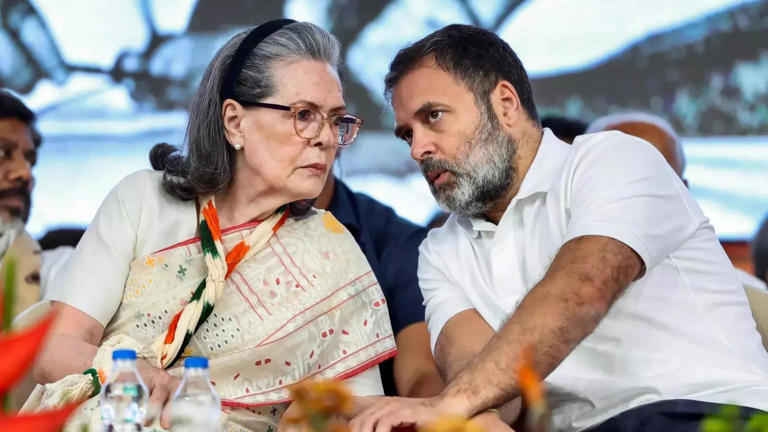
Taking a big step against political heavyweights, the Enforcement Directorate (ED) filed a prosecution complaint in a Special Delhi court against Congress MPs Rahul Gandhi and Sonia Gandhi in the alleged National Herald or Associated Journals Limited (AJL) money laundering case, a lawyer said on Tuesday
The Special Court has fixed April 25 for hearing arguments on taking cognisance of the prosecution complaint.
Others named in the chargesheet include Congress Overseas Chief Sam Pitroda, Suman Dubey, and others.
The fresh trouble for Congress-controlled AJL comes close to the ED serving notices to registrars of property in Delhi, Mumbai and Lucknow to take possession of attached properties worth Rs 661 crore.
These properties were attached after the investigation revealed signification generation, possession and use of proceeds of crime to the tune of Rs 988 crore.
In Delhi, notices were pasted on the wall of AJL property-5 (A), Bahadur Shah Zafar Marg in Central Delhi, which is home to media houses and newspaper offices.
The notices were served on Friday in compliance with Section 8 of PMLA, 2002 and Rule 5(1) of the Prevention of Money Laundering (Taking Possession of Attached or Frozen Properties Confirmed by the Adjudicating Authority) Rules, 2013.
In Mumbai, a notice was also served on Jindal South West Projects Limited, which is occupying the 7th, 8th, and 9th floors at Herald House, Bandra (East).
Jindal South West Projects was directed to transfer the rent/lease amount every month in favour of the Director, Directorate of Enforcement.
In Lucknow, notices were pasted on property number 1, Bisheshwar Nath Road.
Earlier, the ED conducted searches and seizures at multiple locations, uncovering incriminating documents linked to the alleged money laundering activities.
Investigation revealed that Young Indian, a private company beneficially owned by Congress leaders Sonia Gandhi and Rahul Gandhi, acquired AJL properties worth Rs 2, 000 crore for a mere Rs 50 lakh, significantly undervaluing its worth.
The ED probe also indicated that Young Indian and AJL properties were used for the generation of further proceeds of crime in the form of bogus donations to the tune of Rs 18 crore, bogus advance rent to the tune of Rs 38 crore and bogus advertisements of Rs 29 crore.
The investigation by ED commenced in 2021, based on a cognizance order issued on June 26, 2014, by the Metropolitan Magistrate Patiala House Courts in New Delhi, following a private complaint filed by Subramanian Swamy.
The complaint highlighted a criminal conspiracy by several prominent political figures, including Sonia Gandhi, Rahul Gandhi, Oscar Fernandes, Suman Dubey, Sam Pitroda and Young Indian for alleged involvement in a money laundering case.
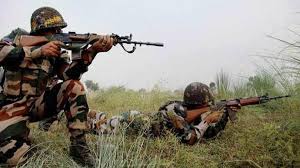
A fresh encounter broke out between militants and security forces in Jammu and Kashmir’s Poonch district on Sunday evening, prompting a large-scale anti-militancy operation in the Pir Panjal valley.
According to Army officials, security personnel made contact with the militants during a joint operation with the Jammu and Kashmir Police in the Lasana area of Surankote.
“Additional troops have been rushed to the area, and the search operation is underway to prevent any attempt by the militants to escape,” the Army said in a statement.
While the exact number of militants present in the area is not yet known, officials said the operation remains active.
This comes amid heightened tensions in the Jammu region, where five militants and four policemen have been killed in a series of encounters over the past month.
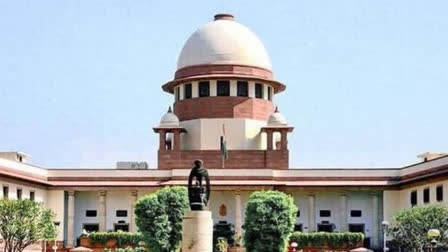
The Supreme Court is slated to hear on Wednesday a clutch of petitions challenging the constitutional validity of the Waqf (Amendment) Act, 2025.
As per the cause list published on the website of the apex court, a bench, headed by Chief Justice of India Sanjeev Khanna and comprising Justices Sanjay Kumar and K.V. Viswanathan, will take up the matter for hearing on April 16.
Multiple petitions have been filed before the top court challenging the constitutional validity of the recent amendments introduced in the Waqf Act, 1995.
On the other hand, several BJP-ruled states, including Haryana, Maharashtra, Madhya Pradesh, Rajasthan, Chhattisgarh, Assam and Uttarakhand, have approached the Supreme Court seeking to defend the Waqf (Amendment) Act, 2025.
Similarly, the Hindu Sena filed an intervention application before the apex court supporting the Waqf (Amendment) Act, 2025. “There is no violation of any right of any member of the Muslim community. Rather the unamended provision of Waqf Act, 1995 caused serious prejudice to the right and interest of the non-Muslim members of society as in view of Section 3 read with Section 40 of Waqf Act, 1995, the properties of non-Muslim were taken over by Waqf board, ” the application filed by the National President of Hindu Sena argued.
After the legislation was passed by the Parliament in the first week of April, the Congress announced it will challenge the Waqf (Amendment) Bill (now an Act after the Presidential assent) before the Supreme Court, claiming that it was an attack on the basic structure of the Constitution and was aimed at “polarising” and “dividing” the country on the basis of religion.
On the other hand, the government has said that crores of poor Muslims will benefit from this legislation, and in no way does it harm any single Muslim. Minority Affairs Minister Kiren Rijiju has said the legislation did not interfere with the Waqf properties, adding that the Modi government works with the vision of ‘Sabka Saath and Sabka Vikas’.
In his petition filed before the apex court, Congress MP and party whip in Lok Sabha Mohammad Jawed contended that the amendments violated Articles 14 (right to equality), 25 (freedom to practice and propagate religion), 26 (freedom of religious denominations to manage their religious affairs), 29 (minority rights), and 300A (right to property) of the Constitution. Another plea filed by All India Majlis-e-Ittehadul Muslimeen (AIMIM) chief Asaduddin Owaisi said that the impugned amendments are “ex facie violative of Articles 14, 15, 21, 25, 26, 29, 30, 300A of the Constitution of India and manifestly arbitrary”. Several others, including the Association for Protection of Civil Rights, AAP leader Amanatullah Khan, Maulana Arshad Madani of Jamiat Ulema-i-Hind, the All India Muslim Personal Law Board (AIMPLB), the Social Democratic Party of India (SDPI), the Indian Union Muslim League, Taiyyab Khan Salmani, and Anjum Kadari, have filed the petitions challenging the constitutional validity of the Waqf (Amendment) Act, 2025.
The concept of ‘Waqf’, rooted in Islamic laws and traditions, refers to an endowment made by a Muslim for charitable or religious purposes, such as mosques, schools, hospitals, or other public institutions.
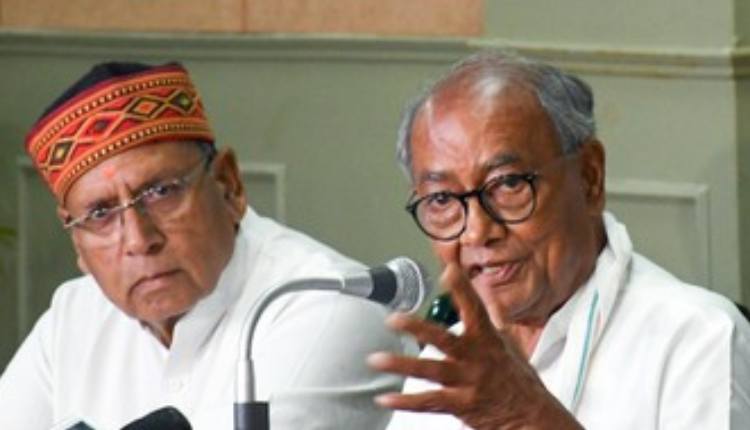
Former Madhya Pradesh Chief Minister Digvijaya Singh on Tuesday accused Yoga guru Baba Ramdev of “inciting religious sentiments” in an attempt to increase the sale of his products by “misleading” the people.
In a written complaint submitted at T. T. Nagar police station in Bhopal, veteran Congress leader alleged that in a video shared from Ramdev’s official social media handle (X), he has used the term “Sharbat Jihad” for promoting Patanjali’s latest rose-flavoured sharbat.
“Ramdev has hurt the religious sentiments, and the way he has targeted a particular community may lead to communal violence. He has deliberately tried to create disturbances among the people of different religious communities, and this is an offence under Article 199 of the Bharatiya Nyay Sanhita (BNS),” Singh said.
He added, “Therefore, I would request T. T. police to lodge an FIR against Ramdev and take an appropriate action against him,” Digvijaya Singh said in his written complaint filed on Tuesday. Calling Ramdev as “vyapari” baba, Congress leader said the latter has deliberately opposed ‘Rooh Afza’ sarbat, because its maker belongs to the Muslim community.
“Hamdard company, which produces ‘Rooh Afza’, is around 100 years old and a trusted brand in the country. Using the religious sentiments for business purposes is an offence,” he added.
Meanwhile, Digvijaya Singh also hit out at the BJP-led Madhya Pradesh government for being biased in allotting lands for Ramdev’s companies in the state. He alleged that the state government has allotted lands worth more than Rs 1000 crore.
“Madhya Pradesh government has allocated lands for investment purposes, several years have passed, and no industry has been set up on these lands, which includes 500 acres in Satna, 200 acres in Shivpuri, 150 acres in Jhabua and many other parts of the state. Why BJP government not cancelled the lease of lands allotted to Ramdev’s company?” Singh questioned during a press conference here in Bhopal on Tuesday.
Notably, in the video, Baba Ramdev was heard slamming ‘Rooh Afza’, claiming that a company selling sharbat is using the money earned from it to build mosques and madrasas. He further warned that consuming such products could promote “Sharbat Jihad.”
“There’s a company that gives you sharbat, but the money it earns is used to construct madrasas and mosques,” said Baba Ramdev in a video, warning people that, “If you drink that sharbat, madrasas and mosques will be built. But if you drink this (Patanjali’s rose sharbat), gurukuls and Acharya Kulam will be built and developed, and Patanjali University will expand.”
IndiGo on Monday announced to move its operations to Terminal 1 of Delhi’s IGI Airport due to the mainenance work thay will be carried out there.
“While notifications are being sent to registered contact details via Email and WhatsApp, we’re also appending a list of flights that are being reassigned on our website, so you have all the information you need at your fingertips,” IndiGo stated.
According to the information available, the airlines will be only be operating from Terminal 1 and Terminal 3 from April 15.
IndiGo said in a statement said that April 15 onwards, all Delhi T2 flights will shift to the Terminal 1 due to maintenance.
With the implementation of this change, IndiGo will now operate from Terminal 1 and Terminal 3 of the Indira Gandhi International Airport till further notice.
“Delhi Terminal 2 is going under maintenance, resulting in all flights being moved to Terminal 1 starting April 15, 2025, until further notice,” IndiGo’s notice said, adding that a list of flights being reassigned will be shared on its website.
Apart from IndiGo, flights operated by other airlines from the IGI’s T2 are expected to be shifted to other terminals as well.
Akasa Air, which is among the airlines which operate flights from T2, also said that all its flights to and from Delhi will operate from Terminal 1 (1D) of the Indira Gandhi International Airport.
Meanwhile, Delhi airport’s upgraded Terminal 1 will be fully operational from April 15. “In just 2 days, experience a smarter, more comfortable journey at Delhi Airport’s upgraded Terminal 1. Get ready for smoother travel, better connectivity, and world-class facilities — all under one roof,” Delhi International Airport Limited (DIAL) said in a post on X.
Mehul Choksi, an absconding diamond jeweller who was involved in alleged Rs 13,000 crore PNB bank loan fraud case, has been detained in Belgium following an extradition request by Indian probe agencies.
Choksi, the second prime accused in the Punjab National Bank (PNB) fraud case after his nephew Nirav Modi, has been detained in Belgium. The action was taken on Saturday based on an extradition request by India’s Central Bureau of Investigation (CBI) and the Enforcement Directorate (ED).
Choksi had been residing in Antigua since 2018 after fleeing India, and he traveled to Belgium last year citing medical treatment. Indian authorities had been pursuing his extradition after an earlier Interpol Red Notice against him was withdrawn.
According to sources, Indian agencies shared at least two open-ended arrest warrants—issued by a special court in Mumbai in 2018 and 2021—with Belgian authorities as part of the extradition process. Formal paperwork is currently underway, and officials expect Choksi may apply for bail on medical grounds.
Choksi, Nirav Modi, their relatives, employees, and certain bank officials were booked in 2018 by the CBI and ED for their alleged involvement in a multi-crore loan fraud at PNB’s Brady House branch in Mumbai. Investigations revealed that Choksi, his firm Gitanjali Gems, and others conspired with bank officials to fraudulently obtain Letters of Undertaking (LoUs) and enhance Foreign Letters of Credit (FLCs) without proper procedures, resulting in a significant financial loss to the bank.
The CBI has filed at least two chargesheets against Choksi, while the ED has filed three prosecution complaints in connection with the case.
Meanwhile, Nirav Modi, who has been declared a fugitive economic offender, has been lodged in a London jail since 2019. He was arrested based on India’s legal request and continues to contest his extradition.
According to the agencies, PNB officials issued 165 LoUs and 58 FLCs between March and April 2017, enabling 311 bills to be discounted. These were allegedly issued to Choksi’s companies without sanctioned limits or required cash margins and were not recorded in the bank’s central system—making them difficult to detect.
LoUs function as guarantees by Indian banks to foreign lenders. If the borrower defaults, the Indian bank assumes the liability. Based on PNB’s LoUs, several overseas banks—including SBI (Mauritius and Frankfurt), Allahabad Bank (Hong Kong), Axis Bank (Hong Kong), Bank of India (Antwerp), and Canara Bank (Manama)—extended loans.
When Choksi’s firms failed to repay, PNB had to settle dues amounting to ₹6,344.97 crore (approximately $965.18 million), including overdue interest.
As part of its investigation, the ED has attached or seized assets worth ₹2,565.90 crore belonging to Choksi. The court has approved the monetization of these assets.
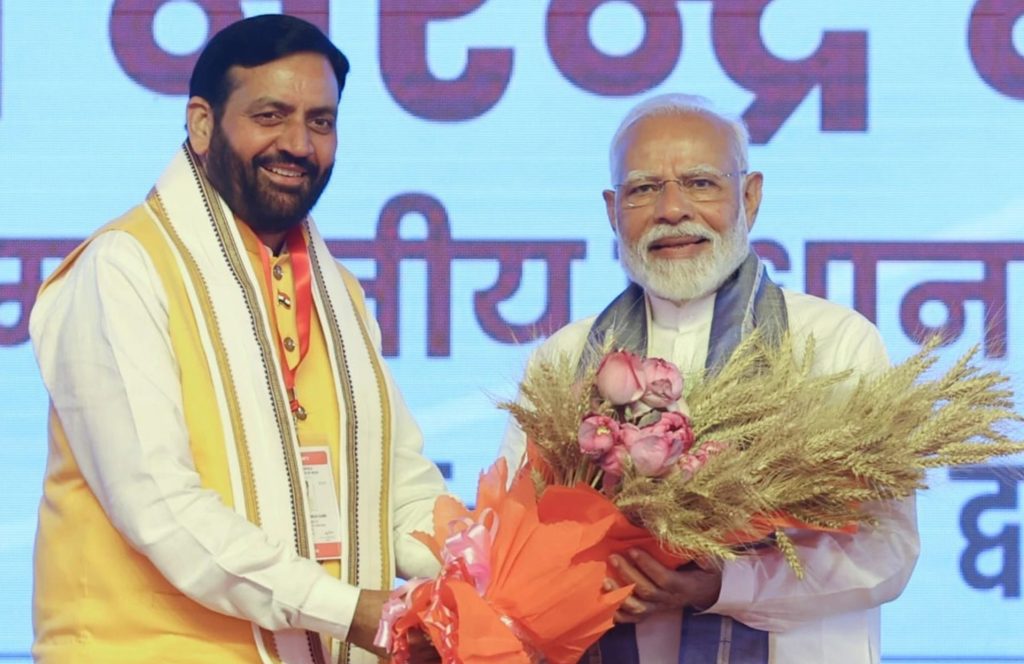
Hisar/Yamuna Nagar, April 14, 2025: In a historic stride toward realizing the vision of a Viksit Bharat, Prime Minister Shri Narendra Modi laid the foundation stones for two monumental projects in Haryana on Monday, marking a transformative moment for the state’s development trajectory. The new terminal building at Maharaja Agrasen Airport in Hisar, valued at over Rs. 410 crore, and the 800 MW Unit-3 of the Deenbandhu Chhotu Ram Thermal Power Plant in Yamuna Nagar, worth approximately Rs. 8,470 crore, were unveiled with grandeur, symbolizing Haryana’s ascent as a hub of connectivity, energy, and opportunity. Coinciding with the 135th birth anniversary of Dr. Babasaheb Ambedkar, the architect of India’s Constitution, these initiatives reflect the Union and Haryana governments’ unwavering commitment to inclusive growth, social justice, and prosperity. Prime Minister Modi also showered praise on Chief Minister Shri Nayab Singh Saini, hailing his visionary leadership as a driving force behind Haryana’s remarkable progress.
Hisar Airport: A Beacon of Connectivity and Aspiration
The foundation stone-laying ceremony for the new terminal building at Maharaja Agrasen Airport in Hisar was a moment of pride for Haryana, as it promises to redefine the state’s aviation landscape. With an investment exceeding Rs. 410 crore, the project will feature a state-of-the-art passenger terminal, a dedicated cargo terminal, and an advanced Air Traffic Control (ATC) building. These facilities are designed to provide seamless travel experiences, boost trade, and position Hisar as a key aviation hub in northern India.
Addressing a vibrant gathering in Hisar, Prime Minister Modi described the project as a “gateway to Haryana’s aspirations,” emphasizing its potential to empower the state’s youth and connect its people to new opportunities. “This terminal is not just a building; it is a symbol of Haryana’s soaring ambitions, a testament to our commitment to making dreams take flight,” he said, his words resonating with the enthusiastic crowd.
The Prime Minister highlighted the symbolic significance of the day, noting that April 14, 2025, marked the birth anniversary of Dr. Babasaheb Ambedkar, whose vision of equality and empowerment continues to guide the nation. He dedicated the Hisar airport project to Babasaheb’s ideals, emphasizing that connectivity is a cornerstone of social justice, enabling marginalized communities to access opportunities previously beyond their reach. “Every decision, every policy of our government is inspired by Babasaheb’s dream of uplifting the poor, the oppressed, and the underprivileged,” Shri Modi affirmed.
A key highlight of the event was the launch of direct flight services from Hisar to Ayodhya Dham, a move that holds profound cultural and spiritual significance. “Today, the sacred land of Lord Krishna in Haryana is directly connected to the city of Lord Ram in Ayodhya,” the Prime Minister said, evoking cheers from the audience. Scheduled flights from Hisar to Ayodhya will operate twice weekly, while three weekly flights will connect Hisar to Jammu, Ahmedabad, Jaipur, and Chandigarh. These routes, Shri Modi noted, will not only enhance travel convenience but also foster economic and cultural exchanges across regions.
Reflecting on his vision to democratize air travel, the Prime Minister reiterated his iconic promise: “Even those wearing slippers will fly in airplanes.” He celebrated the remarkable progress in India’s aviation sector over the past decade, pointing out that the number of airports has surged from 74 in 2014 to over 150 today. The UDAN scheme, he added, has connected nearly 90 aerodromes with over 600 operational routes, making air travel affordable for millions. “In Hisar, we are not just building an airport; we are creating opportunities for pilots, air hostesses, maintenance professionals, and countless others,” he said, underscoring the project’s potential to generate employment and inspire Haryana’s youth.
The Prime Minister reserved special praise for Chief Minister Nayab Singh Saini, lauding his transformative governance and commitment to transparency. “Under CM Saini’s leadership, Haryana has eradicated the corrupt practices that once plagued government job recruitments. Thousands of deserving youth have received appointment letters based solely on merit, without bribes or recommendations,” Shri Modi said. He commended the state government’s roadmap for creating thousands of new jobs in the coming years, describing it as a model of good governance that aligns with the aspirations of a developed India.
Yamuna Nagar: Powering Haryana’s Industrial and Agricultural Growth
Later in the day, Prime Minister Modi traveled to Yamuna Nagar, where he laid the foundation stone for the 800 MW Unit-3 of the Deenbandhu Chhotu Ram Thermal Power Plant, a Rs. 8,470 crore project spread across 233 acres. This modern facility is poised to bolster Haryana’s energy self-sufficiency, ensuring uninterrupted power supply to industries, households, and farmers. The event also saw the inauguration of the 14.4 km Rewari Bypass project, worth Rs. 1,070 crore, under the Bharatmala Pariyojana, and the foundation stone-laying for a Compressed Biogas Plant in Mukarabpur, reinforcing the state’s commitment to sustainable development.
Addressing a large gathering in Yamuna Nagar, Shri Modi paid homage to the region’s cultural and spiritual heritage, describing it as the sacred land of Maa Saraswati, the abode of Kapalmochan Sahib, and the site of Rishi Ved Vyas. He highlighted Yamuna Nagar’s significance as an industrial powerhouse, contributing to India’s economy through its plywood, brass, steel, and petrochemical equipment sectors. “The new thermal power unit will fuel Yamuna Nagar’s industrial growth, supporting our ‘Mission Manufacturing’ to create jobs and opportunities for the youth,” he said.
The Prime Minister emphasized the critical role of electricity in nation-building, noting that Haryana’s power generation capacity has grown to 16,000 MW, with plans to reach 24,000 MW in the coming years. “Before 2014, power shortages crippled factories, railways, and irrigation systems. Today, India not only meets its energy needs but also exports power to neighboring countries,” he said, crediting the government’s multifaceted approach, including initiatives like One Nation-One Grid, new coal power plants, and solar energy projects.
A key focus of Shri Modi’s address was the PM Suryagarh Muft Bijli Yojana, which empowers households to install solar panels, eliminate electricity bills, and earn income by selling surplus power. “Over 1.25 crore people across India, including lakhs from Haryana, have registered for this scheme, creating a vibrant ecosystem of skills and opportunities,” he said. The Compressed Biogas Plant in Mukarabpur, with an annual production capacity of 2,600 metric tonnes, was celebrated as a step toward effective organic waste management and clean energy production. “This plant will save Rs. 3 crore annually for the municipal corporation while contributing to the Swachh Bharat Abhiyan,” the Prime Minister noted.
Shri Modi also highlighted the GOBARDhan Yojana, which enables farmers to generate income by producing biogas from cow dung and agricultural waste. The foundation stone for a new GOBARDhan plant in Yamuna Nagar, he said, aligns with the budget announcement of 500 such plants nationwide, fostering sustainability and rural prosperity. “Haryana’s farmers are the backbone of our nation, and our government stands as their steadfast partner,” he affirmed, citing the state’s procurement of 24 crops at MSP, Rs. 9,000 crore disbursed under the PM Fasal Bima Yojana, and Rs. 6,500 crore through the PM Kisan Samman Nidhi.
The Prime Minister lauded Chief Minister Saini’s farmer-friendly policies, particularly the abolition of the colonial-era water tax and the waiver of Rs.130 crore in outstanding dues. “CM Saini’s government has brought relief and dignity to Haryana’s farmers, ensuring they thrive in an ecosystem of support and opportunity,” he said. He also praised the state’s industrial initiatives, noting that revised MSME definitions, special credit cards, and increased credit guarantee coverage have empowered small industries to grow without fear of losing government support.
A Vision Rooted in Babasaheb Ambedkar’s Legacy
At both events, Prime Minister Modi connected the projects to the vision of Dr. Babasaheb Ambedkar, emphasizing that industrialization and connectivity are pathways to social justice. “Babasaheb believed that industries would provide employment opportunities for Dalits, improving their standard of living. Today, we are honoring his legacy by fostering manufacturing and empowering marginalized communities,” he said in Yamuna Nagar. He highlighted Babasaheb’s collaboration with Dr. Syama Prasad Mukherjee, India’s first Industry Minister, to drive industrialization, and drew parallels with the government’s ‘Make in India’ and ‘Aatmanirbhar Bharat’ initiatives.
In Hisar, Shri Modi reiterated that every policy of the government is dedicated to Babasaheb’s dream of uplifting the underprivileged. “The Hisar airport will create jobs and opportunities for SC, ST, and OBC youth, fulfilling Babasaheb’s vision of equality and empowerment,” he said. He also highlighted the development of “Panchteerth”—key sites associated with Babasaheb, including his birthplace in Mhow and Diksha Bhoomi in Nagpur—as a tribute to his enduring legacy.
Chief Minister Nayab Singh Saini: A Leader of Transformation
Prime Minister Modi’s praise for Chief Minister Nayab Singh Saini was a recurring theme at both ceremonies, underscoring the synergy between the Union and state governments. In Hisar, he commended Saini’s efforts in eradicating corruption in government job recruitments, ensuring that thousands of youth receive opportunities based on merit. “Under CM Saini, Haryana has set a benchmark for transparency, with thousands of appointment letters issued to deserving candidates without any unfair practices,” Shri Modi said.
In Yamuna Nagar, the Prime Minister lauded Saini’s farmer-centric and industry-friendly policies, describing him as a leader who embodies the spirit of service. “CM Saini’s government has empowered farmers, supported MSMEs, and created a roadmap for Haryana’s industrial growth. His dedication to good governance is an inspiration,” he said, earning resounding applause from the audience. The Prime Minister highlighted the state’s remarkable track record in providing jobs and infrastructure, crediting Saini’s leadership for Haryana’s rapid progress.
Haryana’s Role in Viksit Bharat
The Prime Minister painted a vivid picture of Haryana’s cultural and historical significance, paying homage to Guru Jambheshwar, Maharaja Agrasen, and Agroha Dham in Hisar, and acknowledging Yamuna Nagar as the land of Maa Saraswati, Kapalmochan Sahib, and Guru Gobind Singh Ji’s weaponry. “Haryana is a confluence of culture, devotion, and dedication, and its people are the driving force behind India’s development,” he said.
The Rewari Bypass, inaugurated in Yamuna Nagar, was celebrated for reducing travel time between Delhi and Narnaul by an hour, easing congestion, and boosting economic activity. Shri Modi emphasized that the project, part of the Bharatmala Pariyojana, reflects the government’s commitment to seamless connectivity. “Haryana’s progress is integral to Viksit Bharat, and projects like these are stepping stones to a prosperous future,” he said.
A Bright Future Ahead
The foundation stone ceremonies in Hisar and Yamuna Nagar mark a new chapter in Haryana’s journey toward becoming a hub of connectivity, energy, and opportunity. The Maharaja Agrasen Airport will elevate Haryana’s global presence, connecting its people to new horizons, while the Deenbandhu Chhotu Ram Thermal Power Plant will power its industries and farms, ensuring sustainable growth. The Compressed Biogas Plant and Rewari Bypass further underscore the state’s commitment to innovation and progress.
As Prime Minister Modi concluded his addresses, he extended heartfelt congratulations to the people of Haryana, urging them to embrace these milestones as catalysts for transformation. “With the blessings of Babasaheb Ambedkar and the leadership of Chief Minister Nayab Singh Saini, Haryana is poised to soar to new heights, contributing to a developed India,” he said. The events, attended by dignitaries including Union Ministers and state leaders, were a testament to the collective resolve to build a stronger, more prosperous Haryana.
Under the dynamic partnership of the Union and state governments, Haryana is not just keeping pace with progress but setting a shining example for the nation. The Hisar airport and Yamuna Nagar power plant are more than infrastructure projects—they are symbols of hope, opportunity, and the unwavering spirit of Haryana’s people.
Srinagar: The Jammu and Kashmir Anti-Corruption Bureau (ACB) has filed a charge sheet against 22 individuals—including Member of Parliament Aga Syed Ruhullah Mehdi—in connection with alleged fraudulent withdrawal of compensation payments by tampering with revenue records in Budgam district.
In a statement, an ACB spokesperson said: “Anti-Corruption Bureau produced charge sheet before the Hon’ble Court of Special Judge, Anti-Corruption Srinagar in Case FIR No. 18/2009 under Section 5(1)(d) r/w 5(2) of J&K PC Act Svt. 2006 and Section 120-B, 467, 468, 471 RPC against 22 accused persons, including two Collectors of LAWDA, four other public servants (now retired) and 16 beneficiaries.”
The case stems from a Joint Surprise Check (JSC) conducted by the ACB into alleged misuse of official position by officers and officials of the Rukhs and Farms Department in Kashmir.
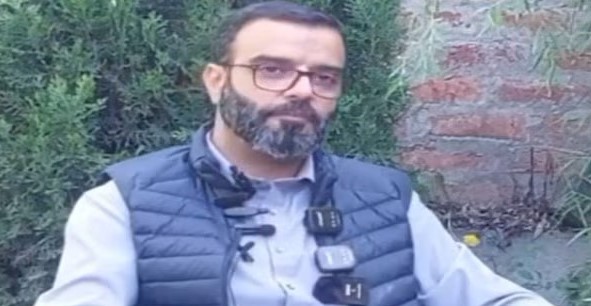
However, Ruhullah on Saturday dismissed the corruption charges levelled against him by the ACB, terming them a political vendetta aimed at silencing his dissent.
At a press conference held in Budgam, Ruhullah strongly refuted the allegations. “I want to make it clear that I have nothing to do with this case,” he said. “I was never called by the ACB or any investigating agency for questioning. There is not a single piece of evidence or even a recorded statement of mine in the case.”
Ruhullah said he had received a nominal compensation amount as a legal heir after his father’s death. “The land belonged to my father. I did not claim any compensation personally. The money was distributed among the legal heirs, and I received a small part, like my siblings,” he explained.
The NC leader alleged that the timing of the chargesheet—coming just weeks before Lok Sabha elections—was aimed at damaging his political prospects.
“This is clearly a politically motivated move. I am being targeted because I have been a consistent dissenter and critic of the government. This is not a legal action, it is a political message,” he said.
Ruhullah also pointed out that despite being named in the chargesheet, he has not been summoned by the court so far.
“There is no mention of me being accused of forgery, bribery, or any misuse of power. Yet I am being dragged into this to create a narrative,” he said.
Calling on the people to see through what he called a “malicious attempt,” Ruhullah said the charges would not deter him from speaking out. “If the government thinks they can silence me by throwing such baseless charges, they are mistaken. I will continue to speak the truth and raise my voice,” he added.
The National Conference has extended full support to Ruhullah, with party spokespersons alleging misuse of institutions to target opposition leaders ahead of the elections.