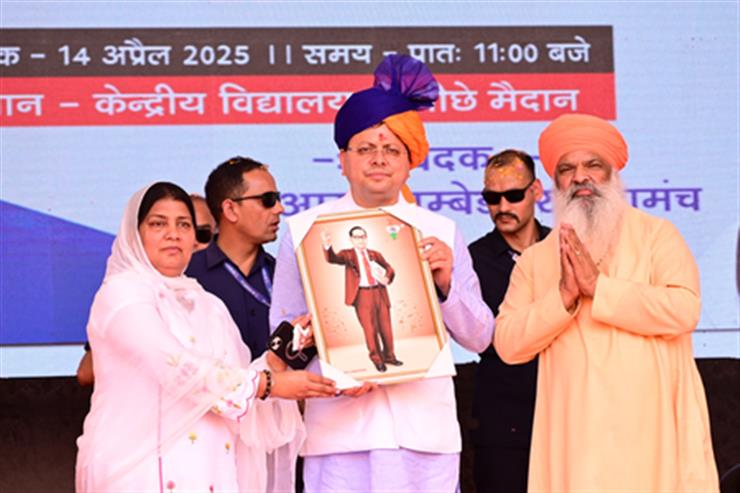
Uttarakhand CM honoured by Dr Ambedkar Mahamanch for implementing UCC

Uttarakhand Chief Minister Pushkar Singh Dhami was honoured by Dr B.R. Ambedkar Mahamanch at a program in the city for implementing the Uniform Civil Code (UCC) in the state.

The event was organised at BHEL Ground in Haridwar on the occasion of the 135th birth anniversary of Bhimrao Ambedkar, the chief architect of the Constitution and saw the enthusiastic participation of a large number of local people despite the scorching heat.

Expressing gratitude for the honour, CM Pushkar Singh Dhami said that the massive public turnout clearly indicates that people have shown trust in this bold decision.

He said that the honour was not for one individual but for the ideology that has long raised the voice of justice and equality in Indian society.

Chief Minister Dhami described Baba Saheb as a visionary, saying, “Ambedkar believed that true equality in society is not possible until every citizen of the country is granted equal rights.”

CM Dhami further said that it was this belief that inspired him to include revolutionary concepts like the Uniform Civil Code. The Chief Minister clarified that the Uttarakhand government has not just implemented a law but has taken a major step toward social justice and equality.

Chief Minister Dhami said that Baba Saheb was neglected for years, and his ideas were sidelined.

“But today’s India is moving towards realising his dreams. This is a new India, one that not only respects its heritage but also sets new standards by making bold decisions, ” he said.

The CM said that the crowd gathered in Haridwar is not just a gathering of people, it is a public voice that says the people trust the Chief Minister’s decisions, and now this echo is being heard beyond Uttarakhand across the country.

He credited this historic decision to the guidance of Prime Minister Narendra Modi and the government’s strong political will.

“Uttarakhand is once again showing the way to the country, where equality is no longer just written in books but has now taken the shape of law and is being implemented on the ground. This is not just the implementation of a law, it is a decisive step toward a new India, ” the Chief Minister said.

CM Dhami also announced the construction of the Baba Saheb Samrasata Sthal in Haridwar to educate future generations about the lives and histories of social reformers from the Scheduled communities, along with the Indian Constitution.

“Under the SCP/TSP schemes operated by the Department of Social Welfare, multipurpose buildings will be constructed in areas predominantly inhabited by Scheduled Castes/Scheduled Tribes in the name of prominent social reformers from these communities. Additionally, special awareness programs will be organised in schools and colleges through the Scheduled Caste Commission to inform the younger generation about welfare schemes and rights related to the Scheduled communities, ” he told the newsmen.  

Political parties at loggerheads on fee for garbage collection by MCD

While the residents of the capital are being burdened with user surcharge on the pretext of garbage collection which has been imposed by Municipal Corporation of Delhi, the political parties are engaged in blaming each other on the matter.

Earlier this issue witnessed the unity of Aam Aadmi Party (AAP) and Bharatiya Janata Party (BJP) where both the parties were protesting against the charges with AAP criticising linking property tax with it and rapped the MCD commissioner for allegedly bypassing the house, BJP leaders staged a protest at the MCD commissioner’s residence.

Delhi BJP has claimed that AAP has deliberately imposed a user surcharge on the people of Delhi under the pretext of garbage collection.

“A similar surcharge was proposed earlier in 2021 by the then Commissioner of the erstwhile East Delhi Municipal Corporation, but the BJP Mayor at that time had halted its implementation. In contrast, the current Aam Aadmi Party Mayor, Mahesh Kumar, is merely issuing statements without taking action,” BJP spokesperson Praveen Shankar Kapoor said.

He said it is clear that currently the Municipal Corporation of Delhi does not have any arrangement to collect garbage from homes and shops in 70 per cent of Delhi’s areas. Hence, collecting a user surcharge along with the property tax is entirely illegal.

Meanwhile, Congress slammed BJP and blamed that the BJP government was imposing heavy financial burden on the people on one pretext or another with the latest being the  MCD Commissioner’s decision to implement the Solid Waste Management Rules of 2018, which mandates a monthly user fee for garbage collection, ranging from Rs 50 to Rs 200 per month for residential properties, based on their size, which will be included in the house tax of the residents without getting it passed in the MCD House, which was illegal and anti-people.

He demanded that the Commissioner’s decision to impose user charge for garbage collection should be rolled back as the Corporation had failed in its own duty to keep the city garbage free, and in clearing the three garbage mountains, which was one of the Assembly election promises of both BJP and Aam Aadmi Party.

“The BJP and Aam Aadmi Party were colluding in implementing the use tax for garbage collection with the Mayor accusing the Municipal Commissioner of imposing the tax, though the Mayor is the political head of the ruling Aam Aadmi Party in the MCD,” Yadav added.  

NIA set to grill 26/11 Mumbai attack accused Rana as Delhi court grants 18-day custody

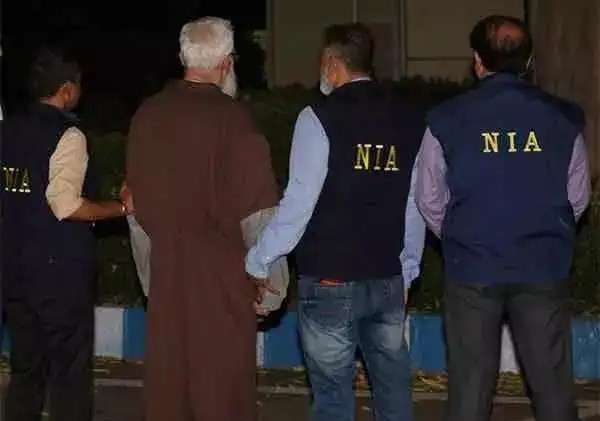
Mumbai attack mastermind Tahawwur Hussain Rana will be questioned in detail by the National Investigation Agency to unravel the conspiracy behind the deadly 26/11 terror strike and his role as a planner of the attacks after a court here granted the agency his 18-day custody early on Friday.

The anti-terror agency had produced Rana before the NIA Special Court at Patiala House after formally placing him under arrest on his arrival here on Thursday evening, following his extradition from the US.

Special National Investigation Agency (NIA) judge Chander Jit Singh sent Rana to 18-day custody while the NIA sought 20-day custody.

Rana was brought to the Patiala House Court in a cavalcade, including a jail van, an armoured SWAT vehicle and an ambulance, late Thursday night.

Senior advocate Dayan Krishnan and Special Public Prosecutor Narender Mann represented the NIA.

Before the proceedings, the judge asked Rana if he had a lawyer.

After Rana said he did not have a lawyer, the judge informed him that a counsel was being provided to him from the Delhi Legal Services Authority. After that, advocate Piyush Sachdeva was appointed to represent him.

The 64-year-old Pakistani-origin Canadian businessman, a close associate of 26/11 Mumbai terror attacks main conspirator David Coleman Headley alias Daood Gilani, a US citizen, was brought to India after the US Supreme Court on April 4 dismissed his review plea against his extradition.

The agency told the court that Rana’s interrogation was necessary to unearth the larger conspiracy behind the 2008 attacks. It also told the court that it had to look into his role as a planner of the attacks.

Before Rana was brought to the Patiala House Court, Delhi Police removed mediapersons and members of the public from the complex, citing security concerns.

Police authorities said, “No one would be permitted inside”.

After the court order, Rana was transported to the NIA headquarters in a heavily-secured motorcade comprising Delhi Police’s Special Weapons and Tactics (SWAT) and other security personnel.

Rana will be kept in a highly secured cell inside the anti-terror agency’s head office at CGO complex here, officials said.

“Rana will remain in NIA custody for 18 days, during which time the agency will question him in detail in order to unravel the complete conspiracy behind the deadly 2008 attacks, in which a total of 166 persons were killed and over 238 injured,” a statement issued by the probe agency said soon after the court’s order.

The NIA said that as part of the criminal conspiracy, accused no. 1, Headley, had discussed the entire operation with Rana before his visit to India.

Anticipating potential challenges, Headley sent an email to Rana detailing his belongings and assets, the NIA told the court, adding that Headley also informed Rana about the involvement of Pakistani nationals Ilyas Kashmiri and Abdur Rehman, who are also accused in the case, in the plot.

The NIA had secured Rana’s extradition from the US following years of sustained efforts, and after the terror mastermind’s last-ditch efforts to get a stay on his extradition from the US failed.

The extradition finally came through after Rana’s various litigations and appeals, including an emergency application before the US Supreme Court, were rejected.

With the coordinated efforts of India’s Ministry of External Affairs and Ministry of Home Affairs, along with the relevant authorities in the United States, the surrender warrant for the wanted terrorist was eventually secured and the extradition was carried out, the statement said.

Rana is accused of conspiring with Headley and operatives of designated terrorist organisations Lashkar-e-Toiba (LeT) and Harkat-ul-Jihadi Islami (HUJI) along with other Pakistan-based co-conspirators, to carry out the three-day terror siege of India’s financial capital.

On November 26, 2008, a group of 10 Pakistani terrorists went on a rampage, carrying out a coordinated attack on a railway station, two luxury hotels and a Jewish centre, after they sneaked into India’s financial capital using the sea route in the Arabian Sea.

A Mumbai police official familiar with the probe has said that Rana had served in the Pakistan Army medical corps before emigrating to Canada in the late 1990s and started an immigration consultancy firm. He later moved to the US and set up an office in Chicago.

Through his firm, Rana gave cover to Headley to carry out a reconnaissance mission in Mumbai prior to the November 2008 attacks and helped him get a ten-year visa extension, the police official said on Thursday.

During his stay in India, Headley used the front of running an immigration business and was in regular contact with Rana.

There were more than 230 phone calls between the two during this period, the official said.

Rana was also in touch with ‘Major Iqbal’, another co-conspirator of the attacks during this period, as per the NIA charge sheet.

Rana himself visited India in November 2008, days before the terror attack.

As per the charge-sheet filed by Mumbai police against Rana in 2023 in the 26/11 attack case, he lived in a hotel in Powai and had a discussion about crowded places in South Mumbai with a person who has been listed as a witness in the case.

Subsequently, some of these places were targeted by the Pakistani terrorists during the deadly attacks that claimed 166 lives.

Padma Awards-2026 Nominations to Close on July 31: Home Ministry

The process for nomination and recommendation for the Padma Awards-2026, to be announced on Republic Day 2026, will remain open only till July 31, an official said on Friday. The online nomination process was launched on March 15 on the Rashtriya Puraskar Portal (https://awards.gov.in ), said the official.

The Padma Awards, namely, Padma Vibhushan, Padma Bhushan and Padma Shri, are amongst the highest civilian awards of the country. Instituted in 1954, these awards are announced on Republic Day every year.

In 2025, 113 people were awarded Padma Shri, 19 (Padma Bhushan), and seven (Padma Vibhushan).

Since 2014, the Narendra Modi government has introduced two key changes in the Padma Awards nomination process for transparency and to honour people working on the ground.

The introduction of an online nomination system has made the process transparent, allowing anyone to nominate individuals for the awards. This eliminated reliance on recommendations from politicians or officials – a practice that allegedly promoted corruption.

The Government’s focus on work over identity during the selection process has ensured that unsung heroes from humble backgrounds also get recognised. Under this strategy, greater emphasis was placed on the nominee’s contributions and achievements rather than their name or prominence.

This shift led to recognition of unsung heroes from rural areas and non-mainstream fields getting the award that seeks to recognise “work of distinction” and is given for distinguished and exceptional achievements/service in all fields/disciplines, such as Art, Literature and Education, Sports, Medicine, Social Work, Science and Engineering, Public Affairs, Civil Service, Trade and Industry.

All persons without distinction of race, occupation, position or sex are eligible for these Awards. Government servants, including those working with PSUs, except doctors and scientists, are not eligible for Padma Awards, said a statement issued by the Ministry of Home Affairs.

The Government is committed to transforming Padma Awards into “People’s Padma”. All citizens are, therefore, requested to make nominations/recommendations, including self-nomination.

Concerted efforts may be made to identify talented persons whose excellence and achievements deserve to be recognised from amongst women, weaker sections of the society, Scheduled Castes and Scheduled Tribes, divyang persons and who are doing selfless service to the society, said the statement.

INDIA bloc will submit petition against section 44(3) of DPDP Act to Ashwani Vaishnav

Photo: Naveen Bansal

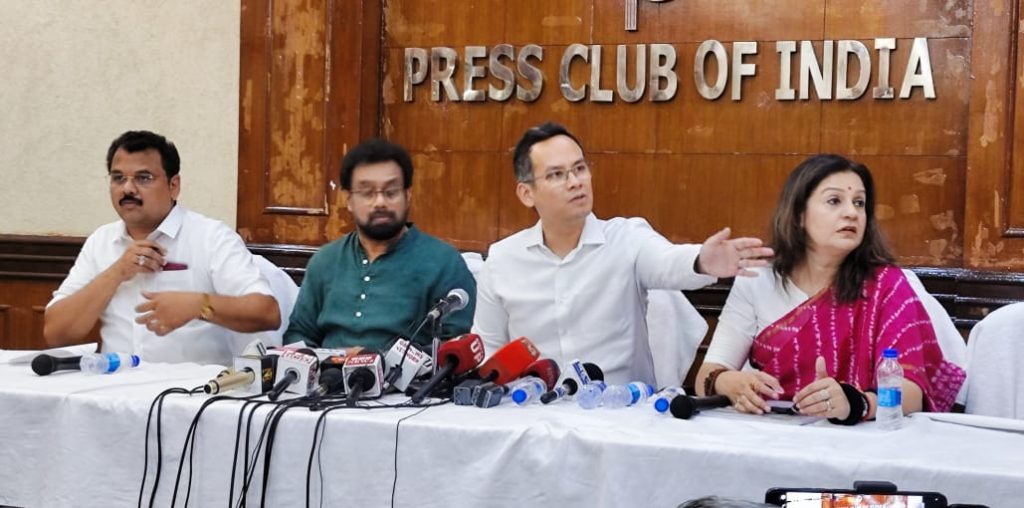
Opposing the Digital Personal Data Protection Act, the INDI Alliance on Thursday said that it will submit a collective petition with over 120 signatures of leaders to the Minister of Electronics and Information Technology Ashwani Vaishnav demanding to repeal section 44 (3) from the Act.

Addressing a press conference here Gaurav Gogoi said that the bill was passed in 2023, amidst a no-confidence motion in Parliament related to Manipur.

“Since then we have been studying the implications of the DPDP Act and have come to understand that the recent amendments have a draconian impact on citizens’ rights and press freedom,” he added.

He said that a Joint Parliament Committee (JPC) was set up, and a report was presented. However, the government has a tendency to introduce amendments that fundamentally alter the JPC report’s nature when passing the bill.

He said, “The DPDP act that was passed has a very dangerous section which virtually amends Section 8(1)(j) of the RTI Act and by removing section 44 (3) from this act, we will be able to save the soul of the RTI act.

Meanwhile, Shiv Sena UBT MP Priyanka Chaturvedi said that the way the government is preparing to siege, it will cause great harm to investigative journalism.

She said that the government is now engaged in completely destroying the RTI Act. “The government has brought in many such provisions under which the public will no longer be able to get information. This is very unfortunate,” he said.

Slamming the centre for the bill, RJD national spokesperson Naval Kishore said that the BJP government wants to run away from the responsibility and it cannot hide its failures and mislead the public through this Act.

“This bill has not been notified yet, so the INDIA alliance will try to make changes in it while maintaining transparency,” he said.

In order to register its protest against the DPDP act, the DMK has also come forward to join hands with the INDIA bloc.

MP Pudukkottai MM Abdulla who was also present during the press conference said, “Whenever there has been a threat to freedom of expression DMK has fought. We join our hands with the INDIA alliance to fight for this.”

CPI-M leader John Brittas also slammed the government and said that this law was rushed when the Opposition was protesting the Manipur crisis. The government intended to bid goodbye to the RTI. Not just RTI, many of the UPA-era laws that transformed governance are being watered down today by the Modi government.

“I’ll just add that the RTI Act was a milestone in the trajectory of India to be a modern democracy—to bring transparency in administration and to empower the citizens and activists. With a single stroke, the Modi government has done away with the RTI. This will have far-reaching implications for the freedom of the press,” he added. 

Delhi Congress opposes E-Vehilce Policy 2.0

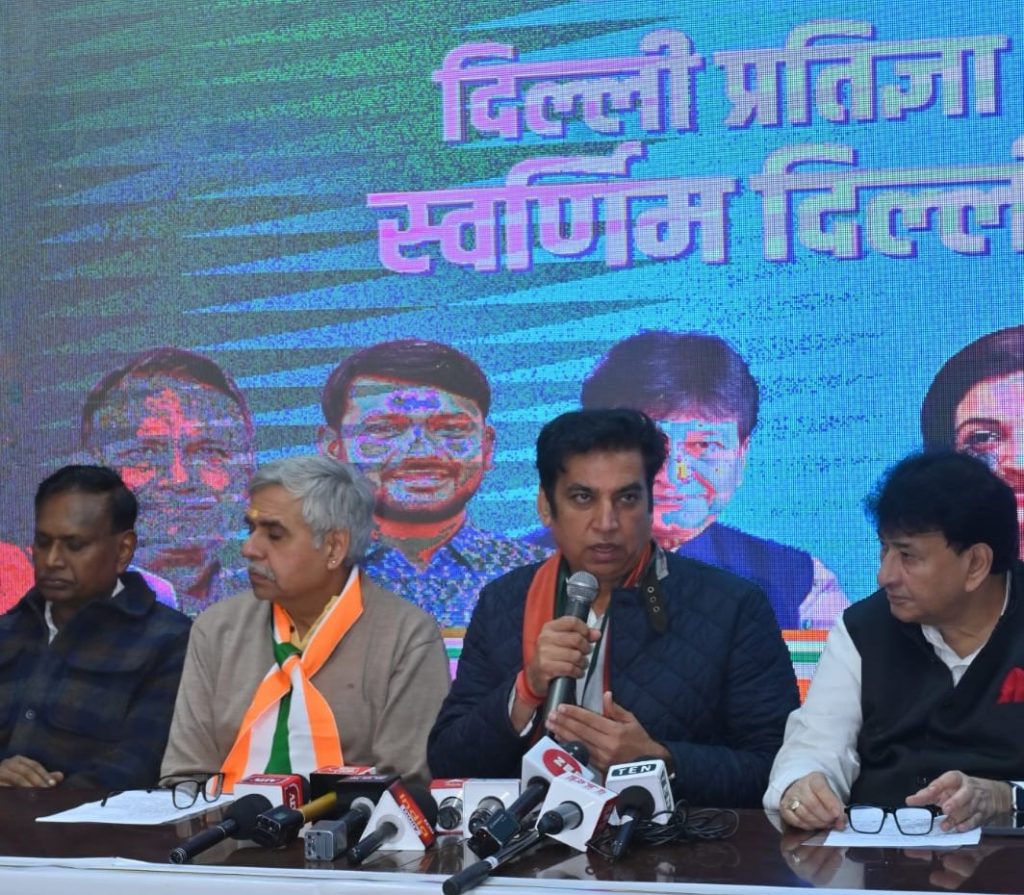
Delhi Pradesh Congress Committee president Devender Yadav said that Delhi Congress will oppose the BJP Government’s E-Vehicle Policy 2.0 to snatch the livelihood of millions of auto drivers without giving them alternate mode of employment.

He said that the BJP Government in Delhi was trying to implement new policies without doing any spade work at the ground level about the feasibility of imposing such policies to snatch the livelihood of the poor people. He said that the move to stop registration of new CNG autos from August 15, 2025 under the e-vehicle policy was a highhanded approach, including the move to stop renewal of permits to CNG autos.

Yadav said that first the Government encouraged the unemployed poor people to buy  CNG vehicles by raising loans with high interest rates and then betraying them by withdrawing permission to ply CNG autos through the arbitrary implementation of e-vehicle policy. 

“Before implementing the e-vehicle policy, the Rekha Gupta Government should first fully enforce the e-vehicle policy on  DTC and vehicles in other government departments to make public transport CNG-free in the Capital, and then eliminate CNG in autos in a phased manner,” he added.

He said that inflation has already hit the skies in the capital, and with Ola and Uber making a huge dent in the income of the auto drivers, they have been pushed on the verge of unemployment.

Recently, the Delhi government has just released the draft of its new Electric Vehicle Policy 2.0, marking a significant step towards cleaner and more sustainable transportation in the Capital.

The EV Policy 2.0 is drafted to accelerate the shift towards electric mobility across all major vehicle segments, such as two-wheelers, three-wheelers, public buses, goods carriers, and civil garbage collection vehicles. This EV Policy outlines a phased out transition as one of its key aspects, aiming to reduce pollution from older, outdated vehicles, encourage quicker EV adoption as well as facilitate a smoother transition to sustainable transportation

Encounter in J&K’s  Udhampur: Search operation underway, 2–3 terrorists believed trapped

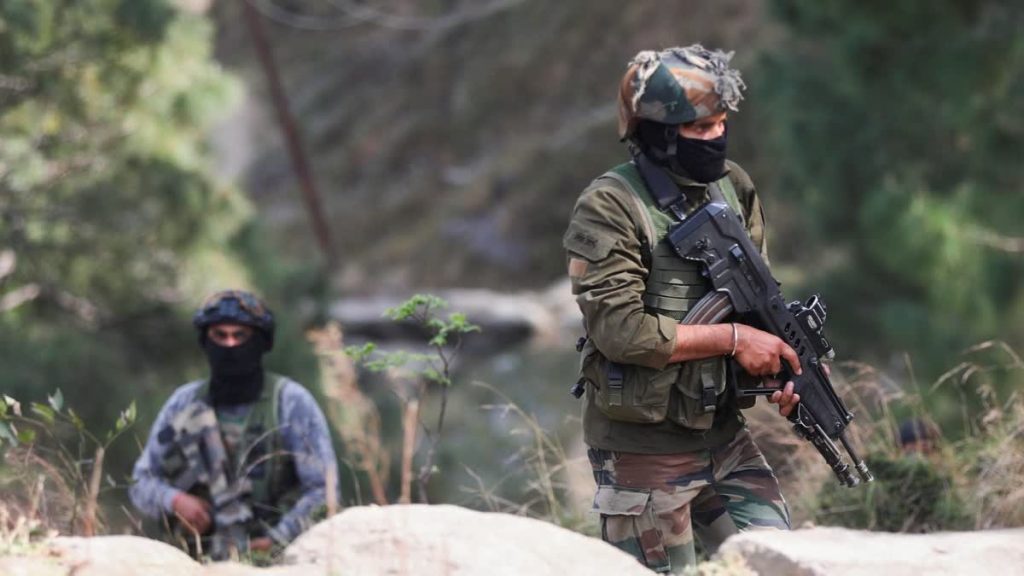
Srinagar: Security forces have launched a cordon and search operation in the Marta village of Udhampur district following an encounter with suspected terrorists. Officials said the operation began on Wednesday in the dense forest area near the village of Jopher, under the jurisdiction of Ramnagar Police Station.

Udhampur SSP Amod Ashok Nagpure has confirmed that two to three terrorists are believed to be hiding in the jungle. 

“It’s a very inaccessible area with steep mountains, a river below, and thick forest cover. The search operation is ongoing,” he told media.

The encounter lasted for about two hours, during which the forces retaliated with gunfire. No casualties have been reported so far.

The area has been cordoned off to prevent any escape by the terrorists. Security forces, including personnel from the Jammu and Kashmir Police and other agencies, are involved in the operation.

“All soldiers are fit and fine. The morale of the forces is high despite the difficult terrain,” SSP Nagpure said.

Efforts are continuing to track down and neutralize the suspected militants while ensuring the safety of civilians in the region.

Light rain to bring relief from heat wave on April 11

Photo: Naveen Bansal

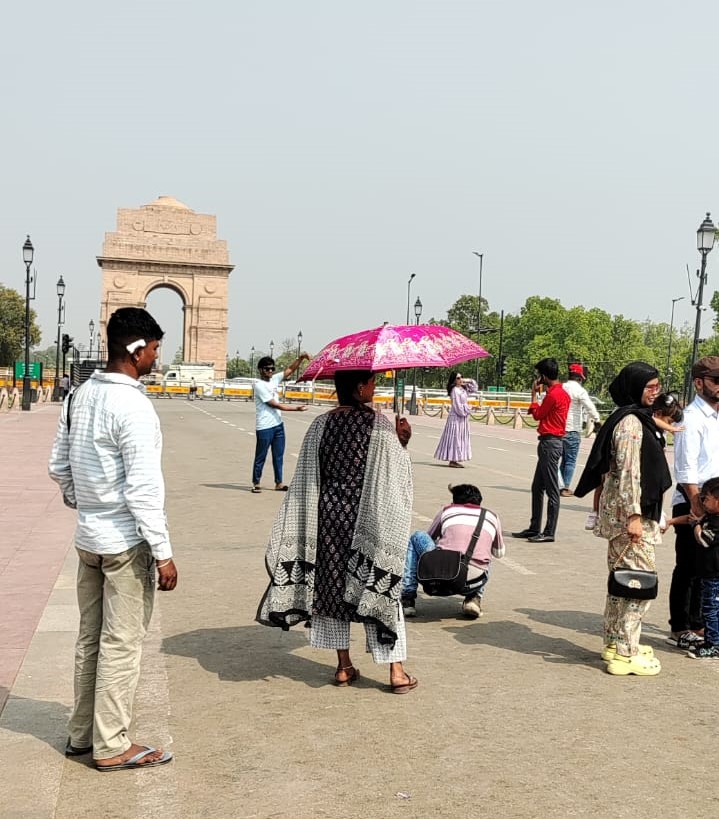
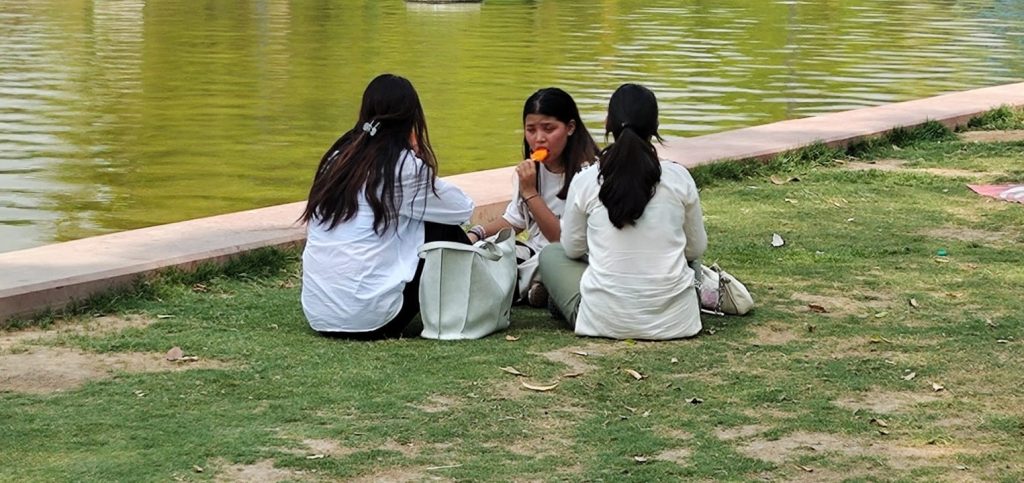
April has just rolled in and India is reeling under the intense heat wave conditions with temperature soaring across the country. However, the India Meteorological Department (IMD) has stated that the rising temperatures are likely to abate for a short spell after April 10. 

According to the department, the heat wave conditions in Northwest India likely to intensify till Aprill 10 after which a light rainfall is expected to grace the region. 

Photo: Naveen Bansal

Meanwhile, the IMD has issued a warning in Delhi-NCR for the next two days with a prediction of light rain on April 11. “We have issued a heatwave warning in Delhi-NCR for the next two days. On 11th April, there is a probability of light rainfall,” IMD Scientist Dr Naresh Kumar was quoted as saying. 

Heatwave conditions will continue in other parts of Northwest India such as Punjab, Haryana, Chandigarh, Delhi, Himachal Pradesh, West Uttar Pradesh till April 10, after which rainfall is expected. 

According to the information, Rajasthan is expected to scorch with severe heat wave. On Monday, the Barmer recorded 45.6 degrees.

Gujarat, Maharashtra and Madhya Pradesh are also grappling with heat wave conditions with warm night conditions as well. Hot and humid weather is expected in Tamil Nadu, Puducherry, Goa, and Kerala. 

Meanwhile, Delhi has recorded warmest night of the season with temperature recorded at 25 degrees at night. Doctors have warned residents that exposure to such intense heat can lead to mild rashes, muscle cramps, and heatstrokes.

On Monday, the IMD sounded a yellow alert for Mumbai and its neighbouring districts—Thane, Palghar, Raigad, Ratnagiri, and Sindhudurg, cautioning of hot and humid weather likely to persist till April 10. In all areas under yellow alert, residents are advised to not step outside during the day unless necessary.

Atishi alleges secret meeting between Ashish Sood and private school owners

Photo: Naveen Bansal

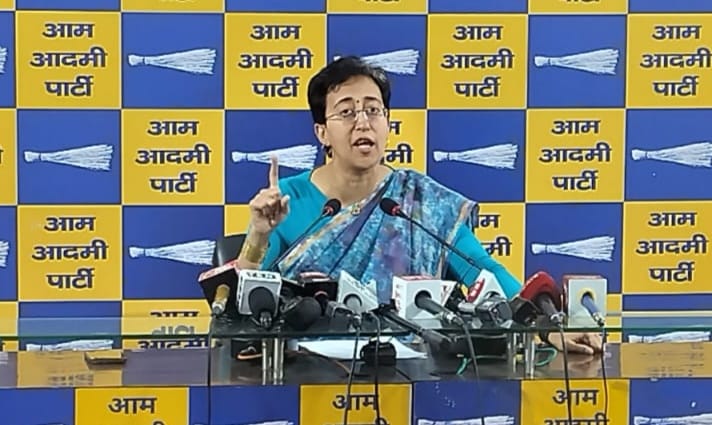
Former Delhi chief minister and Leader of Opposition Atishi on Wednesday claimed a secret meeting between education minister Ashish Sood and owners of private schools.

She said that Sood has assured private school owners that the BJP government will come up with such an order where they will be allowed to increase the 10 per cent fee every year.

Addressing a press conference, she said that a meeting was organized at Sood’s house on April 6.

“We have received very big news. Information has been received from reliable sources that on Sunday, April 6, at 1 pm, Ashish Sood had a meeting with private school owners at his residence,” she said.

She raised several questions on the BJP government and asked Sood how much money he got from private schools for cheating the parents of Delhi.

The Aam Aadmi Party (AAP) and BJP government have been at the loggerheads on the issue of unfair fee hike by private schools.

Earlier, the Directorate of Education (DoE) intensified its monitoring of private schools and initiated a complete crackdown.

Some schools have been accused by many guardians of using coercive methods, including the withholding of admit cards for board examinations or threatening to expel students for outstanding, supposedly unauthorised fees.

In order to address the issue, the top-level teams including district magistrate-led teams have been entrusted with investigating fee-related complaints.

Under the investigation, if the schools found violating the Delhi School Education Act  and Rules, 1973 can be suspended or they may lose their school recognition. It can also lead to the potential government takeover of their management.

Fees charged by recognised private schools in Delhi are governed by the Delhi School Education Act and Rules, 1973. Through its past judgments, courts in the national capital have directed the DoE to ensure that recognised private schools do not hike fees arbitrarily and illegally.

BPCL and SheWings Launched “Swachh Jal, Swasth Kal”

Gautam Buddha Nagar to Witness Largest Clean Water Drive on “World Health Day”

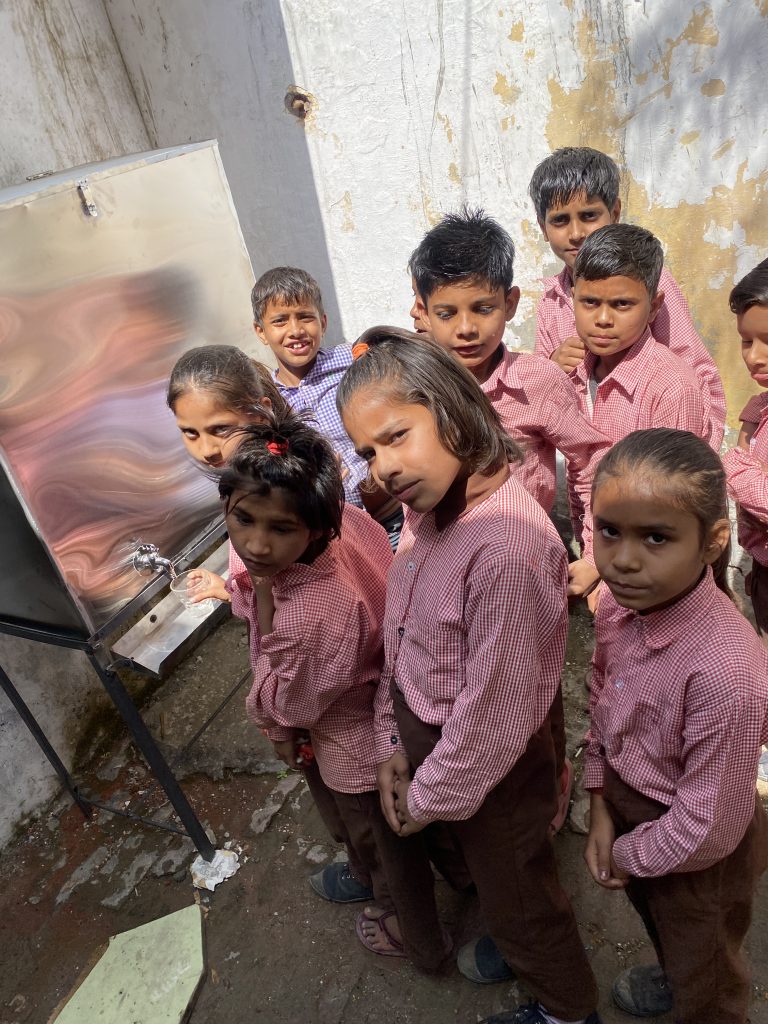
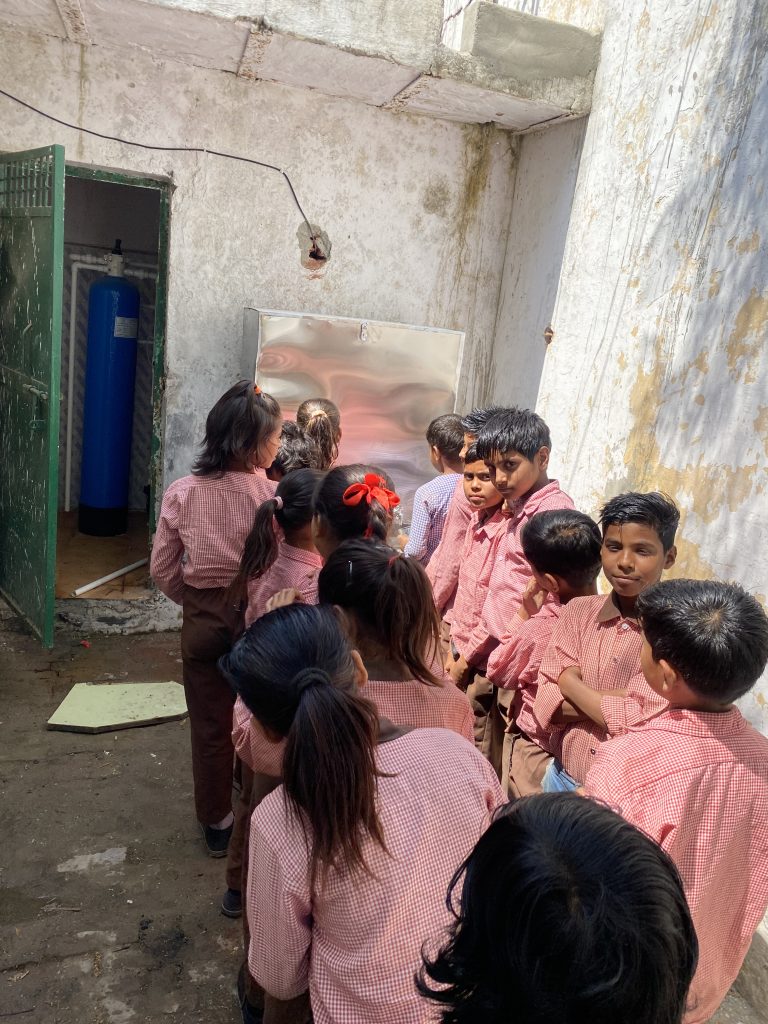
Gautam Buddha Nagar (Uttar Pradesh): In a powerful stride towards promoting health equity and safeguarding the future of India’s children, Bharat Petroleum Corporation Limited (BPCL), in collaboration with SheWings Foundation, has launched an initiative to install water purification systems across 35 government schools in Gautam Buddha Nagar district. This milestone marks a significant chapter in the “Swacch Jal, Swasth Kal initiative”, aimed at ensuring access to clean and safe drinking water for schoolchildren.

This impactful initiative has been driven by the support from Manish Kumar Verma, District Magistrate of Gautam Buddha Nagar, who further directed Rahul Pawar, Basic Shiksha Adhikari (BSA) of the district. Their dedication to fostering a healthy learning environment for children has been integral to the successful execution of this project.

Madan Mohit Bhardwaj, Founder of SheWings Foundation, emphasized the importance of clean drinking water for the holistic well-being of children. “Water is life, and clean water is the foundation of good health. For too long, contaminated water has silently caused harm to countless children, depriving them of the energy and vitality they deserve. This collaboration is not just about installing purifiers; it’s about restoring hope, health, and dignity to every child we can reach. Together, we are building a brighter and healthier future for India’s next generation.”

Raman Mallik, General Manager, BPCL, said BPCL as an organisation is committed to support all such endeavours making towards Sashakt Bharat. BPCL aims to contribute towards building a healthier India through our CSR  initiative Swachh Bharat Swasth Bharat.

Dr. Praveen Kumar, Public Health Expert and Director of Oral Hygiene at Max Super Speciality Hospital, Noida, underscored the health significance of this initiative. He remarked, “Contaminated water is one of the hidden causes of widespread health issues, especially among children. RO water, which is produced through a reverse osmosis process, removes bacteria, viruses, impurities, and harmful contaminants from the natural water supply. 

The water purification systems being installed will provide safe drinking water for thousands of schoolchildren every day, addressing a critical gap in access to basic health infrastructure. With contaminated water posing a long-standing threat to children’s health, this initiative directly combats the issue by ensuring the availability of clean water within school premises.

Aligned with the Sustainable Development Goals (SDGs) focused on health, education, and sanitation, the partnership between BPCL and SheWings Foundation stands as a beacon of hope. It not only promises better health outcomes for children but also sets an inspiring example for other districts to follow.

This initiative reaffirms the belief that the collective efforts of public and private sectors can spark transformational change. Together, BPCL and SheWings Foundation are proving that clean water is not just a necessity—it is a catalyst for building a healthier, more equitable future for India’s children.

MOST POPULAR

HOT NEWS