NIA Searches Terrorist Goldy Brar’s Locations in Haryana, UP

The National Investigation Agency (NIA) on Tuesday searched multiple locations, linked with Goldy Brar, across Haryana and Uttar Pradesh.

NIA teams conducted extensive searches on the premises belonging to suspects and accused associated with Goldy Brar and US-based gangster Randeep Malik in the case relating to the December 2024 grenade attacks at Warehouse Club and Human Club in Sector 29 in Gurugram.

Several electronic and other incriminating materials were recovered during the searches conducted at eight locations in various districts of the two states, the NIA said in a statement.

The materials are being examined by the NIA for clues to the entire conspiracy behind the bombing incident, in which arms, ammunition and explosive materials were seized from the accused involved in the attack.

Soon after the grenade attack, gangster Rohit Godara had taken responsibility through a social media post.

Subsequently, investigations by the NIA had exposed Malik and designated individual terrorist Goldy Brar, who had earlier threatened and attempted to extort money from the club owners, to have masterminded the grenade attacks. The probe into the case, registered on January 2, is continuing.

Goldy Brar is an accused in the killing of singer Sidhu Moosewala.

Brar, a native of Muktsar Sahib in Punjab, went to Canada on a student visa in 2017. He is an active member of the Lawrence Bishnoi gang. Goldy Brar has been listed among Canada’s 25 most-wanted fugitives in the country.

Wanted by the Royal Canadian Mounted Police for murder, Goldy Brar’s name figured in the ‘Bolo (Be on the Lookout) Program’. His life-sized cutout among all 25 fugitives was displayed at Toronto’s Yonge-Dundas Square in 2023.
Ruckus in J&K Assembly over Waqf Act, opposition parties clash with ruling lawmakers

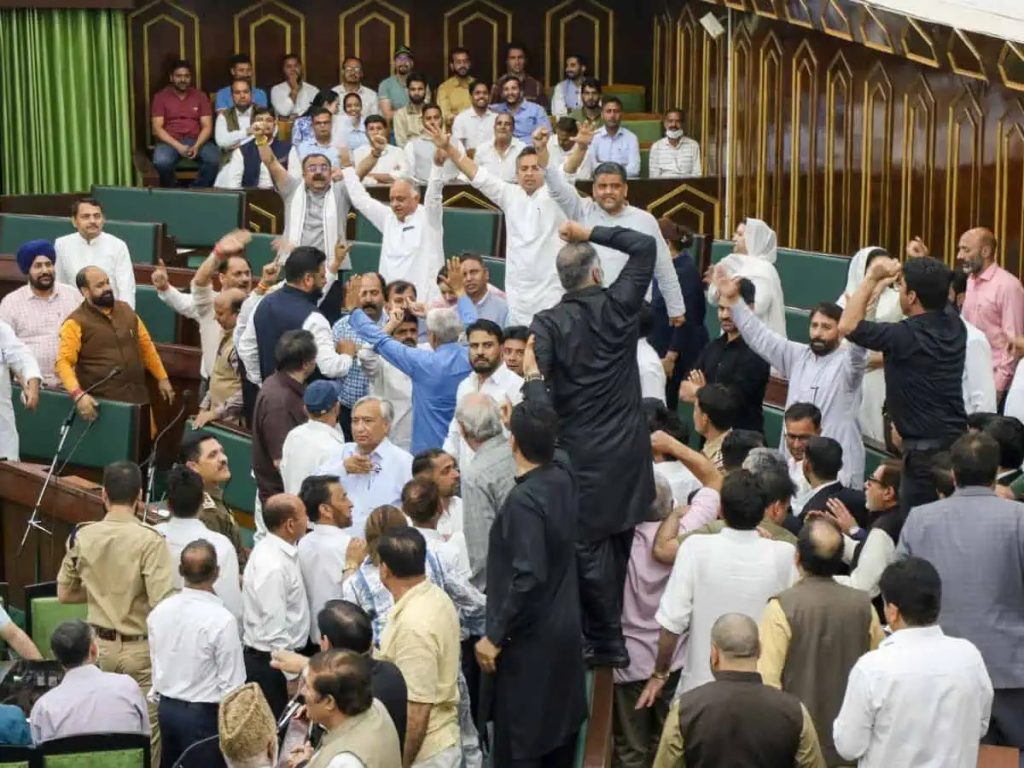
Jammu: Jammu and Kashmir Assembly proceedings were disrupted for the second day on Tuesday amid a heated row over the Waqf Amendment Act. The opposition parties, led by the PDP and the Awami Ittehad Party, clashed with the ruling lawmakers after their adjournment motion on the issue was rejected by the Speaker.

Tensions escalated as members of the National Conference (NC) and the People’s Democratic Party (PDP) exchanged sharp words over the Act, passed in Parliament last week. Amid slogan-shouting and chaos, the Speaker adjourned the session till 1 pm.

The situation took a more dramatic turn when PDP MLA Waheed Para was marshalled out of the House. Former Chief Minister and PDP chief Mehbooba Mufti condemned the Speaker’s action, saying it was a “direct assault on the rights, beliefs, and dignity of 24 crore Muslims in India.”

“The Waqf issue transcends matters of faith. It is a direct assault on the rights, beliefs, and dignity of 24 crore Muslims in India. As the only Muslim-majority region, Jammu & Kashmir must rise to the occasion and defend the rights of its people,” Mufti posted on X.

She added that the PDP had submitted a fresh resolution on the issue and urged the government to ensure the people’s voice is heard. “I urge the Chief Minister, the Legislative Assembly and the J&K government to show political resolve and stand firm against any encroachment on the rights of its people,” she said.

J&K People’s Conference chief Sajad Lone also criticised the Speaker and demanded a no-confidence motion against him.

Delhi ready for monsoon, Govt orders 32 super sucker machines to clean sewers

Delhi witnesses waterlogging across the city during monsoon every year leading to several deaths due to drowning and accidents, in order to address the long-standing issue, the Delhi government has introduced a new and advanced sewer-cleaning technology – the ‘Recycler Machine’.

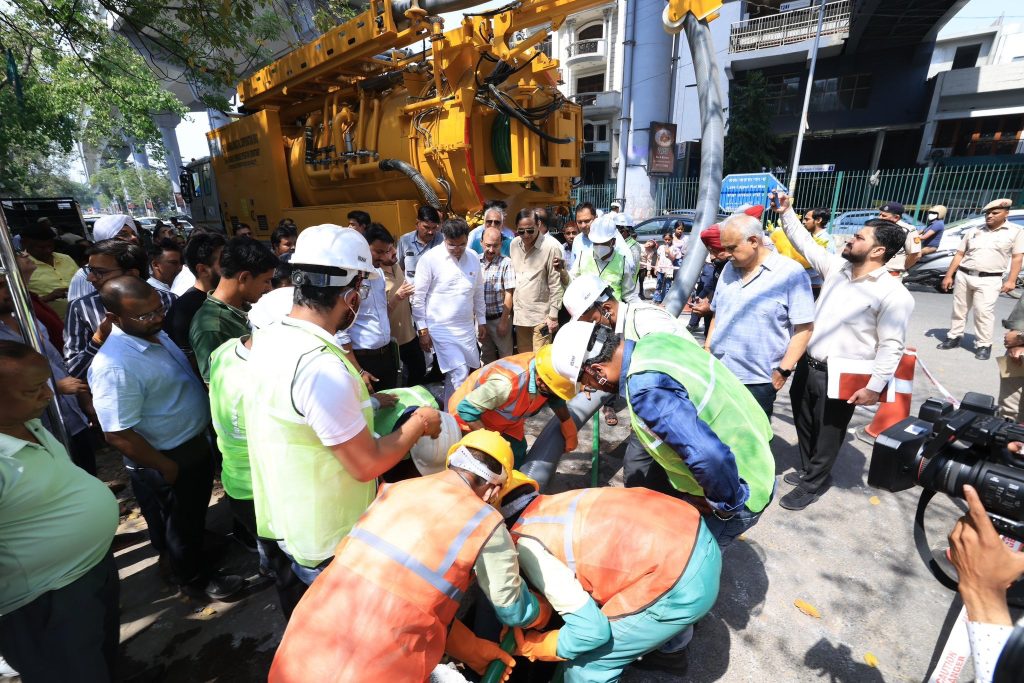
This advanced machine, brought from Mumbai, eliminates the need for manual sewer cleaning and is designed to speed up operations in the city’s congested areas.

The Delhi water minister Parvesh Verma inspected the trial demonstration of this state-of-the-art recycler machine done at Delhi’s Greater Kailash. This machine cleans the sewer by going deep inside it without sending any workers down into it.

Speaking to the media, Verma said, “We see water logging during monsoon season. It was because of no desilting in sewers, it hasn’t happened for the last 10-20 years. During rains, there would be water on the road, it would backflow into homes.”

“We brought these machines and we are trying for one machine in each constituency so that sewers are cleaned properly. We will ensure 100 per cent cleaning. It is to eradicate the problem of waterlogging. Our effort is to restrict entry of labourers in sewers. 100 such machines were used in Mumbai, 30 in Gujarat. We have already ordered 32 super sucker machines last week,” he added.

The minister said that the government is continuing its efforts to bring the vision of Prime Minister Narendra Modi of a clean India and modern urban infrastructure in Delhi to reality. 

Pakistan Army again violates ceasefire along LoC in J&K’s Poonch

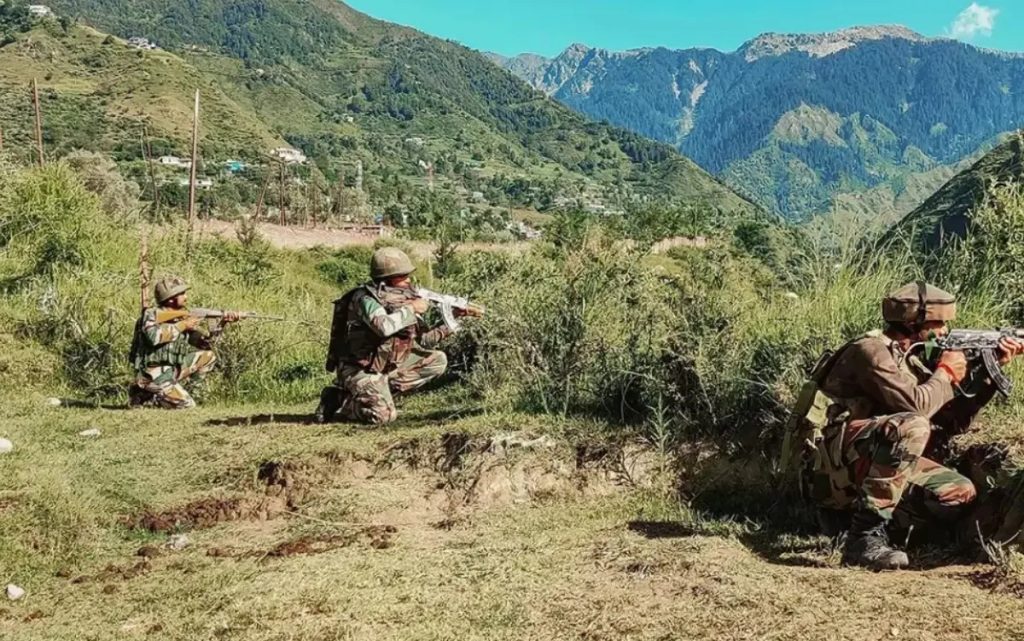
Srinagar: The Pakistan Army once again violated the ceasefire agreement along the Line of Control (LoC) on Monday, triggering fresh tensions in Jammu and Kashmir’s Poonch district.

According to officials, Pakistani troops opened fire in the Digwar sector of Poonch, prompting a strong retaliation from the Indian Army. 

The incident comes amid Union Home Minister Amit Shah’s ongoing three-day visit to Jammu and Kashmir.

Recent weeks have seen a spike in ceasefire violations along the LoC, particularly in Poonch, as infiltration attempts tend to increase with the onset of summer. The Indian Army has maintained that it continues to thwart such attempts successfully.

Earlier last week, Pakistani troops breached the ceasefire and crossed into Indian territory along the Line of Control (LoC) in Poonch district. Five Pakistani soldiers were injured following an explosion and the subsequent exchange of gunfire.

Residents of the border areas, many of whom have witnessed frequent cross-border firing in the past, have expressed concern over the renewed violations. 

India and Pakistan had reaffirmed the 2003 ceasefire agreement during a DGMO-level meeting in February 2021, bringing a period of relative calm to the region.

However, the fresh incidents have sparked fears of escalation, especially as security forces report the presence of foreign terrorists in the hilly regions of Poonch, Rajouri, Kathua, and Kishtwar.

How AI is contributing to agriculture in Baramati

Drone spraying fertilizer on vegetable green plants, Agriculture technology, Farm automation. 3D illustration

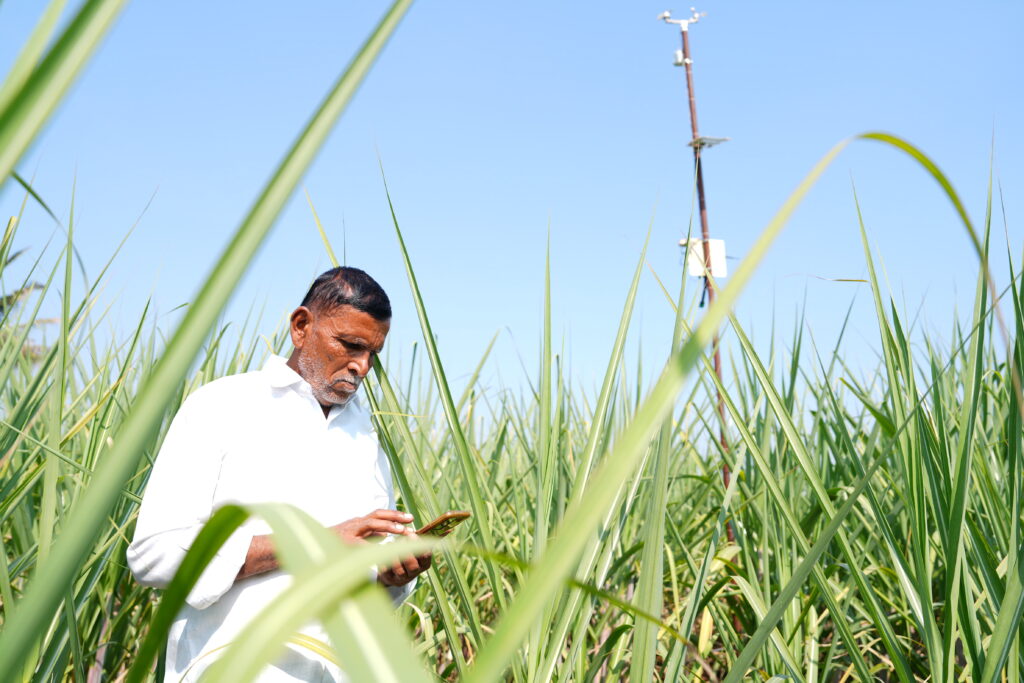
In a major development in the agriculture sector, Maharashtra’s Baramati farmers rose to achieve around 25 per cent reduction in fertilizer use in the backdrop of the use of AI technology powered by Microsoft’s project Farm Vibes.

In a video clip that Microsoft CEO, Satya Nadella, shared twice on X, Seema Chavan, 56, a farmer from Swami Chincholi village in Baramati Taluka, in Maharashtra’s Pune district explains about her experience of using AI in her sugarcane farming. “My cost of farming has come down by at least 30 per cent and the yield is up by 30 to 40 per cent. I use AI on 1.5 acres of my farm. But from next year, I will bring my entire field under the AI,” she said reflecting on what the future of farming could look like, aided by AI.

The Agricultural Development Trust (ADT) of Baramati in Maharashtra has been effectively using the technology to improve crop yields, reduce crop time as well as post-harvest losses, Microsoft CEO Satya Nadella had said.

Photo Courtesy-Microsoft

With a select group of farmers in the drought-prone region, who signed up for Microsoft’s Project Farm Vibes, ADT has been using AI-driven solutions for cropping, which include irrigation, fertiliser use.

According to Nadella, the AI has helped improve crop yields by 40 per cent and reduce fertilizer use by 25 per cent.

The ADT, a farmers’ organisation founded by former Maharashtra chief minister Sharad Pawar, is expanding this AI-driven experiment from 1,000 farmers to 50,000 farmers.

Farm Vibes uses satellite data, IoT sensors, drones, and AI algorithms to generate actionable insights for farmers.

“Microsoft’s Farm Vibes uses a sensor fusion technology to integrate real-time data on soil moisture, temperature, pH levels and humidity collected from drones, satellites, and soil sensors to offer data-driven recommendations for farmers to act upon,” Nadella said.

ADT Baramati was set up in the 1970s to help farmers in the drought-prone region adopt modern farming methods. Today, it has an active outreach field force and its researchers collaborate with institutions around the world. Its field agronomists have introduced local farmers to – among many other things – drip irrigation, which uses far less water than the traditional flooding of fields, soil-less farming, modern grafting methods and artificial insemination with foreign bulls and local cows to raise milk yields.

Some 1.6 million local farmers are beneficiaries of ADT Baramati. The Trust hosts an annual farmers’ festival called Krushik at its 150-acre campus where new techniques are introduced, attended by more than 200,000 farmers from around India.

Project FarmVibes.ai, an open-source research project from Microsoft Research, builds on FarmBeats to analyze the data, along with historical crop data, to provide insights – covering everything from whether crops are getting enough water to whether a farm has a pest infestation, what kind and how to get rid of it.

DoE crackdown on private schools for unfair fee hike

Taking note of long standing issues of parents regarding unfair fee hikes by private and unaided schools in Delhi, the Directorate of Education (DoE) has intensified its monitoring of private schools and initiated a complete crackdown.

The issue has hit middle-and-lower income families after the COVID-19 pandemic with some schools reportedly raising fees by 25 to 30 per cent.

Some schools have also been accused by many guardians of using coercive methods, including the withholding of admit cards for board examinations or threatening to expel students for outstanding, supposedly unauthorised fees.

In order to address the issue, the top-level teams including district magistrate-led teams have been entrusted with investigating fee-related complaints.

Under the investigation, if the schools found violating the Delhi School Education Act  and Rules, 1973 can be suspended or they may lose their school recognition. It can also lead to the potential government takeover of their management.

To safeguard the interests of students belonging to economically weaker and marginalised sections, the DoE has also posted a specific nodal officer. This officer will particularly deal with grievances about denial of textbooks, uniforms, or discriminatory admission policies.

Fees charged by recognised private schools in Delhi are governed by the Delhi School Education Act and Rules, 1973. Through its past judgments, courts in the national capital have directed the DoE to ensure that recognised private schools do not hike fees arbitrarily and illegally.

Pleas Challenging Validity of Waqf Act Mentioned Before CJI for Urgent Listing

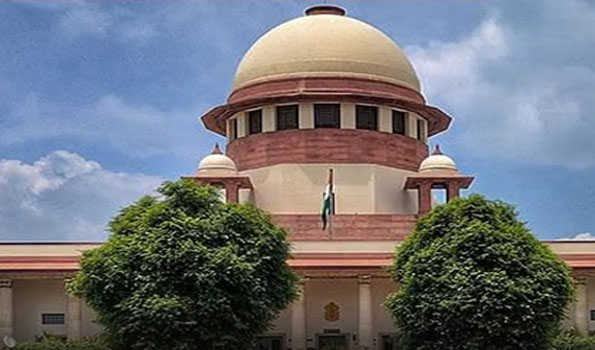
New Delhi: The pleas in the Supreme Court challenging the recent amendments introduced to the Waqf Act were mentioned on Monday before Chief Justice of India (CJI) Sanjiv Khanna for urgent listing.

Senior advocate Kapil Sibal urged CJI Khanna to give an urgent hearing on the petitions challenging the constitutional validity of the Waqf (Amendment) Act, 2025.

In response, the CJI, who is the master of the roster, asked the senior counsel if he had moved an email containing the mentioning letter. When informed that the same had already been done, CJI Khanna said, “I will get the letter and do the needful this afternoon.”

Several petitions have been filed before the apex court challenging the amendments immediately after the Parliament passed the Waqf (Amendment) Bill, 2025, on Friday.

After the legislation was passed in both Houses of Parliament, the Indian National Congress announced it would challenge the Waqf (Amendment) Bill before the Supreme Court. Congress claimed that it was an attack on the basic structure of the Constitution and was aimed at “polarising” and “dividing” the country on the basis of religion.

In his petition, Congress MP and party whip in Lok Sabha Mohammad Jawed contended that the amendments violated Articles 14 (right to equality), 25 (freedom to practice and propagate religion), 26 (freedom of religious denominations to manage their religious affairs), 29 (minority rights), and 300A (right to property) of the Constitution.

Similarly, All India Majlis-e-Ittehadul Muslimeen (AIMIM) chief Akbaruddin Owaisi has moved the top court, saying that the impugned amendments are “ex facie violative of Articles 14, 15, 21, 25, 26, 29, 30, 300A of the Constitution of India and manifestly arbitrary”.

The concept of ‘Waqf’, rooted in Islamic laws and traditions, refers to an endowment made by a Muslim for charitable or religious purposes, such as mosques, schools, hospitals, or other public institutions. The government said that crores of poor Muslims will benefit from this legislation, and in no way does it harm any single Muslim.

Minority Affairs Minister Kiren Rijiju has said the legislation did not interfere with the Waqf properties, adding that the Modi government works with the vision of ‘Sabka Saath and Sabka Vikas’.

Rahul Gandhi to join Kanhaiya Kumar’s padyatra today in Bihar’s Begusarai

Congress leader Rahul Gandhi is set to visit Bihar on Monday. As part of his trip, he will join JNU student leader Kanhaiya Kumar’s padyatra and attend a seminar titled ‘Safeguarding the Constitution’ in Patna.

Before attending the conference in Patna, Rahul Gandhi will first travel to Begusarai, where he will participate in the “Stop Migration, Give Jobs (Palayan roko naukari do)” march led by former JNU student leader Kanhaiya Kumar.

This march aims to raise awareness about the mass migration of youth from Bihar due to a lack of employment opportunities. Gandhi will join the padyatra, signalling his solidarity with the youth in their fight for jobs and better opportunities within the state.

According to the itinerary, Rahul Gandhi will arrive at Patna Airport at 9:50 AM and depart for Begusarai at 10:10 a.m. After participating in the padyatra, he will return to Patna by 1:00 p.m.

Upon his return, he will attend the Constitution Protection Conference at the Sri Krishna Memorial Hall. Following the conference, Gandhi will meet Congress leaders at Sadakat Ashram, before heading back to Delhi in the evening, with his departure scheduled for 4:10 p.m.

Rahul Gandhi will engage with the local community, addressing their concerns and highlighting the pressing issues faced by the youth in the region.

His visit comes ahead of the crucial Bihar assembly elections, where the Congress is expected to contest alongside a united opposition front.

Earlier on Sunday Rahul Gandhi shared a video message on social media to rally the youth of Bihar.

In his post, he wrote: “Young friends of Bihar, I am coming to Begusarai on 7th April, to walk shoulder to shoulder with you in the ‘Stop Migration, Give Jobs’ Yatra. The aim is to make the entire world see the sentiments of the youth of Bihar, their struggle, their suffering. You too come wearing a White T-Shirt, ask questions, raise your voice – to put pressure on the government for your rights, to remove it. Join the White T-Shirt Movement by registering here: http://whitetshirt.in Let us together make Bihar a state of opportunities.”

Ayushman health scheme launched in Delhi

CM Rekha Gupta slams previous govt for delay

Photo: Naveen Bansal

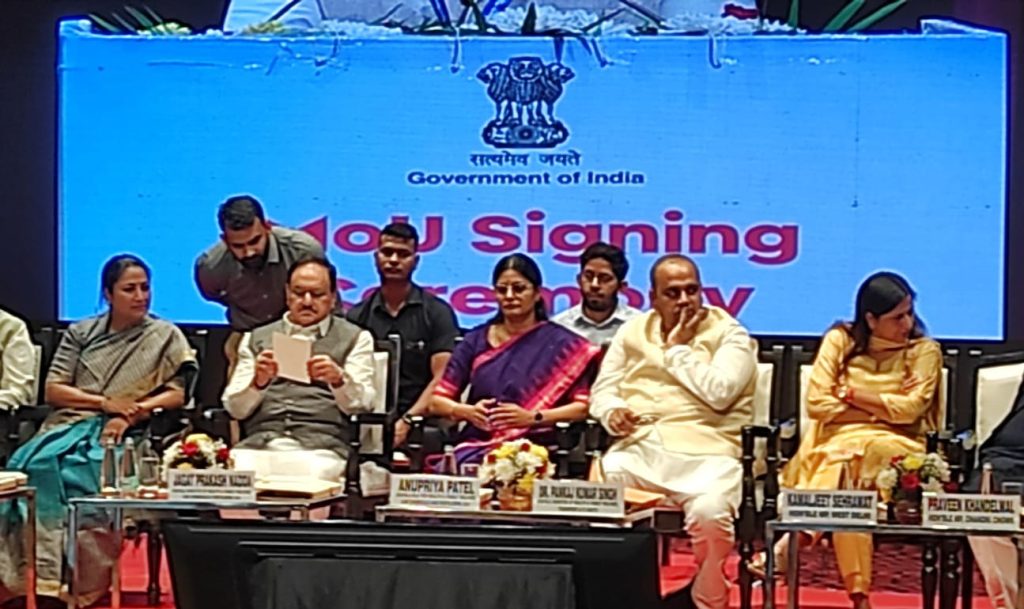
New Delhi:  The Delhi government on Saturday signed an MoU for implementing the Ayushman Bharat Scheme for Rs 10-lakh health insurance even as Chief Minister Rekha Gupta slammed the previous city government for blocking the scheme, denying its benefits to lakhs of residents.

She announced that, in the first phase, distribution of beneficiary cards for 2.35 lakh families would begin from April 10.

Speaking at the event for signing of MoU between National Health Authority (NHA) and State Health Agency (SHA) on Ayushman Bharat Pradhan Mantri Jan Arogya Yojana (AB-PMJAY), GNCTD, CM Gupta said, “The scheme, which could have become a lifeline for Delhi, could not be implemented earlier due to the previous governments’ ego… it was blocked even when the medical facilities were in a poor state and each bed was being shared by two patients.”

“Today, on behalf of my entire Cabinet, all the MPs and the people of Delhi, I want to thank our Central government and Prime Minister Narendra Modi for implementing this health scheme, ” she said, fulfilling a key promise made by the BJP during the Assembly election campaign.

The Delhi government aims to enrol at least 1 lakh beneficiaries within one month from the launch on Saturday.

CM Gupta said that Delhi citizens suffered due to the lack of previous state government coordination with the Central government. “Despite the public miseries, private hospitals used to deny treatment to patients, ” she said, adding that now, with the new insurance scheme, Delhiites will be able to undergo treatment at a hospital of their choice.

She said the health insurance will cover 1, 961 medical conditions, and the beneficiaries would be entitled to avail the facility at any of the 30, 957 hospitals across the country.

“Today, under the Central government’s initiative, around 6.54 lakh families in Delhi will now be eligible to receive medical treatment up to Rs 5 lakh. Adding another Rs 5 lakh from the Delhi government’s side, we will be able to provide a total health insurance coverage of Rs 10 lakh, ” she said.

At the MoU signing event, an online portal was also launched for Delhiites to file applications using ration cards and Aadhaar cards.

Under the scheme, nearly five lakh Delhiites above 70 will have the option of doorstep registration.

Earlier, Delhi Minister Parvesh Verma, speaking to media, expressed his enthusiasm over the initiative, saying, “It’s good news for Delhi… Under this, millions of poor people will now be able to avail free treatment of up to Rs 10 lakh through the Ayushman Yojana. This is a very big and positive step.”

Delhi Govt approves dedicated road corridor along Sahibi river

In a move to improve road infrastructure and easing traffic congestion in the city, the Delhi government has approved the construction of a dedicated road corridor along both sides of the Sahibi river, from south west Delhi’s Dhansa to Basai Darapur in west Delhi.

Meanwhile, in line with Prime Minister Narendra Modi’s vision of a modern and decongested Delhi, four major roads previously under PWD have now been officially handed over to NHAI for better management, expansion and maintenance.

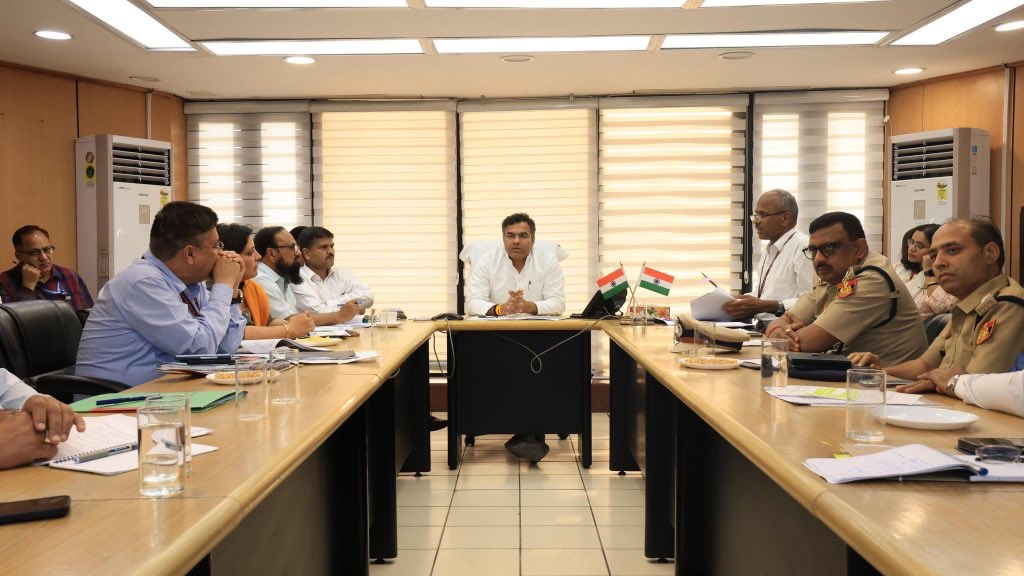
This comes after the high-level committee meeting which is also the first meeting of the UT-Level Coordination Committee, was chaired by PWD Minister Parvesh Verma.

Several crucial decisions were made to eliminate traffic bottlenecks, improve inter-agency coordination, and expedite key road projects. To reduce traffic congestion and provide an alternative route, a dedicated road corridor will be developed along both sides of the Sahibi River, from Dhansa to Basai Darapur. 

This will offer seamless connectivity and ease vehicular movement in key areas of the city. To ensure smooth traffic flow, the police station near Dhaula Kuan Metro Station will be relocated to create a dedicated slip road from NH-48 towards Naraina. This move will eliminate a major traffic bottleneck in the area.

Besides to enhance road quality, streamline traffic movement, and improve maintenance efficiency, four major roads in Delhi have been officially handed over to NHAI which are Delhi-Rohtak Road (NH-10): Peeragarhi to Tikri Border (13.2 km); Delhi-Rohtak Road (NH-10): Peeragarhi to Zakhira (6.8 km); NH-2 (Mathura Road): Ali Village to Ring Road, Ashram Junction (7.5 km); NH-148A (MG Road) 8 km stretch.

Verma said under the dynamic leadership of Prime Minister Narendra Modi, the government is committed to transforming Delhi’s road infrastructure into a world-class, seamless, and future-ready network.

The Sahibi River corridor will be a game-changer for the city, offering an alternative traffic route and significantly reducing congestion. Additionally, the transfer of key roads to NHAI will ensure faster expansion, better maintenance, and a more efficient commuting experience for Delhiites.

MOST POPULAR

HOT NEWS