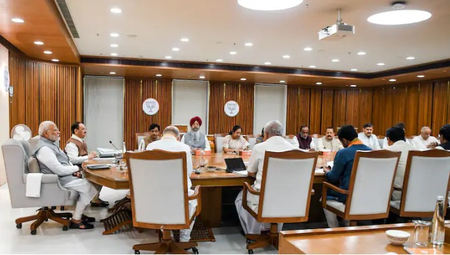
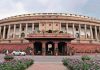
New Delhi: The top BJP leadership held an important meeting on Wednesday in Delhi regarding the party’s organisational elections, in the presence of Prime Minister Narendra Modi.
The meeting, held at the Prime Minister’s residence, was attended by Union Home Minister Amit Shah, Defence Minister Rajnath Singh, and BJP’s National General Secretary (Organisation), B.L. Santhosh.
The organisational reshuffle is expected to have a significant impact on the BJP’s electoral strategy ahead of upcoming polls.
Discussions also focused around the upcoming election for the BJP President.
According to party sources, the announcement regarding the election could be made within a week.
In addition to deliberating on the national leadership, the meeting also focused on organisational changes at the state level.
Sources said that the names of new state BJP presidents for states like Karnataka, Uttar Pradesh, West Bengal, and Madhya Pradesh were discussed.
The election for the BJP President was to be completed by February 2025, but was delayed due to state elections, including Haryana, Maharashtra, Jharkhand and Delhi.
The party may announce around half a dozen state unit presidents in the next two to three days.
“The election process for choosing the BJP President could begin any time after April 20, ” the party sources said.
The election for the BJP President was supposed to take place in January. However, with April halfway through, it remains pending.
J.P. Nadda, who has been serving as the BJP President since January 2020, had his term extended beyond the three-year limit to ensure a smooth transition and proper preparation for the next leadership phase.
According to the BJP constitution, the term of the National President is generally three years, elected through consensus within the party.
Party insiders believe that the delay is due to the careful selection of a leader who can further strengthen the organisation.
BJP is looking for a young organisational structure and this could lead to ouster of some current General Secretaries being replaced by young faces, keeping in mind the future prospects of the party, party sources said.
Civil liberties groups, politicians and many legal scholars have drawn attention to a troubling pattern. While the government claims that this law brings accountability, critics ask why only Muslim charitable land is being singled out for such legislation. A report by Bijoy Patro
In a heated legislative week in New Delhi, Parliament passed the Waqf (Amendment) Bill 2025, triggering a fierce national debate on minority rights, land governance, and religious equity. The Bill, now the Waqf (Amendment) Act, 2025,introduced by the BJP-led NDA government, sought to amend the Waqf Act of 1995, expanding the state’s oversight over Muslim-donated charitable properties – sparking backlash from opposition parties and civil society groups who accuse the government of targeting the Muslim community under the guise of reforms.
The term Waqf, rooted in Islamic law, refers to an endowment made by a Muslim to a religious, educational, or charitable cause. These properties – mosques, graveyards, madrasas, or orphanages – are considered dedicated in the name of Allah and cannot be sold, gifted, or inherited. A lot of Waqf property is also property that Muslims moving to East and West Pakistan at the time of the country’s partition left behind in India – mainly in the states of UP, Bihar, Punjab, Haryana and Bengal.
India is home to one of the largest collections of Waqf properties in the world, with Home Minister Amit Shah stating in Parliament that the total Waqf land in the country stands at over 39 lakh acres.
The Waqf Board, which oversees these assets, has historically been regulated under the Ministry of Minority Affairs. Surveyors are appointed by the government, and the system, like many bureaucratic bodies in India, has faced allegations of corruption and mismanagement. Still, the Waqf has remained a symbol of community self-governance.
The Waqf (Amendment) Act, 2025 introduces sweeping changes:
Section 40 Redefined: This section, the most controversial, empowers the Waqf Board to initiate suo motu action to declare any property as Waqf. Critics argue this gives the Board near-unchecked power to claim land without prior legal adjudication.
Appeals Framework Modified: The amendment reduces the role of judicial intervention in disputes by modifying how appeals against Waqf property decisions are handled.
Governmental Oversight: There is greater scope for central intervention in Waqf affairs, raising questions about federalism and religious autonomy.
The government insists the Act is a long-overdue reform that modernises and streamlines Waqf governance. “This is not about religion. It’s about accountability,” said BJP MP Ravi Shankar Prasad. “If 39 lakh acres of land are tied to charity, they must be transparently administered,” he reasons
Outrage: “Religious Targeting” Civil liberties groups, politicians and many legal scholars have drawn attention to a troubling pattern. While the government claims that this law brings accountability, why, critics ask, is only Muslim charity land being subjected to such legislation?
The opposition, led by the Congress, the Left parties, the Samajwadi Party, and the Trinamool Congress, have vehemently opposed the Bill.
CPI(M) leader Brinda Karat slammed the legislation as “unconstitutional and communal,” stating, “This is nothing but a direct attack on the rights of the Muslim community. The government is making a grab for Waqf lands under the guise of reform.”
Trinamool Congress MP Kalyan Banerjee pointed out that the redefined Section 40 essentially enables the Waqf Board to classify any land as religious endowment without proper verification. He said that this was akin to land acquisition by stealth:“What stops the Board from claiming a land parcel overnight and rendering lakhs homeless?”
John Brittas of the CPI(M) raised the temperature in the RajyaSabha by calling the BJP “Judases who betrayed the Constitution,” while actor-turned-MP Suresh Gopi countered with scathing remarks on the Left’s “murderous politics.”
There is a case to be made for a uniform religious trust regulation law, said an activist. “Why does the government not create a single law that governs properties owned by all religious institutions – Hindu temples, Christian churches, Sikh gurdwaras, and Muslim Waqf? Targeting only one community feeds a perception of bias.”
Writing for the online news portal, The Wire, legal expert Faizan Mustafa asked if non-Hindus would be even allowed, let alone mandated “on temple boards”. He says that Buddhists are already protesting what they see as effective control by Hindus of the most holy site for them, the Mahabodhi temple at Bodhgaya. They want the Bodh Gaya Temple Act 1949 repealed. The effective primacy of non-Buddhists – the Hindu heading the Buddhist temple’s board – has been in place since 1949. Insecurity has led to agitations as Buddhists sense the temperature being raised by Hindu majoritarian forces in the country, he says.
That perception was reinforced when the RSS mouthpiece, Organiser briefly published and then deleted an editorial suggesting that Church-run institutions should also be regulated under a central framework. Though quickly taken down, the article fanned speculation that similar legislation for Christian charities may be on the anvil.
A Regulated System Already Ironically, the Waqf system in India has long been heavily regulated. The Central Waqf Council, formed under the Waqf Act of 1954 and strengthened in the 1995 iteration, already has government-nominated members and is answerable to the Ministry of Minority Affairs.
Surveyors are government-appointed. Critics of the Bill argue that this overregulation has bred bureaucracy and corruption, but rather than improving transparency through digitisation and public accountability, the government has chosen to increase centralised control, they lament.
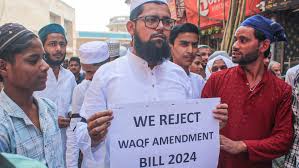
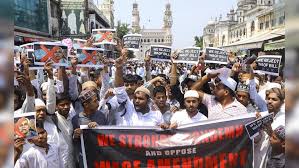
The law has sparked widespread protests in several parts of the country, particularly in Uttar Pradesh and Bihar. In UP police detained over 100 protesters who objected to the law, with some reportedly asked to furnish Rs10-lakh bonds to secure their release.
The CPI(M) and other Left groups have pledged legal action. In a party congress resolution, they vowed to “fight the Bill using all available democratic and legal forums.”
Legal experts also foresee constitutional challenges. “The freedom to manage religious affairs is a fundamental right under Article 26,” said Supreme Court lawyer Indira Jaising. “This law infringes that right in a discriminatory manner.”
Prime Minister Narendra Modi defended the Act, casting it as a move toward social justice and equity. “For too long, appeasement politics has clouded genuine reform. This bill is not against Muslims. It is against corruption,” he said at a rally in Varanasi.
He accused the opposition of stoking communal tensions for electoral gains. “They fear the loss of control over vote banks and are misleading the community.”
The Prime Minister’s remarks hint at the political stakes in Bihar and Uttar Pradesh, states with significant Muslim populations, where the BJP faces stiff competition from the INDIA alliance.
Some political analysts have likened the Waqf Bill to the Shah Bano moment of the 1980s, when the Congress government reversed a Supreme Court judgment granting alimony to a Muslim woman under pressure from conservative clerics. That incident alienated progressive voices and gave the BJP a potent narrative on its version of secularism.
Meanwhile, Muslims feel increasingly alienated. “It’s like being punished for being charitable,” said Delhi-based Waqf caretaker Imran Qureshi. “The government wants our land but doesn’t want to hear our voice.”
The road ahead will likely be stormy. Petitions have already been filed in several high courts, and a challenge in the Supreme Court is expected soon. Opposition parties are rallying around the issue, and mass mobilisations are being planned in various states.
As the dust settles, one thing is clear – the controversy surrounding the Waqf Amendment Bill is about more than just land. It is about trust, identity, and the role of the state in religious life. Whether this becomes a watershed moment like Shah Bano or just another flashpoint in India’s endless political theatre remains to be seen.
Post Script: Ajmal, a fruit seller on the streets of East Delhi says that the “Waqf Bill is too big for a small person like me to even understand.” But, he says, he doesn’t believe it will do the community any good – “because it comes from Modi and Modi’s BJP, which have a strident anti-Muslim position for votes and to rule the country.”
The fruit seller, after all, might have provided us with what the hullabaloo is all about.
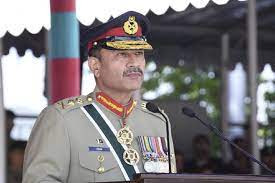
Pakistan Army Chief General Asim Munir has once again emphasized Islamabad’s long-standing stance on Kashmir, calling it the country’s “jugular vein.”
Addressing a gathering of overseas Pakistanis, General Munir urged them to remember and promote Pakistan’s founding ideology. “You should definitely tell Pakistan’s story to your children. Our forefathers thought that we are different from the Hindus in every aspect of life. Our religions, our customs, traditions, thoughts and ambitions are different. That was the foundation of the two-nation theory that was laid,” he said.
Reaffirming Pakistan’s position on Kashmir, Munir said: “Our stance is absolutely clear. It was our jugular vein, it will be our jugular vein, we will not forget it. We will not leave our Kashmiri brothers in their heroic struggle.”
He also hit out at perceptions that terrorist activity was deterring foreign investment in Pakistan. “Do you think terrorists can take away the destiny of the country? The 1.3 million-strong Indian Army, with all its wherewithal, if they cannot intimidate us, do you think these terrorists can subdue the armed forces of Pakistan?” he said.
General Munir, who became Pakistan’s army chief in 2022, also made strong remarks about separatist unrest in Balochistan, warning that the army would not allow any attempts to break the province away from the country.
“Balochistan is Pakistan’s pride, you will just take it away so easily? You won’t be able to take it in 10 generations. Inshallah, we will defeat these terrorists very soon. Pakistan will not fall,” he declared.
Seventeen years after the 26/11 Mumbai terror attacks shook the country, India has finally secured the extradition of Tahawwur Rana, an accused conspirator and close aide of David Headley, in a landmark success in its long and determined pursuit of justice. A report by Aayush Goel
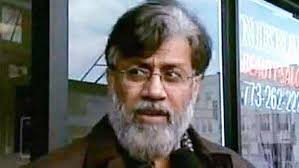
Tahawwur Hussain Rana, a name resonating across India today, represents a significant milestone in the nation’s pursuit of justice against cross-border terrorism. It has taken the enforcement agencies almost 17 years to get him extradited to the country to face trial for his alleged role in the 2008 Mumbai terror attacks—one of the deadliest assaults in the country’s history.
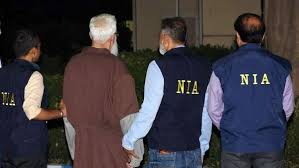
Rana, 64, is a Pakistan-born Canadian national and close associate of one of the main conspirators of the 2008 Mumbai terror attacks, David Coleman Headley alias Daood Gilani, a US citizen. Rana was extradited from the US and arrested by the National Investigation Agency (NIA) on April 10 upon arrival in Delhi. Rana has been charged with numerous offences, including conspiracy, murder, commission of a terrorist act (UAPA), and forgery, in connection with his alleged involvement in the 2008 Mumbai terrorist attacks by Laskhar-e-Tayyiba (LeT), a designated terrorist outfit.
The NIA informed a Delhi court that Rana may have devised similar terror plans targeting other Indian cities. Special Judge Chander Jit Singh granted 18-day custody of Rana to the NIA for detailed interrogation. “His prolonged custody has been deemed necessary to facilitate an extensive interrogation aimed at uncovering more profound layers of the conspiracy,” NIA officials told the court. The agency plans to take him to various locations to reconstruct events and gather crucial evidence in the Mumbai terror attack case. It is worth noting that Headley made another trip to India in March 2009, post-2008 attacks, to conduct additional surveillance, including the National Defence College in Delhi and of Chabad Houses in several cities. A specialized 12-member NIA team led by Director General Sadanand Date will interrogate his alleged involvement with LeT and ISI in planning the attacks.
Rana’s medical examination has been mandated every 24 hours, and he is permitted to consult with his lawyer every alternate day, under NIA supervision. The court has also restricted him to use only a soft-tip pen.
“Together with India, we’ve long sought justice for the 166 people, including 6 Americans, who lost their lives in these attacks. I’m glad that day has come,” US Secretary of State Marco Rubio wrote in a post on X. The US State Department said the 26/11 terror attacks shocked the entire world, and Washington DC supported India’s efforts to ensure those responsible were brought to justice.
“Tahawwur Rana’s extradition is a big success of Prime Minister Modi’s diplomacy. The Modi government’s effort is to bring to justice those who attacked India’s honour, land, and people. He will face trial and punishment. It is a big success of the Modi government,” said Union Home Minister Amit Shah at a public event. The arrival of Rana, who was arrested in Chicago in 2009, the year after the terror attacks, marks the culmination of a prolonged legal process.
The Mumbai Attacks: On November 26, 2008, a group of 10 Pakistani terrorists sneaked into India’s financial capital Mumbai, using the Arabian Sea route. They went on a rampage and carried out a coordinated attack on a railway station, two luxury hotels and a Jewish center. They launched a 60-hour assault with firearms, grenades and improvised explosive devices and targeted multiple iconic locations in Mumbai, including the Taj Mahal and Oberoi hotels, Leopold Cafe, Chabad House and Chhatrapati Shivaji Terminus train station, each of which Headley had scouted in advance. The attack not just shook India but the entire world, as amongst 166 people killed were US, British and Israeli nationals.
Rana was born in Chichawatni city in Sahiwal district of Pakistan’s Punjab province. After pursuing his studies in medicine from a college in Pakistan, he worked in the Pakistan Army’s medical corps. Rana migrated to Canada after leaving the Pakistani Army in the late 1990s and later got Canadian citizenship. He started his own business of immigration services provider through his ‘First World Immigration Services’ venture. Rana then moved to the US and set up an office in Chicago. According to the NIA’s chargesheet, in or about June 2006, before he made his first visit to India, the key accused Headley had travelled to Chicago and “discussed the whole conspiracy with Rana and took the assistance of Rana for using his immigration firm as a cover for executing the assignment entrusted by LeT”. Rana helped Headley to get a multi-entry Indian visa and set up the Mumbai branch of his company, which, however, did not process a single immigration case throughout its operation, the NIA said. While in India, Headley conducted reconnaissance in various Indian cities, including Mumbai. Rana himself visited India along with his wife from November 13 to 21, 2008, just before the attack. The NIA claimed Rana was also involved in planning future attacks in India, and met LeT operative Abdur Rehman in Dubai ahead of the Mumbai attacks. He also maintained contact with Major Iqbal, the alleged ISI handler of the terrorists and a key conspirator. The cover provided by Rana helped Headley revisit India even after the attacks.
Mission Operation Rana: Rana’s extradition is being celebrated as one of the biggest victories of the country’s war against terror. Rana’s extradition journey started when he was arrested by the FBI in October 2009, following the arrest of his associate, David Coleman Headley. In 2021, a US court convicted Rana for supporting the terrorist organization Lashkar-e-Taiba (LeT) and planning to attack a Danish newspaper. Although acquitted of direct involvement in the Mumbai attacks, India sought his extradition in 2020.
Rana’s legal team advocated against the extradition on the grounds of double jeopardy, declaring that he has already been tried for related offences. It was after the US Supreme Court rejected Rana’s final appeal in January 2025, the path for his extradition was cleared. What gathered India’s appreciation worldwide was the actual extradition process. One of the biggest challenges before NIA was keeping the whole transit operation confidential because of possible threats from Pakistan-based terror groups. A special team comprising of NSG commandos and senior NIA officials left Los Angeles on a specially designed aircraft. To ensure seamless coordination between Indian and US agencies, the flight was continuously monitored in real time by commandos, air traffic control units, and intelligence personnel. The NIA and Intelligence Bureau officials will interrogate Tahawwur Rana about the 26/11 Terror Attack. The interrogation is expected to provide important leads into his travels in parts of northern and southern India days before the carnage in 2008, they said. The central security officials had found that Rana had visited Hapur and Agra in Uttar Pradesh, Delhi, Kochi in Kerala, Ahmedabad in Gujarat, and Mumbai in Maharashtra with his wife Samraz Rana Akhtar, between November 13 and November 21, 2008.
Rana had submitted business sponsor letters from ‘Immigrant Law Center’ and a Property Tax payment notice from Cook County as his address proof. The agencies will look forward to establishing the purpose of these visits. In 2011, the NIA had charge-sheeted Rana, his associate, and the attack scout David Headley and seven others in absentia. A supplementary chargesheet is now expected to be filed, with the charges likely updated under the Bharatiya Nyaya Sanhita, 2023 (BNSS). Several of these charges carry the death penalty. Ajmal Amir Kasab, the lone surviving terrorist among the Pakistani group, was hanged to death in Yerawada Jail in Pune, but a lot remains to be answered about the attacks. Rana is believed to hold the key to several unresolved aspects of the 2008 Mumbai attacks.
The April 8 grenade attack on the house of a senior BJP leader in Punjab has given fresh stock of ammunition to opposition to pound the ruling AAP which is already struggling to fight several back-to-back events undermining law and order in state in the recent past. A report by Rajesh Moudgil
Punjab police’s quick action in cracking the shocking case of the April 8 hand-grenade attack at the senior BJP leader’s house in Jalandhar notwithstanding, the incident has given fresh ammunition to all the opposition parties to take on chief minister Bhagwant Mann-led Aam Aadmi Party (AAP) government, afresh.
For, this grenade attack comes around a time when the Punjab police is already fighting for its image over incidents like a brutal assault of serving army officer in Patiala by its allegedly “drunk’’ 12 personnel, involvement of a woman cop, popular for her lavish lifestyle and reels on Instagram, in a drug case in Bathinda and a gruesome killing of its own sub-inspector during a violent clash involving a Sarpanch belonging to AAP in a Tarn Taran village.
Though the brave sub-inspector, Charanjit Singh, had rushed to the spot to mediate a violent clash between two groups of villagers, the dispute was said to be about 10 days old, a group of villagers, led by the accused sarpanch, snatched the service revolver from the SI and shot him dead. Head constable Harvinder Singh was also hurt in the violent clash.
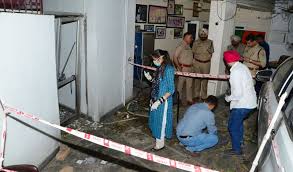
It may be recalled that on April 8, last, a massive explosion occurred at the residence of senior BJP leader Manoranjan Kalia, after some unidentified miscreants lobbed a grenade at his residence. While no one was hurt, the blast badly damaged the side door and shattered the window panes.
Special Director General of Police (Special DGP), Law and Order, Arpit Shukla, said the preliminary investigations revealed the blast was masterminded by a Pak-ISI backed terror module to disrupt communal harmony in Punjab.
Meanwhile, all the opposition parties hit out at the chief minister Mann-led AAP government for such incidents and sought his resignation.
Union minister Ravneet Bittu said there is an atmosphere of fear in the state and the AAP government has lost control of the law and order situation in Punjab. “The border state has seen militancy but even during that period, grenades were not used like this as now it seems as if grenades are easily available in toy shops,” he alleged. State BJP chief Sunil Jakhar also lambasted the AAP government for the same.
Congress leader Partap Singh Bajwa also took to X to say: “The grenade attack on Shri Manoranjan Kalia’s residence is a stark reminder of the escalating violence in Punjab under CM @BhagwantMann’s tenure. Since he assumed office there have been multiple blasts…..This pattern underscores a significant lapse in maintaining law and order. If the Chief Minister @BhagwantMann cannot ensure the safety of citizens, he should step down’’.
The SAD leader Sukhbir Badal alleged that lawlessness has crossed all bounds in Punjab. The CM must take moral responsibility for these incidents and resign immediately.
This is the 16th attack since September 24, 2024, the first being when a grenade was hurled at a Sector 10 house in Chandigarh in which involvement of gangster Happy Passia and Pakistan-based terrorist Harwinder Singh Rinda, is suspected
Nov 23, 2024: An improvised explosive device planted at Ajnala police station
Nov 29, 2024: An explosion took places near an abandoned police check post in Gurbaksh Nagar, Amritsar
Dec 2, 2024: A grenade attack attempted at Ansaro police post, Nawanshahr, though the grenade did not go off
Dec 4, 2024: A grenade explosion shattered windows of a police station in Majitha
Dec 13, 2024: A grenade thrown near Ghania Ke Bangar police station, Batala, but it did not explode
Dec 17, 2024: An explosion took place near Islamabad police station, Amritsar
Dec 18, 2024: Grenade blast reported near Bakshiwala police check post in Kalanaur, Gurdaspur
Dec 20, 2024: Grenade attack reported near Wadala Bangar police check post, Kalanaur, Gurdaspur
January 9, 2025: Grenade attack at Gumtala police Chowki, Amritsar
Jan 16, 2025: Grenade attack on house of a liquor trader Jaintipuria, Amritsar
Feb 3, 2025: Grenade attack at Fatehgarh Churian bypass police Chowki, Amritsar
Mar 15, 2025: Grenade attack on a temple in Amritsar
Mar 16, 2025: A grenade hurled on a YouTuber in Raipur Rasoolpur village, Jalandhar
April 2, 2025: Blast outside Badshahpur police post, Patiala
April 8, 2025: Grenade attack on BJP leader Manoranjan Kalia
No government will turn a blind eye to all ills even if it means examining religious freedom of a section. But the Government must work with a purpose of welfare; and it must keep its hands clean. by KUMKUM CHADHA
To term the Waqf amendment Bill as a turmoil would be understating the anguish and anger within the Muslim community.
Not only have they taken to the streets but knocked the doors of the Courts as well.
That apart, there is commotion in some state assemblies with members clashing with each other over the contentious Bill.
In the Jammu Kashmir Assembly for instance, some legislators had to be dragged out amid a brawl even as members from the Treasury and Opposition benches clashed over the Bill.
If one section raised slogans of Goondagardi nahinchalegi, hooliganism won’t work and Jahan balidaan hue Mukherjee woh Kashmir hamara hai, the land where Mukherjee was sacrificed is ours, others chanted Allah-O-Akbar, hail Akbar, “Nara-e-Taqbeer, Allah-O-Akbar”, or Cry of God is the Greatest and “Kala kanoon radh karo”, cancel the black law. If some members tried to snatch the copies of the Bill in the Assembly, in Parliament, Lok Sabha member Asaduddin Owaisi allegedly tore a copy of the Waqf Bill at the end of his speech.
Add to this the ire of Muslim supporters in Orissa wherein Naveen Patnaik’s Biju Janata Dal, or BJD, was under attack for its “flip flop” over the Bill. Having decided to oppose the Bill in Parliament, the BJD voted in favour of the Bill.
In Bihar, Nitish Kumar’s Janata United Dal, is in a disarray with some Muslim leaders resigning from the Party over the new Bill.
Ram Vilas Paswan’s Lok Janshakti Party is also facing criticism over its support to the Bill. The Party Chief, Chirag Paswan is a Union Minister in Prime Minister Narendra Modi’s Cabinet.
Meanwhile, protestors took to the streets in cities of Ahmedabad, Kolkata, Bengaluru and Chennai. Muslim organizations, too, came together demanding the withdrawal of the Bill.
Opposition MPs have moved the Court challenging the constitutional legitimacy of the Bill.
Their take: the new law is “discriminatory, communally motivated and a blatant infringement on the constitutional rights of Muslim citizens”.
On its part, the Government has pitched the Bill, to quote Prime Minister Modi, as “a major milestone for reform and transparency”.
The Waqf (Amendment) Bill 2025 was passed in both Houses of Parliament well after midnight after a heated debate. It received President Droupadi Murmu’s assent by virtue of which it has become a law.
Waqf refers to personal property – moveable or immovable – that is donated by Muslims for religious or charitable purposes. Waqf properties cannot be sold or transferred. In essence they become properties of God.
With its origins in the Arabic word waqufa, it literally means to detain or hold or else tie up.
A Waqf can be established through a deed. A property is deemed as waqf if it has been used for charitable purposes over a long period of time: or the waqf by user clause which, under the new law, has been removed causing a hue and cry.
In India, several properties fall under Waqf, which include mosques, Eidgahs, dargahs, khanqahs, imambaras and qabristans (graveyards), among others.
Waqf properties are donated by Muslims for charity and are managed by members of the community.
Each state has a Waqf Board, which is a legal entity that can acquire, hold, and transfer property.
Waqf properties cannot be sold or leased permanently.
As of now, Waqf currently controls 8.7 lakh properties spanning 9.4 lakh acres across India with an estimated value of Rs 1.2 lakh crores, according to the government data.
India has the largest waqf holding in the world. Further, Waqf Board is the largest landowner in India after the Armed Forces and the Indian Railways.
There is mismanagement and large-scale encroachments of land in the name of Waqf; the doctrine of once a waqf always a waqf leads to claims which are irrevocable.
For instance, claims have been made over islands in Bet Dwarka amongst others which pose a judicial challenge. The absence of surveys, poor management and large-scale corruption are other issues that cropped up.
The new legislation, as per the Government’s version, is aimed at enhancing and ensuring an effective management of Waqf assets across India. That apart, the new law aims at improving the registration process and increases the role of technology in management of records. It also makes it mandatory to have women on Waqf Boards.
So, what is the hue and cry about?
As for specific clauses, there is angst about doing away with the waqf by user clause; about including non-Muslims on the Board, allowing only those who are practicing Muslims for a minimum of five years to give property under Waqf and so on and so forth.
The big picture is that this law is being seen as “anti-Muslim” and the government’s bid to “snatch away” to quote the Muslim leadership, the autonomy of the Muslims.
Knocking off the waqf by user clause for instance is being interpreted as a bid to take away waqf property in the absence of documentation.
Till the new law took effect, a property was treated as waqf if used for religious or charitable purposes for a long time – even without formal documentation.
On another count, a senior state government official having the final say in deciding whether a property belongs to the government or Waqf is being seen as a bid to take away Waqf land.
The argument: a government officer will, in the case of disputed cases, will never rule against the government.
“Waqf Barbaad Bill”, is how AIMIM Member of Parliament Asaduddin Owaisi decried the Bill alleging government control and a bid to curb the religious freedom of Muslims.
Congress MP and leader of the Opposition, Mallikarjun Kharge, saw this as “unconstitutional and divisive agenda” of the Government. Party leader Gaurav Gogoi went as far as saying that this bill will “disenfranchise minorities”.
Nitty gritty apart, the main issue is the trust-deficit between the Muslims and the ruling elite. Any move of the Government, even if aimed at transparency or good governance, is viewed with suspicion by the Muslims. The underlying feeling: they are out to get us.
There is some basis to this fear, given the past actions of the BJP governments, particularly in the states.
Take the “bulldozer justice” in the state of Uttar Pradesh wherein houses of Muslims have been razed to the ground. In fact, in the Prayagraj case, when activist Javed Mohammed’s house was torn down, the apex Court came down heavily on the state Government.
While the authorities alleged that the house was built illegally, critics said that he was being punished for being a critic of the Government.
Irrespective, there is a chasm between the Government and the minorities, and the Waqf law is yet another step in that direction.
Having said that, it cannot be denied that there is mismanagement in Waqf Boards, large scale encroachment of land, misuse of funds and legal disputes, which call for regulation and scrutiny and perhaps Government control too.
No government, BJP or any other, unless its agenda is to appease the minorities, will turn a blind eye to all ills even if it means having a relook at the alleged autonomy and religious freedom of a section.
Having said that the Government must work with a purpose of welfare rather than an anti Muslim agenda; it must keep its hands clean because to quote William Shakespeare “Ceaser’s wife must be above suspicion”.
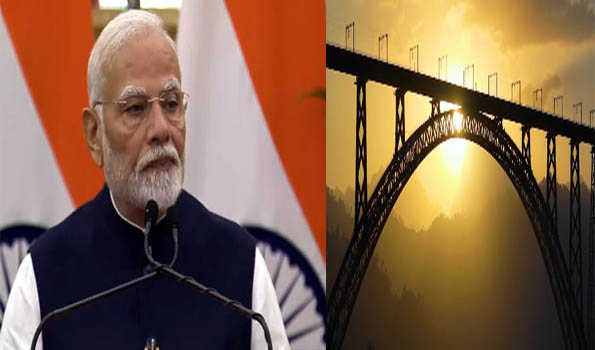
Srinagar- Prime Minister Narendra Modi’s visit to Jammu’s Katra for the inauguration of the Kashmir valley rail link has been postponed due to bad weather forecasts, officials said on Wednesday. A new schedule for the event is expected soon.
The Special Protection Group informed Jammu and Kashmir authorities about the deferment, citing a predicted wet spell in the region on Friday and Saturday, according to people familiar with the development.
On Tuesday, a trial run of the Vande Bharat train was successfully conducted on the Udhampur-Srinagar-Baramulla line, which now connects the Kashmir valley with the rest of India.
The long-delayed project, declared a national initiative in 2002, includes engineering marvels such as the world’s tallest railway bridge over the Chenab River and India’s longest rail tunnel. The newly customized Vande Bharat train is designed to handle sub-zero conditions with features like heated water tanks, anti-freeze systems, and a defrosting windshield for the driver.
Once operational, the train will reduce travel time between Jammu and Srinagar from nearly nine hours to just over three hours.
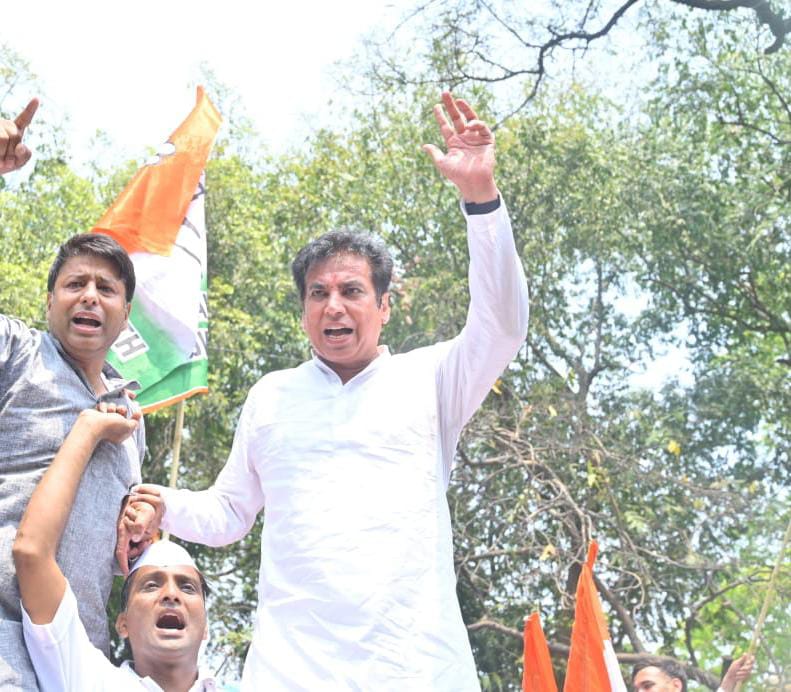
Delhi Congress has slammed the BJP ruled government in the city to ban issuance of new Economically Weaker Section (EWS) certificates ahead of admission sessions in schools and other institutes.
Condemning the move by the Delhi government, Delhi Pradesh Congress Committee president Devender Yadav said that the BJP government in Delhi was making a concerted move to deny education to poor children from the EWS category by taking a decision to ban EWS certificates in the name of malpractices.
He said that this move will snatch the rights of the poor to get education, and to come into the mainstream of life.
“If there was rigging in providing EWS certificates, the collusion of the education department should be thoroughly probed, and punish the guilty instead of targeting the helpless poor people, who struggle to educate their children,” Yadav added.
He said that Delhi Congress will strongly oppose the BJP government’s move to deny EWS certificates to the poor, which only exposes the anti-poor attitude of the BJP.
He further said that BJP came to power in Delhi after misleading the voters with false promises, but after capturing power, it was unleashing its anti-people, anti-poor policies one by one, without fulfilling any of its election promises, to subjugate the economically weaker sections.
Yadav said that private schools have 25 per cent reservation for EWS class students, while youth with EWS certificates get 10 per cent reservation in jobs. He said that the BJP, in its manifesto, had made promises like upliftment of the poor and giving employment to the youth, but the BJP Government was constantly betraying the people of Delhi by denying them their just rights.
Earlier, Aam Aadmi Party (AAP) also slammed the government and said that it was deliberately preventing the marginalized from availing of reservation in private schools and hospitals.
Addressing a press conference, AAP’s Delhi State president Saurabh Bharadwaj said that the revenue department has been ordered not to issue new EWS certificates pending a review.
Meanwhile BJP refuted all the allegations and said that the chief minister Rekha Gupta has not imposed any ban on issuance of EWS certificate but there had been discrepancies which have been taken up for investigation.
Delhi BJP president Virendra Sachdeva stated that Rekha Gupta has taken cognizance of complaints regarding the misuse of EWS certificate in availing government benefits, the AAP has panicked and is spreading confusion by falsely claiming that the issuance of certificate has been stopped.
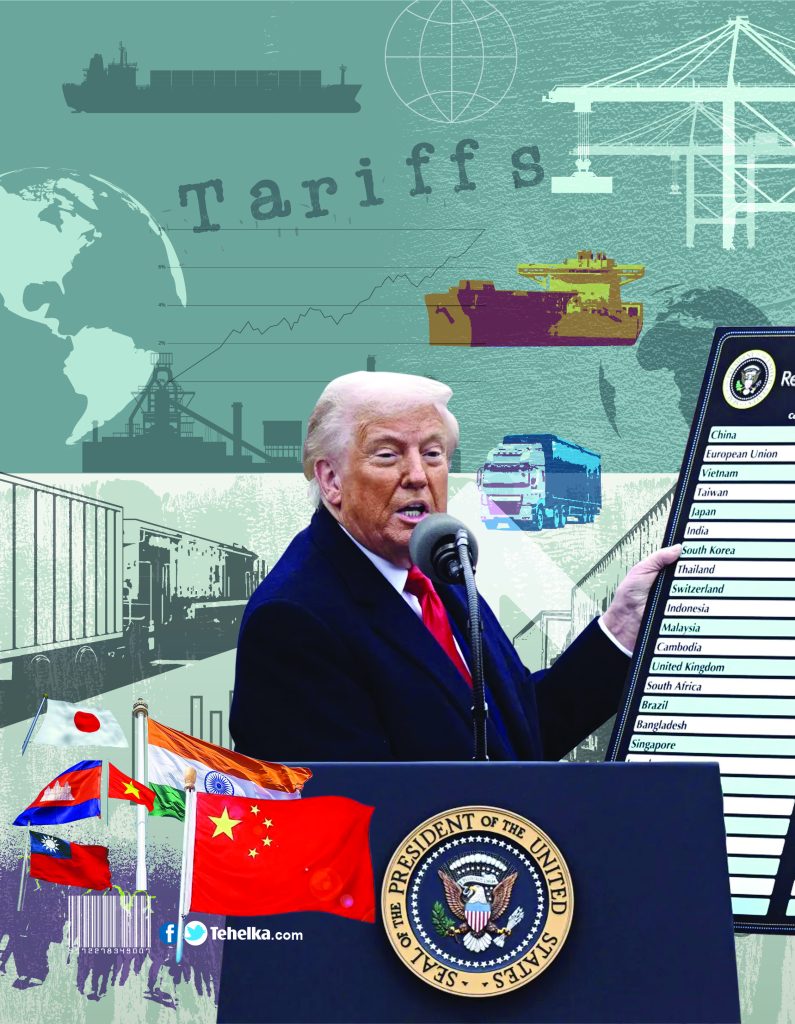
US President Donald Trump’s sudden U-turn on tariffs has given a severe jolt to the global economic order. His decision to pause the sweeping reciprocal tariffs—except for China—marks a rare climbdown, but it also underscores the volatility that defines Trump’s trade policy. For India, this moment is both a challenge and an opportunity. In his second term, Trump reignited global economic uncertainty, disrupting long-term decisions in stock markets and across the real economy. The magnitude of this disruption was evident: Japan’s Nikkei plunged 7.83%, Hong Kong’s Hang Seng nosedived 13.22%, and India’s Sensex dropped 2.95% in a single day. Since January 1, the Sensex has lost 6.84%, and it is down nearly 15% from its September 2024 peak of 85,978.25.
Tehelka’s cover story, “Trump’s Tariff War,” captures this churn and how India is navigating it. As the trade storm intensifies, India finds itself balancing diplomacy between two sparring superpowers—while China, under pressure from Trump’s 125% tariff barrage, is reaching out to New Delhi with appeals for solidarity among “the two largest developing countries.” Trump’s temporary suspension of tariffs above 10% for 59 countries, including India and the EU, is a tactical retreat. It offers a 90-day window to negotiate trade deals—an acknowledgment, perhaps, that waging a global trade war while pursuing his “Make America Great Again” agenda may be unsustainable. He has instead chosen to concentrate firepower on China, which now bears the brunt of US tariffs. This pivot from global confrontation to a focused bilateral battle with China is unprecedented. But it also speaks volumes: even Trump has realized that antagonizing half the world could backfire economically and diplomatically.
For India, this pause presents a strategic opening. By resisting the temptation to retaliate impulsively and instead playing the long game, New Delhi has positioned itself as a pragmatic player and must ensure to deliver on its avowed dream of scaling up bilateral trade with the US by 2.5 times. On the positive side, the tariff reprieve could boost foreign portfolio flows, strengthen the rupee, ease liquidity, and support lower interest rates.
However, the road ahead isn’t without risks. A prolonged US-China trade war threatens to disrupt global value chains, and India must guard against a flood of cheap Chinese goods being dumped into its markets. While Chinese overtures may appear friendly, India must tread carefully. Beijing’s sudden desire for solidarity masks strategic self-interest, not shared values. India’s best response lies in cautious engagement—leveraging this diplomatic window with the US, safeguarding its domestic markets, and continuing to assert its position as a reliable, rule-based economic partner in an increasingly fragmented world.
Trump’s tariff flip-flop may have rattled markets, but for India, it’s also a test of economic statecraft. The next 90 days could be decisive—not just for trade, but for India’s role in the evolving global order.
India braces against the global trade storm, recalibrating its diplomacy even as China, battered by the US tariff offensive, extends an olive branch to New Delhi. A report by Gopal Misra
With the depletion of the legendary gold reserves at Fort Knox, the challenge facing the US dollar grows with each passing day. It remains highly doubtful whether President Donald Trump’s high-tariff regime can truly rescue the once-formidable American dollar or redirect its dwindling resources towards reigniting economic growth.
Meanwhile, the ongoing rhetoric surrounding these tariffs—conceived and imposed by the well-meaning but arguably misguided officials in the US Treasury—has done little to unsettle wealth managers across continents. They know that the soul of the American dollar is being carefully safeguarded in the lockers of Beijing.
China holds approximately $760.8 billion in U.S. Treasury securities as of January 2025, making it the second-largest foreign holder after Japan . This substantial investment underscores China’s vested interest in the stability of the U.S. dollar, arguably more than some naïve policymakers in Washington. Interestingly, this truth is well understood among Washington’s close allies in Europe, who are preparing to realign their financial interests with Beijing and New Delhi. They know full well that amid mounting debt and the need to reschedule securities redemptions, the U.S. debt-to-GDP ratio had climbed to 123% by the end of 2024.
In India, economists as well as the corporate world appear convinced that despite being a much smaller economy relative to major global players, New Delhi can weather the tsunami—albeit with some setbacks—being witnessed following the unleashing of the tariff war by the United States. It is doubtful, according to many economists in New Delhi, that the Trump administration did its homework before initiating this worldwide confrontation.
There is a growing apprehension globally that while Trump’s predecessor and former US President Joe Biden, had deliberately kept Beijing in good humour—perhaps even promising full control to the Dragon in Eurasia as a spin-off of the Russia-Ukraine war—Trump’s decision to embark upon this confrontation appears somewhat amusing. It is well known that the major players in the world market are China, Japan, and the European Union.
In the case of India, the impact of this confrontation may not be very significant, especially with present India-US trade being much lower—if not insignificant—when compared with China, the European Union, and Canada. While the economy may absorb some severe shocks, it is still expected to weather the storm better than the Americas and other US allies in Asia. It cannot be denied, however, that with the 26 per cent tariff being imposed on Indian goods, our exports might suffer or face an immediate decline.
It appears that new alliances are being worked out, if the recent statement of former UK Treasury minister Jim O’Neill is anything to go by. He has stated that closer trade ties with Beijing should be part of a realignment that is inevitable following Trump’s “kamikaze” tariff initiative. Lord O’Neill, a former Goldman Sachs chief economist, said that G7 countries could take the lead in this, but that India and China should be included as well.
He further stated, “It’s important to realise that the rest of the G7, except the US, collectively are the same size as the United States. And I would have thought a very sensible thing to be doing is having a serious conversation with the other members about actually lowering trade barriers between ourselves.”
China, in fact, sends more goods to the EU than to the US, and this export shift away from the US has accelerated since Trump’s first period in the White House—even when the Covid-related surge in Chinese exports is discounted. China now sends about USD 440 billion worth of goods to the US, while its exports to the EU’s 27 members are close to USD 580 billion.
During these tumultuous developments in the world economy, India appears to be preparing for a more effective response to the situation. This, however, will depend on how much Prime Minister Narendra Modi can infuse fresh energy within his government by replacing underperformers. A hint of this possibility emerged during his recent visit to Nagpur, where he reportedly asked the RSS bigwigs to reorient themselves to face new realities—both within the country and on the international stage. This statement, however, was not elaborated upon for the national media, which continues to follow the familiar guidelines from Modi’s earlier tenures—such as routinely glorifying India’s past or promoting the ‘Sanatani’ narrative with Modi as its central figure.
Modi 3.0 with an N2 twist: There is a general consensus among New Delhi’s political circles that Prime Minister Narendra Modi, with his refurbished secular political image, is likely to play a far more effective role by focusing on issues confronting the contemporary world—and India in particular—rather than being associated with an obscure past. The setback to India’s diplomatic outreach in the US is being attributed to EAM S. Jaishankar, the former civil servant now elevated to a political role in the external affairs ministry. Yet, Modi is being advised to continue appointing civil servants as cabinet ministers, as they are not only compliant but also unlikely to challenge his political position within the ruling BJP, now reduced to just a coalition partner in the present government.
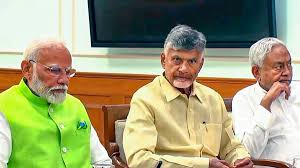
It is also being said that in his new avatar, Modi, who holds the country’s highest executive office, is expected to be significantly more assertive than in his previous tenures as BJP leader. He currently heads an NDA alliance that is being quietly assisted by two seasoned political stalwarts: Bihar’s Chief Minister Nitish Kumar, and Andhra Pradesh Chief Minister Chandrababu Naidu. Nitish Kumar, fondly called ‘Sushashan Babu’ or symbol of good governance, has withstood the challenges of the complex Muslim-Yadav social alliance in his caste-sensitive state. Similarly, Naidu, who has returned to power in a fragmented Andhra Pradesh—now divided between coastal Andhra and Telangana—is keenly aware of former Congress President Sonia Gandhi’s politically fraught move that had earlier led to the state’s bifurcation.
According to well-known political leaders of the Deccan, Naidu—who remains wary of Sonia—is keen that Modi be re-launched as Modi 3.0 with an N2 tag, signalling a secular orientation. The N2 symbolises the support of Nitish and Naidu now being extended to Modi. It is estimated that this alignment could enable Modi to reassert his political presence in South India, while also garnering support from the Telugu diaspora in the United States, many of whom hold key positions in the Trump administration.
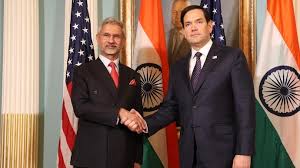
When diplomatic spin backfired: India witnessed yet another diplomatic faux pas within 24 hours of talks between External Affairs Minister S. Jaishankar and US Secretary of State Marco Rubio on April 7, during which the two agreed that a bilateral trade agreement would soon be signed. What followed, however, was the US administration’s decision to impose 26 per cent reciprocal tariffs on Indian goods—effective April 9.
It is believed that, perhaps in a somewhat juvenile attempt to showcase Jaishankar’s proximity to Rubio—something many in South Block view as unnecessary—the Indian foreign office camouflaged a casual exchange as a serious diplomatic engagement. A former Indian diplomat told this author that ever since Jaishankar’s failure to secure a White House invitation for Prime Minister Narendra Modi during Trump’s inauguration on January 20, a series of unremarkable or irrelevant updates have been selectively highlighted in the media in an effort to rebuild his image.
Earlier, Indian diplomacy had come under criticism when the diplomatic mission in Washington failed to ensure that illegal Indian migrants being repatriated were spared handcuffing. Instead, Jaishankar told the Rajya Sabha that the US authorities were merely following their ‘standard operating procedure’ (SOP). A senior foreign affairs scholar was recently overheard remarking, somewhat wryly, that “our gentleman foreign minister may soon be justifying the steep tariff hike on Indian goods as another SOP of the US administration.” The scholar added that India must recognise that, with household incomes in the US seeing a sudden drop, there may simply be fewer buyers for Indian products.
Washington’s missteps catch up: Classical economists interpret the ongoing economic crisis in the United States as one that is gradually engulfing much of the world. They believe its roots lie in the unnecessary wars waged across various regions in the post-Soviet era, particularly after the 1990s. They further argue that, rather than addressing the grassroots challenges of the American economy, successive administrations outsourced much of the country’s manufacturing to China, while relying on defence-industrial power to fuel conflicts across continents.
According to 2021 data, the United States imported 14.6 per cent of its total goods from China, amounting to USD 413.7 billion. It is yet to be disclosed how much US companies export to other markets.
With large-scale layoffs within the federal government and institutions funded by federal resources, the purchasing power of American consumers has declined significantly. Their hesitation to buy non-essential goods, especially at higher prices, is understandable. The Trump tariffs are set to decrease by an average of 1.9 per cent, resulting in an average tax hike of over USD 1,900 per US household in 2025.
As of April 4, China, Canada, and the European Union have announced or imposed retaliatory tariffs affecting a combined USD 330 billion of US exports. These imposed and threatened measures are projected to reduce US GDP by an additional 0.1 per cent. In 2025, the Trump tariffs are expected to raise federal tax revenues by USD 258.4 billion—or 0.85 per cent of GDP—making them the largest tax hike since 1982. Notably, these tariffs exceed the tax increases enacted under Presidents George H.W. Bush, Bill Clinton, and Barack Obama.
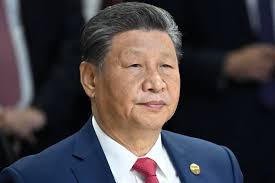
Behind Xi’s tango overture to India: It appears that India is increasingly on the radar of China’s strategy to offset the impact of Trump’s tariff offensive. In a recent communication to the Indian President, Droupadi Murmu, Chinese President Xi Jinping extended what appears to be an olive branch, proposing a symbolic ‘tango’ to mark 75 years of bilateral trade between the two countries. The tango, it may be mentioned, is a lively South American dance with a strong rhythm, performed by two partners holding each other closely—perhaps a metaphor for genuine connection.
Xi Jinping further noted that “it is the right choice” for the two countries to become “partners of mutual achievement and realise the ‘Dragon-Elephant Tango,’” which, he added, “fully serves the fundamental interests of both countries and their peoples.”
Beijing is clearly on a broad charm offensive, seeking to reroute its exports away from the United States to more receptive destinations, as Washington raises new trade barriers. Tariffs imposed earlier this year by the US administration stood at 20 per cent but were more than doubled last week to 54 per cent, with an effective average rate reaching 65 per cent—raising the cost of Chinese imports to levels many analysts view as uncompetitive. Beijing’s response was swift. Financial markets reeled as China’s finance ministry announced that it would retaliate by raising tariffs on all US goods by 34 per cent, effective from 10 April. The late US decision to keep its decision on the new tariff plan in abeyance for 90 days, while keeping the tariff at 104 percent against the Chinese goods appears to have prompted a full-scale US-China confrontation.
Understandably, investor sentiment has grown anxious. With the trade war escalating, fears of a potential recession in the US are mounting, as companies begin to reduce investment and cut jobs in a bid to weather the storm.
US-China flare-up may open export window for India
The US decision to keep its decision on the new tariff plan in abeyance for 90 days, while keeping the tariff at 104 percent against the Chinese goods appears to have prompted a full-scale US-China confrontation. Meanwhile, the US Treasury Secretary, Scott Bessent, has cautioned the Communist Party of China (CPC) for its decision to escalate the tariffs a ‘big mistake’, especially in the context of the United States’ enormous trade deficit with China. According to the UN Comtrade database, in 2023, China imported goods worth 165 billion USD, while its exports to the US stood at USD 502 billion—over three times as much.
The impact of Trump’s decision to pause reciprocal tariffs for most countries except for China has had a visible impact on US stock indexes. The Dow soared by nearly 3000 points, while Nasdaq went up by 12.1 per cent on April 11. The US President reiterated to the media that the country’s trading partnerships “weren’t sustainable.” Earlier, in Canberra, Australian Prime Minister Anthony Albanese, just a few weeks before the country’s general elections scheduled in May, rejected the proposal of the Chinese Ambassador Xiao Qian to join hands against Trump’s tariff plan.
Meanwhile, Chinese authorities appear to have tightened vigil on internet platforms, reinforcing controls through the “Great Firewall.” This has been accompanied by increased moderation of tariff-related content on social media. On Weibo, hashtags and searches for terms like ‘tariff’ or ‘104’ are reportedly restricted, with pages showing error messages. In an apparent effort to deflect criticism, state broadcaster CCTV has used Weibo to link US tariffs to shortages of everyday goods such as eggs. Censorship has also extended to WeChat, where posts downplaying the economic impact of the American tariffs are being quietly circulated.
Pang Jiulin, a Beijing-based lawyer having more than 10.5 million followers on his Weibo account has cautioned that if China reciprocated the American decision to impose 104 per cent tariff, the American buyers might stop buying the Chinese products, and they might be quickly replaced by exports from India and Vietnam.
Tariffs rise but BYD sails on
Despite the higher tariffs imposed by the UK and the European Union on Chinese automobiles, shiploads of BYD—‘Build Your Dream’—the world’s most popular electric cars, have already arrived at major European ports including Rotterdam, Bristol, Bremerhaven, and Flushing. Additionally, consignments of 5,000 electric vehicles are being readied for shipment from Shenzhen, China, to Flushing in the Netherlands and Bremerhaven in Germany. From BYD’s Changzhou plant, another 5,000 cars are expected to set sail from Yantai, Shandong, bound for Bristol and Rotterdam. Amidst the ongoing tariff war recently triggered by Washington, the BYD fleet—which has already overtaken Elon Musk’s Tesla—appears poised to plant its victory flag in Europe.