PM Modi steps in as Varanasi gang rape case jolts the nation

A horrific gang rape case involving 23 men in Varanasi has jolted the nation’s conscience. As outrage mounts, Prime Minister Narendra Modi has called for the strictest action, even as questions over gaps in the system and institutional accountability grow louder. A report by Mudit Mathur
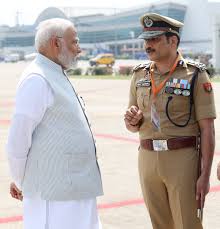
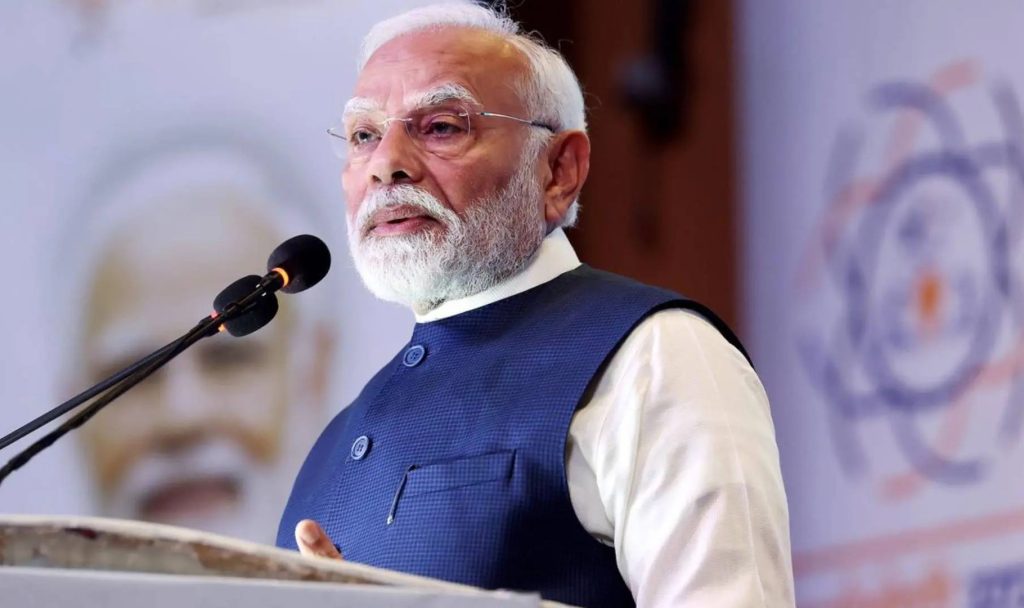
Deeply shocked over the horrific incident of gang rape in his parliamentary constituency, Prime Minister Narendra Modi directed the strictest possible action and implement appropriate measures to prevent such crimes in the future. He was being briefed by senior police officers about the progress of the investigation into the frightening incident on his arrival to Varanasi.

The barbaric incident exposed the much-professed claim of the best law and order following a 19-year-old girl from Varanasi who was allegedly gang-raped by 23 individuals over a period spanning from March 29 to April 4, 2025.

According to the FIR filed by the victim’s family on April 6, the perpetrator group is said to have drugged her, moved her across various locations—including hotels, hookah bars, cafes, and lodges where different groups of the accused allegedly raped her. Authorities registered an FIR under several sections of the Bharatiya Nyaya Sanhita. So far, at least 12 accused have been arrested and sent to judicial custody, while police continue to search for the remaining suspects. These men have been identified as Raj Vishwakarma, Sameer, Ayush, Sohail, Danish, Anmol, Sajid, Zahir, Imran, Jaib, Aman and Raj Khan.

This heinous act reflects a systemic failure. We must work collectively—with the government, law enforcement, and civil society—to build a safer environment for all women. It drew mixed reactions. While the government (through PM Modi’s directive) emphasizes immediate, stringent action, opposition leaders and women activists are using the incident to call for a fundamental overhaul of systems meant to protect women.

Several prominent opposition figures have denounced the incident. They have characterized it as symptomatic of systemic failures in ensuring women’s safety and have called for a comprehensive review of law enforcement and judicial procedures related to crimes against women.

Expressing Solidarity with the victim and her family, the activists have described the incident as not only barbaric but also a clear manifestation of a deep-rooted failure in protecting women. Prominent women’s rights activists across India have taken to public platforms—including social media and organized public forums—to condemn the crime in the strongest possible terms. They insist that such acts are a stain on the nation’s commitment to gender equality.

Additional commissioner of police, Cantonment, Vidush Saxena, said that the 19-year-old woman had gone out with some youths on March 29 and when she did not return home, a missing person’s report was filed by her family on April 4. While she did not mention anything about the rape to the police when she was rescued, her family lodged a complaint alleging gangrape on 6 April.

The woman’s mother said the incident has left her daughter deeply traumatised. “She is not keeping well. The trauma has had a deep impact on her psyche,” the mother said, adding that police have been cooperating with the family throughout. “I wanted to meet the PM and tell him about her daughter’s trauma.”

Based on the complaint, the police had registered a case under sections 70(1)(gang rape), 74, 123, 126(2), 127(2) and 351(2) of the Bharatiya Nyaya Sanhita (BNS) which narrates her ordeal. It says that on March 29, the survivor had gone to her friend’s home. On the way back home, she met a boy named Raj Vishwakarma, who took her to his cafe in Lanka, where he and his other friend did ‘bad acts’ with her”.

Earlier on November 1, 2023, a 22-year-old B.Tech student from IIT-BHU was allegedly abducted near the Karman Baba temple in Varanasi by three men on a motorcycle. They reportedly took her to a secluded area, assaulted her at gunpoint, stripped her, and recorded the incident before releasing her after approximately 15 minutes.

The gang rape cases underscored the deep-seated issues related to women’s safety, political accountability, and the handling of sexual assault cases in India. The strong reactions from various political leaders and parties reflect the urgency of addressing these concerns and ensuring justice for victims.
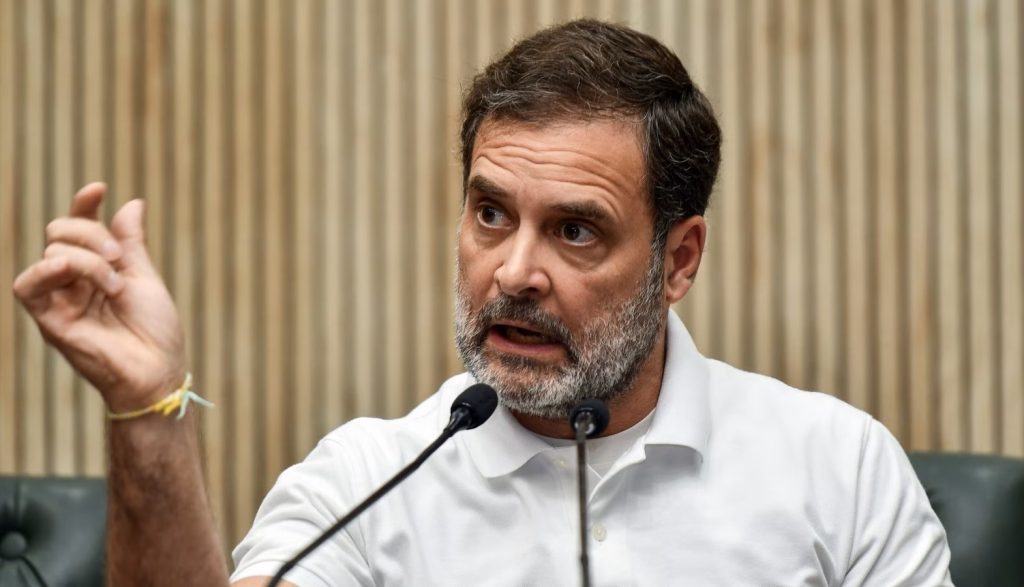
Rahul Wants to Draw a leaf out of the RSS

Rahul Gandhi has a dream of making the Congress great again. He is not in a hurry and willing to work for decades to revive the party as wants the party to become ideologically committed. He wants Congress Seva Dal to be a cadre-based out-fit and party’s answer to BJP’s RSS. Rahul Gandhi tried restructuring the party’s frontal organisations – the Seva dal, Indian Youth Congress and the National Students Union of India (NSUI) – in his early days. After all, the Seva Dal was also founded in 1923 by Narayan Subarao Hardikar and therefore, the “RSS is two years junior to Seva Dal.” Its first chairman was Pandit Jawaharlal Nehru. Former prime ministers Indira Gandhi and Rajiv Gandhi also held the post.

Rahul Gandhi wants to revive the same spirit. But over the years, the Seva Dal may have taken a back seat and the party now wants to revive it through district units for major decision-making functions and strengthen cadre building. The likely change dates back to the system that was in place in the 1960s before the shift towards the AICC happened. While Congress may have been resorting to reviving and strengthening 750-odd DCCs to their political primacy, the lesson has been learnt at a big cost. It is, however, easier said than done as giving power to the DCCs will reverse the process of centralisation of power from AICC to DCCs. There were times when the DCCs writ used to run in selection of candidates and no national leader could veto their recommendations. This seems to be a mirage and one will have to wait and see the first trial of Rahul Gandhi’s latest balloon in the coming state Assembly polls in 2026.

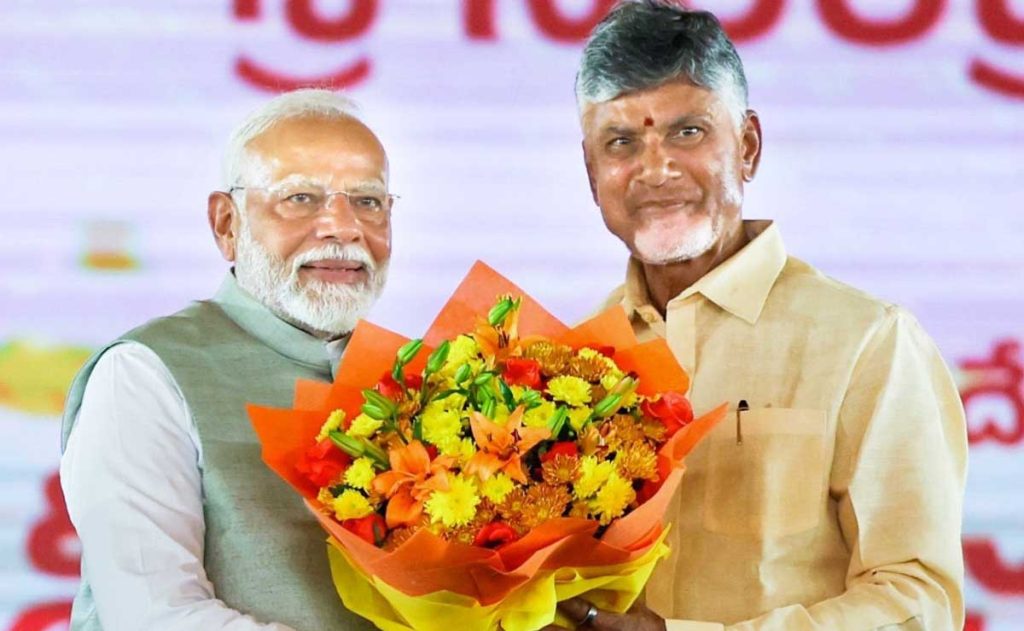
PM Modi extends birthday wishes to ‘good friend’ Andhra CM Naidu

Prime Minister Narendra Modi on Sunday extended warm birthday greetings to Andhra Pradesh Chief Minister N. Chandrababu Naidu and praised his continuous efforts towards the development of the state.

Taking to X, the Prime Minister wrote, “Best wishes to my good friend and Andhra Pradesh CM Shri N. Chandrababu Naidu Garu. It is commendable how he is tirelessly working for the development of AP, with a focus on futuristic sectors. Praying for his long and healthy life.”

Andhra Pradesh Governor S. Abdul Nazeer also conveyed his wishes through social media, stating, “I extend my heartiest felicitations and warm greetings to Nara Chandrababu Naidu Garu, Chief Minister of Andhra Pradesh, on his Birthday.”

Andhra Pradesh Deputy Chief Minister Pawan Kalyan took to X to express his admiration and extend birthday greetings.

“Only a visionary like Nara Chandrababu Naidu can revive the progress of a state that has become economically stagnant, development has become impossible, and law and order has deteriorated. Heartfelt birthday greetings to such a skilled administrator, ” he posted.

Highlighting Naidu’s continued dedication to governance, Kalyan further added, “The vision and enthusiasm shown by Chandrababu Naidu, who is serving as the Chief Minister for the fourth time, is amazing. His approach of predicting the future in advance and running the systems accordingly is inspiring. On the auspicious occasion of the Diamond Jubilee, I pray to God to grant Sri Chandrababu Naidu a long life and happiness.”

As Naidu steps into his 75th year, leaders and supporters celebrate his long-standing political journey.

Naidu has served as Chief Minister in both united and bifurcated Andhra Pradesh. In 2024, he returned to power for a fourth term, leading a coalition that secured 164 seats in the Assembly.

Why Maya writing BSP’s obituary

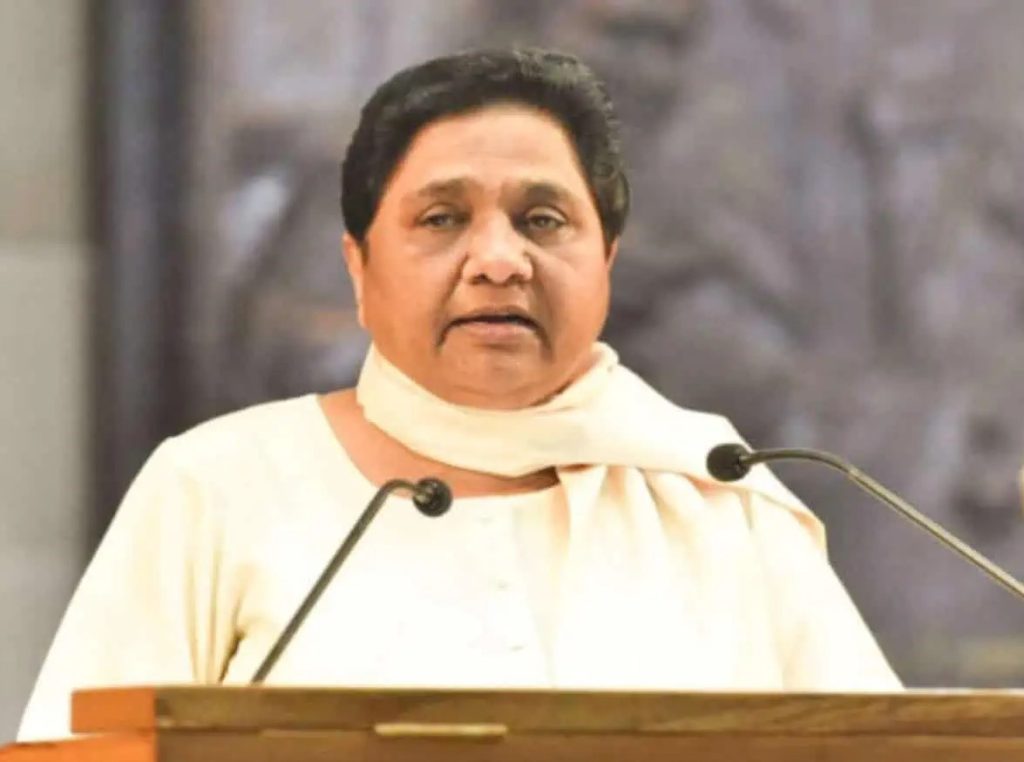
Political analysts are baffled as to why Mayawati is writing the political obituary of her own party. They are unwilling to believe that Mayawati is taking the Bahujan Samaj Party (BSP) to the funeral pyre because her brother Anand Kumar and the party are facing Enforcement Directorate cases. It is widely believed that Mayawati is under tremendous pressure as she fears action by the ED and other central government agencies probing charges of alleged corruption. But the case against Mayawati’s brother was registered way back in 2009 during the Congress-led UPA years. Since then a lot of water has flown down the Ganges and it is bogged down in courts as usual and no one heard of them for years together. It is also a mystery that after winning UP on her own in 2007, the BSP’s fall began since 2012 and the party does not have a seat in the Lok Sabha seat today and a lone MLA in UP who is basking in Yogi Adityanath’s glory

It is argued that more than 30 Opposition leaders are facing corruption probes since 2014 and cases were settled after many crossed over to BJP, some got reprieve and rest are stalled in courts. Out of these 30 politicians, 10 are from the Congress; four each from NCP and Shiv Sena; three from TMC; two from TDP; and one each from SP, YSRCP and others. Yet, it is difficult to fathom that merely due to the ED case against Anand Kumar, Mayawati is taking her party to the garden path and making no effort to arrest this decline among Dalit voters and deliberately allowing the loss of this vote bank to the BJP. With a spate of hasty expulsions and retractions,  she has created an impression further that she is not keen to revive the party either. Though she has shunned leaders from collecting funds at meetings and denied posts to relatives, the BSP’s slide continues. Why does she want to remain a marginal player on the fringe ? The mystery continues.

Reform or control? New Waqf law ignites unrest, stirs hope

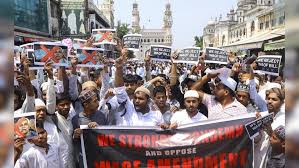
The Waqf Act 2025 has stirred protests, sparked political divisions, and triggered heated debates across India. While the BJP hails it as long-overdue reform, others see it as interference in faith and a calculated blow to Muslim identity and community autonomy.  A report by Kulsum Mustafa

The Waqf Act 2025 has generated a lot of heat across the country.  While there is protest from the Muslims, the other minorities fear that they may meet the same treatment at the BJP’s hand. There is a division in the BJP allies stemming from the fear that they may completely lose the Muslim votes. The Act has sparked discussion and debate across the country so much so that there is open defiance to the law in the non-BJP ruled states.

But against all this, the BJP continues to rejoice and is continuing to do its ground work on data n Waqf properties. 

The BJP government considers the passing of the Muslim Waqf Act 2025  as a historic step taken in the broader interest of the Muslim community and not what many Muslim leaders and organizations see it: interference in their religious matters and an attack on Muslim identity. 

Through this article, we will attempt to explore the Waqf Board, current issues, highlights of the amended law, objections raised by the opposition, and the perspective of the common Muslim community.

“Waqf” is an Arabic word that means dedicating property permanently for religious and charitable purposes. Waqf properties are managed by State Waqf Boards under the supervision of the Central Waqf Council.

Current scenario of Waqf properties: There are over 600,000 Waqf properties across India. States like Uttar Pradesh, Maharashtra, West Bengal, and Tamil Nadu have the highest number of such properties. After Indian Railways and the Ministry of Defence, the Waqf Board is the third-largest landholder in the country. Despite this, the income generated from these properties is significantly low.

 The Waqf Act, passed in 1995, aimed to protect Waqf properties and ensure transparency. It made it mandatory for Waqf Boards to maintain records, conduct annual audits, and utilize income for religious and charitable activities. However, several shortcomings surfaced over time, including lack of documentation, corruption, encroachments, and administrative negligence.

Explaining why amendments were necessary in the 1995 Act, Uttar Pradesh State Minister Danish Azad Ansari told Tehelka in an interview that widespread corruption, land mafia’s involvement, and the failure to benefit common Muslims were the primary reasons behind the amendment. 

“It is estimated that Waqf properties could generate annual revenue of Rs 12,000 crore, but currently, only Rs163 crore is being realized,” he said, adding, “This  indicated  massive mismanagement and corruption.”

Among the key features of the 2025 Amendment Act are; mandatory digitization and documentation of Waqf properties; Audit reports will be made public; Mutawallis involved in corruption or encroachments will be held accountable; Non-Muslim officers may assist in administrative functions, but religious roles like Mutawalli will remain exclusive to Muslims; emphasis on monetization and commercial use to boost revenue.

 Minister Ansari stated, “This is Allah’s property and it must be protected and used with honesty.” He also highlighted illegal extortion from Muslims for burial, which will be curbed through the new law.

AIMIM leader Asaduddin Owaisi and Samajwadi Party’s Iqra Hasan consider the Act a violation of Articles 14 and 25 of the Constitution. Owaisi said in his speech in Parliament that the Act is an attack on the religious rights of Muslims and aims to weaken them administratively. 

Hasan questioned, “If the government is neutral, then why are Muslims not included in the Ram Janmabhoomi Trust of Ayodhya?”

While some Muslims feel hurt by the law, others believe it could bring transparency and accountability. Many admit that past governments failed to implement reforms effectively. Now that digitization and auditing are being proposed, there is a sense of cautious hope.

Former Sunni Central Waqf Board CEO Syed Mohammad Shoeb, while speaking to this correspondent, acknowledged long-standing corruption in the Board and the need for strict action but also warned against hurting religious sentiments in the process.

Samajwadi Party president Akhilesh Yadav said in Lok Sabha that the Act is a diversion tactic to hide the government’s failures. “Unemployment, inflation, river-cleaning failures, and other shortcomings are being masked by this controversial issue,” said Yadav.

 If the government is indeed sincere, it must improve Waqf property management and maintain open dialogue with the Muslim community.

What is required is: transparent appointments in Waqf Boards; annual audit reports should be made public; It must be ensured that Waqf properties are  used for useful purposes like schools, hospitals, and hostels; and intellectuals and religious leaders of the community must be involved in decision-making.

The Waqf Act 2025 is undoubtedly a significant shift. Whether it is a step toward reform or an attempt to control the community, only time will tell.  But one thing is clear: the functioning of the Waqf Board can no longer continue as before. Both society and the government must ensure that Waqf properties fulfill their intended purpose—to support the poor, needy, and underprivileged Muslims.

Building Collapse:  Four killed, probe launched

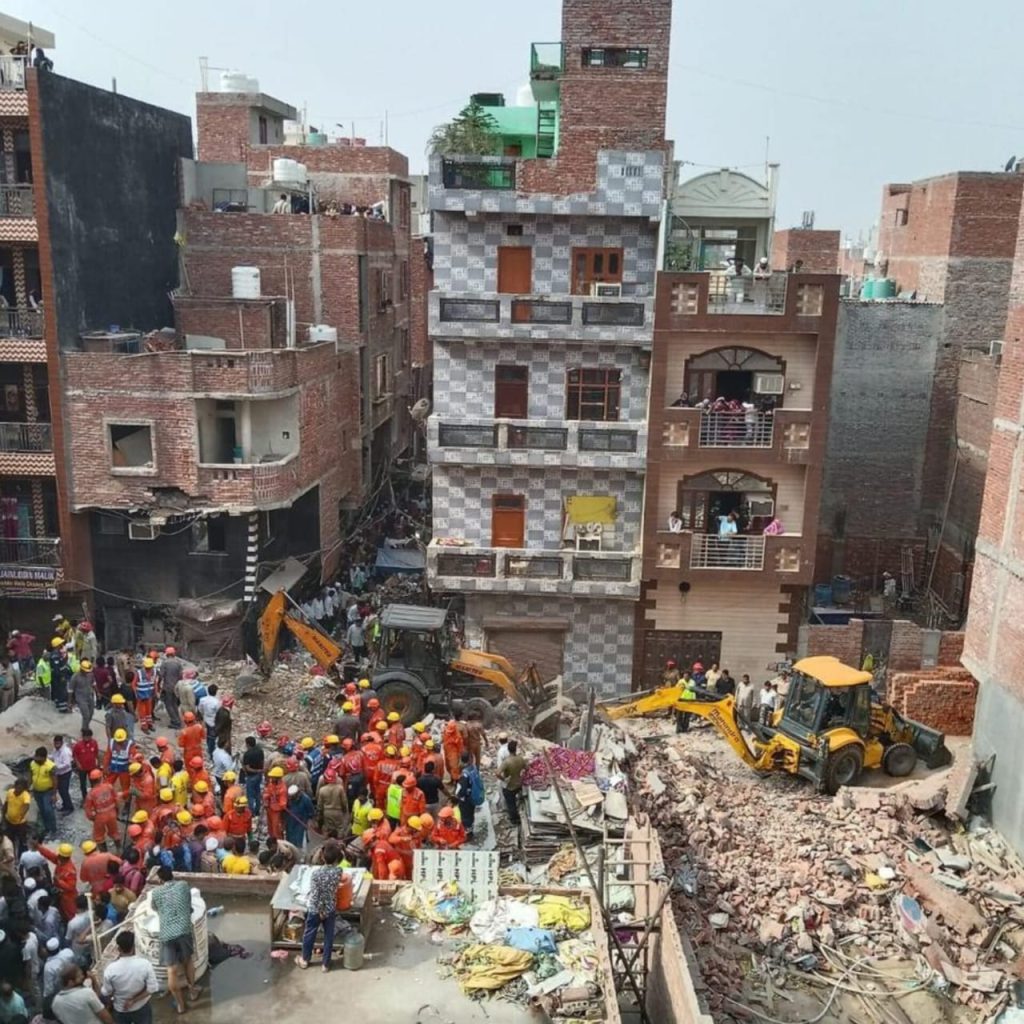
Delhi chief minister Rekha Gupta on Saturday instructed officials to conduct a probe into the building collapse in Delhi’s Mustafabad killing four people.

Expressing grief she said that DDMA, NDRF, DFS and other agencies are continuously engaged in relief and rescue operations.

“The heart is deeply saddened by the tragic incident of building collapse in Mustafabad orders have been given to investigate the incident and strict action will be ensured against the culprits,” she stated.

“Arrangements have been made for proper treatment of all the injured,” she added.

The incident occurred at around 2.30 am when a building collapsed claiming four lives. According to the police, at least 14 people have been rescued so far and were shifted to the GTB Hospital.

Rescue teams from the National Disaster Response Force (NDRF), firefighters, and Delhi Police have rushed to the spot. The police further said that they are probing the cause behind the building’s collapse.

Meanwhile, Aam Aadmi Party leader Arvind Kejriwal expressed condolences and requested all his party workers to support the administration in the rescue work.

“I appeal to all the party workers to fully cooperate with the administration in relief and rescue operations,” he said.

Last week two similar incidents were reported where two people were killed and three injured in the respective incidents of building collapse and a wall collapse of an under construction building in the Delhi-NCR region.  

An under-construction wall on the sixth floor of a building in Delhi’s Madhu Vihar resulted in the death of a 67-year-old man.

The other incident, a wall collapse, was reported from Delhi’s Karol Bagh area. A 13-year-old boy was killed when a newly-constructed balcony on the third floor collapsed on top of him as he was crossing the streets at that time.

US pharma budget cuts may open business opportunities for India

A sudden rollback of federal funding for public health research has jolted the US pharma landscape. With governors in 23 US states questioning the rollback, India sees both a warning and an opportunity to recalibrate its biotechnology ambitions. by Gopal Misra

The pharma and bio-tech industry in the US, continuously reinvigorated by the highly qualified researchers, state-of-the art laboratories, registering a large number of new patents of medicines, vaccines and new treatment protocols every year,  have recently mobilized against President Donald Trump’s decision to impose sudden cut in federal budget for the ongoing researches in the crucial pharma research. In this campaign, the joining of a number of state governors reveals that the stakes are really high.

The sudden cut in budget has snowballed into the international arena, with the growing attention of the prominent countries like China and India in this crucial field of health-care. China has already made significant progress to become a major player in the global biotechnology and pharmaceutical industry. It spends more on R and D than the European Union, and is expected to overtake the US in new patents and pharma products next year. It is estimated that in generating wealth and investments, the Chinese biotechnology companies had secured more than six billion USD in 2023 through licensing deals and getting a more and more sizable presence in the world market. China is adding more than 4100 novel drugs to its pipeline each year.

India is presently among the 13 countries engaged in this field with significant contribution, but for maintaining her position or to improve further to become a global player, she has to reinvigorate institutions like the Central Drug Research Institute of Lucknow, and many other institutions in this field and the university departments having a strong faculty presence of new scientists. These early initiatives have got her position as the “pharmacy of the world”. India’s exports earnings during the financial year 2022-23 were to the tune of 25.3 billion USD. According to the Pharmexcil data, India ranked third in drugs and medicines exports. Interestingly, her government has failed to live up to the dynamics and the enthusiasm of young men and women studying in this sensitive field. A number of bio-technologists are migrating to China for jobs and young post-graduates are serving food and supply chains like Zomato or Amazon.  

It is being felt that in the wake in the recent developments in the US, India, perhaps needs to revise her the production linked incentive scheme for pharmaceuticals with provision for disbursal of US$2 billion or Rs15,000 crore government incentives, which will run from 2020–21 to 2028–29, to reduce import dependence, benefit domestic manufacturers, boost new products. According to industry and academia sources, India has a large team of highly accomplished teams of researchers. Prof S.P. Bisht, vice-chancellor of the SSJ Almora University in Uttarakhand recently suggested that there is a need for diversification and innovation for development of complex and high-tech products. Interestingly, he had also been to the Wuhan Chinese laboratory, where Covid virus had reportedly leaked, and he is quite aware and cautious of the challenges of this hi-tech research. 

India, admittedly, is at the threshold of this hi-tech development, and could substantially contribute in the field, especially in the vitro diagnostic devices and emerging technologies, including in cell based or gene therapy. It is estimated that it is high time that she revises her present goal, aiming to achieve incremental sales of four billion USD or INR 29,400 crore and incremental exports of 2.7 billion USD or INR 19,600 crore between 2022–23 to 2027–28. It is necessary in the wake of the new opportunities; the ongoing tariff war has opened for her.

Invoking Judicial Intervention  

The attorneys general and governors in 23 states and Washington D.C. in the US, mostly under the Democratic regime, have filed a law-suit against the US Department of Health and Human Services and HHS Secretary Robert F. Kennedy Jr. questioning the department’s sudden rollback of 12 billion USD in public health funding. They consider it unlawful and harmful. The issue hit the headlines, when during the first week of April this year, the US Centres for Disease Control and Prevention (CDC) pulled back about $11.4 billion in funding allocated to state and community health departments during the Covid-19 pandemic. An additional $1 billion from the Substance Abuse and Mental Health Services Administration was terminated. The coalition of states argues that even though these eliminated funds were allocated during the Covid-19 pandemic, they were never intended only for Covid-19 response. Rather, much of the funding was allocated to support the public health system in the long term, as well as for pandemic preparedness.

“The funds were building the framework for stronger health responses going forward, including for outbreaks of measles and H5N1 bird flu that are happening now”, according to Dr. Joseph Kanter, CEO of the Association of State and Territorial Health Officials.

Indian Initiative

In 2019, the Indian government was able to raise a sum of 83 billion for this sector. Even after adjusting for the inflation it could be almost 10 times spent during the eighties. The BioE3 Policy (Biotechnology for Economy, Environment and Employment), is likely to position India in a much better position.  India has 665 FDA-approved plants in the US; 44 per cent of the global Abbreviated New Drug Applications (ANDA) and more than 1,400 manufacturing plants, which are compliant with WHO’s requirements.

The biotechnology sector, however, faces some major challenges in its quest for growth. Chief among them is a lack of funding, particularly for firms that are just starting out. The most likely sources of funds are government grants and venture capital, which is a relatively young industry in India. Government grants are difficult to secure, and due to the expensive and uncertain nature of biotech research, venture capitalists are reluctant to invest in firms that have not yet developed a commercially viable product. These issues need to be tackled to enable India to penetrate in this sector further.

India could be playing a much larger role in the coming month. She already has about 670 USFDA -approved manufacturing facilities in India, the highest for any country outside the US. India’s Covaxin, developed by the Bharat Biotech under the supervision of the Indian Council of Medical Research (ICMR) and the National Institute of Virology, helped millions of people exposed to Covid-19 immunised. Earlier, it is also credited for developing vaccines for the Zika and Chikungungya viruses. The Indian scientists at the Zydus Lifesciences have succeeded in developing the world’s first human DNA COVID-19 vaccine.

India is the largest global supplier of generic medicine. She produces more than 50 per cent of the world’s vaccines, supplies 40 per cent of the US’s demand for generic drugs. India gained its foothold on the global scene with its innovatively-engineered generic drugs and API. The country accounts for around 30 per cent (by volume) and about her estimated presence of 10 per cent in the 70–80 billion USD in the American generics market. The Indian pharmaceutical industry supplies over 50 per cent of global demand for various vaccines, 40 percent of generic demand in the US and 25 per cent of all medicine in the UK.

Lahori Gate Museum to come alive after 24 years

Photo: Naveen Bansal

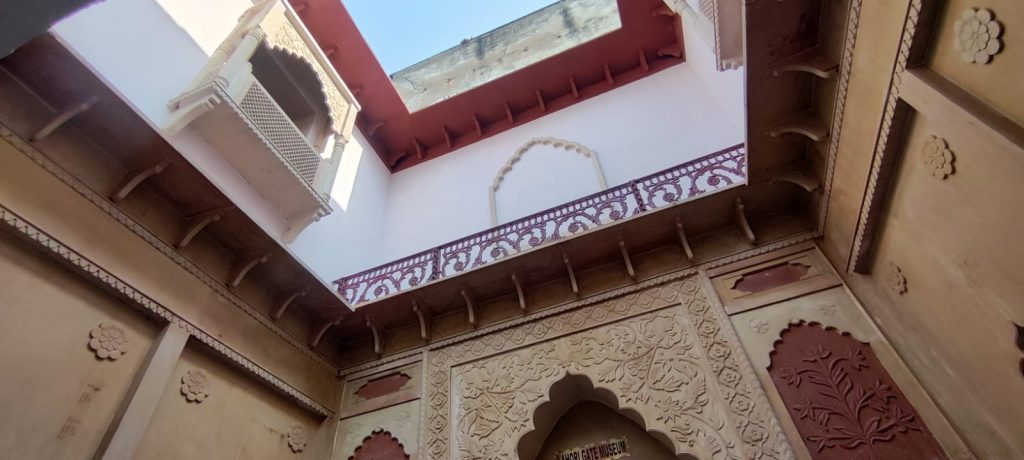
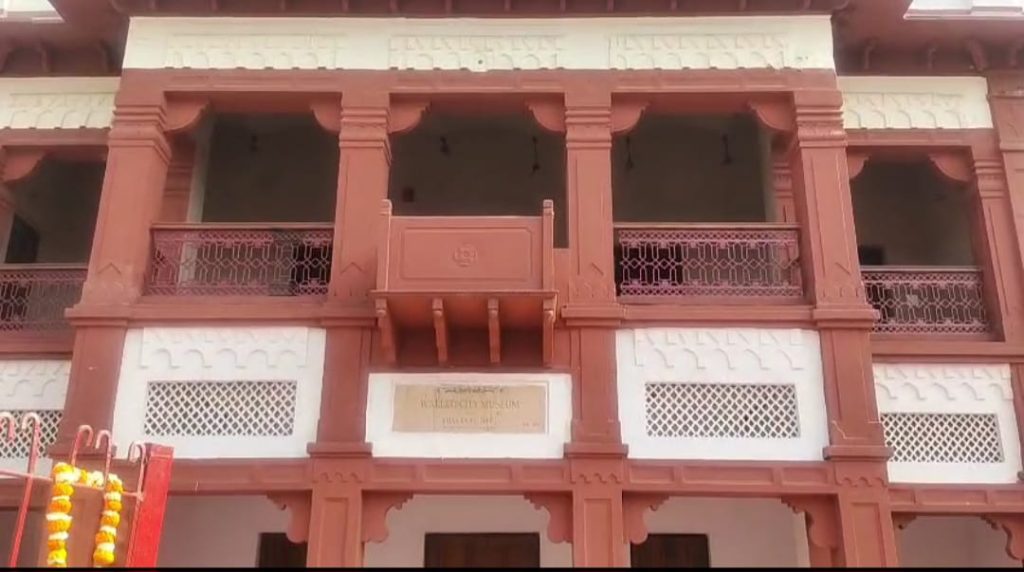
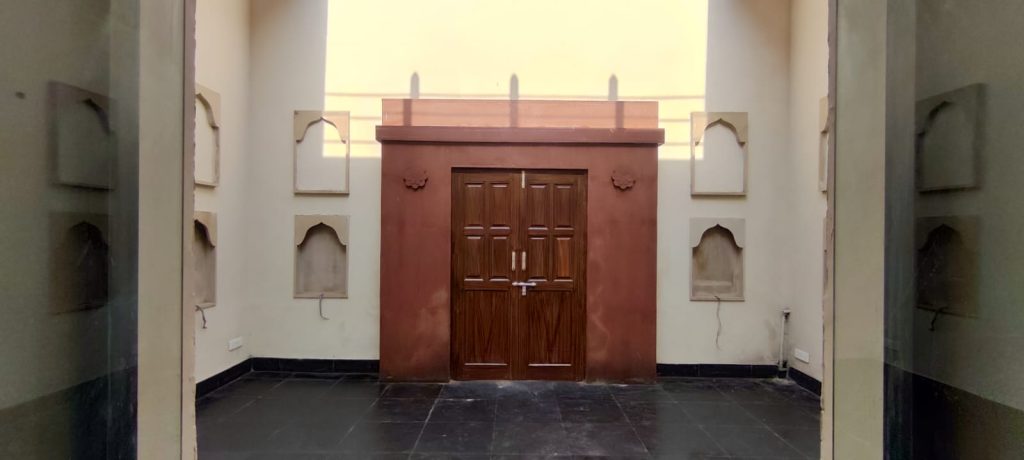
The heritage building of the Lahori Gate Museum which was in very poor condition for the past few years, has been restored and will be ready to host tourists and foreigners for showcasing the cultural delight of the old Delhi.

According to former union minister Vijay Goel, the building was inaugurated in 2003 and Rs 50 lakhs were invested in the Member of Parliament Local Area Development scheme. However, the building later deteriorated and fell into disrepair.

Photo: Naveen Bansal

Subsequently, Goel brought in Rs 4 crore in funding from the Ministry of Culture, which has supported ongoing work on the project for several years. He mentioned that the location once housed a dilapidated dispensary.

He has been persistently working for the last 24 years to restore the site and establish a quality museum.

Goel said that the museum will be completed within a year and will allow tourists, particularly international visitors, to witness a detailed glimpse of Old Delhi’s Chandni Chowk.

“This will include representations of the Red Fort, Jama Masjid, Town Hall, traditional havelis, and temples of various religions. Additionally, there will be insights into Chandni Chowk’s markets, food, and lifestyle,” he said.  

Photo: Naveen Bansal

He added that the museum will also showcase sections dedicated to Kirana markets, dry fruits, handicrafts, and the famous Meena Bazaar.

“There will be images and sculptures reflecting ancient culture and heritage. Alongside the museum, there will also be an interpretation center and a souvenir shop. Tourists will be able to learn about Chandni Chowk here and then go on to explore the various parts of it. There will also be guides and food services available,” Goel said.  

He further shared that over the next six months, artisans and materials will be brought in from distant places to decorate the museum — items that are not available locally in Chandni Chowk.

The aim is to showcase authentic heritage artifacts. The project is being executed by the Municipal Corporation of Delhi, while the funding is being arranged by former Union Minister and two-time MP from Chandni Chowk, Vijay Goel, through coordination with various MPs.

PM Modi to Flag off India Steel 2025 Global Conference in Mumbai on April 24

Prime Minister Narendra Modi will inaugurate India Steel 2025, the 6th edition of the biennial international exhibition and conference scheduled to take place from April 24 to 26 at the Bombay Exhibition Centre in Mumbai, according to a statement issued by the Ministry of Steel on Thursday.

The event will bring together leading stakeholders from across the global steel value chain to discuss the future trajectory of the sector, with a sharp focus on growth, sustainability, resilience, and innovation.

India is on a trajectory to achieve a production capacity of 300 million tonnes and a per capita consumption of 160 kg by 2030, in line with the National Steel Policy. Keeping in view this ambitious growth in the steel sector, the conference is being organised to unlock new opportunities for inter-state and international collaboration, facilitate knowledge exchange, and showcase India’s policy reforms and infrastructure initiatives aimed at enhancing the ease of doing business across the steel value chain, the statement said.

Prime Minister Modi will flag off the premier event on April 24 through video conferencing. The conference will be attended by Union Steel and Heavy Industries Minister H.D. Kumaraswamy, Minister of State for Steel and Heavy Industries Bhupathi Raju Srinivasa Varma, Maharashtra Chief Minister Devendra Fadnavis and Chhattisgarh Chief Minister Vishu Deo Sai.

The event will also have a presence of global Industry leaders and senior foreign dignitaries leading high-level delegations, including the Deputy Minister of Industry and Trade of Russia, the Ambassadors of Australia, Mozambique, and Mongolia, reflecting the deepening international engagement and strategic cooperation in the steel sector.

Key highlights of the International Conference-cum-Exhibition include the display of cutting-edge technologies and advancements in the steel industry.

Roundtable discussions will be held on sector-specific topics, international collaboration, and emerging trends.

Reverse Buyer-Seller Meet will also be held to facilitate trade opportunities and foster new business engagements.

Country specific sessions involving key steel-producing nations, including South Korea, Sweden, Australia, and Mongolia. These discussions will explore joint research, technology transfer, and resilient supply chains to de-risk India’s steel production and drive global competitiveness.

The event will also focus on themes like augmenting domestic consumption, showcasing futuristic steel applications, and fostering global partnerships.

With more than 12,000 business visitors, 250 exhibitors, and 1,200 conference delegates representing various sectors, Government departments, State Governments, country delegations, and domestic and international buyers from India and abroad, the conference would be one of the biggest steel events globally.

Other Union Ministers will attend the programme are: Minister of Commerce and Industry Piyush Goyal, Minister of Railways Ashwini Vaishnaw, Minister of New & Renewable Energy Pralhad Joshi, Minister of Mines G. Kishan Reddy as well as Odisha Chief Minister Mohan Charan Majhi. They will preside over key sessions of the conference, reflecting the multi-sectoral relevance of steel in India’s economic and industrial strategy.

Senior officials of the Centre, including the Secretaries of the Ministries of Electronics and Information Technology (MeitY), Steel, and Coal, will also chair key sessions during the event.

Waqf: Ceaser’s wife must be above board

No government will turn a blind eye to all ills even if it means examining religious freedom of a section. But the Government must work with a purpose of welfare; and it must keep its hands clean. by KUMKUM CHADHA

To term the Waqf amendment Bill as a turmoil would be understating the anguish and anger within the Muslim community.

Not only have they taken to the streets but knocked the doors of the Courts as well.

That apart, there is commotion in some state assemblies with members clashing with each other over the contentious Bill.

In the Jammu Kashmir Assembly for instance, some legislators had to be dragged out amid a brawl even as members from the Treasury and Opposition benches clashed over the Bill.

If one section raised slogans of Goondagardi nahin chalegi, hooliganism won’t work and Jahan balidaan hue Mukherjee woh Kashmir hamara hai, the land where Mukherjee was sacrificed is ours, others chanted Allah-O-Akbar, hail Akbar, “Nara-e-Taqbeer, Allah-O-Akbar”, or Cry of God is the Greatest and “Kala kanoon radh karo”, cancel the black law. If some members tried to snatch the copies of the Bill in the Assembly, in Parliament, Lok Sabha member Asaduddin Owaisi allegedly tore a copy of the Waqf Bill at the end of his speech.

Add to this the ire of Muslim supporters in Orissa wherein Naveen Patnaik’s Biju Janata Dal, or BJD,  was under attack for its “flip flop” over the Bill. Having decided to oppose the Bill in Parliament, the BJD voted in favour of the Bill.

In Bihar, Nitish Kumar’s Janata United Dal, is in a disarray with some Muslim leaders resigning from the Party over the new Bill. 

Ram Vilas Paswan’s Lok Janshakti Party is also facing criticism over its support to the Bill. The Party Chief, Chirag Paswan is a Union Minister in Prime Minister Narendra Modi’s Cabinet.

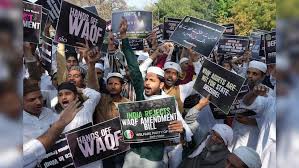
Meanwhile, protestors took to the streets in cities of Ahmedabad, Kolkata, Bengaluru and Chennai. Muslim organizations, too, came together demanding the withdrawal of the Bill.

Opposition MPs have moved the Court challenging the constitutional legitimacy of the Bill.

Their take: the new law is  “discriminatory, communally motivated and a blatant infringement on the constitutional rights of Muslim citizens”.

On its part, the Government has pitched the Bill, to quote Prime Minister Modi, as “a major milestone for reform and transparency”.  

The Waqf (Amendment) Bill 2025 was passed in both Houses of Parliament well after midnight after a heated debate. It received President Droupadi Murmu’s assent by virtue of which it has become a law.

Waqf refers to personal property – moveable or immovable – that is donated by Muslims for religious or charitable purposes. Waqf properties cannot be sold or transferred. In essence they become properties of God.

With its origins in the Arabic word waqufa, it literally means to detain or hold or else tie up.

A Waqf can be established through a deed. A property is deemed as waqf if it has been used for charitable purposes over a long period of time: or the waqf by user clause which, under the new law, has been removed causing a hue and cry.

In India, several properties fall under Waqf, which include mosques, Eidgahs, dargahs, khanqahs, imambaras and qabristans (graveyards), among others.

Waqf properties are donated by Muslims for charity and are managed by members of the community.

Each state has a Waqf Board, which is a legal entity that can acquire, hold, and transfer property.

Waqf properties cannot be sold or leased permanently.

As of now, Waqf currently controls 8.7 lakh properties spanning 9.4 lakh acres across India with an estimated value of  Rs 1.2 lakh crores, according to the government data.

India has the largest waqf holding in the world. Further, Waqf Board is the largest landowner in India after the Armed Forces and the Indian Railways.

There is mismanagement and large-scale encroachments of land in the name of Waqf; the doctrine of once a waqf always a waqf leads to claims which are irrevocable.

For instance, claims have been made over islands in Bet Dwarka amongst others which pose a judicial challenge. The absence of surveys, poor management and large-scale corruption are other issues that cropped up.  

The new legislation, as per the Government’s version, is aimed at enhancing and ensuring an effective management of Waqf assets across India. That apart, the new law aims at improving the registration process and increases the role of technology in management of records. It also makes it mandatory to have women on Waqf Boards.

So, what is the hue and cry about?

As for specific clauses, there is angst about doing away with the waqf by user clause; about including non-Muslims on the Board, allowing only those who are practicing Muslims for a minimum of five years to give property under Waqf and so on and so forth.

The big picture is that this law is being seen as “anti-Muslim” and the government’s bid to “snatch away” to quote the Muslim leadership, the autonomy of the Muslims.

Knocking off the waqf by user clause for instance is being interpreted as a bid to take away waqf property in the absence of documentation.

Till the new law took effect, a property was treated as waqf if used for religious or charitable purposes for a long time – even without formal documentation.

On another count, a senior state government official having the final say in deciding whether a property belongs to the government or Waqf is being seen as a bid to take away Waqf land.

The argument: a government officer will, in the case of disputed cases, will never rule against the government.

“Waqf Barbaad Bill”, is how AIMIM Member of Parliament Asaduddin Owaisi decried the Bill alleging government control and a bid to curb the religious freedom of Muslims.

Congress MP and leader of the Opposition, Mallikarjun Kharge, saw this as “unconstitutional and divisive agenda” of the Government. Party leader Gaurav Gogoi went as far as saying that this bill will “disenfranchise minorities”.

Nitty gritty apart, the main issue is the trust-deficit between the Muslims and the ruling elite. Any move of the Government, even if aimed at transparency or good governance, is viewed with suspicion by the Muslims. The underlying feeling: they are out to get us.

There is some basis to this fear, given the past actions of the BJP governments, particularly in the states.

Take the “bulldozer justice” in the state of Uttar Pradesh wherein houses of Muslims have been razed to the ground. In fact, in the Prayagraj case, when activist Javed Mohammed’s house was torn down, the apex Court came down heavily on the state Government.

While the authorities alleged that the house was built illegally, critics said that he was being punished for being a critic of the Government.

Irrespective, there is a chasm between the Government and the minorities, and the Waqf law is yet another step in that direction.

Having said that, it cannot be denied that there is mismanagement in Waqf Boards, large scale encroachment of land, misuse of funds and legal disputes, which call for regulation and scrutiny and perhaps Government control too.

No government, BJP or any other, unless its agenda is to appease the minorities, will turn a blind eye to all ills even if it means having a relook at the alleged autonomy and religious freedom of a section.

Having said that the Government must work with a purpose of welfare rather than an anti Muslim agenda; it must keep its hands clean because to quote William Shakespeare “Ceaser’s wife must be above suspicion”.

MOST POPULAR

HOT NEWS