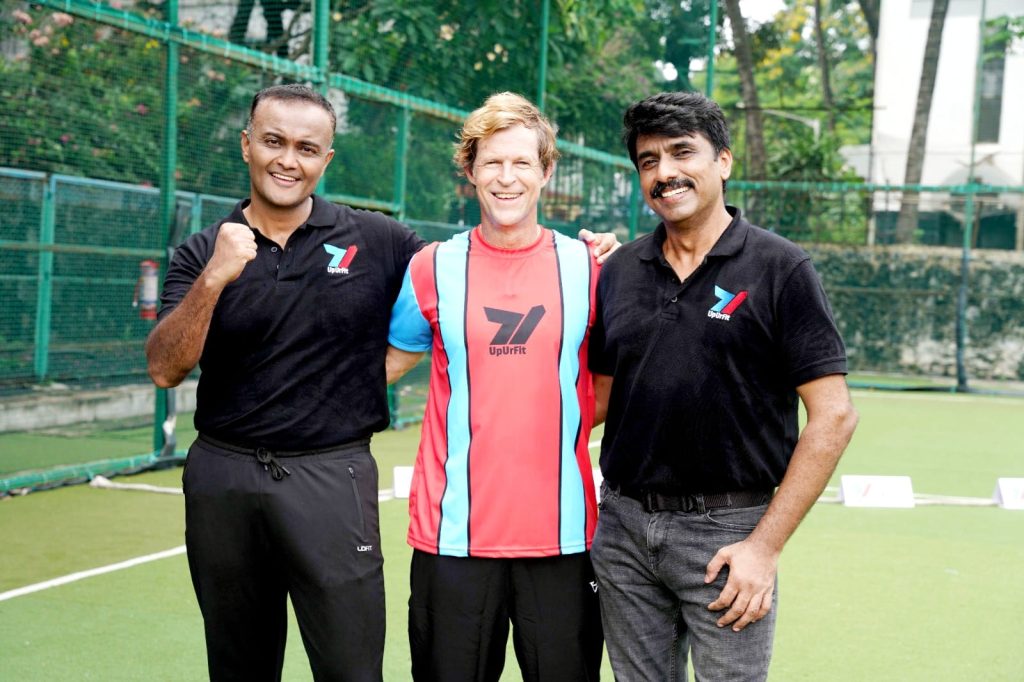
Mumbai, June 3 – Jonty Rhodes, widely regarded as one of the greatest fielders in the history of cricket, has joined hands with India-grown sports and fitness brand UpUrFit as a strategic investor and brand ambassador.
Co-founded by Indian entrepreneurs Munish Vig and Vikram Gunjal, UpUrFit aims to address the underserved needs of Indian fitness and sports enthusiasts through products designed for performance, recovery, and hygiene, with a focus on clean ingredients and real efficacy.
UpUrFit is India’s first sports and fitness care brand, boasting scientifically researched products with clean and effective ingredients that vanquish the barriers of pain and discomfort. The product line is focussed on three categories – PAIN RELIEF: Address the needs of workout/sports induced pain to get you back to action fast, WARM-UP & COOL-DOWN: Use scientifically researched ingredients to enable products that amplify your workout/sport Activation & Recovery to keep you injury free and amplify performance and SPORTS HYGIENE: Personal Care products specifically formulated to be used on-the-go to aid the hygiene and refreshing needs of our community!
Speaking on the association, Jonty Rhodes said, “What struck me about UpUrFit was the clarity of its mission. When Vikram and Munish first approached me, it wasn’t about signing up a celebrity endorsement. Their focus was on product relevance, clean ingredients, and true performance. My family and I tried the products ourselves, and that’s when I knew I wanted to be part of this journey. I’m excited to support UpUrFit not just as a face, but as a strategic investor committed to building value.”
Launched in 2023, UpUrFit is quickly establishing itself as a disruptor in India’s sports wellness space, focusing on the fast-growing market for pain relief, recovery, and hygiene solutions. The brand operates within a broader industry projected to reach USD 40 billion by 2030, growing at a compound annual growth rate (CAGR) of 19%, according to a joint report by Deloitte and Google. With increasing consumer emphasis on fitness, preventive care, and performance recovery, UpUrFit is bridging the gap between everyday athletes and high-quality, accessible wellness solutions.
Vikram Gunjal, Co-founder at UpUrFit, said, “For us, Jonty isn’t just a cricketing icon. He represents resilience, commitment, and performance. He’s the ideal mentor and gospeller for a brand like ours that is built for the athlete in every Indian. His belief in our products and now in our mission is a huge validation of what we’re building.”
Munish Vig, Co-founder and the product custodian at UpUrFit, commented, “The sports and fitness community in India is growing at a rate that will double every four years. UpUrFit’s effort is to be the go-to product range that is of high relevance for this community! We endeavor to look closely at understanding the community needs.With Jonty on board, his detailed insights on what athletes and fitness enthusiasts truly need, and his perspective is already shaping our upcoming product roadmap. His involvement goes far beyond brand value. It’s product leadership and strategic insight in action.”
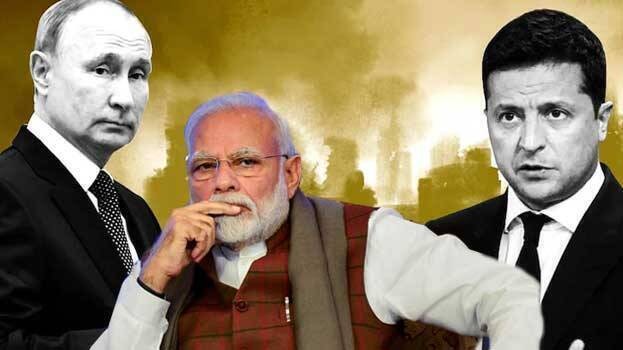
New Delhi, June 2 – Ukraine on Sunday targeted military air bases in different Russian regions, carrying what was called its “largest drone attack” inside the enemy territory. Dubbed ‘Operation Spider’s Web’, the attack also marked a significant escalation in the ongoing conflict between the two nations at a time when attempts for establishing peace are underway.
Russian news agency TASS quoted the Russian Defence Ministry to state that “all terrorist attacks on military airfields in the Ivanovo, Ryazan, and Amur regions were successfully foiled, however, “several aircraft caught fire due to FPV drone attacks near military airfields”.
There were no reports of casualties among military personnel or civilians.
While the world awaits with bated breath the Russian response to the attack deep inside its territory, the second round of peace talks between Russia and Ukraine in Istanbul are happening as per schedule, according to reports.
On Monday, Russia and Ukraine are meeting for the second round of direct peace talks since the war erupted in 2022.
However, the Ukraine attack comes at a time when Moscow is making significant territorial advances in the Sumy region. With neither of the two sides in a mood to yield, all eyes are on the region and what next. It has been over three years since the two countries became embroiled in war.
Trying to maintain a delicate diplomatic balance between “historical” ally Russia and Ukraine, India too is watching closely, say sources
In August 2024, Prime Minister Narendra Modi visited Ukraine on the invitation of President Volodymyr Zelenskyy for the “first ever visit by an Indian Prime Minister to Ukraine since diplomatic relations were established between the two countries in 1992.”
Apart from revitalising trade, expanding market access with mutual economic benefits and positioning as a peacemaker, PM Modi’s visit also aimed to mend fences with Ukraine and reestablish bonds with the country in the post-Soviet era. Calling it a “significant shift” in policy, observers say the “multi-alignment approach” aimed to achieve a healthy diplomatic relation with Ukraine.
Meanwhile, defence analysts say lessons on military planning and strategy can also be drawn from ‘Operation Spider’s Web’, most essentially the use of cost-effective technology (drones in this case) to inflict damage on a superior military force inside its territory, and of course an effective intelligence network to detect and neutralise enemy threat.
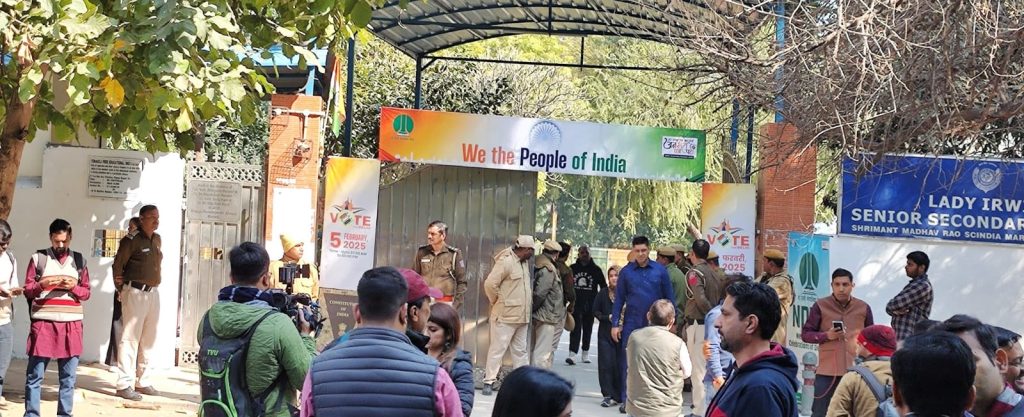
The Delhi Directorate of Education (DoE) stated that children identified with “benchmark disability” are eligible for applying for entry level classes in all private unaided recognized schools under Economically Weaker Section, Disadvantaged group and CWSN.
According to the circular, children identified with intellectual disability, specific learning disability, autism spectrum disorder, or related categories may also be considered based on assessment or diagnostic reports.
Person with “benchmark disability” is a person with not less than forty percent of a specified disability where specified disability has not been defined in measurable terms and includes a person with disability where specified disability has been defined in measurable terms, as certified by the certifying authority.
The DoE stated, “Schools must admit at least 25 percent of strength at the entry level classes by children belonging to the Economically Weaker Section, Disadvantaged group and CWSN in neighborhood and provide free and compulsory education till completion of elementary education.”
“Directorate of Education is once again facilitating admissions of Children with Disabilities (CWSN) Category in Private Unaided Recognized Schools under Delhi School Education Act & Rules, 1973 and RTE Act, 2009, at the entry level classes (Pre-school/Nursery, Pre-primary/KG and Primary/Class-1) for academic session 2025-2026 through Computerized Online Admission System,” it added.
Under the guidelines, a child can avail only one-time benefit for admission at entry level under CWSN category in Private Unaided Recognized Schools.
“A child already admitted under CWSN category cannot apply again for admission under CWSN category in Private Unaided Recognized Schools,” it added.
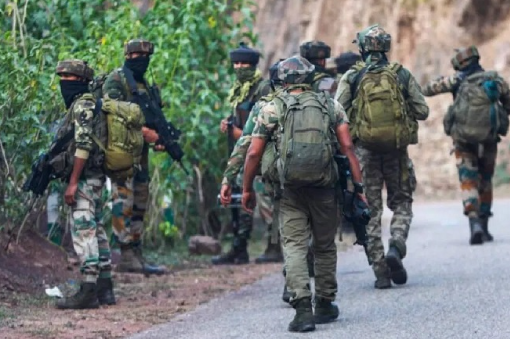
Srinagar: Security forces launched a search operation in the Saladhi area of Hiranagar sector in Jammu and Kashmir’s Kathua district on Monday after reports of suspicious movement near a forested stretch.
Officials said the operation was initiated after a local resident reported seeing three unidentified persons in the area. Acting on the input, police and paramilitary forces cordoned off the area and began a search to trace the individuals.
Security has been tightened in the surrounding forest belt and along the nearby highway to prevent any possible infiltration or movement.
The sighting has raised concern among locals. Authorities have urged residents to stay vigilant and immediately report any suspicious activity in the area.
The operation was still underway at the time of filing this report.
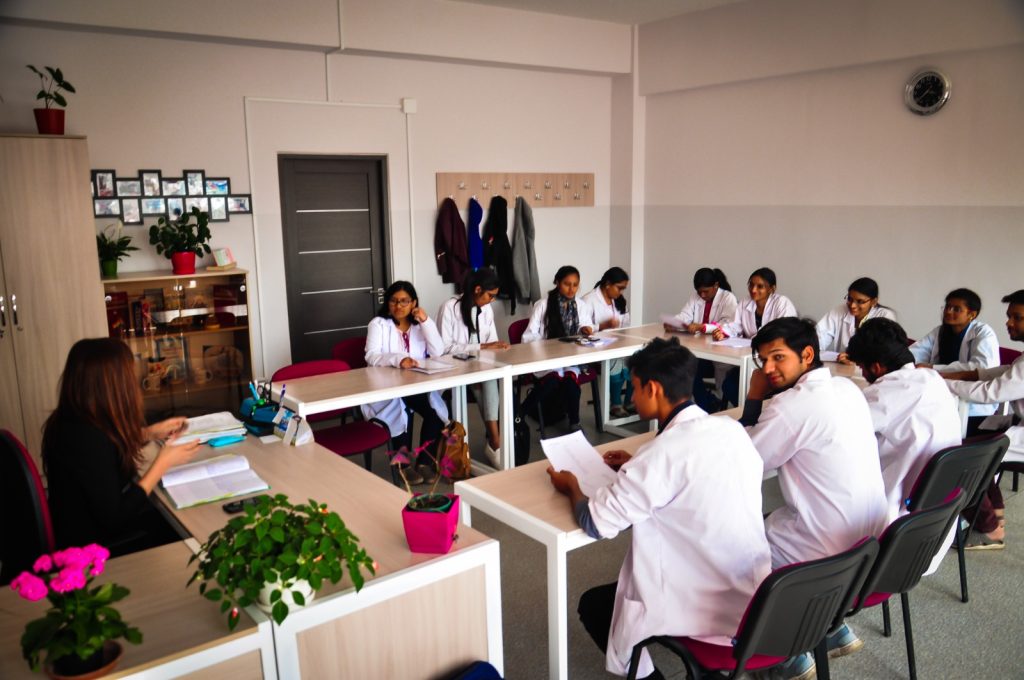
At a time when reports of fake institutions, agent frauds, and student exploitation in the name of overseas medical education are becoming common, the Central Asian nation of Kyrgyzstan is emerging as a peaceful, stable, and relatively secure alternative — particularly for Indian students.
Countries like Russia, Ukraine, and the Philippines have faced questions over political instability and the quality of education. In contrast, Kyrgyzstan has made notable progress in the field of medical education over the past few years. Institutions such as the International Higher School of Medicine (IHSM) in Bishkek have drawn the attention of Indian students. While no single institution can represent the entire ecosystem, IHSM is an example of how structured academic infrastructure is gradually taking shape, thanks in part to Indian investments.
IHSM is recognized by global organizations such as WHO, FAIMER, and ECFMG. The college claims that its curriculum has been designed in line with the guidelines of India’s National Medical Commission (NMC). However, the success of any institution is not measured by passing percentages or international affiliations alone, but also by students’ personal experiences and the local environment.
A senior official from the IHSM management shared, “Our institute not only offers modern medical education to Indian students but also pays special attention to their living conditions, food, and safety. With Indian staff on campus and access to regular counseling, students feel at home here.”
An Indian expert on international education policy noted, “India must ensure greater transparency and safety for students going abroad to study. The government should release an official list of countries where education meets quality standards and can be pursued with trust. Kyrgyzstan stands out as a promising example in this regard.”
Deepening this perspective, a recent Indian MBBS graduate from Kyrgyzstan shared her experience: “I was initially nervous about studying abroad, but within the first week, the welcoming atmosphere of the college, hostel, and the local surroundings put me at ease. We had an Indian mess, experienced faculty, and practical training in hospitals. Most importantly, we avoided middlemen and secured direct admission.”
According to sources, compared to other countries, Kyrgyzstan’s government and administration have made more efforts to ensure the safety and support of international students. Direct admission through college portals minimizes the role of agents — a major issue in overseas education.
Many institutions in Kyrgyzstan appear to operate with greater transparency and regulation. Features such as a clear admissions process, India-aligned curriculum, and a student-friendly environment make them attractive for Indian aspirants.
The role of Indian investors cannot be overlooked in this positive development. Along with setting up medical institutions, they are also facilitating Indian food, language support, cultural services, and counseling — offering students a sense of belonging in a foreign land.
In recent years, educational collaboration between India and Kyrgyzstan has grown stronger. Experts believe this partnership not only enhances bilateral ties but also addresses the significant gap in medical education capacity for Indian students, thousands of whom face challenges securing seats each year.
A growing number of students from Delhi, Patna, Madhya Pradesh, Bihar, Rajasthan, Chhattisgarh, and parts of South India are now choosing Kyrgyzstan for their MBBS studies. Among parents in these regions, a new belief is taking root: with the right information and proper guidance, studying abroad can be a safe and affordable option. Students are now being informed from school level about international medical education opportunities, and many counseling agencies are operating with increased transparency and credibility. The experiences of alumni who completed their studies in Kyrgyzstan and are now practicing in India or abroad are becoming an inspiration for new aspirants. This trend is no longer limited to urban families; it is spreading to semi-urban and rural areas as well, making foreign medical education a realistic and structured option rather than an elite dream.
However, it must be remembered that choosing to study medicine abroad is a significant decision that requires thorough information, planning, and awareness. In such a scenario, transparent and structured options in countries like Kyrgyzstan offer students and parents a trustworthy pathway — provided they seek accurate information about admissions, recognition, and institutions from verified sources and make informed choices.
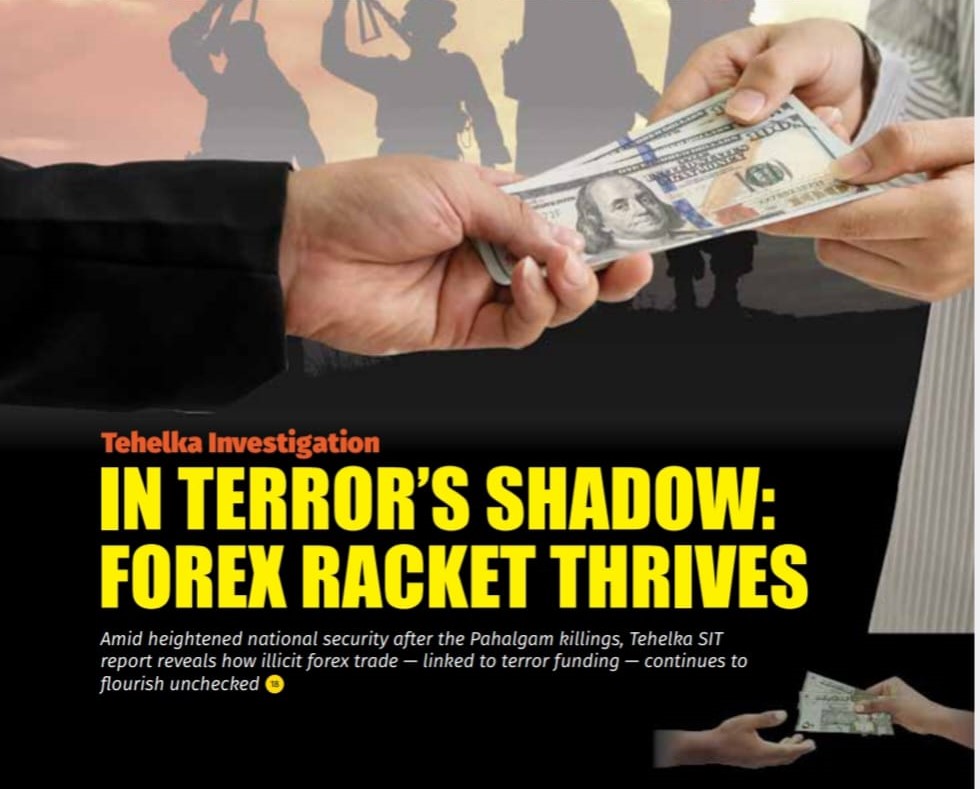
Amid heightened national security after the Pahalgam killings, Tehelka SIT report reveals how illicit forex trade — suspected of aiding terror networks — continues to flourish unchecked in Delhi’s Nizamuddin area.
On 22 April 2025, the country was rocked by the deadliest terrorist attack on ordinary civilians in India since the 2008 Mumbai attacks. Four armed terrorists from Pakistan attacked tourists in the Baisaran meadows of Pahalgam in Jammu and Kashmir, killing 26 civilians. The Resistance Front (TRF), an offshoot of the Pakistan-based Lashkar-e-Taiba, claimed responsibility. The terrorists targeted Hindu tourists—asking their religion before shooting—though a Nepali tourist and a local Muslim were also killed. The attackers, armed with M4 carbines and AK-47s, entered the tourist spot in Baisaran valley, surrounded by dense pine forests, and carried out the carnage.
In response, India launched Operation Sindoor to destroy the terror bases, which, it believed, were behind the attack. Indian armed forces struck at nine terrorist sites in Pakistan and Pakistan-occupied Kashmir, and claimed to have killed 100 terrorists. Pakistan retaliated with drone attacks and shelling in India’s border states. India, in turn, struck back with missiles and drones, inflicting heavy damage on at least eight Pakistan Air Force bases. The low-intensity conflict between the two neighbouring countries came to an abrupt halt after US President Donald Trump took credit for brokering a ceasefire between India and Pakistan, calling it a “historic achievement.” However, the Indian government swiftly rejected Trump’s assertion. At the time of writing, the two countries have agreed to extend the ceasefire.
However, nearly a month after the attack, the suspects of Pahalgan massacre remain at large. On May 13, the Jammu and Kashmir Police released photographs of three men believed to be involved in the Pahalgam attack. To accelerate the investigation, the authorities also announced a cash reward of Rs 20 lakh for information leading to their arrest. Sources say such a gruesome attack would not have been possible without local support. The Pahalgam incident is the latest in a long line of terror attacks India has faced over the decades. Successive governments have taken various measures to make the country terror-free, but time and again, terrorists have put paid to these efforts by striking again.
Illicit funding remains one of the most pressing challenges any government faces in the fight against terrorism. From where do terrorists get the money and logistical support to strike within India? This question has been on every Indian’s mind for decades. While Pakistan is widely believed to be the mastermind behind these attacks, who are the people supporting them locally? Who is funding them, and through what routes is this money reaching the terrorists? These questions have once again taken centre-stage after the Pahalgam attack.
According to experts, foreign exchange scams could be one such route. Funds laundered through these scams can pass through multiple channels—potentially including the forex market—and be diverted to terrorist organisations or individuals. This forex route may have escaped scrutiny until now, but could it have been used to fund the Pahalgam attackers? That remains a matter of investigation. The Financial Intelligence Unit (FIU) in India has previously traced illegal currency flows linked to both terrorism and smuggling.
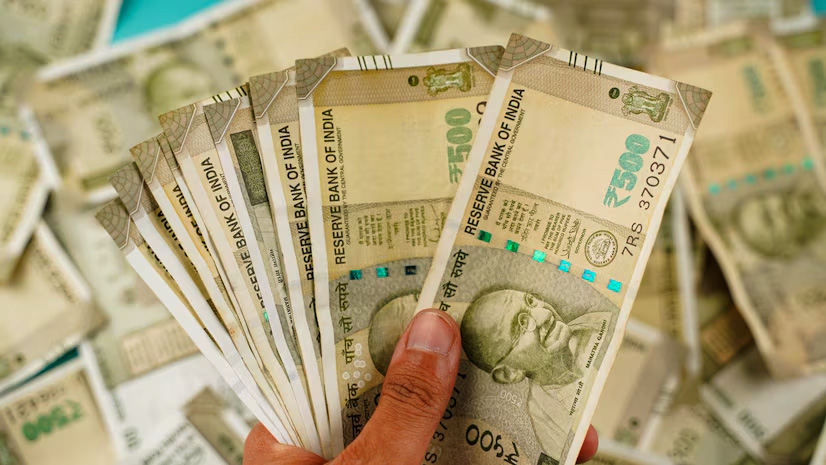
Foreign exchange transactions in India are regulated by the Foreign Exchange Management Act (FEMA). Any transaction conducted without a proper bill or receipt is considered illegal. Both the money changer and the customer face legal consequences if found engaging in such activity. Authorised forex dealers are required to issue a receipt for every transaction. This serves as proof of purchase, ensuring compliance with Indian law and protecting customers from future disputes.
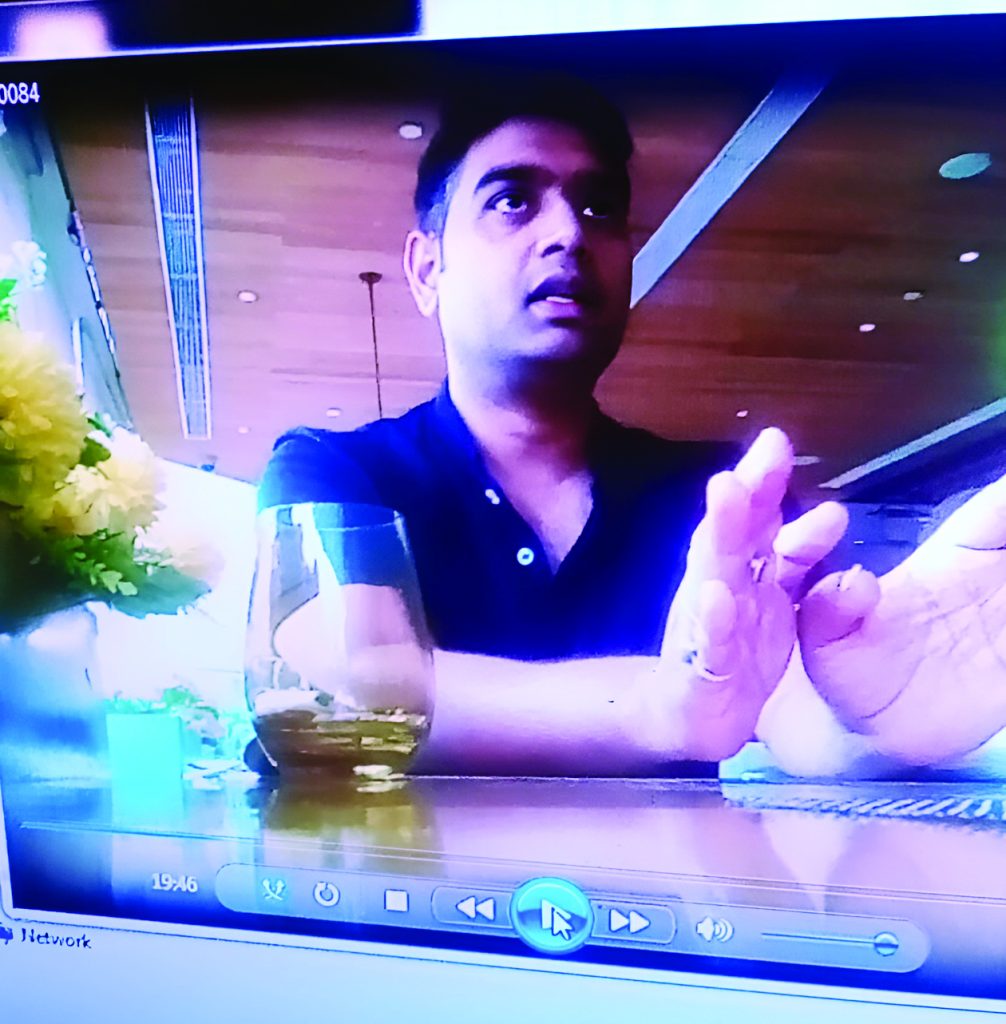
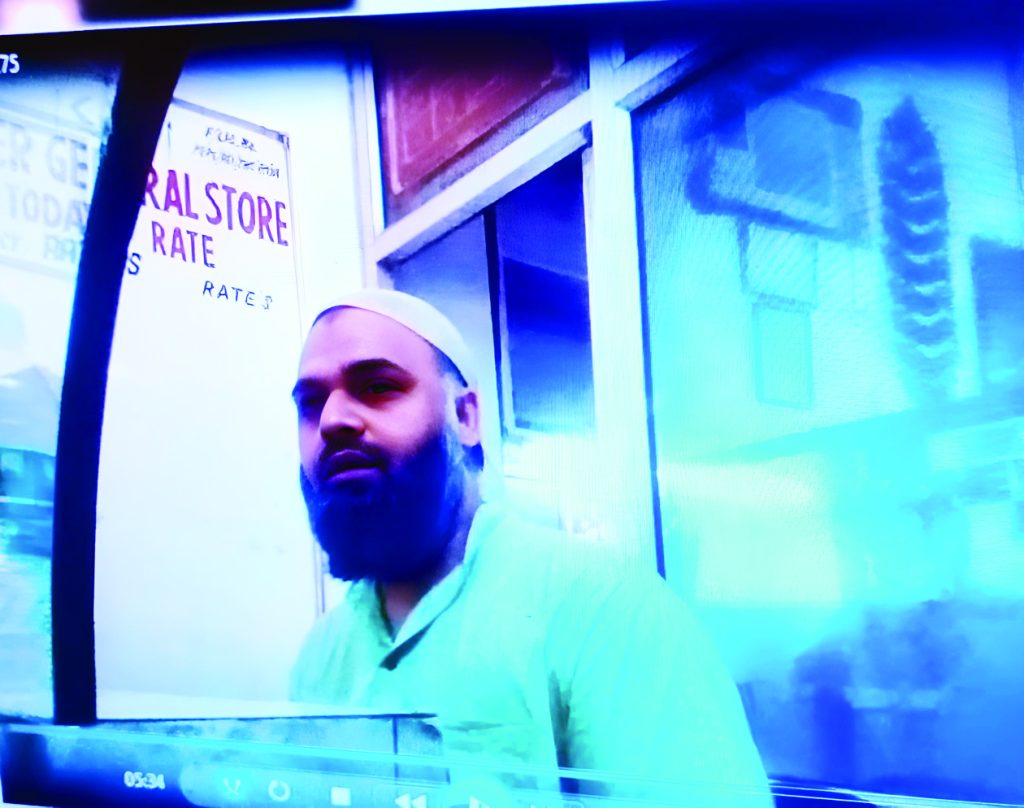
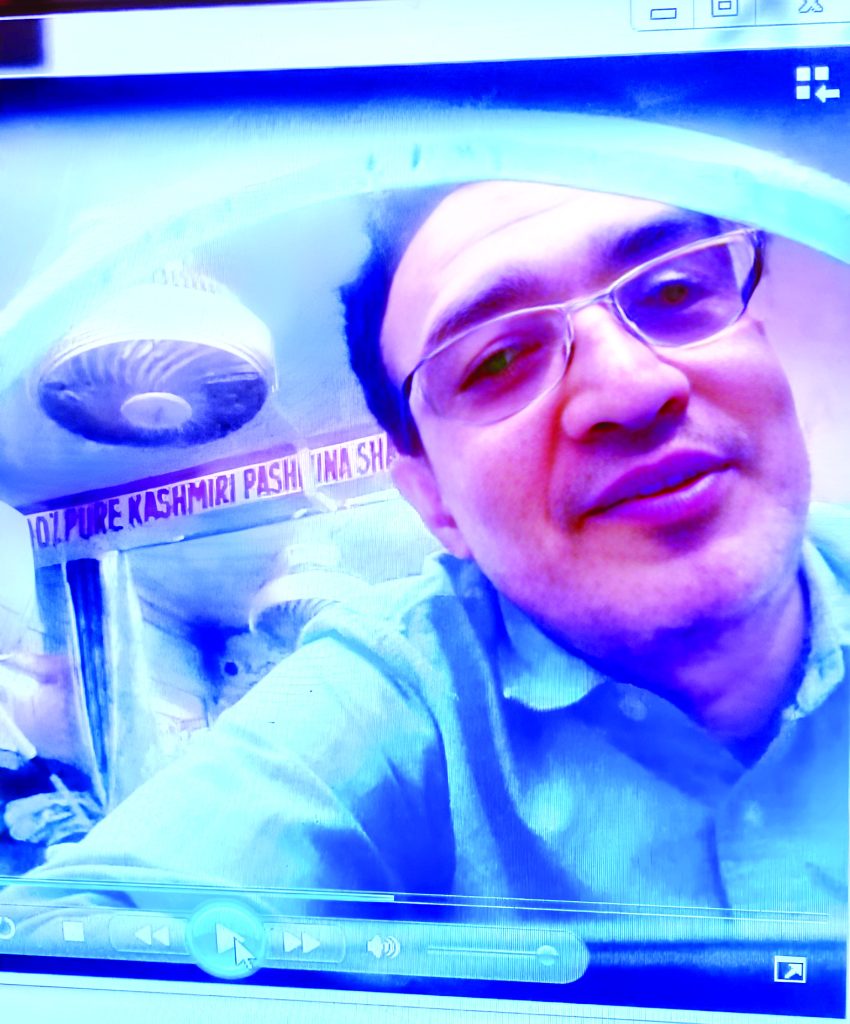
After the Pahalgam attack, major Indian cities, including Delhi, were put on high alert. At a time when all security agencies were vigilant, Tehelka conducted a sting operation into illegal foreign exchange transactions in Delhi. We visited several money exchangers posing as fake clients in the Nizamuddin area, located close to Nizamuddin Dargah and its police station. To our surprise, despite the high alert, all money exchangers—claiming to be authorised by the Reserve Bank of India—were caught on camera making illegal foreign exchange deals.
“We will give you Saudi Riyals in exchange for Rs 2 lakh in Indian currency, without any bill, passport, or visa. But it won’t be our responsibility if agencies catch you for carrying foreign currency illegally,” said Zaid, a money exchanger operating under the name Anam Exchange at Dargah Nizamuddin area, to a Tehelka reporter.
“I will give you Chinese Yuan in exchange for Rs 2 lakh, British Pounds for Rs 5 lakh, and Russian Rubles for Rs 1 lakh—all without any valid documents or bills,” said Naim Khan, another money exchanger in the area, running an establishment under the name SGS Forex Pvt Ltd, to the reporter.
“In exchange for Rs 2 lakh in Indian currency, we’ll give you US dollars in cash. We won’t give you a bill, nor will we ask you for any documents,” said Sarfaraz, who runs Shifa Forex at Dargah Nizamuddin area, to Tehelka.
“Buying foreign currency in India without documents is illegal. But I’ve been doing this for years. I get foreign currency without paperwork from my trusted exchangers. If you want, I can arrange it for you too,” said Prashant Singh alias Pintu, an independent broker, to Tehelka.
Before we focus on the Nizamuddin foreign exchange dealers, let’s turn to Prashant Singh alias Pintu. Pintu is an independent operator who has been involved in dollar and gold smuggling for years and is known to bring Thai currency into India through the hawala route. His confession to Tehelka exposes a broader network of dollar smuggling and hawala money movement. Tehelka met Pintu well before the Pahalgam attack. At that time, he told our reporter that he had long been smuggling both gold and dollars, though he said dollar smuggling is more profitable. Pintu confessed that he buys US dollars from the Indian black market, illegally, takes them to Thailand, converts them into Thai baht, and brings the money back to India through hawala channels. Since he gets a good exchange rate in Thailand, he said he earns a significant profit on the return.
In the following revealing exchange, Pintu lays bare the mechanics of his smuggling network—how gold is brought in from Thailand and US dollars are taken out of India, only to be converted into Thai baht and routed back as Indian currency via Hawala. The margins may appear modest, but the network is robust and time-tested.
Pintu- Hum kaam kartey hain dollar aur gold mein. Aur dono ke profit alag alag hain, agar hum 100 gram gold latey hain 50 hazar rupees bachta hai. 100 gm ki value hui 5-5.5 lakh rupees. Aur dollar mein bethtey hain 8.5 lakh.. ek poora bundle aata hai…usmein hame Rs 2.25 bachtey hain to wo usmein 2500 rupees approx bachtey hain.
Rporter- Ye laatey kahan se ho aap gold aur dollar?
Pintu- Ye Thailand se laatey hain. Gold Thailand se latey hain; dollar India se lekar jaatey hain.
Reporter- Kahan jaatey ho?
Pintu- Bangkok mein.
Reporter-Dollar India se lekar jaatey ho.. wahan usey Indian currency mein change karwatey ho?
Pintu- Nahi.. Thai currency mein change karwatey hain uske baad hum isko hawala lagwakar India mein laatey hain…India mein paisa return aa jata hai Indian currency mein. To hame sab milakar 20-22 hazar bachta hai.
[What emerges from this conversation is how money still moves across borders through informal channels. This snapshot reveals that hawala remains active despite stricter financial checks and monitoring.]
Pintu now explains how dollar smuggling has adapted to evade scrutiny by using multiple carriers and smaller consignments in a continuous loop between India and Bangkok. Each round brings small profits, but the operation grows by repeating the process. The network also offsets travel costs by carrying clothes and electronics on the side.
Reporter- 20-22 hazar rupaye kitne par bachtey hain?
Pintu- Rs 8 lakh par ..per trip. Jaise mein aaj gaya wahan par exchange karwaya aur meine return mare aur paise India mein aa gaye. Ab India mein wo bande return mein phir gaya.. to cycling system hai.
Reporter- Nahi jo paise hawala se India mein aaye wo phir bahar jaatey hain?
Pintu- Phir hamara doosra ladka…hum akele kaam to karte nahi hain, to wo paise wapas aa gaye ..to aaj Jeetu bhai wapas jayega wo paise lekar. To aaj Rs 2500 ka profit aaya, kal bhi Rs 25 k ka profit aayega..
Reporter- Kitne par 25k ka bataya aapne?
Pintu- 8.5 lak par.
Reporter- 8.5 lakh par Rs 25 hazar ka profit aapka?
Pintu- Payega aur hum cycling mein isko 20-25 din mein 2.5 lakh kar detey hain.. ye profit hai.
Reporter- Matlab ek chakker mein Rs 25 thousand to 10 chakker mein 2.5 lakhs?
Pintu- Haan.. ye profit hai aur ticket ka jo nikalta hai, hum saath mein kapda bhi laatey hain, electronics items bhi latey hain, aur bhi bahut sara samaan.. to hum ticket aur custom us mein kar letey hain.
[What we learn is how volume is built through repetitive acts—profits are small per trip but add up over repeated runs. Smuggling now seems to run more efficiently than before.]
Pintu, in the following exchange, admits that he avoids paying tax by buying dollars from the black market without any paperwork. He explains that going through legal channels would wipe out his profit due to bills and GST.
Reporter- Ye bataiye ismein tax kiska bacha.?
Pintu- Tax dekho , agar hum proper tarike se jayenge, to poora bill banega, to jo cheez hame 8.5 lakh ki padh rahai hai wo phir hame 8.70 ki padegi, zyada hi padegi, GST milakar to jo hamari bachat hai wo sari usmein chali jayegi.
[What this shows is how black market trade thrives not just on secrecy but on simple cost-cutting. For players like Pintu, legality means not safety, but loss.]
Pintu now reveals how they manage to smuggle dollars through airport security without getting caught. He says the currency is concealed in such a way that even X-ray machines can’t detect it. He admits that bribes are sometimes paid, but hastens to add that the focus remains on clever concealment to avoid last-minute trouble.
Pintu- Wo wahan jakar kuch bhi karein wo paise hame equal equal ho gaya. Agar hum yahan se custom ko kuch cut de detey hain, 5000- 3000 rupees….3000-4000 per banda chala jaata hai, usko pata hota hai… magar phir bhi hum us paise ko bahut manipulate karke le jaatey hain. Aaisa nahi ki jeb mein daala chal diye, kyunki risk hota hai, kal ko wo mukar gaya, keh diya mera senior aa gaya tha mein kya kar sakta hoon, isliye bahut manipulate karke le jaatey hain.
Reporter- Jaise 10,000 dollar hain usey aap alag alag rakhtey hain.
Pintu- Aisey system mein rakhtey hain ki wo X-ray mein bhi nahi aata.
Reporter- Aisa bhi hai?.. wo X-ray mein aayega bhi nahi?!
[We learn how smugglers rely not only on corrupt officials but also on crafty hiding techniques. In this underworld economy, we find if technology a threat to smugglers, they have found ways to outwit the same.]
Pintu, in the next segment, describes how he bypasses official currency regulations by buying dollars from the black market without any paperwork. He openly admits to dealing in large daily volumes, far exceeding legal limits, and insists on unbilled, off-the-record transactions to avoid scrutiny.
Reporter- Accha dollar kaisey kharid sakta hai koi, usme koi document ki zaroorat nahi hoti.?
Pintu- Bill ke sang chahiye to bahut kuch hai…India mein na aap saal mein bas ek baar 10,000 dollar bhej saktey ho apne passport mein. Uske baad aap dobara jaogey to wo nahi denge, kyunki aapne ek hi baar mein bhej diya.
Reporter- Accha saal mein ek passport par Rs 10,000 aa saktey hain ?
Pintu- Sirf 5000.
Reporter- Aur aap kitna latey ho?
Pintu- Sir, hame paper chahiye hi nahi, wo kacchey mein dete hain, hame kacchey mein hi chahiye GST nahi katwana, agar pakkey mein chahiye.. paise account se katenge.
Reporter- Aap passport bhi nahi dikhate honge?
Pintu- Mein kuch nahi dikhata.
Reporter- Aap kitne le letey ho saal mein.
Pintu- Saal mein..mein daily ke 25000 dollar le leta hoon.
Reporter- To bahut aage nikal gaye aap to!
[What emerges is a clear disregard for foreign exchange rules. When loopholes in the system are not enough, they’re ignored altogether. The black market flourishes wherever regulators overlook the rule-breakers’ tactics.]
In the following portion, Pintu candidly admits to bribing customs officials to facilitate dollar smuggling through airports. He claims the system is well-oiled, naming multiple airports where such operations are routine and openly negotiated.
Pintu- Dekho sir, bina officer ke kaam karna to bewakoofi hai. Kal ko koi baat hoti hai to mein bol bhi sakta hoon sir thoda se dekh lijiye…agar aap letey hain to kahin na kahi riyayat bhi karenge. Wo bhi zaroori hai, XXXX airport mein koi 10 lakh.. 50 lakh se neeche baat hi nahi karta, jitna paise utna hi kaam hota hai.. aur seedha seedha hota hai.
Reporter- Yahan se bhi XXXX Airport se kaam ho raha hai matlab?
Pintu- XXXX.. aisa koi airport nahi hai jahan se ye kaam na ho raha ho.
Reporter- Yehi kaam.. dollar ka?
Pintu- Dollar ka, gold ka…gold mein risk bahut hai.
Reporter- Aap sirf Bangkok se hi kar rahe ho?
Pintu- Haan, beech mein maine Dubai se kiya tha.. second lockdown ke samay…Dubai bahut expensive hai to hamara nahi bann paya tha.
[This shows how bribes to officials make smuggling easy. Once those in charge look the other way, enforcement collapses and the whole system starts working for the smugglers instead of stopping them.]
In the following exchange, Pintu admits to carrying far more dollars than what Indian rules allow. He explains how he bypasses legal limits by sourcing foreign currency from the black market, citing Karol Bagh as his base.
Reporter- Nahi aap ye keh rahe ho dollar ki ek limit hai India se bahar le jaane ki.?
Pintu- India se bahar le jane ki sirf India mein hi limit hai , videsh waalon ki nahi.
Reporter- Ek bande ki kya limit hai?
Pintu- Ek bande ko Rs 1500-2000 tak US dollar.
Reporter- Aap kitna le jaatey ho?
Pintu- 15000-20,000.
Repoprter- Ye dollar aapke pass kahan se aatey hain?
Pintu- Hum kharidtey hain local market se…yahan par Karol bagh se.
[We see how easily smugglers break currency rules. Once the money goes into the wrong hands, rules stop mattering—and the system meant to stop them ends up helping them instead.]
In this part, Pintu openly accepts that purchasing foreign currency without documents is illegal, but says it’s a common practice. To buttress his argument, he contrasts the legal route—via banks and authorised agents—with the undocumented method he offers, which involves no ID checks. He even promises to arrange dollars or Euros in bulk through his network.
Reporter- Accha bina passport ke dollar nahi kharid saktey India mein?
Pintu – kharid saktey hain.
Reporter- Lekin wo illegal hoga?
Pintu- Black marketing hoga..24 rupee rate hain lekin wo 25 denge.
Reporter- Lekin wo legalized nahi hoga?
Pintu- Nahi.. aap prove kaise karogey?
Reporter- Agar legalized karwana hai to passport dena padega?
Pintu- Legally lena hai to bank se lena hoga, white hoga, poora GST katega..phir white collar hoga to aap kahin bhi jaogey dikha saktey ho ye mere bill hai etc. aap jawab de saktey ho na.
Reporter- To without document easy hai logon ko?
Pintu-Haan.
Reporter- Aapki setting kaisi hai?
Pintu- Setting nahi.. aapko bhi mil jayenge, mein number de deta hoon aapko.. aaj to nahi.. magar 20-25 hazar logon ke pass hotey hi hai.
Reporter- Delhi mein hi?
Pintu—Haan.
Reporter- Aap dilwa dogey..bina passport, visa ke?
Pintu- Haan, Dollar, Euro.. kuch bhi.
Reporter- Bina passport ke?
Pintu- Haan.
[We learn how access to foreign currency, even in large amounts, is being normalised outside the legal system. The ease with which such channels are offered reflects how rules are routinely sidestepped.]
This was one part of Tehelka’s investigation, which exposed how an agent is illegally carrying dollars from India to Bangkok and, after converting them into Thai currency, is bringing the money back to India through hawala channels.
We now turn to the second part of our investigation, carried out just after the Pahalgam terror attack, which exposed money exchangers illegally converting currency without any documentation. As part of this, we met Zaid, who runs a money exchange business under the name Anam Exchange in Delhi’s Dargah Nizamuddin area. We told Zaid that we needed Saudi Riyals worth Rs 2 lakh in Indian currency. He agreed to provide the Riyals without any legal documents or bill, but warned of the risks involved if caught.
Zaid – Riyal kitna chahiye?
Reporter- 2 lakh Indian currency ka.
Zaid (on phone)- Riyal kitne ka hai?…23.20 paise ka hai.
Reporter- 23.20 paise ek Saudi Riyal ka…kitna ho gaya 2 lakh ka?
Zaid- 8,620.
Reporter- 8620 Saudi Riyal mil jayenge, 2 lakh ke?
Reporter- Koi document to nahi dene padenge?
Zaid- Agar bill banwana hai to dene padenge.
Reporter- Nahi bill nahi banwana
Zaid- Apne risk par lekar jana phir.
Reporter- Apna risk matlab?
Zaid- Rok lein to hamari koi zimmedari nahi rahegi.
Reporter- Theek hai wo to hamara risk hai…usmein phir ye hai ki passport, visa hamien kuch nahi dena.
Zaid- Nahi.
[This exchange highlights how illegal currency trading thrives on trust and risk, bypassing formal checks. It reveals how the makeshift system quietly shifts the risk onto individuals, leaving them vulnerable.]
Tehelka investigation now moves on to another money changer of Nizamuddin area, Naim Kha, who runs his money exchange business with the name of SGS Forex Pvt Ltd. We told Naim Khan that we need Chinese, Russian and British currency in exchange of Indian currency of Rs 1 lakh, 2 lakh and 5 lakh, respectively. He quotes exchange rates on the spot, works out the amounts quickly, and even confirms that no bill will be required.
Reporter- British pound?
Naim- Kitna hai?
Reporter- 5 lakh Indian currency.
Naim- British chaiye aapko?
Reporter- Hmm., kya rate hai?
Naim- 114.90.
Reporter- 114.90 ka ek pound ?
Reporter- Aur Russian ka?
Naim- Abhi hain nahi hamare pass.. 5-6 k hain
Reporter- 5-6 k …uska kya rate hai?
Naim- 1.05 paise
Reporter- Ek rupee 5 paise..aur Chinese?
Naim- Hai.
Reporter- Chinese ka kya rate hai.?
Naim- 12.80 hai.
Reporter- Rs 12.80 ..2 lakh ka kitna ho gaya?
Naim- Chinese..Rs 15625
Reporter- Without bill mil jayega na?
Naim- Bill chahiye iska?
Reporter- Nahi chahiye.
Naim- 5 lakh ka pound chahiye / 2 lakh ka..
Reporter- …Ruble.
Naim- Aur Yuan?
Reporter- 1 lakh ka..teeno ke sahi rate laga lo?
Reporter (continues) – Naim bhai bataiye phir..document to nahi chahiye?
Naim- Nahi.
Reporter- Mein phir ek ghante mein aa jaun?
Naim- Haan aa jao.
[This brief but telling exchange shows how foreign currency can be obtained in bulk, off the books. The deal is informal, brisk, and clearly outside the law. It reveals a system running on trust and routine illegality—no questions asked, no papers needed.]
We now met Sarfaraz, who runs money exchange business at Shifa Forex in Nizamuddin. Sarfaraz quickly agrees to exchange Rs 2 lakh into US dollars—without seeking any identification or documentation. He calculates the exact dollar amount, insists the rate is the best available, and reassures that no paperwork will be involved. The deal is swift, unregulated, and worry-free.
Reporter-Money exchange ho jayega?
Sarfaraz- Kitna?
Reporter- 2 lakh Indian currency…Kya rate hai?
Sarfaraz- 8,660.
Reporter- 8,660?
Sarfaraz- Haan.
Reporter- Kitne dollar milenge US?
Sarfaraz- 100 dollar, 8660 ka rate hai.
Rporter- 2 lakh ka kitna ho gaya?
Sarfaraz- 2309 dollar.
Reporter- 2309 dollar US…?
Reporter (continues): Kuch document to nahi dene padenge?
Sarfaraz- Cash.
Reporter- Visa, passport dene ki zaroorat to nahi hai?
[This exchange makes it clear how easy it is to bypass all formalities in the shadowy world of street forex. What we see here is informal finance thriving in plain sight.]
Tehelka now met another money changer of Nizamuddin Area. His name is Arfin Rajput, running his forex business with the name of Nodal Forex. Again, Arfin Rajput readily offers to convert Rs 5 lakh into Euros—no passport, no visa, no bill required. He quotes a precise rate, does the calculation instantly, and confirms there’s no need for any formalities. Everything is handled in cash, no questions asked.
Reporter- Euro mil jayega Euro?..5 lakh Indian currency ka?
Arfin- Mil jayenge.
Reporter- Kya rate hai.
Arfin- Rs 58.70 paise.
Reporter- 58 rupee 70 paise..Rs 58.70 paise?
Arfin- Haan.
Reporter- 2 lakh Indian currency ka kitna ho gaya.. sorry 5 lakh ka?
Arfin- Ye ho gaye tumhare 5065 (five thousand sixty five).
Reporter- Rs 5065…document to nahi chaiye kuch?
Arfin- Naa.
Reporter- Passport visa ki zaroorat to nahi?…bill bhi nahi chahiye hamey.
Arfin- Naa..
[What this brief exchange shows is how openly large forex deals happen outside the legal net. A system meant for scrutiny seems to function comfortably without it. The absence of even basic documentation underscores how normalised such illegality has become.]
We all remember the infamous 2015 Forex Scam, in which the CBI arrested several people, including employees of Bank of Baroda and HDFC Bank. In 2017, in a major case of trade-based money laundering—also dubbed the “Foreign exchange scandal”—the CBI initiated a probe against 13 private companies and unknown bank officials for sending foreign remittances worth around Rs 2,253 crore under the guise of bogus imports during 2015–2016. In 2024, the Reserve Bank of India (RBI) issued a list of 75 unauthorised forex dealers duping customers.
Tehelka’s two-part investigation, triggered by the Pahalgam terror attack, has exposed the smuggling and Hawala networks operating through foreign currency dealers in Delhi’s Nizamuddin area—right under the nose of the local police station. The money changers caught on Tehelka’s spy camera claimed to be RBI-authorised but were clearly operating outside the legal framework, even when the country was on high alert following the Pahalgam attack. It is known that customers often prefer such dealers to avoid paperwork and deal only in cash. These money changers operate illegally in what is euphemistically called the “black market”—a space that, as the name suggests, harbours everything from tax evasion to terror financing. A blind eye to this parallel economy only deepens the risks we conveniently pretend don’t exist.
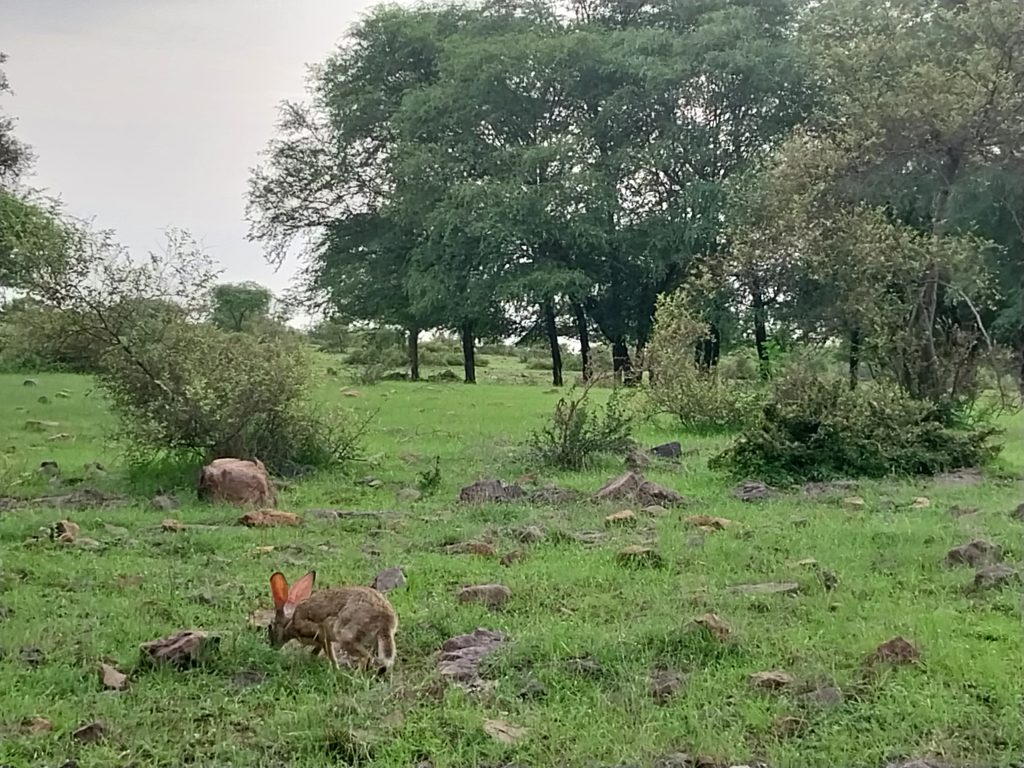
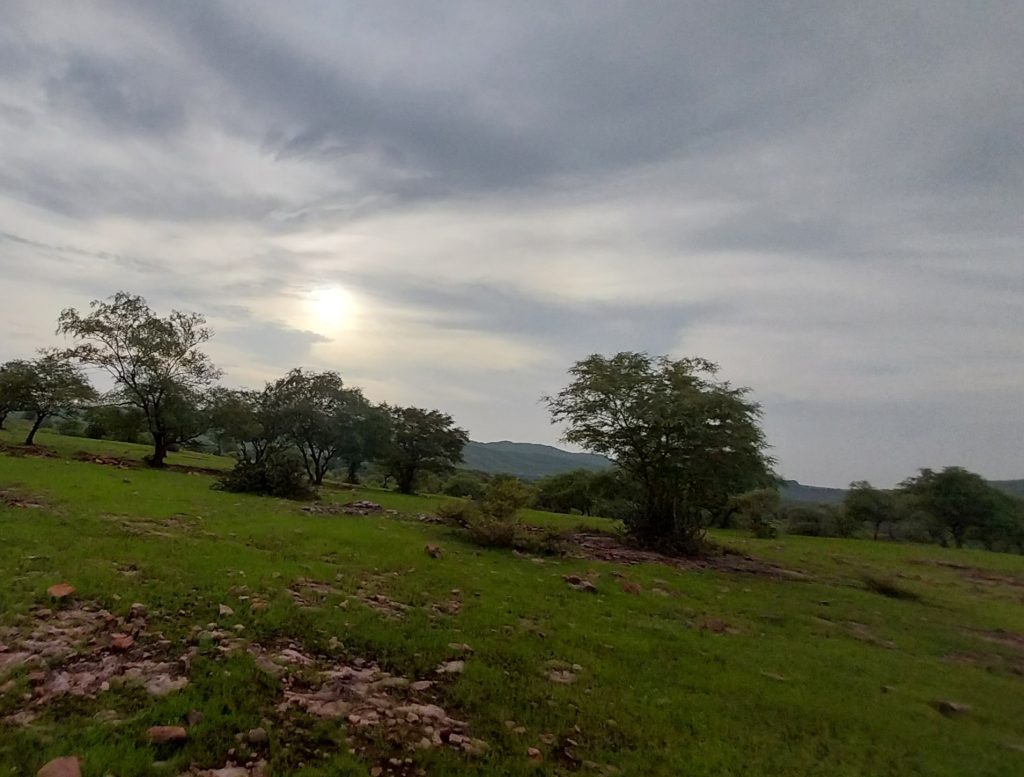
The incident at the Ranthambore Tiger Reserve, where a ranger was killed while on duty by a tigress, shows that thoughtless interventions do not always work well. A report by Deepanwita Gita Niyogi
Photo by Deepanwita Gita Niyogi
The recent incident, where a two-year-old tigress killed forest ranger Devendra Singh Chaudhary in Rajasthan’s Ranthambore Tiger Reserve, has brought back poor wildlife management into focus.
This is not a lone incident. The tigress named Kankati had killed before. In April, she attacked and dragged a seven-year-old boy, Kartik Suman, on the road leading to a temple which is frequented by pilgrims. At present, she is in an enclosure. A committee will decide on her outcome.
Kankati is one of the three cubs of tigress Arrowhead. After the mother lost the capacity to hunt due to a tumour, the forest department gave her live baits for food. But it proved to be fatal. “Arrowhead was in distress for the past three years. As she developed a tumour, the forest department supplied her with buffalo meat. But in the process, the cubs also got accustomed to her food. They used to come out at the sound of vehicles,” said a wildlife expert not wishing to be named.
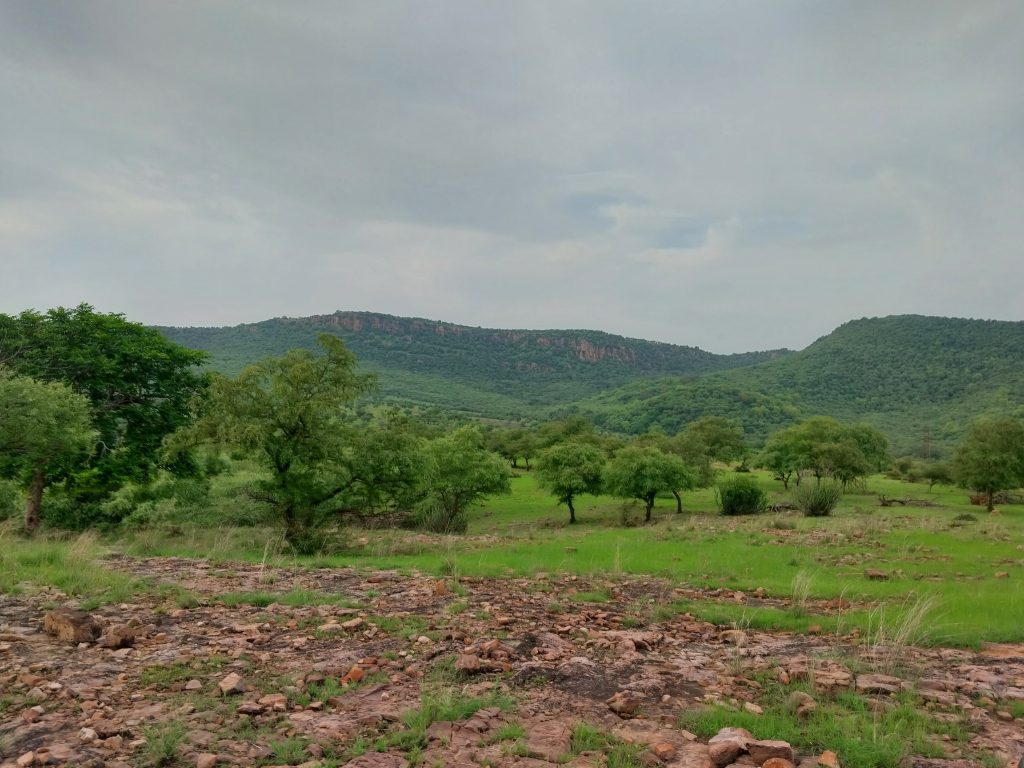
Photo by Deepanwita Gita Niyogi
According to India’s leading tiger expert Ullas Karanth, wildlife conservation is not animal welfare. Rather, conservation deals with the welfare of tiger populations, or any endangered species, for that matter. It is not about the fate of individual tigers.
“My research shows that tiger populations that are secure and doing well will lose about 20 percent of individuals each year. However, such losses are made up by the birth of cubs. Scientific wildlife management forbids making interventions such as feeding cubs, hospitalising their mothers and so on. In thriving high tiger density reserves these are not needed. Such interventions cause conflict. In this way, public support for conservation is lost. Euthanising tigers fated to die eventually can lessen their misery from the perspective of animal welfare,” Karanth said.
Photo by Deepanwita Gita Niyogi
The expert added that it was a thoughtless and misguided intervention without any science behind it. “If tigers cannot hunt anymore, they will die naturally (as also the cubs). Such animals cannot be sent anywhere.”
Poor tiger management
In 2023, India completed 50 years of tiger conservation launched in 1973. Currently, the country has an estimated 3682 tigers but the population is not balanced properly across its 54 tiger reserves. Some reserves are beyond their carrying capacity.
Tigers are thriving in some landscapes and disproportionately adding on to the increasing tiger count. At the same time, other landscapes have either lost all, or most tigers.
Karanth explained that it is sad to see ignorance driving tiger conservation at all levels. He explained further. Assuming that there are 3000 tigers, and 1000 being adult female breeders, with 333 of them breeding every year on an average and giving birth to three cubs, about 1000 cubs will be born each year.
“It is impossible to save, hospitalise and translocate all these animals. Nor is that needed. It is a consequence of the lack of basic knowledge of tiger biology among officials, law courts, and tiger lovers which is leading to this situation. Everyone is on this bandwagon of giving names to tigers and trying to save every one of them by feeding, hospitalization and translocation.”
As tigers are increasing in number, it is leading to conflict situations. In reserves like Pilibhit in Uttar Pradesh where the number of tigers has increased in recent years, conflict has also risen.
“Apart from human-tiger conflict, there is tiger-tiger conflict over territorial fights,” said wildlife conservationist Prem Chandra Pandey, who works independently on conflict management. He cited the instance of Pilibhit’s Mahof range where two male tigers are engaged in a fight for territorial dominance. “There is a need to protect forests to accommodate wildlife. There is extreme human pressure on the forest area which is reducing. Tigers are spilling over leading to conflicts.”
Coming back to Ranthambore’s two victims, the ranger was killed while he was on tracking duty in the Jogi Mahal area which falls in zone three of Ranthambore Tiger Reserve. A few labourers were working in the vicinity where he was killed. The boy, Kartik Suman, was dragged into a bush while his grandmother was present.
Assistant forester Seema Meena, whom the reporter had trailed in Ranthambore’s zone seven while on duty, said that the ranger probably did not know that Kankati was in the area. “The labourers heard cries and then informed the staff. The forest patrol guards are always at risk, but we have to do our duty.”
Focus on Ranthambore
Like other reserves, in Ranthambore Tiger Reserve too, there are territorial fights between tigers. About four years back, tigress Riddhi displaced her mother Arrowhead. After that Arrowhead was left with a reduced area.
According to conservationist Shantanu Sharma, the Ranthambore tiger reserve, which worked as a source population for tigers, is now beyond its carrying capacity with about 80 tigers. The department should maintain the corridors, mainly the Kuno-Ranthambore corridor, which connects the tiger reserve in Rajasthan with Kuno in Madhya Pradesh. The corridor is a mosaic of agricultural fields, villages, forest patches, and ravines, reads the Ramthambhore-Kuno Corridor Profile report. Spread over 2500 km square, the corridor faces threats like linear infrastructure, land use change and sand and stone mining. Corridors help in dispersal of tigers.
The National Tiger Conservation Authority, along with the Wildlife Institute of India, has identified 32 major tiger corridors. However, corridors are under threat due to developmental pressure. “Tigers should be able to shift naturally to new areas through corridors,” Sharma said.
In the wake of the April 22 Pahalgam terror attack, which claimed 26 lives, New Delhi has ramped up efforts to expose Pakistan’s role in supporting terrorism. This support extends beyond training and logistics to the crucial area of sustained financial backing.
Coinciding with a diplomatic offensive launched across 33 countries, and in line with the nation’s resolve to counter Pakistan, a recent investigation by Tehelka has revealed illicit forex trading operations flourishing even as national security remains on high alert. In its undercover feature, “In Terror’s Shadow: Forex Racket Thrives,” Tehelka reporters discovered currency dealers in Delhi’s Nizamuddin area openly flouting regulations, dealing in unrecorded cash, and circumventing regulatory oversight altogether. At the same time, law enforcement turns a blind eye.
It’s worth recalling that Prime Minister Narendra Modi, during the ‘No Money for Terror’ Conference on Counter-Terrorism Financing, pointedly referred to Pakistan, stating that certain countries used terrorism as a foreign policy tool. Additionally, Congress MP Shashi Tharoor, during a visit to Panama, accused Pakistan of running a “policy of enabling terror,” citing a pattern of attacks over the last two decades, from New York and Madrid to Mumbai. Despite compelling evidence presented after the 26/11 attacks, not a single terrorist has been convicted in Pakistan.
This move comes amid growing concerns that Pakistan has failed to honor its commitments to curb terror financing, despite its removal from the Financial Action Task Force (FATF) grey list in October 2022. India is also lobbying international financial institutions such as the IMF and World Bank to reassess their aid to Pakistan, citing fears that foreign assistance is being diverted to fund terrorism and support banned terror groups. Pakistan’s high defense spending—nearly 18% of its national budget—and increased arms imports, especially during periods of IMF assistance, point to a possible redirection of foreign aid toward military and potentially terrorist-related objectives.
Experts have also highlighted the role of black market currency exchanges—long linked to tax evasion—in fueling sleeper cells, arming militants, and supporting extremist infrastructure. India’s Financial Intelligence Unit (FIU) has previously tracked links between hawala networks, illegal forex activity, smuggling, and terrorism. However, enforcement has been sluggish, allowing these operations to grow unchecked. National Security Adviser Ajit Doval has called financial support the “lifeblood” of terrorism, a view echoed during a recent India-Central Asia summit.
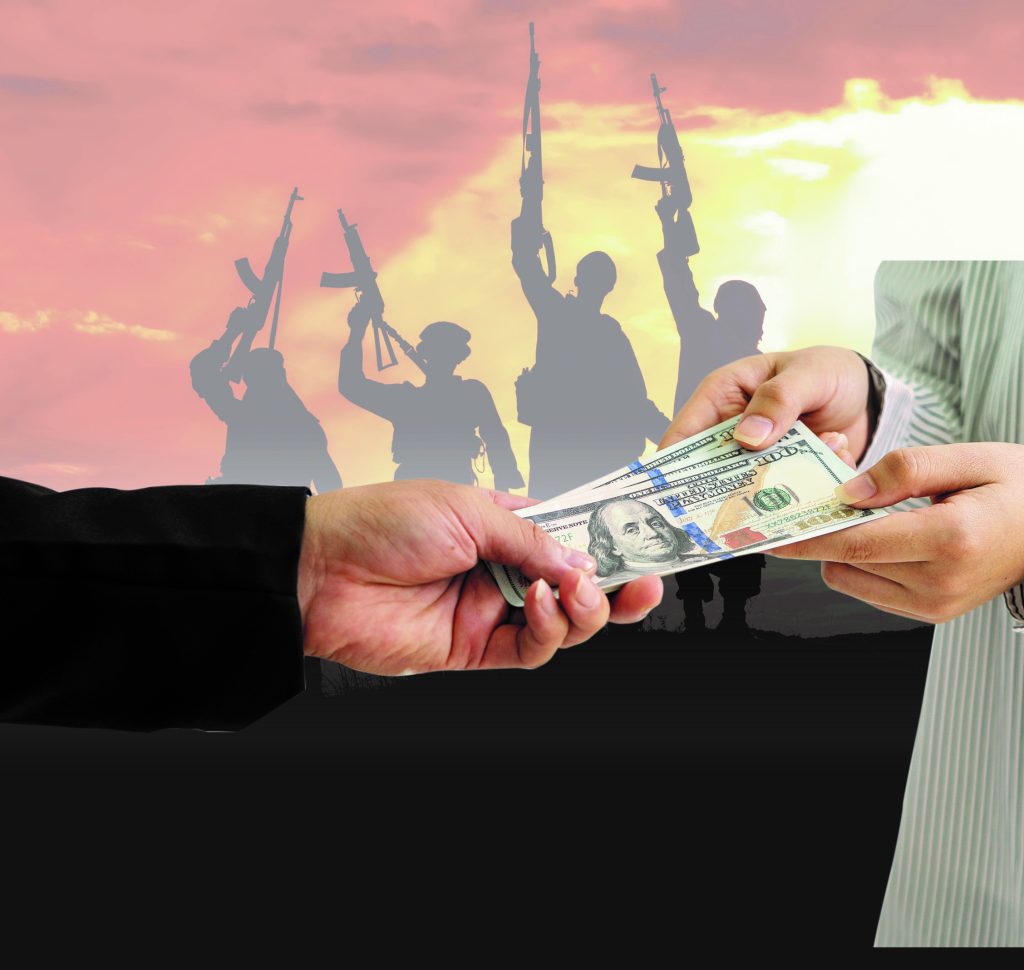
While international attention remains focused on Pakistan’s external involvement, the growing problem of internal financial leakage is increasingly difficult to ignore. Terror financing is one of the three most critical elements that sustain terrorism in any society, alongside the wrong kind of mindset and the flow of arms. Without money, it’s impossible to recruit ‘volunteers,’ maintain training camps, or ensure that weapons continue to flow. As officials and investigators increasingly acknowledge, terrorism doesn’t just thrive on ideology—it runs on cash. And much of that cash flows in the shadows.
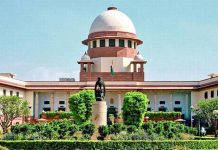
In a significant judicial intervention, the Supreme Court has openly questioned the Enforcement Directorate’s conduct, highlighting concerns over federal imbalance, arbitrary arrests, and coercive tactics in cases involving opposition leaders across India. A report by Mudit Mathur
In a series of unprecedented and sharply worded observations, the Supreme Court of India has come down heavily on the Enforcement Directorate (ED), questioning its methods and cautioning against the undermining of the constitutional balance of power between the Centre and the States. These developments come amid a flurry of investigations and arrests involving several high-profile opposition leaders, prompting concerns about the executive overreach and politically motivated enforcement actions.
The apex court’s recent pronouncements reflect a growing judicial discomfort with what it perceives as the weaponisation of investigative powers. At the heart of the matter lies a broader constitutional question: Can agencies of the central government act unilaterally in matters that deeply impact state’s functions and individual liberties, without sufficient procedural safeguards?
These developments occur amid allegations that the ED is being used to target opposition figures, with notable cases involving leaders like Arvind Kejriwal, Sonia Gandhi, Rahul Gandhi, and Hemant Soren. Critics argue that such actions threaten the democratic fabric by undermining the principle of federalism and the right to dissent.
The Enforcement Directorate, tasked with enforcing the provisions of the Prevention of Money Laundering Act (PMLA), has steadily expanded its footprint in recent years. However, critics have raised alarm over the agency’s disproportionate focus on opposition figures, with data indicating that more than 95% of political leaders under ED scrutiny since 2014 belong to non-ruling parties.
This perceived pattern prompted 14 opposition parties of India to file a joint petition in the Supreme Court in March 2023, seeking guidelines to curb what they described as the arbitrary use of central agencies like the ED and the Central Bureau of Investigation (CBI).
The petition proposed the application of a “triple test” before arrests: assessing whether the accused is a flight risk, whether they might tamper with evidence, or whether they could influence witnesses. The petitioners also urged the Court to reinforce the principle that bail should be the norm and jail an exception, particularly in non-violent economic offences. However, the Supreme Court declined to entertain the plea in April 2023, stating that no special treatment could be extended to politicians.
Nonetheless, the Court’s position has notably evolved since then, especially in light of individual cases that have brought the ED’s practices under critical judicial scrutiny.
Supreme Court’s key observations and orders:
May 22, 2025 – Federal structure undermined
The strongest criticism yet came during a hearing involving ED raids on the Tamil Nadu State Marketing Corporation (Tasmac). The Supreme Court not only stayed the ED’s actions but also issued a stern warning, stating that the agency had “crossed all limits” and acted in “total violation of the federal structure of the Constitution.”
A bench comprising Chief Justice of India B R Gavai and Justice A G Masih expressed strong concerns about ED’s actions, repeating thrice that the agency was exceeding boundaries.” ED is crossing all limits,” said the apex court before staying proceedings post-ED raid on state-run liquor retailer.
The Court’s observations underlined that central agencies must exercise restraint and respect the jurisdictional boundaries of state governance. The bench stated, “The Constitution does not envisage a unitarist model. Any unilateral action by central agencies in state matters must pass the test of legality, necessity, and procedural propriety.”
May 5, 2025 – Pattern of vague allegations
While hearing a bail plea in the Chhattisgarh liquor scam case, Justice Abhay S. Oka made a telling remark about the ED’s approach: “We are seeing a pattern where the ED makes sweeping allegations, but the supporting material is either vague or non-existent.”
During a bail hearing for Arvind Singh, an accused in the Chhattisgarh liquor scam, the Supreme Court observed a recurring pattern where the ED made allegations without specific evidence. Justice Abhay S. Oka remarked that the ED often filed complaints lacking concrete material to support their claims, undermining the credibility of prosecutions.
This trend, the Court warned, sets a dangerous precedent where the sheer act of accusation can be wielded as punishment, devoid of the evidentiary rigour necessary in criminal jurisprudence.
January 3, 2025 – Condemnation of coercive interrogation
In a strong rebuke, the Supreme Court upheld a High Court ruling that quashed the arrest of former Haryana Congress MLA Surender Panwar. The ED had subjected Panwar to a marathon 15-hour interrogation in connection with an alleged illegal mining case, despite there being no conclusive evidence linking him to the alleged crime.
The Court described the ED’s conduct as “inhuman” and reflective of “abuse of power,” emphasising that coercive methods not only violate individual rights but also erode public confidence in law enforcement.
August 2024 – Right against self-incrimination
The Supreme Court held that the Enforcement Directorate (ED) cannot violate the fundamental right to silence an accused, already in judicial custody, by forcing him to make a self-incriminatory statement in another money laundering case probed by the same central agency. It ruled that the ED cannot compel an accused person, already in custody, to make statements in unrelated cases, reaffirming constitutional protections under Article 20(3).
March 20, 2024 – Indefinite detention without trial
The Court expressed concern over the practice of prolonged detention without trial in the case of Prem Prakash, allegedly linked to former Jharkhand Chief Minister Hemant Soren. Despite the filing of multiple supplementary chargesheets, the ED had failed to initiate the trial, effectively keeping the accused in prolonged custody.
“This amounts to a denial of justice and abuse of legal procedure,” the bench observed, reiterating that chargesheets must not become tools of indefinite incarceration.
The Supreme Court has flagged several systemic issues in the ED’s operations:
Denial of access to key documents: The Court has questioned why the ED routinely withholds key documents from accused individuals during bail proceedings. This practice, it noted, obstructs the fundamental right to a fair hearing and infringes upon Article 21 of the Constitution.
A bench comprising Justices Abhay S Oka, Ahsanuddin Amanullah, and Augustine George Masih remarked, reserving orders in an appeal in a money laundering case, “Times have changed. To what extent can we say documents should be protected? Are we going to be so rigid that a person facing prosecution cannot access documents? Will this be justice?”
Lack of judicial oversight: The Court has hinted at the need for independent judicial oversight of ED actions, particularly in arrests, asset seizures, and custodial interrogations.
The implications of the Supreme Court’s observations are far-reaching. They provide constitutional ammunition to those who argue that central agencies have become tools of political vendetta. Leaders from the Congress, DMK, TMC, and other opposition parties have welcomed the Court’s interventions as timely and necessary to preserve the spirit of cooperative federalism.
Legal experts, too, see the Court’s evolving stance as a corrective mechanism. “We are witnessing a judicial realignment that places individual rights and constitutional balance above executive expediency,” said senior advocate Dushyant Dave.
At a time when political polarisation runs deep and the credibility of institutions is under strain, the Supreme Court’s assertiveness offers a much-needed institutional check. The ED may well continue its pursuit of financial offenders, but its methods will now face heightened scrutiny.
By upholding the principles of federalism, due process, and civil liberties, the Court has sent a clear message: the rule of law must prevail over political arithmetic. As the country approaches another electoral cycle, the judiciary’s insistence on constitutional fidelity could prove to be a calibrating balance in a turbulent democracy.
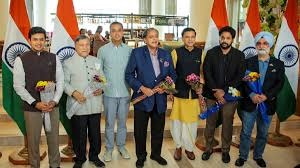
India’s post-Pahalgam global outreach, led by multi-party delegations, aims to rally support against terrorism—but at home, it has triggered sharp political divisions and accusations of partisan intent BY KUMKUM CHADHA
More than the all-party delegations that the Modi government has dispatched to different countries, it is Congress MP Shashi Tharoor — a part of one such delegation — who has grabbed the headlines.
Quite expectedly, his parent Party, the Congress, is speaking in a different voice. Far from changing the narrative, which it could and perhaps should have, the Congress indulged in petty politics. It sparred over names rather than questioning the purpose of the multi-party delegations.
But first the context: Earlier this month, the Modi Government had announced that it would send all party delegations to different countries to highlight India’s resolve to combat terrorism.
The Government handpicked MPs across parties to meet parliamentarians, ministers, government officials and think tanks in 33 countries: a move slammed by critics as “nothing but a travel and tourism program”.
There are two sides to this: the more popular being that this is a defensive approach: packing off delegations across continents is akin to an attempt to justify India’s action against the terror attack in Pahalgam last month wherein 26 tourists were shot dead in cold blood.
At another level, it was felt that the outreach was necessary, imperative and one that has precedents. Of course, one argument is that the Indian missions are well equipped to do and should do what the Indian MPs have been tasked with by the Government. But a counter to this is: Can diplomats do what MPs can? The answer perhaps is a NO. Parliamentarians are better envoys and have liberty, ability and flexibility to articulate the national point of view. As against this, diplomats are measured and constrained by official propriety. Again, India is not the first country to use Parliamentarians for engagement across countries, particularly on national issues. Governments the world over have used Parliamentarians as envoys to put their point across. On that count, one cannot find fault with this initiative.
Equally, there are precedents in India where Governments in the pre-Modi era have drafted in Parliamentarians to go abroad and engage with their counterparts. Just to give an example, when Rajiv Gandhi was serving as Prime Minister he had sent Atal Bihari Vajpayee to the UN General Assembly to explain India’s stance on nuclear issues.
As far as delegations are concerned, Dr Manmohan Singh, as Prime Minister, had deputed an all-party delegation after the Mumbai terror attack in 2008.
Of course, there are misgivings on whether this was the right time to send delegations abroad.
Operation Sindoor has left many questions unanswered and many are left wondering whether this is a bid to white wash some of the gaps the government seems ill equipped to fill. At least on the face of it.
There are unanswered questions that the people, more than politicians, are asking: Who won the war? Why did India agree to a hasty ceasefire? Why did it not demand its proverbial pound of flesh? Was Pakistan’s retaliation, in the measure that it was, unexpected? Was India on the backfoot and so on and so forth.
Given that there are no clear answers forthcoming, the delegations and the messaging by the MPs is being seen as a “hollow PR exercise” to woo the world that should have supported India during Operation Sindoor. But it did not. If anything, it equalized both India and Pakistan.
That said, the Modi government has succeeded in blunting domestic criticism on questions that the Opposition may have asked regarding the security lapse that led to terrorists sneaking in the Baisaran Valley, a few kilometres off Pahalgam.
And of course whether Pakistan actually managed to shoot down Indian aircraft, Rafale or any other, as the enemy country is claiming?
Having zeroed in on Opposition MPs to present India’s “case” abroad, the Modi government has in one sense killed two birds with one stone: on the one hand it has launched a major diplomatic initiative. But more importantly, it has blunted the Opposition tirade that it may have faced domestically.
Given that MPs across party lines went across flagging the “India message” as it were, it would now be difficult for the Opposition to target the Government on the issues its MPs amplified abroad.
But back to Tharoor and the Congress not having heft to stop its Party MP from turning down the govt invitation to lead one of the delegations.
Despite objections from his parent party, Tharoor stuck to his decision of accepting the Centre’s invitation: “National service is the duty of every citizen” Tharoor said.
The Congress angst: the MPs should “seek party concurrence before accepting official delegation roles” and the Government did not include the four MPs the Party had nominated: Anand Sharma, Gaurav Gogoi, Syed Naseer Hussain and Raja Brar.
Just by way of comparison, all four put together cannot match what Tharoor can do single handedly.
For one, he would place India above the Congress and would speak for the nation rather than toe the Party line. This is not something one can say about any of the Congress nominees. That apart Tharoor would not stoop to playing petty politics: something one cannot put past the Congress’ four. While Tharoor should have been the obvious and unanimous choice, he was not even on the list sent by the Congress.
Though grudgingly, one can charge the BJP of “playing politics” for handpicking Tharoor. But can the Congress be absolved? It made enough noises to embarrass Tharoor. Party General Secretary Jairam Ramesh went to the extent of saying that there is a difference between being in the Congress and being of the Congress. The message is not lost: Tharoor is an outsider-insider so to speak.
However, in this slugfest it is the Congress that has come a cropper.
Tharoor, it is well known, has often supported the Narendra Modi government on issues including the recent stand-off with Pakistan. His statements, quite in line with the BJP’s, have irked the Congress. Quite aptly, when Tharoor had shared the stage with Modi at an event in Kerala, the Prime Minister had remarked that this would give sleepless nights to “many”, read the Congress.
Clearly, there is a distancing between Tharoor and the Congress in recent years. A fourth term MP, Tharoor is reportedly “too hot to handle” for the Congress. He speaks his mind and often says things that go against the Party line.
Angling for a foothold in the Kerala unit of the Congress, Tharoor has been given a short shrift by the Congress.
Therefore, if the BJP were to woo him, the eloquent MP seems ready to play ball.
Unlike the Congress, the TMC ensured that its MP Yosuf Pathan withdrew from the delegation. TMC was miffed at Pathan’s inclusion because it felt that the Government had overstepped and handpicked its MP without its consent.
While on Muslims, the BJP did well by sending a sizable chunk abroad. Call it tokenism if you will, but the inclusion of Asaduddin Owaisi, AIMIM chief, did assuage feelings.
A prominent Muslim face, Owaisi’s pro India statements following the Pahalgam attack have blunted the criticism of his being perceived as anti-national. His referring to Pakistan as a “failed state” during his Bahrain visit reiterated that when it comes to the nation, he stands with India and Indians.
Owaisi apart, the inclusion of a sizable number of Muslims in the global outreach effort is also seen as a bid to cement the communal divide that haunts the legacy of the BJP and its Government.
Yet questions do remain on the how and why of Modi government’s outreach, but the truth of the matter is that when it comes to governments, BJP or any other, it is in a damned if you do and damned if you don’t kind of a situation.