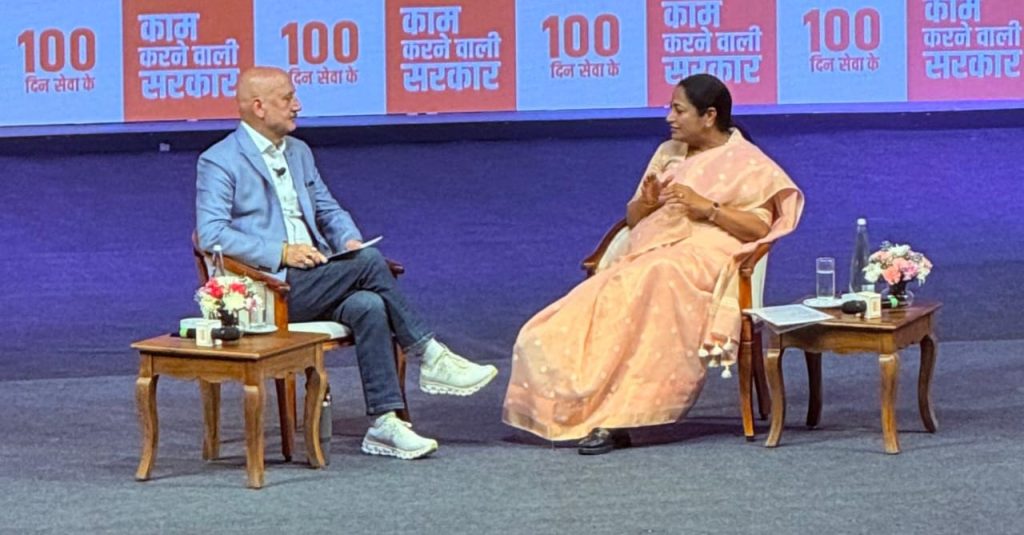
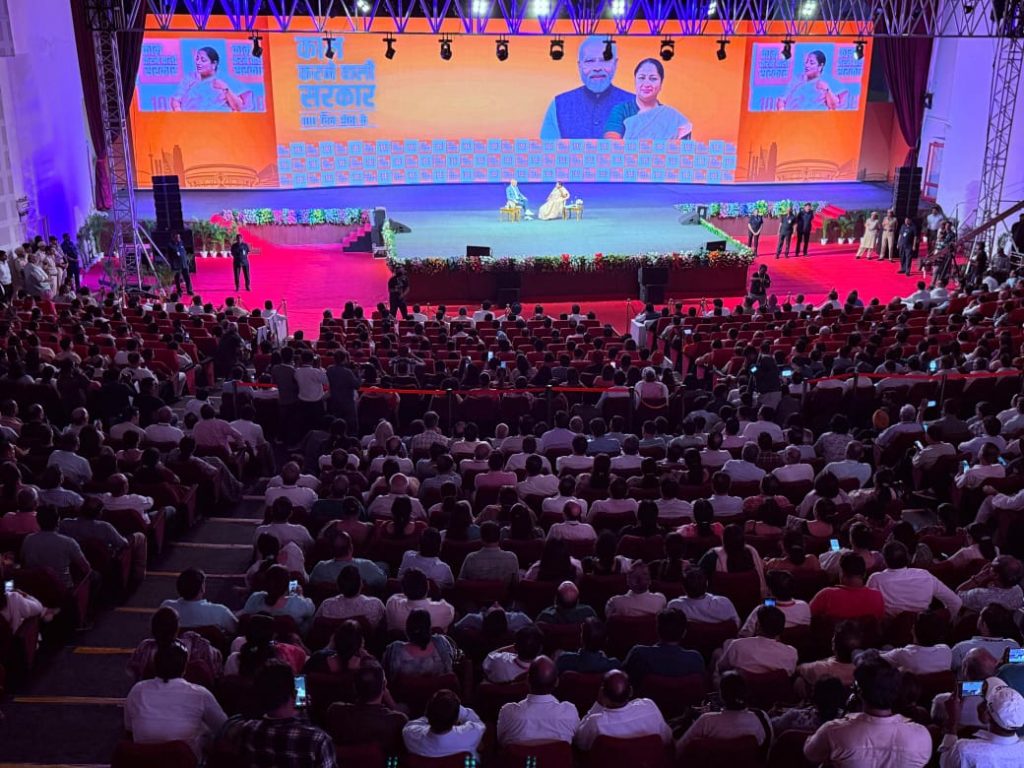
Delhi Chief Minister Rekha Gupta on Saturday said that her government is working on a plan to introduce an ordinance to regulate the private school fees in the national capital.
Speaking at a public programme at Jawaharlal Nehru Stadium, Gupta said, “Education should be accessible and fair. We are committed to ensuring that no parent is burdened unfairly.”
Marking her 100 days in power, she said that her dispensation was all about honest governance, public welfare, and structural reforms in the city.
Gupta also accused the previous government of civic negligence.
“My government spent 100 days in making policies and working for the betterment of Delhi,” she said, adding, “We can’t make false promises. We are working honestly to solve issues like the cleaning of the Yamuna and removal of garbage dumps.”
Photo: Naveen Bansal
She termed Vaya Vandana scheme a successful plan offering citizens aged 70 and above health insurance coverage of up to Rs 10 lakh. “Around 1.5 lakh registrations have already been completed,” she added.
The BJP leader also trained her guns at the previous Aam Aadmi Party-led government, and said, “Thousands joined the movement hoping for change, but the people who claimed to have no hunger for power became consumed by it. The public’s trust was broken.”
“How can the national capital be the most polluted when cleaning the Yamuna was never even considered seriously?” she said.
In February, the BJP formed the government in Delhi after 27 years, ending the Aam Aadmi Party’s (AAP) decade-long rule. The party won 48 seats in the 70-member Assembly in the elections. Gupta took oath as the Chief Minister on February 20 along with her Cabinet colleagues in a grand ceremony attended by PM Modi at Ramlila Maidan.
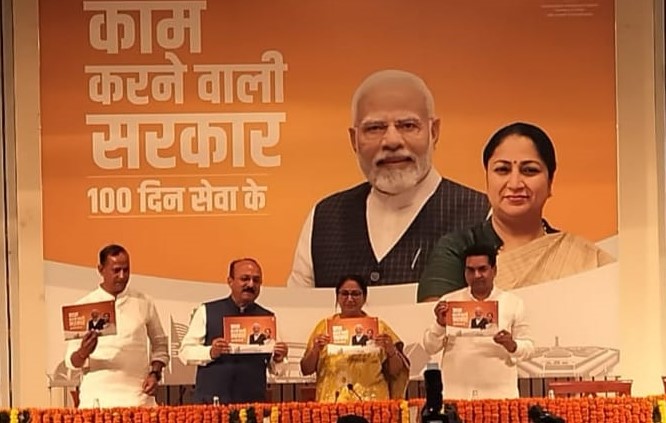
As the Delhi government completes its 100 days in power in the national capital, chief minister Rekha Gupta on Friday announced that people will be briefed about the achievements of the government tomorrow at the event in the Jawaharlal Nehru Stadium.
“We dedicated our 100 days to the service of the people. Our MLAs, councilors, party functionaries will be taking the workbook to the people to apprise them about the work done by the Delhi government,” Gupta said.
Slamming the previous government, Gupta said that the Aam Aadmi Party government did not do anything for the city except indulging in corruption.
“We are working 24×7. We will inform people about the work and seek suggestions from them,” she added.
Addressing a press conference in Delhi, Gupta highlighted the implementation of Ayushman Bharat Yojana and other health initiatives.
She also earmarked Rs 5100 crore budget for Rs 2500 monthly assistance to women.
In February, the BJP formed the government in Delhi after 25 years, ending the Aam Aadmi Party’s (AAP) decade-long rule. The party won 48 seats in the 70-member Assembly in the elections. Gupta took oath as the Chief Minister on February 20 along with her Cabinet colleagues in a grand ceremony attended by PM Modi at Ramlila Maidan.
The ministry of consumer affairs, food and public distribution has issued guidelines for the prevention and regulation of illegal listing and sale of radio equipment including walkie talkies on e-commerce platforms.
The move comes to curb the unauthorized sale of wireless devices that may pose risks to consumer safety, mislead consumers regarding their legal position and interfere with critical communication networks, including those used by law enforcement and emergency services.
These guidelines were formulated following extensive inter-ministerial consultations with the Department of Telecommunications (DoT) and the Ministry of Home Affairs (MHA).
According to the guidelines, it is mandatory that only authorized and compliant walkie-talkie devices operating on permitted frequencies are listed for sale on online platforms. The ministry also directed e-commerce to undertake due diligence and verify regulatory compliance, including licensing where applicable and listings lacking frequency information or necessary certification should be taken down.
The guidelines further prohibit misleading advertisements or product descriptions that may misinform consumers about the legal usage of such devices.
“Sellers should ensure that equipment listed for sale do not operate on frequencies which are not exempted from requirement of frequency assignment and authorization by DOT and ensure that the frequency bands on product description are clearly labeled,” it added.
The decision comes after it was observed that walkie-talkies are being sold on e-commerce platforms without mandatory and clear disclosures regarding the requirement of a wireless operating license or compliance with applicable laws.
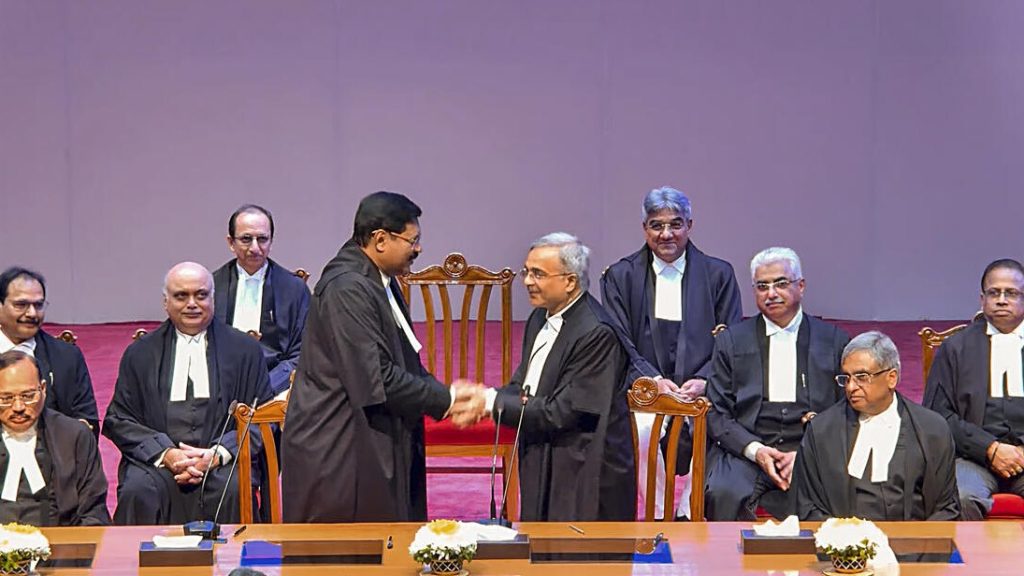
Chief Justice of India (CJI) B.R. Gavai on Friday administered the oath of office to three new judges of the Supreme Court.
Justices N.V. Anjaria, Vijay Bishnoi and Atul S. Chandurkar took oath as apex court judges after the Centre on Thursday cleared their appointment to the Supreme Court.
The top court Collegium, headed by CJI Gavai, on Monday forwarded its recommendations to the Centre. “The Supreme Court Collegium in its meeting held on 26th May, 2025 has recommended elevation of the following Chief Justices / Judge of the High Courts, as Judges in the Supreme Court: (i) Mr. Justice N.V. Anjaria, Chief Justice, High Court of Karnataka, (PHC: High Court of Gujarat) (ii) Mr. Justice Vijay Bishnoi, Chief Justice, Gauhati High Court, (PHC: Rajasthan High Court) (iii) Mr. Justice A.S. Chandurkar Judge, High Court of Bombay,” said a statement uploaded on the website of the apex court.
Acting swiftly on the SC Collegium’s recommendations, Union Minister of State (I/C) for Law & Justice Arjun Ram Meghwal, in a post on social media platform X on Thursday said the President, after consultation with the CJI, was pleased to appoint Justices N.V. Anjaria, Vijay Bishnoi and Atul S. Chandurkar as apex court judges.
Justice Anjaria was elevated as Additional Judge of the Gujarat High Court in November 2011, and in September 2023, he was confirmed as a permanent Judge. He took oath as the Chief Justice of the Karnataka High Court on February 25 last year.
Justice Bishnoi, now former Chief Justice of the Gauhati High Court, was appointed as Additional Judge of the Rajasthan High Court in January 2013 and took oath as a permanent Judge of the Rajasthan High Court in January 2015.
Justice Atul S. Chandurkar was elevated as an Additional Judge of the Bombay High Court in June 2013.
As per the existing Memorandum of Procedure (MoP), the CJI, along with the four senior-most SC judges, commonly known as the Collegium, forwards its recommendation to the Centre to fill up the vacancies in the top court.
The Supreme Court has a sanctioned strength of 34 judges, including the CJI.
After facing the shock of over 5,00,000 deaths during the previous COVID-19 era, is India equipped enough to face the new wave of the pandemic? The new challenge is knocking at the door with 1828 cases of the new COVID-19 variant.
The surge is rapid as there were only 257 active cases on May 19, according to the Ministry of Health and Family Welfare. Kerala has reported a total of 727 cases as of today.
India had recorded two new covid variants, both under World Health Organisation (WHO) monitoring. As of now, the WHO classifies both LF.7 and NB.1.8 as Variants Under Monitoring, and not under Variants of Concern or Variants of Interest.
The Union Health Secretary, on Saturday, reviewed the national situation. It noticed that the cases have mainly been reported from Kerala, Tamil Nadu, Maharashtra, and Karnataka. The ministry states that most of the cases are mild and under home care.
Seeing the new variant spread, some states have issued the guidelines. Himachal Pradesh, Punjab, Kerala, Haryana and some others are the few to name included in the forerunners.
Meanwhile, Punjab Health Minister had stated, “No need to panic about COVID-19 in Punjab. The new variant is generally mild, and no new cases have been reported to date in Punjab. We are actively testing, and our healthcare system is fully prepared and equipped. Stay vigilant, stay safe.”
Haryana Health and Family Welfare Minister Arti Singh Rao on 22th May assured citizens that the state is fully prepared and there is no cause for worry.
Speaking to the media the minister emphasized that only four mild cases are currently active in Haryana—two in Gurugram and two in Faridabad. None of the cases have international travel history, and all patients are under home quarantine with stable health conditions.
Rao said, “The number of cases is low and rare, and there is no need to panic. Oxygen supplies and hospital beds are available. The state is fully prepared to handle the situation. Just remember to follow basic precautions: wash your hands regularly and wear a mask when you’re outdoors.”
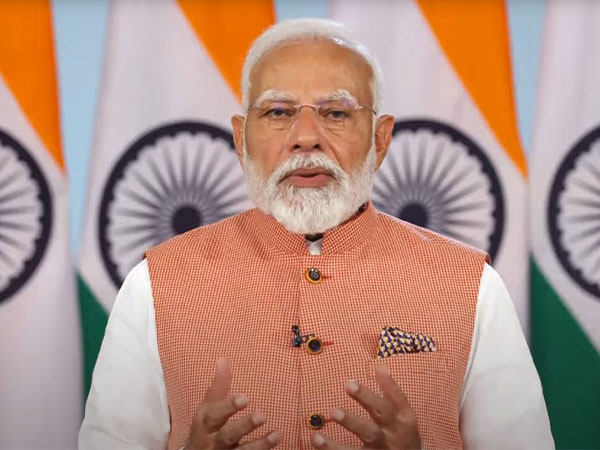
As Prime Minister Narendra Modi completed 11 years in office, several BJP leaders on Thursday praised his leadership, calling his tenure a transformative era that has propelled India “1100 years ahead.”
BJP leaders across the country reflected on the major milestones of PM Modi’s governance, citing a mix of economic growth, global stature, national security, and social welfare initiatives as key pillars of what they described as a “historic journey” under his stewardship.
On May 26, 2014, Narendra Modi was sworn in as Prime Minister, bringing an end to the three-decade-long era of coalition politics and ushering in a new phase of strong central leadership. Since then, his rise to a third consecutive term has been hailed by party members as a reflection of people’s unwavering trust in his vision.
Speaking to IANS, Uttar Pradesh Deputy Chief Minister Brajesh Pathak said, “It’s a historic moment that Prime Minister Modi has completed 11 years in power. India today stands as the fourth-largest economy in the world. We are now counted among global powerhouses like the US, Russia, and China.”
He added, “All of this has been possible because of PM Modi’s Atmanirbhar Bharat and Make in India initiatives. From the very beginning, he focused on poverty eradication. Crores have received homes, clean water, toilets, and access to basic dignity. In these 11 years, PM Modi has taken India 1100 years ahead.”
Anil Kumar, a Cabinet Minister in the Uttar Pradesh government, echoed this sentiment, stating that Modi’s leadership has not only transformed India domestically but has also raised its global profile.
“From the Central to the state governments, the NDA’s tenure since 2014 has been a success. The people have given us a third term with an absolute majority, which is rare in a democracy of this scale. That alone speaks volumes about the trust placed in PM Modi,” he said.
He added, “Governments are being formed with the support of all communities. It’s a socially inclusive governance model. Whatever challenges remain, the NDA is committed to addressing them with the same energy and determination.”
From Karnataka, BJP MLC Shashil Namoshi applauded PM Modi for empowering the common man through schemes like Jan Dhan Yojana, which brought millions into the banking system.
“On behalf of all citizens of Karnataka and the nation, I congratulate Prime Minister Modi on completing 11 years. The Jan Dhan Yojana is a perfect example of his commitment to the grassroots. Earlier, subsidies were lost in the system, but now the beneficiary receives the money directly,” he said.
He also credited PM Modi for elevating India’s international image, saying, “The Prime Minister is respected globally. His popularity is not just in India, but also across the world.”
BJP leader and MP from Khandwa, Gyaneswar Patil, highlighted PM Modi’s focus on self-reliance and development.
“Under Modi’s leadership, India has carved its own identity at the global level. The push toward self-reliance has reduced our dependency on imports and boosted domestic industry. Be it poor welfare, infrastructure, or defence, every sector has seen unprecedented growth,” Patil said.
Another senior BJP leader, Daya Shankar Singh, described Prime Minister Modi as a tireless worker.
“PM Modi has devoted every moment of his life to the nation’s progress. His governance has increased India’s honour and self-respect globally. His popularity spans continents, and under his leadership, India is seen as a rising power. His 11-year tenure is truly historic,” Singh said.
BJP leader Rakesh Kumar Goswami also praised PM Modi’s assertive leadership style, saying it changed how the world sees India.
“Earlier, our leaders were seated in the back rows at international forums. Today, India remains at the front. PM Modi talks eye to eye with global powers,” he said.
He continued, “Our GDP is now the fourth largest globally, and we aim to become the third-largest economy by 2027. Whether it is industry, space, or defence, India has advanced in every area. We’ve seen bold moves like the abrogation of Article 370, the crackdown on Triple Talaq, and operations like Operation Sindoor and the surgical strikes—all carried out under PM Modi’s watch.”
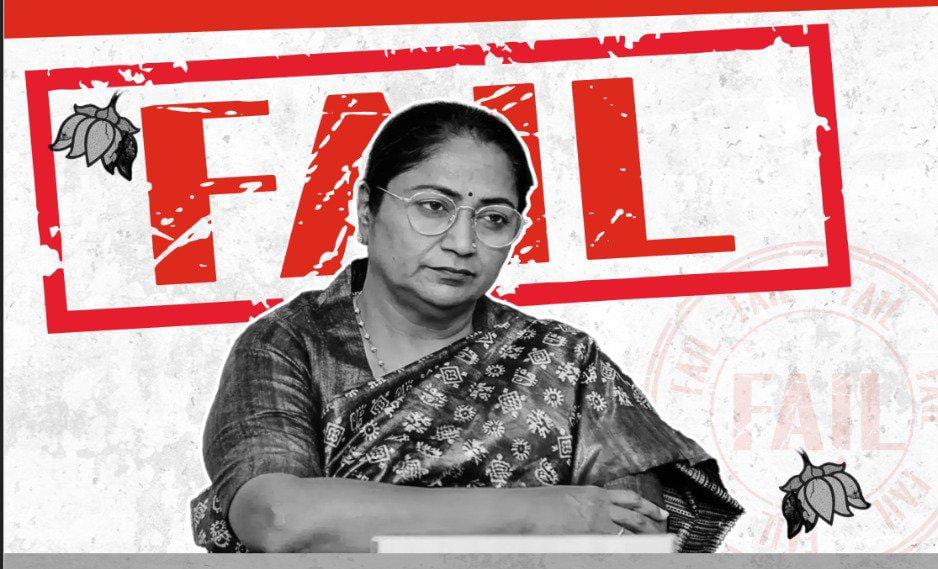
Days after Delhi chief minister Rekha Gupta announced that the city government will unveil its 100-day report card to highlight its achievements, Aam Aadmi Party (AAP) leader Atishi termed it as failure.
Releasing the 100-day failure report card of the Rekha Gupta government, Atishi highlighted issues Delhiites are facing, including long power outages and electricity becoming costly, increased fees in private schools, water shortage, and rising pollution among many others.
Speaking on the same, party leader Saurabh Bhardwaj said that BJP’s four engine government is lying every day. “These people have told at least 100 lies in their 100 days of government,” he said.
“Just recently, CM had told the employees of Mohalla Clinic that no one would be fired and today the news has come that over 2000 employees are being fired,” he added.
The mohalla buses that we had started are now being run with changed names. “The lie told by the government on increase in fees by private schools was exposed in the high court,” he added further.
The party has also accused the Delhi government of stopping all the public welfare works started by the then Aam Aadmi Party government in the national Capital.
Addressing the media, AAP leader Sanjeev Jha said, “In its 100 days, the BJP government has stopped all the public welfare works started by the Aam Aadmi Party government. The AAP government had ended the mafias in education, electricity, water, and health. As soon as the BJP came to power, it reactivated the mafias everywhere.”
In February, the BJP formed the government in Delhi after 25 years, ending the Aam Aadmi Party’s (AAP) decade-long rule. The party won 48 seats in the 70-member Assembly in the elections. Gupta took oath as the Chief Minister on February 20 along with her Cabinet colleagues in a grand ceremony attended by PM Modi at Ramlila Maidan.
New Delhi: In a significant move to enhance farmer income and ensure fair returns, the Cabinet Committee on Economic Affairs chaired by Prime Minister Narendra Modi has approved an increase in the Minimum Support Prices (MSP) for 14 Kharif crops for the 2025–26 marketing season.
Leading the list is paddy, the staple crop for millions of Indian farmers, whose common variety will now fetch an MSP of ₹2,369 per quintal—an increase of ₹69 from the previous year’s ₹2,300. For Grade A paddy, the MSP has been raised to ₹2,389, ensuring a 50 percent margin over the cost of production. This measure is expected to provide a much-needed financial cushion to rice growers as they gear up for the upcoming sowing season.
Among cereals, the MSP for hybrid jowar has been set at ₹3,699 per quintal, up from ₹3,371 last year, while the Maldandi variety of jowar will now earn ₹3,749. Bajra will see an MSP of ₹2,775, up by ₹150 from the previous season. Ragi, a key nutrient-rich crop, will receive ₹4,886 per quintal, marking a sharp increase of ₹596. Maize farmers will now get ₹2,400 per quintal, which is ₹175 higher than the 2024–25 rate.
In the pulses category, the MSP for tur (arhar) has been fixed at ₹8,000 per quintal—up by ₹450 from last year. Moong will fetch ₹8,768 per quintal, a modest increase of ₹86. Urad’s MSP has been raised to ₹7,800, reflecting a ₹400 hike.
For oilseed growers, the revised MSPs bring considerable relief. Groundnut will now command ₹7,263 per quintal, up by ₹480. The MSP for sunflower seed has been increased to ₹7,721, a jump of ₹441, while soybean (yellow) will see an MSP of ₹5,328, marking a ₹436 increase. Sesamum will receive ₹9,846 per quintal, up by ₹579. Nigerseed has recorded the highest absolute increase among all crops this year, with its MSP climbing by ₹820 to reach ₹9,537 per quintal.
Cotton growers too will benefit from the hike. The MSP for medium staple cotton has been set at ₹7,710 per quintal, while long staple cotton will earn ₹8,110. Both varieties have received an increase of ₹589 over the previous season.
The government emphasized that the revised MSPs follow the principle announced in the Union Budget of 2018–19, wherein MSPs are fixed at a level of at least 1.5 times the all-India weighted average cost of production. As per estimates, farmers will earn the highest margins over cost in bajra (63 percent), followed by maize and tur (59 percent), urad (53 percent), and 50 percent for the rest of the crops.
The announcement also underscores the government’s focus on diversifying agriculture towards pulses, oilseeds, and Nutri-cereals such as millets, collectively promoted as Shree Anna. Higher MSPs for these crops are expected to encourage farmers to reduce dependency on water-intensive cereals.
The impact of sustained MSP increases is evident in procurement data. Between 2014–15 and 2024–25, paddy procurement stood at 7,608 lakh metric tonnes (LMT), significantly higher than the 4,590 LMT procured during 2004–05 to 2013–14. MSP payments to paddy farmers during the past decade totaled ₹14.16 lakh crore—more than three times the ₹4.44 lakh crore disbursed in the previous decade. For all 14 Kharif crops combined, MSP payments from 2014–15 to 2024–25 amounted to ₹16.35 lakh crore, compared to ₹4.75 lakh crore paid during 2004–05 to 2013–14.
With these measures, the government reaffirms its commitment to doubling farmer incomes, strengthening procurement mechanisms, and ensuring agricultural resilience in the face of rising input costs and climate variability.
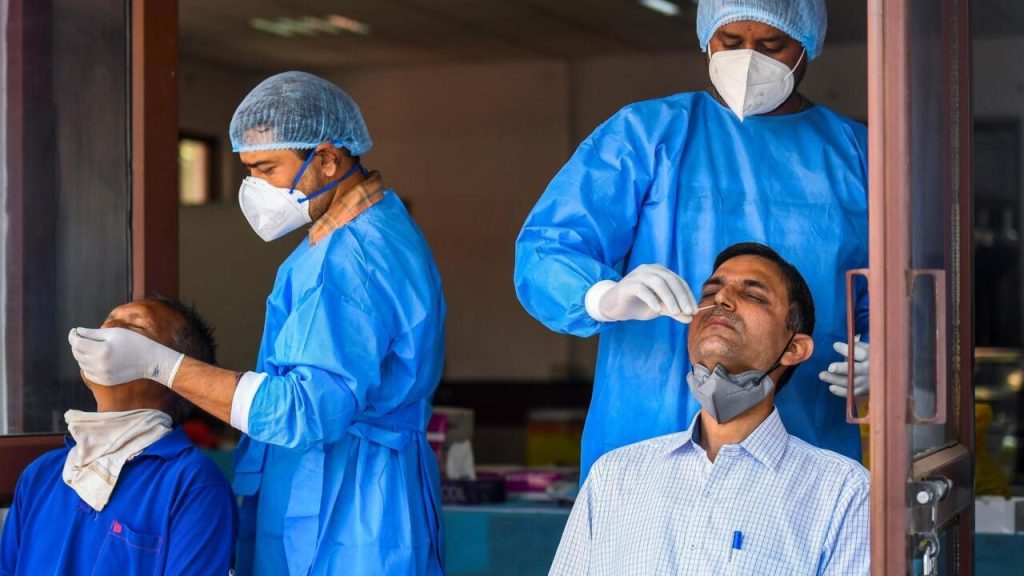
Health workers collect swab samples from employees of the Indian Agricultural Research Institute (IARI) for the Covid-19 coronavirus test in New Delhi on October 8, 2020. (Photo by Prakash SINGH / AFP)
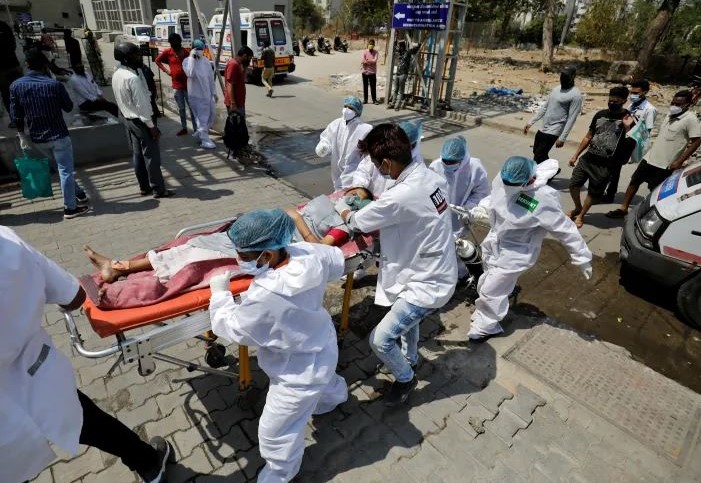
After five years of COVID-19, the pathogen has again hit the country with its new variant NB.1.8.1 and LF.7 with Indian health authorities closely monitoring the situation in metropolitan cities and some southern states.
A total of 1,010 cases of COVID-19 have been reported in India as of May 28 with Kerala leading in the number of cases, with over 430 cases and two deaths among comorbidities, stated the union health ministry. Maharashtra and Delhi have reported 210 and 104 cases respectively.
Reportedly, most of the fresh cases are mild with very few requiring hospitalization, and deaths have largely been among those with pre-existing conditions. States like Delhi, Maharashtra, Karnataka, Gujarat and Telangana have seen spikes, particularly in cities like Mumbai, Bengaluru, and Hyderabad.
In 2020 March when the first COVID-19 hit the entire world, India witnessed two unfortunate waves of the virus resulting in a huge number of deaths. Kerala was the first to report the case of COVID. The situation remained critical for over two years claiming more than 50,000 lives.
Due to the spread of the virus, many industries had come to an indefinite halt resulting in huge losses and bankruptcy. The Indian economy was impacted severely with many companies deciding to allow employees to work from home with pay cuts turning this situation into a new normal.
The current strain of the COVID-19 virus as reported by INSACOG data, are protein mutations of the JN.1 virus. Initial research indicates that the NB.1.8.1 variant could be more transmissible than previous strains, likely due to its stronger binding ability to human cells. To date, 58 genome sequences of NB.1.8.1 have been submitted to the global COVID-19 database, originating from 22 different countries.
The NF.7 variant was observed largely in southern parts of India and both NB.1.8.1 and NF.7 have been reported largely from urban metro cities. However, international cases from the US have also reported high communicability.
The symptoms of the virus are observed to be mild. As per the reports by World Health Organisation (WHO), the NB.1.8.1 poses a low global health risk. However, some symptoms have been identified as sore throat, fatigue, mild cough, fever, muscle aches, nasal congestion, low-grade hyperthermia, headaches, nausea and gastrointestinal issues.
Like in the previous era of COVID-19, the experts suggest taking the Rapid Antigen Test or RT-PCR test if one comes across these symptoms for more than three to four days. The experts have also warned people to avoid going in crowded places.
As of now, there are 7 deaths reported so far from Maharashtra, Karnataka, Rajasthan and Kerala.
Meanwhile, this highly contagious COVID-19 variant has now been detected in the US, including in New York City, according to the Centres for Disease Control and Prevention (CDC).
Although the number of confirmed cases in the US remains low, experts are raising concerns about the variant’s rapid spread in China and parts of Asia, where it has already become the dominant strain. In Hong Kong, health officials reported a significant surge in COVID-related hospitalisations and emergency room visits over the past month, especially among the elderly, the New York Post reported
Srinagar: In a major development for Kashmir’s horticulture sector, the first-ever cargo train service carrying fresh cherries from the Valley to Mumbai will be launched from June 3, offering growers a cost-effective alternative to expensive air freight.
Until now, cherry growers in Kashmir relied primarily on air transport due to the fruit’s highly perishable nature. However, the high cost of air cargo limited access to distant markets, especially for small and marginal farmers. The new rail-based option is expected to help reduce post-harvest losses and improve earnings for growers.
The Jammu railway division has registered a VP indent – a formal request for a full parcel van – for a refrigerated wagon carrying 24 tonnes of cherries from Katra to Mumbai. The train journey is expected to take just over 30 hours, offering a viable timeline for transporting the delicate fruit while maintaining its freshness. This move comes at a crucial time as cherry harvesting in Kashmir reaches its peak during May and June. The Valley produces between 12,000 and 14,000 metric tonnes of cherries annually, depending on seasonal conditions.