Saturday, December 27, 2025

Restrictive trade measures, roadblocks should be avoided, Jaishankar tells China- decoding Beijing’s curb on earth metals

*China has grip over 90 % of crucial REEs vital for technologies like EV motors, smartphones, missiles and many more

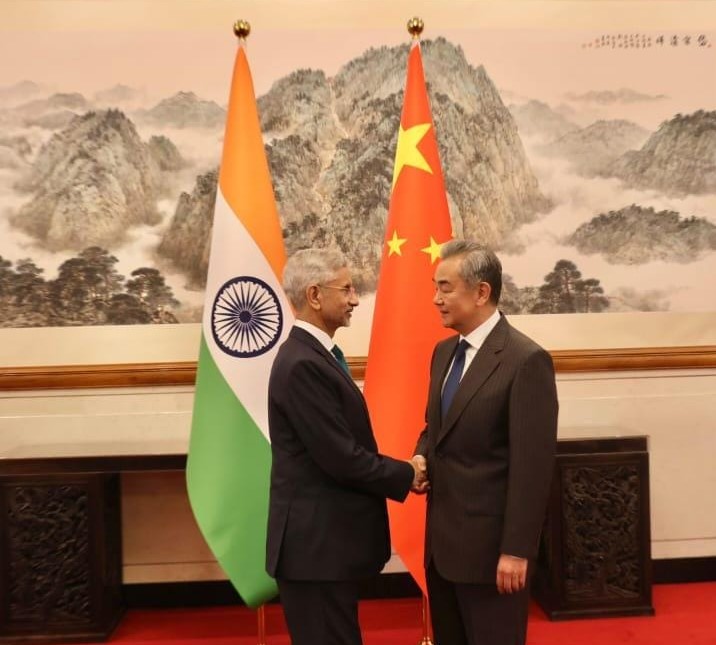
External affairs minister S Jaishankar on Monday told his Chinese counterpart Wang Yi that there are various dimensions to relations between major economies like India and China and in this context, it is essential that restrictive trade measures and roadblocks are avoided

Normalising people-to-people exchanges can foster mutually beneficial cooperation, he said, adding that stable bilateral ties can be built only on the basis of mutual respect, mutual interest and mutual sensitivity.

“It is also essential in this context that restrictive trade measures and roadblocks are avoided,” he said, apparently referring to China’s curbs on exports of rare earth minerals that are used in various technologies from smartphones to electric vehicles and in which Beijing  has an almost complete control.

The EAM was in China for a meeting of foreign ministers of the Shanghai Cooperation Organisation (SCO).

Those in know of the recent developments on REEs say that restrictions on exports have been officially raised through diplomatic channels by India.

China and REEs

The 17 REEs, including 15 lanthanidesCLanthanum, Cerium, Praseodymium, Neodymium, Promethium, Samarium, Europium, Gadolinium, Terbium, Dysprosium, Holmium, Erbium, Thulium, Ytterbium, Lutetium—and Scandium and Yttrium.

Almost indispensable in advanced technologies, strategic resources of these REEs are now shaping international relations, determining a nation’s technological leadership, military capability and energy transitions.  

In April China imposed export restrictions on 7 out of the 17 rare earth elements like Samarium, Gadolinium, Terbium, Dysprosium, Lutetium, Scandium and Yttrium as retaliation against US tariffs imposed by President Donald Trump

.It was not a total ban but restrictions tightened export licences, enabling China to limit global shipments. 

Companies now need special export licenses to export them.

Basically, China’s grip on over 90 % of these resources is now compelling nations to trade on its terms

India and REEs

These seven REEs are designated critical minerals by the Ministry of Mines.

They are vital for technologies like EV motors, smartphones, missiles and many more.

As a result of the restrictions, Indian importers are facing a 40 to 45 days procurement process. as per reports.

Automobiles are among the largest users of REEs.

India’s auto sector, including EV manufacturers, is particularly alarmed as absence of even one element can halt assembly lines.

The production could be severely impacted if licensing obligations persist,  increasing uncertainty around production schedules and output.
 

DGCA directs Boeing operators to check fuel control switches locking mechanism by July 21

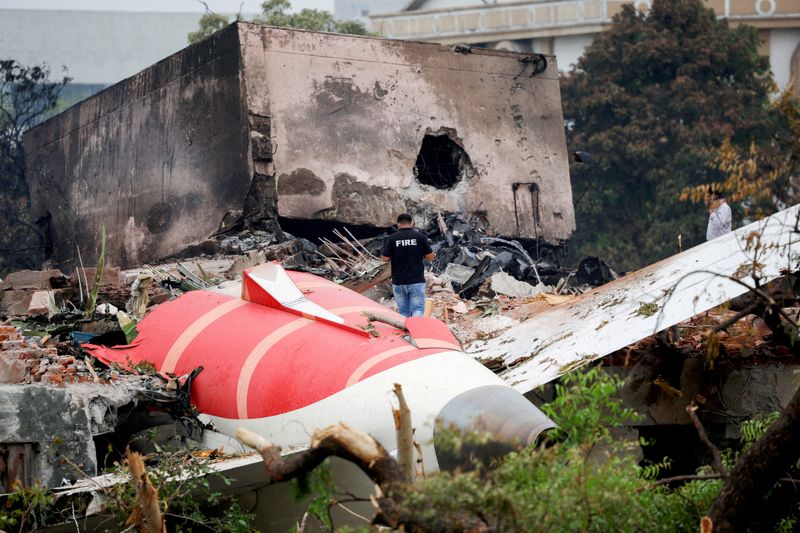
Amid the growing furor over the fuel switch locks in the AIB report on the Air India Dreamliner crash, the Directorate General of Civil Aviation (DGCA) has now asked all Indian carriers to conduct checks on fuel control switches of Boeing aircraft, including the B787 Dreamliner and some B737s. 

The preliminary report into the June 12 Air India crash in Ahmedabad states that fuel supply to the engines was cut off as position of the fuel supply switch was changed from run to cutoff and then back to run again.

Some foreign airlines, including Etihad have already begun these checks on their Dreamliners.

The DGCA reportedly order states: “(US) Federal Aviation Administration (FAA) issued a ‘special airworthiness information bulletin’ (SAIB) on December 17, 2018, regarding the potential for disengagement of the fuel control switch locking feature on Boeing Company Model 717-200 airplanes; Model 737-700, -700C, -800, and -900ER series airplanes; Model 737-8 and -9 airplanes; Model 747-400, -400D, -400F, -8, and -8F series airplanes; Model 757-200, -200CB, -200PF, and -300 series airplanes; Model 767-200, -300,300F, -400ER, and -2C series airplanes; Model 787-8, -9, and-10 airplanes; Model MD-11 and MD-11F airplanes; and Model MD-90-30 airplanes.

“It has come to the notice of DGCA, that several operators- internationally as well as domestic have initiated inspection on their aircraft fleet as per the (December 17, 2018) SAIB…. all airline operators of the affected aircraft are hereby advised to complete the inspection (by) no later than July 21, 2025. Inspection plan and report after accomplishment of inspection shall be submitted to this office under intimation to the concerned regional office,” it said.

Notably, quoting FAA December 2018 notification, the AAIB report stated that “all applicable Airworthiness Directives and Alert Service Bulletins were complied on the aircraft as well as engines” and that “there has been no defect reported pertaining to the fuel control switch since 2023 on VT-ANB”

“The FAA issued a Special Airworthiness Information Bulletin (SAIB) No. NM-18-33 on December 17, 2018, regarding the potential disengagement of the fuel control switch locking feature. This SAIB was issued based on reports from operators of Model 737 airplanes that the fuel control switches were installed with the locking feature disengaged.

“The airworthiness concern was not considered an unsafe condition that would warrant airworthiness directive (AD) by the FAA. The fuel control switch design, including the locking feature, is similar on various Boeing airplane models including part number 4TL837-3D which is fitted in B787-8 aircraft VT-ANB.

“As per the information from Air India, the suggested inspections were not carried out as the SAIB was advisory and not mandatory. The scrutiny of maintenance records revealed that the throttle control module was replaced on VT-ANB in 2019 and 2023. However, the reason for the replacement was not linked to the fuel control switch. There has been no defect reported pertaining to the fuel control switch since 2023 on VT-ANB,” according the report

VT-ANB is the registration of Air India’s B787-8 aircraft bearing registration.

VT is the registration prefix for aircraft in India

Punjab clearance for ‘confined field trials’ of GM maize ‘serious’, says Coalition for a GM-Free India

Even more serious was that only PAU/Punjab Government issued NOC among 11 states that Bayer applied for clearance 

The Coalition for a GM-Free India has raised strong objections to issuance of no objection certificates by the Punjab Government for conducting confined field trials of two kinds of GM maize of Bayer (earlier Monsanto) in PAU, Ludhiana.  “It needs to be ascertained whether the NOC has been issued by the state government with the full knowledge of the political leadership in the state or not,” said Kavitha Kuruganti, Co-Convenor of the Coalition for a GM-Free India, in a letter to the Union Agriculture Ministry

Stating that “this one NOC of Punjab will cause a national repercussion given that the results from just one or two locations will be shown for an application by Bayer for commercial cultivation permission to these unsafe GM crops, as has happened in the past with HT mustard,” she urged the state government to institute an inquiry on scientific basis of such NOCs and immediately withdraw them.

Even more serious was that only the PAU/Punjab Government issued NOC among 11 states that Bayer applied for clearance, she added.

“Punjab, more than any other state, has to be extremely cautious about hazardous technologies like HT and Bt GM technologies, given that they actually increase the usage of deadly agro-chemicals which impact both farmers and consumers.

“Given the acute environmental health crisis in Punjab, any use of more chemicals will be disastrous for the state,” she said

According to the letter quoting minutes of the 155th meeting of the Genetic Engineering Appraisal Committee (dated June 9,  2025) available online, “Bayer, a notorious MNC known for its toxic products, has obtained a NOC from Punjab Government for GM maize trials”

 “Bayer (earlier, Monsanto) applied for penultimate stage trials for HT Maize (Event called NK603) and insect tolerant Bt Maize (Event called Event MON8903) in multiple locations of eleven states, including Haryana, Gujarat, Telangana, Andhra Pradesh, Rajasthan, Maharashtra, Madhya Pradesh, Bihar and Tamil Nadu.

“PAU Ludhiana is the only one which seemed to have responded positively. Against this backdrop, Punjab Government /PAU have to show what is the additional safety information that they hold than any other state,” she said, also raising questions on PAU’s track record on conducting “confined” field trials in compliance of the statutory guidelines meant for such trials and called it “poor.”

“In the past, civil society groups have shown with photographic evidence such violations, with regard to HT Mustard trial, no action had been taken to fix liability for such violations, however,” she added

The coalition also questioned how PAU can experiment with herbicide-tolerant maize that has been modified to withstand the application of glyphosate, which is against the legally-approved label claim for glyphosate in India’s pesticides regulatory regime. “Glyphosate was a deadly herbicide with a large body of scientific literature pointing to its negative impacts on human health and environment. In fact, the Punjab government had issued prohibitory orders on the use of glyphosate in the state, given that the Union Government was not acting in the interests of ordinary citizens,” it added. 

Indian Nurse Nimisha Priya Faces Execution in Yemen Amid Diplomatic and Legal Gridlock

In a case that has gripped India and drawn the attention of international human rights groups, Kerala-born nurse Nimisha Priya is now just two days away from execution in Yemen. As the deadline looms—July 16—legal teams, diplomats, and her family are scrambling to negotiate her release through blood money, the only remaining legal option under Yemeni law.

Nimisha Priya, 37, hails from Palakkad district in Kerala. She moved to Yemen in 2008 to work as a nurse and later opened a clinic with the help of a Yemeni national, Talal Abdo Mahdi. Over time, their partnership reportedly turned coercive. Priya has alleged that Mahdi subjected her to abuse, forged her signature to take control of her clinic, and confiscated her passport—trapping her in Yemen.

In a desperate bid to flee the country and reclaim her passport, Priya administered sedatives to Mahdi in July 2017. The plan went awry—Mahdi died from an apparent overdose. In a panic, Priya and an associate dismembered his body and concealed the remains in water tanks at her residence. She was arrested shortly afterward.

In 2018, a Yemeni court found Nimisha Priya guilty of murder and sentenced her to death. Despite multiple appeals—including one before Yemen’s Supreme Judicial Council in November 2023—the conviction and capital sentence have been upheld.

India does not have formal diplomatic relations with Yemen due to the ongoing civil war, which has made negotiations difficult. The Indian government has acknowledged these diplomatic constraints in the Supreme Court, stating that it has exhausted all formal channels and that further action must occur through private negotiations.

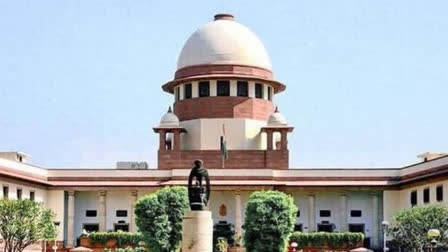
Today, Supreme Court of India held an urgent hearing on a plea filed by Priya’s mother, urging the government to intervene diplomatically. Attorney General R. Venkataramani told the court that Yemen considers the matter “entirely private” and “internal,” leaving India with little leverage.

 “The only recourse left is to settle the matter through blood money,” Venkataramani said. Under Sharia law, the victim’s family can agree to pardon the accused in exchange for financial compensation. But Mahdi’s family has so far refused offers—reportedly up to Rs 8.6 crore (USD 1 million).

The next hearing has been scheduled for July 18—two days after the planned execution.

Priya’s mother and representatives of the Save Nimisha Priya Action Council are currently in Sana’a, attempting to negotiate directly with Mahdi’s family and local tribal leaders. These private efforts include raising the blood money offer and seeking mediation from influential Yemenis.

“We are still hopeful. The tribal negotiations are delicate but ongoing,” said a family representative speaking from Yemen.

However, the urgency of the situation cannot be overstated. With only 48 hours remaining, activists fear there may not be enough time for a breakthrough.

Meanwhile, Kerala Chief Minister Pinarayi Vijayan has written to Prime Minister Narendra Modi, urging “urgent and necessary intervention” to halt the execution.

Congress leader KC Venugopal also appealed to the PM, calling the issue “a matter of national concern.”

Back home, protests and vigils continue in Kerala. Human rights activists have argued that Priya never received a fair trial—she was not provided a translator or adequate legal aid—and her mental and emotional state at the time of the crime was never properly assessed.

For Priya’s 12-year-old daughter, now living in India, time is slipping away. “I want my mother back,” she said in a recent emotional video, broadcast by several Indian news channels.

Meanwhile, Priya remains on death row in a Yemeni prison, reportedly unaware of the exact timing of her execution.

Unless the victim’s family accepts the blood money or a last-minute diplomatic miracle occurs, Nimisha Priya may be executed by firing squad on July 16. The case has become a lightning rod for debates on diplomacy, justice, and the rights of Indian migrant workers abroad—raising hard questions about how far a government can, or should, go to save its citizens in foreign legal systems.

Why are Indian pilots upset with AAIB Dreamliner crash preliminary report?

Pilots’ body allege report “being driven in a direction presuming the guilt of pilots”, “kept in dark,”  “report leaked”

After the Aircraft Accident Investigation Bureau (AAIB) submitted its preliminary report on Boeing Dreamliner 787-8 that crashed last month killing 260 people, the US Federal Aviation Administration and Boeing also privately issued notifications that the fuel switch locks on Boeing planes are safe. The AAIB report and the FAA’s Continued Airworthiness Notification on July 11, have raised the heckles of Indian pilots, who now feel that the attempt is to hold pilots of the ill-fated aircraft responsible for Air India plane crash in Ahmedabad

Raising concerns over the AAIB report, the Airline Pilots’ Association of India (ALPA) alleged that the investigation seems to assume that the pilots were responsible for the accident. ALPA president Sam Thomas criticised the investigation, saying that it is “being driven in a direction presuming the guilt of pilots”.

“We are once again surprised at the secrecy surrounding these investigations… The tone and direction of the investigation suggest a bias towards pilot error… ALPA India categorically rejects this presumption and insists on a fair, fact-based inquiry,” according to the statement.

Notably, the preliminary investigation also did not point to problem with the Boeing 787 Dreamliner or its GE Aerospace engines

The crash was linked to the inadvertent movement of engine fuel control switches.

The report posted on June 12 on the AAIB website says “In the cockpit voice recording, one of the pilots is heard asking the other why did he cutoff. The other pilot responded that he did not do so.”

Quoting FAA December 2018 notification, AAIB said “all applicable Airworthiness Directives and Alert Service Bulletins were complied on the aircraft as well as engines” and that “there has been no defect reported pertaining to the fuel control switch since 2023 on VT-ANB”

“The FAA issued a Special Airworthiness Information Bulletin (SAIB) No. NM-18-33 on December 17, 2018, regarding the potential disengagement of the fuel control switch locking feature. This SAIB was issued based on reports from operators of Model 737 airplanes that the fuel control switches were installed with the locking feature disengaged.

“The airworthiness concern was not considered an unsafe condition that would warrant airworthiness directive (AD) by the FAA. The fuel control switch design, including the locking feature, is similar on various Boeing airplane models including part number 4TL837-3D which is fitted in B787-8 aircraft VT-ANB.

“As per the information from Air India, the suggested inspections were not carried out as the SAIB was advisory and not mandatory. The scrutiny of maintenance records revealed that the throttle control module was replaced on VT-ANB in 2019 and 2023. However, the reason for the replacement was not linked to the fuel control switch. There has been no defect reported pertaining to the fuel control switch since 2023 on VT-ANB,” according the report

VT-ANB is the registration of Air India’s B787-8 aircraft bearing registration.

VT is the registration prefix for aircraft in India

US aviation safety regulator FAA has also written to its counterparts around the world acknowledging the preliminary findings and informing them that the report has “found no urgent safety concerns” related either to the engines or airplane systems of the Boeing 787-8, according reports

Report “leaked”

What is further adding to their angst is that the report putting focus on pilots’ actions and plane’s fuel switches.

ALPA also cited a Wall Street Journal article dated July 10, claiming that the crash was linked to the inadvertent movement of engine fuel control switches and questioned how this sensitive detail reached the press. “We are surprised that a document so crucial has been given to the media without any responsible person signing it,” it said.

Calling the situation deeply troubling, ALPA criticised the AAIB for releasing documents without official signatures and called for immediate reform. “Investigations continue to be shrouded in secrecy, undermining credibility and public trust. Qualified, experienced personnel—especially line pilots—are still not being included in the investigation team,” the statement further read.

The fuel switch theory    

Fuel switches are located immediately behind the throttle levers, between the two pilots’ seats on the centre pedestal.

There are two engines, each having its own switch and two positions—RUN when fuel flows to the engine and CUT OFF when fuel supply is stopped.

They are guarded by brackets and feature a spring-loaded locking mechanism, meaning that to move a switch from RUN to CUTOFF, the pilot must lift the switch over a metal stop before sliding it, making accidental activation unlikely.

Railways to install CCTV cameras in coaches to enhance passenger safety

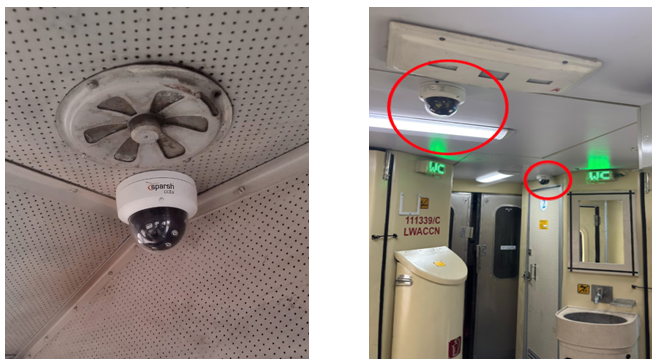
The Railways has decided to install CCTV cameras in all coaches to improve passenger safety and to reduce incident when miscreants and organized gangs take advantage of gullible passengers.

The decision came after the positive outcome of experimental installation of CCTV cameras in passenger coaches.

“With cameras, such incidents will significantly reduce. To preserve privacy of passengers, CCTV cameras will be installed in the common movement area near the doors,” it stated.

The Union Minister for Railways Ashwini Vaishnaw and The Union Minister of State for Railways Ravneet Singh Bittu reviewed the progress of CCTV Cameras’ installation in locomotives and coaches.

During the meeting, it was informed that successful trials have been done in the loco engines and coaches of the Northern Railway.

“The Union Minister for Railways gave the go ahead to install CCTV cameras in all 74,000 coaches and 15,000 locos. Each railway coach will be covered with 4 dome type CCTV cameras – 2 in each entrance way and each locomotive will have 6 CCTV cameras. This will include 1 camera each at the front, rear and on both sides of the locomotive. Each cab (front and rear) of a loco will be fitted with 1 dome CCTV camera and 2 desk mounted microphones,” it stated.

The purpose of fitting cameras in the common movement areas of coaches is to improve safety and security of passengers. While preserving privacy, these cameras will help in identifying miscreants. The modernization efforts of Indian Railways are a reflection of its commitment towards a safe, secure, and passenger-friendly travel experience. 

Etihad Airways inspects fuel control switch locking mechanism of Boeing 787

Soon after India’s Aircraft Accident Investigation Bureau (AAIB) released the preliminary report into the AI 171 accident on July 12, An Etihad Airways Boeing 787 aircraft underwent a fuel control switch locking mechanism inspection.

The Airways issued an engineering work order for the aircraft that diverted back to Abu Dhabi minutes after it took off for Hyderabad.

The locking mechanism of fuel control switches on Boeing aircraft is at the centre of investigation into the June 12 Air India AI-171 Boeing 787 accident which killed around 270 people.

According to the reports, the directives said that engineers to inspect whether the locking mechanism on the fuel control supply switches in the said Boeing 787 aircraft (registration number: A6-BLI) is working.

Why is this particular locking feature on Boeing aircraft in focus now?The AAIB report said that fuel control switches on Air India B787 transitioned from “Run’’ to ‘’Cutoff”’ three seconds after the aircraft lifted off from Ahmedabad runway.

“In the cockpit voice recording, one of the pilots is heard asking the other why did he cut off (the fuel supply). The other pilot responded that he did not do so”.

Fuel control switches have two modes, Run, to start and continue the fuel supply and Cut-off to discontinue the fuel supply. 

India still looks the best in the world, says Shubhanshu Shukla

Shukla and three other astronauts of the Axiom-4 mission expected early morning Tuesday

Group Captain Shubhanshu Shukla and three other astronauts of the Axiom-4 mission are set to begin their return journey to Earth on Monday after a 18-day sojourn at the International Space Station. They are expected to return  in early hours of Tuesday

“Arrival back to earth…. splashdown scheduled for 15th July at 3:00 PM IST,” Science and Technology Minister Jitendra Singh posted on X.

In a formal farewell for the Axiom-4 crew on Sunday evening, India time, Shukla said today’s India from space looks ambitious, fearless, confident, and full of pride. Because of these reasons, I am telling you again, ‘Aaj ka Bharat abhi bi sare jahan se acha dikhta hai’, endorsing the thoughts of Rakesh Sharma—the first Indian in space   

“Forty-one years ago, an Indian went to space, and he also described how India looks from above, and you all want to know how India looks from here. Let me tell you, today’s India from space looks ambitious, fearless, confident, and full of pride. Because of these reasons, I am telling you again, ‘Aaj ka Bharat abhi bi sare jahan se acha dikhta hai’ (today’s India still looks the best in the world). Let’s meet on Earth soon,” Shukla said at a farewell ceremony on the ISS.

 “My journey [to the ISS] is going to get over. But your and my journey is still on; the journey of our human space mission is a long and also difficult one. But I can assure that if we are determined, even stars are attainable,” he added.

India will be third largest economy but what about collapsing bridges—Ajit Pawar, BJP’ ally 

Comparing the quality of construction of structures then and now he added that “we do not see this quality of construction anymore.”

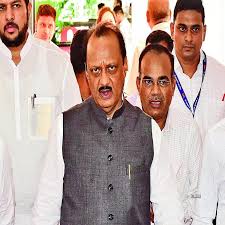
In a major embarrassment for the ruling BJP, Maharashtra Deputy Chief Minister Ajit Pawar on Sunday said India may become the third largest economy but its buildings and bridges were collapsing. “We have said that we will be the third (largest) economy, and that is true. But what about our buildings and bridges collapsing while we become the third largest economy? Who is responsible for that,” Pawar was quoted as saying while speaking at the inauguration of the Professional Structural Engineers Association (PSEA) in Pune.

The statement after two major bridge collapse incidents—one Pune, Maharashtra and second in Vadodara, Gujarat—is significant. Four persons were killed when an iron bridge over the Indrayani river in Pune collapsed on June 15, while in Gujarat at least 12 persons died after multiple vehicles fell into the Mahisagar river in the bridge collapse.

Gujarat is ruled by the BJP. In Maharashtra, Ajit Pawar’s breakaway NCP is part of the BJP-led Mahayuti   

Ajit Pawar said that “even after 100 years, PWD (Public Works Department) gets their (British company’s) letters informing that ‘on this date 100 years will be completed and our guarantee is over. Please do not operate the bridge for vehicular use anymore’. We have to make efforts to demolish those bridges,” he said, as per media reports.

Comparing the quality of construction of structures then and now he added that “we do not see this quality of construction anymore.”

“We live in Mumbai. All the buildings that we see in Ballard Estate (South Mumbai) are very old. The High Court building or the Chhatrapati Shivaji Maharaj Terminus… these buildings are excellent even after so many years,” he added.

The collapse of Gambhira Bridge on the Mahisagar river in Gujarat added another number to the long list of India’s crumbling infrastructure. Local residents had repeatedly raised concerns over its poor condition, pleas that fell on deaf ears, though some repairs were undertaken last year, according to reports.

It was the second major bridge collapse incident in Gujarat in recent years. In October 2022, a pedestrian suspension bridge over the Machchhu river in Morbi collapsed, causing the death of over 141 persons.

Demanding the resignation of Gujarat Chief Minister Bhupendra Patel and Home Minister Harsh Sanghavi, opposition Congress claims 16 bridges have collapsed in the home state of Prime Minister Narendra Modi and Union Home Minister Amit Shah in the past four years. Politicians and bureaucrats are sharing bribes from every contract and project, alleges Congress leader Jignesh Mevani

Last year, nearly 12 bridges collapsed in Bihar within a span of just 20 days. 

According to a study, “Analysis of Bridge Failures in India from 1977 to 2017,” in the past four decades “more than 2130 bridges (excluding culverts and pedestrian bridges) have failed to provide intended service or have collapsed during various phases of construction in recent four decades”.

From Jantar Mantar to Chandigarh Bungalows

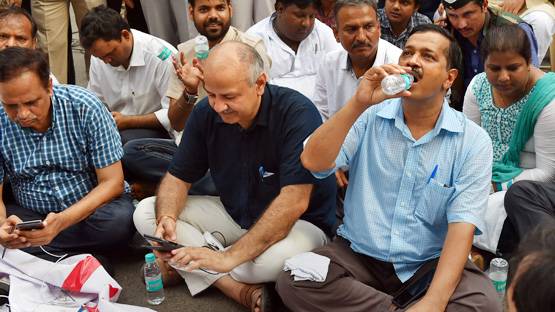
Remember the good old days when Satyendar Jain along with his mentor Arvind Kejriwal,  stormed Delhi politics armed only with idealism—and the odd whistle stop rally? Fast-forward to today, and our once-on-a-mission maverick is quietly running Punjab’s health show…from his swanky government bungalow in Chandigarh. Yes, that’s right: the very same man who famously duelled with bureaucratic red tape in Delhi is now pulling strings in Punjab’s Health Department—no scalpel needed. His former “Officer on Special Duty,” Shaleen Mitra, has even decamped north to join him, suggesting this isn’t just a weekend hobby. But Jain isn’t alone in his Punjabi escapade. Delhi’s ex-Deputy CM, Manish Sisodia, long champion of free textbooks, has slipped into an advisory role in Punjab’s Education Department. And who could forget Reena Gupta—once sparring verbally with Kejriwal’s critics—is now bossing around the state’s Pollution Control Board.

It’s like a political exchange program in reverse: Delhi’s brain trust setting up shop amidst Punjab’s lassi-loving heartland. Jasmine Shah, erstwhile vice chair of Delhi’s Dialogue Commission, is now the “lead governance fellow” (fancy!) in Punjab’s IT wing. Meanwhile, Kamal Bansal has swapped pilgrimage panel meetings in Delhi for Tirth Yatra Samiti chairmanship in Punjab—holy detours, indeed! Insiders whisper there are at least ten government flats in Chandigarh now occupied by these Delhi imports, who’ve brought their own brand of “principled” bureaucracy. Critics chuckle that, once fighting the system, they’re now…the system. But hey, if you can’t beat ’em, send in your most devoted ex-crusaders to run the show—bungalow style.

MOST POPULAR

HOT NEWS