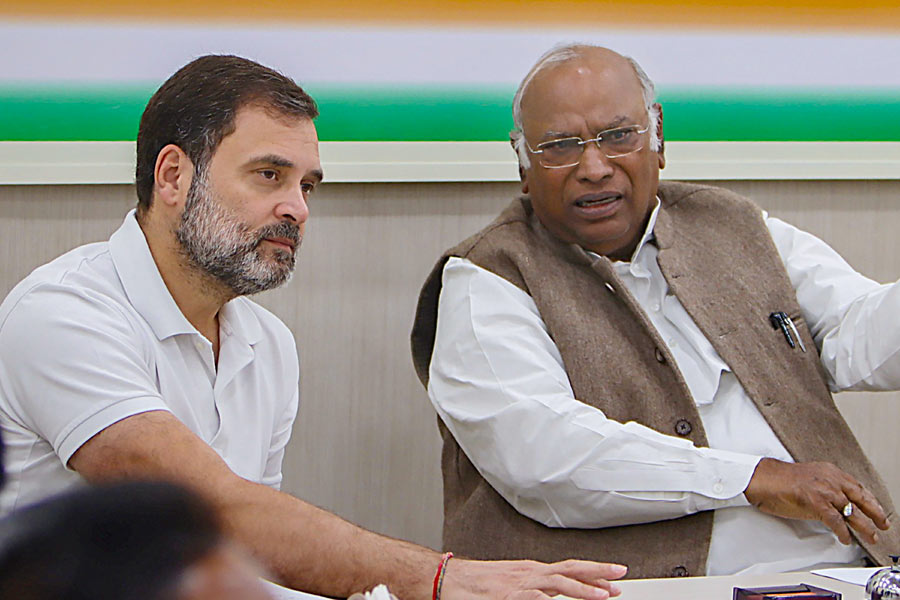
Leader of Opposition in the Rajya Sabha, Mallikarjun Kharge and Leader of Opposition in the Lok Sabha, Rahul Gandhi, on Wednesday wrote to Prime Minister Narendra Modi, urging the government to bring legislation in the upcoming Monsoon session of Parliament to grant full statehood to the Union Territory of Jammu and Kashmir.
According to the Congress leaders, the demand was both legitimate and firmly grounded in their constitutional and democratic rights. For the past five years, the people of Jammu and Kashmir have consistently called for the restoration of full statehood, they said.
They also requested the government to bring a legislation to include the Union Territory of Ladakh under the Sixth Schedule to the Constitution.
This would be a significant step towards addressing the cultural, developmental, and political aspirations of the people of Ladakh, while safeguarding their rights, land, and identity, they added.
NRI Amritpal Singh Dhillon detained for fatal hit-and-run case; had Dhillon stopped to help, Fauja Singh may have been saved
The saddest part is, the man who lived healthy for 114 summers, faced countless tumultuous moments in life and survived a global pandemic like COVID-19 and many other difficult situations died in a hit-and-run on roads he loved running.
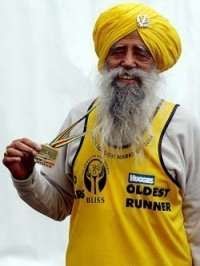
Fauja Singh, the world’s oldest marathon runner and British Sikh athlete of Indian origin, passed away after being hit by an unidentified speeding vehicle in his native village in Punjab on Monday.
He was 114 years old.
Canada-based Amritpal Singh Dhillon has been arrested for allegedly running over Fauja Singh. Apparently, Dhillon told the police that he did not he had know he hit the victim and news.
Fauja Singh was badly injured, conscious and rushed to a hospital but it was too late. According to the FIR the vehicle was speeding and the driver fled without offering any assistance. Maybe if he had stopped and taken Fauja Singh to the hospital immediately, the legend may still have been alive.
The British-Indian national was crossing a road in the village where he was born in Punjab when he was hit by the vehicle.
According to reports, he was walking across the Jalandhar-Pathankot national highway towards Kuldeep Dhaba—an eatery named in memory of his son Kuldeep who died in 1994.
Those who knew him well say Fauja Singh’s end was quite similar to his son who too lost life in a road accident. That loss broke Fauja but running helped him heal. In fact, his final steps were toward the place he had built to remember his son. Still very alert, Fauja Singh was a big attraction there with visitors posing for selfies.
Fauja Singh started running at the age of 89.
Who is Amritpal Dhillon
According to police, Dhillon was detained on Tuesday night from a village in Jalandhar district.
Multiple teams of the police zeroed in on Dhillon after his car was identified using CCTV footage.
Some parts of the car were also found from the crime scene, which when shown to experts were identified as belonging to an old model of a Toyota Fortuner
Dhillon was apprehended at his Kartarpur home.
The vehicle, a Punjab-registered Toyota Fortuner, was also seized.
Dhillon told police he was returning from Bhogpur when the accident occurred.
Remembering the global icon
Prime Minister Narendra Modi led the nation to condole the passing of the legendary marathon runner.
“Fauja Singh Ji was extraordinary because of his unique persona and the manner in which he inspired the youth of India on a very important topic of fitness. He was an exceptional athlete with incredible determination. Pained by his passing away. My thoughts are with his family and countless admirers around the world,” he said in a social media post
The Punjab government and Assembly also paid him heartfelt tributes. Parliamentary affairs minister Ravjot Singh moved a condolence motion, praising the global icon for bringing immense pride to the Sikh community through his marathon achievements.
Fauja Singh started running at 89 and completed nine full marathons between 2000 and 2013, according to reports.
In a 2013 interview he said that soon after his 101st birthday, he ran the London Marathon in seven hours and 49 minutes.
“I’ve completed eight other marathons in the past 12 years, including the Toronto Waterfront Marathon, which I ran when I was 100 years old.
“How do I do it? Simple, firstly, I eat only vegetarian foods; I am told that vegetarians tend to live an average of six to 10 years longer than meat-eaters do. I also walk or jog every day. Age may bring wisdom, but if you want stamina, endurance and a lifetime of good health, turn to nutritious vegetarian foods,” Fauja Singh was quoted as saying
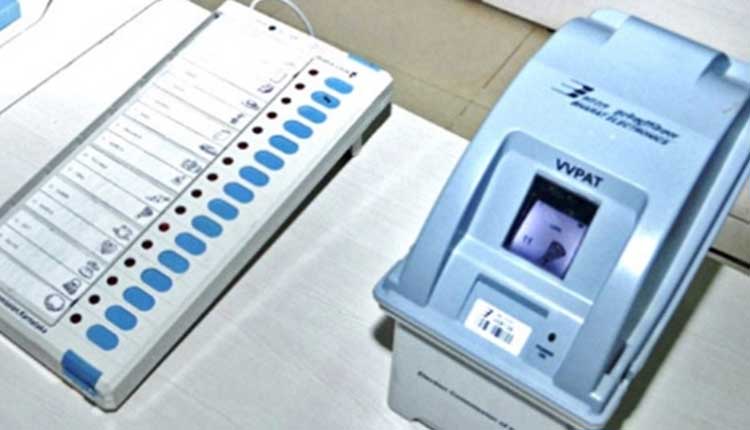
The Election Commission (EC) has asked BLOs to include remaining electors in the draft electoral roll within 10 days. A total of 86.32 per cent enumeration forms have been submitted so far in Special Intensive Revision (SIR) in Bihar.
The EC said that the third round of household visits by the nearly 1 lakh BLOs will soon begin to collect the filled Enumeration Forms (EFs) of the remaining electors in the ongoing Special Intensive Revision (SIR) in Bihar.
“The BLOs shall again visit those households where the electors were temporarily absent in the previous visits. With 10 more days left for the last date of submission of the filled Enumeration Forms (EFs) in the ongoing Bihar SIR out of the 7,89,69,844 electors in Bihar, EFs of 6,81,67,861 or 86.32 per cent have been collected,” the election commission said.
Accounting for the deceased, permanently shifted and people enrolled in more than one place, the EF collection phase of the SIR has covered 90.84 per cent of the nearly 7.9 crore strong electorate in Bihar.
“Only 9.16 per cent electors remain to submit their filled EFs before the July 25 deadline. Special camps have been established in all the 5,683 wards of` all 261 Urban Local Bodies (ULBs) of Bihar and newspaper advertisements issued to ensure that the remaining electors fill their EFs well in time and have their names also included in the Draft ER to be published on August 1, 2025,” it added.
These electors are also being encouraged by the BLOs to fill up their forms online using their mobile phones through the ECINet App or through the online form.
“The BLOs are being supported in their efforts by the 1.5 Lakh BLAs appointed by all political parties, each one of whom can certify and submit up to 50 EFs per day. To ensure that no eligible urban voter is left out the ER, special camps are also being set up in all the 5,683 wards of all 261 Urban Local Bodies (ULBs) of Bihar,” the EC said.
The luxury brand’s Spring/Summer 2026 Men’s Collection featured a pair of Kolhapuri chappals priced at ‘Rs 1 lakh’
Representatives of the global luxury brand Prada were in Maharashtra’s Kolhapur on Tuesday to meet local artisans and understand the traditional craftsmanship of Kolhapuri chappals. This after Prada faced widespread criticism and online backlash when it featured slippers similar to the humble ‘Kolhapuri chappal’ at the high-class Milan Fashion Week.
Not only did Prada not acknowledge the origins of the Kolhapuri footwear, it is said to have priced a pair of India’s traditional footwear at Rs 1 lakh. A part of Prada’s Spring/Summer 2026 Men’s Collection, the luxury brand referred to it as leather garments and not as Kolhapuri chappals.
But the controversy has also given Kolhapuri chappals recognition in the fashion world. After the online backlash over “cultural appropriation”, the delegation of executives from Italian luxury label landed in Kolhapur to engage with local artisans.
According to the Maharashtra Chamber of Commerce, Prada also assured that the lack of recognition was a mistake which would not be repeated and also expressed commitment to “responsible design practices, fostering cultural engagement, and opening a dialogue for a meaningful exchange with local Indian artisan communities.”
Collaboration is expected to enhance Kolhapuri chappals in international fashion platforms. With the help of Prada, global markets will open up for Kolhapur’s traditional craftsmanship.
According to reports the luxury brand has indicated plans to launch a limited-edition “Made in India” Kolhapuri-inspired collection in order to bring global markets to Kolhapur artisans. A follow-up visit by Prada’s business team is anticipated in early August.
Prada representatives also collected samples and completed footwear pieces to integrate traditional design elements into their future collections, according to reports.
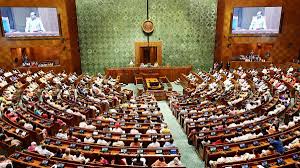
The upcoming Monsoon session will be a stormy one. The opposition Congress is all set to question the BJP-led NDA Government on several issues like the whereabouts of the Pahalgam terrorists who killed 26 persons (and are still untraceable), claims made by US President Donald Trump regarding mediating ceasefire between India & Pakistan, and “electoral manipulations in Maharashtra, Haryana, and now in Bihar.”
The role of the Election Commission before the upcoming elections in Bihar is questionable, as per the party. INDIA bloc partners will meet before the Session to coordinate strategies and collectively raise issues in the two Houses of Parliament. The opposition is expected to demand discussions on the recent Air India crash and the preliminary AAIB report that appears to attribute blame to the two deceased pilots, and raise concerns over accountability and transparency.
Overall, an intense showdown is expected between the government and the opposition in the Monsoon session that begins July 21.
The decisions were taken at a strategy meeting presided by Congress Parliamentary Party (CPP) Chairperson Sonia Gandhi on Tuesday. Congress President Mallikarjun Kharge and Leader of Opposition in the Lok Sabha Rahul Gandhi were also present at the meeting in which the party decided to raise these issues in the upcoming session. “Three months have passed since the Pahalgam terror attack. But there is no trace of the terrorists,” Congress leader Pramod Tewari said, accusing the government of negligence and laxity in providing security to people and failure in nabbing and punishing the culprits.
Congress will also raise the issue of rising crimes against women and Scheduled Castes across the country, particularly in states like Bihar, Uttar Pradesh, and Odisha, he said
Meanwhile, at the top of the government agenda are important legislations for example the Income-tax Bill, 2025, introduced in the Lok Sabha earlier this year and referred to a joint parliamentary committee (JPC). It is expected to be brought to Parliament for passage during this session.
Other bills listed for consideration include the Manipur Goods and Services Tax (Amendment) Bill, 2025, which is aimed at aligning the state GST law with the central legislation; the Jan Vishwas (Amendment of Provisions) Bill, 2025, which seeks to promote ease of doing business and improve regulatory compliance; the Indian Institutes of Management (Amendment) Bill, 2025, which proposes to bring IIM Guwahati under the formal fold of the IIM Act, giving it statutory recognition; the Geoheritage Sites and Geo-relics (Preservation and Maintenance) Bill, 2025, which aims to protect geologically important sites; and the Mines and Minerals (Development and Regulation) Amendment Bill, 2025, which aims to regulate the scientific exploration of deep-seated and critical minerals.
Tax reforms are also on the cards through the Taxation Laws (Amendment) Bill, 2025, which introduces changes to streamline current tax laws. A resolution for the extension of President’s Rule in Manipur, originally imposed on February 13, 2025 is also listed.
Kanwar Yatra was never about violence, but sharing, caring and togetherness. It definitely was never a spectacle as it has become today
Photo: Naveen Bansal
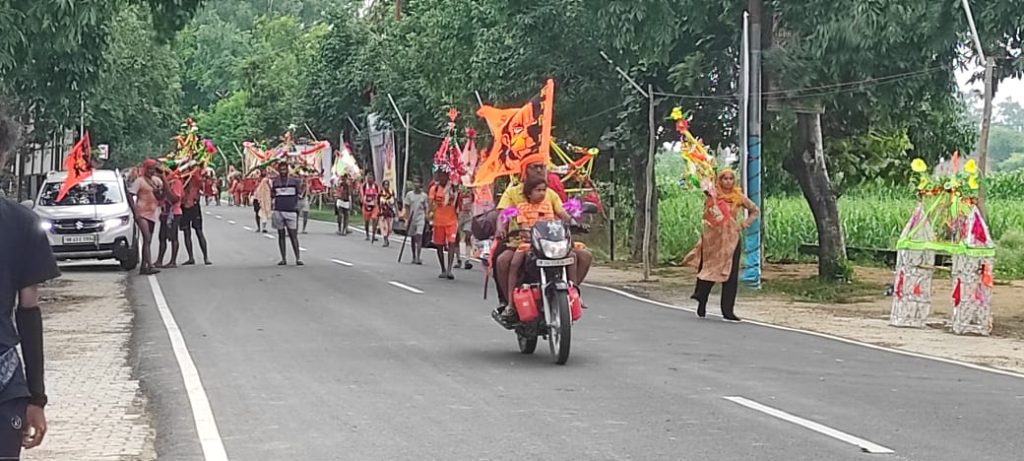
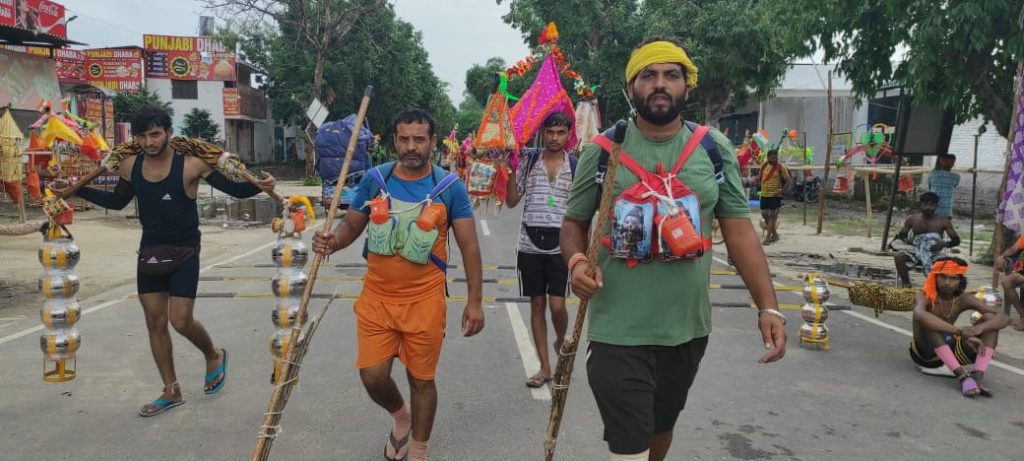
It is the holy month of Shravan and in north India Shiva devotees are undertaking the tough ‘Kanwar Yatra’, bringing the holy Ganga water in ‘kanwars’ hoisted on their shoulders to their native places. While Shiva devotees are on their annual journey, again some of them have been drawing attention for all the wrong reasons, brandishing weapons like swords, indulging in loot, vandalism and blocking roads over trivial reasons.
Photo: Naveen Bansal
On Monday the police arrested four Kanwariyas in separate incidents on charges of vandalism and creating a ruckus by blocking the Delhi-Haridwar National Highway in Haridwar district.
Some Kanwariyas created a ruckus near the Rohalki flyover on the Delhi-Haridwar National Highway “over some trivial matter and obstructed traffic by putting up barricades”. Meanwhile, two other Kanwariyas were arrested for vandalism in Haridwar. The video showed them smashing glasses kept in the shop with sticks.
Kanwar yatra
Every year, Kanwarias collect water from the Ganga and carry it in a palanquin to offer it to Lord Shiva.
The belief is that offering water to Lord Shiva helps cut the pain of poison he has been carrying since ‘samudra manthan’.
Those walking the path of devotion, penance and pain say the journey was never about violence but caring, sharing, devotion and togetherness.
And it definitely was never a spectacle or a show of grandeur and might it has become today.
The question is who is to blame for this shift?
What has changed
Like every year, Hindu devotees are there on the Har Ki Pudi ghat in Uttarakhand’s Haridwar to bring back the holy water to their native places.
On any given day, dedicated devotees can be spotted walking home with the ‘kanwars’ on their shoulders.
While the majority of those undertaking this walk of faith are genuine devotees, there are also trouble-makers and rogue elements giving a bad name to the yatra of faith. There have been incidents of Kanwariyas violating traffic rules, blocking roads and indulging in violence on their way back from Haridwar.
The Uttarakhand police and the Uttar Pradesh police have not been able to tackle these elements, and there are reasons for that.
Hindutva groups have been targeting roadside dhabas and stalls, raising disputes over nameplates and religious identity of owners and workers.
The Supreme Court on Tuesday sought response from the Uttar Pradesh government on a plea challenging the State’s directive mandating the display of QR codes on all eateries along the Kanwar Yatra route, which reveal the names and identities of the owners.
In fact the Apex Court in 2024 had prohibited the enforcement of the public notice issued by police in Muzaffarnagar district, directing hotels, dhabas, and shops to display names of owners and employees.
But still, a worker was allegedly forced to remove his pants so his religion could be verified before the Kanwar Yatra started this year.
Group Captain Shubhanshu Shukla returned to Earth with Grace, the Dragon capsule the Axiom-4 crew members were travelling in, splashing down in the Pacific Ocean off the coast of San Diego in Southern California, around 3.01 PM IST
The crew had departed from the orbiting laboratory on Tuesday (July 14, 2025) onboard the SpaceX Dragon.
Prime Minister Narendra Modi led the nation I. extending welcome to Shukla on his return to Earth from his landmark mission aboard the International Space Station.
The PM said that as India’s first astronaut to have journeyed to the ISS, Group Captain Shukla’s achievement marks a defining moment in the nation’s space exploration journey.
“I join the nation in welcoming Group Captain Shubhanshu Shukla as he returns to Earth from his historic mission to Space. As India’s first astronaut to have visited International Space Station, he has inspired a billion dreams through his dedication, courage and pioneering spirit. It marks another milestone towards our own Human Space Flight Mission – Gaganyaan,” he wrote on X
A fresh wave of bomb threats sent shockwaves through the national capital this week, as multiple schools and educational institutions in Delhi received alarming emails warning of imminent explosions. Though all turned out to be hoaxes, the psychological toll on students, staff, and families is mounting—alongside a growing political and public outcry.
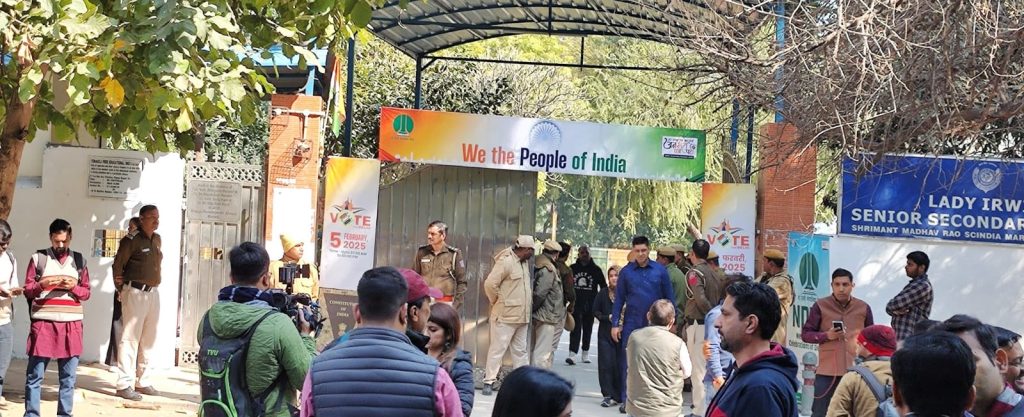
On Monday, Navy Children School (Chanakyapuri), CRPF Public School (Dwarka), and CRPF School (Rohini) were forced to evacuate after receiving emailed bomb threats. Less than 24 hours later, on July 15, 2025, St. Thomas School in Dwarka and the prestigious St. Stephen’s College at Delhi University were also targeted.
In every instance, bomb disposal squads and police responded swiftly, searched the premises, and declared them safe.
This isn’t a one-off event. Delhi has witnessed at least three major waves of bomb hoaxes since early 2024. A May 2024 incident saw over 100 schools targeted in a single day. Most threats have been traced to either untraceable foreign IP addresses or, surprisingly, to tech-savvy teenagers attempting to disrupt exams.
Police have launched a full cybercrime investigation to determine if the recent threats are linked to earlier incidents. According to media reports the police are tracing email origins, checking for use of VPNs or fake accounts, and coordinating with national and international cybersecurity teams.
Previous investigations revealed startling findings: in January, a Class 12 student admitted to sending threats to delay exams.
This repeated security scares have ignited a blame game between state authorities, police, and educational institutions.
AAP leader Kejriwal said, “What is happening in Delhi? Yesterday two schools received bomb threats and today another school and college, have received threats. Children are scared, parents are extremely worried. BJP’s four-engine government have completely failed.”
The Delhi High Court, which took suo motu cognizance of the issue in February, criticized both the Delhi Government and police for failing to implement a cohesive action plan. “These incidents are not isolated anymore—they are systemic,” the court observed, demanding updated safety SOPs for all city schools.
As Delhi reels from yet another wave of bomb hoaxes, one thing is clear: the status quo is untenable. While no lives have been lost, the psychological cost is escalating. The government, schools, and law enforcement must now act—not just to catch the perpetrators, but to restore faith in the safety of the city’s classrooms.
Delhi, which suffers from severe pollution every, awaiting the implementation of cloud seeding or artificial rain for months as the Delhi government has been considering it to provide clean air to its citizens.
The city remained most polluted by a wide margin during the 2024-25 winter, with an average PM2.5 concentration of 175 micrograms per cubic metre, as per Centre for Science and Environment.
According to a report by the Energy Policy Institute at the University of Chicago (EPIC), the air pollution in the city is reducing citizens’ life expectancy by an average of 11.9 years compared to the World Health Organisation’s (WHO) guidelines.
Now, in order to combat air pollution, Delhi is set to carry out artificial rain through cloud seeding flights between August 30 and September 10. The operation, originally scheduled for July 4 to 11, has been postponed following recommendations from experts at the India Meteorological Department (IMD) and the Indian Institute of Tropical Meteorology (IITM), Pune.
The Rs 3.21 crore pilot project, titled ‘Technology Demonstration and Evaluation of Cloud Seeding as an Alternative for Delhi NCR Pollution Mitigation,’ was announced by Environment Minister Manjinder Singh Sirsa. The initiative will use five specially modified Cessna aircraft to disperse rain-inducing materials over parts of the capital, with the goal of washing out airborne pollutants.
Initial operations will focus on low-security air zones in northwest and outer Delhi. Each flight, or sortie, is expected to last about 90 minutes and will cover approximately 100 square kilometres.
What is Cloud Seeding?
Cloud seeding involves introducing substances like silver iodide, dry ice, or salts into clouds to encourage precipitation. This method is used globally to address issues such as drought, inadequate snowfall, or persistent smog and fog. The formulation developed for this project by IIT Kanpur includes silver iodide nanoparticles, iodised salt, and rock salt.
The decision to delay the cloud seeding operations came after meteorological experts advised that the initial July window, though during monsoon season, was not ideal for effective cloud seeding. Critics had questioned the timing, arguing that rain during monsoon would not significantly help reduce pollution and would waste public funds. However, experts clarified that the presence of active monsoon clouds is essential for cloud seeding to work.
The project marks a significant step in Delhi’s ongoing efforts to find innovative ways to address its persistent air quality challenges.
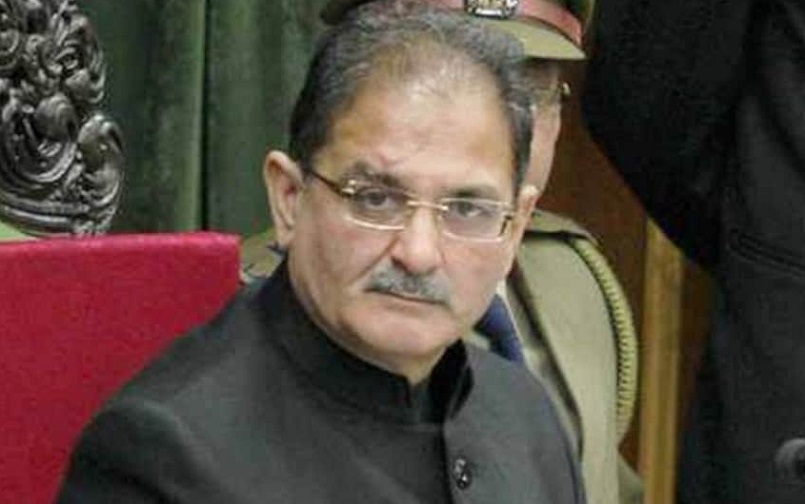
Srinagar – President of India has appointed Kavinder Gupta, former Deputy Chief Minister of Jammu and Kashmir, as the new Lieutenant Governor of Ladakh.
Gupta is the first politician to be named to the post, which until now has been held by non-political figures, including former IAS officer R.K. Mathur and Brigadier (Dr.) B.D. Mishra, who resigned recently.
A senior Bharatiya Janata Party (BJP) leader, Gupta served as deputy chief minister in the Mehbooba Mufti-led coalition government, which collapsed in 2018 after the BJP pulled out, citing deteriorating security conditions.
Gupta has also served as Speaker of the Jammu and Kashmir Legislative Assembly and was elected mayor of Jammu for three consecutive terms between 2005 and 2010. In the 2014 Assembly elections, he won the Gandhinagar seat by defeating Congress leader Raman Bhalla.
His appointment is seen as a shift in the Centre’s approach to Ladakh, marking a departure from technocratic or bureaucratic leadership towards political stewardship in the Union Territory.