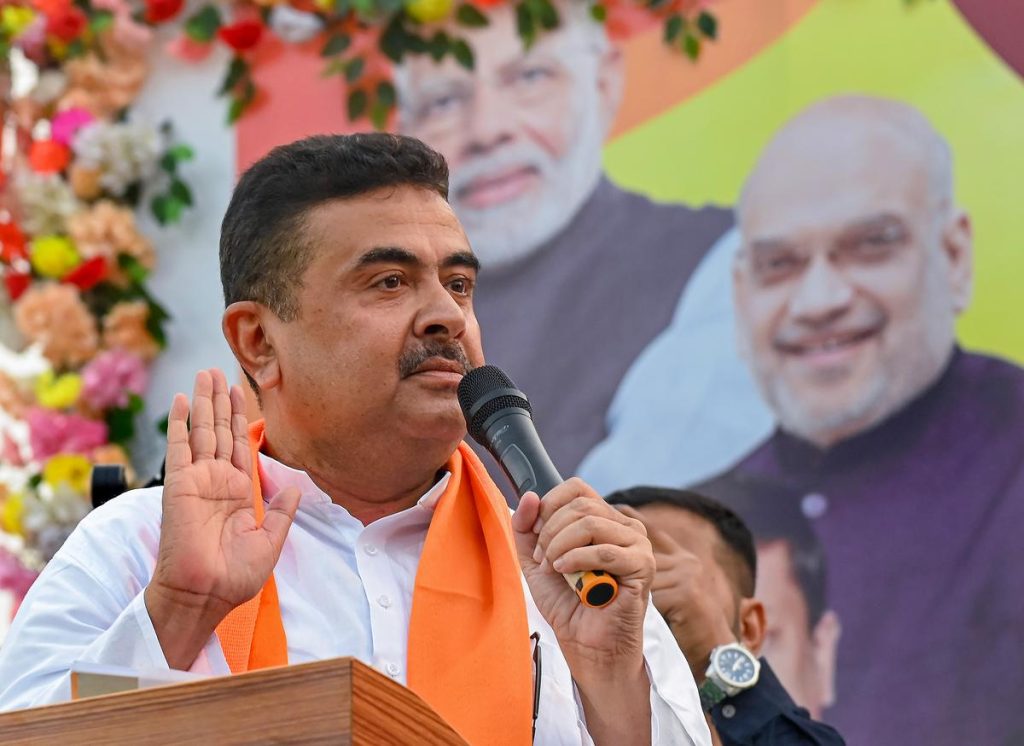
SRINAGAR: The National Conference (NC) has strongly criticised Bharatiya Janata Party (BJP) MP and West Bengal Leader of Opposition Suvendu Adhikari for his remarks urging tourists to avoid visiting Kashmir.
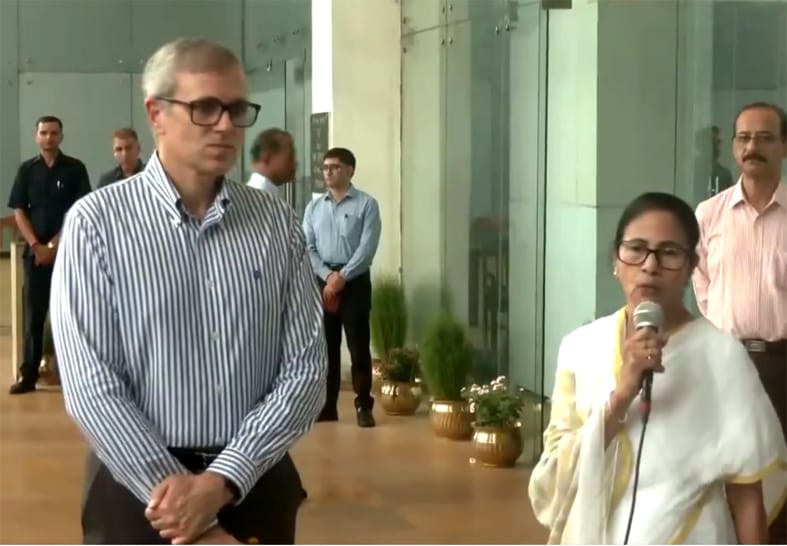
Adhikari had recently suggested that people should choose destinations like Himachal Pradesh, Uttarakhand, or Odisha over Kashmir, citing security concerns. His comments come at a time when Jammu and Kashmir Chief Minister Omar Abdullah is visiting West Bengal to promote tourism in the Union Territory. Abdullah had met West Bengal Chief Minister Mamata Banerjee on Thursday and invited her to visit Kashmir, stating that tourist footfall had resumed after the April terror attack in Pahalgam.
Reacting to Adhikari’s remarks, NC chief spokesperson and legislator Tanvir Sadiq called the statement “deeply shameful.”
“It is deeply shameful that at a time when the entire country is standing with Jammu and Kashmir, the Leader of the Opposition in West Bengal @SuvenduWB is spewing such hate-filled, divisive, and communal rhetoric,” Sadiq wrote on X.
He added that the people of Kashmir have stood by the nation not out of compulsion, but because it was the right thing to do. “When we are right, the nation must stand with us. Suvendu Adhikari’s statement is not just irresponsible, it is dangerous. He insults not only the people of Kashmir but the very idea of India, where unity in diversity is our strength.”
Sadiq also urged political leaders across the spectrum to condemn what he termed “vile thinking,” stating that the issue goes beyond Kashmir and touches on the soul of India.
On Friday evening tremors were again felt across Delhi and the NCR following an earthquake in Haryana’s Jhajjar. According to the National Center for Seismology, the 3.7- magnitude tremblor occurred at a depth of 10 km. On Thursday morning, a stronger 4.4 magnitude quake had jolted the same region.
Experts say aftershocks are common after an earthquake and they may also be a positive signal indicating the release of built-up tectonic energy thereby reducing the risk of a larger event.
The Delhi-NCR falls in Seismic Zone IV, the most vulnerable and falling under the “fairly high seismicity” category.
Tectonically, the region is influenced by Himalayan movements as also local geological activity sitting on a network of geological fault lines like the Mahendragarh-Dehradun Fault (MDF), the Delhi-Haridwar Ridge (DHR), the Delhi-Sargodha Ridge (DSR), the Delhi-Moradabad Fault, the Sohna Fault, the Mathura Fault and the Reverse Fault (F1).
Several other weak zones and faults are also there like the Great Boundary Fault, Delhi-Sargodha Ridge, Yamuna river lineament and Ganga river lineament, as per the NCS.
A fault is a planar fracture or discontinuity in a volume of rock across which there has been significant displacement as a result of rock-mass movements.
Why earthquakes happen
Energy release associated with rapid movement on active faults is the cause of most earthquakes.
Due to friction and the rigidity of the constituent rocks, the two sides of a fault cannot always glide or flow past each other easily, and so occasionally all movement stops.
Regions of higher friction along a fault plane, where it becomes locked, are called asperities.
Stress builds up when a fault is locked, and when it reaches a level that exceeds the strength threshold, the fault ruptures and the accumulated strain energy is released in part as seismic waves, forming an earthquake
A large earthquake happens when built-up tectonic stress on fault lines is too much and has not been released for long in the form of seismic waves.
When the stress exceeds the strength of the rocks, a rupture occurs, causing the ground to shake violently.
An earthquake that follows a large magnitude earthquake called, “main shock‟ and originates in or around the rupture zone of the main shock.
Generally, major earthquakes are followed by a number of aftershocks, which show a decreasing trend in magnitude and frequency with time, explains NCS.
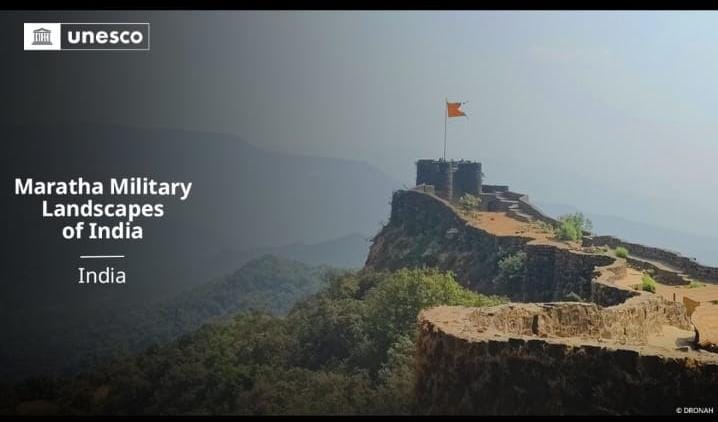
The inscribed heritage comprises 12 majestic forts—11 in Maharashtra, one in Tamil Nadu.
Prime Minister Narendra Modi has expressed immense pride and joy over the inclusion of the Maratha Military Landscapes of India in the prestigious UNESCO World Heritage List.
The inscribed heritage comprises 12 majestic forts—11 in Maharashtra and one in Tamil Nadu.
Highlighting the significance of the Maratha Empire, the Prime Minister said, “When we speak of the glorious Maratha Empire, we associate it with good governance, military strength, cultural pride and emphasis on social welfare. The great rulers inspire us with their refusal to bow to any injustice.”
He urged citizens to visit these forts to learn about the rich history of the Maratha Empire and also shared cherished memories from his 2014 visit to Raigad Fort, including a photograph where he paid tribute to Chhatrapati Shivaji Maharaj.
Responding to the X post of UNESCO about recognition, the Prime Minister said:
“Every Indian is elated with this recognition.
These ‘Maratha Military Landscapes’ include 12 majestic forts, 11 of which are in Maharashtra and 1 is in Tamil Nadu.
When we speak of the glorious Maratha Empire, we associate it with good governance, military strength, cultural pride and emphasis on social welfare. The great rulers inspire us with their refusal to bow to any injustice.
I call upon everyone to go visit these forts and learn about the rich history of the Maratha Empire.”
“Here are pictures from my visit to Raigad Fort in 2014. Had the opportunity to bow to Chhatrapati Shivaji Maharaj. Will always cherish that visit.”
India has the sixth-most heritage sites worldwide.
The first sites to be listed were the Ajanta Caves, Ellora Caves, Agra Fort, and Taj Mahal, all of which were inscribed in the 1983 session of the World Heritage Committee.
In its preliminary report based on the preliminary facts and evidence collected during the investigation, the Aircraft Accident Investigation Bureau (AAIB) has suggested a series of possibilities which led to the crash of Air India Flight 171, a Boeing 787-8 Dreamliner.
According to data extracted from the aircraft’s Enhanced Airborne Flight Recorder (EAFR), commonly referred to as the black box, Flight 171 carried out a routine takeoff.
The Dreamliner accelerated to a takeoff speed of 153 knots and then reached a maximum airspeed of 180 knots, climbing steadily as expected.
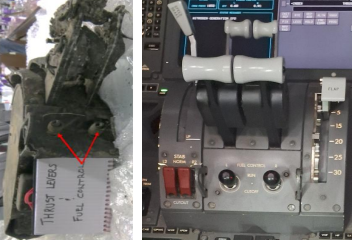
“The flap setting was recorded at five degrees, and the landing gear lever remained in the ‘DOWN’ position, both standard takeoff procedures. Within seconds, the fuel control switches for Engine 1 and Engine 2 transitioned from the “RUN” to “CUTOFF” position, one after the other, within a one-second interval,” the report stated.
The Engine N1 and N2 began to decrease from their take-off values as the fuel supply to the engines was cut off. In the cockpit voice recording, one of the pilots is heard asking the other “why did you cutoff?” The other pilot responded, “I did not do it.”
These switches govern the flow of fuel to the engines, and their transition to “CUTOFF” halted the supply, causing both engines to lose thrust. The black box data shows that thrust levels began to decrease from their takeoff values almost immediately, triggering a rapid de-throttling process.
“The CCTV footage obtained from the airport showed Ram Air Turbine (RAT) getting deployed during the initial climb immediately after lift-off. No significant bird activity is observed in the vicinity of the flight path. The aircraft started to lose altitude before crossing the airport perimeter wall,” the report said.
The switches for Engine 1 and Engine 2 are spaced approximately two to three inches apart, making it improbable for both to be moved simultaneously without intent.
The report suggests that pilot moved swiftly and turn the fuel control switches back to the “RUN” resulting in Engine 1 responding and its core speed deceleration halted, reversed, and began to recover, with thrust levels rising. Engine 2 also relit, but its core speed continued to decelerate despite repeated attempts to reintroduce fuel and accelerate recovery.
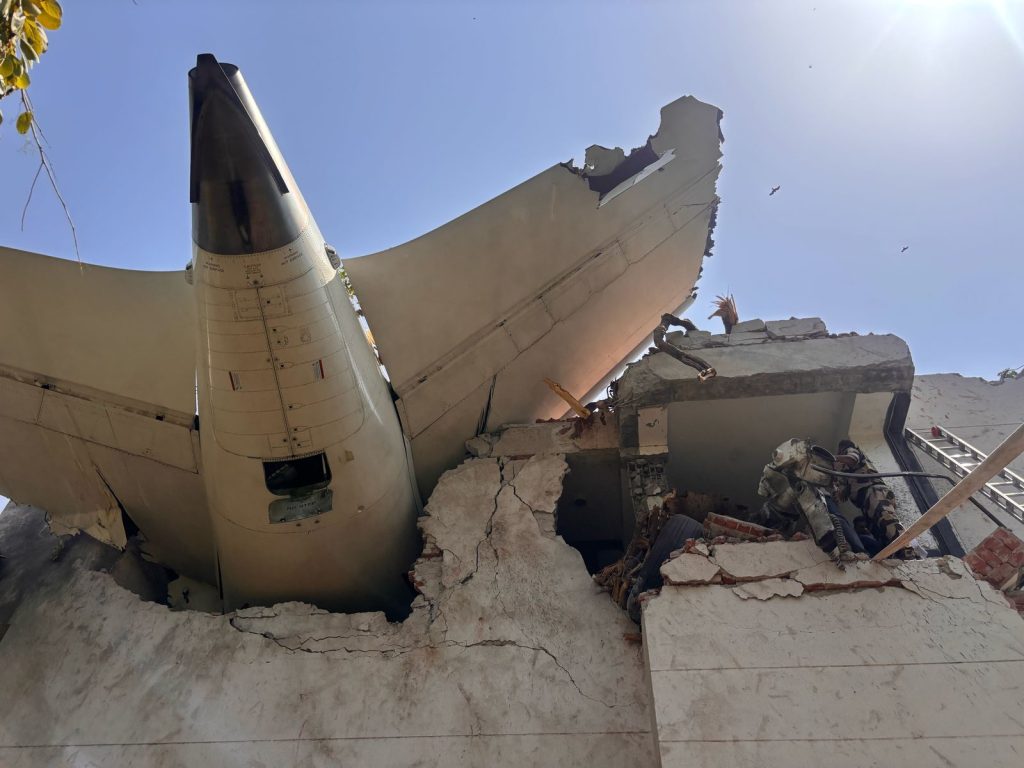
At 1:39:32 pm, Flight 171 struck the hostel, sparking a fireball that devastated the site.
The incident happened when Air India Flight 171, a Boeing 787-8 Dreamliner, departed Ahmedabad’ s Sardar Vallabhbhai Patel International Airport at 1:39 pm, bound for London Gatwick. Within 32 seconds of takeoff, the aircraft crashed into a medical hostel near the airport, killing 241 of the 242 passengers and crew on board and 19 people on the ground.
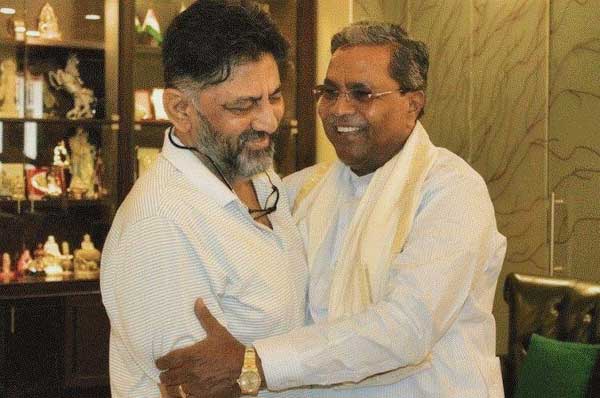
Karnataka Chief Minister Siddaramaiah and Deputy Chief Minister Shivakumar have again dismissed speculations about a change in the State’s leadership, also asserting that there was no discussion with the Congress high command over the issue of the change.
“Talk of a change in the Chief Minister in the state is only being discussed in the media. There is no such agreement or discussion happening within the party.
“I will remain the Chief Minister for all the five years. Our high commande, Randeep Singh Surjewala and Deputy Chief Minister DK Shivakumar have already clarifies this matter,” Siddaramaiah said, taking to X amid continuous speculations around the Karnataka CM post
He also told media persons that the matter “was not discussed at all with the high command”.
In Delhi to meet Congress President Mallikarjun Kharge and other senior party leaders on Thursday, Siddaramaiah said “several important issues” were discussed. “In Delhi today, AICC leaders and senior state leaders met Mallikarjun Kharge at his residence and held discussions on several important issues,” he said, posting a photograph with Kharge on the social media
Despite some MLAs openly supporting him for the top post in Karnataka, Shivakumar said the answer to the question had already been given and that it was not proper to discuss it again and again. Regarding MLAs’ demand that he should replace Siddaramaiah as CM, Shivakumar said there will always be “aspirational statements by some, but it was unnecessary to make a comment now.”
Kolkata – West Bengal chief minister Mamata Banerjee on Thursday urged the Centre to ensure the safety of tourists in Jammu and Kashmir following the recent terror attack in Pahalgam that claimed 26 lives, including three from West Bengal.
Speaking to the media after meeting Jammu and Kashmir chief minister Omar Abdullah at the state secretariat, Banerjee said she plans to visit Kashmir after Durga Puja in October.
“He has come here after the Pahalgam attack and invited me. I have accepted his offer. We are ready to extend full support to Jammu and Kashmir. Our tourists will return. There is nothing to fear,” Banerjee said.
This was the first meeting between the two leaders since the April 22 terror attack.
Banerjee said Abdullah had assured her that tourist safety would be prioritised, but added that the Centre must play its part.
“The Centre must ensure both internal and border security. If needed, it should hold a meeting with Omar Abdullah to chalk out a comprehensive security plan for tourists, both domestic and international,” she said.
Omar Abdullah, who was in Kolkata to inaugurate the Travel and Tourism Fair, said both states would work together to promote tourism, trade, and cultural exchange.
“With Didi, my effort will be to strengthen cooperation in tourism, industry, and trade. We want more tourists from Bengal to visit Kashmir. It’s our responsibility to ensure their safety,” he said.
Banerjee also called for signing MoUs between the two states to promote cultural exchange and technical education.
With monsoon clouds already gathering over Delhi, the question on every resident’s mind is both familiar and urgent: is the city ready for the rains?
Year after year, Delhi’s first downpour triggers the same response—waterlogged roads, traffic chaos, and flooded homes in low-lying areas. This season, city authorities say they’ve taken “proactive measures” to avoid the annual disruption.
The Municipal Corporation of Delhi (MCD) claims to have completed over 90 per cent of drain desilting by mid-June. The Public Works Department (PWD) has identified 445 waterlogging hotspots and assigned engineers to monitor them during peak rainfall hours.
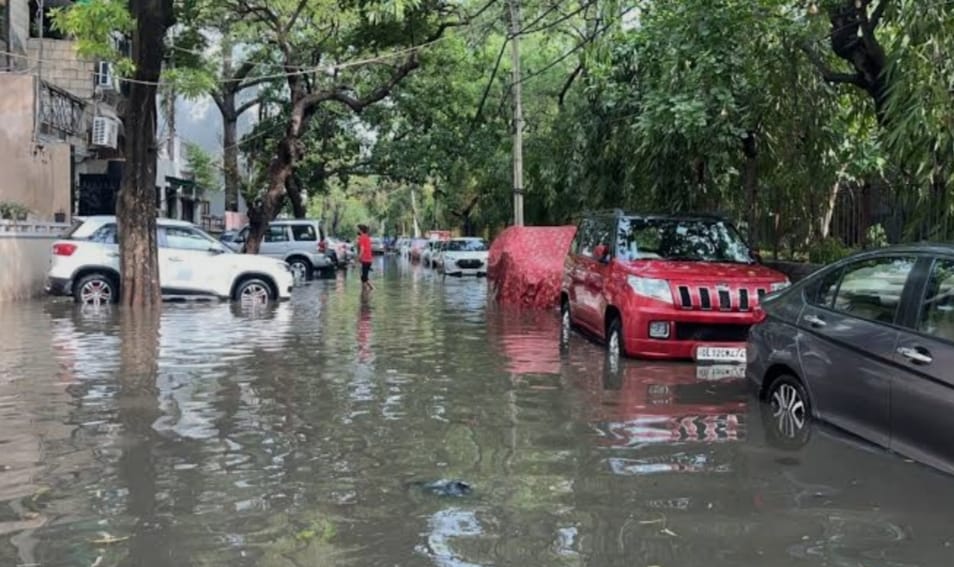
Yet, early showers in July have already exposed gaps. Areas like Shahdara, Narela, and part of South Delhi reported water accumulation within minutes of moderate rainfall. In several locations, the silt removed from drains was left piled on the roadside, only to wash back in with the rain—negating the entire exercise.
Photo: Naveen Bansal
“Despite the claims, numerous reports and social media post indicate widespread waterlogging across the city, with residents reporting knee-deep water on roads and in residential,” a user wrote on X.
Experts argue that Delhi’s drainage system, much of which dates back to the 1970s, is no longer adequate for a city of over 30 million people. Rapid urbanization, concretization of green spaces, and unregulated construction over natural drains have all contributed to the crisis.
Administrative coordination is another obstacle. Responsibility for drainage lies with multiple agencies—the MCD, NDMC, PWD, DDA, and Delhi Jal Board—leading to overlap, confusion, and often, inaction. Last year, a delayed response to clogged drains in South Delhi was blamed on jurisdictional ambiguity between the PWD and NDMC.
In some places, improvements are visible. The notorious Minto Bridge underpass, often submerged after heavy rain, remained dry during early July storms thanks to upgraded pumps and regular maintenance.
Still, as heavier rains loom, Delhi’s readiness remains uneven. Without systemic reform and inter-agency coordination, residents may once again find themselves wading through yet another monsoon mess.
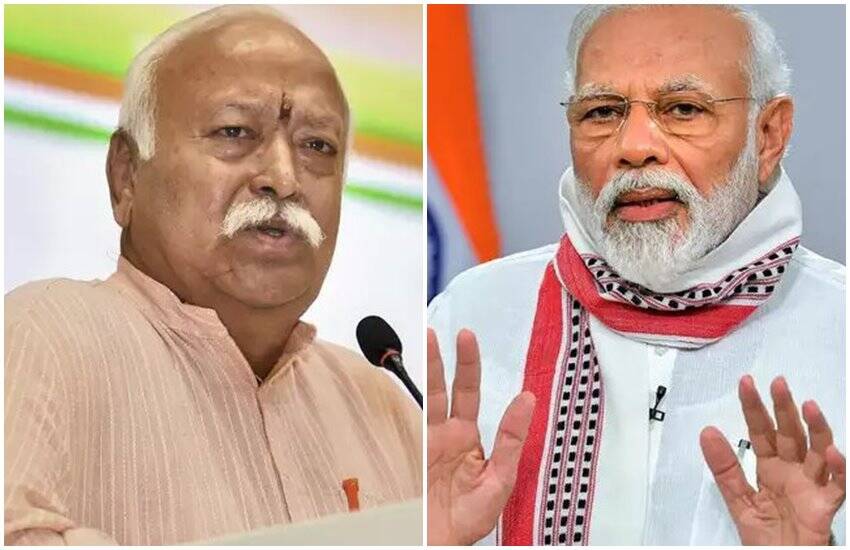
Sarsanghchalak Mohan Bhagwat’s recent suggestion that leaders should retire after 75 has resulted in opposition leaders wondering if it was a hint directed at Prime Minister Narendra Modi, who turns 75 this September.
Incidentally RSS chief Bhagwat will also turn 75 this year. His remarks have also led to the buzz whether it was also an indication that the BJP’s powerful ideological mentor was considering a change of guard.
“When you turn 75, it means you should stop now and make way for others,” Bhagwat was quoted as saying at a book release event dedicated to late RSS ideologue Moropant Pingle in Nagpur. Speaking after releasing the book, ‘Moropant Pinglay: The Architect of Hindu Resurgence,’ Bhagwat recalled that Pingle once said, “If you are honoured with a shawl after turning 75, it means that you should stop now, you are old, step aside and let others come in.”
Taking a jibe at PM Modi, senior Congress leader Jairam Ramesh wrote in Hindi on ‘X’: “Poor award-winning Prime Minister! What a homecoming-reminded by RSS chief upon return that he will turn 75 on September 17, 2025.
“But the Prime Minister could also tell the RSS chief that-he (Bhagwat) too will turn 75 on September 11, 2025!”
Shiv Sena (UBT) Rajya Sabha MP Sanjay Raut said that “PM Modi forced leaders like LK Advani, Murli Manohar Joshi, and Jaswant Singh to retire after they turned 75. Let us see if he applies the same rule to himself now”.
Congress leader Abhishek Singhvi added saying that preaching without practising was dangerous and unprincipled. His party colleague Pawan Khera wrote “ Now both (PM Modi and Bhagwat) pick up the bag and do ‘margdarshan’ for each other”. The ‘Margdarshak Mandal’ is a body formed by the BJP in August 2014 with leaders like former PM Atal Bihari Vajpayee, PM Modi, and veterans Advani and Joshi as members.
PM Modi returned to India on Thursday after concluding his five-nation tour that included Ghana, Trinidad and Tobago, Argentina, Brazil and Namibia.
He also attended the 17th BRICS summit in Rio de Janeiro, Brazil.
Gambhira Bridge collapse on Wednesday added to the list of India’s deadly bridges, underlining complete lack of value for human life in the country
On Wednesday Gambhira Bridge on the Mahisagar river connecting Vadodara and Anand districts in Gujarat collapsed, adding to the list of India’s deadly bridges, underlining the complete lack of value for human life in the country.
According to reports, the bridge collapse was discussed at the state cabinet meeting with Gujarat CM Bhupendra Patel summoning officials and seeking explanation, directing them to file a report on the cause of the incident.
Originally built in 1985, the bridge had undergone repairs last year. Its collapse has also raised questions about infrastructure quality in Gujarat, according to reports, also suggesting that the contractor responsible for the original Gambhira bridge was blacklisted during the COVID-19 period but continued to receive work orders.
“Companies with poor records are awarded new tenders thanks to their political and bureaucratic links. Contractors themselves say the system leaves little room for quality construction,” say those familiar with the working of these departments
Structural issues, poor maintenance and construction materials, excessive rains or corruption, bridge accidents have claimed many lives in India, the more recent being the Indrayani River bridge collapse in Pune on June 15 in which four persons died and 18 others were seriously injured. The old iron pedestrian bridge collapsed in the Kundamala area where heavy rains had been reported in the past few days.
Last year, nearly 12 bridges collapsed in Bihar within a span of just 20 days.
What Gambhira’ investigation reveals, time will tell, the fact is this is not the first time such an incident has been reported in the country. Gujarat itself has seen several bridge collapses in the past 10 years, as per reports
Gambhira collapse is the second such incident in Gujarat in recent years.
In October 2022, a pedestrian suspension bridge over the Machchhu river in Morbi in Gujarat, collapsed, causing the death of over 141 persons and injuries to more than 180 others.
According to a 2020 study titled “Analysis of Bridge Failures in India from 1977 to 2017” as many 2,130 bridges collapsed in the past four decades, primarily due to reasons like natural disasters, material deterioration and overloading. “More than 2130 bridges (excluding culverts and pedestrian bridges) have failed to provide intended service or got collapsed during various phases of construction in recent four decades,” it said
16 bridges collapsed in Gujarat in 4 years: Congress
Demanding the resignation of Gujarat Chief Minister Bhupendra Patel and Home Minister Harsh Sanghavi, the Congress also sought answers from Prime Minister Narendra Modi and Home Minister Amit Shah who also come from Gujarat.
The party also demanded constituting a high-level committee of officers whose integrity is above board to probe the 16 incidents of bridge collapse in the past years. Politicians and bureaucrats were sharing the bribes in a 20:20 ratio, each claiming 20 % from every contract and project, alleged Congress’ Gujarat leaders Jignesh Mevani and Lalji Desai
“The corrupt Gujarat government is responsible for the collapse of Gambhira bridge which caused 16 deaths and seven persons going missing. People from the adjacent areas had repeatedly raised alarms about the vulnerability of the bridge, warning that it could collapse anytime but their concerns fell on deaf ears of the corrupt government assisted by an equally corrupt bureaucracy,” alleged Mevani
Gambhira bridge collapse is one in a series of16 major tragedies in the past four years and there has been no accountability. The main accused in the Morbi bridge collapse is roaming around freely, he added
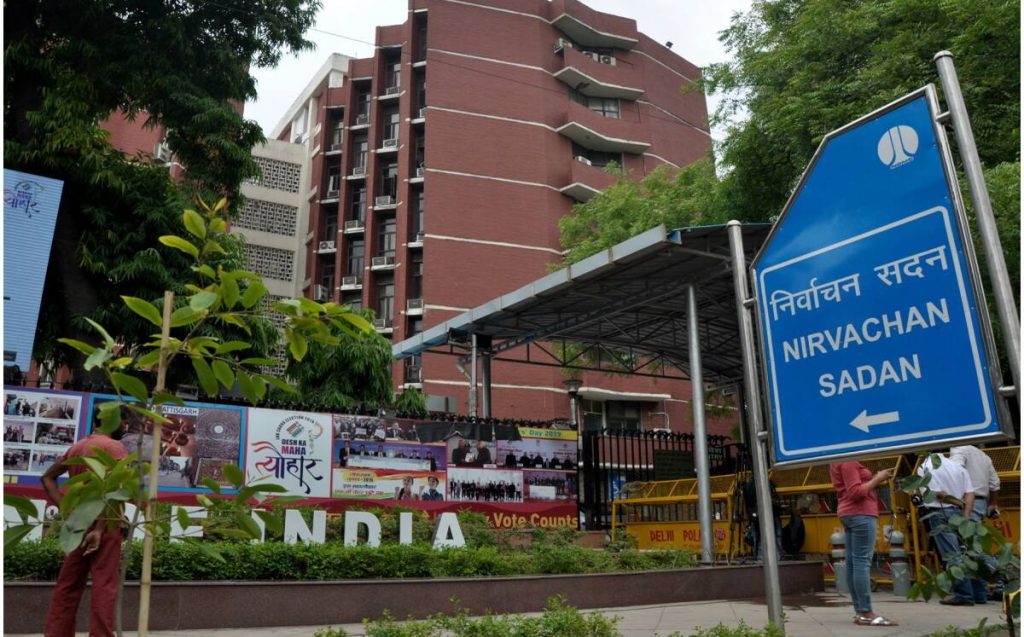
A massive political controversy has erupted in Bihar following the Election Commission of India’s (ECI) decision to carry out a Special Intensive Revision (SIR) of the state’s voter rolls—a move that has drawn sharp criticism from opposition parties and is now under the scrutiny of the Supreme Court.
The SIR, the first of its kind in Bihar since the adoption of computerized electoral rolls in 2003, aims to clean the voter lists of ineligible entries, including duplicates and non-citizens. According to the ECI, this exercise is mandated under Article 326 of the Constitution and the Representation of the People Act, which restrict voting rights to Indian citizens aged 18 and above.
The EC has clarified that the revision will ensure transparency and accuracy in the rolls ahead of the crucial Bihar Assembly elections slated for October–November 2025, with revised rolls expected by September.
The move, however, has faced severe backlash from political parties within the INDIA bloc, including the Congress, Rashtriya Janata Dal (RJD), Samajwadi Party, Left parties, and AIMIM.
They allege that the exercise is a “deliberate attempt to disenfranchise” large segments of voters—particularly Dalits, backward classes, minorities, and migrants—who typically support opposition parties.
Prominent leaders like Rahul Gandhi, Tejashwi Yadav, and Akhilesh Yadav participated in a protest march in Patna on July 9, culminating in a statewide bandh. Protesters accused the EC of acting under political pressure and warned of the possible deletion of up to 2 crore voter names.
The matter reached the Supreme Court, where a bench led by Justices SC Dhulia and PB Varale expressed concerns over the timing of the revision. While the court did not object to the legality of the EC’s authority to revise rolls, it warned that the process—so close to the elections—may not allow voters enough time to appeal deletions or rectify documentation issues.
Adding fuel to the fire is the ECI’s exclusion of Aadhaar and voter ID cards as proof of citizenship in the current revision drive. Critics say this raises procedural red flags and may lead to arbitrary removals.
In a particularly contentious observation, the court also noted that determining citizenship is within the purview of the Union Home Ministry, not the Election Commission, hinting at jurisdictional overreach.
The Election Commission has stood its ground, asserting that the revision is a routine and necessary process to uphold the integrity of elections. It has assured that no voter will be deleted without proper verification and a chance to be heard.
In court, EC representatives argued that the SIR is conducted as per the law and that the timing allows for sufficient notice before finalization of the electoral roll.
The Supreme Court has reserved its judgment and is expected to deliver guidelines or directions to ensure that voter rights are protected while allowing the EC to maintain the sanctity of the electoral process. Meanwhile, political tensions continue to escalate in Bihar as parties gear up for a high-stakes election season.
As the situation unfolds, all eyes remain on both the judiciary and the EC to balance the need for fair elections with citizen inclusivity—a test that may set a precedent for future electoral exercises across India.