Though militancy has often risen from the ashes in the past, the situation seems to be different this time. The infiltration has largely declined, and the local recruitment has also dwindled. The coming months will reveal how the situation evolves from hereon, writes Riaz Wani
The number of active militants in the Kashmir Valley has reached an all-time low of 28, according to the latest J&K Police figures. This is the first time in three decades that the number of militants has dropped to such a low number, and security forces are optimistic that this number will continue to decrease in the coming weeks.
In a recent interview, the J&K Assistant Director General of Police Vijay Kumar said that the joint action by Jammu and Kashmir Police, Army, paramilitary forces, and central and state agencies like NIA, ED, and SIA have helped to neutralise and arrest active militants and curb new recruitment of local youth, which has contributed to the decrease in the number of militants in the region. He said that the security forces are determined to bring the number down further saying they are committed to destroying the terror ecosystems and taking action against anyone who provides shelter or support to militants.
Ever since the withdrawal of J&K autonomy, more than 500 militants have been killed, most of them local youth and hailing from South Kashmir. This has considerably thinned the footprint of militancy in the area helping restore some peace.
The security agencies have also seized properties belonging to militants and those who have harboured them. They have also taken over the houses that provide shelter to militants.
Over the last four years, the security agencies have also pursued a campaign christened as Operation All Out against militancy. The objective is to eliminate insurgency by attempting to kill all the militants within a specific timeframe. Viewed from that perspective, the security forces can claim to have been exceptionally successful. And if the killings continue at this rate for another few months, it could potentially wipe out the number of the active militants. This, in turn, is expected to alter the political dynamics in the Valley, albeit not fundamentally so. The deeper factors underpinning the current state of affairs will linger on and can be expected to gestate conditions for yet another phase of violence and unrest.
Fast declining number of militants has meanwhile made it possible for the UT government to withdraw Army from some parts in Kashmir Valley including from areas in South Kashmir such as from Anantnag and Kulgam. Both are the districts in South Kashmir which has been a stronghold of militancy since 2014 when the then Hizbul Mujahideen commander Burhan Wani revived a flagging movement by using social media.
The Rashtriya Rifles which was deployed in Kashmir was drawn from various infantry units in 1990 will be reportedly withdrawn in three phases. There will be a trial withdrawal of troops from South Kashmir districts such as Anantnag and Kulgam. The subsequent pullback will take place after assessing the situation.
The withdrawal has a symbolic value though: It projects that normalcy has returned to the Valley following the withdrawal of the special status of the union territory in August 2019.
Since 2019, Kashmir has witnessed an incremental decline not only in militancy but also a decrease in the influx of the Pakistani militants. Pakistan, believed to be forced by its ongoing economic hardships and international pressure, has cracked down on the leaders of Kashmir centric militant groups like Lashkar and Jaish-e-Mohammad. Lashkar leaders such as Hafiz Saeed and Zaki-ur-Rahman Lakhvi have been jailed. Similarly, Jaish chief Masood Azhar and Hizbul Mujahideen supremo Syed Salahuddin have become conspicuous by their absence from the scene. They have hardly issued any statement over the past several years.
But the question remains whether this phase of low militancy will last. The record of the past three decades gives no such hope. The militancy has often risen from the ashes. But this time, the situation seems a little different. For once, the infiltration has largely declined, and the local recruitment has also dwindled. The coming week and months will reveal how the situation evolves from hereon.
India has been caught unawares as China brokered a truce between Iran and Saudi Arabia, who have been at loggerheads for decades, turning Middle-east diplomacy on its head.
The Chinese President, XI Jinping, anointed with a new five-year term has brought Iran and Saudi together after prolonged, secret and staggered parleys in the tricky Middle-East political churnings. He ushers in his new innings as a world statesman assuming a pivotal role in the realignment of the global power play this March.
The dragon is also now poised to bring Russia and Ukraine to a negotiating table for a ceasefire. China’s 12-point peace proposal is before Ukraine, and it could not dare to reject it so far. Earlier, Ukraine could afford to ignore the Indian peace proposals and its patrons in the West refused to sign a joint communiqué at G-20 in New Delhi recently. In the case of the peace proposals from Beijing, it knows if it rejects it, China would ensure unrestricted supply of lethal weapons to Russia to further pound Ukraine in the on-going conflict, which is 13-month old now.
In this latest peace offensive, the dragon has outwitted the bald eagle (USA), and the hapless elephant i.e. India is sidelined. In this repeat of the story narrated in the Aesop’s Fables, China has effectively assumed its Super Power role in the geo-politics.
Jinping has already qualified for the prelims of the high seat of diplomacy in the ongoing melodrama in the murky politics of Middle-East politics. With a renewed confidence, it begins with spectacular gains, while quietly engaging the concerned parties in behind the scene parleys till the outcome was reached. It appears, India was unaware of these diplomatic moves during February and March this year, while the détente between two perennial warring groups in the region, Saudi Arabia and Iran was being arrived at.
Beijing: New Power Centre
The rhetoric of G-20, and later the blunders committed at the Raisina Dialogue, have taken away much of the sheen of the international event. The buffoons sponsoring the Raisina Dialogue comprising Ambani’s think tank, Organizer Research Foundation (ORF) and the docile participants of the External Affairs Ministry (EAM) have not only undermined India’s vital interests, they have reversed 15-year old diplomatic efforts taken by the present Narendra Modi Government as well as the erstwhile regime of Dr. Manmohan Singh for having an effective Indian presence in the Middle-East.
The anguish of the faux-paus committed at the Raisina Dialogue expressed repeatedly by India’s veteran diplomat, Ambassador K.C. Singh is being shared across the country. He bemoans that the controversy generated by the ORF’s promotional video during the Raisina Dialogue showing protests in Iran over hijab or female head-covering, could have been avoided. It had led to the cancellation of the visit of the Iranian foreign minister Hossein Amir-Abdollahian to New Delhi giving a blow to the already sensitive ties between India and Iran. Within 10 days of his refusal to visit New Delhi, Hossein Amir-Abdollahian was seen signing the historical trilateral accord at Beijing among Saudi Arabia, Iran and China. Instead of making corrective steps, the propagandists in New Delhi cunningly manage a statement from the Iranian ambassador to India Iraj Elahi, “praising India that she is a rising power in the region and she will not tolerate American pressures etc.” It is yet to be ascertained what was the occasion for the statement of Elahi, but it is necessary for all of us to realize that such rhetoric cannot compensate for the geo-politics of the region. “The trilateral will only stiffen Iranian touchiness; they are difficult to handle at the best of times”, cautioned Singh.
Earlier, the Abraham Accords, which might have introduced a new US-sponsored Gulf security paradigm to isolate Iran, limiting its influence across the Shia crescent stretching from the western Iranian border to the Mediterranean, was signed. However, within a few months, the cheer leaders of the U2 group were overtaken with the trilateral accord happening at Beijing, thus shattering Biden’s grand dream of having a strong voice in the gulf politics.
The realists in New Delhi know that the region’s power fulcrum has now quietly shifted from White House to Beijing. China has emerged as the sole Super Power playing a key-role in shaping regional politics of this oil-rich region to suit its business as well as strategic interests.
India’s self-deception
Indian policy makers, except those who believe in their own false propaganda, know quite well that she is not yet powerful enough to play a crucial role on the global chess-board. She had been taking diplomatic efforts for the past several years, but self-acclaimed propaganda appears to have weakened the present government’s capacity to evaluate the sensitive strategic foreign policy issues. For India, it is a wake-up call. The “I2U2” now leaves India in a group isolated by the new Saudi-Iran-China convergence. Meanwhile, Israeli Prime Minister Benjamin Netanyahu’s aggressive right-wing coalition might bring Saudi and Iran much closer in coming years.
Chinese Impact
There could be two opinions regarding the Chinese peace initiative. As per one opinion, Jinping has taken forward the Abraham Accords initiated during the US President Donald Trump’s administration in 2020, as some Washington-based experts may like us to believe. Or secondly, it asserts Beijing’s new incarnation, a Super Power, with an olive branch, as the symbol of peace in the strife-torn region.
The Abraham Accords are a series of joint normalization statements initially agreed to between Israel, the United Arab Emirates (UAE) and Bahrain. It has been effective since September 15, 2020, following the initial announcement of August 13, 2020. On September 15, 2020, the official signing ceremony for the Abraham Accords was hosted by the United States at the White House as part of the dual agreements, both the UAE and Bahrain. Under this Accord, the two Arab countries recognized Israel’s sovereignty, thus paving the way for establishing full diplomatic relations. However, much will be depending upon Israel to make the accord successful.
The other high point in Jinping’s on-going diplomatic offensive is his 12-point peace initiative for ending the Ukraine-Russia War. It appears that China is going to arrive at a peace deal. Instead of going into the details of Russia’s invasion of Ukraine, China knows that the western powers are keen to get rid of the prolonged Russia-Ukraine conflict. The chairman of the Quincy Institute for Responsible Statecraft, Andrew Bacevich, describes the Russian invasion of Ukraine as a criminal act of great recklessness, which was similar to those of the American invasion of Iraq in 2003. Bacevich further adds that “Biden appears to believe that the Ukraine war provides a venue whereby the United States can overcome the legacy of Iraq, enabling him to make good on his repeated assertion that ‘America is back.”
It appears that in the contemporary play of the global power game, the traditional stories of Aesop’s Fables, continue to give us some insight of the complex power games believed to have been played in the animal world. Similar folklore can be found in the Indian classics too such as Pundit Vishnu Sharma’s “Panchtantra”, which are narrated to children like folklore even today.
These classics explain to us the nitty-gritty of diplomacy and the science of war and strategies to win over the enemy. Since the camel denotes the Arab world, the eagle represents the USA and India is often identified with its traditional elephants. Since 1772, the bald eagle has been the most admired bird in the USA. It now symbolises America. These symbols quite fit in contemporary diplomacy. China replays them on the high-table of the global power play, the camel is tamed, the eagle is silenced and indeed, the elephant is sidelined. It is to be seen whether India, the elephant will ever learn.
End of Pax Americana
The term Pax Americana is used to denote the American power in keeping peace since World War-II. The Russia-China strong alliance in recent weeks, however, has upset the American strategic calculations in the Middle-East. During this March, within two weeks of the peace accord reached between two estranged nations of Saudi Arabia and Iran in China, now a new détente appears to be on the cards between Syria and Saudi Arabia, under Russian supervision. The conflict is expected to end by next month, but the Americans are not even being consulted.
China does not practice what it preaches. While on one hand, it keeps the borders with India simmering and threatens Taiwan and Hong Kong, on the other hand, it brokers a Saudi-Iranian peace deal and advocates restraint to warring nations Russia and Ukraine, writes Priti Prakash
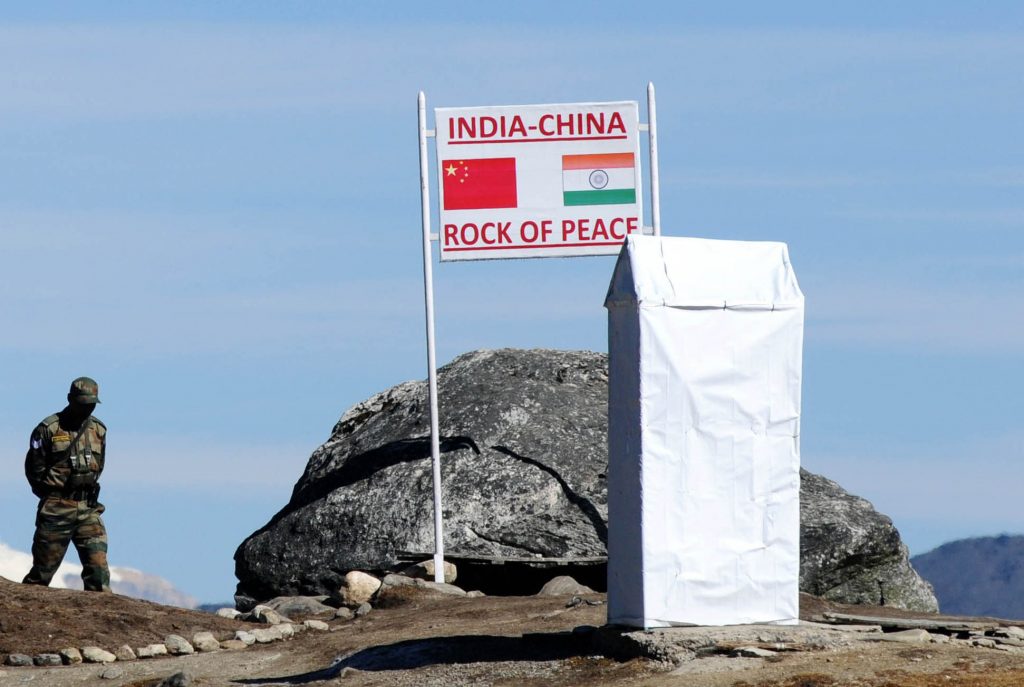
‘The situation along the Line of Actual Control (LAC) in eastern Ladakh remains very fragile and quite dangerous in terms of military assessment”, said External Affairs Minister S Jaishankar recently. “We have made it very clear to the Chinese that we cannot have a breach of peace and tranquility, you can’t violate agreements and then want the rest of the relationship to continue as though nothing happened.” In a rare contradiction of its kind to the statement made by Prime Minister Narendra Modi some time back, External Affairs Minister S Jaishankar admitted that the situation at the border is fragile.
Full marks to China for preaching something and practising something else. While on one hand, it keeps the borders with India simmering, threatening Taiwan, Hong Kong, on the other hand, it advocates peace to warring countries, Russia and Ukraine, and brokers a peace deal between Saudi Arabia and Iran.
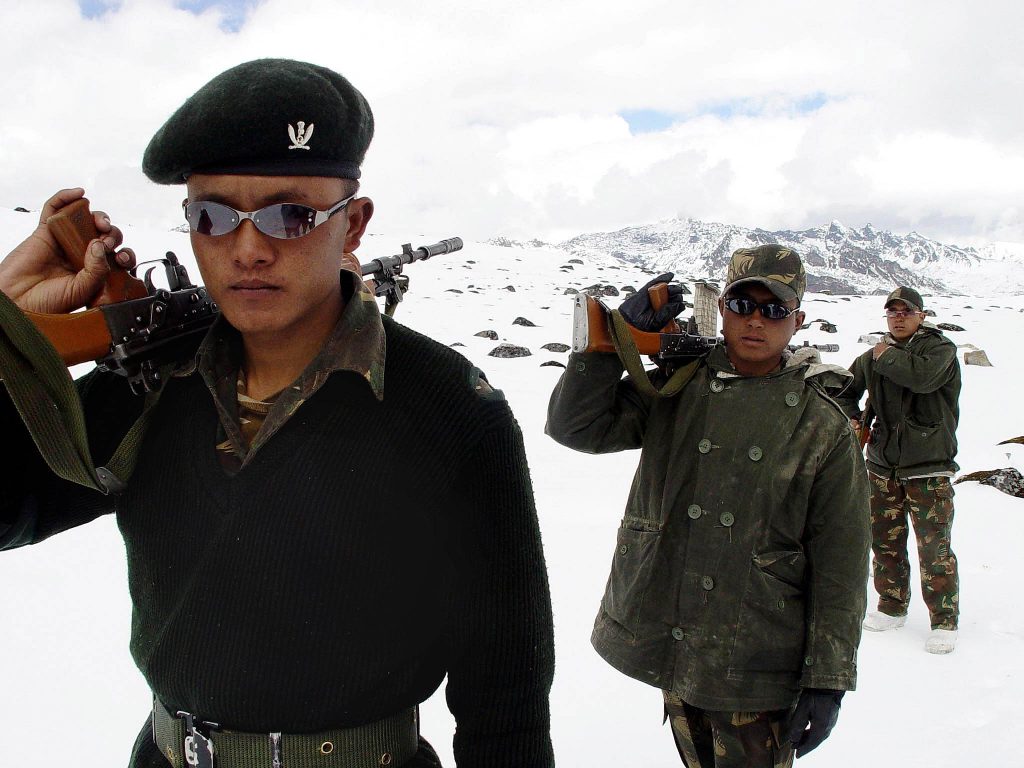
Alas! Our border disputes with China do not seem to be resolving any soon. We have a live border with them with 60,000 troops in worryingly close proximity at the LAC in the north as they eye Arunachal Pradesh in the east. But from the Indian perspective, we are at an impasse with China, say analysts.
Interestingly, in the larger strategic context with India, for China it’s not just about fixing a boundary alone, messaging is also important. So to show India that the US can’t save her and that it’s China we have to deal with. To show India’s neighbours, India can’t even take care of herself so no point relying on India. To show Bhutan, Nepal and Sri Lanka that therefore they need to be much more accommodative with China. And to show the US that if they think India is the counterweight to China and that they can use the strategy centred around India, then China can handle India whenever it suits them. So although they may not have achieved all this but to a considerable extent they have postured enough to create doubts and tie India down, or distract her.
A former diplomat says, ‘You can hold 16 rounds of talks at every level but you have no idea what Xi Jingping is hearing or what Modi is hearing. We don’t know what goes through a centralised system, very little truth filters through. All experienced history tells us that systems like that are not faithful and accurate transmitters of the truth and it’s important to therefore have some kind of channel that actually works. We need a granular strategy that actually works for some big advantages. What is missing is real strategic dialogue with the Chinese, where you sit for seven hours and address your concerns.’
Tactically, Chinese will like to project things as normal. The fact is that they have gained a fair amount since 2020. Economically, the west is going into recession. The Chinese are at a moment when they feel the power or what explains Scholz and Macron calling on Beijing!
The Chinese posturing towards the rest of the world and also to countries like India is influenced by what China perceives as the actual balance of power with the country concerned, also importantly what it sees in the geo-political context in which this relationship must be viewed, says Shyam Saran, former Foreign Secretary, Government of India.
The Chinese have upped their demands over the time as they see their relative power grow. India has consistently insisted that the status quo is unacceptable as a settlement. Our position since 1962 has been constant that you can’t keep the gains of aggression. After 1985, when they said that Tawang was essential, they talked about concessions to be given in the east. Now they say you indicate what concessions you are willing to make in the east and we’ll tell you what concessions we’ll make in the west. All this ultimately calls for a political decision on the give and take.
Although without achieving their aim 100%, China has gained some ground as an outcome along with some military tactical stuff, what is of significance is that when China was internally divided and disturbed within the leadership, is when we fought 1962. It was then the trouble with the Soviet Union started too. Trouble inside China tends to externalise, says former Ambassador Shiv Shankar Menon. Contrary to the popular view, it’s the Chinese politics that drives their foreign policy.
Also what is significant is that domestic politics (particularly an upcoming election in India) in either country does not permit real change or movement in the relationship.
Our economic dependency on China is much more now than before. After Galwan, when the government cut down on imports from China, every sector that mattered including automobiles, pharma or electronics, asked the government to reconsider the decision, or they would be doomed. So the impasse.
As per a China expert, the Chinese leadership sees India in its way to primacy, so the more India rises we will see more Chinese resistance. So we are going to see a more authoritarian China, much more adversarial relationship and in that context, borders like Pakistan are tools and instruments for China in a way.
Former NSA and Ambassador, Shiv Shankar Menon says, “For me the likely outcome is a China which will be a predominant Asian military power, a global economic power but will face increasing friction at home. But a powerful frustrated China is not a good prospect for anyone, not even Chinese. So what should we do….. Thanks to China, we look much more attractive globally than we were before and the fact is we need the US to transform us. Restoring deterrence on the border is essential. Consolidate the periphery.”
The sub continent too doesn’t give a very rosy picture. Five governments have changed in the last year and half, and not all of them happily. Three of them (Pakistan, Sri Lanka and Bangladesh) are in a debt crisis and are talking to the IMF, and the rest of the world is doing nothing. The Chinese would not reschedule their debts to Sri Lanka as they fear that the $1 trillion of BRI countries too will raise their hands up. The Americans won’t give money to the IMF as they think their money will be used to pay back the Chinese. That is where opportunity for India opens up. It’s now our chance to make the rupee currency of the sub continent, offer a common payment system, and work for economic integration at a time when people really need it. Here’s our chance to actually build a peaceful periphery, according to a source. This includes working with neighbours like Japan and IOR countries. But most of all, we need to give it not just some political or military but some economic teeth too.
The reality as of today is that we are a big trading power across the sub continent with Nepal, Bangladesh and other neighbours and are doing things today that we never did before since Independence. In the realm of practical cooperation in South Asia today, we are much better off than we were earlier. But the fact remains that we cannot decouple from China and we have a terrible strategic rivalry. And so, as Foreign Policy hawks say, it shouldn’t stop us from following an underdog strategy. They are strategies that can be adopted when you are weaker.
International relations cannot be black and white. It’s all grey.
Bengaluru : The Enforcement Directorate (ED) on Friday said it has filed a chargesheet at a special PMLA court in Bengaluru against Mohamed Asadulla and others and his company, Al-Ameen Housing Development Company Ltd.
The court has taken cognisance of the chargesheet filed by the ED and has issued summons to all the accused persons.
The chargesheet was filed in a case of bank fraud in Amanath Co-operative Bank Ltd.
The ED initiated the PMLA case on the basis of an FIR registered by Commercial Street Police Station, Bengaluru against Asadulla and others.
Five chargesheets were filed by the police in 2006 against Asadulla and others.
The ED learnt that during the year 1985 to 2002, the accused misappropriated the funds of Amanath Co-operative Bank by allegedly sanctioning huge amount of loans to non-existent and fictitious account holders, passing cheques and overdraft accounts fraudulently and defrauding the bank and by using the said funds for their personal purpose and investing the same in immovable properties in their name and in the name of their relatives.
So far, proceeds of crime worth Rs 68.43 crore have been identified.
Earlier, a provisional attachment order was issued by the ED in this case, attaching immovable property in the name of Asadulla and others. The current market value of the attached property is Rs 243.93 crore.
Chandigarh: In a major pro-farmer decision aimed at safeguarding their interests during natural calamities, the Punjab Cabinet led by Chief Minister Bhagwant Mann on Friday gave nod for hiking the compensation due to nature’s fury by 25% per acre thereby giving a major respite to the food growers.
A decision to this effect was taken by the council of Ministers in its meeting held here at the Punjab Civil Secretariat- I under the chairmanship of the Chief Minister.
Divulging more details a spokesperson of the Chief Minister’s Office said that keeping in view the loss incurred by the farmers recently due to heavy rains, hailstorms and strong winds, the Cabinet has decided to enhance the relief amount from Rs.12,000/- per acre to Rs.15,000/- per acre for 76-100 percent for loss of crops. This measure will give a healing touch to the affected farmers who will be able to get a reasonable financial relief from the government. These relief rates will be applicable from March 1, 2023.
Nod to extend exemption of 2.25% stamp duty and fees land registration by April 30
Keeping in view the larger public interest, the Cabinet also gave its consent to extend the exemption of 2.25% stamp duty and fees to those registering their property/land by April 30. Those opting for registration of land will now be exempted from 1% Additional stamp duty, 1 % PIDB fees and 0.25 % special fees.
The Cabinet also gave approval for hiring 2574 Kisan Mitras and 108 field supervisors in the Agriculture department. These Kisan Mitras and Field Supervisors will encourage the farmers to get out of the rut of wheat/ paddy circle and cultivate less water guzzling crops like Cotton and Basmati. This step will act as a catalyst to save precious groundwater of the state by boosting crop diversification program on one hand and providing employment to the youth of the state on the other.
For some years, various Indian media platforms got it wrong when they predicted that Pakistan is on the verge of collapse as a sovereign state. The cooked up debates on TV lacked common sense, with participants oblivious to principles of statecraft, writes Gopal Misra
With Chinese President, Xi Jinping, in Moscow, it is a wake-up call for India. Russia and China were never so close to each other. Pakistan too finally has reaffirmed its alliance with the Dragon this March.
China has outwitted the USA in the Middle-East by establishing the Saudi-Iran détente, and at the same time luring Pakistan into its fold. Beijing banks are already rolling over $1.3 billion financial assistance to Pakistan to rescue it from an embarrassing financial default amidst the reports that the IMF may now cough up a huge sum of $ 6.5 billion as a bailout for the client state.
These breath-taking events are taking place, thus influencing the global play of forces. India knows that she has already ceded diplomatic initiative, if any left, when the world watched in awe, Russian President, Vladimir Putin, driving a car in the newly acquired Russian-speaking districts of Ukraine. It is not surprising that the Indian diplomacy appeared to be confused and without any direction to cope up with the new developments, and the Indian media, both electronic and print, is being seen behaving like an ostrich burying its long neck in the sand during a desert storm.
In recent years, the various platforms in the Indian media have been abuzz with predictions that Pakistan is on the verge of collapse as a sovereign state. Many social media sites even claimed that Pakistan may witness a repeat of 1971, when Bangladesh came into being. Little did they realise that Bangladesh had scripted the epitaph on the grave of the two-nation theory, but the people in Pakistan today continue to subscribe to the sectarian vision of Islam. Therefore, the propagandas in India, including cooked up debates, lacked both common sense as well as the principles of statecraft, yet narratives are being woven like the medieval bards praising the valour of the ruler of the day.
The ruling BJP’s social media cell could be traced for this faux pas, which might have had a purpose in projecting PM Narendra Modi in his macho avatar adorned in ultra nationalist façade. It might have served in increasing the party’s tally in the previous Lok Sabha elections, but the country is now under the spell of rhetoric sans reason. Unfortunately, during the past nine years, these cock and bull stories which were for the purpose of winning polls, have become a norm of the media proxies of the ruling party, thus the country’s mainline media too is subscribing to it.
India Stunned
The mandarins of the well-groomed External Affairs Ministry (EAM) too appear to have been swayed by these narratives. It appears that they too were stunned this March, when China’s Xi Jinping stunned the global capitals by his aggressive diplomacy.
The Indian media owners cannot absolve themselves for India being cornered in the current international developments. Earlier, there used to be highly accomplished diplomats and journalists writing on strategic issues, but in recent years, such debates are being considered blasphemous or “anti-national”, thus Indian media is now being seen in tune with government’s political rhetoric, even sacrificing facts. The strategic issues are being discussed only for projecting the ruling party. Pakistan is no exception.
Amidst these historical geo-strategic developments, Xi Jinping, with his mysterious smile gets Iran and Saudi Arabia to restore their fractured diplomatic relationship, and flies to Moscow, and delivers a strong message to Ukraine and the US-led western powers either to agree to Dragon’s peace proposal or be ready to be perished if the ongoing 13-month old European conflict further escalates. The message is clear that the Chinese support to Russia would be decisive.
Pakistan Rescued
There is one thing common in India’s successive governments, which came to power in New Delhi during the past 20 years, that the elections are won or lost on the basis of the projection or branding of the leader. It has also been seen that during the decade-old rule of the UPA, if Sonia Gandhi, who herself could not become PM due to her foreign origin, ensured that the cabinet is flooded with mediocrity, and the PM Manmohan Singh was a non-political entity. Narendra Modi has restored the dignity of the office of the PM, but he too loves non-political ministers. His cabinet is flooded with former police and civil servants, and if he inducts any politician in the cabinet, they have either been just a sanitary inspector in a civic body or political duds having little following either in the party or the common people. The present set back to India’s foreign and geo-strategic policies could be traced to Modi’s reluctance to get a top political leader replacing Sushma Swaraj as a foreign minister, but he chose a retired foreign secretary.
There are few to question the PM in his choice of ministers, but Arif Mohammed Khan and many leaders of his stature could have served the nation well at the present juncture. With India in the Chair at the G-20 and the SCO (Shanghai Cooperation Organization), the year 2023 could have been a turning point in her tumultuous history, but a non-political approach, just focusing on the branding of Modi has exposed India’s vulnerability, when the country is faced with the tricky sensitive global strategic challenges.
The propagandists must explain what strategic purpose was served by overwhelming PM New Delhi with Modi’s pictures; thus giving a false impression that to chair G-20 or SCO was a personal achievement of the PM, while it is just a rotational assignment to India. The outcome of G-20 could have been an economic bonanza for the Global South, but it is not being discussed in the India media.
Similarly, it needs to be explained why India being host of the SCO has been selective in inviting Pakistan. The vulnerability of Indian diplomacy was further exposed by the myopic acts of some discussions under the banner of the Raisina Dialogues. It had angered the Iranian foreign minister, who boycotted the discussion and 10 days later, he was seen signing an accord with his arch enemy, Saudi Arabia, in Beijing. In a bid to claim that India is a powerful country, the Iranian Ambassador’s statement was obtained that “India is not scared of the US”.
Imran Khan Phenomenon
Imran Khan is being criticised that he spoke against the army chief and behaved rudely with the judiciary, but it is being forgotten that he has been functioning as a proxy since 2000 to the GHQ, Rawalpindi, with a specific assignment to destroy the two main political outfits, Pakistan People Party (PPP) and Pakistan Muslim League-Noon (PML-N). Has he succeeded in his mission? The answer could be in affirmative, if he wins the forthcoming polls scheduled to be held any time during this year.
It appears difficult even for Stephen Cohen, one of the known experts on Pakistan, to predict the country’s future at a time when it is facing political, social, economic, and strategically multi-dimensional crises. Any viable solution seems to be elusive. The current upsurge among Pakistan’s youth, might soon be offering a fresh perspective to the crisis. However, Pakistan is not disintegrating, as claimed by a section of Indian media.
The mandarins in the Indian foreign office are rightly busy in studying the implications of the current turmoil in Pakistan. As it is contemporarily the most critical issue figuring in regional geopolitics, a fair degree of attention is desirable.
China mediating a major agreement between traditional rivals Saudi Arabia and Iran marks a break with the past in that a significant development has occurred in West Asia without US playing any role in it.
Asian Drama/Syed Nooruzzaman
A fresh Great Game is on in West Asia, the world’s most volatile region. Now China, using all the resources under its control, is being approached to replace the US as a power broker since Washington DC has deprioritised West Asia owing to its full involvement in the Russia-Ukraine war. China, emerging as the most sought-after power in the region, has succeeded in mediating a major agreement, signed in Beijing, between traditional rivals Saudi Arabia and Iran for the re-establishment of their snapped diplomatic relations. However, it remains to be seen if the Riyadh-Teheran deal really brings about the desired result.
It is for the first time since the US dominance began in the region with the end of the 1956 Suez war that a major development has occurred in West Asia without Washington playing a role in it. Of course, China had the right credentials to play the mediator’s role it did between Saudi Arabia and Iran, looking for a detente in their relations. Beijing has friendly relations with both, one representing the Sunni Muslim camp and the other the Shia camp, and is not in the good books of Israel. China has made enormous investments in Iran which places Beijing in a position to influence Teheran’s decisions. The Saudis, having no longer as warm relations with the US as they had in the past, have been tilting towards China for some time, providing hints of planning to shift their financial resources to Chinese banks.
The Saudis and the Iranians are now committed to normalising their diplomatic relations, ruptured following an attack on the Saudi Embassy premises in Teheran when Riyadh executed on January 2, 2016, a controversial Iranian cleric, ignoring international pressure to spare his life. There is now the possibility of a new dawn in Saudi-Iranian ties, leading to a relaxed atmosphere in the Middle East.
True, what has happened could be possible only through a non-US mediator as Washington and Teheran have been at daggers drawn for decades. And today there could be no mediator more effective than China as it has been having friendly ties with Riyadh as well as Teheran for a long time. China, the biggest oil importer today, would obviously want to see peace and stability in the region to safeguard its own energy-related interests. China’s interests — its oil and gas imports from West Asia and huge investments in Iran — in the region would remain safe only when there is stability there.
The thaw in Riyadh-Teheran ties is also rightly being interpreted as an end to Yemeni Houthi tribal attacks on Saudi Arabia and Shia-Sunni rivalry-related problems in Syria, Iraq, Lebanon and elsewhere. It would now be easier for Saudi Arabia to handle any kind of disturbance in its Shia-dominated areas, rich in oil and other natural resources.
There is bound to be a lot of savings in terms of financial and other resources for both Saudi Arabia and Iran. This was the major factor why the Saudis had a patch-up in their relations with Qatar too in January 2021.
Iran, which has been faced with a major resource-crunch following the US economic sanctions, needed to end its open rivalry with Saudi Arabia to be able to focus on more pressing issues. The Persian Gulf nation has been passing through very tough times not only because of its strained ties with the US but also owing to internal disturbances like the one caused by women’s protests. Teheran has been spending a lot on supporting the Houthi rebels in Yemen, friendly Shia political parties in Iraq, the Hezbollah militia in Lebanon, the Islamic Jihad in the Palestinian territories, etc. Now Iran will not have to bother about allocating resources for these non-productive activities.
Likewise, Saudi Arabia — which has been providing financial and other kinds of support to the Hadi Mansour government in Yemen, the political forces fighting against the Bashar Al-Assad regime in Syria, Sunni groups in Iraq and friendly elements in Lebanon and the Palestinian territories — too will no longer have to be worried about these avoidable commitments.
In a way, the coming together of Saudi Arabia and Iran may lead to the weakening of the Shia-Sunni factor in the entire West Asian region which has been a major source of tension there. This is bound to highlight the emergence of China as a new catalyst for peace. Already, most Arab countries have normalised their ties with Israel, but the agreements they reached were brokered by the US. The latest is the Abraham Accords signed in 2020 between the UAE and Israel, and Bahrain and Israel, accepting the Jewish state’s right to exist as a sovereign nation in the Arab world. The previous Washington-brokered major peace agreements between Israel and the Arabs, including the Palestinians, were the 1978 Camp David Accord, the 1993 Oslo Accord and the 1994 Israel-Jordan Peace Treaty.
There are, however, two major factors which may keep Saudi Arabia and Iran suspicious of each other. Though the Saudis have been thinking of normalising their diplomatic ties with Israel for a long time, Iran cannot go for such a course of action vis-a-vis Israel. There is little possibility of Teheran and Tel Aviv normalising their diplomatic relations so long as the US and Iran remain each other’s bitter enemies.
There is also every likelihood of Teheran’s intentions being suspect owing to its nuclear programme remaining intact despite international pressure on the Persian Gulf nation to abandon it in the interest of peace and stability in the Middle East. Its nuclear weapon ambitions would remain a source of major tension for both Saudi Arabia and Israel. Tele Aviv has been strongly feeling a threat to its very existence if Iran does not scrap its nuclear weapon programme. The Saudis are already known to have expressed their desire to the Americans that Riyadh cannot remain a silent spectator if Teheran is allowed to become a nuclear weapon power. Whether the Saudi stand in this regard remains unchanged today is not known. Iran’s nuclear programme, in any case, remains undisturbed. Teheran has been working quietly to acquire the weapon of mass destruction with virtually no objection from any quarter since the 2015 nuclear deal between Iran and the UN Security Council’s five permanent members (the US, the UK, France, China and Russia) plus Germany and the European Union became meaningless following the US withdrawal from it during the Donald Trump presidency.
How the Saudis handle the Iranian nuclear issue under the changed circumstances remains a matter of great curiosity. Taking advantage of the US remaining entangled in the Russia-Ukraine war, Iran may declare itself a nuclear weapon power anytime now. The West Asian situation then may be back to square one.
Besides making major revelations on Sidhu Moosewala murder case, the dreaded gangster, who is presently lodged in Bathinda jail, also threatened actor Salman Khan to issue a public apology regarding the black buck killing case or he would be killed, writes Rajendra Khatry
Incidents of gangsters and criminals serving jail terms found in possession of mobile phones are commonplace in Indian prisons. Time and again the prisoners in many parts of the country have been caught using mobile phones while the prison rules do not allow these criminals the possession or usage of phones.
But a hardcore criminal giving a video interview to a television channel in a high security Punjab jail caught everyone by surprise recently. Dreaded criminal and gangster Lawrence Bishnoi is considered one of the prime suspects in the Sidhu Moose Wala murder case, and he admitted during his television interview with ABP News that his gang member, Goldy Brar was the one who was behind murdering the Punjabi singer.
Besides the major revelations on the Sidhu Moose Wala murder, the dreaded gangster Lawrence Bishnoi also issued a public threat again to Bollywood actor Salman Khan, urging him to issue a public apology regarding the black buck killing case or he would get killed.
Lawrence Bishnoi reportedly stated that killing Salman Khan was his only motto now. “He (Salman) is arrogant like Sidhu Moose Wala. Salman’s ego is bigger than Ravana,” Bishnoi is reported to have said.
It was on March 13, when the ABP News aired a TV interview of gangster Lawrence Bishnoi who is currently lodged in Punjab’s Bathinda jail. Bishnoi is the prime accused of orchestrating the brutal murder of Punjabi singer Sidhu Moosewala a year ago in May 2022. After Lawrence Bishnoi’s interview, reportedly from inside the jail, which was aired by the TV channel, the aghast Punjab government and its police force had some hard explaining to do.
The Punjab government soon gave a clarification on the controversial issue. According to a government official spokesperson, “It has come to notice that a private TV news channel aired an interview of prisoner Lawrence Bishnoi purportedly from inside a jail. Rumours are that the interview was recorded from inside Bathinda Jail. This is to clarify that the rumours are baseless and that this video is not from either Bathinda Jail, where the prisoner is currently confined, or from any other jail in Punjab. It is further clarified that this prisoner is at present confined in the high security zone of Bathinda Jail where strict surveillance is kept over his activities 24×7. If anyone is caught spreading fake news maligning the image of Punjab Prisons administration, action as per law shall be initiated”.
Bathinda Jail Superintendent ND Negi also claimed that the video was neither from Bathinda jail nor any other jail of the state. He said jammers in place at Bathinda jail did not let phones work and hence there was no possibility of any interview from inside the jail.
Not just Negi, but Punjab Anti-Gangsters Task Force (AGTF) Assistant Inspector General Sandeep Goel also clarified that this was neither from Bathinda jail nor any Punjab jail or Punjab Police custody. He claimed that Bathinda jail, where he is lodged, is a high security dead phone zone”.
On March 13, ABP News aired a TV interview of gangster Lawrence Bishnoi who is currently lodged in Punjab’s Bathinda jail. Bishnoi is the prime accused of orchestrating the brutal murder of Punjabi singer Sidhu Moosewala a year ago in May 2022. Bishnoi claimed that the murder was planned by his Canada-based associate Goldy Brar in collaboration with his cousin Sachin Bishnoi to avenge the deaths of Vicky Middukhera and Gurlal Brar who were close to Lawrence Bishnoi’s gang. The planning for the murder was going on for a year, he revealed.
In his 57-minute video interview, Gangster Lawrence Bishnoi spoke at length about the Sidhu Moose Wala murder case and other cases in which he was allegedly involved. Bishnoi accused the system of failing to act in the murders of Gurlal and Vicky.
Bishnoi also claimed that the Punjab Police was greatly influenced by Moose Wala and thus did not act in cases involving their murders. Bishnoi also accused Moose Wala of shielding the people who killed Vicky Middukhera. According to him, the late popular singer wanted to become a don and for that and to prove his point, he had allegedly got Middukhera murdered. Middukhera was allegedly close to Lawrence Bishnoi.
In his TV interview, Bishnoi also admitted that the money to finance the Sidhu Moosewala murder came from the liquor trade, ransom, and other illegal activities.
According to BJP leader Manjinder Singh Sirsa, “Lawrence Bishnoi’s interview put a big question mark on the Police Administration in Punjab”. Lately, there was news of gang wars happening in Punjab’s jails. Gangsters are having fun in Punjab’s jail while Sidhu Moose Wala’s parents are on roads seeking justice, said Sirsa.
Punjab is said to be infested with around 70 gangs operating in the state. These gangs are said to be involved in crimes like kidnapping, robbery and even murders. The gangs play a big role in state elections as well. Not that the state government has been inactive in trying to control these gangs, but the government measures have not been very effective against the dreaded gangsters who operate without any fear of the law.
But there is also a fierce cut-throat competition between the gangs and time and again they clash among themselves to gain upper hand. No wonder the death of Sidhu Moosewala got linked to a turf war between the Lawrence Bishnoi and the Davinder Bambhia gang.
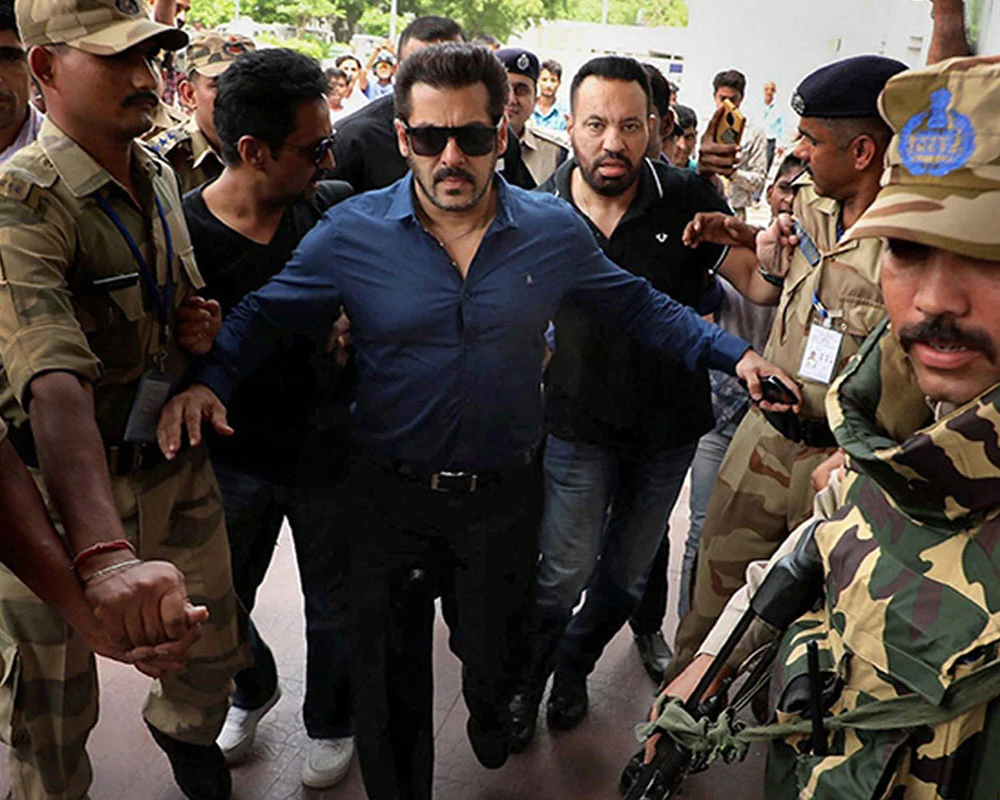
Meanwhile, superstar Salman Khan cancelled his concert in Kolkata on March 23 reportedly due to the death threats received by him. However, people close to Khan claimed that the Kolkata concert was not cancelled but only postponed and it was likely to be held at a later stage.
At the same time, security outside Salman Khan’s house was beefed up after the superstar received a threatening e-mail. Following the fresh threat to Salman Khan, the Bandra Police registered a case under sections 506 (2), 120(b) and 34 of the Indian Penal Code on March 19. Post the threat, Mumbai Police imposed restrictions on fans of the actor. Fans were not allowed to gather outside Salman’s house even as his father film writer Salim Khan was reportedly suffering from sleepless nights.
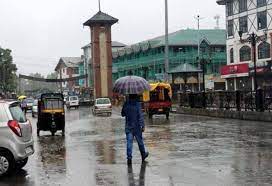
Widespread intermittent rain and thundershowers continued in J&K during the last 24 hours. The MeT office said on Saturday that same conditions will continue during the next 24 hours.
“Widespread intermittent rain/thundershowers likely to occur in J&K during next 24 hours, ” MeT department official said.
Srinagar had 9.1, Pahalgam 4.6 and Gulmarg 0.8 degrees Celsius as the minimum temperature today.
Drass town in Ladakh region had 1.4, Kargil 2.1 and Leh minus 1.2 as the minimum temperature.
Jammu had 14.7, Katra 12.6, Batote 8.1, Banihal 8.4 and Bhaderwah 7.4 as the minimum temperature.
As most of the regional parties have thrived on migration of traditional Congress voters to its fold, they balk at the idea of aligning with it due to fears of losing its acquired support base. But scattered opposition will be in no position to take on the BJP in 2024, writes Mudit Mathur
The big picture of opposition unity to challenge brand Modi in 2024 General Elections is still blurred as alliance on the basis of common principles remains elusive. The opposition is faced with a herculean challenge to cross the 2019 vote sharing mark of the ruling BJP, which came to power with a thumping majority by winning 303 Lok Sabha seats and securing 56.01 percent of votes polled. The winning formula of BJP was based on a well researched pulse of the people at the grassroots, planned and executed strategy focusing around the philosophy of Hindutva, nationalism and welfarism.
Uttar Pradesh, which is the biggest stakeholder in national polity, sends 80 members to Lok Sabha. With the historic contribution of the state spearheading freedom movement, it had been a stronghold of the Congress party before Mandal-Kamandal caste politics and religious saffron tide of Hindutva post-1989 forayed into the state. Its traditional voters, belonging to backward castes, deserted the party and joined Samajwadi Party and a large chunk of Dalit voters crossed over to Bahujan Samaj Party. Later, the BJP created its own political space by snatching non-Yadav and non-Jatav castes from these parties whereas Brahmins and Thakurs readily sided with power. The phenomena pushed the Congress to margins with the party losing even its strongholds to BJP.
Reduced to 52 members in Lok Sabha from across the country, now the Congress party through Bharat Jodo Yatra aimed at challenging the core ideology of ruling BJP and its parent organisation RSS (Rashtriya Swayamsevak Sangh). The Yatra tried to highlight how systematic attacks made by saffron forces endangered the established principles of democracy, federalism, ethnic plurality, free speech, equality, declining independence of autonomous constitutional institutions and above all fundamental ethos of the nation adopted in the preamble of the Constitution for building India as a sovereign–socialist–secular–democratic republic securing social, economic and political justice to all its citizens with liberty of thought, expression, belief, faith and worship.
The opposition feels that the idea of India is being threatened by divisive politics of BJP and there is need to counter it by unitedly challenging the BJP in the upcoming Lok Sabha elections in 2024. The move by regional political leaders to forge an alliance keeping equal distance from BJP and Congress seems an exercise in futility as it is not going to consolidate votes against BJP. Rather it will pave the way for the saffron party for a hat-trick victory in the 2024 general election. This move gained momentum after the meeting of Samajwadi Party chief Akhilesh Yadav and Trinamool Congress chief Mamata Banerjee during the recently held national executive meet of Samajwadi Party in Kolkata. Both the leaders resolved to reach out to other regional parties for a national alliance keeping equidistant from both the BJP and the Congress.
Trinamool Congress chief Mamata Banerjee is leading the move to unite the opposition parties under one umbrella, and has already approached Odisha chief minister Naveen Patnaik in this regard. However after the meeting, both the leaders said that their discussion had focused only on the need for strengthening the country’s federal structure. It appears that Patnaik is keeping his options open and remained non-committal to Mamata’s campaign.
“It was a courtesy call and there was no in-depth discussion at all about serious political matters. We just said the federal structure in India should remain permanent and strong,” BJD chief Naveen, with TMC supremo Mamata Banerjee by his side, told reporters after their half-an-hour-long meeting at “Naveen Niwas”, the Odisha CM’s residence in Bhubaneswar.
After holding a meeting with Patnaik, Mamata Banerjee also held discussion with former Karnataka chief minister and JD (S) leader H D Kumaraswamy at her residence in Kolkata. Both the leaders discussed the present political situation in the country and the way forward to fight and defeat BJP in the 2024 Lok Sabha poll. According to TMC leaders, meetings with non-BJP and non-Congress leaders are part of the party’s efforts to cobble up an opposition unity with regional powers. She agreed to campaign in Karnataka during forthcoming assembly election in the state on HD Kumaraswamy’s request.
The leaders of various opposition parties are facing tough times in various states from the federal investigation agencies such as the Enforcement Directorate, the CBI and the Income Tax Department. They allege gross misuse of these agencies targeting them and their close aides at the behest of the Modi government. These agencies are alleged to be acting as a political tool toppling elected governments of their rival political parties by engineering large scale defections breaking them economically and organisationally thereby creating an atmosphere of political uncertainty.
In Maharashtra, the Shiv Sena government led by Uddhav Thackeray was toppled allegedly using such agencies for arm twisting of several legislators who ultimately joined hands with BJP paving way for the change of guard in the state. The leader of the party, Sanjay Raut was arrested by the Enforcement Directorate for months without any credible evidence resulting in discharge of allegations of disproportionate assets. One of the founders of Aam Aadmi Party and party ideologue, Manish Sisodia is languishing in Tihar jail facing corruption charges in the Excise duty policy of Delhi government. NCP leader Nawab Malik is also facing probe in PMLA case instituted by ED.
For the first time, BJP tasted success in overthrowing a Congress government in 2016 in Arunachal Pradesh. The Congress lost Arunachal Pradesh, Madhya Pradesh and Karnataka to the BJP while in power as the saffron party managed to wean away a section of its MLAs and formed governments. The party lost the Puducherry government just two months before the elections as five of its MLAs and one of ally DMK resigned, amid Congress allegation that it was engineered by the BJP. In Manipur and Goa, Congress emerged as the single largest party, but BJP managed to form governments after breaking the Congress legislature party. In Rajasthan, the BJP attempted to wean away Sachin Pilot to break the Ashok Gehlot-led Congress government like it did in Madhya Pradesh where it managed to rope in Jyotiraditya Scindia to unseat Kamal Nath-led government. Gehlot however managed to thwart the BJP designs.
Telangana Chief Minister and Bharat Rashtra Samithi (BRS) chief K. Chandrasekhar Rao’s (KCR’s) daughter Kalvakuntla Kavitha is also facing a probe by the CBI over allegations relating to Delhi liquor ‘scam’ and the Enforcement Directorate (ED) has named her in its chargesheet in the case. Rao has been active to forge a coalition of opposition parties at national level. He initiated a dialogue with Samajwadi Party chief Akhilesh Yadav, former Maharashtra chief minister Uddhav Thackeray, Jharkhand Chief Minister Hemant Soren, Delhi Chief Minister Arvind Kejriwal, Kerala CM Pinarayi Vijayan and Punjab CM Bhagwant Mann.
Telangana witnessed posters during the visit of Union Home Minister Amit Shah depicting the morphed faces of Assam Chief Minister Himanta Biswa Sarma, Union minister Jyotiraditya Scindia, senior Karnataka BJP leader and former minister K.S. Eshwarappa and West Bengal’s Leader of the Opposition Suvendu Adhikari with the Nirma poster girl. The posters were apparently inferring that these leaders became clean and were spared from investigations relating to alleged scams soon after they joined the BJP defecting their parties.
“From last June, the Central government has constantly been sending its agencies to Telangana. Why? Because Telangana elections are due in November or December. There have been more than 100 CBI raids, 200 ED raids, over 500 income tax raids, and 500 to 600 people have been questioned under the NIA,” Bharat Rashtra Samithi (BRS) leader Kavitha said, adding that all of them are either politicians, members of our party, or business houses that don’t subscribe to the BJP’s diktats.
AAP’s Rajya Sabha member Sanjay Singh on the floor of house raised the issue of raids at the opposition leaders by the Enforcement Directorate (ED). He alleged that 3,000 such raids have been conducted. He alleged that the government agencies were deliberately harassing the opposition.
The raids in Chhattisgarh were planned just ahead of the All-India Congress Committee’s plenary session in Raipur. The state is scheduled to go for polls later this year. The ED conducted searches at several locations in Chhattisgarh, including the residences of Congress MLAs and party officials as part of its investigation into the coal levy case. The investigation is based on a complaint by the Income Tax department, which claimed an illegal levy of Rs 25 per tonne was “extorted” for the coal transported in Chhattisgarh by senior bureaucrats, businessmen, politicians and middlemen. An aide of chief minister Bhupesh Baghel was arrested in December 2022 for alleged involvement in the case.
In a significant move, 14 political parties approached the Supreme Court against the alleged use of central investigating agencies such as Enforcement Directorate and Central Bureau of Investigation in arresting opposition political leaders and other citizens after they exercised their fundamental right to dissent and disagree with the present Union Government. The matter which was mentioned by Senior Advocate Abhishek Manu Singhvi before a bench comprising CJI DY Chandrachud, Justice PS Narasimha and Justice JB Pardiwala has been listed for April 5, 2023.
The petitioners included Indian National Congress, DMK, RJD, BRS, Trinamool Congress, AAP, NCP, Shiv Sena (UBT), JMM, JD(U), CPI(M), CPI, Samajwadi Party, and J&K National Conference. The petition described that these parties together represent 45.19% of the votes cast in the last State/UT Assembly Elections, and 42.5% of the votes cast in the 2019 General Elections, and hold power in 11 States/UTs.
The strategy of BJP appears to discredit all the opposition leaders with charges of corruption and disproportionate assets to divert the political narrative from its performance with regard to poll promises and failures in governance.
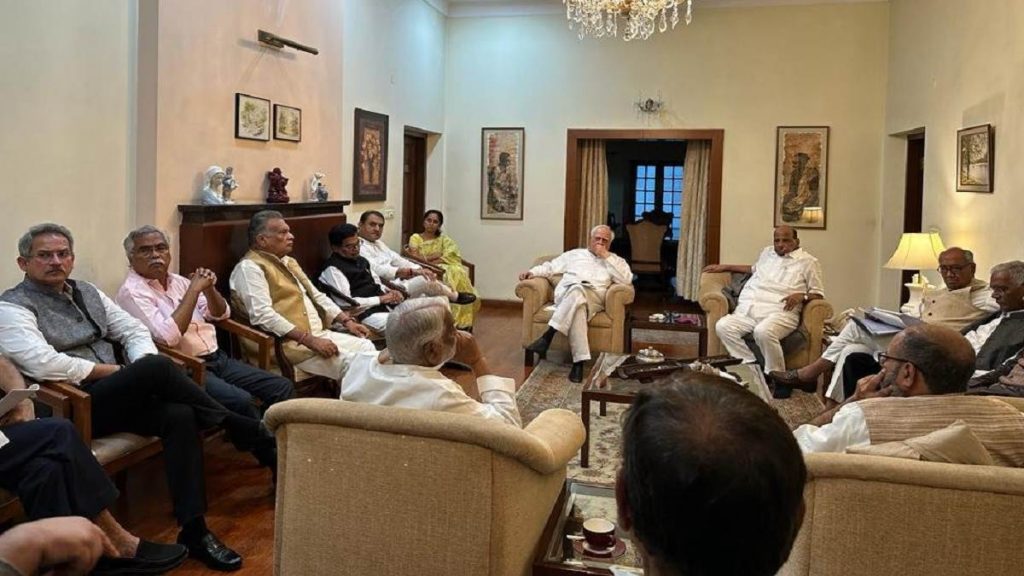
Meanwhile, several opposition parties on 24 March met at NCP chief Sharad Pawar’s residence to discuss alleged tampering of EVMs during elections and said they will approach the Election Commission on the matter. The meeting, which was attended by Congress, CPI, CPI(M), Aam Aadmi Party, Janata Dal (United) and Shiv Sena among others lasted for over an hour. The Trinamool Congress conspicuously skipped the meeting despite an invitation by the NCP chief.
“A meeting of Opposition leaders was held at my residence today to discuss the efficacy of EVM and the concerns raised by political parties about voting through EVM,” Pawar tweeted. Former Congress leader Kapil Sibal, who also attended the meeting, said: “Any machine can be manipulated. Our concerns are that we have been saying over the years that it is not a standalone machine. The internet is being used so it can be programmed. We will have to take a call on what needs to be done, because it doesn’t seem we will get any answers.”“The leaders had only discussed the law pertaining to the case,” Sibal said.
“We will once again go to the EC and seek written responses and if it does not respond, we will decide our future course of action. Any machine in the world can be manipulated and it is a fact that no other democracy in the world, whether it is Europe or the UK or the US, uses EVMs for the purpose of voting,” Sibal asserted.
Senior Congress leader Digvijaya Singh said the ECI must take note of the apprehensions in the minds of political parties and the people at large about the functioning of EVMs. “They (ECI) used to say these are standalone machines but now they say these are not standalone machines. Elements such as the name of candidates, party symbols are fed through the internet into the machines. They used to say the machines have one-time programmable chips, but now they say these are fitted with multiple programmable chips,” Singh alleged.
CPI general secretary D Raja said all parties agreed that several questions are being raised over the credibility of EVMs. “We must seek a proper response from the Election Commission. We will see what the poll body says and decide the next course of action,” he added.
EVMs have been a contentious issue for Opposition parties. The allegations of tampering of the machines have surfaced during various polls but no evidence has emerged so far to prove the charge. The Election Commission has maintained that the machines are secured and safely transported for voting.
The meeting comes amid efforts of some of these parties to unite and include more political outfits into their loose alliance ahead of the 2024 general elections. The unity efforts of regional political leaders lack pan-India acceptability on ideological framework, policy and network of workers.
As most of these parties thrived on migration of traditional Congress voters to its fold in due course of time, regional parties will never feel comfortable aligning with it due to intrinsic apprehensions of losing its acquired support base. Under these circumstances, scattered opposition is not in a position to make any formidable combination against Prime Minister Narendra Modi juggernaut, unless opposition unites in a single block. PM Modi too remarked in the Lok Sabha that ED–CBI probes gave an opportunity to opposition parties to unite against his government.