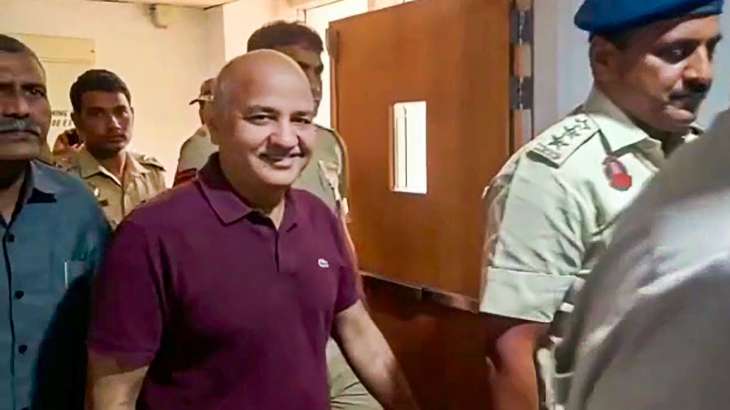
New Delhi: Delhi’s former Deputy Chief Minister Manish Sisodia has reportedly confessed to destroying two mobile phones which were sought by the Central Bureau of Investigation (CBI) in connection with the Delhi excise policy scam case.
On July 22, 2022, the Union Ministry of Home Affairs (MHA) directed the CBI to initiate a case in the excise scam. Sources claim that from that day onwards, Sisodia started using a new mobile phone.
While probing the matter, the CBI learnt that Sisodia had been using three different mobile phones between January 1, 2020 and August 19, 2022.
On August 19, 2022, the probe agency conducted search operation and sezied one phone from Sisodia’s possession.
“We later discovered that the mobile phone seized from Sisodia’s possession had been used by him from July 22, 2022. This was the date when we were instructed by the MHA to initiate the case in the excise matter, ” a source said.
During the interrogation, Sisodia reportedly confessed to the probe agency that he had destroyed two mobile phones. “Prior to this, I was using two cell phones which have been destroyed, ” a source quoted Sisodia as saying.
The source stated that a Section 91 of the Code of Criminal Procedure (Cr.PC) notice was also served to Sisodia regarding the two mobile phones, and in response, he admitted to the same fact.
“This willful disposal of handsets containing incriminating evidence related to the policy is another incriminating circumstance against Sisodia, ” the source said, quoting the charge sheet.
Sisodia is currently in custody, and his several bail pleas have been dismissed by the court.
17 May 2023 Amritsar
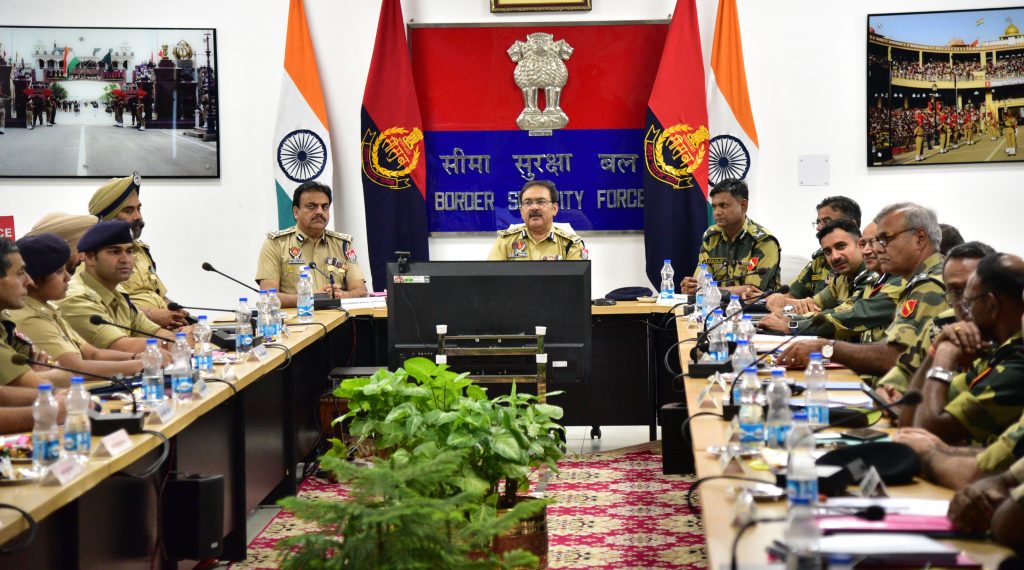
Arpit Shukla, IPS, Special DGP (Law and Order, Punjab Police) along with Atul Fulzele IPS IG BSF Punjab Frontier, all DIGs of BSF, DIG Border Range Amritsar & Ferozepur during a meeting with BSF at the BSF headquarters in Khasa on the outskirts of Amritsar on Wednesday. BSF is holding a joint meeting with senior Punjab Police officials to discuss strategies to counter the drone operations at Punjab borders, various issues pertaining to border management and internal security.
PHOTO-PRABHJOT GILL AMRITSAR
Amritsar : In order to keep strict vigil at movement of drones and cross-border smugglers, Punjab Chief Minister Bhagwant Mann sanctioned Rs.20 crores for installations of drones at strategic locations in the border villages, said Special Director General of Police (DGP) Arpit Shukla here on Wednesday. DGP Punjab Gaurav Yadav has also declared a reward of Rs. 1 lakh for providing information of drone movement leading to recovery of weapons/narcotics, he added.
The Special DGP accompanied by IG Frontier Headquarters, BSF Jalandhar Dr. Atul Fulzele was in BSF Khasa Head Quarter in Amritsar to hold a Joint coordination cum review meeting with senior officials of BSF and Punjab Police to further strengthen the security at the border to prevent the cross border smuggling. DIG Border Range Narinder Bhargav and DIG Ferozepur Range Ranjit Singh Dhillon along with four DIGs and four Commandants of BSF were among the senior officials who attended the meeting.
Giving a call for greater synergy and teamwork between BSF and Punjab Police, Special DGP Arpit Shukla said that it was high time that both the elite forces should work in tandem and better coordination to counter the Drone operations at Punjab borders, which have emerged as the new threat. He also stressed on the need to carry out evidence-based and proactive policing to prevent the smuggling of narcotics and weapons into Punjab from across the border.
The Special DGP asked the Senior Superintendents of Police (SSPs) of Border districts to intensify the Police force as a second line of defence which will help in preventing the collection of contraband dropped through drones by the criminals on the Indian side.
He discussed the strategic locations and hotspots in border villages to install CCTV cameras to keep vigil at Indian Nationals involved in the cross-border smuggling. He asked the BSF officials to share inputs of movements of suspected persons with the Punjab Police so that they can keep a sharp vigil on their activities and ensure penal action against those found involved in any criminal activity.
Special DGP directed the CPs/SSPs to increase the Police Checkpoints, especially at night, in their respective jurisdictions and ensure checking of maximum vehicles at every Naka, which will help in curtailing the terrorist and criminal activities. He advised that all the Nakas should be synchronised in a manner that they must get activated promptly on a single call.
He proposed to activate Village Defence Committees (VDCs) in the Border areas to counter the nexus between smugglers and criminals in the border areas. “These committees will work as eyes and ears of the Police and supplement the efforts of Punjab Police to wipe out drugs, terrorists and gangsters from the border state,” said special DGP. Meanwhile, SSP Amritsar Rural Satinder Singh, SSP Batala Ashwini Gotyal, SSP Gurdaspur Harish Dayama, SSP Pathankot Harkamalpreet Singh Khakh, SSP Fazilka Avneet Kaur Sidhu, SSP Ferozepur Bhupinder Singh and SSP Tarn Taran Gurmeet Singh Chauhan also attended the meeting.
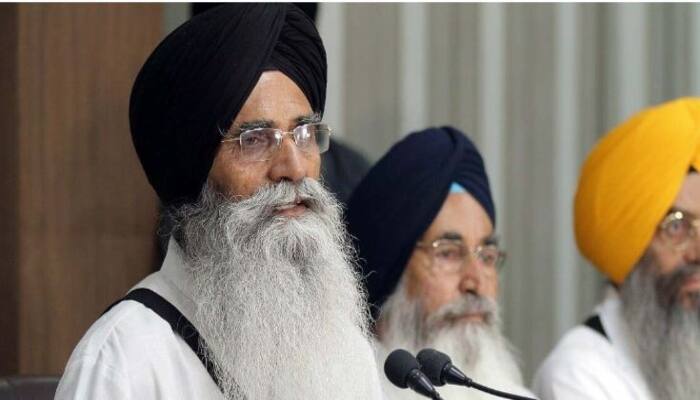
Amritsar-The program to hand over proformas by the Shiromani Gurdwara Parbandhak Committee (SGPC) to the Governor of Punjab, under the signature campaign for the release of Bandi Singhs (Sikh prisoners) has been postponed for the time being. These proformas were to be handed over to the Governor of Punjab at Chandigarh by SGPC on May 18.
SGPC secretary Partap Singh said that as per the information received from the officials of Punjab Raj Bhavan, Chandigarh today evening, due to urgent engagements of Governor Banwari Lal Purohit, he had to go to Delhi immediately. Therefore, it would not be possible to hand him over the proformas regarding the release of Sikh prisoners as per the given schedule on May 18, he said.
He said that although preparations in this regard were completely made by the SGPC, now this work will be done as per the rescheduled time given by the Governor’s office.
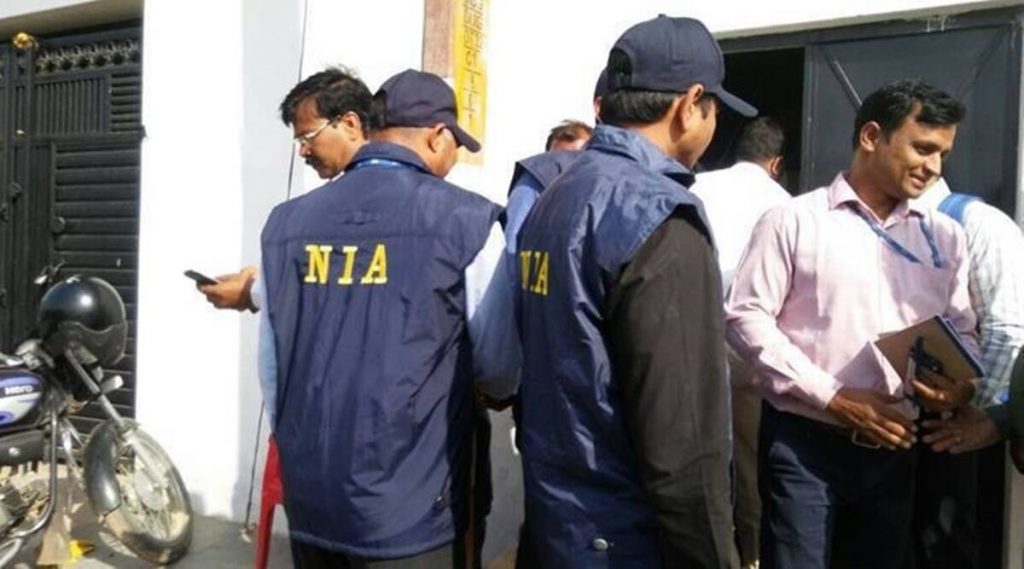
New Delhi: In a major operation, the National Investigation Agency (NIA) on Wednesday was conducting raids at over 100 locations across six states as part of its crackdown on the alleged nexus between gangsters, drug smugglers and terrorist groups.
The agency is also probing the links with the Khalistani elements.
According to sources, the searches were being carried out in Haryana, Punjab, Rajasthan, Uttar Pradesh, Uttarakhand and Madhya Pradesh in terror-narcotics smugglers-gangsters nexus cases, RC 37, 38, 39/2022/NIA/DLI.
The NIA’s crackdown comes in response to intelligence inputs suggesting the involvement of gangsters with connections to Khalistani groups in planning and executing acts of terrorism in the country.
The agency aims to uncover the network involved in promoting terrorism and disrupt their activities.
The operation marks a significant step in the NIA’s efforts to dismantle criminal networks that pose a threat to national security. As of now the NIA has not made any official statements in the case.
Xi Jinping-led China’s move to divert flow of the southern-bound river towards Tibetan Plateau threatens to convert northern part of India into a desert, writes Gopal Misra
India being the frontline country having nearly three thousand kilometres of her borders with Tibet, now under the Chinese occupation, is alarmed by the new reports that China under Xi Jinping has begun diverting the flow of the southern-bound river towards Tibetan Plateau. It is being apprehended that if this is allowed, northern India would soon be rendered as desert.
A full detailed study has already been submitted to the country’s security establishment, including the office of the National Security Adviser, Ajit Kumar Doval, Defence and foreign ministries. The Union Government is reportedly studying various dimensions of this Chinese mischief or a ‘war on India’. It has been prepared by a noted irrigation expert, S.K. Kumar, and was quietly forwarded by Yogendra Narain, a former Defence Secretary of India.
There is an apprehension that Dragon may use water as a weapon to subjugate the South Asian region. These war plans were earlier detailed on a web platform, Sohu, a Beijing-based online media, though later, its details were denied by the Chinese foreign office. It is being stated that China has to wage a war during 2020-25 to annex Taiwan and five years later it will be attacking India’s Arunachal Pradesh.
The USA is Isolated
It is natural for New Delhi to be worried by Xi Jinping’s new avatar, who has finally shed off the use of ”cooperative” rhetoric and the avoidance of controversy of his predecessors Deng Xiaoping and Hu Jinatao in 2023.
The new aggressive diplomacy is being described by the western powers as wolf warrior diplomacy. As a part of this new initiative, China successfully gets Iran and Saudi Arab to restore their diplomatic ties. He also tells Ukraine that it has to agree for a ceasefire with Russia, if it wants its existence as a nation. Amidst these developments, two major European powers, France and Germany tell the USA that they would be with NATO as a supporter of Ukraine, but they might not be allying with any American action in Taiwan.
After conquering Taiwan during 2020-25, the website has revealed it would be the turn of Southern Tibet (2035-40) i.e. Arunachal in India. It will be the “reconquest” of Southern Tibet. The diversion of the flow of rivers could be a part of this new war strategy.
It appears that China has already embarked upon its war strategy for using the river water as a new weapon in subjugating its neighbors. According to statistics in the next seven year i.e. by 2030, the world’s population would reach 8.5 billion marks – Indians and Chinese accounting for one-sixth each of this growth, also it means more dependence on the diminishing water resources.
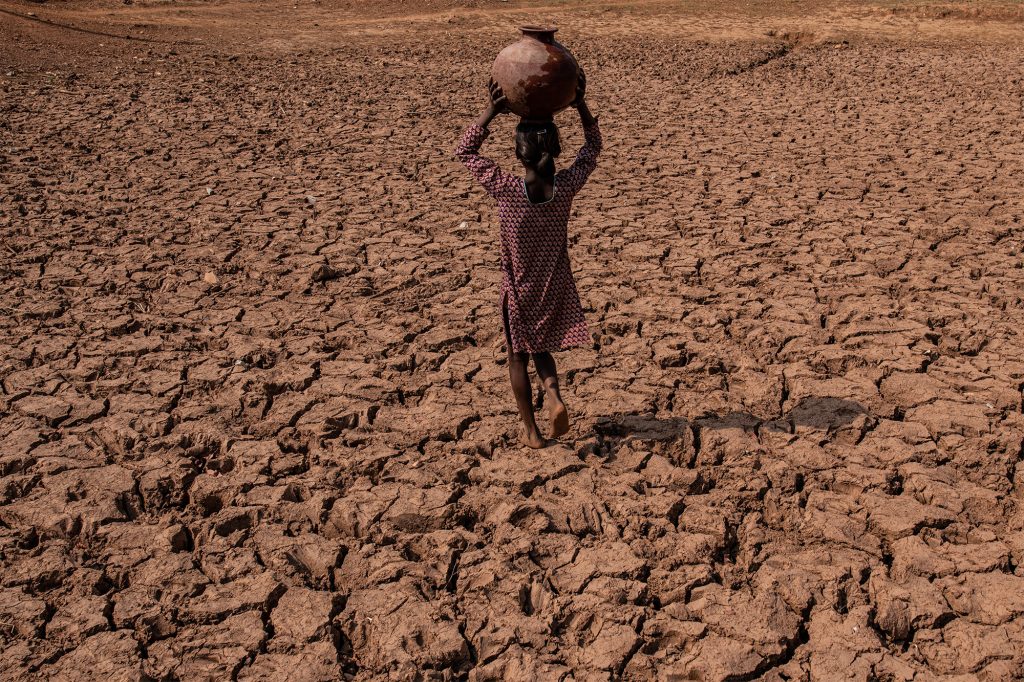
Since rivers and aquifers cannot be confined within political boundaries, therefore all nations’ interdependence is growing as fast as their population. This has added an ominous dimension to this precious resource – withholding and using it to intimidate, coerce and ultimately as a weapon of mass destruction by unleashing artificial floods and/or droughts. We are already facing this heat from China, our northern neighbour across the Himalayas.
Grand Designs of China
Most of the major rivers of Asian continent which provide water to the 29 per cent of the world’s population living in South Asia, from Afghanistan to Vietnam, originate in the plateau of Tibet which is also called the Third Pole for water with nearly 46,000 glaciers. They include Sutlej, Indus, Brahmaputra, Karnali, Irrawaddy, Salween, Mekong, Yangtze and Huang He (Yellow River)
China’s territorial disputes with all her neighbors are as much about dominating rivers as occupying land. Ever since the present Communist regime gained control of China they have been focusing on storage of freshwater. China’s water resources are unevenly distributed. The better developed northern regions, where its 42 per cent population resides have only 14 per cent of its freshwater.
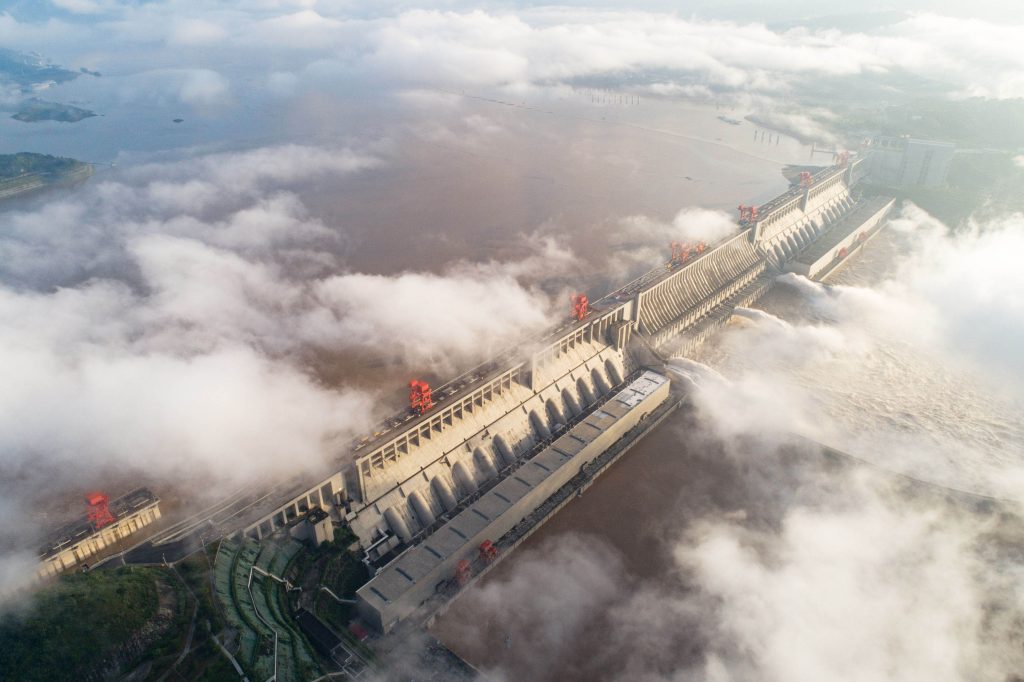
The agrarian South, comparatively less developed is water surplus with an 86 per cent share. China has built numerous dams and reservoirs following Chairman Mao’s earliest dictum of carrying water from surplus south to arid north. Gaining control over Tibet was also a part of this strategy. Today China has about 98,000 dams or water storage structures of various kinds. Of the world’s total large dams, China accounts for the most – 20% of them. World’s largest reservoir is created by China’s Three Gorges Dam on Yangtze River, which stores 39.3 billion CUM (31,900,000 acre feet) of water with a surface area of 1,045 sq km (403 sq miles). Three Gorges is also the world’s largest power station.
The challenge for India
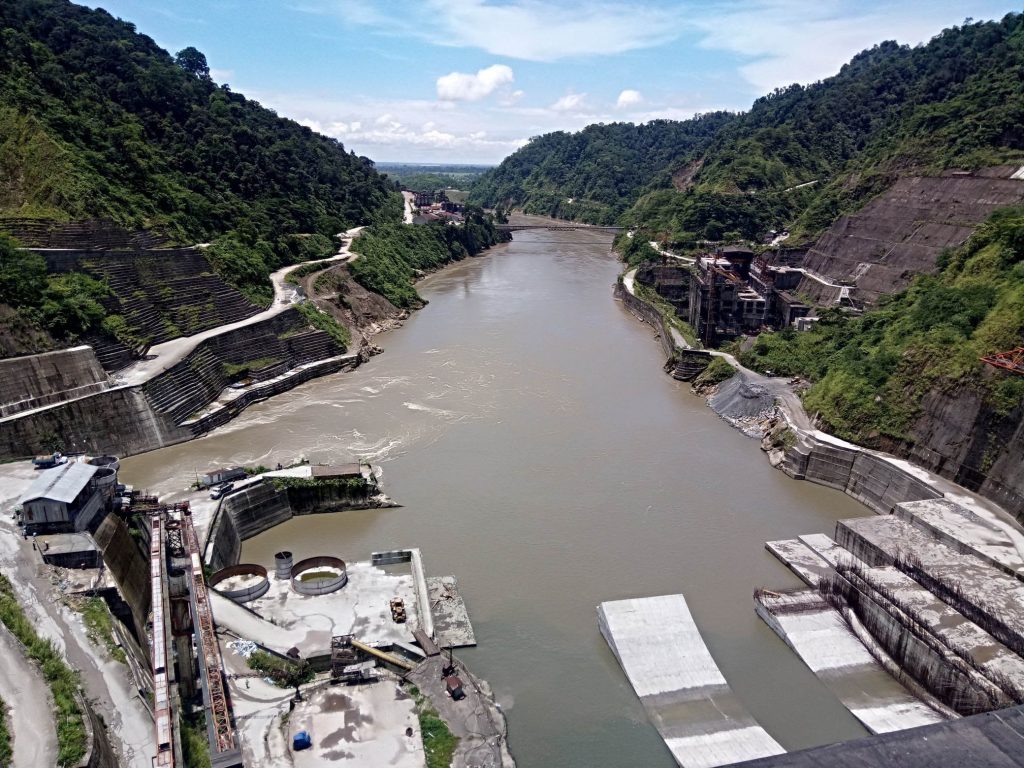
Without much fanfare and publicity associated with Three Gorges, China has been quietly blocking and diverting the flow of Brahmaputra. Zangmu Dam was built by China in the middle reaches of the river, a few kilometers from Bhutan-India border with power generation becoming fully operational in October 2015.
It is being claimed that the reservoir is just a run-of–the-river- power project, but reports suggest that the Chinese have plans to divert water up to 200 billion cubic meters for irrigating the deserts of Xinjiang, Gansu and Inner Mongolia. Three other such dams are coming up at Dagu, Jiexu and Jiacha, all in the same geographical location. China has also blocked Xiabuqu, a 195 km long tributary which joins Brahmaputra at Xigaze close to the Indian state of Sikkim. It is here that construction of a dam on Xiabuqa was started in 2014 which was expected to be completed by 2019, forming part of Lalho hydroelectric project. In November 2020, China’s 14th Five Year Plan for 2021 – 2025 announced construction of a huge 50 meters high dam with power generation capacity of 60-gigawatt on Yearlong Tango (Brahmaputra) River in the Tibetan Autonomous Region (TAR) of China in the foothills of the Himalayas. This planned mega-dam could produce as much as three times the hydropower being produced at their current largest dam, the Three Gorges. It is located just 30 kilometers from the Indian border, this dam plan has caused great alarm and consternation in India and Bangladesh, and not without reason. The challenge to the very continuity of their major water resource has come right up to the door and effective countermeasures by both countries are urgently called for.
River Brahmaputra (Yearlong Tango)
Also called Yearlong Sango or Yaluzangbu, it is the upper stream of Brahmaputra River originating eastwards near the holy Mansarovar Lake in western Tibet. Three other important rivers completing four prime directions from Mansarovar Lake are Indus (north), Sutlej (west) and Karnali (south) – the last one ultimately joins Ganga. Yearlong Tango flows at the height of nearly 5000 meters above sea level, making it the highest river in the world. Then the river plunges 2700 meters at the Grand Canyon of the East – deepest in the world and at 504.6 kilometers, slightly longer than the Grand Canyon of the United States. The precipitous fall makes it particularly conducive for harnessing hydroelectric power. Flowing eastward for 1625 kilometers in Tibet, the river takes ‘Great Bend’ towards south-west and enters India in Arunachal Pradesh as the Siang. Further down after the confluence with the Dibang and Lohit, it is known as the Brahmaputra. After traversing through Assam, it merges with the Ganga in Bangladesh and empties into the Bay of Bengal.
It is just at this Great Bend that China’s new super hydropower dam is proposed to be located. Damming up the river at Great Bend will not only give China near total control over Brahmaputra flow to India, but is also riskier because it is in a high seismic zone. It has been the epicenter of some of the most severe earthquakes over the century including the devastating 1950 earthquake that changed the course of Brahmaputra in Assam and perished thousands.
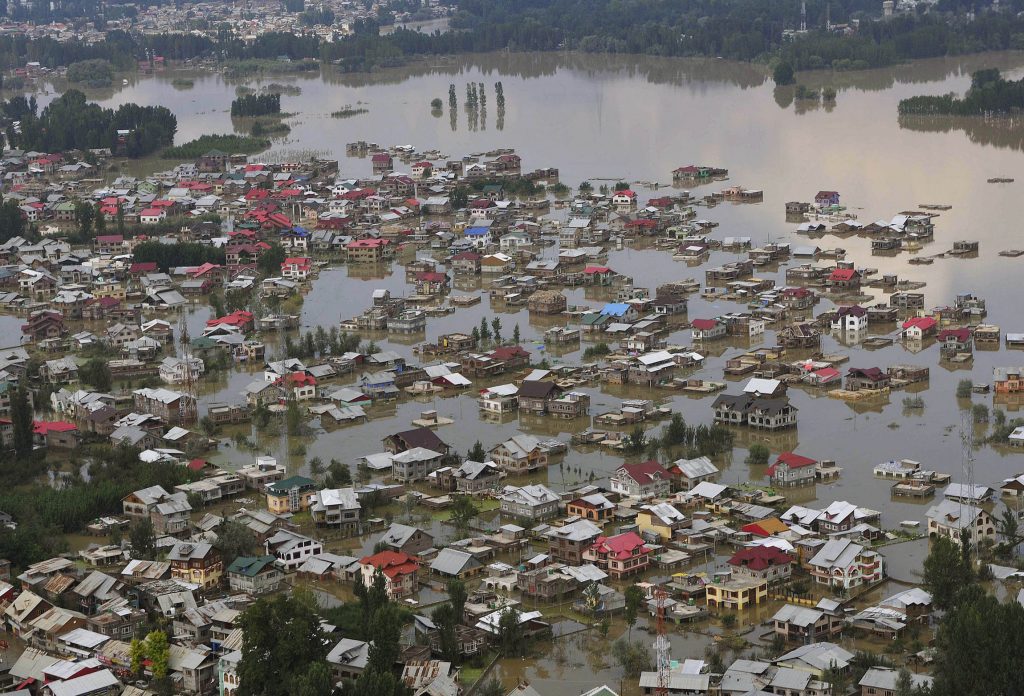
Brahmaputra accounts for nearly 30 per cent of India’s freshwater resources. A perennial river, it is the lifeline for communities living along its banks for irrigation, fisheries and inland water transport. Consequences of China diverting or withholding the waters of Brahmaputra could be damaging for all these. It could seriously affect the navigability of National Waterway-2, the 890 km stretch from Sadiya to Dhubri by substantially reducing the minimum required water depth. A huge dam in close vicinity would also hold back the massive amount of fertile silt being carried by the river. Although China claims that all these ventures are just “run-of-the-river” hydropower schemes – not involving any diversion of water, but they certainly have the leverage to withhold and divert it to their arid regions and causing drought here during keen irrigation demand. Also they can release it during monsoons, causing flash floods in Arunachal Pradesh and an already flood-prone Assam.
Other Indian Rivers too at risk
China plans to tap waters of most of the big rivers flowing from the Tibetan plateau. They have already built a barrage on Sutlej River without informing India, and let us not forget that the first “temple of resurgent India” – Bhakhra Dam is situated on Sutlej River. Some of Nepal’s major rivers originate in Tibet and finally merge into the Ganga in India. Of them the most important is Nepal’s longest, Karnali (507 km). Tibet is also the origin of some parts of Kali Gandak, Budhi Gandak and the larger part of Trishuli which are major tributaries of the Gandak River system. Similarly major tributaries of the Kosi River such as the Sun Kosi/BhoteKosi, the Tama Kosi and Arum originate in Tibet. Flowing through western, central and eastern parts of Nepal respectively, Karnali (becoming Ghaghra in India), Gandak and Kosi enter India and join Ganga.
Nepal alone accounts for 46 per cent of the flow in the Ganga and its contribution grows to 71 per cent during the lean season. What would happen to the Ganga if dams and diversion works are built on its major tributaries flowing from Tibet into Nepal? Although it might not be feasible to create reservoirs by building dams so near the origins of these rivers in Tibet, but Nepal has suitable sites for such construction. China is already working towards developing road connectivity with Nepal and also to sell generated hydropower to Nepal. China’s next move may be to convince Nepal to allow it to build reservoirs on Ghaghra, Gandak and Kosi rivers in Nepal and get more and cheaper – maybe free – hydropower. For China, it would mean further promotion of cross-border integration with Nepal, gaining sizable control over water flow in the Ganga basin, which is our grain bowl, and causing more problems for India as well as Bangladesh.
It is clear that China wants to fully exploit its status as an upper riparian state– which allows “restricted territorial sovereignty” as per international law — by trying to replace in practice the keyword “restricted” by “absolute”. By the same law, it also has an obligation to protect the interests of lower riparian nations. There is frenzied dam building in China bordering on paranoia, but there is no arrangement between China and any other lower riparian country on water sharing. Fact is that far from any water sharing mechanism, Beijing is reluctant to share even the hydrological data with the lower riparian countries.
China has the maximum number of lower riparian states in the world – sharing rivers originating from it. But so far it has not entered into a comprehensive river water sharing agreement with any of them. On the other hand, since 1950s, more than 200 agreements have been developed between riparian nations all over the world that address issues of water management including information exchange, monitoring and evaluation, flood control, hydropower projects and allocations for consumptive or non-consumptive uses in international basins. A case in example is Indus Water Treaty for water distribution between India and Pakistan signed and ratified in1960, which is considered one of the most successful and durable water sharing endeavors in the world today, because the two nations have not engaged in any water wars despite their several military conflicts.
China should have concluded Water Treaties with India, Bhutan and Bangladesh – for Brahmaputra basin; with India, Pakistan and Afghanistan – for Indus basin; with India and Pakistan for Sutlej basin; with Nepal and India – for Karnali, Kosi and Gandak basins; with Myanmar, Thailand, Laos, Cambodia and Vietnam – for Mekong basin; with Myanmar for Irrawady basin; and with Myanmar and Thailand for Salween basin. It has stoutly refused to do so, except a few MoU’s only for supplying hydrological data, which too are not always compiled in letter and spirit.
It is hoped that the Indian establishment would soon be able to spell out its strategy for dealing with this new Chinese aggression.
Meanwhile, there are five principles of international water law: principle of equitable and reasonable utilization; Obligation not to cause significant harm; principle of notification, consultation & negotiation; principle of cooperation and information exchange; peaceful settlement of disputes. These principles are enshrined in 1966 Helsinki Rules, 1997 UN Watercourses Convention, 2004 Berlin Rules, and several Water Treaties including 1960 Indus Water Treaty.
Can India corner China at UN water meet?
It is necessary to bring international pressure on China on this issue. It should be taken up to UNO with India taking the lead. In every continent, the distribution of river waters among the countries is regulated by precise water Treaties or Agreements. In South Asia, we have the Indus Water Treaty-1960 between India and Pakistan, Indo-Bangladesh Treaty, Indo-Nepal Treaty and Mekong Agreement and procedural Rules 1995. European Treaties include Danube River Protection Convention and Finland-Sweden Agreement on Trans boundary Rivers 2009. There are agreements between the USA and Canada on the Great Lakes Water Quality and Boundary Waters Treaty. Similar Treaty exists between the USA and Mexico on the Rio Grande Waters. Africa has Nile waters agreement 1959 between Sudan and Egypt. There is the Amazon Cooperation Treaty Organization 2004 in South America among member states of Bolivia, Brazil, Columbia, Ecuador, Guyana, Peru, Surinam and Venezuela.
China – being the upper riparian state of the largest number of rivers – therefore has no valid argument or reason to openly defy this accepted civilized convention.
There will be a UN Water Conference in 2023 itself where Trans-boundary and International Water Cooperation is the main item on the Agenda, and the focus would be to make sure that countries deliver on promises already made. China exactly falls in this category. In a recent article carried by the state-run ‘Global Times’, China had expressed willingness to have multilateral cooperation with India and Bangladesh to share waters.
Retracting on the statement, two days later, the Chinese Foreign Ministry’s official spokesperson went on to state that effective cooperation regarding sharing data on the flow of rivers already existed. It clearly shows that China is not willing to commit water sharing with lower riparian states through proper Agreement or Treaty and feels providing hydrological data – as and when it suits them – is the end of their responsibility. International pressure can bring China to the table for inking Agreements for judicious water distribution with all downstream user nations. Indeed, it is a huge task to get anything agreed by the Chinese.
Meanwhile, there are five principles of international water law: principle of equitable and reasonable utilization; Obligation not to cause significant harm; principle of notification, consultation & negotiation; principle of cooperation and information exchange; peaceful settlement of disputes. These principles are enshrined in 1966 Helsinki Rules, 1997 UN Watercourses Convention, 2004 Berlin Rules, and several Water Treaties including 1960 Indus Water Treaty.
Painstaking research
S.K.Kumar, an octogenarian engineer and scholar will be completing 85 springs of his life on coming November 26, but his enthusiasm and dedication continues to inspire the generation next. A post-graduate in Physics, he did his civil engineering from the country’s oldest engineering institution, the then Roorkee University, now called IIT. He served the UP’s Irrigation Department, and after his superannuation, he became the member of the UP Public Services Commission. The present study is based on his life-long research and dedication. Apart from serving his home state, he has been associated with various institutions of the Union Government as well as other state governments.
Driving a wedge
An MoU was signed on 5th June 2008 between China and India, according to which the former would supply hydrological data of Brahmaputra River only in Flood Season at three identified stations. But China is weaponising even this information, which is binding on it, as a tool for coercion by withholding data from India. It was refused by them during the height of Doklam crisis, but according to sources the data was continued to be provided to Bangladesh. China prefers to deal with issues bilaterally, rather than multilaterally, which gives it more flexibility to bend the negotiations in its favour and to drive a wedge between India and Bangladesh.
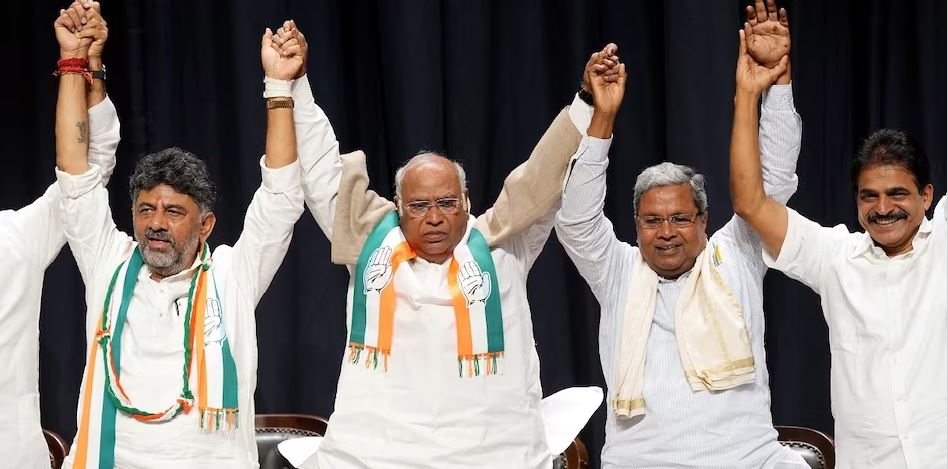
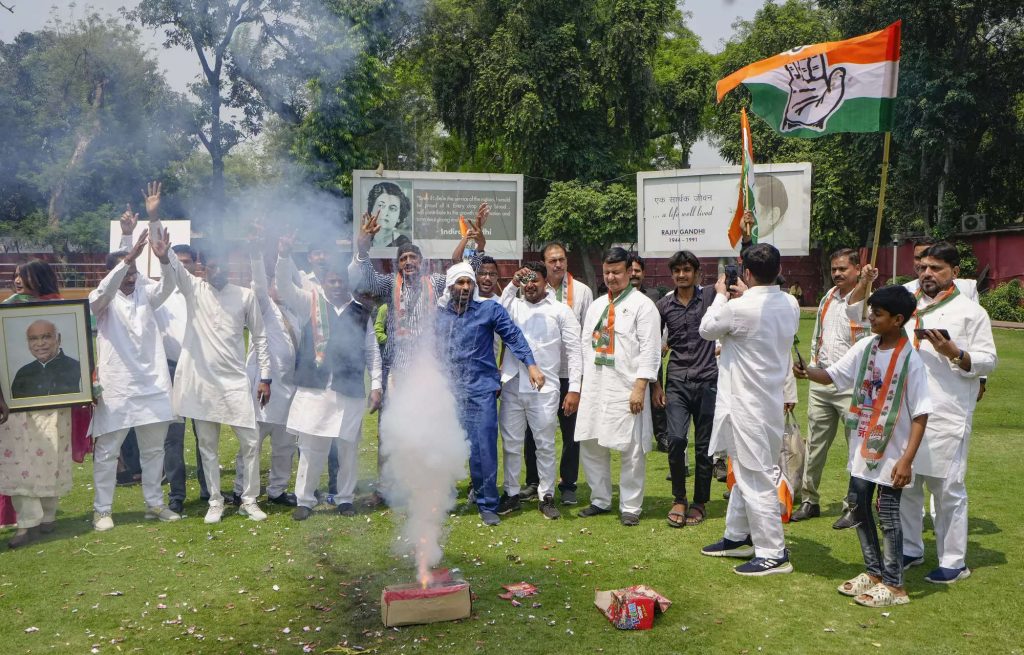
The mandate as definitive as the one in Karnataka carries with it the risk of over-reading and over-reacting to both victory and defeat. For the Congress, the real test would be to quell infighting in the party before Assembly elections in Rajasthan, Madhya Pradesh and Chhattisgarh in 2023 and then to stitch an Opposition alliance for the General Election in 2024. The Karnataka model may not work in other states and the BJP is known to strike back with a vengeance to break Congress’ morale booster win. Congress has to provide corruption-free governance in the states it rules, to maintain euphoria of May 13 win to project itself as an alternative. It can’t afford to be complacent. And the BJP must have learnt that the PM’s campaign alone can’t make up for an absent government that was riddled with allegations. As the ruling dispensation, it should have accepted accountability for its track record and explained to the voters why it faltered rather than giving the narrative a communal twist. The result means the party is no more invincible in states as it appears nationally.
Seeing the writing on the wall, the BJP has already planned a “Maha Jansampark Abhiyaan” covering all the 545 Lok Sabha constituencies with the avowed aim of disseminating messages of government achievements under nine years of Prime Minister Narendra Modi’s rule. The month-long outreach will commence from May 30, the day the Modi government completes nine years and will continue till June 30. For the Congress, the comprehensive victory is a huge morale-booster but even in the win with an absolute majority with 135 seats in the 224-member Assembly, the Congress can learn more from BJP’s loss. In the run up to the election, the Congress stayed united while BJP leaders were seen settling scores with each other and raising divisive issues. In its subtle campaign, the Congress raised local issues including native dairy brand Nandini. With the decisive verdict, Karnataka voters have sent a significant lesson to the political class that they will not allow narrative to be changed but focus on their aspirations.
However, it would be naïve and too premature to dub Karnataka Assembly polls as a mandate against Prime Minister Narendra Modi and a “stepping stone” to the Lok Sabha election slated next year. The party may claim that love won over hatred and Bharat Jodo Yatra rejuvenated the party cadre and enthused the voters but the Congress has its task cut out as it has to fulfil the five guarantees given to the people. Choosing a non-Gandhi as the party chief too seems to have worked for the Congress. The spotlight would now be on him to bring together Opposition parties and leaders like Nitish Kumar, Arvind Kejriwal, Mamata Banerjee and K Chandrashekar Rao and at the same time ensure continuity with its long-time opposition associates in the run up to the General Election.
Indian Railways is on its way to become the world’s largest green railways with zero carbon emission by 2030. To accomplish this, all new railway lines to be sanctioned and constructed, henceforth, will also continue to be electrified simultaneously. A report by M.Y. Siddiqui
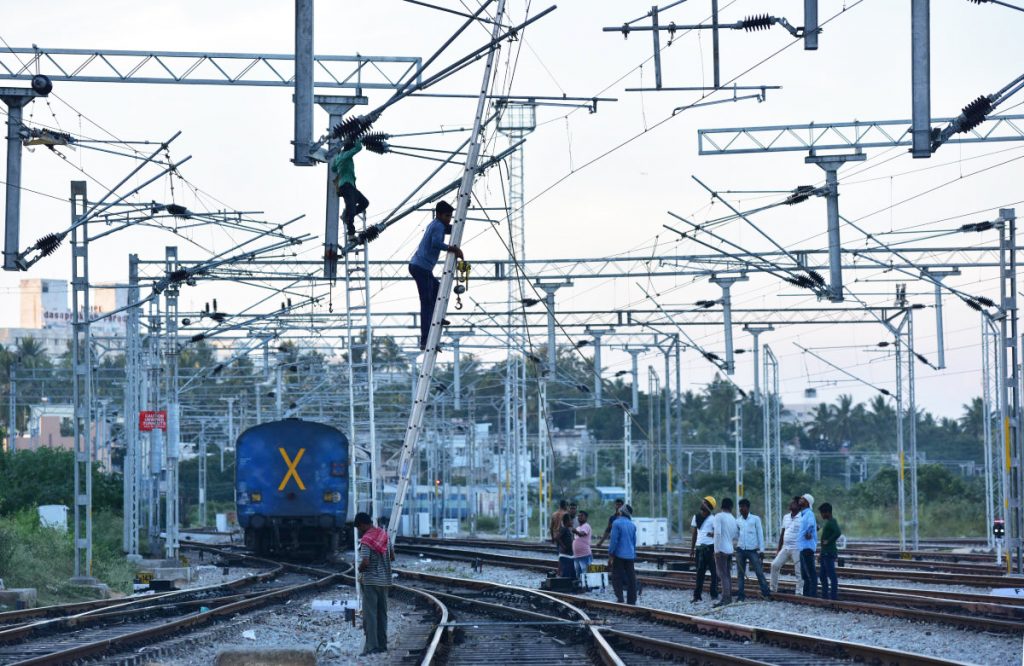
Indian Railways will complete hundred percent electrification of its entire Broad Gauge (BG) routes by the end of this calendar year (2023). Out of a total of 65,269 BG Route Kilo Metres (RKMs) across the country, 58,812 RKMs, equivalent to 90.06 per cent RKMs have been completed as on March 31, 2023. Remaining 6,457 BG RKMs will be completed by December 31, 2023. Work on electrification is going on with full force. Allocation of Rs. 8,070 crore has been provided in the union budget 2023-24 in the Ministry of Railways for completion of electrification, in any case, by March 31, 2024.
With that the entire BG RKMs will be electrified ensuring high-speed environment friendly, cost effective bulk rail services to the nation. Electric traction is seven times environmental friendly and cheaper than coal and six times economical than diesel. However, some percentage of diesel locomotives will still be needed to meet contingency of snapping of power cables, breakdown of AC locomotives and for shunting yards.
Railways electrified 37,011 RKMs over the last nine years, which is record breaking compared to 21,413 RKMs of railway tracks before 2014. This is intended to provide seamless fast rail services to the nation. According to the Ministry of Railways, around 50 per cent of the total RKMs electrified have been completed in the last five years. Railways have completed hundred percent electrification in 14 States and Union Territories, considered significant steps to make train operation sustainable, cost effective and eco-friendly.
In a policy decision, the Ministry of Railways has decided to make Indian Railways the world’s largest green railways with zero carbon emission by 2030. To accomplish this, all new railway lines to be sanctioned and constructed, henceforth, will also continue to be electrified simultaneously. Electrification of tracks has been prioritized to reduce country’s dependence on costlier imported petroleum products like diesel in order to make rail services energy efficient, economical, faster and environmentally friendly bulk transportation of passengers and goods to accelerate all round development of the nation. In a landmark development, official sources have revealed that Indian Railways have taken up trial of hydrogen based fuel technology to make rail services still the most environment friendly and more economical.
Railway electrification work has been made a joint work by Rail Vikas Nigam Limited (RVNL), Central Organisation for Railway Electrification (CORE), Power Grid Corporation, and Rail India Technical and Economic Services Ltd. (RITES) to fast pace electrification work. Earlier, rail electrification used to be the sole work of the CORE. Combination of four entities of repute has helped accelerate rail electrification work.
Earlier, the electrical wing in the Ministry of Railways used to be a poor cousin of departments of civil and mechanical engineering. Electrical wing used to be looked down upon with derision by the so-called mechanical engineering department. With growing concern for environment denudation and official measures to stem it, Rajiv Gandhi Union Government created a full-fledged electrical engineering department in Ministry of Railways with a full Member Electrical and ex-officio Secretary to the Government of India as its head. The first Member Electrical was Sandeep Kumar Khanna, son of the legendary Justice Hans Raj Khanna of the Supreme Court of India, who dissented in the Constitution Bench upholding the Emergency, by stating that Constitution or no Constitution, Law or no Law, a person derives his/her inherent fundamental rights to life and liberty right from his/her birth and no power much less a government can take away that rights. He quashed suspension of fundamental rights during Emergency thereby immortalizing himself as the best judge of the apex court, so far.
With S.K.Khanna at the helm, electrification of rail track was prioritized with a dedicated supervisory control. But resource crunch made it still slow. With globalization of the Indian economy set in motion in July 1991, rail electrification was further prioritized over and above the dominant mechanical engineering department and more and more money was allocated for rail electrification. The current RSS Pariwar Union Government accelerated electrification of railway tracks further as part of its infrastructural push as never before to meet environmental friendly requirements of the globalized world!
Besides being a morale booster for the grand old party, the Karnataka result has given belief to the other non-BJP parties in other regions that the saffron party is no longer invincible and can be defeated with a well-coordinated strategy. By Dr. Anil Singh
After being crowned king of Karnataka, Congress now faces a number of difficulties, particularly when it comes to carrying out the five promises it made to the electorate of the state during its campaign. In addition to keeping its election promises, it must make sure that its elected officials do not become victims of “Operation Lotus,” as happened in the days following the 2018 assembly elections. The party leadership must maintain internal cohesion within the rank and file of the state unit of Congress while also keeping its flock together.
Undoubtedly, the victory for the Congress in Karnataka is good for the party’s morale there and elsewhere, but it also has the potential to have an impact on the Opposition’s coordinated efforts to defeat the BJP in a number of ways. The Congress, which has been battling to regain its lost ground following the 2019 Lok Sabha elections, is likely to gain confidence and credibility from a victory in Karnataka. A victory for the Congress would strengthen Rahul Gandhi’s leadership and make it possible to form alliances with other regional parties to challenge the BJP’s sway at the federal level and in other states. Additionally, it conveys to voters that the BJP is not unbeatable and that there is a viable alternative that can put pressure on the BJP to address a number of issues, including farmers’ demands, the economic slowdown, and communal violence, which have weakened its support among the general public. In order to defeat the BJP in the 2024 Lok Sabha elections, Congress now seems to be in a better position to convince other opposition parties to work together.
Implications for the BJP
The BJP’s recent defeat in the Karnataka assembly elections may have a variety of effects on its chances in the upcoming 2024 Lok Sabha elections. The BJP has been trying to gain traction in states like Tamil Nadu, Kerala, and Telangana in south India, so a defeat would be a setback for those efforts. Additionally, it has damaged the reputations of Prime Minister Narendra Modi and Home Minister Amit Shah, who both actively promoted the party in Karnataka. It has also given the opposition parties more clout, particularly the Congress, which is trying to turn around its fortunes following a string of electoral defeats. In order to position itself as a serious challenger to the BJP on the national stage, Congress would like to use Karnataka as a launching pad for the 2024 Lok Sabha elections. A defeat for the BJP is also likely to inspire the regional parties, which had been ignored in recent years, to greater heights.
A loss for the BJP has repercussions for its internal dynamics because it could lead to a change in leadership or a coup by leaders who feel they have been ignored or denied tickets by the party’s high command. It also calls into question how it has handled issues like the Covid-19 pandemic, farmer protests, the slowdown in the economy, and inter-communal violence.
The Way Forward
The results of the Karnataka elections, where the Congress won and the BJP lost, could have an impact on both parties’ chances of winning the upcoming assembly elections in Madhya Pradesh, Telangana, Rajasthan, and Chhattisgarh, which are scheduled for the latter half of 2023. In Madhya Pradesh, where the BJP has a slim majority, the Congress may feel emboldened after Karnataka triumph to win back some of its dissident MLAs and present a unified front under Kamal Nath’s direction. The BJP’s loss in Karnataka may hurt the saffron party’s confidence and momentum in Telangana, where the incumbent TRS is up against a resurgent BJP. The main opposition party in the state, the Congress, may benefit from the BJP’s defeat and try to turn around its fortunes by highlighting the shortcomings of both the TRS and the BJP governments.
A victory in Karnataka could boost the Congress’ morale and stability in Rajasthan, where it is currently in power by a slim margin. The victory for the Congress in Karnataka might aid the party in resolving its differences and projecting a unified front to voters. Especially after losing Karnataka, the BJP, the state’s main opposition party, is likely to find it challenging to take on the Congress. In the state, the BJP may also have to deal with internal factionalism and leadership problems.
A victory in Karnataka has boosted the Congress’ morale and stability in Rajasthan, where it is currently in power by a slim margin. The victory of the Congress in Karnataka appears to have bolstered its standing and support in Chhattisgarh, where it currently holds a comfortable majority of seats in the legislature. Congress has gained support from the public by implementing a number of welfare programmes and pro-farmer policies. It will probably be challenging for the BJP, the state’s main opposition party, to defeat the Congress, especially in light of its defeat in Karnataka. Considering that the BJP lost two straight elections in 2018 and 2019, the challenge of reorganizing its structure and strategy may also be one that it must overcome.
The Congress has been quick to pin the BJP’s loss on Prime Minister Modi and has accused him of running a divisive and negative campaign while there was nothing specific for the Karnataka voters, who could see the difference in the two campaigns. A report by Amit Agnihotri
In a major setback, the BJP lost the high stakes Karnataka assembly polls despite an aggressive campaign led by PM Modi.
The BJP could win only 65 seats as compared to 136 of the Congress, 19 of JD-S and 4 others out of total 224. In the 2018 polls, the BJP had won 104 seats. Though the JD-S-Congress coalition had come to power in 2018, the BJP was able to defeat the HD Kumaraswamy government in 2019 after poaching 17 Congress MLAs. BJP leader BS Yediyurappa then became the chief minister but was replaced by Basavaraj Bommai in 2021.
Though Union home minister Amit Shah and BJP chief JP Nadda also campaigned for the saffron party, PM Modi became the face of the party as he conducted a high-pitched voter outreach with 19 public meetings and six road shows to counter the anti-incumbency of the Bommai government.
The main appeal of the PM’s campaign was a second term for the BJP saying the double engine government will further push development in the southern state. Nadda said the state won’t get PM Modi’s blessings if the BJP lost.
Karnataka was important for the BJP as it was the only state where the party had political power in the whole of south India. Now, that advantage has been lost ahead of the major assembly polls in 2023 and the 2024 national polls. Among the four assembly polls this year are Madhya Pradesh, Rajasthan, Chhattisgarh and Telangana. The BJP has been trying to get an entry into Telangana where the Karnataka results will have an impact. The BJP hardly has a presence in Andhra Pradesh, Kerala and Tamil Nadu. Together, the five southern states have 129 Lok Sabha seats.
Out of the four poll-bound states, Congress rules in Rajasthan and Chhattisgarh. The party directly fights the BJP in three states, MP, Rajasthan and Chhattisgarh while it faces ruling BRS in Telangana. Karnataka, the only southern state where the BJP had managed to make inroads, sends 28 members to the Lok Sabha. As a result, the BJP will now be seen majorly as a north Indian party and this could go against its claims of being the largest political party in the country.
Even before the final results were out and counting trends indicated a win for the Congress, chief minister Basavaraj Bommai conceded defeat.”We’ve not been able to make the mark. I take responsibility for this debacle. We will do a detailed analysis. As a national party, we will not only analyse but also see what deficiencies and gaps were left at various levels. We take this result in our stride. We will work as a responsible opposition,” Bommai said. Earlier, Bommai said that he was confident of a BJP victory. The Congress, he had claimed, was trying to reach out to other parties because it did not have confidence in its legislators.
The Congress quickly described the results as a defeat for PM Modi and accused him of running a divisive campaign saying the BJP leader had only talked about issues like “poisonous snake”, “riots will happen if Congress comes to power”, “Congress protects terrorists”, “Congress abused me 91 times”, and “Congress wants to lock Bajrangbali”, while there was nothing specific for the Karnataka voters, who could see the difference in the two campaigns.
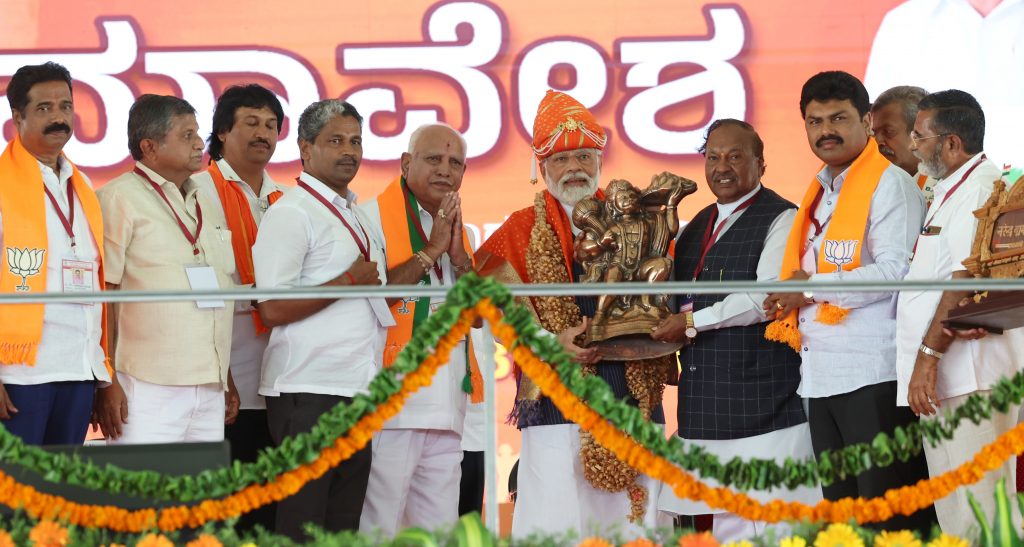
While the PM charged the Congress of being corrupt and guilty of surrendering to terrorists, Modi’s big attack on the Congress over its manifesto promise to ban organizations like Bajrang Dal and PFI got the maximum attention. The PM accused the Congress of planning to lock Lord Hanuman also known as Bajrangbali and asked the voters to chant Jai Bajrangbali before casting ballots. The Congress said this was an attempt to polarise the electorate and countered the charge by saying that the Bajrang Dal could not be equated to Lord Bajrangbali. Karnataka Congress chief assured the voters that the party would construct Lord Bajrangbali temples across the state if the party came to power. Earlier, the Congress had accused the BJP of trying to divide the voters over the Hijab, Halal and Love Jihad controversies.
Anti-incumbency
Ahead of the assembly polls, the BJP faced strong anti-incumbency due to corruption charges against the Basavaraj Bommai government and suffered from severe infighting in the party over ticket distribution.
As a result, the BJP lost 25 senior leaders to the Congress including ex-deputy chief minister Laxman Savadi and former chief minister Jagdish Shettar, who lost from his Hubli seat. Shettar’s joining helped the grand old party both in perception building as well as electorally in the crucial Hubli-Dharwad area.
Firstly, the ill-treatment of Shettar in the BJP, where he grew through the rank and file over the past decades, showcased the chaos within the saffron party. Secondly, Shettar belongs to the powerful Lingayat community which influenced around 120 assembly seats spread across vast areas from Bidar to Tumkur. Besides, the Lingayat community has around 10,000 Mutts across the state which are very influential.
Shettar was the biggest Lingayat leader in the BJP after former chief minister BS Yediyurappa. The BJP had to remove Yediyurappa earlier over corruption charges but the party was forced to bring back the veteran in this election to deal with huge dissatisfaction among the Lingayats.
The 2023 elections indicated that the BJP had not been able to make its much-needed breakthrough into the Vokkaliga and the Scheduled Castes and Scheduled Tribes votes.
In March, the BJP had tweaked the reservations in the state, scrapping the 4 per cent OBC (Other Backward Classes) votes for Muslims and allocating a chunk of it to the Vokkaligas and Scheduled Castes and Scheduled Tribes. Muslims who were eligible for reservation benefits were categorised under the economically weaker sections category.
Former chief minister Yediyurapppa had claimed that “Hundred percent of the Lingayat community is with us. Congress is trying their level best to create some problems but almost all Lingayats Swamis are with us and told me that they will support BJP.” But the claim proved to be hollow.
“The message from Karnataka is that the ‘end’ of BJP’s negative, communal, corrupt, rich-oriented, anti-women-youth, social-divisive, false propaganda, individualistic politics has begun. This is a strict mandate of a new positive India against inflation, unemployment, corruption and animosity,” tweeted Samajwadi Party chief Akhilesh Yadav.
Corruption
The Congress picked up the 40 percent commission issue after the contractors’ association levelled charges that they were being forced to pay bribes for all government contracts. Later, a contractor and a BJP member Santosh Patil wrote letters to the PM but his concerns were not addressed. Santosh later committed suicide. The BJP then had to remove minister KS Eshwarappa, who had been booked in the abetment of suicide case.
During the campaign, a video of the PM speaking to Eshwarappa over the phone and asking him to ensure BJP’s victory, had gone viral. Before Eshwrappa, minister Ramesh Jarkiholi had to resign over an alleged sex CD scandal in 2021.
In March this year, the Lokayukta police laid a trap on the basis of the businessman’s complaint and the KSDL chairman’s son Prashant Madal –a Karnataka Administrative Services official and was the chief accounts officer of the Bengaluru Water Supply and Sewerage Board – was caught red-handed by the police while accepting an initial bribe amount of Rs 40 lakh. A total amount of Rs 2.02 crore of bribes from the KSDL suppliers was found in the possession of the son of the BJP MLA when he was caught at his private office in central Bengaluru, while an amount of Rs 6.10 crore was seized from the residence of the BJP MLA and KSDL chairman Madal Virupakshappa, who was a close associate of former Karnataka BJP chief minister B S Yediyurappa. The Lokayukta police had accused officials of a firm, identified as Karnataka Aromas Ltd, of paying bribes to the tune of Rs 90 lakh to be given supply contracts by the KSDL.
Another shocker for BJP came in April when former Karnataka minister Murugesh Nirani, who contested from Bilgi constituency on a BJP ticket, was booked after 963 traditional silver lamps worth Rs 21.45 lakh were seized from a factory staff quarter. Nirani who held the Large and Medium Scale Industries portfolio was booked under Section 171H of the IPC related to “illegal payments in connection with an election.”
All through the campaign, the Congress top brass including president Mallikarjun Kharge, Rahul Gandhi and Priyanka Gandhi Vadra alleged that the Bommai government was born out of corruption and had plundered the state charging commissions for government contracts and jobs while charging that the PM did not mention these issues in his poll speeches.
It is no one’s case to act as jury or hang or acquit anyone; neither is it to back wrestlers irrespective of their credibility quotient; or paint WFI chief black. On that the best is for the law to take its course.
“You did not prove to be a good father…you did not take care of me…you always thought about yourself…” this was what a suicide note of a 22 year old said: The victim: Shakti Singh.
It was way back in 2004 that Shakti Singh took his own life blaming his father, Brij Bhushan Singh, for his plight.
Some two decades later, the same man admitted to having committed a murder: “I have committed a murder in the past. Let people say what they want. I did commit a murder,” Singh is reported to have said in an interview.
So who is Brij Bhushan Sharan Singh? A muscle man? A criminal-turned-politician or the other way around? A tyrant? All rolled in one or a Member of Parliament who is a victim of political intrigue?
For record, Singh is a BJP leader and a six time MP from Uttar Pradesh.
In his affidavit submitted for the 2019 elections, there is a mention of four criminal cases including an attempt to murder filed against him. He also spent some months in the Tihar jail for his links with the underworld.
Singh has been President of the Wrestling Federation of India (WFI) for over a decade now. There are unsavoury stories about his using muscle power to intimidate those he was handpicked to govern.
Consequently wrestlers took to the streets alleging sexual harassment, physical abuse and financial irregularities in the Federation.
Staging a sit-in protest at Jantar Mantar in Delhi since last month, they are demanding that Singh be arrested.
Leading from the front are Bajrang Punia, Vinesh Pogat and Sakshi Malik among others: distinguished sportspersons who have won multiple medals for the country.
Today, they are threatening to return the medals they have won: “If the honour of the medal is like this, what will we do with this medal? It is better that we… return the medals”, Punia told reporters at the Jantar Mantar protest site. He also alleged manhandling by “drunk cops” at the protest site.
On his part, Singh has blamed the Congress for sponsoring the agitation; he has also refused to resign: “I will hang myself if a single allegation is proved” Singh is reported to have said.
The government did set up a committee to probe the charges but for the agitating sportspersons it was a step “too little too late”.
Much water has flown under the bridge since sportspersons took to the streets. Apart from the sympathy and support that the protests have generated, the fact that award-winning sportspersons are seeking justice does put the Government in the dock. Worse still, the farmers joining in has only fuelled the issue.
Farmer leaders including BKU’s Rakesh Tikait reached Jantar Mantar in solidarity with the protesting wrestlers.
Farmers joining in is not only significant but also reminiscent of the stir and their subsequent victory some two years ago when the Modi government, after much dithering, decided to repeal the three controversial farm laws enacted in 2020.
Irrespective of the outcome, farmers coming in sure adds heft to the on-going agitation and gives hope within some sections that the government may relent as it did in the case of the farmers.
Recall value apart, public sympathy is with the agitating wrestlers given that they are among those who made the country proud.
It is no one’s case to act as jury or hang or acquit anyone; neither is it to back wrestlers irrespective of their credibility quotient; or paint Singh black thanks to his political credentials or dubious past: on that the best is for the law to take its course.
However as things have panned out, politics is playing out good and proper.
Opposition parties and Chief Ministers are losing no time in milking events even as Congress’s Priyanka Gandhi visited Jantar Mantar; Sharad Pawar called out Police behaviour as “sad and disturbing”; Chief Minister M.K.Stalin calling it “gross injustice” and his counterpart Mamata Banerjee using strong words like “disrobing honour of our daughters being shameful”.
On his part, Singh harked back to 2019 when women in Shaheen Bagh in Delhi took to the streets against the Citizenship Amendment Act.
Alleging that the wrestlers’ protest is “expanding like Shaheen Bagh”, Singh said that the target of the protest is not him but the BJP and that the protest is “paid”.
That notwithstanding, there is a need to examine the issue from two angles: on the one hand, we need to ask whether it behoves the government of the day to have people take to the streets at the drop of a hat? Whether discontentment, rather anger, is the hallmark of an average Indian today?
That said, it is important to assess and examine the malaise both within and outside.
It is true that the BJP does little to quell divisiveness: if anything it fans it.
Remember a Union Minister’s desh ke gaddaro ko, goli maaro saalo ko…or the shoot traitors remark while lashing out at CAA protestors? It is well known that the protests were spearheaded by a particular community.
What about state governments ordering bulldozers to raze homes in select localities?
Divisiveness is one part: the other is the Government’s attitude to ride roughshod over adverse public opinion. As things have panned out, fear and intimidation seems to be the key to governance.
Having said that, it is important to examine the fault-lines and assess whether the discontent is real or one that is engineered?
To be fair to the BJP and Narendra Modi in particular there is an enemy lurking both within and outside. If within, there are anti-Modi elements at work, outside there are anti-India forces.
As for the anti-Modi elements, it is no rocket science to guess that Modi is an anathema to many. And this is not restricted to the political opposition but goes beyond. It extends to those who want to pull down Modi at any cost; those who may not necessarily be pro Congress but sure are anti-Modi. This includes some sections in the media who have made it their business to slam Modi for whatever he does or does not do.
That Modi is dictatorial is a given; like his hate relationship with the majority of the media but that cannot be enough to conclude that he does only wrong and is out to get people; that he is vindictive and will not spare the enemy. Partly true but then this does not take away the fact that his is a government that has focussed on building toilets, giving loans and gas stoves to women among other things. It also reiterates that he has a vision for India despite the huge amounts being spent on projects which many may deem unnecessary including the Central Vista redevelopment. Or of course devaluing and in many cases finishing off institutions?
But then why single out Modi? What about Delhi Chief Minister Arvind Kejriwal’s palatial home on which crores were spent? Or the Nehru and Gandhis using institutions to carry forward the legacy of only one family?
So there are skeletons in every cupboard.
Add to this the fact that forces outside the country would do what it takes to weaken India. It is no secret that internal strife is funded by forces outside. People may be angry and spill to the streets but the funding to sustain them comes from elsewhere.
And here lies the danger. Modi critics should continue to slam him for his government’s wrongdoings; they must rise against high-handedness but while doing that they must guard against being used by anti-India and anti-national forces that are at work. They must guard against the invisible hand which is waiting to strike and strike fatally.
Therefore, while it makes sense to beat the blues out of the devil, one should not lose sight of the bigger game plan of forces that are working overtime to destabilise India as a nation.