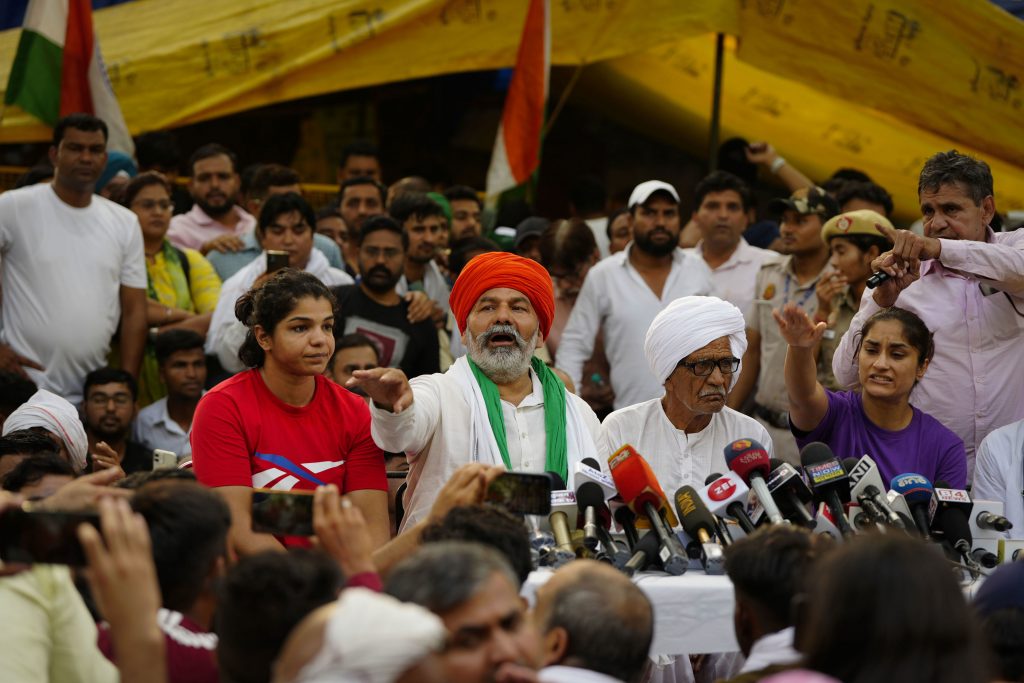
WFI chief, grapplers in no-holds barred bout as sport takes a beating

While the Wrestling Federation of India (WFI) chief Brij Bhushan Sharan Singh and some of the country’s top grapplers continue to spar with each other over sexual harassment charges, the ongoing episode has left an adverse impact on the sporting activities, reports Rajesh Moudgil

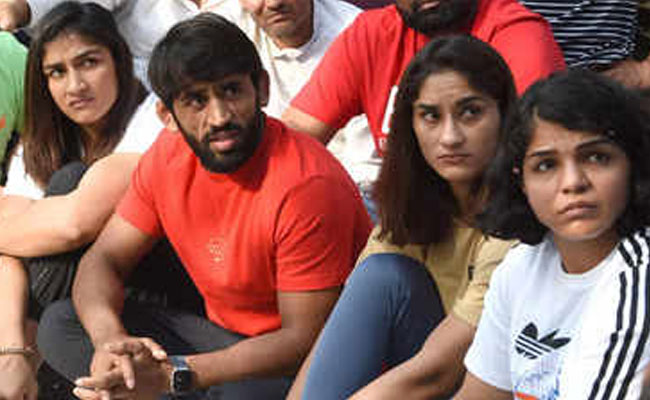
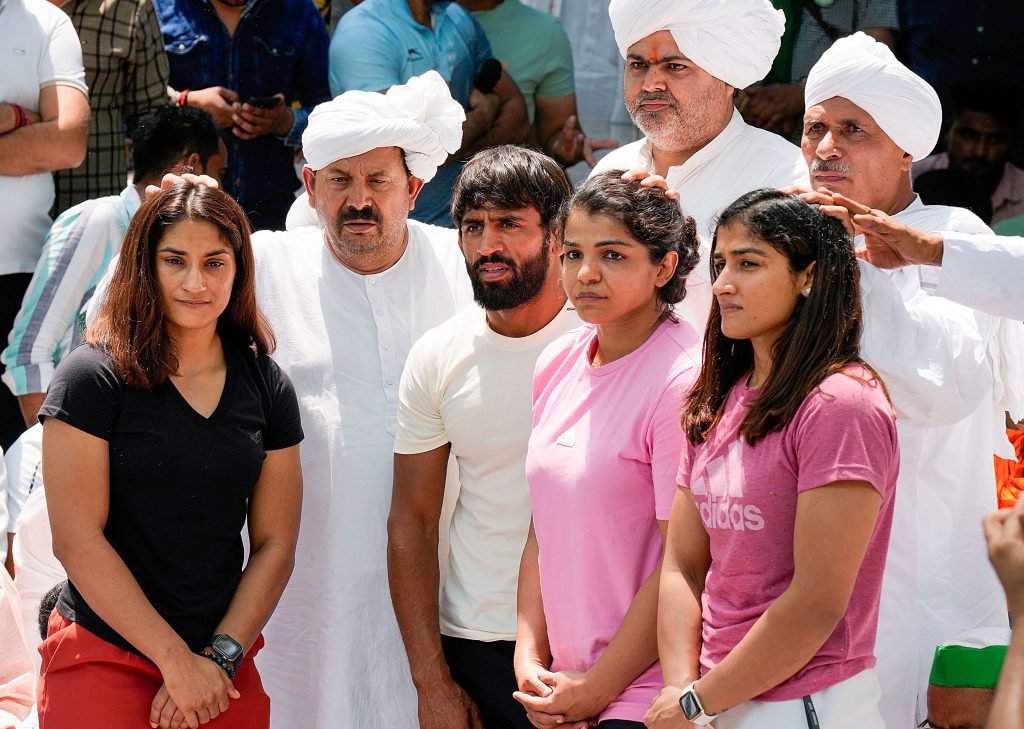
A group of country’s top wrestlers including Olympians Bajrang Punia, Sakshi Malik and Vinesh Phogat have been holding a protest at Delhi’s Jantar Mantar since April 23 demanding sacking of WFI chief Brij Bhushan Sharan Singh and his arrest on the charges of sexual harassment levelled by several women grapplers.

The Delhi police have registered two cases on April 28 against him on the basis of the wrestlers’ allegations. Singh is a six-time MP (five-time from BJP and once, Samajwadi Party) from Gonda seat in Uttar Pradesh.

The wrestlers have also demanded that the government makes public the findings of WFI’s oversight panel and a lie-detector narco-analysis test under the supervision of Supreme Court on Singh as well as the complainants, including a minor, who also alleged sexual harassment by him. This demand came after a Delhi court sought to know the status report from Delhi police in the two cases following which the protesting wrestlers demanded it in the wake of Singh and his supporters repeatedly terming their allegations as false and calling the complainants “liars’’. Whosoever is found guilty, hang them, Sakshi had stated.

While the protest has seen a few tense movements between the police personnel deployed there and the protesters, it has been gaining from Khaps (village bodies), farmers and political parties.

The Bharatiya Kisan Union (BKU) spokesperson Rakesh Tikait, representatives of Meham Chaubisi, one of the biggest Khaps of Haryana – Punia, Sakshi and Vinesh hail from Haryana – and Sanyukt Kisan Morcha’s Baldev Singh Sirsa have said that it had been decided that every Khap would come to the protest site every day, stay there and return by the evening.

They held that it had also been decided that while the protesters would take care of their protest, the farmers’ fora would hold a meeting on May 21 and decide their future course of action if the government fails to resolve the issue by then.

The Delhi police has thus heightened the security arrangements and deployment including Rapid Action Force (RAF) and CRPF as well as women security personnel around the protest site.

Wait for probe report: WFI Chief

The WFI chief, Singh, on the other hand, has urged the farmer leaders not to make any “mistake’’ in hurry and instead wait till the findings of the probe into the allegations against him levelled by a group of wrestlers, came out.

Reiterating that he was innocent and would readily face any punishment in the case if any of the allegations against him was proven, Singh held that he was targeted as he had brought much-needed reforms in the selection process for the wrestlers.

He went on to say that he had been saying right from day one that he would hang himself if any of the charges levelled against him was proven and that he would himself come to their Khaps after the probe is over, and in case he would be found guilty, they could beat him with shoes to death. Stating that if there was a character assassination of a self-respecting person, then he himself died and that was what was happening.

Political overtones

Meanwhile, the issue further snowballed with a large number of leaders from opposition parties visiting the protesting grapplers at Jantar Mantar.

While Haryana Congress leader Bhupinder Singh Hooda and his son Haryana Deepender Singh Hooda – the latter reportedly had also been keen for the coveted post of WFI chief – was among the first to visit them.

The political support to the protesters widened after April 28 with leaders of several opposition parties including Trinamool Congress, Aam Aadmi Party and Rashtriya Lok Dal expressing solidarity with them.

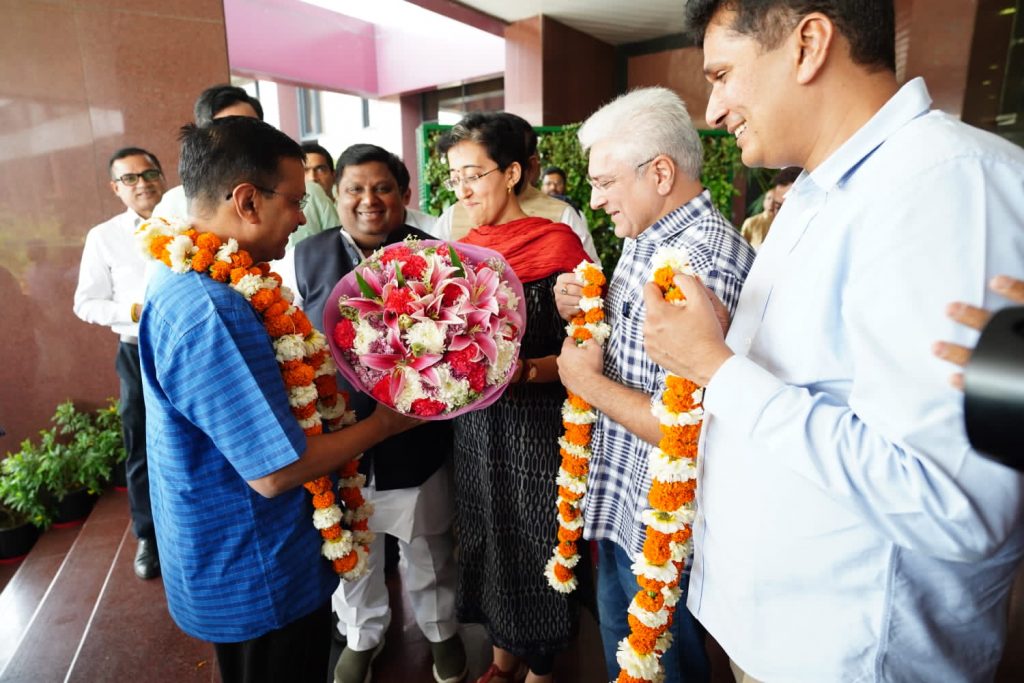
Beside AAP supremo and Delhi chief minister Arvind Kejriwal, his Cabinet ministers Atishi and Saurabh Bharadwaj also met the protesting wrestlers and tore into Prime Minister Narendra Modi. They assured the protesters that they would fight alongside them. Other senior leaders supporting and visiting them included Priyanka Gandhi, former Jammu and Kashmir governor Satya Pal Malik and CPI(M) leader Brinda Karat.

Meanwhile, Haryana Congress Legislature Party (CLP) has also recently decided that all the party legislators would be visiting the protesters and demand Singh’s arrest.

Pertinently, the wrestlers have had support from Haryana BJP leaders as well. While senior BJP leader and former Union minister Birender Singh, said that the charges levelled by the wrestlers were of serious nature, Haryana home minister Anil Vij has held that he supported the wrestlers and that he would speak to the high-ups in the government if needed.

Hisar BJP MP Brijendra Singh, who is son of party senior leader Birender Singh, has also spoken in support of the wrestlers.
 
Only politics unfolding: Khali

Meanwhile, the WWE fame wrestler “The Great Khali’’ aka Dalip Singh Rana has also claimed that only politics was unfolding at the sit-in site of the wrestlers in Delhi. Stating that the wrestlers were being used, he said that the medals came only with practice not by sitting on dharna. He further held that the police and the court were doing their work and that the matter was being investigated.

Adverse impact on sport

Meanwhile, the ongoing stand-off was having an adverse impact on the grapplers’ training and preparations for upcoming Asian Games.

According to media reports, several wrestlers who are not protesting and are instead keen on their training, have demanded of the Sports Authority of India (SAI) that it open its centres and resume their training. While the men’s national camp for freestyle and Greco Roman wrestlers is held at SAI centre at Sonepat (Haryana), the women’s camp is organised at Lucknow (UP). There are more than 300 wrestlers in different categories at Sonepat and over 100 women wrestlers at Lucknow centre.

Demanding the beginning of the national camp, several wrestlers rued the absence of training partners whereas the Asian Games and World Championship events are not far off.

Veteran sports journalist Saurabh Duggal also opines that while there should be a fair investigation into the matter, the need is also to have the resumption of training camps. Significantly, he adds, such incidents also leave an adverse impact on the image of the sports across the country, especially in the minds of young upcoming women players.

“In India, women’s participation is already less as compared to men, and with the incidents of sexual harassment coming up in Indian sports will further create a hindrance for the young girls to pursue sports’’, added Saurabh, who has extensively covered sports, including wrestling events of national and international import, including Olympics, and has also authored “Akhada”, an authorised biography of Mahavir Singh Phogat, father of famed Phogat sisters.


Shinde survives, but SC calls out ex-governor’s floor test move

The Apex Court has expressed its disapproval of the then Maharashtra Governor Bhagat Singh Koshyari’s move to call for a floor test to ascertain whether the Shinde or the Thackeray faction was in a majority without a no-confidence motion being passed, writes Mudit Mathur

A constitutional bench of five judges of the Supreme Court held that Uddhav Thackeray cannot be reinstated as chief minister of Maharashtra because he did not face the floor test in the assembly and had tendered his resignation. “Former Maharashtra Governor Bhagat Singh Koshyari was not justified in calling upon Thackeray to prove his majority on the floor of the House because he did not have reasons based on objective material before him, to reach the conclusion that Thackeray had lost the confidence of the House,” It ruled.

“The political imbroglio in Maharashtra arose as a result of party differences within the Shiv Sena. However, the floor test cannot be used as a medium to resolve internal party disputes or intra party disputes. Dissent and disagreement within a political party must be resolved in accordance with the remedies prescribed under the party constitution, or through any other methods that the party chooses to opt for. There is a marked difference between a party not supporting a government, and individuals within a party expressing their discontent with their party leadership and functioning,” a bench of CJI Dr Dhananjaya Y Chandrachud and Justices M.R. Shah, Krishna Murari, Hima Kohli and Pamidighantam Sri Narasimha unanimously observed.

The Governor’s decision directing for a floor test to ascertain whether the Shinde or Thackeray factions were in a majority without a no-confidence motion being passed was held to be not justified but after the resignation of Uddhav Thackeray he was justified in inviting Eknath Shinde to form government. Neither the Constitution nor the law empowers the governor to enter the political arena to play a role either in inter-party or intra-party disputes by using the floor test as a means to resolve intra-party or intra-party disputes.

“Even if it is assumed these MLAs wanted to exit the government, they constituted only a faction,” Chief Justice of India D.Y. Chandrachud declared in open court, making it mandatory for a no confidence motion to be passed against the government to justify a floor test which precipitated Thackeray’s resignation.

The Supreme Court held that the decision of former Maharashtra Governor Bhagat Singh Koshyari to order a floor test based on the request of 34 MLAs of the Eknath Shinde faction was incorrect since Koshyari did not have enough objective material before him to conclude that the then Chief Minister Uddhav Thackeray had lost the confidence of the House.

The bench further said, “The resolution on which the governor relied did not contain any indication that the MLAs wished to exit from the MVA government. The communication expressing discontent on the part of some MLAs is not sufficient for the governor to call for a floor test.” It added that the governor ought to apply his mind to the communication (or any other material) before him to assess whether a government has lost the confidence of the House.

“We use the term ‘opinion’ to mean satisfaction based on objective criteria and not the subjective satisfaction of the governor,” the court said. It added that the MLAs did not express their desire to withdraw support from the MVA government in the resolution dated June 21, 2022, and even if it is assumed that they had implied that they intended to exit from the government, they only constituted a faction of the Shiv Sena Legislature Party (SSLP) and were, at the most, indicating their dissatisfaction with the course of action adopted by their party.

But on the vital issue as to whether it is the Eknath Shinde faction or the Uddhav Thackeray faction which constitutes the real Shiv Sena, the Supreme Court said it was the Speaker (Rahul Narwekar) and the Election Commission which has to decide which faction is the real Shiv Sena. The Court refrained from making an opinion in view of the pending challenge before it over the Election Commission’s order.

The bench left the decision on disqualification petitions against rebel Shiv Sena MLAs on the Speaker of the legislative assembly in a reasonable period, saying, “This Court cannot ordinarily adjudicate petitions for disqualification under the 10th Schedule in the first instance. There are no extraordinary circumstances in the instant case that warrant the exercise of jurisdiction by this Court to adjudicate disqualification petitions.”

Issue of Speaker’s power referred to larger bench

The Constitution Bench has referred to a larger bench the issue relating to the speaker’s powers as laid down in the 2016 judgement in the Nabam Rebia case. The court said that the Nabam Rebia judgment did not decide on whether a speaker against whom a disqualification notice was pending could decide on disqualification petitions against MLAs. The court framed the question for decision by a larger bench: “Whether notice of removal of speaker stops him from deciding disqualification of members?”
The top court also dealt with the question of whip and said a political party and not a legislature party appoints its whip and leader in the House. It said a speaker must only recognise the whip appointed by a political party and, in this case, recognition of Bharat Gogawale of the Shinde faction as the whip of the Shiv Sena in the Maharashtra Assembly was “contrary to law”.

“Test of legislative majority will be futile in assessing which faction is the real Shiv Sena. The observation was made while discussing the issue whether the Election Commission of India should defer its decision as to which group is entitled to the official party symbol as per the Election Symbols (Reservation and Allotment) Order till the Speaker decides the disqualification proceedings.”

“The ECI is a constitutionally entrenched institution which is entrusted with the function of superintendence of and control over the electoral process. The ECI, which is a constitutional authority, cannot be prevented from performing its constitutional duties for an indefinite period of time. Proceedings before one constitutional authority cannot be halted in anticipation of the decision of another constitutional authority,” it observed.

During the course of the discussion, the bench, after referring to the tests which are adopted by the Election Commission to decide rival claims under the Symbols Order, observed: “In arriving at this decision, it is not necessary for the ECI to rely on the test of majority in the legislature alone. In cases such as the present one, it would be futile to assess which group enjoys a majority in the legislature. Rather, the ECI must look to other tests in order to reach a conclusion under Paragraph 15 of the Symbols Order. The other tests may include an evaluation of the majority in the organisational wings of the political party, an analysis of the provisions of the party constitution, or any other appropriate test.”

It is interesting to mention that the Election Commission’s decision to recognise Shinde group as the official Shiv Sena was substantially based on a single aspect – the legislative majority of Shinde group. In its order passed on February 17, the ECI said that it applied three tests in the case – aims and objects of the party constitution, party constitution and majority. The first two tests remained inconclusive. As regards the test of majority, the ECI said that it could not reach a conclusive finding regarding majority in the organisational wing of the party for both the groups. Therefore, the legislative majority test was the only concrete criteria. So, the decision favouring Shinde group was solely based on the number of MPs, MLAs, MLCs it had in the Parliament and State Assembly. Considering this fact, the Supreme Court’s observation regarding the futility of legislative majority test in this case is quite impactful.

The judgement highlights that the previous governor, speaker and Election Commission acted in partisan that was evidenced by the judges’ observation that the Speaker’s decision to appoint the Shinde group backed Gogawale as the whip of the Shiv Sena party was illegal. “Nothing in any of the communications relied on by the governor indicated that the dissatisfied MLAs wanted to withdraw support to the government,” the judges observed.

The present government did not come to power by legal means as they were helped by high constitutional functionaries like the Governor, the Election Commission and the then Speaker of the legislative assembly who all violated their constitutional oaths to be neutral. Whether the present Speaker will remain politically neutral while deciding the disqualification petitions remains to be seen.

The political reactions over the apex court ruling gave ammunition to the opposition parties to criticise misuse of constitutional office of governor for toppling the opposition-led state governments at the behest of top BJP leadership.

POLITICAL REACTIONS

Morality and BJP are contradictory words: Sharad

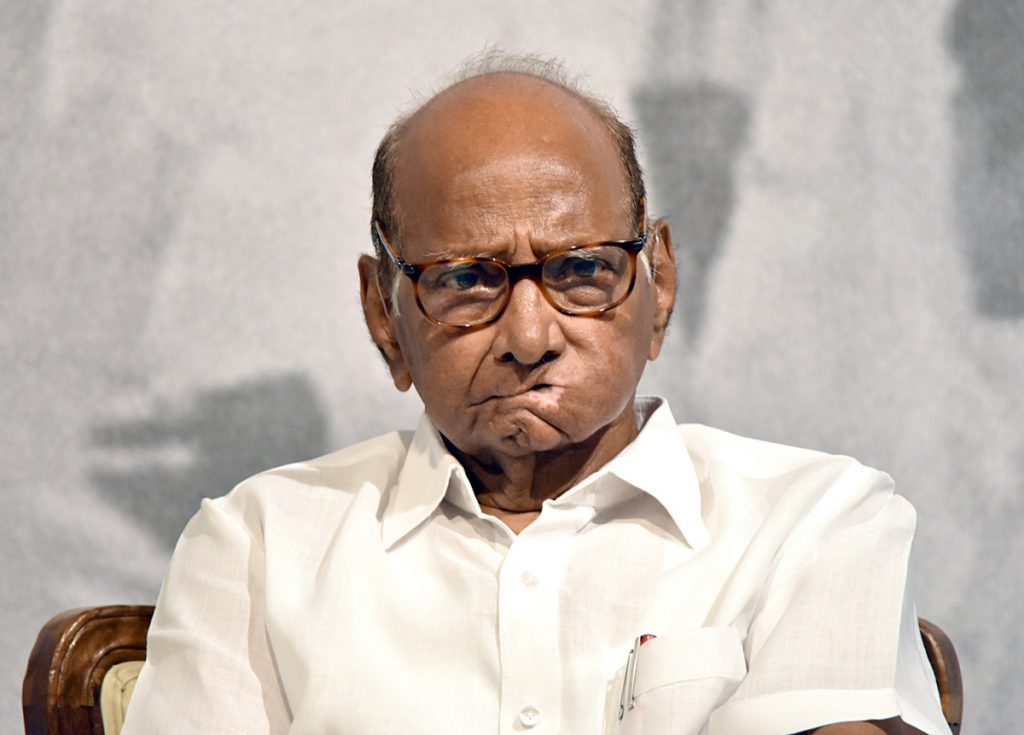
After the apex court verdict, Nationalist Congress Party chief Sharad Pawar said that the responsibility for disqualification of MLAs has been given to the Speaker and they will present their position to the Speaker.  “The Speaker is an institution and it is their responsibility to protect the sanctity of the institution. Let’s see whether it is being respected.”

Echoing the verdict, Sharad Pawar added that he had said in his autobiography that Uddhav resigned without a fight. “But let bygones be bygones. We have started working with a new enthusiasm.”
The NCP chief added that morality and BJP are two contradictory words. “Maharashtra’s former governor was a perfect example of how to disrespect the institution. Thankfully, he is no longer in Maharashtra and it’s better not to talk about him. The CJI’s words will help us to explain to people about the misuse of authority,” he said.


Prevail upon Shinde govt: Uddhav to PM

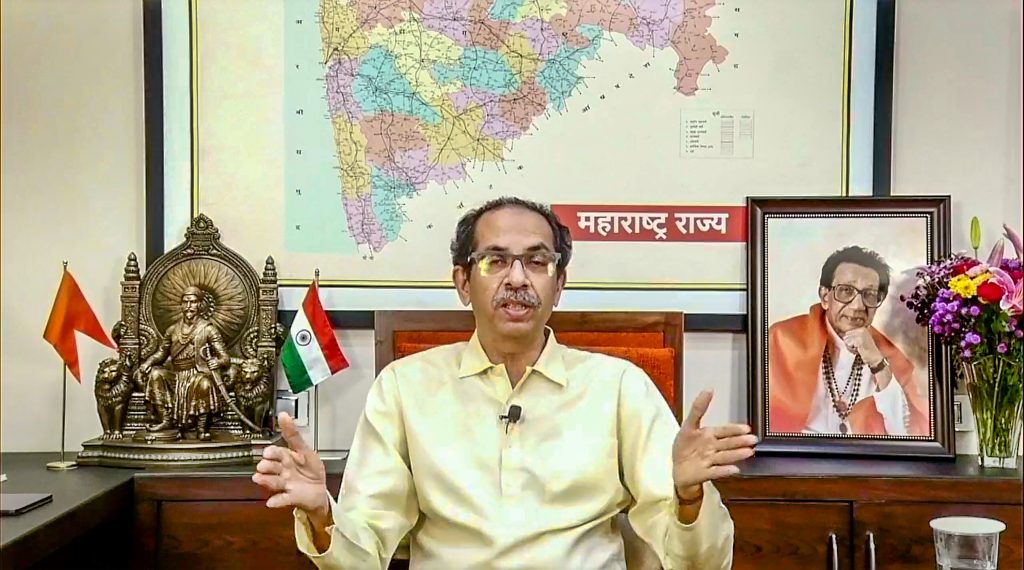
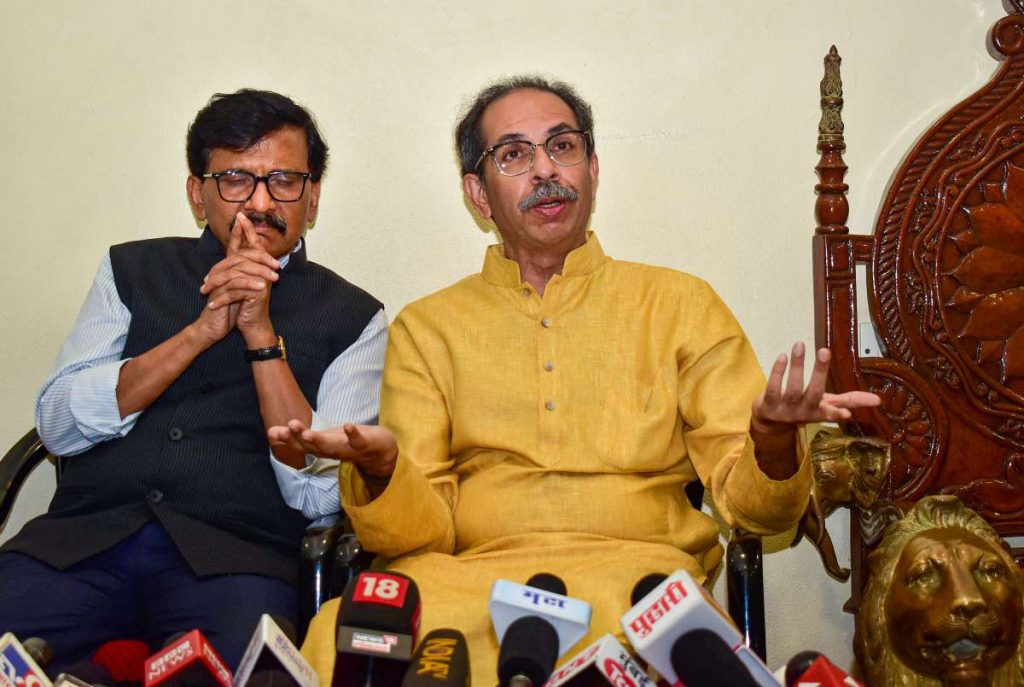
Shiv Sena UBT chief and former Maharashtra chief minister Uddhav Thackeray has urged Prime Minister Narendra Modi to “tell your people to resign and ask them to face elections”, a day after the Supreme Court said that the then Governor, Bhagat Singh Koshyari’s decision to call for a floor test that ultimately toppled the MVA government was not in accordance with the law.

“There is a question over whether the election of the current speaker is legal or not? The legality of the speaker’s selection needs to be reviewed in context of the SC order.” Thackeray said that the SC in its decision has passed strictures on those who are hungry for power.

“The SC has also said that the way the governor has acted was wrong. The system of having a governor is respectable, but the way he has been functioning, there is a question whether this system of having a governor should be there or not. We should now take this issue to SC as well,” he said.

Uddhav said that his party will now demand that the Speaker should now give his decision without wasting time. “It’s a good omen that today, Nitish (Kumar) also has come here and the awaited SC decision has also come. Now protecting the democracy in the county is our duty,” he added.

Shinde govt has lost moral right to rule: Jayant Patil

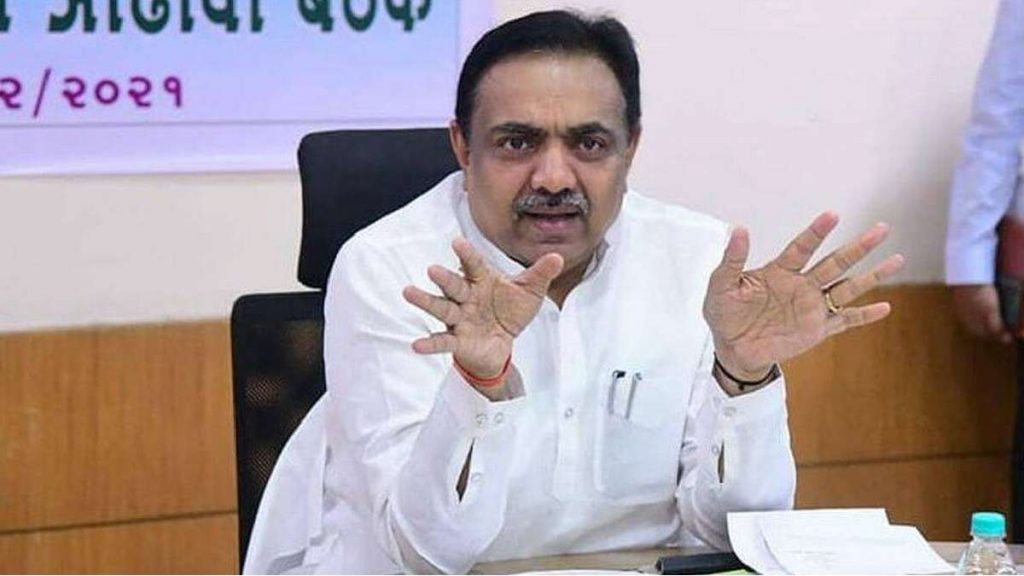
The Eknath Shinde government in Maharashtra may have survived after the Supreme Court verdict but has lost the moral right to continue, Nationalist Congress Party leader (NCP) Jayant Patil said.
“Though the Shinde government survived, it has lost the moral right to remain in power because the court has explained how all the decisions taken by (the then) governor were wrong,” said the NCP state chief.

Patil said that now the onus is on the Assembly Speaker to work within the framework of the points mentioned by the top court. “The speaker has to decide at the earliest as the Supreme Court has put the ball in his court and he cannot procrastinate further,” he said. With this verdict, the top court has explained to the people that the episode that had taken place in Maharashtra was unconstitutional and illegal, he added.

Speaker should disqualify MLAs: Singhvi

The Speaker has to give a decision on the disqualification petitions in a time-bound manner. The Speaker should disqualify the MLAs. Only by doing this, the justice will be served: Abhishek Manu Singhvi, who argued for Uddhav Thackeray side in SC in Maharashtra political crisis case Abhishek Manu Singhvi, part of the legal team that represented Uddhav Thacekray’s side in the Supreme Court, asked what moral and legal right does this government have to continue for even a minute more when there are findings against the Governor, Speaker and the recognition of the whip.

“Every major substantive finding has been in favour of the side we were representing (Uddhav Thackeray camp). The Governor’s decision is wrong because it is based on irrelevant considerations,” he said, following the verdict.

SC verdict a slap for our opponents: Shinde

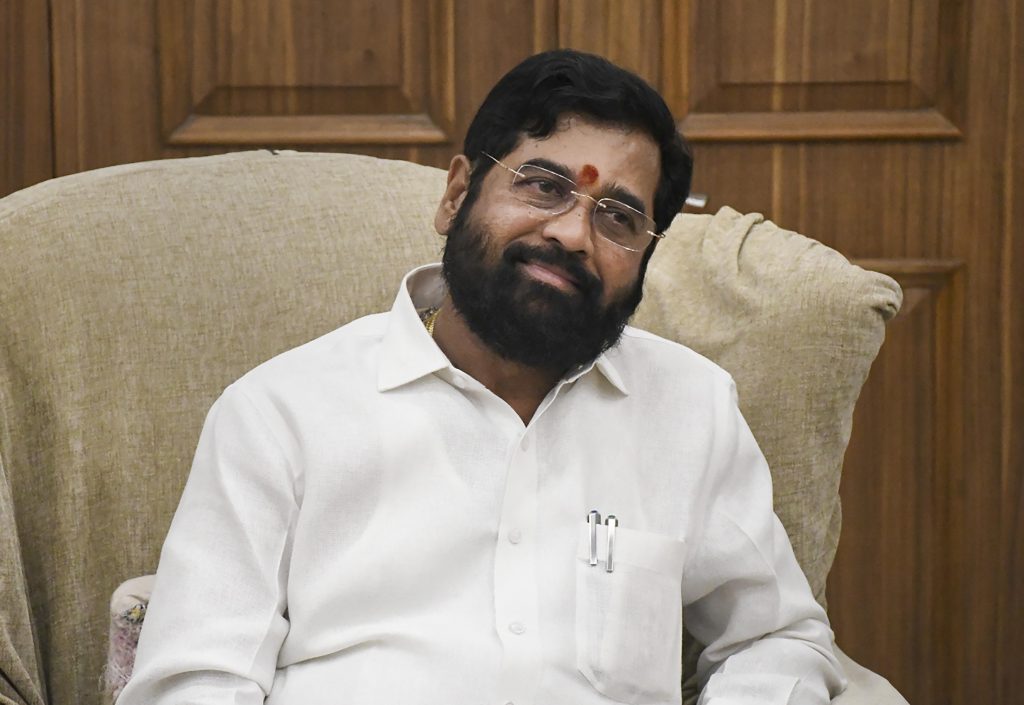
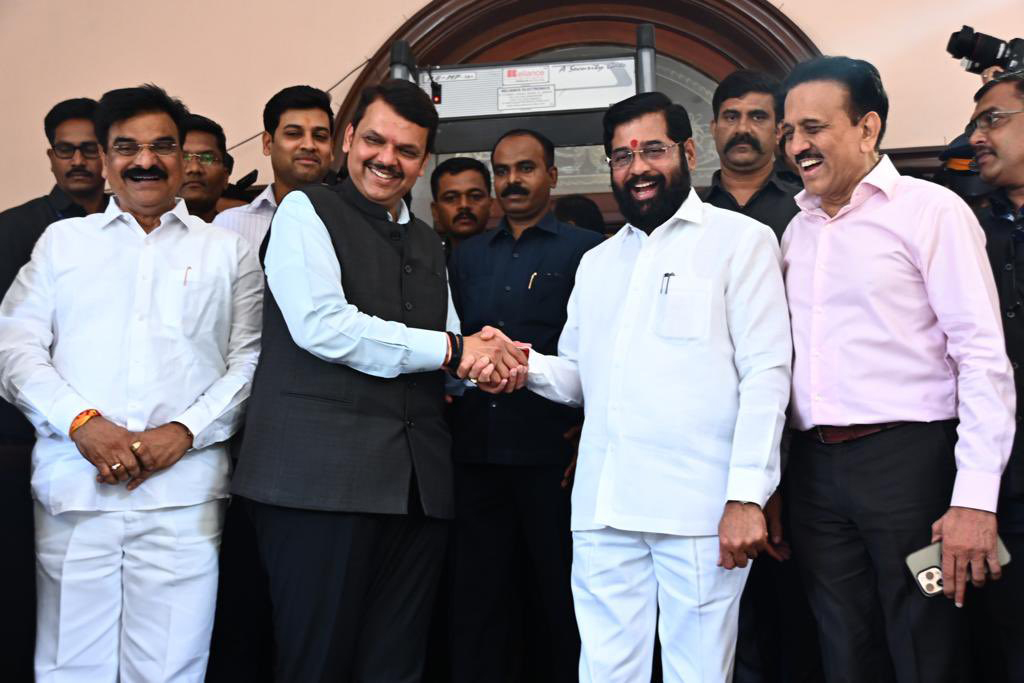
The chief minister Eknath Shinde said the Supreme Court verdict was “a slap for those who called the government illegal and unconstitutional” and described it as a seal of approval. His deputy, Devendra Fadnavis, called it a “victory for democracy and the mandate of the people” and said he was satisfied with the ruling.

In a joint press conference, they lashed out at (UBT) chief Uddhav Thackeray for saying he resigned as chief minister on moral grounds. “Thackeray quit the chief minister’s post because he knew he did not have the numbers and would lose the trust vote. He resigned because he was scared and ashamed,” said Fadnavis. There is no question of Shinde resigning since the apex court has validated their government.
“Where was Thackeray’s morality when he left the BJP-Shiv Sena alliance after winning the elections with us and joined the MVA alliance for the chief minister’s chair?” asked Fadnavis.

“You left your ideals for the chair while Shinde left his chair for his ideals,” he added. Shinde stressed that it was his party that safeguarded the Shiv Sena’s morality by going with BJP and respecting the 2019 mandate of the people. “We saved the bow and arrow symbol,” said Shinde.


SC boost for Kejriwal as Delhi govt gets control over ‘services’

The Apex Court ruling comes as a major relief to AAP, which has been engaged in a war of attrition with Lt Guv VK Saxena over sharing of power in the national capital. The judgement may also end tussle between the Delhi government and the Centre, writes Mudit Mathur

Disagreeing with Justice Ashok Bhushan’s view in the 2019 split verdict, where he said that “services” were totally outside the purview of Delhi Government, the Constitution Bench of Supreme Court unanimously held that Delhi government has control over administrative services in the National Capital, excluding matters relating to public order, police and land.

A Constitution Bench comprising Chief Justice DY Chandrachud, Justice MR Shah, Justice Krishna Murari, Justice Hima Kohli and Justice PS Narasimha said the legislative assembly of NCTD embodies the principle of representative democracy and thus, Article 239AA must be interpreted in a manner to further the interest of representative democracy.

The Bench was of the view that if the officers feel they are insulated from the control of the government, it will dilute accountability and affect governance. “If a democratically elected government is not given the power to control the officers, the principle of triple chain of accountability will be redundant. If the officers stop reporting to the Ministers or do not abide by their directions, the principle of collective responsibility is affected,” the Bench observed.

Article 239AA of the Constitution of India granted Special Status to Delhi among Union Territories (UTs) in the year 1991 through 69th constitutional amendment by Parliament, thereby providing the Legislative Assembly and a Council of Ministers responsible to such Assembly with appropriate powers to deal with matters of concerns to common man.

Article 239AA provides – Public Order, Police & Land in NCT of Delhi fall within the domain and control of the Central Government which shall have the power to make laws on these matters. For remaining matters of State List or Concurrent List, in so far as any such matter is applicable to UTs, the Legislative Assembly shall have power to make laws for NCT of Delhi.


The bench also highlighted that Article 239AA is meant to balance the interests between Delhi government and Union of India. “The executive power of Union in a state over matters on which both union and states can legislate is limited to ensure that governance of state is not taken over by the union. This would completely abrogate the federal system of governance and the principle of representative democracy.”

“Thus, in any federal Constitution, at a minimum, there is a dual polity, that is, two sets of government operate: one at the level of the national government and the second at the level of the regional federal units. These dual sets of government, elected by  ‘We the People’ in two separate electoral processes, are a dual manifestation of the public will. The priorities of these two sets of governments which manifest in a federal system are not just bound to be different but are intended to be different.”

The bench noted that the architects of our Constitution consciously chose to limit the executive authority of the central government in states in the interest of federalism. Chief Justice Chandrachud, who authored the judgement on behalf of his colleagues, wrote:

“The executive power of the union ‘in a state’ over matters on which both states and the Union of India can legislate (that is, the concurrent list) is limited to ensure that the governance of states is not taken over by the Union. This would completely abrogate the federal system of governance and the principle of representative democracy. It is with this objective in mind that the members of the Constituent Assembly thought it fit to limit the executive power of the Union in a state over matters on which the state also has legislative competence. In the spirit of cooperative federalism, the Union of India must exercise its powers within the boundaries created by the Constitution.”

However, the Constitution bench made it clear that legislative structure of Article 239AA excludes specified entries from the power of the legislative assembly of GNCTD, i.e. Entries 1, 2 and 18 of List II to Schedule VII (public order, police and land).

The bench responded by saying, “A constitutionally entrenched and democratically elected government needs to have control over its administration,” while adding, “In a democratic form of government, the real power of administration must reside in the elected arm of the State, subject to the confines of the Constitution.”“An unaccountable and non-responsive civil service may pose a serious problem of governance in a democracy,” it added.

This decision comes as a major relief to Delhi’s ruling Aam Aadmi Party (AAP), which has been engaged in a war of attrition with Lieutenant Governor VK Saxena over the division of authority and sharing of power in the national capital. The judgement is expected to settle ongoing faceoff between the Delhi government and the union government over control of administrative services in the National Capital Territory of Delhi.

In February 2019, two Judges of the Supreme Court had expressed divergent views, pursuant to which, the matter was directed to be placed before a three-judge bench for resolution. Justice AK Sikri held that transfers and posting of officers of and above the rank of Joint Secretary were under the powers of Lieutenant General of Delhi; other officers were under the control of Delhi Govt. Justice Ashok Bhushan dissented to hold that “services” were totally outside the purview of Delhi Government.

In 2022, the then Chief Justice of India, NV Ramana constituted a three-judge bench to decide upon the dispute. Later, the three-judge bench referred to a Constitution Bench limited questions pertaining to the legal dispute.

Senior Advocate Dr Abhishek Manu Singhvi led the arguments for the GNCTD. Solicitor General of India Tushar Mehta appeared for the Central Government.

The AAP hailed the Supreme Court’s verdict on the Centre-Delhi services with party chief Arvind Kejriwal terming the verdict a “victory of democracy.” Subsequent to the top court verdict, Kejriwal will go to the Delhi Secretariat for the first time in many months and hold a meeting with his cabinet, officials said.

“The elected government will have the power of transfer-posting of officers. Officers will work only through the elected government. The Lt Governor will have no power over the officers to stop the work of the people of Delhi,” the party said.

India is keenly watching this dangal between the wrestlers and WFI chief

How the present fight between the wrestlers and the WFI chief is handled by the Government will have a major impact on the future of women’s participation in sports in India.

Many months ago, when the news first broke of a group of professional wrestlers, including Olympic medalists Sakshi Malik, Bajrang Punia and World Champions Vinesh Phogat, Deepak Punia accusing the Wrestling Federation of India (WFI) president and BJP MP Brij Bhushan Sharan Singh of sexual harassment, intimidation and misconduct, there was a sense of shock and disbelief across the nation.

While some tended to disbelieve the wrestlers, and some accused them of playing dirty politics, a vast majority found it hard to dismiss what they were saying. After all, these grapplers are highly popular sportspersons of immense stature. One would think that they would not make such serious allegations against someone who has the power to destroy their careers, without substance or without first weighing the consequences. In coming out in the open and going up against such a well-connected and powerful MP, the grapplers had put their entire careers on the line. So, it was expected that the response of the powers that be, would be swift and the matter would be sorted out quickly. And if the accusations proved to be true then the guilty party or parties would be dealt with according to the law of the land.

 So, it came as a surprise when no action was taken, and not even an FIR was lodged in the initial stages, till the Supreme Court of the country came down on the police. In the end, the wrestlers, who had initially told all political parties to stay away from their protest, had to admit defeat and with folded hands request the people of the country, including politicians, to join their fight for justice.

The sight of the seven wrestlers, who have won laurels for the country, some of them even the coveted Olympic disks in a medal-starved nation, sitting on a dharna through rain and shine is saddening, worrying, demoralising and makes one wonder about the impact of this incident on the future of women in sports in India, especially contact sport.

Because as we all know, it is not easy for a country like ours to churn out sportsmen, leave alone sportswomen. Stories of legendary battles with poverty, the need to provide for the family, lack of facilities and parental support are all too common in our country. And if you are a girl then the battle has another dimension of gender bias and the fears of the parents about the safety and security of their girls in the sports camps, academies, and during sports events that are held thousands of miles away from home. After all, we are a developing, Asian nation where the ‘izzat’ of the ‘beti’ is of paramount importance.

Look how many decades it has taken us to get our girls to play cricket and for cricket fans to take women’s cricket even half as seriously as they do men’s cricket. We all know the pathetic state of women’s football, hockey, kabaddi and so on. Even women’s boxing was in the shadows till Mary Kom burst upon the scene.

So this nasty episode with the wrestlers will certainly impact the entry of girls into sports. And, sadly, this is not the first time that allegations of sexual misconduct by those who are meant to train and protect the sportswomen have come to the fore recently. In June 2022, a woman cyclist complained of inappropriate behaviour by national team chief coach RK Sharma during an overseas training camp in Slovenia while in July 2021, seven more female athletes accused Tamil Nadu’s track & field coach P Nagarajan of sexual abuse over several years. In January 2020, Delhi Police registered an FIR in connection with the alleged molestation of a female cricketer by her coach in southeast Delhi’s Nizamuddin area, while in September 2014, a complaint of sexual harassment of a woman gymnast by her coach Manoj Rana and fellow gymnast Chandan Pathak surfaced.

Forget about young girls in sports, even women coaches have faced harassment and the most recent sexual harassment allegation was against Haryana Minister Sandeep Singh. Even the hallowed grounds of the Sports Authority of India have been tainted by allegations of sexual misconduct, and in 2018, the Sports Authority of India received shocking complaints of sexual harassment from its centres in Gujarat, Bengaluru and Tamil Nadu from athletes and a woman coach.

To be honest, India is not the only country where we face this issue. There have been similar instances globally, too, but that does not mean that “yeh sab chalta hai.” No, sexual harassment, molestation and abuse are not ok and not to be tolerated. We should not be asking our girls to keep quiet, we must encourage them to speak up.

So, that is why, how the Government cracks down on sexual misconduct by people in positions of power in sporting associations is vital to make sportswomen feel safe and encourage more girls to take up sports.

On its part, the Government has time and again stressed on the importance of Internal Complaints Committees (ICCs) in the workplace and in sports federations, too. The ICC is supposed to be the first responder to any grievance of sexual misconduct under the Sexual Harassment of Women at Work Place (Prevention, Prohibition and Redressal) Act or POSH Act as it is more commonly called. It is a vital element in the creation of a safe environment for women in the workplace, which also obviously includes the sporting world. As per the law, the ICC must comprise of a minimum of four members, at least half of them women. And one of the members has to be an external entity, preferably a lawyer, social worker or an association that works for women’s rights and safety.

In fact, an ICC is one of the main conditions set by the Ministry of Sports for granting recognition to the sporting federations that get renewed annually. In fact, on January 23, the day the Union Sports Ministry formed the Mary Kom-led committee to investigate allegations of sexual harassment against Singh, it sent a letter to all national sports federations flagging up the importance of the ICC

Not surprisingly, the WFI does not have an ICC, and even more shockingly, so don’t 16 of the 30 national federations of sports in India. And these are sports in which our country has participated in the Asian Games, Tokyo Olympics, and Commonwealth Games!! It makes one wonder why it is so. An honest answer to this can be quite disquieting, especially as there has been a 161 per cent rise in the number of girls/women participating in sports in the country between 2018 and 2020.

So, if the country is serious about encouraging the participation of girls/women in sports then there has to be a massive clean-up of the whole set-up.

Sportspersons, of both genders, have to be assured of all safety. They have to be made aware of what rights of redressal they have in the event of any misconduct. Most importantly, there has to be an atmosphere of ‘zero tolerance’ towards sexual harassment, misconduct, and abuse by anyone in the sporting world. Be it the sportspersons, coaches, therapists, support staff, officials, and management committees right up to the presidents of the federations.

How the present fight between the wrestlers and the WFI chief is handled by the Government will have a major impact on the future of women in Indian sports. It’s a big responsibility for the Government which has given the clarion call of ‘Beti Bachao, Beti Padhao.’ No innocent should suffer injustice and the guilty should not be spared. As accusations from the wrestlers and denials from the WFI chief fly thick and fast, only time and an impartial, thorough probe will sift the truth from the lies. India is keenly watching this dangal between the wrestlers and the WFI chief. One can only say, ‘Satyamev Jayate.’   

Security forces on toes as militancy gets a new lease of life in Jammu

Ultras have killed 10 soldiers in four weeks in Jammu division, where militancy had been non-existent for almost two decades. And the fact that the perpetrators are still at large and their number remains unknown is a huge source of concern, writes Riyaz Wani


At a time when the militancy in Kashmir Valley seems to be on the way out, it is once again rearing its head in Jammu division, where it had been non-existent for almost two decades. The past four weeks have witnessed a steep spike in violence, leading to the killing of ten soldiers by the militants. And the fact that the militants who carried out these killings are still at large and their number remains unknown
makes the future uncertain. It is likely that more violence is in store until the security forces track down the militants. So far, the extensive search in the jungles has yielded no result, but it may in the near future.

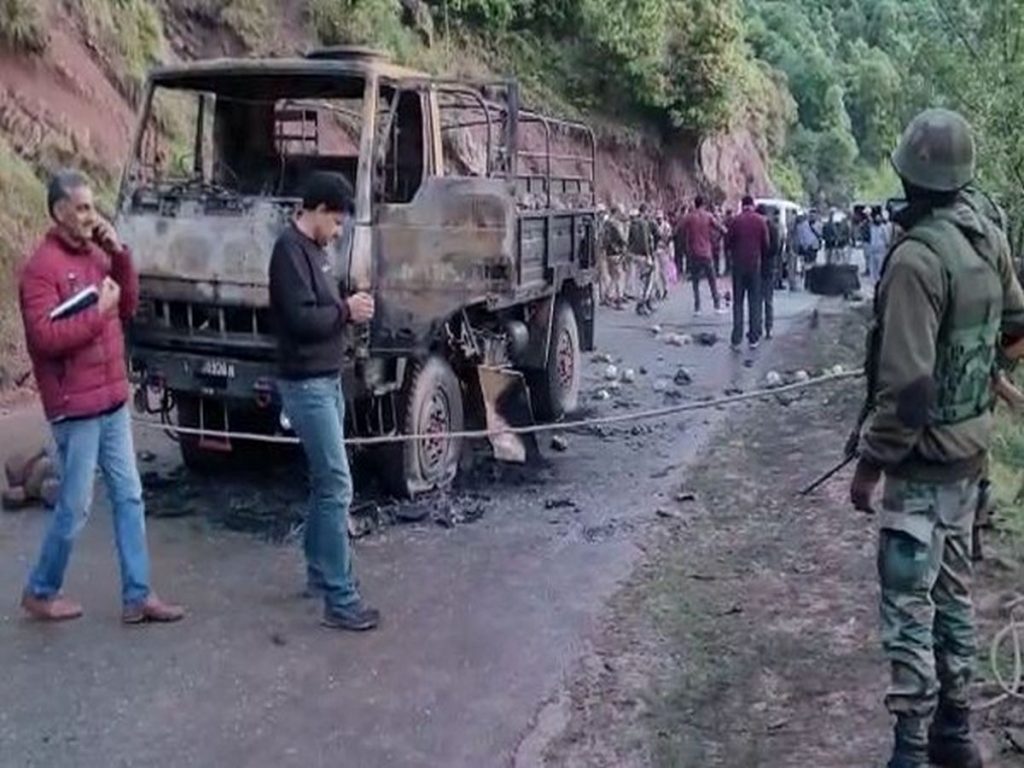
The  militants who have infiltrated from across the border are believed to be very well-trained. And this was apparent from their April 20 ambush of a security vehicle at Bhata Dhurian area in Rajouri. They are reported to have fired at the security vehicle from all sides and later blown it up with an IED.  Subsequently, when the Army launched an operation to flush them out on May 5, they are reported to have used an IED to halt the advance of approaching security personnel, in which five more soldiers were killed on May 6. The militant outfit People’s Anti Fascist Front later released a video accepting responsibility.

The rising militant activity in the Jammu division has become a huge source of concern for the security forces.  It has also alarmed the union government. Defence Minister Rajnath Singh visited Army Base
Camp in Rajouri on May 6 to review the operational capabilities and security situation along the border.
Appreciating the valour of Army troops, Singh said, “Keep your spirits up, you will definitely get success.”
He was accompanied by Jammu and Kashmir Lieutenant Governor Manoj Sinha, Army Chief General Manoj Pande, Northern Army Commander Lt Gen Upendra Dwivedi and other senior Army officers.

New hotspots

The very first day of this year began with the violence in Rajouri. Seven civilians, including a child, were killed and six others injured when militants barged into and opened fire in at least three houses of
a minority community in a border village in the district. Although a week later, the Army killed two unidentified militants in the district, the situation couldn’t be brought under control. Successive militancy-related incidents have momentarily shifted attention away from the lingering turmoil in the Kashmir Valley to Jammu which has otherwise been free of militancy over the last two decades – the
sporadic incidents of violence notwithstanding. But the last two years have witnessed some revival of militancy in the twin districts of Rajouri and Poonch.

In August last year, four soldiers and two militants were killed during a fidayeen attack on an Army camp in Rajouri. Poonch and Rajouri districts were also sites of several attacks during summer of 2021 that killed fourteen soldiers, eight militants, including one in custody. The districts were, however, largely calm
through 2022.

Sudden resurgence in violence

In recent weeks, Jammu has once again become a hotspot for militancy, with security personnel being killed and concerns mounting about the number of militants in the area. It is believed that these militants
have infiltrated from across the border, although the exact number is unknown. The dense forests of the region have made it difficult for security forces to find them, and their presence in Jammu has caught
security forces off guard. The situation is made even more concerning by the fact that the forest area where the militants are hiding extends to Shopian in South Kashmir, the district that has been a
hotbed of militancy in recent years. But the militants have chosen to stay in Jammu only, possibly because the region has a lower concentration of security forces than the Valley and also a warmer climate throughout the year.

Last two years have also witnessed a certain thinning of the presence of security forces in Jammu region, which is being exploited by the militants. Two reasons are offered for this state of affairs:  one, the ceasefire along the Line of Control between India and Pakistan, which was renewed in early 2021, and has since held. Second, the


consequent redeployment of the Rashtriya Rifles, the main counter-insurgency force in Jammu and Kashmir (J&K), to the Line of Actual Control in Ladakh following China’s incursions along the border. This is believed to have created a void along the border in Jammu, which may have been taken advantage of by militants, resulting in a resurgence of violence in Jammu.

Abating violence in Valley

In the Kashmir Valley, on the other hand, the number of militants has dwindled to less than 100. Ever since the withdrawal of J&K autonomy in August 2019, more than 500 militants have been killed in the
region, most of them local youth. But despite the reduction in the number of militants, violence has persisted. Over the last two years, militants have targeted soft targets, such as civilians, panchayat
workers, J&K police personnel visiting home, outsiders, and minorities.  Security forces, as a result, now not only have to combat militancy but also protect a large section of population including many from among their own ranks.

Despite the surge in violence in Jammu, the overall situation in J&K remains relatively stable. Tourism is at an all-time high, with over one crore people visiting J&K last year and the administration now
looking forward to bringing in twice the number this year. Most hotels, according to the region’s tourism department, are booked through the spring. In case, the violence persists in Jammu, it would detract from the semblance of peace in the valley and revive a now largely-pacified theatre of war in the union territory. However, there is a belief that the current violence may not last long, as was seen in the short-lived escalation in Poonch-Rajouri in 2021.

Where do we go from here?

It remains to be seen whether the violence in Jammu intensifies or abates going forward. The pattern over the last two years has been one of a sudden spike followed by an extended absence. For example, in
2021, the militants vanished into thin air soon after successive incidents of violence during July and August. They were believed to have returned to Pakistan from where they had come. On the contrary, the predominant majority of militants in Kashmir have been local. Most of them have been poorly trained and haven’t thus posed much of a challenge to security forces. Meanwhile, a massive search operation called Operation Trinetra has been launched in Jammu to hunt down militants. But so far, the security forces have met with little success.  More militant attacks in the area would mean that the militants are in for the long haul and intent on extending separatist campaign to Jammu, something that would substantially expand the sphere of anti-militancy operations in the former state.


AAP clears litmus test, secures victory in Jalandhar by-poll

The Jalandhar Lok Sabha by-election in Punjab was a battle of prestige for the ruling Aam Aadmi Party and the Congress. For the BJP, it was an opportunity to revive the party, while for the Shiromani Akali Dal it was a chance to redeem its lost glory, writes Rajendra Khatry


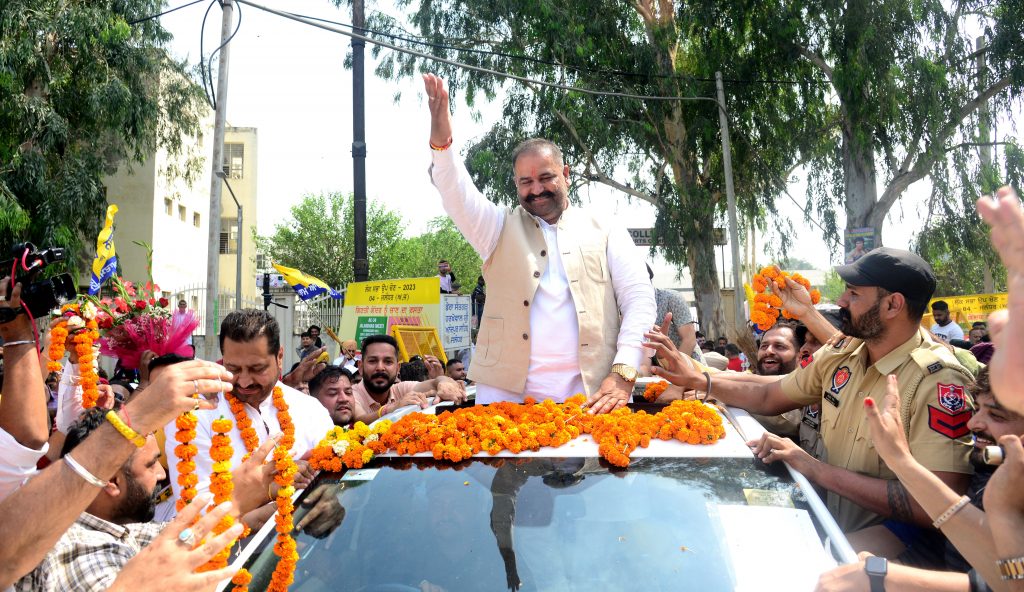
The ruling Aam Aadmi Party registered an impressive win in the Jalandhar Lok Sabha by-election in Punjab. AAP broke Congress party’s 24-year grip on the Jalandhar Lok Sabha constituency with a huge margin of over 58,000 votes. In a four-cornered contest, Sushil Kumar Rinku, a former Congress MLA from the Jalandhar West constituency in the previous assembly who switched to AAP, defeated his closest rival, Congress’s Karamjit Kaur, the wife of Santokh Chaudhary, whose death during the Bharat Jodo Yatra necessitated the by-poll.

Punjab Congress chief Amrinder Singh Raja Warring conceded defeat and congratulated the Aam Aadmi Party and its candidate Sushil Rinku. AAP secured 3,02,097 votes, as it steadily widened the gap with Congress which got 2,43,450 votes. The Akali-BSP combine was third with 1,58,354, and the BJP in fourth place with 1,34,706 votes.

The Jalandhar Lok Sabha by-election in Punjab on May 10 was a battle of prestige for the ruling Aam aadmi Party (AAP) and the Congress. For the BJP, it was an opportunity to revive the party, while for the Shiromani Akali Dal it was a chance to redeem its lost glory.

The by-poll was necessitated because of the death of Congress MP, Chaudhary Santokh Singh who died while participating in Rahul Gandhi’s `Bharat Jodo’ Yatra when it passed through Jalandhar recently.  

In the multi-cornered contest, AAP fielded Sushil Rinku, who quit the Congress in April and joined AAP. Rinku was immediately given a ticket by AAP for  the Jalandhar Lok Sabha by-election. The Congress on the other hand gave ticket to late MP Santokh Singh Chaudhary’s wife, Karamjit Kaur. Inder Iqbal  represented the BJP.

The Shiromani Akali Dal (SAD) fielded its two-time MLA Dr Sukhwinder Kumar Sukhi as its candidate for the upcoming Jalandhar Lok Sabha by-poll. Sukhi has been a two-time legislator from Banga assembly seat in Shaheed Bhagat Singh Nagar district of Punjab

It became obvious that the Jalandhar Lok Sabha bypoll would be a litmus test for not only the ruling Aam Aadmi Party (AAP) in Punjab but also for all other parties trying to regain the lost ground in the Assembly elections held last year.

The AAP came to power in Punjab with a thumping majority early last year by beating the then ruling Congress and other parties with a huge margin.  But surprisingly just three months later, AAP lost its first Lok Sabha by-election from Chief Minister Bhagwant Mann’s pocket borough of Sangrur. The Jalandhar by-poll therefore became a prestige issue for the ruling party.

Incidentally, the Sangrur Lok Sabha seat had been vacated by Chief Minister Bhagwant Mann after he was elected to Punjab Vidhan Sabha from the Dhuri Assembly seat in March last year. And yet just three months later in June, AAP lost the seat to Shiromani Akali Dal (Amritsar)’s Simranjit Singh Mann. This was a big electoral loss for the AAP.

The AAP therefore needed to make an extra effort to ensure it did not lose the Jalandhar seat also. AAP did not have a single MP from Punjab. Mann had been a two-time MP. AAP had made its entry in Punjab with a bang when in the 2014 Lok Sabha elections, the people of Punjab elected four leaders of the party as MPs for the first time. But In 2019, only Bhagwant Singh Mann was able to retain his seat in Sangrur.

The Opposition parties in Punjab also left no stone unturned to win the Jalandhar by-election, which was seen as a precursor to the Lok Sabha elections due in 2024. No wonder all parties  used their political might to win the prestigious seat.

On the other hand the Congress wanted to win the seat back as it was held by the party and it looked to ride on the sympathy wave after Santokh Singh Chaudhary passed away during the Bharat Jodo Yatra of Rahul Gandhi.

The BJP tried to establish its base in the state, after having inducted senior leaders of other political parties. A win for the BJP was necessary to get a foothold in Punjab after it drew a blank in previous elections. BJP inducted former chief minister and ex-Congress leader Amarinder Singh, and many former cabinet ministers including Manpreet Badal, Balbir Sidhu, Sunder Sham Arora, and Dr Raj Kumar Verka. With such senior leaders by its side, the BJP mounted a strong campaign in the constituency during the by-poll.

The Shiromani Akali Dal (SAD), which also lost its aged, popular and most experienced politician and former Chief Minister of the state, Parkash Singh Badal, desperately tried to regain its days of popularity.

Chief Minister Bhagwant Mann made several rounds of the constituency to woo the voters along with Arvind Kejriwal. Mann also flagged off a train to Varanasi, participated in Ravidas Jayanti and met people from all sections of society as well as industrialists in the city.

Jalandhar parliamentary seat had been a Congress stronghold since independence. The Congress won the seat as many as 14 times, while the Shiromani Akali Dal and the Janata Party won twice each. Out of nine assembly constituencies in Jalandhar, five were rural and four urban. In the rural segment the contest was mainly among the AAP, Congress and the Akali Dal while in the urban areas, the main contest was between the Congress and the BJP.

According to political experts, the BJP was looked at as a party to damage the poll prospects of both the AAP and the Congress. During the campaign, the Congress tried to win on the sympathy votes. The Congress fielded Chaudhary Santokh Singh’s wife Professor Karamjit Kaur. The Congress harped upon the failure of the AAP in fulfilling its promise made to the voters of the state.

The AAP sought votes on its good governance and for providing a corruption free government and also for giving 300 units of free power per month to domestic users. The BJP appealed to voters to vote in the name of Prime Minister Narendra Modi. It criticised the poor law and order situation in the state and the rising drug problem and security threat from Pakistan.

The SAD sought votes for it on the failed promises of AAP including giving Rs 1000 per month to women. The SAD-BSP combine reportedly had a strong presence in five out of nine segments but was said to be weak in four assembly constituencies.

Under former Congress Chief Minister Charanjit Singh Channi’s leadership, the Congress had managed to win five out of the nine assembly segments in Jalandhar even during an AAP wave in 2022. Not just this, but the Congress’ vote share at 33 per cent was also about five percentage points higher than that of the AAP.

Earlier speculation was rife that the BJP would make law and order its main poll plank and field ex-DCP Rajinder Singh, for the Jalandhar seat. Rajinder Singh had joined the BJP recently. There was a buzz in Punjab’s political circles that the former Deputy Commissioner of Police (DCP), Jalandhar, Rajinder Singh, who had joined the BJP in the presence of Union minister Gajendra Singh Shekhawat, would be fielded by the party for the May 10 by- Election to the Jalandhar Lok Sabha constituency. But this was not to be and finally the BJP fielded Inder Iqbal.

Imran’s arrest saga plunges Pak in throes of uncertainty

Former Pakistan PM Imran Khan’s arrest, and his subsequent release following the order of  the Supreme Court is likely to intensify power struggle among judiciary, executive and the army in the neighbouring country. A report by Gopal Misra

With the release of former PM Imran Khan from custody following the Supreme Court order, how the multiple crises – political and economical, along with those emerging from clash among key institutions such as executive, judiciary and the armed forces – besetting Pakistan will play out will be keenly watched by the observers.

The Supreme Court of Pakistan has declared Khan’s arrest from the premises of the Islamabad High Court (IHC) on May 9 was “unlawful” and said that it “would be reversed”, while ordering his immediate release.
The order was passed by a three-member bench comprising the Chief Justice Umar Ata Bandial, Muhammed Ala Mazhar and Athar Minallah. Bandial urged Khan to ask his supporters to stop violence immediately and also told him to appear before the IHC and abide by its orders. Khan was arrested by the Punjab Rangers, a para-military force, from the court premises on the basis of a warrant issued by the National Accountability Bureau (NAB) allegedly for obtaining huge prime land for his personal trust, Al-Quadir.

It is stated that the release of Khan exposes the limitations of the establishment that is the Pakistan Army. The Punjab Rangers were reportedly sent by the GHQ on the request of the Prime Minister Shahbaz Sharif.
Apart from the ongoing violence, another challenge is being faced by Shahbaz, who might  face the wrath of the Supreme Court for not implementing its order of conducting the polls of provincial assemblies of Punjab and Khyber Pakhtunkhwa (KPK) by May 14. The apex court may order his arrest for committing the contempt of court.

Asim’s weak hold on the army

It is yet to be ascertained whether the present army chief, General Asim Munir enjoys full control on the armed forces, or the supporters of the former army chief, Qamar Jawed Bajwa and his crony, Lt. Gen. Faize Hamid, though superannuated, continued to have influence among the commanders and young officers.

In 2018, Bajwa and Faize had not only  conspired in manipulating polls to get elected Imran Khan, the president of the Pakistan Tehreek-i-Insaf (PTI) as PM, they had also ensured that the then PM, Nawaz Sharif, would not pose any challenge by implicating him in cooked-up corruption charges and influencing  a docile Supreme Court.

The three-bench order clearly gives the message that the apex court is no more under the spell of the army and its secret service, Inter State Intelligence (ISI), and the present army chief does not have the necessary influence on the judiciary, which his predecessor used to have.

Meanwhile, Imran has successfully confronted the establishment and the Shahbaz Government. The spectre of violence witnessed during the first 72 hours of Imran’s arrest which engulfed the entire Pakistan shows cricketer-turned-politician’s hold on the new generation. The burning down of a part of the residence of the governor in Punjab, storming the well fortified army headquarters or GHQ in Rawalpindi or even ransacking the residence of the Corpse Commander of Lahore indicate the mood of the agitators.  
In many cities, the army was summoned, but the refusal of young army officers to open fire against the pro-Imran agitators forced the army chief to withdraw them from the operations. Earlier, reports emerged about a number of agitators, including women demonstrators, getting killed in some incidents of firings.

Exodus of the rich

There are reports that the rich and powerful, including retired army generals, top bureaucrats and some businessmen, have started leaving Pakistan in chartered planes with their precious jewellery, gold and dollars.  As many as 150 such flights have already taken off from Karachi, Sukkur, Islamabad, Lahore, Multan, Sialkot, Faisalabad and Quetta for destinations like Dubai, London and even New York.

The Supreme Court’s order to release Khan from custody is said to have caused a huge political setback to PM Shahbaz. It is being speculated that he may impose an emergency in the country or ask the army to impose martial law.


Time to let out a collective cry against injustice

Today as more and more persons and groups express solidarity with the protesting wrestlers in their demand for action against WFI chief Brij Bhushan Sharan Singh, there’s that ray of hope that this collective outcry would hold out

Next time you hear political rulers talk of development, make sure to tell them that there can’t be any talk of development if women and the young feel unsafe and all their pleas go about unheard.

Yes, I’m talking of this particular case, where several of the who’s who in the world of wrestling have been staging a sit-in at New Delhi’s Jantar Mantar since April 23. They have levelled allegations of sexual harassment against Wrestling Federation of India (WFI) chief Brij Bhushan Sharan Singh, who is also a Bharatiya Janata Party (BJP) MP from Uttar Pradesh, yet he sits up there.

Though nothing really shocks one in these times we are destined to be surviving in, but what hits is this: Why is this particular politician getting this level of protection though he is accused  of a  very serious crime – that of  sexual harassment? Why does this government of the day talk about welfare when it can’t protect the dignity of women and children? Why are these top wrestlers who have slogged for years, bringing glory to this country, are being treated with this level of insensitivity?

Another dark reality that hits is this: If the country’s top wrestlers and their cries for justice can go unheard, then one can well imagine the fate of the ordinary citizens.  In fact, many victims of rioting keep shut for the sake of their survival. In many cases, the victims do know their molesters and rapists but do not name them as fear looms large. Yes, fear of the aftermath if they come up with the names of their tormentors. Gujarat-based Bilkis Bano dared to name her rapists and murderers of her young child during the 2002 Gujarat pogrom, and see her plight. Whilst her tormentors and rapists are roaming about freely after their release from the prison cells, she and the surviving members of her family are living in severe fear, amidst apprehensions and insecurities.

Perhaps, the only way out is for a collective cry to come up. Today as more and more persons and groups express solidarity with the country’s top wrestlers in their demand for action against Wrestling Federation of India (WFI) chief Brij Bhushan Sharan Singh, there’s that ray of hope that this collective cry would hold out. 

Many more citizens ought to come forward. This brings me to write that it’s about time that writers-poets-artists should come together on a  common platform. Maybe, just maybe, the destructive forces stand countered to a certain extent with a strong progressive writers movement, spreading out from Kashmir to Kerala. After all, the Progressive Writers Movement of the 1930s wasn’t confined to any particular language or locale. Its strength lay in its broad base amongst writers and poets of Hindi, Urdu, Punjabi and Bangla …with the very first session of the PWM chaired by Munshi  Premchand. Not to be overlooked is the core fact that PWM  was  the very  offshoot of the  collective cry; with  that,  it relayed the aspirations of the workers, the peasant, and the  exploited masses of this country.

Of course, then, in the 1930s, we were united. We were not divided. No apparent divisions then, along caste and community and communal formats. Today we are being made to stand divided by the political lobbies at work, to see to it that there’s an ongoing partitioning of psyches, if not of forms. Never  before such blatant  moves by the communal  brigades to make sure that deep divisions come up, between the communities. The situation is compounded by the fact that commercial films are now being made to spread misconceptions and slanted notions about the ‘other’. Ugly propaganda tactics are on, deepening the already deep divide.

Needless to say that these dark dismal realities haven’t come up all too  suddenly. The ground realities have been steadily deteriorating in these recent years.  I do recall that just before 2017 ended, Gulzar saab didn’t  mince words whilst describing the halaats/situation  around, commenting  along the strain that  if one were to pick up any of the day’s newspapers, it would so heavily be laced with news reports of violent killings that if you were to squeeze those pages blood drops would spill out!

We are seeing those tell-tale signs of violence and killings and anarchy and destruction. As though we haven’t learnt a lesson from the past, we are not visualizing nor comprehending what lies ahead.

It is time to speak up. A collective cry, loud and clear.

Speak up…along these lines of Faiz Ahmad Faiz  –

“Speak Up! /

Speak up, for your lips are not sealed /

and your words are still your  own ./

This upright body is yours –/

speak, while  your   soul is  still your own ./

Look there, in that smithy,/

its red oven , fierce flames ,/

the padlocks are already  opening their  mouths /

and each  fetter is skirting around ./

Speak up now, for time’s running out,/

Before your body and mind fade away,/

tell us, for truth  is  not yet  dead./

Speak /

Whatever you have to say!”

Govt’s googly puts those seeking higher EPS pension in a quandary

The government has empowered the EPFO to draw 1.16% additional contribution from the employers 12% contribution into the provident fund. This will result in the employee’s PF account suffering a shortfall of 1.16%, which allegedly runs counter to SC ruling, writes Mudit Mathur

Over a million pensioners covered under the pension schemes of Employees Provident Fund Organisation (EPFO), who retired years back and won a long drawn legal battle in the Supreme Court for their entitlement of higher pension again find themselves on the horns of dilemma over the fresh move of the government. The recent changes notified by the government largely favour employers curtailing benefits accruing to employees. The apex court bench headed by Justice Aniruddha Bose and Justice Aravind Kumar will hear a contempt petition of employees filed by National Confederation of Retirees and 0thers on 12 May.

The Confederation also pointed to technical and operational glitches in the online application form that have not been fixed despite being flagged repeatedly. For a comprehensive understanding of the scheme’s benefit, it is also important that the EPFO clarify the replacement mechanism for the additional 1.16% EPS contribution by employees that was struck down by the Supreme Court in its November 4, 2022 judgment. The EPFO has taken an unexpected decision reducing the pension of around 24,000 pensioners at old level who were getting higher pension by depositing lakhs of rupees with the EPFO.

Taking the stand that since Employees’ Provident Funds and Miscellaneous Provisions Act, 1952 (19 of 1952) has been subsumed in the Code on Social Security, 2020 (36 of 2020), the government issued notification amending Code on Social Security, 2020. The EPF & MP Act 1952 stood repealed when Code on Social Security, 2020 became operative.

The Central Government on May 3, 2023 notified the deeming provisions with retrospective effect from 1st September, 2014 which provides: (i) in respect of members who have exercised joint option for contributing under the provisions of paragraph 11 of the Employees’ Pension Scheme, 1995 and who are found eligible, the employer’s contribution shall be nine and forty-ninth per cent. (9.49%) of the basic wages, dearness allowance and retaining allowance of each member by increasing one and sixteenth per cent (1.16%) from the extant eight and one-third per cent. (8.33%); and (ii) the increased contribution shall be applicable to basic wages, dearness allowance and retaining allowance to the extent such basic wages, dearness allowance and retaining allowance exceeding fifteen thousand rupees per month.

The two notifications issued by the Union Labour Ministry aimed at implementation of the Supreme Court verdict on higher Provident Fund pension. While one notification empowers the Employees’ Provident Fund Organisation (EPFO) to draw 1.16% additional contribution from within the overall 12% of the contribution of the employers into the provident fund, the second notification notifies the relevant provisions in the Code on Social Security to legalise this step. The provision will be implemented in retrospect and employers will contribute 8.33% on entire wages and 1.16% on wages from September 1, 2014.

However, the legal experts who have been involved in the battle for higher pension expressed their apprehensions over the government move and termed it a “brutal attack” on the EPF pension beneficiaries. Explaining the nitty-gritty of effect of amendments, the lawyer appearing for the pensioners, S. Krishna Moorthy, said, “The Supreme Court had held that the 1.16% on the amount in excess of Rs.15,000 levied from the employees to enable them to get enhanced pension on actual salary was ultra vires.”

“The employees were directed to continue that additional payment for six months within which period the Union government was authorised to bring in necessary changes in the Scheme to meet the requirements, including additional contributions from employers. But what has now been done is that 9.49% of the employer’s share of 12% is directed to be remitted to the pension fund instead of the present 8.33%. Only the remaining 2.51% will get credited to PF account instead of 3.67%. The loser is the employee, not the employer. His PF account will suffer a shortfall of 1.16%. The interest on PF accumulations also will reduce to that extent,” explained Moorthy, saying, “The move is a brutal attack on EPF pensioners. It is a very intelligent protection to the employers under the guise of apex court judgement.”

The labour ministry in a press communique claimed that the spirit of the EPF & MP Act as well as the Code (Code on Social Security) do not envisage contribution from the employees into the pension fund. At present, the government pays 1.16 per cent of basic wages of up to Rs 15,000 (threshold basic wage) as subsidy for contribution towards Employees’ Pension Scheme (EPS). The employers contribute 12 per cent of basic wages towards social security schemes run by the EPFO. As much as 8.33 per cent out of the 12 per cent contributed by the employers goes into the EPS and the remaining 3.67 per cent is credited into the Employees Provident Fund.

“Now all those EPFO members who are opting to contribute on their actual basic wage which is higher than the threshold of Rs 15,000 per month for getting higher pension, will not have to contribute this additional 1.16 per cent towards EPS. This provision is retrospective in nature in line with the directions given by the Supreme Court,” the ministry said.

The Supreme Court had held the requirement of the members to contribute at the rate of 1.16 per cent of their salary to the extent such salary exceed Rs 15000 per month as an additional contribution under the amended scheme to be ultra vires of the provisions of the Employees’ Provident Fund and Miscellaneous Provisions Act, 1952 (EPF & MP Act).The ministry said that with the issue of the notifications, all the directions of the Supreme Court contained in judgment on November 4, 2022 have been complied with.

Meanwhile, the Labour Ministry has notified the extension of the last day to June 26, 2023, just one day prior to the previous last date, May 3, 2023, for submission of request for higher pension. The Employees’ Provident Fund Organisation (EPFO), the body which governs EPF and EPS, extended the date to provide ample time and opportunity for the members to exercise their options.

What is EPS?

The Employee Pension Scheme (EPS) is a social security scheme for contributing members to get a secured pension upon retirement at 58 years of age. The scheme was launched in 1995.The employees enrolled in the Employees’ Provident Fund (EPF) scheme are automatically enrolled in the EPS scheme. The minimum monthly pension is Rs 1,000.

Eligibility for availing benefits under EPS

To avail of the pension benefits under EPS, the person should be a member of the EPFO. The employee has to provide service to the organisation/s for at least 10 years. The member must have reached the age of 58 years or in case of early retirement, the age of 50 years.

How Much an Employee and Employer can contribute?

Both employee and employer contribute 12 per cent of the employee’s basic salary and dearness allowance to the EPFO. The employee’s full contribution goes towards EPF, whereas the employer’s contribution is divided between EPF and EPS in the ratio of 3.67 per cent and 8.33 per cent, respectively.

Earlier, EPFO would calculate the pension considering the statutory wage ceiling of Rs 15,000, but after the Supreme Court decision in November 2022, those who were members of EPS can opt for a higher pension based on their actual wage instead of the statutory wage limit i.e., Rs 15,000. All EPS contributions can be done only by the employer. Also, note that the increased contribution in pension would mean a decrease in EPF corpus for the employee.

Who are eligible for higher pension?

Notably, the choice of opting for a higher pension is only for eligible members, i.e., the employees who were members of the Employees’ Pension Scheme (EPS) as on September 1, 2014. “According to the Supreme Court order, following category of employees cannot opt for higher pension, 1) Employees who had retired prior to September 1, 2014, without exercising their option for higher/ uncapped pension under 11(3); and 2) Employees who had joined on or after September 1, 2014, with a salary over Rs. 15,000 per month,” explains the PF consultants.

Withdrawal and monthly pension:

EPS is the monthly payment to the pensioner from the amount contributed over the years till the time they are alive. After retirement, one gets the EPF corpus in a lump sum with interest. But for the EPS, one receives a regular pension every month after retirement instead of a lump sum. The regular pension starts after the member attains 58 years of age or after 50 in case of early retirement.

One can withdraw the entire EPS amount in case a total of 10 years of service is not completed. In case of the member’s death while in service, the family gets the pension benefits.

Widow Pension: After the member’s death, a pension is given to the spouse as a widow/widower pension at 50 per cent of the eligible amount. Where the member dies while in service, or after the date of exit but before attaining 58 years of age, the widow will get full pension, but where the member dies after commencement of pension, the monthly pension will be 50 per cent of the pension amount thereof.

Child Pension: The surviving children, a maximum of two, can avail of benefits of a child pension which is 25 per cent of the widow pension. It is in addition to the monthly widow/widower pension.

Orphan Pension: Where the member dies, and there is no surviving widow, children are eligible to get a pension at 75 per cent of the widow’s pension until they are 25 years of age. This can be availed by two children.

Reduced Pension: If the member is more than 50 years but has not reached 58 years, the pension can be availed at a reduced rate. EPS offers a monthly and secure government-guaranteed pension. But one thing to keep in mind is that while the PF one gets after retirement is tax-free, the monthly pension is taxable.

Experts have pointed out that it is essential, before one opts in, to understand how much of the provident fund corpus will be transferred to the EPS scheme to avail higher pension, and how interest earned between 2014 and now will be adjusted. Since EPFO wants an undertaking from subscribers to calculate pension through a formula that has still not been notified, experts say the pension fund manager must also specifically clarify whether an applicant will be allowed to withdraw consent for higher pension once the pension fund manager raises a demand for funds and if they find that the actual cost-benefit analysis is not in their favour.

Earlier, Atul Sobti, a member of the EPFO’s central board of trustees, and director general of Scope, the representative body of public sector enterprises, had written to CPFC with a 13-point annexure pointing out problems applicants are facing while applying online. Seeking an extension of the deadline by at least a month, Sobti also sought clarity from EPFO on the requirement of furnishing prior permission under Para 26(6) which the Kerala high court had struck down.

Subsequently, 10 Central Trade Unions, National Confederation of Retirees and CPI MP BinoyViswam have written to Union Labour Minister Bhupender Yadav and CPFC Neelam Shami Rao seeking an extension of the deadline for application as well as a detailed clarification from EPFO on all aspects of the higher pension scheme so that subscribers can make an informed decision before signing up.


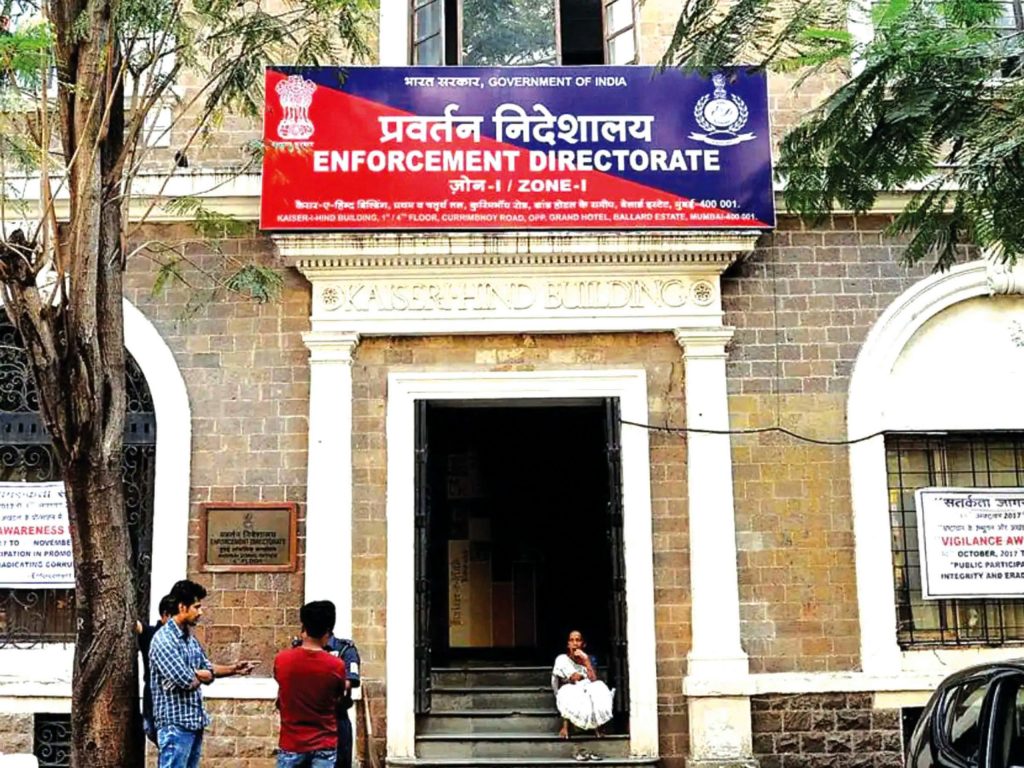
Third extension to ED chief puts agency’s credibility at stake?

Reacting to the government granting a third extension to ED chief, the Apex Court observed, ‘Is there no other person in the organisation who can do his job? Can one person be so indispensable?’

There is a famous saying that “Caesar’s wife must be above suspicion”, meaning thereby that if one is involved with a famous or prominent figure or institution, one must avoid attracting negative attention or scrutiny. Caesar divorced his wife Pompeia, saying that “my wife ought not even to be under suspicion”. The recent Supreme Court observations pulling up the government for granting a third extension to Enforcement Directorate (ED) chief has created such a piquant situation. The Apex Court has observed, ‘Is there no other person in the organisation who can do his job? Can one person be so indispensable?’

The Centre claims that the extension was necessitated by administrative reasons and was vital for India’s evaluation by the Financial Action Task Force (FATF).  The barrage of questions from the bench came after the Solicitor General said Mishra’s extension was necessitated because of administrative reasons and was vital for India’s evaluation by the Financial Action Task Force. “The next peer review of India’s legislation on money laundering is to take place in 2023 and, with a view to ensuring that India’s rating does not go down, continuity of the leadership in the Enforcement Directorate is crucial,” Mehta said, adding the person already interacting with the task force is best suited to deal with it and the skills for that is acquired after working in that position for several years.

The SG said though no one was indispensable, in such cases continuity was required. “We are not dealing with individuals, but with the performance of an entire country,” he contended. It may be noted that the Apex court had stated in its 2021 judgment that any extension of tenure granted to officers holding the post of ED Director after attaining the age of superannuation should be for a short period and that no further extension should be given to the incumbent director.

Opposition parties have been accusing the Centre of misusing the ED — the country’s premier agency that investigates cases of money laundering and violation of foreign exchange laws — to settle political scores. Congress and TMC leaders are among the petitioners who have challenged the amended law that allowed extension to the ED chief, even as the Supreme Court had issued notices to the Centre and the directorate a month ago on a petition challenging the ‘unfettered’ powers the ED wields under the Prevention of Money Laundering Act for search, seizure, summons and arrest.

The Supreme Court questioned, “Is there no other person in the organisation who can do his job? Can one person be so indispensable?,” asked the bench. “According to you, there is no one else in ED who is competent? What will happen post-2023, when he does retire?” a bench of Justices BR Gavai, Vikram Nath and Sanjay Karol asked Solicitor General Tushar Mehta, who represented the Centre.

At the start of the arguments, the solicitor general questioned the locus standi of some of the PIL petitioners who have challenged the amended law that allowed extension to the ED boss.  “At the outset, I have serious objection with respect to petitions filed by political persons whose party’s senior functionaries are under investigation by the Enforcement Directorate. They have no locus in the matter. Their leaders are facing serious ED investigations and it is not just political investigation as alleged. In one of the cases, we had to bring a cash counting machine because there was so much cash recovered from them…Will this court entertain petitions at the behest of persons who are trying to pressurise the agency ED,” Mehta said. The apex court, however, refused to agree with Mehta’s submission.

“Merely because a person is a member of a political party, can that be grounds not to permit him a petition? Can he be stalled from approaching the court?,” the Bench asked.  A batch of petitions, including those filed by Congress leaders Randeep Singh Surjewala and Jaya Thakur, and TMC’s Mahua Moitra and Saket Gokhale, had come up for hearing before the bench.

Earlier extensions to ED chief

According to the latest extension notification issued by the government, the 1984 batch IRS officer will be in office till November 18, 2023.  The present ED chief was first appointed the director of the ED for two years on November 19, 2018. Later, by an order dated November 13, 2020, the central government modified the appointment letter retrospectively and his two-year term was changed to three years. The Government promulgated an ordinance last year and later passed law, under which the tenure of the ED and CBI chiefs could be extended by up to three years after the mandated term of two years.

The Supreme Court said it might revisit its 2021 ruling that the tenure of a superannuated officer may be extended only in exceptional circumstances. On September 8, 2021, a Bench of Justices B R Gavai and L Nageswara Rao upheld the Centre’s order extending the tenure of Mishra beyond two years. However, the Bench said that “extension of tenure…to officers who have attained the age of superannuation should be done only in rare and exceptional cases”, and that such extensions “should be for a short period”. The court said, “There is no fetter on the power of the Central Government in appointing the Director of Enforcement beyond a period of two years”. On Section 25(d) of the Central Vigilance Commission Act, 2003, which lays down the minimum tenure of an ED Director, the SC said, “The words ‘not less than two years’ cannot be read to mean ‘not more than two years’.”

Mishra will complete five years as ED chief in November. The Centre has submitted that the extension was given due to a pending review by the Financial Action Task Force, the global terror funding watchdog, and that “continuity would help” the country. It has also said that Mishra would not remain in service after his term comes to an end in November. So far so good but observations by the top Court will certainly put onus on the government and the probe agency Enforcement Directorate to establish that its credentials are above board.


MOST POPULAR

HOT NEWS