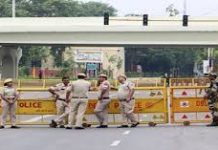
Kashmir is getting ready to host the G20 Summit from May 22 to May 24, which is expected to have a positive impact on the region’s tourism and commerce industries. The highly anticipated meeting is being held in Kashmir for the first time in history, and representatives from 20 countries, including the United States, Canada, China, India, and Japan, will attend the summit.
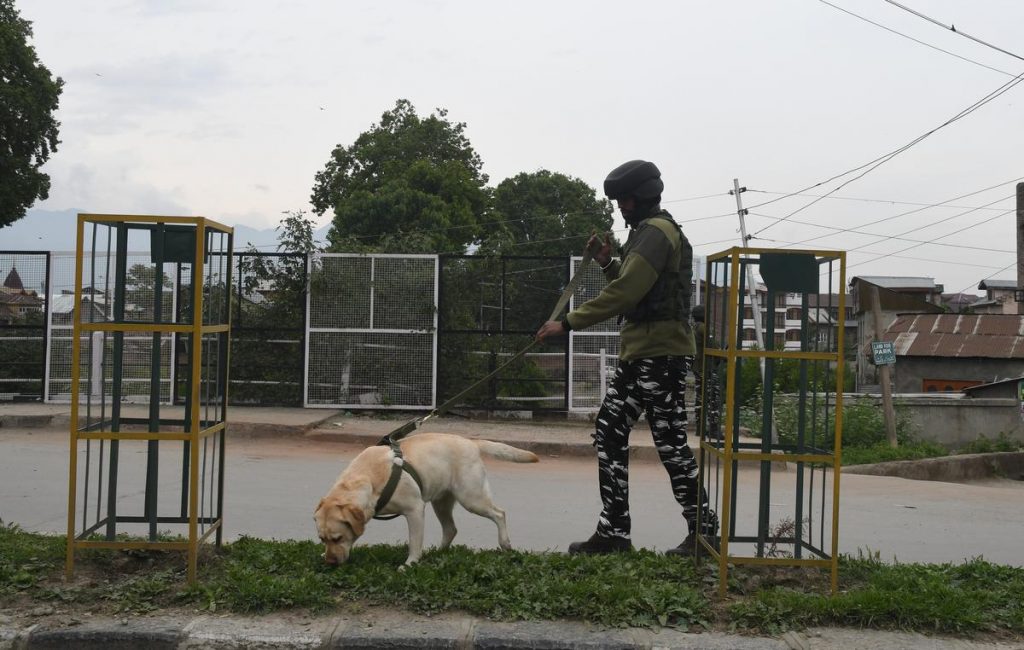
The additional director-general of police (ADGP), Vijay Kumar, and divisional commissioner Kashmir Vijay Kumar Bidhuri, chaired a review meeting with field officers to discuss security arrangements. The objective of the meeting was to ensure robust security measures are in place to prevent any potential terrorist attacks during the summit.
To prepare for the summit, various construction projects are underway, including road repairs and restoration, the installation of hoods, and beautification efforts of the bunkers located between the Sheri Kashmir International Convention Centre (SKICC) and Srinagar International Airport. These initiatives are aimed at enhancing the overall appeal of the summit. The Department of Tourism Kashmir has taken crucial measures to ensure a memorable experience for the guests. The event is expected to enhance global awareness of Kashmir and provide a fresh perspective on the region’s tourism industry. With the region’s economy heavily reliant on tourism, the summit is projected to attract a record number of visitors this year. The handicraft sector is also optimistic about the global opportunities that may arise from the conference.
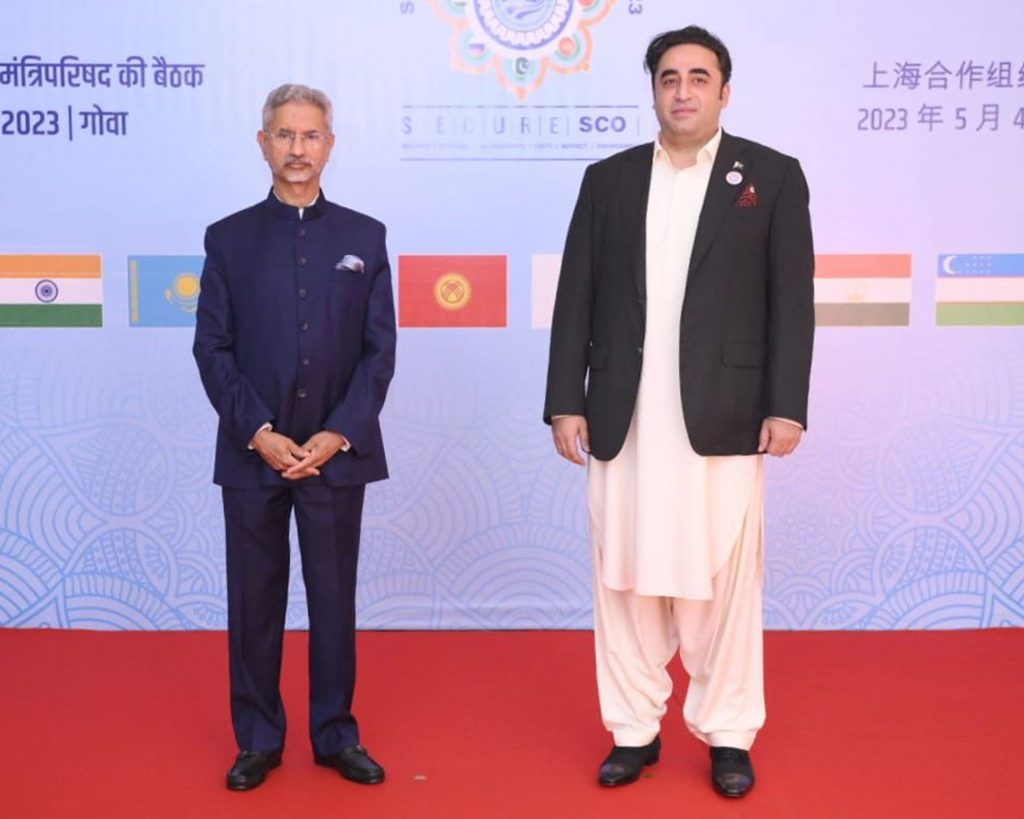
The deep seated mistrust between the two countries surfaced at the SCO meeting in Goa, where Pakistan raked up the abrogation of Article 370 in Kashmir while EAM Jaishankar called his counterpart Bilawal Bhutto a spokesperson of the terrorist industry. A report by Riaz Wani
No one expected India and Pakistan to resume dialogue at the recent Shanghai Cooperation Foreign Ministers meeting in Goa but there was an expectation that they would at least be able to break the ice. But, on the contrary, what we saw was a complete meltdown, with both sides taking an even harder line against each other.
If anything, the meeting highlighted the persisting deep-seated distrust between the two countries. External Affairs Minister S Jaishankar launched a scathing attack on his Pakistani counterpart Bilawal Bhutto Zardari, calling him a “promoter, justifier, and spokesperson of the terrorist industry.” Jaishankar also accused Pakistan of committing acts of terrorism and stated that Pakistan’s credibility “is depleting faster than its forex reserves.”
Pakistan, once again, raised the issue of the withdrawal of Article 370 and the China-Pakistan Economic Corridor. Jaishankar responded by stating that Article 370 is history.
“Wake up and smell the coffee, Article 370 is history now,” Jaishankar said.
The foreign minister also said that the so-called China Pakistan Economic Corridor violates India’s territorial integrity and its sovereignty.
The bitter exchange lasted even after the meeting was over and Bhutto-Zardari had returned to Pakistan.
Although the leaders of the two countries still have a chance to meet during the SCO summit in July, it seems unlikely that the two neighbours will get back to a normal engagement. And considering the bitterness generated by the foreign minister’s meeting, it is unlikely that the summit will be any different. More so, when both countries are already in election mode. Pakistan’s national elections are due this year unless the ruling dispensation chooses to drag its feet from the exercise, something which it is currently doing. The situation has become very complicated following the arrest of former Prime Minister Imran Khan. It has triggered massive protests across the country. The future of the country has become more uncertain. The situation is set to deteriorate further if no political resolution is achieved.
India, on the other hand, is holding its general elections in 2024 and around 10 Assembly polls are being held in the run up to the exercise. This will keep the ruling BJP largely preoccupied with campaigning, making the engagement with Pakistan, already of no consequence to the saffron party, even less important. Besides, after Bhutto-Zardari’s cold reception in India, there is a question mark over Pakistan Prime Minister Shahbaz Sharif’s visit to India in July to participate in the SCO summit. That is, if Sharif remains in power, considering the evolving situation in Pakistan.
“I think differences between India and Pakistan have become very irreconcilable now and any engagement between them will demand nothing short of a leap of faith,” said a local politician, not wanting to identify himself. “But this won’t be possible until after the elections in both the countries, if things go according to the plan.”
But despite no talks, India and Pakistan have been successful in maintaining an uneasy peace between them. In February 2021, the two countries reinstated the ceasefire along the Line of Control in a surprising development that followed just over a year after the withdrawal of the special status of Jammu and Kashmir. But the neighbours failed to build upon it and start a dialogue, probably due to their divergent positions on Kashmir. While Pakistan sought restoration of Kashmir’s special status, New Delhi wanted Islamabad to end cross-border terrorism.
Since then the situation has further transformed. Now the first prerequisite for any Indo-Pak engagement apart from their respective national elections is the stabilization in Pakistan.
Julianne Smith, US Ambassador to NATO, recently caused ripples by stating that India was welcome to join the NATO. India, however, is reluctant to take up this ‘sugar coated’ invitation on its face value.
With an assertive China stamping its presence in 2023, the USA’s role as the only Super Power on the planet appears to be fading. It is natural for democratic nations like India to rally around the democratic forces to rescue the world’s most powerful democracy, America. But it must be said that during the four decades of its hegemony, USA has not conducted her role with dignity.
Like a wolf, it accuses Iraq of amassing weapons of mass destruction and destroys the prosperous country. Similarly, it abandons his supporters in Afghanistan in 2022. It has been fuelling the Russia-Ukraine conflict instead of diffusing this avoidable conflict.
It is often asked why India is not ready to perform her legitimate role as the world’s one of the most successful multi-party democracy, especially when the US-led western powers are keen that she should ‘unhesitatingly ‘pick up the gauntlet’ and steer the democratic world to a much more unified approach. India can help in tackling the challenges being mounted by the authoritarian regimes, especially China, besides some military dictatorships such as Myanmar, where a non-descript general has toppled the elected government and sabotaged the ongoing polls because the army’s proxy, a political outfit floated by the generals, was losing the polls. The US did not impose sanctions on China for promoting military rule on the peaceful people of the country.
During the cold war era, in the name of preventing the expansion of Communism, Washington had been prompting military take-overs across the continents, Asia to Africa and Americas. In India’s neighbourhood, Pakistan was armed to the teeth, and now this role is being played by China. Americans know that China has now a strong constituency among the Blacks in the USA. It could trigger off a nationwide movement on the issue,‘ Black life matters’.
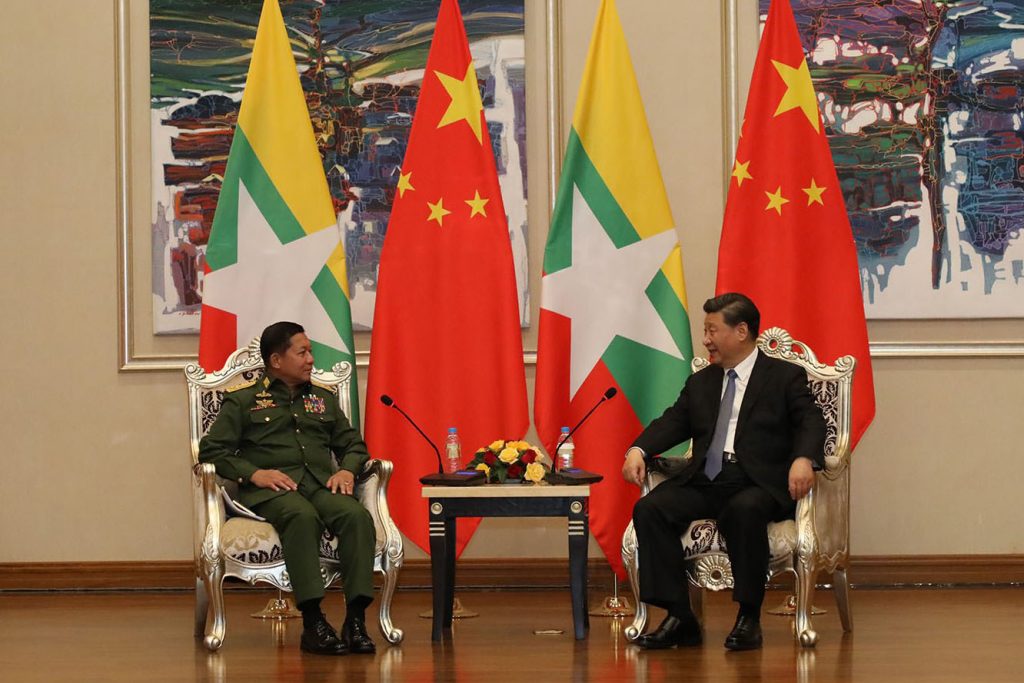
Instead of criticising Dragon, the USA is reluctant to force the Myanmar army chief Tatmadaw, perhaps with the blessings of the Chinese government. He shamelessly arrested the State Councillor, a post equivalent to a PM, Aung San Suu Kyi, a living legend, who is also a Nobel laureate, in February 2021. Within a few weeks after the re-election of Xi Jinping as the new president, the emboldened Myanmar junta deliberately ignored the UN Security Council resolution asking for an end to violence in Myanmar and the release of all political prisoners.
Ethical Issues
Among the NATO allies, America sabotaged the French diesel sub-marine deal with Australia causing huge financial loss to France. Similarly, Germany which has Volkswagen plants in China has been assured that China would be protecting its financial interests in this key sector. Both France and Germany have already notified America, that they would not be assisting in any conflict or war it indulges outside Europe. It means that if China attacks Taiwan, the major European powers will remain neutral.
Being the world’s biggest democracy, India may not be averse to this proposal, but she must be allowed to cleanse the political mess caused by the American policies during the past several decades.
In a bid to improve the political climate in the South Asian region, India’s security advisor, Ajit Doval, has recently been in Tehran, where he met Iranian President Ebrahim Raisi and his Iranian counterpart Ali Shamkhani and Foreign Minister Hossein Amirabdollahian. It may be noted that Hossein Amirabdollahian had skipped the key meeting of the Raisina Dialogue, because one of its sponsors, Observer Foundation, believed to be an American proxy, had raked up the issue of the alleged police repression on Iranian women protesting against the imposition of veil on them. The Iranian FM after boycotting the Indian conference quietly flew to Beijing to sign an agreement with its arch enemy, Saudi Arabia, for resuming their diplomatic ties. India as well as the NATO allies was stunned. Thus, the Ambani outfit, Observer Foundation, put paid the efforts of India’s two successive governments, the UPA and NDA, for bringing Iran and Saudi Arabia closer.
A Good Beginning
Let us not be fooled by the media rhetoric expressed by the Iranian leaders regarding improving ties with India. It is believed that substantive talks might have been held on a much broader perspective including improving Iran’s ties with the West, especially the USA. It is not immediately known whether India will be able to persuade Iran to have negotiations with the West, especially with the USA for ending the standoff on the issue of developing nuclear weapons, especially when Iran has been a signatory to the Non-Proliferation Treaty (NPT). The issue is still under wraps, but it has to be discussed and resolved. If Saudi Arabia and Iran could resume their diplomatic ties, Iran can also be persuaded for negotiations.
For this, the West has to endorse India’s efforts. Her efforts will be effective as in NATO to play her role as one of the leading figures championing the cause of multi-party representative governments in the world.
NATO’s Offer to India
The recent statement of Julianne Smith, US Ambassador to NATO, has caused ripples in the diplomatic circles that India is being welcomed with open arms in the North Atlantic Treaty Organisation or NATO. But the final decision of this proposed deeper association lies with India herself. India, however, though being one of the closest allies of the USA in the South Asian region, is reluctant to take up this ‘sugar coated’ invitation on its face value.
Julianne Smith does doublespeak that the alliance has so far no plans to expand NATO to a broader global military alliance. The truth, however, is that the two major wars, WW-I and W.W.-II were won by the supreme sacrifices of the Indian soldiers. The apprehension is that NATO wants full scale military participation of India in future conflicts, whether it is Taiwan or elsewhere. She further states that NATO is being deployed for strengthening the West’s relationships in the Indo-Pacific, but she avoids mentioning the much-talked about the growing Chinese threat in the region.
The Disenchantment
Smith deliberately avoids the growing disenchantment among the key NATO allies. Interestingly, in April 2023, French President Emmanuel Macron made a high-profile state visit to Beijing accompanied by European Commission President Ursula von der Leyen, just days after the visit of the Spanish Prime Minister Pedro Sanchez.
On the Global chess-board, India is ready to play her role, but the West must shed off its unethical greedy actions not sparing its own trusted allies in NATO.
She talks about NATO’s emphasis on honouring and ensuring that the key principles, particularly as they relate to sovereignty and territorial integrity, are respected. Interestingly, the Chinese constitution has already incorporated the Panchsheel, the Five Principles, approved at the Bandung in the Afro-Asian conference. It means, NATO is for the Panchsheel, but it is reluctant to concede that China has already taken a lead.
She states that “NATO has really shifted in a pretty noticeable way in terms of how it conducts outreach and engages with its partners in the Indo- Pacific region. It is for the Biden administration to understand that “no alliance will be effective unless it is backed by ethics and fair play”. Unfortunately, in recent years, NATO has been quietly spreading its clutches in the region. Its recently published strategic documents include the Asia-Pacific and the Indo-Pacific as the first and foremost in the American thinking.
It is admitted, may be for the first time, that NATO acknowledges the importance of focusing on Dragon as a challenge for the alliance and why it’s important for NATO allies to enhance and deepen their relationship across with partners in the region. Americans, however, are shy to admit that their NATO allies, especially the US Administration under President Bill Clinton had allowed China to become an economic giant. With this, Dragon has penetrated in American systems, and for this India is needed.
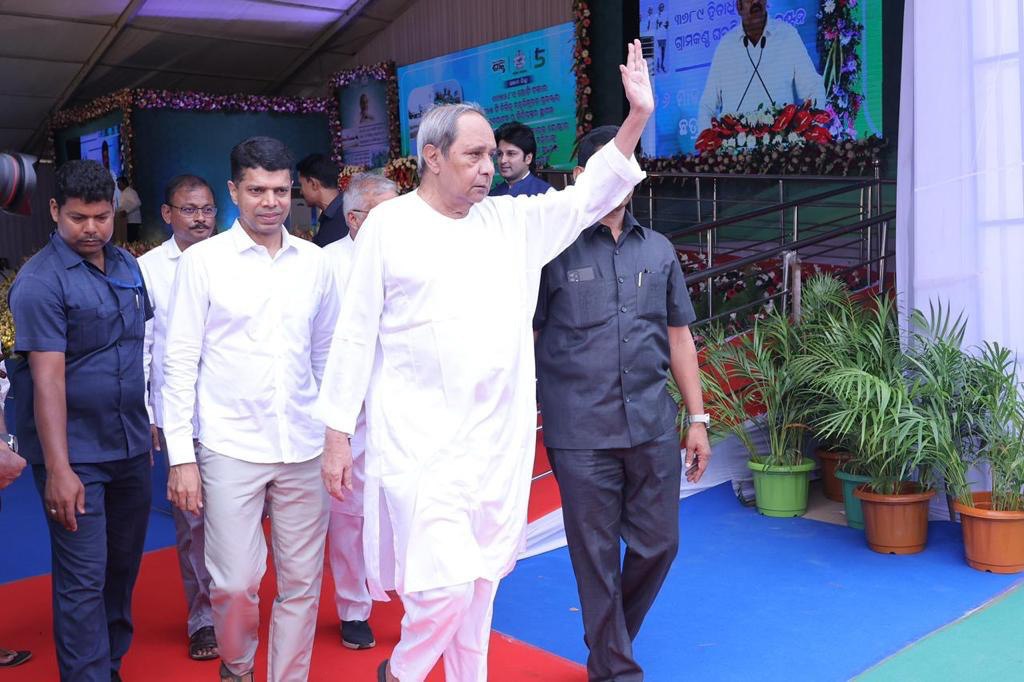
Naveen Patnaik-led Odisha government’s decision to launch a survey to assess the socio-economic status of OBCs in the state, has irked the opposition parties who have alleged that the exercise is being undertaken with an eye on 2024 General Elections, writes Aravind Mohapatra
Politics in Odisha has heated up with the Naveen Patnaik government launching a survey to assess the socio-economic status of Other Backward Castes (OBCs) in the state. Odisha is the second state in the country after Bihar to undertake this survey but opposition parties are already seeing red. Opposition parties like BJP and Congress have questioned the timing and intention of the government behind the survey. They have accused the government of trying to hoodwink the OBCs to win their support in the 2024 elections. The government, however, insists that the survey was necessary to obtain the exact data on the OBCs so that steps can be taken to ensure their welfare.
“The timing of the survey makes the exercise suspect. They are not bothered about the welfare of OBCs. They never were. Now that the general elections are only a year away, they have launched this exercise as they want to create an impression that they actually care for this class. They are playing the caste card as they are desperate to win the elections but they will not succeed,” said a senior Congress leader.
Some other opposition leaders like former union minister Srikant Jena have demanded that the government should first grant the OBCs their constitutional rights. As long as that does not happen, people won’t have faith in the government’s exercise.
The survey that began on May 1 will conclude on May 27. Being conducted by the Odisha State Commission for Backward Classes in both online and offline modes, it will cover OBCs residing in 314 blocks and 114 urban local body (ULB) areas of the state. It will cover a number of backwardness indicators including educational qualification, occupation of the person, livelihood sources, access to hospitals and schools and the kind of houses the persons live in.
The Commission has opened centres for submission of filled up survey forms in all Anganwadi Kendras and even public distribution system (PDS) outlets. The families under survey would be required to provide details of their ration cards and Aadhar cards or voter I cards. The survey will cover 210 OBC communities in the state.
What makes the survey politically important is the fact that OBCs account for 54 percent of Odisha’s population and constitute a huge vote- bank. Though unlike UP and Bihar, politics in Odisha has never been dominated by the caste factor there is no denying the political clout of the OBCs. Political parties have been trying to cultivate them for several decades.
Minister for SC & ST, Minorities and Backward Classes Welfare Jagannath Saraka dismisses the allegations of the opposition as politically motivated. “The opposition may say anything but there is no politics in this. This is an attempt to assess the socio-economic status of the OBCs,” he asserted.
The fact is that no formal census including the caste details of the population has been carried out in the state since 1931. The state, thus, lacks reliable data on OBCs who currently enjoy only 11.25 percent reservation in government jobs. This, however, is considered completely disproportionate to their population in the state. The government has not been able to raise this quota because of a cap of 50 percent on reservations mandated by courts.
However, the Naveen Patnaik-led Biju Janata Dal(BJD) has been demanding removal of the 50 percent cap on reservation for quite some time. In 2021, the party not only reiterated this demand but also demanded a caste-based census. The ruling party leaders say they want the cap to be removed so that the government can provide 27 percent reservation to OBCs, who constitute the largest chunk of the state’s population. “Our demand for removal of the cap on reservations stands. At the same time, now we have launched a survey to collect authentic data on OBCs. There is no politics in this. This concerns the welfare of the OBCs. We have a duty towards them,” said a senior BJD leader.
Chief Minister Naveen Patnaik had himself approached the Centre in the past demanding a socio-economic caste survey to be conducted simultaneously with the proposed general census in 2021. When the Centre did not concede the demand, the state government decided to conduct its own survey and the state assembly passed a unanimous resolution to amend the Odisha State Commission for Backward Classes Act 1993 to enable the government to undertake a survey on social and educational conditions of OBCs.
However, opposition leaders are not convinced about the real intentions of the government behind carrying out this survey since it is being undertaken at a time when major parties in the state are busy preparing for 2024 elections. The opposition leaders feel that the entire exercise is being undertaken with an eye on elections. “If they are sincere they should conduct a door to door survey and collect authentic data,” said State BJP OBC Morcha president Surath Biswal, who described the survey as a farce.
However, members of the OBC community are happy and have hailed the government move. “Better late than never. They are at least doing it now. We now hope to get our long overdue benefits,” said Seemantini Jena, a member of the OBC community, from Bhubaneswar.
Prateek Hajela, former State coordinator of NRC, along with Indian IT firm, Wipro Ltd and ISS have been sued by well-known Assamese businessman Luit Kumar Barman for their roles in Rs 155-cr money laundering case during NRC Assam updation process, writes Nava Thakuria
After a number of FIRs for alleged involvement with National Register of Citizens (NRC) updation scam in Assam, much talked about Indian Administrative Service (IAS) officer Prateek Hajela now faces a case registered in the Kamrup (metro) chief judicial magistrate’s court (CR/155/2023, 12 April 2023). The former State coordinator of NRC along with Wipro Limited and Integrated System and Services (ISS, represented by proprietor Utpal Hazarika) have been sued by well-known Assamese businessman, film maker and a vivid social media user Luit Kumar Barman for their roles in Rs 155-crore money laundering case during the NRC Assam updation process (May 2014 to October 2019).
The 1995-batch IAS officer of Assam-Meghalaya cadre was lately relieved by Madhya Pradesh government from assigned responsibilities (where Hajela was in three years inter-State deputation since 2019 following an order of the Supreme Court of India assuming threats to Hajela’s life over NRC Assam fraud issues) and the IIT graduate-turned-bureaucrat is expected to return back to his original cadre. However, unauthenticated reports suggest that Hajela has already applied for voluntary retirement for his service as he is seemingly not interested to return back. However, many social media users opposed Hajela’s proposal citing it to be an escape route.
The complainant, who introduces himself as a concerned and vigilant Indian citizen against corruption, cited the recently released report of the Comptroller and Auditor General of India (CAG) on social, economic and general sectors for the fiscal year ending on 31 March 2020, where the issue of corruption involving a large amount of public money was mentioned. The CAG also recommended penal actions against Hajela and the system integrator (Wipro, an Indian IT company of international repute). Besides himself, Barman, in his complaint, introduced Hitesh Devsarma, IAS (retired), immediate successor of Hajela as NRC State coordinator, and Aabhijeet Sarma, president of Assam Public Works (APW), original petitioner in the apex court for NRC updation in Assam, as witnesses.
Both Devsarma and Sarma had lodged separate FIRs against Hajela in the last few months alleging financial mismanagements as well as intentional inclusion of illegal migrants’ names in the NRC. In two complaints (one with the criminal investigation department of Assam Police and other with the CM’s vigilance and anti-corruption wing), Devsarma alleged that a massive corruption had been done by his predecessor (Hajela) along with some officials and an outsider (named Pralay Seal). In various public discourses (including a number of television talk shows), Devsarma also claimed that the NRC supplementary list included thousands of illegal migrants’ names as the tempered software was intentionally used to defy family tree match scanning in the process.
Mentionable is that the CAG report clearly stated that due to lack of proper planning, hundreds of software utilities were added in a haphazard manner to the core one of NRC updation. Asserting that highly secure and reliable software was necessary for the exercise, but no due process like selection of vendors following a national tender was followed. Due to the lack of proper planning, while developing the important software, a haphazard addition of over 200 software utilities to the primary one was done. The statutory audit body claimed that the intended objective of preparing an error-free NRC in Assam was not fulfilled, even though the NRC authority had to spend Rs 1,579 crore and around 50,000 government servants were used in the process.
Unfortunately, the NRC irregularity issue also involves the SC as a bench comprising the then CJI Ranjan Gogoi used to ‘monitor’ the particular exercise. Confusions surfaced, when around 6000 temporary workers were paid lower than the prescribed monthly salaries. Those contractual data entry operators, who were denied the minimum salary as per the country’s Minimum Wages Act, received only Rs 5,500 (to 9,100) per month (per person) during 2015-2019. But the NRC authority (read Government of India) sanctioned Rs 14,500 (to 17,500) every month for one DEO.
It’s alleged that Hajela, without any due process of transparent tendering, delivered the task of supplying DEOs to Wipro and it illegally engaged one sub-contractor (ISS, owned and managed by Hazarika). Thus an undue benefit to the tune of Rs 155.83 crore was given to the system integrator. Even the CAG report, which was tabled before the State legislative assembly for discussion, observed that the difference of margin was exorbitant after allowing Wipro 10% reasonable profit margin. Unsatisfied DEOs approached the State labour commissioner and even came to the street demanding their legal dues, but in vain.
The matter was discussed in both mainstream media and digital outlets a few months back highlighting the State government’s daily minimum wages for skilled, semi-skilled and unskilled workers in various sectors, where it was directed that even an unskilled worker can legally claim Rs 240 per day (read Rs 7,200 per month), where the skilled one should get minimum Rs 350 per day (Rs 10,500 per month). Responsible individuals, while commenting over the matter, pointed out three television scribes as also being beneficiaries of money laundering in the NRC updation process. But those anchor-journalists have not responded to the allegations so far.
The NRC updation process began in December 2014 with an initial project cost of around Rs 288 crore and was supposed to be completed within 14 months (by February 2015). But the timeline for the project went on lingering and the final draft was published on 31 August, 2019. Because of the time overruns, the project cost escalated up to nearly Rs 1600 crore by March 2022. Though claimed by Hajela, the released NRC is yet to be notified by the Registrar General of India.
The NRC was supposed to enroll the names of all genuine Indian citizens (or their ancestors) residing in Assam prior to 25 March 1971, and the final draft included a total of 3,11,21,004 citizens’ names out of 3,30,27,661 applicants (thus the final draft excluded around 19 lakh people as they could not provide valid documents). Assam, which had its first prepared NRC in 1951, used to face an influx of migrants from erstwhile East Pakistan and present-day Bangladesh. Rapid demographic changes had alerted the indigenous communities of Assam, which resulted in the anti-foreigner movement of the eighties.
The historic six-year long agitation, led by All Assam Students’ Union (AASU) and Asom Gana Sangram Parishad, culminated in 1985 after signing an accord in New Delhi. Shockingly, the agitating leaders agreed to accept all migrants prior to 25 March 1971 in Assam, whereas the country as a whole maintains a different cut-off year (1951) for claiming Indian citizenship. Lately, the exclusive cut-off date for Assam has been challenged in SC by a civil society group (Motiur Rahman-led Sanmilita Maha Sangha). The expected SC verdict may also impact on the acceptability of Assam NRC (as it followed 1971 as the base year).
APW president Sarma, who lodged police complaints against Wipro (besides Hajela), also sent a letter to Azim Premji, chairperson of Wipro Technologies, informing him about the company’s unholy role in the NRC updation process. Lately, he urged Prime Minister Narendra Modi to intervene in the matter so that the guilty individuals are punished under the law. Pointing out that a large amount of money came from foreign countries to influence the system for incorporating thousands of Bangladeshi families’ names in the list, he argued that the Enforcement Department, Central Bureau of Investigation and National Investigation Agency should separately probe into the NRC scam.
Meanwhile, a large section of conscious Assamese individuals, civil society and political party representatives expressed concern over the development as they are not ready to accept the present fate of NRC. They still expect the culprits to be punished irrespective of their social standings and hope for a genuine NRC in Assam. State chief minister Himanta Biswa Sarma has assured appropriate actions against those involved in the irregularities and recently the saffron leader announced that the State government had already referred the case against Hajela to the directorate of economic offences.
A set of smart practices and technological interventions introduced as part of regenerative agriculture are ensuring that farmers not only reduce water usage but also get access to it. A report by Deepanwita Gita Niyogi
Farmer Ramakrishna Mandala has three acres of land on which he cultivates paddy and maize. While paddy occupies two acres, maize is grown on the rest in both Kharif and Rabi seasons.
Mandala, who is in his forties, resides in Tirupati Palem village of Srikakulam, a coastal district in Andhra Pradesh, highly impacted by extreme weather events like cyclones. To add to problems, in the past 10 years, the rainfall pattern has changed in the region which has made farmers dependent on borewells for irrigation. The farmer has two borewells for watering his land.
As borewells draw out groundwater from aquifers, it is important to conserve and replenish this precious source in a changing climate when more droughts have been predicted. Smart farming practices can help reduce water usage in agriculture.
Prior to 2017, Mandala used to follow traditional farming methods which did not focus on water conservation efforts. A few others, who thought about conserving water, also had no idea about how to go about it.
Since 2017 onwards, thanks to technological interventions introduced by Hyderabad-based non-profit Dr. Reddy’s Foundation, as part of regenerative agriculture, a change took place. By following water-saving techniques, Mandala was able to cover his entire land area of three acres as well as share water with other farmers in his village.
Smart water use
Last year, during a seminar at ICRISAT, which focuses mainly on dryland agriculture, experts discussed the benefits of regenerative farming in view of a changing climate.
One of the most important interventions under regenerative agriculture has been the introduction of direct seeded rice (DSR) which ensures throwing seeds in the field with the multi-crop planter machine. This replaced nursery preparation of growing seedlings and then transplanting them in flooded fields traditionally followed across India.
As DSR does not need standing water in fields, a lot of water is saved. In coastal Andhra Pradesh, paddy is the dominant crop along with maize. Sometimes a third crop such as oilseed is also grown in April. For maize too, direct seed sowing replaced ploughing, thus conserving water. This is being done with the double wheel marker.
Under regenerative agriculture, water usage is an important component, said Suman , associate director-operations, Dr. Reddy’s Foundation.“Apart from reducing water use in agriculture, no ploughing by tractors also saves fuel.”
Currently, regenerative agriculture is on in 24 blocks of Srikakulam and adjoining Vizianagaram districts covering 1560 villages. As part of this, 1200 lead farmers and 21000 fellow farmers have been identified. Lead farmers selected in every village spread the good word and encourage others to follow suit.
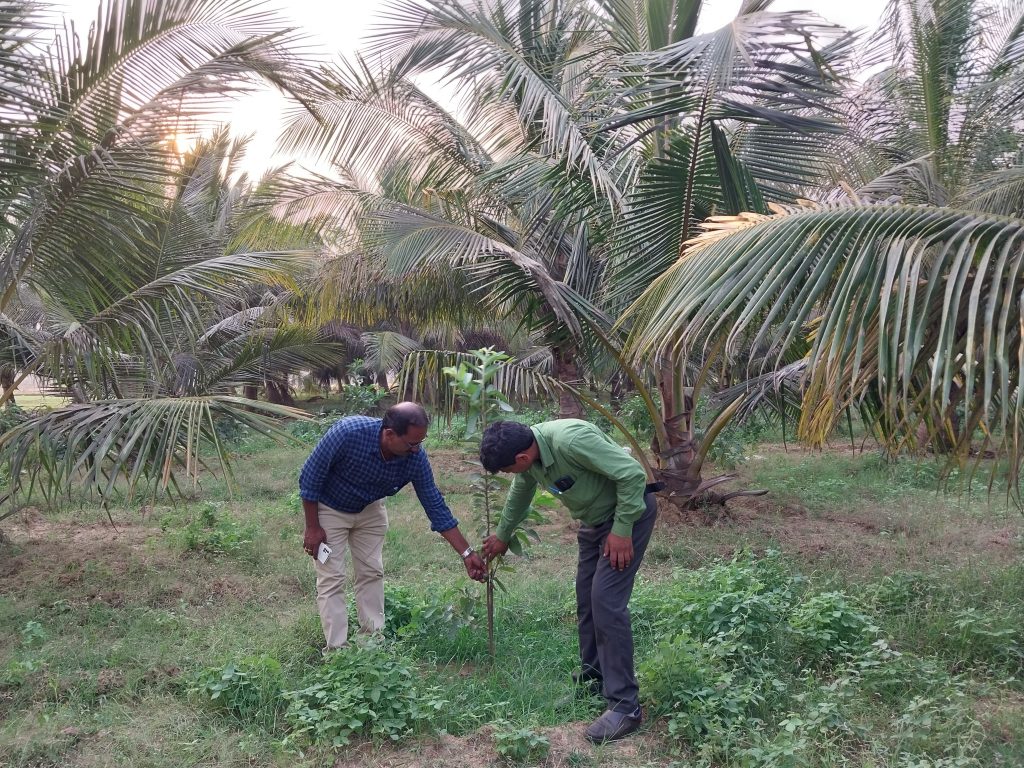
Apart from DSR rice, soil moisture conservation in agroforestry set ups is also one of the smartest ways to reduce water usage. As part of it, farmers have introduced fruit trees in traditional coconut orchards. “The aim is to cover the soil and not leave it barren. Farmers also start getting yields from the second year itself and do not have to wait for five years for coconut trees to bear fruits,” said Lakshmi Narasimha Murthy, who works for the non-profit in Srikakulam.
Cover crops in agroforestry improve soil fertility. In Tirupati Palem village of Ranasthalam block, horse gram has been planted as a cover crop in the coconut orchard of farmer Venugopal Velichetti. The farmer has mango, lemon and guava trees in his orchard. Venugopal has 122 plants on 1.4 acres.
Saving a precious resource
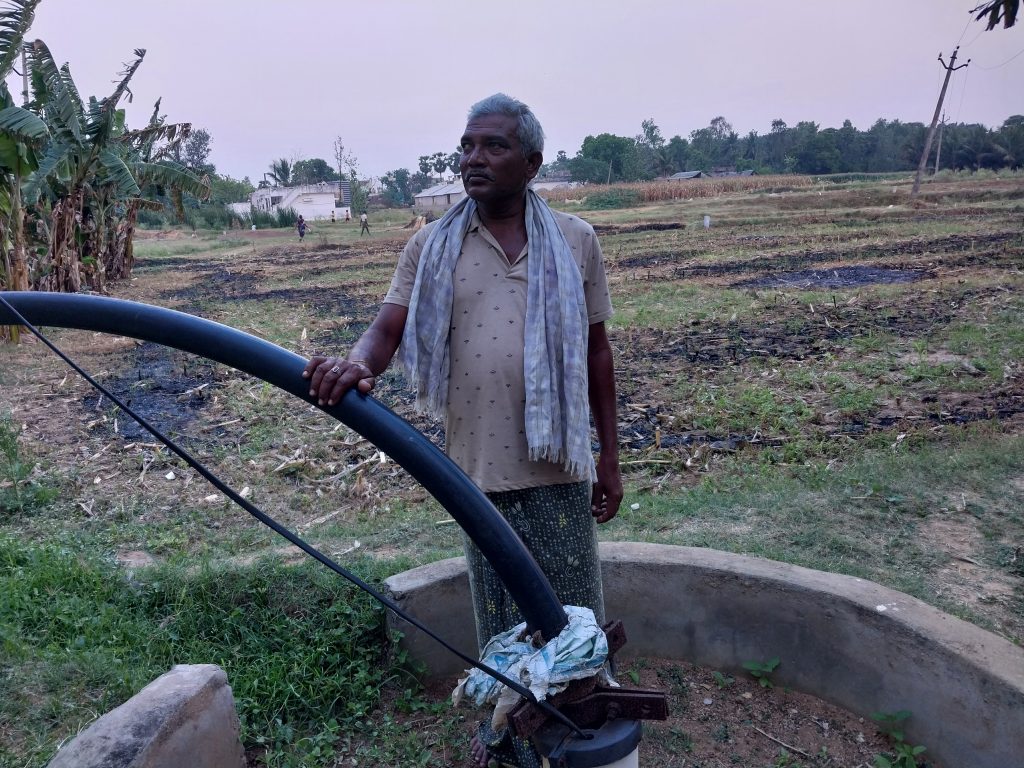
Farmer Sathyam Sarika of Neliwada could not cover his entire three acres of land before due to the lack of adequate water. Now, the water level in his borewell has increased within 10 months. This has been possible through borewell recharge which harvests rainwater and sends it back to aquifers through natural filtration. It is another way to reduce water usage. Many farmers who failed to irrigate their lands before due to water shortage now find it easy with this method. This was introduced after due consultation with scientists from the Krishi Vigyan Kendra.
In Neliwada village, lead farmer Simhachalam Pandranki owns about five acres of land. “Farmers try to conserve as much water as possible. DSR rice, borewell recharge and zero tillage in maize conserve water and it can be used for other purposes. Then there is the rain hose technology which irrigates lands quickly, thus saving water.” Rain hose sprays water like rain and helps cover two acres in about two hours.
Across Srikakulam, many farmers have adopted water conservation measures in the face of a changing climate and cyclonic disturbances. They are reaping benefits too. Sanyasirao Reddy, who has three acres of land, does not need to water his fields daily now. In a week, five days are adequate. He is a resident of Venkateshwara Colony village.
“Regenerative agriculture is all about focusing on soil health and water conservation. While water use is reducing, access to water is increasing with rain hose technology and borewell recharge,” Suman added. According to Murthy, much water used to be wasted in paddy transplantation. But DSR has managed to save water and give increased yields, even in some cases by five quintals more.
New Delhi-based sociologist, Dipankar Gupta’s book – LOCKDOWN Limericks and Rhymes, was written during the lockdown days. To quote him, “In those days of gloom, I found writing limericks and nonsense rhymes a great stress reliever. They also helped in shrugging off the frustration one feels when people lose all sense of civic obligations and flout Covid 19 appropriate behaviour wantonly…” A book review by Humra Quraishi
BOOK REVIEW
Title of the book –LOCKDOWN Limericks and Rhymes
Author- Dipankar Gupta
Illustrator – Disha Chakraborty
Publisher – LG Publishers Distributors
Pages – 96
Price – Rs 495
Lockdown days changed us all …brought along changes amongst those of us who were fortunate enough to have survived that disastrous phase. In fact, not just survived but many of the ‘survivors’ saw to it that each pass day was spent not in moaning and mourning, but in indulging in creativity to its fullest.
One such person is the well-known New Delhi-based sociologist, Dipankar Gupta. His book – LOCKDOWN Limericks and Rhymes, was written during the lockdown days. To quote him, “In those days of gloom, I found writing limericks and nonsense rhymes a great stress reliever. They also helped in shrugging off the frustration one feels when people lose all sense of civic obligations and flout Covid 19 appropriate behaviour wantonly…As all indulgences in imagination require no higher authority for approval, I gave free reign to my limited abilities in composition…”
So here comes this limericks-rhymes book by sociologist Dipankar Gupta, who has been earlier writing extensively on castes, peasants, modernity and citizenship.
And as I have been reading these limericks and rhymes well tucked in this book, what caught attention are the illustrations that go along. Absolutely compatible. Highlighting the verse. Illustrations so well done that one keeps gazing at them whilst reading the accompanying verse.
Dipankar Gupta has chosen a diverse range, focusing on what the corona virus did or rather undid for the human being. The characters he chooses to relay the varying thoughts and expressions and realities range from Chengiz Khan to our everyday ordinary folk.
Leaving you with Gupta’s this verse:
Slumdog Limericks /
Four of us live in a slum zone,/
In a tiny room, never alone/
But we keep, without fuss,/
Social distance between us,/
As we talk long distance on the phone./
Washing hands for 20 seconds is a joke./
There’s no taps in homes of us folks./
We have so little time/
To soap off the grime,/
That dirt sticks to us like a cloak./
Always cough or sneeze into tissues.
Trash them after to stop misuse./
Or else, we are also told/
Use your elbows fold,/
But you can’t cut that off like refuse.’
Leaving you with a few opening lines from his verse titled –
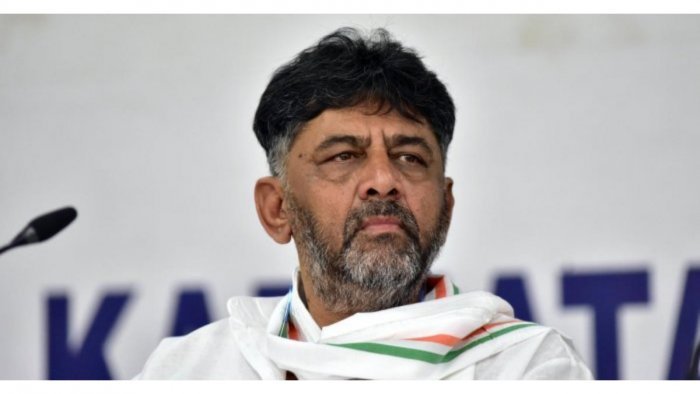
Karnataka Congress President D.K. Shivakumar on Tuesday left for New Delhi for a discussion with party leadership on chief ministerial candidate in his state.
While interacting with the media before his departure, he said that the party is “God” to him.
“Ours is a united house. Our number is 135 and I am a party President. Congress party is my temple. The party is like a mother. I have done my job, ” Shivakumar stated.
“The God and mother know what to offer to the children. I am going to meet my God in the temple. I am going alone. The General Secretary had asked me to come there alone, ” Shivakumar stated.
According to Shivakumar’s office, he boarded the 9.50 a.m. flight. He will attend the crucial meeting with Sonia Gandhi, Rahul Gandhi and AICC President Mallikarjun Kharge to decide on the Chief Minister’s post for Karnataka.
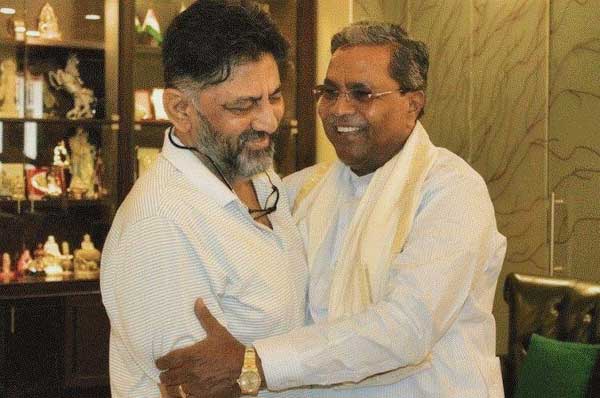
Veteran leader Siddaramaiah and Shivakumar are vying for the top post. Sources said that despite Siddaramaiah getting the majority, Shivakumar is not willing to budge. He is claiming that he had delivered the victory to the party and hence deserved the chief minister’s post.
Siddaramaiah reached New Delhi on Monday noon with his supporters and was awaiting the arrival of Shivakumar.
Sources also claimed that the high command has also suggested the leaders share the power for two and half years each.
But Shivakumar is maintaining that the CMs deputed for the first term have not vacated their posts to give chance to others in states of Madhya Pradesh and Chhattisgarh.
As per the sources, he is insisting for the first term, sources explained. Meanwhile, senior top leaders are holding meetings to decide on the next step in case the issue is not resolved soon.
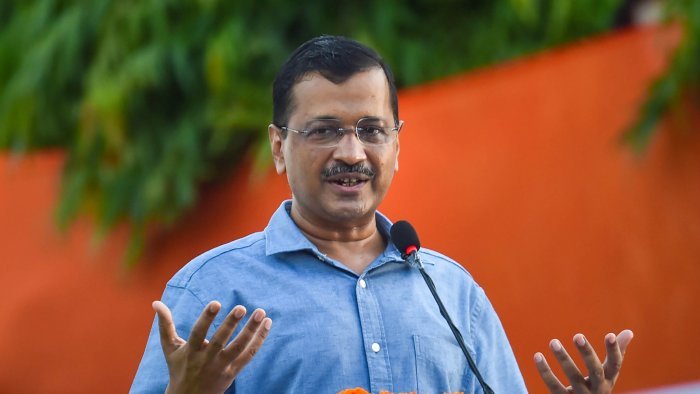
AAP national convenor and Delhi Chief Minister Arvind Kejriwal will soon visit Lucknow to meet and greet the party candidates who won the in the recent Uttar Pradesh civic polls.
“Delhi Chief Minister Arvind Kejriwal will visit Lucknow by the end of this month. He will meet all winning candidates of the party and guide them how to carry out work in their constituencies, ” AAP’s chief spokesperson Vaibhav Maheshwari said.
After the civic polls, AAP will now focus on Uttar Pradesh in the wake of the 2024 Lok Sabha elections.
“As Uttar Pradesh sends the largest number of 80 MPs to Parliament, AAP’s planning for the state will be for the general election, ” said aparty leader.
Throughout the campaigning for civic polls, AAP candidates had focused on the Delhi model of governance of the party.
“The party is also planning Arvind Kejriwal’s UP tour. But the schedule is yet to be formalised, ” said an AAP leader.
The party’s most resounding victory was in the Samajwadi Party’s stronghold, Rampur district.
Party candidate Sana Khanam was elected chairperson of the Rampur Nagar Palika Parishad.
Khanam bagged 43,121 votes (44.19 per cent of the total votes polled) to win this seat reserved for women.
Rafat Jahan of AAP was elected chairperson of the Kemri nagar panchayat, Rampur.
She secured 7,449 votes (52.84 per cent of total votes polled).
According to the Uttar Pradesh State Election Commission, AAP won three nagar palika chairman seats, six nagar panchayat chairman seats and several wards in municipal corporations.
Over half of AAP’s winning candidates belong to the minority community.
After the sweeping mandate in Karnataka Assembly elections, Congress is busy finalising the Chief Minister following open claims from senior leaders Siddaramaiah and D.K.Shivakumar.
Sources in the AICC told to media that Siddaramaiah has put forward a suggestion that he was willing to share the Chief Minister position with Shivakumar.
However, Siddaramaiah, according to the sources, wants the first term and that he would demit office after the first two years with Shivakumar to follow in the rest of the term.
With the Kurba community and Vokkaliga community of Siddaramaiah and Shivakumar respectively pitching for their community members, the Congress high command is in a difficult situation.
The Congress high command is likely to finalise the decision on Monday itself and there is a strong possibility of Siddaramaiah becoming the Chief Minister for the first term.
Sources in the party told to media that Shivakumar will also agree for this arrangement but he has categorically informed the party high command that he should be made the single Deputy Chief Minister with home portfolio.
According to a senior leader of the Karnataka Congress, around 70 per cent of the elected legislators had supported Siddaramaiah as Chief Minister.
The final decision will be announced by AICC president Mallikarjun Kharge after consulting the AICC observers – former Maharashtra Chief Minister, Sushil Kumar Shinde, Jitendra Singh, and Deepak Babariya.
The AICC president will have discussions with Sonia, Rahul, and Priyanka Gandhi as well as the AICC general secretary (Organisation), K.C. Venugopal, and AICC general secretary in charge of Karnataka, Randeep Singh Surjewala.