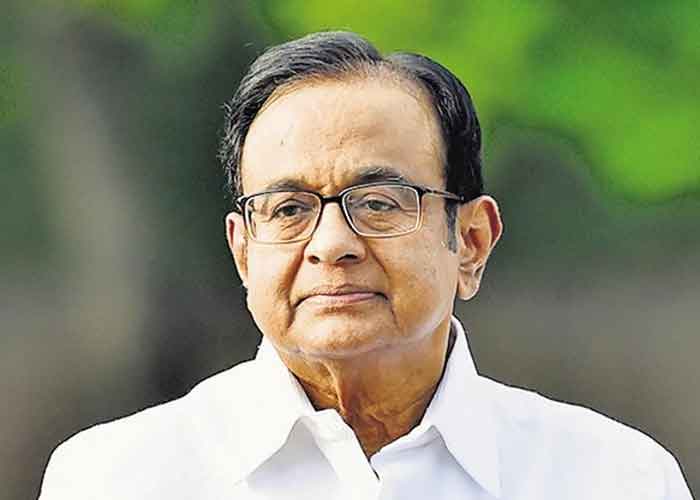
Bihar Ploy impossible in Tamil Nadu or Kerala: P Chidambaram

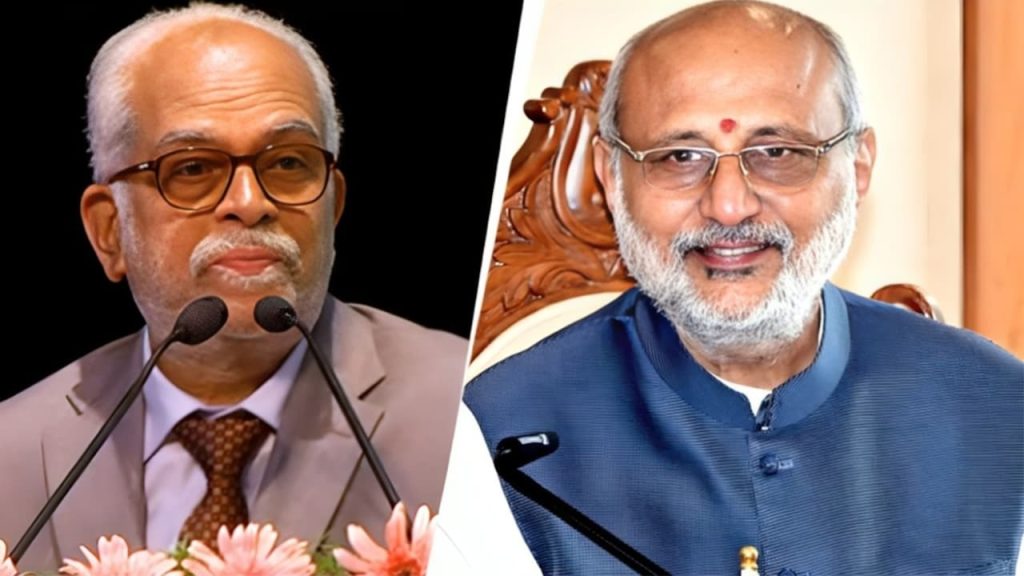
Former union finance minister and Congress Rajya Sabha MP P Chidambaram on Monday said that the type of practice being attempted in Bihar in the name of Special Intensive Revision (SIR) ahead of polls in the state cannot be done in states like Tamil Nadu or Kerala.

Speaking on the matter he said, “Whatever alleged to have happened in Bihar and what is denied by the ECI cannot happen in my view either in Tamil Nadu or Kerala and the reason is simple.”

“There are two powerful and very strong alliances in each state and these alliance parties have many hundreds of boots on the ground,” he added.

On addition and deletion of the names from the electoral rolls, he said, “No names can be added to the electoral roll without the knowledge of the cadres. No names can be removed from the electoral roll without the knowledge.”

The senior leader also hit out at the chief election commissioner Gyanesh Kumar, citing remarks of three former election commissioners at a conclave held by a television channel, where they disapproved of the CEC’s demand that leader of Opposition in Lok Sabha Rahul Gandhi either file an affidavit on his “Vote Theft” allegations or apologize to the country.

“All three categorically said that if a citizen or stakeholder made a substantive complaint, it was the duty of the ECI to order an enquiry into the charges, and not dare the LoP. What has Mr Gyanesh Kumar, CEC, have to say in response to the criticism by the three distinguished gentlemen?” he stated on X earlier.   

The Special Intensive Revision (SIR) has become a centre of talking point or criticism for many political parties after it was conducted in Bihar ahead of elections.

During this practice, around 65 lakh names have been removed from the electoral rolls citing either they are not alive or have shifted somewhere else permanently. 
V-P poll: Besides the winner, results will also reveal interesting political messages

Voting is conducted by secret ballot and no party can issue a whip to its members, meaning individual MPs are free to vote and there is also scope for cross-voting. Any change in the number of expected votes polled at the end of counting on both sides will reveal if there was cross-voting. The number of invalid votes may also reveal deliberate attempt to “waste” votes and benefit the opposite side, after all there is no dearth of disgruntled MPs in all sides

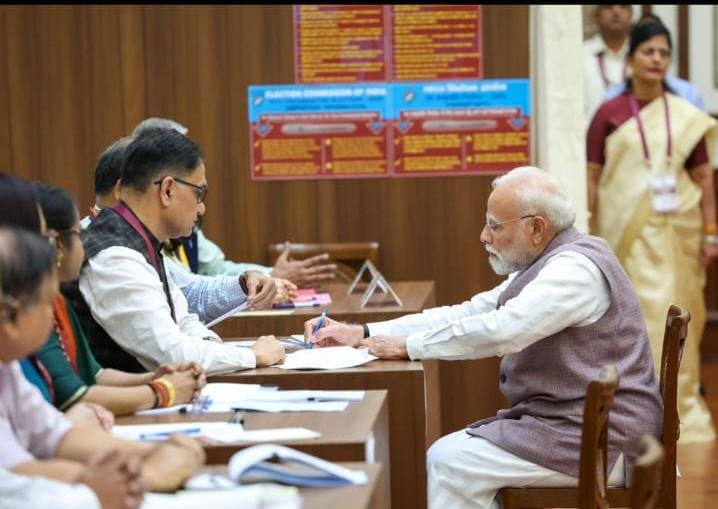
PM Modi casts his vote Photo: courtesy PM social media

India’s Members of Parliament are currently voting to elect the next Vice President of India and the writing regarding the results is pretty much on the wall. With adequate numbers by its side, the BJP-led NDA is already in a celebration mode. However, the results this evening, in particular the specific number each side polled, may also hold some interesting, hidden revelations/messages about the current political scenario in the country.

Voting is conducted by secret ballot and no party can issue a whip to its members, meaning individual MPs are free to vote and there is also scope for cross-voting.  In those terms, the exact number of MPs from different parties who voted today is known.

Electoral College

The Vice-President is elected by an Electoral College comprising all members of both Houses of Parliament—the Lok Sabha and the Rajya Sabha.

The 2025 electoral college is composed of 788 members, including 233 elected (presently five seats are vacant in the upper house) and 12 nominated members of the Rajya Sabha, and 543 elected members of the Lok Sabha (one seat vacant in the lower house).  Currently there are 782 members in the electoral college due to vacant seats.

Regional parties like Odisha’ BJD and Telengana’ BRS are abstaining therefore it is clear how many MPs from which party would have voted by the end of the polling. Any change in the number of expected votes polled at the end of counting on both sides will reveal if there was some cross-voting. The number of invalid votes may also reveal deliberate attempt to “waste” some votes and benefit the opposite side, after all there is no dearth of disgruntled MPs in all sides

Both INDIA Bloc and NDA have held workshops/ sessions to train MPs on the vote-casting process and boost overs. Even though the ruling BJP-led NDA had the numbers, it left no stone unturned to maximise gains in terms of number of votes polled.

Election process 


The election is conducted via a secret ballot using a system of proportional representation with a single transferable vote. While India’s VP elections have generally been smooth, invalid votes due to wrong polling methods (wrong pen, multiple marks, or incorrect signatures) have occurred multiple times, thereby necessitating workshops for MPs before such polls—to avoid mistakes that could reduce their side’s tally.

Therefore all eyes are on the results that may pave way for many decisions on both ends of the political spectrum.

Nepal unrest escalates—India ‘closely monitoring’ situation amid fresh protests, speculations about Oli   

India shares a 1,751 km open border with Nepal, which is crucial for trade and cultural exchange but also poses security challenges. Any political instability can escalate cross-border issues

A day after the violent protests against Nepal government-imposed social media ban that left at least 19 dead and over 300 injured in the neighbouring country, India on Tuesday expressed deep concern over the ongoing unrest and said it was monitoring developments closely.

“We are closely monitoring the developments in Nepal since yesterday and are deeply saddened by the loss of many young lives,” the MEA said in an official statement

Urging all concerned in Nepal to exercise restraint and resolve the situation through peaceful dialogue, the MEA statement added that as “a close friend and neighbour, we hope the issues will be addressed through peaceful means”

The ministry also advised Indian nationals in Nepal to remain cautious and follow local advisories, as curfews have been imposed in Kathmandu and several other cities.

“We are closely monitoring the developments in Nepal since yesterday and are deeply saddened by the loss of many young lives. Our thoughts and prayers are with families of deceased. We also wish speedy recovery for those who were injured.

“As a close friend and neighbour, we hope that all concerned will exercise restraint and address any issues through peaceful means and dialogue.

“We have also taken note that authorities have imposed curfew in Kathmandu and several other cities of Nepal. Indian nationals in Nepal are advised to exercise caution and adhere to the steps and guidelines issued by the Nepali authorities,” the MEA said.

India shares a 1,751 km open border with Nepal, which is crucial for trade and cultural exchange but also poses security challenges. Any political instability can escalate cross-border issues.

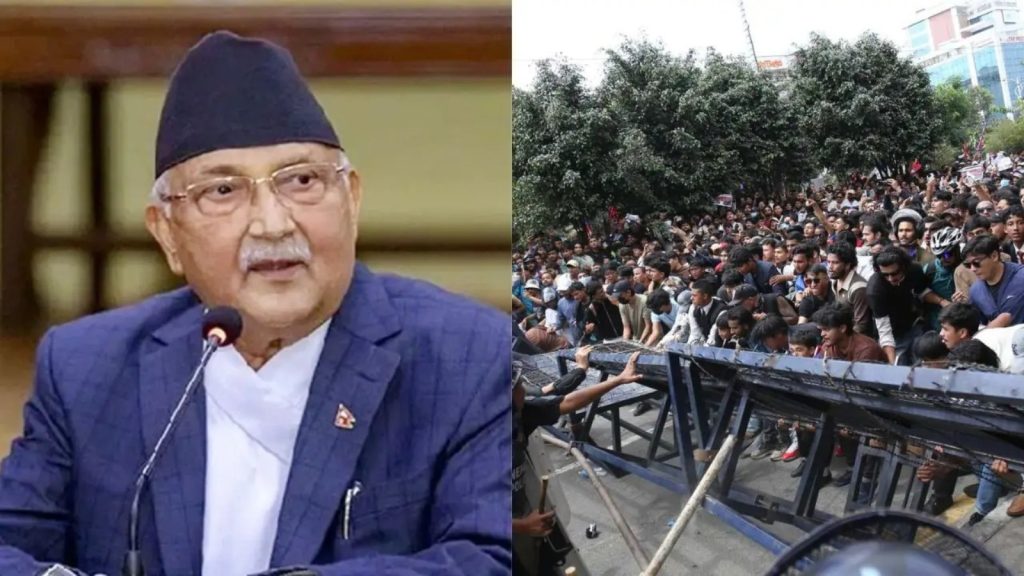
.Protests erupted on Monday after the Nepali government announced a ban on major social media platforms, citing national security concerns. Tension continues to grip Nepal as fresh protests erupted on the streets again on Tuesday morning, a day after the Nepal government revoked a ban on social media. Since Monday, two ministers have resigned, while demonstrators seek Prime Minister KP Oli’s dismissal.

Amid speculations about Oli’s next step and future, observers say the “Gen Z protests” are not just about social media but about larger, underlying anger over corruption, unemployment, and shrinking freedoms. The current turmoil has in it to reshape the Nepal’ politics, the Gen-Z protests have revealed deep frustration with corruption, censorship, and unemployment. International scrutiny may also shape outcomes, as Nepal depends on foreign aid and investment.

Nepal—social media ban lifted, Home Minister resigns, what next for PM Oli 

Nepal is at a turning point. With the social media ban lifted and the Home Minister’s resignation, streets may calm temporarily but deeper political and social issues remain

After his government lifted the social media ban following widespread protests and violence, Nepal Prime Minister KP Sharma Oli said the tragic loss of lives was due to the “infiltration of the protest by various vested interests” and that the government was not in favour of stopping the use of social media.

Expressing deep sadness over turn of events during the protest called by the Gen-Z generation on Monday, he said that the while the government was “confident that our children will peacefully voice their demands, the situation that arose due to the infiltration of the protest by various vested interests has resulted in the tragic loss of lives of citizens.”

“The government was not in favour of stopping the use of social media and will ensure an environment for its use. There was no need to keep demonstrating for this. And, the situation will not be allowed to continue. I would like to assure you that an investigation committee will be formed to investigate and analyse today’s entire events and damage, its condition and causes, and submit a report within 15 days to recommend steps to be taken to prevent such accidents in the future,” he was quoted as saying.

What next  

The government of Nepal lifted the ban on social media platforms after the curb sparked a deadly protest across the country, resulting in the death of 19 protestors and leaving over 300 others injured, according to reports

The decision to end the ban was taken during an emergency cabinet meeting on Monday evening.

The ban on 26 social media sites, which started from September 4, was imposed after the government alleged that social media companies were not complying with Nepal’s registration requirements.

With the social media ban lifted and resignation of Home Minister Ramesh Lekhkak, the streets may calm temporarily but deeper political and social issues remain.

“The commission of inquiry announced by PM Oli will start work within 15 days. It will investigate who ordered the crackdown, whether excessive force was used, and how to prevent similar unrest. But credibility will be key, if it is perceived as a whitewash, protests can flare again,” observers say.

The fact is the “Gen Z protests” were not just about social media. They were about underlying anger over corruption, unemployment, and shrinking freedoms. According to reports, activists are already planning new forms of protest, including online campaigns now that platforms are restored. The government fears that funerals and memorials could become fresh rallying points for dissent and the compensation promises may not be enough to calm outrage.

Nepal’ protests—immediate trigger social media ban but underlying anger seems the main cause   

Led largely by Generation Z, the current protests seem to reflect anger and frustration over simmering issues, including corruption. A complex mix—youth activism, alleged systemic corruption and political instability—seemed to be driving the protests, say analysts.

Image: courtesy social media

Strange as it may sound but the immediate trigger for the violent and deadly protests in Nepal was a social media ban.

On September 4, the Nepal government instituted a sweeping ban on 24–26 major social media and messaging platforms like Facebook, Instagram, WhatsApp, X (formerly Twitter), YouTube, Reddit, and LinkedIn. The official reason was that these platforms had failed to register with the authorities, designate a local liaison office and comply with new regulatory requirements aimed at controlling fake accounts and online abuse. Some platforms which complied were spared from the ban.

Now this sudden shutdown angered youth and also disrupted businesses, tourism, communication, education and common people. Entrepreneurs, digital creators and those with families with relatives abroad were all affected.

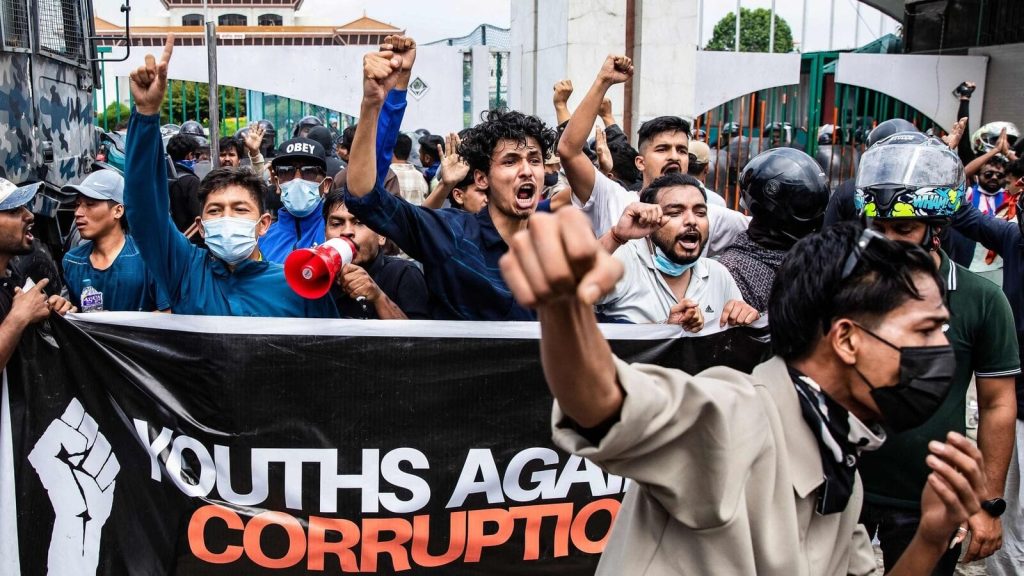
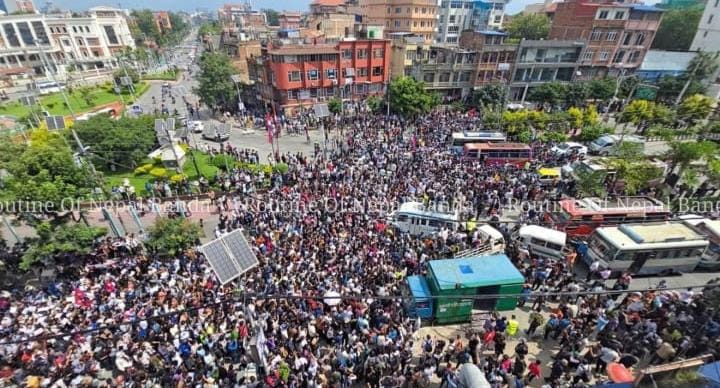
Outraged, Generation Z, as it is called, organised mass protests, calling the movement— “The Final Revolution–We Are Punching Up.”. Young people took to the streets in capital Kathmandu on Monday, protesting against the government’s decision, resulting in clashes with cops which left 16 protesters dead and over 42 injured, according to local reports.

Underlying, simmering issues

Demonstrations in Kathmandu initially focused on restoring access to online platforms but soon the protests grew with anti-corruption and anti-nepotism sentiments with slogans like “shut down corruption, not social media” and “youths against corruption,” highlighting simmering public anger in the country.

According to social scientists, the current protests seemed to be manifestations of deeper frustrations on issues simmering in the society—like political instability and frequent leadership changes hampering development and stability. Many young people felt that political leaders benefit only themselves or their families, they say.

Nepal has been witnessing unrest for a while now.  

Earlier, mass protests in March called for the restoration of the monarchy with supporters demanding the return of King Gyanendra Shah, thus highlighting public disillusionment with the current political system

In April 2025, public school teachers held nationwide strikes against proposed educational reforms which they said were “threatening job security and ignoring agreements.”

“Led largely by Generation Z, the current protests seem to reflect anger and frustration over simmering issues, including corruption. A complex mix—youth activism, alleged systematic corruption and political instability—seemed to be driving them. The immediate cause may have been the social media ban but there are underlying issues stemming from long-standing grievances in Nepal’s ongoing struggle over governance, rights and other issues,” say those aware of developments in India’s neighbouring country  

Social Media ban: Nine protesters killed in Nepal

As many as nine people have died and over 80 injured as a protest against banning social media apps in Nepal turned violent on Monday.

This comes after Gen-Z protesters took to the streets to oppose the ban imposed on 26 social media apps including Facebook, WhatsApp, Instagram after they failed to register to government policy in the country.

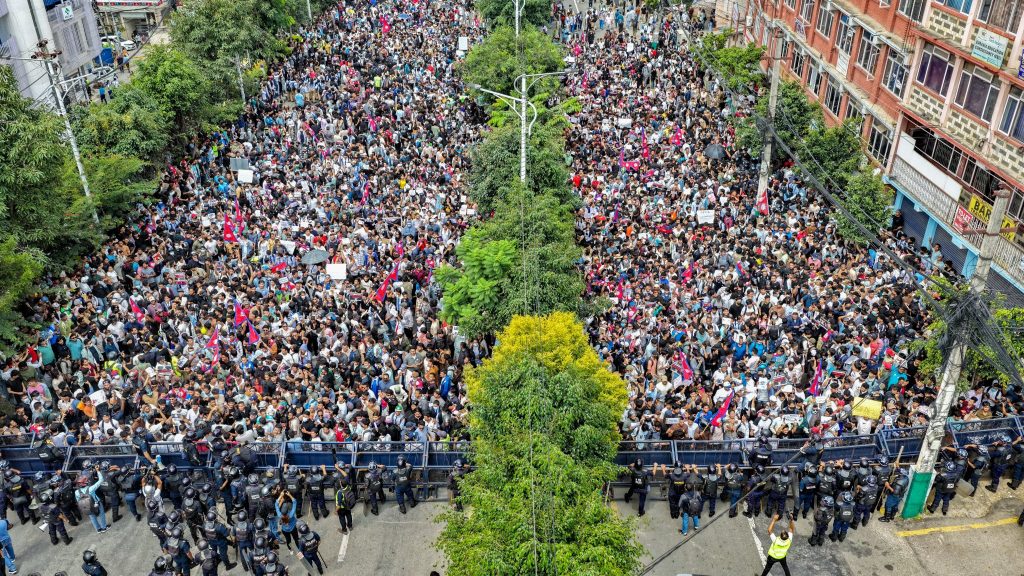
During the stir, the protesters set a fire near Parliament building which made the Nepal government to issue shoot-at-sight orders.

Meanwhile, Nepali police are using tear gas and rubber bullets to push back the demonstrator who attempted to storm the Parliament building.

“We have imposed a curfew that will remain in effect until 10 pm local time to bring the situation under control after protesters turned violent,” Kathmandu district office spokesperson Muktiram Rijal was quoted as saying.

“A while ago, the police fired bullets which did not hit me but hit a friend of mine standing behind me. He was shot in the hand. The firing is still going on and we can hear gunfire from inside the parliament as well. My friend, who was standing on the road, was shot in the head. The police are firing indiscriminately, aiming above the knees. Are they allowed to do this?..,” a protester told the media.

Vice-President’ poll—watch out for absentees, cross-voters    

Voting is conducted by secret ballot and no party can issue a whip to its members, meaning individual MPs are free to vote and there is also scope for cross-voting

With just a day left for the vice-presidential election, fence-sitters like Odisha’s  BJD and Telangana’s BRS who are expected to abstain as they want to remain equidistant from both the BJP-led NDA and the Opposition’s INDIA bloc, are playing close to the heart. While the BRS (Bharat Rashtra Samithi) seems to have officially stated its intent, there is no formal word as yet from the BJD (Biju Janata Dal).

The BRS reported announcement, citing alleged harassment by the Congress government in Telangana, is being seen as a setback for the opposition candidate—B Sudershan Reddy, a former Supreme Court judge. So far as the BJD is concerned, the regional party from Odisha lost to the BJP in the last Assembly elections and like the BRS has no love lost for either of the two sides. Though regional parties like the BRS, the BJD, and the YSRCP have supported the Narendra Modi government in passing crucial bills in Parliament in the past.

So far as the YSR Congress Party (YSRCP)—a party with a substantial block of 11 MPs—is concerned, the Andhra regional party has already pledged its support to the NDA nominee. The BRS and the BJD have four and seven MPs, respectively, in the Rajya Sabha.  The BJP-led National Democratic Alliance (NDA)’s candidate CP Radhakrishnan—a BJP/RSS veteran and current Governor of Maharashtra—is the frontrunner in the contest.

In the 2022 election, the Trinamool Congress (TMC) and the Aam Aadmi Party (AAP) abstained, which helped the NDA in a way. The Vice-President is elected by an Electoral College comprising all members of both Houses of Parliament—the Lok Sabha and the Rajya Sabha.

The NDA and INDIA blocs have both intensified efforts to boost numbers and are holding workshops/ sessions to train MPs on the vote-casting process. The ruling BJP-led NDA has the numbers but it is leaving no stone unturned

The election is conducted via a secret ballot using a system of proportional representation with a single transferable vote. While India’s VP elections have generally been smooth, invalid votes due to wrong polling methods (wrong pen, multiple marks, or incorrect signatures) have occurred multiple times, thereby necessitating workshops for MPs before such polls—to avoid mistakes that could reduce their side’s tally.

The Vice President is elected by an electoral college consisting of members from both the Lok Sabha and the Rajya Sabha.

Voting is conducted by secret ballot and no party can issue a whip to its members, meaning individual MPs are free to vote and there is also scope for cross-voting.

The 2025 electoral college is composed of 788 members, including 233 elected (presently five seats are vacant in the upper house) and 12 nominated members of the Rajya Sabha, and 543 elected members of the Lok Sabha (one seat vacant in the lower house). Currently, there are 782 members in the electoral college due to vacant seats.

AAP, BJP trade barbs over photo of Delhi CM’s husband at Govt meeting

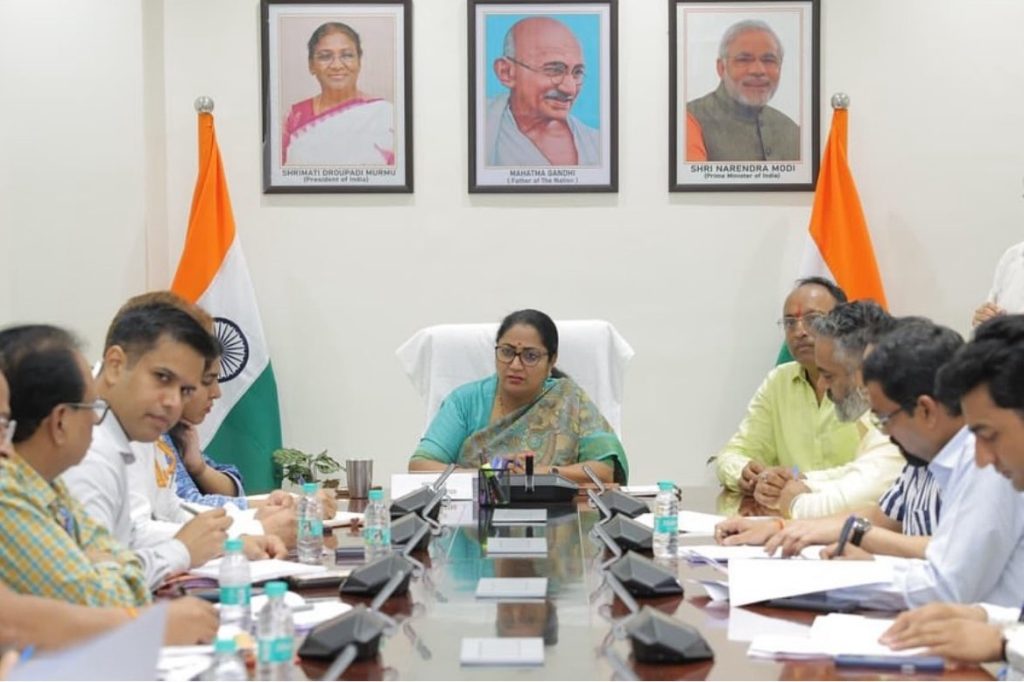
A photo of Delhi chief minister Rekha Gupta’s husband Manish Gupta attending a government meeting has sparked a debate between political parties after Aam Aadmi Party (AAP) Delhi chief Saurabh Bharadwaj drew a parallel with Phulera, the fictional village in the popular web series Panchayat.

Bharadwaj termed it as ‘completely unconstitutional.’ “In Phulera panchayat, the pradhan did nothing. It was her husband who ran the show. Rekha Gupta has taken an oath to the Constitution, she has taken the oath of secrecy. No law allows her to bring her husband to government meetings. We have seen several videos showing her husband conducting inspections, directing officials, and holding meetings,” he added.

Meanwhile, the Bharatiya Janata Party (BJP) slammed Bharadwaj and said that former chief minister Arvind Kejriwal’s wife Sunita was holding meetings when the leader was in jail.

Senior BJP leader Amit Malviya took to micro blogging site X and stated, “She was holding a review meeting of her constituency, which is managed by her husband – just as Smt. Sheila Dikshit’s constituency was managed by her sister Rama Dhawan, and Sunita Kejriwal used to look after Arvind Kejriwal’s.”

“Unlike Sunita Kejriwal, however, the CM’s husband was not sitting on her chair or issuing illegal orders that senior officers were forced to record on file as ‘CM Madam has directed’,” the BJP leader said.

“Stop targeting Rekha Gupta just because she is a woman who is doing a good job and making Arvind Kejriwal look more ordinary with each passing day,” he added.

What’s happening with AIADMK—BJP’s ally in Tamil Nadu  

Over the past couple of years the AIADMK has been facing internal issues which resurfaced with a very public fallout between veteran leader and former minister KA Sengottaiyan and party General Secretary Edappadi K Palaniswami (EPS)

Photo: courtesy EPS social medai

The internal friction in the AIADMK—a major political force in Tamil Nadu politics—comes at a time when the party is recalibrating its political strategy to take on its main rival—the ruling DMK—in the 2026 Assembly elections. The southern party, which has had a blow-hot-blow-cold relationship with the BJP, recently realigned with the saffron party, confirming that it will contest the upcoming polls as part of the NDA.

Over the past couple of years the AIADMK has been facing internal issues which resurfaced with a very public fallout between veteran leader and former minister KA Sengottaiyan and party General Secretary Edappadi K Palaniswami (EPS). Sengottaiyan, who held important roles as AIADMK Organisational Secretary, had on Friday urged the leadership to take back those who had left the party. “If we again get back those (factions) who left us, we can win the election,” he said, stressing that many senior leaders had offered suggestions after AIADMK’s electoral losses but EPS did not pay heed.  However, Sengottaiyan, who had been making public calls for the re-induction of expelled leaders to strengthen the party, was sacked from all posts.

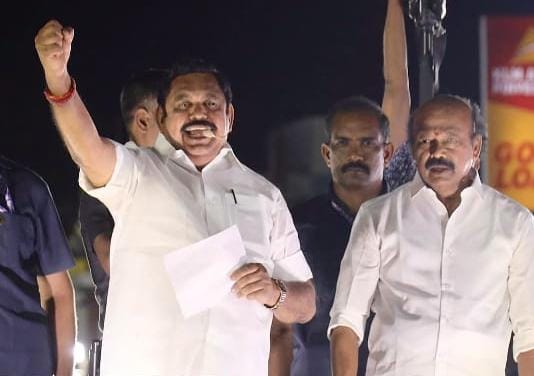
On Sunday, EPS said attempts are being made to weaken the AIADMK which were being thwarted with the support of the people.  Addressing the rally in Dindigul, the party General Secretary was quoted as saying: “MG Ramachandran and J Jayalalithaa did not have an heir. People are their heirs. Many are trying to break this party to stunt it but we are destroying all their attempts. This is a cadres’ party, a living party and no one can break it. AIADMK is the only party where even a cadre can become an MLA, MP, Minister and Chief Minister. Only in AIADMK can a cadre become a party General Secretary.”

EPS did not name anyone but the statements were seen pointing at Sengottaiyan and his demand for reconciliation. Training guns on Chief Minister MK Stalin-led DMK government, he instead sharpened criticism of the ruling party, accusing it of large-scale corruption and financial mismanagement.

 AIADMK’ woes

This was not the first time leaders have been expelled from the AIADMK.

Sengottaiyan’s appeal drew support from expelled leader VK Sasikala—a close aide of the late former Chief Minister Jayalalithaa. “His call for unity is now the voice of every single party worker and indeed, the voice of the people of Tamil Nadu. I too strongly emphasise this,” she said.

EPS has been at the helm of affairs since July 2022 when the AIADMK General Council expelled former Chief Minister O Panneerselvam.

AIADMK has been struggling, failing to secure a win since the death of supremo Jayalaithaa in 2016.

Meanwhile, the BJP-AIADMK alliance, as of now, is restricted to Tamil Nadu, according to state leaders.


BJP slams INDIA bloc’s V-P candidate for meeting Lalu ahead of poll

Photo: Naveen Bansal

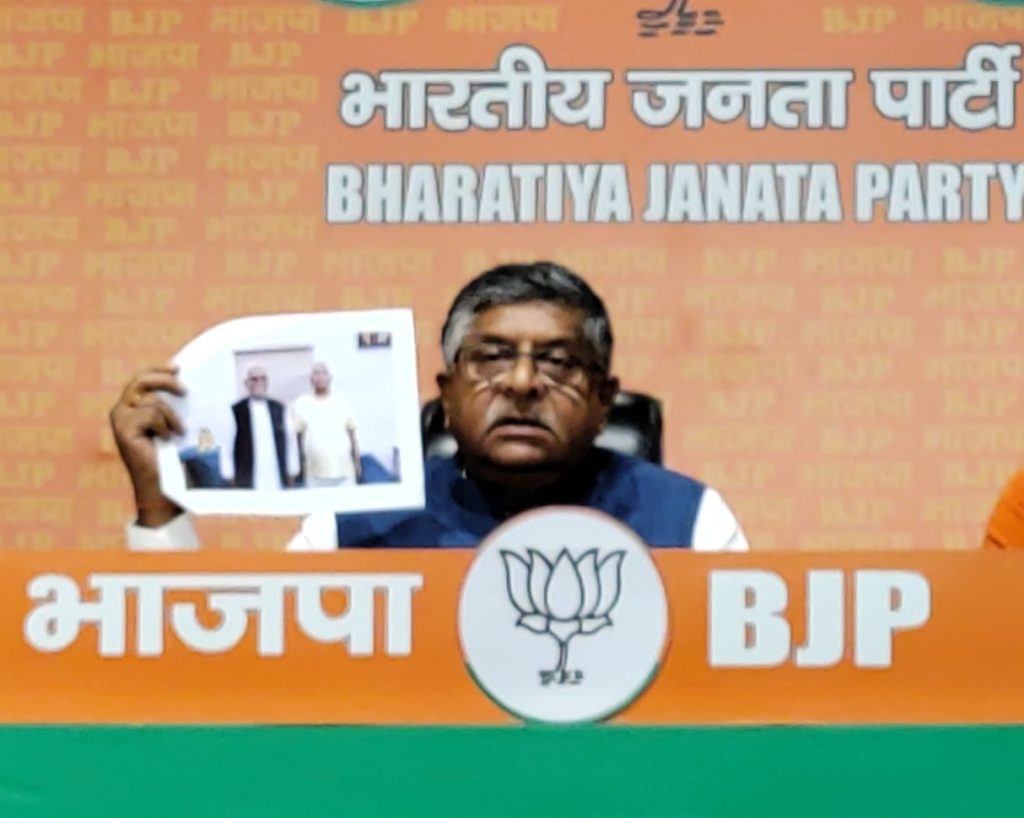
Just a day before the Vice-Presidential election in the country, Bharatiya Janata Party (BJP) leader Ravi Shankar Prasad on Monday said that INDIA bloc’s V-P candidate B Sudarshan Reddy’s behavior is worthy of condemnation.

Pointing out the meeting between Reddy and former chief minister of Bihar Lalu Prasad Yadav and his comment on protecting the soul of the nation, Prasad said, “He said in a statement” vote for me to protect the soul of nation “and who is he meeting now? Lalu Prasad Yadav who is convicted in fodder scam and charge sheet in railway property corruption. He is not even a MP.”

Addressing a press conference here he said this act is hypocrisy and he should not talk about the soul of the nation.

The comments came after the former Supreme Court judge and V-P candidate released a clip on social media, appealing MP to ‘vote thoughtfully’.

In his appeal he said, “This vote is not just for the Vice President but it is a vote for the soul of the nation.”

Speaking further Prasad said that many other judges came in support when he was questioned about how the Salwa Judum revolution was affected by his judgment now they are mum.

“I would really respectfully observe where are the retired judges who publicly stood with him? What they had to say on this below dignity of norms of propriety that he displayed,” he said. 

MOST POPULAR

HOT NEWS