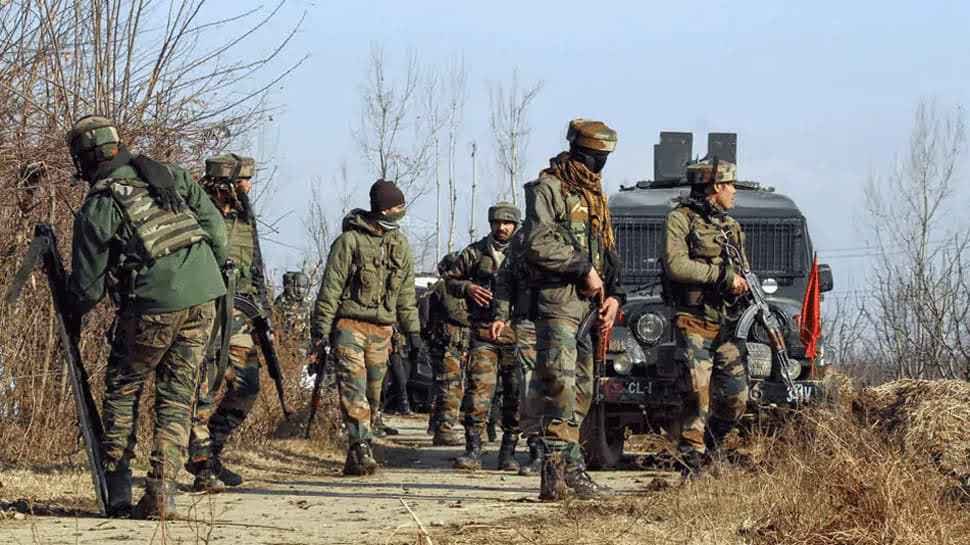
SRINAGAR: One terrorist was killed and three Army personnel injured in an encounter in the Guddar forest area of Kulgam district, Jammu and Kashmir, on Monday.
Officials said the gunfight began after Jammu and Kashmir Police shared specific intelligence, leading to a joint search operation by the Army, J&K Police, and CRPF.
“Vigilant troops observed suspicious movement and, when challenged, terrorists opened fire. In the exchange of fire, one terrorist was neutralised and a junior commissioned officer was injured. The operation is still in progress,” the Army’s Chinar Corps said in a post on X.
Security forces believe two to three more terrorists may still be trapped in the area. Additional reinforcements have been rushed, and the encounter is continuing.
Errors in the past: While India’s VP elections have generally been smooth, invalid votes due to wrong polling methods (wrong pen, multiple marks, or incorrect signatures) have occurred multiple times, thereby necessitating workshops for MPs before such polls—to avoid mistakes that could reduce their side’s tally in high-stake elections.
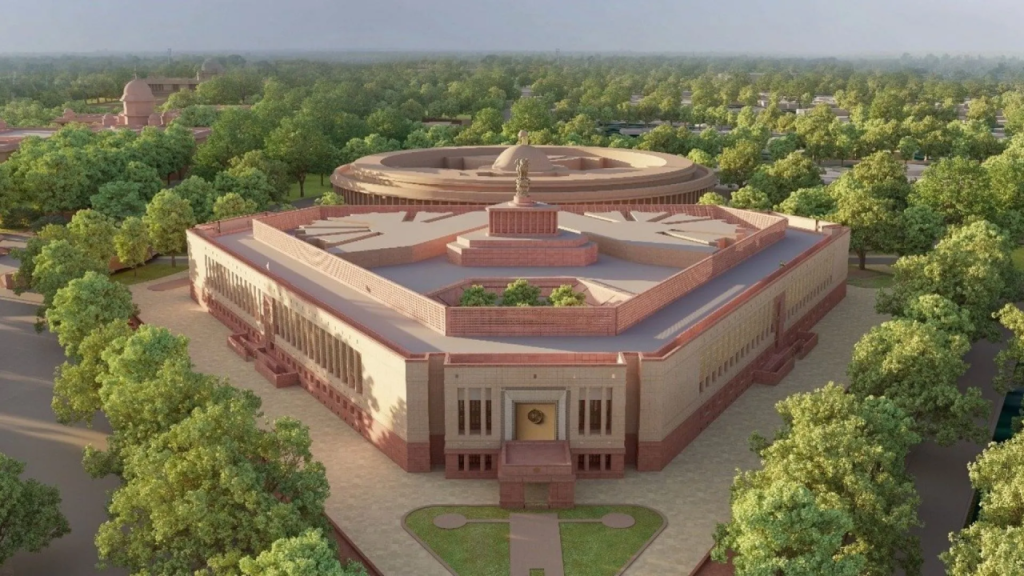
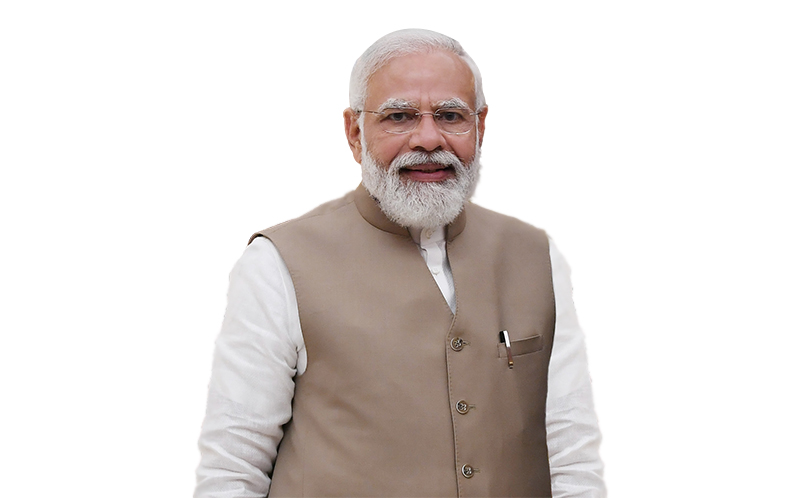
On Sunday, Prime Minister Narendra Modi also attended a two-day BJP workshop—‘Sansad Karyashala’—for its MPs in the Lok Sabha and the Rajya Sabha. The two-day workshop served multiple aims—election readiness, capacity building, strategic messaging, and unity reinforcement within the party and its alliances. It combined practical training with symbolic leadership and messaging, creating a cohesive front ahead of the high-stakes Vice-Presidential election on September 9. According to sources, the workshop included a mock poll to train MPs on the vote-casting process.
The MPs are set to meet again for a session on Monday afternoon, a day before the election for the Vice-President of India. NDA MPs have been invited to join later during the session for a discussion and to have tea with the PM
Meanwhile Opposition MPs would also be briefed on Monday on the procedure to vote in the September 9 vice presidential polls, and will be hosted for dinner by Congress president Mallikarjun Kharge the same evening. A ‘mock poll’ would be conducted after the briefing on the procedure to vote in the polls.
This time, the V-P election is a ‘South vs South’ battle with NDA nominee C.P. Radhakrishnan from Tamil Nadu and opposition candidate B. Sudarshan Reddy from Telangana. While the ruling BJP-led NDA has the numbers, the saffron side is leaving no stone unturned for the election and to apprise the MPs regarding the poll process.
Training MPs on voting procedures
The workshop was designed to familiarise MPs—especially newcomers—with the secret-ballot process, election protocols, and how to avoid procedural mistakes that could invalidate their votes. Given that the BJP-led NDA holds a numerical advantage yet lacks a formal whip for this election, the workshop served to rally MPs across the alliance—ensuring their presence, boosting morale, and minimising risks of cross-voting.
Inputs on parliamentary efficiency, legislative strategy, time management, engagement with constituents and lauding the Modi government’s recent GST reforms served as a morale boost and a strategic reinforcement of the economic message ahead of the polls. Originally, dinner meetings with PM Modi and BJP President J.P. Nadda were planned, but they were cancelled in solidarity with flood-affected populations, according to sources.
Errors in the past
The election is conducted via a secret ballot using a system of proportional representation with a single transferable vote. While India’s VP elections have generally been smooth, invalid votes due to wrong polling methods (wrong pen, multiple marks, or incorrect signatures) have occurred multiple times, thereby necessitating workshops for MPs before such polls—to avoid mistakes that could reduce their side’s tally.
For example, in the 1979 Vice-Presidential Election (M. Hidayatullah vs. S.I. Khusro), some votes were declared invalid due to incorrect marking on ballot papers. Though the number wasn’t large, it highlighted how MPs sometimes mishandled the voting process.
In the 2007 election (Hamid Ansari’s first term), 39 votes were marked invalid, mostly because MPs either marked incorrectly or didn’t follow procedure. The Election Commission then emphasised training to reduce errors.
In 2017 (Venkaiah Naidu vs. Gopalkrishna Gandhi), around 11 votes were declared invalid due to MPs marking ballots with pens other than the official one provided. It didn’t affect the result but showed how technicalities could create issues.
The Vice President is elected by an electoral college consisting of members from both the Lok Sabha and the Rajya Sabha.
The 2025 electoral college is composed of 788 members, including 233 elected (presently five seats are vacant in the upper house) and 12 nominated members of the Rajya Sabha, and 543 elected members of the Lok Sabha (one seat vacant in the lower house).
At present there are around 782 members in the electoral college due to vacant seats
The flood situation may be gradually subsiding but the losses in terms of deaths, property, infrastructure and agricultural losses will never be forgotten. The worst floods in over 50 years are said to have resulted in financial losses exceeding Rs 13,000 crore, and these are the preliminary figures. Villages in Patiala and Ludhiana remain inundated due to overflows from tributaries like Tangri and Markanda, as also controlled water releases, as per reports
Prime Minister Narendra Modi will visit Gurdaspur in flood-devastated Punjab on September 9 to take stock of the damage caused by the worst floods Punjab has seen in nearly five decades. His visit is expected to pave the way for a special relief package, bringing both financial aid and political weight to a state still reeling from the disaster.
The flood situation may be gradually subsiding but the losses in terms of deaths, property, infrastructure and agricultural losses will never be forgotten. The worst floods in over 50 years are said to have resulted in financial losses exceeding Rs 13,000 crore, and these are the preliminary figures. Villages in Patiala and Ludhiana remain inundated due to overflows from tributaries like Tangri and Markanda, as also controlled water releases, as per reports
The current flooding is being labelled as the worst in nearly 50 years. Rivers like the Sutlej, Beas, Ravi, and Ghaggar, along with dam releases from Bhakra, Pong, Ranjit Sagar and heavy rains in the catchment areas have contributing to the crisis
According to official estimates, nearly 1,996 villages across 23 districts have been affected, over 3.8 lakh people displaced, and 1.72 lakh hectares of farmland inundated. At least 46 lives have been lost, while damages to crops, homes, livestock, and infrastructure are pegged at hundreds of thousands crore.
Centre’s relief—what to expect
Amid politics over affixing responsibility, the BJP-led NDA Centre is expected to announce an immediate grant from the National Disaster Response Fund, along with a commitment to release pending dues.
Punjab Chief Minister Bhagwant Mann has urged the PM for nearly Rs 60,000 crore in pending funds and enhancing farmer compensation, which currently stands at Rs 6,800 per acre under SDRF norms. Those in know of developments say the PM’ package may include a special top-up for farmers, potentially raising support to Rs 12,000–Rs 15,000 per acre, alongside fast-tracking of crop insurance claims.
With floodwaters damaging roads, electricity networks, and irrigation canals, submerging BSF outposts and border fencing in Ferozepur, Amritsar, and Fazilka, infrastructure is high on agenda. A separate allocation for border security repair is likely, given the national security implications. The package may also include compensation for destroyed homes, assistance for livestock losses, and support for dairy cooperatives.
The PM may also provide some sort of longer-term flood mitigation plan for Punjab, focusing on strengthening embankments, improving drainage, and setting up advanced flood forecasting systems.
The Punjab leadership says that the scale of devastation requires urgent and substantial central intervention. Being criticised for “ignoring and abandoning” Punjab, the PM’s presence may come as a reassurance for people struggling to cope with its deepest humanitarian and agricultural crisis in decades. “His meetings with affected families will reassure people that the crisis is being treated as a national priority, not just a state issue. The visit will bring visibility, urgency, and likely financial relief, accelerating money, manpower, and policy decisions—all of which Punjab badly needs right now,” say officials.
Flood’ politics
Whether the visit calms the ongoing politics on the issue or accelerates it remains to be seen.
The devastating floods triggered a blame game between the Aam Aadmi Party (AAP) government in Punjab and the Centre, with opposition parties also joining.
Punjab Finance Minister Harpal Singh Cheema accused the centre of “failing to provide timely assistance.” “We are dealing with a catastrophe that has ravaged farms, homes, and livelihoods, but the funds released are far below the scale of destruction,” he said. Chief Minister Bhagwant Singh Mann has repeatedly pressed for higher compensation for farmers—demanding at least Rs 20,000 per acre against the existing SDRF norm of Rs 6,800. “Our farmers have lost everything. The central government cannot wash its hands off its responsibility,” he said.
The BJP, in turn, has been accusing the state government of poor preparedness and failure to maintain embankments, canals, and drainage systems. Accusing the state government of trying to shift the blame on the centre Delhi to cover its own lapses, they say that “floods have exposed the state government’s inefficiency. Instead of working on relief, AAP is busy politicising a natural calamity.”
The Congress, meanwhile, has sought to corner both the Centre and the AAP government. Party leaders say delayed response from the Union government has worsened people’s suffering, while inadequate disaster planning by the state left villages vulnerable.
Floods have become a fresh flashpoint in already strained Centre-state relations and farmers’ groups are also expressing anger over compensation rates. Ahead of the PM’s visit, the spotlight will be on whether he announces a substantial relief package.
Why Trump changed tack—altered approach, strategy, position on India
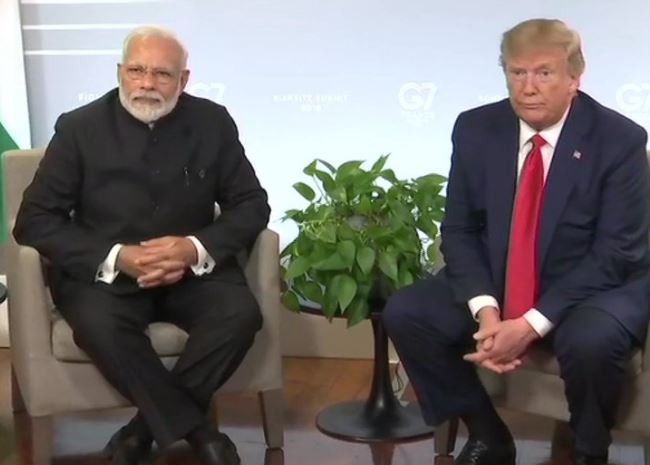
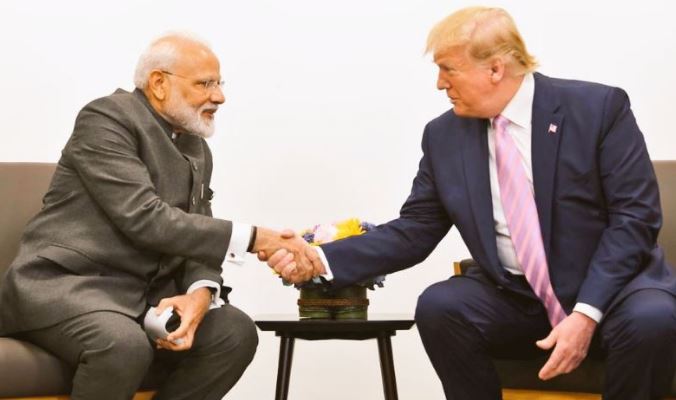
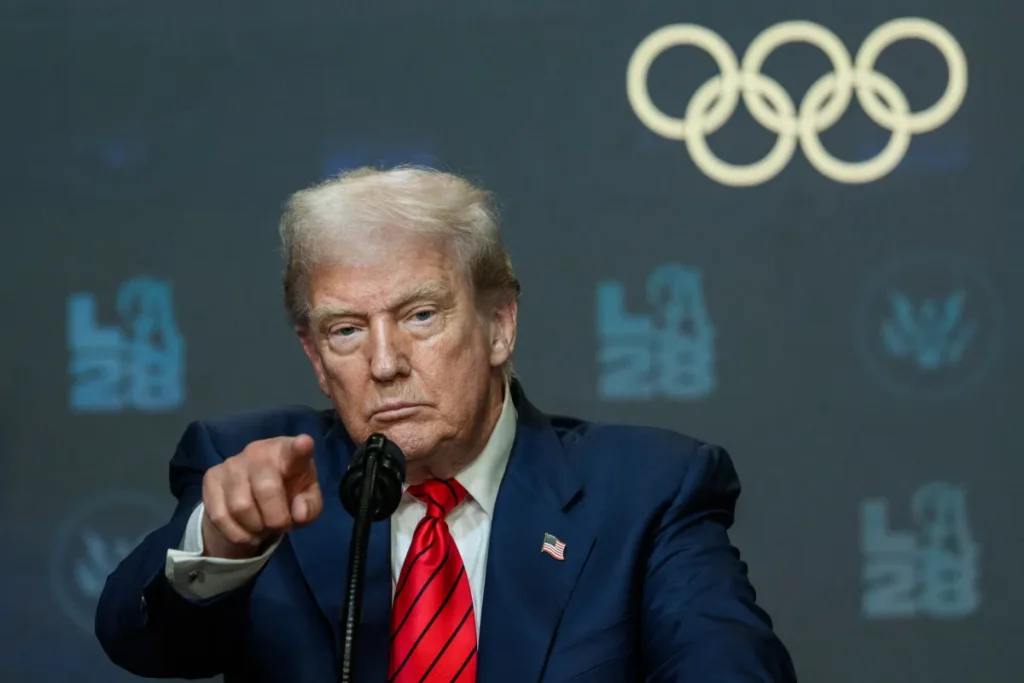
The positive exchange between Prime Minister Narendra Modi and US President Donald Trump can be interpreted in many ways: India’s pragmatic foreign policy approach; a reiteration of the strategic importance of the India–US relationship; a genuine diplomatic effort to de-escalate recent tensions over trade tariffs and open the way for reconciliation; and, perhaps, a recognition of India’s growing economic and strategic importance—not just in the region, but globally.
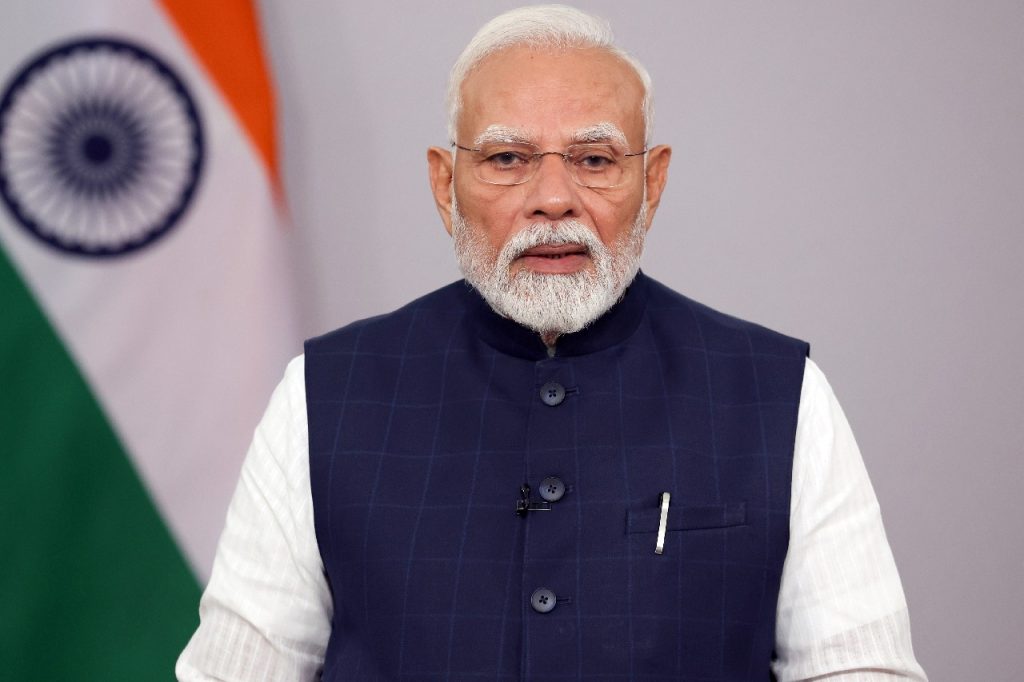
On Saturday, PM Modi responded positively to Trump’s overture, stating: “Deeply appreciate and fully reciprocate President Trump’s sentiments and positive assessment of our ties. India and the US have a very positive and forward-looking Comprehensive and Global Strategic Partnership.”
He was responding to Trump, who had earlier said he would always be friends with Modi and spoke of a special relationship between the two countries:
“I will always be friends with Modi; he is a great Prime Minister. India and the United States have a special relationship. There is nothing to worry about.”
When asked about his Truth Social post referencing “losing India to deepest, darkest China,” Trump responded:
“I don’t think we have.” “I get along very well with Modi, as you know. He was here a couple of months ago—we went to the Rose Garden.”
On Friday, however, Trump had posted: “Looks like we’ve lost India and Russia to deepest, darkest China. May they have a long and prosperous future together!”
What it means
In politics, as also geopolitics, optics play a significant role, and the very positive exchange between the two leaders suggests a thaw and an effort to mend ties, perhaps opening the door for a recalibration of the relationship, despite a barrage of incendiary remarks against India by Trump and his associates. There are good reasons why Trump had to change tack, alter approach, strategy and position on India.
Coming after a period of increased strain, this exchange suggests a potential reset and possibly paves the way to stabilise the relationship and resume trade discussions, say analysts.
“Modi’s response was a direct reply to Trump’s public shift in tone, which followed a very critical social media post. By reciprocating the positive sentiments, the PM reinforced the value of the bilateral relationship, despite recent criticisms,” they added.
Notably, amid India’s growing ties with both China and Russia, the exchange also underscores its increasing strength—not only in the region but globally. PM Modi’s response aligns with India’s long-term diplomatic strategy of maintaining open communication channels, regardless of disagreements.
“PM Modi’s foreign policy is known for being pragmatic and prioritising India’s national interests over rigid ideological stances. Despite US concerns, India continued its engagement with Russia and recently displayed warmer interactions with China. The PM’s response to Trump and participation in events like the Shanghai Cooperation Organisation (SCO) summit highlight India’s influence in the region and its ability to balance multiple relationships simultaneously.”
“During Trump’s previous term and in recent interactions, PM Modi tried for building a personal rapport with him, based on the belief that strong personal relationships can drive better policy outcomes for India. While strengthening ties is important for both nations, India has been cautious not to anchor its foreign policy too closely to any one US leader or political party. Instead, it seeks to maintain continuity in the India–US relationship—regardless of who is in power. India continues to frame the relationship as institutional and consistent, not tied to any single leader—and it seems Trump may have finally understood that,” say sources familiar with ongoing India–US developments.
Prime Minister Narendra Modi on Saturday said that he deeply appreciates and fully reciprocates President Trump’s sentiments and positive assessment of India-US ties.
“India and the US have a very positive and forward-looking Comprehensive and Global Strategic Partnership,” Modi added.
Modi posted on X, “Deeply appreciate and fully reciprocate President Trump’s sentiments and positive assessment of our ties. India and the US have a very positive and forward-looking Comprehensive and Global Strategic Partnership.”
This comes after US President Donald Trump said that he will always be friends with Modi and called him a great Prime Minister.
During a press briefing he said, “I will always be friends with Modi, he is a great Prime Minister. India and the United States have a special relationship. There is nothing to worry about.”
He further stated, “I don’t think we have” (President Trump when asked about his Truth Social post about “losing India”) “I get along very well with Modi as you know, he was here a couple of months ago, we went to the Rose Garden.”
Earlier, when Modi was visiting China, Trump wrote on his social media, “Looks like we’ve lost India and Russia to deepest, darkest, China. May they have a long and prosperous future together!”
The positive exchange between the two leaders suggests that the door for a recalibration of ties between the two nations was still open despite the barrage of incendiary remarks against India by Trump and his officials.
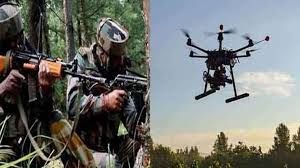
SRINAGAR: Security forces launched a search operation after a suspected Pakistani drone was spotted over sensitive installations in Jammu and Kashmir’s Samba district late Friday, officials said.
The drone was detected around 9:35 p.m. as it flew at an altitude of over 700 metres from west to east over a military garrison in the Bari Brahmana area, they added.
An alert was sounded immediately, with Army quick reaction teams rushing to the spot. Police were also informed, and a joint search operation was started to rule out any possible airdropping of weapons or narcotics, according to officials.
India is being careful not to tie its foreign policy too closely to one US leader or party. Instead, it is trying to maintain continuity in the India–US relationship, whether it is US President Donald Trump or anyone else in power. India will continue to frame its relationship as institutional and consistent, not tied to a single leader
Photo: PMO website
Prime Minister Narendra Modi will not address the United Nations General Assembly later this month in New York, the revised provisional list of speakers does not include his name. External Affairs Minister S Jaishankar’s name is mentioned in the list of speakers, and he is scheduled to speak during the General Debate on September 27.
The 80th session of the UN General Assembly will open on September 9. The high-level General Debate will run from September 23-29, with Brazil as the traditional first speaker of the session, followed by the US. US President Donald Trump will address world leaders from the UNGA podium on September 23—his first address to the UN session in his second term in the White House.
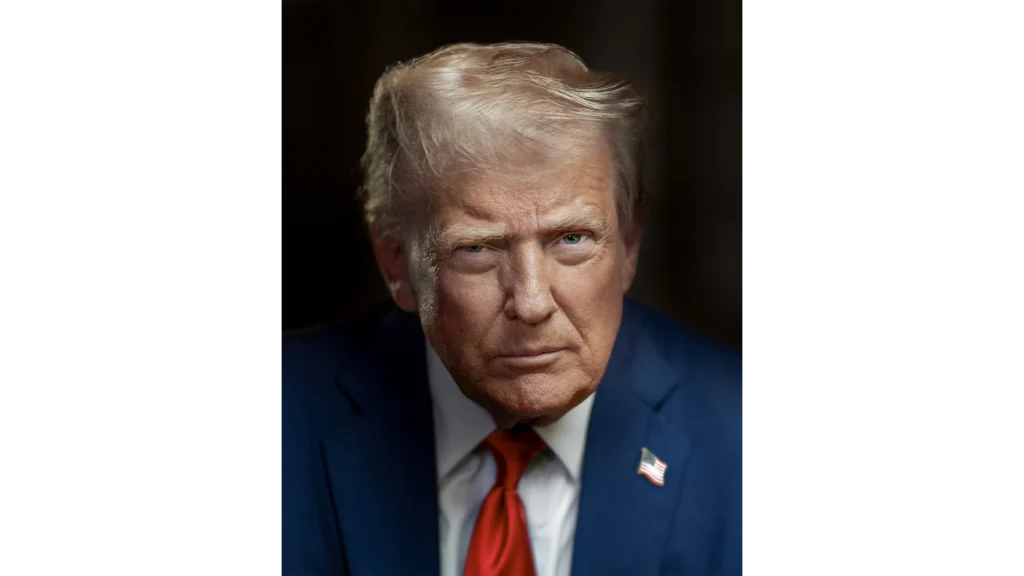
US President Donald Trump on Friday, September 5 (local time) affirmed the “special relationship” between India and the US.
India is being careful not to tie its foreign policy too closely to one US leader or party. Instead, it is trying to maintain continuity in the India–US relationship, whether it is US President Donald Trump or anyone else in power. India will continue to frame its relationship as institutional and consistent, not tied to a single leader, say analysts.
Photo: White House website
As India slammed White House Trade Advisor Peter Navarro for his recent remarks, calling his statements “inaccurate and misleading” without commenting on Trump’s latest barb centred around a new geopolitical shift—the India-Russia-China alignment—in the World, the US President called PM Modi a “great Prime Minister”
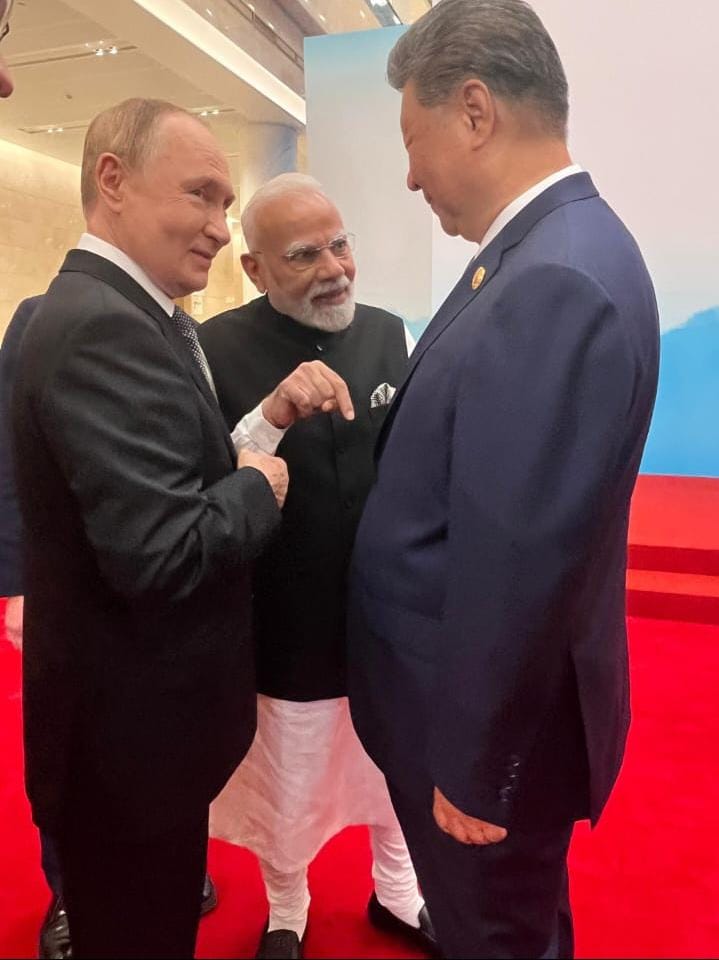
Trump said he will always be friends with them, “I just don’t like what he is doing at this particular moment. But India and the United States have a special relationship. There is nothing to worry about,” he was quoted as saying. The remarks follow a day after he said “looks like we’ve lost India and Russia to deepest, darkest, China. May they have a long and prosperous future together!” posting a photograph of PM Modi, Russian President Vladimir Putin and Chinese President Xi Jinping from the recent Shanghai Cooperation Organisation (SCO) Summit.
The MEA said it had “no comments to offer” on the post made by the US president.
However, responding to Trump advisor Peter Navarro, who had called the Russia-Ukraine conflict, “Modi’s war” and similar such statements, MEA spokesperson Randhir Jaiswal said India “obviously rejects” the “inaccurate and misleading statements.”
India-US relations important
MEA spokesperson Randhir Jaiswal called the relationship between India and the US “important” for the central government, saying both countries share a “comprehensive and global strategic partnership”. “We have seen the inaccurate and misleading statements made by Mr. Navarro, and obviously reject them.”
“As far as India-United States relations are concerned, we have said before that there is a comprehensive global strategic partnership between the two countries, and we want to work on this partnership and take it forward… This relationship between the United States and India is very important for us.
“Both our countries share a comprehensive global strategic partnership, which is anchored in our shared interests, democratic values, and robust people-to-people ties. This partnership has weathered several transitions and challenges. We remain focused on the substantive agenda that our two countries have committed to, and we hope that the relationship will continue to move forward based on mutual respect and shared interests,” he said.
What Navarro said
In his recent statements Navarro accused India of having extremely high trade barriers, dubbing it the “Maharaja of tariffs.” He also spoke on how India exports a lot to the US but doesn’t allow reciprocal access, hurting American businesses and workers. Then he labelled India an “oil laundromat for the Kremlin,” alleging that Indian refiners buy discounted Russian crude, process it, and resell the products abroad at premium prices—profiteering off the arrangement.
In a highly controversial and widely criticized comment, Navarro asserted: “Brahmins profiteering at the expense of the Indian people. We need that to stop.”
Navarro also argued that Indian purchases of discounted Russian oil were funding Russia’s war against Ukraine, calling it “Modi’s war.” America ends up paying more for Ukraine’s war efforts and buying Russian oil indirectly fuels the conflict, he claimed.
“No comments” says India; but Trump’s dramatic language suggests possibly resigned, sarcastic acknowledgment of the new geopolitical shift—the India-Russia-China alignment—say analysts
Photo: White House website
India on Friday slammed White House Trade Advisor Peter Navarro for his recent remarks, calling his statements “inaccurate and misleading” but did not comment on US President Donald Trump’s latest barb centred around a new geopolitical shift—the India-Russia-China alignment—in the World
“Looks like we’ve lost India and Russia to deepest, darkest, China. May they have a long and prosperous future together!” Trump wrote on his social media platform Truth Social.
MEA spokesperson Randhir Jaiswal called the relationship between India and the US “important” for the central government, saying both countries share a “comprehensive and global strategic partnership”. “We have seen the inaccurate and misleading statements made by Mr. Navarro, and obviously reject them.”
“As far as India-United States relations are concerned, we have said before that there is a comprehensive global strategic partnership between the two countries, and we want to work on this partnership and take it forward… This relationship between the United States and India is very important for us.
“Both our countries share a comprehensive global strategic partnership, which is anchored in our shared interests, democratic values, and robust people-to-people ties. This partnership has weathered several transitions and challenges. We remain focused on the substantive agenda that our two countries have committed to, and we hope that the relationship will continue to move forward based on mutual respect and shared interests,” he was quoted as saying.
What Navarro said
In his recent statements Navarro accused India of having extremely high trade barriers, dubbing it the “Maharaja of tariffs.” He also spoke on how India exports a lot to the US but doesn’t allow reciprocal access, hurting American businesses and workers. Then he labelled India an “oil laundromat for the Kremlin,” alleging that Indian refiners buy discounted Russian crude, process it, and resell the products abroad at premium prices—profiteering off the arrangement.
In a highly controversial and widely criticized comment, Navarro asserted: “Brahmins profiteering at the expense of the Indian people. We need that to stop.”
Navarro also argued that Indian purchases of discounted Russian oil were funding Russia’s war against Ukraine, calling it “Modi’s war.” America ends up paying more for Ukraine’s war efforts and buying Russian oil indirectly fuels the conflict, he claimed.
What Trump said and meant
The dramatic and sarcastic geopolitical comment carries strong connotations and can be interpreted in many ways. Jaiswal said “we have no comments to offer,” however, according to analysts, Trump seems to be conveying US’ concern, perhaps frustration, about India and Russia aligning closely with China at the high-profile gathering at the Shanghai Cooperation Organisation (SCO) summit in Tianjin, where leaders including Prime Minister Narendra Modi, President Vladimir Putin, and President Xi Jinping came together, signalling growing cooperation among the three.
The phrase “deepest, darkest China” is deliberately dramatic, a tongue-in-cheek, sarcastic comment. Coupled with “May they have a long and prosperous future together!”, Trump’s tone is definitely not sincere or optimistic. At the same time, the comments also reflect broader US unease over diminishing influence in parts of the world where ties with Beijing are strengthening especially when the US–India relations are strained due to recent tariff issues.
With the central government retaining the 5 per cent Goods and Services Tax (GST) on the electric vehicles, the industry has welcomed the decision and has said that it will help in decarbonizing the future of India.
On September 3, the finance minister Nirmala Sitharaman came up with ‘historic’ reforms into the GST for the first time ever since it was introduced in 2016. Sitharaman came up with two slabs including 5 per cent and 18 per cent and removed the old four slab GST system that included 5 per cent, 12 per cent, 18 per cent, and 28 per cent.
Speaking to Tehelka, Santosh Iyer, Managing Director & CEO, Mercedes-Benz India said that we are thankful to the government for keeping GST rate for BEVs unchanged, ensuring faster transition to a decarbonized future.
“Government listened to the automotive industry’s long standing wish list of rationalizing GST rates. This GST revision is the step in the right direction, is progressive and will induce the much-needed impetus by boosting consumption and bring momentum to the automotive industry which essentially remains the pulse of the Indian economy,” Iyer added.
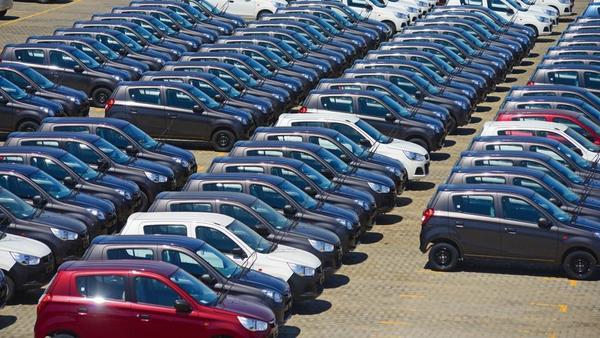
In this new system, the government has kept the GST on Battery Electric Vehicles (BEV)unchanged, giving them much relief and boost to the industry. However, it has also created a window for battle between Internal Combustion Engine (ICE) vehicles and EVs as the government has slashed the GST rate on components of vehicles to 18 per cent.
Udit Sheth, Vice Chairman, Setco Automotive said, “The reduction in GST from 28 per cent to 18 per cent on auto components is a welcome step that will provide much-needed relief to both the auto industry and consumers and have a great impact on Total Cost of Ownership.”
He further said, “For us at Setco, it will not only ease cost pressures but also stimulate demand, creating a positive ripple effect across the entire supply chain. We see this move as a catalyst for growth in the commercial vehicle sector, and we are optimistic about the momentum it can generate for the broader economy.”
Meanwhile, Omega Seiki found this opportunity competitive which will accelerate innovation, push both sectors to deliver greater value.
Expressing his excitement Uday Narang, Founder, Omega Seiki Pvt Ltd said, “The GST rationalisation is a landmark move that will reshape the mobility landscape. By retaining 5 per cent GST on EVs while reducing rates on ICE cars, the government has created a more level playing field that will intensify competition between conventional and electric mobility.”
He added that for EVs, the continued low GST signals long-term policy stability, encouraging investments and adoption.
“For ICE players, the cut brings relief and affordability. Ultimately, this will accelerate innovation, push both sectors to deliver greater value — and in the end, the real winner is the consumer,” he said.
Aditya Baheti, Co-Founder ZELO ELECTRIC observed that this move doesn’t just focus on immediate affordability but on building a sustainable ecosystem for electric mobility in the country.
“While the GST rate for EV two-wheelers remains stable at 5 per cent, this continuation further strengthens the sector by promoting adoption while providing much-needed regulatory support for manufacturers and investors. The government’s move in favor of EVs, even while reducing rates for ICE vehicles, signals their long-term commitment to electric mobility,” Baheti said.
“Though the immediate impact on EV pricing may be minimal, the standardization of auto components at 18 per cent GST will streamline our supply chain and manufacturing processes. The reduced gap between EV and ICE prices might influence some short-term purchase decisions, but we view this as the government balancing immediate economic concerns while maintaining support for sustainable transportation. In a holistic view of the automobile sector, we view the new taxation as favorable for the ultimate acceleration and adoption of EVs in India. The focus isn’t just on immediate affordability but on building a sustainable ecosystem for electric mobility in India,” he added.
The Congress seems to be doing it for political optics and strategy reasons but there is also a strong buzz about “internal BJP dynamics” being a key cause. There is no denying data linked to companies but analysts point how Gadkari, a heavyweight in the BJP and its ideological fountainhead RSS, was “not so aligned with the “BJP of Narendra Modi-Amid Shah”.
It was being talked about on social media for a while but on Wednesday the issue acquired a political undertone when the Congress party openly accused Union Road Transport Minister Nitin Gadkari of pushing India’s ethanol blending policy to benefit his family businesses, alleging a “clear conflict of interest.”
Interestingly, while the Congress does not spare the BJP and the Narendra Modi government when it comes to cornering it on political issues it has, so far, largely steered clear of taking on Gadkari.
Speculations are also there about some internal BJP dynamics at play as far as Gadkari is concerned.
What Congress said
Congress leader Pawan Khera alleged that Gadkari’s sons are key players in the ethanol supply chain.
Demanding an inquiry, he also wondered if the Lokpal would “dare to investigate Gadkari and his sons” over what he described as a “policy-driven windfall.”
“Cian Agro Industries, owned by Nikhil Gadkari, and Manas Agro Industries, where Sarang Gadkari is a director, have seen exponential growth since the government’s aggressive ethanol drive,” Khera said. He also alleged that Cian Agro’s revenues jumped from Rs 18 crore in June 2024 to Rs 523 crore in June 2025 with stock price soaring over 2,100%. “While citizens’ wages have stagnated, Gadkari’s family firms are reaping massive windfalls,” he claimed.
Khera said that Gadkari in 2018 promised that ethanol blending will cut petrol and diesel prices to around Rs55 per litre, “instead, petrol has risen from Rs71 in 2014 to nearly Rs 95 in 2025, while diesel has climbed from Rs 55 to Rs 87”. He also accused the BJP-led NDA government of ignoring concerns over vehicle performance, maintenance costs and water usage, questioning why ethanol was being produced from sugarcane and grains and not from wood waste or municipal waste as originally projected. “Why push sugarcane-based ethanol if not for vested interests? Gadkari and his associates have deep links with sugar mills,” Khera claimed.
The Congress leader also warned that ethanol blending (E20) could reduce engine life and fuel efficiency.
Farmers are being denied fair MSP for grains diverted to ethanol plants and seven years on, prices remain unchanged despite 20% blending and cheaper Russian crude, he said, “who is pocketing the profits?”
By tying this to Gadkari’s ethanol push, Congress seems to be tapping into existing public resentment and with elections in sight, farmer issues are politically sensitive.
Internal BJP dynamics
The Congress seems to be doing it for political optics and strategy reasons but there is also a strong buzz about “internal BJP dynamics” being a key cause. There is no denying data linked to companies but analysts point how Gadkari, a heavyweight in the BJP and its ideological fountainhead RSS, was” not so aligned with the“BJP of Narendra Modi-Amid Shah”.
So is the controversy also a sign of BJP’s internal fault lines and perhaps something bigger—a possible involvement of a big corporate house in a larger plan—that remains to be seen but some critical facts regarding ethanol also cannot be ignored.
Ethanol facts
For instance, India advanced the 20% ethanol blending goal from 2030 to 2025, and Gadkari was one of those who has been showcasing its benefits. While the government says ethanol blending helps reduce import bills, improve energy security and cut emissions, the fact is Gadkari is not the Petroleum Minister but the Road Transport & Highways Minister, however, despite that he has been one of the most vocal champions of ethanol use in vehicles. He has made in the past many public claims that ethanol would lower petrol/diesel costs and help farmers
The surge in revenue and stock price of companies owned by Gadkari’s family are backed by data. According to reports, publicly available company records confirm that Gadkari’s family owned companies operate in ethanol and related businesses. But the allegation that Gadkari pushed ethanol blending policy to enrich sons is a charge, and not a proven fact.
There is also public anger over fuel prices, despite cheaper global crude (especially Russian imports), petrol and diesel prices continue to remain high. Petrol and diesel prices are indeed higher today than in 2014 despite cheaper crude imports from Russia in recent years and ethanol blending has not translated into lower retail fuel prices for consumers. .
The Congress claims E20 reduces engine life and fuel efficiency by 25% nut reports quoting automakers acknowledge some efficiency drop (around 6–8%). Long-term engine impact studies in India are still limited. It is also true that sugarcane-based ethanol consumes a lot of water but figures depending on the crop, location, and production method.
Meanwhile, questions about who benefited most from ethanol blending—corporates, OMCs or farmers—remain.