GST council slashes rates on essential goods, operationalizes GST tribunal

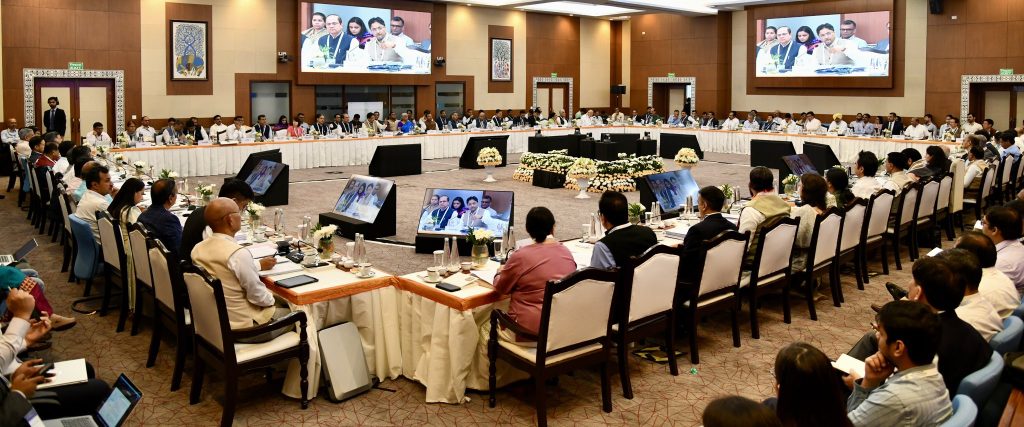
The 56th meeting of the Goods and Services Tax (GST) Council, chaired by Union Finance and Corporate Affairs Minister Nirmala Sitharaman, announced sweeping reforms aimed at providing relief to households, the middle class, and businesses while tightening tax treatment on tobacco and luxury goods.

Meeting at Sushma Swaraj Bhavan, the Council unveiled a wide-ranging package of rate rationalizations, procedural reforms, and institutional measures, calling it a “historic step” toward strengthening the GST framework.

A large basket of essential goods saw GST rates slashed to 5 per cent or even nil. Everyday food items such as Ultra High Temperature (UHT) milk, paneer, butter, cheese, pasta, biscuits, namkeens, fruit juices, and plant-based milk will now attract significantly lower taxes.

Medical essentials including oxygen, diagnostic kits, glucometers, and over 100 critical drugs have also been moved to the 5 per cent or nil bracket, aiming to reduce healthcare costs.

Farm and rural economy inputs received special focus, with tractors, tyres, pumps, irrigation sprinklers, and composting machines moved to a 5 per cent slab. Handicrafts, toys, renewable energy devices, and eco-friendly packaging materials also benefit from reduced GST, a move likely to encourage domestic industries.

In a measure to ease education and publishing, exercise books, notebooks, and maps have been exempted from GST.

On the flip side, sin goods and luxury consumption faced sharp hikes. Pan masala, gutkha, cigarettes, and unmanufactured tobacco will now attract a 40 per cent GST plus compensation cess, replacing the earlier 28 per cent. Similarly, caffeinated drinks, carbonated beverages, luxury cars, big motorcycles, yachts, and private aircraft were pushed into the 40 per cent tax bracket.

The Council also decided GST would now be levied on the retail sale price of tobacco products, closing loopholes in valuation.

The revised rates on most goods and services will take effect from September 22, 2025. However, the existing higher rates on tobacco and related products will continue until compensation cess loan repayments are completed, with the Finance Minister empowered to decide the transition timeline.

A major announcement was the operationalization of the GST Appellate Tribunal (GSTAT) by September-end. The Tribunal will begin hearing cases by December 2025, with June 30, 2026 set as the deadline for filing backlog appeals. The Principal bench will also function as the National Appellate Authority for Advance Ruling, aiming to bring consistency in interpretations and faster dispute resolution.

The Council also endorsed administrative reforms, including a system-driven 90 per cent provisional refund for exporters and industries facing inverted duty structures.

The Council described these measures as a balance between relief for households and stability for revenue.

With GSTAT set to become functional, industry stakeholders expect greater clarity and reduced litigation, marking what many see as a turning point for India’s indirect tax system.
Battleground Bihar—Congress, BJP and ‘beedi’

The fact is ‘beedis’ and cigarettes both contain tobacco and are harmful.  But ‘beedis are considered a “poor man’s smoke”

The Congress on Friday sparked a political storm after its Kerala unit posted a controversial tweet drawing a parallel between Bihar and humble ‘beedis’. The attempt to mock the BJP over recent GST reforms, however, backfired with the BJP coming all guns blazing out at the grand old party for what it claimed was “insult to the entire state”.  Reacting strongly, Bihar Deputy Chief Minister Samrat Choudhary said “First, the insult to the revered mother of our honourable Prime Minister Shri Narendra Modi ji and now the insult to the entire Bihar. This is the true character of the Congress, which is repeatedly being exposed before the country.”

The post was accompanied by a chart outlining the new GST rates, showing that GST on cigars and cigarettes was raised from 28 to 40 per cent, on tobacco from 28 to 40 per cent, while that bidis was cut from 28 to 18 per cent, effectively removing it from the “sin goods” category attracting the highest GST rates. “Bidis and Bihar start with B. Cannot be considered sin anymore,” stated the post, which seemed to have been posted to suggest that the move had been made in mind the upcoming Bihar elections.   

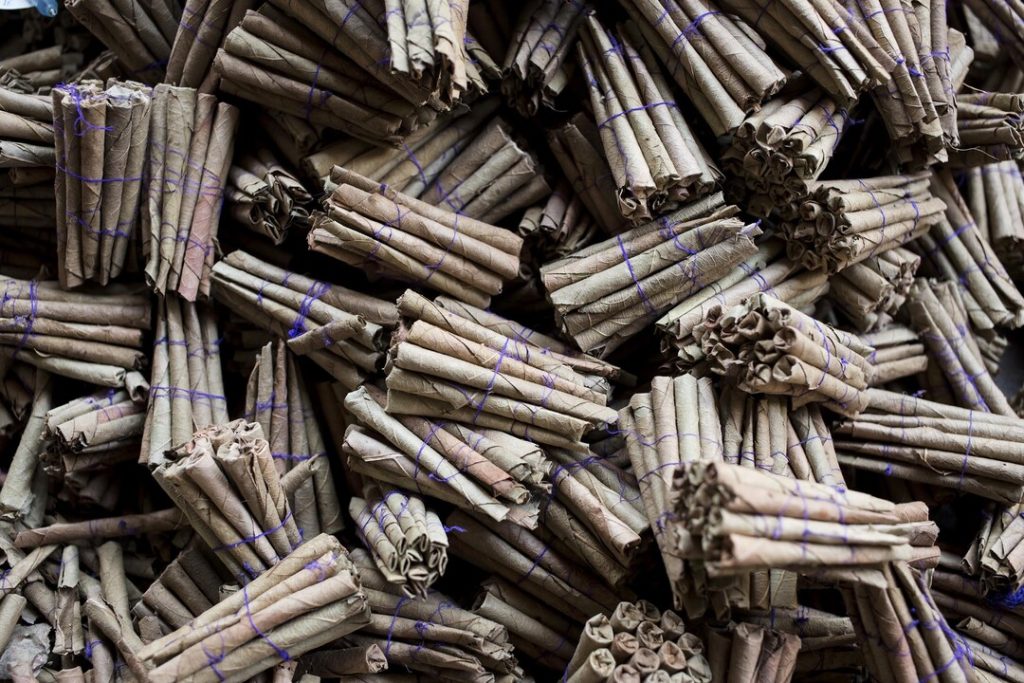
The fact is while the prices of cigarettes and other tobacco products, including ‘gutkha’, are set to rise after the GST reforms announced Wednesday, the humble ‘beedi’ will see a marginal drop in prices. The GST on ‘beedis,’ which was previously 28 per cent, has been reduced to 18 per cent. The GST on ‘tendu patta’ used to make ‘beedis’ has been reduced from 18 per cent to 5 per cent. Cigarettes and other tobacco products, which currently attract 28 per cent GST, will become costlier after being moved to the 40 per cent tax bracket.

Beedis and cigarettes are both harmful

The fact is ‘beedis’ and cigarettes both contain tobacco and are harmful.  But ‘beedis are considered a “poor man’s smoke”. Cigarettes are already unaffordable for most low-income groups and taxing ‘beedis’ at par risks may have been considered “anti-poor” especially in mind the upcoming Assembly elections in critical states.  However, health experts, and also WHO, have repeatedly flagged this as regressive, since it made harmful tobacco cheaper for the poor  

Including beedis in the high-tax “sin goods” bracket (28% GST + cess) was meant to reduce affordability and discourage consumption. Plus, similar products should attract similar taxes and ‘beedis’ and cigarettes are both tobacco products and keeping different slabs can create loopholes and classification disputes.

India is also the largest consumer of ‘beedis’ in the world. While each beedi is cheap, the sheer volume is massive. Bringing them in the high-tax bracket increased government revenue significantly. Normally the tobacco industry shifts consumption from cigarettes to ‘beedis’ whenever taxes go up on one side.

There is another aspect to it, while one cannot justify smoking in any form, the ‘beedi’ industry also employs lakhs of workers, especially women in rural areas. Heavy taxation could have shrunk demand, hurting their livelihood.  Also the ‘beedi’ sector is highly unorganised, with small-scale producers and enforcing GST compliance there is far harder than with cigarette companies.

Propaganda, ritualised respect or security concerns, why Kim Jong Un’s staff wipes every trace of him  

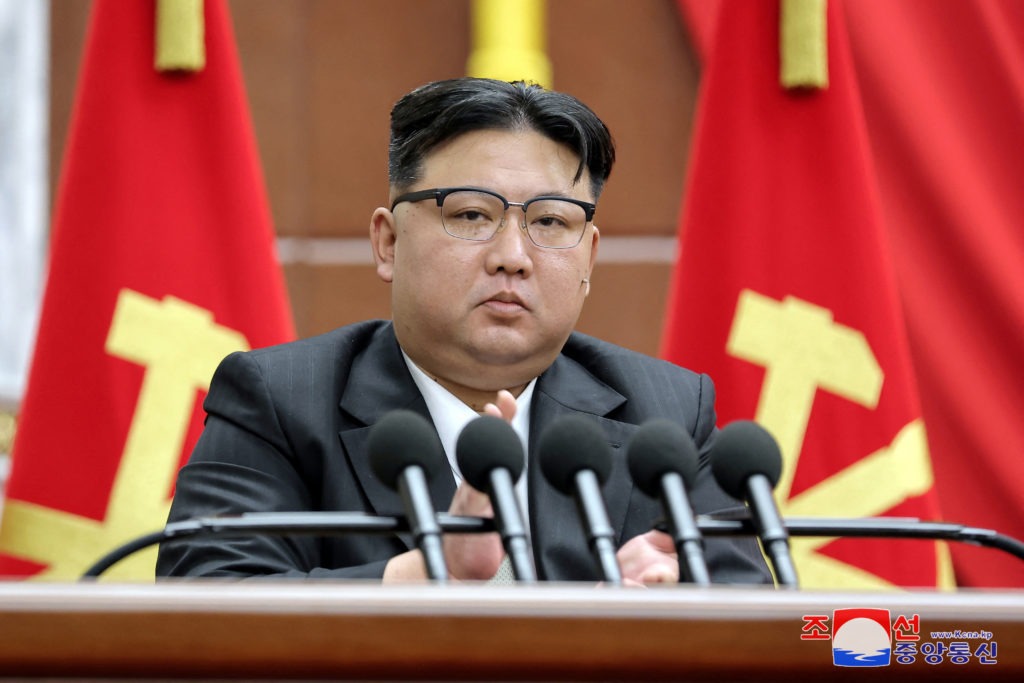
As the world watched with the display of diplomatic unity in Beijing while China’s Xi Jinping, Russia’s Vladimir Putin, and North Korea’s Kim Jong Un met in public for the first time, the ritual followed by the North Koreans also made headlines.

After a recent meeting with Russian President Vladimir Putin in Beijing, North Korean staffers were seen meticulously wiping the chair, scrubbing the coffee table and even removing Kim Jong Un’s drinking glass—apparently to erase any physical or biological traces the North Korea’s “supreme leader” may have left behind.  The aim was to prevent foreign intelligence agencies from collecting DNA or health-related clues such as skin cells, hair or saliva.

As the world watched with a significant display of diplomatic unity in Beijing while China’s Xi Jinping, Russia’s Vladimir Putin, and North Korea’s Kim Jong Un met in public for the first time, the ritual followed by the North Koreans also made substantial headlines.

But this was not the first time the ritual was observed, according to reports Kim’s staff executed similar procedures during prior international visits like during the 2019 Hanoi Summit with US President Donald Trump when guards were seen blocking the hotel room floor, thoroughly cleaning the room, and removing the mattress. Following a 2023 meeting with Putin, guards not only disinfected the chair but also used metal detectors to check the seat for any hidden threats.

Basically, when Kim Jong Un leaves a foreign location, his team goes into forensic-cleaning mode—scrubbing every item he touched and removing cups or chairs—to eliminate any trace of his DNA or other biological indicators.

Part of a long tradition of security

Those in know of the North Korean traditions say that these unusual, extreme measures are part of tradition, they were observed for his father as well.

This is part of a rigorous security practice designed to hide his health and whereabouts from foreign intelligence, a tradition that stretches back to his father’s era. Similar practices existed for Kim Il Sung and Kim Jong Il. Roads were sometimes closed, cleaned, or even repaved after they travelled, reflecting both reverence and strict control.

According to reports Kim travels in a special armoured green train equipped with a private toilet ensuring no waste (like urine or excrement) can be collected and analysed by outsiders/rivals. This is standard protocol, aimed at safeguarding his health information and preventing any agency—even a friendly one—from acquiring biomaterial that might reveal Kim’s medical condition. For a secretive state like North Korea, preventing outsiders from collecting DNA or health data on the leader is important.

Reasons rooted in political culture of North Korea

In North Korea, the leader is treated as an almost divine figure. everything he touches or steps on is considered sacred, surfaces he has walked on or used are sometimes polished, disinfected, or even replaced.

Cleaning or resurfacing the areas after his visit is a way for officials to show absolute loyalty and reverence. It signals that his presence is so significant that ordinary people should not tread the same ground afterward.

NIRF rankings 2025: IIT-Madras in top spot for seventh year

IISc Bengaluru in second position followed by IIT Mumbai

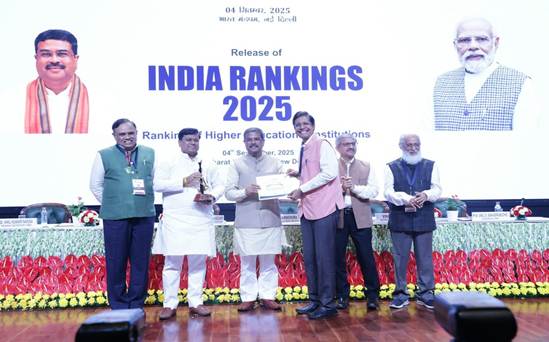
For the seventh consecutive year, the Indian Institute of Technology (IIT) Madras has secured the top position in the overall category, followed by the Indian Institute of Science (IISc) Bengaluru, IIT Bombay, IIT Delhi and IIT Kanpurin the India Rankings 2025

Releasing the ranking, Education Minister Dharmendra Pradhan said that the NIRF2025 rankings reflect the strength of our institutions and the promise of our students.

The National Institutional Ranking Framework (NIRF), launched in September 2015 by the Ministry of Education, was used for this edition as well as for the previous nie editions of India Rankings released for the years 2016 to 2024.

A record number of 7,692 unique institutions responded and offered themselves for ranking under “Overall”, category-specific or domain-specific ranking. In all, 14,163 applications for ranking were made by these 7,692 unique applicant institutions including 4,045 in Overall Category, 1,584 in Engineering, and 4,030 in General Degree Colleges. A noticeable increase in institutional participation in the rankings exercise this year indicates its recognition amongst institutions of higher education in India as a fair and transparent ranking exercise, according to an official statement  

Key highlights

  1. Indian Institute of Technology Madras retains its 1st position in Overall Category for the seventh consecutive year, i.e. 2019 to 2025 and in Engineering for tenth consecutive year, , i.e. from 2016 to 2025.
  2. Top 100 in Overall category consists of 24 state public universities, 22 private deemed universities, 19 IITs and IISc, 9 private universities, 8 NITs, 7 central universities, 5 Medical Institutions (under Ministry of Health and Family Welfare), 4 ISSERs, 1 college and IARI (under Ministry of Agriculture and Farmer’s Welfare).
  3. Indian Institute of Science, Bengaluru tops the Universities Category for tenth consecutive year, i.e. from 2016 to 2025. It stood first in Research Institutions Category for the fifth consecutive year, i.e. from 2021 to 2025.
  4. IIM Ahmedabad tops in Management subject retaining its first position for sixth consecutive year, i.e. from 2020 to 2025. It was ranked amongst top two in Management subject of the India Rankings from 2016 to 2019.
  5. All India Institute of Medical Sciences (AIIMS), New Delhi occupies the top slot in Medical for the eighth consecutive year, i.e. from 2018 to 2025. Moreover, AIIMS is ranked at 8th position in Overall category. It was ranked at 6th and 7th position in Overall category in 2023 and 2024 respectively.
  6. Jamia Hamdard, New Delhi tops the ranking in Pharmacy for the second consecutive year. Jamia Hamdard was ranked at 1st position for four consecutive years, i.e., from 2019 to 2022. It was ranked at 2nd position in Pharmacy in 2018 and 2023.
  7. Hindu College secured the 1st position amongst Colleges for the second consecutive year replacing Miranda House which retained its 1st position for seven consecutive year, i.e. from 2017 to 2023. Hindu College was ranked at 2nd position in 2019, 2022 and 2023, and at 3rd and 4th positions in 2020 and 2018 respectively.
  8. IIT Roorkee retained its 1st position in Architecture and Planning for the fifth consecutive year, i.e. from 2021 to 2025. IIT Roorkee was ranked at 2nd position from 2018 to 2020.
  9. National Law School of India University, Bengaluru retains its first position in Law for the eighth consecutive year, i.e. from 2018 to 2025.
  10. Colleges in Delhi maintained their dominance in ranking of Colleges with six colleges out of first 10 colleges from Delhi itself.
  11. All India Institute of Medical Sciences (AIIMS), New Delhi takes the top slot in Dental subject for the first time replacing the Saveetha Institute of Medical and Technical Sciences, Chennai which was ranked 1st for the three-consecutive year from 2022 to 2024.
  12. Indian Agricultural Research Institute, New Delhi takes the top slot in Agriculture and Allied Sectors for the third consecutive year, i.e. from 2023 to 2025.
  13. Jadavpur University, Kolkata tops the State Public Universities Category first introduced in 2024.
  14. Indira Gandhi National Open University (IGNOU), New Delhi tops the Open Universities Category for the second consecutive year, i.e. from 2024 to 2025.
  15. Indian Institute of Technology Madras tops in the Innovation category.
  16. Symbiosis Skill and Professional University (SSPU), Pune tops the Skill Universities category for the second consecutive year, i.e. from 2024 to 2025.
  17. Indian Institute of Technology Madras tops the Sustainable Development Goals (SDGs) category introduced for the first time this year.

‘302 (47%) ministers have criminal cases against them, 174 (27%) serious’: ADR, NEW

Image: courtesy ADR/NEW

In what aptly describes the state of Indian politics, an analysis of self-declared affidavits reveals that of 643 ministers analysed, as many as 302 (47%) ministers have declared criminal cases against themselves. Of them a large number—174 or 27% of them—have serious criminal cases including related to murder, attempt to murder, kidnapping, crimes against women etc according to the Association for Democratic Reforms (ADR) and National Election Watch (NEW).

The information has been culled out of the self-sworn affidavits of current ministers by the ADR and NEW from state assemblies, union territories and the Union Council of Ministers. 643 out of 652 Ministers have been analysed across 27 State Assemblies, 3 Union Territories and the Union Council

This data has been extracted from the affidavits (Form 26) submitted with the ECI and filed by the candidates—the ministers in the present report at the time elections  held in the years 2020 to 2025. The highest number is from the BJP.

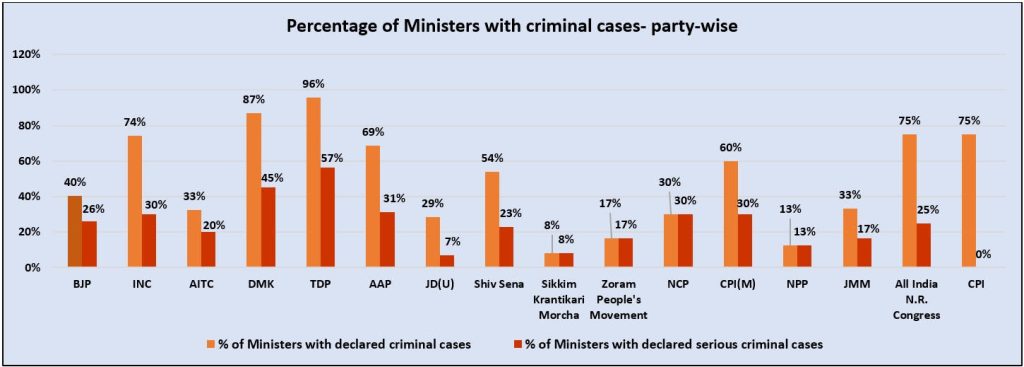
Ministers with criminal cases—party wise

As many as 136 (40%) of 336 ministers are from the BJP;  45(74%) of 61 ministers from Congress; 13 (33%) of 40 ministers from Trinamool Congress; 27(87%) of 31 ministers from DMK; 22(96%) of 23 ministers from TDP; 11(69%) out of 16 ministers from AAP; four (29%) of 14 ministers from JD(U) and seven (54%) of 13 ministers from Shiv Sena

Party wise ministers with serious criminal cases

As many as 88(26%) of 336 ministers are from BJP; 18(30%) of 61 ministers from INC;  eight (20%) of 40 ministers from Trinamool Congress;  14(45%) out of 31 ministers from DMK; 13(57%) of 23 ministers from TDP; five (31%)  of 16 ministers from AAP, one (7%) of 14 ministers from JD(U) and three  (23%) of 13 ministers from Shiv Sena.

Ministers with criminal cases in Union Council

As many as 29 (40%) of 72 ministers analysed from the Union Council have declared criminal cases against themselves. In the 30 state/UT Assemblies, in 11 of them more than 60% of the ministers have criminal cases registered against them. These include Andhra Pradesh, Tamil Nadu, Bihar, Odisha, Maharashtra, Karnataka, Punjab, Telangana, Himachal Pradesh, Delhi and Puducherry. In the four State/UT assemblies of Haryana, Jammu & Kashmir, Nagaland and Uttarakhand none of the ministers have declared criminal cases against themselves.

The average of assets per minister from State/UT Assemblies and Union Council is Rs 37.21 crores.

Of the 643 ministers analysed from State/UT Assemblies and Union Council 36 (6%) are Billionaires.

The total assets of 643 Ministers are Rs. 23,929 crores.

Of the 30 State Assemblies, 11 Assemblies have billionaire ministers.

Karnataka leads with the highest number (eight) billionaire ministers followed by Andhra Pradesh with six, Maharashtra with four. Arunachal Pradesh, Delhi, Haryana and Telangana have two each and Gujarat, Himachal Pradesh, Madhya Pradesh and Punjab with one each.

Of 72 ministers, six (8%) are billionaires.

‘Wait for a true GST 2.0 continues’, says Congress 

A day after Finance Minister Nirmala Sitharaman-headed GST Council approved a complete overhaul of the Goods and Services Tax (GST) regime, an unimpressed Congress termed it  “GST 1.5”, saying that time alone will tell whether it would stimulate private investment and ease burden on MSMEs. Stating that the Congress party had been demanding a simplified GST for almost a decade, its leaders said the “wait for a true GST 2.0 continues”.

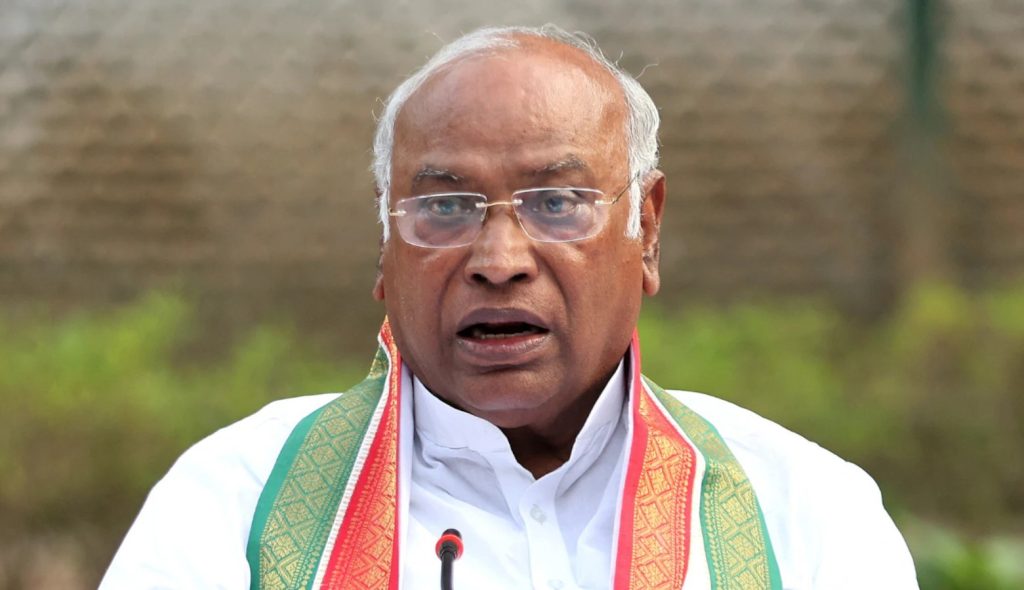
“For almost a decade, the Congress has been demanding simplification of GST and it is a good thing that although eight years late, the Narendra Modi Government has woken up from its ‘Kumbhakarana’ sleep on GST and has woken up and talked about Rate Rationalisation, Congress president Mallikarjun Kharge said, demanding extension of compensation for another five years to fully protect revenues of states. 

 “All states should be given compensation for a period of 5 years considering 2024-25 as the base year, because the reduction in rates is bound to have an adverse effect on their revenue. The complex compliances of GST will also have to be ended, only then will MSMEs and small industries truly benefit,” he said.

A “key demand of the states made in the true spirit of cooperative federalism— namely, the extension of compensation for another five years to fully protect their revenues— remains unaddressed. In fact, that demand assumes even greater importance now,” added Jairam Ramesh

Kharge said that two-thirds of the total GST—as much as 64% comes from the pockets of the poor and the middle class, but only 3% GST is collected from billionaires, while the rate of Corporate Tax has been reduced from 30% to 22%. In the past 5 years, Income Tax collection increased by 240% and GST collection increased by 177%.

“We had also demanded simplification of the complex compliances of GST, which had badly affected MSMEs and small businesses but the Narendra Modi government changed “One Nation, One Tax to “One Nation, 9 Taxes” with “tax slabs of 0%, 5%, 12%, 18%, 28% and special rates of 0.25%, 1.5%, 3% and 6%.”

“On 28 February 2005, the Congress-UPA government formally announced GST in the Lok Sabha. In 2011, when the then Finance Minister Pranab Mukherjee ji brought the GST Bill, the BJP opposed it. When Modi ji was the Chief Minister, he vehemently opposed GST. Today, this BJP government celebrates record GST collections, as if it has done a great job by collecting tax from the common people.

“For the first time in the history of the country, farmers have been taxed. This Modi government imposed GST on at least 36 items of the agricultural sector. The Modi government imposed GST tax on everyday things like milk-curd, flour-grains, even children’s pencils-books, oxygen, insurance and hospital expenses. That is why we named this GST of BJP as ‘Gabbar Singh Tax’,” he said

Ramesh said that it was only when faced with a lack of buoyancy in private consumption, subdued rates of private investment, and endless classification disputes, the Union Finance Minister has finally recognised that GST 1.0 had reached a dead end. In fact, the very design of GST 1.0 was flawed and this had been pointed out by the INC way back in July 2017 itself, when the PM had made one of his typical U turns and decided to introduce GST. It was meant to be a Good and Simple Tax. It turned out to be a Growth Suppressing Tax.

“However the wait for a true GST 2.0 continues. Whether this new GST 1.5, if it can be called that, stimulates private investment – especially in manufacturing – remains to be seen. Whether this will ease the burden on MSMEs, time alone will tell,” he added.

South Kashmir floods: Rivers swell, bridges closed, crops damaged

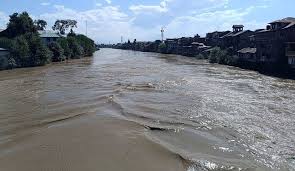
Srinagar: Continuous rainfall for the second straight day triggered flooding across several districts of south Kashmir on Wednesday, damaging crops, disrupting connectivity, and forcing large-scale evacuations.

Authorities in Kulgam, Anantnag, Pulwama, and Shopian shifted hundreds of residents, including nomadic families, from low-lying and flood-prone areas as rivers and streams swelled dangerously.

In Kulgam, the Veshaw River crossed the danger mark by afternoon, inundating areas like Qaimoh and forcing people to move to safer places. Deputy Commissioner Athar Aamir Khan said evacuations had been carried out in vulnerable zones including Guddder and Laisoo. As a precaution, the administration closed the Chambund Bridge, following earlier closures of the Pahloo Bridge and the Laisoo–Guddder road.

In Anantnag, heavy waterlogging hit towns and adjoining areas. Police and SDRF teams used boats to rescue residents from flood-hit localities. At least seven families were shifted in Kokernag, where rising waters also damaged small bridges.

Pulwama witnessed flooding in several orchards after the Romshi Nallah swelled, damaging crops in Goosu. The Pahoo–Kakpora road was submerged and closed for traffic. Deputy Commissioner Dr. Basharat Qayoom said the immediate priority was saving lives, while crop loss would be assessed later.

In Shopian, more than 1,000 nomadic residents were relocated for the second consecutive day. Control rooms have been activated across districts, with officials monitoring the situation and extending assistance to affected families.

Decoding MHA’s decision to extend CAA cut-off to December 2024

The initial CAA had put the deadline at December 31, 2014; The fresh notification widens the ambit of the law so that many of those who have come to India in the last decade can seek citizenship, a decision that comes after years of representations by refugee communities. 

Photo: courtesy MHA website

The Ministry of Home Affairs (MHA) on Wednesday extended the cut-off date for entry into India under the Citizenship (Amendment) Act (CAA) to December 31, 2024, widening the scope of the law five years after its passage.

The fresh directive, in effect, expanded the scope of eligibility for Indian citizenship under the Citizenship (Amendment) Act (CAA). 

The initial CAA had put the deadline at December 31, 2014. 

The fresh notification widens the ambit of the law so that many of those who have come to India in the last decade can seek citizenship, a decision that comes after years of representations by refugee communities.

Enacted in December 2019, the CAA offers Indian citizenship to non-Muslim migrants — Hindus, Sikhs, Buddhists, Jains, Parsis, and Christians — from Bangladesh, Pakistan and Afghanistan who entered the country due to religious persecution.

With the new notification, individuals from the specified communities who entered India up to the end of 2024 will be eligible to apply, even if they did not possess valid passports or travel documents, or if such documents have expired.

Timing

The timing of the decision is equally significant. For nearly five years, the Act remained on the statute books but largely unimplemented due to widespread protests, court challenges, and the disruptions of the Covid-19 pandemic.

By pushing the cut-off forward, the Centre is operationalising the law and also signaling political intent.

Analysts are also sensing electoral undertones. 

With key state polls approaching and the 2026 general election on the horizon, the move is expected to resonate in politically sensitive border states like Assam, West Bengal, and Tripura — regions where migration has long shaped political discourse. The BJP has repeatedly portrayed the Act as both a moral obligation and a civilisational duty to shelter persecuted minorities, and Wednesday’s announcement reinforces that narrative.

The extension is expected to benefit those who fled more recently from the three neighbouring countries, including Afghan Sikhs and Hindus who sought shelter in India after the Taliban takeover in 2021, and minority groups in Pakistan and Bangladesh who continue to face discrimination.

Although cleared by Parliament nearly five years ago, the CAA remained largely on hold amid nationwide protests, legal challenges and the Covid-19 pandemic. Wednesday’s move signals the Centre’s intent to operationalise the law in full.

Officials said the extension was aimed at addressing the continued inflow of migrants facing religious persecution.

However, the timing of the announcement is also likely to have political implications. With Assembly elections due in several states and the 2026 general election on the horizon, the CAA remains a key part of the BJP’s political messaging, particularly in border states such as Assam and West Bengal where migration is a sensitive issue.

The Act has been one of the most contentious legislations of recent years. While the government has described it as a humanitarian measure and a moral responsibility, critics have argued that it undermines India’s secular principles by excluding Muslims.

‘Next-gen’ GST reforms—two-slab rates from Navratri

The new framework from September 22 — coinciding with the first day of Navratri — will replace the existing four-tier system with two primary rates of 5 and 18 per cent, along with a special 40 per cent slab for luxury and sin goods.

In what is being described as the most sweeping overhaul of India’s indirect tax regime since its launch in 2017, the Goods and Services Tax (GST) Council on Wednesday approved a simplified two-slab structure. The new framework, to be rolled out on September 22 — coinciding with the first day of Navratri — will replace the existing four-tier system with two primary rates of 5 and 18 per cent, along with a special 40 per cent slab for luxury and sin goods.

Announcing the decision, Finance Minister Nirmala Sitharaman called it a “next-generation reform” that would ease the burden on ordinary citizens and address long-pending anomalies. The structural changes will ease the lives of people, including farmers, and correct the inverted duty structure, she said.

The new structure seeks to simplify compliance, reduce tax burdens and encourage consumption. Officials estimate that the rate rationalisation alone could have revenue implications of over Rs 48,000 crore. Most items currently taxed at 12 per cent will now fall into the 5 per cent bracket, while nearly 90 per cent of goods in the 28 per cent category will move to 18 per cent. The remaining items in the highest slab — including tobacco, cigarettes, pan masala, luxury cars, high-end motorcycles, yachts and private aircraft — will shift to the newly created 40 per cent rate.

“For common man and middle class items, there is a complete reduction from 18 per cent and 12 per cent to 5 per cent. Items such as hair oil, toilet, soap bars, soap bars, shampoos, toothbrushes, toothpaste, bicycles, tableware, kitchenware and other household articles are now at 5 per cent,” FM Sitharaman said.

“UHT milk, paneer, all the Indian breads will see nil rate,” she added.

GST on small cars and motorcycles up to 350 cc has been cut from 28 to 18 per cent, while the same reduction will apply to buses, trucks and ambulances. Auto parts will now attract a uniform 18 per cent rate. On the other hand, mid-size and larger cars, high-capacity bikes, and private aircraft will remain in the costlier 40 per cent slab. Pan masala, gutkha, cigarettes, chewing tobacco, zarda, unmanufactured tobacco and bidi, that fall under the “sin tax” category, will remain under the existing GST plus compensation cess regime for now.

 The reforms also aim to tackle inverted duty structures that have troubled industries for years. In the textile sector, GST on man-made fibre and yarn will drop to 5 per cent. Fertiliser manufacturers, too, will benefit, with sulfuric acid, nitric acid and ammonia shifting from 18 to 5 per cent.

Prime Minister Narendra Modi welcomed the decision, describing it as a “Diwali gift” that fulfils his Independence Day promise of ushering in next-generation GST reforms. In a post on X, he said the measures would strengthen the economy and improve the lives of farmers, MSMEs, middle-class families, women and youth.”

The 56th meeting of the GST Council, chaired by Sitharaman, witnessed broad consensus, though several opposition-ruled states expressed concern over possible revenue shortfalls. Finance ministers from Himachal Pradesh, Jharkhand, Karnataka, Kerala, Punjab, Tamil Nadu, Telangana and West Bengal submitted a note urging the Centre to guarantee revenue protection. Andhra Pradesh, however, extended full support, calling the reforms “pro-people and pro-economy.” Sitharaman thanked chief ministers for backing the move, stressing that “all states stood together for the common man.”

Correcting structural issues

For years, businesses have complained about the inverted duty structure (where raw materials are taxed higher than finished goods), especially in textiles and fertilisers. This reform addresses those anomalies.

With inflation stabilising and growth momentum needing a push, lowering GST on essentials and automobiles is expected to spur demand.

The government is positioning this as part of its broader economic revival strategy.

The 56th GST Council meeting managed to secure broad agreement, even from opposition-ruled states, which has been difficult in the past.

BRS family feud—not the first Telugu political family drama

Kavitha’s suspension, what next; Telugu politics has a long history of family feuds spilling into party affair; the BRS saga adds yet another chapter to Telugu politics where family, ambition, and betrayal often determine the fate of parties as much as ideology

The Bharat Rashtra Samithi (BRS), once seen as a tightly knit family enterprise under former Telangana Chief Minister K. Chandrashekar Rao (KCR), is now unraveling in public. On Tuesday, K Kavitha—KCR’s daughter and a former MP—was suspended from the party founded by her father.

The disciplinary action followed her explosive allegations that her cousin, senior BRS leader and former minister T Harish Rao, orchestrated the federal investigation into KCR’s finances and dealings. Kavitha did not stop there—she also accused her own brother, K T Rama Rao (KTR), widely regarded as KCR’s political heir, conspired against her.

“If this is the cost of speaking the truth, then I am ready to pay it a hundred times again for the people of Telangana,” Kavitha declared on ‘X’ on Wednesday, hours after her suspension. She also warned her father and brother of people around them. 

Party leaders T Ravinder Rao and Soma Bharat Kumar justified the move, saying her recent comments amounted to “anti-party activity.” But behind the official line lies a deeper churn—the BRS is in the throes of an internal power struggle with KCR’s children and nephew jockeying for control over the party’s future, its assets, and its influence.

The KCR dynasty at crossroads

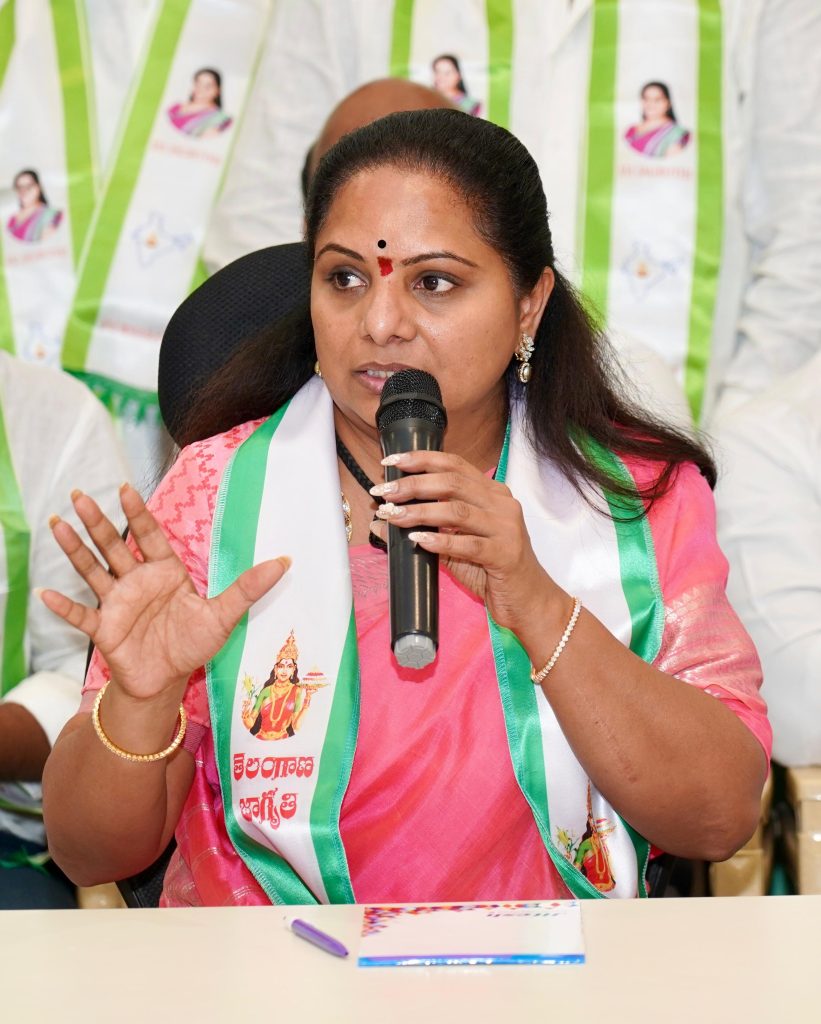
During KCR’s decade-long tenure as Chief Minister, the family operated as a political powerhouse. KTR and Harish Rao held key ministerial portfolios, while Kavitha served in Parliament and simultaneously led Telangana Jagruthi— her socio-cultural platform. The arrangement appeared balanced—until now.

The suspension signals that the once-cohesive dynasty is showing the familiar cracks that have plagued other Telugu political families. Analysts note that such rifts often begin with questions of succession and control, only to escalate into open warfare.

Not the first Telugu family drama

Telugu politics has a long history of family feuds spilling into party affair; the BRS saga adds yet another chapter to the enduring story of Telugu politics—where family, ambition, and betrayal often determine the fate of parties as much as ideology

The YSR family, for instance, saw YS Jagan Mohan Reddy and his sister YS Sharmila parting ways. Sharmila, who once campaigned for Jagan during his imprisonment, now heads the Andhra Pradesh Congress and has accused her brother of “murderous politics.”

The Telugu Desam Party (TDP) too was torn apart in the 1990s, when current Chief Minister N Chandrababu Naidu staged what is still remembered as a “palace coup,” ousting his father-in-law—party founder NT Rama Rao. The coup was fueled partly by resentment over the growing political influence of NTR’s second wife, Lakshmi Parvathi.

Personal rivalries, inheritances and political ambition can destabilise family-oriented parties .

What next for Kavitha?

With her suspension, Kavitha’s next steps will be closely watched. She continues to head Telangana Jagruthi, which may provide her a base independent of the BRS. Whether she uses it to build a parallel political career or to negotiate her way back into the family fold remains uncertain.

For KCR, the challenge is equally steep: keeping the BRS intact as it battles not just a resurgent Congress in Telangana but also its own imploding power center. The suspension of his daughter may consolidate KTR’s control, but it risks alienating Kavitha’s supporters and deepening perceptions of a dynasty at war with itself.

MOST POPULAR

HOT NEWS