‘Desperate bid to curry favour’ Congress slams PM’s birthday article for Bhagwat 

“The long essay in praise of Bhagwat ji is nothing but Modi’s insurance policy — a message to Nagpur: “Don’t apply 75 to me in 2025,” says Congress; PM Modi has praised Bhagwat on many occasions but this seems to be the first time he has penned an article on his birthday.
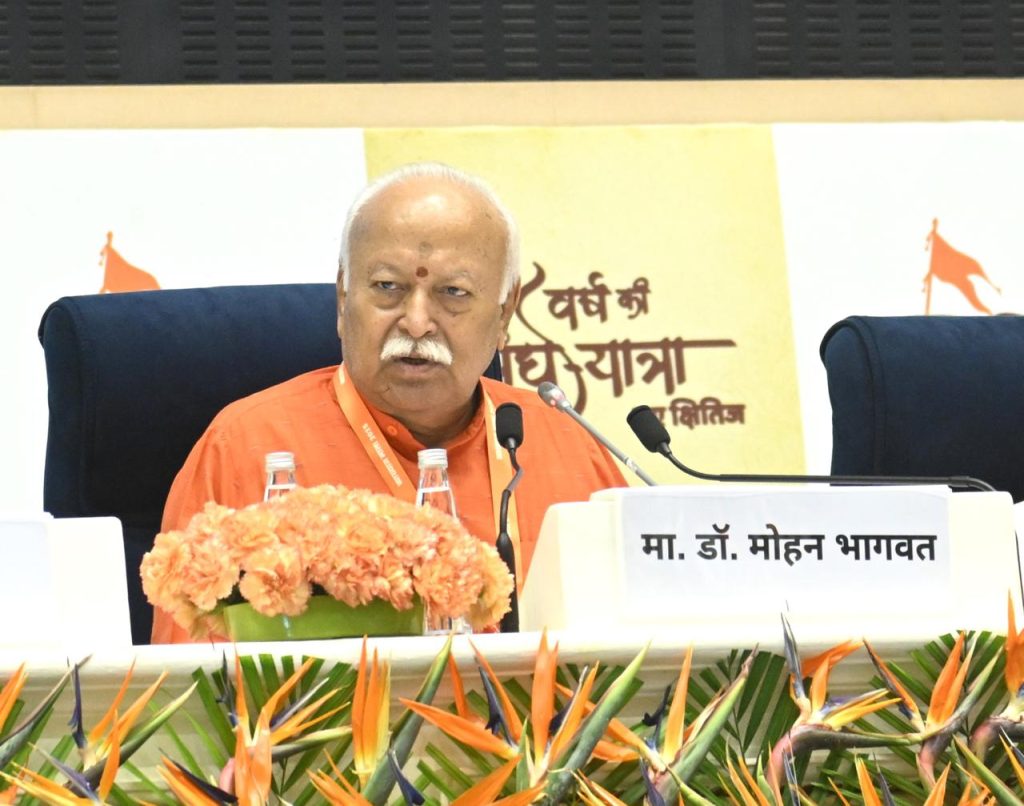
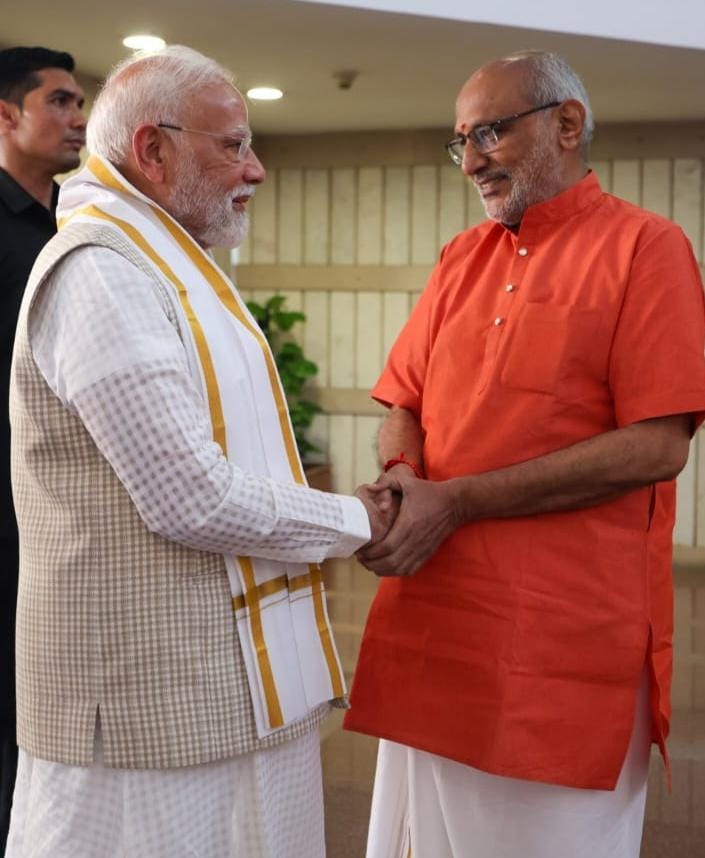
The Congress on Thursday slammed Prime Minister Narendra Modi over his article on Mohan Bhagwat, describing it as “over-the-top tribute” to the Rashtriya Swayamsevak Sangh (RSS) chief on his 75th birthday as a “desperate bid to curry favour”.

Congress leader Jairam Ramesh also took another swipe saying that the PM who “claimed to be non-biological, makes his pravachans appear as if they are God-se”.

“The Prime Minister, in his desperate bid to curry favour with the RSS leadership, has written an over-the-top tribute to Mohan Bhagwat on his 75th birthday today. The PM has recalled that it was on Sept 11, 1893, that Swami Vivekananda gave his immortal speech in Chicago. The PM has also recalled that the Al Qaeda terrorist attacks in the US took place on Sept 11, 2001.

“But not surprisingly, the PM has not mentioned that Mahatma Gandhi first gave the call for satyagraha on Sept 11, 1906, in Johannesburg. That was when the world first heard of this revolutionary idea. Of course it is too much to expect the PM to remember the origin of satyagraha since the very word satya is alien to him. The PM, who himself claimed to be non-biological, makes his pravachans appear as if they are God-se,” Ramesh wrote on X.

The grand old party also took a swipe at PM Modi and Bhagwat for “bending” the “retirement at the age of 75” rule with Congress MP Manickam Tagore saying that the “famous 75-year retirement rule is not a principle, just a tool.

“Advani ji at 75: “Rule is rule, step aside.
“Murali Manohar Joshi ji at 75: “Rule is rule, retire gracefully.”
“Mohan Bhagwat ji at 75: Modi writes poetry on “Wisdom & Trust.”
“So the famous 75-year retirement rule is not a principle, just a tool. Apply it to Advani ji & Joshi ji. Bend it for Bhagwat ji. Ignore it for Modi himself. This is not respect, this is sycophancy.

A long essay in praise of Bhagwat ji is nothing but Modi’s insurance policy — a message to Nagpur: “Don’t apply 75 to me in 2025.”

“The hypocrisy is breathtaking. For BJP founders → retirement. For Nagpur boss → celebration. For Modi → exemption. Principles are meant for all. But in Modi’s politics, principles are disposable. Convenience first, conscience never,” he wrote

In an elaborate and glowing piece that appeared in several newspapers on Thursday (September 11, 2025) on Bhagwat’s 75th birthday, Modi called him a living example of ‘Vasudhaiva Kutumbakam’ who has dedicated his entire life to societal transformation and strengthening the spirit of harmony and fraternity.

“…Mohan ji is a living example of Vasudhaiva Kutumbakam, showing that when we rise above boundaries and consider everyone as our own, it strengthens trust, brotherhood and equality in society. I once again wish Mohan ji a long and healthy life in the service of Maa Bharti,” PM Modi said

PM Modi has praised Bhagwat on many occasions but this seems to be the first time he has penned an article on his birthday.
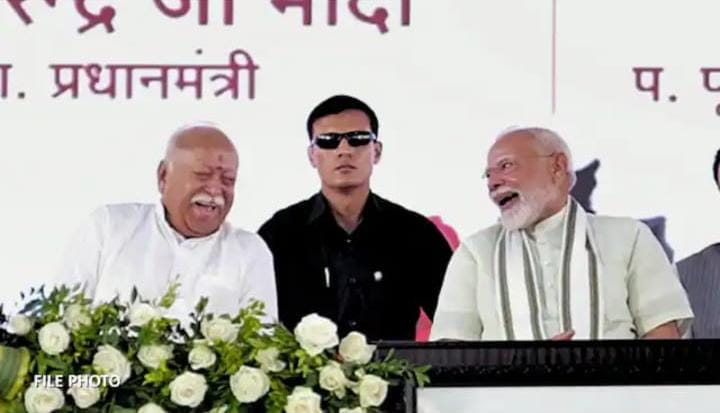
Modi lavishes praise on Bhagwat on his 75th birthday, prays for his long life in ‘continued service of Maa Bharti’

Photo: courtesy PM social media

On the 75th birthday of Rashtriya Swayamsevak Sangh (RSS) chief Mohan Bhagwat, Prime Minister Narendra Modi on Thursday paid glowing tribute to his “inspiring life and unwavering commitment to national service.” Sharing an article on Bhagwat’s journey, the PM wrote, “Inspired by the principle of Vasudhaiva Kutumbakam, Shri Mohan Bhagwat ji has dedicated his entire life to societal transformation and strengthening the spirit of harmony and fraternity. On this special occasion, I have penned a few thoughts on Mohan ji and his inspiring personality. Praying for his long and healthy life in service of Maa Bharti.”

Calling him a living embodiment of Vasudhaiva Kutumbakam, Modi said Bhagwat’s leadership coincides with a significant milestone—the RSS centenary this year. He noted that this anniversary falls on the same day as the birth anniversaries of Mahatma Gandhi and Lal Bahadur Shastri, describing it as a “pleasant coincidence.” Praising Bhagwat as a “wise and hardworking head” of the Sangh, he said that when people rise above boundaries and embrace others as their own, it strengthens trust, equality and brotherhood in society.

Highlighting Bhagwat’s personal qualities, the PM described him as soft-spoken, deeply sensitive, and exceptionally good at listening. “Being Sarsanghchalak is more than an organisational responsibility. Extraordinary individuals have defined this role through sacrifice, clarity of purpose and unshakable commitment to the nation. Mohan ji has done full justice to this responsibility while bringing his own intellectual depth and empathetic leadership, guided by the principle of ‘Nation First’.”

Modi said Bhagwat has steered the Sangh through complex challenges by balancing continuity with adaptation. “He has a natural connect with the youth and constantly engages with them, integrating more youngsters into the Sangh Parivar. His public interactions have been especially valuable in today’s dynamic, digital era.”

The PM also praised Bhagwat’s support for initiatives like Swachh Bharat Mission and Beti Bachao Beti Padhao. Recalling his own RSS days, Modi shared memories of Bhagwat’s father, Madhukarrao Bhagwat, who played a pivotal role in strengthening the organisation in Gujarat. “Such was Madhukarrao ji’s passion for nation-building that he groomed his son, Mohanrao, to continue the work. It is as if one parasmani prepared another.”

Born on September 11, 1950, in Chandrapur, Maharashtra, Bhagwat has been at the helm of RSS’ affairs for over 16 years, making him its third-longest-serving chief after M.S. Golwalkar and Madhukar Dattatraye Deoras. His tenure has seen significant changes, from uniforms to training structures, underscoring his transformative leadership. Speculation arose recently after Bhagwat’s remarks in Nagpur were interpreted as a hint at retirement at 75. Later clarifying in Delhi, he said he was merely quoting Sangh veteran Moropant Pingle’s quip about ceremonial shawls, and never suggested he—or anyone else—should retire.

Incidentally, PM Modi himself turns 75 on September 17.

MAGA activist shot, Trump blames ‘radical left’; who was Charles Kirk

Does the shooting in a university also show how in the US campuses have become flashpoints for ideological clashes?

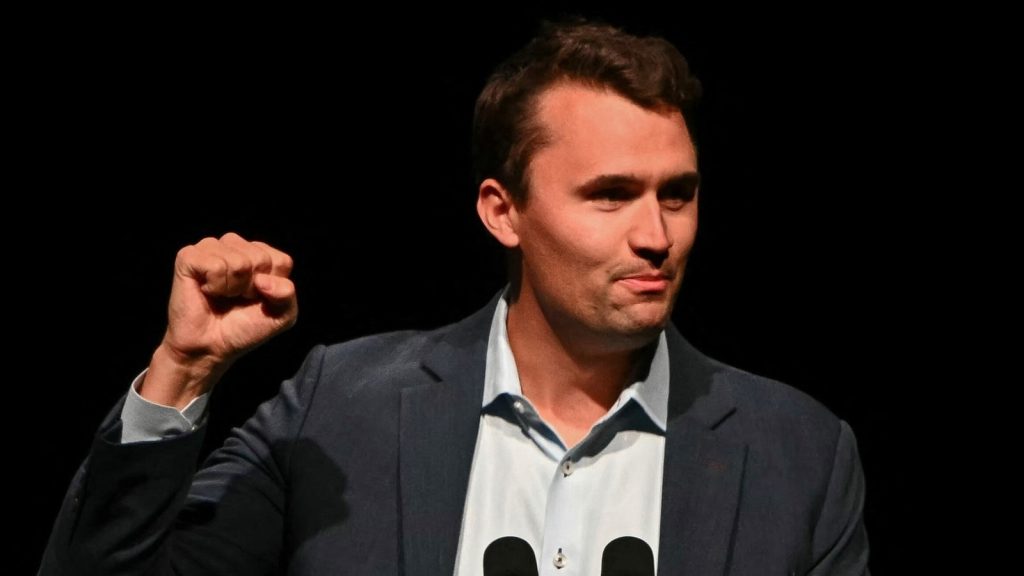
US President Donald Trump has directly blamed what he described as “radical left rhetoric” for the fatal shooting of conservative firebrand Charlie Kirk—a prominent MAGA activist and one of the most prominent young voices in Trump’s movement.

Kirk (31) was shot in front of students and supporters at Utah Valley University on Wednesday afternoon. Shocking footage captured him clutching his neck and collapsing after a bullet struck him. A key voice in rallying young Republican voters and building Trump’s base among the youth, supporters online described Kirk’s shooting as the inevitable outcome of years of vitriolic attacks on the MAGA movement from mainstream media and progressive activists.

Trump accused Democrats and liberal commentators of fuelling a climate of hate against conservatives. “The constant demonisation of conservatives, Christians, and patriotic Americans by the radical left is directly responsible for the terrorism we’re seeing in our country today…It must stop right now,” he said.

“No one understood or had the Heart of the Youth in the United States of America better than Charlie. He was loved and admired by ALL, especially me, and now, he is no longer with us,” Trump also wrote on Truth Social

Deep polarisation  

For analysts, the act of violence underscores the current state of politics in the US—polarised by election disputes and hostility between the left and right. For conservatives, it validates Trump’s warnings that they are being targeted, for liberals, there are fears of escalating retaliation.  The shooting is more than just a tragic act of violence, it is a mirror of the current turmoil in the US gripped by unprecedented political polarisation, where rhetoric carries weight and every incident boxed in partisan narratives, they say

For conservatives, Kirk’s killing is proof that their voices are being targeted and silenced through intimidation. Trump’s response (that the “radical left” is responsible) taps directly into a widespread sentiment—the hatred toward MAGA supporters.  The fact that the shooting took place in a university also shows how in the US campuses have become flashpoints for ideological clashes.

What next

The shooting of Charlie Kirk is already being framed as more than a personal tragedy which may impact future elections. For Republicans, Kirk’s killing reinforces the narrative that conservatives are under siege from a hostile establishment and emboldened radical left, which may help Trump’s base.

Democrats are likely to tread cautiously amid sharpening debate over political violence in the country amid both parties accusing the other of stoking division.

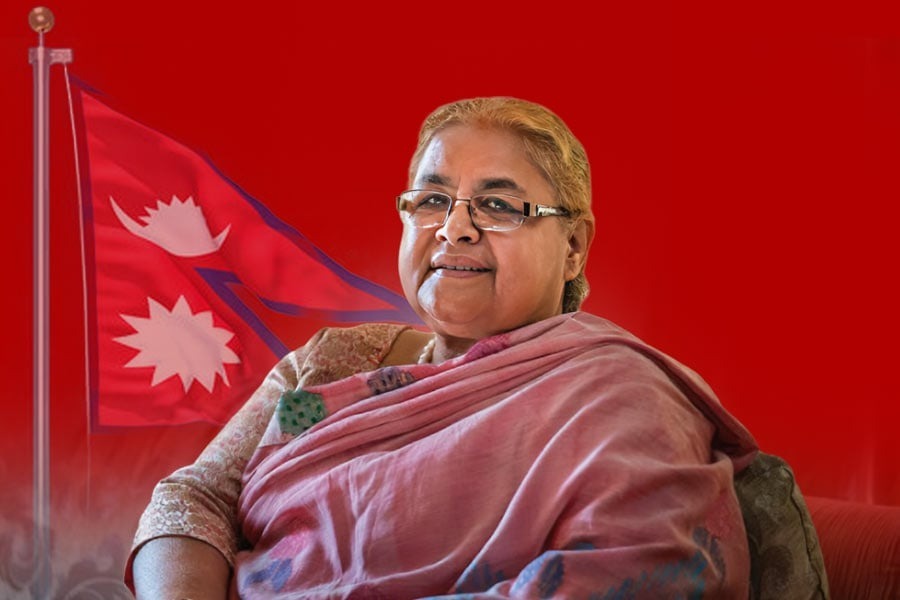
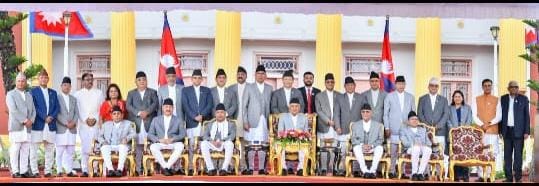
Nepal’s Gen-Z protesters back former Chief Justice Sushila Karki as interim leader

Widely regarded as a crusader against corruption, Karki earned respect during her tenure on the bench for landmark rulings

Nepal’s Gen-Z protesters reportedly backed former Chief Justice Sushila Karki as interim leader for negotiations with the authorities following a marathon virtual meeting where participants agreed that no young activist with links to political parties should be involved in leadership talks.

The Nepalese Army is currently in charge of the strife-torn Himalayan nation.

Karki, known for her neutrality and clean record, was chosen for her credibility and rulings in her capacity as a judge. She is the former Chief Justice of the Supreme Court of Nepal and the only woman to have held the post.

“Karki became Chief Justice in July 2016. In April 2017, an impeachment motion was submitted in the Parliament against Karki, by Maoist Centre and Nepali Congress, however, it was later withdrawn after public pressure and an interim order by the Supreme Court ordering the Parliament not to proceed with the motion,” according to reports

The country has been thrown into political turmoil after Prime Minister KP Sharma Oli resigned on Tuesday amid massive anti-corruption demonstrations, triggered in part by a government ban on social media. With protesters—mostly from “Generation Z,” born between 1997 and 2012—lacking a central figure, officials struggled to identify whom to engage with.

By turning to someone older and respected, the youth movement signaled intent to find a stabilizing figure. According to reports, participants endorsed Karki to guide the nation while the military maintains order and most civilian leaders remain in hiding.

The protests, which erupted over corruption, nepotism, and restrictions on free expression, have already escalated into violent clashes.

What next

Widely regarded as a crusader against corruption, Karki earned respect during her tenure on the bench for landmark rulings—including a decision granting Nepali women the right to pass citizenship to their children which was previously reserved for men.

Legal experts had suggested a transitional authority acceptable to protesters and other names doing the rounds included Balendra Shah, the 35-year-old rapper-turned-mayor of Kathmandu, popular among the youth for his city clean-up initiatives, and Rabi Lamichhane, a former television host who launched the Rastriya Swatantra Party in 2022, according to local media reports.

Vice President elections—a day after, political slugfest over ‘cross-voters’, appeal for ‘fairness, impartiality’

Congress also reminds new Vice President of India’s  first V-P Dr Sarvepalli Radhakrishnan’s  words

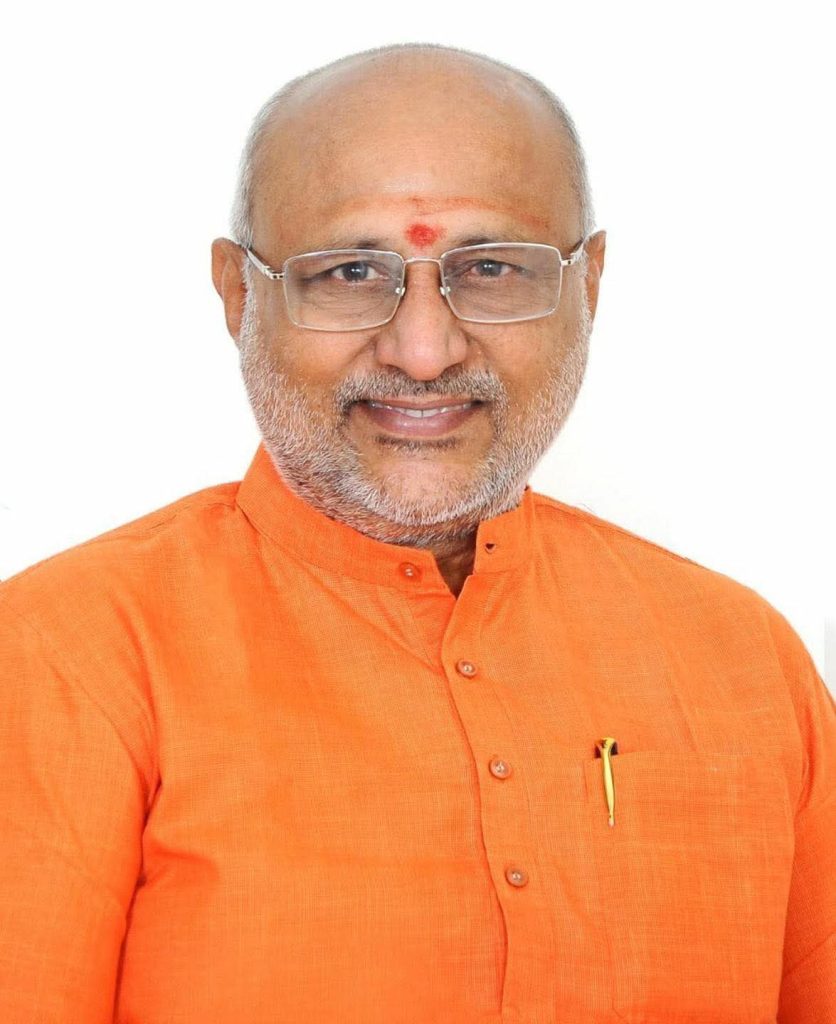
A day after C.P. Radhakrishnan was elected as India’s new Vice President and Chairman of the Rajya Sabha, the Congress on Wednesday extended its congratulations, while urging him to uphold the values of fairness and impartiality, reminding him of the words of India’s first Vice President, Dr Sarvepalli Radhakrishnan.

“On the opening day of the Rajya Sabha on May 13, 1952, the very eminent philosopher, educationist, author, and diplomat had said:

‘I belong to no party, and that means I belong to every party in this House. It shall be my endeavour to uphold the highest traditions of parliamentary democracy and act towards each party with fairness and impartiality—with ill will to none and goodwill to all. A democracy is likely to degenerate into a tyranny if it does not allow opposition groups to criticise fairly, freely, and frankly the policies of the government…’

“Dr Sarvepalli Radhakrishnan practised what he preached, both in letter and spirit,” Congress general secretary Jairam Ramesh wrote on X.

Meanwhile, a political storm also erupted over the number of votes polled by Radhakrishnan (452) and Opposition candidate B. Sudershan Reddy (300), amid allegations of “cross-voting.”

On Tuesday, India elected its 15th Vice President, with BJP-led NDA candidate Radhakrishnan securing 452 first-preference votes, defeating Reddy by a margin of 152 votes. Reddy received 300 votes though the  Congress was expecting at least 315 votes since all INDIA bloc MPs were present to vote. Actually, the Opposition had hoped for up to 324 votes, expecting some support beyond its formal allies. 

After voting ended, Jairam Ramesh had declared that all 315 MPs from the Opposition had cast their votes for Reddy. However, the final count showed Reddy received only 300 valid votes, with 15 votes declared invalid. It remains unclear from which side of the political divide those 15 invalid votes originated.

Calling for a thorough investigation, Congress MP Manish Tewari said the cross-voting amounted to a serious breach of trust and raised questions about internal unity. INDIA bloc ally CPI also voiced concern, suspecting “some cross-voting.”

According to some BJP leaders, the NDA had 427 votes and expected to reach between 440 and 444 by adding 11 MPs from Jagan Mohan Reddy’s YSRCP and some Independent MPs. The final tally of 452 suggests that a few Opposition MPs also voted for the NDA candidate.

Despite the outcome, the Congress has termed the result a “moral and political defeat” for the BJP, citing figures from previous elections. According to Ramesh, Reddy secured 40% of the vote—a notable improvement from the 26% the Opposition garnered in the 2022 vice-presidential election.

“Justice (retd.) B. Sudershan Reddy secured 40% of the vote. In 2022, the Opposition had received 26% in the Vice-Presidential election. The BJP’s arithmetical victory is really both a moral and political defeat. The ideological battle continues undiminished,” Ramesh stated.

In the previous Vice-Presidential election, the BJP secured 240 Lok Sabha seats, down from 303 in 2019. The NDA as a whole won 294 seats, while the INDIA bloc gained over 100 seats to reach 234. While a direct comparison between the 2022 and 2025 Vice-Presidential elections is difficult—given the changed composition of Parliament, especially the Lok Sabha—many in the Opposition see the result as a sign of shifting political dynamics.

Trump talks of ‘continuing negotiations’, PM Modi reciprocates with ‘limitless possibilities’

Trade tariffs talks seem back on track after another positive exchange between PM Modi and Trump

File Photo


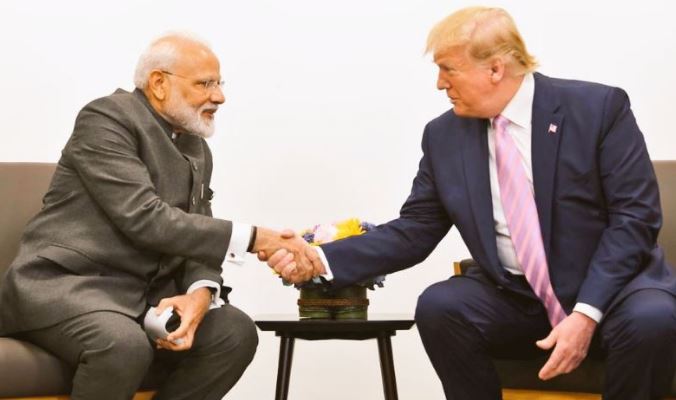
Indicating another step towards reconciliation on the contentious trade tariffs issue and putting the India-US relations back on track, Prime Minister Narendra Modi on Wednesday reciprocating to US President Donald Trump’s post on Truth Social where he said he was looking forward to speaking with “very good friend Prime Minister Modi” on “continuing negotiations to address the Trade Barriers” between the two countries.

“India and the US are close friends and natural partners. I am confident that our trade negotiations will pave the way for unlocking the limitless potential of the India-US partnership. Our teams are working to conclude these discussions at the earliest. I am also looking forward to speaking with President Trump. We will work together to secure a brighter, more prosperous future for both our people,” PM Modi wrote on X, tagging Trump’s post.

Earlier, Trump had written: “I am pleased to announce that India, and the United States of America, are continuing negotiations to address the Trade Barriers between our two Nations. I look forward to speaking with my very good friend, Prime Minister Modi, in the upcoming weeks. I feel certain that there will be no difficulty in coming to a successful conclusion for both of our Great Countries!”

The exchange was the second between the two leaders over the past few days. Over the weekend, Trump said that he will always remain friends with Modi to which the PM responded warmly, indicating a clear thaw in relationship between the two nations that had deteriorated amid a barrage of incendiary remarks against India by Trump and his associates over trade tariffs, 

India and US officials are expected to have an exchange of trade delegations soon and also have an in-person meeting soon, say officials in know of developments. 

CP Radhakrishnan is India’s new Vice President

“The mystery of 15 missing votes from B Sudershan Reddy’s count. Before the counting, Congress leader Jairam Ramesh said: “The Opposition has stood united. ALL of its 315 MPs have turned up for voting. This is an unprecedented 100% turnout”

Photo: courtesy PM social media account


India on Tuesday got its 15th Vice President with BJP-led NDA candidate CP Radhakrishnan securing 452 first-preference votes and defeating opposition candidate B Sudershan Reddy by a margin of 152 votes. The opposition candidate, former Supreme Court judge B Sudershan Reddy, got 300 votes out of the total 767 votes cast in the election.

On Tuesday members of Parliament from both the Lok Sabha and Rajya Sabha, including nominated members, cast their votes via secret ballot. “The Opposition has stood united. ALL of its 315 MPs have turned up for voting. This is an unprecedented 100% turnout,” Congress leader Jairam Ramesh said before the counting.  

Returning officer and Rajya Sabha Secretary General PC Mody announced that a total of 767 votes were cast in the election, of which 15 were declared invalid. He said that Radhakrishnan got 452 first preference votes, compared to Reddy’s 300. The majority mark was 377.

Whether these 15 votes belonged to the INDIA Bloc or the NDA alliance is not known, the fact is Reddy should have got 315 votes but instead he polled 300 votes.

According to the current strength of both Lok Sabha and Rajya Sabha, Radhakrishnan was expected to get a minimum of 427 votes from the NDA MPs. With the support of Jagan Reddy’s YSR Congress (11 MPs), he would have gotten 438. If votes of Independent and other neutral MPs were also counted, he should have secured 449 votes but he got 452 votes.

Currently, the Parliament comprises 781 members, including 542 in the Lok Sabha with one seat vacant and 239 in the Rajya Sabha with five seats vacant.

The election was necessitated by the abrupt resignation of incumbent Vice President Jagdeep Dhankhar in July, creating an early vacancy that required an interim election under constitutional provisions.

The contest—a direct face-off between Radhakrishnan, currently serving as Governor of Maharashtra and a seasoned BJP veteran, and INDIA Bloc candidate B Sudershan Reddy a former Supreme Court judge—was being watched closely.  

Radhakrishnan’s victory consolidates the NDA’s influence in parliamentary proceedings. As Vice President, he will also serve as the Chairperson of the Rajya Sabha

Described as a ‘Pachai Tamizhan’ (true-blue Tamil) by well-wishers, Radhakrishnan was serving as the Governor of Maharashtra when he was named as the vice-presidential nominee of the BJP-led NDA. Radhakrishnan (67) belongs to the Gounder community — an influential OBC group in Tamil Nadu and his presence is expected to help the BJP gain ground in the state where it has limited presence. His election on Tuesday does not carry a surprise as the numbers were already stacked up for him but it sends out key signals that go far beyond the election for the post

Radhakrishnan’s win underscores a renewed southward foray of the BJP as Tamil Nadu goes to polls next year. Plus, the party has chosen lifelong loyalty in RSS veteran Radhakrishnan, which means a clean break from someone like Jagdeep Dhankhar. The fact that 15 of its members voted in favour of the NDA candidate is also a message for the INDIA Bloc. 

As many as 13 MPs abstained from voting. They included MPs from BJD, BRS, the Shiromani Akali Dal (SAD) and an Independent.


J&K’s lone AAP MLA detained under Public Safety Act for a year

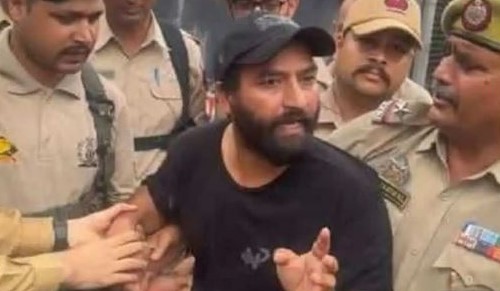
Srinagar: Mehraj Malik, the only Aam Aadmi Party (AAP) legislator in Jammu and Kashmir, has been detained under the Public Safety Act (PSA) for one year, making him the first sitting MLA in the Union Territory to face action under the stringent law.

Police said Malik, who represents the Doda constituency, has been sent to Bhaderwah jail. He is named in 18 FIRs and 16 daily diary reports across different police stations in Doda district. Officials alleged he had increasingly been disrupting public order, particularly at a time when the administration was engaged in relief work following recent heavy rains and flash floods in the area.

The 36-year-old legislator is accused of attacking government officials, locking them inside their offices, using abusive language, intimidating them in public, and even facing charges of abduction. Recently, a video showed him allegedly abusing Doda Deputy Commissioner Harvinder Singh over the relocation of a health sub-centre. Earlier in May, police filed a case against him for using derogatory language against a woman doctor at Doda Government Medical College.

Despite his detention, Malik will retain his Assembly membership as he has not been convicted in any of the pending cases.

Malik entered the Assembly in 2024 after defeating BJP’s Gajay Singh from Doda, giving AAP its maiden win in Jammu and Kashmir. He earlier served as a District Development Council (DDC) member from Kahara and has been active in raising local issues such as water supply, electricity, health facilities, and absenteeism in government offices.

A postgraduate from Jammu, Malik contested the 2024 Lok Sabha elections as an Independent from Udhampur but finished fourth. He has been associated with AAP since 2013 and currently serves as co-chairman of its state coordination committee.

India launches UPI-UPU integration at Universal Postal Congress in Dubai

Union Minister for Communications and Development of North Eastern Region, Jyotiraditya Scindia on Monday unveiled the UPI–UPU Integration project at the 28th Universal Postal Congress in Dubai, to transform cross-border remittances for millions worldwide.

The initiative, developed by the Department of Posts (DoP), NPCI International Payments Limited (NIPL), and the Universal Postal Union (UPU), integrates India’s Unified Payments Interface (UPI) with the UPU Interconnection Platform (IP), combining the reach of the postal network with the speed and affordability of UPI.

Calling it “more than a technology launch, but a social compact”, Scindia said, “The reliability of the postal network combined with the speed of UPI means families across borders can send money faster, safer and at much lower cost. It reaffirms that public infrastructure built for citizens can be linked across borders to serve humanity better.”

He outlined India’s vision for a modern, inclusive postal sector, anchored in four verbs. “To connect through seamless data-driven logistics; to include by delivering affordable digital financial services to every migrant and digital enterprise; to modernise with AI, DigiPIN and machine learning; and to cooperate through South–South partnerships with a UPU-backed technical cell.”

Under the vision of Prime Minister Narendra Modi’s Digital India and working towards a Viksit Bharat, India Post stands as a powerful example of the scale and inclusion. Highlighting this, he added, “With Aadhaar, Jan Dhan and India Post Payments Bank, we have opened over 560 million accounts, most in women’s names. India Post delivered over 900 million letters and parcels last year. This is the scale and spirit of inclusion we bring to the global stage.”

He announced financial support committing 10 million dollars during this cycle to channel technology into innovation, with special focus on e-commerce and digital payments. Taking forward the motto of ‘Sabka Saath, Sabka Vikas, Sabka Vishwas, Sabka Prayas’ he reiterated how India stands ready with resources, expertise and friendship.

The minister also announced India’s candidature for the Council of Administration and the Postal Operations Council of the UPU, reaffirming its commitment to building a connected, inclusive, and sustainable future for the global postal community.

Nepal: Major victory for Gen Z protestors, PM KP Sharma Oli resigns

Observers say the way the situation was progressing in Nepal, the PM’s resignation was “expected” but the big question is what next; India monitoring the developments closely   

Photo: courtesy KP Sharma Oli’s social media account

In a major victory for the Generation Z protestors in Nepal, Prime Minister KP Sharma Oli has reportedly resigned.

“I am in dialogue with the relevant parties to assess the situation and find a meaningful conclusion. For that, I have also called an all-party meeting at 6 pm today. I humbly request all brothers and sisters to remain calm in this difficult situation,” a statement from the PM secretariat earlier said.

Demanding Oli’s resignation, protesters On Tuesday defied curbs on public gatherings and reportedly burnt tyres to block roads, shouting slogans like “KP Chor, Desh Chhod” (K P Sharma Oli a thief, quit the country). Agitators also targeted the residences of President Ram Chandra Poudel and targeted hosues of several ministers and also the Parliament building according to reports.. Observers said that the way the situation was progressing, the resignation was “expected”  

A day after the violent protests against Nepal government-imposed social media ban that left at least 19 dead and over 300 injured in the neighbouring country, India on Tuesday expressed deep concern over the ongoing unrest, saying it was monitoring developments closely.

India shares a 1,751 km open border with Nepal, which is crucial for trade and cultural exchange but also poses security challenges. Any political instability can escalate cross-border issues

Protests erupted on Monday after the Nepali government announced a ban on major social media platforms, citing national security concerns. Tension continues to grip Nepal as fresh protests erupted on the streets again on Tuesday morning, a day after the Nepal government revoked a ban on social media.

According to observers, the “Gen Z protests” are not just about social media but about larger, underlying anger over corruption, unemployment, and shrinking freedoms. The Gen-Z protests have revealed deep frustration with corruption, censorship, and unemployment. International scrutiny may also shape outcomes, as Nepal depends on foreign aid and investment.

Underlying, simmering issues

Demonstrations in Kathmandu initially focused on restoring access to online platforms but soon the protests grew with anti-corruption and anti-nepotism sentiments with slogans like “shut down corruption, not social media” and “youths against corruption,” highlighting simmering public anger in the country.

According to social scientists, the protests seemed to be manifestations of deeper frustrations on issues simmering in the society—like political instability and frequent leadership changes hampering development and stability. Many young people felt that political leaders benefit only themselves or their families, they say.

Nepal has been witnessing unrest for a while now though those in favour of the current regime attributed to “pro-monarchists” in the country. It now remains to be seen how the situation progresses, agitators say pro-people leaders are required to lead the country out of current situation.      

Earlier, mass protests in March called for the restoration of the monarchy with supporters demanding the return of King Gyanendra Shah, thus highlighting public disillusionment with the current political system

In April 2025, public school teachers held nationwide strikes against proposed educational reforms which they said were “threatening job security and ignoring agreements.”

“Led largely by Generation Z, the current protests seem to reflect anger and frustration over simmering issues, including corruption. A complex mix—youth activism, alleged systematic corruption and political instability—seemed to be driving them. The immediate cause may have been the social media ban but there are underlying issues stemming from long-standing grievances in Nepal’s ongoing struggle over governance, rights and other issues,” say those aware of developments in India’s neighbouring country  

MOST POPULAR

HOT NEWS