US Senator Bill Hagerty has stirred a controversy after claiming that China used an electromagnetic weapon to melt down Indian soldiers during a border conflict five years ago.
Hagerty did not take the name of the conflict; but refer to it five years ago pointing to the Galwan border conflict where India lost its 20 soldiers in 2020.
The statement came after Prime Minister Narendra Modi’s meeting with Chinese President Xi Jinping at the SCO Summit.
“The China and India have a long history of grievances. Five years ago, China and India were fighting over a border dispute and China used an electromagnetic weapon to melt Indian soldiers,” he said in a statement.
Formerly, US President Donald Trump remarked that the US had “lost India to darkest China,” before backtracking and calling New Delhi an important partner.
Hagerty with his claims has tried to highlight how international relations change from time to time.
India and China have been trying to rebuild ties after US President Donald Trump slapped high tariffs. Trump last month announced a 50 per cent tariff on goods from India, including a 25 per cent penalty for buying Russian oil.
The 2020 Galwan Conflict was a violent clash between Indian and Chinese troops on June 15, 2020, in the Galwan Valley along the Line of Actual Control (LAC). The conflict involved hand-to-hand fighting without firearms, resulting in the deaths of 20 Indian soldiers and an unconfirmed number of Chinese soldiers, though an Australian report suggested Chinese casualties were higher than initially admitted.
Historically, the BJP has effectively leveraged emotionally charged attacks by Congress on PM Modi to its political advantage, benefitting politically whenever the grand old party overstepped into personal attacks, will it help this time, remains to be seen
A major political row broke out Friday after the Bihar Congress posted an AI-generated video showing Prime Minister Narendra Modi’s late mother Heeraben Modi with the BJP calling it “shameful” and “disgusting” and accusing the rival party of crossing moral lines and exploiting the memory of a deceased woman for political gain.
The video, shared on Congress’s official X handle, digitally recreated Heeraben Modi chastising her son during a dream sequence in the context of earlier controversy regarding her in the ongoing Bihar election campaign. Slamming the video, party leader Syed Shahnawaz Hussain called it “shameful and disgraceful”. “She is no longer alive. Putting words in the mouth of a departed mother is inhumane,” he said, referring to Heeraben, who passed away in 2022 at age 99. Party colleague Shehzad Poonawalla termed it “an insult to all mothers and to ‘maatru shakti’,” while Anurag Thakur accused the Congress and ally RJD of “hitting a new low. Mocking a mother, especially one no longer alive, from the land of Bihar, is unacceptable.”
Congress dismissed the outrage, insisting there was nothing offensive about the video. Party spokesperson Pawan Khera argued, “It is a parent giving advice to a child. If that makes the child uncomfortable, that’s his problem.” He also accused the BJP of trying to milk the issue for political sympathy. “PM Modi can’t shield himself from criticism under the garb of personal attacks. This was not satire — it was advice.”
The controversy adds heat to an already volatile Bihar poll season. Congress has alleged BJP and Election Commission bias in voter list revisions, calling it “manipulation”. The BJP, in turn, says voters will see through Congress’s “desperation tactics”.
The AI video follows an earlier controversy where abusive remarks were allegedly made against PM Modi’s mother during a Congress-RJD event in Darbhanga . “They have not just insulted my mother — they’ve insulted every mother and sister in the country,” PM Modi said
Will this controversy help, and who?
Political analysts say such emotionally charged controversies can cut both ways. For the BJP, the AI video controversy fits a familiar pattern — using perceived personal attacks to rally its base and portray PM Modi as a victim of elitist disdain, a strategy that has worked in the past.
In 2017, Congress leader Mani Shankar Aiyar’s “neech aadmi” comment was turned by the BJP into a classist insult, helping Modi connect with lower-income and backward-caste voters. Similarly, in 2019, Rahul Gandhi’s “Chowkidar chor hai” slogan was flipped into the successful “Main Bhi Chowkidar” campaign, portraying Modi as a humble guardian of the people.
Thus, the AI video does offer the BJP another emotional flashpoint to energize its support, especially in a closely contested state like Bihar. For Congress, the risk lies in appearing insensitive, particularly to conservative rural voters who deeply value familial respect and cultural norms. While such issues dominate headlines temporarily, their electoral impact depends on narrative control and in this area, the BJP has a historical edge.
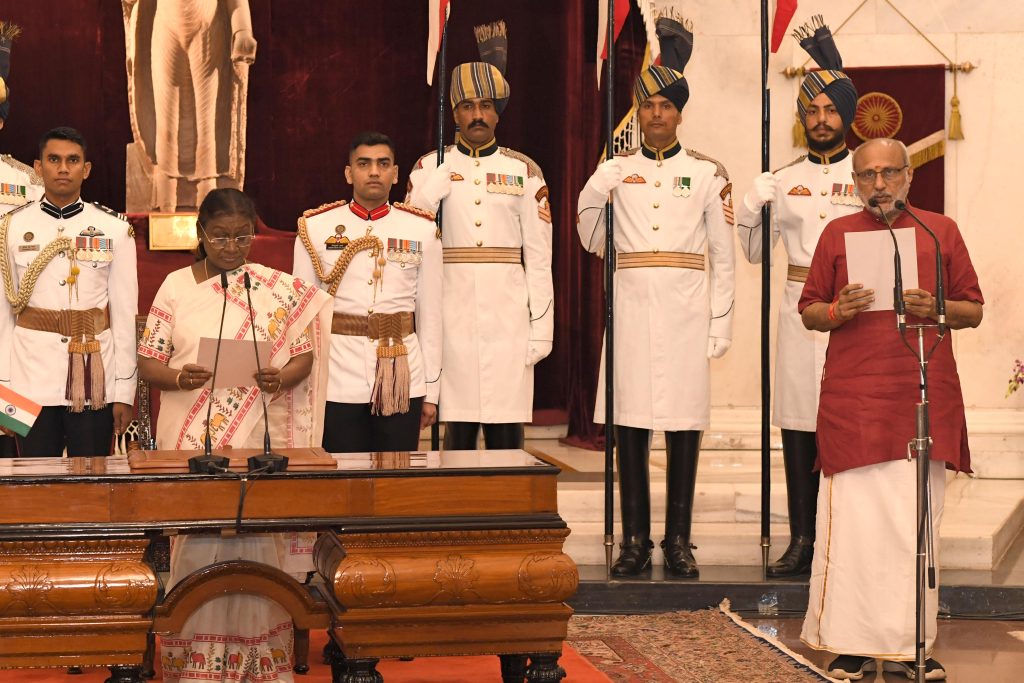
President Droupadi Murmu on Friday administered the oath of office of Vice President to CP Radhakrishnan at a swearing-in-ceremony held at Ganatantra Mandap, Rashtrapati Bhavan.
Radhakrishnan won the vice-presidential election on September 9, defeating the joint opposition nominee B Sudershan Reddy by a margin of 152 votes.
The Vice Presidential election was held after a sudden resignation by the then VP Jagdeep Dhankhar who was also present during the oath taking ceremony, due to health issues.
Prime Minister Narendra Modi also attended the oath-taking ceremony of the 15th Vice-President of India. Modi extended best wishes to Radhakrishnan for a successful Vice Presidential tenure, dedicated to the service of the people.
In a post on X, Modi said, “Attended the oath-taking ceremony of Thiru CP Radhakrishnan Ji. A dedicated public servant, he has devoted his life to nation-building, social service and strengthening democratic values. Wishing him a successful Vice Presidential tenure, dedicated to the service of the people.”
After taking the oath, the newly sworn-in Vice President paid floral tributes to Mahatma Gandhi at Rajghat, honouring the father of the Nation and his timeless ideals of truth and non-violence.
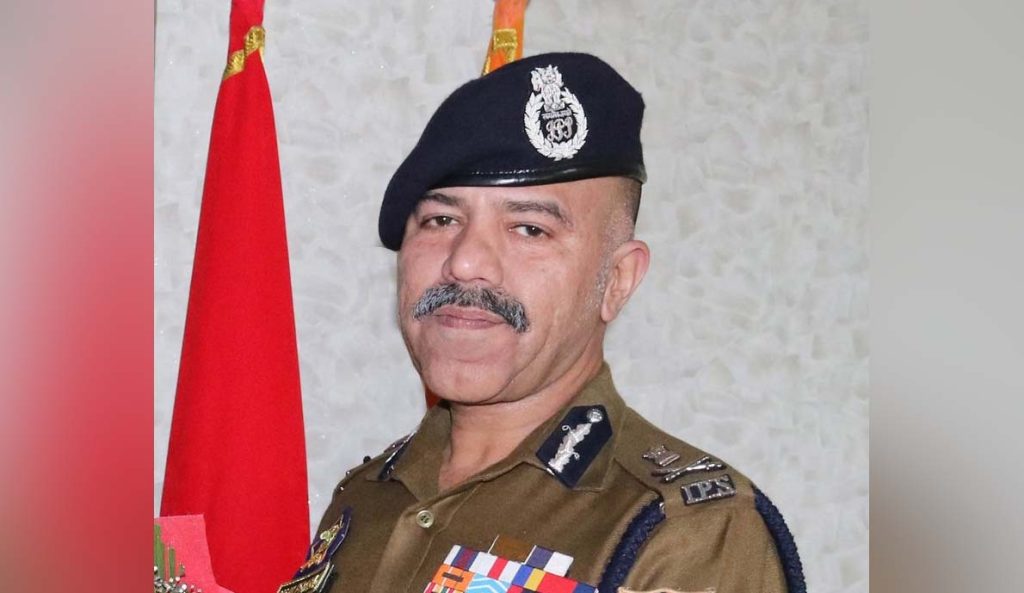
Srinagar: Jammu and Kashmir Director General of Police (DGP) Nalin Prabhat has directed district police chiefs to keep a strict vigil on social media platforms to prevent the spread of misinformation that could endanger public safety.
Chairing a security review meeting at the Police Control Room in Srinagar on Thursday, Prabhat was briefed by zonal inspector generals and other officers on the prevailing security situation, ongoing anti-terror operations, and recent law-and-order developments, a police spokesperson said.
The DGP asked officers to step up surveillance against anti-national elements, strengthen area domination measures, and ensure fool-proof security around vulnerable locations. He also instructed police units to intensify community policing and public outreach efforts to curb rising crime in some areas.
As negotiations continue to find a way out of the situation, doubts continue over movement being ‘hijacked’ and foreign meddling and a delay will only make the situation worse
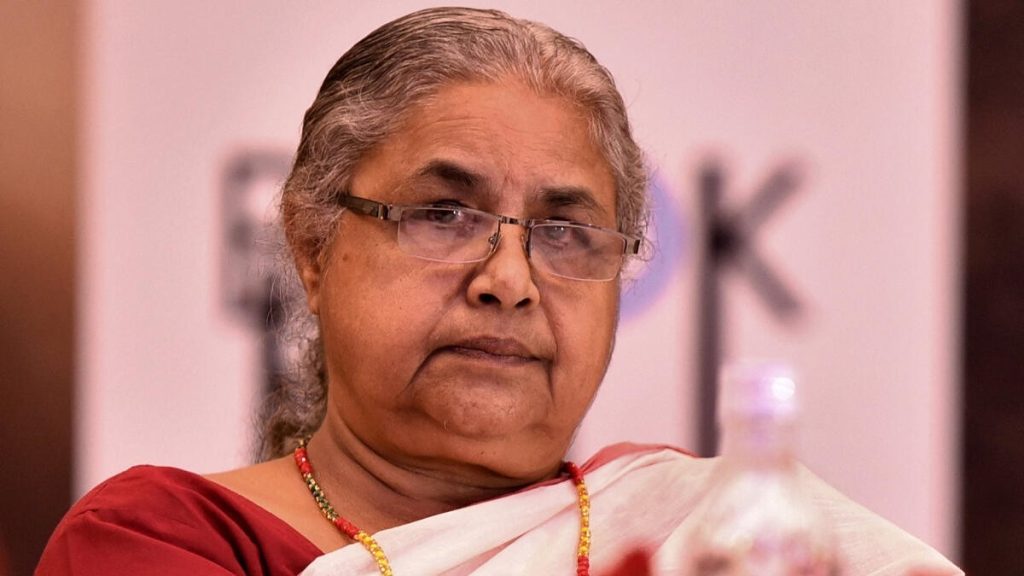
Strife-torn Nepal’s fragile political landscape is inching toward a reset after a week of turmoil, with the search for an interim Prime Minister narrowing to a handful of non-traditional contenders. At the top of the list is former Chief Justice Sushila Karki, a figure seen as neutral and untainted by partisan politics. Also in the reckoning are technocrat Kulman Ghising, credited with ending the country’s notorious power shortages, and Kathmandu mayor Balendra “Balen” Shah, a youth icon.
According to senior observers, the choice will ultimately depend on balancing three competing imperatives—meeting the demands of agitating youth, ensuring institutional stability, and securing acceptance from both political elites and the military. Reports suggest Karki is the most likely candidate to head a caretaker government that will oversee fresh elections, a key demand of the protesters. They have threatened to intensify protests if Sushila Karki is overlooked, as per reports
Late-night talks on Thursday between stakeholders—including representatives of the Gen Z movement that spearheaded the anti-government uprising, the Army chief, and President Ramchandra Paudel—ended without consensus. Still, protest leaders reportedly formally proposed Karki’s name, raising expectations of her appointment “soon.” Importantly, the agitators have signalled willingness to remain within the constitutional framework, despite their fierce opposition to the political class.
The crisis peaked earlier this week when Prime Minister K. P. Sharma Oli resigned following nationwide outrage over the deaths of at least 19 protesters during clashes with security forces. His resignation came after hundreds stormed his office, demanding accountability for corruption, a sweeping social media ban, and systemic failures.
Allegations of infiltration and hijacking
Analysts are sensing striking similarities between the upheaval in Nepal and those in Bangladesh and Sri Lanka. While no direct evidence has surfaced, concerns are mounting that parts of the Gen Z protests may have been infiltrated or hijacked by opportunists seeking to escalate the unrest for political or personal gain.
What began as anger over a social media blackout quickly expanded into a mass movement fueled by frustrations with corruption, nepotism, inequality, and lack of opportunity, however, alongside genuine protestors, looters and fringe political actors reportedly exploited the chaos—setting fire to government buildings, attacking residences of political elites, and even breaching parliament.
There are also claims of foreign interest in Nepal’s instability, though no hard evidence has emerged in the public domain.
Large-scale jailbreaks during the unrest, which freed politically sensitive figures such as former minister Sanjay Kumar Sah and Rabi Lamichhane, have deepened suspicions. In his farewell remarks, Oli himself warned that “vested interests” were misleading the youth and using their “innocent faces” as cover for destructive acts. Whether these actors are domestic rivals, monarchists, or outsiders remains unclear, for now, Nepal’s future hinges on whether the interim leadership can calm the streets
Some political observers in Nepal suspect that monarchist elements may be quietly fueling the protests, exploiting youth anger to weaken the republican order. While no direct evidence has surfaced, Oli’s warning about “vested interests” has revived speculation that royal loyalists could be using the turmoil to push for a return of monarchy.
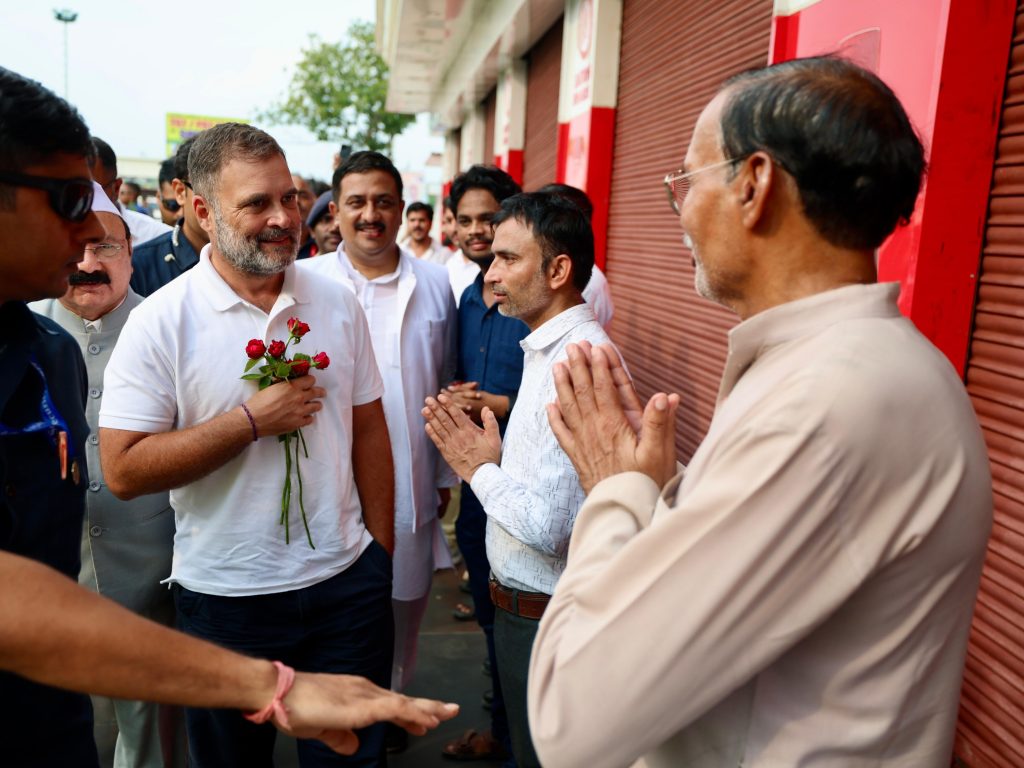
BJP claims CRPF “flagged breaches of security protocol”, Congress questions the “timing”, links the “public release” of the letter to Gandhi’s ‘vote chori’ campaign
Photo courtesy AICC
The BJP and Congress are locked in a fierce exchange over a Central Reserve Police Force (CRPF) communication that flagged “breaches of security protocol” by Rahul Gandhi during several foreign trips.
Quoting a CRPF letter, BJP’s IT cell chief Amit Malviya claimed Gandhi repeatedly failed to follow mandatory guidelines under the Yellow Book, which requires individuals with high-category security cover to give prior intimation of their movements, including foreign travel. Malviya wrote on X: “CRPF flags breach of security protocol by Rahul Gandhi. Under the Yellow Book protocol, those under Z+ security must provide advance details to enable deployment. Rahul doesn’t…”
Congress hit back, calling it a “veiled attempt to intimidate” the Leader of Opposition and questioned the “timing” and “public release” of the letter—coinciding with Gandhi’s aggressive “vote chori” campaign against the BJP.
“The timing of the CRPF’s letter and its instant public release raise disturbing questions. It comes just as Shri @RahulGandhi is leading the charge against the BJP’s Vote Chori, carried out with the Election Commission’s complicity. Is this a veiled attempt to intimidate the Leader of Opposition, who has already announced another imminent disclosure? Is the government rattled by the truth he is about to reveal?” Congress spokesperson Pawan Khera said.
“Yellow Book” refers to the official security guidelines for VVIPs who are under government-provided security cover. It lays down the protocols, dos and don’ts, and responsibilities of both the protectee (the person receiving security, like Rahul Gandhi) and the security agencies (like CRPF, SPG, or state police).
According to reports, the CRPF issued two letters—one to Congress president Mallikarjun Kharge and another directly to Gandhi—detailing lapses in protocol during his visits abroad, including Italy (Dec 30–Jan 9), Vietnam (Mar 12–17), Dubai (Apr 17–23), Qatar (Jun 11–18), London (Jun 25–Jul 6) and Malaysia (Sep 4–8). The letters reportedly warned that such lapses could weaken VVIP security arrangements and expose him to risks, urging strict adherence in the future.
The BJP seized on the disclosure, suggesting Gandhi’s foreign visits carried a “suspicious” undertone.
“What exactly is Rahul Gandhi hiding? CRPF’s flagging of breaches in security protocol by Rahul Gandhi during foreign visits is a grave violation. Whose orders is Rahul Gandhi following during these suspicious foreign visits? Rahul Gandhi is dangerous for India’s democracy!” BJP spokesperson Pradeep Bhandari alleged on X.
This is not the first time Gandhi’s security has come under scrutiny. In the past, too, agencies are said to have flagged instances of him bypassing established protocols, sparking concerns over potential threats.
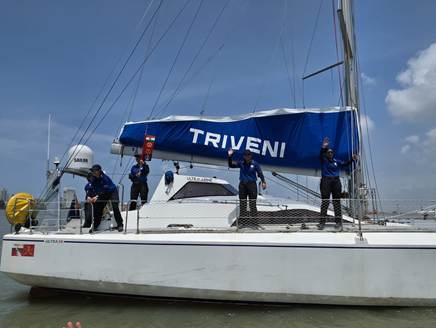
Union Defence Minister Rajnath Singh on Thursday flagged-off a historic Tri-service all-women circumnavigation sailing expedition Samudra Pradakshina, the first ever in the world, from the Gateway of India in Mumbai.
In his address from South Block, he described the voyage as a glowing symbol of Nari Shakti, the collective strength, unity and jointness of the three Services, Aatmanirbhar Bharat and its military diplomacy and global vision.
Over the next nine months, 10 women officers will sail onboard the indigenously-built Indian Army Sailing Vessel (IASV) Triveni on an easterly route covering approximately 26,000 nautical miles.
They will cross the Equator twice, round the three great Capes – Leeuwin, Horn & Good Hope – covering all major oceans and some of the most dangerous waters, including the Southern Ocean & the Drake Passage. The team will also make four international port calls before returning to Mumbai in May 2026.
Singh termed Samudra Pradakshina as not only a voyage onboard a ship, but also a spiritual sadhana and a journey of discipline & willpower.
“During the expedition, our officers may face numerous challenges, but their flame of determination will pierce through the darkness. They will return home safely, showing the world that the valour of Indian women is beyond any limits,” he added.
Dubbing IASV Triveni, a 50-foot yacht indigenously-built in Puducherry, as an embodiment of Aatmanirbhar Bharat, he asserted that the vessel reflects India’s confidence in defence innovation and technology. Every nautical mile of IASV Triveni is a journey towards India’s strategic autonomy and self-reliance, he added.
On the port calls at Fremantle (Australia), Lyttelton (New Zealand), Port Stanley (Canada) and Cape Town (South Africa), Singh stated that the team’s interactions will be an introduction to the strength of the Armed Forces to the world, along with Indian culture, tradition and values. IASV Triveni is not only a vessel of endurance, but also a vessel of diplomacy, he said.
The two countries review areas of cooperation and exchange views on regional and global matters
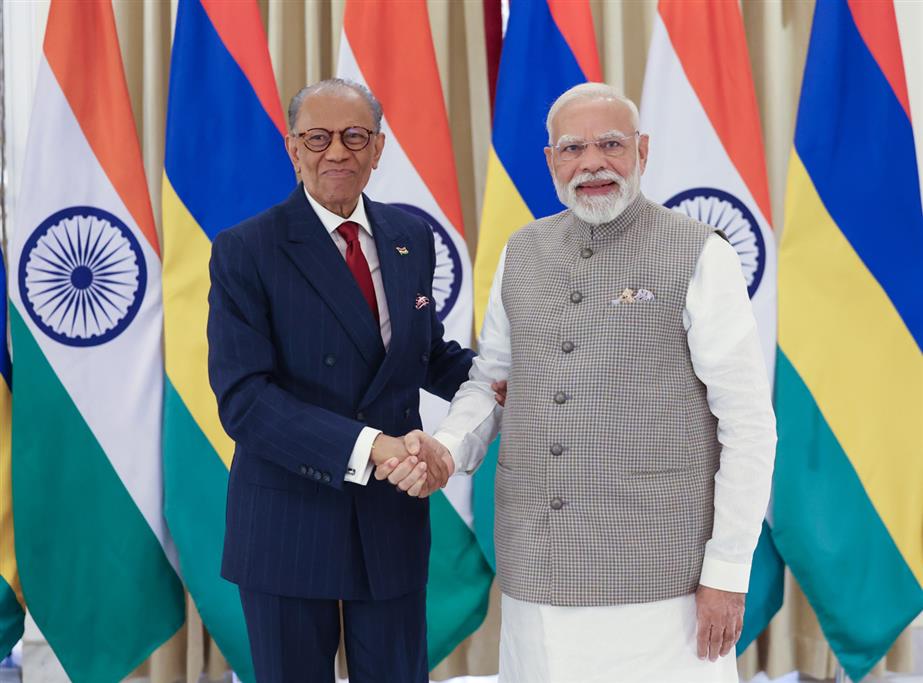
Photo: courtesy PIB
Prime Minister Narendra Modi on Thursday described India and Mauritius as not just partners, but as family. In a joint press statement with the Prime Minister of Mauritius, Dr. Navinchandra Ramgoolam, PM Modi emphasized that Mauritius is an important pillar of India’s “Neighbourhood First” policy and “Vision MAHASAGAR.”
The bilateral meeting took place in Kashi—PM Modi’s parliamentary constituency and a symbol of India’s cultural and civilizational heritage. He recalled how Indian culture and traditions reached Mauritius centuries ago and became an integral part of daily life. “Just like the eternal flow of Maa Ganga in Kashi, the continuous stream of Indian culture has enriched Mauritius. And today, when we welcome friends from Mauritius in Kashi, it is not just a formality but a spiritual union. That is why I proudly say that India and Mauritius are not just partners but a family,” he said.
Ramgoolam praised PM Modi, saying the welcome they received upon arriving in Varanasi was unprecedented. “I’m glad it’s your constituency. I can understand why you get elected in such huge numbers,” he added.
Noting that India and Mauritius are two nations with shared dreams and destinies, PM Modi said a key goal was to “work towards enabling trade in local currencies.” Notably, UPI and RuPay were launched in Mauritius last year, and both sides have now agreed to move towards local currency trade.
“A free, open, secure, stable, and prosperous Indian Ocean is our shared priority,” he said. “In this context, India remains fully committed to strengthening the security of Mauritius’s Exclusive Economic Zone and enhancing its maritime capacity. India has always stood as the first responder and a net security provider in the Indian Ocean region.”
In March this year, during Mauritius’ National Day celebrations, the two countries elevated ties to an ‘Enhanced Strategic Partnership’ and signed eight pacts covering maritime security, trade, and development. The visit also marked the unveiling of India’s new vision for the Global South—MAHASAGAR (Mutual and Holistic Advancement for Security and Growth Across Regions)—amid growing Chinese influence in the Indian Ocean.
PM Modi also congratulated Mauritius on the conclusion of the historic Chagos Agreement, signed with the UK in May 2025. The agreement restores sovereignty of the Chagos Islands to Mauritius. India welcomed the move as a significant step toward decolonization.
India announced a Special Economic Package to support Mauritius’s development, including a 500-bed hospital, an AYUSH Centre of Excellence, a veterinary school, and key infrastructure projects.
Preparations for the fifteen day long ‘Sewa Pakhwada’ to celebrate Prime Minister Narendra Modi’s 75th birthday are in full swing, with the Bharatiya Janata Party planning to organise various blood donation camps, cleanliness drive, exhibitions to showcase the work done by the Centre across the country.
BJP’s national general secretary Sunil Bansal said that the party will make all the efforts to ensure lakhs of people will benefit from the blood donation camps.
“From Prime Minister’s birthday to Gandhi Jayanti, we are going to do a lot of activities. One of the biggest events which are organised, will be blood donation camps. Second will be that from September 17 itself health camp will be organised. The BJP will make efforts to make sure that lakhs of people can benefit from this camp,” he said.
Speaking on the cleanliness drive, the party leader said that they will urge people to take part in the initiative to clean railway stations, bus stands, schools and streets.
“Third campaign is the cleanliness campaign which is organised every year. There are many such places, bus stands, schools, railway stations, in every place the BJP will organise this big initiative,” he added.
Across the country, various exhibitions will be organised, which showcases the work done by PM Modi across the years to serve the nation. Along with the exhibition, a prabuddha sammelan’ and various dialogues with distinguished people in their fields will be organised.
Meanwhile, Union Minister Bhupender Yadav lauded the Prime Minister for bringing fundamental values like “cleanliness and service” into India’s politics.
He said, “During his tenure as Prime Minister and even as Chief Minister, in times of disaster, crisis, and pandemic, he inspired people to connect with the public through service…From remote villages to every corner of the country, clean drinking water facilities have been made available. Because of PM Modi’s sensitivity towards protecting nature, India is now progressing strongly in the direction of environmental conservation.”
On July 24, the MEA told Parliament that there were 127 Indian nationals in the Russian armed forces of which services of 98 individuals had been discontinued as a result of sustained engagement between the Indian and Russian governments on this matter, including at the highest levels.
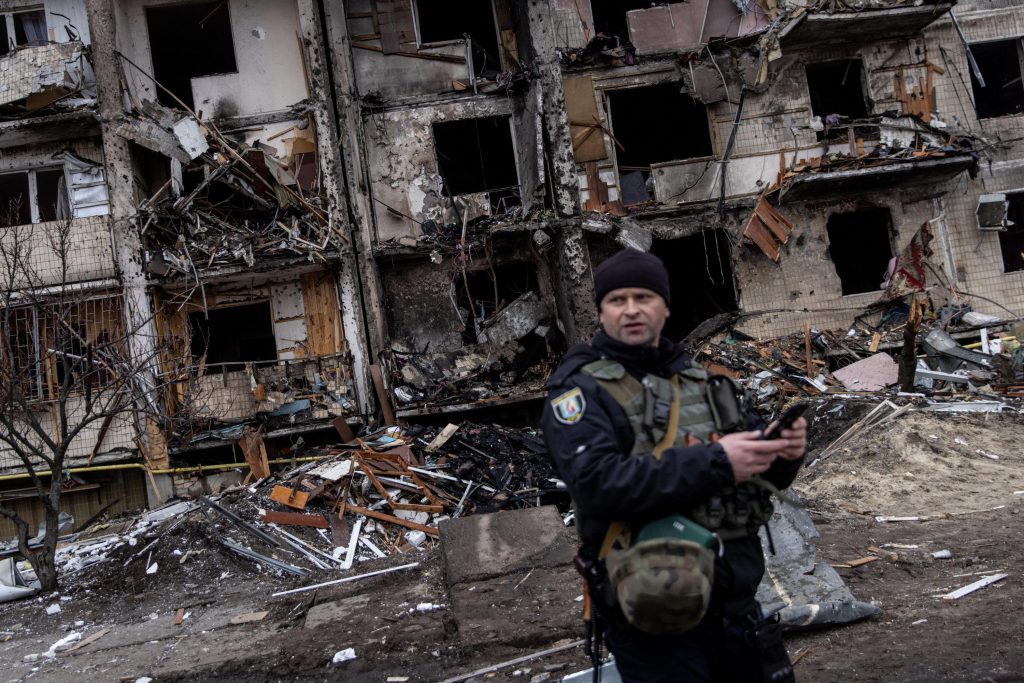
India on Thursday “strongly urged” its nationals to stay away from any offers to join the Russian army, describing it as a “course fraught with danger.”
Responding to media queries on Indians recruited into the Russian army, MEA spokesperson Randhir Jaiswal said: “We have seen reports about Indian nationals having been recruited recently into the Russian army. Government has on several occasions over the past one year underlined the risks and dangers inherent in this course of action and cautioned Indian citizens accordingly. We have also taken up the matter with Russian authorities, both in Delhi and Moscow, asking that this practice be ended and that our nationals be released. We are also in touch with the families of the affected Indian citizens.”
“We once again strongly urge all Indian nationals to stay away from any offers to join the Russian army as this is a course fraught with danger,” he added.
The advisory is part of an ongoing effort by the government to secure the repatriation of its citizens who have been coerced into the Russian military.
According to reports, despite the Indian government requesting Russia to halt the recruitment of Indian nationals, at least 15 Punjabi youths are still involved in the conflict. There are also some video messages shared by families showing young men, mostly from Punjab, Haryana and Jammu, in Russian military uniforms pleading for help
MEA count 127, missing 12
On July 24, the External Affairs Ministry informed the Parliament that there were 127 Indian nationals in the Russian armed forces of which the services of 98 individuals had been discontinued as a result of sustained engagement between the Indian and Russian governments on this matter, including at the highest levels. However, 13 Indians remain in the Russian armed forces, out of which 12 have been reported missing by the Russian side.
“As per information available, there were 127 Indian nationals in the Russian armed forces, out of which the services of 98 individuals were discontinued as a result of sustained engagement between the Indian and Russian Governments on this matter, including at the highest levels. 13 Indian nationals remain in the Russian armed forces, out of which 12 individuals have been reported missing by the Russian side,” as per a written reply.
“The Russian authorities concerned have been urged to provide an update on all the remaining/missing individuals, and also ensure their safety, well-being and early discharge. For those Indian nationals in the Russian armed forces whose services have been discontinued, the Indian Mission/Posts in Russia assisted them in their return to India, including through facilitation of travel documents and providing air tickets, wherever required.
“Our Missions and Posts accord highest priority to the safety, security and well-being of all Indian nationals abroad and take appropriate action, as and when any request for assistance is received,” the Centre said in response to a question on details of Indians stuck in the Russian army who have not been able to reach their families yet and steps Government to provide assistance to those stuck in Russia,” the minister added.
According to reports, Indian nationals were recruited primarily as “helpers” and support staff and later many were forced into combat roles in Ukraine. Following intense diplomatic engagement from India, Russia discharged and repatriated many of them.
Most of them had been lured by agents with false promises of high-paying jobs as security guards and made to travel to Russia on tourist or student visas. Upon arrival, their passports were confiscated and they were forced to sign contracts in Russian, which they could not read. Many were then sent to fight on the front lines, without proper training.