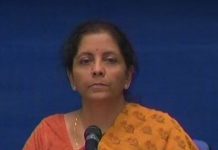
On the immense debate over Assam National Register of Citizen (NRC) list that excludes 40 lakh people from Assam, Home Minister Rajnath Singh today restated the government’s assurance that no coercive action will be taken against anyone.
Speaking in Rajya Sabha on Friday, he said that July 30 Assam National Register of Citizen (NRC) was not the final draft and those not included in the final list would be able to appeal to the foreigners’ tribunal.
“After getting the final list, everyone will get a chance to apply for citizenship. They will have all rights, nothing will be taken away from them,” said the minister.
The NRC was prepared under the guidelines of Supreme Court and it is being updated continually.
He also said, Assam NRC draft, which has triggered a huge discussion across the country, is completely transparent and entire purpose behind the NRC is to identify infiltrators.
He also added that NRC’s procedure was started in the year 1985 through the Assam Accord when Late Rajiv Gandhi was the PM and another decision was taken by Dr Manmohan Singh in 2005.
The NRC was released on Monday. The government has cleared that the list is a draft, and no coercive action will be taken against anyone whose names were not on it. People would get a chance to apply for citizenship.
Indian eves could not hold on their nerves in ‘shoot out’ and stumbled in quarterfinals for the third time in Women Hockey World cup. They lost grueling encounter 1-3 in ‘Shoot- out’ which they should have won in regular time against lowly ranked Ireland. This was third time that Indian women team entered last eight in world cup. They entered semi final in the inaugural tournament in 1974 and finished fourth. Then again 1978 they were in quarterfinals and ultimately got seventh place. This was the third occasion when they got this opportunity to improve their place but girls fumbled.
It seems Indian team and its support staff is suffering from ‘Irish phobia’ because it is their third consecutive defeat against this 16th rank opponent. India lost to Ireland 1-2 in their encounter in the Hockey World League at Johannesburg last year and then in the pool match Ireland won 1-0. India was expected to turn the tables on them by playing their natural game, attacking hockey but they were over defensive and never played full press game. It is evident from the single penalty corner which they could earn. Their 2-4-4 strategy is understandable against big teams like Netherlands or Argentina but teams like Ireland they should have gone offensive.
Asian Games are knocking at the door and India will have to rethink and plan the things accordingly.
A day after Trinamool Congress (TMC) leaders were detained at Assam’s Silchar Airport, six of them left Assam on Friday morning. The two other leaders — MPs Mamatabala Thakur and Arpita Ghosh – will leave the state later in the day.
TMC MP Sukhendu Sekhar Roy said that they were detained at the airport and not allowed to move out due to which they had to cancel their public meeting. “We spent the night in three rooms at the airport. Police have not allowed us to go out. We request them several times. Now we are going back”.
The TMC leader’s delegation arrived in Assam on Thursday to attend a public convention on the National Register of Citizens (NRC) final draft.
TMC MPs Sukhendu Sekhar Ray, Kakoli Ghosh Dastidar, Ratna De Nag, Nadimul Haque, Arpita Ghosh, Mamata Thakur and MLA Mohua Moitra, West Bengal Minister Firhad Hakim were in the delegation, landed at Silchar airport on Thursday afternoon.
The United States Congress has cut the security-oriented financial aid to Pakistan by approving a $716.3-billion Defence Authorisation Bill.
According to reports, the move comes after the National Defense Authorization Act (NDAA) for 2019, removes certain conditions – like action against Haqqani Network or the Lashkar-e-Taiba (LeT) — as was the case in the past few years for disbursement of US aid to Pakistan.
The Senate passed the conference report on NDAA-19 by 87 to 10 votes on August 2.
According to recent NDAA, the security aid to Pakistan has been slashed to $150 million—having once begun from almost $750 million per year to $1 billion.
“The legislation reduces the total amount of funds provided for reimbursement to Pakistan to $150 million. This is a significant reduction from the $700 million that was authorised through Coalition Support Fund (CSF) last year,” Anish Goel, who was part of Barack Obama’s White House National Security Council, reportedly said.
“The United States has foolishly given Pakistan more than 33 billion dollars in aid over the last 15 years, and they have given us nothing but lies & deceit, thinking of our leaders as fools. They give safe haven to the terrorists we hunt in Afghanistan, with little help. No more!,” Tweeted US President Donald Trump.
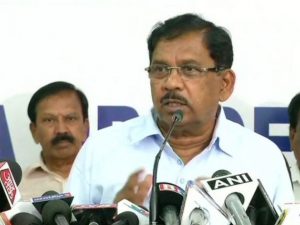
In wake of a couple of incidents Karnataka Deputy Chief Minister G. Parameshwara while taking a firm stand against the viral ‘In My Feelings’ challenge – also known as the ‘Kiki’ challenge said that police will take strict actions against those people, who will continue the “dangerous” stint in the state.
Deputy CM said, “It’s very dangerous. We would not like to see young people dying on the streets. That’s why we want to discourage this. It is not in conformity with the law. So, we have advised them not to do this, but if they continue, the police will take action.”
Kiki is basically an internet challenge which was thrown by Canadian rapper Drake, which involves jumping out of a moving car and then dancing alongside it to his song ‘In My Feelings’.
“We have nothing against social media fads as long as they don’t become a public nuisance and put the lives of people at risk. Don’t take up challenges on roads, which can harm you as well as others. Parents should sensitize their children about these dangers & keep a close watch,” tweeted Deputy CM Parameshwara.
While warning people against performing the Kiki challenge on roads Bengaluru police tweeted, “BCP’s Kiki: If you dance for #KikiChallenge on the roads, we’re sure of making you dance behind the bars!! Kiki Challenge may get you a KICK OF LAW not KICK OF DANCE #InMyFeelings or #InOurJail #KikiChallenge.”
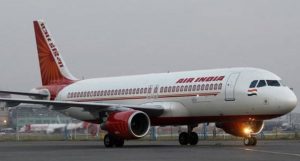
At least 150 passengers were left stranded at Mumbai’s Chhatrapati Shivaji International Airport for ten hours as their Dubai bound Air India flight didn’t take off due to technical problem in the aircraft.
The AI 983 flight was scheduled to take off on Thursday at 8 pm, but couldn’t take off, due to which passengers were forced to wait at the airport, few passengers later fought with Air India staff as they were not given updates regarding their departure.
After a long wait of ten hours another alternative flight was arranged for the passengers for Dubai.
Two terrorists were gunned down by security forces on Friday Morning after an encounter broke out between terrorists and security forces in Jammu and Kashmir’s Sopore district, 50 kilometres from Srinagar.
In another encounter on Thursday, Security forces killed two militants in Jammu & Kashmir’s northern district of Kupwara. The gunfight broke out between security forces and terrorists after the latter opened fire on the security personnel in Khumriyal area of Lolab valley.
Transgender activist Nisha Gulur is today a proud sex worker, advocating for the human rights of many like her. Years ago, the picture wasn’t the same as of today. She left home at an early age of 17 and embarked on the profession of sex worker and begging as the persistent shame of being a disgrace to her family for being a transgender was too much to bear. The life full of bullying and moral policing by the society back home wasn’t good enough. Though, many years later, her family reunited with her.
Today, Nisha fears that the new legislation would rob her of the rights to earn and live life with dignity. Nisha and many others like her are heavily dependent on sex work and begging as a profession to make both ends meet. It is beyond doubt that the new legislation, if not improvised, will shatter the dreams and rights of the transgenders and sex workers communities, shared Nisha her apprehensions.
Sex workers and transgenders have elicited a disquieting response to the passage of the new Trafficking of Persons (Prevention, Protection and Rehabilitation) Bill, 2018, by the Lok Sabha on July 26, owing to a multitude of fallacies it suffers from. Anti-trafficking activists, lawyers and civil society are also up in arms against the Bill that does little to address the shortcomings of the previously introduced Bill meant to address trafficking. The stakeholders of the anti-trafficking Bill are now banking on the Rajya Sabha members for thorough examination and analysis before the legislation is passed. They demand that the Bill be referred to the Standing Committee.
Social scientist Meena Saraswathi Seshu while talking to Tehelka reiterated, “Now, we will go to the Rajya Sabha members and hope that they will at least push it to the standing committee because that is our only hope.”
Tehelka further asked Meena, “What will happen if the Bill gets nod in the Upper House too?” To which Seshu replied, “Then we will have to go to the Court. What choice do we have otherwise?”
Women and Child Development Minister Maneka Gandhi’s assurance that the Bill is “victim-centric” and “the first step towards a comprehensive solution to trafficking of persons in India” is highly debatable as the minority communities of the Bill feel that the real issues such as poverty, poor wage or no job, poor education, class and caste discrimination, poor social-economic conditions, etc. have not even been mentioned in the Bill by the WCD Ministry, leave alone considering it.
Moreover, instead of listening to the real beneficiaries or say stakeholders of the Bill — their real concerns, their problems, the daily harassment and discrimination they face in day-to-day life, the government drafted a Bill that encourages moral policing and victimising the sex workers, said a collectives of sex workers from Maharashtra.
Various civil society members and other institutions like National Network of Sex Workers (NNSW), All India Network of Sex Worker, HAQ Centre for Child Rights, Lawyers Collective, National Federation of Indian Women, New Trade Union, and many more have come out together to unequivocally reject the new Bill, which doesn’t address the core issues in the trafficking industry and does little to look for alternatives for trafficking victims once they are rescued.
Transgenders’ rights
National Network of Sex Workers (NNSW), India, on behalf of 19 others sex worker organisations, released a joint statement condemning the hasty move by Lok Sabha.
What agitated them most was the WCD Minister’s remark on Congress MP Shashi Tharoor that he “accompanied representatives of sex workers” not “victims” which didn’t go well with the sex workers collectives, who criticised Gandhi in the statement.
“Do we not have the right to be heard by Ministers, Governments and Members of Parliament? Are we according to you so reprehensible that it is ok to make us the butt of your humour at the cost of dignity? Are we not citizens of India entitled to dignity? Are we not women, Madam Minister?”
Akkai Padmashali, Human Rights activist, was angered by the fact that the government completely forgot to mention ‘transgender’ in the Bill.
Indian sex workers take out a rally to mark International Women’s Day, and demand that they be given the same rights as workers and be brought under the ambit of Labor Act, in New Delhi, India, Wednesday March 8, 2006. They also urged the Indian government to legalize the profession and not to go through with a legislation whereby clients of sex workers can be penalized. (AP Photo/Saurabh Das)
“You (Maneka Gandhi) being at an exalted position in the Cabinet and being a woman yourself failed in your duty to use the terminology called ‘transgender’. When the Supreme Court has clearly passed a judgment in favour of us, has acknowledged our rights under the Indian constitution, how could you not recognise it?” Akkai said. “Their (government) move is highly insensitive and undemocratic and I condemn it.”
Chapter XII, Section 31 (Offences and Penalties) in the Bill defines the following as aggravated form of trafficking:
ii) for the purpose of bearing child, either naturally or through assisted reproductive techniques;
iv) by administering any chemical substance or hormones on a person for the purpose of early sexual maturity;
(vii) who is a pregnant woman or the offence results in pregnancy of the person;
(viii) by causing or exposing the person to a life-threatening illness including a AIDS/HIV
(ix) for the purpose of begging;
These offences under ‘aggravated form of trafficking’ are punishable with imprisonment for 10 years or life-term plus fine of no less than one lakh rupees. Therefore, these clauses in Section 31 directly target the consensual sex workers and transgenders’ communities as prostitution and begging are the main sources of their income. And, hormones are mainly taken by the transgenders for undergoing sex-change. Whereas, points like punishment for HIV/AIDS, pregnancy, etc. that straightaway stigmatise the victims would instill fear or compel them to never come out, as a result the objective to prevent transmission of life-threatening diseases from person-to-person, teen-pregnancy due to sexual exploitation and trafficking in general, would remain as unsurmountable challenges.
Akkai called the Bill “totally conservative”. The Bill was never put out in public for debate, discussion and public discourse, she said.
Akkai suggests the Bill should talk about poverty, unemployment, uncertainty in the income of the victims, and discrimination in caste and class system at all levels.
“You are thrown out by your own people from the family institution and society boycotts you for being what you are. In such a scenario, one migrates from his/her region looking for livelihood, respect and a place where you find acceptance, where your identity is not questioned. It is the government’s moral responsibility to protect the civil rights of every citizen. Without addressing the concerns of the marginalised communities of the Bill, you can never solve trafficking,” she added.
Background of the Bill
There are a number of existing legislations that deal with human trafficking, such as Section 370 & 370A of the Indian Penal Code, The Immoral Traffic (Prevention) Act, 1956 (ITPA), provisions for the juvenile Justice (Care and Protection of Children) Act, 2015, The Bonded Labour System (Abolition) Act, 1976, the Contract Labour (Regulation & Abolition) Act, 1970, the inter-state Migrant Workmen (Regulation of Employment and Conditions of Service) Act, 1979, Children (Pledging of Labour) Act, 1933 and the Child Labour (Regulation and Prohibition) Act, 1986.
The new Bill on anti-trafficking was supposed to harmonise all these laws related to trafficking and bring out a comprehensive legislation, which it has failed to do. Instead, the Bill creates even more confusion amongst the law enforcement agencies by adding more clauses to it and adding to the ambiguity in the interpretation of various rules. There was a demand to review the old ITPA, addressing the gaps in the old Bill and simplifying it further, but the new Bill complicates things even more, as told by lawyers.
The Trafficking of Persons (Prevention, Protection and Rehabilitation) Bill, 2018, was introduced in the Lok Sabha by Minister for Women and Child Development Maneka Gandhi on July 18 and was passed on July 26. The term, “trafficking of persons” has been adopted under Section 370 of the Indian Penal Code (IPC).
The Bill aims to prevent trafficking of persons, especially women and children and to provide care, protection and rehabilitation to the victims of trafficking, and punishment to perpetrators.
As assured by the Ministry to the Supreme Court in 2015, the anti-trafficking Bill will be India’s first comprehensive legislation to tackle trafficking problem.
While presenting the Bill before the House, Gandhi said, “This Bill is not intended to harass those sex workers who are voluntarily in the profession… This is a Bill that has a compassionate view of people who have been victims of sex racket.”
In a bid to defend her stance on the Bill and garner support, Gandhi began with the story of 11-year-old Tara who was trafficked into bonded labour. Gandhi concluded the story with, “And today, if we don’t pass this Bill, we are choosing to deny Tara and the millions like her the fundamental right to life and liberty.”
Coming to the support of the Bill, noted activist and Nobel laureate Kailash Satyarthi, said the Bill is “survivor-centric”. “The passage of the Anti-Trafficking Bill by Lok Sabha is an indicator of the strong political will of India’s law-makers to rise above party lines in support of tens of thousands of most marginalised and vulnerable children, women, men and transgender who are pushed into slavery and subjected to unabated violence. This survivor-centric Bill goes much beyond just criminalisation of trafficking.”
On asked about the vehement protests by various collectives of sex workers, transgenders and lawyers who have said that the Bill undermines the interests of the consensual sex workers, transgenders, and migrants, Satyarthi, refuting the arguments of the critics of the Bill said: “The Bill does not undermine the interests of those whom you have mentioned in your question. While the Bill does protect and rehabilitate child victims of trafficking, it leaves to the choice of an adult sex worker to accept or decline the option of rehabilitative services.”
It is noteworthy to mention that Satyarthi had been part of the drafting committee of the Bill.
Flawed Bill?
One important observation Tehelka would like to make is that the Bill doesn’t address the issue of illegal organ and skin trading, which is a form of human trafficking. There are thousands of victims who complain of being duped after being lured to migrate and sell their organs for hefty money (often deceitfully).
Taking the example of Rama Pathi (name changed) from Namakkal district Tamil Nadu, spoke about how he was duped after being promised 7 lakh rupees in return for his kidney. He was paid only 2 lakhs rupees. Pathi was transported to Colombo by an organ trafficker in 2015 and promised hefty money; however, the concerned person is now missing.
In April 2018, a critique of the Anti-Trafficking Bill was submitted before Gandhi by Shashi Tharoor, who was accompanied by almost 250 activists, lawyers and civil society organisations.
One of the highlights in the critique on “aggravated forms of trafficking” explains: “The anti-trafficking Bill does not redefine trafficking but incorporates the existing definition under section 370, IPC. It, however, creates a new category of “aggravated forms of trafficking”, which carry a minimum sentence of 10 years, which may extend to life imprisonment. Some of the aggravated forms of trafficking introduced in the Bill are “trafficking for the purposes of forced labour, begging, marriage and child-bearing”, which are already criminalised under section 370, IPC. This is borne out by the National Crime Records Bureau (NCRB) reports, which provide purpose-wise disaggregated data on human trafficking cases under the IPC. According to the NCRB (National Crime Records Bureau), in 2016, the police registered 10,357 cases of trafficking for forced labour, 349 cases of trafficking for forced marriage and 71 cases of trafficking for begging. The claim that these are “new” forms of trafficking that are not addressed under existing laws is totally baseless. ”
After thorough discussion with the stakeholders and experts of the Bill, Tehelka would like to point out the following clauses which have attracted vehement opposition.
Chapter V, Section (17) 4 under the category Search, Rescue And Post-Rescue Activities, if a rescued adult makes an application for his release and chooses not to go to a rehabilitation home, it can be denied by the magistrate.
Chapter VIII Section 26 (4) introduces a forceful order of repatriation of the victims within three months for inter- State repatriation, and within six months in case of cross-border repatriation, from the date of rescue by the District Anti-Trafficking Committee. This clause ignores the feeling of shame and the apathy of the society that a victim may go through upon his arrival back home and violates his liberty.
Chapter X, Section 29 (1) under the category Forfeiture and Attachment Of Property, where any property is, or is likely to be used for the “place of trafficking” may be closed down, which includes factory, offices, shops, land, location and conveyance. Thus, the clause empowers the law enforcement to seize or shutdown any property used for trafficking on the basis of a mere a complaint.
Chapter XII, Section 31, (iv) (vii) (viii)(ix) under the category Offences And Penalties, points like administration of any chemical substance or hormones for sexual maturity; victim who is a pregnant woman or the offence results in pregnancy; by causing or exposing the person to a HIV/AIDS; begging, etc. that fall under ‘aggravated form of trafficking’ target the adult sex workers and transgender communities as prostitution and begging are the main sources of their income. Also, it is noteworthy to mention that hormones and chemicals are also administered by transgender people for non-illegal purpose like sex-change. Making this as punishable offence would hinder their rights to live with dignity.
Then, by including inflicting HIV/AIDS, pregnancy, etc. punishable offences would demoralise the victims and complicate their lives further due to stigmatisation. The fear of punishment will compel them to never come out, as a result the objective to prevent HIV-AIDS, pregnancy of minors due to sexual exploitation and trafficking in general, would become difficult.
Also, Chapter XII, Section 31 (xi) that deals with illegal migration of persons within India or outside the country would lead to further victimisation of hapless migrants or people who migrate to another place-(a) for work and (b) who want to escape from the stigma back home. The Bill does nothing to address their plight, instead acts to penalise their actions which only be termed as unsympathetic.
Chapter XII Section 39 (2) criminalises “soliciting” through electronic messages and “obscene photographs” — which undoubtedly controls the communication freedom and hinders the ability of sex workers to bargain with their clients.
Conclusion
Globally, human trafficking is the third most notorious and illegal trade (after drugs and arms trade) that deals in buying and selling of humans for various exploitations in commercial sectors. Human trafficking has given rise to some of the most heinous crimes of all time that vary from sexual exploitation, prostitution, child labour, domestic work, bonded labour, forced labour, organ and skin trade, forced marriage to begging, etc.
If one sees, the labour trading system around the world has adversely transformed giving rise to illicit workforce to meet the demand of monstrous workload in every sector — organised and unorganised. The traffickers have been able to use the loopholes in such a system to carry on their sinister activities. Inefficient laws give opportunity to many offenders to run their sinister businesses, human trafficking has as a consequence had a manifold increase in India.
Significant stakeholders like civil society, activists, sex workers collectives, transgender community, etc. have shared apprehensions and pointed out that how the new legislation, if passed in the present form, will directly lead to violation of fundamental rights and freedom of the sex workers, transgenders and working migrants or labourers.
There is no denying to the fact that class and caste discrimination in the society has a major role to play in trafficking of persons. Most of the source destinations from where trafficking takes place are underprivileged belts of the country. Besides the socio-economic disparity, geographical and demographic factors, caste and class system that dominates the Indian society have plagued the humanity further. Unless discriminations at all levels are uprooted, combating trafficking would always remain a hitch and marginalised communities will be at the receiving end.
“The Bill is directly targeting and criminalising the sex workers, be it transgenders, be it people migrating from home for work and a new identity, the government infringes upon their privacy and puts the coerced and voluntary sex workers in the same net,” concluded Akkai.
The rehabilitation homes stipulated under the Bill also do little to address the issues faced by victims after they are rescued, and it fails to provide them with necessary solutions to live a dignified living. The Supreme Court-appointed panel had stated that the type of vocational training provided in rehabilitation homes fails to provide skills necessary for basic sustenance. The research done by some leading NGOs has revealed that 77 per cent of women who were released from rehabilitation homes returned to sex work. The system badly fails at providing better options for a dignified living after they shun the sex trade. A promise of socially and economically secure life would do a lot to help the hapless community from coming out of this abyss, but unfortunately, no such provision exists.
A sex worker in Delhi said the rehabilitation options provided by the government are absurd and preposterous. “Netas are asking us to rear cows instead of doing sex work. Earlier, I was feeding myself with one time sex work in a day but now, I have to double my sex work to support myself and the two cows that add up to the burden. The option provided by the government means I will just end up doing it more sex work,” she said.
The Trafficking of Persons (Prevention, Protection and Rehabilitation) Bill, 2018
National Anti-Trafficking Bureau:
The Bill provides for the establishment of a National Anti-Trafficking Bureau to investigate trafficking cases and implement provisions of the Bill. The Bureau will comprise of police officers, and any other officers as required. It may take over the investigation of any offence under the Bill, that has been referred to it by two or more states. Further, the Bureau may: (i) request the state government to co-operate in the investigation, or (ii) transfer the case to the state government for investigation and trial, with approval from the central government.
Functions of the Bureau
Key functions of the Bureau include: (i) coordinating and monitoring surveillance along known routes, (ii) facilitating surveillance, enforcement and preventive steps at source, transit and destination points, (iii) maintaining coordination between law enforcement agencies and non-governmental organisations and other stakeholders, and (iv) increasing international cooperation with authorities abroad for intelligence sharing, and mutual legal assistance.
State Anti-Trafficking Officers
Under the Bill, the state government will appoint a State Nodal Officer. He will be responsible for: (i) follow up action under the Bill, as per the instructions of the State Anti-Trafficking Committee, and (ii) providing relief and rehabilitation services. The state government will also appoint a Police Nodal Officer at the state and district levels. The state government will also designate Anti-Trafficking Police Officers for each district, to deal with all matters related to trafficking in the district.
Anti-Trafficking Units
The Bill also provides for the setting up of Anti-Trafficking Units (ATUs) at the district level. ATUs will deal with the prevention, rescue, and protection of victims and witnesses, and for the investigation and prosecution of trafficking offences. In districts where an ATU is not functional, this responsibility will be taken up by the local police station.
Anti-Trafficking Relief and Rehabilitation Committee
Bill provides for the establishment of Anti-Trafficking Relief and Rehabilitation Committees (ATCs) at the national, state, and district levels. These Committees will be responsible for: (i) providing compensation to victims, (ii) repatriation of victims, and (iii) re-integration of victims in society, among others.
Search and rescue
An Anti-Trafficking Police Officer or an ATU can rescue persons, if there is an imminent danger to them. They will be produced before a Magistrate or Child Welfare Committee for medical examination. The district ATC will provide relief and rehabilitation services to the rescued persons.
Protection and rehabilitation
The Bill requires the central or state government to set up Protection Homes. These would provide shelter, food, counselling, and medical services to victims. Further, the central or state government will maintain Rehabilitation Homes in each district, to provide long-term rehabilitation to the victims. Rehabilitation of victims will not be dependent on criminal proceedings being initiated against the accused, or the outcome of the proceedings. The central government will also create a Rehabilitation Fund, which will be used to set up these Protection and Rehabilitation Homes.
Time-bound trial
The Bill provides for setting up designated courts in each district, which will seek to complete trial within a year.
Penalties
The Bill specifies the penalties for various offences including for (i) trafficking of persons, (ii) promoting trafficking, (iii) disclosing the identity of the victim, and (iv) aggravated trafficking (such as trafficking for bonded labour and begging). For example, aggravated trafficking will be punishable with rigorous imprisonment of 10 years up to life imprisonment, along with a minimum fine of one lakh rupees. Further, the publishing of any material which may lead to the trafficking of a person will be punishable with imprisonment between five and 10 years, and a fine between 50,000 and one lakh rupees.
Credit: PRS India
Did You Know?
The Immoral Traffic (Prevention) Act, 1956 (ITPA) criminalises activities related to prostitution and provides rescue, rehabilitation and correction of sex workers, albeit through a moral lens.
The Bonded Labour System (Abolition) Act, 1976 (Bonded Labour Act), the Contract Labour (Regulation & Abolition) Act, 1970, the Inter-state Migrant Workmen (Regulation of Employment and Conditions of Service) Act, 1979, Children (Pledging of Labour) Act, 1933 and the Child Labour (Regulation and Prohibition) Act, 1986, deal with forced labour, child labour, primarily through regulation and welfare-oriented measures.
Sections 370-370A of the Indian Penal Code, 1860 (IPC) define and penalize trafficking in persons Section 371, IPC, criminalises slavery.
Section 372-373, IPC criminalises buying and selling of underage girls for prostitution.
The Juvenile Justice (Care and Protection of Children) Act, 2015 (JJ Act) provides a framework for protection of children who are missing or at risk of being trafficked.
Credit: Summed by Lawyers Collective
Kailash Satyarthi, Children’s rights activist and Nobel Peace Prize recipient
The Bill does not undermine the interests of those whom you have mentioned in your question. While the Bill does protect and rehabilitate child victims of trafficking, it leaves to the choice of an adult sex worker to accept or decline the option of rehabilitative services.
The Bill clearly takes into account the consent of the person withdrawn. If an adult person voluntarily makes an application supported by an affidavit for declining rehabilitative services and the Magistrate is satisfied after making an inquiry and finds that the applicant is not a minor and that the application has not been made under threat, duress and coercion then the Magistrate may pass an order in favor of the applicant. Special vulnerabilities of transgender such as threat of HIV and forced engagement in begging have also been addressed as aggravated offences within the Bill.
Akkai Padmashali, Transgender and Human Rights Activist
You (Maneka Gandhi) being at a reputed position in the Cabinet and being a woman yourself failed in your duty to use the terminology called ‘transgender’. When the Supreme Court has clearly passed a judgment in favour of us, has acknowledged our rights under the Indian constitution, how could you not recognise it? The Bill should take about poverty, caste and class discrimination, without addressing these issues you cannot combat trafficking. So, my question to the government is what have you done to address the poverty, class and caste discrimination? The rich are richest, poor are poorest and middle are middle. You (government has failed to understand the issues that are within the system and this call for democratic discussion across the society.
Tripti Tandon
Lawyers Collective
The consultation on the Bill has been of a selective, even partisan nature. Only a select few were privy to the drafts and giving inputs. On what basis were these individuals and NGOs ‘chosen’ is anyone’s guess. It is unsurprising that those who were involved in the drafting, stand to benefit most from the Bill’s provisions. And they are the ones lobbying for its hasty and undiluted passage in Parliament.
As was evident from the discussion in the Lok Sabha, there are serious errors and fundamental problems in the Bill. The Minister said that they will be ‘taken care of in the Rules.’ This is deceptive as structural problems can’t be addressed through delegated legislation. Besides, the Bill is substantially complete and there is hardly any scope for Rule-making.
Therefore, concerned groups like ours are looking towards the Rajya Sabha to subject the Bill to a thorough scrutiny, which it badly needs.
When Parliament was witness to fierce politics with Congress President, Rahul Gandhi hitting Prime Minister Narendra Modi and his government with ‘jumla’ strikes and the sudden hugplomacy, 12 kms from Parliament, three siblings were dying of hunger in the national capital. The deaths of three little sisters, aged eight, four and two, of starvation is a chilling reminder to the gory fact that while you have dinner, 200 million people in the country are going to bed without food.
It is not hinterland of Jharkhand or Chhatisgarh, but the national capital Delhi where its children are dying of starvation. In a country that boasts of being the world’s fastest growing economy, 5 Indians die every minute from hunger. It is a mockery of our claims of development that one-third of the world’s hungry live in India. As per the Food and Agriculture Organization (FAO), around 20 crore Indians go hungry daily and are malnourished though we claim to have the National Food Security Act in place. Food is the basic right of every living being and ensuring meals for each citizen is the foremost duty of Centre and state governments. There would be blame game and politics over the deaths of Mansi, Shikha and Parul and an enquiry.
The Delhi government has already ordered a magisterial Inquiry into the deaths but we all know the gimmicks of these probes. It is a shame for all of us who don’t understand the pain of poor families that these children went without food for 8 days in Delhi, which is counted among the richest cities of our country. More shocking is the reality that Mandavali in Delhi where these girls lived is just 20 steps away from Anganwadi Kendra set up to provide free education and food to children. The country has abundant food to feed everyone but every year food worth 88,800 crore or 40 per cent of total food is wasted. Sadly we refuse ration to families following the dictum ‘no ration card no food” as it happened in case of these hapless kids for whom hunger had become a constant companion. Could not we follow the policy of ration delivery at the doorstep? The truth is disturbing that 7000 Indians die every day because of hunger. Little doubt that last year in the Global Hunger Index, India ranked at number 100 in the list of 119 countries. With BJP blaming AAP, AAP blaming BJP and Congress blaming both AAP and BJP, a bitter truth has emerged that starvation deaths are a reality, a terrible reality in the 21st century India.
When you finish reading this editorial, ponder for few minutes over the post mortem report of these three children that says there was “no trace of even a gram of food in their stomach.” We don’t want children to meet the fate of Mansis, Shikhas and Paruls.
Be it the self-proclaimed Godman Omji or the self-appointed spokesperson for the minority community, Maulana Ejaz Arshad Qasmi — they both belong to a clan which is depicting a very negative image of religion for just personal gain and fame.
By their verbal and physical abuse of women participants, who dare to disagree with them, these media savvy panelists have shown the highest disrespect that they could to women. Even if one accepts the fact that they were being instigated but even then it does not befit any man, more so ever a man who claims to represent a religious community to behave in this manner. Their behaviour made the world sit up and watch them in shock and horror.
Some three years back in a live TV debate of a TV channel’s newsroom on controversial Godwoman Radhe Maa, a panelist Deepa Sharama had slapped the self-style Godman Omji. No doubt it was a brazen act but worst was the way the way Omji reacted. He slapped Deepa, started beating her up all the while verbally abusing her too. It was a disgusting sight to watch.
Comparisons they say can be odious. Most certainly so when you compare what happened on live TV show on a prominent channel recently. The viewers across the world witnessed a fist fight and assault between a Maulana Ejaz Arshad Qasmi and Farah Faiz, a lady lawyer and activist. The issue was triple talaq and after heated arguments for a few minutes Farah just got up, detangled her mike, walked up to the maulana and raised her hand.
This got him so agitated that he raised his hand and started manhandling her. It was an unthinkable situation and the Channel reacted by lodging an FIR. The maulana was arrested.
It is alleged that Farah, who runs an NGO in Uttar Pradesh and is honorary national president of RSS-linked Muslim Mahila Sangh. It is being said that she has been planted by the RSS to malign the image of the Muslim community. Her fight for Muslim women and their right to proper divorce, maintenance for women dignity is viewed by her opponents as a garb to present a distorted picture of the minority community’s females and is not seen as a way of showing gender discrimination.
Shaista Amber, social activist and vociferous supporter of fight against Triple Talaq, termed the entire incident as “Sharamnaak’ (Shameful) and against insaniyat aur ikhlaaq”’. (against humanity and etiquette). She said that nobody has a right to insult either a man or a woman for the belief that the person holds.
Amber also questioned how Qasmi has become the spokesman of the minority community when the community has not nominated him to represent it.
Television debates have for the past few years become the main source of what they term as ‘trending’ in the social media. Television hosts like Arnab Goswami and Republic TV have proved that loud and often insulting remarks can get high TRPs and big political gains.
“Anyone with a beard and a cap is not a maulana or Islamic scholar, it is time the TV channels stop imposing their own ‘ulemas’ on the masses,” said Prof Hilal Naqvi, Congress spokesperson. He expressed regret that TV channels are ‘cultivating” ulemas on their own and because their views suite them. Such persons cannot be said to be representing the community and with their ‘half baked’ knowledge they cause great harm to the community, he said
Many label these as stunts to raise TRPs or to gain popularity. But at what cost? Many feel that Clerics or religious leaders must not be part of such debates on TV.

 On the immense debate over Assam National Register of Citizen (NRC) list that excludes 40 lakh people from Assam, Home Minister Rajnath Singh today restated the government’s assurance that no coercive action will be taken against anyone.
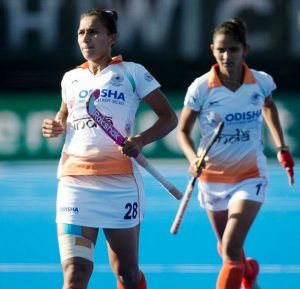 Indian eves could not hold on their nerves in ‘shoot out’ and stumbled in quarterfinals for the third time in Women Hockey World cup. They lost grueling encounter 1-3 in ‘Shoot- out’ which they should have won in regular time against lowly ranked Ireland. This was third time that Indian women team entered last eight in world cup. They entered semi final in the inaugural tournament in 1974 and finished fourth. Then again 1978 they were in quarterfinals and ultimately got seventh place. This was the third occasion when they got this opportunity to improve their place but girls fumbled.
 A day after Trinamool Congress (TMC) leaders were detained at Assam’s Silchar Airport, six of them left Assam on Friday morning. The two other leaders — MPs Mamatabala Thakur and Arpita Ghosh – will leave the state later in the day.
 The United States Congress has cut the security-oriented financial aid to Pakistan by approving a $716.3-billion Defence Authorisation Bill.
 In wake of a couple of incidents Karnataka Deputy Chief Minister G. Parameshwara while taking a firm stand against the viral ‘In My Feelings’ challenge – also known as the ‘Kiki’ challenge said that police will take strict actions against those people, who will continue the “dangerous” stint in the state.
 At least 150 passengers were left stranded at Mumbai’s Chhatrapati Shivaji International Airport for ten hours as their Dubai bound Air India flight didn’t take off due to technical problem in the aircraft.
 Transgender activist Nisha Gulur is today a proud sex worker, advocating for the human rights of many like her. Years ago, the picture wasn’t the same as of today. She left home at an early age of 17 and embarked on the profession of sex worker and begging as the persistent shame of being a disgrace to her family for being a transgender was too much to bear. The life full of bullying and moral policing by the society back home wasn’t good enough. Though, many years later, her family reunited with her.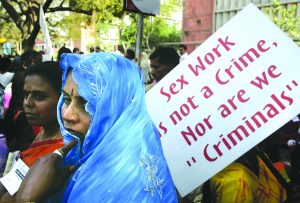

 When Parliament was witness to fierce politics with Congress President, Rahul Gandhi hitting Prime Minister Narendra Modi and his government with ‘jumla’ strikes and the sudden hugplomacy, 12 kms from Parliament, three siblings were dying of hunger in the national capital. The deaths of three little sisters, aged eight, four and two, of starvation is a chilling reminder to the gory fact that while you have dinner, 200 million people in the country are going to bed without food.
 Be it the self-proclaimed Godman Omji or the self-appointed spokesperson for the minority community, Maulana Ejaz Arshad Qasmi — they both belong to a clan which is depicting a very negative image of religion for just personal gain and fame.