Jammu and kashmir: Terrorists abduct a trainee police constable

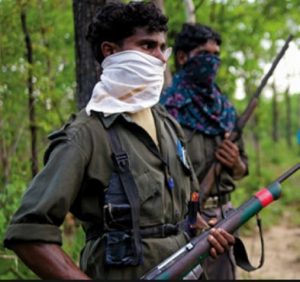
Terrorists on Friday night abducted Muhammad Saleem Shah, a trainee police constable from his house in Mutalhama area of Kulgam. The constable was undergoing training in Kathua in Jammu and was on leave.

This is the third such incident in past month where a security official has been kidnapped.

A search has been launched by the security forces to trace the constable.

Supreme Court: Third party insurance must for two & four wheeler

The Supreme Court on Friday said, third party insurance for four-wheeler and two-wheeler will become mandatory from September 1.

The cars and motorcycles which are being sold from September 1 must undertake third party insurance for three and five years.

The order is expected to help victims of road accidents who can recover compensation from insurance companies.

When bikes or cars bought for the first time, the Third-Party insurance is being provided but it does not carry over the following year. Around 66 percent vehicles don’t have third party insurance.

Hence, it is necessary for all the vehicles running on Indian roads to buy third-party insurance and in the case of accidents this insurance will protect the vehicle owner against third party liabilities.

WhatsApp to limit messaging to five chats in India

WhatsApp on Friday said its users in India will not be allowed to forward more than five chats at once; the initiative is being taken to reduce the circulation of fake and false messages that provoked mob lynching incidents across India.

The company will also remove the quick forward button that appears next to media messages.

“In comparison to other countries in the world, users in India forward more messages, photos and videos,” noted by WhatsApp. The Facebook-owned company has over one billion users globally, of which over 200 million are in India.

The Indian government has taken a huge step by sending a notice to WhatsApp asking it to come out with effective solution over fake news and false information that circulates on messaging platform which led to mob lynching across the country

It also warned the company that mediums used for proliferation of rumours are liable to be treated as ‘abettors’ and can face legal consequences if they remain “mute spectators”.

WhatsApp launched new safety measures including a label that clearly identifies forwarded messages and controls for group conversations in the last few weeks.

It has become necessary to take appropriate action against mob lynching in India, most recently, an incident took place near Bidar in Karnatka where a man was beaten to death, and while three others were injured after a mob attacked them suspecting them to be child-lifters

The Supreme Court too has directed Parliament to enact a new law which can effectively deal with the incidents of mob lynching.

No Confidence motion: 325 MPs back Narendra Modi govt

BJP led NDA government on Friday won the trust vote with 325 votes against 126 in voting on the no confidence motion, which was brought by TDP in Lok Sabha. Shiv Sena and Biju janta Dal abstained themselves from the voting.

Earlier in the evening Prime Minister Narendra Modi replied to the allegations from the opposition. PM Modi said that his government is working for the welfare of the people of the nation. He talked about the various schemes launched by the NDA government in past four years. Speaking on ‘Jan Dhan Yojna’, ‘Ujjwala Yojna’, ‘Vidhwa Yojna’, PM Modi said that all these schemes helped the poor of the nation, due to which more than 5 crore citizens moved out of the poor index as reported by an International agency.

Modi said that India has become the sixth largest economy of the world because of the policies of his government.

PM Modi speaking on Rafale issue, said, “We have not thought that anyone will do this kind of politics on an International matter, which is related to the dignity and security of the nation. Both the countries had to issue statements to clarify the stand because Rahul Gandhi without any proof gave a kiddish statement. PM Modi advised Rahul to be careful in future in National security matters.

PM Modi attacking the opposition said that, Congress and the then UPA government is responsible for the Andhra Pradesh division and because of it, we are facing issues today. Modi said that his government is with the people of Andhra Pradesh and will do all possible help for the development of the state.

Why the Indian ​​moviegoers prefer Hollywood over Bollywood?

Arushi Sinha, an XI standard student and upcoming blogger from Mumbai, is rushing back home from a late evening movie show of Avengers Infinity War. As academic pressures and class work piles up, getting to watch a film in a theatre inclusive of the time taken to travel and factoring in a long intermission is not easy.

“If I ever get to choose to spend some money and treat my friends to the movies, I would definitely choose Avengers Infinity War, or another Hollywood film, over anything in Hindi. These films are entertaining, and the standards of Bollywood have really fallen! We recently watched October, but came away disappointed. A big Hollywood film is always more worth it,” she said.

Arushi has encapsulated the tectonic shift that has happened in Indian movie theaters. The big Hollywood spectacle film now emerges as a winner in India. Such films rarely spend money on publicity in the Indian market, but draw in hordes of audiences. When they choose to dub in Hindi or regional languages, they also get vernacular speaking viewers. Primarily, though it’s the 18 to 35 urban citizen driving major businesses to Hollywood spectacle films in India. Avengers Infinity War, a phenomenal film has established a change that highlights a permanent shift in preference for Hollywood movies among the Indian urban moviegoers.

Avengers Infinity War has grossed over Rs.246 crores in less than a fortnight since it’s release. Seasoned trade analyst Taran Adarsh, calling the film a ‘marvel’ in the Indian box office, has reiterated that it’s unprecedented success sets a new benchmark for Hollywood films and their increasing reach with Indian audiences. Having released in just 2000 screens, which is about half as wide as a big Hindi film, this Marvel superhero spectacle is easily set to be the biggest Hollywood film in India ever, beating Jungle Book and Avatar. Prior to this one, Jungle Book, Disney’s innovative animation meets live action film made an approximate 188 crores gross in 2016.

That the Indian moviegoer increasingly opts for a spectacle Hollywood film in a theatre today is evident from recent successes that such films have registered. In terms of releases, Spiderman 3, Avengers Age of Ultron, Avatar, Jurassic World, Furious 7 and 2012 have made over a 100 crores. Each of these films have released in less than 1500 screens initially. With audience interest picking up swiftly, exhibitors across India have added the number of screens showing these films- either in English, with subtitles or in dubbed Hindi and regional versions. Their strongest appeal is word of mouth positive publicity from viewers.  

Nupur Singh Riat, a senior digital marketing professional always chooses a Hollywood film in theatres over a Hindi film. She explained why this shift in viewing tastes occurred for her and her contemporaries. “Internet penetration and better speeds have ensured that we now have a substantial market that streams subtitled content and are consuming American content more than ever before. So, they relate to Hollywood movies now and their fandom is increasing every year. Secondly, these movies- be it around superheroes or fantasy adventures- are spectacles that people don’t mind paying high multipleprices for…. And Bollywood honestly has miles to go in the VFX department. Our best – Krish and Ra One, seem insufferable when you know you have a Black Panther that will blow your mind with its extravagance and narrative”.

As audiences catch up on updates about films and TV online regularly, they also decide on watching a film depending on the buzz around it.

Naomi Datta, an independent media professional who has worked on Hindi film projects often, watches both Hindi and English films. She explains the current trend of Hollywood over Hindi films as, “India has a thriving local film industry that is following a global pattern of movie consumption (today). A young person has a diverse viewing palate to choose from thanks to streaming platforms like Netflix and Amazon Prime. A movie experience has to be worth the trek to the multiplex and the price of the ticket. It also has to be an experience, which cannot be replicated on your phone, laptop or TV set. Which is why when something as spectacular as Avengers comes along, going to the movie theater is non negotiable. In the process, you could decide to skip films you know you can catch up with later on a streaming service… I have watched the last few Hindi films on a streaming service because I have that option (to defer or postpone.) Unlike Avengers where there is a big FOMO (Fear of Missing Out) factor as well.”

Datta raises a valid point- that of ticket prices and the cost of a trip to a cinema. Akshay Rathi, a leading exhibitor adds, “If you tally the costs of buying a ticket, the commute, food and beverages, watching a film at a multiplex theatre every week is not an option for the average Indian person anymore. This is our Netflix generation that is well versed with English, and familiar with Western culture, language and access isn’t a barrier anymore. They will always choose that which promise a larger than life, immersive experience in theatres. Avengers Infinity War definitely becomes a top preference. Similarly, Bahubaali– despite being dubbed in Hindi saw young audiences flock to theatres as the film offered an entertaining experience. Audiences now clearly seek entertainment and quality. Sonu Ki Titu Ki Sweety for instance, didn’t boast of any A List stars or a big recognized director like Rajkumar Hirani or Karan Johar or Rohit Shetty. Yet the film did business beyond expectations and stayed on in theatres.”

Rathi explains that films like a Furious 7, or Jurassic World offer a larger than life thrill experience for the entire family, making the money spent at a multiplex more worthwhile for everyone. As a result, families tend to spend money on such Hollywood ‘event’ films together. Kamal Rukh Khan, a mother of two young children explains, “my kids wait for the big summer releases and Holiday films from Disney. So even if I would want to watch a smaller Hindi film, I prefer to take them out first. So a film like Jungle Book, or Jurassic World, becomes our first choice. They are quite engaging, so I don’t mind watching them either.”

Sidharth Thyagarajan, a Delhi based policy adviser, tried to catch Avengers Infinity War at an IMAX theater for a greater immersive experience immediately upon its release. Watching a new Hollywood film on the day of its release gives a thrill to this avid movie buff. He said, “Accessibility is a big factor helping with this shift. It was not like we didn’t watch these movies earlier, but it was mostly about waiting for high quality prints to be available online which would start a game of tag with a USB or a CD from a friend who manages to download the version… The fact that a number of Hollywood movies get an Indian release on the same date has definitely helped….I watched first Iron Man Movie 10 years ago and it’s fascinating to connect with how the characters have evolved as we’ve grown up.”

Even though Avengers Infinity War, or Spiderman, or Jurassic World are films primarily driven by impressive special effects, the stories they tell are convincing and developed. In Hindi films, most of the money while making a film is spent on a star, and not on developing the story with solid believable writing. In this department, regional cinema has emerged strong, as have smaller independent Hindi films.

Audiences connect to their stories and characters. Love Per Square Foot , the first Netflix original Hindi film, has won huge audiences on the streaming giant, as the film got very positive word of mouth responses. Regional films too continue to draw young audiences. For instance, Thyagarajan follows Hindi films too, but is more avidly connected to Tamil cinema- his native language. With a range of mass entertainers to intelligent, well written stories, Tamil films have been cutting edge. Thyagarajan would catch a good Tamil film at a multiplex unhesitatingly. Be it Sairat in Marathi that is now getting a Hindi film remake by Karan Johar’s Dharma Productions or Belasheshe in Bengali, or Mission China in Assam, regional films are garnering audience interest across their native speakers.

Wreek Kundu, a student of mechanical engineering and an illustrator from Vadodora, explained why he chooses Bengali films and Hollywood above all else. “Regional films appeal more to viewers because often, they can associate with characters and situations in their native language and in a particular region. Portrayals in these films are easy to relate to than Hindi film stereotypes. Hindi films have not been able to create a lasting impression of an Indian superhero. Bollywood hasn’t been able to fully get past their standard profile of films- a hero, a heroine, a villain, songs and a romance dominating the story line. Compare that to big Hollywood films whose complexity and the element of thrill offer something new every time. For instance, Christopher Nolan’s Inception and Interstellar are as complex as they are imaginative and that attracts the viewer as they involve not just seeing but thinking as well.”

Wreet’s astute observation- about a Hollywood film that can involve a thinking viewer with it’s story- is resonated by Rathi’s observation. As a leading exhibitor he observes, “Amongst the young stars in Hindi films, only two – Varun Dhawan and Ranveer Singh- can assure that a film gets a decent opening in theatres. The rest fail to draw in audiences unless the film itself looks promising. Audiences are choosy about where they spend their money these days, so Hollywood films come across a complete package of entertainment.”

Given the changing landscape in the consumption pattern of Indian entertainment, where young audiences with spending power can choose from a wide array of international films, Hindi films must work on improving content and spruce up productions. Big scale Hollywood films bring immersive experiences and with dubbing, access to such films has grown exponentially. If Hindi cinema, the mainstay of Indian multiplexes, has to sustain, it must go beyond tropes of stardom. Otherwise, big-budget Hollywood is here to stay in India.

No Confidence motion: Rahul Gandhi hugs PM Modi in Lok Sabha

Congress President Rahul Gandhi in his speech on no confidence motion on Friday said that the Modi government is a Jumla Government. “The pain which representative of TDP from Andhra Pradesh is experiencing, the whole nation is going through the same pain. The Modi government’s first Jumla was to put 15 lakhs in everyone’s account but nothing happened,” he added.

Attacking Defence minister Nirmala Sitharaman on Rafale deal, he said “I asked France President about the secret deal on Rafale between France and Indian govt and the latter refused about any such deal.” Later Defence Minister showed the signed agreement between the previous government and the France government on the secrecy of Rafale deal.

Rahul Gandhi in an attack on PM Modi, said that, “The Prime minister is only working for selective business groups and providing benefits to them amounting in crores. PM should explain why the Rafale contract was snatched from the hands of the HAL, he added.”

Rahul questioned the foreign policy of the Modi government; he targeted the Modi government on farmer and dalit issues. He asked, “Why PM is silent on rapes and crimes happening in the nation and why he is silent when lynching of innocent people are happening on daily basis?”

Rahul Gandhi thanking the BJP and RSS for making him understand, what ‘Hindustan’ is and what is the true meaning of being a Hindu. He said that “the BJP might hate him but he loves them and that is the true meaning of being a Hindu.”

After concluding his speech, Rahul Gandhi went to PM Modi and hugged him; shocked PM called him again and shook his hands.

Prime Minister Narendra Modi is scheduled to respond in the Lok Sabha on the no confidence motion.

After all the discussions, voting will be held at 6:00 PM.

Over 70 prisoners of Byculla Jail fall ill, admitted to JJ Hospital

More than 70 women inmates of Mumbai’s Byculla Arthur Road jail were admitted to state-run JJ Hospital after they fall ill on July 20 morning, complaining of nausea, vomiting and loose motion soon after having the breakfast. The preliminary report suggests that contaminated water could be the cause behind the illness.

Dr Sanjay Surase, Medical Superintendent of JJ Hospital, reportedly said that the prisoners were taken to hospital after they complained of vomiting and abdominal pain.

Hospital dean Mukund Tayade, confirmed that 78 patients were admitted to the hospital until noon and the number was expected to rise. He added that none of the patients were in serious condition. They were responding to treatment.

Rajvardhan Sinha, inspector general of police (prisons) said, “On Friday morning, several women prisoners complained of vomiting and abdominal pain. They were referred to JJ hospital, where they are under observation.” He added there are no complaints coming in from the male prisoners or the jail staff.

“Cleaning up of prison is underway and focus is to stabilise patients,” IG Sinha said.

Three days ago, a male prisoner was diagnosed with cholera in JJ Hospital. Following the diagnosis, the Brihanmumbai Municipal Corporation (BMC) gave a dose of prophylactic tablets to 600 prisoners in the jail and over 100 staff members to prevent further spread of cholera. The BMC maintains the medicines are routinely given during Monsoons and are not responsible for diarrhea.

Dr Wiqar Sheikh informed that prisoners will be kept under observation for at least for 48 hrs.

NMCG launches afforestation campaign in Uttar Pradesh, 4 other Ganga basin states

Ministry of Water Resources on July 20 said that the National Mission for Clean Ganga (NMCG) launched the “Ganga Vriksharopan Abhiyan” campaign in five main Ganga basin states of Uttarakhand, Uttar Pradesh, Bihar, Jharkhand and West Bengal. The tree plantation initiative was launched on July 9 and continued till July 15, the week is observed as ‘Shubharambh Saptah’.

State Forest Departments of these five states have been made the nodal agencies for the smooth and effective execution of the mentioned campaign.

Divisional Forest Officers were been designated as the district level nodal officer and Chief Conservator of Forest at the state level for organizing the events. Under the campaign plantation activity events are being carried out all along the banks of the River Ganga with mass level participation at over 100 locations in five states.

Apart from that, the participation from Nehru Yuva Kendra Sangathan, Ganga VicharManch, NGOs and educational institutions has been very encouraging.

The ministry stated, “The campaign which has been initiated as part of the Forest Interventions in Ganga (FIG), component of Namami Gange programme, is of immense importance and aims to bring greater awareness among people and other stakeholders regarding the importance of afforestation for the task of Ganga rejuvenation.”

Under the campaign number of schools, colleges and departments have been requested to “Adopt a Plant”. Various seminars, workshops, lectures, painting and drawing competitions etc. are being organized for turning this campaign into a people’s movement.

Some of the plants which are being sown during the campaign are Kanji, Sheesham, Jamun, Arjun, Mango, Neem, Semal, Gulmohar, Sagwan, Mahogni, Bamboo, Ashwagandha, Curry Patta, Dhatura, Sarpgandha and many more.

Transport Unions goes on nationwide strike against rise in diesel prices

All India Motor Transport (AIMTC), an apex body of transporters in the country has called the nationwide strike to protest against diesel hike. They are also objecting current toll collection policy, third-party insurance premium hike, alleged exploitation on roads, besides national permits for passenger vehicles.

The School Bus and Company Bus Owners Association of Maharashtra has also extended its support to the transport strike.

According to Raman Khosla president in charge of the Vahatuk Mahasangh, operators of essential commodities (milk, fruits, vegetables) can decide themselves whether to participate in the strike or not.

Previously, the All India Confederation of Goods Vehicle Owners Association (ACOGOA) had called a strike on the same issues on June 18, but did not receive good response.

Meanwhile, the State government’s decision of forming a seven-member committees led by collectors in every district will help in keeping the situation under control.

India, US to hold 2+2 dialogue on September 6

India-US first 2+2 dialogue is scheduled to take place in New Delhi on September 6, US State Department announced on July 20. Last month, the US had postponed the much-awaited dialogue due to “unavoidable reasons”.

The US State Department spokesperson Heather Nauert said in a statement, “The United States is pleased to announce that the inaugural US-India 2+2 Dialogue will be held in New Delhi, India, on September 6.”

The dialogue is seen as a track to boost the strategic ties between the two nations.

The high-level meeting which will take place between External Affairs Minister Sushma Swaraj and Defence Minister Nirmala Sitharaman with their American counterparts US Secretary of State Michael Pompeo and Secretary of Defence James Mattis will be their first simultaneous meeting.

Both the country’s will “discuss strengthening strategic, security, and defence cooperation as the United States and India jointly address challenges in the Indo-Pacific region and beyond,” US State Department said.

Both the sides are also expected to discuss a whole range of issues such as defence purchases — India is keen to buy, for instance, armed Guardian drones — coproduction and co-development, cooperation on counter-terrorism, which is always accorded high priority by the two nations.

The new dialogue was announced between India and the US during Prime Minister Narendra Modi’s visit to US on June 2017.

MOST POPULAR

HOT NEWS