As the world seeks sustainable solutions to combat climate change, hydrogen vehicles are emerging as a promising alternative to traditional fossil fuel-powered transportation.
In India, a country grappling with increasing pollution and the urgency of reducing its carbon footprint, the adoption of hydrogen-powered vehicles offers a beacon of hope. With its vast population and rapidly expanding urban centers, India’s transportation sector is a major contributor to air pollution.
The introduction of hydrogen fuel cell vehicles (FCVs) presents an innovative solution to address these challenges, offering zero-emission mobility with the potential to transform the future of transportation.
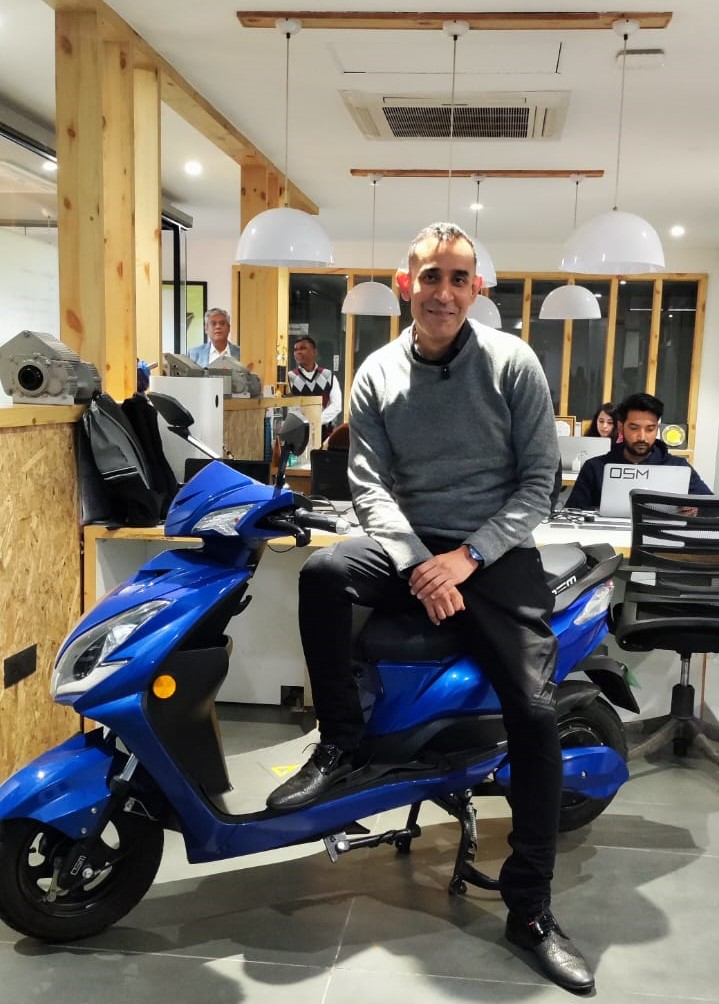
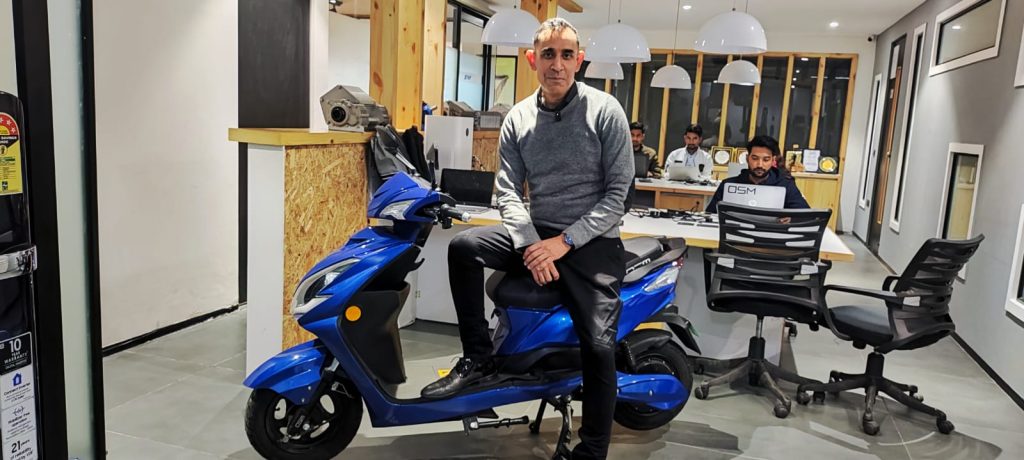
To contribute to the ecosystem, Delhi-based electric vehicle manufacturer is committed to provide affordable hydrogen vehicles.
“We have approached multiple state governments and authorities to set up pilot projects with deployment of 50 to 100 vehicles to begin with and then to scale up,” Uday Narang, Chairman, OSM told Tehelka.com
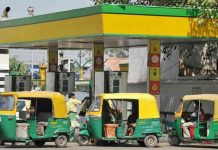
He said Hydrogen Intelligence, a joint venture between OSM and Systemics, has developed hydrogen-powered three-wheelers that have proven capability to cover 700 km with a two kg cylinder.
“I think everyone has to understand that this journey is a marathon. It’s a long-term play, but we all have to think one thing that we have to put India first. And India first means you have to make it a cleaner, greener for the future generations,” he added.
Speaking on the infrastructure, he said that the key part is building the hydrogen stations. We have been in talks with the state of Karnataka, we are talking in Delhi to build those stations, and I’ll promise you, if they don’t build the stations, I’ll build them myself.
Hydrogen, being the most abundant element in the universe, is a clean energy source that produces only water vapour when used as fuel. This makes it an ideal alternative to gasoline and diesel, which emit harmful pollutants.
However, the widespread adoption of hydrogen vehicles in India is not without its challenges.
A robust infrastructure for the production, storage, and distribution of hydrogen is essential for the success of this technology.
Fortunately, India has already begun taking steps in this direction, with the government’s National Hydrogen Mission, which aims to create a hydrogen economy by focusing on green hydrogen production and the establishment of refueling stations.
Electric vehicles are playing a crucial role in reducing air pollution in India, particularly in Delhi, one of the most polluted cities in the world.
The transition from conventional internal combustion engine vehicles to electric vehicles offers a sustainable solution to combat the escalating pollution levels.
Speaking to Tehelka.com Uday Narang, Chairman, Omega Seiki Mobility said, “I was working in USA and Europe for 13 years, and I thought of bringing the change into the country. I wanted to build product that lead the reduction in pollution. We live in Delhi and AQI is up the roof and nobody cares.”
He said that 40 per cent of the pollution is coming from commercial vehicles and at OSM we are trying to solve the problem by providing vehicles that are not just environmentally friendly but cheaper.
With a spirit to contribute to India and help reduce the pollution in the country, Narang moved to the homeland after spending 13 years in America and Europe.
With the vision, he created an electric vehicle company, providing solutions ranging from two wheelers to affordable four wheeler commercial trucks with latest technologies in terms of battery, and charging.
In Delhi, where vehicular emissions are a major source of air pollution, EVs significantly reduce the release of harmful pollutants such as nitrogen oxides (NOx), carbon monoxide (CO), and particulate matter (PM), which are commonly associated with gasoline and diesel engines.
EVs, being powered by electricity rather than fossil fuels, produce zero tailpipe emissions, making them an essential tool in improving urban air quality and contributing to cleaner, healthier environments.
“Our products are plying on roads of Delhi and Bengaluru. I only want the a better product for our customers and we are continuously working towards it,” he added.
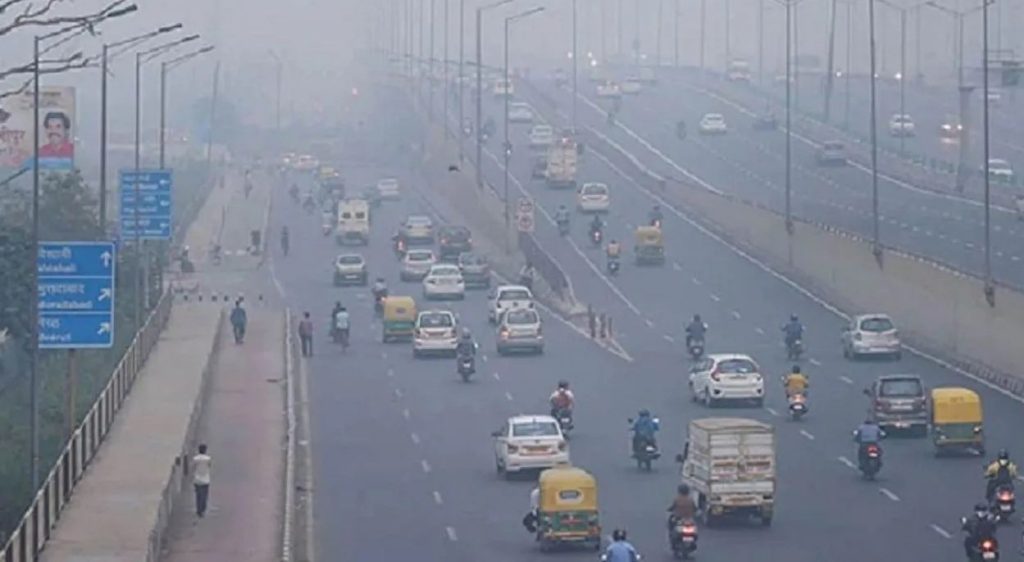
The capital is struggling with hazardous air quality with Air Quality Index breaching 400.
Today, despite the improved weather, Delhi’s air quality remains in the ‘very poor’ category, with an Air Quality Index (AQI) of 371 recorded at 7 am, as per the Central Pollution Control Board (CPCB).
The AQI at various locations in Delhi was recorded as following: Anand Vihar at 398, IGI Airport (T3) at 340, Aya Nagar at 360, Lodhi Road at 345, ITO at 380, Chandni Chowk at 315, and Punjabi Bagh at 386.
On Tuesday, the Central Government’s air quality monitoring panel revoked Stage IV measures under the Graded Response Action Plan (GRAP) following an improvement in air quality.
However, measures under Stages I, II, and III will remain in effect to prevent further degradation of air quality, announced the Commission for Air Quality Management (CAQM) on 24th December.
Just weeks ahead of Delhi Assembly polls, the Aam Aadmi Party on Monday announced Pujari Granthi Samman Yojana ahead of Delhi assembly elections. This is the third major scheme announced by the government after Mahila Samman Yojana and Sanjivini Yojana.
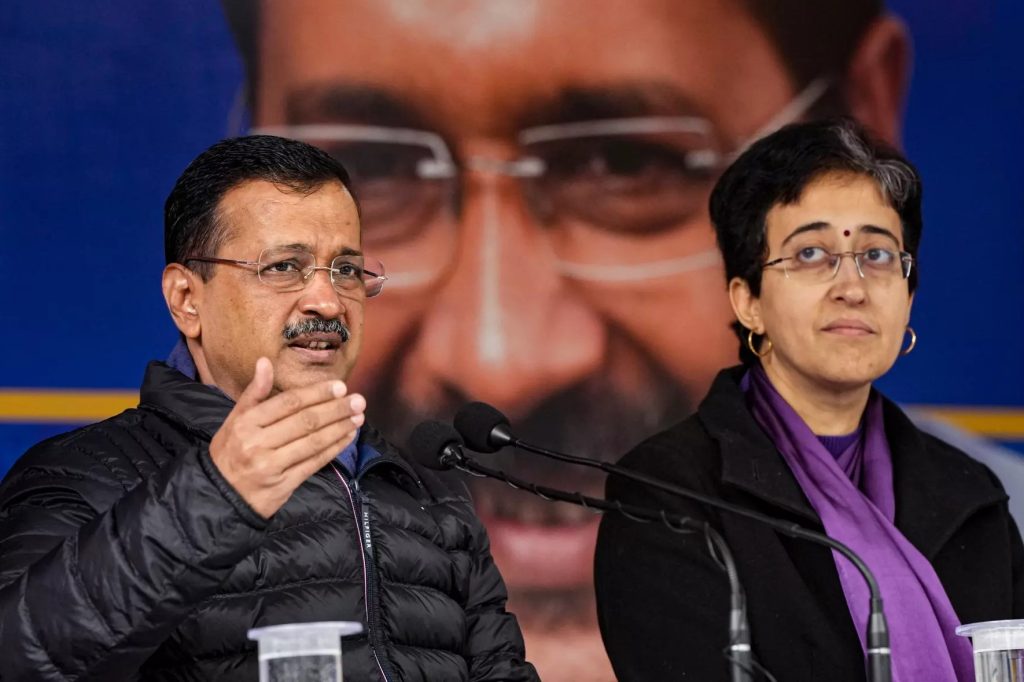
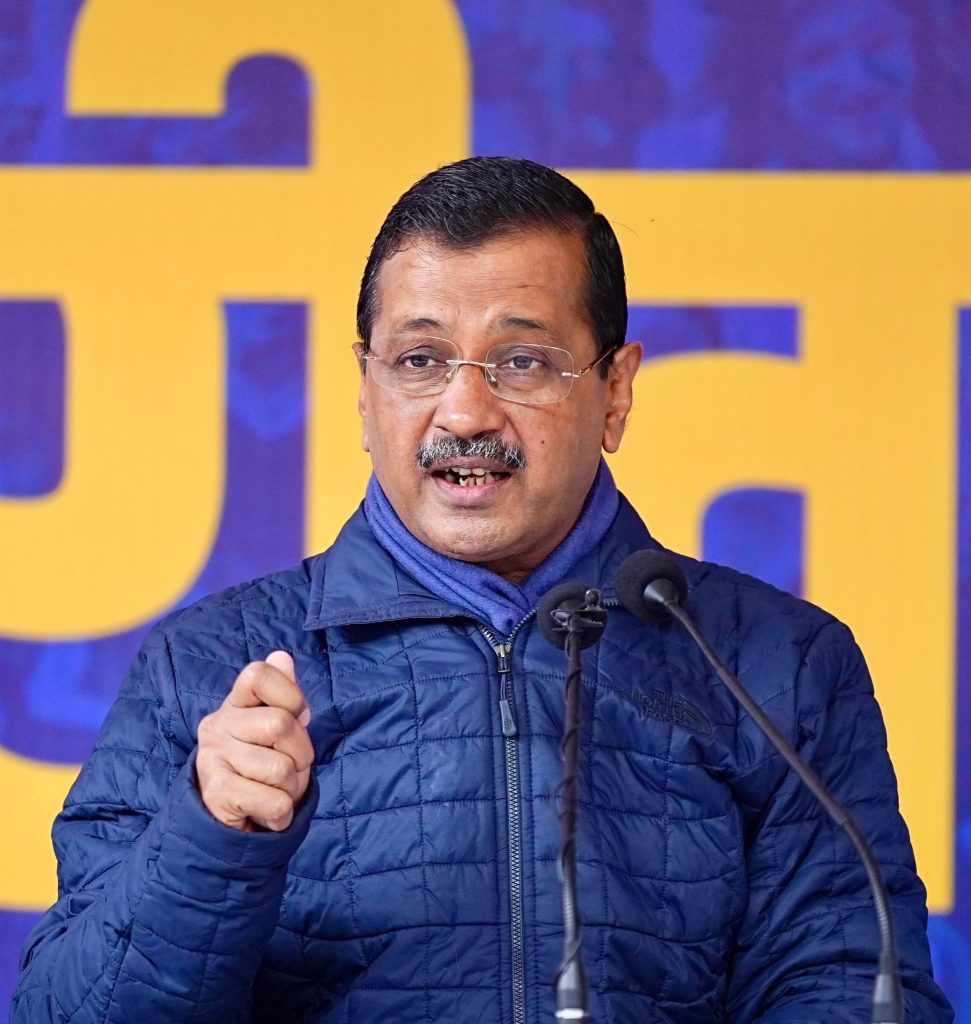
Former chief minister of Delhi and party convenor Arvind Kejriwal said, “The name of the scheme Pujari Granthi Samman Yojana. Under this scheme, there is provision to provide honorarium for their services. They will be provided Rs 18000 per month.”
He said that he will begin the registration at Hanuman Temple in Connaught Place after which the party workers and MLAs will reach out to temples and Gurudwaras in the city to register the pujaris and granthis for the scheme.
The scheme will be implemented if AAP comes back in power in the national capital.
In 2019, the government announced a similar move for mosque imams in Delhi and increased their salaries.
As per the announcement, the salaries of imams were increased from Rs 10,000 per month to Rs 18,000 per month. The decision was applicable on 185 mosques in the national capital that come under the Delhi Waqf Board.
The Bharatiya Janata Party (BJP) had termed the move as violation of Model Code of Conduct. The party criticized the increment and said the move was aimed at ‘appeasing’ the minority community.
Earlier, the government announced two schemes including Sanjivini Yojana and Mahila Samman Yojana under which all the senior citizens will get free medical treatment in all the hospitals of the city and women will get Rs 2100 monthly, respectively.
The Delhi Assembly polls are due to be held in February 2025. However, the Election Commission has not announced the dates of the polls.
The AAP is seeking to retain power in the national capital for the third term in 2025 after the electoral success in 2015 when the party won 67 seats out of 70. In the last Delhi Assembly elections which were held in 2020, AAP won a landslide victory and secured 63 of the 70 seats.
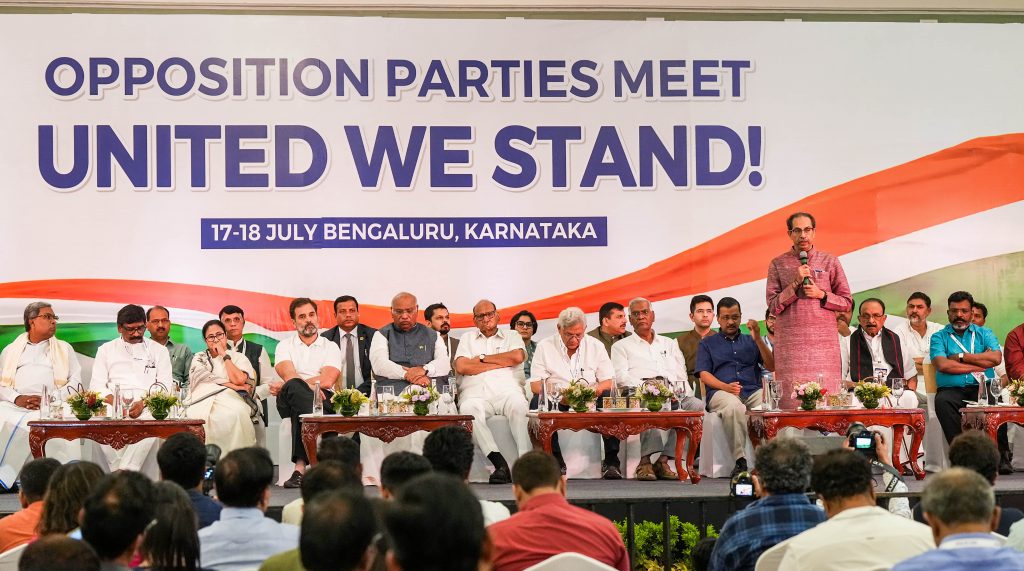
With one-time allies, Congress and Aam Aadmi Party, openly attacking each other in their attempts to secure votes ahead of Delhi Assembly polls, the INDI bloc is seemingly headed towards a break up.
With just weeks to go for polls, AAP launched a scathing attack on its INDI bloc partner Congress, accusing it of working with Bharatiya Janata Party for the upcoming Delhi polls. AAP also sought Congress’s removal from the INDIA bloc if action is not taken against Congress leader’s Ajay Maken’s recent statement against the AAP supremo Arvind Kejriwal.
Ajay Maken has described the Congress’ decision to support AAP in forming the government in 2013 as one of the biggest “strategic blunders” that led to its decline in Delhi. “I feel that today, the current plight of Delhi, as well as that of the Congress, is due to our support to AAP in 2013. It was perhaps a mistake that was made again in this year’s Lok Sabha poll,” he said.
The war between the two INDI bloc allies has escalated ever since the talks for possible alliance in the Assembly polls broke up. Over the past few months the Central leaderships of Congress and AAP have been striving hard to ensure an alliance between the two political outfits. However, the Congress leaders in Delhi haven’t seemingly forgotten the insult of the then Chief Minister Sheila Dikshit.
For Sandeep and the Delhi Congress leaders, the fight is personal. He has also been fielded against Kejriwal from the New Delhi constituency, the Assembly segment earlier represented by Sheila.
It must be pointed out that the massive public outrage fuelled by Kejriwal’s movement had almost derailed the political careers of several of Sheila’s protégés, including Ajay Maken.
Senior Congress leaders have pointed out repeatedly that though there was no case against Sheila Dikshit, the duo of Kejriwal and Anna Hazare had steadfastly continued to demand the resignation of Dikshit and came to power riding on these allegations.
The Delhi Congress leaders are now trying to point out the flawed way that Kejriwal targeted the Congress’ tallest leader in Delhi, Sheila Dikshit, and decimated the party from the national capital.
Congress, which ruled Delhi for 15 years under Sheila’s leadership, has been facing continuous defeat for two previous terms with not even opening its account, in the year 2015 and 2020.
The state unit of the party is adamant that it was time for seeking payback from AAP ahead of the crucial polls and reclaiming the legacy and vote bank of the grand old party.
With none of the two INDI bloc partners willing to back down, the national alliance of parties, formed ahead of 2024 Lok Sabha polls, is now seemingly headed towards cold storage.
It must be understood that over the past decades, the BJP’s voting percentage has remained somewhat intact in the city and it is trying to woo part of its opponents vote base by breaking their sitting ministers and legislators. It is believed that BJP will be a major gainer if AAP and Congress are unable to present a united face in the Delhi polls.
The Legislative Assembly polls in Delhi are scheduled to be held in February 2025. Besides the ruling AAP, the BJP and the Congress are the main contenders.
AAP has seen decline in winning seats in 2020 as compared to 2015. The party won 67 seats in Delhi for the year 2015 and 62 in 2020. BJP has been gaining ground since 2015 as it registered a gain of five seats in 2020 as compared to three in 2015.
As 2024 draws to close, Aam Aadmi Party remains a prominent and influential party in Indian politics; the party led by former chief minister of Delhi Arvind Kejriwal who is known for his distinctive approach to governance has had a year marked by challenges, reforms, and controversies.
This year, the party managed to consolidate its base in Punjab challenging the Congress and BJP in the region. It also made ways into Gujarat and Goa, where it contested the local elections, marking its growing footprint beyond Delhi.
Kejriwal’s efforts to position AAP as a national alternative to the two major political parties including BJP and Congress has been critical. His leadership was integral to AAP’s aggressive campaigns as the opposition looks to unite against the BJP in 2024 Lok Sabha elections.
The AAP government in Delhi focused on healthcare, education, and other social welfare programmes. It continued to make headlines with its robust policies on health and education. These initiatives have been touted as revolutionary for the national capital. This year, the government extended these schemes and improved the access to healthcare and education for the urban poor. The government also extended the power subsidy till 2025.
However, the journey wasn’t without challenges, the party convener also faced criticism for the administration’s handling of air pollution in the city. The AAP government continued to work towards green initiative and air quality improvements.
The party has always faced stiff resistance from the Lieutenant Governor, regarding the control of services. The tussle over the control of services including police and bureaucracy continues to be a point of contention.
The tug of war between both the parties witnessed a strong pull and drag. However, the tension peaked after several members of his government were already arrested in the controversial excise policy case, Arvind Kejriwal was also on the Enforcement Directorate’s radar. He managed to dodge multiple summons by the central agency before he was arrested on March 21 after Delhi High Court rejected his plea for anticipatory bail. He then functioned as Delhi chief minister from behind the bars for seven months. Later he was granted bail by the Supreme Court on conditions.
On September 22, 2024 Atishi became the youngest woman to hold the top office. She took oath as 17th chief minister of Delhi. However, her tenure will be a short time period as Delhi Assembly elections are round the corner.
Ahead of the 2025 assembly polls, the AAP party got a major jolt as its three members left the party and joined BJP and Congress. Former Delhi ministers Kailash Gahlot and HS Balli joined BJP.
Meanwhile, Rajendar Pal Gautam joined the Congress party.
On the international front, Kejriwal focused on strengthening diplomatic relations, especially with countries looking to model certain aspects of public services after Delhi’s innovations. In 2024, he engaged with international leaders to promote AAP’s model of governance, particularly in the areas of education and healthcare. He visited various countries, positioning himself as a leader with a vision for not just India, but the global stage, highlighting Delhi’s success with initiatives such as the Mohalla Clinics.
Key Takeaways for 2024
Leadership and National Aspirations: Kejriwal’s national political ambitions continue to grow, although challenges remain in expanding AAP’s influence outside Delhi. His appeal as a non-traditional, clean governance leader resonates with certain segments of the population, but much of his focus remains on Delhi.
Governance and Welfare: Kejriwal’s strong governance in the fields of healthcare and education continues to define his leadership, but controversies surrounding air pollution and the city’s overburdened infrastructure also persisted.
Political Tension with the Centre: Party’s confrontations with the LG remained a prominent feature of his year, especially regarding Delhi’s autonomy. Despite the tension, his ability to rally his supporters around issues of state rights and welfare initiatives remains a key aspect of his leadership.
International Diplomacy: Kejriwal’s international presence grew as he promoted Delhi’s governance model globally, positioning himself as a leader with a vision for both India and the world.
Kejriwal’s year in 2024 was marked by both growth and struggles. As he continues to navigate the challenging political landscape of India, his leadership in Delhi remains a cornerstone of his political identity. His ambitions to expand AAP’s influence beyond the capital have seen mixed results, but his governance model and populist approach continue to resonate with large sections of the Indian electorate. As 2024 closes, Kejriwal’s role in shaping India’s political future is undeniable, but the coming year will likely determine whether he can translate his local successes into national political dominance.
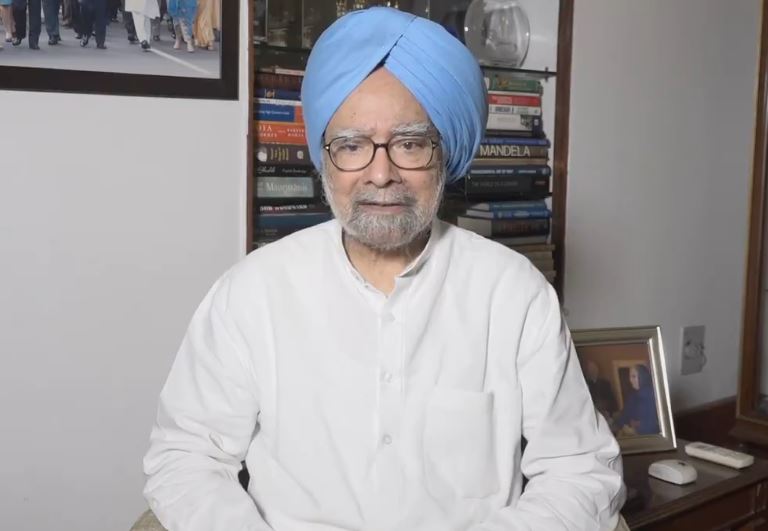
New Delhi : Former Prime Minister Manmohan Singh passed away at the age of 92. Singh was admitted to AIIMS Delhi on Thursday evening after his health deteriorated.
Dr. Manmohan Singh’s death has been confirmed by the AIIMS in a statement that read: “With profound grief, we inform the demise of former Prime Minister of India, Dr. Manmohan Singh aged 92. He was being treated for age related medical conditions and had sudden loss of consciousness at home on December 26. Resuscitative measures were started immediately at home. He was brought to the medical emergency at AIIMS. Despite all efforts, he could not be revived and was declared dead at 9.51 p.m.”
Dr. Manmohan Singh had been admitted for treatment in the hospital on Thursday night after being critically ill.
Dr. Singh, who served as country’s Prime Minister from 2004 to 2014, was known for his transformative role in steering India’s economy through a period of significant liberalisation.
His tenure is often credited for initiating major economic reforms in 1991 when he was the finance minister, which helped modernise India’s economy and integrate it into the global market.
A man of humility and intellect, Dr. Singh was a respected figure both in India and globally. Under his leadership, India saw consistent economic growth, reducing poverty and strengthening the country’s position on the world stage.
His government was also known for implementing crucial legislations in areas such as education, food security, and information.
Dr. Singh’s death has left the nation in mourning, with leaders from all political parties and across the world paying tribute to his legacy. His contributions to the field of economics and public service will be remembered for generations.
He is survived by his wife, Gursharan Kaur, and their three daughters. Funeral arrangements are expected to be announced soon, with the nation’s leaders, including Prime Minister Narendra Modi, expected to participate in honouring his memory. Dr. Singh’s death marks the end of an era in Indian politics. His leadership and legacy will continue to inspire future generations.
In April this year,Dr Manmohan Singh retired from Rajya Sabha, with Congress President Mallikarjun Kharge praising his long parliamentary career.
Manmohan Singh shot to prominence as the country’s Finance Minister in the government headed by PV Narasimha Rao during 1991-96, having brought in sweeping reforms that transformed the economy.
As the two-term Prime Minister of the UPA, he stayed at the top post from 2004 and 2014, and served as a member of the Rajya Sabha till early this year.
In his political career, Singh has been a member of the Rajya Sabha since 1991, where he was Leader of the Opposition between 1998 and 2004.
Manmohan Singh was sworn in as Prime Minister on May 22 after the 2004 general elections and took the oath of office for a second term on May 22, 2009.
He represented Assam for five terms in the Upper House and shifted to Rajasthan in 2019.
His last intervention in Parliament was against demonetisation, describing it as an “organised loot and legalised plunder”.
Born on September 26, 1932, in Undivided Punjab, Manmohan Singh received his Bachelor’s and Master’s in Economics from Panjab University in 1952 and 1954 respectively.
Manmohan Singh completed his Economic Tripos from Cambridge University in 1957. He followed this with a D.Phil in Economics from Oxford University in 1962.
Delhi woke up to a thick layer of smog with air quality index at 421 pushing it to the ‘severe’ category, according to the central government’s Sameer app which provides updates on the National Air Quality Index.
This comes after the Centre’s Commission for Air Quality Management (CAQM) on Monday re-imposed the restriction under 4th stage of Graded Response Action Plan (GRAP) to combat the air pollution in the national capital.
Under this, the centre has put a complete ban on construction activities.
These restrictions were rolled out just hours after stage 3 curbs were enforced in the city.
GRAP stage 4 restrictions were implemented in November for the first time following high levels of pollution in Delhi-NCR.
Earlier Tehelka.com reported on the issues of people who were suffering from crowded metros and restricted vehicle movement due to the imposition of GRAP 4 measures.
Devendra Singh Khushwaha, Advocate, Delhi High Court had said that restrictions under GRAP 4 are physically and mentally exhausting.
“The combination of restricted vehicle movement, overcrowded public transport, and hazardous air quality has made commuting under GRAP IV not only inconvenient but also physically and mentally exhausting. Additionally, Delivery and logistics services are also disrupted and restrictions on private vehicles, buses, causing delays and price surge,” he had shared.
Later in December, the apex court allowed the CAQM to ease restrictions to stage 2 on December 5.
Under these restrictions, trucks are barred from entering Delhi unless they are carrying essential items or running on clean fuels like LNG, CNG and electricity or BS-VI diesel.
Schools in Delhi and NCR districts must adopt hybrid learning for Classes VI to IX and XI, offering both online and offline options. The decision to attend online classes is left to students and their guardians. Other NCR districts are encouraged to follow suit based on feasibility.
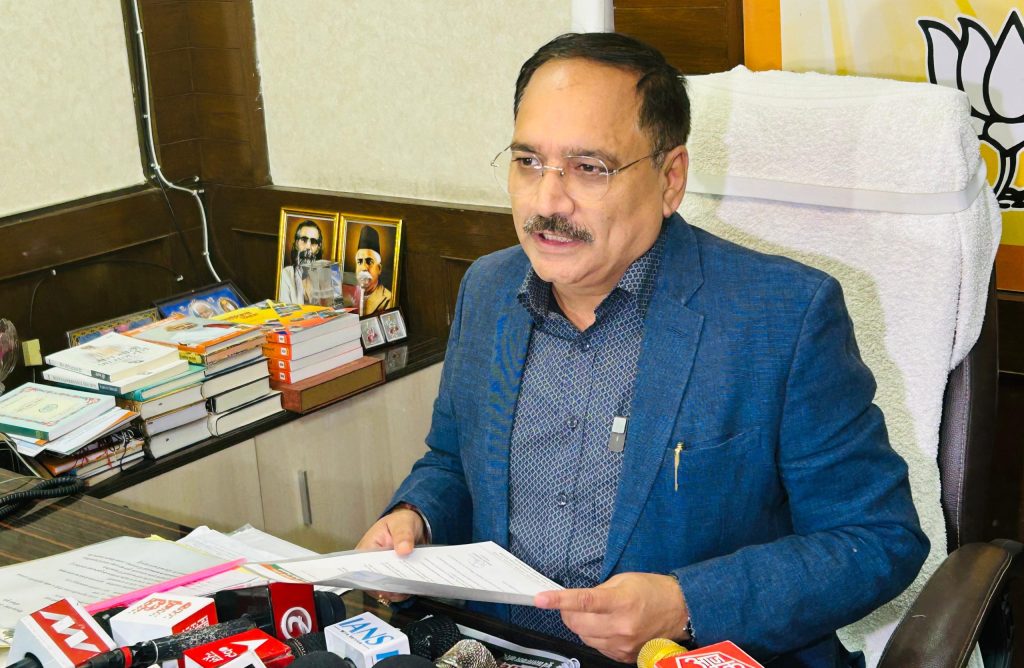
Lieutenant Governor VK Saxena on Monday wrote to Delhi chief minister Atishi and demanded that a special assembly session be conducted in lieu of tabling all 14 CAG reports after the Opposition demanded the same.
In a letter to the CM, LG emphasized the urgency of the matter and demanded the session be conducted ‘immediately’.
However, experts claim that LG’s directions are not binding and the cabinet led by the chief minister Atishi can choose not to call an assembly session.
Meanwhile, Opposition parties including Bharatiya Janata Party (BJP) and Congress cornered the AAP government over the issue.
Delhi BJP president Vijender Sachdeva attacked Arvind Kejriwal and said that who began his political career by demanding the public release of CAG reports, has now been avoiding the presentation of these reports for over two years.
“It is ironic that Arvind Kejriwal, who began his political career in 2011-12 by demanding the public release of CAG reports and probing private companies in power discoms during the Congress government, has now been avoiding the presentation publication of CAG reports for over two years. The same Kejriwal government now appears actively defending private partners of the power discoms,” he said.
He pointed out that between 2017-18 and 2021-22, the CAG presented 14 key reports on irregularities under the Kejriwal government regarding excise duty on liquor, pollution, and other financial issues, yet the Kejriwal government has suppressed them to date.
“It is important to note that the suppression of these reports implicates not only the Kejriwal cabinet but also Atishi Marlena and Manish Sisodia, who were key figures as Finance Ministers in his government. Just as Arvind Kejriwal previously suppressed the reports, Atishi is doing the same now,” he added.
Meanwhile, Delhi Pradesh Congress Committee president Devender Yadav lauded the LG’s directions and said that ‘Khattar imandar’ Kejriwal should comply with the LG’s latest direction to table the 14 pending CAG reports in the House, which will expose his honesty claim.
“khattar imandar Kejriwal and Atishi were afraid to discuss the CAG reports in the Assembly, as it will bare corruption and misappropriation of tax payers’ money in the many illegal deals done by Kejriwal, including the liquor scam, hence the CM Atishi was trying to hide the CAG reports from public view,” Yadav said.
Earlier, the BJP MLAs including Mohan Singh Bisht, Om Prakash Sharma, Ajay Kumar Mahawar, Abhay Verma, Anil Kumar Bajpai, Vijender Gupta, and Jitendra Mahajan filed a petition before the high court seeking a special assembly session.
The delegation argued that the CAG reports for 2017-18 to 2020-21 contained sensitive information and were allegedly being withheld by the Delhi government. The petition had alleged that despite repeated requests from the LG, the reports had not been forwarded for tabling before the assembly.
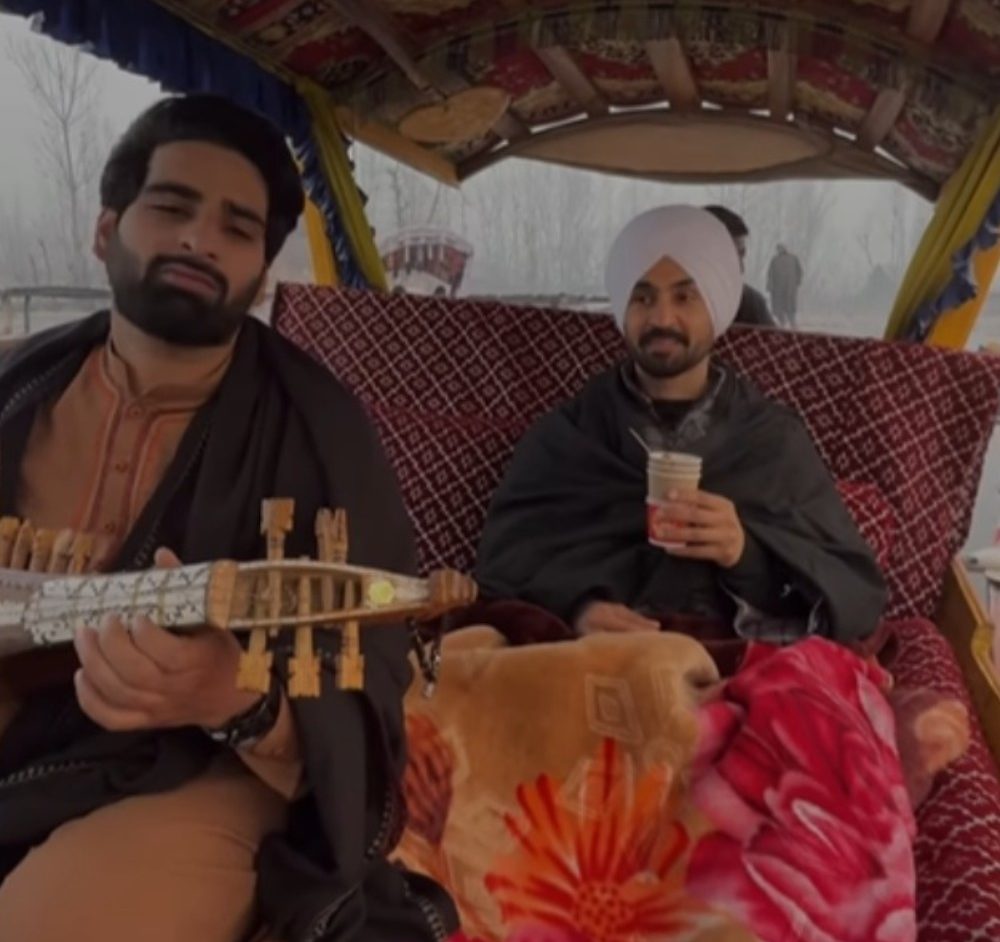
Punjabi singer and actor Diljit Dosanjh is taking a break amid his Dil-Luminati tour to enjoy the tranquil beauty of Kashmir, often called “heaven on earth.”
Diljit has been exploring the valley’s beauty while soaking in its spiritual ambience. In a social media post, he featured the Khanqah-e-Moula, a historic and revered spiritual site in Srinagar.
In a post on X (formerly Twitter), Diljit shared a video from Khanqah-e-Moula titled Sukoon. The video captured him relaxing on the shrine’s lawn, offering glimpses inside the sacred site, and interacting with local artisans.
The soulful Sufi track “Wohi Khuda Hai” by Milad Raza Qadri and sung by Nusrat Fateh Ali Khan played in the background, adding to the peaceful vibe. His caption read simply, “KASHMIR >> Sukoon.”
In another video Diljit Dosanjh is seen as enjoying a Shikara ride on the tranquil waters of Kashmir. In the video, a kehwa vendor approaches the singer while he’s on a shikarah. The vendor introduces himself warmly before offering Diljit a cup of kehwa. Diljit, visibly at ease, enjoys the kehwa as he takes in the stunning surroundings,
During their conversation, the kehwa vendor asked Diljit about his hometown. In response, Diljit humorously said, “main sir kahi nhi rehta, main bas aise ghoomta rehta hun.”
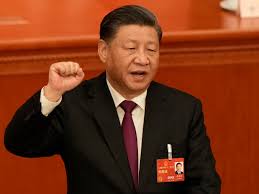
Chinese Prez Xi Jinping’s crackdown on Falun Gong, a growing spiritual movement, reflects a broader political agenda. The global drive to eliminate its followers signals a fierce stance against perceived threats to China’s control and ideology. by Gopal Misra
Despite the substantial and growing influence of Chinese proxies in American media and prestigious Ivy League universities, the recent decision by China’s leader, President Xi Jinping—often seen as a strongman, if not a ruthless dictator—to arrest and kill followers of the spiritual movement Falun Gong, has drawn global attention. However, the decision has amused some in New Delhi.
In 2022, Xi Jinping tasked officials with eliminating the followers of Falun Gong, a spiritual group active for the past 26 years. But with the final phase of the Joe Biden administration, he has suddenly intensified efforts against the group. To the authorities in Beijing, Falun Gong’s opposition to organ harvesting is seen as a conspiracy against the Chinese Communist Party’s (CPC) broader agenda to develop a successful capitalist infrastructure underpinned by repressive Marxism ideology.
Falun Gong has become the fastest-growing spiritual movement in China, founded on the principles of truthfulness, compassion, and forbearance, along with meditative exercises that encourage moral development. Two years ago, Xi Jinping held a high-profile meeting attended by senior officials from the Political and Legal Affairs Commission, as well as ministers from National Security and State Security, the secretary and several deputy secretaries of the Political and Legal Affairs Commission, officials from the Ministry of Foreign Affairs, and representatives from the United Work Front Department, the Chinese agency responsible for overseas influence operations.
Beijing has been surprised by the inability of its assigned officials to stop the international campaign against Chinese human rights abuses. US-based media outlets such as the Epoch Times and several private television channels have successfully countered Beijing’s well-planned misinformation efforts. Chinese proxies have cunningly infiltrated major American newspapers like the Washington Post, New York Times, and even CNN, but their efforts have largely failed to silence the truth.
Over the past four years, the Biden Administration has been investigating the substantial purchase of shares in American media by CPC-linked companies, as well as the millions of US dollars being pumped into media outlets as advertisements by companies owned by the Red Army or the People’s Liberation Army (PLA). However, no substantial action has been taken.
According to a recently published report by the Washington-based organization Freedom House, Chinese proxies have not only succeeded in gaining support from major outlets like Time, USA Today, Los Angeles Times, CNN, and Foreign Policy, but have also resorted to bullying journalists and media personnel through covert use of social media and the internet.
The reluctance of the outgoing president, Joe Biden, to take corrective action may be explained by the disinformation spread by CNN and USA Today during the presidential election campaign. These so-called representatives of the free press were projecting Democratic Party nominee Kamala Harris as having a clear advantage over Republican nominee Donald Trump.
Xi Jinping’s growing anger
The exposure of Chinese atrocities by Chinese-owned private channels has angered Jinping. Their journalists, who have access to a section of the ruling elite in Beijing, have forced him to eliminate these elements. Previously, they had successfully exposed Jinping’s conspiracy to secure a third term, overturning the party’s two-term limit for a sitting president. Therefore, Beijing’s decision to eliminate the followers of Falun Gong without delay may also be influenced by Trump’s potential second term in Washington. He is not expected to be as friendly to China as his predecessor was. Jinping cannot forgive his countrymen abroad for undermining his ambition to project himself as a greater leader than Chairman Mao Zedong or Deng Xiaoping, the paramount leader who spent a month in the US to secure technology and investments.
Earlier, successive US Presidents like Bill Clinton and Barack Obama genuinely believed that deepening economic ties with the West might eventually lead to democracy in China. However, their hopes have been dashed by Jinping. For China watchers, the situation in the country is far from normal, as is being presented. The removal of Chinese Defence Minister Li Shangfu signals significant resentment against Jinping’s anti-democratic policies. It’s worth noting that Shangfu had disappeared from the political scene in August 2024, but his removal was only announced in the last week of October.
Drive against Falun Gong
It is not surprising that Beijing considers Falun Gong, an innocent spiritual practice that has become a household meditation movement in both the West and China, a political threat. Therefore, the movement must be crushed immediately.
The mandarins in Beijing, perhaps rightly, believe that the harvesting of human organs is not a new phenomenon; it has been a business norm for the Communist regime for over 50 years. Even the West, which prides itself on being a guardian of human rights, has never raised objections to this practice, which involves harvesting vital organs for wealthy patients in the West. It is understandable that Jinping’s cronies, who share power with him, view the followers of Falun Gong with suspicion. This group has managed to awaken the conscience of ordinary Chinese citizens against this inhumane practice under the so-called proletariat government in Beijing.
Xi Jinping’s recent directive includes a global manhunt for the followers of this spiritual movement, with orders to arrest, prosecute, and, if necessary, execute them through Chinese proxies. However, his regime has no intention of ending this brutal practice, which ensures that before a person is executed, buyers for their body parts—such as kidneys and hearts—are already identified.
Meanwhile, Falun Gong represents the Falun, or Dharma wheel. It symbolises the universe. It preaches the virtues of truth, benevolence, and forbearance to achieve enlightenment. It is a spiritual practice that is translated to “law wheel practice” in Chinese. It involves meditation and qigong exercises to align the body’s life energy. It was founded by Li Hongzhi, a former trumpet player, in 1992.
Earlier, in October 2022, Jinping had held a secret meeting in Beijing, instructing top state officials—overseeing political, intelligence, and influence operations—on a new strategy to target the Falun Gong religious group internationally, but during the past two years, its influence has increased manifold. In a bid to destroy this spiritual movement, the CCP has established a core group for initiating worldwide disinformation campaigns using social media, and specially targeting the various media platforms of the West. Its strategy includes triggering the American legal system to target companies founded by Falun Gong practitioners.
Yuan Hongbing, a Chinese legal scholar in exile in Australia with close ties to China’s top political circles, recently revealed the conspiracies Beijing had been orchestrating over the past two years. His account, according to a Chinese media outlet in the US, is based on the information he received from a few knowledgeable sources within the senior members of the CCP, who continue to disapprove policies of Xi Jinping; and also, those who are not prepared to compromise their conscience.