Ever since the swearing in of Anura Kumara Dissanayake as the President of Sri Lankan in September, there were apprehensions in India over the Janatha Vimukthi Peramuna’s, Marxist ideology.
However, the trip by President Anura has seemingly tried to bring down apprehensions in India, while also creating an atmosphere of reassurance.
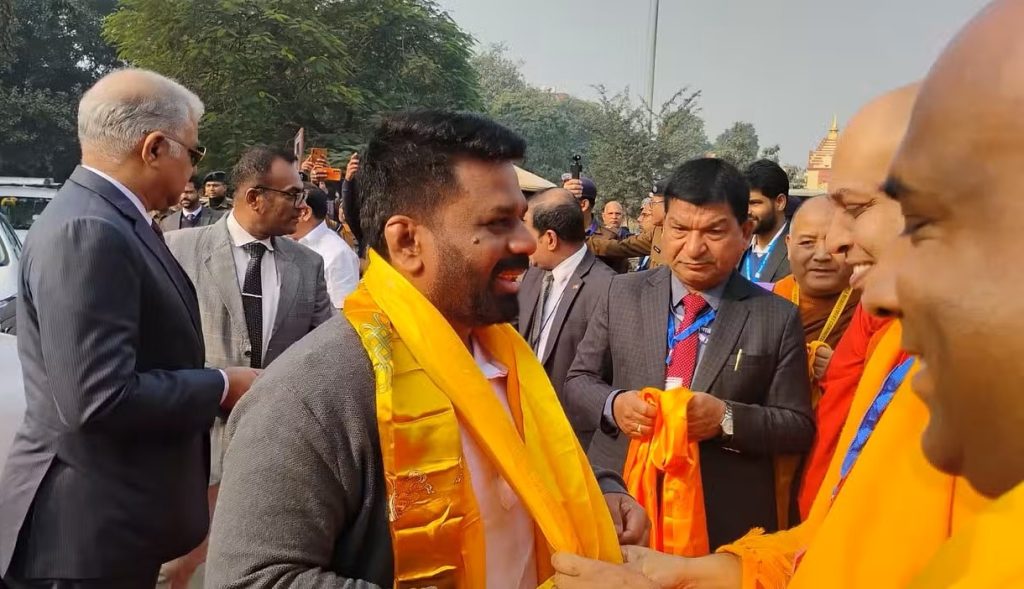
His inaugural foreign visit, since assuming office in September, sent out a clear message that India is the most important ally for Sri Lanka and the three-day tour marked a significant diplomatic engagement between the nations. The Sri Lankan President expressed pleasure at choosing Delhi for his first state visit.
It must be noted that ever since the change of government in the island nation, its government was being wooed by several other countries, including China. In this backdrop the visit of President Anura assumes greater significance.
Sri Lankan President also assured New Delhi that his country’s territory would not be used in any way that was detrimental to India, after one-to-one and delegation-level discussions with Prime Minister Narendra Modi. He assured that Sri Lanka’s territory would not be “used in any way, in a manner that is detrimental to the interest of India. The cooperation with India will certainly flourish and I want to reassure our continued support for India.”
The assurance comes in the backdrop of India raising objections with Colombo in 2022 for allowing a Chinese “research” vessel to dock at Hambantota Port and as China is intensifying its presence in the Indian Ocean region.
The Sri Lankan President also acknowledged the emergency support lent to the island nation by India during the economic turmoil it had faced two years ago. “We faced an unprecedented economic crisis some 2 years ago and India supported us immensely to come out of that quagmire. It has also helped us immensely after that, especially in the debt-free structuring process,” he said.
Notably, though the Lankan President’s Janatha Vimukthi Peramuna may follow the Marxist ideology, however, President Anura hasn’t seemingly let go of his Buddhist roots. The Sri Lankan president made it a point to visit Gaya in Bihar, a religiously significant place for Buddhists across the world, where he offered prayers at the Maha Bodhi Temple. Sri Lanka’s majority Sinhala community follows Buddhism and this visit is expected to also reassure the over 70 percent population of the island nation that he is very much rooted in the culture of the nation.
The visit and assurances made by President Anura also mean that India’s diplomatic effort to pull the island nation out of China’s influence is heading in the right direction.
With a party which has come to power in Sri Lanka for the first time, India needs to further improve its relationship with the new political leadership.
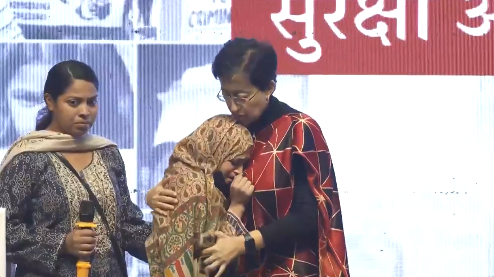
Remembering 2012 gang rape victim ‘Nirbhaya’ Delhi chief minister Atishi said that even after 12 years of this horrific incident, women are not safe in the national capital.
In order to pay tribute to the 23-year-old victim, the Aam Aadmi Party (AAP) government hosted an event named Mahila Adalat underscoring its focus on the safety of women in Delhi, ahead of the 2025 assembly elections.
The event was aimed to provide a platform to the women who have fallen victim to such incidents, to share their experience and make people aware of their plight.
Addressing a gathering at Tyagraj Stadium Atishi raised questions on the capability of the BJP-led central government which she said, failed in ensuring the safety of women in the national capital.
“I want to ask those who are responsible for the safety of women, what they are doing? Why has crime against women increased over 40 per cent since 2019 in Delhi?” she said,
She further said that the BJP-led central government is responsible for the safety of women in Delhi. “I want to tell BJP that you can’t suppress the voice of women in Delhi. If you will not provide safety to women, then these women will come out on roads to take safety for themselves,” the chief minister said.
Many senior leaders of the party including Arvind Kejriwal, Sanjay Singh and SP chief Akhilesh Yadav were also present at the event.
Arvind Kejriwal expressed his disappointment on the increasing crime against women and that women are afraid of moving out of the house.
“When this horrific incident happened, we thought that this would bring change in the society. However, it is unfortunate that instead of decreasing, the cases against women have increased in the last 12 years. Now women are afraid to move out of the houses,” Kejriwal said.
He said that whatever responsibility was given to me has been fulfilled but central government was only responsible for the safety of women they were not able to fulfill.
“It is Home Minister Amit Shah’s responsibility to provide safety and law & order in Delhi. There was only one responsibility and they were not able to fulfill this,” he added.
Meanwhile, Akhilesh Yadav slammed the central government and said that ministry of home affairs is not working.
“The incidents that are happening in Delhi where the central government is active imagine what must be happening in the entire India if this is happening in the city. Minister of home affairs is not working on ground,” Yadav added.
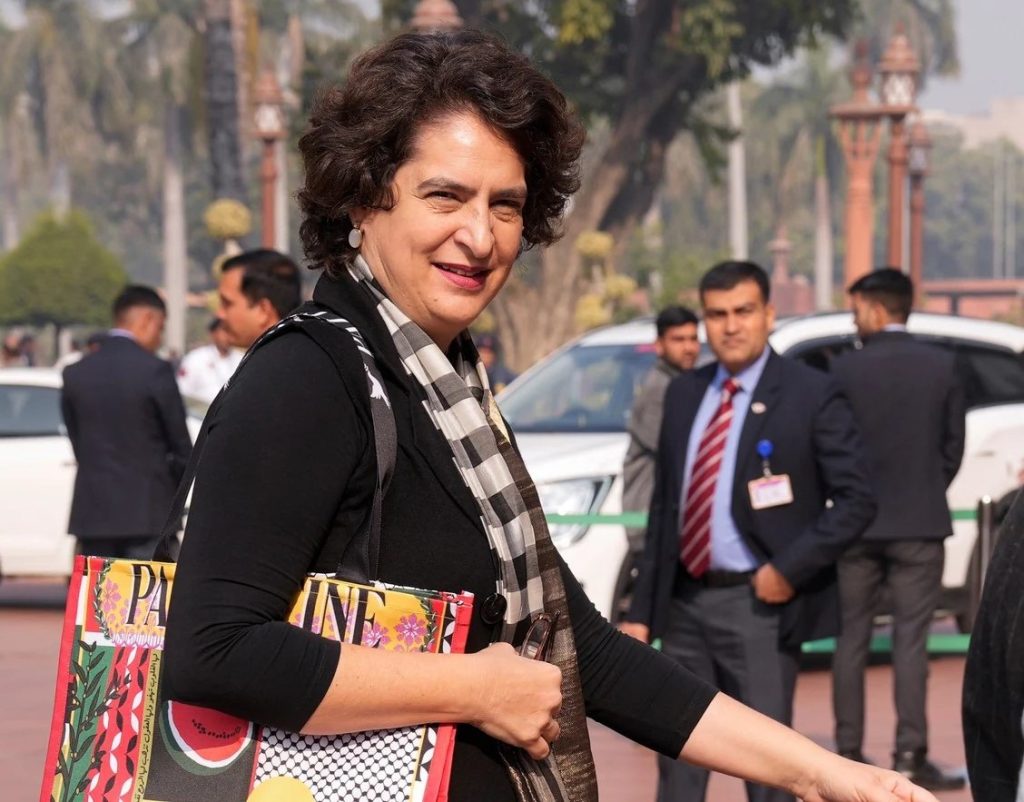
Priyanka Gandhi Vadra arrived at Parliament premises sporting a bag with “Palestine” written on it and emblems, including a watermelon — a symbol often associated with Palestinian solidarity.
The Wayanad MP has been raising her voice against Israel’s actions in Gaza and expressing solidarity with Palestinians.
The Congress general secretary was seen carrying a handbag emblazoned with the word “Palestine” and Palestinian emblems.
As the gesture was met with criticism from the BJP for “appeasement,” Priyanka responded, saying it was typical patriarchy where “she is being told what to wear and what not to wear”.
“I don’t subscribe to patriarchy. I will wear what I want to,” she said.
Abed Elrazeg Abu Jazer, Charge d’affaires of the Palestine Embassy in New Delhi, had last week called on Ms. Vadra to congratulate the Congress leader on her recent election victory from Kerala’s Wayanad.
In June, Priyanka slammed Israeli Prime Minister Benjamin Netanyahu over what she had said were the Israel government’s “genocidal actions” in Gaza, as she accused him and his government of “barbarism”.
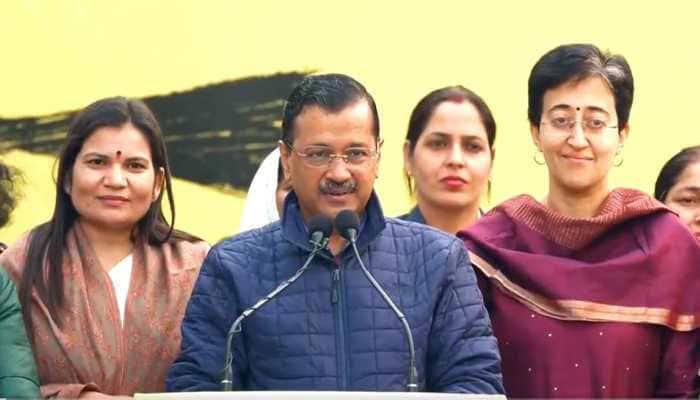
The Aam Aadmi Party is seemingly deliberately not clarifying what the role of Delhi Chief Minister Atishi will be in case the party wins the forthcoming Assembly election.
It is understood that AAP convenor Arvind Kejriwal is keen on returning to the CM’s post after securing the elections for the party. And once the party secures adequate seats, he will reinstate himself in the position, sources said.
Ever since stepping down from the Delhi CM’s post, Kejriwal has been concentrating his energy on campaigning for the party in the national capital. The upcoming polls are considered to be tough for the incumbent AAP as besides it an upbeat Bharatiya Janata Party and the Congress are also in the fray. While the BJP is expected to fight the polls with renewed vigour after wins in Maharashtra and Haryana elections, the Congress is also keen to regain its lost political ground in the national capital. The three cornered contest is creating a tight spot for the AAP as the Congress is expected to cut into its traditional votes.
AAP feels that Atishi as CM could attract more woman voters to the party in the forthcoming elections. Party sources stated that she will be accommodated suitably, according to her stature, in a post poll scenario.
Meanwhile, there is a growing feeling of discontentment amongst the woman cadre within the party which feels that Atishi has been used as a stop gap arrangement by Kejriwal.
“With someone like Atishi, who has a proven record of public service, our party should have cleared any doubts about her future,” said a party leader.
The 70-member Delhi Assembly polls are due to be held in February 2025. In the last Delhi Assembly elections which were held in 2020, AAP won a landslide victory and secured 63 of the 70 seats. The BJP won just 8 seats, while Congress failed to win a single seat.
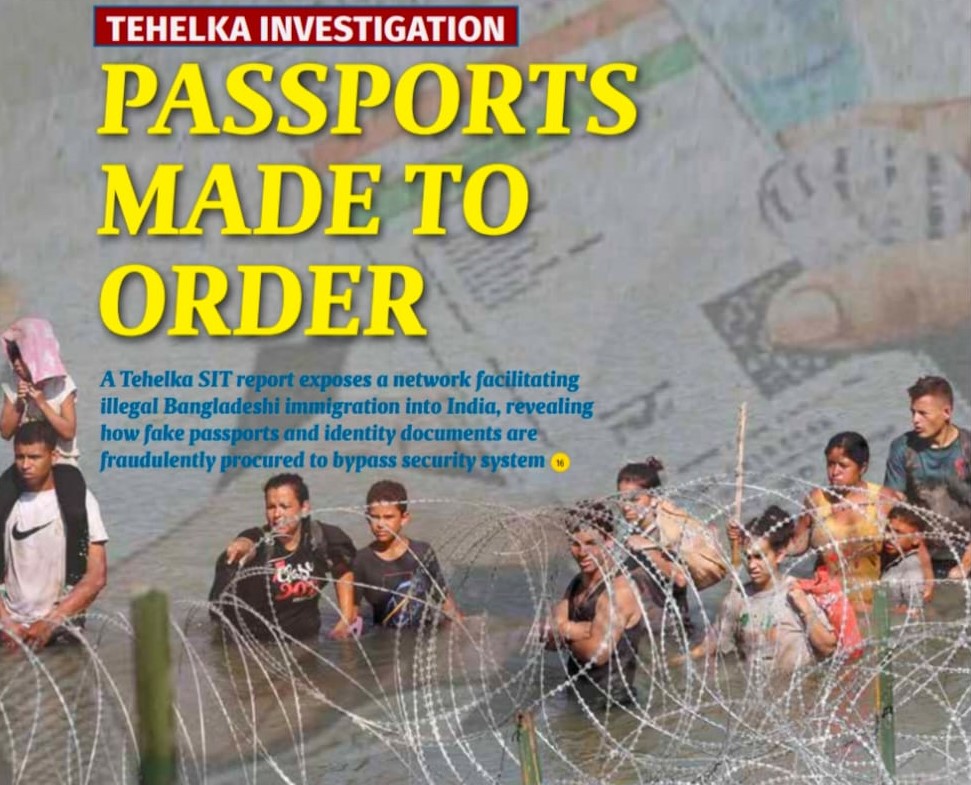
A Tehelka SIT report exposes a network facilitating illegal Bangladeshi immigration into India, revealing how fake passports and identity documents are fraudulently procured to bypass security system
In December 2024, a police team at Indira Gandhi International (IGI) Airport, New Delhi, arrested an agent involved in creating fake Indian documents for a Bangladeshi national. The IGI Airport police were alerted to the scam after a passenger was detained during an immigration check. The accused, identified as Shamol Shen alias Samuel (26), son of Uttam Shen, is a resident of Habra, Ashok Nagar, West Bengal.
In November 2024, a former worker of the Bangladesh Nationalist Party (BNP) was arrested in Kolkata for allegedly residing in India using forged identity documents. The Bangladeshi citizen, identified as Salim Matbar, was apprehended during a midnight police raid at a hotel in the Park Street area. According to police sources, Salim, a resident of Madaripur in Bangladesh, had been living in India for the past two years using a fake passport and a forged Aadhaar card.
In October 2024, the Sahar police in Mumbai arrested two Bangladeshi nationals for allegedly using forged Indian passports for international travel. One had travelled to Ukraine using the fake passport, while the other had lived illegally in India for three decades before travelling to Mauritius, only to be deported.
In April 2024, the Fake Passport Investigation Wing of the Greater Chennai City Police arrested six Bangladeshi nationals at Chennai International Airport for presenting Indian passports. All of them had fraudulently acquired these passports using Aadhaar cards obtained over the years. With these forged documents, they had travelled to Dubai, Kuwait and Malaysia for work as well.
While such fake passport cases involving Bangladeshi nationals frequently surface in pan-Indian media, what remains uncommon is the confession of their crimes. These admissions, particularly from the criminals engaged in producing fake passports and other forged Indian identity documents, are rare.
In a bold investigative effort, Tehelka set out to expose these offenders who pose a grave threat to national security. The team successfully secured on-camera confessions, shedding light on the dark underbelly of this illicit trade. Through this investigative process, we learned that the clandestine world of fake documentation thrives on the audacity of its operators. From the streets of Kolkata to plush Delhi hotels, these agents flaunt their ability to fabricate an entire identity.
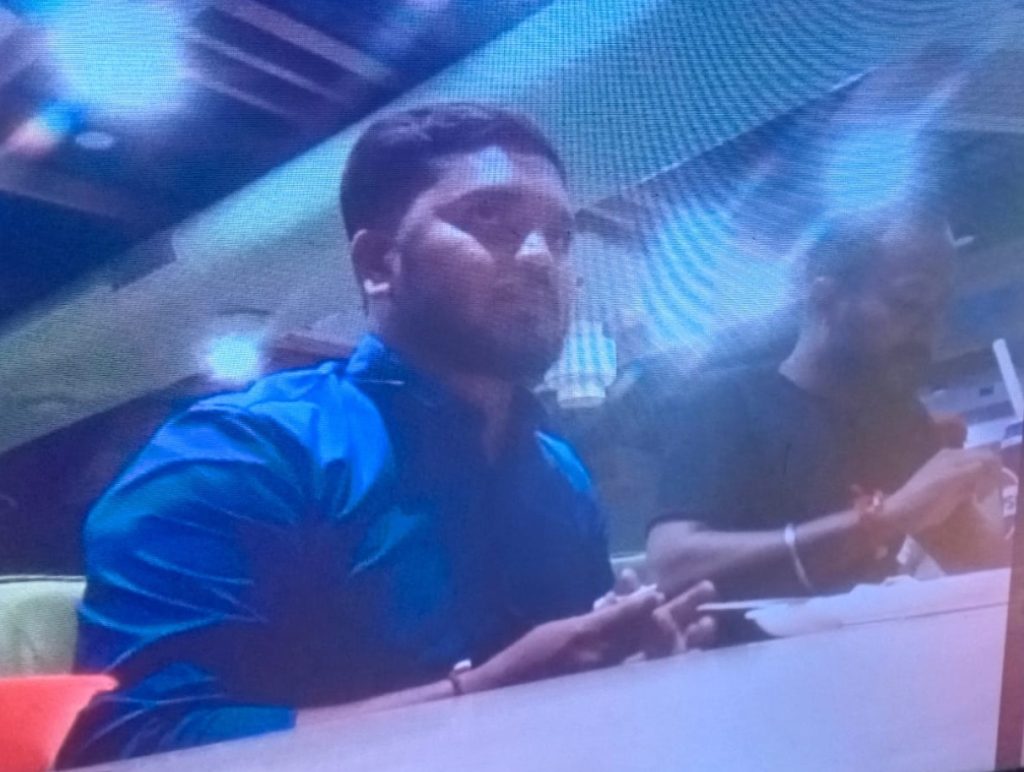
“I’ve been in the business of making fake passports and other Indian identity documents for a long time, and I’ve never been caught by the police. There isn’t a single case registered against me anywhere in India,” said Rajiv Singh (name changed), a seasoned forger from Kolkata.
Rajiv Singh (name changed)
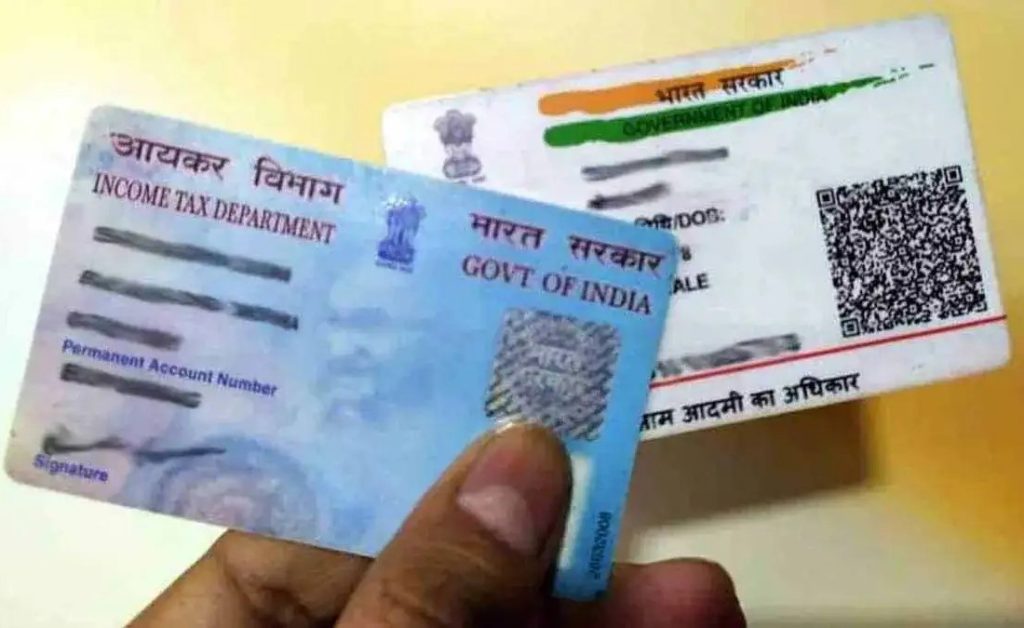
“I bring Bangladeshi nationals to India through illegal routes. Once they arrive, I arrange their Indian identity documents, including Aadhaar, PAN cards, school and birth certificates, voter IDs, and eventually, the passports,” he explained.
“In the past, I’ve facilitated the entry of illegal immigrants from Bangladesh into India. But once I’ve provided them with fake Indian documents, our association ends—we don’t know each other anymore,” Rajiv stated matter-of-factly. “So far, I’ve successfully created fake Indian documents for three Bangladeshi nationals who entered India through illegal means,” he added.
“The Tehelka investigation began with Rajiv Singh from Kolkata. Our reporter posed as a client seeking someone to create fake Indian identity documents for Bangladeshi nationals entering India through illegal routes. The meeting took place at a five-star hotel in Delhi, where Rajiv immediately accepted the job. With alacrity, he assured the reporter that he could arrange Aadhaar and PAN cards, school and birth certificates, voter ID cards, and eventually passports—all, of course, for a price.
Rajiv Singh, a key player in the local underworld, not only revealed his modus operandi but also showcased the brazenness of such operations.
Reporter- Document mein kya kya ban jayega.?
Rajiv- Document mein shuru se banayege.. pehle banayege Pan card, Aadhar card, school certificate, hospital ka birth certificate, voter card bhi ban gaya, phir banega uska passport.
Reporter- Passport bhi ban jayega?
Rajiv- Ek saptah mein uska passport bhi aa jayega….sirf paisa phekna hai bas!
[Rajiv Singh candidly explains how he fabricates entire identities—from Aadhaar to passports—in just a week, as long as the money keeps coming. It emerges that this illegal network thrives on efficiency and impunity.]
While talking to Tehelka, Rajiv now boasts about smuggling Bangladeshi immigrants, securing fake Indian identities, and evading legal scrutiny entirely. It seems that a disturbing lack of enforcement enables such networks to flourish unchecked. With years of experience in facilitating illegal immigration and document forgery, Rajiv openly discusses his methods.
Rajiv- Bhaiya aap kya bol rahe hai, hamne sirf aadhar card se Bangladesh se bula kar Kolkata ke hospital mein admit karwaya hai.
Rajiv (continues) – Wo aap tension mat lo, banda hai aap sirf number de do.. hum 2-3 din mein apne pass bula kar aapse baat karwa denge.
Reporter- Accha nikalwa dega illegally?
Rajiv- Aaram se.
Reporter- Pakda na jaaye koi ?
Rajiv- Arey kuch nahi hoga bhaiya.
Reporter- Tu to nahi pakda gaya kabhi in sab kaamon mein?
Rajiv- Nahi, kabhi nahi.
Reporter- Koi case nahi hai tere uper?
Rajiv- Ek bhi police case dikha do.. maan jayega.
[The brazenness of Rajiv Singh’s operations reveals the confidence such agents possess in their perceived immunity from the law. Rajiv’s nonchalance underscores the impunity with which these operations are conducted. ]
Rajiv now reveals the speed and scale of his operations, claiming that he can facilitate the illegal entry of 3-4 Bangladeshi nationals at a time. However he hastened to add that once their documents are forged, he cuts all ties with clients, showing a cold, transactional nature to his illicit business.
Reporter- Kitne log nikalwa sakta hai ek baar mein?
Rajiv- Ek baar mein 3-4 karke.
Rajiv (continues)- Bas ek baar document ban gaya, kaam ho gaya, uske baad koi relation nahi.
Reporter- Koi relation nahi ?
Rajiv- Haan.
[Rajiv’s approach highlights the ease with which multiple illegal immigrants can be processed, and the complete detachment once the transaction is done. It illustrates the transactional, depersonalised nature of such criminal enterprises.]
Rajiv then outlined the financial side of his operation, demanding a sum of Rs 10-15k for each illegal Bangladeshi immigrant he would help bring into Kolkata. However, once the job is done, he severs all ties, showing a pragmatic, no-questions-asked approach.
Reporter- Kitna paisa ?
Rajiv- Ab documents ka jo bolega saamne bitha kar baat karega.
Reporter- Nikalne ka kitna paisa?
Rajiv-Ab XXXXX ka pakad lo 10-15 hazar ek bande ka.
Reporter- Aur tu kitna lega?
Rajiv- Hum ko 10-15 hazar de kar rakh do.
Reporter- Ek bande ka.?
Reporter (continues)- Bangladesh se Kolkata lane ka. Kolkata hi layega na?
Rajiv- Kolkata hi layega.
Reporter- Nikalwa chukka hai aise logon ko?
Rajiv- Haan, magar kaam ho jaane ke baad na hum aapko jaanta hai na aap hum ko jaanta.
[Rajiv’s business model reveals how deeply entrenched this illegal activity is. His blunt attitude emphasizes how he views this as merely a business transaction—where money is exchanged, and any personal connection is discarded once the deal is closed.]
Rajiv then revealed that he had already facilitated the creation of documents for three illegal Bangladeshi immigrants who entered India through his assistance. According to him, once the passport is secured, the rest of the documentation follows easily.
Rajiv- Hamne banwa diye 3.
Reporter- Kya- kya banwa diye ?
Rajiv- Sare documents.
Reporter- Passport bhi?
Rajiv- Passport sabse aage nikaalta..passport nikal jayega to sab documents nikal jeyega.
[This conversation highlights the seamless and efficient nature of Rajiv’s operation—where securing a passport is the key to unlocking the entire identity package. His casual response underscores how effortlessly he anchors the process of helping illegal immigrants acquire essential identification papers, jeopardizing the national security.]
Rajiv confidently claimed that his strong connections with the police ensure no obstacles for Bangladeshi nationals entering India illegally and obtaining fake Indian documents through him. He added that those who paid swiftly would receive their documents promptly, revealing the ease with which these illegal operations run.
Rajiv- Sab apna aadmi hai, documents ka police ka koi lapda nahi… Rajiv (continues)- ….aaram se aayega, room mein rakhega, jo jitna jaldi paisa chodega utna jaldi uska documents milega.
[Rajiv’s casual assurance about police cooperation highlights the depth of the problem, suggesting that even official channels may be compromised in such fraudulent activities. The emphasis on quicker payments further underscores the transactional nature of this illegal business.]
Now it emerges that Rajiv’s involvement in the illicit world of fake identity documents extends into even more nefarious territory. He introduced a gang member, Tausif, who specializes in hacking bank accounts. According to them, all that’s needed to carry out the crime are a few key details: an account number, IFSC code, ATM card, and mobile number. In a chilling exchange, they casually revealed the ease with which they can access and steal funds from bank accounts in just five minutes.
Reporter-Accha agar mujhe account hack karwana ho aapse kisi ameer aadmi ka, uske liye mujhe kya -kya aapko dena padega.?
Tausif (continues)- Wohi main hai, jo khel hai na wohi to SIM ka hai
Rajiv – Kitna paisa hoga ?
Reporter- Crores.
Rajiv- Uska account number, IFSC code, uske ATM ka photo de paogey ?
Reprter- Haan mil jayega.
Rajiv- Bas uska number hamko bata dijiyega hum nikal denge.
Reporter- Kaunsa number?
Rajiv- Mobile number.
Reporter- Mobile number se kaise nikaloge?
Tausif- Zaroori nahi aap SIM hi do.. aap uska number bhi dogey to bhi ho jayega.
Reporter- Mobile number se?
Reporter (continues)- Maan lijiye mein aapko uska SIM de doon.. aur kuch na de paaon?
Rajiv- Khali SIM se nahi, ATM, IFSC code.. 5 minute ka kaam hai.
[This conversation sheds light on the seamless coordination between fraudulent document creators and cybercriminals. Rajiv and Tausif’s relaxed demeanor while discussing bank account hacking reveals the deeply entrenched and systematic nature of their operations. The fact that they only require basic information to steal from unsuspecting victims underlines the vulnerabilities within the financial system and the extent of their criminal reach.]
Mohammad Tausif
In a revealing conversation, Tausif and Rajiv explained that to carry out their bank account hacking operations, they require the target’s account details, but they also claimed to bypass the need for one-time passwords (OTPs). The two revealed that the operation could be completed in just five minutes, and despite the technical requirements, they assured the reporter that no matter the circumstances, they would still find a way to hack the account. They claimed to have already stolen substantial amounts, proudly stating that a single successful attempt had netted them as much as 4–5 lakh from one account.
Reporter- Kitni der ka kaam hai ?
Rajiv- 5 min, par aapko Kolkata rehna padega.
Reporter- Mujhko Kolkata rehna padega.. kyun?
Rajiv- Koi yahan nahi karega.
Reporter- Kyun?
Tausif- Kabhi aap aao na Kolkata.
Reporter- Mujhe aana hai.
Tausif- Kab aaogey ?
Reporter- Jaldi aaunga..lekin mein khali mobile number de doon aur kuch nahi phir, phir nahi milega.?
Reporter (continues)- Accha uske pass OTP jayega?
Tausif- Haan
Reporter- Usne nahi diya aapko phir?
Tausif- Koi nahi ATM mil jaye, passbook, IFSC mil jaaye…mobile number.
Reporter- Matlab usne OTP nahi diya aapko phir kya karoge?
Tausif- Uska ilaj bhi hai hamare pass.
Reporter- Bina OTP ke kar dogey, batao?
Tausif- Haan Bhaiya
Reporter- Mera kitna percent hoga?
Tausif- 10 percent
Reporter- Ek baar main kitna hack kar logey, kitna paisa nikal logey.?
Tausif- Abhi tak jab se main join hua hoon, tabse hamne ek baar mein 4-5 lakh kiya hai.
Reporter- 4-5 lakh?
[This conversation exposes the alarming ease with which these criminals operate. Not only can they bypass OTP security, but their stated claim to have stolen a significant amount (Rs 4-5 lakh) in a single attempt underscores the efficiency of their methods. Rajiv and Tausif’s casual discussion of such a high-stakes crime highlights the glaring vulnerabilities in both banking and mobile security, which they are quick to exploit. Also, their claim to access to critical personal data poses a severe threat to individuals’ financial security across the country.]
Tausif then confidently claimed that none of the five members of his gang, operating out of an undisclosed location in Kolkata, had ever been arrested in the last three years. He explained that the group resides in an isolated area where only Rajiv is allowed to visit, ensuring that their criminal activities remain undetected. This covert lifestyle demonstrates the security and secrecy surrounding their illegal operations.
Reporter- Accha kabhi pakde to nahi gaye?
Tausif- Nahi
Reporter- Pakka?…. aapka 5 logon ka group hai na.?
Tausif- Koi nahi pakda gaya, 3 saal mein koi nahi pakda gaya.
Tausif- Nahi, hum aisi jagah main rehte nahi.. ki pakde jaye.
Reporter- Kolkata mein hi to rehtey ho?
Tausif- Kolkata main beshak rehtey hain magar kisi ko pata nahi kahan, kisi ke yahan aana jaana nahi…Rajiv bhai aate hain.. aur koi nahi aa sakta.
[Tausif’s claim that the gang has evaded law enforcement for three years reflects the extent to which criminal networks can operate with impunity. This covert lifestyle demonstrates the security and secrecy surrounding their illegal operations. With the gang succeeding in evading capture, their continued criminal actions put the public at great risk.]
Now, Tausif revealed to Tehelka the inner workings of his gang’s operations, centered around a rented flat in Kolkata. The flat owner, unaware of their activities, lives elsewhere, while the gang uses the flat only as a transient base for their illegal activities. As the conversation unfolds, it becomes evident how carefully they maintain this facade, visiting the flat solely for hacking operations to avoid arousing suspicion.
Tausif- Flat le rakha hai.
Reporter- Kiraye par….makaan malik ko nahi pata aap kya kar rahe ho, wo kahan rehta hai.?
Tausif- Uska ghar kahin aur hai.
Reporter- 24 hours aap wahin rehte ho?
Tausif- Jab kaam hota tabhi rehtey.. jab kaam hota hai tabhi aate hain.
[The conversation unveils the gang’s meticulous strategy of using temporary, untraceable setups to shield their operations from scrutiny. It serves as a grim reminder of how urban anonymity aids modern crime.]
Tausif disclosed that the victims of his gang’s bank account hacking might have lodged complaints with the police, but the authorities do not stand a chance to trace them. The conversation highlights the gang’s confidence in their methods.
Reporter- To jin logon ka paisa udhta hai wo police mein complaint nahi karte.?
Tausif- Karte honge magar police ko kuch nahi milta.. ID thodi na mil jayegi wahan.
Reporter- To aaj tak jinka paisa nikala.. kuch nahi hua?
Tausif- Kuch nahi hua.
[The exchange sheds light on the glaring inefficiency of law enforcement in tackling such crimes, emboldening criminals. The cybercriminals’ confidence stems from their belief in the system’s inability to uncover their identities, leaving victims frustrated and justice elusive.]
Now, Tausif revealed a key detail of his gang’s operation: they constantly switch SIM cards to evade detection. The conversation underscores their deliberate efforts to stay ahead of law enforcement by avoiding patterns that could expose their activities. Their brazenness becomes evident as they casually acknowledge the need for such precautions.
Reporter- Jis sim se aap calling karte ho, ye sim badaltey rehte ho?
Tausif- Badalna hi padhti hai, bhai saheb.
Reporter- Ek hi sim se to call karogey nahi.. warna pakde jaogey.
Tausif- Itne to aap bhi samajhdar ho.
[The dialogue highlights the gang’s calculated approach to dodging surveillance, exploiting loopholes in tracking mechanisms. It underscores need for urgent corrective measures.]
Tausif and Rajiv divulged to Tehelka how their gang fraudulently acquires SIM cards through a nexus with mobile vendors in Kolkata. The conversation sheds light on the seamless coordination within their network, from vendors providing SIM cards without proper verification to individuals ensuring their operations run uninterrupted. Their casual admission underscores the audacity and scale of their organised fraud.
Reporter- To SIM tumhe kaise milti hai.. wo to address par milti hai.?
Tausif- Wo hamare MD hai na wo sab jugad kar letey hain.
Reporter- Mohd Imran?
Tausif- Haan
Reporter- Mobile bhi hack kartey ho aap ?
Rajiv- Jo mobile ka sim nikalta hai wohi apna hai.
Reporter- Matlab?
Rajiv- Jo mobile ka sim dete hai wo bhi apna aadmi hai.
Tausif- Bhai jab itna bada kaam ho raha hai to sari jagah setting to hoti hi hai .
Reporter- Jaise aapne koi sim liya hua hai, aapki ID wahan par hai, theek hai, mein gaya wahan sim lene, maine dukan wale se kaha kisi aur ki ID par mujhe sim de de, to usne aapki ID par mujhe sim de diya.
Rajiv- Aapka jaan pehchan hoga tabhi to dega.
Reporter- Haan meri jaan pehchan hai,..to mein kahunga ye Rajiv hai.. iski ID par mujhe sim de de.
Rajiv- Haan.
Reporter- Yehi keh rahe ho na aap .?
Rajiv- Haan
Rajiv- Aap ek SIM bologey aapko 2 dega
Reporter- Kis company ki ?
Rajiv- Jiski bolo, airtel…
Reporter-Prepaid hoga ya post paid.?
Rajiv- Wo aapke uper hai, pehle jo charge hoga usper recharge hoga.
Reporter- To kabhi mujhe Delhi mein SIM chahiye.. mil jayegi ?
Rajiv- Aaram se.
[The exchange reveals the deep-rooted collusion enabling identity theft, where weak verification systems are exploited with alarming ease. It is a stark reminder of how systemic loopholes fuel organised cyber crime, demanding immediate reform.]
Tausif then brazenly asked the reporter for access to ordinary people’s bank accounts, intending to use them for parking stolen money. In return, he offered a 10% commission, revealing the exploitative nature of his gang’s operations and their reliance on unsuspecting individuals to serve as intermediaries in their fraudulent activities.
Reporter- To mein kitne gareeb account de doon aapko ?
Tausif- De do jitney.
Reporter- Magar wo sab Delhi ke hongey.?
Tausif- Koi baat nahi
Reporter- Mera kya hoga ?
Tausif- Ek account ka 10 percent.
[The conversation starkly exposes the gang’s strategy of using vulnerable ordinary people as pawns to further their schemes.]
Tausif made another disclosure when he explained that their operation requires not just the bank accounts of ordinary people but also their SIM cards. This allows the gang to monitor activities and ensure that the account holders do not withdraw the stolen funds.
Reporter- Gareeb ka SIM ka kya karogey.?
Tausif- Jaise maine gareeb ke account mein daal diye 50,000 rupees, mein kya dekh raha hoon ATM se nikal raha hai ya, kya kar raha hai,..check thodi karne ja rahe, aap samajh rahe.. aapne mere account mein dal diye 1 lakh rupees, aap dekh to nahi rahe ho mein phone se nikal raha hoon ya ATM se.
[The conversation reveals the gang’s intricate method of micromanaging their fraudulent schemes to safeguard stolen funds. The exchange highlights their calculated approach for maintaining control over their illicit transactions.]
Now, Tausif elaborated on the stringent recruitment process within his gang, emphasizing that trust is a rare commodity in their world. The gang employs a meticulous vetting process to ensure that only those deemed reliable are allowed in, revealing their fears about infiltration and betrayal.
Reporter- To tum har kisi ko aise rakhtey nahi honge.?
Tausif- Nahi…wo to Rajiv bhai mil gaye hame.. attach ho gaye.
Reporter- To jaanch partal kartey hogey, koi jasoos na aa jaye.?
Tausif- Nahi -nahi…pooch lo hum kisi ko ander hi nahi bulatey, hum kisi par bharosa hi nahi karte.
Reporter- To aap par kaise bharosa kiya Imran ne.?
Tausif- Kuch log bharose ke layak hotey hain..tabhi to bharosa kartey hain sab..
[The conversation underscores the gang’s guarded nature, with trust as a carefully rationed resource. It reflects how criminal networks operate with a mix of caution and calculated risk, mirroring the high stakes of their illicit endeavours.]
Now, Tausif disclosed his earnings from the hacking business amounted to Rs 2.5–3 lakh per month, derived as a 30% commission from the hacked accounts. He also vouched for the integrity of his associate Imran, highlighting a rare camaraderie within the otherwise distrustful network.
Reporter- To aapko kitna paisa milta hai ismein ?
Tausif-Ye mil jata hai 2.5-3 lakh.
Reporter- 2.5 -3 lakh mahine ke ..kitna percentage milta hai aapko?
Tausif- 30 percent.
Reporter- Jo bhi paisa niklega uska 30 percent aapka?
Reporter- Imran ne kabhi baimani to nahi kari aapke saath?
[The conversation reveals the lucrative nature of the hacking enterprise and the monetary incentives driving it. It also sheds light on the gang’s internal dynamics, where loyalty to key figures plays a crucial role in maintaining operations.]
Growing tensions between India and Bangladesh have escalated, driven by allegations of attacks on Bangladesh’s Hindu minority. These incidents have ignited mass protests across both nations and even led to an assault on a Bangladeshi consulate in India. The strained relations reflect a broader undercurrent of unresolved issues that continue to challenge bilateral ties. In India, the issue of illegal immigrants from Bangladesh has remained a highly sensitive and contentious topic. A recurring narrative in Indian media highlights how these immigrants, entering the country through illicit means, manage to acquire valid Indian identity documents fraudulently.
Tehelka’s investigation sheds light on just one facet of this deeply entrenched problem. By exposing an agent who not only facilitates illegal entry but also ensures the procurement of fake Indian passports and other counterfeit identity documents, the investigation underscores the existence of a vast and complex network operating with impunity.
While this investigation highlights a single thread, it is clear that the broader gamut of such illegal activities remains to be fully unravelled. Addressing these issues will require a concerted effort involving stricter enforcement, cross-border cooperation, and systemic reforms to close the loopholes that allow such operations to thrive.
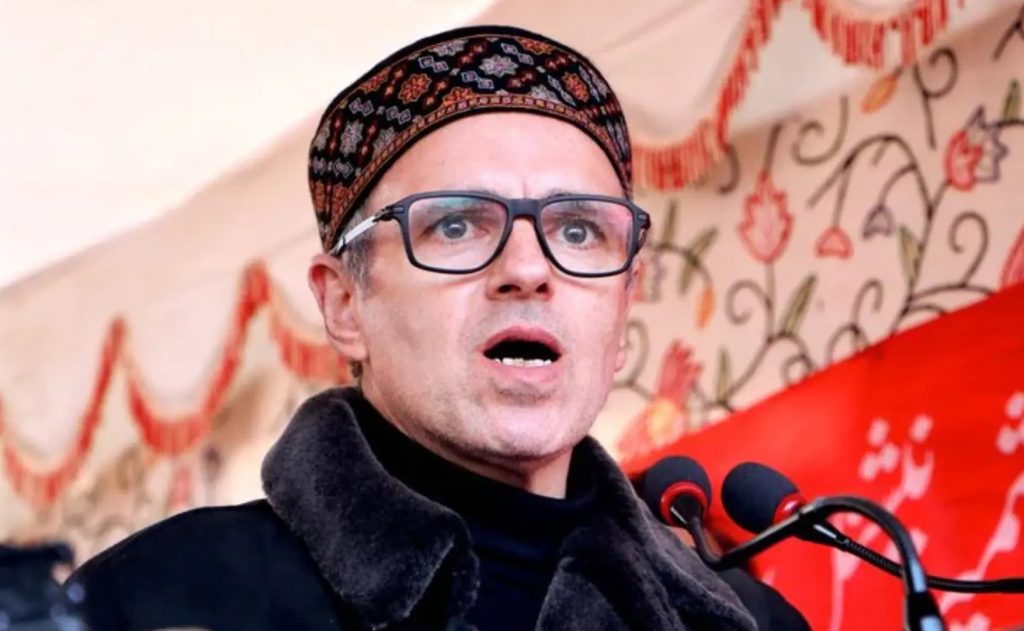
Srinagar: The Congress and National Conference leader Omar Abdullah are at odds over the reliability of Electronic Voting Machines (EVMs), marking another point of tension within the INDIA bloc alliance. Congress MP Manickam Tagore defended his party’s stance and asked Abdullah to “check his facts” after the Jammu and Kashmir Chief Minister questioned opposition parties’ objections to EVMs.
Tagore clarified that the Samajwadi Party (SP), Nationalist Congress Party (NCP), and Shiv Sena (UBT) had voiced concerns over EVMs, not just the Congress. “The Congress Working Committee resolution clearly addresses the Election Commission of India. Why this approach to our partners after being Chief Minister?” Tagore tweeted.
Abdullah, however, dismissed the objections, arguing that EVMs cannot be criticized selectively. “When you get 100-plus MPs using the same EVMs and celebrate that as a victory, you can’t then, a few months later, say… we don’t like these EVMs because now the election results aren’t going the way we want them to,” Abdullah told PTI in an interview.
Citing his own experience, he added, “When I lost in the Lok Sabha elections earlier this year, I never blamed the EVMs. How can you have problems with EVMs and then continue to fight elections? If you don’t trust the machines, then you shouldn’t fight elections. You can’t say if I win, I’ll keep quiet, but if I lose, the machines are faulty.”
The Congress and its allies, including the SP and NCP, have recently called for a return to paper ballots following significant electoral defeats in Haryana and Maharashtra. Abdullah’s remarks suggest a disconnect between the National Conference and its ally on this issue.
Seizing the moment, BJP IT Cell chief Amit Malviya took aim at the Congress and its leader Rahul Gandhi, tweeting, “EVMs can’t be good when Congress wins and bad when they lose. Rahul Gandhi is increasingly looking like a loser no one wants to stand with.”
The issue of illegal immigration from Bangladesh to India has long been a contentious one, with estimates varying widely on the actual number of Bangladeshis who have crossed the porous 4,096-kilometer border. Over the years, Indian political leaders have made bold claims about the scale of this problem. G. Kishan Reddy, the then Minister of State for Home Affairs, famously remarked that “Bangladesh would be half empty” if India allowed every illegal immigrant to claim citizenship. In 2004, Sriprakash Jaiswal, another former Minister of State for Home Affairs, told Parliament that there were as many as 12 million illegal Bangladeshis in India. Twelve years later, Kiren Rijiju, then Minister of State for Home Affairs, raised this figure to 20 million. Despite these alarming figures, reliable data on the true scale of illegal immigration remains elusive.
The gravity of the situation was highlighted by Union Home Minister Amit Shah, who, while campaigning during recent elections in Jharkhand, accused some state governments of patronizing illegal Bangladeshi immigrants for vote-bank politics. He further alleged that these immigrants were marrying tribal women under pretenses to acquire land.
However, the heart of the issue lies not just in the numbers, but in the ease with which illegal immigrants from Bangladesh gain access to India. Tehelka’s cover story, “Passports Made to Order,” deeply delves into the dark world of fake documentation that facilitates this illegal migration. Through an extensive undercover investigation, Tehelka has exposed a network that enables Bangladeshi nationals to obtain forged Indian passports, Aadhaar cards, PAN cards, voter IDs, and even birth certificates. This illegal trade operates from the streets of Kolkata to high-end hotels in Delhi, where unscrupulous agents promise to fabricate entire identities.
One agent, who claimed to have been in the business for years without ever being caught, openly admitted to producing fake Indian documents for Bangladeshi clients. Another agent boasted of his ability to smuggle people into India, fabricate their identities, and arrange their Indian documentation, including voter IDs and school certificates. These revelations show that the problem is not isolated but an extensive operation that undermines national security.
With the recent political developments in Bangladesh leading to increased migration, the threat of illegal immigration is likely to grow. The economic, social, and security implications for India are profound. To address this challenge, India must take a multifaceted approach. Strengthening border security with advanced monitoring systems, including cameras and sensors, should be a priority. Additionally, India could seek expertise from international organizations such as the United Nations High Commissioner for Refugees (UNHCR), the International Organization for Migration (IOM), and the International Centre for Migration Policy Development (ICMPD) to develop more effective strategies for tackling illegal immigration. The key to addressing this issue lies in closing the loopholes in our immigration and security systems to stem this dangerous tide.
The architectural heritage of Himachal Pradesh, marked by the eco-friendly Kath-Kuni style of wood-and-stone construction, blends functionality with beauty. Its historic temples and homes, which showcase timeless craftsmanship, now face modern challenges, writes Deepanwita Gita Niyogi
The majestic Himalayas, the elusive snow leopard, delicious apples and the home of His Holiness the Dalai Lama Lama – the mountainous state of Himachal Pradesh in northern India has a lot to offer tourists, both international and domestic.
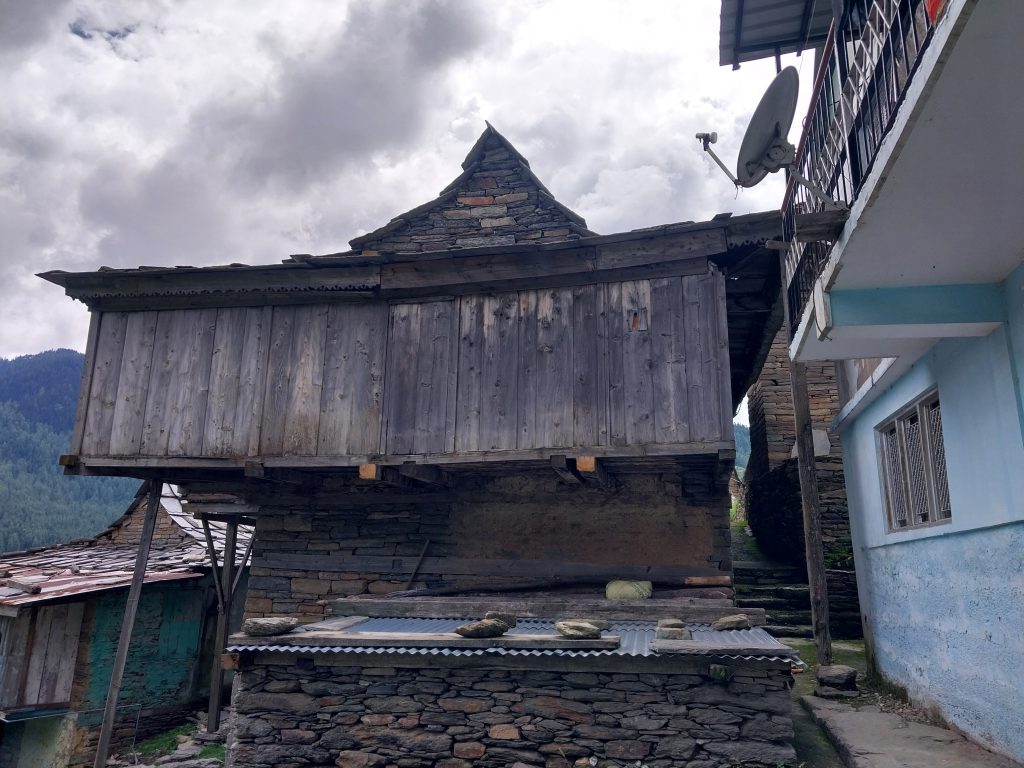
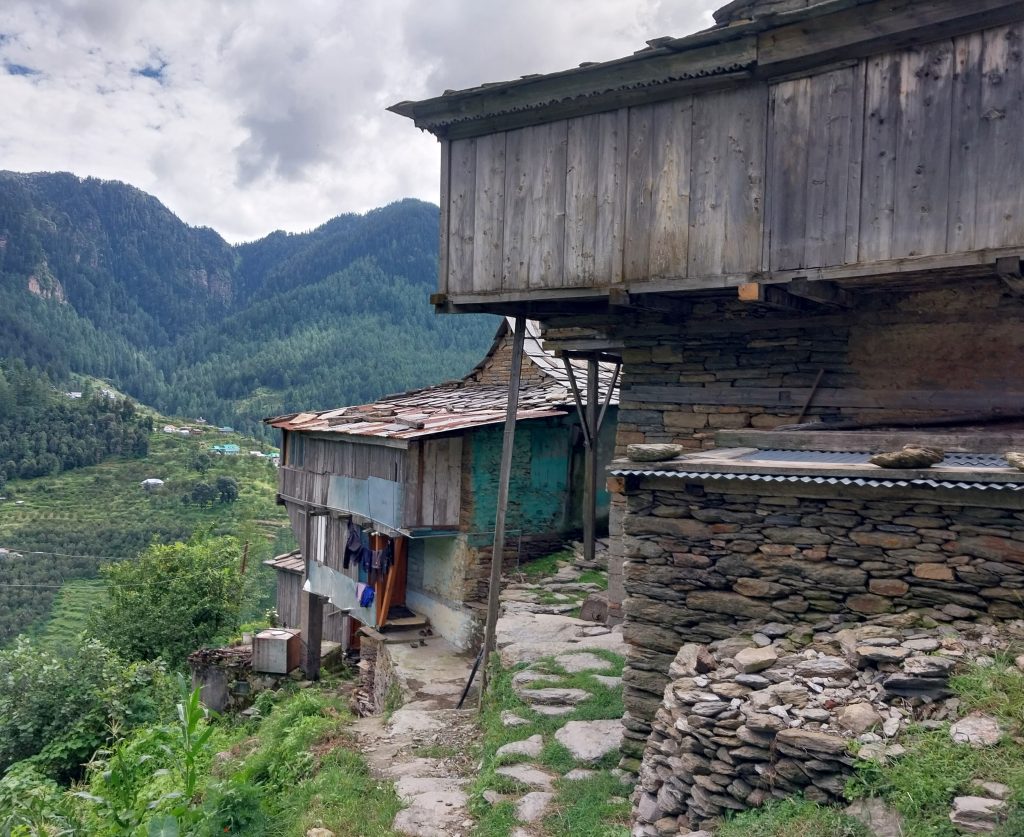
However, the state’s architectural grandeur is also noteworthy as structures made of stone and wood combined together can still be seen in many places. This is the famous Kath-Kuni style.
As a design, Kath-Kuni has multiple extant patterns. The word kath means wood and kuni stands for corner. So, any kind of wood and stone combination used in building is known as Kath-Kuni. There is also the Dhajji Kuni style found in Chamba district of the state. It is a crossed style made with stone and wood. Chamba offers scenic beauty and cultural heritage, and is well-known for arts and crafts.
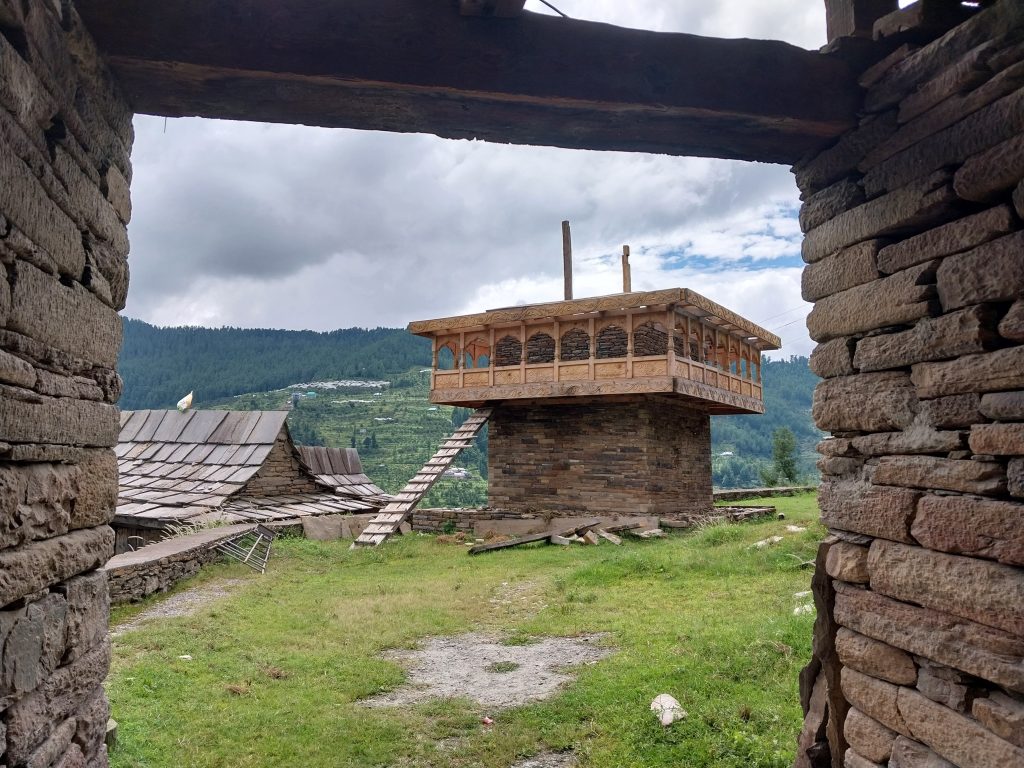
Some of Himachal’s old houses and ancient temples still bear this type of look. Temples in Chamba, as well as places like Kullu and Shimla districts, are made in the Kath-Kuni style, where wood has been used for construction and the roof is made up of stones (slate).
Origins of Kath-Kuni
According to Nikhil Thakur, this trend started when stone quarries were found in places across the state like Kangra, Chamba, Mandi, Shimla and Khanyara. The latter is a village in Dharamshala, famous for being the seat of Tibetan Buddhism. Thakur is a Ph.D scholar and teaching associate, Department of Anthropology, Amity University, Noida.
Manoj Sharma, a resident of Shimla district, pointed out that structures made of wood and stone are eco-friendly. They provide warmth in the harsh winters when many parts of the state receive heavy snowfall. In the summer season, the temperature inside such houses and temples remains cool. A temple near Sharma’s house is almost 1500 years old. Both stone and wood have been used in its construction.
“Traditional temples of Himachal Pradesh are mostly built in the pagoda style as part of Kath-Kuni. This ensures that snow does not accumulate on the top during winters. Such temples are seen in Chamba, Shimla and parts of Kullu district,” said Thakur.
Apart from the eco-friendly aspect, temples, built of stone, have beautiful and intricate designs made on them. For construction, the quality of the stone has to be good, said Kishore Negi, a staff, who works at the Dr YS Parmar University of Horticulture and Forestry in Solan district. Mostly black and grey coloured stones are used and the wood is collected from nearby forests. Some of the trees used for wood are deodar, tosh and tunni.
Thakur explained that before slate came into vogue, either grass or mud was used. It was locally known as khapru. “However, after 1900, slate became popular because of factors like strength and durability. One can still see 100-year-old houses and the slate used in them is in a good condition even today. In Khanyara, even small bridges made of slate can also be seen. Thick slabs of slate are used for these. It was slate which made Khanyara, Asia’s richest gram panchayat long ago,” he added.
Slate is commonly attached to wooden batons using thick nails. “But there are different kinds of placements of the slate. A popular style is the placement of one slate between two wooden batons. It is popularly known as lehardaar slate.”
Dip in demand
Unfortunately, over time, with the rise in the popularity of tin shades and the low availability of slate, the latter’s usage has almost disappeared. Gone too are these traditional houses and temples of Himachal. Tin shades look attractive because of the colours. The high cost of slate also discourages people from using it. Also, after years of extensive mining, slate production has hit a low.
“However, some people have started using slate once again. But there is a twist. Normally, slate is now used with cement as tiles for roofing,” the scholar explained.
Slate roofs have a deep cultural connection in Himachal. The belief is that such roofs are used to offer seeds to birds, which is a symbol of prosperity. Many local deities are also placed on slate roofs.
Even as an attempt on Sukhbir Badal’s life while he was serving religious punishment at the Golden Temple has rattled Punjab, the Shiromani Akali Dal grapples with an existential dilemmal—whether to maintain its modern secular outlook or retreat to its Panthic roots. A report by Aayush Goel
Punjab has been rattled again by the assassination attempt on Sukhbir Singh Badal, the former Punjab Deputy CM and former president of the Shiromani Akali Dal (SAD). Badal was targeted by a former Sikh militant Narain Singh Chaura, who has long been at odds with the Badal family.
On December 4, Sukhbir was stationed at the at the main entrance gate of Golden Temple (Darshani Deori) as part of his ‘Tankha’ (punishment for religious misconduct), handed down to him just two days before. Folded hands, ashen face and teary-eyed Sukhbir, clad in the blue sewadar uniform and holding a spear, was serving as a guard. Sitting in a wheelchair owing to a fractured leg, he was the center of the media’s attention for being a worthy example of penitence. It was then that Chaura targeted him and fired at him. The swift intervention of onlookers thwarted the attack, and Chaura was overpowered and handed over to the police.
The visuals of Chaura shooting at Badal while he sat at the gate of Golden Temple for his penance as ‘Tankha’ have rekindled fear in many that violence might once again dominate Punjab, this time because of an open confrontation between the radical and moderate streams of Sikhism. The SAD now faces the existential dilemma of whether to endorse modern secular Punjabiyat or go back to its Panthic roots.
The ruling Aam Aadmi (AAP) party is at the receiving end of brickbats as all political parties in Punjab are blaming them for not just the security lapse but the revival of Khalistani terrorist elements in the state.
SAD leader Dr Daljit Singh Cheema accused CM Bhagwant Mann and the AAP government of trying to cover up the conspiracy behind the attack by a Babbar Khalsa International (BKI) operative by registering a first information report (FIR) which termed the attack as “a sudden one from a member of the ‘sangat’ and claimed that “fire was opened in the air”.
“It is now clear that the AAP government is part of the conspiracy to finish off the moderate Sikh leadership. The CM is now working overtime to ensure the deep-rooted conspiracy behind the attack on Sukhbir Singh Badal, which sought to eliminate the latter, does not see the light of day,” Cheema alleged. The SAD has even accused Punjab police of colluding with Chaura. The party asserted that Amritsar Police was trying to weaken the case and conceal the evidence of Chaura openly meeting police officials while doing the recce of the premises before the attack.
AAP however retaliated by saying that it was their security arrangements that saved Sukhbir and there was no disruption in the state. “It was our vigilant police and security arrangements that saved Sukhbir and helped them nab the accused from the spot itself. Such issues impact the entire state and using them for petty politics is not right. AAP is responsible for peace in the state and we are doing a good job and it’s a few political leaders who are trying to defame the state and government for personal gains,” said AAP MP Malwinder Singh Kang while speaking to Tehelka.
Investigations so far
Narain Singh Chaura, born in 1956, is a resident of Dera Baba Nanak area of Punjab. A known separatist in the nineties and early 2000, Chaura has emerged from oblivion and gathered attention worldwide. He became a part of the separatist movement in the 1980s and gained notoriety for masterminding the 2004 Burail jail-break, which enabled several high-profile terrorists, including Jagtar Singh Hawara and Paramjit Singh Bheora, to escape by disabling the prison’s electricity supply.
A former employee of the Shiromani Gurdwara Parbandhak Committee (SGPC), he fled to Pakistan following the army action inside the Golden Temple in 1984. After returning to India in the mid-1990s, Chaura was arrested several times for militant activities, including a major arms smuggling case in 2013. Chaura remains a controversial figure linked to ongoing separatist threats in Punjab. The radical groups seek the Panth Rattan Award for Chaura.
While Chaura continues to be in remand by Punjab police, the investigations so far reveal that the unsuccessful assassination attempt was not a lone-wolf attack. The police suspect the involvement of at least two or three suspects in the attack as they investigate the source of the 9 mm pistol used by the former terrorist.
Following the interrogation of Chaura, the police teams are learned to have raided the house of one Dharam Singh at Ekalgadda Khurd village under Verowal police station in Tarn Taran district at least twice, but he could not be traced. Meanwhile, even SGPC has come under scanner as Counsel Jagdeep Singh Randhawa highlighted that Chaura had met SGPC chief Harjinder Singh Dhami minutes before the attack. The Punjab police also claimed before the court that the SGPC was not providing CCTV footage from all the cameras installed in the Golden Temple Complex for it to investigate the movements of the accused from December 2 to 4 when he reportedly did the recce.
SAD at cross roads
The attack on Sukhbir Badar highlights the dilemma he and his party face currently. The party and its once undisputed leader face a tough choice, the idea of Punjabiyat or return to Panthic politics. The party and the leader now need to choose between regaining the lost support of its core Jat Sikh peasant vote bank or retaining its outreach to non-Sikh communities.
Following the attack, the radical factions are now pushing for a return to the SAD’s old, narrow, conservative “panthic” persona. The present crackdown by the Akal Takht is, after all, the result of the SAD’s attempt to lure Dalit and OBC votes controlled by the Sirsa Dera Sacha Sauda head Gurmeet Ram Rahim. Badals had played a crucial role in getting Ram Rahim pardoned from Akal Takht in 2015 for his blasphemous act of impersonating Guru Gobind Singh.
Sukhbir, once the undisputed face of panthic politics has been under fire in his party and SGPC for allegedly undermining Sikh institutions during his heyday. For over a decade, radicals within the Sikh community had been demanding accountability from the Badals. While this punishment served as solace for some, others dismissed it as lenient as it had no political consequences on Sukhbir and the Akali leadership.
The acknowledgment of his anti-Panthic deeds and consequent punishment has risked Sukhbir’s already fragile political fortunes as the Sikh clergy has also directed SAD’s working committee to accept his resignation. The Sikh high priests suggested that the current Akali leadership had lost its legitimacy, calling for a complete overhaul. A committee was formed to oversee this transition, which includes SGPC president Harjinder Singh Dhami and figures less inclined to protect Sukhbir’s interests, such as Satwant Kaur, daughter of Jarnail Singh Bhindranwale’s close aide Amrik Singh. The ‘Tankha’ for a sitting Akali Dal chief is unprecedented in Punjab. Earlier, leaders like Master Tara Singh, J.S. Talwandi and Surjit Singh Barnala had faced similar religious censures and struggled to reclaim their political footing. The next assembly election is due in February 2027. Though Sukhbir may have time on his side but he and his party, SAD, face a huge challenge to stay relevant.
Amid the party’s attempt at revival lies a crucial challenge: preventing radical elements from capturing the mainstream Panthic space. The Lok Sabha victories of radicals like Amritpal Singh and Sarabjeet Singh Khalsa had signaled this drift, though with the SAD staying away from the recent assembly by-polls, the core Akali voters shifted decisively towards the ruling AAP. For decades, the Badal family had worked to stabilize peace and expand the space for moderate Sikhs in Punjab. Thus, the radicals had been pushing for punitive measures to erase the Badals’ influence. The Sikh clergy’s actions, including revoking the title of Panth Rattan Faqr-e-Quam (Pearl of the Sect, Pride of the Community) bestowed on the late Parkash Singh Badal and withdrawing facilities from former Akal Takht chief Gurbachan Singh, align with these radical pressures.
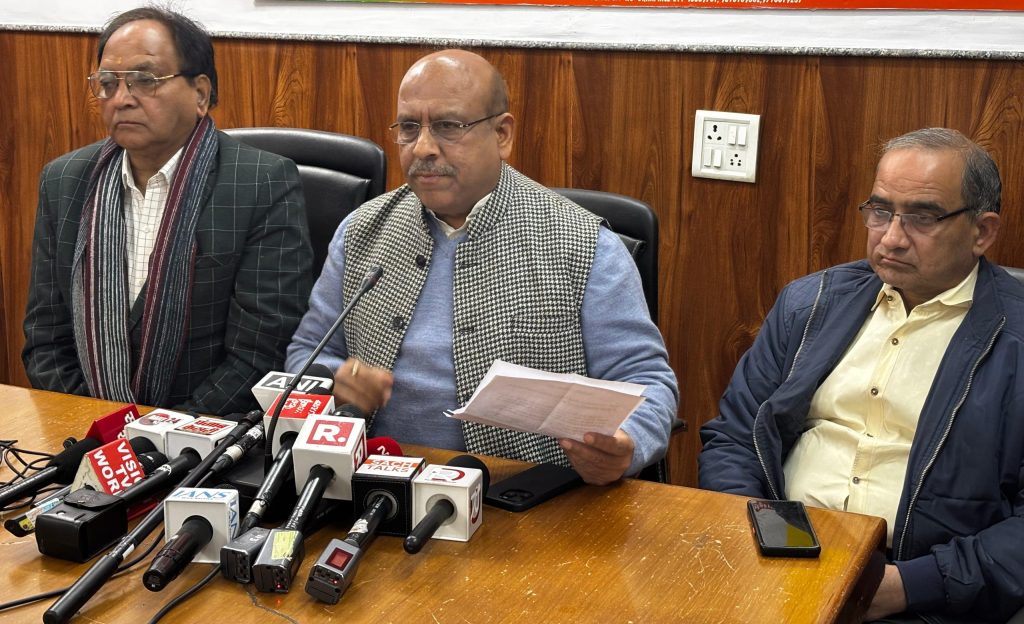
The Bharatiya Janata Party (BJP) has demanded a special session of the Delhi Assembly to table 14 Comptroller and Auditor General (CAG) reports which it claims to be suppressed by the Aam Aadmi Party (AAP) government to cover up its alleged corruption and misconduct.
The Leader of Opposition in the Delhi Assembly, Vijender Gupta said that party’s legislative group would soon meet the Lieutenant Governor (LG) to request him to issue directives to the government to ensure the reports are tabled in the Assembly.
Gupta noted that despite consistent pressure from the Opposition, and multiple requests from the LG and Finance Secretary, the AAP government has not tabled these reports in the Assembly.
After BJP MLAs and the Leader of the Opposition filed a petition in the High Court, the government was compelled to send 10 out of the 14 reports to the LG. He emphasized that the government must send all 14 reports and table them in the Assembly through a special session,
Gupta further remarked that the reports on pollution and the excise policy, among those sent to the LG, are of critical importance. He accused the government of inaction on pollution and stated that, given the ongoing ED investigations and allegations of corruption against AAP leaders in the excise policy case, tabling these reports in the Assembly is crucial for transparency.
He pointed out that since 2017-18, CAG reports for seven financial years (up to 2021-22) have been pending with Delhi Finance Minister Atishi. Despite being notified, the Delhi government has failed to present them in the Assembly.
“The Principal Account Office had formally reminded Minister Atishi Marlena in a letter dated October 17, 2024, that under Article 151 of the Constitution, Section 411 of the Government of NCT of Delhi Act, 1991, and Regulation 210 of the Audit and Accounts Regulations, 2007, the CAG reports must be mandatorily presented in the Delhi Assembly. Yet, the government has continued to withhold these reports,” Gupta said.
He also criticized the Speaker for preventing BJP MLAs from raising this issue in the Assembly and for having them marshalled out. He accused the AAP government of deliberately suppressing these reports to hide its financial irregularities.
He asserted that the people of Delhi have the right to know about the government’s financial activities but alleged that AAP is intentionally withholding this information.