Sunday, December 28, 2025

Delhi-Srinagar train service to begin in four months: Officials

The Udhampur-Srinagar-Baramulla Rail Link (USBRL) project in Jammu and Kashmir has reached a major milestone with the completion of its final track work. 

Union Minister Ashwini Vaishnaw announced the achievement on Friday, calling it a “historic milestone.” In a post on the social media platform X, Vaishnaw wrote, “Final track work on the Udhampur-Srinagar-Baramulla Rail Link is complete. The ballastless track work for the 3.2-km-long Tunnel T-33, located at the foothills of the Shri Mata Vaishno Devi Shrine and connecting Katra to Reasi, was successfully completed today at 2:00 AM.”

With the 17-km stretch between Katra and Reasi now complete, inspections and trial runs are expected to begin soon. 

An official said, “The first train from Kashmir to Delhi is expected to commence operations within the next four months (March-April).” 

The new service will feature the third version of the Vande Bharat train, a sleeper variant, which will reduce the 800-km journey to less than 13 hours.

The 46-km route from Sangaldan to Reasi, which passes through tunnels and the world’s highest railway bridge—the Chenab Bridge—has also been completed. 

The official added, “The section from Sangaldan to Reasi has been completed, and the Commissioner of Railway Safety (CRS) certificate has also been received.”

Earlier this year, the 48.1-km Banihal-Sangaldan section of the USBRL project was inaugurated by Prime Minister Narendra Modi. The USBRL project, covering 272 km, was sanctioned in 1994-95 and includes 38 tunnels and 927 bridges.
For the first time, Doordarshan can now be seen in Maoist-affected Chhattisgarh village

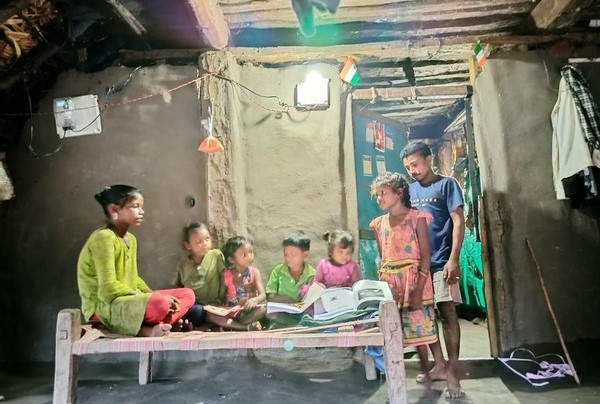
In a landmark development, the residents of Puvarti, an extremely Maoist-affected and remote village in Sukma district at the southernmost tip of Chhattisgarh, watched national and international news, serials and local films on Doordarshan after 78 years of independence.

This initiative marks a significant step toward rapid development in Maoist-affected areas, bringing positive changes to remote villages like Puvarti, Silger, and Tekalgudiyum.

On this historic occasion, children from the village watched educational programmes and cartoons with visible joy and excitement.

Under the leadership of Chief Minister Vishnudev Sai, the Chhattisgarh government has launched the Niyad Nellanar Yojana to promote development and extend the benefits of welfare schemes to the remotest villages. The main objective of the initiative is to ensure 100 per cent implementation of central and state government schemes in these areas.

Through the Chhattisgarh State Renewable Energy Development Agency (CREDA), solar-powered appliances such as lights and fans were distributed to families in Puvarti. Additionally, Doordarshan TV sets were installed in Puvarti, Tekalgudiyum, and Silger, with two sets in each village. This initiative has addressed the issue of power shortages and liberated villagers from darkness.

Villagers expressed their delight, stating that the solar fans would provide much-needed relief in the summer and TV sets and solar-powered appliances have brought a sense of hope and transformation to their lives.

Banjam Madgu from Niyad Nellanar, and Bandipara in Puvarti, said, “We never imagined having TVs in our village. Watching news, serials, and films for the first time feels like being connected to the world. The solar lights and fans will brighten our nights and ease the heat. This is nothing short of a miracle for us.”

Youth from the village, including Nuppo Hadma from Tumalpara in Puvarti, added: “Studying at night will now be easier with the help of solar lights. The educational programmes on Doordarshan will provide valuable information to the children.”

District Collector Devesh Kumar Dhruv highlighted that delivering solar-powered appliances to remote and Maoist-affected villages is a significant step toward development. He emphasized that these efforts are not only meeting the basic needs of villagers but also promoting sustainable energy and environmental conservation.

Verses of hope: Rakhshanda Jalil’s poetic call for togetherness

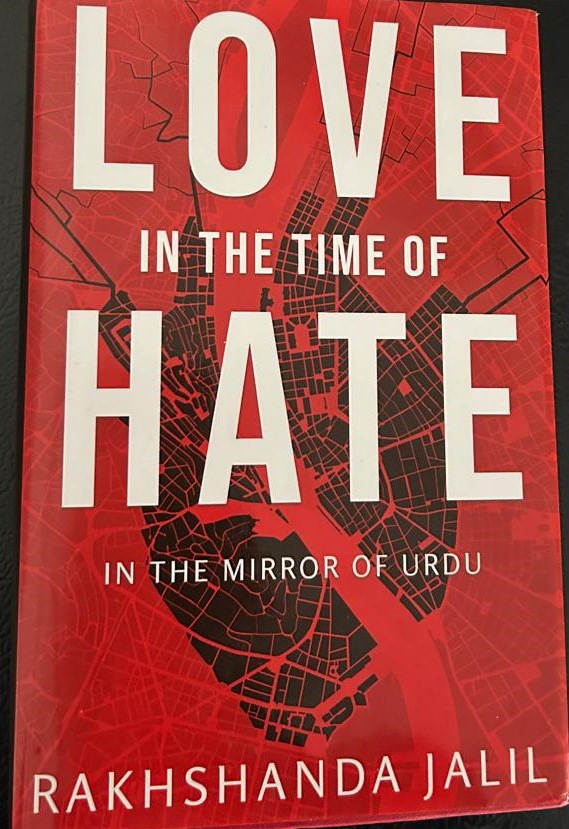
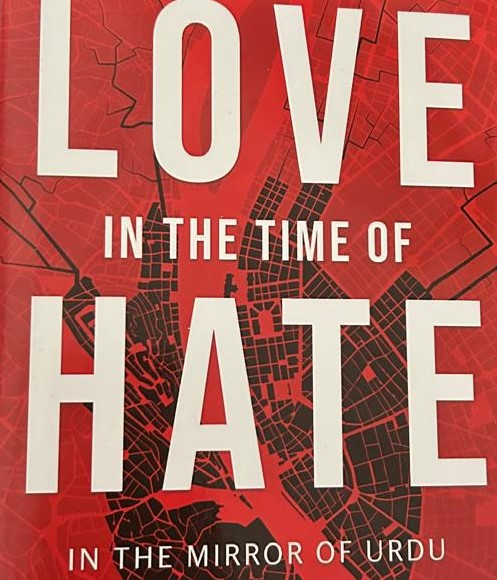
In  “Love In The Time of  Hate –  In  The  Mirror of  Urdu,”  Rakhshanda Jalil presents an essential collection of verses reflecting optimism amidst communal turbulence, offering a beacon of hope in our challenging times. This collection underscores the enduring power of poetry and unity, and highlights the poets’ quest for bonding and togetherness. A book review by Humra Quraishi

An absolutely relevant volume in the communally surcharged, dark and turbulent times we are living in…nay, surviving in.  Perhaps, the relevance emerges from the fact that this volume holds out verses relaying a certain level of hope amidst all the gloom and despair.

To quote author Rakhshanda  Jalil: “ In  Urdu, the  poet  has  constantly  been the  voice of  optimism and  hope, pointing towards a  better  future. When the  country  emerged from  a bitter fratricidal war,  licking  the  wounds  inflicted  by  brother-upon-brother,  neighbour-upon- neighbour,  Majaz  wrote: Hindu Muslim  Sikh  Eesai aman  ke  moti  ro  lengey/Khoon  ki  Holi  khel  chukey hain  rang  kei  dhabbe  dho  lengey / (Hindu  Muslim  Sikh  and  Christian shall  weep  pearls of  peace /Having  played  Holi with  blood, they’ll wash off the  coloured stains.)

This volume is loaded with verse after verse. Broadly divided into four  sections: politics, people, passions and places; the  common  factor  seemingly  unchanged. And that is, the poets’ earnest quest  and call and urge  for  that bonding and  togetherness.

Anand  Narain  Mulla’s verse: Main faqat  insaan huun Hindu Musalmaan kuchh nahin/Mere  dil ka dard mein tafreeq-e-eemaan kuchh  nahiin (I’m only a  human; not a Hindu or a  Musalman /The sorrow in my heart is not separated by dogma.)

Also this verse of  Qateel Shifai: Humko aapas mein mohabbat nahin karne detey/Ik yahi aib  hai iss shahr ke danaon mein  (They do not let us  love each other / That is the only  defect in the  wise of this city.)

Leaving you with these two verses from the very last page of this volume: Jigar  Moradabadi’s:  “Naya  zamana  banane  chale thhey deewaaney/Nai zameen  naya aasman bana nahin sakey (  The foolish  folk  had set out to  make a  new world/ But they  could  not make a new earth and a  new sky.)

Then then there’s this verse of Ajmal Sultanpuri: Musalmaan aur Hindu ki jaan/ Kahaan  hai  mera  Hindostan/Main usko  dhundh raha hoon/  (The life of Muslims and Hindus/ Where is  my India?/ I am searching for it. )

I’m tempted to quote many more verses but quite obviously space constraints do come in way. Before I end, I must mention that the big factor to this volume is author Rakhshanda’s prose which lies tucked in, along with the verses. Her comments and commentary are of much significance as she offloads much on the current scenario prevailing in the country.

BOOK – REVIEW

Title of the book – Love In The Time of  Hate –  In  The  Mirror of  Urdu

Author –  Rakhshanda  Jalil

Publisher –  Simon & Schuster India

Price –Rs 699

Pages  –  427

Sandeep Dikshit to take on Kejriwal, reclaim legacy of Sheila

Sandeep Dikshit & Arvind Kejriwal

With fielding Sandeep Dikshit, Congress has sent a clear message ahead of Delhi assembly elections, that it wants to reclaim the legacy of its stalwart leader Sheila Dikshit. 

This move shows the seriousness of the party to reclaim power in the national capital.

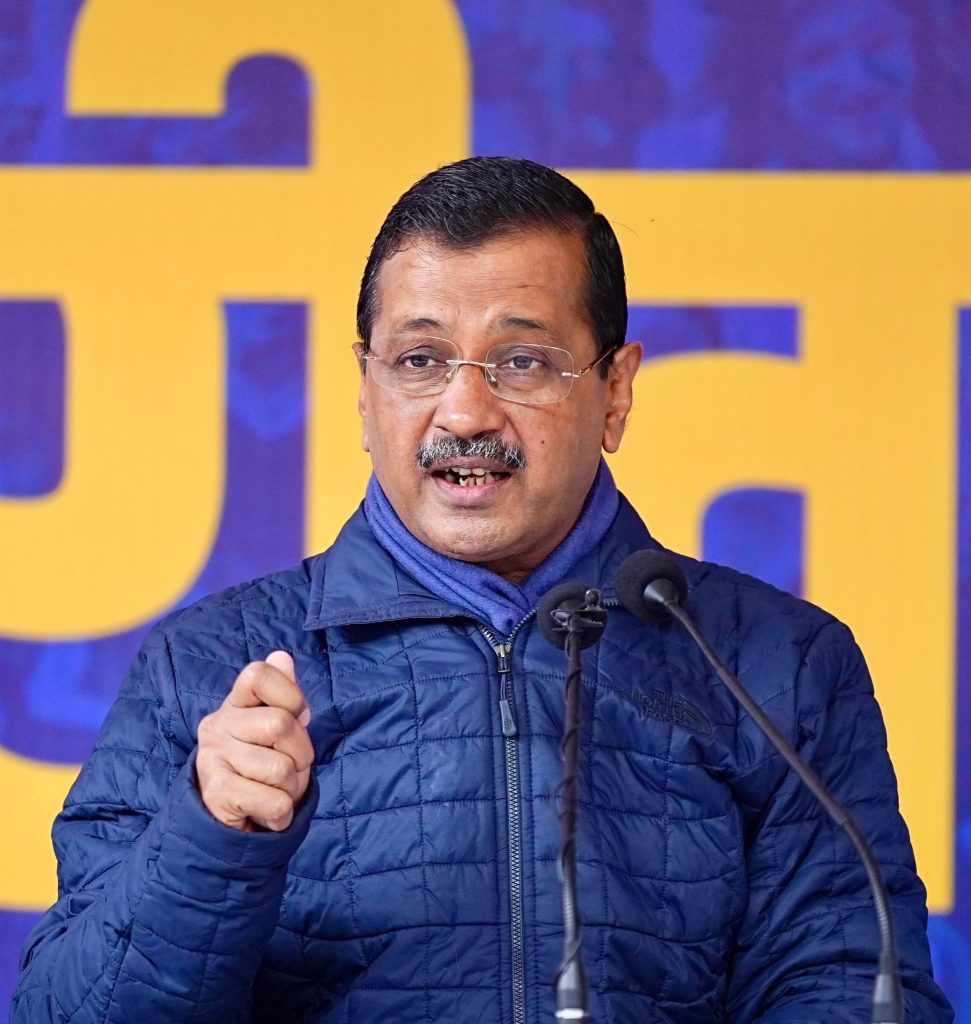
Now, former MP Sandeep Dikshit is set to contest the assembly elections from the New Delhi, a constituency represented by his mother. He has been pitted against Arvind Kejriwal, which seems to be battle set for reclaiming the legacy of former CM who had been accused of corruption by the AAP chief regularly. 

“I am happy to contest from New Delhi. It is not about revenge from AAP but to reclaim the development model of Delhi that was evolved under Sheila ji,” Sandeep Dikshit said.

In 2013, Aam Aadmi Party led by Arvind Kejriwal defeated Sheila Dikshit to become the chief minister of Delhi.

For Sandeep, and the Delhi Pradesh Congress Committee, the fight is personal. The Congress is now likely to point out the flawed way that Kejriwal targeted the tallest leader in Delhi, Sheila Dikshit.  

It must be pointed out that the massive public outrage fuelled by Kejriwal’s movement had almost derailed the  political careers of several of Sheila Dikshit’s proteges including Ajay Maken, Arwinder Singh Lovely, Raj Kumar Chauhan and Sandeep. 

Congress yesterday released a list of 21 candidates who will contest the assembly elections in Delhi.

Former Delhi minister Haroon Yusuf will contest from Ballimaran, while former Delhi Congress president Chaudhary Anil Kumar will take on AAP’s Awadh Ojha in Patparganj. National spokesperson Ragini Nayak has been nominated from Wazirpur, and Adarsh Shastri will represent party in Dwarka.

Other candidates include Ali Mehndi from Mustafabad, Rohit Chaudhry from Nangloi Jat, and Praveen Jain from Shalimar Bagh.

The candidate list was finalized during a meeting of the Congress Central Election Committee (CEC), chaired by party president Mallikarjun Kharge. Senior leaders, including former Congress president Rahul Gandhi, Ambika Soni, Salman Khurshid, TS Singh Deo, and Mukul Wasnik, participated in the deliberations. Delhi Congress chief Devender Yadav was also present at the meeting who is contesting polls from Badli constituency.

“All categories are taken care of in our list. You will also get to see young faces im the list. I am happy that our leadership has talked and discussed with everyone,” Yadav said. 

The Delhi Assembly polls are due to be held in February 2025. 

Priyanka Gandhi in attack mode against NDA govt

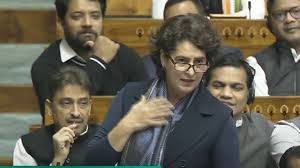
Congress’ Wayanad MP Priyanka Gandhi Vadra attacked the National Democratic Alliance government on Friday in Lok Sabha, accusing it of undermining the Constitution and corrupt practices favouring a select group. 

In her debut speech in the Lok Sabha, the Congress leader also pointed out towards the deteriorating law and order situation and growing poverty. 

Without mentioning anyone’s name, Priyanka took potshots over the alleged ties between a business group and the ruling regime. 

“The country is watching as 142 crore Indians are being ignored to shield one person. All businesses, money and resources are being handed to one individual. From ports to airports to mines, public-sector companies are being given to one man alone,” she said. 

Wayanad MP alleged that Bharatiya Janata Party was systematically eroding the democratic principles of the Constitution. 

“Our Constitution is a ‘suraksha kavach’. In 10 years, colleagues of the ruling side who make tall claims have made all attempts to break down this ‘kavach’,” she said. 

She also accused the government of attempting to weaken principles of social justice enshrined in the Constitution by undermining reservation through measures like lateral entry into government services and privatisation, an allegation repeated by the Congress over the past few years. 

Congress chief Mallikarjun Kharge, former UPA chief Sonia Gandhi, along with Priyanka’s husband Robert vadra and her son Rehan Rajiv Vadra were present in the viewers gallery of Lok Sabha to listen to Priyanka’s maiden speech.  Opposition members, were seen frequently thumping their desks while Priyanka delivered the speech.

Is Rahul Gandhi unwilling to learn from repeated mistakes?

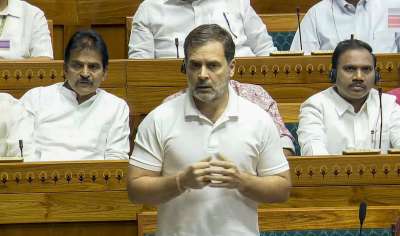
Senior Congress leader and Leader of Opposition in Lok Sabha Rahul Gandhi is seemingly unwilling to learn from repeated mistakes and keeps on taking up issues that find no resonance with his partners within the INDI alliance.

The senior leader has continued to take up the issue of alleged corruption by the Adani group in collusion with the Central government throughout the ongoing winter session of Parliament. However, it must be noted that several important INDI bloc members, including the Samajwadi party, Trinamool Congress and Aam Aadmi Party, have continued to maintain a safe distance from the issue.    

It is understood that leadership of these INDI allies have repeatedly told the Congress high command regarding their reservation on taking up the issue as they find that it is not finding support amongst the common masses. There is a sentiment that the opposition should take up matters that concern the common people and not waste their time in creating pandemonium over non-issue that may not have an impact in elections.    

Many leaders of the INDI bloc also feel that the way Rahul Gandhi has been acting inside and outside the House “lacks dignity”. “There was no need for him to conduct a mock interview with his party MPs wearing masks. The entire episode was undignified and lacked the respect that needs to be shown towards a Constitutional post like Leader of Opposition in Lok Sabha,” said a senior leader.   

Since the session began on November 20, the two Houses have witnessed constant washouts over the Congress-backed attacks on the Central government for avoiding a discussion on allegations of alleged bribery against Adani in a US court.

Fissures in INDI bloc?  

The lack of enthusiasm shown by the opposition INDI alliance to defend Rahul Gandhi when he was termed a “traitor” and “in collusion with forces trying to break India” also reveals that there is a complete lack of coordination amongst opposition allies. 

The Bharatiya Janata Party had accused Rahul of being a “traitor of the highest order” and being linked to the George Soros-linked foundation.

This repeated attack has so far met with muted response despite the fact that the Congress currently has 102 members and Opposition has 249 MPs in the lower house of Parliament.

The entire episode also reveals that the relationship between Congress and its important INDI bloc partners has been strained over the past few weeks.

Many INDI bloc members have continued to stay away from the Congress-backed protests outside the Parliament, amid indications that strain in relations has crept into alliance.

While SP chief Akhilesh Yadav has not attended any INDI bloc floor leaders’ meeting during the ongoing session, Trinamool Congress has already distanced itself from the Adani-centric strategy led by the Congress. 

 There is a growing feeling in the INDI bloc partners that the Congress, namely Rahul Gandhi, also needs to take top leadership of other opposition parties into confidence on Parliament related strategy plans. The remaining period of the ongoing winter session is likely to lay bare any further differences that seem to be regularly arising in the opposition INDI bloc.

AAP announces Mahila Samman Yojana ahead of 2025 polls

The Delhi government cabinet on Thursday approved the Mahila Samman Yojana scheme under which eligible women will receive Rs 1000 every month, ahead of forthcoming assembly election in the national capital.

“I am proud to announce that under the leadership of Atishi, the Delhi cabinet has approved the Mahila Samman Yojana scheme to provide Rs 1000 to each woman every month in Delhi. Now this scheme is active, women have to register for the same to get the benefit of this scheme,” AAP chief Arvind Kejriwal said.

The Delhi Assembly polls are due to be held in February 2025. However, the Election Commission has not announced the dates of the polls.

The AAP is seeking to retain power in the national capital for the third term in 2025 after the electoral success in 2015 when the party won 67 seats out of 70. In the last Delhi Assembly elections which were held in 2020, AAP won a landslide victory and secured 63 of the 70 seats.

He said that the scheme should have been implemented in April this year, however, I was sent to jail due to false cases against me.

“I announced this scheme in the month of March this year and was hopeful of implementing it in the April-May but they sent me to the jail in fake cases. When I came back, I started working on the scheme. I am glad that with the efforts of the party, we have implemented this scheme in Delhi,” he added.

Meanwhile, he also announced that this amount will be raised to Rs 2100 following the assembly polls.

“I announce today that registration will start tomorrow and it will be of Rs 2100,” he said.

The Delhi government had announced the “Mukhyamantri Mahila Samman Yojana” in the budget 2024-2025 for providing Rs 1000 to each eligible woman in Delhi every month. An allocation of Rs 2,000 crore was also made by the government in the budget for the scheme.

Soon after the announcement, the BJP was quick to respond and the party’s National Information and Technology Department in-charge Amit Malviya said that the same promises were made in Punjab during Lok Sabha elections but none was fulfilled.

Taking to micro-blogging site X, he said, “Arvind Kejriwal had made a similar announcement in Punjab two years ago and in Delhi before the Lok Sabha elections. Till date, not a single woman in Punjab has received a single rupee and the excuse given is the empty state of the government treasury.”

He further stated that respect and empowerment of women and daughters is possible only with Modi’s guarantee. “Women in Madhya Pradesh and Maharashtra are already getting the guarantee of the Modi government,” he said. 

Union Cabinet clears ‘One Nation, One Election’ Bill to streamline electoral process

New Delhi :  The Union Cabinet on Thursday approved the ‘One Nation, One Election’ Bill, aimed at improving electoral processes. The Bill is likely to be tabled in this Winter Session of Parliament.

According to the Centre this legislation will not only streamline the electoral process, but will also foster greater efficiency, and reduce the financial and administrative burden associated with conducting multiple elections at different times.

The Centre has stressed that the concept of ‘One Nation, One Election’ envisions to synchronise the electoral cycles of the Lok Sabha and state Legislative Assemblies, allowing voters to cast their ballots for both polls simultaneously.

By doing so, the government aims to address several challenges posed by the current system of staggered elections, which often lead to prolonged periods of electioneering, disruption in governance, and heightened expenditure.

Earlier in September, the Union Cabinet had approved the proposal for the ‘One Nation, One Election’ Bill.

Congress leader Tariq Anwar, while speaking to IANS, said, “This is a controversial issue. Ours is a federal structure in which it is not possible to implement ‘One Nation, One Election’. The Opposition has not been taken into confidence on the issue. All stakeholders must be taken into confidence before taking such a big decision.”

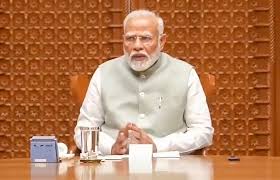
Earlier, Prime Minister Narendra Modi had hailed the proposal, saying that the Cabinet has accepted the recommendations of the High-Level Committee on Simultaneous Elections.

The High-Level Committee on Simultaneous Elections headed by former President Ram Nath Kovind had recommended holding concurrent elections for the Lok Sabha and state Assemblies followed by synchronised local body polls within 100 days.

However, critics have argued that implementing synchronised elections could pose logistical and constitutional challenges.

They highlight potential difficulties in dissolving Assemblies mid-way or addressing situations where a state government falls before completing its tenure.

Proponents of the Bill on the other hand argue that it will usher in a new era of stability and continuity in policymaking, as governments will no longer have to operate in a perpetual election mode.

BJP crosses 1 lakh membership mark in Kashmir Valley, eyes further expansion

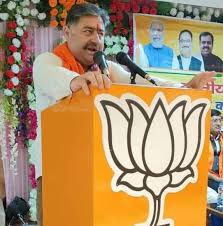
The BJP is making a determined bid to expand in Kashmir Valley of Jammu and Kashmir with its new regional president Sat Sharma intensifying membership drive. On Wednesday, former BJP MP Rekha Verma and BJP Primary Membership Drive Incharge J&K Munish Khajuria conducted a BJP Membership Review Meeting in north Kashmir town of Baramulla. 

The meeting was chaired by Verma, who is also BJP National Vice President, along with Khajuria. Verma praised the BJP Kashmir unit for successfully crossing 1 lakh memberships in the Kashmir region..

The meeting also saw active participation from the north Kashmir district units of Baramulla, Bandipora, and Kupwara, as well as the Mahila Morcha team. 

Earlier at a function in Srinagar on December 3, the J&K BJP chief Sat Sharma, urged the leaders to prioritize and intensify the BJP membership drive in Kashmir valley. He called on them to bring more people into the party fold, emphasizing that BJP’s mission is to include and empower every section of society.

 “Membership is the foundation of our strength. We must connect with people at every level and make them part of our vision for a progressive and united Jammu and Kashmir,” Sharma stated.

According to the party’s estimate, it has achieved a membership of 16 lakh 67 thousand members in 2019 in J&K. “This helped us to create history in J&K by securing maximum votes in assembly elections,” Sharma said earlier.

Centre Govt cuts wheat stock limit for traders in move to ease prices

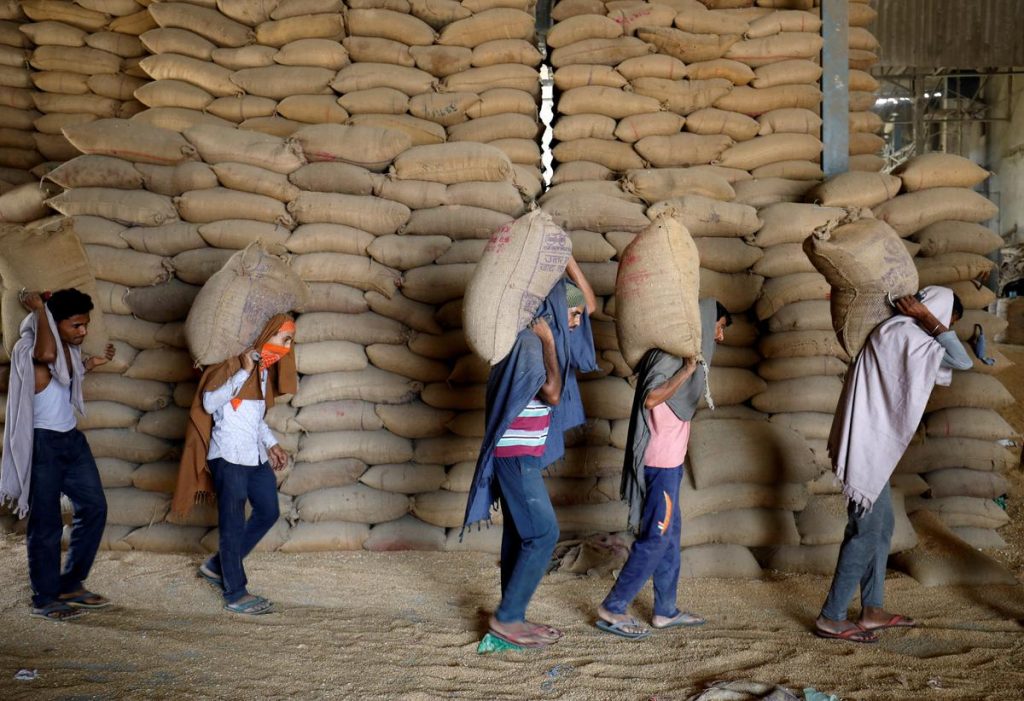
New Delhi: As part of its continuous efforts to moderate prices of wheat, the Central government has decided to reduce the Wheat Stock limit for wholesale and retail traders, which will be applicable until March 31, 2025.

The limit for wheat stocks has been reduced from 2, 000 metric tonnes to 1, 000 metric tonnes for wholesale traders, while it has been slashed to 50 metric tonnes from 100 metric tonnes for retail traders, according to a statement issued by the Ministry of Consumer Affairs, Food and Public Distribution on Wednesday.

The lower stock limits are aimed at preventing hoarding, which tends to drive up prices despite adequate stocks being available,
Entity which is found to have not registered on the portal or violates the stock limits will be subject to suitable punitive action under Section 6 and 7 of Essential Commodities Act, 1955, the official statement said.

In case the stocks held by the above entities are higher than the above prescribed limit, they shall have to bring the same to the prescribed stock limits within 15 days of issue of the notification, the statement added.

“The Department of Food and Public Distribution is maintaining a close watch over the stock position of Wheat to control prices and ensure easy availability in the country, ” it explained.

“A total production of 1, 132 lakh metric tonnes (LMT) of wheat was recorded during Rabi 2024 and there is ample availability of wheat in the country, ” the statement said.

In order to manage the overall food security and to prevent hoarding and unscrupulous speculation, the government of India imposed stock limits on Wheat applicable to Traders/Wholesalers, Retailers, Big Chain Retailers and Processors in all states and Union territories.

The Removal of Licensing Requirements, Stock Limits and Movement Restrictions on Specified Foodstuffs (Amendment) Order, 2024 was issued on June 24, 2024, and revised on September 9, 2024, and was applicable for all states and Union territories.

MOST POPULAR

HOT NEWS