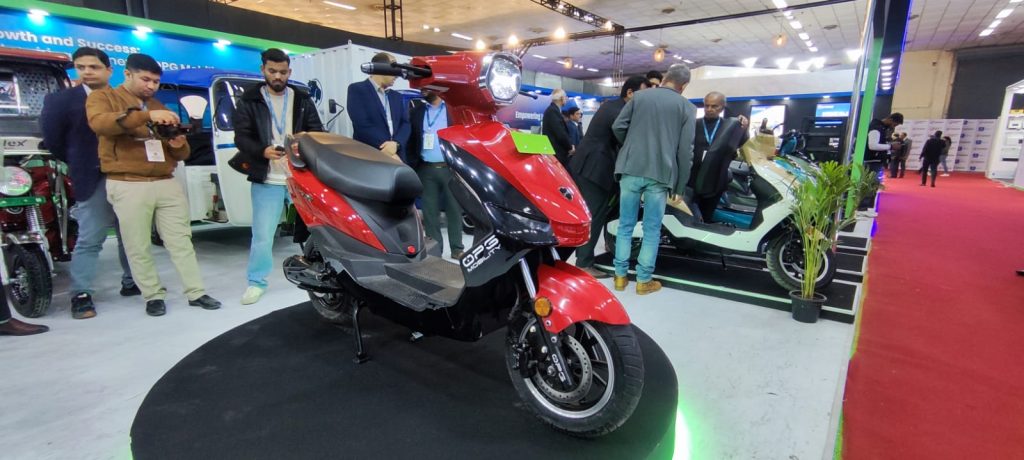
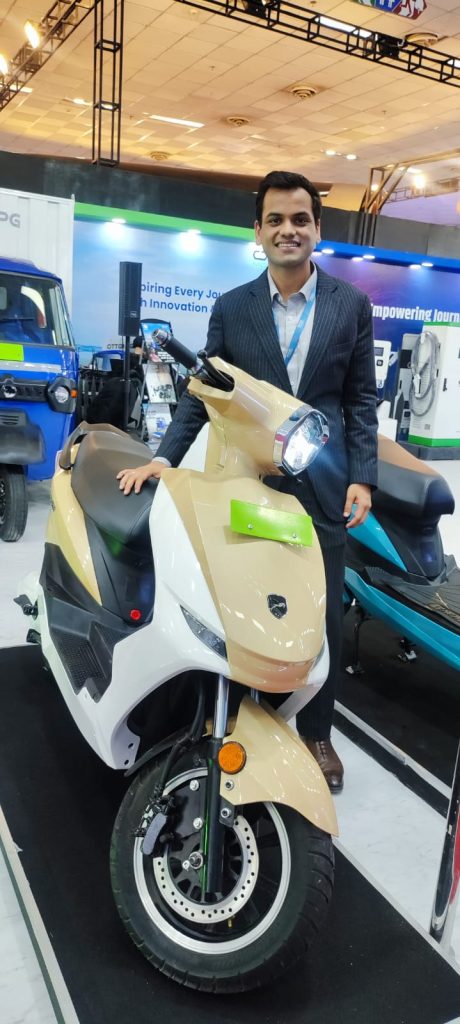
With the launch of its new electric two-wheeler model ‘Defy-22’ under the barnd Ferrato, OPG Mobility—formerly Okaya Mobility, plans to expand its product portfolio to include a diverse range of electric two-wheelers and three-wheelers.
Anshul Gupta, managing director, OPG Mobility said that by emphasizing innovation, sustainability, and customer-centricity, “We aim to redefine the future of mobility in India and beyond.”
Speaking to Tehelka.com he said, “This futuristic electric scooter combines style, performance, safety, and practicality, catering to individuals who value resilience, cutting-edge technology, and a bold vision for mobility.”
Speaking on the rebranding of the company he said that the transition to OPG Mobility represents a bold step toward redefining mobility in India. “This rebranding reflects our expanded vision of providing sustainable, accessible, and innovative solutions,” he added.
He further said while building on Okaya EV’s strong foundation, OPG Mobility symbolizes a unified identity that encompasses both passenger and commercial EVs, emphasizing our commitment to innovation, sustainability, and a greener future.
Gupta said that government policies and incentives are pivotal in driving EV adoption.
“Financial subsidies, tax rebates, and investments in charging infrastructure significantly influence consumer affordability and confidence. Subsidies and tax breaks to reduce upfront costs, expansion of public and private charging stations, supporting innovation in battery technology and EV components, setting emission standards to encourage EV production, and promotion of domestic EV manufacturing and supply chains are the key initiatives which are needed from the government.”
However, developing an electric vehicle come with own share of challenges and developing electric scooter requires continuous innovation in battery chemistry, motor design, and smart vehicle electronics.
“To address these challenges, we invest heavily in R&D to enhance battery performance, optimize motor efficiency, and integrate smart features that elevate the riding experience. Our vehicles are rigorously tested to ensure they can handle diverse terrains and road conditions. By maintaining high standards of quality control and focusing on affordability without compromising performance, we overcome barriers to accessibility and reliability,” Gupta told Tehelka.com
With a legacy spanning over four decades, OPG Mobility has established itself as a trusted name in quality and innovation. Leveraging its extensive expertise in battery manufacturing, the company entered the electric mobility sector in 2021. OPG Mobility offers a comprehensive ecosystem, including electric vehicles in two-wheeler and three-wheeler spaces.
Under the same group umbrella, Mtekpower Pvt. Ltd. (formerly OPPL Pvt. Ltd.) operates as a distinct entity, specializing in high-quality battery manufacturing, Electric Vehicle Charging Station (EVCS), Energy Storage System (ESS), and auto components. “This strategic collaboration within the group strengthens OPG Mobility’s ability to deliver cutting-edge solutions while maintaining the highest standards of reliability and performance. Together, OPG and Mtekpower embody the group’s shared vision of innovation, sustainability, and excellence, contributing to India’s greener and more sustainable future,” he said.
As the rift between AAP and Congress – INDIA bloc partners – continues to simmer in Delhi and Punjab, the upcoming Chandigarh mayoral poll promises to be a curious battle with the BJP exuding confidence to win while eyeing cross-voting in the INDIA alliance. A report by Rajesh Moudgil
The January 24 Chandigarh mayoral poll is being keenly watched across political circles in the backdrop of the ongoing ugly showdown between AAP and Congress in Delhi ahead of the assembly elections there, as well as in Punjab.
However, even though the two parties say they have stitched an alliance for the mayoral election in Chandigarh for being the partners of the INDIA bloc, the BJP which does not have numbers to in the said polls, insists it would snatch the victory because of the expected cross-voting in the INDIA alliance.
For record, in the Chandigarh Municipal Corporation (MC) House of 35 members, the BJP has 14 members, the AAP has 13 members and Congress, seven; one ex-officio vote is of Chandigarh Congress MP Manish Tewari and the Shiromani Akali Dal, which sides with BJP, has one member. In other words, INDIA bloc has 21 votes and thus has the upper hand to win. The saffron party which has 15 votes, is, however, heavily relying on the potential cross-voting from INDIA bloc or defection to bag the victory in the said annual election.
Why? Sample this: A few days ago, Congress councillors who had come to attend a tea party organised by incumbent AAP mayor Kuldeep Kumar Dhalor, had left abruptly after they received a call from party leaders, indicating that not all was well between the two partners of INDIA bloc. Moreover, two AAP councillors had also skipped a crucial meeting of the AAP.
The Congress councillors who did not want to be named had held that they had been called back to Chandigarh Congress Bhawan as it seemed the Congress leadership was not happy with AAP – despite the fact that the mayoral polls are held in December, the AAP had not taken any initiative to hold any meeting for mutual tie-up till recently.
AAP, Cong to fight jointly
However, after the two parties finally held a meeting last week, the Congress leaders held that they would jointly fight the elections against BJP. Congress president HS Lucky held that though the candidates were yet to be decided, it had been decided that the elections would be fought jointly.
Meanwhile, the AAP has also moved the Punjab and Haryana High Court seeking its directions for steps for transparency in the election process and demanding that in place of voting by secret ballot, polling be done by show of hands.
Notably, in 2024, the infamous mayoral polls were mired in controversy after the presiding officer, a nominated councillor and former member of BJP, was accused of tampering with the ballots and rejecting votes polled in favour of the AAP-Congress alliance. Anil had subsequently declared BJP’s Manoj Sonkar as the mayor on January 30 last year – much to the ire of the alliance which first moved to the Punjab and Haryana High Court and later the Supreme Court. The top court overturned the result and declared Kuldeep Kumar Dhalor of AAP as mayor.
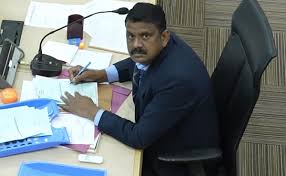
Meanwhile, according to the schedule for the January 24 election to the post of mayor, senior deputy mayor and deputy mayor, nominated councillor Dr Ramneek Singh Bedi has been appointed as the presiding officer. The elected councillors could file their nominations for the three posts by January 20. Under the Punjab Municipal Corporation Act 1976, the term of Mayor in Chandigarh MC is of one year.
After a spectacular showing in Haryana and Maharashtra, the BJP now has its sights firmly set on Delhi, which heads to polls on February 5. The party banks on Congress cutting into AAP’s vote share to scuttle Kejriwal’s bid for a third consecutive term in the capital, writes Pawan Kumar Bansal
The Delhi assembly elections scheduled for next month will witness triangular contest among BJP, Congress and AAP. While Arvind Kejriwal is AAP’s chief ministerial face, Congress and BJP are yet to declare their CM faces.
Prime Minister Narendra Modi has already sounded the poll bugle by launching BJP’s campaign by addressing a public meeting in which he made scathing attacks on AAP and Arvind Kejriwal describing them “Aapda” (disaster) for Delhi. Inaugurating several projects, Modi said, “Aapda ko hatana hai, BJP ko laana hai (eliminate the threat by voting the BJP to power).”
Speaking after handing over the keys of newly-constructed flats to the dwellers of ‘jhuggi‘ clusters under the Slum Rehabilitation Project, Modi said that Kejriwal used to boast of simplicity before coming to power but after coming to power, he made “sheesh-mahal” alluding to the alleged lavish renovation of the Delhi Chief Minister’s bungalow during Arvind Kejriwal’s tenure. While leveraging the event to hand over flats to the poor, he said,” “I, too, could have built a “sheesh-mahal” (glass- palace) for myself but my dream is to provide “pucca” houses to my countrymen”.
Modi also mentioned the liquor-scam and exploitation of the name of Anna Hazare by Kejriwal for coming to power. It seems that Delhi assembly elections have turned into a battle between the two firebrand leaders—Narendra Modi and Arvind Kejriwal. The Congress has nothing to lose but BJP and AAP have high stakes. The BJP doesn’t have a local leader whose stature matches with Kejriwal.
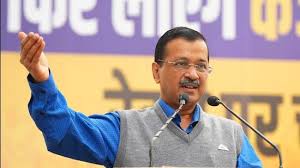
While referring to repeated mention of his name by Modi in his public meetings, Kejriwal said, “It indicates that they are panicky over our government’s development works specifically for the poor, the down-trodden, women and marginalised sections of the society.” Kejriwal added, “It is the BJP which is facing ‘asli aapda’ as it neither has a CM face nor any agenda for the election.”
On the other hand, the Congress does not have a major stake but it surely is a prestige issue for both BJP and the ruling-party AAP. Third time consequent victory would enhance the stature of Arvind Kejriwal at the national level and he can emerge as alternative leader to Narendra Modi. If the BJP succeeds in overthrowing AAP from power, it will demoralise not only AAP, but the Congress also. Defeat of Congress will also lead to questioning of the role of Rahul Gandhi as leader of the party as well as of alliance of opposition parties. West Bengal CM Mamata Banerjee has already started the debate by openly offering herself as leader of united opposition parties questioning the capabilities of Rahul Gandhi. By making Atishi as CM, AAP is hopeful of attracting a large number of women voters.
Besides its welfare projects, AAP is also adding a dose of Hindutva to its campaign, by promising a monthly grant to the temple priests and projecting Arvind Kejriwal as devotee of Lord Hanuman. AAP is hopeful that its performance on health and education fronts with Hindutva narrative will help it in retaining power. The BJP is banking on the popularity and oratory of MP Bansuri Swaraj, daughter of former Delhi CM and Union Minister Sushma Swaraj. The BJP is also harping on the popularity of Narendra Modi. Considering the presence of a large number of people from adjacent Haryana in Delhi, BJP has already deputed its leaders from Haryana to Delhi poll arena. Former MP and BJP leader from Haryana, Sunita Duggal, who is campaigning in Delhi, said that Arvind Kejriwal stood exposed as people say that the man who came to power by raising the issue of corruption is himself involved in “corruption” referring to his alleged role in liquor scam.
In another development, Union Agriculture Minister Shivraj Singh Chouhan has accused the AAP government of overlooking the welfare of farmers alleging that it is not implementing various central schemes for the welfare of the farmers such as the Integrated Horticulture Mission, Rashtriya Krishi Vikas Yojana, Seed-village program, Agriculture Mechanisation and Traditional Agriculture Department Scheme resulting into depriving farmers of subsidies, modern agriculture equipment and seed-testing facilities.
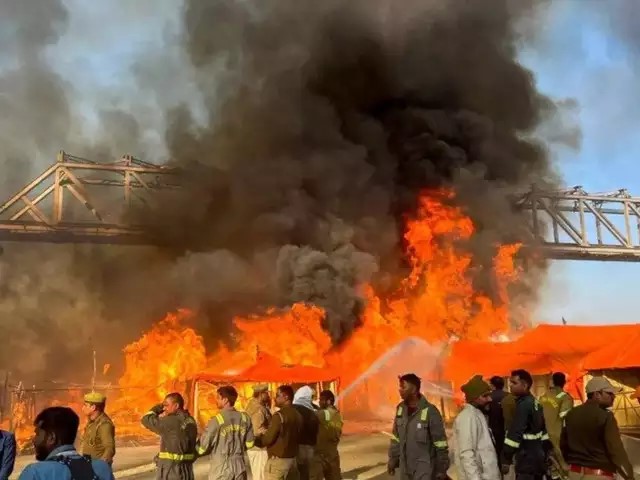
A fire broke out at the Maha Kumbh Mela venue in Prayagraj, Uttar Pradesh, reportedly following the explosion of two gas cylinders inside a tent. The fire quickly spread to several nearby tents, burning them to the ground. Thankfully, no injuries have been reported.
According to police, the fire started in Sector 19 of the Maha Kumbh site, where the cylinders exploded. Fire trucks, which were already stationed at the venue as part of safety measures for the large-scale event, rushed to the scene and managed to control the blaze.
As a precautionary measure, people living in surrounding tents were promptly evacuated to ensure their safety. The incident, though alarming, did not result in any casualties, thanks to the swift response from the authorities.
Uttar Pradesh Chief Minister Yogi Adityanath has sent senior officials to the site to assess the situation.
Meanwhile, the official X handle of the Maha Kumbh Mela expressed concern, stating, “Very sad. The fire incident at Maha Kumbh has shocked everyone. The administration is ensuring immediate relief and rescue operations. We pray to Maa Ganga for everyone’s safety.”
The incident has raised concerns but has been managed efficiently, with the fire under control and safety measures being promptly enacted. The situation continues to be monitored by local authorities to ensure the safety of all participants and attendees at the massive religious gathering.
Meanwhile, drones were used to assess the fire situation at the Maha Kumbh Mela venue. They provided real-time aerial views, helping authorities monitor the spread of the blaze and coordinate the firefighting efforts effectively, ensuring swift response and better management of the crisis.
Kolkata: Just hours after a special court in Kolkata convicted civic volunteer Sanjay Roy for the rape and murder of a junior woman doctor of state-run R.G. Kar Medical College and Hospital on Saturday, a political slugfest has erupted in West Bengal.
Soon after the verdict, Trinamool Congress’ state general secretary Kunal Ghosh said that Roy’s conviction proves that the initial investigation by Kolkata Police in the case was in the right direction.
“Some people resorted to unnecessarily mud-slinging in the matter. Today it is proved that they were spreading lies. The investigation by the Kolkata Police was in the right direction. But some leftists, leftist extremist forces, some hardcore anti-Trinamool Congress sections and a section of the medical practitioners tried to mislead people,” he said.
The CBI was handed over the investigation midway. But their investigation too proved that Kolkata Police was carrying out the probe on the right lines,” Ghosh said.
However, BJP West Bengal chief and Union Minister of State Sukanta Majumdar said it is not yet clear as to what kind of “tampering” of evidence took place during the first five days after the crime when Kolkata Police was handling the initial investigation.
“Doubts still prevail on this issue. For the time being Sanjay Roy is convicted. If he is guilty he deserves the highest punishment. But had the right evidence been there the fallout could have been different,” Majumdar claimed.
CPI(M) leader Sayandip Mitra while the conviction of Roy in the crime of rape and murder is justified, it is yet to be clear who are actual “masterminds in the larger conspiracy” who steered Roy to conduct the barbaric act.
“All we want now is the faces of these masterminds surface,” Mitra said.
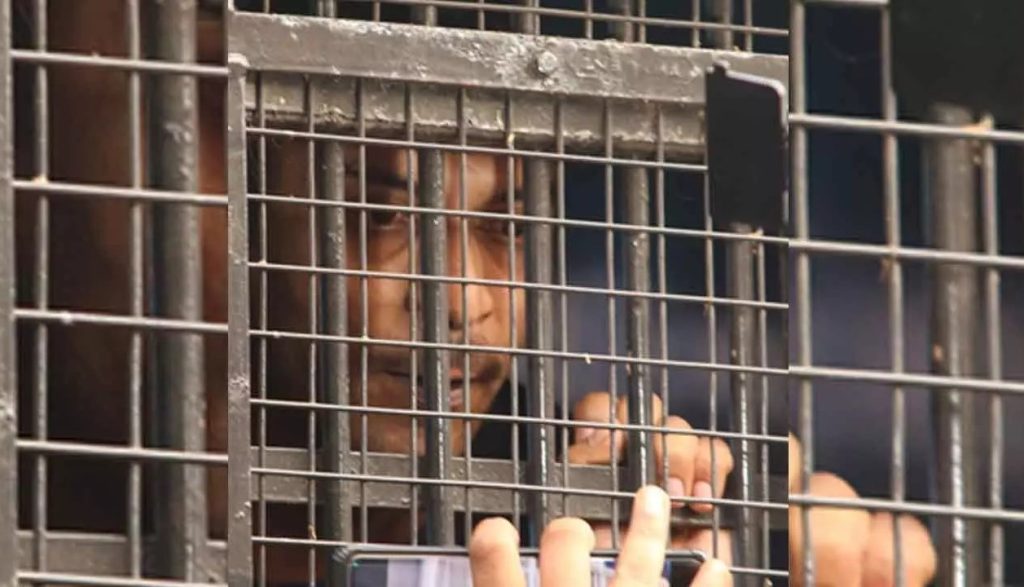
Earlier, as soon as Roy was convicted, he shouted within the court claiming innocence.
“I have not done anything. Why those who were responsible were allowed to go freely? I am not guilty. The conspiracy was framed by many,” Roy shouted.
The judge then assured him that he would be allowed to speak on Monday before pronouncing the sentence.
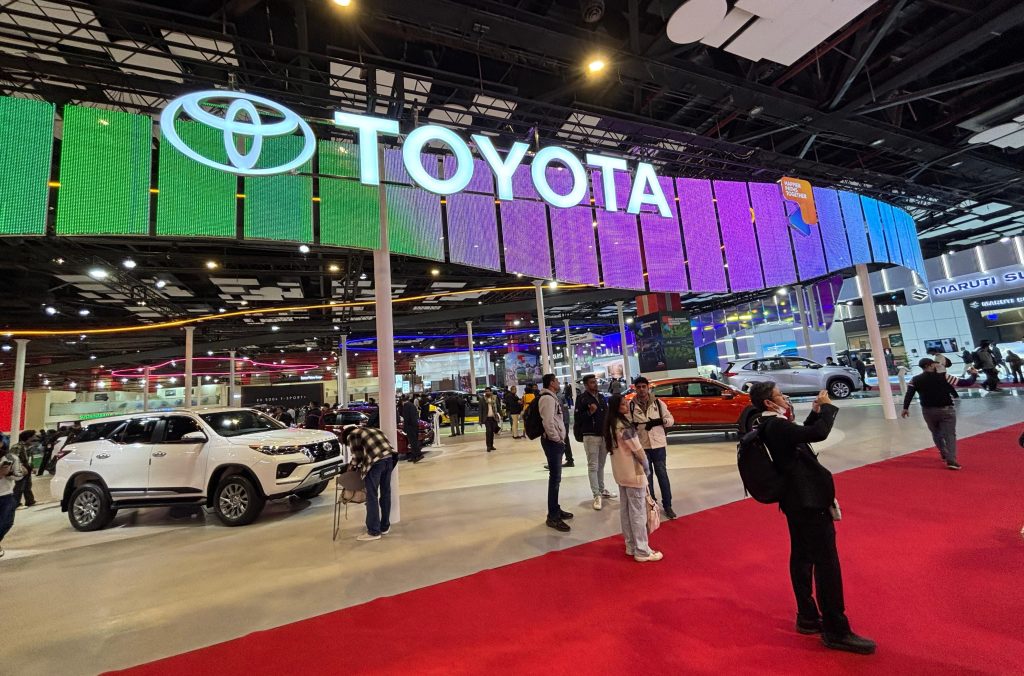
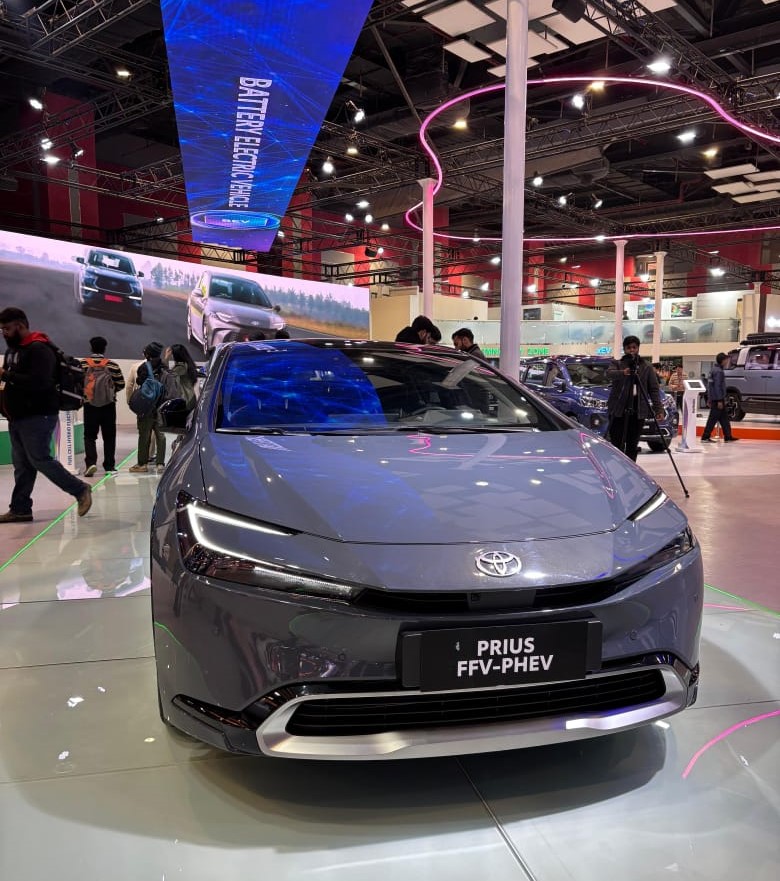
The Bharat Mobility Global Expo 2025 is showcasing some of the most anticipated vehicle launches and concepts from top car and two-wheeler manufacturers in India. Leading brands such as Maruti Suzuki, Hyundai, Kia, Tata Motors, Bajaj, KTM, Triumph, Hero MotoCorp, OPG, Jitendra EV, and BMW are unveiling new models and presenting cutting-edge innovations.
In the car segment, notable highlights include the Maruti Suzuki eVitara, the electric Tata Harrier EV, and the Sierra EV, all receiving attention for their futuristic designs and electric capabilities. Hyundai’s e-Creta, priced at ₹17.99 lakh, has also attracted significant interest for its value-packed features.
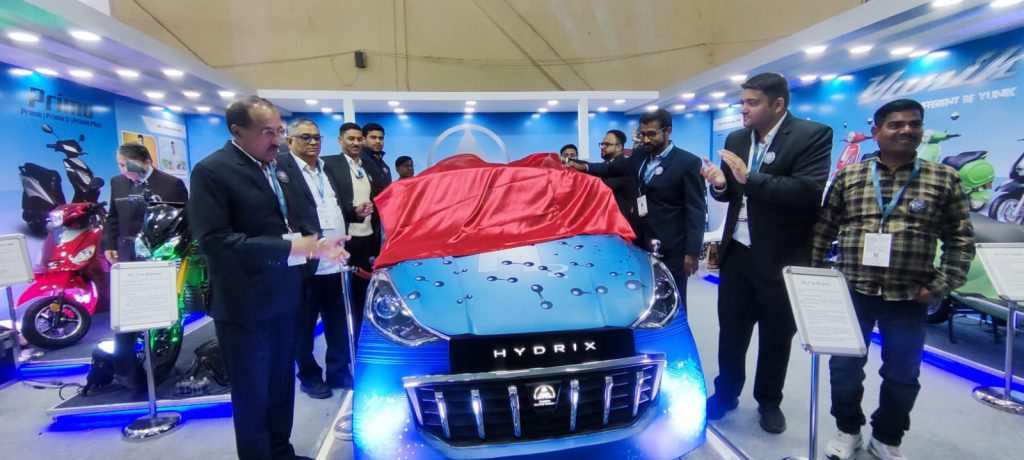
In the two-wheeler segment, Hero MotoCorp made waves with the launch of several models, including the Xpulse 210, Xtreme 250, Xoom 125, and Xoom 160. OPG Mobility unveiled its new electric scooter, the Ferrato Defy 22, priced at ₹99,999, a bold and stylish offering in the electric two-wheeler space. Jitendra EV revealed its production-ready e-bike and an exciting concept car, the HYDRIX, which is a futuristic hybrid vehicle powered by both hydrogen and electricity, set for release in 2028.
Photo : Naveen Bansal
Suzuki debuted the eAccess electric scooter alongside the Gixxer that runs on flex-fuel. Meanwhile, BMW launched the new R 1300 GS Adventure, priced at ₹22.95 lakh, available in three trims: Triple Black, GS Trophy, and 719 Karakorum, with deliveries starting in April 2025.
Bajaj is also making waves with its Freedom 125 CNG motorcycle and the upcoming launch of the Chetak EV range, further reinforcing its commitment to clean and efficient mobility solutions.
The expo is a celebration of innovation in the mobility space, with electric, hydrogen-powered, and sustainable vehicles taking center stage as India accelerates its shift toward greener, smarter transportation solutions.
The winter chill has intensified across Jammu, Kashmir, and Ladakh, with several areas reporting freezing temperatures as the region endures the annual Chillai-Kalan season.
In Kashmir, Pahalgam recorded the lowest temperature at -11.8°C, followed by Larnoo at -7.9°C and Gulmarg at -7.0°C. Srinagar, the summer capital, saw a relatively milder low of -2.0°C. Other areas in Kashmir, including Qazigund, Kokernag, Bandipora, Ganderbal, and Shopian, experienced temperatures ranging from -2.4°C to -4.1°C.
In Jammu, Padder was the coldest location at -8.8°C, with Bhaderwah reporting -4.0°C. Banihal and Batote experienced lows of -1.2°C and -0.3°C, respectively, while warmer locations such as Jammu city and Katra had temperatures of around 5°C. Other areas like Udhampur and Samba had lows of 1.3°C.
In Ladakh, Drass was the coldest at a frigid -22.9°C, while Sonamarg in Kashmir recorded -12.8°C. Leh and Kargil reported temperatures of -13.0°C and -13.8°C, respectively.
Authorities have urged residents to take necessary precautions as the region endures the biting cold.
It is a fact that, as individuals, adhering to rules and regulations does not always come naturally to us. We urgently need better policies to address incidents like stampedes, and the administration must wake up to this pressing necessity. A report by Mithun Dey
In the beginning of the New Year, at least 6 killed and over 32 seriously injured in a stampede during ticketing for special darshan in Tirupati temple of Andhra Pradesh on January 8, 2025 which reminds me of a stampede occurred at the Vaishno Devi shrine in Jammu & Kashmir that left 12 dead and 16 injured just hours after midnight on New Year’s Day in 2022. India is arguably the nation with a tragic number of stampedes and resultant injuries and fatalities.
It is seen that human stampedes in India mainly often take place in religious pilgrimages, occupational sporting and melodic or cultural events. Stampedes also often come about in times of mass panic, consequent to fire break-out or explosion, as people try to escape from the spot.
In most of the cases, it is also seen that the authorities let massive gatherings take place without conducting a survey of the grounds, putting up barriers to control the movement of the crowd or having the local police follow the necessary procedure in such events. It appears that the templecould only be accessed through a narrow lane. In a short span of time, thousands of devotees flock into the alley. With no one to monitor the crowd, chaos ensued and one of the gates collapsed, trapping people beneath it. As the devotees rushed to leave the templein a panic, a stampede occurred. Poor preparation and unclear roles for authorities and organizers can escalate crowd chaos.
One more important gap in the arrangements is the absence of ambulances or medical support in case of an emergency. Whenever there is a mass religious gathering which might result in law and order problems, the organizers are likely to inform the authorities prior to the juncture and get permission to persist.
Inattention on the part of authorities leads to many such disasters. Most of the time, the people accountable go with impunity. One prays that justice is done to the victims in this matter.
As we are all aware that the key reason behind stampedes is overcrowding, there must be a no tolerance policy with the SOP (standard operating procedure) to organize for an event. The government or local authorities must appoint an officer to visit and check the location and the availability of space and other mandatory measures and make sure the required arrangements could fit for the visitors. Also an emergency protocol, mandate emergency vehicles like ambulance and patrol units should be appointed to assist if such an incident occurs.
Not merely so. Before attending an event, research the venue’s layout and emergency exits. Follow the safety guidelines provided by event organizers. During the meeting of event, space and time there may be a sudden sharp peak of crowd. Regulating the rate at which the crowd builds up can be achieved through controlling crowd flow at the entry and exit points. If the flow is continuous, monitoring the flow and keeping a check on how it is being exceeded is difficult. A system can be created whereby people can be allowed in fixed batches. As balancing is important, every stage of flow should roughly take an equal amount of time to negotiate, or there will be queues building up at some stages, which will become bottlenecks.
Also, properly designed events with clear entry and exit points, sufficient space, and designated areas should be under minimal congestion. The authorities should appoint trained crowd management staff to monitor crowd behavior and respond to potential issues.
Truly, it is a matter of shame for the Indians that while India, being one of the largest religious countries in the world, often such incidence takes place here. In a country like India, the miserable story is that the administration treats the common citizen as infamy; the ordinary earns no decorum and is convicted to the law of the jungle.
It is also a fact that, as individuals, adhering to rules and regulations does not always come naturally to us. Therefore, it is evident that we require guidance and control. Is it too much to expect wardens or policemen at incident sites to steer and assist crowds effectively? It would be unreasonable to claim that the nation cannot afford such measures. We urgently need better policies to address incidents like stampedes, and the administration must wake up to this pressing necessity.
Prime Minister Narendra Modi on Friday inaugurated the Bharat Mobility Global Expo 2025. The six-day event has brought over 34 leading automobile manufacturers together, highlighting advancements in mobility with more than 100 vehicles expected to be launched during the expo.
He said, “There is a positivity in India in terms of the future of mobility. The automobile industry in India is fantastic and future ready.”
Present there, Piyush Goyal, Minister of Industry and Supply said that the Bharat Mobility Expo has become the second biggest automotive show in the world.
The expo witnessed several key launches on the first day as Maruti Suzuki unveiled its first electric vehicle, e-Vitara, and Hyundai launched its e-Creta.
Tata Motors has also showcased two additions including Sierra EV and Harrier EV which are due to launch.
Vietnam EV manufacturer and a strong competition to Tesla, VinFast is also showcasing its range of electric vehicles designed for the local market. The company will officially come to India next year.
Other launches include MG Motor’s MG Cyberster, M9, Porsche is showcasing its Macan and Taycan which has gone electric too. Chinese automaker BYD introduced the Sealion 7.
In terms of two wheelers, Ola Electric, Ather, Motovolt, and TVS among others are showcasing their advancements in the two-wheeler industry. Meanwhile, VE Commercial Vehicles and Greaves Cotton highlight their contributions to sustainable commercial mobility, showcasing electric and hydrogen fuel cell innovations.
India has expressed concerns over the United States and China’s support for Islamist groups in South Asia, viewing it as a strategic challenge. India perceives these dynamics as potential threats to its security and regional stability… by Gopal Misra
New Delhi is justifiably worried that 2025 might be a challenging year for India, particularly as new strategic alliances take shape in its neighbourhood, with Islamists and jihadists receiving tactical support from the US and China. Notably, the recent renewal of ties between the American establishment and jihadist groups—from Syria to Bangladesh—coincided with the New Year massacre in New Orleans. It is unclear whether this was a parting gift from the outgoing US President Joe Biden to his successor, Donald Trump, or a reflection of the quiet but deepening collaboration between Washington and Beijing, with jihadists emerging as a critical element of their geopolitical strategies. Naturally, India has every reason to remain cautious of these evolving alliances as the new US President prepares to take office.
India stands as the only frontline democratic state in Asia facing both covert and overt challenges from military dictatorships and China’s totalitarian Communist regime. For three decades, the US-led West has endorsed the evolution of an aggressive imperialist capitalist system built on a conservative Marxist platform.
India naturally feels threatened by jihadists from the Maldives to Bangladesh, supported by Washington and Beijing. This backing has enabled a hybrid regime to take over Dhaka, harbouring anti-India sentiments and unsettling New Delhi. Against this backdrop, the civilian face of the hybrid regime, Bangladesh’s chief advisor Muhammad Yunus, has called for reinvigorating SAARC, setting alarm bells for India. The regional forum, comprising Bangladesh, Bhutan, India, Maldives, Nepal, Pakistan, Sri Lanka, and Afghanistan, has lost steam due to Chinese demands for inclusion. Pakistan’s hybrid regime of the army and jihadists has endorsed Yunus’s call, prompting India to remain cautious. Meanwhile, India has successfully built bilateral ties with all regional countries except Pakistan.
A section of opinion makers in New Delhi believes that China’s increasing influence may be undermining the strategic objectives of the QUAD, comprising Australia, India, Japan, and the US. Despite repeated assertions that this quadrilateral grouping is not a military alliance, China has opposed it, likely due to the joint military exercises conducted by its members.
Despite Chinese objections, the QUAD has gained traction in recent years. However, with Washington’s recent alignment with jihadist groups, Beijing seems to have been granted a larger role in the fragile economies of the region. During the latter half of 2024, the Biden administration appeared to make significant concessions to China in critical areas such as trade and strategic affairs. It is difficult to discern why Biden conducted himself as one of the most enigmatic US presidents in recent history.
US renews covert links with jihadists
Recently, proxies of the American deep state, the CIA, have reactivated a colonial agenda of carving out a Christian state in India’s north-eastern Christian-majority states, including Mizoram, Nagaland, and Meghalaya. Simultaneously, they have strengthened ties with terrorist groups like ISIS and al-Qaeda in West Asia, using Islamists to oust Bangladesh’s democratically elected Prime Minister Sheikh Hasina. Curiously, the American deep state overlooks domestic threats like the New Orleans massacre on January 1. Before the 9/11 attacks, such terrorists, funded by the Pakistani army, were major beneficiaries of US support. Following nearly two decades of conflict, Trump’s decision to withdraw US troops from Afghanistan marked a turning point. Yet, recent months suggest a rekindling of ties between the US and jihadists.
With US backing, ISIS and al-Qaeda have entrenched themselves in Syria, while Biden’s visible rapport with Muhammad Yunus, who collaborated with Islamists to seize power in Dhaka, has further alarmed India. Biden’s tenure ensured only verbal support for India while facilitating China’s deepening influence in South Asia.
In an effort to win India’s confidence, several agreements were signed between New Delhi and Washington. However, most of these, including the proposed production of state-of-the-art weapons and aircraft, have thus far remained at the drawing-board stage and are yet to take off.
It is believed that the Biden administration grew dissatisfied with India following her refusal to join NATO or any military alliance in the South Asian region. India’s absence from the meeting of defence chiefs of the US, Australia, Japan, and the Philippines, held in Hawaii during the first week of May 2024, has also been noted. Could this have been a genuine provocation for the US to align with Beijing in efforts to oust Hasina? It remains to be explained why the US and its Western allies have suddenly started supporting Islamic terrorists from Syria to Bangladesh. Through these groups, they appear to have granted China unrestricted access to South Asia.
New military axis
With Beijing’s recent decision to supply the sixth-generation stealth fighter aircrafts, J-36, to Pakistan and the growing military cooperation between Islamabad and Dacca has naturally caused anxiety in New Delhi. Notably, India has yet to acquire such advanced fighter jets.
India’s security framework must be revamped in light of the emergence of a new Bangladesh, now influenced by Islamists, aligning with China and Pakistan. The new leadership in Dhaka appears ready to forgive the Pakistani army for the unprecedented atrocities committed against Bengali Muslims during the 1971 War of Independence.
Dhaka’s closer defence ties with China and Pakistan have also emboldened some former Bangladesh army personnel to make provocative claims, such as their ability to capture Kolkata, Assam, and Odisha within four days. These developments could potentially delay fresh elections in Bangladesh.
With an anti-India narrative gaining traction, the upcoming visit of Pakistan’s deputy prime minister and foreign minister, Ishaq Dar, to Bangladesh in February 2025, is anticipated to be historic. Supporters of the new regime in Dhaka have already begun branding Sheikh Mujibur Rahman, the father of Bangladesh, as a kafir, with even his statue being defaced.
For the first time in 54 years since its independence in 1971, Bangladesh appears poised to embrace the very people responsible for the genocide of over three million unarmed Muslims and the violation of more than two million young women. Even today, the Pakistani army and sections of the Muslim clergy maintain that had the soldiers from West Pakistan been allowed to procreate on a larger scale, a new generation of Bengali Muslims would not have allied with the kafirs or the “Hindu government” led by Indira Gandhi in 1971.
In this backdrop, it is difficult to predict any spectacular developments in world politics even after January 20, when the second innings of Trump begins.
Decoding Elon Musk’s deference to Beijing
For observers of international politics, US billionaire Elon Musk, known for his ties to President-elect Donald Trump, appears to adopt a ‘soft’ stance towards Beijing. His criticisms of Britain for allegedly resembling the Soviet Union and his denouncement of the French police’s arrest of Telegram head Pavel Durov have been described as ‘selective.’
While Musk positions himself as a ‘free speech absolutist,’ his frequent overtures to the Chinese Communist Party, where such freedoms are suppressed, have drawn attention. Analysts believe Musk’s deference to Beijing stems from his ambitions to maintain Tesla’s position in the global electric vehicle market. However, Chinese EV giant BYD has already overtaken Tesla, posting $28.2 billion in revenues between July and September, compared to Tesla’s $25.2 billion during the same period.