Saturday, December 27, 2025

Delhi’s freebies guarantees: A looming fiscal burden on the national capital

by Yogesh Kant

As Delhi’s political landscape gears up for the 2025 assembly elections, the promises of freebies and guarantees from Aam Aadmi Party (AAP) and Bharatiya Janata Party (BJP) are dominating the narrative. Congress is also trying to regain its position in Delhi political landscape through its style welfare schemes. These parties are vying to outdo each other with generous welfare schemes aimed at capturing voter loyalty. While such promises have become a staple in Delhi’s elections, they come with an undercurrent of economic concern—a significant burden on the city’s budget that could have long-term repercussions for its financial health.

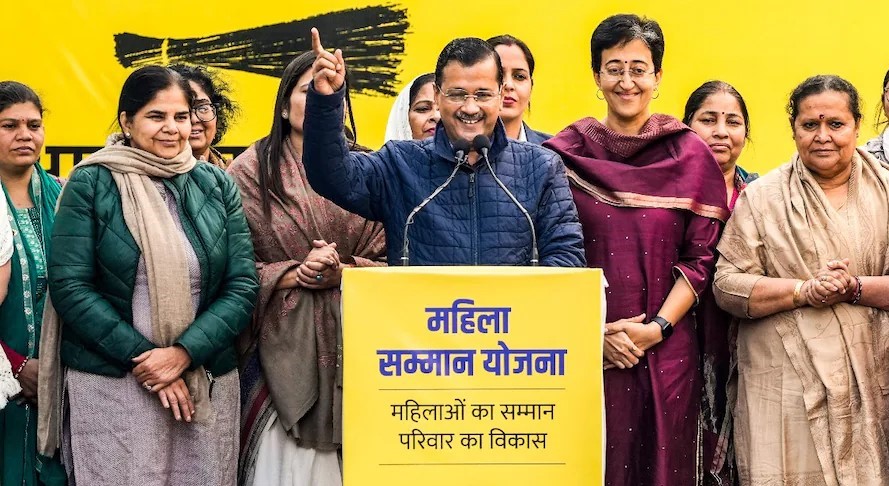
AAP, the incumbent party, has built its political identity on its welfare model. Since coming to power in 2015, the party has introduced and sustained schemes like free electricity for households consuming up to 200 units, benefiting nearly 4.8 million users, free water up to 20,000 liters per month, which reaches around 1.8 million households, free bus rides for women utilized by over 40% of the city’s female commuters, and the much-lauded Mohalla Clinics that have served over 63 million patients since their inception. Ahead of the elections, AAP has also introduced new promises such as the ‘Mukhyamantri Sanjeevani Yojana,’ which provides cashless medical treatment with no upper limit, and a proposed ₹2,100 monthly allowance for women above the age of 18—a scheme that could cost the exchequer over ₹13,000 crore annually if implemented for Delhi’s 6.2 million eligible women.

However, fulfilling these promises is proving to be a herculean task. To fund its election guarantees, the AAP government recently sought a ₹10,000 crore loan from the National Small Savings Fund (NSS). While this move may provide short-term relief, it could also result in major financial consequences due to the heavy interest burden associated with such loans. Experts estimate that repaying this loan, alongside existing subsidies, could strain Delhi’s budget for years, limiting funds for other critical developmental projects.

The subsidy budget of the Delhi government has skyrocketed over the past decade. In 2014-15, the total subsidy allocation stood at ₹1,555 crore. This figure nearly doubled in 2015-16, soaring to ₹3,018 crore, and the revised estimates for 2024-25 project it to reach an unprecedented ₹11,000 crore. Among these, the power sector has seen the most significant increase. From ₹292 crore in 2014-15, power subsidies grew over fivefold to ₹1,443 crore in 2015-16 and are expected to surpass ₹3,600 crore in 2024-25. This subsidy enables private discoms to provide free electricity to consumers using up to 200 units monthly and half-rate for those using up to 400 units. If free electricity is extended to consumers using up to 300 units, as promised by Congress, the subsidy budget could swell by an additional ₹1,000 crore.

Similarly, the water subsidy for the Delhi Jal Board has grown exponentially. From ₹21 crore in 2014-15, it surged to ₹190 crore in 2015-16 and is pegged at ₹500 crore for 2024-25. Under this scheme, consumers using up to 20,000 liters of water monthly receive their supply free of cost. The free travel initiative for women on Delhi Transport Corporation (DTC) and cluster buses has also seen a sharp rise, from ₹115 crore in 2019-20 to an estimated ₹440 crore in 2024-25. Additional allocations include ₹247 crore for students’ uniforms and ₹105 crore for 579 electric buses.

One of the most ambitious promises is the Mukhyamantri Mahila Samman Yojana (MMSY), which proposes a monthly stipend of ₹2,100 for women. If implemented, this scheme could cost over ₹9,500 crore annually. With BJP and Congress also proposing similar or higher allowances, such as ₹2,500 per month, the fiscal burden could escalate to ₹11,400 crore annually. Even at a conservative rate of ₹1,000 per month, the scheme would push Delhi’s projected expenditure for 2025-26 to ₹88,268 crore, against an estimated receipt of ₹80,108 crore, leading to a deficit of ₹8,160 crore. This widening fiscal gap poses a severe challenge for the government’s financial sustainability.

The Mukhyamantri Sanjeevani Yojana, which offers cashless treatment with no upper limit, is another significant commitment. With Delhi’s population exceeding 20 million, the potential number of beneficiaries could overwhelm healthcare resources and inflate costs beyond initial estimates. For instance, if just 5% of the population avails of the scheme annually at an average cost of ₹50,000 per person, the expenditure could surpass ₹5,000 crore.

Political parties are also targeting specific voter groups with tailored promises. The Congress has pledged an ₹8,500 monthly stipend for unemployed youth for a year, while both BJP and Congress have promised subsidized LPG cylinders. Health benefits are another focal point, with proposals for free medical treatment for senior citizens and health insurance schemes worth up to ₹25 lakh. Given that over 500,000 senior citizens reside in Delhi, the financial implications of such promises are significant.

Amid these grand promises, questions about funding sources loom large. Of Delhi’s total budget of ₹88,200 crore for 2024-25, only ₹16,404 crore—less than 20%—is earmarked for capital expenditure on developmental projects. The remaining ₹72,000 crore is allocated for revenue expenditure, covering recurrent costs like salaries, loan repayments, and existing subsidies. This allocation leaves little room for new schemes, making the city increasingly reliant on loans and central grants.

Critics argue that this competitive populism risks undermining Delhi’s long-term fiscal health. The relentless focus on subsidies and freebies diverts resources from critical sectors like infrastructure, healthcare, and education. While AAP has made commendable progress in upgrading government schools and expanding healthcare access through Mohalla Clinics, the quality and reach of secondary and tertiary care facilities remain areas of concern. Similarly, the Municipal Corporation of Delhi (MCD), now under AAP’s control, faces mounting challenges in waste management and urban planning—issues that require significant investment and strategic focus.

The race to promise freebies also raises concerns about equity and efficiency. While welfare schemes provide much-needed relief to vulnerable sections, they often exclude middle-income groups struggling with rising living costs. Moreover, the absence of clear guidelines and accountability mechanisms increases the risk of misuse and inefficiency in implementing these programs.

As Delhi prepares for the 2025 elections, the electorate faces a pivotal choice. While welfare guarantees offer immediate benefits, their long-term implications for the city’s economy and governance cannot be ignored. The voters must weigh the short-term allure of subsidies against the broader need for sustainable development and fiscal responsibility. The outcome of this high-stakes election will not only shape Delhi’s future but also set a precedent for governance models across India.
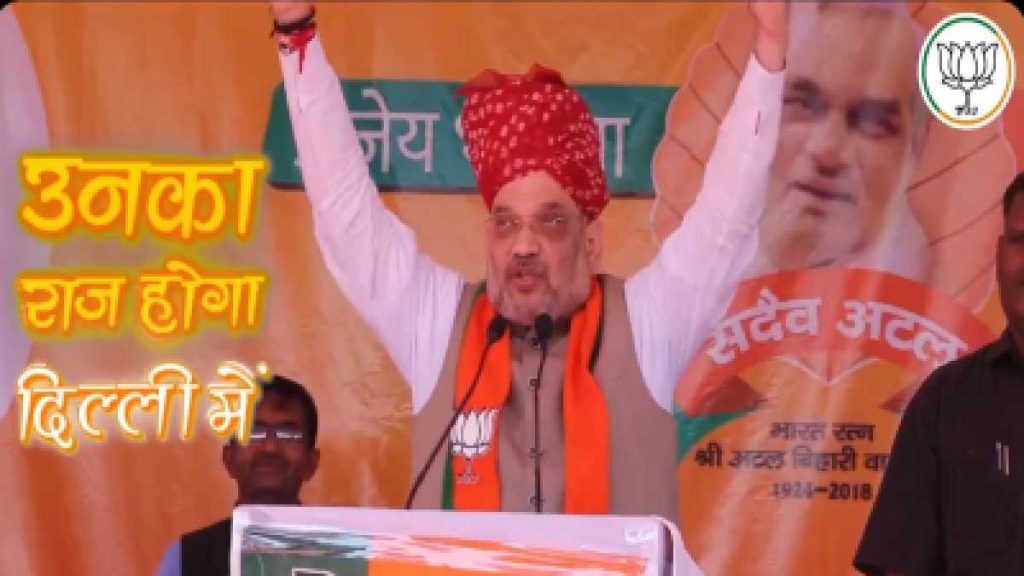
BJP launches new campaign song ‘Jo Ram ko lekar aaye, unka raaj hoga Delhi mei’

New Delhi: The Bharatiya Janata Party (BJP) unveiled a new campaign song on Wednesday for the upcoming Delhi Assembly elections, invoking the Ram Temple in Ayodhya to resonate with voters.

The song, titled ‘Jo Ram ko lekar aaye, unka raaj hoga Delhi mei’ (Those who have brought Ram will rule Delhi!), highlights key issues faced by Delhi residents, such as pollution, dirty drinking water, improper garbage disposal, sewage problems, and overflowing landfills.

The BJP emphasised the need for a “double-engine government” in Delhi, promising health insurance “without discrimination” if elected.

Taking a jab at the ruling Aam Aadmi Party (AAP), the song uses terms like “AAPda” and “thieves” to criticise the current government. The party expressed confidence that Delhi’s electorate is ready to form a BJP-led government, replacing the Aam Aadmi Party (AAP).

Posting the campaign song on social media, the BJP wrote, “In 2025, the entire public has decided to bring the BJP by removing the thieves, ” further adding, “One of Modi’s lions will be crowned in Delhi. Those who have brought Ram will rule Delhi!”

This is not the first musical appeal by the BJP during the campaign. Earlier, the party released another election song, ‘Bahane nahi badlav chahiye, Delhi mei BJP ki Sarkaar chahiye’ (Delhi needs change, not excuses; it requires the BJP government), performed by BJP MP Manoj Tiwari.

The song was officially launched during Prime Minister Narendra Modi’s Parivartan Rally last week in Rohini and has been rolled out widely as part of the campaign for the February 5 elections.

Meanwhile, Prime Minister Narendra Modi is set to address Delhi BJP’s booth-level workers through video conferencing under the party’s Mera Booth Sabse Majboot (My Booth, the Strongest) program on Wednesday. The interaction is scheduled at 1 p.m., just weeks ahead of the Assembly polls.

During the session, PM Modi will provide strategic tips and encourage workers to reach every household with the BJP’s message and vision for the future. Party members from 13, 033 booths across all 256 wards in Delhi will participate in the virtual program.

Voting for the Delhi Assembly elections is slated for February 5, with counting scheduled for February 8.

AAP Releases ‘Middle-Class Poll Manifesto’ Ahead of Delhi Elections

The Aam Aadmi Party (AAP) has unveiled a unique manifesto targeting the middle class in Delhi, a move seen as a direct appeal to the city’s core voter base. As the assembly elections approach in February, AAP seeks to address the concerns of the often-overlooked middle class, which, despite being the largest tax-paying demographic in India, has largely been neglected in mainstream political discourse.

Traditionally, political parties in India focus their election promises on the poor or emphasize caste and religious divides. However, AAP’s manifesto marks a shift in priorities, as it aims to bridge the gap and provide tangible solutions for the middle class, which includes upper, middle, and lower middle-class categories. Key areas of focus include education, transportation, water, and healthcare—sectors that are of paramount importance to this group.

AAP convener Arvind Kejriwal highlighted the challenges faced by middle-class families, calling them victims of “tax terrorism.” He emphasized that individuals in professions such as teaching, law, and salaried jobs, earning between Rs 10-12 lakh annually, are burdened with multiple taxes, including income tax, cess, and road tax.

He criticized the government for directing tax revenues toward corporate loan waivers instead of public welfare. He pointed to the Delhi government’s initiatives under AAP, such as increasing the supply of water and electricity while reducing their costs, as well as improving the quality of education and healthcare. He also noted that nearly four lakh children had shifted from private to government schools under AAP’s administration, a development he described as unprecedented.

In his appeal, Kejriwal urged the government to dedicate the 2025 Budget to addressing the middle class’s concerns, and listed seven key demands that AAP will push for:

• The education budget must be increased from 2% to 10% of GDP, with private school fees capped.

• Scholarships and subsidies for higher education should be introduced.

• The health budget must be raised to 10% of GDP, with health insurance exempt from taxes.

• The income tax exemption slab should be raised from Rs 7 lakh to Rs 10 lakh.

• Essential commodities should be exempt from GST.

• Strong pension and retirement plans should be available for senior citizens.

• Railway concessions for senior citizens must be reinstated.

He also encouraged the public to support AAP’s middle-class demands by visiting the campaign website.

Mahakumbh 2025: Yogi’s saffron showcase of faith and technology

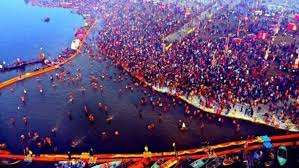
Touted to be the world’s largest pilgrimage with over 40 crore devotees, Mahakumbh at Prayagraj showcases a blend of ancient traditions and modern innovations, with UP CM Yogi leveraging the event to bolster cultural nationalism and state’s economic growth.  A report by Mudit Mathur

In pursuit of promoting cultural nationalism after the Ram Mandir project at Ayodhya, Uttar Pradesh Chief Minister Yogi Adityanath has once again got an opportunity to showcase himself as a mascot of Hindutva before the largest congregation of pilgrims on earth at ‘Mahakumbh Mela––2025’ in Prayagraj, which is an ancient place of Hindu pilgrimage based on religious mythology. Astrologically, the 45-day-long grandeur ‘Mahakumbh’ which comes after 12 years is going to be repeated after 144 years in the same planetary position. The government has created elaborate lodging and travelling facilities for pilgrims to reach the site.

Amid deep security concerns, Mahakumbh kicked off with the first royal bathing of ‘Makar Sankranti’ on January 14, 2025, and will conclude with the ‘Maha Shivaratri’ bathing on February 26, 2025, showcasing the perfect fusion of faith and modernity leading to the state’s economic prosperity due to the enormous synergy generated through organised saffron efforts. Sprawling over an area of 4,000 hectares along the river bank at the confluence of the Ganga and Yamuna (and the mythical Saraswati) –– according to government estimates, over a 45-day course of religious festivities are expected to attract 400 million visitors from India and abroad.

The Yogi government has professionally planned hi-tech Mahakumbh Mela-2025, aimed at fetching big revenues to the state coffers. The state government is expecting an approximate expenditure of Rs 7,500 crore for organising this mega event and has so far has approved Rs 3461.99 crore for financial implementation. In addition, Rs 1636 crore is being allocated to 125 projects through departmental budgets from key departments such as the public works department, housing and urban planning, bridge corporation, tourism, irrigation and the Prayagraj Municipal Corporation.

These projects include infrastructure development, such as the construction and strengthening of roads, railway over-bridges, underpasses, erosion control along river banks, interlocking roadways, riverfront development, and beautification of all major intersections under a hi-tech plan. Prayagraj is also being developed as a top-tier smart city through the coordination of Smart City projects and the Prayagraj Development Authority. IT-based monitoring systems and clean drinking water facilities are being implemented for the benefit of pilgrims. Efforts under the Swachh Bharat Mission and the Prayagraj Municipal Corporation are ensuring advanced sanitation and cleanliness. Solid waste management systems and 100 per cent sewage treatment coverage are also being established.

Uttar Pradesh Chief Minister Yogi Adityanath said, “The Prayagraj Mahakumbh would generate a remarkable estimated revenue of Rs 2 lakh crores to the state’s exchequer drawing economic benefits to such a high value.” “The event will witness the participation of about 40 crore people from across India and abroad that would not only boost Prayagraj’s economy but also make a substantial contribution to the national economic growth.” “Mahakumbh is like ‘Maha Yagya,’ symbolising cultural unity––connecting not only the nation but people from around the world under one spiritual umbrella,” Yogi remarked while addressing the media about the event.

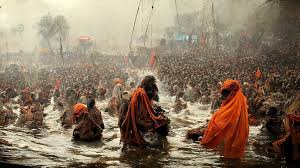
UNESCO recognised Kumbh Mela as an ‘Intangible Cultural Heritage of Humanity.’ Its history dates back thousands of years, right from the era of Adi Shankaracharya. Intangible cultural heritage means the practices, representations, expressions, knowledge, and skills — as well as the instruments, objects, artefacts and cultural spaces associated with them that communities, groups and, in some cases, individuals recognise as a part of their cultural heritage. The grandeur of the cultural extravaganza celebrated in four different cities in India, over a period of 12 years, draws throngs of devotees seeking spirituality and nirvana, bathing in sacred rivers to purify their sins. The festival, held in Prayagraj, Haridwar, Ujjain and Nasik, represents a syncretic set of rituals related to worship in India.

One of the most popular and astonishing mythological stories found in ancient Indian texts is ‘Amrita Manthan’ that is, churning of the ocean for nectar, the celestial water of immortality. It narrates that once the gods and demons agreed to churn the great ocean and share the treasures or the ‘Ratnas’ (Jewels) that will emerge from it. The most precious treasure that emerged was ‘Amrita’, the nectar. Both the gods and the demons laid claims to it. One who drinks it will become immortal and therefore, all-powerful and indestructible. Gods could never accept this. This resulted in a scuffle between them for a pot of nectar (Amrit Kumbh), the nectar of immortality. Lord Vishnu, disguising himself as an enchantress (Mohini), seized the nectar from the demons. While fleeing from the evil ones, Lord Vishnu passed the nectar on to his winged mount, Garuda. The demons finally caught up with Garuda and in the ensuing struggle, a few drops of the precious nectar fell on Prayagraj, Nasik, Haridwar and Ujjain. Since then, the Kumbh Mela has been held in all these places, alternatively, every 12 years.

Prayagraj has been known as the most sacred pilgrimage place for the Hindus, situated at the confluence (Triveni Sangam) of the Ganga, the Yamuna, and the mythical Sarasvati. Hindu saints sporting dreadlocks, smoking chillums (pipes) or practising complex Asanas (poses) used to be common admirable sights for one and all. The whole atmosphere is glittered and charged with chiming bells, incense and flower fragrance scattering flawlessly with the smoke from the ‘Havan Kunds’ (fire spaces), Preaching from saints of different sects of Hinduism, Vedic Hymns, Mantras, Drumbeats, the blast of conches and the ring of holy bells. Apart from bathing rituals, elucidations, traditional dances, devotional songs, programmes based on mythical stories, and prayers are also unique features of this event.

Religious assemblies are held where doctrines are debated, standardized and conducted by renowned saints and sages. An auspicious element of the festival is the act of benevolence to liberally offer donations to the poor, helpless, saints, and to feed or donate cows to priests. Donations range from basic food and clothing to even precious metals. The Kumbh Mela is perhaps the only event in the world where no invitation is required yet millions of pilgrims gather to celebrate the holy event.

Witness the sea of fervent devotees performing their rituals and offering prayers or choose to visit the various Akharas to get a comprehensive view of the ideology and philosophy of different sects of Hinduism. Akharas came into existence during the 8th century AD when Adi Shankaracharya established seven Akhadas namely Mahanirvani, Niranjani, Juna, Atal, Avahan, Agni and Anand Akhara determined to strengthen the Hindu religion and unite those practising different rituals, customs and beliefs. Akharas are divided into different camps according to the concept of God they worship. Shaiva Akharas are for followers of Lord Shiva, Vaishnava or Vairagi Akhara are for followers of Lord Vishnu and Kalpwasis are for followers of Lord Brahma.

All India Radio (AIR) has always played a key role as a public broadcaster, promoting Indian cultural heritage and traditions. AIR launched a special channel ‘Kumbhvani’ which was inaugurated by UP CM Yogi Adityanath on 10th January at Prayagraj. The Union Minister of State for Information and Broadcasting, Dr L. Murugan, joined the occasion through an online platform. Yogi also launched the Kumbh Mangal Dhwani. Prasar Bharati Chairman Dr Navneet Kumar Sehgal, CEO Gaurav Dwivedi, Director-General of All India Radio Dr Pragya Paliwal Gaur, Director-General of Doordarshan Kanchan Prasad, and other senior officials were also present at the function.

The police administration has installed 2,300 CCTV cameras across Prayagraj and the Mahakumbh site to help with population density analysis, crowd control, incident reporting, and cleanliness monitoring through control centres. In the Mela region, authorities have constructed 1.45 lakh restrooms and 99 temporary parking spaces covering 1,850 hectares. Ten digital ‘Khoya-Paya (lost and found) Kendras’ were also formed in the Mahakumbh area as part of efforts to ensure the safety of pilgrims visiting the event.

Chandrakar’s murder sparks concerns over scribes’ safety

The gruesome murder of journalist Mukesh Chandrakar in Chhattisgarh has sparked national outrage, highlighting the perils faced by reporters in discharging their duties. Chandrakar’s exposé on a Rs 120-crore road project seems to have cost him his life. A report by Mudit Mathur

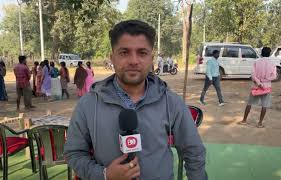
The gruesome murder of a Bastar-based TV journalist Mukesh Chandrakar in Chhattisgarh has triggered a nation-wide protests over the security of journalists who are continuing to become soft targets after exposing scams and corruption while truthfully discharging their duties. The chilling murder of a young journalist Chandrakar has sent shockwaves across the country. In 2024, the IFJ confirmed the killings of 122 journalists globally, with three verified cases in India of Ashutosh Srivastava, Shivshankar Jha, and Salman Ali Khan.

Mukesh, who worked for a local news channel, had recently exposed alleged corruption in a Rs 120-crore road construction project in Bastar. His report on corruption was aired on NDTV on December 25, which might have been the reason behind the murder because his investigative story prompted the government to institute an inquiry into the contractor’s activities. His dead body was recovered on January 3 in a septic tank at a property owned by contractor Suresh Chandrakar in Chhattisgarh’s Bijapur district who was later tracked down and arrested by police.

The police launched a search for Mukesh after his elder brother, Yukesh Chandrakar, reported him missing. Mukesh was reported missing on January 1, last seen at a meeting organised by the contractor’s brother Ritesh Chandrakar at the property where his body was later recovered. The police have arrested three suspects, including Ritesh and another of Suresh’s brothers, Dinesh.

Using CCTV footage and mobile location data, the police officers located Mukesh’s body in a septic tank concealed by a newly laid cement slab. Mukesh’s death is being investigated for links to his recent investigative reports. The government has formed an 11-member Special Investigation Team (SIT), led by IPS officer Mayank Gurjar, to probe the case thoroughly.

The case has ignited political tensions, with BJP and Congress trading accusations. Deputy Chief Minister Sharma, who also holds the state’s home department, alleged that the main accused, Suresh Chandrakar, is affiliated with the Congress and questioned the party’s links to recent criminal cases. The Congress, however, countered the charge by claiming that Suresh in fact had been inducted into the BJP. The Congress spokesperson, Sushil Anand Shukla, pointed to photos of Suresh with senior BJP leaders and demanded the release of CCTV footage from the Chief Minister’s residence, which Suresh allegedly visited days before the murder.

Chhattisgarh Chief Minister Vishnu Deo Sai expressed sorrow over Mukesh’s death, describing it as a “profound loss to journalism and society”. In a post on X (formerly Twitter), the chief minister said, “The news of the murder of young and dedicated journalist Mukesh Chandrakar of Bijapur is extremely sad and heartbreaking. The demise of Mukesh Ji is an irreparable loss to the world of journalism and society.”

Mukesh Chandrakar worked as a freelance journalist for news channels, including NDTV, and ran a YouTube channel, ‘Bastar Junction,’ which has some 1.59 lakh subscribers. He was known for his fearless reporting from the interiors of Bastar, even playing a role in securing the release of a CRPF commando abducted by Maoists in 2021.

The International Federation of Journalists in a statement said, “It is tragic that journalists pay a price with their lives for doing their job and exposing the malaise of corruption. While the State Home Department has set up SIT to prove the case, Suresh’s illegal shed was demolished and four of his bank accounts have been frozen, the IJU feel it was not enough. Harshest punishment be meted to the accused, not only Suresh’s contracts be cancelled but all those in government involved must be investigated.”

The Press Association and the Editors Guild of India also strongly condemned the killing of a television journalist in Chhattisgarh and demanded that the state government conduct a thorough investigation into the case.

Delhi assembly elections: Analyzing the political messaging and electoral strategies of key parties

The political landscape in the national capital is buzzing with varying campaign strategies from the major parties including BJP, Congress, and AAP, each meticulously tailoring their messaging to target specific demographics.

While the city’s civic issues remain at the forefront, the narrative each party constructs is playing a crucial role in influencing voter behaviour.

The Aam Admi Party (AAP), led by former chief minister Arvind Kejriwal, has primarily focused its campaign on promises of continued good governance, free electricity, and clean water. AAP’s messaging is particularly geared towards the urban middle class, lower-income families, and young voters who see the party as a beacon of change.

The party emphasizes the ‘Delhi model’ of governance, showcasing its work on education and healthcare reforms. It is also using its grassroots engagement, leveraging door-to-door campaigns and community connect programmes to maintain a close bond with voters.

Amid the campaigns, AAP has come up with many schemes including, Mahila Samman Yojana, Sanjivini scheme, Scheme for Auto Drivers, and Pujari Granthi Samman Yojana among others.  

On the other hand, the Bharatiya Janata Party (BJP) has shifted its focus towards nationalistic sentiments and law-and-order issues. Under the leadership of Vijendra Sachdeva in Delhi, BJP’s messaging is centered around security, infrastructure development, and the assertion of strong governance.

Recently, Delhi BJP president Virendra Sachdeva and MP Yogendra Chandolia visited the JJ Cluster area of Bawana and showcased the grim state of the Central Government constructed flats. They strongly criticized the Kejriwal government for wasting public money.

BJP strategically links local issues with national concerns, focusing on the central government’s schemes like the Delhi development model, and portraying AAP’s governance as inadequate in comparison.

Party’s core voter base includes the middle class, traders, and those who prioritize national security and a stronger central presence. The party has also increased its use of social media to counter AAP’s narrative and appeal to urban voters, especially through digital ads and targeted messages.

Meanwhile, the party has released its manifesto in which they have offered several schemes including Rs 2500 per month for women from low income families, Rs10 lakh health cover for medical treatments for senior citizens/poor families, and Pension for senior citizens will be increased from Rs 2000 to Rs 2500, and pension of senior citizens above 70 from Rs 2500 to Rs 3000 among others.

Amid the efforts of two major parties of which one is in power in the centre while other is fighting to remain in power, the Indian National Congress (INC) is struggling to regain its ground in Delhi.

The party has been trying to project itself as a party of unity and stability. Congress has largely focused on presenting itself as an alternative to both AAP and BJP by capitalizing on disillusionment with the two dominant parties. Congress’s campaign targets the urban poor, farmers, and minority communities, highlighting issues of job security, poverty alleviation, and welfare schemes.

The party’s strategy involves evoking nostalgia for its past tenure in Delhi, attempting to tap into the older electorate who might recall its governance during the 1990s and early 2000s. Each party’s campaign strategies reflect a deep understanding of Delhi’s diverse voter base. From appealing to the youth’s desire for education and jobs, to stressing on nationalistic pride and law and order, the different narratives are crafted to resonate with specific segments of the electorate. As these strategies unfold, the political battle in Delhi promises to be fiercely contested, with each party vying for the trust and support of the city’s varied demographics.

Kashmir train service set to roll amid hope and apprehension

A rail connectivity between Delhi and Srinagar begins this month, but with a mandatory transfer at Katra railway station in Jammu division. Political, trade, and civil groups in Kashmir have opposed the arrangement, calling it a façade of convenience for passengers. A report by Riyaz Wani

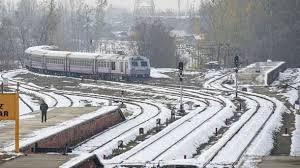
When on January 9, Indian Railways successfully conducted a trial run at a speed of 110 km/hour on the steep 179-degree gradient of the Katra-Banihal section of the Udhampur-Srinagar-Baramulla Railway Line (USBRL), it marked a big step towards connecting Kashmir directly to the rest of India by rail, a project over three decades in the making. 

Speaking on the occasion, Dinesh Chand Deshwal, Commissioner of Railway Safety (CRS) for the Northern Circle, hailed the achievement as “a new chapter in the history of the Railways.” He acknowledged the efforts of engineers in navigating the region’s unique terrain. 

“The trial run in such a challenging geography was smooth and filled us with a sense of fulfilment,” he said. “The credit for it goes to our engineers who have done such great work.” 

The train connectivity between Delhi and Srinagar is set to begin this month – albeit, there will be no direct rail between the destinations. All the trains going to Srinagar and returning will have to stop at railway station in Katra in Jammu division every time for mandatory transfers. If one were to factor in the transshipment, the passengers will have to take two trains to complete a rail trip between Kashmir and Delhi.

This has been severely opposed by the political, trade and civil society organizations from Kashmir.   “For years, we were told that train services to Kashmir would benefit the common masses and ease travel. This latest directive shows that Kashmiris are still far from experiencing any real travel convenience. The train services, which were inaugurated amid great fanfare, are turning out to be nothing more than a facade,” PDP General Secretary Mohammad Khurshid Alam said in a statement.

“This decision subjects ordinary people to unnecessary hardships. Security concerns should not be used as an excuse. Adequate checks can be conducted at the start of the journey. Forcing passengers to de-board midway and board another train in the name of security is both humiliating and impractical,” the leader added.  

The Kashmir Valley Fruit Growers Cum Dealers Association (KVFGDU) said that the announcement of indirect train services from Kashmir to Delhi has dashed their hopes and they have sought attention of Lieutenant Governor Manoj Sinha and Chief Minister Omar Abdullah in this regard.

“The launch of Vande Bharat Express trains between Katra and Srinagar does not address the critical need for transportation of fresh produce”, Bashir Ahmad Basheer, Chairman KVFGDU, said. “Only direct rail connectivity between the Kashmir Valley and Delhi can ensure efficient and smooth transportation of fruits and vegetables to other parts of the country, as well as enable imports of essential goods into the region.”

In terms of tunnels and bridges, the USBRL project boasts one of the largest such numbers in the world. It has 38 tunnels spanning 119 km, including the country’s longest transportation tunnel, Tunnel T-49, measuring 12.75 km. It also includes 927 bridges covering a combined length of 13 km. These features make it one of the world’s unique railway tracks, adding to its tourism friendliness. 

“We will start the train services,” Minister of Railways Ashwini Vaishnaw said while talking to the media about the project during the inspection of new coaches of Amrit Bharat train and other projects at Integral Coach Factory (ICF) in Chennai. “The outstanding project to build a new railway route is a testament to engineering excellence and determination, overcoming significant geographical and climatic challenges.”

The Srinagar-Delhi train has generated some excitement locally with people welcoming the train travel to the rest of the country – albeit, some apprehensions are also being aired.

 “The train is expected to not only reduce the cost of ferrying goods to the Valley but also connect the region directly to other parts of the country, offering more avenues for business for the local traders and businessmen,” read an editorial in a local daily.  “The train to and from Kashmir must go hand in hand with policies that prioritize sustainable development, ensuring that the region’s unique identity and fragile ecosystem are preserved while it embraces new opportunities.”

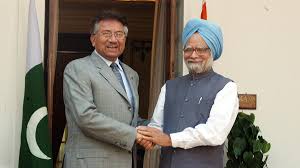
Manmohan Singh’s legacy: The Kashmir solution that almost was

Former prime minister Manmohan Singh’s recent passing marks not just the loss of a former Indian Premier but also the end of an era and a missed opportunity—one that, if seized, could have reshaped the history of Kashmir and the subcontinent. A report by Riyaz Wani

Former prime minister Manmohan Singh’s recent passing marks not just the loss of a former prime minister but also the end of an era and a missed opportunity—one that, if seized, could have reshaped the history of Kashmir and the subcontinent. Now we can only look back wistfully at what seemed so close at hand but couldn’t be accomplished.  


In his book ‘Neither Hawk, Nor Dove,’ former Pakistan foreign minister Khurshid Mahmud Kasuri has reminisced about the 2004-07 India-Pakistan engagement pursued by Singh and his then Pakistani counterpart Pervez Musharraf, which nearly brought Kashmir issue close to settlement. For example, Kasuri writes that the two countries were putting finishing touches to the agreement by the time Musharraf lost his grip on power towards the end of 2007. It was around September-October in the year that Singh was scheduled to travel to Islamabad to sign the deal. The contemplated solution – no border re-adjustment, demilitarization, self-governance, and joint mechanism between divided parts of Kashmir – was a win-win for both the countries with almost all of the Kashmiri political opinion except Geelani on board.

As the book now reveals, Pakistan had agreed to withdraw troops from Pakistan Administered Kashmir after India demanded a quid pro quo for doing the same on this side of the border. The neighbours had agreed to conclude an “agreement within one year over reduction of troops and the process of demilitarization”.

On self-governance for Kashmir, India had insisted that it would only guarantee that quantum to territories under its control as Pakistan granted to PoK. The two countries had “agreed that within one year of the agreement, India and Pakistan would conclude a charter of principles regarding self-governance and that the nature and quantum of self-governance would be the same on each side”. 

Kasuri writes that by the time Musharraf was ousted from office, Pakistan and India had made progress on the last of the contentious points of his four-point settlement formula for Kashmir that had brought the two countries tantalizingly close to a solution. This was about creating a joint consultative mechanism between the divided parts of Jammu and Kashmir. The two countries had agreed that such a mechanism would consist of a specified number of elected members from each of the two units. There was also an agreement on “the principle of the presence of Pakistanis and Indians” in this mechanism. What was still under discussion was “the manner of the presence and association” of the two countries with the arrangement. 

But after Musharraf’s exit followed by the Mumbai attack that killed 166 people, everything changed. Although Singh remained in power over six more years, there was no further movement in either Indo-Pak relations or Kashmir resolution. And with the loss of power by the Congress in 2014 and taking over as prime minister of Narendra Modi, things went in reverse direction. Subsequently, in August 2019, abrogation of Article 370 that granted J&K some measure of autonomy, altered the very complexion of Kashmir issue. India removed it from the table as an issue to be discussed with Pakistan. After 2014, Singh retired from politics. 

When he visited Jammu and Kashmir in September 2017 as the head of a Congress delegation, he evoked some nostalgia about his tenure, a period during which a solution to the Kashmir issue had seemed within reach. Singh went about his activities in his familiar inconspicuous way. He chose to only listen and not issue any statement, nor talk to the media. But he struck a chord as a throwback to a time when the centre apparently tried to be sensitive if not accommodative  towards the issues facing J&K. His ten years at the helm – 2004-2014 – had witnessed the most promising peace process between India and Pakistan that had nearly culminated in a resolution  of Kashmir. At one point of time as the Kashmir solution seemed close at hand, Singh had famously talked of a time when people in India would be able to have “breakfast in Amritsar, lunch in Lahore and dinner in Kabul”.

There was some public criticism of Dr Singh too. Some people argued that despite making attempts and starting many initiatives on internal and external fronts to resolve Kashmir, Singh had baulked at taking these to their logical conclusion. Besides holding substantive  negotiations with Pakistan over the then Pakistan president Pervez Musharraf’s four-point formula for Kashmir resolution, Singh had also set up five working groups and the three-member group of interlocutors to evolve a comprehensive response to the then state’s problems but  none of their recommendations was followed through. 

In his book, ‘In Pursuit of Peace,’ the late Indian diplomat S.K. Lambah provides a comprehensive account of the behind-the-scenes efforts led by Singh and his then Pakistani counterpart Pervez Musharraf to secure peace between India and Pakistan by resolving Kashmir. The “accord” being worked out between the two countries on Kashmir aimed to make borders irrelevant without redrawing them, with key elements such as bus services between two parts of Kashmir already in play during Singh’s tenure. 

Lambah’s book also highlights the possibilities for peace that presented themselves over the past quarter century, including the Delhi-Lahore bus service that began in 1999, the visit of Prime Minister Atal Bihari Vajpayee to Islamabad in 2004, General Pervez Musharraf’s visit to India in 2005, and the near-reopening of consulates in Mumbai and Karachi, among others. 

The current state of affairs is far from promising, with no direct flights, hardly any visas issued, and no bus or train services between the two countries. As Lambah noted in his book, India-Pakistan hostilities have become an instrument of political mobilization and that the painful memories of partition are being revived. He pointed out that hate is the guiding political philosophy of both the countries today, and as long as this remains the case, no channel, front or back, will work.

The situation has considerably transformed since, and in almost every sense: regionally in terms of the growing power disparity between India and Pakistan, and in J&K too, which has since been divested of its special status and downgraded into two federally controlled units, in other words, two union territories. This, in turn, has altered the character of the Kashmir issue as we understood it. 

And if at all the two countries return to dialogue in the near or medium future, it seems hardly probable that they will revisit the Four Point Proposals. But should the two countries choose to go back to them as a broader framework for settlement, they will need to adapt it to the new reality. But again, getting to that point won’t be easy.

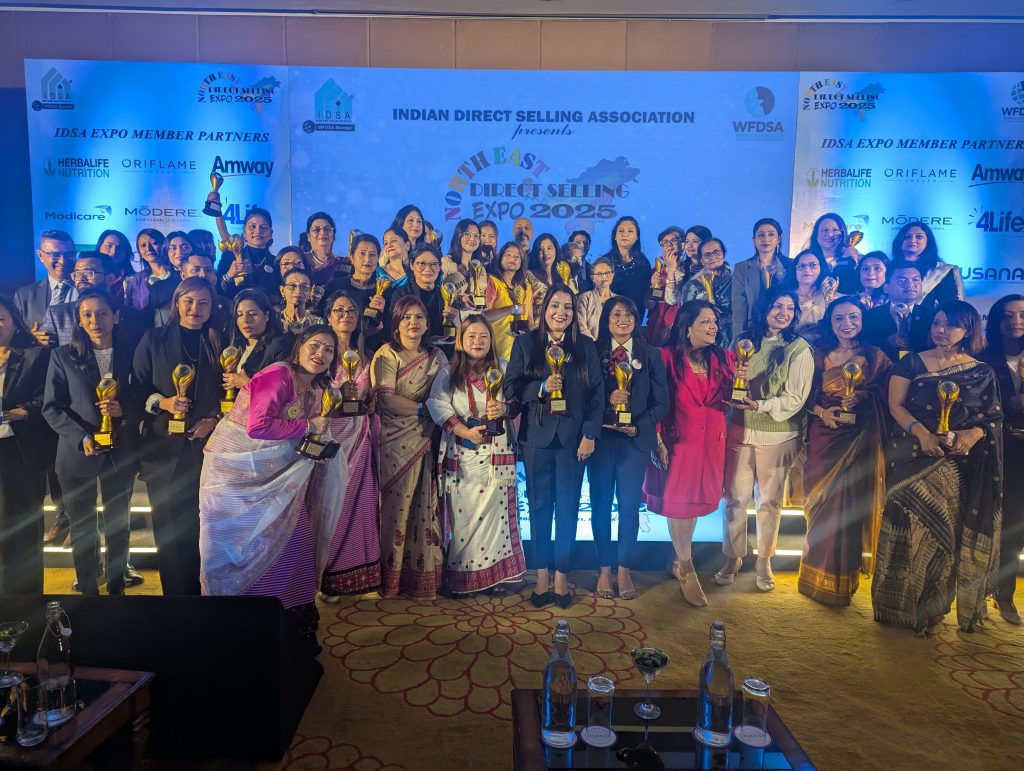
Northeast flies high in direct selling, crossing ₹1,854 crore in sales; Assam leads

Northeast, with nearly 16% growth in direct selling, is poised to fly higher as all eight sister states registered a leap jump in sales, adding ₹ 255 crore from the previous year to cross

₹1854 crore in the year 2022-23, the Indian Direct Selling Association disclosed here in the 2nd Northeast Direct Selling Conference and Expo organized here today.

The region, which accounts for 8.7% of the ₹21,282 crore national turnover of the direct selling industry (DSI), provides self-income opportunities to over 4.2 lakh direct sellers, the IDSA disclosed, and added that Assam, being the 9th largest direct selling market in the country, rules the roost with ₹1,009 crore in sales, 13% YOY growth, and a 4.7% national market share, supported by over 2.4 lakh direct sellers.

Combined, the other seven states contribute ₹845 crore: Nagaland ₹227 crore, Mizoram ₹156 crore, Arunachal Pradesh ₹78 crore, Tripura ₹72 crore, Meghalaya ₹19 crore, and Sikkim ₹5 crore. Notable growth rates were seen in Mizoram (31%), Sikkim (25%), Nagaland (22.7%), and Manipur (20%). The industry contributes around ₹300 crore annually to the exchequer of northeastern states, reinforcing its role in the region’s development, the IDSA highlighted.

Anasua Dutta Barua, Secretary, Consumer Affairs, Govt. of Assam, said in her key note address that while creating a conducive environment for the direct selling industry under the regulations, the state is committed to safeguard the interests of consumers. Underscoring the need to ensure the products quality for consumers, she offered all the help to the industry from his department, which also aboard IDSA as a subject matter expert in the Monitoring Committee, set up by in compliance to the Consumer Protection (Direct Selling) Rules 2021. The Govt. is working towards creating an effective mechanism to ensure companies adhere to direct selling rules, she added.

Riniki Bhuyan Sharma, Chairman and Managing Director of Pride East Entertainment, expressed her admiration for the contributions of women to society and national development. She emphasized that women, once venturing beyond the traditional confines of the home, have achieved remarkable success across various fields. Highlighting the entrepreneurial spirit of women in the direct selling sector, she praised their ability to set inspiring examples through their achievements. Mrs. Sharma congratulated the women honored at the event and commended the IDSA for organizing such initiatives, which serve to motivate others to join this transformative journey.

Vivek Katoch, Chairman, IDSA, said, “Northeast continues to be among the key and priority markets for the DSI. The growth figures clearly reflect that it is poised for new horizons, reaffirming the relentless hard work of direct sellers. The industry, growing at more than 12% rate at the national level, has provided self-employment for nearly 86 lakh Indians. The IDSA member companies can confidently lay claim to successfully protecting consumer interests as well as those of over 4.2 lakh direct sellers in the region. He said ten states including Assam, so far have established monitoring committees in line with the Rules. The other states to follow suit.” 

The daylong event witnessed brainstorming by industry leaders, experts, and policymakers on crucial topics such as industry growth, regulatory frameworks, consumer awareness, reforms, policy advocacy, and interactive sessions for the empowerment of women and youth through direct selling opportunities. It comprised recognition of 45 women entrepreneurs from the region for their achievements in direct selling, a product ramp walk in the traditional Northeast attire, and a grand exhibition that showcased the innovations and diversity of the direct selling industry.

Rajat Banerji, Secretary IDSA, CEOs of the various member companies and Ruchi Bhardwaj Barua, fitness and nutrition coach, were among the dignitaries and a large number of direct sellers present on the occasion.

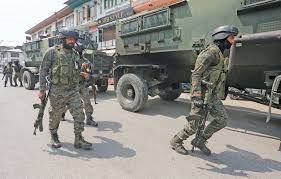
Soldier injured in ongoing gunfight in North Kashmir’s Sopore

Srinagar: A soldier was injured as fresh firing broke out during an ongoing encounter between militants and security forces in the Gujjarpati area of Zaloora, Sopore, on Monday, officials reported. The gunfight initially began late Sunday evening.

According to officials, the operation was temporarily suspended overnight due to darkness, but resumed at daybreak. 

“With the first light, fresh firing resumed, and a soldier was injured in the ensuing exchange of fire,” said an official.

Earlier, on Sunday, joint teams of the Army, CRPF, and police had cordoned off the Gujjarpati area, where they discovered a militant hideout. During the search operation, security forces came under fire, leading to the encounter. The operation is still ongoing, and authorities are expected to release further updates soon

MOST POPULAR

HOT NEWS