Saturday, December 27, 2025

Sandeep Dikshit’s grassroots campaigning gains momentum ahead of Delhi assembly elections

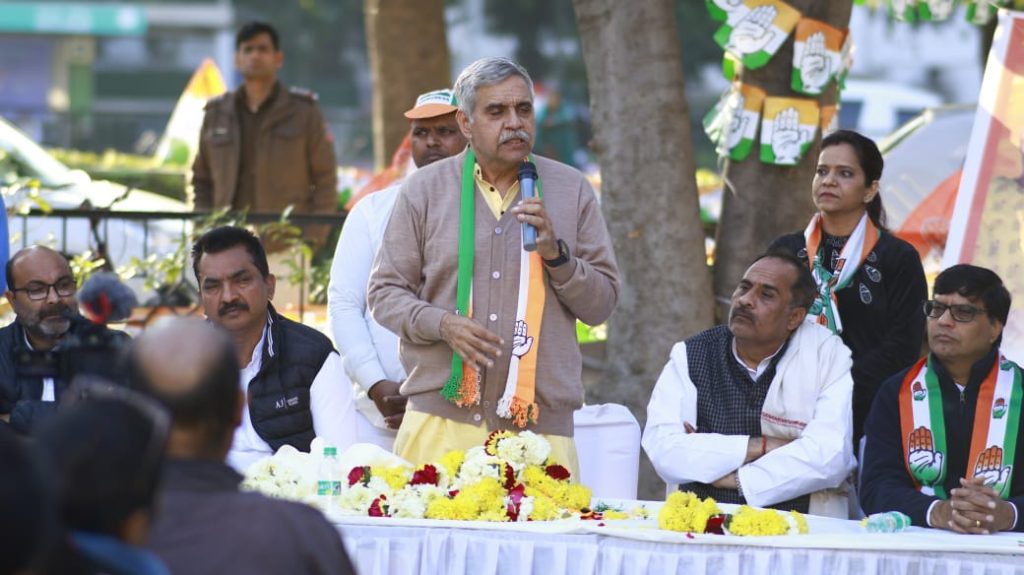
With the Delhi Assembly elections around the corner, Sandeep Dikshit, a prominent figure in the Indian National Congress (INC), is intensifying his efforts to connect with voters through public meetings and door-to-door campaigns. 

The former Member of Parliament and son of veteran Congress leader Sheila Dikshit, Sandeep Dikshit is focusing on reaching out to the people in New Delhi constituency from where he is fighting the upcoming polls, engaging with them to understand their concerns. 

Dikshit on Friday held various public meetings in Laxmi Bai nagar, South Avenue, and Kidwai Nagar where he met residents during door to door campaign and handed over the manifesto of the party to lure the voters. 

Dikshit has been holding various public meetings across the constituency where the Congress party has traditionally had a strong base. Dikshit is trying to regain the area as Sheila Dikshit used to contest from New Delhi constituency. These meetings are seen as an opportunity for him to connect with the electorate, share the party’s vision for Delhi, and remind voters of the achievements of his late mother, Sheila Dikshit, who served as the city’s Chief Minister for three terms. 

He promised to the residents of MP flats that he will try to find a solution for a permanent residence for the staff of MP flats who are engaged in various work and have to face homelessness after election. 

“You people serve the elected MP and ministers but I have realised that you have to leave these quarters whenever the new MP is elected after the election but. Now I promised that I will try to find a permanent solution for this. We will talk to NDMC and Central government about the same and come up with proper plan,” he said. 

By visiting homes and speaking directly with residents, he aims to address their specific needs and concerns. Many voters appreciate this personal approach, noting that it reflects the party’s dedication to being in touch with the ground realities.

This strategy comes at a time when Delhi’s political landscape is dominated by the Aam Aadmi Party (AAP) and the Bharatiya Janata Party (BJP), both of which have strong voter bases. However, Dikshit’s door-to-door and public outreach efforts are seen as attempts to revive Congress’s fortunes in the state, especially in constituencies where AAP and BJP dominance has been increasing in recent years.
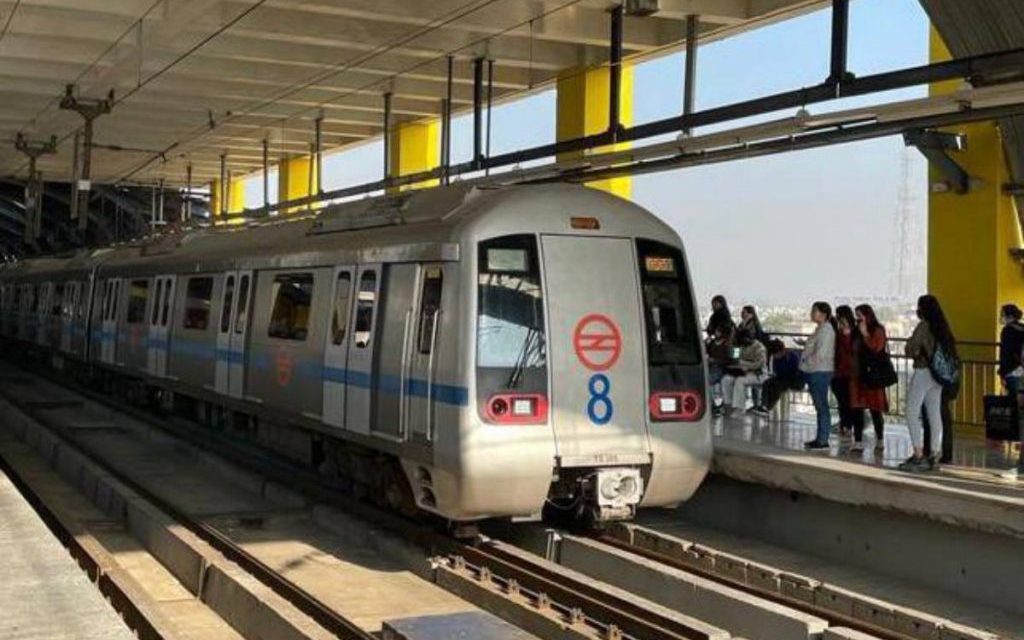
Delhi Metro to begin services at 3:00 AM on Republic Day

In a move to facilitate early access for Republic Day celebrations, Delhi Metro will kickstart its services at 3:00 a.m. on January 26. This will help people travel smoothly to Kartavya Path to witness the grand Republic Day ceremony.

Anuj Dayal, Principal Executive Director (Corporate Communications) of DMRC, shared the information, saying, “To ensure a seamless journey, trains will run at intervals of 30 minutes until 6:00 a.m., after which the regular timetable will be in place for the day.”

Passengers have been encouraged to plan their trips early and take advantage of the early Metro services to avoid last-minute rushes and delays.

As India celebrates the 76th Republic Day, this national occasion not only marks the adoption of the Indian Constitution in 1950 but also pays tribute to the sacrifices of freedom fighters.

The theme for this year’s R-Day celebration, ‘Swarnim Bharat – Virasat aur Vikas’ (Golden India – Heritage and Development), highlights the country’s rich cultural heritage and its ongoing journey of progress.

Notably, Indonesian President Prabowo Subianto will be the chief guest for the Republic Day celebrations, marking 75 years of diplomatic relations between India and Indonesia.

Republic Day is a celebration of India’s democracy, unity in diversity, and the enduring spirit of Independence, as well as a tribute to the sacrifices made for the country’s freedom and republic status.

Republic Day holds deep significance on multiple fronts. Primarily, it underscores India’s dedication to constitutional values, reflecting the nation’s commitment to democratic ideals of justice, liberty, equality, and fraternity. It also serves as a celebration of India’s rich cultural heritage, with cultural performances and tableaux showcasing the country’s diverse traditions.

Another key aspect of the national holiday is its focus on promoting national unity. The celebrations highlight the strength found in India’s diversity, emphasising how the nation thrives by embracing differences. Republic Day also honours the courage and sacrifices of the leaders and freedom fighters who played a pivotal role in securing India’s Independence and establishing the republic.

Madhya Pradesh Govt Bans Sale of Liquor at Religious Sites

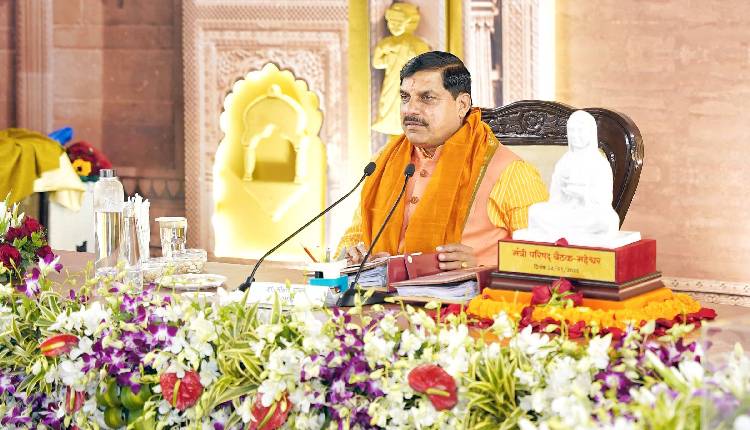
Chief Minister Mohan Yadav-led Madhya Pradesh cabinet on Friday approved a proposal to put a ban on the sale of liquor at religious sites in the state.

“In a special cabinet meeting held in Maheshwar today under the chairmanship of Chief Minister Mohan Yadav, a decision was taken to ban liquor at various religious places in the state,” the Madhya Pradesh government said in an official statement on Friday.

Approval for the proposal was made during a special cabinet meeting held on the 300th birth anniversary year of Ahilyabai Holkar, the 18th-century ruler of the Holkar dynasty, in Khargone district’s Maheshwar, the kingdom of the Holkar dynasty.

However, it is yet to be known when this order will be implemented.

Chief Minister Yadav along with his cabinet ministers visited the royal throne in the historic fort and paid homage to the statue of Ahilyabai by offering flowers. “Lokmata’s incomparable contribution to the cultural consciousness of India, the construction and renovation of monasteries and temples, will always be remembered,” CM Yadav said in a statement.

The ban on liquor will be implemented at 17 religious sites, such as Ujjain, Orchha, Salkanpur, Chitrkoot, Omkareshwar, Maihar, Amarkantak and Pashupatinath temple areas along with some others in Madhya Pradesh.

Notably, prohibition on liquor has been a political weapon within the Madhya Pradesh BJP. Saffron leaders, especially former CM Uma Bharti have often questioned the government of her own party for showing reluctance to put ban on sale of liquor. Last year, Bharti had even pelted stones at liquor shops in Bhopal and protested against liquor shops operating near schools and religious places.

Interestingly, former Bhopal MP Pragya Thakur has also raised her voice against the sale of liquor in the state.

Excise revenue is another factor that has so far deterred successive BJP governments in the state from enforcing prohibition. Excise revenue for the financial year 2024-25 is projected at Rs 15,000 crore. This revenue is seen as a major source of funds at a time when the government is bearing a heavy burden of populist schemes, especially the Ladli Behna Yojana, to the tune of over Rs 20,000 crore annually. State departments have been complaining about inadequate funding to see ongoing projects through.

“We don’t want our youths to get spoiled as they are the future of the country. The Madhya Pradesh government will ban the sale of liquor at 17 religious places,” Chief Minister Yadav said on Thursday.

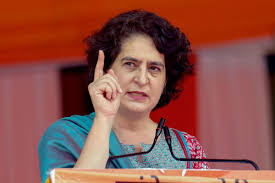
Delhi Assembly Polls: Priyanka Gandhi set to hit Campaign Trail from January 26

New Delhi: Congress General Secretary and Wayanad MP Priyanka Gandhi Vadra is expected to begin the party’s poll campaign in Delhi from January 26, even as Lok Sabha’s Leader of the Opposition Rahul Gandhi, scales back his outreach efforts for the upcoming elections ostensibly due to his reported ill health.

A senior leader involved in the Congress’ campaign management in Delhi confirmed that Priyanka Gandhi will address her first rally in northeast Delhi on Sunday evening, marking the start of her participation in the Delhi Assembly polls.

“All Congress candidates have sent requests to the Delhi Pradesh Congress Committee (DPCC) asking that Priyanka campaign on their seat,” said a senior DPCC functionary.

“However, she will focus only on critical areas, especially since Rahul Gandhi’s campaign schedule remains uncertain due to his health,” the functionary added.

On Thursday, Rahul Gandhi cancelled a rally in northeast Delhi’s Mustafabad, raising concerns about his availability for future events.

While Gandhi has another rally lined up at Madipur for Friday, however, leaders said his participation at the moment still remains uncertain.

Delhi Congress Chief Devendra Yadav, however, expressed optimism regarding Rahul’s involvement.

“Rahul Gandhi’s rally in Madipur is still on schedule, and he will address a large gathering there,” Yadav said, adding that after Republic Day, all senior Congress leaders, including Priyanka Gandhi, will actively campaign.

Delhi’s 70 Assembly seats will go to the polls on February 5.

So far, Rahul Gandhi has addressed one major rally in Seelampur on January 13 and released two short videos, criticising Prime Minister Narendra Modi and the Aam Aadmi Party (AAP) governments during his visit to AIIMS OPD patients.

At a rally in Sadar Bazar, Yadav announced Rahul Gandhi’s absence, reading a message from him: “I regret not being able to join the meeting due to my health. My best wishes to all of you. I will try to campaign in Delhi and visit Sadar once I recover.”

Priyanka Gandhi Vadra, who won the Wayanad Lok Sabha seat in Kerala in a byelection on November 23, is expected to focus on areas in northeast Delhi, Old Delhi, and east Delhi – areas where Congress leaders are expected to perform relatively well.

“Her schedule is still being finalised, but we aim to include as many outreach events as possible,” said a third Congress leader involved in planning.

One of the leaders cited above said they hope to divide campaign responsibilities between the Gandhi siblings to maximise coverage in constituencies with strong Congress prospects.

“Between Rahul and Priyanka, we want to cover those seats where we have a good chance of winning. In a handful of seats, both the Gandhis will campaign,” said a Congress leader.

Priyanka’s late entry into the Delhi campaign is seen as a strategic move to sustain momentum and avoid voter fatigue.

A senior All India Congress Committee (AICC) leader noted that despite being a Congress General Secretary, Priyanka has not been assigned a specific state, allowing her to campaign nationwide.

However, critics argue that Priyanka’s leadership in Uttar Pradesh failed to expand the Congress footprint, raising questions about her ability to turn the tide in Delhi.

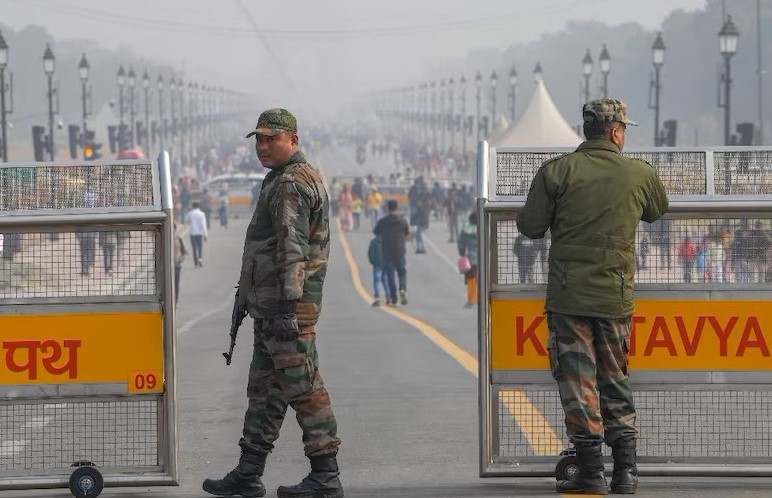
Seventy paramilitary companies, 15,000 cops to be deployed for Republic Day

Over 70 companies of paramilitary forces and more than 15,000 police personnel are set to be deployed across the capital for Republic Day celebrations, an official said on Friday.

The city will be monitored by drones and CCTV surveillance and cyber-specialist officers will be deployed to oversee operations, a senior police officer said.

“We have already installed multi-layered security arrangements. We have six layers of checking and frisking arrangements. Apart from this, we will have multi-layered barricading. We have several thousand CCTV cameras installed in the New Delhi district, including those with Facial Recognition Systems (FRS),” the officer said.

Moving vehicles with FRS system will also be deployed, he said.

The officer said the cameras are linked to a database to identify criminals immediately. “Delhi Police is well prepared to tackle any kind of situation,” he said.

The officer further said that police teams are conducting mock drills with multiple security agencies. Over 70 companies of paramilitary forces and more than 15,000 police personnel will be deployed in the national capital to ensure robust security arrangements.

The DCPs of all districts are properly briefed about the security arrangements. Police officers would remain on high alert and promptly report any suspicious activity immediately, he said.

Another officer said approximately 4,000 rooftop security points have been identified in New Delhi, North, and Central districts as part of the security measures.

Attendees of the Republic Day parade will receive security stickers, and about 500 high-resolution Artificial Intelligence-enabled cameras with FRS are being installed along the route and nearby areas.

“The DCPs of New Delhi, Central Delhi, and North Delhi have conducted detailed route surveys, anti-sabotage checks, and increased vigilance in high-footfall areas. Special routes, drone monitoring and CCTV surveillance will help maintain law and order,” said the officer.

A special meeting was also organised with the security staff of hotels and malls to ensure readiness, he said.

Delhi assembly elections: Solution to air pollution missing from parties manifestos  

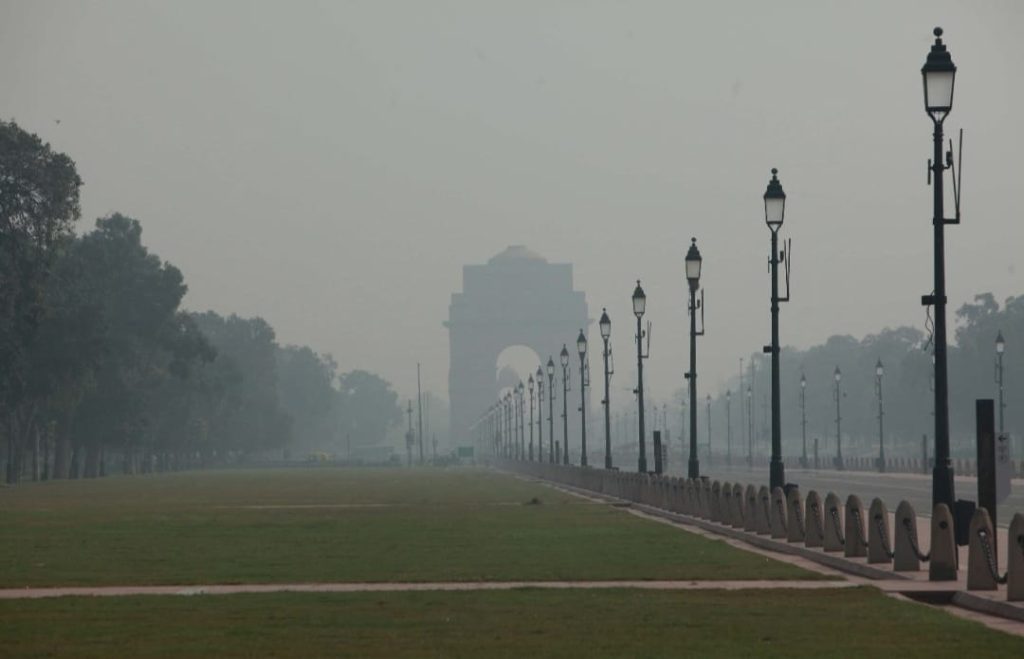
Photo : Naveen Bansal

As the Delhi assembly elections are around the corner, the issue of air pollution in the national capital remains a critical concern for residents and environmentalists alike. Despite light rain, the air quality remained in the poor category with the Air Quality Index (AQI) registering at 262 at 6 am and 8 am, according to the Central Pollution Control Board (CPCB).

Yet, despite the urgency of air pollution in Delhi, no political party including Aam Aadmi Party (AAP), Bharatiya Janata Party (BJP) and Congress, has prominently addressed or proposed concrete solutions to this pressing problem in their election manifestos.

While there are frequent promises about economic growth, job creation, and infrastructure development, air pollution—which severely affects public health, quality of life, and the city’s global standing—has largely been sidelined.

Surprisingly, none of the major parties seem to have crafted clear strategies to tackle this environmental crisis head-on.

With the narrative focused around the ‘freebies’ the three major parties have unveiled their manifestos, each targeting key voter concerns and outlining their vision for the national capital.

The trio has come up with the scheme that offers financial assistance to the women as AAP has promised to provide Rs 1000 per month to every woman above the age of 18 and said that the amount will be increased to Rs 2100 if it comes back to power.

BJP has announced the same and promised Rs 2500 per month along with Rs 21000 to every pregnant woman with six nutritional kits. The party has also announced that it will increase the pension to Rs 2,500 to 3,000.

The Congress has also promised a monthly financial aid of Rs 2,500 to women under the proposed ‘Pyaari Didi Yojana’.

In terms of healthcare, the AAP has promised free of cost medical treatment for senior citizens in both government and private hospitals under its Sanjivani Yojana while BJP has promised to implement Ayushman Bharat scheme in the national capital, providing health cover of Rs 10 lakh for senior citizens and poor families. Congress has also promised a health insurance cover of Rs 25 lakh to all Delhi residents under its Jeevan Raksha Yojana.

In terms of electricity, the BJP has promised to retain all the existing schemes while AAP offers free electricity up to 200 units and 50 per cent subsidy rebate if the total consumption in a month goes above 200 units.

Congress has taken a step ahead and the party has announced 300 units of free electricity. AAP has promised to provide free bus services for male students studying in school and colleges; BJP has promised that the free bus service to women will continue if it comes to power. 

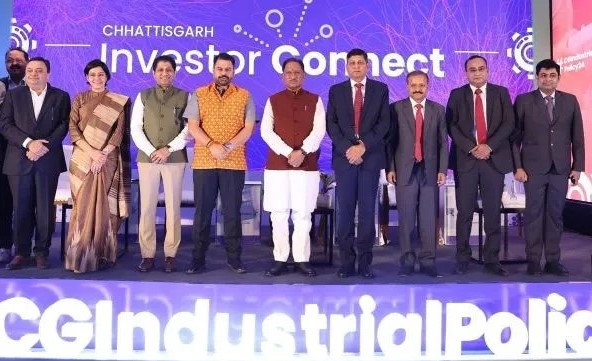
Chhattisgarh attracts Rs 6,000 crore investment proposals at Investor Connect Meet in Mumbai

Mumbai, January 23, 2025: Chhattisgarh took a major step towards enhancing its industrial growth and attracting Foreign Direct Investment (FDI) by showcasing its new industrial policy at the Investor Connect Meet in Mumbai. The event saw significant attention from leading industrialists and investors, resulting in investment proposals worth Rs 6,000 crore from major companies in sectors like plastic, textile, IT, and food processing.

Among the proposals, Ambuja Cement led with a Rs 2,367 crore investment plan, marking a significant contribution to the state’s economic growth. Other noteworthy investments included Rs 625 crore from Drools Company to boost pet food production and Rs 500 crore from Welspun Group for plastic and textile sectors.

The Chief Minister highlighted that Chhattisgarh’s new industrial policy has already attracted investments totaling Rs 1 lakh crore since its inception, supported by initiatives in the state’s Investor Connect Meets held in Raipur, Delhi, and Mumbai.

During his discussions with US Consul General Mike Hankey and Russian Consul General Ivan Y. Fetisov, Chief Minister Vishnu Deo Sai emphasized the state’s potential in sectors like health, education, IT, and tourism. The state also introduced its vision for the future, with a focus on emerging industries such as Artificial Intelligence, Robotics, Computing, and Green Hydrogen.

The Chief Minister also underscored the state’s commitment to ease of doing business, with the motto “Minimum Governance, Maximum Incentives.” A streamlined process for obtaining No Objection Certificates (NOCs) and a single-window clearance system have made Chhattisgarh a highly attractive investment destination.

A major focus of the meeting was the upcoming development of Nava Raipur, which is being positioned as an IT hub with provisions for a new data center. The state also announced the creation of a pharmaceutical park in Nava Raipur, which will become the largest in Central India, as well as plans for a new industrial area near the Nagarnar Steel Plant in Bastar.

Special focus was given to the Bastar and Surguja regions, which have been identified as priority areas for industrial growth. Incentives for industries in these areas include significant discounts on iron and coal royalties and reimbursements on cess.

Prominent industrial groups such as Aditya Birla Group, Godrej Group, and Essar Group also expressed interest in expanding their operations in Chhattisgarh. Discussions centered around investments in textiles, agriculture, food processing, energy, infrastructure, and mining.

With proposals flowing in from various sectors, Chhattisgarh’s vision for economic development is rapidly taking shape, signaling a bright future for investment and job creation in the state.

Train to Kashmir faces 2-month delay, set to begin in April: Dr. Farooq Abdullah

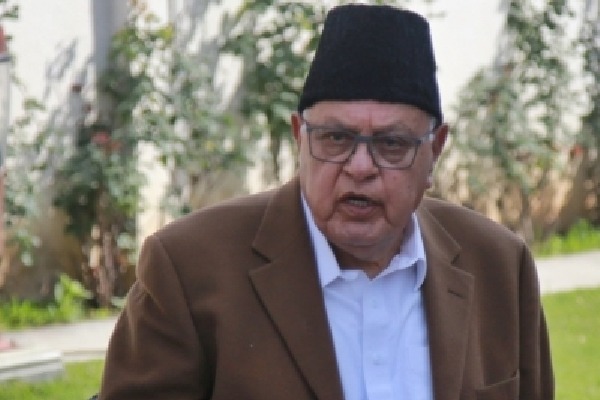
National Conference President Dr. Farooq Abdullah announced on Wednesday that the Katra-Sangaldan train service will likely face a two-month delay. The service is now expected to begin operations in April, aligning with the start of the tourism season.

Speaking to reporters at a party event in Jammu, Abdullah said, “I heard that the train (to Kashmir) will face a two-month delay due to some incomplete works. Those works are being attended to, and they will start the train in April with the onset of the tourism season.”

Abdullah, who was preparing to travel to Srinagar aboard the train on January 25, clarified the delay and expressed confidence that the issues would be resolved soon.

In December 2024, the Railway Ministry announced the completion of the Udhampur-Srinagar-Baramulla Railway Link (USBRL) project, which began in 1997 and aims to connect Kashmir to the rest of the country.

Recent trial runs on various sections, including the Katra-Srinagar track, were successfully conducted. Additionally, the statutory inspection by Commissioner of Railway Safety, Northern Circle, Dinesh Chand Deshwal, was completed in the past month, raising hopes for an earlier launch. However, due to pending work, the service will now begin in April.

R-Day parade to showcase valour & discipline of armed forces

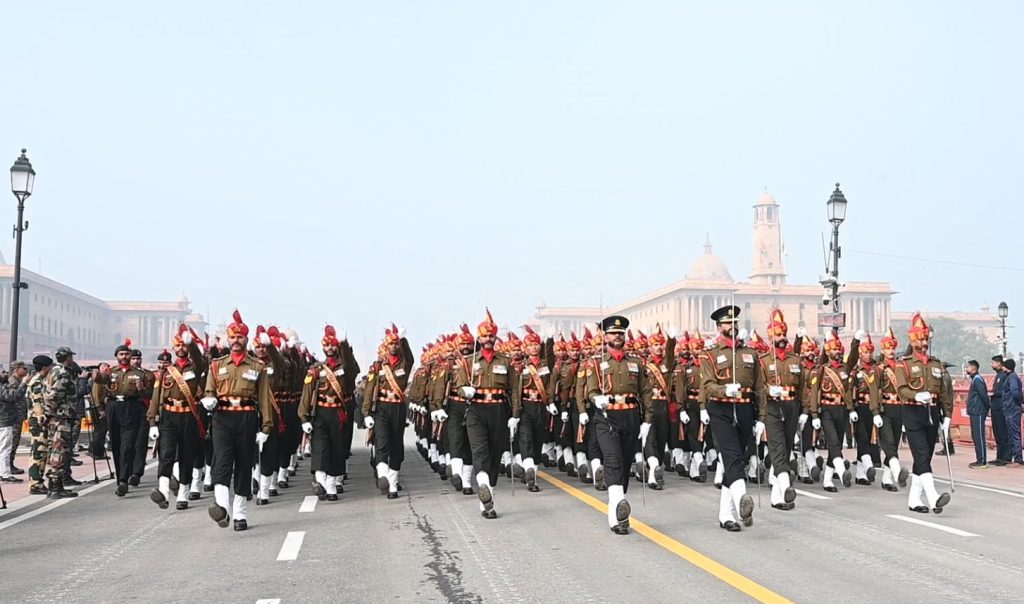
New Delhi : The Republic Day parade will be a powerful showcase of the strength, valour and discipline of armed forces, an army official said on Thursday.

He noted that in preparation for the parade, a full dress rehearsal was organised at Kartavya Path.

“The 76th Republic Day Parade on 26 January will be a grand celebration of India’s rich heritage and its progress as a nation, ” the official said.

He pointed out that the Army’s Bhishma Tank-T90, SARATH Infantry Carrying Vehicle BMP-II, NAMIS (Nag Missile System), CHETAK (All Terrain Vehicle), BRAHMOS, AGNIBAAN and PINAKA missile system will be displayed at Kartavya Path on Republic Day.

“The army will also showcase its KAPIDHWAJ (Specialist Mobility Vehicle), BAJRANG (Light Specialist Vehicle), AIRAWAT (Vehicle Mounted Infantry Mortar System), NANDIGHOSH (Quick Reaction Force Vehicle (Heavy), TRIPURANTAK (Quick Reaction Force Vehicle (Medium), SANJAY (Battlefield Surveillance System (High Altitude Areas), SANJAY (Battlefield Surveillance System (Desert), LAGHU ANTARAL SETU PRANALI 10M (Short Span Bridging System 10M) and Akash Weapon System, ” the official said.

The official added that the Brigade of the Guards, Mechanised Infantry Regiment, Punjab Regiment, Rajput Regiment, JAT Regiment Contingent, Garhwal Rifles Regiment Contingent, Sikh Light Infantry and Bihar Regiment will also participate in the marching and band contingents of the Army during the parade.

He said that before the parade, Prime Minister Narendra Modi will lead the nation in paying tribute to the martyrs by laying a wreath at the National War Memorial.

“The parade will begin at 10:30 AM with the ‘National Salute’ and will continue for 90 minutes, reflecting the journey of India’s heritage and growth, ” the official said.

He said that during the parade the army will display New Generation Equipment in Mechanised Column.

“Six marching contingents from the Army, 08 Mechanised Columns and Mounted Cavalry will participate, ” he said.

He further added that there will be tableaux of Department of Military Affairs (DMA) and Veterans.

“The motorcycle display by the Corps of Signals (Army) will be one of the major attractions of the Republic Day celebration at Kartavya Path, ” he said.

He added that there will also be a showering of flower petals by the IAF helicopters.

“In the end, the fighter jets of the Indian Air Force will perform fly past, ” he said.

The official pointed out that Param Vir Chakra and Ashok Chakra awardees will also be a part of the parade.

“Indonesian Contingent and Band will march at Kartavya Path (Country of Chief Guest). There will be a veteran’s tableau: Swarmin Bharat: Virasat aur Vikas, ” he said, adding that the Navy Brass Band, Navy Marching Contingent and Navy Tableau will exhibit achievements of the Indian Navy.

“Indian Coast Guards will have their band and a marching contingent and a tableau showing coastal security – maritime search and rescue, ” he said.

The army official said that the parade will follow the route from Vijay Chowk to the National Stadium along Kartavya Path, with President Droupadi Murmu, taking the salute during this prestigious event.

“The Indian Army will be represented by a Mounted Column, 08 Mechanised Columns, and 06 Marching Contingents. Lt Gen Bhavnish Kumar, General Officer Commanding Delhi Area will be the Parade Commander and the the Parade second in command is Maj Gen Sumit, VSM, Chief of Staff, Delhi Area, ” the official added.

Union Government hikes MSP of raw Jute

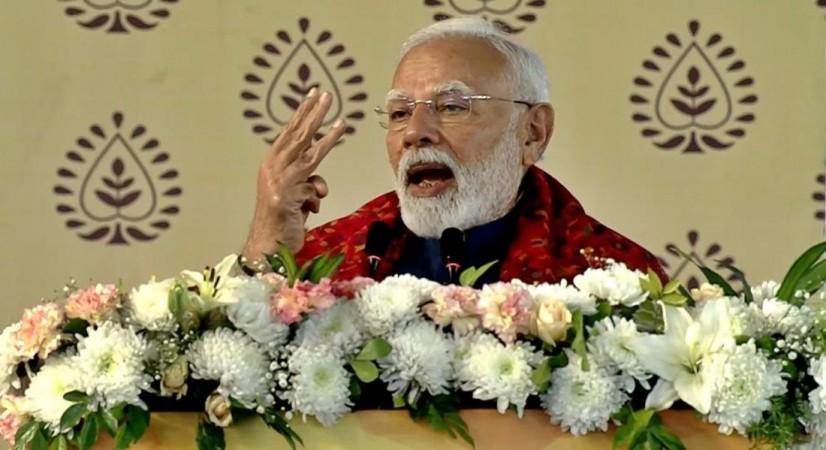
New Delhi : Prime Minister Narendra Modi on Thursday said that the Centre has taken a significant step to benefit farmers in the jute-producing sector, including in West Bengal, by approving a hike in the Minimum Support Price (MSP) of raw jute for the 2025-26 marketing season.

Taking to X, PM Modi said, “Our government has taken a big step in the interest of jute-producing farmer brothers and sisters across the country. An increase in the MSP of raw jute has been approved for the year 2025-26. This will benefit lakhs of farmers associated with this sector in many states of the country, including West Bengal.”

The Cabinet Committee on Economic Affairs (CCEA), chaired by PM Modi, has fixed the MSP of raw jute (TD-3 grade) at Rs 5, 650 per quintal for the 2025-26 season, ensuring a 66.8 per cent return over the all-India weighted average cost of production.

This represents an increase of Rs 315 per quintal over the MSP for the 2024-25 marketing season. The increase aligns with the government’s principle of fixing MSP at least 1.5 times the weighted average cost of production, as announced in the 2018-19 Union Budget.

The MSP of raw jute has witnessed a significant rise under the current government, from Rs 2, 400 per quintal in 2014-15 to Rs 5, 650 per quintal for 2025-26, marking a 2.35 times increase of Rs 3, 250 per quintal.

The livelihood of 40 lakh farm families is directly or indirectly dependent on the jute industry, with about 4 lakh workers employed directly in jute mills and trade. Last year, jute was procured from 1.7 lakh farmers, with 82 per cent of jute farmers based in West Bengal and the remaining from Assam and Bihar, contributing 9 per cent each to national production.

The Jute Corporation of India (JCI) will continue as the nodal agency for Price Support Operations, with the Central Government fully reimbursing any losses incurred during these operations, the statement noted.

The official statement highlighted the difference in payments made to jute farmers over the years. Between 2014-15 and 2024-25, the amount stood at Rs 1, 300 crore, compared to Rs 441 crore during the period of 2004-05 to 2013-14.

The decision reinforces the government’s commitment to the welfare of jute farmers and is expected to strengthen the sector by providing fair prices and greater financial security.

MOST POPULAR

HOT NEWS