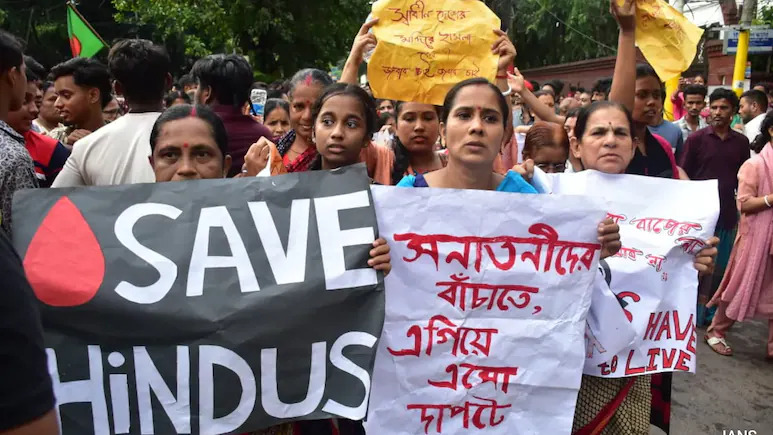
In the early months of 2026, Bangladesh found itself under a spotlight for all the wrong reasons. A series of violent incidents targeting its Hindu minority has rattled communities, inflamed public opinion in India, and raised delicate questions about the broader geopolitical landscape of South Asia. These events, while tragic on an individual level, have acquired significance far beyond local borders — testing diplomatic ties, historical bonds, and the resilience of pluralism in a nation that has long projected itself as a secular identity in a Muslim-majority context.
The most alarming reports have emerged from southern and eastern districts of Bangladesh, where several Hindu individuals have been attacked, and in some cases, killed in mob violence. At the heart of the controversy are reported attacks on Hindus, including the recent brutal killing of a Hindu auto‑rickshaw driver, Samir Kumar Das, in Bangladesh. Das, a 28‑year‑old resident of Feni district, was beaten and stabbed to death by a mob—a stark illustration of the vulnerabilities faced by religious minorities in a period of political flux. These incidents are not isolated: for many Hindu families, fear of targeted attacks has become a daily reality. Stories of shopkeepers threatened for their faith, farmers beaten over local disputes that turn communal, and young men attacked for mere association with religious traditions underscore a broader anxiety that has been building quietly for years.
While precise statistics are difficult to confirm, anecdotal accounts indicate a surge in violence coinciding with political transitions in Dhaka. Minority communities report that even ordinary social interactions — visiting a temple, attending a festival, or commuting to work — have become fraught with risk. The psychological impact is profound, with parents afraid to send children to school and workers hesitant to travel, undermining both social cohesion and economic stability. Hindus in Bangladesh historically formed a substantial minority community, with deep cultural, economic, and social contributions to the region. Yet over decades, their numbers have steadily declined due to migration, marginalisation, and periodic instability. Many Hindus in Bangladesh now say they feel insecure, fearful of both targeted and random violence.
Such sentiments have stirred public discourse in India, where Hindu organisations and civil society groups have protested against what they describe as “atrocities” and called for international attention. In some Indian cities, protests have erupted against the violence, with activists demanding accountability from both Dhaka and global institutions.
Bangladesh’s current unrest cannot be divorced from its political backdrop. The exit of long-serving political leadership has created a transitional phase that some analysts argue has weakened governance and law enforcement. In such vacuums, marginalized communities often bear the brunt of unrest, and in Bangladesh, the Hindu minority has historically been particularly vulnerable during periods of instability.
The interim government faces the dual challenge of asserting authority while balancing domestic political pressures. Reports of violence against minorities, regardless of scale, risk eroding public confidence in state institutions. Observers note that the perception of impunity, even if unintentional, can embolden perpetrators and sow fear among targeted populations.
India’s reaction has been swift and vocal. With millions of Hindus in West Bengal, Tripura, and Assam having familial and cultural ties across the border, New Delhi’s concern is both humanitarian and political. Civil society groups, opposition parties, and media in India have amplified these incidents, pressing the government to demand accountability from Dhaka. Ministry of External Affairs (MEA) has repeatedly expressed concern, highlighting a “disturbing pattern of recurring attacks on minorities” and urging Dhaka to take swift action to protect vulnerable communities.
Diplomatically, India faces a delicate balancing act. Pressing too hard could be perceived as interference, yet silence risks domestic criticism and potential destabilization along the shared border. The situation has revived debates over how India navigates regional sensitivities while protecting cultural and religious bonds that transcend national boundaries.
The Hindu minority in Bangladesh is not new to vulnerability. Historical events — from the Partition of 1947 to the Liberation War of 1971 — have left an enduring imprint. The community has steadily declined over decades due to migration, persecution, and economic marginalization. Every new episode of violence revives old memories, amplifying anxiety and complicating reconciliation efforts.
For many Hindus, these attacks are more than isolated crimes; they symbolize an ongoing struggle to assert presence, identity, and security in a society where political flux often intersects with religious fault lines. Unlike previous generations, however, today’s population is more vocal, more connected, and able to broadcast incidents quickly across social media platforms, bringing global attention to local crises.
The violence has added strain to the historically complex yet cooperative relationship between India and Bangladesh. While economic, cultural, and strategic partnerships have flourished in the past, these events have placed minority rights at the center of bilateral discourse. Border management, cross-border trade, and connectivity projects now exist against a backdrop of heightened political sensitivity and public scrutiny.
Indian policymakers must consider both immediate and long-term consequences. Short-term pressures include managing domestic political reactions and providing humanitarian support for affected communities. Long-term strategies involve ensuring that shared interests — from trade and energy cooperation to counterterrorism — remain resilient, even as political dynamics in Dhaka evolve.
Adding another layer to this complex landscape is Pakistan’s renewed interest in cultivating influence in Bangladesh. Reports of proposed defense cooperation, including potential arms sales and training initiatives, highlight Islamabad’s intent to engage Dhaka strategically.
For India, this development is significant. Any strengthening of Pakistan-Bangladesh ties could shift regional alignments, particularly in the context of India’s historic influence in Bangladesh. While the situation remains fluid, the interplay of domestic unrest and international strategy demonstrates how internal violence can have far-reaching consequences beyond borders.
Protecting minorities in Bangladesh requires a multi-pronged approach. Strengthening local law enforcement, ensuring rapid investigation of crimes, and visibly prosecuting perpetrators are essential. Equally important is fostering community engagement and social dialogue to rebuild trust across religious divides.
For India, constructive diplomacy remains key. Rather than confrontation, collaborative initiatives that encourage accountability, social cohesion, and cross-border humanitarian support are more likely to yield long-term stability. At the same time, monitoring Pakistan’s engagement with Dhaka is necessary to anticipate shifts in the regional balance of power.
The situation of Hindus in Bangladesh is emblematic of a larger challenge facing South Asia: how to safeguard minority rights, uphold democratic norms, and maintain regional stability amid political turbulence. Every attack, every injustice reverberates far beyond the immediate victims, influencing diplomatic relations, domestic politics, and social cohesion across borders.
As Bangladesh navigates its transitional phase, the eyes of neighboring countries, global institutions, and international observers remain fixed on how it reconciles its political imperatives with the fundamental rights of its citizens. For Hindus living under threat, the stakes are profoundly personal — the difference between fear and security, invisibility and recognition, survival and loss.
For India, Bangladesh, and Pakistan alike, this is not merely a story of violence; it is a test of regional maturity, strategic foresight, and moral responsibility. Ultimately, the question is not only about violence and its immediate victims, but also about the values that bind plural societies together—justice, equal protection, and the rule of law. As Bangladesh navigates its political transition, the international community, regional neighbours, and domestic actors alike will be watching closely to see how these values are upheld.
“We have three methods to heal any incurable disease, including cancer. One method is giving the patient water to drink after reciting and blowing Quranic verses over it; the second is brushing the patient’s body with neem leaves to remove evil spirits; and the third is putting black threads around the neck and waist after reciting and blowing Quranic verses over them,” Muhammad Akram from Gaada village in Saharanpur district of Uttar Pradesh told Tehelka’s undercover reporter.
“My father used to treat patients like this. He treated thousands of patients across India who were suffering from incurable diseases like cancer, diabetes and thyroid disorders. My father got this divine power of treating patients from his guru, who was a saint from a nearby village and was gifted by God to treat patients through divine powers, free of cost. My father’s guru passed on his divine powers to my father before his death. My father also died last year at the age of 112,” Akram said.
“After my father’s death, I am carrying on his legacy of treating patients, but I have also addedsome Ayurvedic medicines to the three methods through which my father was treating patients. But our treatment depends on the will of Allah. If Allah wishes, the patient will be cured; otherwise not. I have not done any course, and I only charge the cost of the medicines. The rest depends on the patient’s wish, which will be a hadiya (gift) for us,” Akram told Tehelka.
“I have removed 14 to 29 mm stones from the gallbladder of patients, which is impossible in medical science. In medical science, gallbladder stones require surgery. I am not in any way trying to challenge medical science. I am doing what Allah is guiding me to do,” Akram said.
“After being treated by me, diabetic patients’ dependence on allopathic medicine almost stops. If someone is taking two anti-sugar pills a day, that soon comes down to one pill a day after starting my medicine. After continuing with our treatment for some time, patients are not required to take any anti-sugar pills at all,” claims Akram.
“My treatment can cure diabetes permanently. It can be cured in five minutes, ten minutes, or it can also take three months. It all depends from person to person and on the will of Allah,” said Akram.
“Hindus have no objection to drinking the holy water we give them after reciting Quranic verses over it for treatment. We recite the verses over the water in front of them. In fact, Hindus in my village come asking for this water before growing brinjals in their fields in order to protect the crop from insect attacks. Hindus respect the Quran a lot,” said Akram.
“He asked me to eat four rasgullas and drink their sweet syrup when my sugar level was 600. After that, he gave me holy water to drink, then brushed my body with neem leaves and gave me two black threads to wear around my neck and waist, and asked me to wait for one hour. After one hour, my sugar level came down to 250 from 600. This was in 2019, before Covid. Till date, my sugar is under control and I have not taken any anti-sugar pill since then,” said Altaf, a patient from Noida, who had taken diabetic treatment from Akram’s father, the late Sufi Muhammad Islam, in 2019.
“I, along with four others, went to Saharanpur for treatment of diabetes when things were getting out of hand for me. My sugar level was so high that my eyesight had deteriorated significantly, and I was not able to see things properly. Someone told me about Sufi Muhammad Islam, who has since passed away. So I, along with four others—all diabetic patients—went to see him in 2019. Since then, sugar levels of all four of us have been under control and none of us has taken any anti-sugar pill. Many people from my area in Noida have benefited from Islam’s treatment,” Altaf added.
“I have been married to Muhammad Akram for the last 20 years, and I am an eyewitness to the fact that he, along with my father-in-law, has cured thousands of patients who came to see them from all over India. Recently, a cancer patient from Muzaffarnagar, Uttar Pradesh, came to see my husband on a stretcher. But after a couple of months of treatment, he walked back on his own,” said Sufia, wife of Muhammad Akram.
This is the story of a father-son duo from Gaada village in Saharanpur district of Uttar Pradesh. The father, Sufi Hakim Muhammad Islam, passed away last year, but the methods he practised are still being followed. They claim to treat patients suffering from all kinds of incurable diseases, including cancer, diabetes and thyroid disorders, using three methods. One is making the patient drink water after reciting Quranic verses over it; the second is tying a black thread around the neck and waist after reciting Quranic verses; and the third is brushing the patient’s body with neem leaves to remove any evil spirits, if present.
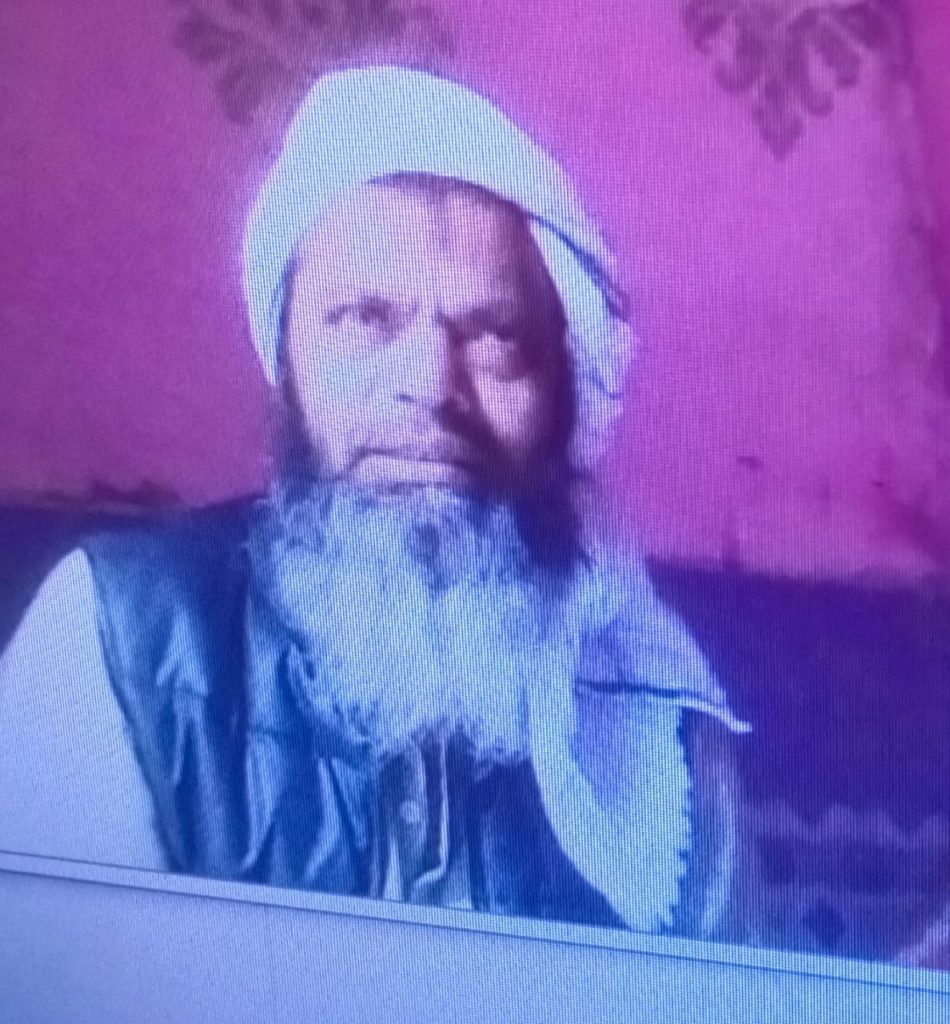
The father, Sufi Hakim Muhammad Islam, is said to have treated many patients across India, including some in Noida, Uttar Pradesh, whom Tehelka met. As narrated by his son, Sufi Muhammad Akram, Sufi Islam died last year at the age of 112, and Akram is now carrying forward his legacy. According to Akram, his father received these divine healing powers from his guru, a saint who lived in a nearby village and was himself said to possess such powers. Akram says the guru passed on these powers to his father before his death, and his father, in turn, passed them on to him.
We fixed an appointment with Muhammad Akram in Delhi and met him at a patient’s house in Okhla Vihar. Posing as attendants of a patient, we told him that our patient had diabetes and needed treatment. Akram told us that he has three methods of treatment: one using water over which Quranic verses are recited; the second using black threads worn around the neck and waist after reciting Quranic verses over them; and the third by brushing the patient’s body with neem leaves to remove evil spirits, if any. The following discussion reveals how the treatment is tailored differently for each patient.
Reporter- To aapke ilaj ke 3 tareeke hain paani, jhada aur gaanda?
Akram- Haan, 2 gande bandtey hain ek pet par bandhega aur ek galey par.
Reporter- Chahe koi bhi bimari ho?
Akram- Bimari koi si ho, magar sabka alag alag gaanda hai.
Reporter- Aur pani bhi alag?
Akram- Ji.
Reporter-Aur cancer ka?
Akram- Uska alag procedure hai. Uska pani bhi alag padha jata hai, usko koi bhi nahi pee sakta uske alawa. Haan…..uski paltan se kaat karni hoti hai, jo wo roz subah suraj nikalne se pehle, sham ko guroob hone se pehle, uske time ka hisab hai.
Reporter- Matlab sari bimariyon ka alag alag ilaj hai, koi bhi ho, gaanda bhi.
Akram- ji.
[In the above exchange, Akram explains the intricacies of his treatment methods, emphasizing that every illness has a unique procedure. From water to black threads, even cancer has its own specific regimen, carefully timed and personalised.]
According to Akram, his father, Sufi Muhammad Islam, who is no more, had received divine powers for treating patients from his guru, a saint who lived in a nearby village. His guru had many sons and grandsons, but he passed these powers specifically to Akram’s father. Using them, his father treated numerous patients with incurable diseases.
Reporter- To walid sahib kya shuru se?
Akram- Ji bahut pehle se.
Reporter- Unko kya khuda ki taraf se ye cheez mili hui thi, ya koi course kiya tha?
Akram- Nahi unke jo oopar they, hamare yahan Sirsari hai gaon pass mein, wahan ke they wo. Bahut taqdeer wale insan they wo.
Reporter- Wo bhi ye hi kartey they?
Akram- Kartey nahi they, wo bas Allah wale they, wo kapde bhi aise pehantey they, wo kabhi nazre upper utha kar nahi dekhtey they; 35 saal Imam rahe wo gaon mein, walid saheb se unka sampark tha.
Reporter- Walid saheb ko baksh gaye wo?
Akram- Ji haan. unke ye samajh lo potey bhi hain, ladke bhi hain, lekin wo walid saheb ko de gaye.
[In this discussion, Akram explains how his father’s healing abilities were inherited from the saintly guru he followed, rather than learned through any formal course. He highlights the special transmission of these powers, emphasising that only his father received them, even though the guru had many other descendants. The exchange underscores the personalised and sacred nature of the healing legacy.]
Akram then told Tehelka that he treats all kinds of incurable diseases, but credits everything to the will of Allah. He also questions modern medicine, especially for long-term illnesses like diabetes, and points to its side effects. The reporter keeps pressing him on how far his treatment really goes.
Reporter- Akram sahib, kis kis cheezo ka ilaj hai?
Akram- Dekho ji, hamare yahan ilaj jo hai, sahi maayene mein koi bhi bimari ho, lailaj bhi, cancer bhi ho, uska bhi jhada lagatey hain hum log. Alhamdulillah ka agar hokum usmein hota hai to shifa bhi hoti hai usmein.
Reporter- 100 percent?
Akram- Bas samajh lo aap meri baat ko mein khule lafzo mein kehne wala aadmi hoon, na ki dikhawa na ki advertisement. Hum to Allah se mangaingey aur Allah hi karne wala hai.
Reporter- Lekin mareez theek to ho rahe hain na aapse?
Akram- Mein ye keh raha hoon Allah kar raha hai na, ab kitno ko Allah ne likh diya hoga ki unka bulawa aane wala hai to usmein na to Allah kuch kar sakta hai, na hi doctor. Samajh lo meri baat ko, aur jiska Allah ne likh diya aakhiri saans hai, aur agar zindagi hai to milegi.
Reporter- Lekin ilaj saari bimari ka hai aapke pass, chahe koi bhi bimari ho?
Akram- Haan ji, Allah ka shukr hai chahe piles ho, bawasir ho, bhugandar ho etc, sabka jhaada lagta hai.
Reporter- Jaise sugar, thyroid ho gayi, medical science kehta hai ye theek nahi ho sakti, dawa khani hai permanent.
Akram- Mere kehne ka matlab hai medical to ye keh raha hai aap dawa khaogey jabtak aapko zinda rehna hai, lekin ek medical ke ander ye bhi hai sugar ki aap ek goli kha rahe ho, wo aapki sugar ko down or normal bhi kar raha hai aur 1 percent hai ki nahi bhi kar raha. Lekin aur cheezo ko affect bhi kar raha hai; wo jaise liver kharab, kidney kharab.
Reporter- Aap agar sugar ka elaj karenge?
Akram- Hum to dawai denge uski.
[In this exchange, Akram makes a sweeping claim about treating almost every disease, even those considered incurable as per the medical science. The exchange shows how faith is placed above both medicine and method as Akram repeatedly leaves the result to Allah’s will, saying he only makes the effort.]
Akram claimed while speaking to our reporter that with his treatment for diabetes, patients do not need to take anti-sugar pills regularly. Over time, he claims, the pills can be stopped entirely and diabetes can be cured. The discussion highlights his promise of a permanent solution for diabetes.
Reporter- Hame allopathy chodni padegi?
Akram- Haan, matlab agar zyada sugar ho, high level par pahucha hua ho, ya goli jo 2-3 time le rahe hain, uska tareeka ye hota hai ki usko daily count karni padti hai. Aur jisko jo ek hi time goli kha raha hai, usko 1 din, 2 din chodkar baki hamari jo dawai hogi wo chalni chalni hai, uske baad inshallah wo theek ho jayegi.
Reporter- Jo insulin le raha hai?
Akram- Inslulin ka ye hai ki agar 2 time ya 3 time ki insulin hai to kam kar detey hain; usko ek time lena hota hai.
Reporter- Aur dheere dheere band kar detey hain?
Akram- Inshallah, band hogi; Allah ke hokum par hai.
Reporter- Aur agar ek goli kha raha hai to wo chalti jayegi aapke ilaj ke sath, ya band ho jayegi?
Akram- Wo goli ek din chodkar khani hoti hai, aur agar ek goli kha raha hai, to wo band bhi ho jati hai, 2 ya 3 time dawa pe lo hamari.
Reporter- Accha sugar ki jo goli hai wo permanent band ho jayegi?
Akram- Haan, permanent band ho jayegi.
[In this exchange, Akram explains how his treatment gradually reduces the need for anti-sugar medication. He emphasises that ultimately, pills can be stopped completely, but all healing depends on Allah’s will. The exchange shows how faith and treatment are closely linked in Akram’s approach.]
According to Akram, his diabetes treatment usually takes around three months but varies from person to person. In some cases, it can work in 5–10 minutes, as when his late father treated a patient from Noida, Altaf, whose sugar level dropped within an hour of drinking water over which Quranic verses were recited.
Reporter- Agar kisi ko sugar hai; aapki dawa hai, khane ke baad, ganda bandhney ke baad, kitne din mein theek ho jayegi?
Akram- Jab Allah ka hokum hoga, bhai kam se kam 3 mahiney ka time hoga.
Reporter- Wo mujhe bata rahe they Altaf sahib, aapke walid sahib ne sheera khilaya char rasgulley khilaye, paani pilaya, aur uske ek ghante ke baad sugar theek ho gayi unki.
Akram- Dekhiye apka aur inka sabka body ka ‘circular’ alag alag hota hai, aur aapko 5 minutes mein bhi theek kar sakta hai aur inko 10 min mein bhi.
Reporter- Aur paanch mahine mein bhi nahi?
Akram-Jab Allah ka hokum nahi hoga, to kaise ho jayega, aap batao?
[In this exchange, Akram explains that the time for treatment varies with each person and depends on Allah’s will. While some patients may experience results in minutes, others may require months. The exchange underscores the unpredictable nature of such faith-based treatments.]
Akram told us that through his holy water and Jhaad-Phoonk (exorcism), he removed gallbladder stones measuring 14 to 29 mm—something he claimed is not possible without surgery. While crediting Allah for successful treatment of his patients, he insists no medicine was given, emphasising that the results depended entirely on his ritual practices.
Reporter- 14mm ki, 29 mm ki pathri nikali aapne?
Akram-Maine nahi, Allah ne, gurde mein agar pathri hai, uski to mein dawai bhi deta hoon.
Reporter- Sirf paani se nikali aapne?
Akram- Paani aur jhaad, aur padhne ko jo bataya wo padhte rahiye.
Reporter- Aur dawa nahi di?
Akram- Dawa nahi di.
[The exchange shows how faith and ritual are central to Akram’s healing methods. It also reveals how far removed his practices are from standard medical treatment.]
According to Akram, Hindus who come for treatment at his place also drink the holy water prepared with Quranic verses, and they have no objection. He said he recites the verses and blows on the water in front of them, and they consume it as medicine. Since Hindus cannot recite the Quran themselves, he does it on their behalf. Akram also mentioned that villagers often request the holy water before the brinjal harvest to protect their crops from insects.
Reporter- Accha jo Hindu aate hain aapke pass, wo to Quran ki aayetein nahi pad paate, unko kaise treat kartey ho aap?
Akram- Koi baat nahi, unhe to bas paani peena hota hai.
Reporter- Pe letey hain wo paani?
Akram- Kyun nahi piyenge, Bisleri ki paani ki bottle rakhi thi mere pass wahan.
Reporter- To unke saamne padh ke phoonktey ho aap?
Akram- Haan unke saamne padhkar, kya dikkat hai. Wo to aur aatey hain paani maangne mere se, kheti ke liye bhi.
Reporter- Gaon mein?
Akram- Haan baigan jo laga rakhe hain, usmein keeda na lage — ‘pani do fatafat’.
[The above discussion highlights the cross-community acceptance of his rituals and the practical role they play in villagers’ daily lives. It also shows how faith-based practices, if they are perceived as helpful, can transcend religious boundaries.]
Akram now revealed that childless couples have had children through his treatment. He narrated a case of a couple married three years ago who were unable to conceive. They approached him, and through his medicine, they were able to have a child. The discussion highlights the claimed fertility benefits of his remedies.
Reporter- Aur agar kisi ke aulad na ho?
Akram- Us ka ilaj bhi hota hai, special hota hai mere yahan Alhamdulillah!, abhi mein bata raha hoon aapko ek bacchi mere pass 3 mahine pehle aayi thi, 3 saal ho gaye they unki shaadi ko, bas ilaj kara kara ke, cyst bani hui thi rasoli mein uski. Special dawai hai mere pass Alhamdulillah! Uska ultrasound dekha, uske hisab dawai dunga, uske baad mein kategi, uske baad joshanda diya jayega, chatni bana ke denge, phir dono ke liye shauhar aur biwi dono ke liye dawai chalti hai ismein.
Reporter- Baccha ho jayega?
Akram- Alhamdulillah!
Reporter- Aise hain log?
[The discussion reflects how faith and traditional remedies are intertwined in addressing sensitive issues like infertility. However, while such treatments inspire hope, their effectiveness remains unverifiable and should be approached with caution.]
According to Akram, he also treats cases of jaadu-tona (occult practices). Akram explains how, according to him, illnesses can be caused by occult practices, jinn, or evil eye. He draws distinctions between these and says each affects the body differently. He also claims that he has remedies for all such problems, both spiritual and physical.
Reporter- Accha issey bhi bimari aati hai — hasad se?
Akram-Ji ye kaha hai ek taraf jaadu kiya, ek taraf jinnat aaya, ek taraf nazar aayi. teeno mein Allah ne farak diya. Is baat ko samajhna jo mein keh raha hoon; agar jaadu aap par kisi ne kiya jo cheeti ke mafik chalta hai body ke ander dheere dheere, jinnat aaya aapko jhatka diya aur chala gaya, nazar aayi maine yahan se goli maari teer ke mafiq ye lagi aur aap gire; aur insaan ki nazar itni khatarnak nahi hoti jitni jinnat ki hoti hai.
Akram (continues)- Do chezein hoti hai, ruhani aur jismani.
Reporter- Jadu tona ho kisi par?
Akram- Jo bhi hoga, Allah ne hame wo khazaney diye hain, imaan walon ko, kehne ka matlab sabhi ko, to hum kyun mayoos hon. Imtihan ke ander aayega aur Allah apne bando ki aajmaish leta hai, shukr ada karo; aur nashukri kar di, to peeche daal dega.
[The exchange shows how illnesses are being explained in supernatural terms. It also reveals how fear and belief are mixed with treatment claims, reminding us how easily suffering people can be pushed away from proper medical care.]
Akram said that, depending on patients’ demand, he travels from city to city to treat them. He says he is not limited to one city and goes wherever patients call him. He also makes it clear that people from different communities come to him.
Reporter- Aap sirf Delhi aate hain ya poore desh mein?
[In this exchange, Akram speaks about the reach of his work and how he travels to different places for treatment. This shows how wide Akram’s network of patients is and how far his claims have travelled. It also suggests that belief, not proof, is doing most of the work here.]
Unlike his late father, who treated patients only through holy water and black threads, Akram has added Ayurvedic medicines to the three traditional methods he inherited. He has no medical degree, yet he gives medicines to patients and says these are available only with him, not in the market.
Akram- Ab meri dawai hai, mein naam nahi bataunga, meri sheeshi 400 rupees ki hai, ye 380 ki hai to usko mein kahunga, aap alag samajh kar mujhe de dein.
Reporter- Aapki dawai ek baar leni hai ya baar baar?
Akram- Dawai to leni hai.
Reporter- Altaf ye keh rahe they ‘ek hi baar paani liya tha walid saheb se, aur kaha tha phir aane ki zaroorat nahi hai.’
Akram- Dekhiye mein aapko phir kahunga koi bhi cheez ek jaisi nahi hoti. Mein aaj dawai dekar ja raha hoon, mein to ye dua karunga aapko dawa ki zaroorat hi na pade.
Akram (continues)- Syrup chalegi bas.
Reporter- Aapka syrup chalega?
Akram- Ji wo Ayurved ka hota hai, aur wo yahan bhi nahi milega.
Reporter- Phir kahan se milega?
Akram- Wo to bahar se aati hai, transport se, Indore wagera se.
Reporter- Wahan se mangwate hai aap?
Akram- Haan.
[In this exchange, Akram explains how his method is different from his father’s. He says he now uses medicines along with the old practices. This shows a clear shift from faith-based treatment to selling medicines without any qualification. It also raises a serious question as such a practice is in clear contravention of the law.]
When Akram is confronted directly with the claim that his methods go against medical science. Instead of owning the claim, he shifts the responsibility to divine will. The reply is brief, but it reveals how he frames every outcome. He packages every result — success or failure — as God’s will, rather than as something for which he is responsible.]
Reporter- Waise medical science ko challenge kar diya aapne?
Akram- Allah ne! Allah karne wala hai!
[By placing every claim and every result in God’s name, Akram avoids any personal responsibility. This also makes his promises impossible to question or verify. When success is divine and failure is fate, there is no space left for accountability.]
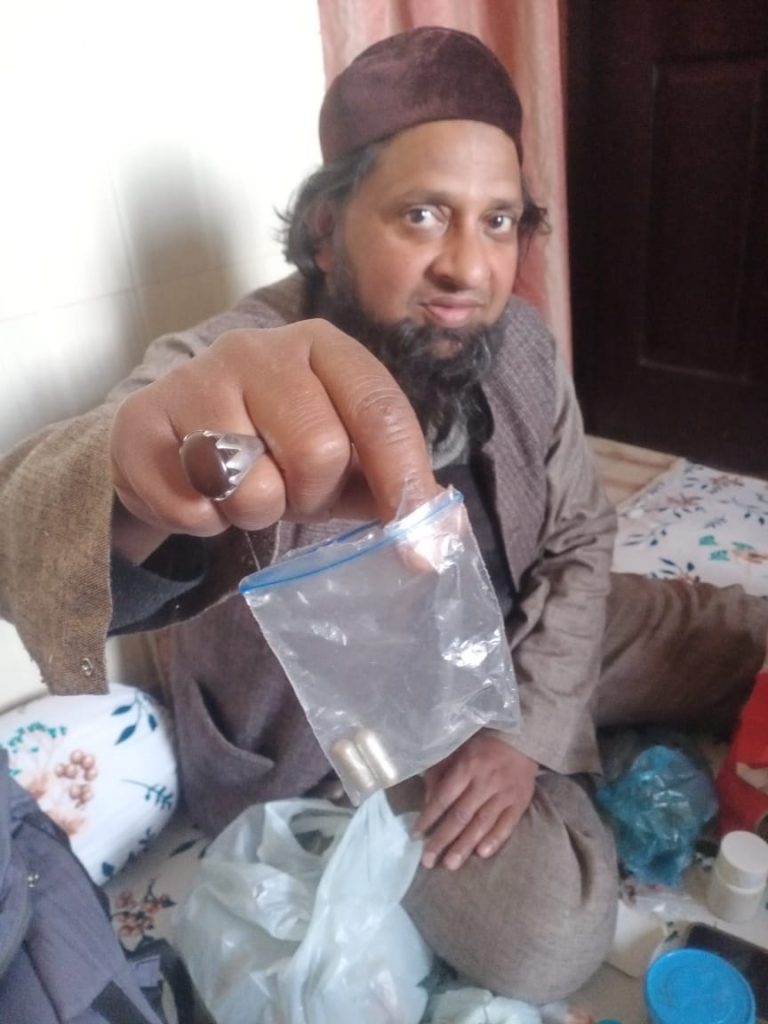
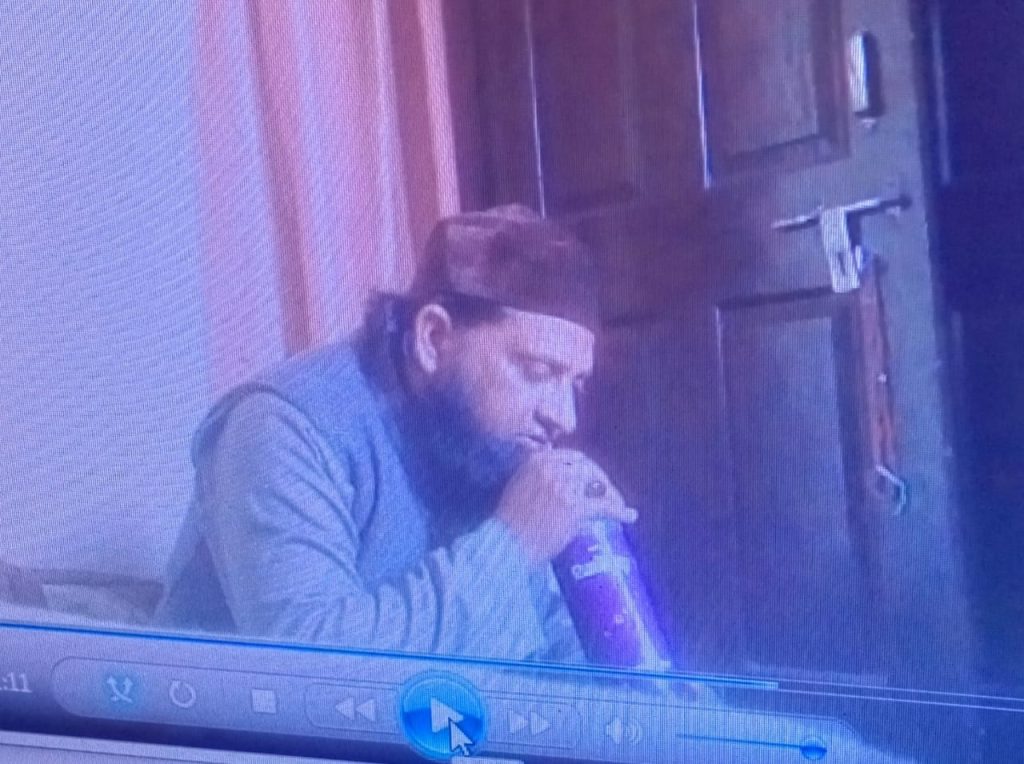
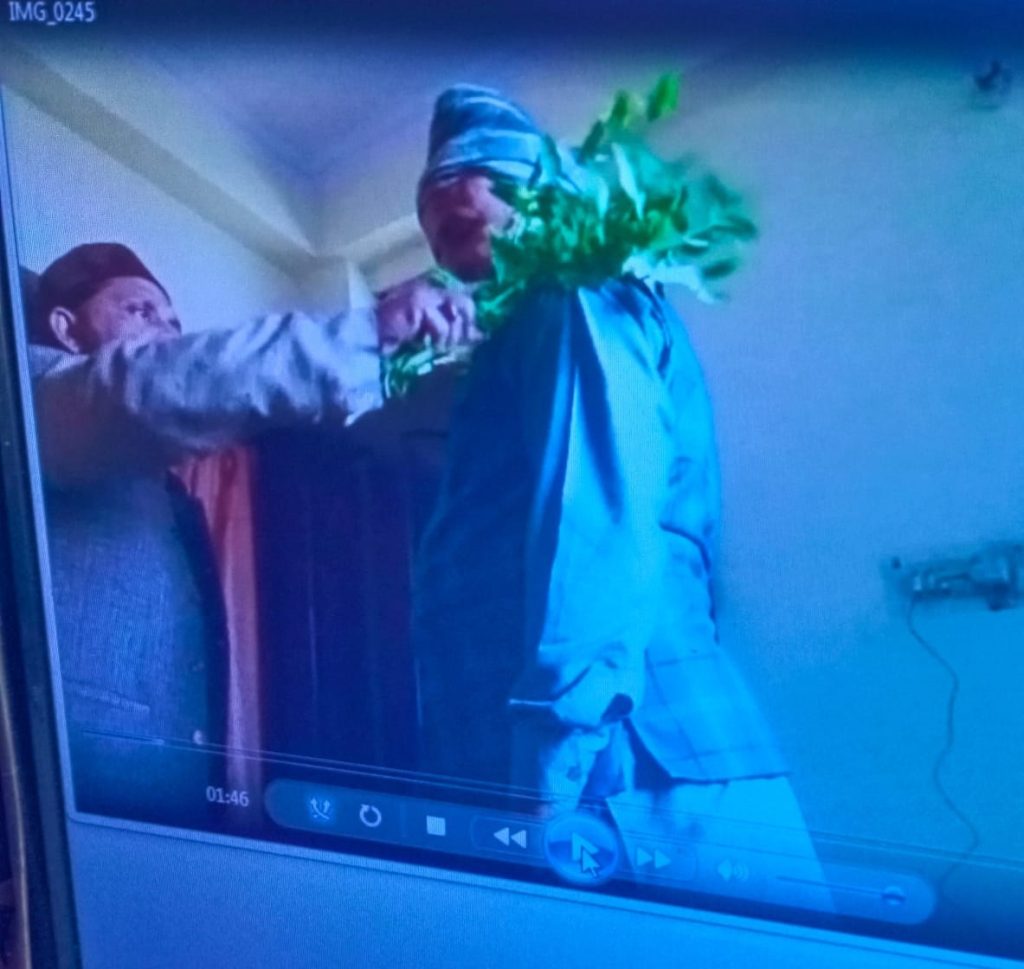
After speaking to us, Akram began treating the diabetic patient we had brought for our story. First, he recited Quranic verses on two black threads—one to be worn around the neck and another around the waist—and asked the patient to wear them. He then took neem leaves and brushed them against the patient’s body to remove any evil spirit. After that, he took a Bisleri water bottle, recited Quranic verses over the water and blew on it. He asked the patient to drink this water three to four times a day and advised him to mix normal water into it so that the bottle does not get empty.
After these three traditional methods, Akram also gave some ayurvedic medicines to our patient to control his sugar, for which he charged Rs 2,000. Altogether, he took Rs 4,000 from us, the rest as hadiya (gift).
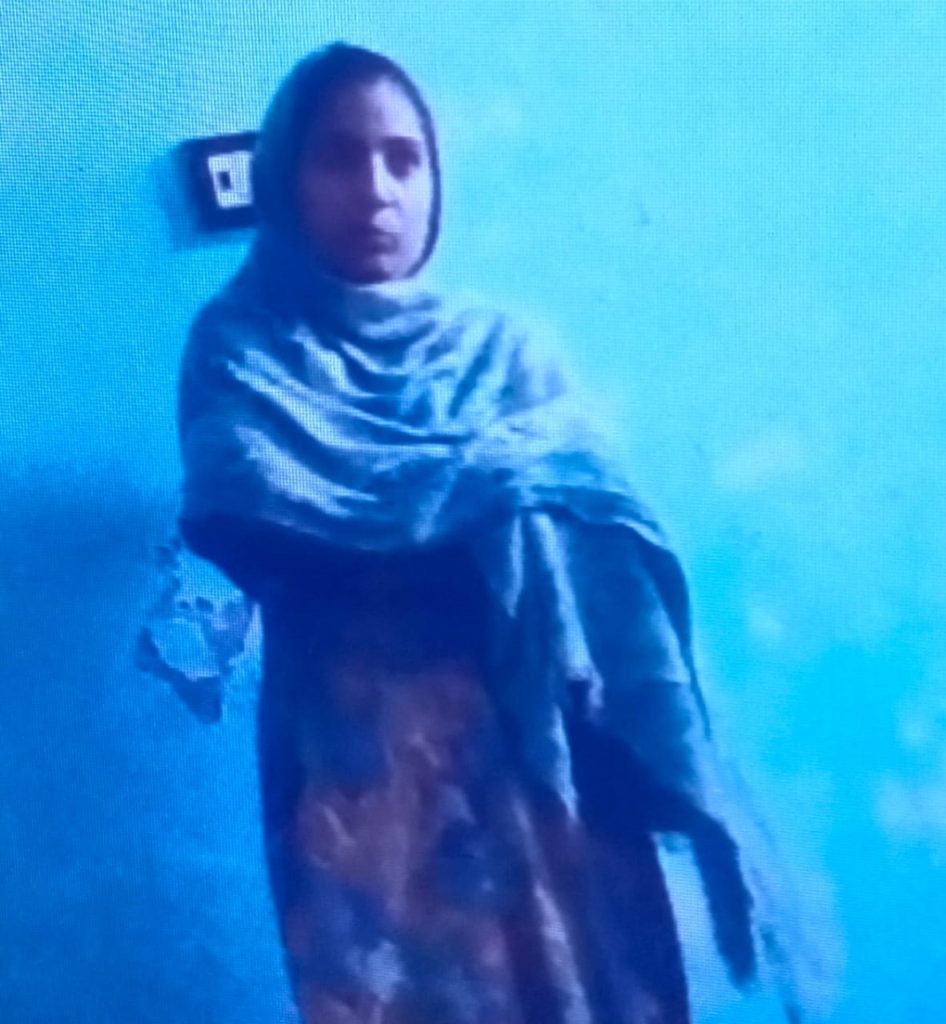
Earlier, when we had gone to Saharanpur to meet Akram and did not find him there, we met his wife, Sufia. She told us that she has been married to Akram for the last 20 years and has seen thousands of patients being cured by her father-in-law and husband. She said her father-in-law had died a year ago at the age of 112. She also said that a cancer patient from Muzaffarnagar, Uttar Pradesh, had recently come on a stretcher, but after a few months of treatment, he came back on his own.
According to her, her husband and father-in-law have three methods of treatment—holy water, black threads and exorcism (jhaad-phoonk)—through which they have treated thousands of patients. She claimed there is no disease for which they do not have a treatment.
Before going to Saharanpur to cross-check treatment claims linked to Akram and his late father, we first searched for patients who had been treated by Muhammad Akram, and his late father, Sufi Muhammad Islam, in the past. We met Altaf, a resident of Sector 81, Noida, Uttar Pradesh, who had taken diabetes treatment from Akram’s father in 2019, before Covid, when he was alive. This meeting with Altaf took place before we met Akram.
Altaf told us that in 2019, his sugar level had gone so high that he had almost lost his eyesight and was finding it difficult to see anything. He said he could not even go to the washroom from his room. He said his son-in-law took him to an eye specialist, who checked his eyes and declared them fine, yet his vision remained blurred. He was unable to see properly. Altaf said his son-in-law then took him to another hospital, where doctors checked his sugar and told him it was so high that he could have died, and that it was God’s grace he was still alive. They then gave him medicines. What follows is Altaf’s account of how his health collapsed before he reached Akram’s father.
Altaf- Lockdown se pehle mein andho ho gaye sugar mein.
Reporter- Andhe ho gaye?
Altaf- Haan deekhna band ho gaya.
Altaf (continues)- Sugar meri badh gayi bahut zyada, ankhon se dikhna band ho gaye.
Reporter- Ussey pehle sugar check nahi karai thi?
Altaf- Na, karai thi, 200, 250, 270 tak pahuch jaye, ab jab deekhna band ho gaya, mein keh raha ye jhoomre se dikhai de rahe hein, mein andho ho gaye bilkul. Mujhse darwaze se na nikla jaye. Altaf (continues)- Jab andho ho gaye bilkul to jamai mera wo mujhe le gaye aankh wale key pass. Ab aankh check karai machine mein to clear aavee, key ji ankhan mein to gadbad hai na kuch, or waise dikhai na de. Doosrey jagah gaye, wahan bhi yahi haal hua. Phir le gaye Jaypee (hospital) mein, wahan jamai ka jaan pehchan ka tha doctor, wahan dekhtey hi bola usne inki sugar naapo, to sugar fail.
Reporter- Sugar fail matlab?
Altaf- Matlab doctor bola ‘Allah ki koi meharbani hai jo tum jee rahe ho, nahi tum to khatam they’.
Altaf (continues)- Unhoney phir goli di, litaya, pehle khilmile si aankh mein aayi, maine bola clear nahi hai, boley jamun khao. Jamun us time par na mil rahe, maine mandi mein phone karwayo, wo Azadpur se phir jamun laaye.
[In the exchange, Altaf describes how his eyesight failed, how doctors first ruled out an eye problem, and how dangerously high sugar levels were later detected. We learn how even qualified doctors failed to diagnose Altaf’s ailment initially.]
Altaf said that after a month of allopathic treatment, his vision again became blurred. According to him, one day he was sitting in his village with three others, including a doctor named Satish. All four were diabetic patients and were seriously worried about their rising sugar levels. Altaf said it was then that Satish told them he knew someone in Gaada village, Saharanpur, who treated diabetes with a guarantee. After hearing this, all four went to Saharanpur to meet the man for treatment.
In the following exchange, Altaf explains how, despite taking regular medicine, his eyesight began to fail again. He recalls a casual village gathering where four diabetic patients were sharing their worries. It was there that a doctor in the group mentioned a “guaranteed” cure in Gaada village. That suggestion changed their course.
Altaf- Mahine peeche phir jhilmili si hone lagi.
Reporter- Ek mahine baad?
Altaf- Jabki dawa mein theek se kha raha hoon.
Reoporter- Doctor ki?
Altaf- Phir aise hi jaise hum tum bethe hain, aise hi baith jaaye gaon dehat mei log, aag jalaye sham ko aur subah beth jaye 4-6 aadmi. To ek doctor tha Satish, ek mein tha, ek driver Ilyas, matlab aise 4-6 log bethe they…to Satish keh raha sugar bahut zyada hai kya karein, maine kaha sugar hamare bhi badh raha hai hum kya kare, bola chalo udhar chal rahe hain, Saharanpur mein bataya Gaade gaon ke jhohrey.
Reporter- Gaada gaon?
Altaf- Maine kaha chalo, hum 4-5 log aise hi chal diye.
[This account shows how worry and helplessness can push patients towards any promise of relief. When regular treatment seems to fail or feels too slow, hope begins to look for shortcuts. That is where claims of quick cures find their strongest ground.]
Altaf said that six years ago, all four of them went to Saharanpur when Akram’s father, Sufi Hakim Muhammad Islam, was still alive. His three companions were first brushed with neem leaves (jhaadna). After that, Sufi Hakim Muhammad Islam called Altaf and, according to him, made him eat four rasgullas kept on a plate. Altaf said he ate the sweets and drank the syrup after some hesitation, as his sugar level was very high. After this, Hakim Islam gave him holy water to drink, tied black threads around his neck and waist, and brushed his body with neem leaves to remove any evil spirits. After these three methods of treatment, he was asked to lie down for an hour or two. Altaf said that when he checked his sugar level after an hour, he was shocked to find that it had come down to around 250 from 600. He said Hakim Islam then told him to eat anything he wanted and advised him not to take anti-sugar pills.
Reporter- 6 sal pehle?
Altaf- Haan ji. Ab in teeno ko to jhaada, hum charon ek saath ghuse, beth gaye, boley ki isey bulao, mere liye, itni badi payali thi, usmein 4 rasgulle meethey, bole kha lo, maine kaha maryaega kya, hum ilaj ko aye hain ya marne ko marwane ko!
Altaf- Phir boley ‘khana hai’, aawaz bahut kadak, meine bheech bheech ke aise sheera nigal ke kha liya, ab maine kha to liye, phir keh rahe isey piyo maine kaha ye kya badtameezi hai, par maine pe liya.
Altaf- Peene ke bad mujhse bole ‘ghoomney kahin nahi jaaogey, chalo leto, seedhe leto’…haan wahan se utha ke jhaad laga diya aur phir paani pila diya.
Reporter- Jhaada kis se?
Altaf- Neem ki tehni se.
Reporter- Aapke jo sath they, unko bhi jhada diya?
Altaf- Haan. Uske baad ghanta ek peeche.check kari to 260.
Reporter- 260? 600 ki 260 ho gayi ek ghante baad?
Altaf- Mere mooh se ye nikal gayi ‘ye hain bhi ya yu hi,’ boley ‘inshallah itni hi rahegi, magar mere parhez honge na tumse?’
Reporter- Matlab- ‘jo mein perhez bataunga tum nahi kar paaogey.’
Altaf- Maine kaha — martey kya na kartey — kar lenge, boley haan ab kar lega, maine kaha Inshalla tala! Boley ‘kuch bhi kha liyo kuch bhi pe liyo lekin sugar ki dawa na liyo!’
[Here, Altaf describes what he says happened during his visit to Saharanpur years ago when he went to see Sufi Hakim Muhammad Islam, who has since passed away. He recalls a treatment that began with neem leaves and ended with an unexpected order to eat sweets. What followed, he says, left him stunned and convinced.]
Altaf said that Sufi Hakim Muhammad Islam gave all of them only holy water to drink and two black threads to wear—one around the neck and one around the waist—and did not give any medicines. According to Altaf, he was told to come again only if the need arose, otherwise there was no need for a follow-up visit.
Reporter- Dawa kuch nahi di unhone sirf pani aur qamar mein baandhne ko?
Altaf- Haan.
Reporer- Charon ko di?
Altaf- Haan, sabko.
Reporter- Unki sugar kitni thi?
Altaf- Wo to doctor sahib hain, dukan kar rakhi hai badi, unke to gaanthey padh jaati thai yahan.
Reporter- Itni sugar?
Altaf- Haan, kuch bhi na hua unhe?
Reporter- Wo bhi kha rahe hain dawa?
Altaf- Na, dekho ji, hame to yakeen na, Allah ne kar diya aaram.
Altaf (continues)- Aaram karna na karna Allah ke haath mein hai.
Reporter- Bas uske bad kuch nahi?
Altaf- Na ji, unhone kaha tha zyada majboori hai to aa jao aur na to kuch nahi.
[In this part, Altaf explains what the group was actually given as treatment. There were no medicines, only holy water and black threads. He also recalls what they were told about follow-up visits and what happened to the others who had gone with him. The exchange shows how little the treatment was involved, and how much depended on belief.]
Altaf said it has been six years since he took treatment for diabetes from the late Hakim Islam, and since then he and the three others who went with him have been doing fine. According to him, he has not had any diabetes test in six years because he feels no need for it. He said his eyesight is fine, his legs do not hurt, and he has none of other symptoms related to the disease. He also said he eats sweets and sugary food.
Reporter- Ab sugar check karate ho aap?
Altaf- Na maine karai na.
Reporter- Kab se?
Altaf- Tabhi se, pehle mere pairon mein dard ho jaaye, anhkhon se to kam dikhai de, sar mein dard hona, mere ko to ab kuch bhi nahi.. Allah ka shukar hai.
Reporter- 6 saal se sugar test hi nahi karai?
Altaf- Na, jis cheez ki mujhe zaroorat hi na. kyun test karaun?
Reporter- Chai meethi peete ho?
Altaf- Haan….ye to kum (sugar ki) aapki wajah se aayi hai, warna aur meethi peeta hoon.
Reporter- Aur meetha bhi kha rahe ho?
Altaf- Haan, jo bhi meetha hai sab kha raha hoon.
Reporter- Aur jo aapke saath teen saathi gae they.
Altaf- Sab kha rahe hain.
[Here, Altaf speaks about his life after the treatment. He says he has not gone for any test in years and feels completely fine. This tells us how recovery is being judged only by how a person feels, not by medical tests. When there is no check-up or record, there is no way to know what has really changed. Belief replaces proof.]
According to Altaf, many people from his village, Kakrala in Noida, later went to the late Sufi Hakim Islam for treatment of various diseases, and no one ever complained about him. He said Hakim Islam did not charge any fixed fee; people gave whatever they wished as hadiya
Reporter- Kisi ki nahi aayi shikayat?
Altaf- Bhai abhi tak to aayi na, uske baad to bisiyon aadmi chale gaye hamare gaon se unke pass.
Reporter- Kaun sa gaon hai ye?
Altaf- Kakrala.
Reporter-Bisiyon aadmi chale gaye yahan se?
Altaf- Accha, 3 cheezein thi; ek cheez mein bhi bhool raha hoon. Sugar, thyroid aur ek cheez aur pata nahi kya batai jhaada lagatey hain wo.
Reporter- Khatam kar detey hain?
Altaf- Haan.
Reporter- Paise letey hain?
Altaf- Nahi, jo marzi ho ek peti rakhi hai wahin,usmein ger aao jiski jitni khushi ho, 100, 200, 500 ya 1 rupaiya.
Reporter- Bheed lagi rehti hogi unke pass?
Altaf- Bahut log aaye, ham to yahin unke makan ke peeche se aa rahe, Rajasthan se, pata nahi kahan kahan se log aa rahe.
[Here, Altaf talks about how word spread in his village after his own visit. He says many others followed and went for treatment. He also explains how money was taken, and how people from faraway places used to come. This shows how reputation grows through stories and personal trust.]
Neither thyroid issues nor diabetes are typically “curable” according to medical science. Both are highly manageable chronic conditions, often requiring lifelong treatment. Other serious diseases, such as cancer, are generally not curable in advanced stages, and outcomes depend heavily on timely medical intervention. Yet Sufi Muhammad Hakim Islam, and now after his death, his son Sufi Muhammad Hakim Akram, have made claims suggesting they can cure diseases considered incurable by medical science.
Treatment through religious practices is widely used in India and is not a crime. Practices such as poojas, prayers, holy water, and faith healers have long addressed physical and mental health concerns. However, promoting or providing a “fake cure” is a serious offence in India, prosecutable under several laws. Practicing medicine or offering medical treatment without a valid degree and registration is also a criminal offence. In this investigation, Sufi Hakim Muhammad Akram is caught administering Ayurvedic medicines to patients, and by his own admission, without possessing any valid qualification — a clear violation of the law. His claims may inspire hope, but they also underline the risks of unregulated medical practices and the need for vigilance.
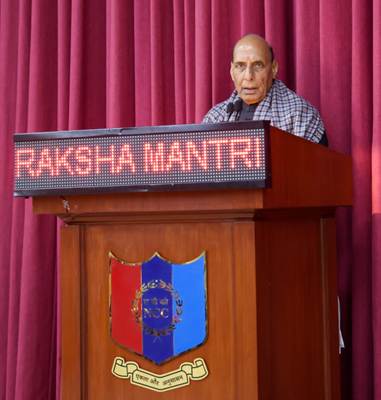
“As the world is going through a period of uncertainty, our youth must remain physically, mentally & emotionally strong and be prepared to take on every challenge,” said Defence Minister Rajnath Singh as he exhorted the youngsters to draw inspiration from the brave and dedicated NCC cadets who played a vital role in raising public awareness when mock drills were conducted across the country during Operation Sindoor.
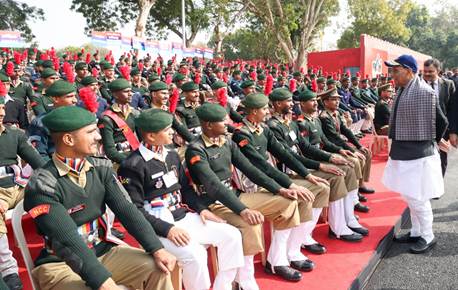
Addressing the cadets at the NCC Republic Day Camp at Delhi Cantt on January 24, 2026, he described them as the nation’s second line of defence who played their part exceptionally well when the nation rallied behind its Armed Forces during the operation. “Indian Armed Forces destroyed terrorists based in Pakistan and PoK, which was a befitting reply to the unfortunate and cowardly terrorist attack in Pahalgam. Our soldiers acted with courage and restraint. We targeted and destroyed only those who hurt us, not anyone else. This was possible as they are strong physically, mentally, and emotionally, he said.
He called the youth Abhimanyu of the Mahabharata, who knew how to enter any kind of Chakravyuh and emerge victorious from it, urging them to contribute to realising Prime Minister Narendra Modi-led Government’s vision of making the nation Viksit Bharat by 2047. “We have now entered a time where expectations from youth have increased. They are invaluable assets of the nation bearing the responsibility of taking the country to newer heights,” he said.
Rajnath Singh termed NCC as an excellent medium to upgrade the youth who, in turn, make their invaluable contribution to nation-building. He added that the NCC instils discipline and patriotism in cadets, while helping them to overcome the problem of ‘lack of focus’. He stated that, in the present era when people want to acquire everything instantly, NCC teaches patience, continuity and focus, which are requisites for life’s big battles, the nation’s great responsibilities, and character building. This, focus, he said, is reflected in every aspect of their lives whether they join the Armed Forces or become doctors, engineers, teachers, scientists, administrators, politicians, etc. He advised cadets, “You must always be ready with a Plan-B and remember that if it rains today, the sun will shine tomorrow. To achieve success in life, keep a ‘military way’ in mind, beyond ‘my way or the highway’,” he told the cadets.
Underlining the role of NCC in nation-building, the Defence Minister asserted that many people trained through NCC have made significant contributions to the country’s development. “Param Vir Chakra awardees Captain Manoj Pandey and Captain Vikram Batra were NCC cadets. Prime Minister Narendra Modi and I, too, were cadets. Many others have graduated from the NCC and worked in various sectors of the country. During the 1965 and 1971 wars, NCC cadets were deployed as the Second Line of Defence. This is the important role the NCC has played in every sector,” he said.
Pictures Courtesy PIB
As the nation will celebrate its 77th Republic Day on 26th January, Rajnath Singh stated that the day is a reminder to strengthen the country’s resolve towards democracy and constitutional values. “The Constitution is not just text, but means to bolster our social, political, cultural, and other rights & duties. We should move towards becoming the kind of people our Constitution wants us to be. We must understand our Constitution, and fulfil the duties and rights bestowed upon us. Our NCC cadets can play the role of flag bearers in this entire campaign,” he said.
As part of the event, an ‘Investiture Ceremony’ was held, wherein the cadets were awarded with the Raksha Mantri Padak and Commendation Cards by Rajnath Singh for their outstanding performance & dedication to duty. This year, the Raksha Mantri Padak was conferred upon Cadet Arpun Deep Kaur of Jammu Kashmir & Ladakh Directorate and Cadet Palden Lepcha of West Bengal & Sikkim Directorate. The Commendation Cards were presented to Petty Officer Lisha Dejappa Suvarna of Karnataka & Goa Directorate, Junior Under Officer Pavan Bhagel of Madhya Pradesh & Chhattisgarh Directorate, Corporal Radha Dorjee of North Eastern Region Directorate, and Cadet Prince Singh Rana of Uttarakhand Directorate.
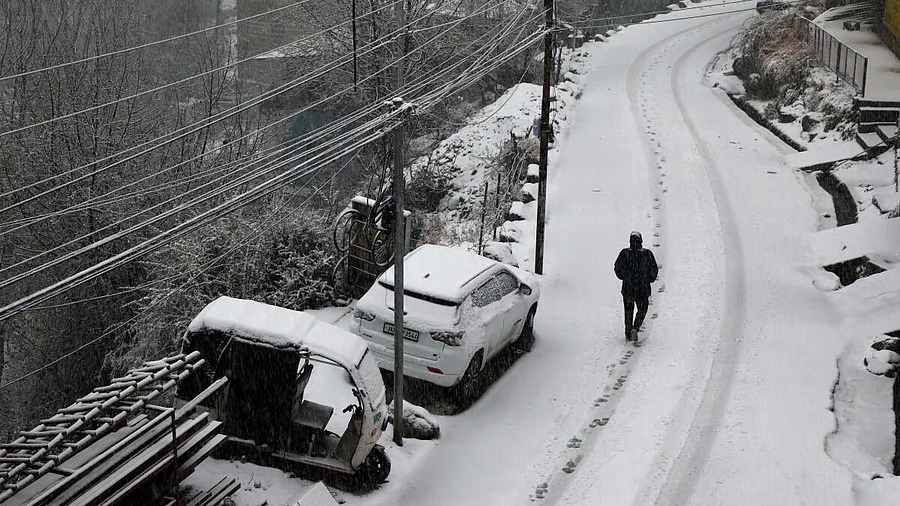
Widespread heavy snowfall overnight brought an end to a prolonged dry spell across Jammu and Kashmir on Friday, blanketing large parts of the Valley and offering relief from an extended cold and dry period.
Independent weather forecaster Faizan Arif told a local news agency Kashmir News Service that snowfall was reported across all regions, though accumulation varied significantly from district to district.
In Central Kashmir, Budgam district recorded the heaviest snowfall. Pakherpora received between 1.5 and 2 feet of snow, while Charar-i-Sharief saw around 1.5 feet. Srinagar airport measured 3 to 4 inches, though most parts of the city received only light accumulation.
In South Kashmir, Shopian district was among the worst affected, with 1.5 to 2.5 feet of snow in the plains and 2.5 to 4 feet in higher reaches. In Pulwama district, areas such as Drabgam and Rajpora recorded around 1.5 feet of snowfall each.
In North Kashmir, Gulmarg received about 2 feet of snow. Kupwara district saw heavy snowfall, with Hachmarg recording 2.5 feet, while Dedikote and Tangdhar received around 2 feet each. Higher reaches of the Karnah Valley above 2,000 metres reported snowfall ranging between 2.5 and 4 feet.
Snowfall also extended to the Jammu region and Ladakh. Loran Mandi in Poonch received 7 to 8 inches, while Banihal recorded over 5 inches. In Ladakh, the Suru Valley in Kargil district received 3 to 4 inches of snow.
Meanwhile, the India Meteorological Department (IMD) has forecast widespread light to moderate rain and snowfall across Jammu and Kashmir on Friday, with heavy precipitation possible at isolated places. Officials said the current weather system is expected to peak during the day, with another western disturbance likely to affect the region around January 26.
The snowfall follows spells of rain and strong winds on Thursday, which led to uprooted trees and precautionary power cuts in several parts of the Valley, including Srinagar.
Following fresh snowfall, major highways connecting the Kashmir Valley have been closed, while air traffic has also been disrupted, with around 17 flights cancelled.
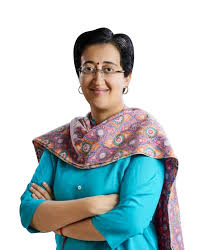
The political storm over a viral video clip allegedly showing Aam Aadmi Party (AAP) leader Atishi making remarks about Sikh Gurus took a new turn after the Punjab Police informed the Delhi Legislative Assembly Secretariat that the clip in question was doctored and misleading. The submission has intensified an already bitter confrontation between the Bharatiya Janata Party (BJP) and AAP, drawing in questions of religious sensitivity, legislative privilege, and the misuse of social media for political ends.
According to the Punjab Police, forensic analysis of the viral clip revealed that the video had been edited and manipulated before being circulated online. The police maintained that Atishi did not make the alleged remarks attributed to her and that the word “Guru,” which sparked widespread outrage, did not feature in her original speech. The findings were conveyed in response to a communication from the Delhi Assembly seeking clarity on the basis of an FIR registered in Punjab over the circulation of the clip.
The controversy erupted earlier this month after a short video clip from a Delhi Assembly session began circulating on social media. The clip, shared widely by BJP leaders and supporters, appeared to show Atishi making an objectionable comment during a discussion that included references to Sikh history and Guru Tegh Bahadur’s martyrdom. BJP leaders accused Atishi of insulting Sikh Gurus and demanded an apology, while also calling for strict action against her.
The clip triggered sharp reactions, particularly in Punjab, where Sikh religious sentiments run deep. Soon after, the Punjab Police registered an FIR against unknown persons for allegedly creating and circulating a doctored video with the intent to hurt religious sentiments and disturb communal harmony.
In its submission to the Delhi Assembly Secretariat, the Punjab Police said the viral video was not an authentic or complete record of Atishi’s speech. It claimed the clip had been selectively edited, with audio and visuals rearranged to convey a false impression. The police added that misleading captions and subtitles were used to amplify outrage.
The police also underlined that the investigation was focused on those who circulated the allegedly manipulated content on social media, and not on Atishi herself. Officials stressed that the FIR was registered to prevent the spread of misinformation and to maintain public order, particularly in a sensitive socio-political climate.
The Punjab Police submission has not settled the matter in Delhi. The Delhi Assembly Speaker has questioned the police action, raising concerns over the use of Assembly footage by an external agency without permission. BJP leaders have argued that any investigation involving Assembly proceedings amounts to a breach of legislative privilege and undermines the authority of the House.
The Speaker has indicated that the Assembly may examine the issue through its privileges committee, while also seeking further clarification on how the video was accessed and examined by Punjab authorities.
BJP vs AAP: Political Battle Lines
The issue has rapidly escalated into a full-blown political battle between the BJP and AAP. The BJP has stood by its claim that Atishi’s remarks were objectionable and has accused AAP of attempting to evade accountability by hiding behind claims of video manipulation. BJP leaders have alleged that AAP is politicising religious issues while accusing others of doing the same.
AAP, on the other hand, has termed the controversy a “manufactured outrage” driven by the BJP. Party leaders have accused the BJP of deliberately circulating fake or edited content to malign Atishi and inflame communal sentiments for political gain. Atishi herself has denied making any disrespectful remarks and has demanded that the complete, unedited footage of her speech be made public.
Beyond the immediate political sparring, the episode has reopened a broader debate on the dangers of doctored videos, the speed at which misinformation spreads online, and the ease with which religious sentiments can be weaponised in political battles. It has also highlighted unresolved questions about jurisdiction, legislative privilege, and the responsibility of political actors in sharing unverified content.
The Himachal Pradesh government has taken a major step toward developing the new city ‘Him Chandigarh.’ In a meeting of the Cabinet Sub-Committee held at the Secretariat under the chairmanship of Revenue Minister Jagat Singh Negi, concerned departments were instructed to complete all required formalities within 30 days so that construction work on the new city can begin at the earliest.
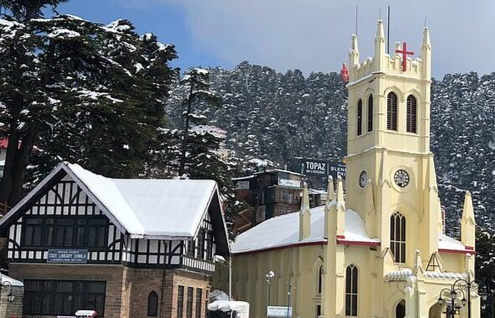
The meeting also included detailed discussions on reducing the growing population pressure and traffic congestion in Shimla city and the Baddi–Barotiwala region.
Revenue Minister Jagat Singh Negi stated that around 3,400 bighas of land have already been transferred to HIMUDA for the development of Him Chandigarh. All departments have now been directed to complete necessary procedures in a time-bound manner to ensure there is no delay in the project.
Considering the increasing congestion and traffic problems in Shimla, the Cabinet Sub-Committee took several important decisions:
Twelve major grain traders will be shifted out of the city
The timber market at Lakkar Bazaar and mechanical workshops will also be relocated outside the city
Around 200 shopkeepers near the vegetable market will be provided modern shops in a newly constructed building
The Shimla Deputy Commissioner has already identified suitable locations for these relocations, which will be finalized after inspections by officials from the concerned departments.
The Revenue Minister also informed that disputes related to certain parking projects developed under the PPP model in Shimla—such as at Tutikandi, Sanjauli, and Lift Parking—are currently under consideration in the High Court. The government is seeking legal advice and has directed officials to work toward resolving these issues.
Jagat Singh Negi emphasized that the government’s objective is to reduce pressure on overcrowded cities like Shimla and promote planned urban development. Him Chandigarh will be a key project in this direction, enabling the expansion of administrative and residential facilities.
It may be noted that a cabinet sub-committee was recently set up for exploring the possibilities of developing a township and its report was accepted by the cabinet.
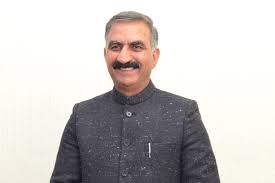
Himachal Pradesh Chief Minister Sukhvinder Singh Sukhu had said the proposed world-class township to be built at Shitalpur in the Baddi area of Solan district on the border of Chandigarh and the state would be named Him-Chandigarh.
“A cabinet sub-committee was set up for exploring the possibilities of developing a township and its report was accepted by the cabinet,” Sukhu said. He added, “Three panchayats are willing to give land for the township through land pooling and the cabinet had already approved the transfer of 3,400 bigha land to the housing department. More land would be acquired in the next six months and consultants would be appointed soon to ensure world-class amenities in the town.”
In fact, after the cabinet meeting, Industries Minister Harshvardhan Chauhan had said that more private or forest land would be acquired for the township project near Chandigarh, which would have world-class amenities.
Chief Minister and Jammu and Kashmir National Conference (NC) Vice President Omar Abdullah on Tuesday said the unity of Jammu and Kashmir is non-negotiable and warned that demands for bifurcation were against the interests of the Jammu region.
Addressing the concluding session of the two-day NC Block Presidents’ Convention in Jammu, Omar said, “As long as the plough-bearing flag of the National Conference continues to fly across Jammu and Kashmir, no power on earth will dare attempt to divide the region on regional or religious lines.”
The convention, chaired by NC President Dr Farooq Abdullah, brought together party leaders and workers to discuss political, developmental and organisational issues.
Highlighting what he described as his government’s pro-people and pro-Jammu initiatives, Omar Abdullah cited measures such as increased ration quotas, free bus rides for women, enhanced pensions, free land for landslide victims and the restoration of the historic Darbar Move. He said initiatives in tourism, roads, healthcare, education and recruitment were helping put Jammu back on the path of development.
Taking a dig at BJP leaders, the Chief Minister said those who opposed the Darbar Move or celebrated the closure of a medical college could not claim to be Jammu’s well-wishers. He said divisive politics had harmed the region in the past and would continue to do so.
Reiterating his opposition to the bifurcation of Jammu and Kashmir, Omar targeted Leader of Opposition Sunil Sharma, describing the demand as politically motivated. “If he wants to be Chief Minister, why only Jammu and not J&K? If ambition drives him so much, let him contest Jammu municipal elections,” he said.
Omar Abdullah also remarked that BJP leaders’ political ambitions would not extend beyond Kanak Mandi and Raghunath Bazar, asserting that people of Chenab Valley and Pir Panjal would not support divisive agendas. He said such politics would harm Jammu’s interests, which the National Conference would continue to protect.
Referring to the region’s political history, Omar said the National Conference had consistently defended secularism. “Despite being a Muslim-majority region, the people of Jammu and Kashmir chose to align with a secular India and remain steadfast despite persistent propaganda from across the border,” he said.
The Editors Guild of India (EGI) strongly condemns the continued targeting of journalists by authorities in Kashmir. In the latest incident, multiple journalists — including those working with leading national media organisations — were repeatedly summoned to Srinagar’s Cyber Crime Station and questioned over routine news reports.
Summoning journalists, subjecting them to police questioning, and extracting undertakings under duress amount to intimidation and coercion. These measures directly undermine the media’s ability to report freely and independently.
This episode is part of a troubling pattern. Journalists in Kashmir have faced repeated summons and questioning, creating an environment of fear that stifles legitimate reporting.
In a joint statement, EGI President Sanjay Kapoor, General Secretary Raghavan Srinivasan, and Treasurer Teresa Rehman said: “We call on the authorities to immediately halt actions that curb free speech, act transparently, and follow due legal process in all dealings with the media.”
Eight Army personnel were injured in an encounter with terrorists in a remote forested area of Kishtwar district in Jammu and Kashmir’s Chenab Valley on Sunday, officials said.
The encounter broke out in the Singhpora area after security forces came in contact with terrorists during a search operation in the upper reaches of the district. The operation, launched around noon, has been named Operation Trashi-I by the Army’s Jammu-based White Knight Corps.
Officials said an intense exchange of fire between the two sides continued for several hours before subsiding in the evening. Reinforcements were rushed to the area to strengthen the cordon and prevent the terrorists from escaping.
In a post on X, the White Knight Corps said the contact was established in the general area of Sonnar, northeast of Chatroo, during a joint counter-terror operation involving the Army and Jammu and Kashmir Police.
According to reports, a search party encountered a group of two to three foreign terrorists, suspected to be affiliated with Pakistan-based Jaish-e-Muhammad (JeM). The terrorists allegedly opened indiscriminate fire and hurled grenades in an attempt to break the security cordon.
The troops retaliated, following which reinforcements from the Army, Central Reserve Police Force (CRPF), and police were deployed.
All eight injured soldiers were evacuated to hospital. Most of them suffered splinter injuries caused by grenade explosions, officials said.
A large-scale search operation is ongoing in the area, with security forces deploying drones, advanced surveillance equipment, and sniffer dogs to track and neutralise the terrorists.
West Bengal today represents one of the most striking contradictions in Indian democracy. It is a state where political participation is intense, cultural consciousness is deep, and electoral battles are fought with passion rarely seen elsewhere. Yet, it is also a state where economic stagnation persists, institutions weaken steadily, and public services struggle to meet basic expectations. Bengal votes with its heart—but it increasingly suffers with its body.
The events in Kolkata last week, where a sharp confrontation unfolded between the ruling Trinamool Congress and the Enforcement Directorate over investigations linked to a senior TMC strategist, were not isolated developments. They were symptomatic of a deeper and long-running crisis in Bengal’s political life. Once again, the streets filled with protests, counter-protests, slogans against Delhi, accusations of vendetta, and appeals to Bengali pride. Once again, the state’s politics dominated headlines while governance quietly receded into the background.
This pattern is not new. Kolkata has witnessed such scenes for decades. Power struggles are played out theatrically in public spaces, while the lived realities of citizens—employment, healthcare, education, infrastructure—remain secondary. Governments change, slogans change, and adversaries change, but the architecture of power remains largely untouched. The same beneficiaries adapt, the same intermediaries survive, and the same mechanisms of control continue. The people, meanwhile, remain spectators to a political carousel that never quite stops.
My understanding of Bengal is not detached or episodic. I have observed its political evolution closely since the early 1980s, when Calcutta still carried the aura of being India’s cultural and intellectual capital. My parents lived in the city, and my emotional and political understanding was shaped by its atmosphere. I have seen Bengal’s decline not as a dramatic collapse, but as a slow, layered erosion—masked by nostalgia, rhetoric and ideological certainty.
From the era of Congress dominance to the long, rigid rule of the Left, and finally to the rise of the Trinamool Congress, Bengal appears to have witnessed repeated political transformations. In reality, what has occurred is a recycling of power. When the Congress weakened, its local elites adjusted smoothly to the Left. When the Left collapsed under the weight of arrogance, violence and economic stagnation, many of the same organisational structures, local strongmen and political brokers resurfaced under the TMC banner. Ideological loyalty in Bengal has rarely been absolute; access to power has always been the stronger glue.
This is the most uncomfortable truth of Bengal’s politics. People of the old regime rarely disappear; they simply realign. Ideological conversion happens overnight, but influence, protection and privilege remain uninterrupted. This continuity explains why corruption survives every regime, why syndicate culture refuses to die, and why fear continues to be an effective political instrument. Regime change in Bengal has seldom meant systemic reform.
Seen through this lens, the recent ED–TMC confrontation becomes easier to understand. For the ruling party, central agencies are portrayed as instruments of political persecution. For the opposition, they are presented as tools of exposure and accountability. For the ordinary citizen, however, these confrontations inspire neither confidence nor hope. People have seen this cycle too many times. They know that accountability is selective, justice is delayed, and morality is often suspended until power changes hands. Transparency is avoided because opacity sustains patronage—and patronage sustains regimes.
While political energy is consumed by street battles and television debates, fundamental questions remain unanswered. Where is Bengal’s economy heading? What happened to its industrial base? Why has a state with such rich human capital been reduced to exporting its youth as migrant labour? These questions are rarely central to election campaigns because they demand uncomfortable honesty.
Once, West Bengal was a magnet for industry, trade and intellectual exchange. Today, it struggles to attract serious long-term investment. Manufacturing has steadily declined. Large industries exited years ago, scarred by decades of labour militancy, politicised trade unionism, and policy unpredictability. The culture of bandhs and political intervention did not merely disrupt production; it destroyed confidence across generations. What replaced industry was not a robust service economy, but an informal survival system deeply dependent on political patronage.
Welfare schemes expanded and brought relief to many, but without a parallel growth engine they gradually became tools of political loyalty rather than instruments of empowerment. Dependency replaced aspiration. Economic stagnation was softened by emotional mobilisation.
Per capita income figures tell a stark story. States that once looked up to Bengal for cultural and administrative leadership have raced far ahead economically. Bengal’s educated youth increasingly leave the state in search of opportunity and dignity. Migration has become a silent referendum on governance failure. A society that exports its young minds while importing political slogans is not progressing—it is compensating.
Healthcare exposes this reality with brutal clarity. Government hospitals remain overcrowded, understaffed and under-equipped. Every few months, a tragedy reveals systemic failure—patients dying on floors, families running from counter to counter, doctors working under impossible pressure. Private healthcare, on the other hand, is beyond the reach of most families. Health has become either a matter of luck or privilege. No government has treated health infrastructure as a long-term civilisational priority; it appears briefly during crises and vanishes from political memory thereafter.
Education, once Bengal’s pride, has also suffered. Universities that once produced thinkers, reformers and global intellectuals are now deeply politicised. Campuses mirror the intolerance and factionalism of the streets. Academic autonomy has been sacrificed to party loyalty, research output has weakened, and global academic integration remains limited. Bengal still celebrates its intellectual past, but invests inadequately in its intellectual future.
Yet economics and institutions alone do not explain Bengal’s political behaviour. To understand electoral outcomes here, one must understand the centrality of culture, identity and emotion. Bengal’s politics has always been driven as much by sentiment as by policy. From the freedom movement to Left mobilisation and now Trinamool’s sub-nationalist narrative, elections have been won by those who successfully tap into cultural pride and emotional memory.
This is where Mamata Banerjee’s political strength lies. Her politics is not managerial; it is emotive. She positions herself as the custodian of Bengali identity, as a fighter standing between Bengal and an allegedly hostile Delhi. Whether one approves of her governance or not, her narrative resonates deeply. She does not merely ask for votes; she claims emotional ownership of the Bengali psyche.
This emotional alignment explains her repeated electoral success despite governance fatigue. Administrative criticism alone has never defeated her because elections in Bengal are not won on administrative arguments alone. They are won in the realm of sentiment.
This is also where the Bharatiya Janata Party continues to struggle. The BJP has approached Bengal largely through a national prism—central leadership, national narratives and ideological templates borrowed from other states. This approach underestimates Bengal’s political psychology. What works in Haryana, Maharashtra or Bihar does not automatically translate to Bengal. Electoral success here requires cultural fluency and emotional credibility, not just organisational strength.
The BJP’s growing desperation to capture Bengal is evident. It feeds on anger against the TMC, on fatigue with long incumbency, and on frustration over corruption and lawlessness. But anger is an unstable political resource. Without a credible, culturally rooted alternative, it dissipates. Beyond electoral arithmetic, the BJP has yet to articulate a Bengal-specific vision that speaks to the state’s unique identity and anxieties.
Power capture without a cultural and economic roadmap will merely reproduce the same patronage politics under a different banner. If the BJP ends up inheriting the same local elites, brokers and defectors, Bengal will witness yet another cosmetic transition. Anger may win seats; it cannot rebuild institutions.
The deeper tragedy is that in this entire political drama, the people of West Bengal are rarely the central concern. Elections are framed as battles between leaders, parties and agencies, not as serious evaluations of governance. Citizenship has slowly been reduced to dependency. When survival is linked to political proximity, democratic agency collapses. People stop asking questions and start negotiating loyalties.
Bengal’s political culture has trained generations to believe that power must be feared or appeased, not questioned. This culture cannot be dismantled by slogans or sudden electoral waves. It requires sustained institutional reform and political courage.
The way forward for Bengal demands a painful but necessary break from old habits. Politics must be separated from everyday survival. Welfare must be rights-based and transparent, not discretionary and conditional. Industry must be welcomed with policy stability, land clarity and labour reform, without ideological rigidity. Institutions—police, universities, hospitals and local administration—must be insulated from party control. Governance must be judged by outcomes, not by loyalty.
For the BJP, the lesson is equally clear. If it wishes to challenge Mamata Banerjee meaningfully in the 2026 Assembly elections, it must first understand Bengal on its own terms. It must engage with Bengali cultural pride respectfully, build credible local leadership, and counter Mamata politically—not merely administratively. Without this recalibration, Mamata Banerjee is likely to return with yet another clean sweep.
As the 2026 elections approach, the real question before West Bengal is not who will rule, but whether the cycle will finally break. If power merely shifts while the same networks survive, the state will continue its slow, dignified decline—rich in memory, poor in momentum.
West Bengal deserves better than endless political musical chairs. It deserves a future where power serves the people, not consumes them. Until that inversion happens, Bengal will continue to vote with its heart—and suffer with its body.
(The author is Editor, STAR Views and Editorial Advisor, Top Story)