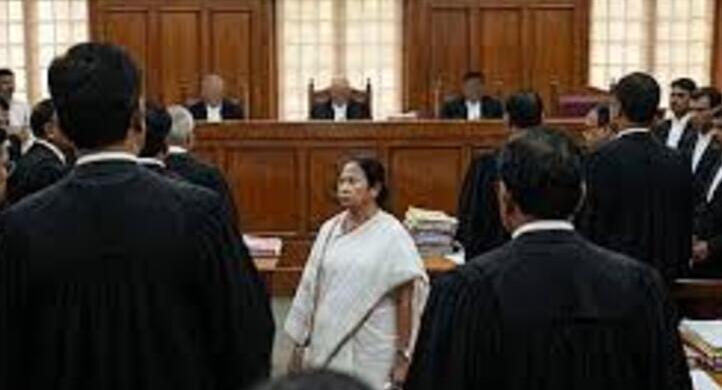
A Bench headed by Chief Justice of India Surya Kant, with Justices Joymalya Bagchi and Vipul Pancholi, heard Banerjee’s writ petition challenging the SIR exercise initiated by the Election Commission of India (ECI). While senior advocate Shyam Divan argued the legal issues, Banerjee made brief oral submissions — a rare instance of a sitting Chief Minister addressing the apex court.
Banerjee claimed the SIR process was “not for inclusion but for deletion”, alleging that women who changed surnames after marriage, migrants and poor citizens were being removed from voter lists over minor “logical discrepancies”. She alleged that 58 lakh voters had been deleted, living persons declared dead, and voters denied the right to appeal.
She further alleged selective targeting of West Bengal, questioning the timing of the revision after 24 years and its conduct during festival and harvest seasons. “Why only Bengal? Why not Assam or the North-East?” she asked, also alleging harassment of Booth Level Officers and claiming over 100 deaths linked to the process.
A major point of dispute was the appointment of over 8,000 micro-observers, which Banerjee alleged had superseded the authority of Electoral Registration Officers and BLOs. She claimed the ECI was issuing informal instructions through WhatsApp and refusing to accept Aadhaar as valid proof, unlike in other States.
Appearing for the ECI, senior advocate Rakesh Dwivedi said micro-observers were lawfully appointed due to the State government’s failure to provide sufficient Group B officers despite repeated requests. Senior advocate Dama Seshadri Naidu alleged non-cooperation by the State administration.
The CJI noted that Aadhaar had “its own limitations” and said judgment on the legality of SIR was reserved. However, he stressed that genuine voters must not be excluded over minor spelling mismatches, especially arising from transliteration of Bengali names.
The Bench issued notice to the ECI on Banerjee’s plea, seeking its response by Monday, and indicated that micro-observers could be relieved if the State provides officers for SIR duties. A PIL seeking protection for ECI officials will be heard along with the matter next week.
Banerjee has sought to quash the SIR notifications and requested that the 2026 Assembly elections be held on the basis of the 2025 electoral rolls.
During the arguments, argued the CM that 58 lakh voters have been deleted – they did not have option to appeal. Only Bengal is being targeted- to bulldoze WB people. LD case – not to be deleted. They should be cleared by DO and ERO, not by micro observers
CJI: Probably once officers are made available, micro observers won’t be required. [to ECI] Tell your officers also to be sensitive and not issue notice to… Order: During the hearing, it is pointed out by ld. SG that ECI has filed counter affidavit in…which may have some bearing…ordered to be taken up with these cases on Monday
CM: Sir we are very grateful.
CM Mamata Banerjee: SIR process is only for deletion. Mismatch not only in title sir…unplanned…suppose daughter after marriage goes to in-laws house…why she is using husband’s title…that is also mismatch
CJI: That can’t be
CM Mamata Banerjee: That’s what they have done…there are some daughters who shifted to in-laws house…their names also deleted…sometimes poor people shift…because of logical discrepancy…Bengal people are so happy that this court gave order that Aadhaar will be one of documents…other states, domicile certificate is allowed…caste certificate is allowed…they only targetted Bengal on eve of elections. 4 states going to elections, why after 24 years, what was the hurry to do in 3 months? When harvesting season is there…when people are travelling…more than 100 people died! BLOs died, so many are hospitalized. Why not Assam?
CJI: Today, in your petition, addl issues are being flagged. Genuine persons must remain. Among them, one of the ground…we are thankful to you that in your petition, this issue has been raised that because of local dialect…nowadays AI assistance causing…we will find out a solution is this is happening. By virtue of this kind of issue, genuine elector must not be excluded
CM Mamata Banerjee: May I explain, I am from that state…I am here because of your kindness…my regards to the bench…thank you very much…humble regards to opposing lawyers also…problem is – when everything is finished, when we are not getting justice, when justice is crying behind the door – then we thought we are not getting justice anywhere. I have written letters to ECI…I am a very less important person, I am not fighting for my party
In 2020, an anonymous letter carrying corruption allegations against Agra Municipal Corporation officers linked to the Smart City project rocked the city. The letter was addressed to Prime Minister Narendra Modi and Uttar Pradesh Chief Minister Yogi Adityanath. In 2024, an audio clip allegedly carrying the voice of a corporation officer asking for a Rs 2 lakh bribe went viral on social media. Earlier, in 2020, corruption worth Rs 2.82 crore came to light in the corporation’s garbage collection work, in which the agency that was allotted the work collected money from house owners but did not deposit it in the corporation’s account.
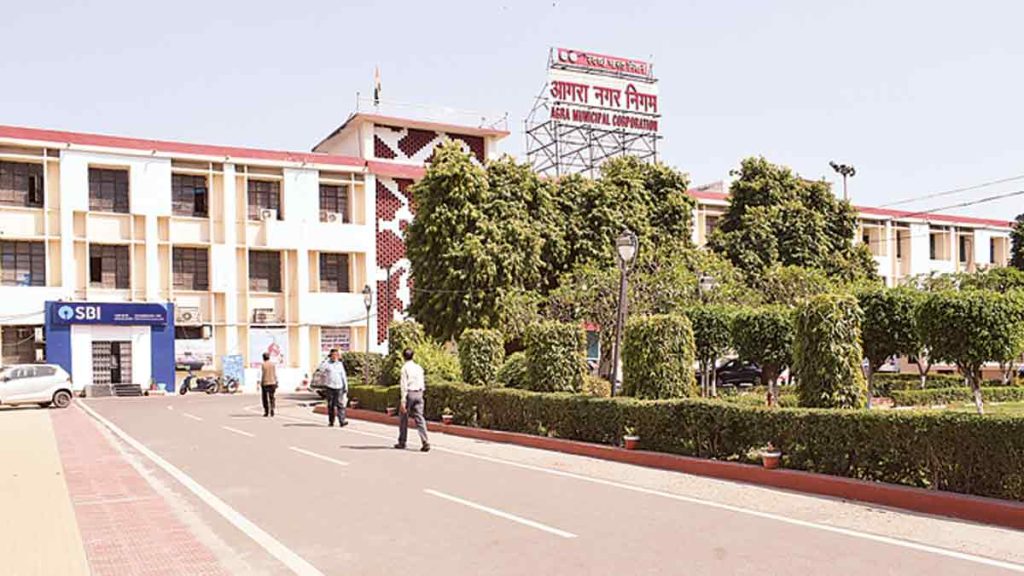
In 2023, there was an allegation that a corporation employee demanded a bribe of Rs 25,000 from a man for transferring ownership of a house in his name after the death of his mother. In 2025, the Mayor of the city levelled charges of financial irregularities against the corporation, alleging that a contract had been allotted to a firm without following the tender process. In 2022, an outsourced employee of the corporation was removed on corruption charges after it was found that he had acquired property worth crores in eight years of service while drawing a salary of just Rs 5,000 per month. The list of corruption cases is long; these are just a few examples from the Agra Municipal Corporation, Uttar Pradesh, also known as Agra Nagar Nigam. Despite several cases kicking up dust—and action being taken in some of them—corruption at Agra Nagar Nigam allegedly continues unabated.
The scale of corruption at the Agra Municipal Corporation can be judged from the fact that the moment someone enters the corporation’s campus on Mahatma Gandhi Road (M.G. Road), Agra, for any work, they are greeted by brokers who offer all kinds of proposals to get the job done in exchange for money. These brokers are either contractual or outsourced employees working in Agra Nagar Nigam. According to sources, there are two rooms—numbers 101 and 103—in the main building of the corporation that have acquired notoriety for alleged corrupt practices. Sources say all brokers, including some who work in their ‘personal’ capacity, sit in these rooms waiting for customers who approach the Nigam for various works. There are reports that even some retired employees of the corporation have now become brokers. They come to the Nigam office daily, sit in either room no. 101 or room no. 103 waiting for customers, and disappear whenever senior officials arrive for inspection. According to sources, there have been instances where brokers took money from clients but the promised work was never carried out.
“I hope you are not doing a sting on me, not recording me. I am scared of all these things. If you are going to America or London, you require a Non-Availability Birth Certificate (NABC). This certificate is required when you do not have your original birth certificate. I will get your NABC made in a week, or in one or two days, or even in one hour, from the Agra Municipal Corporation. Usually, the corporation takes a month to prepare an NABC, but I will get it done in no time in exchange for money. This NABC will work as a substitute for your birth certificate,” said Ram Chaubey, alias Rishabh Sharma, an outsourced employee of the Agra Nagar Nigam, to Tehelka’s undercover reporter.
“I agree that reissuing your parents’ death certificates is your genuine work, for which no bribe should have been taken. But if you do not pay a bribe, your work will take time. Besides, checking all the records for reissuing two death certificates is a painful task, so for this only I have taken money from you,” said Rishabh.
“I don’t believe in any caste or religion, but in this government set-up, things are bad for Muslims. If you go for a fresh birth certificate for yourself, then your file will go to the Sub-Divisional Magistrate (SDM), who will call you and ask several questions. This, however, is not the case with Hindus going for fresh birth certificates; only a few questions are asked from them,” Rishabh told Tehelka’s reporter.
“I have started earning money through bribes for the last one year. Previously, I was only surviving on my Rs 5,000–6,000 salary. Now, through bribes, I am earning around Rs 30,000 to Rs 40,000 a month. I have lots of customers who come to me for work. Many people have my phone number,” Rishabh added.
“I will get your NABC made in 15 days. Usually, the corporation issues one NABC in a month, but I am taking a bribe from you for this purpose only—to speed up your work,” said Bobby, another outsourced employee of Agra Nagar Nigam, to Tehelka’s reporter.
“For death certificates, I need Rs 8,000 as a bribe because I have to give to others also in the Nigam. For NABC, I will get it done for Rs 5,000,” Bobby said.
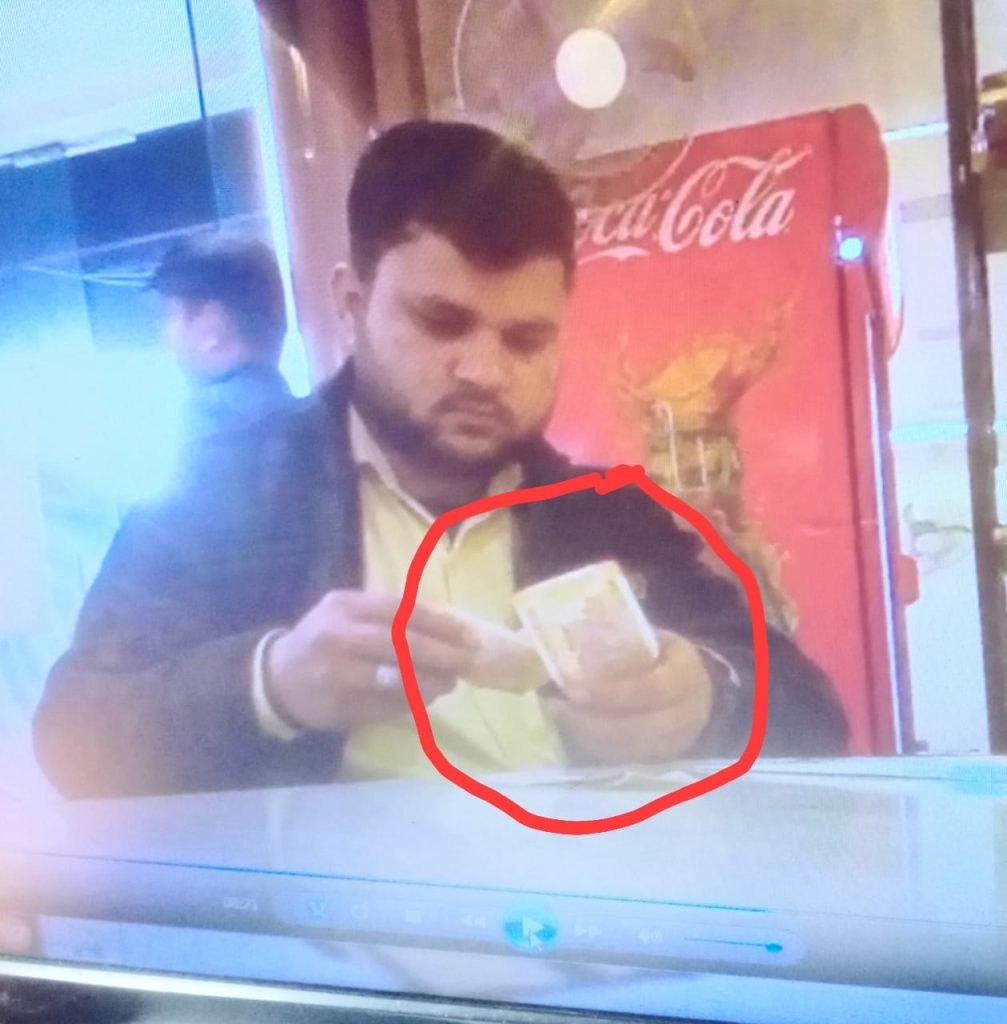
“Go and meet any employee of the Agra Nagar Nigam—he will not do your work for less than what I am taking from you as a bribe. Out of this, only Rs 400–500 will go into my pocket. To reassure you, I must tell you that I got one NABC done three or four months ago,” said Shyam, another broker at the Agra Nagar Nigam, to Tehelka’s reporter.
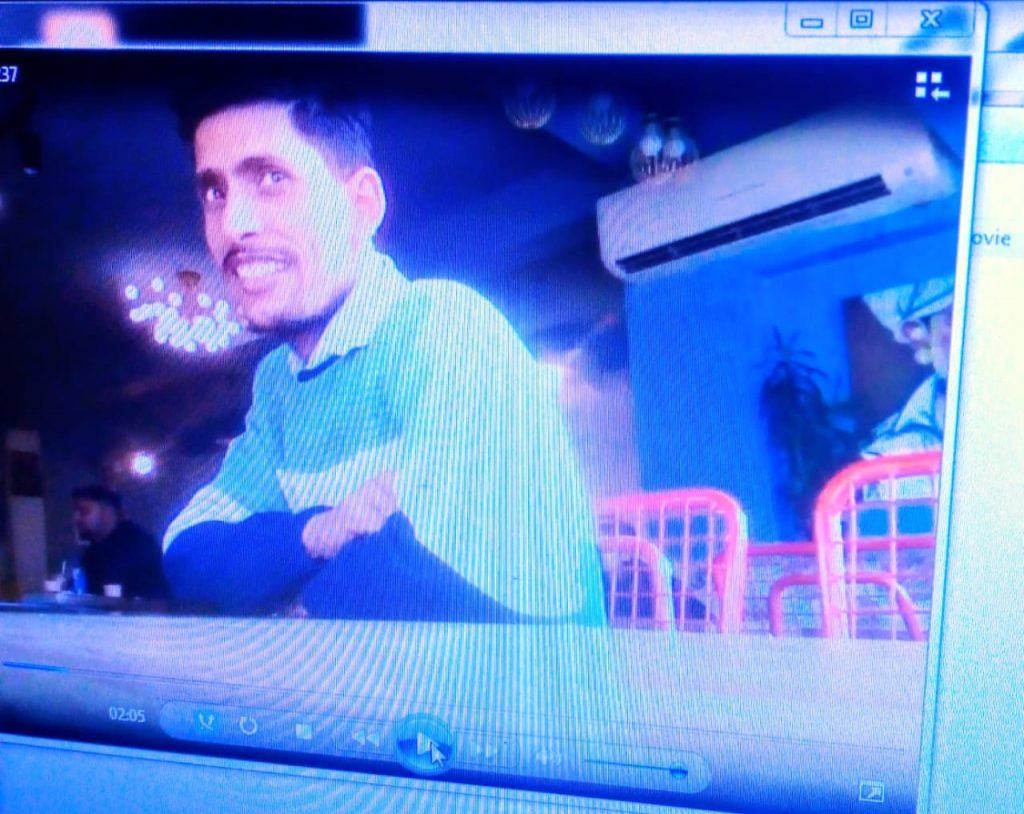
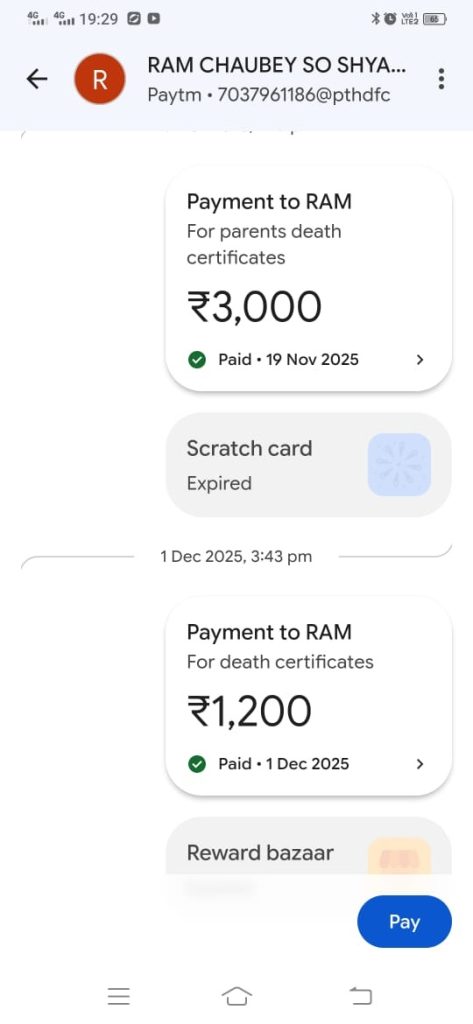
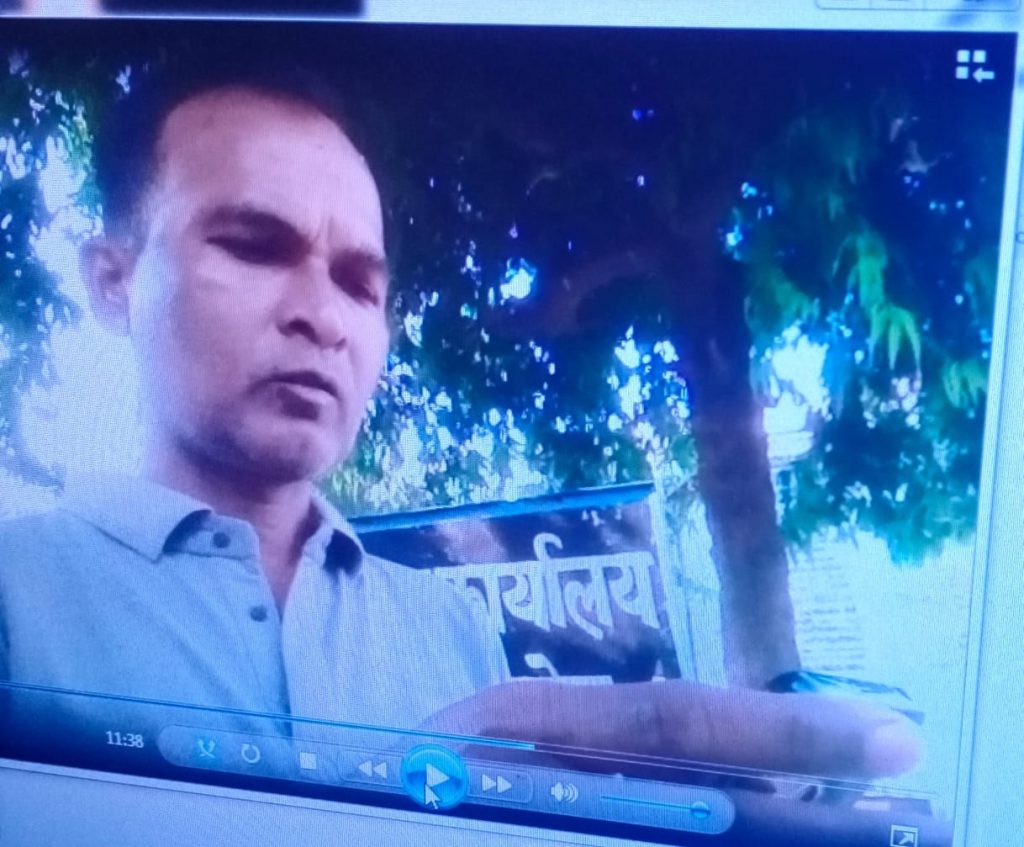
In the public interest, Tehelka travelled to Agra to investigate corruption allegations levelled by people against employees of the Agra Municipal Corporation. Tehelka met an outsourced employee, Ram Chaubey, popularly known as Rishabh Sharma, in the Nigam. The meeting was held at a tea restaurant at Sanjay Place, Agra. Rishabh reissued two death certificates of the parents of Tehelka’s reporter, which was a genuine work for which no money is required. However, Rishabh took Rs 5,000 as a bribe from the reporter, saying that without a bribe the work would have taken lot of time. He also said that since he had made considerable effort to trace the parents’ records, he needed to be compensated.
What follows is an exchange between Tehelka’s reporter and Rishabh that lays bare how even a legitimate request for death ceritificates is quietly pushed into the grey zone. In the process, he describes how the system itself has made speed a paid privilege.
Reporter- Jo maine paise bheje they; teen hazar maine bhej diye, do hazar reh gaye they, total 5000 ka kharcha tha death certificate ke liye mummy, papa ka. To death certificates waise nahi miltey?
Rishabh- Matlab?
Reporter- Matlab normal tareeke se, bina kharcha kiye nahi banta?
Rishabh- Banta hai, par usmein time lagta hai.
Rishabh (continues)- Ban jaata hai lekin sare documents aapke pass ho, mein bataoon pehle jo chaltey they haath ke bane hue, matlab pen se bane hotey they, usmein saari detail hoti thi, mehnat nahi karni padti hai, register nahi kholne padte, usmein saaf likha hota hai kitne number ka kitna, is wale ward mein ye hai, turant nikal ke haal ki haal ho jata tha. Phir usmein ek mahina lagta hai. Ab jis ka koi entry nahi hai, usey khojne mein to mehnat lagti hai.
[What this exchange shows is simple: even when work can be done without a bribe, delay is used as pressure. It seems that files move faster only when money changes hands.]
After issuing the death certificates of the reporter’s parents for money, Rishabh then told Tehelka’s reporter how he could get his birth certificate made in Agra, which, according to him, is a difficult task. Rishabh explained the procedure for obtaining the birth certificate in detail and, for this too, demanded money as a bribe from the reporter.
Reporter- Accha ab batao mera birth certificate kaise banega?
Rishabh- Aapke birth certificate ki koi entry nahi hai.
Reporter- Dekh liya aapne?
Rishabh- Haan, maine bahut dekha, saare register chaan mare, ek mahine se tumhare mata ji-pitaji ke certificate ke baad maine tumhara hi kaam kiya hai
Reporter- Us waqt ho sakta hai entry na ki ho.
Rishabh- Mujhe ye hi lag raha hai, aur koi tareeka nahi. Agar hota to jarur mein aap ko batata.
Reporter- Ab kaise banega?
Risabh- Ab aapke mummy, papa ke praman patra ho gaye hain to ab aap sarkar ko ye dikha sakte ho ki haan mere mata, pita yahin par expire hue hain, aur ye hai unke dastavez, do mummy papa ke praman patra lag jayenge, do padosiyo ke gawaho mein aur phir aadhar card lagenge, jo aapse umer mein 20 saal bade hon.
Reporter- Padosi hone chahiye?
Rishabh- Haan, jab aap wahan paida hue to sab de denge.
Reporter- Do ke aadhar chaiye?
Rishabh- Haan, aur ek kisi buzurg mahila ka aadhar jo ye keh sake ki haan maine is bacche ka ghar mein prasav karaya.
Reporter- Matlab dai hai?
Rishabh- Dai nahi bhi ho, koi mahila bhi ho, chalegi.
Reporter- Wo kaise keh degi maine prasav karaya iska?
Rishabh- Wo nahi kehegi, uska aadhar chahiye aur ek affidavit banega.
Reporter- Affidavit banega.
Rishabh- Affidavit mein likha hoga maine is bacchey ka ghar mein hi prasav karaya. Is dauran is san [year] mein ye ghar par hi hua.
Rishabh (continues)- Ye file… Baluganj mein rehtey ho na aap? Tajganj Mughal ki pulia par office hai nagar nigam ka, wahan par jama hogi. Wahan se Vishnu babu isko supervisor ko bhejenge, supervisor wo aapki file ko lekar aayega dono padosiyon ke sign lega, chala jayega. Phir wo file CMO ke pass jayegi, Vishnu babu le jayenge Tajganj se CMO karyaleya, wahan sign kara ke layenge, ek tareekh de denge aapko. Us file ko aap laakar mujhe de dengey.
Reporter- Kitna time lag jayega poora procedure ke liye?
Rishabh- Kam se kam agar SDM sahib ke pass aap jayenge to guarantee hai wo jaldi kar denge, magar agar koi anpadh vyakti jayega, usey to pagal kar denge ghuma denge.
Reporter- Kharcha kitna aayega ismein?
Rishabh- Kharcha to matalab ismein affidavit banege ab mata-pita to hain nahi, to 2 affidavit kam banege, 3-4 aafidavit banenge ek aapke naam ka ban jayega…SDM ki manao to uske yahan to kuch lagta nahi hai, wahan to 100-50 rupees form ke honge to yehi upper ki isi kharchon mein ho jayega kuch.
Reporter- Kitna?
Rishabah- Accha bhaga dauri aapki taraf se kaun karega?
Reporter- Tum hi karoge.
Rishabh- Accha dekh lenge karwa denge, jo is mein diya wahi de dena.
Reporter- Rs 5000?
Rishabh- Kam hi de dena.
Reporter- Tum kya karaoge ye batao?
Rishabh- Ye ghar wali jo file hoti hain hum inhe kam karate hain, koi khas vyakti hota hai usi ki karwate hain.
Reporter- Tumhara kya role hai 5000 mein?
Rishabh- CMO se clear karwaonga, supervisor ko dekh lunga, bas SDM ke liye tumhe bulaonga.
Reporter- Ek mahine mein bana dogey?
Rishabh- Haan.
Reporter- Guarantee hai?
Rishabh- Arey ek mahina nahi to 15 din zyada lag jayega.
Reporter- Birth certificate mera banney ki to guarantee hai
Rishabh- Kyon nahi banego… duniya ki koi taakat nahi rokwa sakti.
[In the above exchange, the reporter asks how his birth certificate will be made when no official entry exists. Rishabh explains a long route of affidavits, witnesses, and office movement. He describes how the file will travel through different offices and officials. Slowly, the process turns from a procedure into a managed exercise.]
Rishabh now told us that he is a bigger broker than Bobby, another broker of Agra Nagar Nigam whom we met later. Rishabh suggested getting a Non-Availability Birth Certificate (NABC), which, according to him, works as a substitute for a birth certificate. He said he could get the NABC made in a week, in a day, in two days, or even in one hour. While talking to us, Rishabh pointed to the mobile phone lying on the table and said he was afraid of a sting, adding that he hoped we were not recording him.
Reporter- Agar birth certificate nahi hota to NABC bhi banta hai koi?
Rishabh- NABC …ye phone to chalu na hai…hehe…?
Reporter- Arey iski fikar na karo.
Rishabh- Hame darr lagta hai..hehe…NABC ek aisa certificate hota hai Non Availability Certificate, usmein ye rehta hai ek is vyakti ka birth Agra mein to hua hai, parantu iske koi dastavez, koi saboot nahi hai, record nahi hain, to wo certificate jab kaam mein aata hai jaise man lijiye aap America ja rahe hain, London ja rahe hain, ya Hindustan se bahar passport ke liye, ussey ek laabh nahi mil payega, jo ki aap aadhar card mein ched chad nahi kar payenge ussey. Baki ki duniya ke saare kaam ho jayenge.
Reporter- Matlab NABC India mein bhi chalega, bahar bhi?
Rishabh- Haan.
Reporter- Usko banwane ka kitna kharcha?
Rishabh- Pooch kar batana padega.
Reporter- Kitne din mein?
Rishabh- Jab kahoge tab banwa denge.
Reporter- Birth certificate banwana aasan hai ya NABC?
Rishabh- NABC.
Reporter- Dono mein se kya banwana chaiye?
Rishabh- Agar aap ko dekha jaye to NABC.
Reporter- Kyun?
Rishabh- Aap royal aadmi ho.
Reporter- Mein royal aadmi lag raha hoon aapko?
Rishabh- Haan, haha.. NABC banwa loge to theek rahega, itna daurna bhagna nahi padega.
Reporter- Accha, theek hai, mein soch kar batata hoon. Kitne din mein banwa dogey?
Rishabh- Ek saptaah mein.
Reporter- Wo to keh raha tha, ek mahina mein ek banta hai?
Rishabh- Bobby naya murga hai abhi, Yamuna mein utara hai.
Reporter- Tu usko batana mat maine bola hai.
Rishabh- Wo Yamuna mein abhi tair raha hai; hum tair ke bahar aa chuke hain. NABC mein chahu to 2 din mein banwa doon, ek din mein banwa doon, ek ghanta mein banwa doon, lekin abhi bada babu aaya nahi hai, isliye mein bol raha hoon.
[In the above dialogue, the reporter asks whether an NABC can be made when a birth certificate is missing. Rishabh explains what the document is and where it can be used. As the talk goes on, he boasts about how fast he can get the NABC made. What this reveals is that speed itself is being sold as a service.]
Rishabh then revealed how he got my number and got my parents’ death certificates made for Rs 5,000 as a bribe. Rishabh revealed how we had first approached another broker of the Agra Municipal Corporation, Shyam, for the work, who, in turn, approached Rishabh for help. Rishabh said he took my number from my documents and called me directly, sidelining Shyam. This shows how, in the Agra Nagar Nigam, brokers undercut and betray one another in the scramble for clients and money.
Reporter- Mujhe to tune mana kar diya tha Shyam ke saath aaya tha, nahi hoga?
Rishabh- Arey tab bheed lag rahi hogi mere pass, wa din bahut bheed hogi.
Reporter- Phir tune phone kaise kiya mujhe?
Rishabh- Aisa tha, Shyam aaya pada tha, keh raha that tu mere sath hai mein tere saath hoon, meine socha ye peeche pada hua hai zaroor koi maal banana hai, ye iska record mil kyun nahi raha hai, aur baar baar ye zid kyun kar raha hai, kabhi mere pass aa raha, kabhi kisi ke pass. Phir maine kaha “Shyam babu tu pehle decide kar le kaun ki taraf hai,” phir usne kaha “tum to kara nahi paogey, hum ussey hi kara lenge” Maine kaha “theek hai kara lo mere pass time nahi hai.”
Reporter- Shyam bola?
Rishabh- Phir maine dekh li tumhari file nikalai maine, ye register nikalo baba,…baba ne pol khol di baba ne kaha, mein bhar ne gao, wa mein pehle se bhare bharaye nikle.
Reporter- Number mera kahan se mila tumhe?
Rishabh- Wahi mein se..maine kahi saale iski copy karo, phir maine uski copy kari.
[Here, Rishabh explains why he had earlier refused to take up the work and how he later changed his mind. He describes how Shyam kept pushing the case and how he finally checked the file. He also tells how the records were found and how he got the reporter’s phone number from the file.]
In the below exchange, Rishabh talks about how he gets clients and the scale of his earnings. He explains that his contact number is widely known, and that he has been earning far more than his official salary over the past year. He said that, for the past year, he has been earning between Rs 30,000 and Rs 40,000 per month through bribes, whereas earlier he was surviving on a salary of just Rs 5,000–6,000.
Reporter- Tumko client miltey kaise hain?
Rishabh- Mere number bat gaye hain duniya mein
Reporter- Lakh rupay mahina kama rahe ho. Ghar kyun nahi banatey apna Agra mein?
Rishabh- Paise to ab kamana start hua hai, pehle 5-6 hazar hi miltey they.
Reporter- Kab se kama rahe ho?
Rishabh- Ek saal se.
Reporter- Lakh rupees mahina kama letey ho?
Rishabh- Lakh to nahi.. 30-40 (hazaar) hai jaaye aaram se, oopar bhi mil jaate hain, kam bhi.
[As Rishab reveals that he has been earning far more than his official salary over the past year, the discussion highlights how quickly informal networks translate into substantial income. This shows how personal networks and reputation drive business more than official work.]
Rishabh then revealed an incident of corruption in Agra Nagar Nigam, where some brokers had prepared a death certificate for a person who was actually alive. He said they were all sent to jail and are now facing trial. It reveals how far the racket can go.
Reporter- Bobby to ye keh raha tha aadmi agar zinda bhi hai, tab bhi death certificate banwa dunga?
Rishabh- Bobby phir jail katega, jail kaat saale.
Reporter- Aisa bhi ho jata hai zinda admi ka?
Rishabh- Nahi hota yaar. Ek baar ban gaya tha, ek ladke ne banwa liya, pita uska bahar gaya tha, abhi tak case chal raha hai uska.
Reporter- Nagar Nigam ka adhikari tha?
Risjabh- Haan, ye Bobby.. samajh lo ye saare blacklist mein chal rahe hain.
Reporter- Bobby ne banwaya tha?
Rishabh- Bobby samajh lo, aur bhi hain, abhi tak jaate hain tareekh par ye log. Sardar hain.. keh raha hai jaan le lunga magar chodunga nahi.
Reporter- Sardar hai baap?
Rishabh- Haan.. keh raha hai chodunga nahi saale ko.
[In the above exchange, the reporter checks a shocking claim about making a death certificate for a man who is still alive. Rishabh reacts strongly and says such people end up in jail. He recalls one real case where this was done and the matter is still in court. This episode shows that even life and death records can be twisted for money.]
On the question of making fresh birth certificates for us, Rishabh said things are tough for Muslims in the administrative set-up under this government. He explained that our birth certificate file would go to the Sub-Divisional Magistrate (SDM), who would call us and ask several questions. This, he added, is not the case with Hindus applying for fresh birth certificates, who are asked fewer questions in comparison. Rishabh, meanwhile, had reissued two death certificates of the reporter’s parents for a bribe of Rs 5,000. He further promised to get a birth certificate and NABC made for the reporter in exchange for money.
The Tehelka reporter then met Bobby (known by first name only), another broker and an outsourced employee of the Agra Municipal Corporation. The meeting took place at a restaurant on Fatehabad Road, Agra. We offered a fake deal to Bobby for the death certificates and NABC. Bobby demanded Rs 8,000 for the death certificates and Rs 5,000 for the NABC. Since we had already obtained the death certificates from Rishabh, we requested only for the NABC. Bobby told us he could get the NABC made in 15 days, not one month as people say. “We are paying money to get your NABC in 15 days, and I also have to pay others in the corporation,” Bobby added. In the following exchange, Bobby explains how the NABC can be obtained and clarifies that it works for both local and foreign purposes.
Bobby- Aapka NABC lag jayega na tab aapka jhanjhat khatam ho jayega.
Reporter- Non availability birth certificate. Lekin wo to videsh jane ke liye istemaal hota hai, local thodi chalega?
Bobby- Haan chalega, chalega kyun nahi.
Reporter- Mujhe bataya hai videsh jate hain unko chaiye hota hai.
Bobby- Jinka record nahi hota unke liye lagta hai.
Reporter- Accha jiska birth record nahi hai India mein, uske liye chal jayega?
Reporter (continues)- Kitne din mein NABC banwa dogey?
Bobby- NABC.. 15 din mein.
Reporter- Haath mein mil jayega?
Bobby- Haath mein. Aap kahogey to mein speed post kar dunga.
Reporter- Mujhe koi keh raha tha ek mahine mein ek hi detey hain?
Bobby- Hota hai.. paise kis liye ja rahe hain.
Reporter- Total kharcha kitna?
Bobby- Aath.
Reporter- Aath hazar?
Bobby-Haan.
Reporter- Kam kitna ho sakta hai ?
Bobby-Aap bataiye?
Reporter- Paanch kar lo?
Bobby-Nahi, itna nahi ho sakta 100-200-500 mein kar sakta hoon, kyunki mujhe bhi 2-4 logon ko dena padega.
Reporter-Accha, Nagar Nigam mein dena padega?
Bobby- Dena padega… seedhi si baat hai.
Reporter- Aap filhal NABC ka bata do.
Bobby-Paanch.
Reporter-NABC ka 5000, zyada nahi ho raha hai ye?
Bobby- Kaise bhi kar lo wo to dena padega, death certificate aapko chahiye hi chahiye.
Reporter- Mein to keh raha hoon, dono paach hazar mein kar lo?
Bobby-Itna nahi ho payega.
[As Bobby promises to get NABC ready in 15 days and discusses the costs involved, the discussion reveals how payments are distributed within the corporation and how negotiating the bribe has limits. This shows that money flows to multiple hands before work is done.]
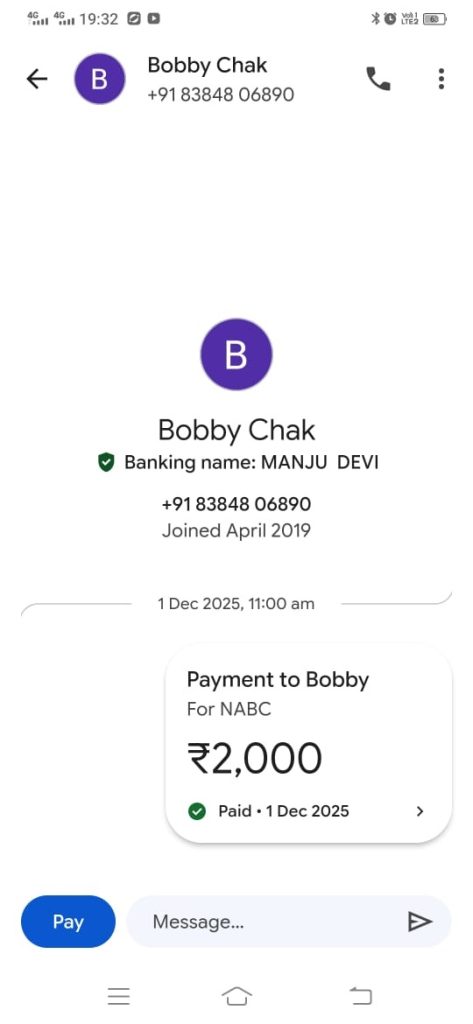
Bobby then demanded Rs 5,000 as a bribe for the NABC. We paid him Rs 3,000 online and agreed to give the remaining Rs 2,000 after receiving the NABC. The following discussion also reveals that the NABC cannot be issued without showing the death certificates first.
Reporter- Ab akele NABC kara do abhi uska mein bata dunga, kitna bhej doon apko abhi?
Bobby-Bhai, aaye ho to cash de do?
Reporter-Pata nahi hoga bhi ke nahi.. itna aajkal cash kaun le kar chalta hai.
Reporter (continues)- Cash hai nahi zyada, 100 rupees hain. NABC ke dekh lo aap?
Bobby (on receiving the money on phone)- 1000?
Reporter- Abhi mein total de raha hoon aapko…arey poore thodi hain ye.
Bobby- Online aap bhaiya ko counter par de do unse paise le lo.
Reporter- Nahi wo nahi karte, pehle mein kar chuka hoon. Ye aap banao, mein online bhej dunga aapko, cash to nahi hoga.
Reporter- Mein online bhej dunga aapko, 1000 rupees to ho gaye aapke pass NABC ke.
[In the above exchange, the reporter and Bobby discuss the payment for the NABC. Bobby insists on receiving part of the bribe in cash and the rest online. This shows how even payments are broken into stages. Work cannot proceed without money, highlighting how routine procedures are turned into opportunities for profit.]
After Bobby, our reporter met Shyam (known by first name only), another broker of the Agra Municipal Corporation. We offered him a fake deal for obtaining the NABC. Shyam advised the reporter to go for the NABC, saying that getting a birth certificate from the Nigam records is very difficult. He added that a bribe would be required for the NABC, of which only Rs 400–500 would go into his own pocket.
Reporter- Mein ye keh raha tha agar mera birth certificate mil gaya phir to NABC ki zaroorat nahi padegi ?
Shayam- Nahi padegi?
Reporter- To aap mujhe suggestion do pehle mein birth certificate dhoondu aap ke through?
Shayam- Parson aapko clear kar dunga.
Reporter- Ya NABC banwaon ?
Shayam- Dekho mein abhi kuch nahi keh sakta, meri jeb mein 400-500 se zyada nahi jayenge.
Reporter- Nahi aap mujhe ye batao mera birth certificate milne ki kitni sambhavna hai ?
Shyam- 99 percent nahi hai, ek percent hai ki mil jayega
Reporter- Mil jayega ek percent..aisa kyun ?
Shyam- Kyunki ye to bahut purana matter ho gaya hai, doosre kuch aapke pass proof hota entry ventry ka, to hum khujawa detey.
Reporter- To aap ek kaam karo ab khujwao mat, aap isi ke base par NABC banwa lo, wo birth certificate ki tarah hi hai na.
[Here, Shyam explains that the chances of getting the birth certificate are extremely low. He then suggests using the NABC as a substitute, effectively bypassing the difficult process. This shows how rare records and complicated procedures push people towards alternative certificates.]
Shyam then demanded Rs 3,500 as a bribe from the Tehelka reporter for getting one NABC made. He also revealed that he had got one NABC made for someone three to four months ago. Shyam asked us to visit the Agra Nagar Nigam office and said that nobody there would do the work for an amount less than what he was taking from us.
Reporter- Jo certificate aapne banwaya hai NABC wala, usko mujhe whatsapp kar do.
Shyam- Theek hai..aap padhna chao padh lo kyunki kisi aur ka kagaz hai..aap NABC mein kisi aur se rai bhi le lo…dekh liya aapne.. jahan uska naam hai wahan aapka aa jayega.
Reporter- Ye to abhi banwaya hai aapne?
Shyam- Haan 3-4 mahine ho gaye.
Reporter- Kastoor Chand Goyal…Arun Kumar Goyal, son of Kastoor Kumar Goyal…inke bacchey hain videsh mein. Kitne din mein banwa diya aapne?
Shyam- Banwa diya maine 15 din, hafte mein banwa diya ab to pehle, jaise chaho banwa lo, ab iski zyada demand badh gayi hai..mein ander gaya ..ab keh rahe hain mahine mein do jaari kar raha hoon.
Reporter- Matlab?
Shyam- Matlab 2 hi NABC jaari kar rahe hain.
Reporter- To mein de doon aapko.. Rs 3500 de doon?
Shyam- Lekin ye kagaz pahuch ke.
Reporter- Do hi to bhejne hai mujhe, 10th ka certificate aur passport, bas?
Shyam- Haan PDF bana kar bhejna muje taki print saaf nikal aaye.
Reporter- Ye lo gin lo Rs 3500 hain..ye de diya maine NABC ka.
Shyam- Haan.
Reporter- Zyada to nahi lagega?
Shyam- Ab aap upper ka hisab to dekh hi aaye ho, jin jin se milwaya maine dekh hi liya wo saamne bethe they, aap kabhi chale jaana aankh moond ke, kamra dekh liye, logon ko pehchan liya, agar jo maine bataya ussey kam mein bana de koi!
Reporter- Kagaz dene ke baad?
Shyam- Haan…to mein aapko saare de dunga, 1000 rupees aur de doonga!
[In the above exchange, Shyam shows a recently issued NABC on his phone and explains how such papers are arranged. He talks about the time taken, the rising demand, and the limits set inside the office. The bargaining then turns into a clear price talk. Money changes hands, and the deal is sealed with file requirements and quiet assurances.]
Non-Availability Birth Certificate (NABC) has become a hot commodity in Agra Municipal Corporation. Brokers demand Rs 5,000 as bribe to issue an NABC quickly. The NABC is an official document issued by authorities in India under the Registration of Births and Deaths Act, 1969, certifying that no birth record exists for an individual. It is crucial for passports, visas, and immigration, especially for those born before 1970 or in rural areas, serving as a valid substitute for a formal birth certificate.
When Prime Minister Narendra Modi raised the slogan “Na Khaunga Na Khane Dunga,” people became optimistic that corruption in India would significantly decline. But after witnessing the corruption at Agra Municipal Corporation, where no work proceeds without money, it is evident that those in power have largely ignored the Prime Minister’s call. The corruption at Agra Nagar Nigam is only the tip of the iceberg, reflecting how systemic bribery has embedded itself in local governance, undermining both transparency and public trust.
A moderate earthquake measuring 4.7 on the Richter scale struck parts of Jammu and Kashmir early Monday morning, officials said.
The tremor was recorded at around 5:35 am, with its epicentre located in the Pattan area of Baramulla district. According to preliminary information from the Android Earthquake Alerts System, the epicentre was approximately five kilometres from Hanjiwera Bala.
The earthquake was felt across a wide area, including Srinagar, Baramulla, Sopore, Ganderbal, Pulwama and adjoining regions. Tremors were also reported from parts of Pakistan-occupied Kashmir.
There were no immediate reports of loss of life or damage to property, officials said.
Residents in several areas said they were awakened by the shaking, with many stepping out of their homes as a precaution. Doors, windows and household items rattled briefly, triggering panic among people, especially as the tremor occurred during the early morning hours when most were asleep.
Authorities said the situation was being monitored, but no aftershocks or damage had been reported till the filing of this report.
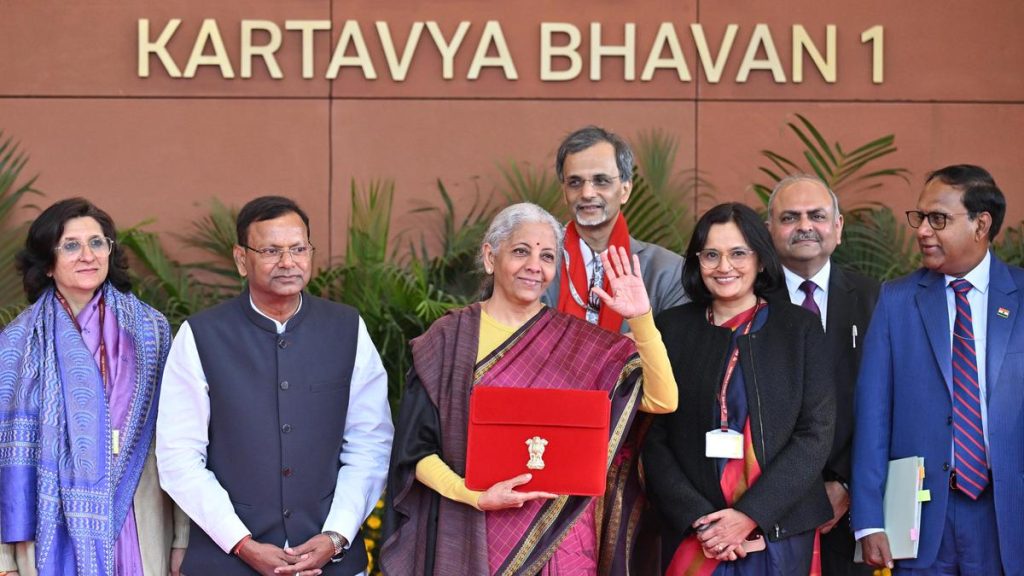
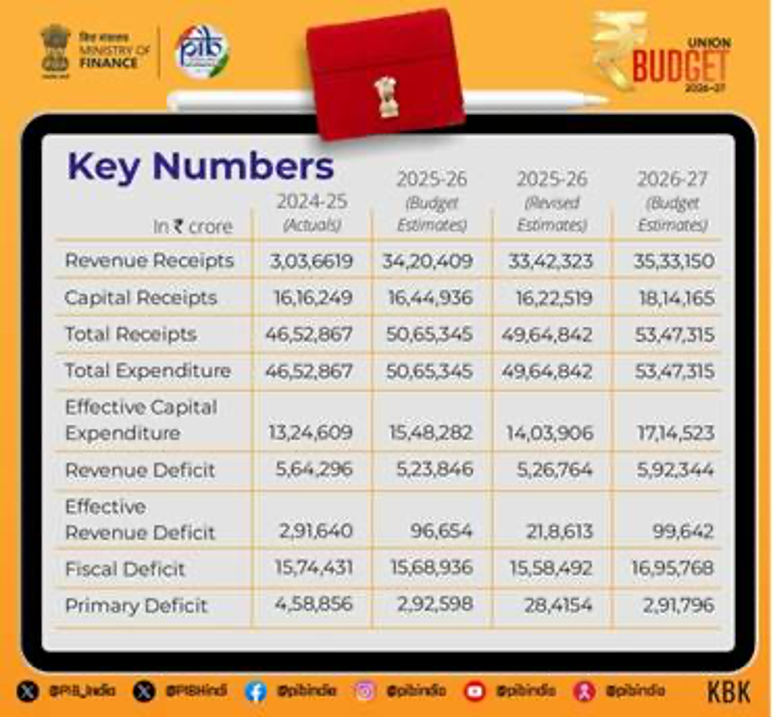
For many readers, Budget speeches can feel complicated and distant. Here is a simple breakdown of what this Budget means for common people — without the jargon.
Continuity
The key takeaway from this year’s Budget is continuity. The government has chosen not to disrupt existing policies, instead strengthening areas it believes will support long-term growth. The emphasis remains on building infrastructure, boosting domestic manufacturing and keeping government finances under control.
While the Budget does not offer immediate financial relief to households, it also avoids placing additional burdens on taxpayers.
Status Quo for Salaried Class
One of the most closely watched aspects of the Budget — personal income tax — remains unchanged.
No change in income tax slabs under either the old or new tax regime
No new taxes on salaried individuals
No additional exemptions or deductions
For taxpayers, this means financial predictability. Monthly budgets will not be affected, though many middle-class families were hoping for some relief to cope with rising living costs.
The Budget does not directly control prices, but several steps aim to manage inflation:
Customs duty cuts on select essential items and medicines
Continued support to agriculture and food supply chains
Investments to improve transport and logistics
These measures may not immediately lower prices, but they are intended to prevent sharp increases, especially in food and healthcare costs.
Infrastructure Push
A major focus of the Budget is infrastructure spending, with large allocations for highways, railways, ports and urban transport.
Why does this matter to ordinary citizens?
Because infrastructure investment:
Generates employment, especially for workers in construction and allied sectors
Improves connectivity, reducing travel time and transport costs
Encourages private investment and regional development
In the long run, better infrastructure can translate into cheaper goods, improved services and more job opportunities.
Manufacturing
The government continues to push for India to become a global manufacturing hub.
The Budget focuses on:
Electronics and semiconductor manufacturing
Clean energy and green technologies
Defence and strategic industries
For common readers, this means a push towards domestic production, reduced dependence on imports and more stable jobs, particularly for young people entering the workforce.
MSMEs
Micro, Small and Medium Enterprises (MSMEs) — which employ millions across the country — received attention in the Budget.
Key measures include:
Improved access to loans
Support to scale up high-performing small businesses
Simplified compliance procedures
Since MSMEs form the backbone of local economies, stronger support for them can help boost employment and entrepreneurship, especially in smaller towns and cities.
Rural Economy
The Budget continues to support farmers and rural households through:
Technology-based advisory tools
Encouragement of high-value crops
Support for allied activities like dairy and fisheries
The focus is on helping farmers move beyond traditional practices and increase incomes through diversification and better information.
Health & Education
While not heavy on new schemes, the Budget reinforces spending on:
Healthcare infrastructure and essential medicines
Education and skill development
Drinking water and sanitation
Steps to reduce the cost of critical medicines and improve access to education, especially for girls, remain part of the government’s social agenda.
Fiscal Discipline
A significant feature of the Budget is the government’s effort to keep the fiscal deficit under control — meaning it is limiting how much it borrows.
This matters because fiscal discipline:
Helps keep inflation in check
Maintains investor confidence
Prevents excessive debt burden on future generations
Though careful spending may limit short-term giveaways, it helps maintain long-term economic stability.
Reactions
Reactions to the Budget have been varied:
Industry leaders welcomed the focus on infrastructure and manufacturing
Markets showed some volatility, reflecting concerns over trading costs and taxation changes
Middle-class taxpayers expressed disappointment over the lack of tax relief
Opposition parties criticised the Budget for not doing enough to boost household consumption
Economists, however, largely see the Budget as prudent and growth-oriented, prioritising stability over populism.
What This Budget Means for You
In simple terms:
No increase in income tax, but no reduction either
Job creation expected mainly through infrastructure and manufacturing
Prices may stabilise, though immediate relief is limited
Focus on long-term economic foundations rather than short-term benefits
The Bottom Line
This Union Budget is a steady and cautious document, aimed at strengthening India’s economic base rather than offering quick wins. While it may not excite everyone, it reflects a belief that sustainable growth comes from investment, discipline and consistent policy. The real impact will be felt gradually — and much will depend on how effectively these plans are implemented on the ground.
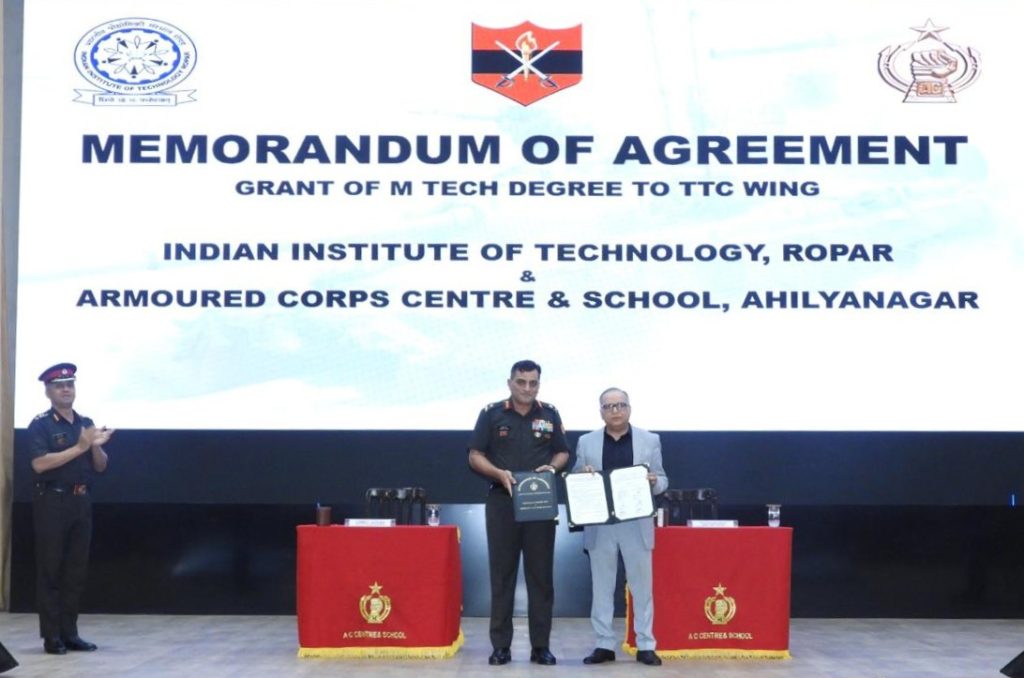
In what is being touted as a watershed moment for Indian defence education and technological advancement, the Indian Institute of Technology (IIT) Ropar formalized a historic Memorandum of Agreement (MoA) with the Indian Army to launch the M.Tech programme in Defence Technology.
This pioneering initiative, designed exclusively for officers of the Armoured Corps Centre & School (ACC&S) marks an unprecedented collaboration between premier academic institutions and the armed forces, positioning India firmly on the path to becoming a global defence technology leader by 2047.
This ground-breaking programme represents the first time any IIT in India has established such a comprehensive defence technology partnership with the armed forces. The initiative goes beyond conventional academic offerings, creating a robust ecosystem where cutting-edge research, applied innovation, and military operational expertise converge to strengthen India’s defence capabilities.
Speaking at the signing ceremony, Prof. Rajeev Ahuja, Director, IIT Ropar, emphasized the transformative nature of this partnership: “This collaboration marks a paradigm shift in how India approaches defence technology education. By bringing together the intellectual rigor of IIT Ropar with the operational excellence of the Indian Army, we are creating a unique model that will produce defence technology leaders capable of driving India’s self-reliance in critical defence sectors. This is our contribution to Viksit Bharat 2047.”
The M.Tech (Defence Technology) programme has been crafted through joint efforts of ACC&S and IIT Ropar, ensuring perfect alignment between academic rigor and military requirements. The curriculum emphasizes applied learning, hands-on research, and innovation-driven problem-solving, preparing officers to become technology leaders within the armed forces.
Upon successful completion of the programme, officers will be awarded an M.Tech (Defence Technology) degree from IIT Ropar, a credential that represents the highest standards of technical excellence and innovation. This qualification will enable them to spearhead technological modernization initiatives across armoured formations and contribute significantly to indigenization efforts in defence manufacturing.
Beyond the academic programme, the MoA establishes an expansive framework for joint research and development initiatives that will address critical technological challenges facing India’s defence sector. The partnership encompasses several strategic focus areas like Joint Research & Development Initiatives, Next-Generation Armoured Fighting Vehicle (AFV) Technologies, Advanced Armament Solutions and New Materials and Technologies for Armoured Platforms.
The MoA was formally signed by Maj Gen Vikram Varma, AVSM, VSM, Commandant, ACC&S and Prof. Rajeev Ahuja, Director, IIT Ropar.
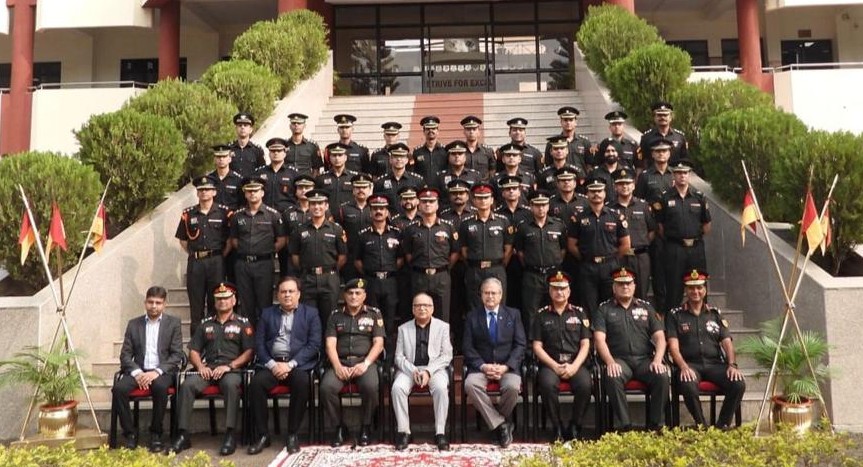
The ceremony was graced by eminent personalities including Lt Gen S S Mahal, PVSM, AVSM, VSM (Retd), Professor of Practice, IIT Ropar; Shri Virbhadra Singh Rawat, Professor of Practice, IIT Ropar; Prof. Sarang Gumfekar, Associate Dean (PG and Research), IIT Ropar; Brig Kaushal Panwar, Commander SOTT; Col Tarun Badola, Senior Instructor, HQ SOTTT; and esteemed faculty and staff from both ACC&S and MIC&S.
The research outcomes from this collaboration are anticipated to benefit not only the armed forces but also contribute to civilian applications in areas such as autonomous vehicles, advanced manufacturing, and materials engineering. This dual-use approach maximizes the societal impact of research investments while accelerating technology transfer from laboratory to field.
As India aspires to become a global leader in defence technology and manufacturing, initiatives like the IIT Ropar-Indian Army M.Tech (Defence Technology) programme represent critical building blocks. This collaboration exemplifies innovation-driven leadership, strategic foresight, and commitment to national excellence that will define Viksit Bharat 2047.
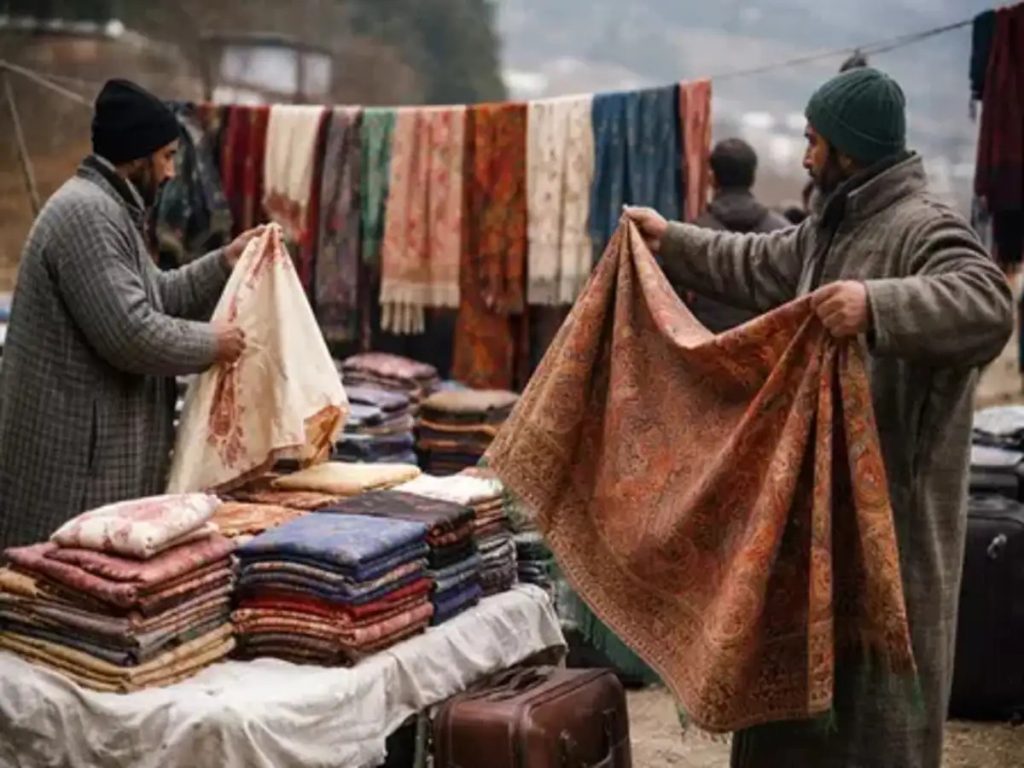
An 18-year-old Kashmiri youth selling shawls in Uttarakhand’s Vikas Nagar area was seriously injured after being assaulted by a mob, the Jammu Kashmir Students Association (JKSA) said on Wednesday.
According to the association, the youth had travelled to Uttarakhand to help his family earn a livelihood during the winter season. He was allegedly attacked by a group of people who questioned him about his identity. The situation escalated after they learned that he was a Muslim from Kashmir, the JKSA claimed.
The victim sustained a fracture in his left arm and suffered serious head injuries after being struck with iron rods. He was initially taken to a local hospital and later referred to Doon Hospital in Dehradun, where doctors described his condition as serious. Multiple bruises were reportedly found on his body.
The JKSA said other family members accompanying the youth were also assaulted, dragged, and slapped during the incident.
Condemning the attack, the association described it as a disturbing example of rising communal violence and intolerance. It urged Uttarakhand Chief Minister Pushkar Singh Dhami to intervene, ensure the registration of a strict FIR, and direct authorities to take action against those involved.
The association also demanded adequate security for Kashmiri traders and labourers working in the state.
The Supreme Court has issued notice in a Public Interest Litigation (PIL) that challenges the constitutional validity of the immunity granted to the Chief Election Commissioner (CEC) and Election Commissioners (ECs) under the Chief Election Commissioner and Other Election Commissioners (Appointment, Conditions of Service and Term of Office) Act, 2023. The challenge strikes at the heart of the legal framework governing the Election Commission of India (ECI), raising serious questions about accountability, constitutional limits, and the balance between independence and immunity.
A Bench comprising Chief Justice of India Surya Kant and Justice Joymalya Bagchi was hearing the PIL filed by Lok Prahari, a civil society organisation, which has assailed Section 16 of the 2023 Act. The provision grants immunity to the CEC and ECs for acts done or purported to be done in the discharge of their official functions.
Appearing for Lok Prahari, its general secretary, S. N. Shukla, said that Parliament had granted immunity to the CEC and the ECs, which the makers of the Constitution did not grant even to the President, Governors, or judges. The plea said that the provision “gives unprecedented, unbridled power to the CEC and ECs by providing them complete blanket permanent immunity for life from any civil and even criminal proceedings for their wrongdoings in gross misuse of their office …”.As the bench expressed inclination to issue notice, Shukla also urged the court to stay the operation of the provision in the meanwhile in view of the “damage to the process of free and fair elections”.
It said that “the impugned provision disturbs level playing field by giving the CEC and ECs a free hand to misuse their position for or against a political party/candidate or the Government as alleged of late, not entirely without basis…”. The plea said that the “intervention of this Hon’ble Court is essential for ensuring enforcement of the Rule of Law and protecting proper functioning and future of democracy in the country”. The provision says that “notwithstanding anything contained in any other law for the time being in force, no Court shall entertain or continue any civil or criminal proceedings against any person who is or was a Chief Election Commissioner or an Election Commissioner for any act, thing or word, committed, done or spoken by him when, or in the course of acting or purporting to act in the discharge of his official duty or function”.
While declining to stay the operation of the impugned provision at this stage, the Court issued notice to the Union of India on the specific question of whether “this kind of immunity can be granted in terms of our constitutional scheme or not.” A bench of Chief Justice of India Surya Kant and Justice Joymalya Bagchi issued notice to the Centre and the Election Commission of India (ECI) on the plea by NGO Lok Prahari challenging Section 16 of the Chief Election Commissioner and Other Election Commissioners (Appointment, Conditions of Service and Term of Office) Act, 2023. “We would like to examine it. We are issuing notice,” the CJI said.
The matter will now proceed with the Union required to justify the legislative basis and constitutional validity of the immunity clause. The Court will examine whether Parliament can grant sweeping immunity to the Chief Election Commissioner and Election Commissioners under Article 324 of the Constitution.
At the centre of the controversy lies Section 16 of the 2023 Act, which provides immunity to the Chief Election Commissioner and Election Commissioners against legal proceedings for actions taken in good faith while discharging their official duties. According to the petitioner, this provision effectively grants a form of lifelong and unprecedented immunity, shielding the election authorities from accountability even after demitting office.
Appearing for Lok Prahari, Advocate S.N. Shukla argued that the impugned provision fundamentally alters the constitutional position of the Election Commission by elevating it beyond the reach of legal scrutiny. He contended that such sweeping immunity was neither contemplated by the Constitution nor supported by judicial precedent.
“This provision makes the Election Commission a law unto itself,” Shukla submitted, relying heavily on past Constitution Bench jurisprudence. He drew the Court’s attention to the landmark ruling in T.N. Seshan, Chief Election Commissioner v. Union of India and subsequent cases involving former Chief Election Commissioner M.S. Gill, where the Supreme Court had categorically held that Article 324 of the Constitution does not confer absolute or unreviewable powers on the Election Commission.
“In the case of Mr. M.S. Gill, the Constitution Bench ruled that Article 324 does not exalt the ECI to a law unto itself,” Shukla argued. “The impugned provision does precisely that by giving a lifelong, unprecedented immunity to the CEC and the EC—an immunity which the makers of the Constitution did not even grant to the President of India or to Governors.”
The comparison with constitutional functionaries such as the President and Governors was central to the petitioner’s argument. Under the Constitution, while these offices enjoy limited immunity during their term, such protection is neither absolute nor lifelong, and certainly not beyond judicial scrutiny in all circumstances.
According to him, the immunity clause was not part of the original bill and was added at a late stage during the legislative process.
He pointed out that during parliamentary debates, the government had justified the enactment of the law by invoking Article 324(2) of the Constitution. However, Article 324(2), he argued, deals exclusively with the appointment of the Chief Election Commissioner and Election Commissioners, and does not extend to prescribing their service conditions, let alone granting immunity from legal proceedings.
“Article 324(2) has nothing to do with service conditions, much less with immunity,” Shukla submitted. “The provision travels far beyond the scope of the enabling constitutional article under which the law is claimed to have been enacted.”
This argument goes to the root of legislative competence and constitutional authorization. If Parliament has exceeded the scope of Article 324(2), the impugned provision could be struck down as ultra vires the Constitution.
Given what he described as the “grave and continuing irreparable loss” to the democratic process, Advocate Shukla urged the Supreme Court to stay the operation of Section 16 pending adjudication of the PIL.
He contended that free and fair elections—recognized as part of the basic structure of the Constitution—are intrinsically linked to the accountability of the Election Commission. Granting lifelong immunity, he argued, undermines public confidence and weakens constitutional safeguards.
However, the Bench declined to grant interim relief at this stage. While refusing to stay the impugned provision, the Court acknowledged the seriousness of the issue and framed the core constitutional question that now requires examination: whether such a sweeping immunity is compatible with India’s constitutional framework.
Issuing notice to the Union of India, the Bench made it clear that the matter raises important constitutional issues that merit detailed consideration.
The backgrounder
The Chief Election Commissioner and Other Election Commissioners (Appointment, Conditions of Service and Term of Office) Act, 2023 was enacted to replace the earlier regime governing the appointment and service conditions of the Election Commission’s top officials.
The legislation followed a Constitution Bench judgment of the Supreme Court, which had directed that appointments to the posts of CEC and ECs be made by a committee comprising the Prime Minister, the Leader of Opposition, and the Chief Justice of India, until Parliament enacted a law on the subject.
While the 2023 Act addressed appointment procedures and service conditions, it also introduced provisions that have drawn significant criticism from opposition parties, civil society groups, and constitutional scholars. Section 16, which grants immunity, has emerged as one of the most contentious aspects of the law.
Critics argue that instead of strengthening the independence of the Election Commission, the Act risks diluting accountability by insulating its members from legal consequences.
Article 324 of the Constitution vests the superintendence, direction, and control of elections in the Election Commission of India. Over the decades, the Supreme Court has interpreted this provision expansively to empower the ECI to fill legislative gaps and ensure free and fair elections.
However, the Court has consistently held that the powers under Article 324 are not absolute.
In Mohinder Singh Gill v. Chief Election Commissioner and subsequent decisions, Constitution Benches of the Supreme Court emphasized that while the ECI enjoys a high degree of autonomy, it remains subject to constitutional limitations and judicial review.
It is this jurisprudence that Lok Prahari relies upon to argue that granting lifelong immunity contradicts settled constitutional principles.
Immunity vs Accountability
The case foregrounds a long-standing constitutional tension: how to balance the independence of constitutional authorities with the need for accountability.
On one hand, independence is seen as essential to insulate the Election Commission from political pressure. On the other hand, accountability is critical to ensure that such independence is not abused.
The petitioner argues that Section 16 tilts this balance decisively—and dangerously—in favour of unchecked authority.
Importantly, the Constitution itself adopts a calibrated approach to immunity. For instance, Article 361 grants the President and Governors immunity from criminal proceedings during their term of office, but this protection is temporary and subject to post-tenure accountability.
By contrast, the immunity under the CEC Act, 2023, according to Lok Prahari, is broader, more permanent, and lacking in constitutional justification.
Free and fair elections are widely recognized as part of the basic structure of the Constitution. The Supreme Court has repeatedly underscored the central role of the Election Commission in safeguarding democratic processes.
The present challenge raises the question of whether insulating election authorities from legal scrutiny strengthens or weakens democracy.
If accountability mechanisms are diluted, critics argue, public trust in electoral processes could erode—particularly in a political climate where the neutrality of institutions is under intense scrutiny.
What lies ahead
With notice issued, the Union of India will now have to defend Section 16 and explain how such immunity aligns with constitutional principles, past judicial precedents, and the scheme of Article 324.
The Supreme Court’s eventual ruling could have far-reaching implications—not just for the Election Commission, but for the broader question of how far Parliament can go in granting immunity to constitutional authorities.
As the case proceeds, the Court will be called upon to decide whether the independence of the Election Commission can coexist with meaningful accountability, or whether Section 16 has crossed a constitutional red line.
For now, while the immunity provision remains in force, the constitutional debate it has triggered is firmly before the country’s highest court.
Haryana Police, while giving top priority to women safety, has achieved positive results through special drives, intensive monitoring and effective policing. In the year 2025, crimes against women in the state recorded a significant decline of 16.26 percent as compared to 2024, clearly reflecting the growing sense of security and trust among women.
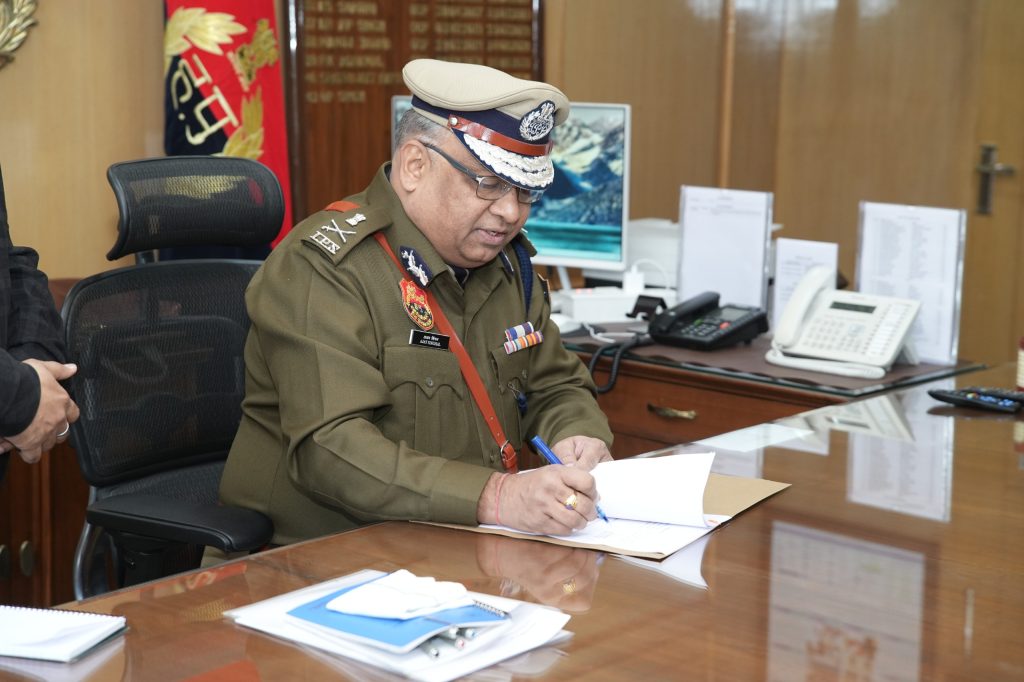
Director General of Police, Ajay Singhal, said that women’s safety has always been a priority for Haryana Police, and the decline recorded in crimes against women in 2025 is proof that police strategies, field actions, and technological measures are working effectively. He stated that the vision of Haryana Police for the year 2026 will remain focused on further strengthening women’s safety, not only through crime prevention but also by reinforcing a sense of fearlessness and confidence among women. The DGP appreciated police officers and personnel deployed across the state for their dedication, discipline, and continuous efforts in reducing crimes against women, and congratulated them for their commitment. He also appealed to women to make maximum use of the safety facilities provided by the police.
As per the comparative analysis of CCTNS data, a clear decline has also been recorded in serious crimes. Cases of rape have reduced by nearly 25 percent, attempt to rape by 33 percent, molestation by around 16 percent, cases registered under the POCSO Act by approximately 10 percent, abduction and kidnapping by over 17 percent, and sensitive crimes like dowry death by more than 11 percent. Haryana Police has also shown effective performance in the disposal of crimes against women. In 2025, the workout rate of crimes against women was recorded at nearly 98 percent, clearly indicating that timely and stringent action was ensured against offenders.
In 2025, special drives were conducted across the state to control crimes against women. Under these initiatives, potential molestation hotspots were identified and women police personnel were deployed in civil dress at such locations. Effective action was taken against antisocial elements by women police teams at schools, colleges, bus stands, markets and other crowded public places, which strengthened the sense of security among women. Moreover, a list of potential harassment hotspots across the state was prepared and police personnel in plain clothes were deployed there to identify and deter miscreants.
In addition, special training was provided to women police personnel to enhance their operational efficiency, with special emphasis on prevention of crimes against women, communication with victims and feedback-based policing. To further strengthen women safety, Haryana Police has also launched a Trip Monitoring System. Women travelling alone can register themselves through Haryana 112 and avail of this facility, under which their movement is monitored till they safely reach their destination.
Singhal has appealed to the state’s general public that community participation is extremely essential for women’s safety. He urged citizens to immediately report any incident of harassment, misbehaviour, violence or crime against women to Haryana 112 or the nearest police station, and to boost the morale of the victim while cooperating in maintaining law and order. He further appealed to citizens to adopt sensitive behaviour towards women in public places, keep a watch on suspicious activities, and actively use government initiatives and police services related to women’s safety, so that a safe, respectful, and fear-free society can be built.
Flight operations at Srinagar Airport were suspended on Tuesday following continuous snowfall that made runway conditions unsafe, officials said.
Airport authorities stated that heavy snow accumulation on the runway prevented safe take-offs and landings, leading to the cancellation of all incoming and outgoing flights for the day. The decision was taken as a precautionary measure to ensure passenger safety.
“Persistent snowfall has affected runway conditions, making it unsafe for flight operations,” an airport official said.
Officials from the airport administration and airline companies said the situation is being closely monitored. Flight services will resume once weather conditions improve and the runway is cleared and declared operational.
Passengers have been advised to check their flight status with their respective airlines and stay updated through official communication channels.
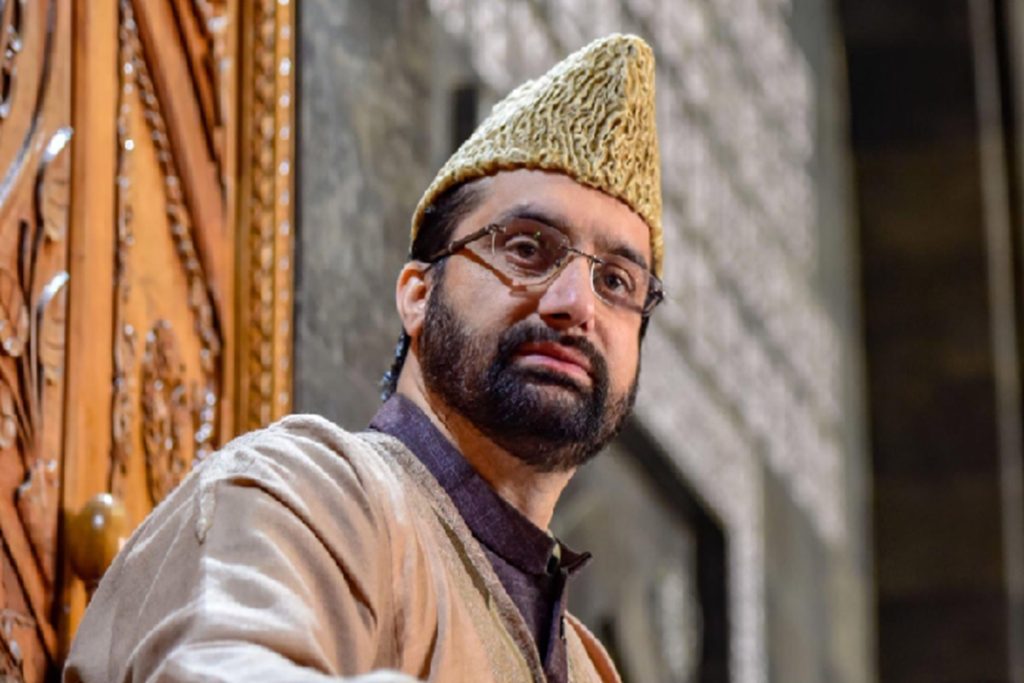
When Kashmir’s chief cleric Mirwaiz Umar Farooq quietly removed the description “Hurriyat chairman” from his X (formerly Twitter) bio in late December, the change appeared minor on the surface. In reality, it captured a much deeper shift: the narrowing of political space for separatist voices and the steady fading of an organisation that once claimed to represent Kashmir’s dissident conscience.
Mirwaiz said the decision followed sustained pressure from authorities. “For some time now, I was being pressed by the authorities to make changes to my X (formerly Twitter) handle as Hurriyat chairman,” he wrote. Officials, he said, warned that since “all the constituents of Hurriyat Conference, including the Awami Action Committee that I head have been banned under the UAPA, making Hurriyat a banned organisation,” his account would otherwise be taken down.
The choice, he said, amounted to a “Hobson’s choice.” “At a time when public space and avenues of communication stand severely restricted, this platform remains among the very few means available to me to reach out to my people and share my views on our issues with them, and the outside world,” the Mirwaiz wrote.
That explanation did little to calm the political storm the move unleashed across Kashmir. For some, it signalled pragmatic survival; for others, it was a troubling symbol of surrender. Yet beyond the immediate controversy lies a larger truth: the All Parties Hurriyat Conference (APHC), once the most recognisable umbrella of separatist politics in Kashmir, has been reduced to a shadow of its former self — legally banned, organisationally hollowed out, and politically sidelined.
Founded in 1993 as a coalition of more than 20 groups — separatist parties, trade bodies and civil society organisations — Hurriyat once described Kashmir as a “disputed territory” and demanded the implementation of United Nations resolutions. In the 1990s and early 2000s, it wielded moral and political influence disproportionate to its loose structure, mobilising shutdowns, issuing joint calendars and acting as a conduit — however imperfect — between Kashmiri separatist sentiment and New Delhi, Islamabad and international interlocutors. No longer.
Reactions that reflect a fractured politics
Political reactions to the Mirwaiz’s decision revealed as much about contemporary Kashmir as the move itself. Peoples Democratic Party (PDP) president Mehbooba Mufti framed it as a personal choice but defended the larger idea behind Hurriyat. “Hurriyat was ‘an idea and represented the alienation felt by people’,” she said. “A person could be jailed but not the idea.” Questioning the government’s claims of normalcy, she asked, “If everything is normal in Kashmir, then why do so many raids take place every day?”
PDP legislator Waheed-ur-Rehmaan Parra offered a religious analogy, likening the Mirwaiz’s decision to the Treaty of Hudaybiyyah. “The Prophet agreed to erase the words ‘Muhammad-ur-Rasoolullah (Prophet Muhammad)’, the very foundation of the Kalima, solely in the interest of peace,” he said, adding that history remembers it as “wisdom, foresight, and moral courage.” Mr. Farooq’s move, Parra argued, should be seen “as an act of peace” and “must never be weaponized against him.”
Others were less charitable. Sajad Lone, a former separatist who now leads the J&K Peoples Conference, rejected the comparison outright. “A surrender in lieu of protocol and CRPF security should not ever be compared with the peace treaty of Hudaybiyah in Mecca,” he said, urging politicians to avoid what he called a “religious overstretch.”
National Conference leader Tanvir Sadiq focused on the alleged coercion. “The Mirwaiz is a religious scholar and widely respected. He claimed that he was pressurised (to remove the Hurriyat chairman title). If a respectable person like the Mirwaiz says he has been pressurised, this should be re-examined by the government,” he said.
The diverging responses underscored a reality long in the making: Hurriyat no longer functions as a central pole around which opinion coalesces.
‘My beliefs have not changed — not even by a comma’
Amid the controversy, the Mirwaiz moved quickly to clarify that symbolism should not be mistaken for ideological retreat. In a detailed note issued after he was barred from addressing Friday prayers at Srinagar’s Jama Masjid — for the second consecutive week — he insisted his convictions remained intact.
“Let me make it clear, my beliefs and convictions have not changed — not even by a comma,” he wrote.
Social media, he argued, had become his last remaining channel of communication. “With Hurriyat constituents banned, all offices sealed and institutions closed, leaders and activists either in jails or under constant surveillance, social media remains the only platform that gives some voice and opportunity to connect with people and the outside world.”
He rejected accusations that the move was linked to security arrangements. “They make a strange argument — for being provided security. But it was provided to me since the day of my father’s martyrdom 35 years ago. If I did not compromise for it since then, why should I compromise now?”
Mirwaiz reiterated his long-held emphasis on dialogue, invoking former Prime Minister Atal Bihari Vajpayee’s formulation of “insaniyat aur jamhooriyat.” “My path remains the same,” he said, stressing that dialogue had worked elsewhere and could still offer a way forward.
Yet even as he spoke of continuity, the context around him told a different story — one of shrinking space, enforced silence and political redundancy.
A movement out of time
The decline of Hurriyat has been gradual but decisive. The death of Professor Abdul Gani Bhat in September marked not just the passing of a senior leader but the symbolic end of an era. A founding member and former chairman, Bhat had long been described as Hurriyat’s “voice of moderation.” His burial, hurried through amid restrictions, reflected the diminished stature of a leadership once capable of mobilising mass participation.
Yasin Malik’s long incarceration and the affidavit last year to the Delhi High Court provides another marker of the new state of affairs. Framing himself as a betrayed peacemaker, Malik wrote that despite working to strengthen peace, he was branded a terrorist “I should ideally be seen as an apostle of peace and harmony,” he wrote, lamenting the collapse of a political process he said he had once helped sustain.
Together, these moments highlight the disappearance of the political conditions that once made Hurriyat relevant. For decades, its influence rested on three pillars: organisational presence on the ground, moral authority over separatist sentiment, and tactical usefulness to New Delhi and Islamabad during phases of dialogue.
All three have eroded.
Post-2019, legal bans, detentions and administrative controls dismantled Hurriyat’s organisational networks. Leaders were confined, and offices sealed. Simultaneously, separatist constituencies fragmented: some activists drifted into mainstream politics, and others disengaged entirely.
Most critically, Hurriyat lost its strategic utility. Track-II diplomacy, mediated talks and international attention — once the lifeblood of its relevance — dried up. New Delhi hardened its position after the revocation of Article 370, while Islamabad’s diplomatic leverage waned globally. An amalgam designed to negotiate a disputed settlement found itself with no negotiating table.
Relic, reinvention or irrelevance?
What remains for Hurriyat today are bleak options. It can fade into memory as a political formation whose life cycle has ended. It can attempt reinvention, shedding separatist maximalism for mainstream politics — a path fraught with ideological contradictions. Or it can persist as a symbolic network.
The precedent of Jamaat-i-Islami’s unsuccessful foray into electoral politics suggests reinvention offers no guarantees. Once severed from its ideological core, Hurriyat risks becoming just another marginal party, devoid of either moral authority or electoral viability.
Against this backdrop, Mirwaiz’s removal of a title from a social media bio appears less an act of capitulation than a quiet acknowledgement of reality. Hurriyat’s decline was neither sudden nor triggered by a single decision; it is the outcome of a transformed political landscape in which the organisation no longer fits.
Mirwaiz insists that ideas cannot be banned. History suggests he may be right. But institutions can wither, and movements can outlive their moment. Hurriyat, once Kashmir’s most recognisable separatist platform, now stands as a relic of a political era that has decisively closed — leaving behind memories, arguments, and unresolved questions, but little organised power.