
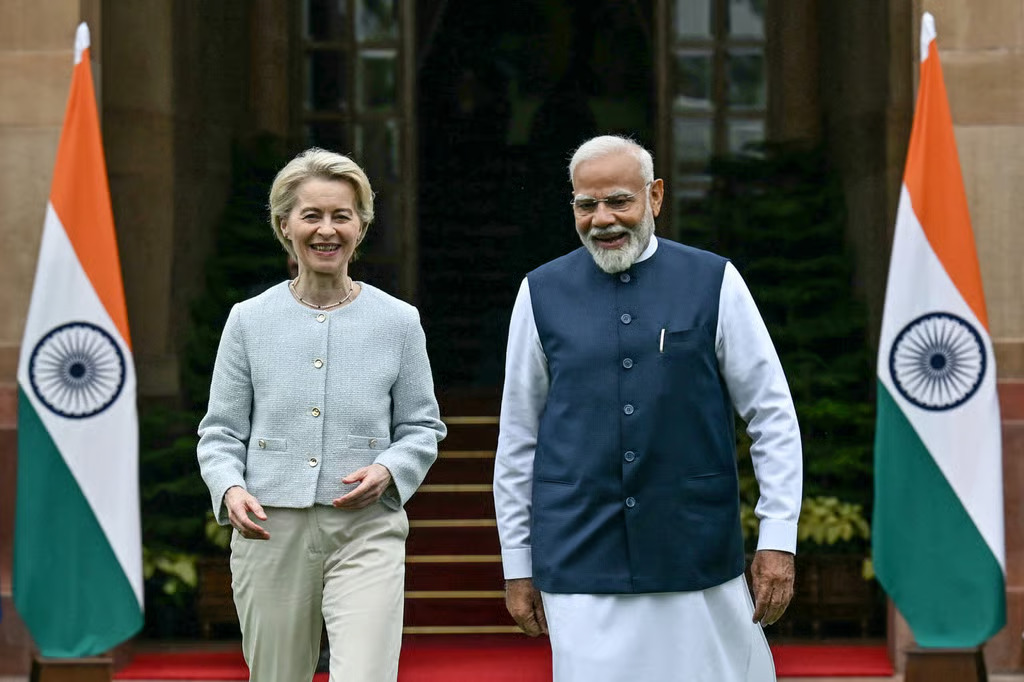
Donald Trump’s presidency marked a break from the post-World War II free-trade consensus. His aggressive use of high tariffs, trade wars (especially with China and the EU) and “America First” industrial policy sent a clear message: trade is no longer neutral; it is strategic leverage.
This environment created a strong incentive for India and the EU to reduce overdependence on the US and China by deepening ties with each other. For Europe, Trump’s tariffs were a wake-up call. The EU faced pressure from both sides: US tariffs and regulatory pressure and China’s dominance of supply chains, coupled with strategic distrust.
Now India has emerged as the ideal alternative partnerbecause of its large market, democratic system, rule-based governance and non-adversarial geopolitical posture. Crucially, India does not threaten Europe’s core industrial base the way China does.
This made the EU more pragmatic and flexible in negotiations where earlier it had been rigid on issues like data, labour, and sustainability timelines. India’s pragmatism coupled with globalisation vision and not isolation helped finalise this deal. Indeed, India, too, learned from Trump’s tariff-centric world comprising blind globalisation creating vulnerabilities. It was clear that market access must be reciprocal and strategic and trade agreements should support domestic manufacturing and jobs.
Instead of pursuing blanket free trade, India adopted a calibrated approachto protect sensitive sectors, liberalise where India is competitive and use FTAs as tools for strategic alignment
The EU deal reflects this pragmatism and provides deep liberalisation where India gains exports and services access, gradual, phased opening where domestic industry needs time and clear safeguards against import surges
A key reason this deal succeeded is that India and the EU sell fundamentally different things. The EU sells capital-intensive goods, high-end machinery and equipment, precision engineering, automobiles and auto components and chemicals, medical devices, green technologies. These are technology- and capital-heavy sectors, not labour-intensive ones.
What India sells is labour-intensive manufactured goods (textiles, apparel, leather), pharmaceuticals and generics, IT and digital services, engineering goods and processed food and marine exports. These sectors do not displace European workers. Instead, they lower costs for European consumers, support EU industries through affordable inputs and fill skill and labour gaps in services.
This non-overlapping export profile is why the deal is politically acceptable on both sides. To add to this, Trump’s tariffs made complementarity valuable.
In a tariff-heavy world, countries avoid partners that directly undercut domestic industries and complementarity becomes more important than competition. Indeed, India and the EU fit perfectly because EU firms gain access to India’s growing consumer base, India gains access to high-income European markets and neither side fears industrial hollowing-out
This is why the deal faced far less domestic backlash than EU trade deals with China or even the US.
Both India and the EU now prioritise strategic autonomy: The EU wants autonomy from US unpredictability and Chinese dominance and India wants autonomy from China-centric supply chains and Western policy swings. The trade deal strengthens: Trusted supply chains, Technology partnerships, Mobility of talent and Economic resilience. As a result it is not just a commercial agreement; it is economic statecraft.
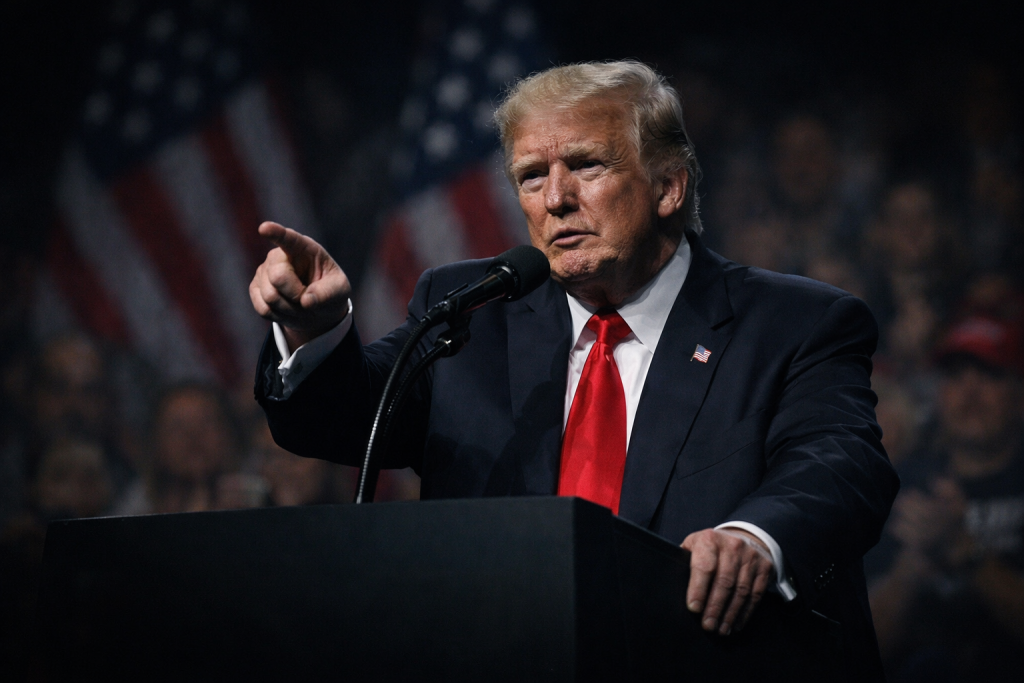
Foreign policy experts point out that Trump’s tariff-driven geopolitics shattered the illusion that trade is apolitical. In response, India and the EU chose pragmatism over ideology to diversify risk, to have trade with partners who complement rather than compete and anchor economics in strategic trust.
That is why this deal was possible now — and not in the previous two decades.
It is not just the “mother of all deals” in size, but in timing and geopolitical logic. The agreement connects two of the world’s largest economic blocs — India (a fast-growing major economy) and the European Union (a political and economic union of 27 countries) — creating a combined market of ~2 billion people and roughly 25–30% of global GDP.
After nearly two decades of negotiations, it marks one of the most ambitious Free Trade Agreements (FTAs) India has ever signed — covering goods, services, investment, mobility, intellectual property, supply chains, and more. The EU will eliminate or sharply reduce tariffs on about 96.6% of goods by value entering India — the deepest tariff cuts India has ever offered to any partner. India, in return, offers preferential access on most exports to the EU (~99.5% of trade value) with zero tariffs on key labour-intensive sectors.
Unlike many FTAs that focus mainly on tariff cuts, this deal also covers services, professional mobility, and regulatory cooperation, which means: India gains entry for Indian firms in sectors like IT, finance, education, and more. A framework to ease visas and work permits, even for AYUSH practitioners where regulations allow.
In short, it’s called the “mother of all deals” because it’s massive in size, comprehensive in scope, and strategically transformative — not just a simple exchange of tariff cuts.
The deal is win-win for India and the European Union. EU exporters secure deeper access to India’s fast-growing consumer market and can double exports by 2032. European goods entering India will face far lower duties, saving an estimated €4 billion annually. The EU companies benefit from investment and supply chain ties, especially in manufacturing, machinery, chemicals, and high-tech goods.
Indian exporters now get zero or reduced-duty access to the EU’s wealthy consumer markets, helping boost foreign exchange earnings and production. Improved rules for services, simplified customs, and investment protection foster stronger integration into international supply chains. It reduces dependence on a few markets and strengthens India’s geopolitical and economic standing amid global trade uncertainty (e.g., rising U.S. tariffs). In essence, both sides stand to gain market access, trade scale, investment flows, and shared economic growth opportunities — making it a win-win deal.
How it benefits India sector by sector is comprehensive. In labour intensive sectors like textiles, apparel, leather and footwear: zero-duty access to the EU market on key labour-intensive exports previously facing 4–26% tariffs. The textile industry alone employs tens of millions; expanded EU access could multiply export volumes significantly and create jobs. Gems and jewellery benefits as a result of duties elimination on most exported jewellery items, enhancing India’s competitiveness against rivals like Bangladesh and Vietnam.
Zero tariffs on exports such as shrimp and value-added seafood open up the EU’s lucrative seafood market. Metals, machinery, precision tools, and automotive components receive preferential access to Europe, unlocking higher export demand.
India’s strengths in IT/ITeS, finance, education, and business services gain improved market access in the EU. The mobility framework enables easier movement of skilled professionals, students, and intra-corporate transfers — a boost to human capital exchange.
EU tariffs on medicines, medical equipment, and specialty chemicals entering India will be reduced or eliminated — lowering costs and encouraging technology partnerships. While tariff liberalization is gradual and calibrated, European automakers will get better access to India’s auto market — attracting investment and potentially enhancing competition and innovation.
Small and medium enterprises (SMEs) will benefit from simplified customs, better rules of origin, and SME-focused support mechanisms — reducing trade costs and bureaucratic barriers.
There will be strategic and long term impacts too in global supply chains and geopolitics. The pact helps India diversify its trade relationships beyond China and navigate global trade tensions more smoothly. It strengthens India’s geopolitical ties with Europe, aligning economic and strategic interests in technology, climate cooperation, and mobility. By unlocking wider export markets, the agreement supports job creation, higher industrial output, and innovation across high-value sectors.
The clear, policy-oriented breakdown shows how the India–EU “mother of all deals” will directly and indirectly benefit Indian students and professionals seeking opportunities in EU countries.
Students and professionals big winners

Unlike traditional FTAs that focus mainly on goods, the India–EU agreement has strong chapters on services, mobility, skills, and mutual recognition. That is precisely where human capital—students, skilled workers, researchers, and professionals—comes in.
The EU faces acute skill shortages (IT, healthcare, engineering, green tech, AI), ageing populations and need for cost-competitive, high-skill talent. India offers a young, English-speaking, STEM-heavy workforce, one of the world’s largest pools of IT, healthcare, and engineering professionals. This deal creates a rules-based, predictable pathway for movement—not ad-hoc visas.
The deal offers easier entry and stay pathways for Indian students. The agreement strengthens cooperation on: student visas, post-study work rights and intra-EU mobility after graduation.
This means: more transparent rules, faster processing and greater certainty of staying back to work after studies. Many EU countries already allow 12–24 months of post-study work. Under the deal, these pathways are harmonised and protected from sudden policy reversals.
This would also mean recognition of Indian degrees and qualifications. One of the most powerful but under-noticed elements is mutual Recognition of Qualifications (MRQ) frameworks. Indian engineering, management, IT, and technical degrees will face less re-certification, reduced need for repeat diplomas or bridge courses and faster employability after graduation. This is especially important in: engineering, IT, architecture, accounting and healthcare (with country-specific regulation). Resultantly, this would imply lower tuition fees. affordable public universities and more scholarships and joint programmes.
As a result, the EU countries (Germany, France, Netherlands, Nordics) become stronger alternatives to the US/UK, especially as visa uncertainty rises elsewhere. We can expect growth in: dual-degree programmes, India-EU university partnerships and semester-exchange programs linked to industry. The deal explicitly supports: short-term business travel, intra-corporate transfers, contractual service suppliers and independent professionals
This benefits: IT consultants, engineers, management professionals, architects and financial and business service experts. Professionals can work on EU projects without needing full re-licensing, move across EU states once admitted and enjoy transition from temporary to long-term roles more smoothly.
The EU is rapidly digitising but lacks manpower in software engineering, AI & data science, cybersecurity and cloud computing. The deal improves market access for Indian IT firms, encourages EU companies to hire Indian professionals directly and enables smoother movement of tech teams for EU projects. This strengthens India’s already dominant IT-services export model, but now with greater on-ground presence in Europe.
Also, several EU countries face shortages of nurses, care workers, medical technicians and pharmacists. The agreement promotes skill partnerships, training alignment and faster recognition pathways. For Indian professionals, this means legal, structured entry routes instead of fragmented bilateral programmes.
The deal will also benefit researchers, academics and start-ups. Indian researchers benefit from easier visas for academic collaboration, access to EU research funding and long-term research residencies. Start-ups gain easier access to EU innovation hubs, ability to set up, operate, or collaborate without excessive red tape and access to venture capital and green-tech ecosystems. This is crucial for climate technology, clean energy, deep technology and health technology.
In practical terms, this means for students more EU university options, better post-study work chances, faster degree recognition and safer, long-term planning. For professionals, easier work visas, predictable mobility rules, less re-qualification friction and access to high-pay, high-skill EU jobs. For India, export of skilled talent (remittances + experience), global upskilling of workforce, stronger people-to-people ties and higher value services exports.
Earlier, mobility depended on individual EU country policies, sudden visa rule changes were common and qualifications faced heavy barriers. Now mobility is anchored in a treaty, changes require consultation and professionals gain legal predictability. That’s the real game-changer.
What would be cheaper
European food items that are currently heavily taxed will see big price drops as tariffs are reduced or eliminated. Olive oil, vegetable oils, margarine — duty cut from as high as ~45% to 0%, making premium cooking oils much more affordable. Processed foods like bread, pasta, biscuits, pastries, chocolates and confectionery — tariffs eliminated, lowering retail prices. Fruit juices and non-alcoholic beverages — tariffs cut to zero, making imports cheaper. Beer, wine and spirits — import duties will be significantly cut (e.g., wine duties could go from ~150% to ~20–40%), lowering prices of European wines and premium spirits in India. This means restaurants, cafés, and consumers looking for premium European food and drinks will find them more affordable over time.
Import duties on high-end European cars (e.g., Mercedes-Benz, BMW, Audi, Porsche) are being cut sharply from very high levels (up to ~110%) toward ~10% over several years. This is phased and quota-based, so luxury/premium auto prices should trend lower, though exact reductions depend on final tariffs and manufacturer pricing. Premium European cars will likely become significantly cheaper than before — though still priced above many locally built models.
Tariffs on imported pharmaceuticals and medical equipment from the EU are set to be cut significantly or eliminated on most items. This can reduce prices for high-quality medicines, surgical tools, diagnostic equipment and specialist medical devices in India. Patients and healthcare providers may see more affordable imported medicines and treatment technologies.
Tariffs on European machinery, electrical equipment, chemical products, and industrial tools are being lowered or removed — which reduces the cost of imported components and equipment. When manufacturers source cheaper inputs from Europe, some of the cost savings can get passed on to consumers in products like electronics, appliances, and industrial goods.
Many luxury goods such as chocolates, designer accessories, perfumes, cosmetics and other European lifestyle imports will see tariff cuts, making them more competitively priced in India. Items previously seen as high-end or luxury imports may become more accessible to a wider set of buyers.
However, tariffs fall will be gradual (over several years): prices won’t drop overnight but should become noticeably lower as duties are phased out. GST, cess and local levies will still apply, so imports won’t be ultra-cheap, but significantly more affordable than before.
India has kept some sensitive sectors (like dairy or basic foods) outside these tariff cuts to protect domestic producers.
The India–EU trade deal transforms Europe from a fragmented, uncertain destination into a strategic, rules-based opportunity zone for Indian students and professionals. It doesn’t just open doors—it keeps them open, making Europe one of the most stable and attractive destinations for India’s next generation of global talent.
What still needs to be done is that this deal must be ratified by the European Parliament, member states, and India’s Parliament/cabinet before coming into force (likely in 2026–27).









Cancer cases among youth see worrying upsurge
As the world marks World Cancer Day today, cancer is often thought of as a disease that mostly affects older people. But now it has become a formidable adversary that knows no age limits. A study published in JAMA Network Open underscores the escalating concern of cancer among younger adults. Notably, cancer rates have been at an all-time high mainly for people under 50 years of age.
Fortis Hospital doctors at Greater Noida shared insights into the increasing incidence of cancer among youth and highlighted two rare, life-threatening cancer cases in young patients who were successfully treated at the hospital.
The Doctors emphasised that timely diagnosis and evidence-based treatment can dramatically improve outcomes, even in advanced-stage cancers, allowing young patients to return to healthy, productive lives.
Rahul, 20-year-old was presented at Fortis Greater Noida with persistent neck swelling, fever and vomiting. Detailed investigations, including imaging and excisional biopsy, confirmed stage 3 of Hodgkin Lymphoma (cancer of the lymphatic system). The patient had less than 30% survival chances at the time of admission. The patient was placed on a structured chemotherapy regimen under expert supervision. Follow-up PET-CT scans showed complete cure, indicating an excellent response to treatment. The patient continues to receive planned cycles of chemotherapy and is currently stable. Had he been not been diagnosed or treated on time, he would not have been able to survive for more than a year.
Sumit Kumar, 24-year-old, reported persistent fever and abdominal discomfort. Upon admission at Fortis, tests conducted revealed significantly elevated blood counts. Bone marrow aspiration and biopsy confirmed Chronic Myeloid Leukaemia (cancer of the bone marrow) and his chances of survival at the time of admission to the hospital was less than 30%. The patient was promptly started on targeted oral therapy, following which his blood counts normalised, without the need for intensive in patient intervention. His condition gradually improved and he was discharged in a stable condition. Had he not been treated on time, he would not have been able to survive for more than six months.
Dr. Prabhat Ranjan, Consultant – Medical Oncology, said, “In the past few years, there has been an upsurge in cancer cases among the youth. Blood cancers often present with vague symptoms such as fever, swelling, or fatigue, which are easy to ignore. These cases underline how early evaluation and evidence-based treatment can lead to excellent outcomes, even in advanced-stage disease. With modern chemotherapy and targeted therapies, many haematological cancers are now highly manageable. It is often seen that patients fear undergoing biopsy and chemotherapy and thus delay their diagnosis leading to delayed diagnosis in the advanced stages of the disease. We need to understand that the treatment modalities available to treat cancer will work best in the favour of patients if the diagnosis is done at the earlier stages. Hence, it is always advised to undergo regular screening and preventive health check-ups and not ignore the unusual symptoms.”
Dr Ambesh Singh, Senior Consultant – Surgical Oncology, said, “Cancer is no longer a disease confined to older age groups. We are increasingly seeing young patients presenting with advanced-stage cancers, often because early warning signs are ignored or misattributed to routine illnesses. These cases highlight the critical importance of early medical consultation, accurate diagnosis, and timely intervention. With advances in oncology, including minimally invasive surgical techniques and integrated treatment approaches, many cancers are now highly treatable when detected early. Awareness, vigilance, and proactive health check-ups can make a life-saving difference, especially among the youth.”
Emphasising the hospital’s commitment to advanced cancer care, Siddharth Nigam, Facility Director, Fortis , said, “, We focus on delivering comprehensive oncology care supported by advanced diagnostics, multidisciplinary expertise, and patient-centric protocols. These successful outcomes reflect our commitment to providing timely, high-quality care and improving survival and quality of life for cancer patients.”