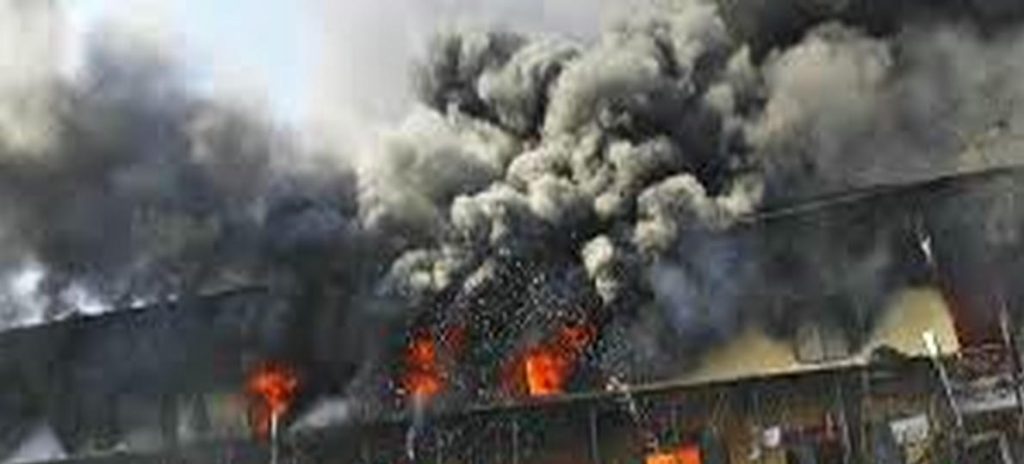
A devastating fire tore through a chemical factory in the Khushkhera industrial area of Bhiwadi, Rajasthan, on Monday, leaving at least seven people dead and two others feared trapped inside.
The blaze erupted at a unit in the Khushkhera-Karoli industrial belt of Bhiwadi, triggering panic and a large-scale emergency response. According to Additional District Magistrate Sumita Mishra, nine workers were trapped when the fire broke out. “Seven bodies have been recovered so far. Efforts are ongoing to rescue the remaining two,” she said.
Firefighters and rescue teams rushed to the site and continue operations amid challenging conditions, as thick smoke and high temperatures hamper efforts. The cause of the fire has not yet been officially confirmed.
Authorities are expected to launch a detailed investigation into the cause of the blaze once rescue operations conclude.
The return of Arvind Khanna to the Shiromani Akali Dal (SAD) is more than a routine party switch. In Punjab’s fluid political landscape, such movements often signal deeper undercurrents — ideological repositioning, cadre dissatisfaction, and early groundwork for future electoral battles.
Khanna’s political journey itself mirrors Punjab’s shifting alliances. A former Congress MLA from Dhuri and later vice-president of the Punjab unit of the Bharatiya Janata Party (BJP), he had contested recent elections from Sangrur but failed to convert candidature into victory. His return to the Akali fold — which he calls a “homecoming” — suggests both strategic recalibration and recognition of political realities on the ground.
A two-time legislator and close relative of former Punjab Chief Minister Captain Amarinder Singh, Khanna had earlier stepped away from active politics in 2014 and resigned from the Congress in 2015. He was elected as an MLA from the Dhuri constituency in the 2012 Punjab Assembly elections. Khanna had joined the BJP in 2022 and was later appointed vice-president of the party’s Punjab unit.
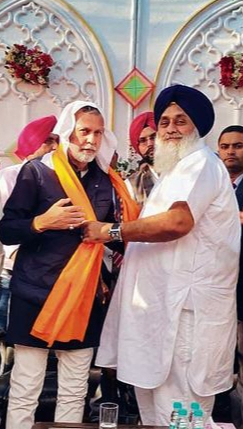
Sources indicated that Khanna had been dissatisfied with sections of the state BJP leadership for the past few months and was in touch with the SAD. His move is being seen as a boost for the Akali Dal in the politically significant Sangrur district — the home turf of Punjab Chief Minister Bhagwant Mann. Welcoming him into the fold, SAD president Sukhbir Singh Badal announced Khanna’s appointment as halqa incharge of the constituency. “The storm which will throw out Delhi parties from Punjab has started today,” Badal declared, praising Khanna as a leader known for selfless service and dedication to the people of Sangrur.
Addressing party workers, Khanna described his return to the Akali Dal as a “homecoming,” recalling that he began his political journey with the party. He said the people of Punjab still remember the “unprecedented development” carried out during successive Akali governments and are eager to see a return to those days. Khanna’s switch marks another key shift in Punjab’s evolving political landscape ahead of upcoming electoral battles.
Why This Move Matters
Sangrur is not just another district — it is the home turf of Chief Minister Bhagwant Mann. For SAD, which has struggled to regain its traditional rural Sikh vote base after the farm laws controversy, Khanna’s entry provides organisational muscle and financial heft in a politically sensitive zone. His local network and long-standing presence could help the Akalis re-energise cadre morale.
The BJP has been attempting to expand independently in Punjab after its split with SAD in 2020. However, despite aggressive outreach, it has yet to build a robust grassroots structure capable of delivering seats consistently. Khanna’s exit — especially as a state-level office-bearer — subtly underscores internal dissatisfaction and the party’s ongoing structural challenges in rural constituencies.
Under the leadership of Sukhbir Singh Badal, SAD is attempting a calibrated revival. By inducting leaders with electoral experience and cross-party appeal, the party appears to be rebuilding its second-rung leadership. The symbolism of Khanna joining with his entire team amplifies the optics of momentum — something SAD has been keen to project after recent electoral setbacks.
Party-switching in Punjab politics is rarely driven purely by ideology. Khanna’s shift appears rooted in political viability and local equations rather than sharp ideological divergence. His electoral defeats on the BJP ticket may have reinforced the limits of the party’s standalone prospects in certain constituencies.
For SAD, however, this is an opportunity to reclaim narrative space — particularly the argument that “Delhi parties” lack deep Punjab roots. Sukhbir Badal’s remark about a “storm” against Delhi-based parties aligns with this framing, positioning SAD as the regional alternative.
Khanna’s move may not shift vote shares overnight, but it strengthens SAD’s organisational depth in a high-profile district. More importantly, it signals that realignments are already underway well before the next major electoral contest.
In Punjab, such early tremors often precede larger political shifts.
A political row has erupted in Jammu and Kashmir after BJP Rajya Sabha MP Ghulam Ali Khatana was accused of spending the bulk of his Members of Parliament Local Area Development Scheme (MPLADS) funds in Uttar Pradesh instead of his home Union Territory.
Khatana, a senior BJP leader from J&K and a prominent Gujjar face of the party, was nominated to the Rajya Sabha in September 2022. Under the MPLADS scheme, each MP can recommend development works worth Rs 5 crore per year for the creation of community assets such as roads, drinking water facilities and educational infrastructure. The funds are released to district authorities for execution, but the selection of projects and districts is made by the MP.
According to official data, Khatana allocated Rs 14.7 crore under the scheme. Of the 176 works sanctioned by him, 144 projects — amounting to Rs 10.58 crore, or around 94 per cent of the total funds — were carried out in Uttar Pradesh. In comparison, only 32 works worth Rs 94 lakh were taken up in Jammu and Kashmir.
The spending pattern has drawn criticism from both the ruling National Conference (NC) and the opposition People’s Democratic Party (PDP).
National Conference spokesperson Tanvir Sadiq questioned the rationale behind nominating an MP from Jammu and Kashmir if most of the development funds were to be spent outside the region. “What is the purpose of nominating an MP from Jammu and Kashmir if 94 per cent of his development funds are spent in Uttar Pradesh? This exposes the harsh truth: J&K’s representation has been reduced to symbolism, while its people are denied their rightful share. Shameful and unacceptable. Our people deserve commitment, not BJP’s tokenism. Wake up Jammu!,” National Conference spokesperson Tanvir Sadiq said in a post on X.
PDP youth president Aditya Gupta also targeted the BJP, alleging that the party had secured votes from Jammu and Kashmir while diverting development funds to Uttar Pradesh. He said the people of Jammu had been let down by their own elected representatives.
In a major push to strengthen India’s startup ecosystem, the Union Cabinet chaired by Prime Minister Narendra Modi has approved the Startup India Fund of Funds 2.0 (FoF 2.0) with a corpus of Rs. 10,000 crore. The initiative aims to mobilise long-term domestic capital, strengthen the venture capital ecosystem, and accelerate innovation-led entrepreneurship across the country.
Building on nearly a decade of progress under the Startup India initiative, FoF 2.0 marks the next phase of India’s startup journey. Since 2016, India’s startup landscape has expanded dramatically—from fewer than 500 startups to over 2 lakh DPIIT-recognised ventures, with 2025 recording the highest-ever annual registrations.
The new fund follows the success of the Fund of Funds for Startups (FFS 1.0), launched in 2016 to bridge funding gaps and catalyse domestic venture capital. Under FFS 1.0, the full Rs. 10,000 crore corpus was committed to 145 Alternative Investment Funds (AIFs), which collectively invested over Rs. 25,500 crore in more than 1,370 startups across sectors including agriculture, artificial intelligence, robotics, clean tech, fintech, healthcare, manufacturing, space tech, and biotechnology.
FoF 2.0 adopts a targeted, segmented approach, with a strong focus on deep tech and technology-driven manufacturing. It aims to support early-stage founders, address high-risk capital gaps, encourage investment beyond major metros, and strengthen India’s domestic venture capital base—particularly smaller funds. The fund will prioritise high-tech breakthroughs requiring patient, long-term capital and support sectors critical to self-reliance and economic growth.
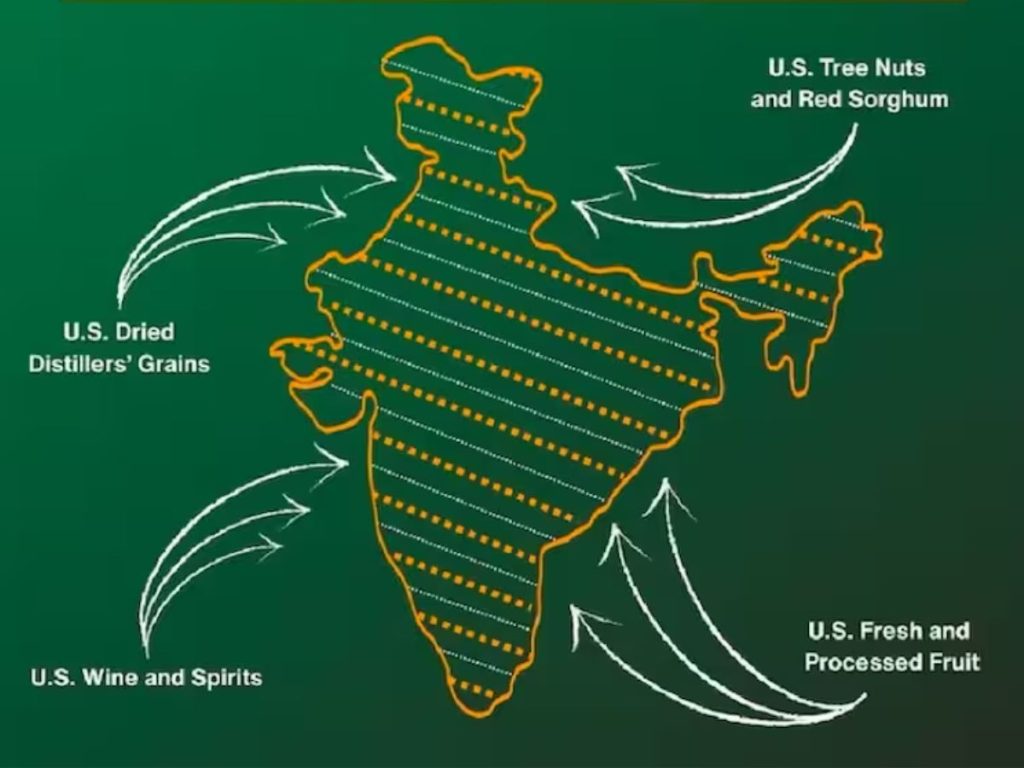
The United States Trade Representative (USTR) has deleted its social media post that featured a map of India showing the entire region of Jammu and Kashmir and Ladakh — including Pakistan-occupied Kashmir and Aksai Chin — as Indian territory.
The graphic, shared on February 7 as part of an announcement on the bilateral interim trade framework between New Delhi and Washington, had drawn attention for departing from the longstanding American practice of marking PoK and Aksai Chin as disputed areas.
With the post now removed from the USTR’s official X account, the move is being seen as a reversal from the earlier depiction.
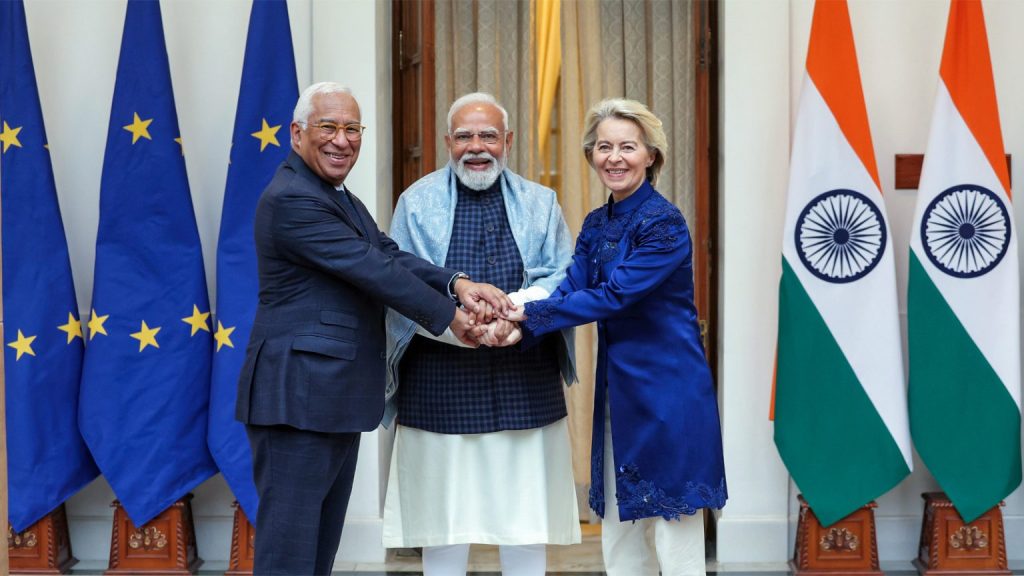
The conclusion of the long-pending India–European Union trade agreement — described as the “mother of all deals” — is less a sudden diplomatic triumph than a reflection of how deeply geopolitics has reshaped global trade. After nearly two decades of negotiations, the deal has materialised at a moment when pragmatism, not free-trade idealism, defines international economic engagement.
A key trigger for this shift was the tariff-driven disruption of global trade norms during Donald Trump’s presidency. By weaponising tariffs and openly prioritising economic nationalism, the United States shattered the post-war assumption that trade liberalisation was inevitable and rules-based. That assumption has not returned. Instead, trade is now viewed as an instrument of strategic leverage, supply-chain security and political alignment.
For the European Union, Trump-era tariffs were a wake-up call. Once shielded by transatlantic consensus, Europe found itself exposed to American unpredictability on the one hand and excessive dependence on Chinese manufacturing on the other. The result was a search for diversification — partners that offered scale, stability and strategic trust without undermining Europe’s industrial base.
India, too, absorbed the lessons of this turbulent period. Its decision to exit the Regional Comprehensive Economic Partnership (RCEP) signalled a shift towards selective globalisation and why openness would be calibrated, not unconditional, and aligned with domestic economic resilience and strategic autonomy.
It is in this altered landscape that India and the EU found common ground. A central reason the agreement became politically viable is that the two economies do not compete directly. The EU’s export strengths lie in capital- and technology-intensive sectors — high-end machinery, automobiles, chemicals, medical devices and green technologies. India’s strengths, by contrast, are in labour-intensive manufacturing, pharmaceuticals, engineering goods and services, particularly IT.
This structural complementarity matters. Indian exports do not threaten Europe’s core industrial employment. At the same time, European technology and investment are essential for India’s ambition to move up global value chains. The agreement also reflects a shared turn towards pragmatism. Negotiations that once stalled over rigid positions on standards, data governance and market access have been resolved through phased commitments and safeguards. This is not unfettered free trade, but managed openness — liberalisation where gains are mutual, protection where vulnerabilities remain.
More broadly, the deal is an expression of strategic autonomy. For Europe, it supports de-risking from China and insulating itself from U.S. trade volatility. For India, it diversifies partnerships while strengthening export-led growth in manufacturing and services.
The agreement underscores a deeper truth: the world had to change before the deal became possible. The India–EU trade pact is therefore not just a commercial milestone, but a marker of how geopolitics has rewritten the logic of global trade.
This fortnight, Tehelka’s Special Investigation Team has come out with an exposé, “Inside Agra Nigam bribe racket”. Tehelka SIT investigates rampant corruption at Agra Municipal Corporation as brokers and outsourced employees are caught extracting bribes for issuing death certificates, birth certificates, and Non-Availability Birth Certificates (NABC).
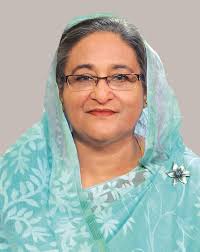
A significant political shift took place in Bangladesh in August last year, culminating in the ouster of Prime Minister Sheikh Hasina. On August 5, 2025, she stepped down and flew to India, landing in Delhi, where she has since sought political shelter. Her departure triggered a sharp downturn in India-Bangladesh relations.
To understand the gravity of the present moment, one must revisit history. Bangladesh was born in 1971 out of a bloody Liberation War against Pakistan, driven by Bengali nationalism and the Mukti Joddha movement. India played a decisive role in that struggle, ultimately defeating Pakistan in war. Today, however, questions are being raised: Do Islamic fundamentalist forces such as Jamaat-e-Islami seek to redefine Bangladesh’s identity? Is there an attempt to reverse the ideological legacy of 1971?
These concerns are particularly relevant as Bangladesh heads into general elections alongside a mass referendum known as the July Referendum. The electorate is casting votes not only for political leadership but also, symbolically, for the nation’s ideological direction.
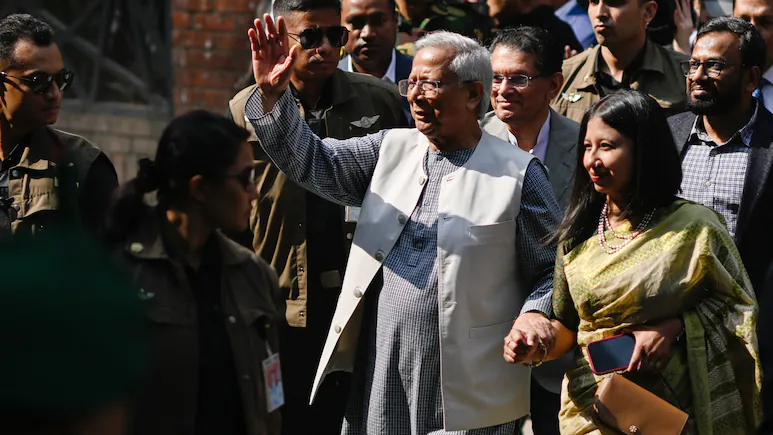
For Prime Minister Narendra Modi, maintaining stable bilateral ties with Bangladesh remains a diplomatic imperative. Despite its relatively small geographical size, Bangladesh occupies a crucial geostrategic position. Pakistan is widely perceived to be seeking renewed influence in Dhaka. In recent months, reports have suggested attempts by the Pakistan Army to strengthen ties with the Bangladesh Army. ISI representatives have reportedly visited Dhaka, and flights between Karachi and Dhaka have resumed under the caretaker government led by Muhammad Yunus. This has led to speculation: Is Yunus steering Bangladesh in a new direction?
At present, the principal political contest is between the Bangladesh Nationalist Party (BNP) and Jamaat-e-Islami. For the first time in the country’s history, Jamaat is contesting the elections independently. Once allied with the BNP, Jamaat now finds itself in direct competition.
The Awami League, led by Sheikh Hasina, has been barred from participating in the elections. Hasina has reportedly instructed party leaders not to contest even as independents, leaving the Awami League symbol absent from the ballot. However, Awami League leaders continue to emphasize the need to prevent Jamaat’s rise.
The BNP, while historically opposed to the Awami League, acknowledges the legacy of the 1971 Liberation War and maintains a relatively trade-friendly stance. Some analysts believe that anti-Jamaat votes may consolidate behind the BNP. Concerns persist that a Jamaat-led government could heighten insecurity for Hindu minorities and tilt Bangladesh closer to Pakistan—developments that would directly affect India’s strategic interests.
Jamaat, however, is running an aggressive campaign, arguing that both the Awami League and the BNP have already been tested in power and found wanting. It presents itself as an ideology-driven alternative, promising clean governance and freedom from corruption. By mobilizing its long-standing student organization, Jamaat is attempting to attract younger voters and position itself as a fresh political force.
New Delhi is responding with caution and calculation. The Modi government opposes Jamaat’s fundamentalist ideology and remains sensitive to the potential impact on Hindu minorities. At the same time, Jamaat leaders have publicly stated that they seek constructive relations with India. “We cannot afford to be anti-Indian,” they have told Indian media, underscoring the economic and geopolitical importance of maintaining ties with a nation of 1.4 billion people.
India’s approach has been measured. The Prime Minister’s Office is closely monitoring developments, while External Affairs Minister S. Jaishankar and National Security Advisor Ajit Doval are actively handling diplomatic channels. India has adopted several key principles:
It will not interfere in Bangladesh’s electoral process.
It will maintain diplomatic engagement with whichever party forms the government.
Cultural and strategic partnerships will continue irrespective of political change.
India has demonstrated similar pragmatic engagement elsewhere, including maintaining dialogue with the Taliban government in Afghanistan when required by diplomatic necessity.
New Delhi is reportedly preparing for four possible scenarios:
The BNP secures a clear majority and forms the government, with Tarique Rahman potentially assuming leadership.
Jamaat wins an outright majority and forms the government independently.
A fractured mandate leads to a coalition government involving the BNP, Jamaat, and student groups.
A transitional national government emerges under Yunus, supported by major parties and student factions, followed by fresh elections at a later stage.
The Modi government is proceeding with careful strategic calibration, keeping all options open. India’s posture will ultimately adjust to the verdict delivered by the Bangladeshi electorate.
As Bangladesh stands at a political crossroads, the implications extend far beyond its borders. For India, the outcome will shape not only bilateral relations but also the broader geopolitical balance in South Asia.
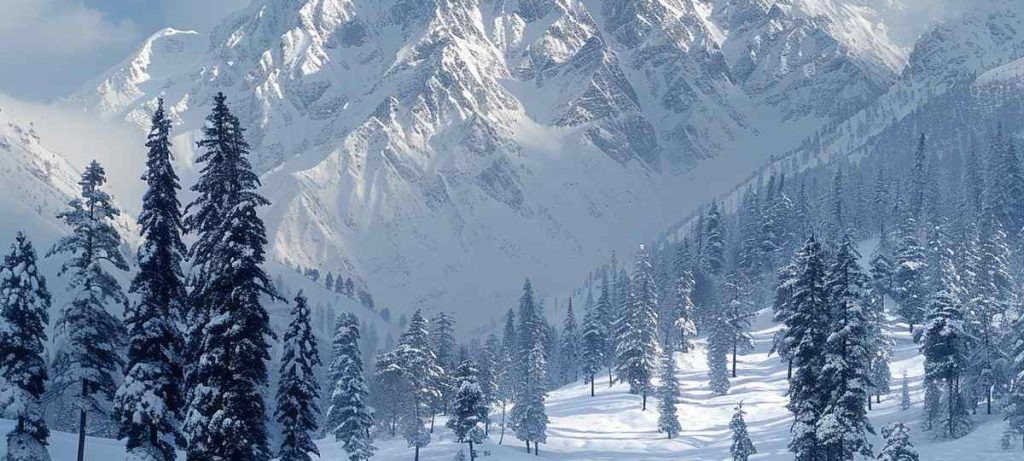
For much of this winter, snow eluded Kashmir, barring occasional spells on higher reaches. January, traditionally the Valley’s coldest and most reliable snow month, arrived instead with dry air and alarmingly empty skies. By mid-month, official data confirmed the scale of the crisis: Jammu and Kashmir had recorded a 96 per cent rainfall deficit, receiving just 1.4 mm of precipitation between January 1 and January 14, against a normal of 33.3 mm, according to the India Meteorological Department (IMD).
Then, finally, the snow came.
Late but decisive, fresh spells of snowfall across Kashmir’s plains and higher reaches in the closing phase of Chillai Kalan, the harshest winter period, have altered the season for the better. Not only have fears of an impending water crisis eased but also reigniting tourism confidence after months of uncertainty triggered by security concerns, floods, and climate volatility.
The Meteorological Department (MeT) earlier said the Jammu and Kashmir meteorological subdivision recorded a 39 per cent rainfall deficit between October 1 and December 31, 2025, a continuation of a troubling trend. In recent years, most winters in the Valley have remained largely dry, barring 2019–20, which saw adequate snowfall. The delayed arrival of winter precipitation this year sharpened concerns across sectors that depend on snow — from agriculture and hydropower to tourism.
Director of the India Meteorological Department (IMD), Srinagar, Mukhtar Ahmad, described the recent snowfall as significant. He said the Kashmir Valley, particularly the higher reaches, received significant snowfall during Chillai Kalan.
Ahmad said the rainfall deficit in the Valley has now reduced to around 31 per cent. “More spells are expected in the coming days. We will have to see how the situation evolves,” he said, adding that rainfall deficit levels in the Jammu division have reduced to near-normal following recent rain.
Crucially, the snowfall has revived confidence around water security. Ahmad said it would allay fears of water scarcity during the summer months, as the fresh snow has rejuvenated water bodies and glaciers, a vital buffer after last year’s unprecedented heat, when both maximum and minimum temperatures reached record highs, deepening a water crisis in urban and rural areas.
Tourism breathes again
For the tourism sector, battered by the April 22 Pahalgam terror attack, subsequent floods, and a snowless early winter, the belated snowfall has been nothing short of a reset.
Chief Minister Omar Abdullah, speaking last week, said the recent snowfall would benefit tourism, as visitors had been eagerly awaiting snow in the Valley. He also warned what might have followed had the skies remained dry. “If we had not received this snow, there would have been a very severe shortage of water during the summer,” Omar said.
On the ground, the shift is visible. From Dal Lake to Gulmarg, from Pahalgam to Sonamarg, hotels are filling, enquiries are returning, and confidence is cautiously resurfacing.
Qamar Sajad, Director of Tourism Kashmir, said that the turnaround reflects more than weather alone. “We are witnessing a steady rise in tourist footfall, and that is because everyone, from shikara operators to hoteliers and from the government to ground-level workers, has played their part,” he said. “This is not just about snowfall, but about the spirit of people who have worked tirelessly to make Kashmir shine. The government and stakeholders together have made tourism breathe again.”
Houseboat owners, among the hardest hit during prolonged slumps, are seeing movement once more. Manzoor Pakhtoon, Chairman of the Houseboat Owners Association Kashmir, said: “We are getting queries again. After the recent snowfall and New Year rush, tourists have started showing interest. We expect a good summer season ahead if this continues.”
In Gulmarg and Sonamarg, the impact has been immediate. Mushtaq Chaya, Chairman of the J&K Hoteliers Club, said over 70 per cent of hotels in Gulmarg and nearly 75 per cent in Sonamarg are booked. “The snowfall has built trust again. People are coming back in numbers,” he said. “Visitors are focusing on Gulmarg, enjoying skiing and the snow rides. But we hope the government opens more destinations soon, so the benefits spread evenly.”
Hotelier Riyaz Ahmad from Pahalgam echoed the sentiment: “We have been full for two weeks now. Guests are waking up to the sight of snow-covered pine trees and calling it a dream. Many are extending their stays, and some do not want to leave at all.”
A fragile recovery, backed by policy
The snowfall arrives at a critical juncture. According to Lieutenant Governor Manoj Sinha, Jammu and Kashmir recorded 1.61 crore tourist visits in 2025 up to November, a decline from 2.36 crore visits last year, but one that he described as resilient given the year’s disruptions.
“Known as the ‘Paradise on Earth’, Jammu and Kashmir recorded 1.61 crore tourist visits in 2025 up to November. While this figure is lower than last year’s 2.36 crore visits (a 32 per cent decline), considering the adverse impact of the Pahalgam incident in April and subsequent floods, sustained and focused efforts of the government have yielded encouraging and resilient outcomes,” Sinha said.
Tourism, he noted, occupies a pivotal position in the UT’s economy and was granted industry status in 2020 to attract investment. The government has identified nine new tourist destinations, is developing the Kashmir Marathon as a flagship sports tourism initiative, and is positioning the region for wellness and experiential travel.
At the global level, Jammu and Kashmir has stepped up promotion. At FITUR 2026 in Madrid, the Tourism Department showcased the region through Virtual Reality experiences, traditional arts and crafts, and curated cultural engagements, while senior officials held meetings with global tour operators and media to rebuild confidence and partnerships.
Climate uncertainty remains
Yet, beneath the optimism lies a deeper vulnerability. Kashmir has witnessed increasingly erratic weather patterns, prolonged dry spells punctuated by intense rainfall events. Winter precipitation has declined due to fewer western disturbances, and the reliance on a narrow snowfall window has made every delayed storm a source of anxiety.
The IMD’s January data — 96 per cent below normal rainfall — served as a stark reminder that the Valley’s water, food, and tourism security remains closely tied to climate volatility.
Fruit growers understand this better than most. “We have witnessed this kind of snowfall after a long time. It will help boost apple production this year,” said Javid Ahmad, president of the Pulwama Fruit Association. For horticulture, timely snow is not a luxury but insurance — regulating soil moisture, pest cycles, and spring flowering.
Snow, symbolism, and survival
For tourists, the snowfall has restored the postcard image of Kashmir. Visitors in Srinagar spoke of luck and longing fulfilled. “This place is truly Heaven… Truly, Kashmir is Paradise,” one said. Another added, “It feels wonderful to be in Kashmir while snow is falling all around. People should definitely come and visit this beautiful place at least once.”
But for Kashmiris, snow carries a deeper symbolism, of balance restored, livelihoods revived, and seasons behaving as they should.
The belated snowfall may not erase the deficits of a warming climate or the scars of a turbulent year. But for now, it has given Kashmir something it desperately needed – time, momentum, and the possibility that winter, even when delayed, can still deliver.
More than six years after the abrogation of Article 370 and the downgrading of the erstwhile state of Jammu and Kashmir into two union territories, a familiar but politically fraught demand has resurfaced with renewed intensity: the creation of a separate state for Jammu. What distinguishes the current moment from earlier phases of the debate is not just the volume of voices from Jammu’s civil society, but the sharp and ideologically divergent reactions it has triggered across the Kashmir Valley, cutting across party lines and unsettling long-held political positions.
The resurgence of the demand also unfolds against a conspicuous backdrop: the Centre’s continued silence on restoring statehood to Jammu and Kashmir, a promise repeatedly articulated since August 2019 but yet to be honoured.
Civil society push in Jammu
The immediate trigger for the latest round of debate was a meeting of civil society representatives in Jammu city earlier this month. Over 70 participants—comprising intellectuals, academics, business leaders and social activists—came together to articulate what they described as “persistent political, economic, and developmental challenges” faced by the Jammu province since 1947.
The resolution adopted at the meeting alleged “sustained discrimination” against Jammu, accusing Kashmir-based political leadership of an “overtly anti-Jammu orientation” and chronic neglect in political representation, resource allocation, infrastructure development and employment generation. Participants argued that despite Jammu’s strategic importance, demographic diversity and contribution to the region’s economy and security, it has remained marginalised in governance and policy-making.
The resolution asserted that the demand for a separate Jammu state was “neither reactionary nor driven by parochial considerations,” but was instead a “survival need” rooted in the pursuit of equitable governance and political dignity. It committed to peaceful, constitutional mobilisation and announced plans for similar consultations across Jammu’s districts.
While calls for Jammu statehood are not new, their articulation by civil society rather than mainstream political parties gave the demand fresh traction, and prompted swift responses from across the political spectrum.
Omar Abdullah draws a red line
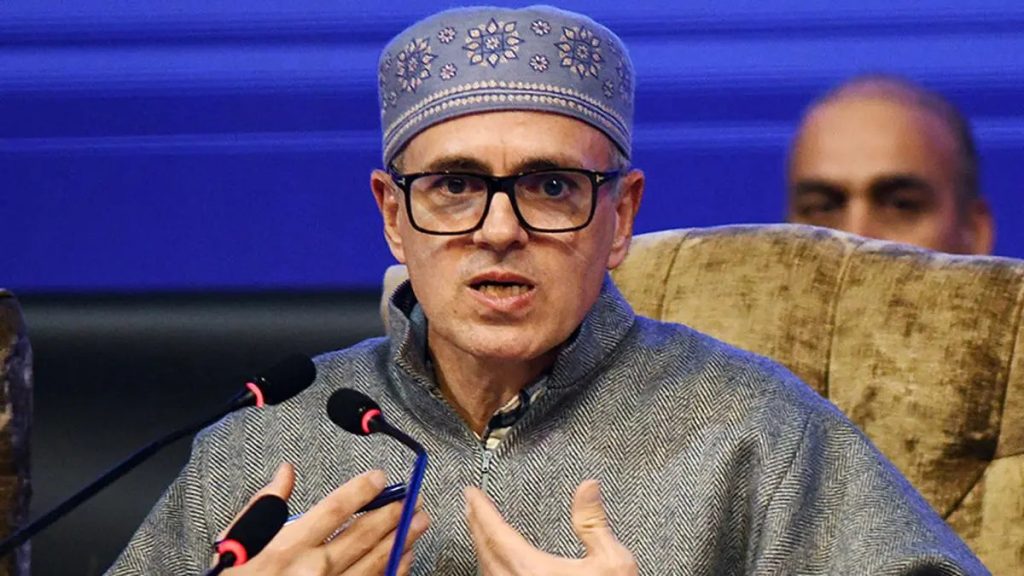
Chief Minister Omar Abdullah was unequivocal in rejecting the idea of bifurcation, framing it as both divisive and harmful to Jammu’s long-term interests. Speaking at the National Conference’s two-day Block Presidents’ Convention in Jammu, Abdullah said, “As long as the plough-bearing flag of the National Conference continues to fly across Jammu and Kashmir, no power on earth will dare attempt to divide the region on regional or religious lines.”
Positioning his government as pro-Jammu, Abdullah cited initiatives such as increased ration quotas, free bus rides for women, enhanced pensions, free land for landslide victims and the restoration of the historic Darbar Move. He accused the BJP of hollow symbolism and selective outrage, remarking that “those who stopped the Darbar Move or celebrated the closure of a medical college cannot claim to be Jammu’s well-wishers.”
Taking a direct swipe at Leader of Opposition Sunil Sharma, Abdullah dismissed bifurcation rhetoric as personal ambition. “If he wants to be Chief Minister, why only Jammu and not J&K? If ambition drives him so much, let him contest Jammu municipal elections,” he said, adding that such politics would not find support beyond parts of Jammu city.
Abdullah also warned that regional polarisation would damage Jammu’s interests rather than advance them, reiterating that the National Conference would not allow “narrow, divisive politics” to shape the region’s future.
A Valley counter-narrative emerges
Even as Omar Abdullah rejected bifurcation, a strikingly different tone emerged from sections of the Kashmir Valley’s political leadership—some of whom went further than Jammu’s civil society in questioning the very basis of a unified Jammu and Kashmir.
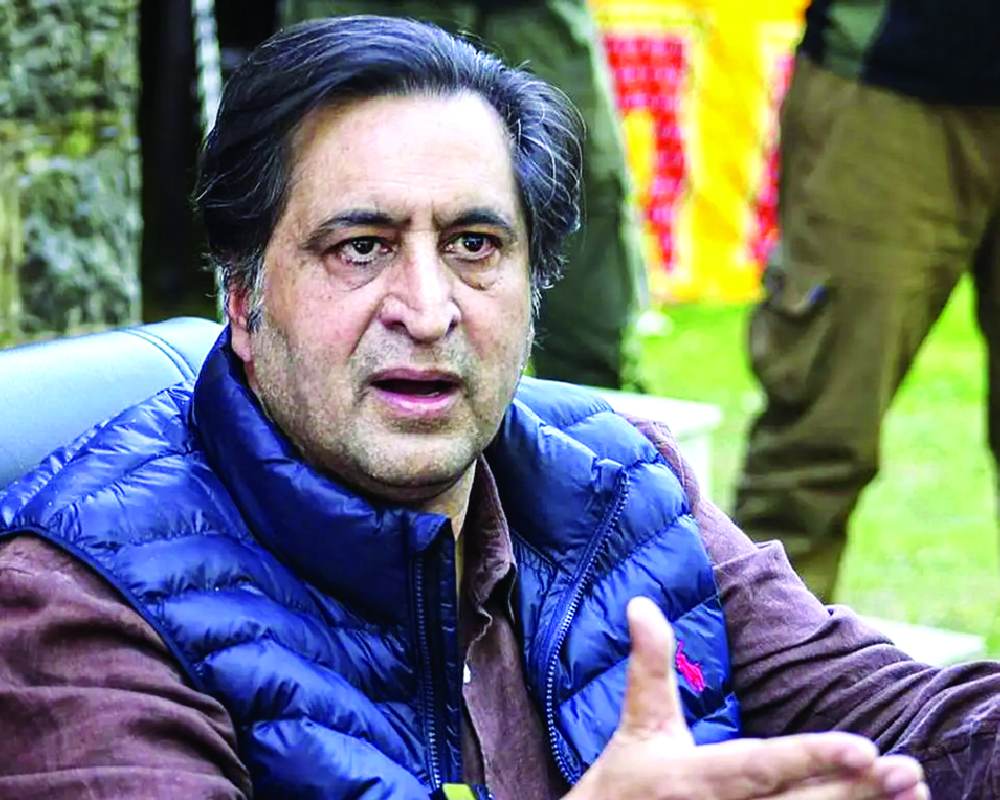
People’s Conference president Sajad Lone became the first mainstream Kashmiri politician to openly call for what he described as an “amicable divorce” between the two regions. In a statement, Lone said, “Maybe time has come for an amicable divorce. It is not only about developmental matters. Jammu has become the proverbial stick to beat the Kashmiri with.”
He argued that resentment had grown deep on both sides, adding, “I think the people of Kashmir too can’t take it anymore… I am sure the desire for divorce is much, much higher in Kashmir than it ever was. Need leadership to call a spade a spade.”
Lone accused Jammu-based leadership of “selective courage,” claiming they remained silent when the Centre revoked Article 370, diverted businesses and halted the Darbar Move, but showed aggression only against Kashmir. He also rejected demands that every central institution proposed for Kashmir be relocated to Jammu, saying, “They have an IIM. What is wrong if a Law University comes to Kashmir?”
Former Srinagar mayor Junaid Azim Mattu echoed similar sentiments, asserting that separation would actually benefit Kashmir. “If it happens, it would be a favour for Kashmir rather than a loss,” Mattu said, arguing that the idea of a united Jammu and Kashmir had “no historical, cultural or linguistic basis.”
Mattu traced the political arrangement to the Treaty of Amritsar, calling it unjust, and alleged that Kashmir had paid a far heavier price in terms of lives lost, while Jammu received concessions and sympathy. He accused successive governments of favouring Jammu in reservation policies and access to opportunities, describing shrinking prospects for Kashmiri youth as “collective political punishment.”
Institutional flashpoints and polarisation
The renewed polarisation has been fuelled by a series of controversies around institutions—most notably protests against Muslim students’ admission to a new medical college in Katra and opposition to the proposed National Law University in Budgam. These flashpoints have sharpened the “Jammu versus Kashmir” narrative and reinforced perceptions of regional competition rather than shared governance.
Chief Minister Abdullah has countered claims of discrimination by pointing to the allocation of premier institutions. “Jammu got both an IIT and an IIM, where was the talk of equality then?” he asked, noting that calls for regional balance emerged selectively.
The Centre’s silence looms large
Underlying all these debates is a deeper constitutional uncertainty. Since August 2019, when the Centre revoked Article 370 and downgraded Jammu and Kashmir into a Union Territory, New Delhi has repeatedly promised restoration of statehood “at an appropriate time.” That timeline, however, remains undefined.
Political observers argue that this prolonged silence has created a vacuum now being filled by competing regional narratives. Without clarity on statehood restoration, demands for alternative political arrangements—be it separate Jammu statehood or administrative separation—gain traction.
Ironically, while Jammu’s civil society frames statehood as a remedy for perceived marginalisation, Kashmiri leaders like Lone and Mattu view separation as liberation from what they see as constant vilification and political instrumentalisation.
A debate without a roadmap
Despite the sharp rhetoric, there is little indication that the Centre is inclined to redraw internal boundaries in Jammu and Kashmir. Historically, New Delhi has viewed bifurcation proposals as strategically sensitive, fearing they could weaken India’s position on Kashmir.
Yet, the absence of a clear roadmap for restoring statehood has left regional anxieties to fester. Omar Abdullah’s firm rejection of bifurcation underlines a political reality: while there is consensus across parties on the demand for full statehood, there is no shared vision on what governance should look like if that demand continues to be deferred.
For now, the debate over a separate Jammu state reflects not just regional grievances, but a deeper crisis of trust—between regions, political actors, and the Centre. Until the question of statehood restoration is addressed decisively, Jammu and Kashmir’s politics appears destined to remain caught between unresolved past promises and an uncertain constitutional future.
How a Father’s Dream of Power Cost His Little Girl’s Life
A Heartbreaking Lesson for Today
By Dr. Maulana Maqsood ul Hasan Qasmi
In early 2026, in Nanded district of Maharashtra, 28-year-old Pandurang Kondmangale allegedly drowned his little girl, Prachi—one of his twin daughters—in a canal across the border in Telangana. Why? Maharashtra’s Panchayat law says no one with more than two children can contest gram panchayat elections. He already had three kids (a son and twin girls), so he wanted to “remove” one to become eligible for the post of sarpanch—a position that brings local power, respect, and money.
He planned it with the village’s sitting sarpanch. They first tried fake adoption or changing records, but when that failed, he took the innocent child’s life and tried to make it look like she was just missing. Police arrested both men for murder and conspiracy. A tiny girl’s life ended for a seat of power.
This shocking case shows how badly greed can twist a person’s heart. It breaks the strongest bond—between parent and child.
Sadly, such horrible stories keep coming:
In Meerut, Uttar Pradesh (late 2025), a man named Vishal Singhal was arrested for killing his mother, wife, and father—one by one—to claim huge insurance money (over 100 crore in policies). His fourth wife bravely told the police and stopped the nightmare.
In Prayagraj, Uttar Pradesh (January 2026), a man axed his father, sister, and young niece to death over a land fight, then hid their bodies in a well.
In Vijayanagara district, Karnataka (around late January/early February 2026), a son, helped by his uncle, murdered his parents and sister—for money from a house or fixed deposit. Greed turned family into enemies.
These are just a few cases that made headlines. Many more happen quietly, driven by fights over land, cash, or status. Greed destroys families in the cruelest ways.
Beloved Prophet Muhammad ﷺ warned us about this danger centuries ago. In a hadith from Sunan Abu Dāwūd (1698), he said: “Beware of greed! It destroyed people before you. Greed made them stingy, so they became stingy. It told them to cut family ties, so they did. It pushed them to do evil, and they obeyed.”
See how true his words are? Greed starts small—like wanting more power or money—but it grows. It makes people selfish, breaks families apart, and leads to terrible sins. It blinds them to good and evil, hurting even the most innocent, like little children.
In our fast world today, we must fight this poison. Let’s choose family love, strong faith, and a content heart over chasing wealth or position at any cost. Real success is not in big money or high posts—it’s in kind character, close relationships, and pleasing Almighty.
May Allah protect us from greed’s trap. May He clean our hearts, fill them with mercy, justice, and love—for our family and every human being.